Living Room
23 Fall Wedding Table Decor Ideas That Feel Romantic, Golden and Timelessly Elegant
By Anna Wells · · 25 min read
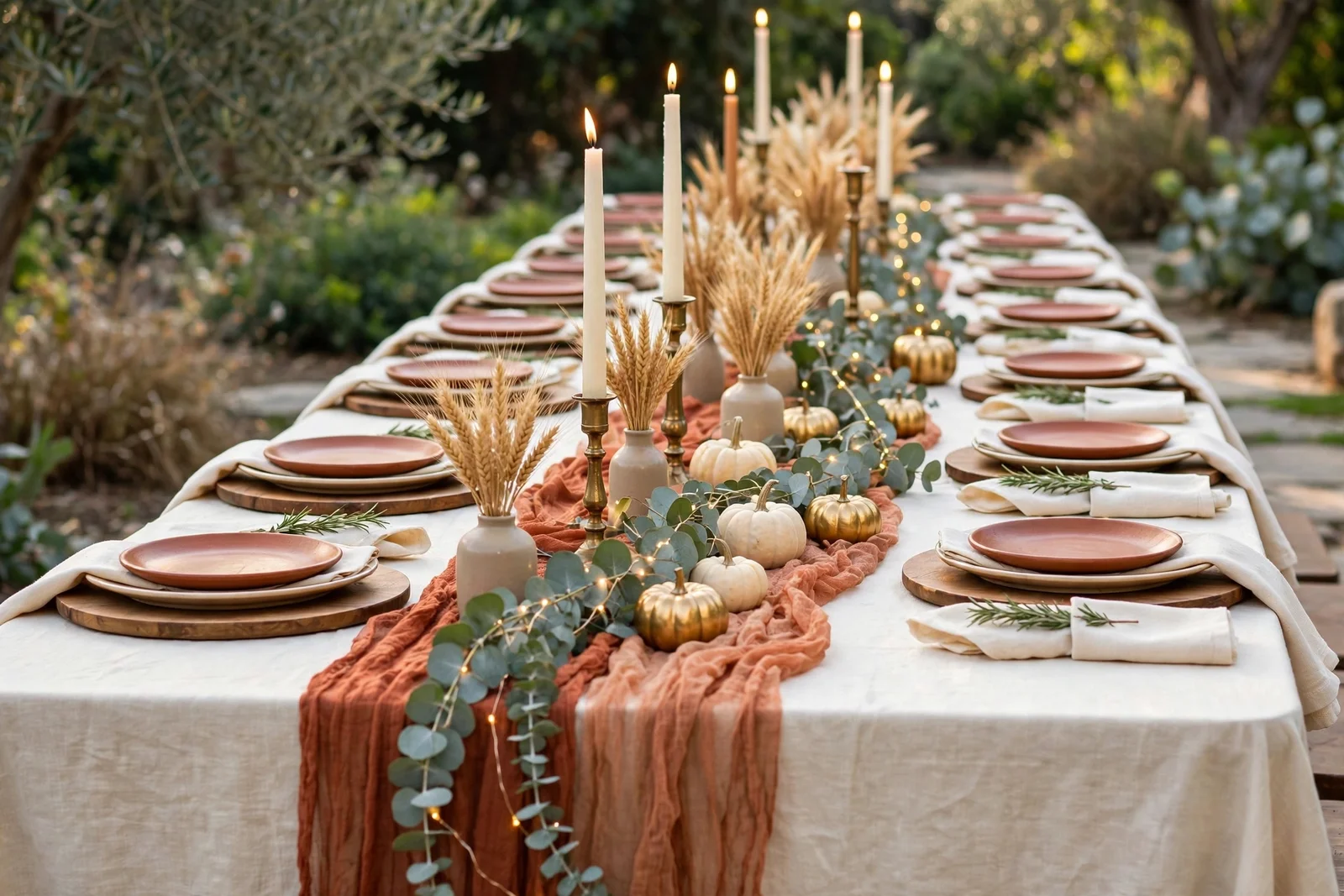
Autumn light, honest harvest materials and candle glow shape these 23 fall wedding table decor ideas for a warm, family-centred celebration.
There is a particular hour in October when the light turns to honey and everything in the room seems to lean toward the table. The family is gathering from different towns, the kitchen smells of cinnamon, and the tables stand dressed in cream linen and rust, waiting for the people they were made for.
A fall wedding table does not need grandeur to feel special. It needs honest materials, things you can touch: wood, linen, dried wheat, the warm weight of a brass candle holder. These are the textures of harvest, and they carry a quiet message that this celebration is about family, gratitude and togetherness.
Below you will find 23 concrete ideas for building that table, from layered chargers and eucalyptus runners to fairy light, white pumpkins and drinks stations with sparkling cordials. Every idea includes real measurements, budget tiers and the small mistakes to avoid, and every touch is DIY friendly.
Whether you are dressing one long family table or a whole hall of round ones, start with the linen and build outward. Pick the ideas that fit your budget, gather your helpers, and let the golden light do the rest.
1. Drape the Table in a Cream Linen Base Layered With a Rust Runner
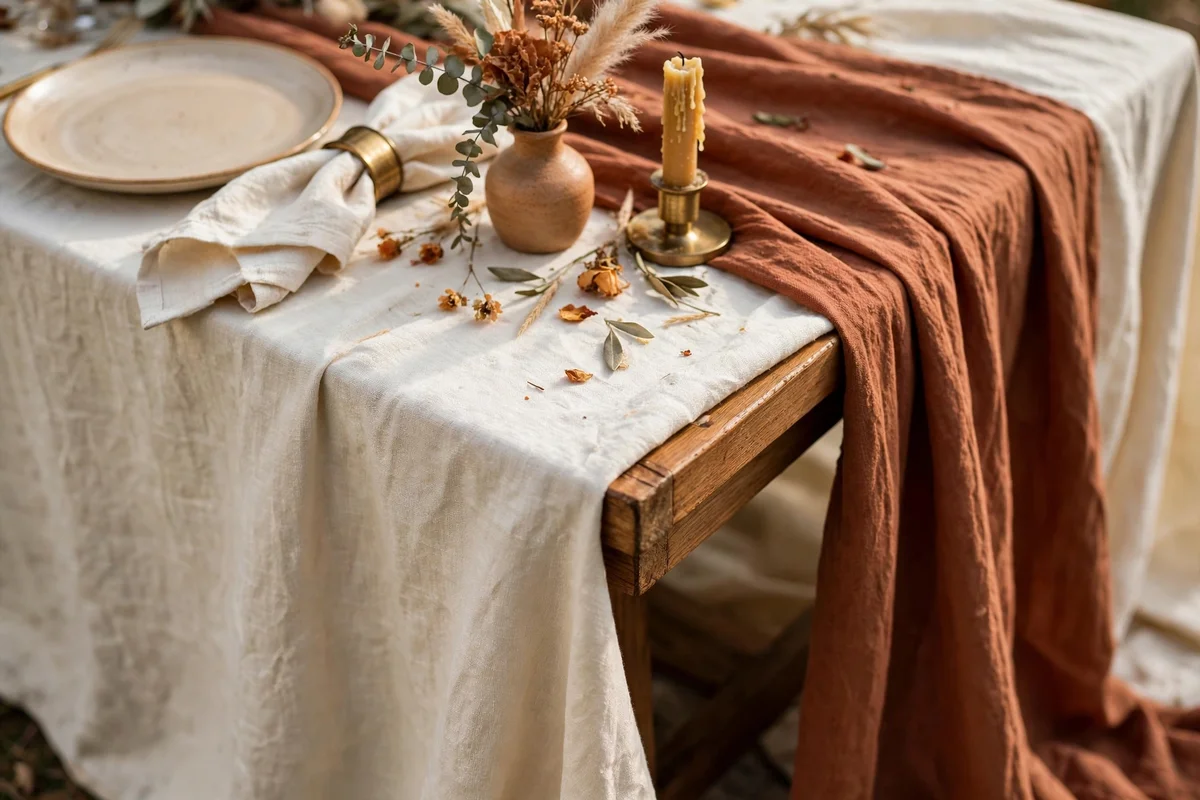
A full-length cream linen cloth sets the calm base the harvest table needs. Choose a cloth that drops 25 to 30 cm past the edge so it skims chair seats without pooling on the floor, and press it the day before because linen holds creases. Lay a rust cotton or gauze runner down the centre, roughly 35 cm wide, with 40 to 50 cm trailing off each end. That ribbon of colour defines the shared middle and gives every later layer a warm band to sit on.
Second-hand linen is the budget hero here: charity shops and hire shops often sell full cloths for 15 to 25, and a cotton runner costs about 10 new. Mid tier buys stonewashed European linen for around 40 to 60, which drapes more softly. The mistake to avoid is choosing a polyester cloth with a shiny finish; under fairy light it reflects white spots in every photograph. Wash both pieces before the day, iron while slightly damp, and store them rolled around a cardboard tube to keep creases out.
2. Anchor Each Place Setting With a Round Wooden Charger
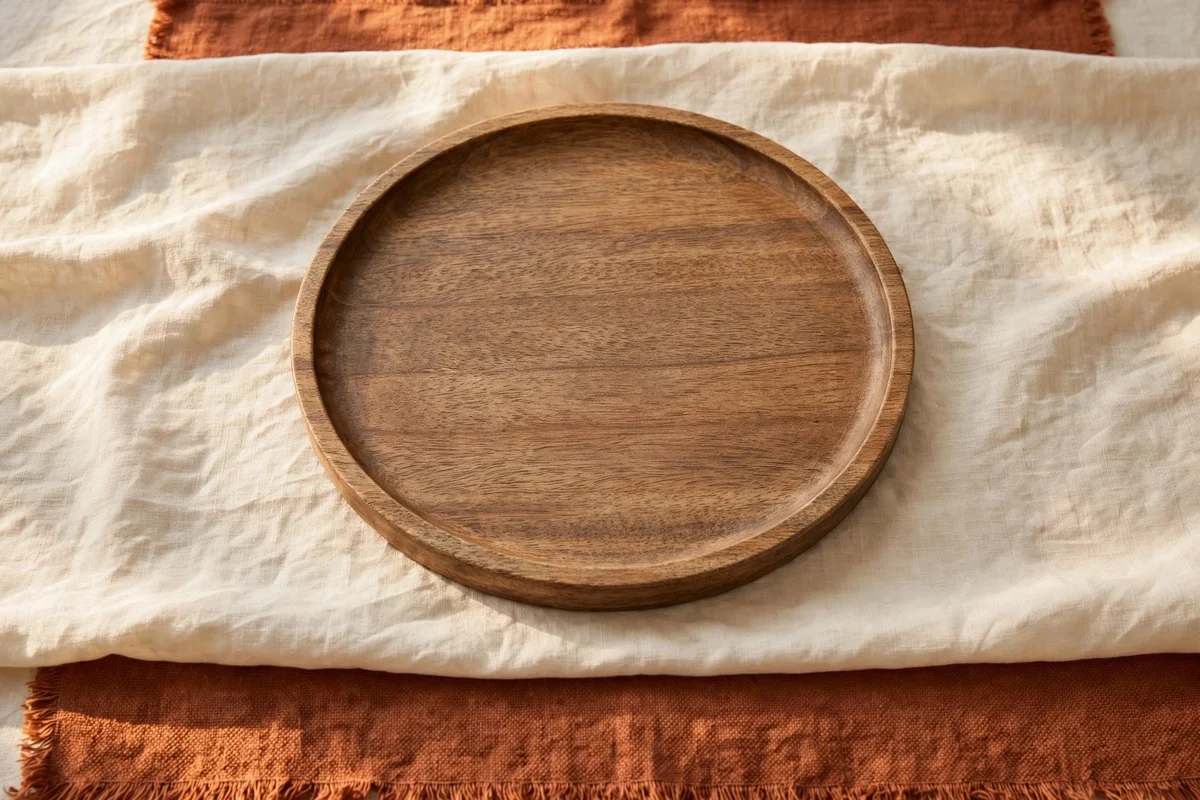
A charger is the frame that makes an ordinary plate look wedding-worthy. Use round wooden chargers 33 to 35 cm across, one per guest, so the rim shows about 4 cm beyond the dinner plate. Acacia, mango wood or olive wood all suit the harvest palette, and their grain hides small scratches from hire use. Set them 60 cm apart measured centre to centre so elbows stay comfortable. Budget tier: hire chargers cost 1 to 2 each; buying a set of twelve in acacia usually runs 30 to 45.
Wipe each charger with a food-safe mineral oil the week before to deepen the colour and protect against condensation rings. Do not serve food directly on the wood; the charger stays under the plate and lifts away with it at clearing time. The common mistake is mixing charger sizes across the table, which makes place settings look uneven in photographs. If you must combine two sets, group matching wood tones at one table and put the second set on another, rather than alternating down the same table.
3. Layer Cream Dinner Plates Over Terracotta Salad Plates
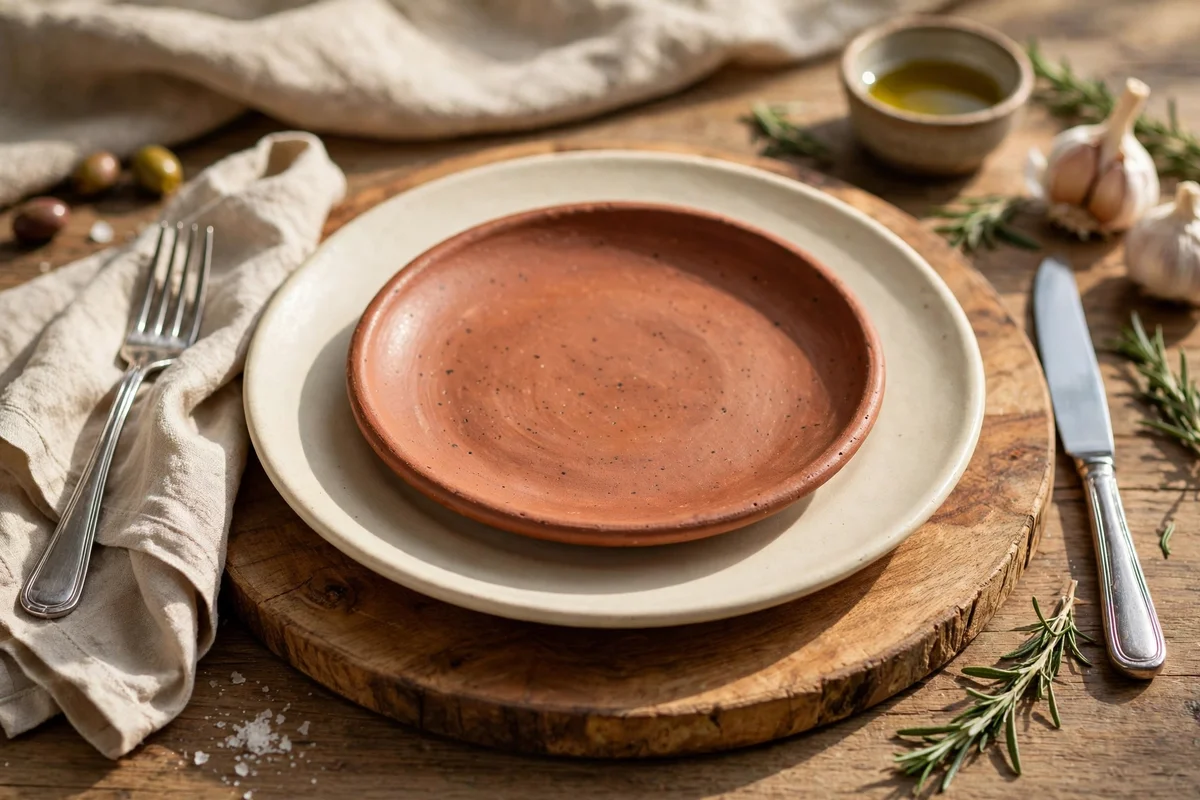
Layering two plates builds height and colour without any extra decor. Start with the wooden charger, then a cream dinner plate 27 cm across, then a terracotta or rust salad plate 19 to 21 cm across on top. The colour rings read cream, wood, cream, terracotta from the outside in, which repeats the linen and runner palette exactly. Keep all plates the same style family, plain or with one simple rim, so the stack stays calm. Hire shops charge about 0.80 to 1.20 per plate; buying twelve salad plates new costs roughly 25.
Leave the top plate empty until serving time so guests can admire the layers when they sit down. The napkin goes on the top plate, never underneath the charger, where it would look lost. The mistake to avoid is stacking three different patterns at once; patterned charger, patterned dinner plate and patterned salad plate fight for attention and photograph badly. One patterned piece per setting is the limit. If plates come from different owners or hire lots, unify them with identical napkins and chargers so the differences read as charming, not chaotic.
4. Line the Centre With Tall Taper Candles in Aged Brass Holders
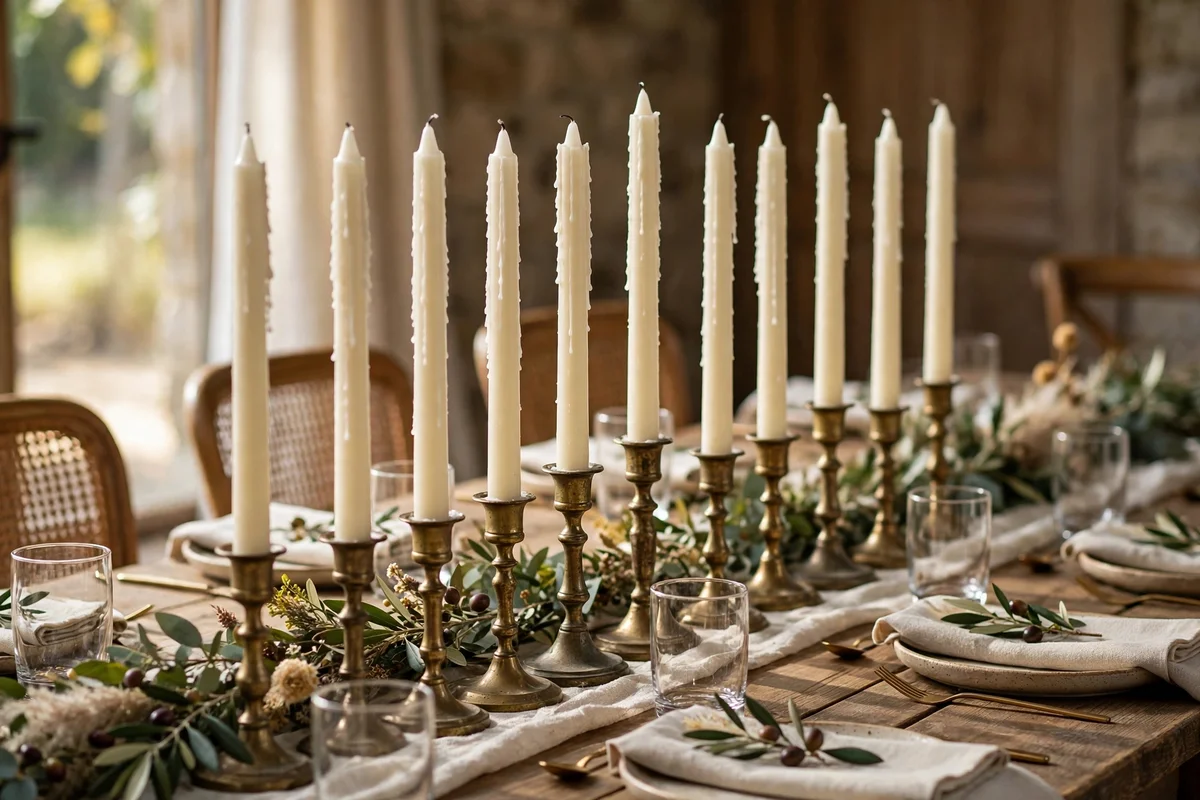
Taper candles are the fastest route to a romantic glow. Use tapers 25 to 30 cm tall in holders 8 to 12 cm high, spacing them 25 to 30 cm apart down the centre so the flame line runs unbroken. Aged or brushed brass suits the palette better than polished gold, which photographs harshly. Buy dripless tapers; cheap ones tunnel and drip wax onto the runner. One candle per 30 cm of table is the rule of thumb, so a 3 m table needs about ten. Budget: tapers cost 1 to 2 each, brass holders 3 to 6.
Light the tapers 30 minutes before guests arrive so the flames settle and the wax softens into a steady pool. Trim wicks to 5 mm before lighting to stop smoking, which can leave grey marks on pale ceilings. The safety mistake is placing tall flames directly under dried branches or fairy lights; keep a clear 20 cm above every flame. Place one long lighter discreetly at each table end so staff can relight any candle the breeze catches. Never leave lit candles unattended.
5. Nestle Short Pillar Candles Between the Brass Holders
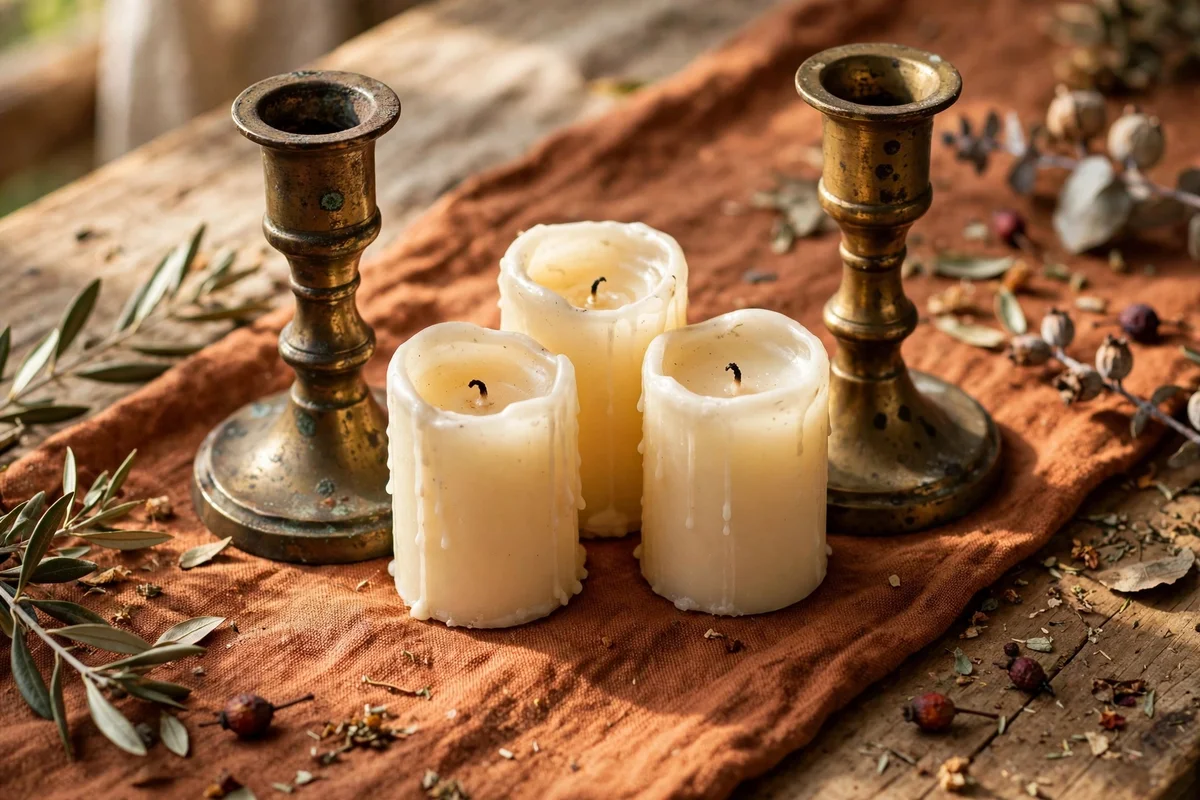
Short pillars fill the low gaps that tapers leave empty. Choose ivory or beeswax pillars 7 to 10 cm tall and 7 cm across, setting two or three between each pair of brass holders. Their wider flame pools double the glow on the runner without adding height that would block conversation across the table. Keep them 8 cm away from linen edges so rising heat cannot scorch fabric. Budget tier: plain paraffin pillars cost about 1.50 each; beeswax pillars run 4 to 7 but smell gently of honey as they burn.
Stand pillars on small brass or glass saucers to catch any overflow; wax on wood chargers is hard to remove. Burn them for one hour two evenings before the wedding to create an even melted top, then trim the wick: this first burn stops tunnelling on the day. The mistake to avoid is buying scented pillars for the dinner table; strong fragrance clashes with food aromas and can bother sensitive guests. Save fragrance for the welcome area. After the meal, blow pillars out before the dancing starts so no one knocks them while moving chairs.
6. Fill Low Bud Vases With Dried Wheat and Ornamental Grasses
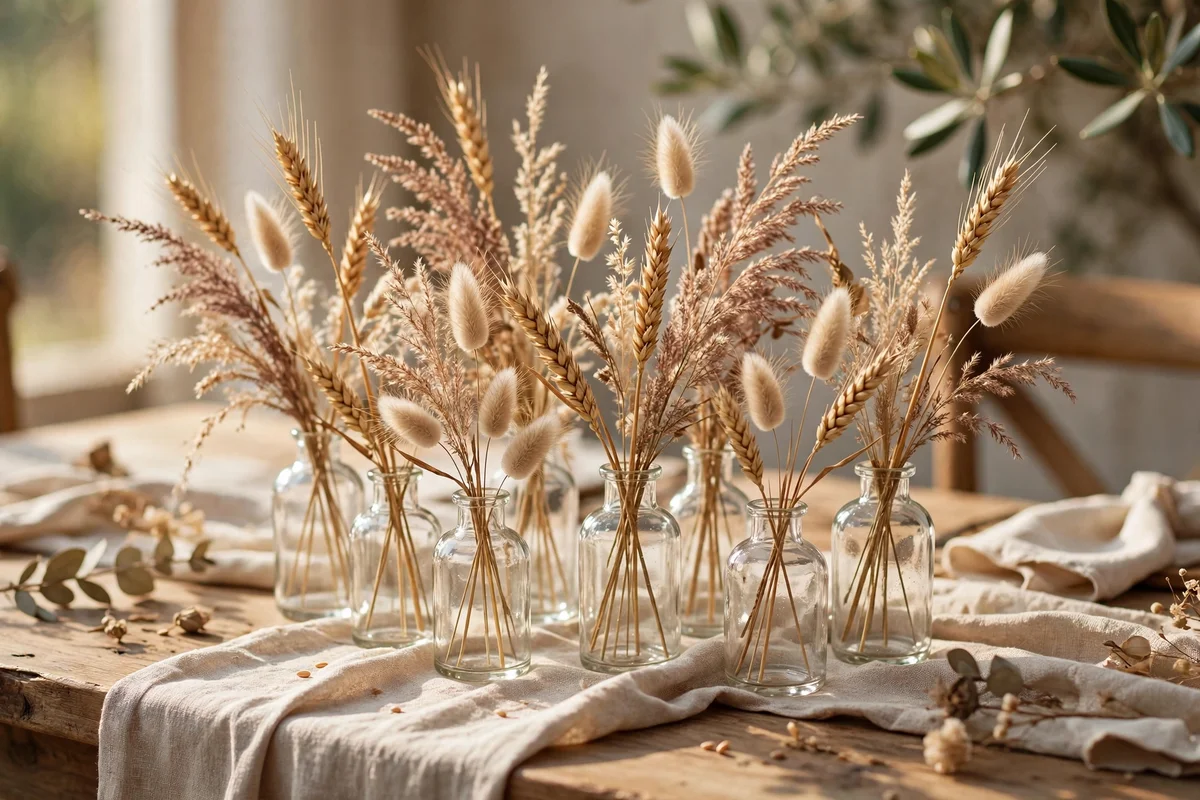
Dried grasses give autumn tables their unmistakable season mark. Use bud vases 10 to 15 cm tall and cluster three stems of dried wheat, bunny tails or pampas tufts in each, cutting stems so the total height stays under 25 cm. Anything taller blocks faces across a 75 cm wide table. Place one vase between every second place setting, roughly five per 3 m table. Dried stems cost 8 to 15 per large bunch, which fills eight to ten vases, and they keep for years so nothing is wasted after the day.
Shake each bunch outdoors before arranging; dried grasses shed their loose seed in the first shake and then stay tidy. Keep vases away from the taper flames by at least 15 cm because dried material catches quickly. The mistake to avoid is using fresh-cut grasses that are still green inside: they wilt within hours and drip sap onto the linen. True dried stems feel crisp and snap cleanly when bent. If allergies are a concern, choose seed heads like wheat and oats over feathery pampas, which shed more airborne fibre.
7. Weave a Silver Dollar Eucalyptus Runner Down the Table Centre
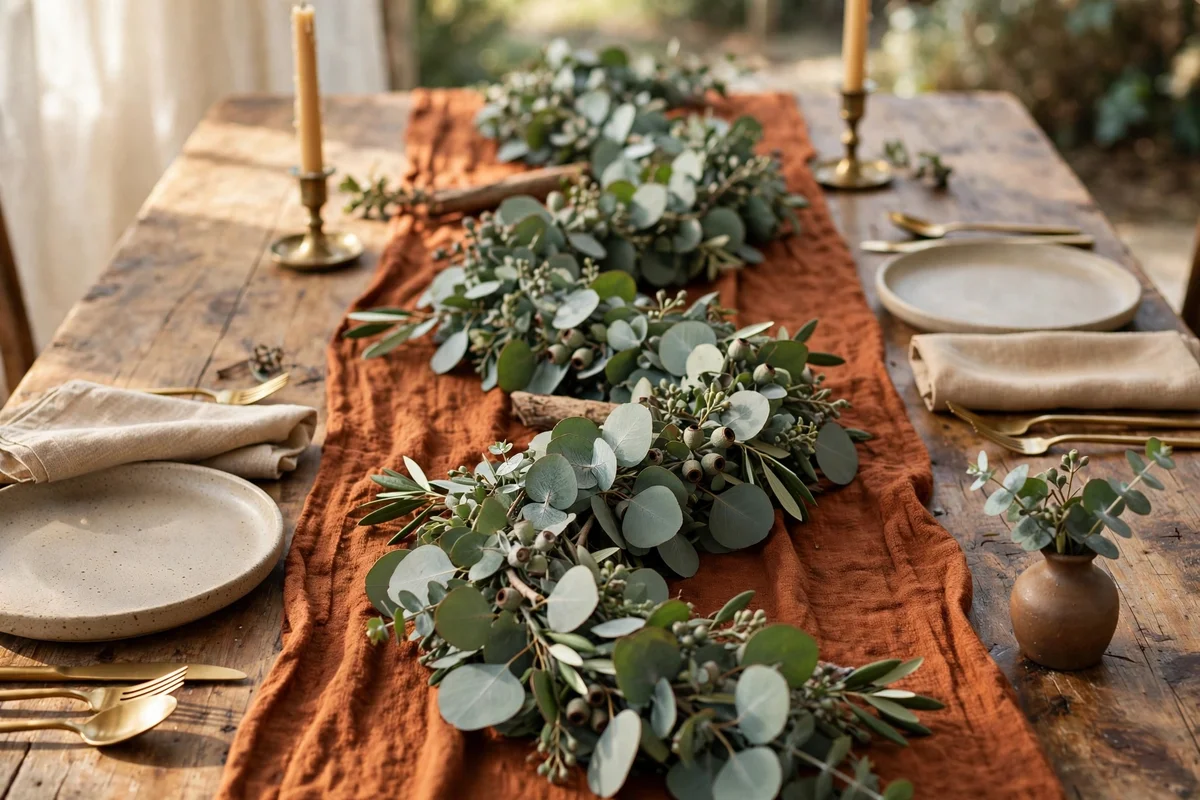
Eucalyptus is the green line that ties harvest golds together. Buy silver dollar eucalyptus garland by the metre, about 20 cm wide, and lay it along the centre on top of the rust runner, with sprigs spilling 10 cm over each side. One 2 m length suits a 3 m table when you want candles and pumpkins visible between the leaves; use a full 3 m for a lush look. Fresh eucalyptus costs 12 to 20 per 2 m and smells sweet through the evening. Mist it lightly on the morning of the wedding to revive the leaves.
Tuck the garland stems into the runner weave so nothing slides when guests bump the table. Snip any brown leaves the night before; fresh garlands sometimes hide a few. The mistake to avoid is using seeded eucalyptus with heavy gum nuts over the food area: the nuts drop and the seeds stain linen. Silver dollar or baby blue varieties stay clean. After the wedding, hang leftover garlands upside down in a dry room; they dry into lasting decor you can use at home for months.
8. Tuck Small White Pumpkins Along the Runner for Soft Contrast
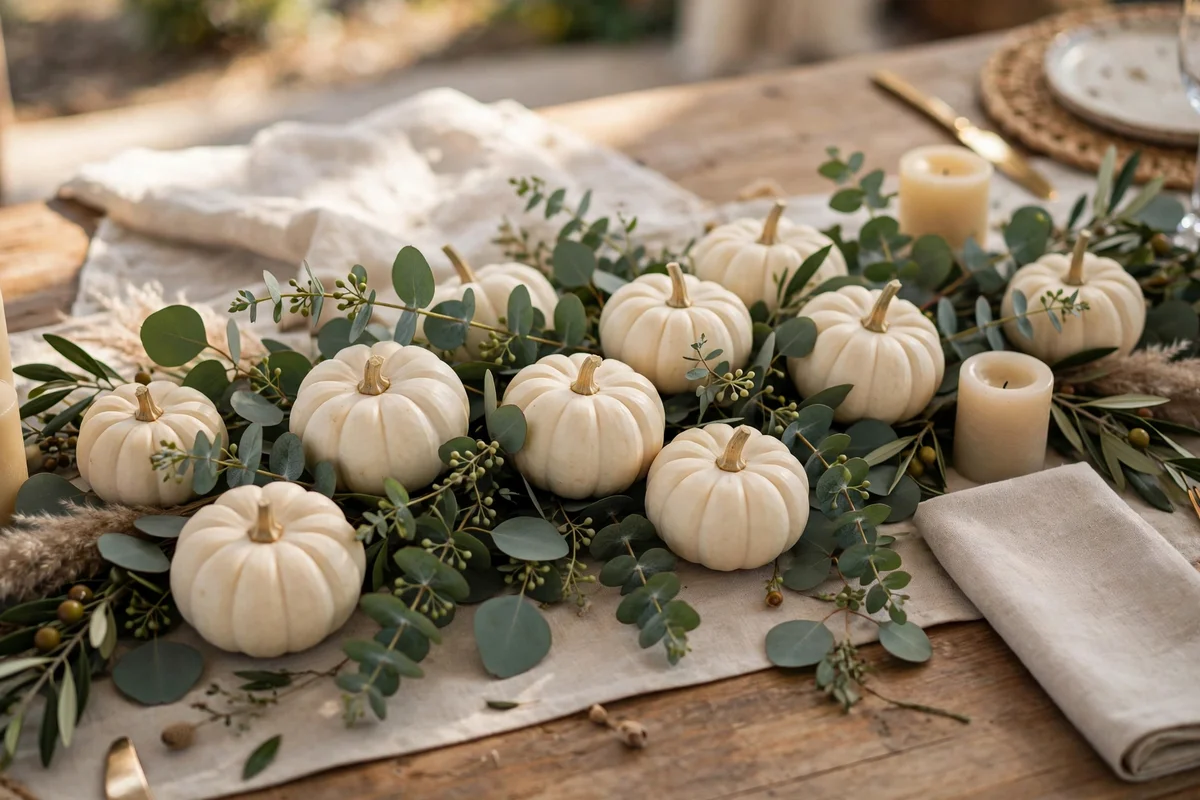
White pumpkins calm the strong rusts and golds with quiet contrast. Choose baby boo pumpkins 8 to 12 cm across and nestle five to seven along each 3 m table, turning each so its prettiest face shows. Mixing perfectly round ones with a few warty or ribbed varieties adds honest harvest character. They sit directly on the eucalyptus so their bases hide in the leaves. Baby boo pumpkins cost 1 to 3 each at farm shops in October, and the budget trick is buying a mixed crate of twenty for about 15.
Wipe each pumpkin with a dry cloth before placing; field dust dulls the white. Keep them off damp linen edges so their bases do not soften and mark the cloth. The mistake to avoid is stacking pumpkins on top of each other for height; the top one always rolls by dessert time. If you want height, place one pumpkin on a small upturned wooden bowl instead. After the wedding these pumpkins last four to six weeks as home decor, so offer them to guests as favours rather than binning them.
9. Brush Mini Pumpkins With Gold Paint for Warm Metallic Accents
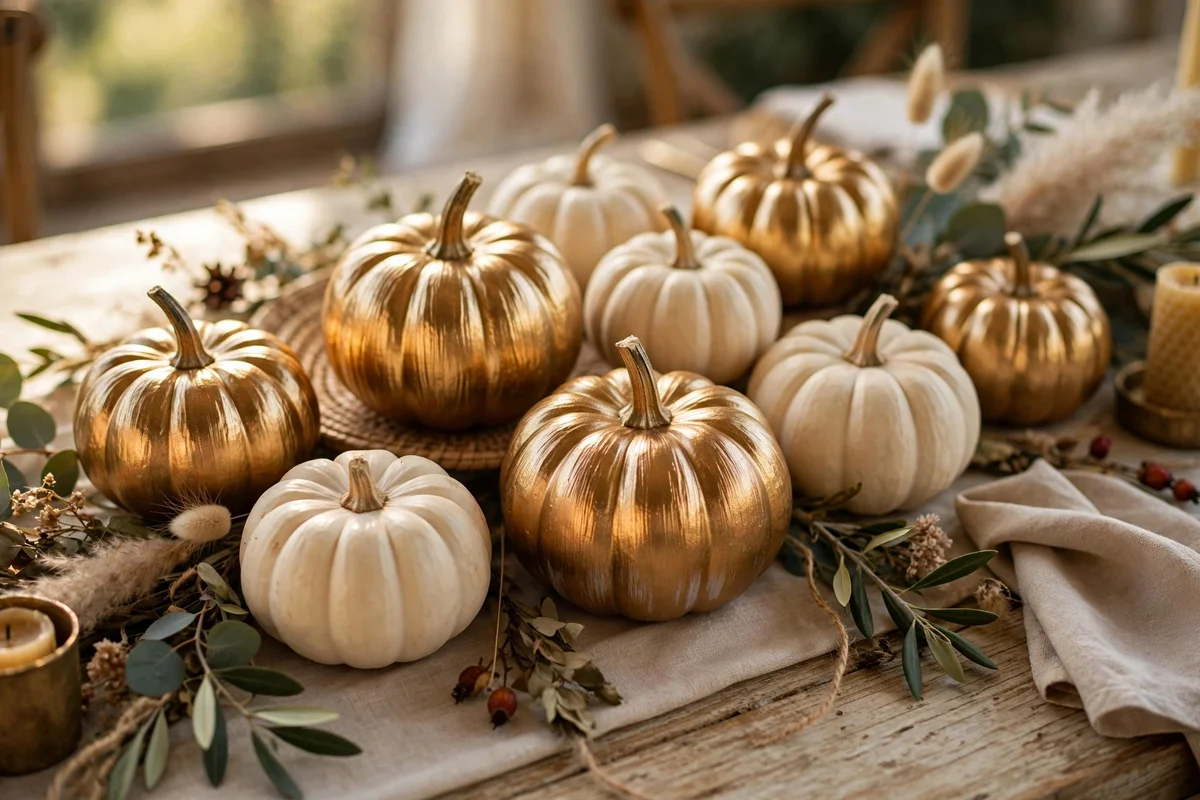
A little gold goes a long way on a harvest table. Take mini pumpkins 5 to 8 cm across and brush them with one thin coat of metallic gold craft paint, leaving the stem natural for contrast. Two or three gold pumpkins per table is enough; more than that starts to look like a display rather than decor. Let them dry a full 24 hours so the paint hardens and does not transfer to linen. One 60 ml pot of paint, about 4, covers fifteen to twenty minis, making this the cheapest metallic accent available.
Paint outdoors or in a ventilated room and wear gloves; metallic paint stains skin for days. Use a soft flat brush and long strokes following the pumpkin ribs so the finish looks even. The mistake to avoid is spraying them with metallic spray paint indoors the night before; the fumes linger and the overspray settles on everything nearby. Brush paint gives better control anyway. If a pumpkin gets a fingerprint in wet paint, let it dry fully and add a second thin coat rather than smudging it while wet.
10. Fold Linen Napkins Around Fresh Rosemary Sprigs
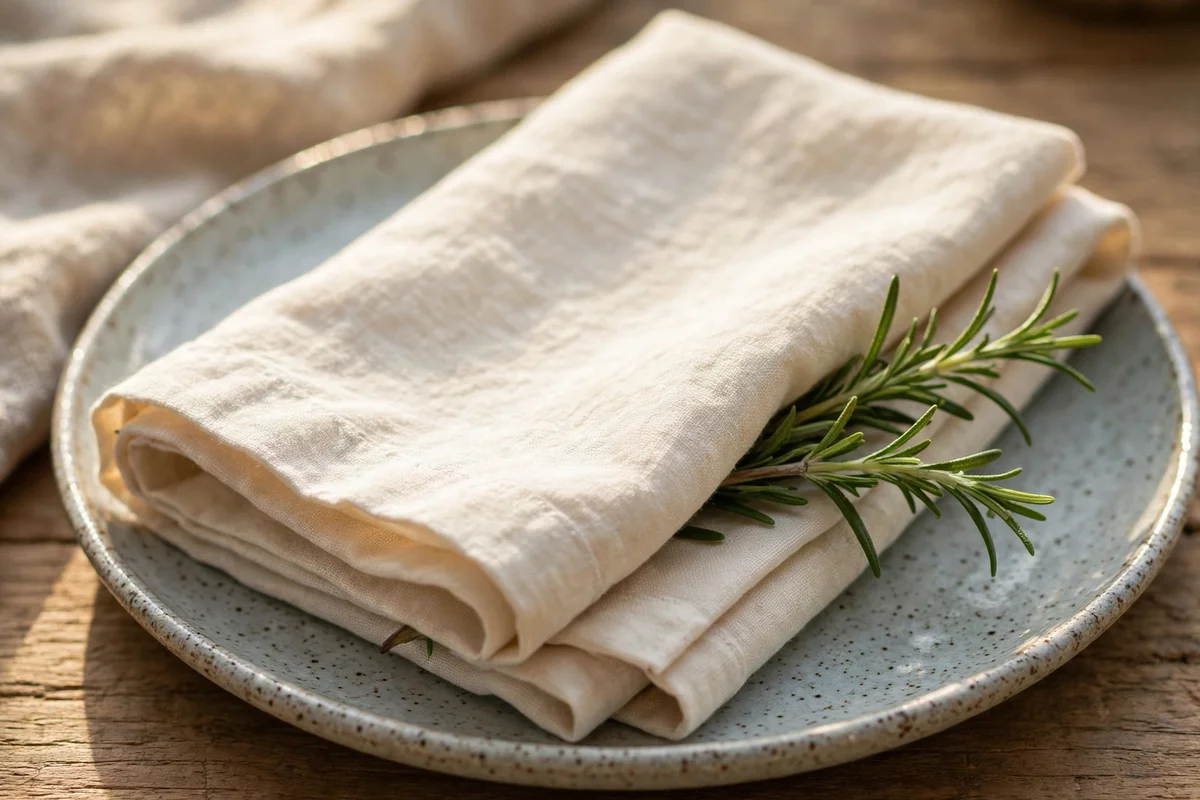
A napkin with a herb sprig tells guests this table was dressed by hand. Fold a 45 cm square linen napkin into a simple rectangle and lay it across the top plate, then slide one fresh rosemary sprig 10 to 12 cm long under the fold. The sprig releases a gentle scent every time the napkin moves. Buy rosemary in 100 g bunches; one bunch gives about twenty-five usable sprigs. Keep sprigs in a damp tea towel in the fridge until an hour before seating so they stay perky.
Choose sprigs with firm upright leaves and avoid any that feel soft or look dark at the tips. Lay each sprig diagonally so it crosses the napkin corner to corner; straight lines look stiff. The mistake to avoid is preparing the napkins the night before with fresh herbs inside; rosemary dries and curls overnight and the napkins look tired. Fold the linen the day before if you like, but add the sprigs on the morning of the wedding. Guests can take the sprigs home or drop them into their water glass for a fragrant touch.
11. Tie Napkins With Twine and a Single Dried Flower Stem
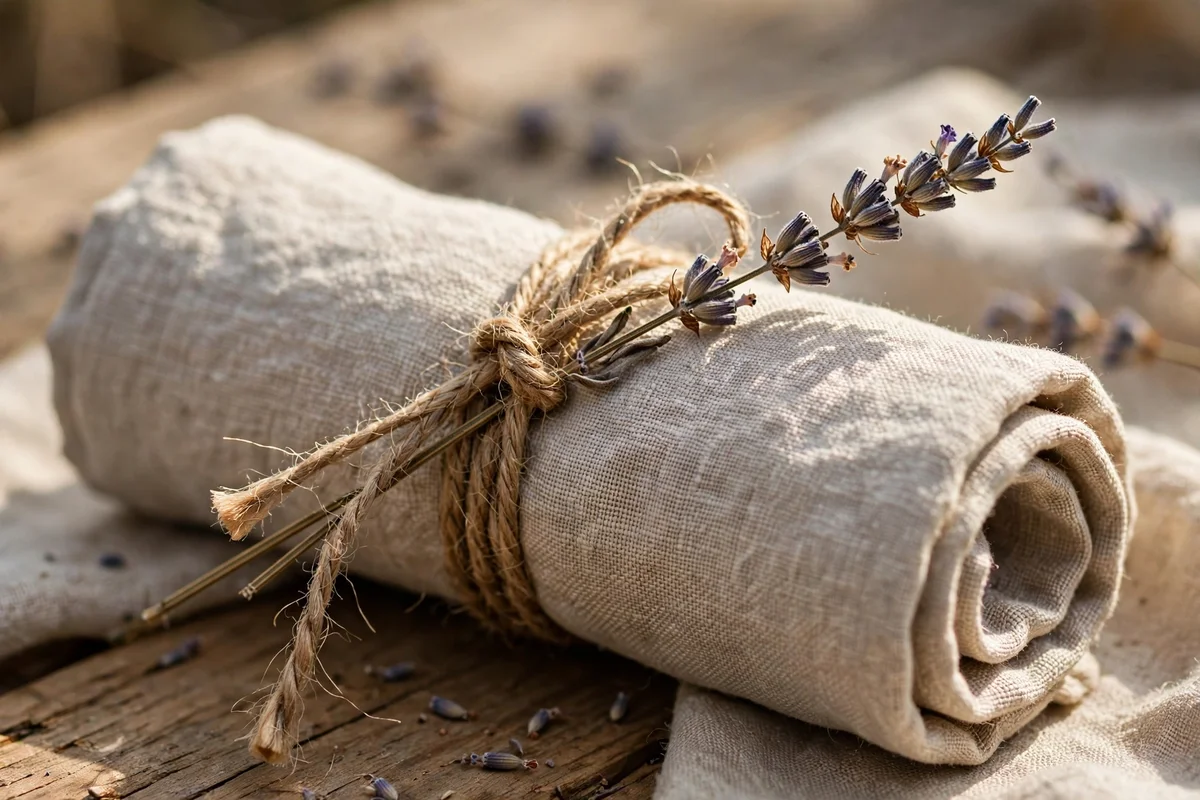
Twine-wrapped napkins suit the rustic end of the harvest look. Roll a linen napkin into a loose tube, wrap natural jute twine twice around the middle and knot it at the back, then tuck one dried stem, such as lavender, strawflower or a wheat head, under the twine at the front. Keep the stem under 12 cm so it does not poke guests when they sit. A 50 m ball of twine costs about 3 and ties around eighty napkins, while a bunch of dried lavender at 6 fills twenty settings.
Roll rather than fold for this style; a rolled napkin holds the twine without slipping. Tie the twine snugly but not crushing, since linen creases permanently under tight cord. The mistake to avoid is using coloured synthetic string that looks like parcel tape; natural jute or cotton twine is the whole point of the look. If the dried stem sheds buds, give each stem a gentle shake outdoors first. This is a lovely job for family helpers the morning of the wedding, and it takes about one minute per napkin.
12. Weave Warm White Fairy Lights Through the Eucalyptus
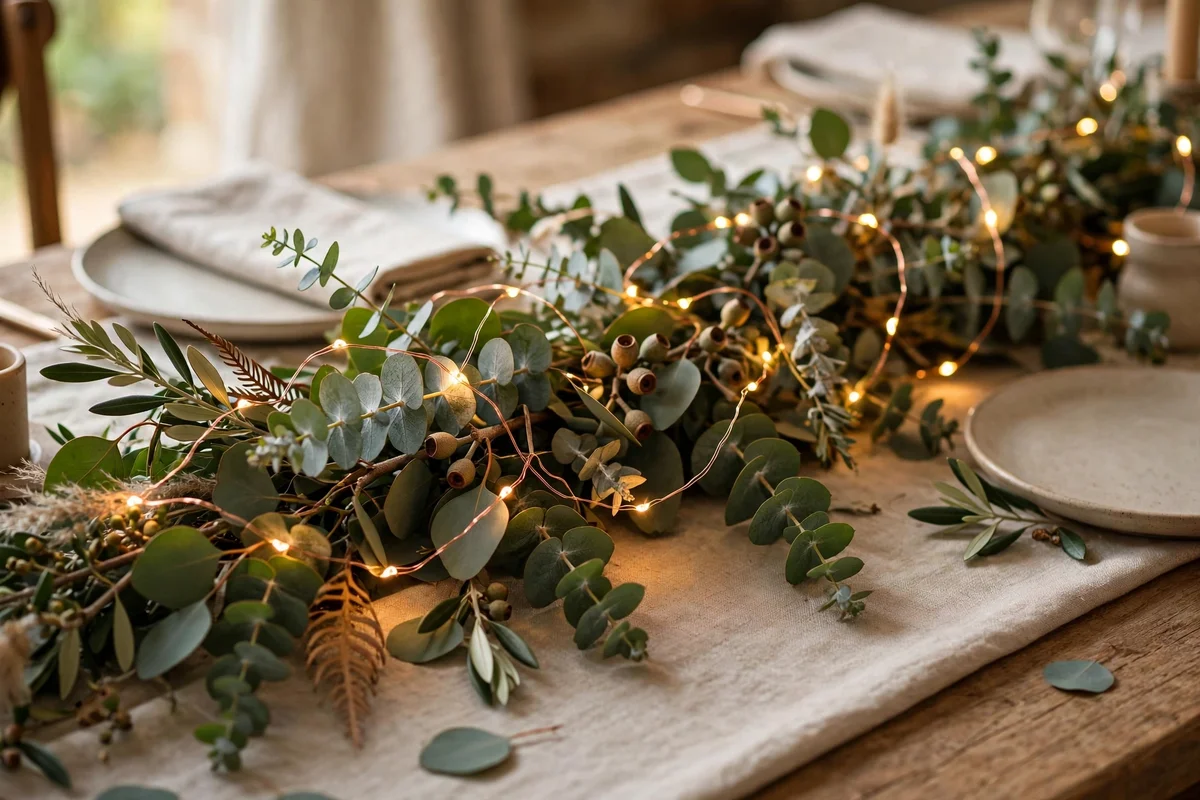
Fairy lights turn the green runner into a glowing river after sunset. Choose warm white lights on thin copper wire, 5 to 10 m per table depending on length, and weave them loosely through the eucalyptus so bulbs peek out between leaves. Copper wire bends easily around stems and disappears against the foliage. One 10 m strand with 100 LEDs costs 6 to 10 and runs on two AA batteries hidden in a small pouch under the runner end. Set them to steady glow rather than twinkle; twinkle distracts during speeches.
Switch the lights on 45 minutes before sunset so the glow builds as daylight fades. Tape battery packs under the table edge with fabric tape, never on the linen where the outline shows. The mistake to avoid is mixing warm white and cool white strands on the same table; the colour clash reads as a mistake in every photograph. Buy all strands from one batch and test them together the night before. Keep one spare strand per three tables, because a dead battery pack always appears at the worst moment.
13. Raise Sparkling Cordial Dispensers on a Wooden Crate Station
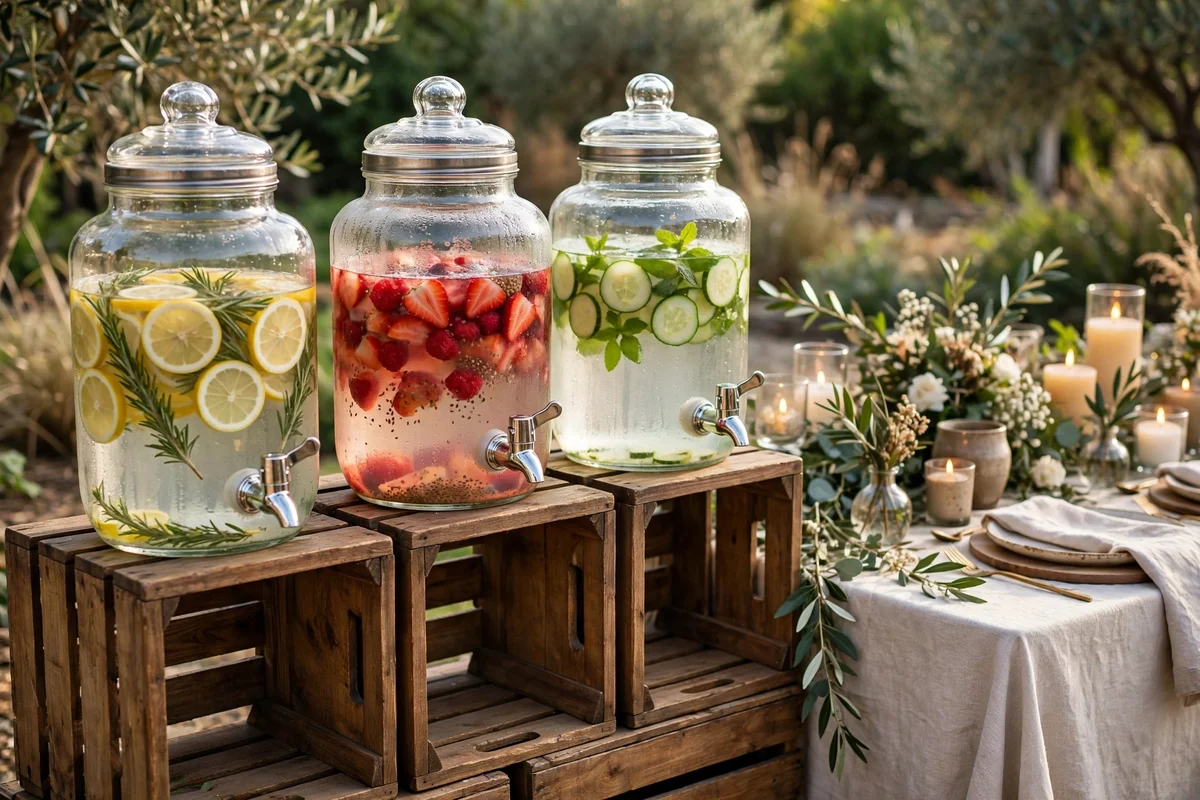
A drinks station keeps guests refreshed without any alcohol on the table. Set two or three glass dispensers with taps, each 4 to 8 litres, on upturned wooden crates at one table end, raising them 20 to 25 cm so glasses fit under the taps. Fill one with sparkling apple cordial, one with elderflower and sparkling water, and one with berry juice topped with soda. Add sliced apples, lemon wheels and mint to the dispensers for colour. Label each with a small handwritten card so guests know what they are pouring.
Chill the cordials and juices overnight and add ice to the dispensers only 30 minutes before guests arrive, since melting ice waters everything down. Place a small tray of spare tumblers beside the crates and a cloth for drips. The mistake to avoid is placing the station in the only walkway; drinks queues block servers and spoil the flow. Tuck it against a wall or in a corner with 1 m of clear space in front. Refill dispensers during the main course so they never run dry at the busiest moment.
14. Set Plain Cut-Glass Tumblers for Water and Fresh Juice
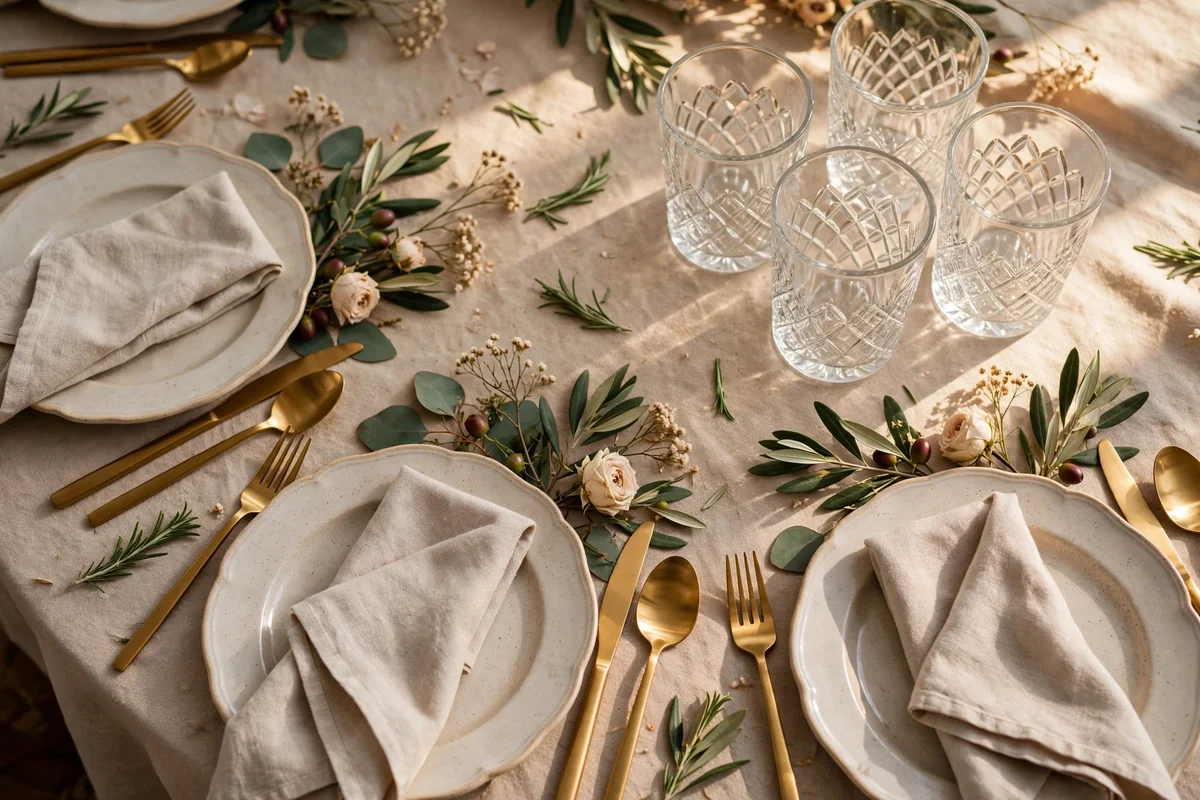
Glassware should be beautiful but never steal the scene. Use plain cut-glass or pressed-glass tumblers 8 to 10 cm tall for water, and the same glasses for juice, keeping one consistent style across the table. Set one tumbler at the top right of each place setting, about 2 cm above the knife tip. Pressed glass costs 1 to 2 per tumbler new and catches candlelight beautifully. Avoid coloured or heavily patterned glasses; they clash with the rust and gold palette and make juice look murky.
Polish every glass with a dry microfibre cloth on the morning of the wedding; water spots show under fairy light. Pour water when guests sit down and offer juice with the first course, topping up during the meal. The mistake to avoid is pre-pouring juice an hour early; it warms, separates and looks unappetising. Keep jugs chilled and pour fresh. If children are present, use the same tumblers but fill them only halfway to prevent spills, and keep spare cloths nearby for quick clean-ups.
15. Stand Handwritten Place Cards in Mini Brass Easels
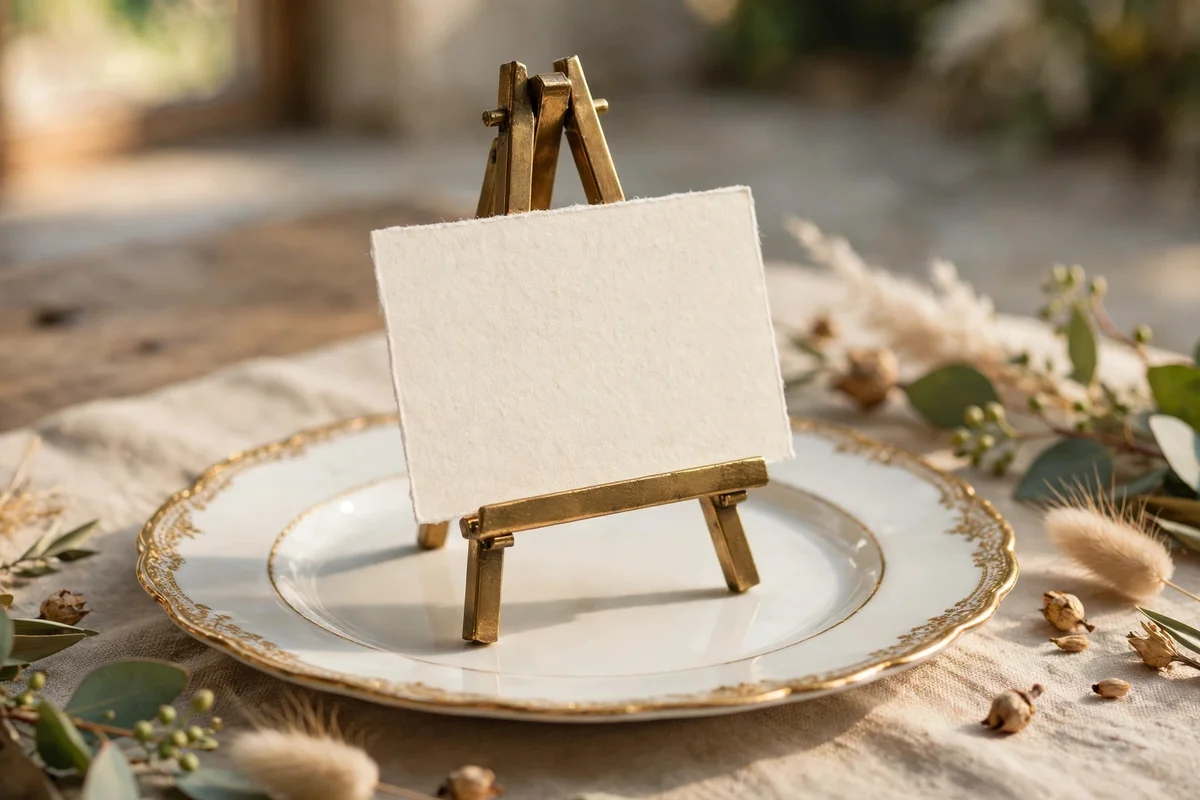
Place cards make every guest feel expected. Write names on cream cards 9 by 6 cm with a brown or dark green pen, and stand each card in a mini brass easel 5 to 7 cm tall at the centre of the top plate. The brass repeats the candle holders and ties the setting together. Write the cards two days before so the ink sets and you have time to fix spellings. Mini easels cost 1.50 to 3 each in packs of twelve, and guests often take them home as keepsakes.
Use first names only for family tables and full names for formal seatings, and double-check every spelling with the couple. Place the card slightly tilted toward the guest so it reads easily when they approach. The mistake to avoid is printing cards on flimsy paper that curls in candle heat; use 250 gsm card stock so they stand straight all evening. If a guest cancels last minute, remove the whole setting rather than leaving an empty chair with a card, which photographs sadly.
16. Centre a Low Wooden Tray of Apples and Pears at Each Table End
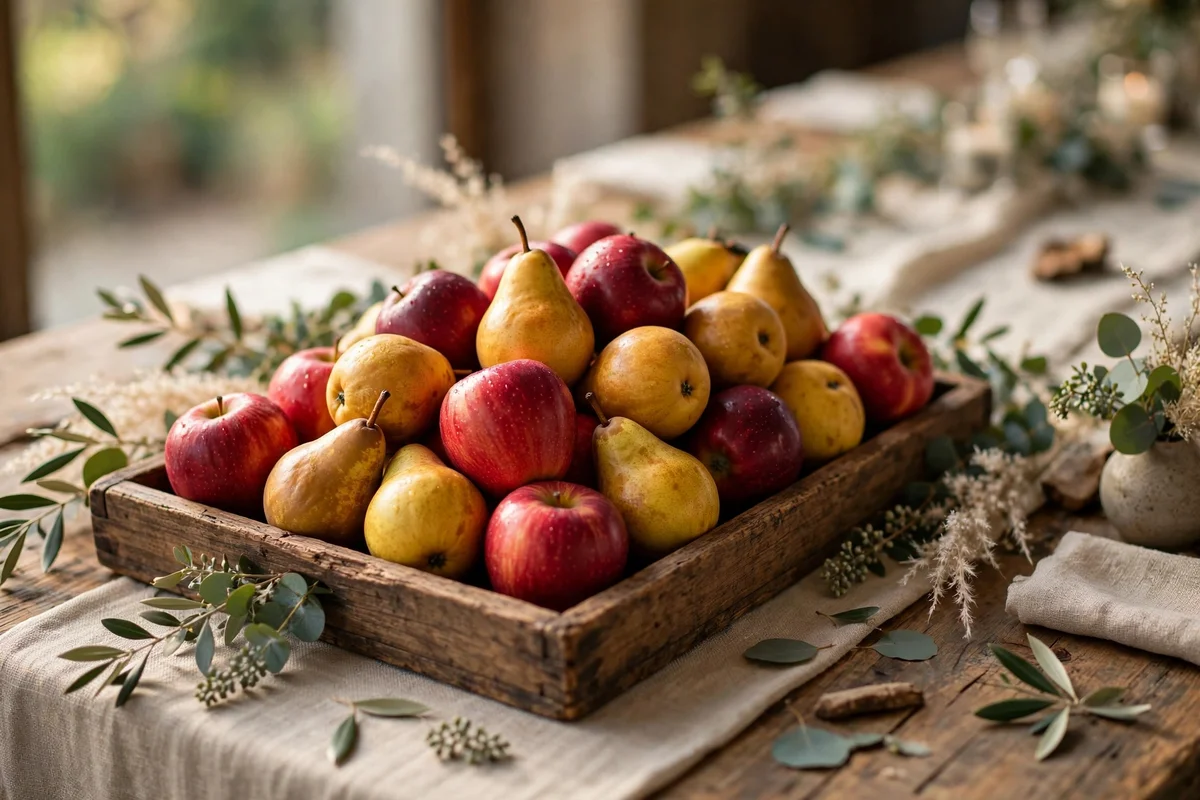
A tray of orchard fruit anchors the table ends with honest harvest colour. Use a low wooden tray 40 to 50 cm long and pile it with red apples, golden pears and a few crab apples, mixing heights by tucking smaller fruit into gaps. The deep reds and golds echo the rust runner and brass without any arranging skill needed. Fruit costs 8 to 12 per tray at a market, far less than an equivalent flower arrangement. Choose firm fruit with no bruises so it survives handling and the warm room.
Line the tray with a square of the rust runner fabric or a linen napkin so the fruit does not roll and the wood stays clean. Refill the tray during the evening if guests start nibbling; fruit that guests can eat always disappears faster than expected. The mistake to avoid is using waxed decorative fruit; it looks perfect but feels like a trick when a child tries to bite it. Real fruit can be taken home afterwards, so nothing is wasted. Wash the fruit the morning of the wedding and dry it fully before piling.
17. Layer a Soft Gauze Overlay Over the Cream Linen
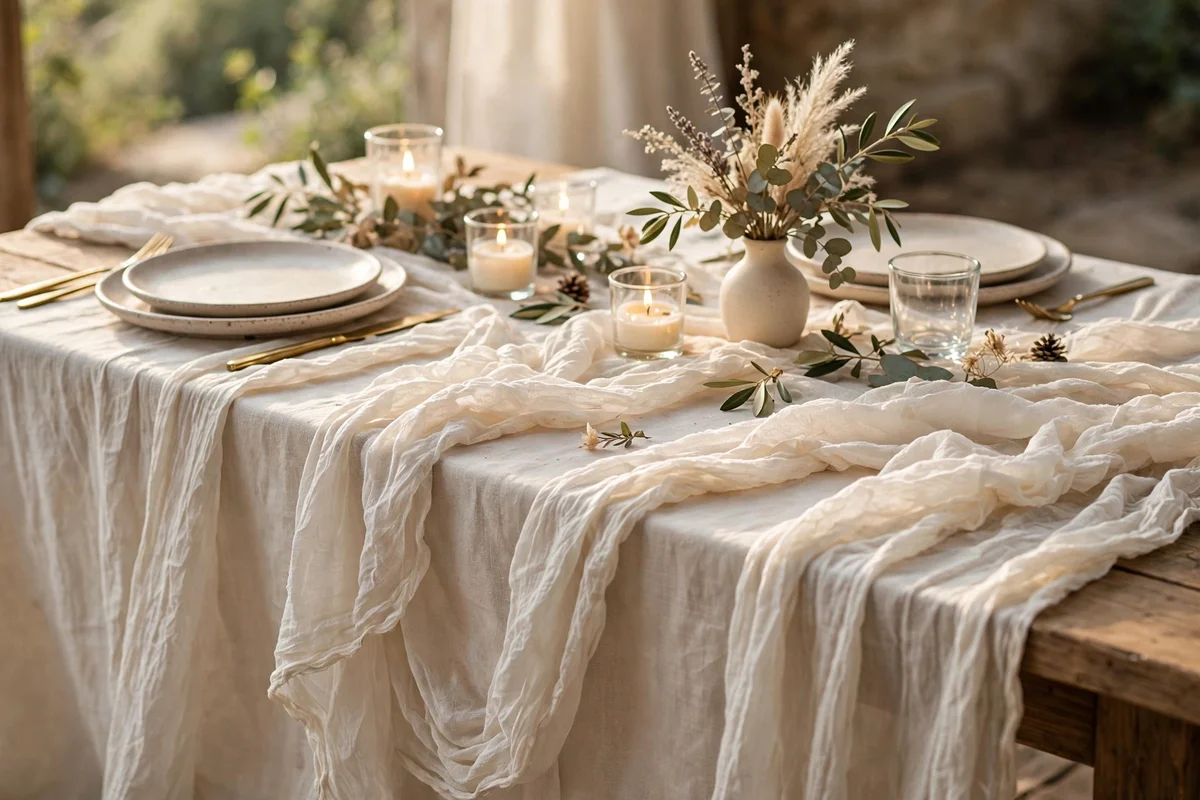
A gauze overlay softens the whole table with one simple layer. Lay a cheesecloth or cotton gauze runner 60 to 80 cm wide over the cream linen, letting it wrinkle naturally instead of pressing it flat. The wrinkles catch candlelight and give the table a relaxed, hand-dressed feel that stiff linen alone cannot achieve. Gauze costs 3 to 5 per metre and a 3 m length covers one table generously. Pull a few threads loose at the ends for a soft frayed edge, which suits the harvest mood perfectly.
Lay the gauze before any candles, vases or pumpkins, since tucking it under heavy objects afterwards creases the base linen. Let the ends trail 15 to 20 cm past the table edge for a soft finish. The mistake to avoid is using synthetic tulle instead of cotton gauze; tulle is stiff, shiny and melts near candle flames, while cotton gauze drapes and stays safe. Keep gauze 10 cm clear of open flames as a sensible precaution. After the wedding, wash it gently and reuse it for gift wrapping or future table styling.
18. Style the Table Ends With Tall Dried Branches in Stoneware Vases
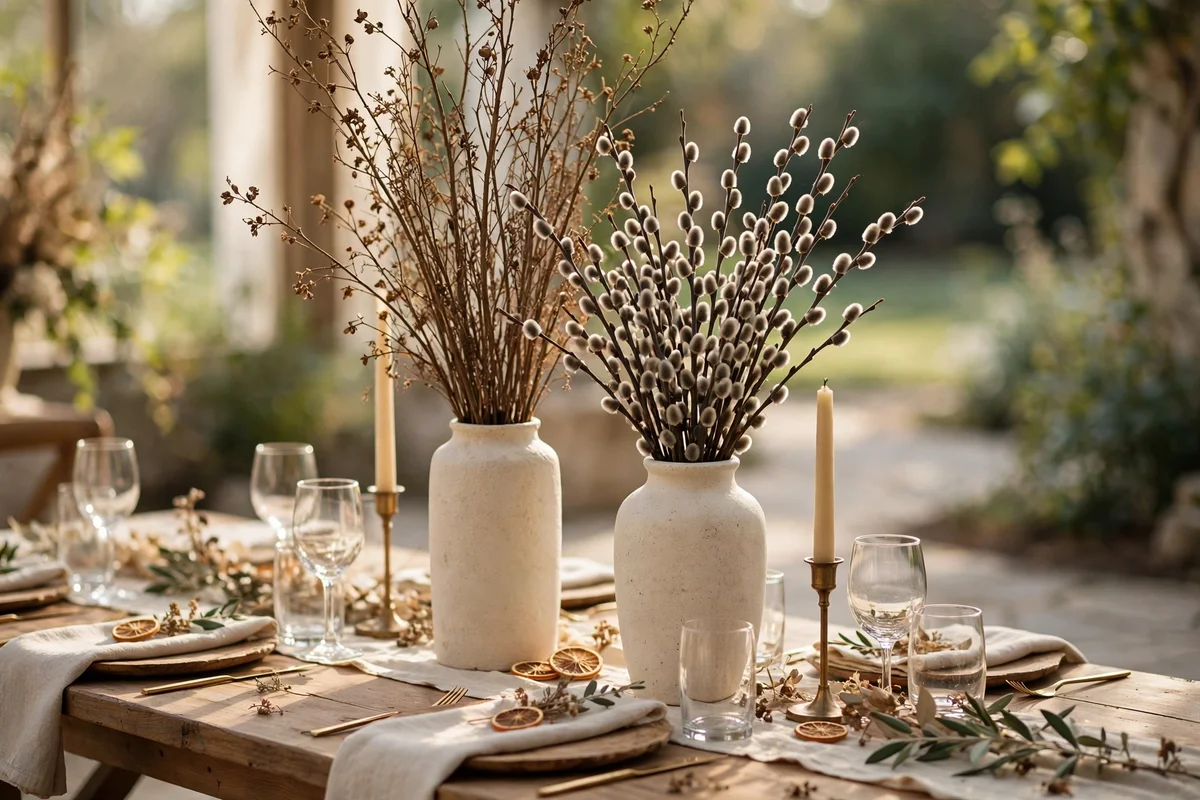
Tall branches give the table ends the height the centre keeps low. Place stoneware vases 30 to 40 cm tall at each end of the table and fill them with dried branches, pussy willow or curly hazel cut to 70 to 90 cm. The vertical lines frame the whole table in photographs without blocking a single face. Stoneware in cream, sand or warm grey suits the palette; avoid glossy black, which fights the soft harvest mood. Dried branches cost nothing if foraged and 10 to 18 per bunch from a florist.
Weigh the vase base with clean stones or sand so tall branches cannot topple when guests brush past. Keep the arrangements 30 cm in from the table corner so servers can reach around them. The mistake to avoid is choosing branches with brittle seed pods that shatter onto the food; test by shaking each branch hard outdoors first. If pods fall, choose smoother stems. These end vases also mark the drinks station and cake table beautifully, so order two extra and reuse them across the venue.
19. Offer Dates and Spiced Nuts in Small Bowls as a First Welcome
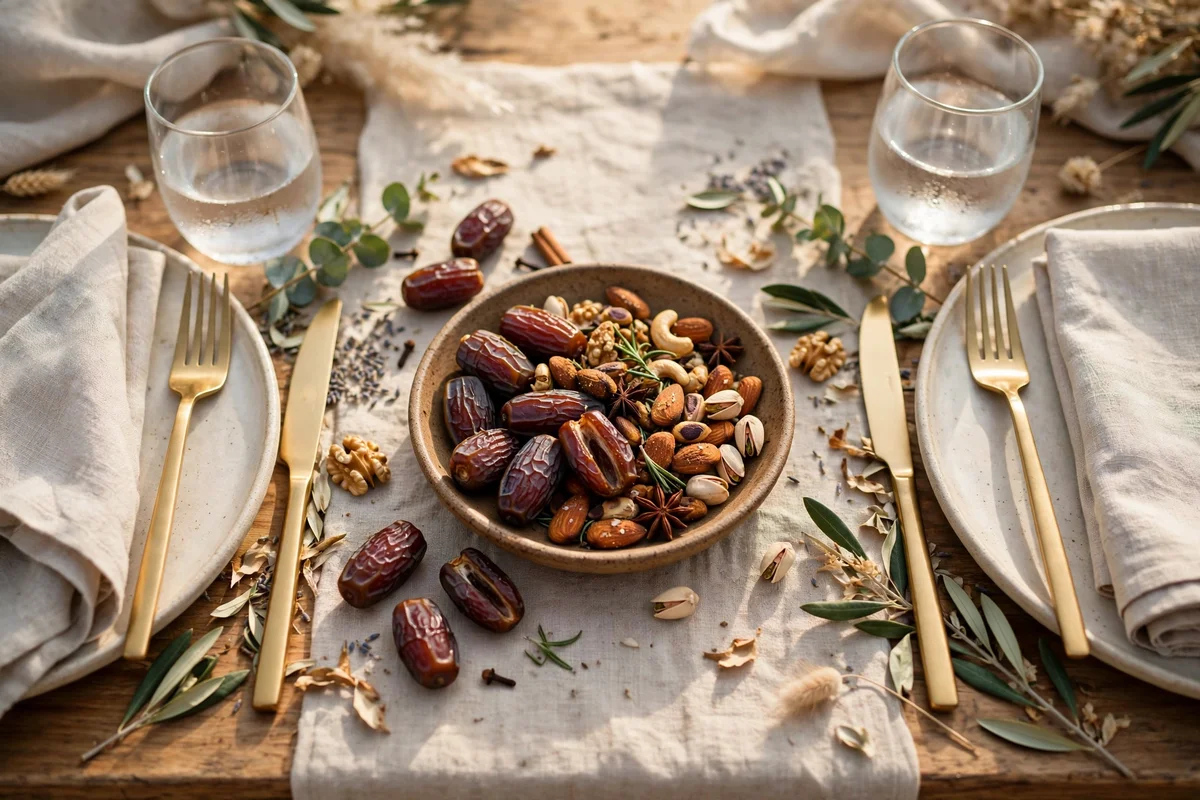
A small bowl of dates and nuts welcomes guests the moment they sit down. Set one shallow bowl 12 to 15 cm across between every two place settings, filling it with medjool dates and a mix of almonds, walnuts and pistachios tossed in a little honey and cinnamon. The gesture suits a family-centred celebration and keeps hunger at bay while photographs are taken. Two kilos of mixed nuts and one kilo of dates serve about fifty guests and cost 25 to 35 from a wholesale market.
Serve the nuts in their shells where practical, with a small dish for shells beside each bowl, to slow the grazing and keep fingers cleaner. Check with the couple about nut allergies before the day and label the bowls clearly. The mistake to avoid is leaving the bowls out for the whole evening; nuts go soft in warm rooms and look tired by dessert. Refresh the bowls once before the main course and clear them with the starters. Leftover dates and nuts pack easily into the favour pouches for guests to take home.
20. Scatter Dried Rose Petals and Marigold Heads Between Plates
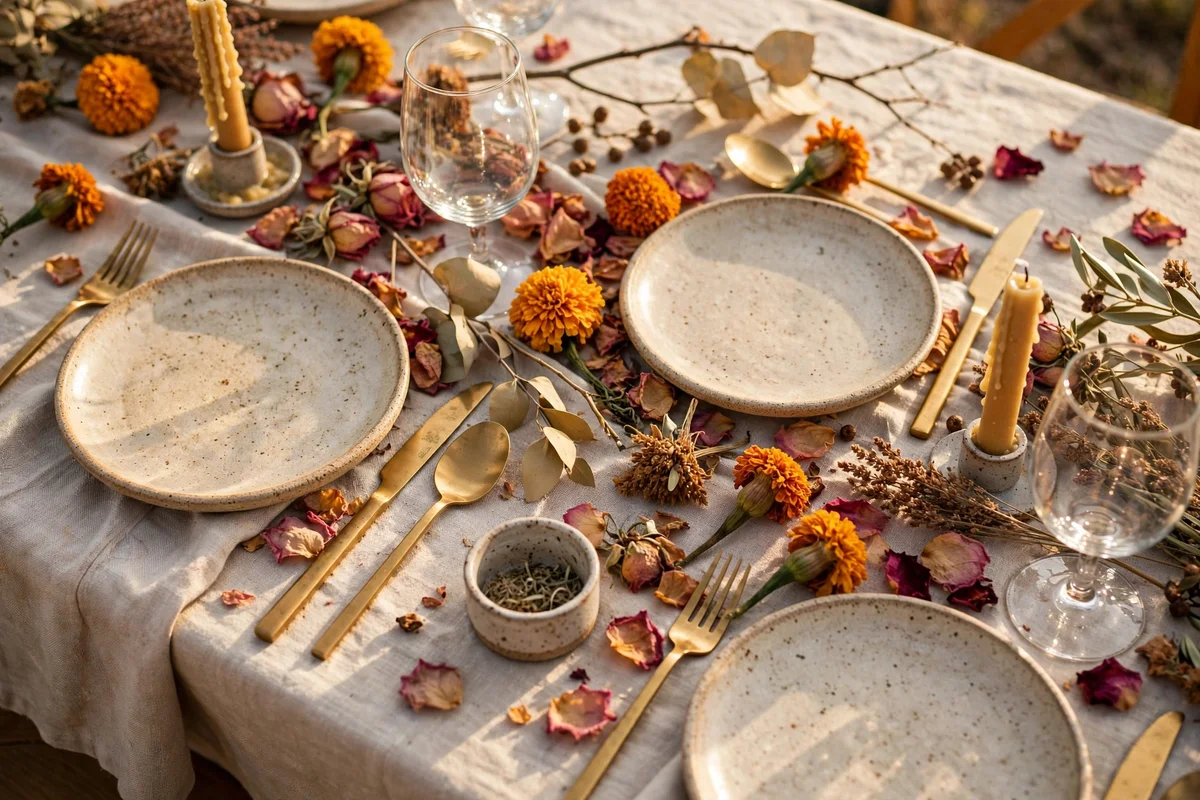
Scattered petals soften the hard lines of plates and chargers. Use dried rose petals in deep red and blush plus whole dried marigold heads in gold and rust, scattering a small handful in the gaps between place settings rather than in neat lines. Random placement looks natural; rows look fussy. One litre bag of mixed dried petals, about 8, covers three tables generously. Keep petals off the plates themselves so they do not end up in the food, and away from open flames by a few centimetres.
Buy petals from a florist supplier rather than a craft shop so you know they are clean and free of dyes that could stain linen. Check the colourfastness by rubbing one petal on damp white cloth the night before; if colour transfers, keep those petals off the linen. The mistake to avoid is scattering fresh petals hours early; they brown at the edges and look wilted by dinner. Dried petals hold their colour all day. Sweep leftover petals into envelopes as confetti for the couple’s send-off.
21. Hang Small Dried Flower Posies From Chair Backs With Ribbon
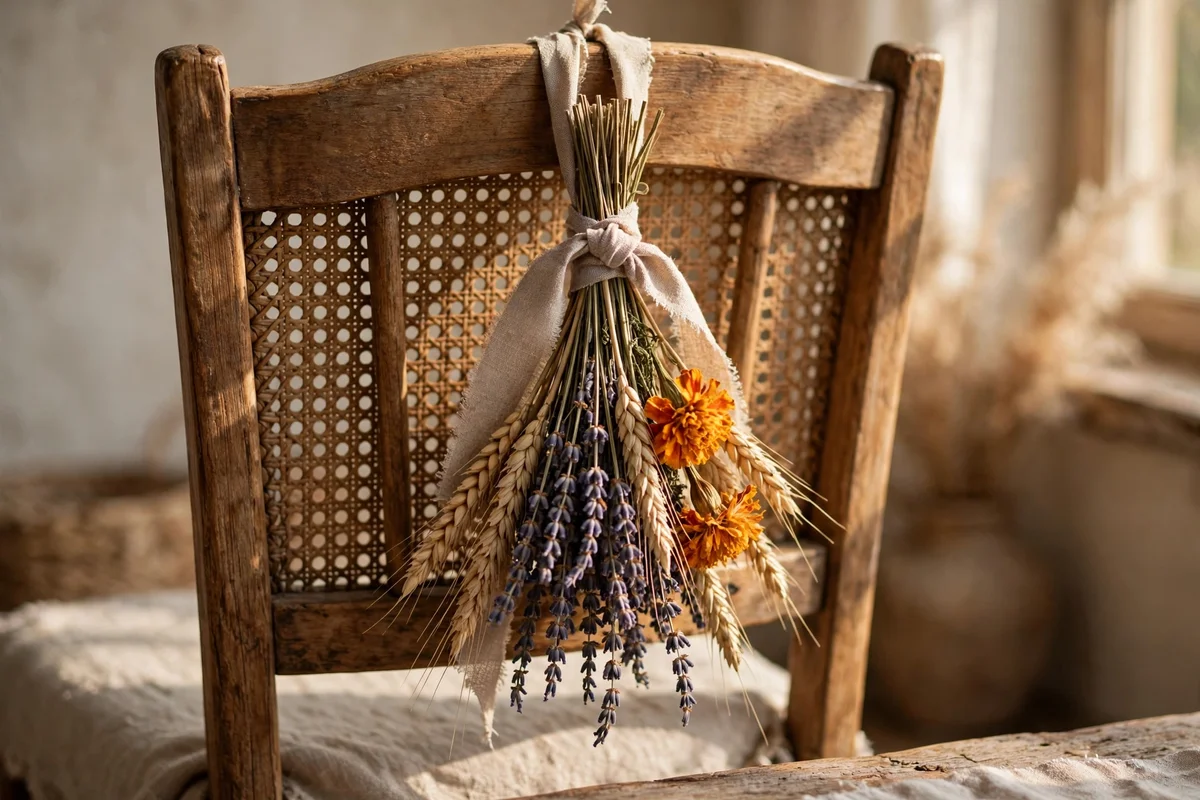
Chair backs are free decor space most tables waste. Tie a small posy of dried lavender, wheat and a marigold head with a 40 cm length of rust or cream ribbon, then loop it over the top rail of every second chair so it hangs down the back. The posies add colour at eye level when guests look down the table. Each posy costs under 2 in materials and takes five minutes to make. This is another perfect morning-of job for family helpers, and children enjoy tying the bows.
Hang posies on alternate chairs rather than every chair; a posy on every back looks crowded and bumps guests as they sit. Tie the ribbon in a simple bow with long tails, and trim the tails at an angle so they look finished. The mistake to avoid is using fresh flowers for chair posies; they wilt within two hours of hanging and drop petals on the floor. Dried posies stay perfect all day and guests can take them home. Keep posies clear of the chair legs so they do not catch on clothing.
22. Build a Grazing Board of Fruit, Honey and Warm Bread
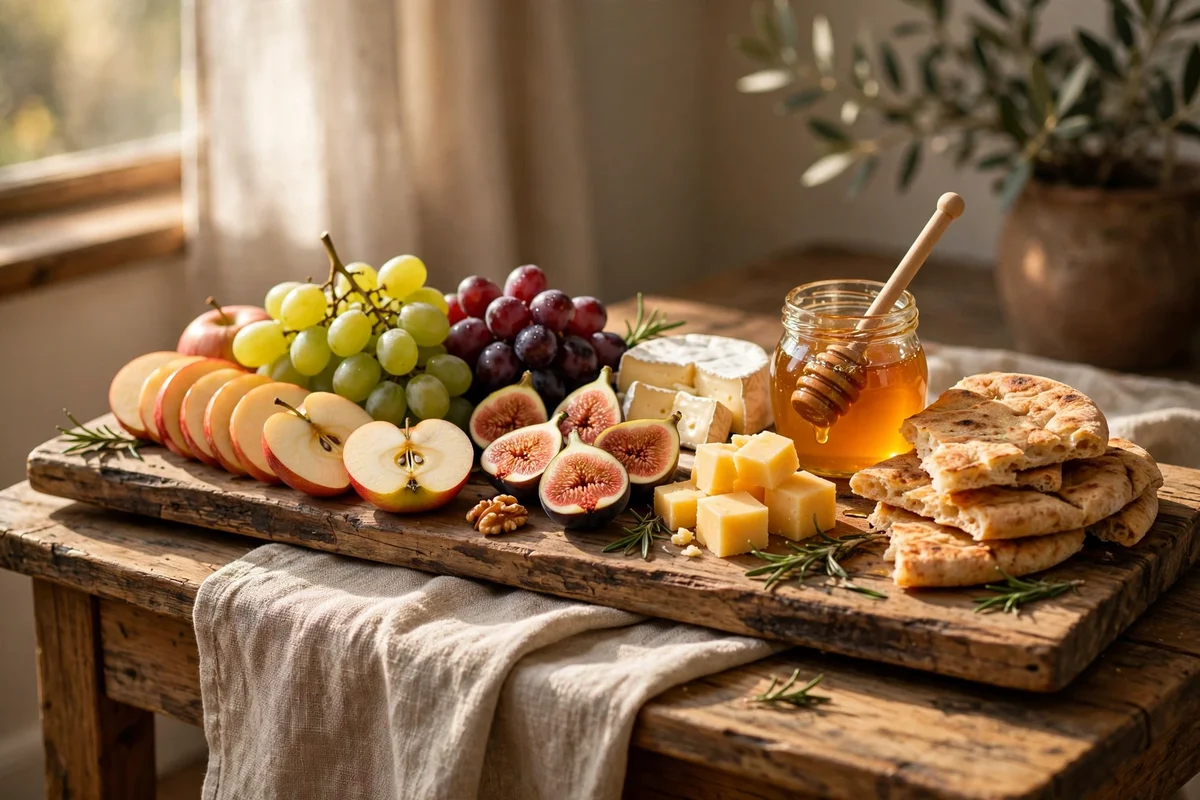
A grazing board turns the wait before dinner into part of the celebration. Lay a long wooden board 60 to 80 cm down the centre of a side table and arrange sliced apples, grapes, figs, cubes of mild cheese, a small jar of honey with a dipper, and torn pieces of warm flatbread. Keep flavours mild and family friendly so grandparents and children enjoy it equally. A generous board for fifty guests costs 40 to 60 and takes thirty minutes to assemble on the day.
Assemble the board no more than one hour before guests arrive so the bread stays soft and the fruit looks fresh. Place small plates and napkins at one end so guests serve themselves tidily. The mistake to avoid is putting the board on the main dining table; it crowds the place settings and gets in the way of the first course. Give it its own side table near the entrance instead. Refill the bread and fruit once during the drinks hour, and clear the board before the main course is served.
23. Send Guests Home With a Small Harvest Favour Pouch
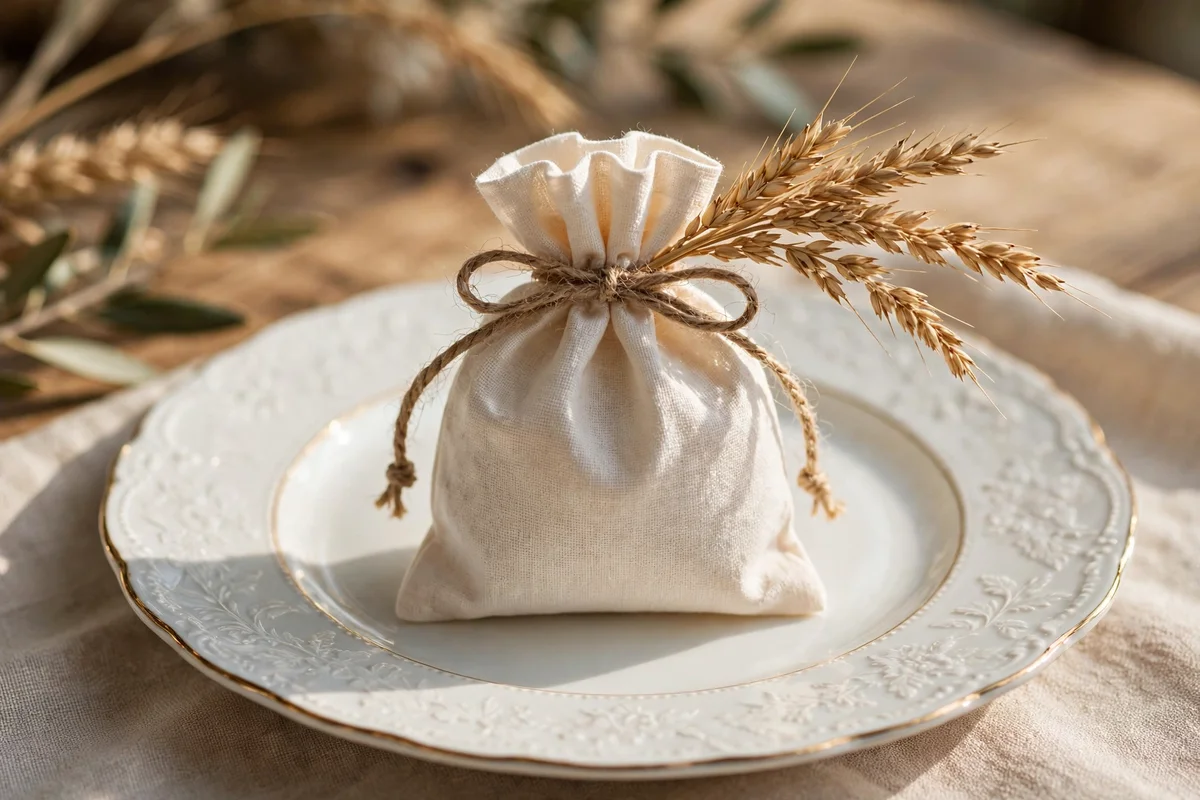
A favour pouch ends the evening with warmth guests can keep. Fill a small cotton or jute pouch 8 by 10 cm with a few wrapped honey sweets, a sachet of spiced tea and a printed card thanking guests for sharing the day. Tie each pouch with twine and a dried wheat stem to match the table styling. Place one pouch on every top plate before guests arrive so it becomes part of the place setting. Each pouch costs 1.50 to 2.50 to fill, depending on the sweets chosen.
Assemble the pouches a week ahead with family help; it is a calm evening task that needs no skill. Keep sweets individually wrapped so nothing sticks to the pouch fabric. The mistake to avoid is placing heavy favours on the plate where they hide the layered plates beneath; keep each pouch under 100 g and small enough to sit beside the place card. If the budget is tight, fill pouches with the leftover dates and nuts from the welcome bowls. Guests remember the thought, not the price.
A harvest wedding table succeeds when every layer earns its place: the cream linen calming the rust runner, the wood grounding the gold, the candlelight softening it all into one warm picture. You do not need the most expensive version of any idea here, only the most considered one, chosen for your family and your room. The ideas that photograph best are always the ones built with care, not money.
This week, start with the simplest win: buy one bunch of dried wheat and three bud vases, and set them on your own dining table to see how the light catches them at dinner time. That small experiment will teach you more about scale and colour than any planning document. Once you love the look at home, you will dress the wedding tables with complete confidence.
Frequently Asked Questions
How much does fall wedding table decor cost per table?
A dressed 3 m table for ten guests costs 80 to 150 at the budget end using hired chargers, dried stems and home-painted pumpkins. Mid tier with stonewashed linen and beeswax candles runs 200 to 320. The biggest savings come from foraging branches, buying fruit at a market and reusing the eucalyptus and pumpkins as home decor afterwards.
How do I keep candles safe with dried flowers on the table?
Keep every open flame at least 15 cm from dried stems and 10 cm from gauze or linen edges, and trim wicks to 5 mm before lighting. Place tall tapers where nothing hangs above them, and never leave lit candles unattended. Battery fairy lights give the glow without the risk near the eucalyptus, and staff should carry a long lighter for relighting.
Can I decorate the wedding tables the day before?
Yes, with the right order. Lay linen, chargers, plates, candles, pumpkins and dried arrangements the day before, since none of them wilt. Add fresh eucalyptus, fruit trays and grazing boards on the morning, and place herb sprigs, napkins and favour pouches last, about two hours before guests arrive. Keep the room cool overnight so the eucalyptus stays fresh.
What drinks can I serve instead of alcohol at a wedding?
Sparkling apple cordial, elderflower with sparkling water, berry juice topped with soda, fresh orange juice and iced herbal teas all feel celebratory in plain cut-glass tumblers. Serve them from glass dispensers on a raised crate station with sliced fruit, and pour a sparkling cordial toast in tall plain flutes so every guest, including children, joins the moment together.
How do I stop the table looking cluttered with so many layers?
Give every object a clear zone: chargers and plates for guests, a 30 cm centre band for the runner, candles and vases, and nothing else. Keep tall items at the table ends and low items in the middle so sightlines stay open. If a setting feels busy, remove one thing rather than adding another; restraint photographs better than abundance.