Crafts
23 Keychain Packaging Ideas That Make Small Gifts Look Thoughtful and Pretty
By Anna Wells · · 20 min read
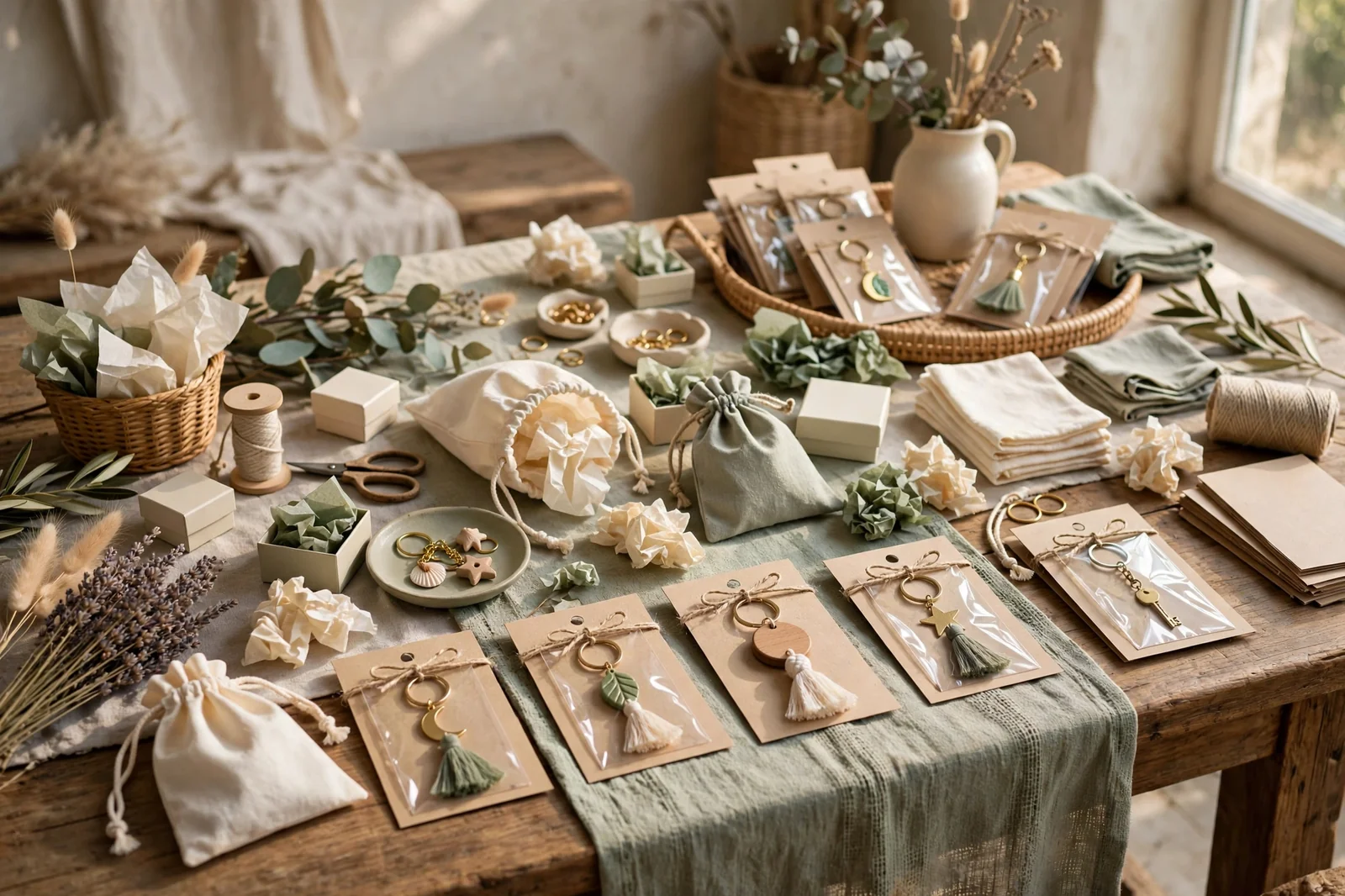
A keychain is a small thing, so its packaging does the talking: the right card, pouch or box turns a few grams of metal and charm into a gift worth opening slowly.
A handmade keychain leaves your table weighing almost nothing, yet the parcel it travels in decides how it is received. Good packaging protects the ring and charm on their journey, presents the design at its prettiest the moment the envelope opens, and quietly tells the buyer that a careful person made this. None of that requires expensive supplies. It requires a system.
The twenty three ideas below move from the simplest card to full gift sets, and each one can stand alone or combine with others. Choose two or three that suit your materials and your prices, keep their colours consistent, and your parcels will begin to look like they all came from the same thoughtful workshop, because they did.
1. Thick Kraft Cards With a Single Punched Slot
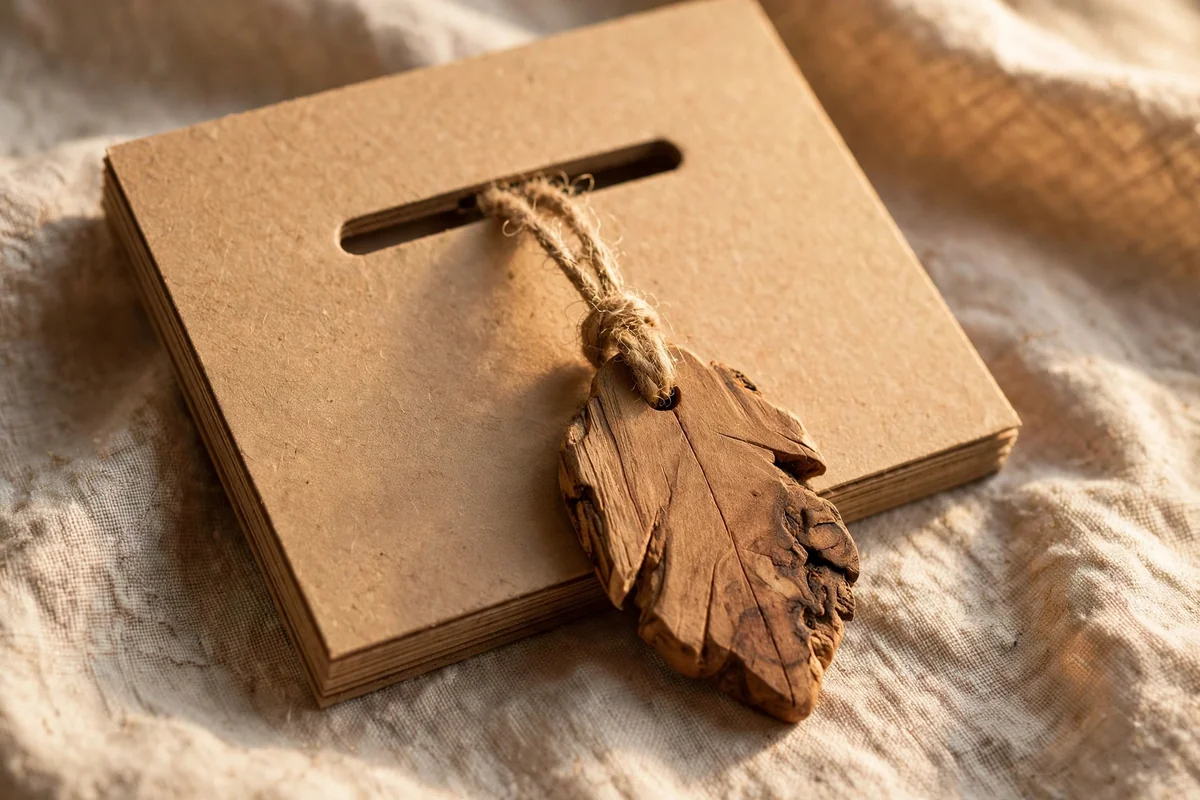
The honest workhorse of keychain packaging is a thick kraft card, about 350 gsm, cut to roughly 7 by 10 centimetres with rounded corners. Punch one clean slot or a pair of small holes near the top, thread the split ring through, and the keychain hangs centred and still, ready for a market rail or a parcel.
Kraft’s warm brown flatters wood, leather, brass, and resin without arguing with any of them. Print or stamp only essentials on the front, your name and one short line, and leave the back free for the handwritten note in idea seven. Blank space is what makes the card look considered rather than homemade in the apologetic sense.
2. Crystal Clear Bags Sealed With a Matte Sticker
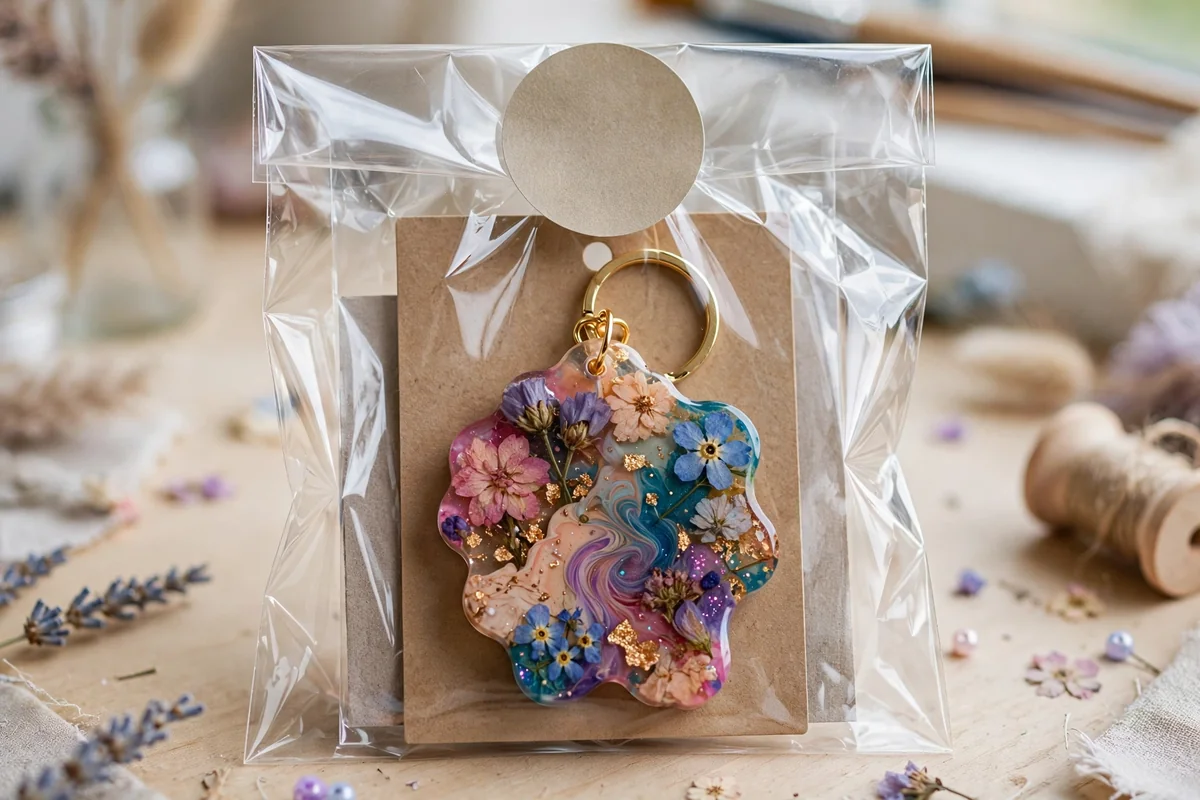
A clear cellophane or OPP bag over the mounted card keeps dust, fingerprints, and scratches off the charm while letting every colour show through, which matters at fairs where buyers browse with their eyes first. Choose bags a centimetre wider than your card so they slip on without catching corners or creasing.
Fold the open end once, neatly, and seal it with a round matte sticker about 3 centimetres across. Matte finishes photograph without glare and feel calmer than glossy ones. The whole addition costs very little per parcel, protects the piece in the post, and gives the plainest kraft card a finished, shop bought neatness that buyers trust immediately.
3. Soft Cotton Drawstring Pouches They Will Keep
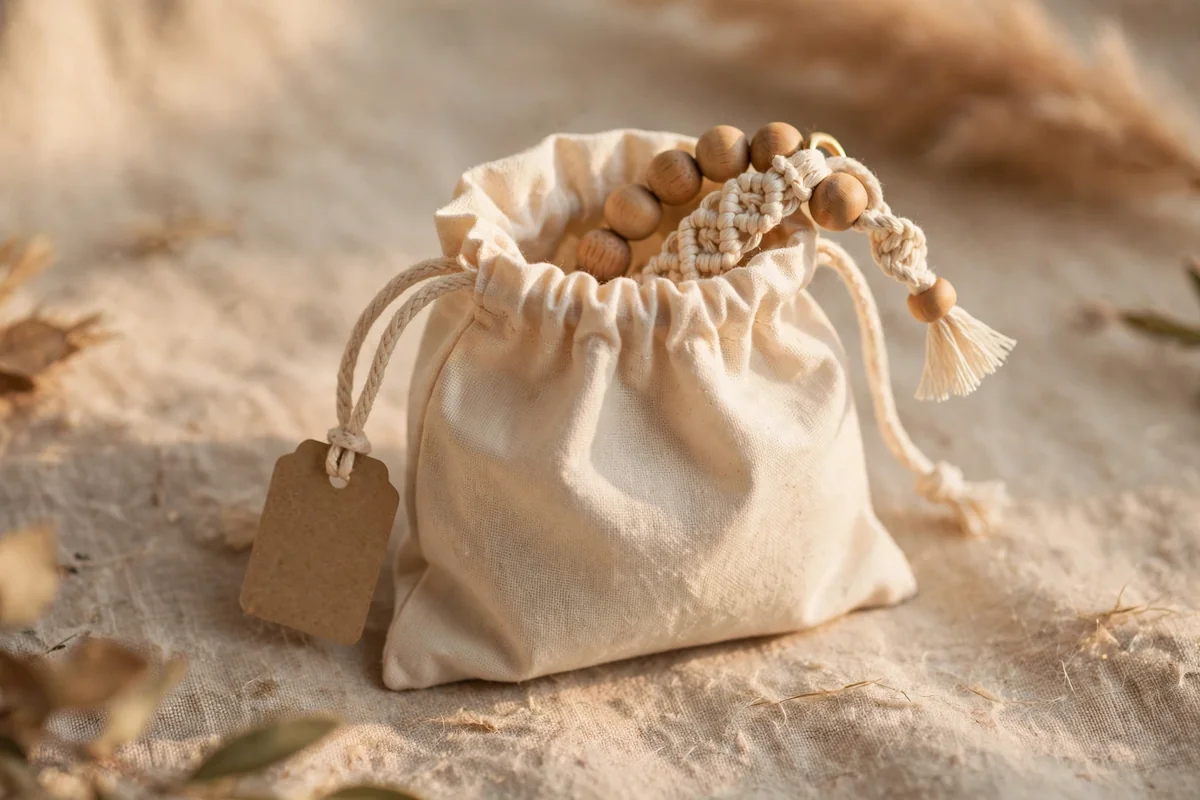
When a keychain is bought as a gift, a cotton drawstring pouch, about 8 by 10 centimetres, changes the whole feeling of the parcel. The fabric whispers rather than rustles, the charm arrives cushioned, and the pouch goes on to hold earbuds, coins, or jewellery in a handbag for years, carrying your name with it.
Choose undyed or softly coloured cotton so the pouch suits every range you make, and tie a tiny hang tag to the drawstrings with your name and one kind line. Tuck a small card inside the pouch for structure and for your care notes. Pouches cost more than bags, so reserve them for gift lines and your finest pieces.
4. Tiny Window Boxes With a Cushion of Crinkle Paper
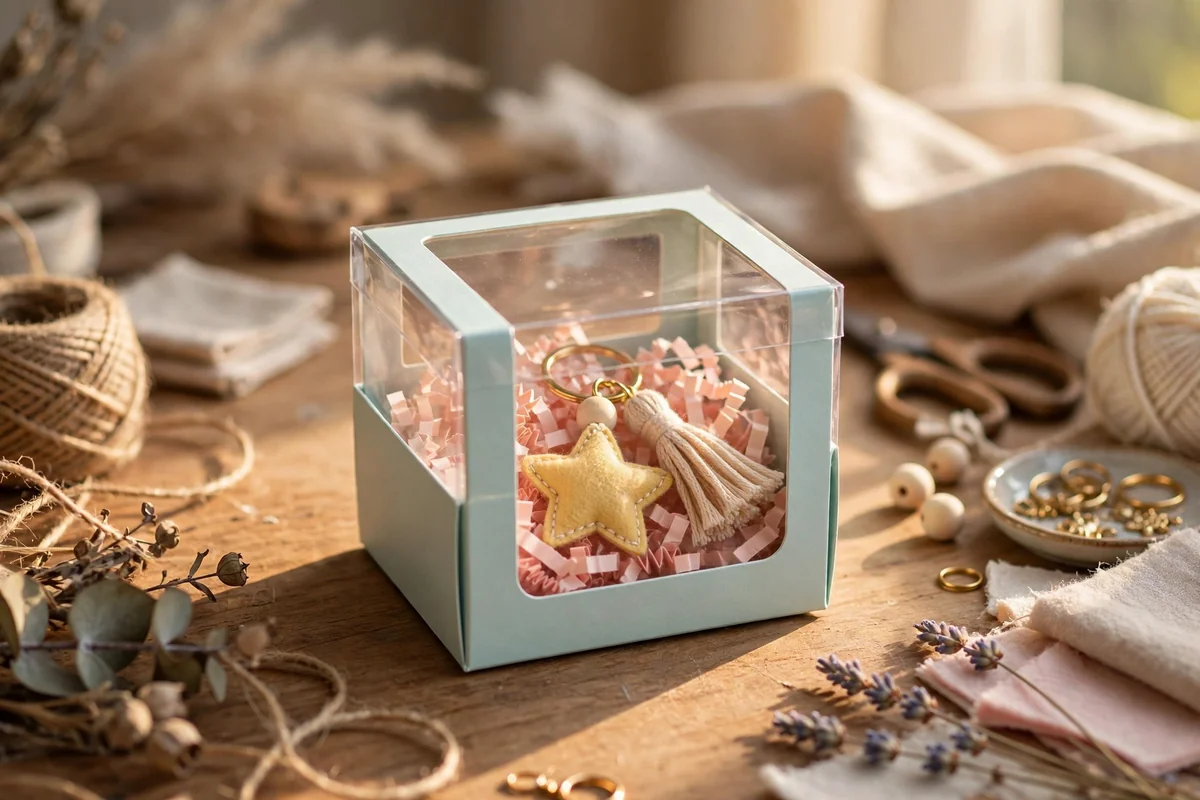
A small rigid box with a clear window in the lid, roughly 8 by 8 by 3 centimetres, does two jobs at once: the buyer can admire the design without opening anything, and the box shrugs off knocks that would bend a card. It is the natural choice for fragile resin and enamel pieces.
Line the base with a pinch of crinkle paper or a square of tissue so the keychain sits centred and cannot rattle or scratch itself against the box walls. Tie the closed box with twine only, because ribbon and bows crush in the post. At a gift shop or a celebration order, this little box needs no further wrapping at all.
5. Pastel Backing Cards Matched to Each Collection
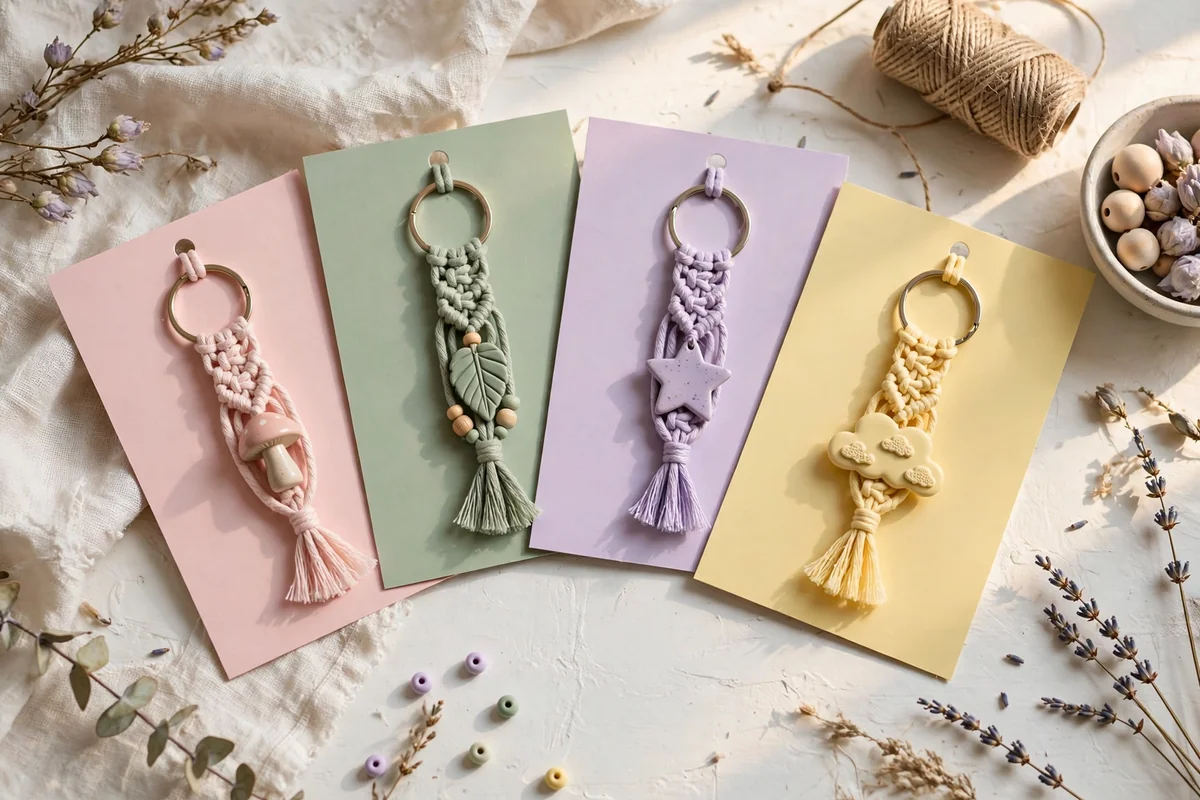
Colour is the quickest signature a small range can have. Print backing cards in a family of soft pastels, blush, sage, lavender, pale blue, butter yellow, and assign one colour to each collection you make. A buyer who loved the sage card last spring recognises your work instantly when the lavender card arrives in autumn.
Keep the printed design identical across every colour: same typeface, same layout, same quiet border. Only the card colour changes. That discipline is what turns a cheerful idea into a brand. Order small batches of each colour rather than a mountain of one, because collections change and leftover cards in a discontinued shade help nobody.
6. Pressed Flower and Fern Designs for Garden Makers
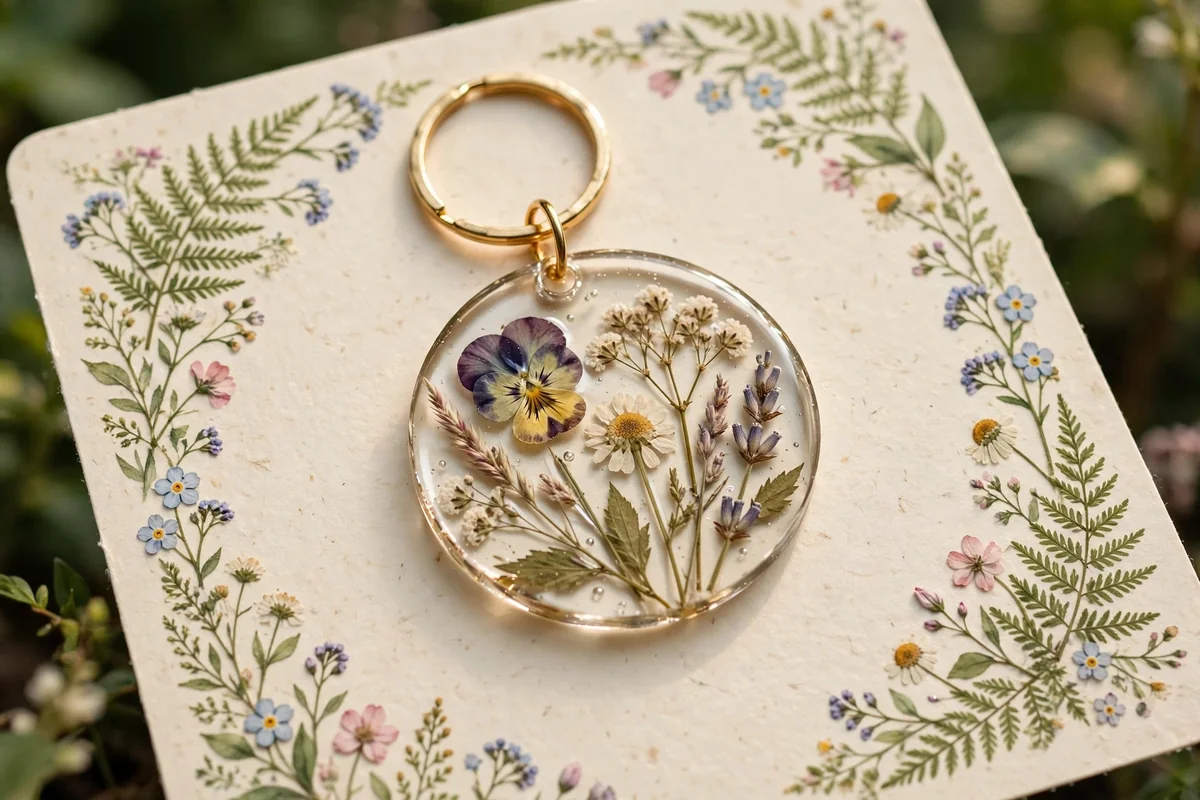
If your keychains carry real flowers, leaves, or garden themes, let the card continue the story. A cream card printed with delicate ferns, tiny blossoms, or sprigs around its edges, with the centre left completely clear, frames the piece like a page from a nature journal and suits resin flower work beautifully.
Printed botanical designs are safer than gluing real pressed flowers to cards, which can crumble in the post and complicate customs for overseas orders. Keep the artwork fine and sparse; the keychain is the flower that matters. Pair this card with a glassine bag rather than cellophane, because the soft frosted finish suits the gentle mood of the whole design.
7. A Handwritten Thank You Tucked Into Every Parcel
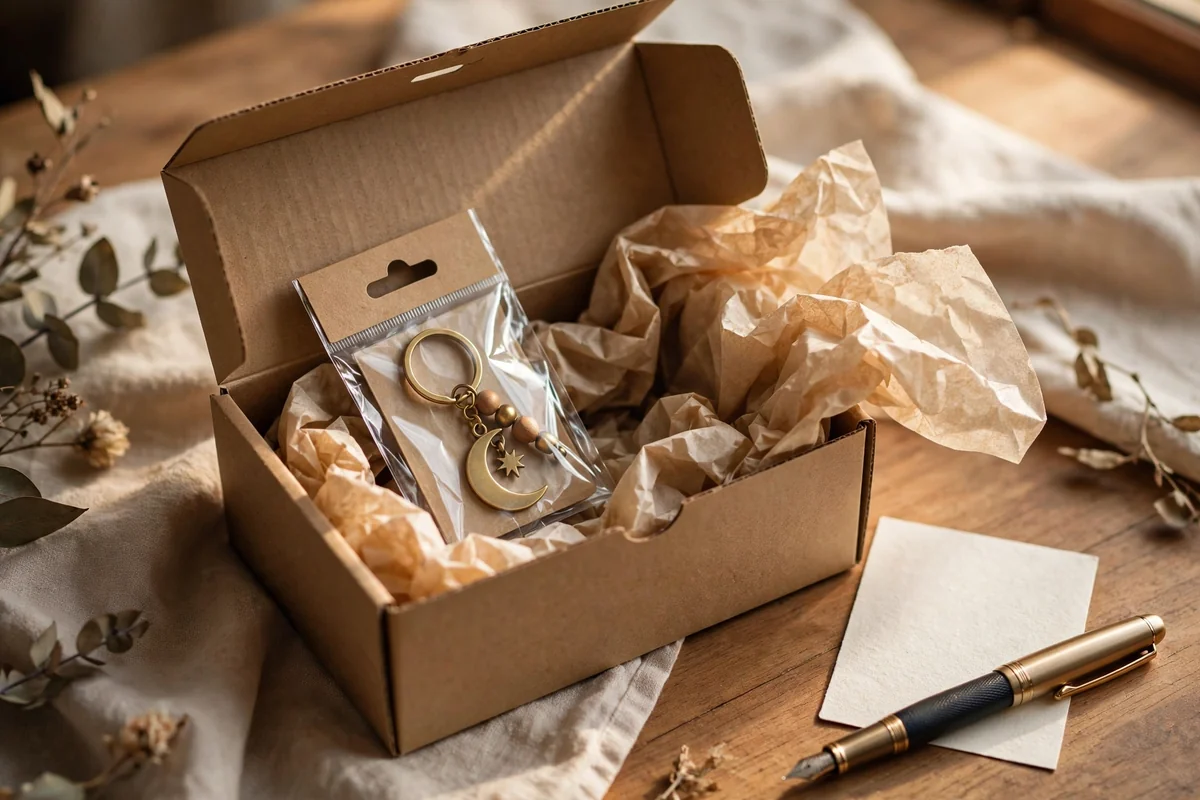
Of everything in this article, the handwritten thank you is the detail buyers mention most. A few sincere words, the buyer’s name when you know it, and thanks for supporting handmade work turn a transaction into a correspondence. It takes under a minute to write on the back of the backing card or on a small separate card.
Keep a fountain pen or a good gel pen with your packaging supplies so the habit is effortless, and write the notes as you pack rather than in a batch on Sunday, because fresh thanks reads differently. If your handwriting truly defeats readers, print a warm message and sign only your name by hand. That signature still counts.
8. One Colour Story Across Tissue, Stickers and Cards
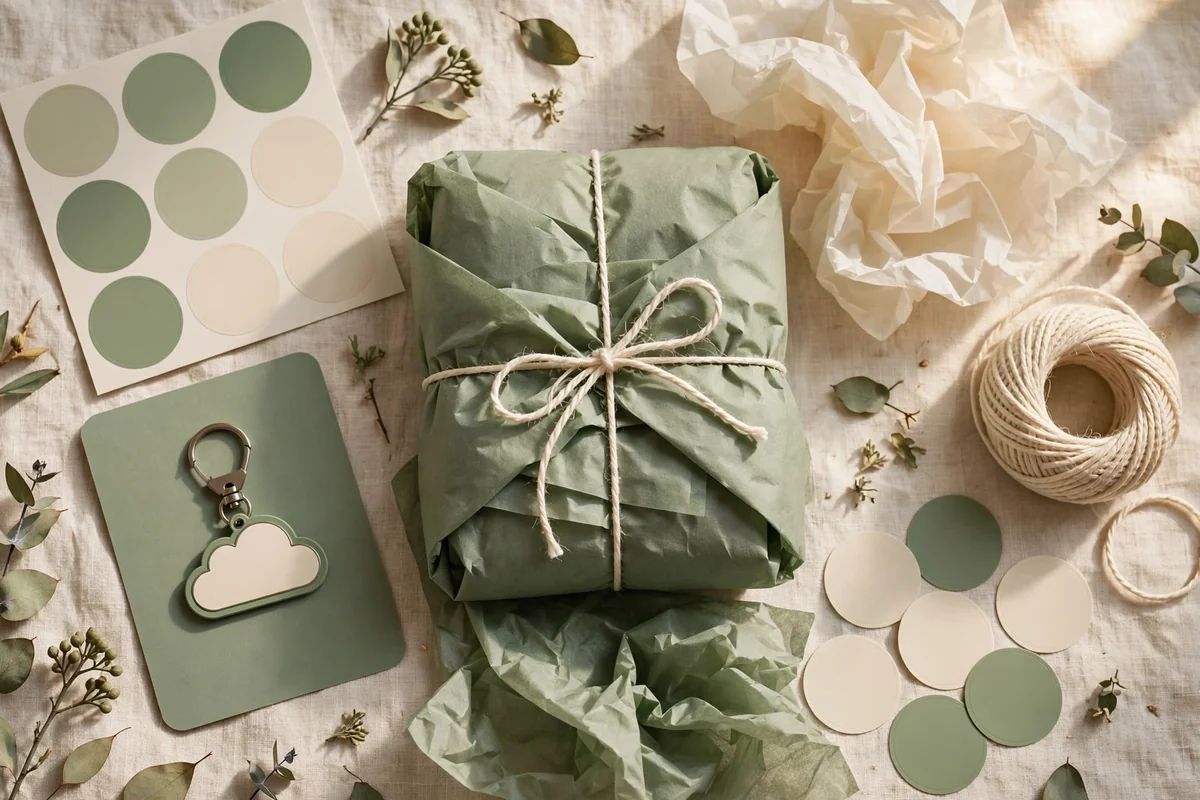
Open a parcel from a beloved maker and everything matches: the tissue, the sticker, the card, even the twine. That coordination is not luxury spending, it is a shopping list with rules. Choose two colours, one deep and one pale, and buy every packaging supply you own inside that pairing and no other.
The discipline pays off in photographs, in market displays, and in the calm of your packing drawer, where nothing clashes and nothing is wasted. When a supply runs out, replace it in the same colour rather than being tempted by a novelty roll. Over a year, this single decision makes even the simplest card and bag system look like a designed boutique range.
9. Textured Paper Sleeves That Slide Away Slowly
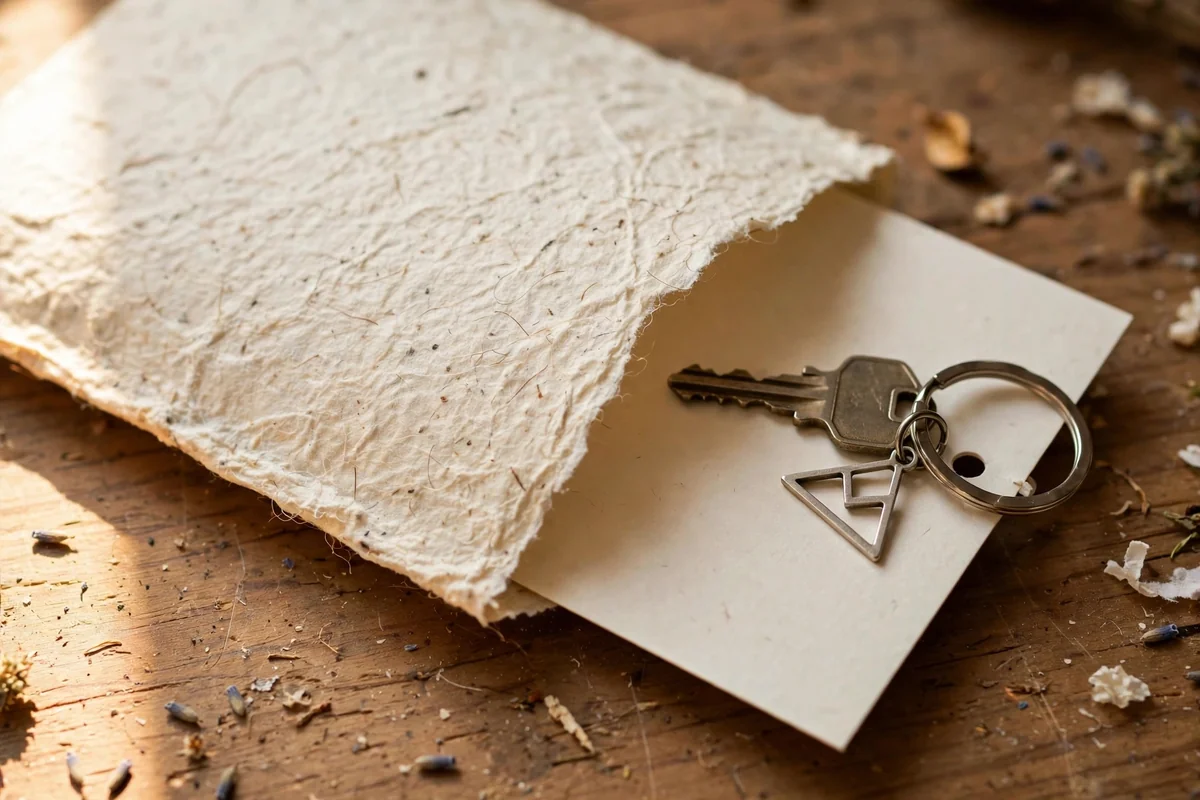
A sleeve adds a small ceremony to opening: the card slides out slowly, the keychain appears, and the parcel feels considered. Cut sleeves from textured handmade or recycled paper about a centimetre wider than your card and a little shorter, so a fingertip of card shows at the top for grip, and fold and glue one neat seam at the back.
The paper’s texture does the decorating, so sleeves need no printing at all beyond perhaps one small sticker to close them. They add almost no weight, which keeps postage kind, and they protect the card’s face in transit. This is the easiest upgrade in the article for sellers whose parcels currently go out in a bare bag.
10. Natural Linen Bags Finished With a Wooden Tag
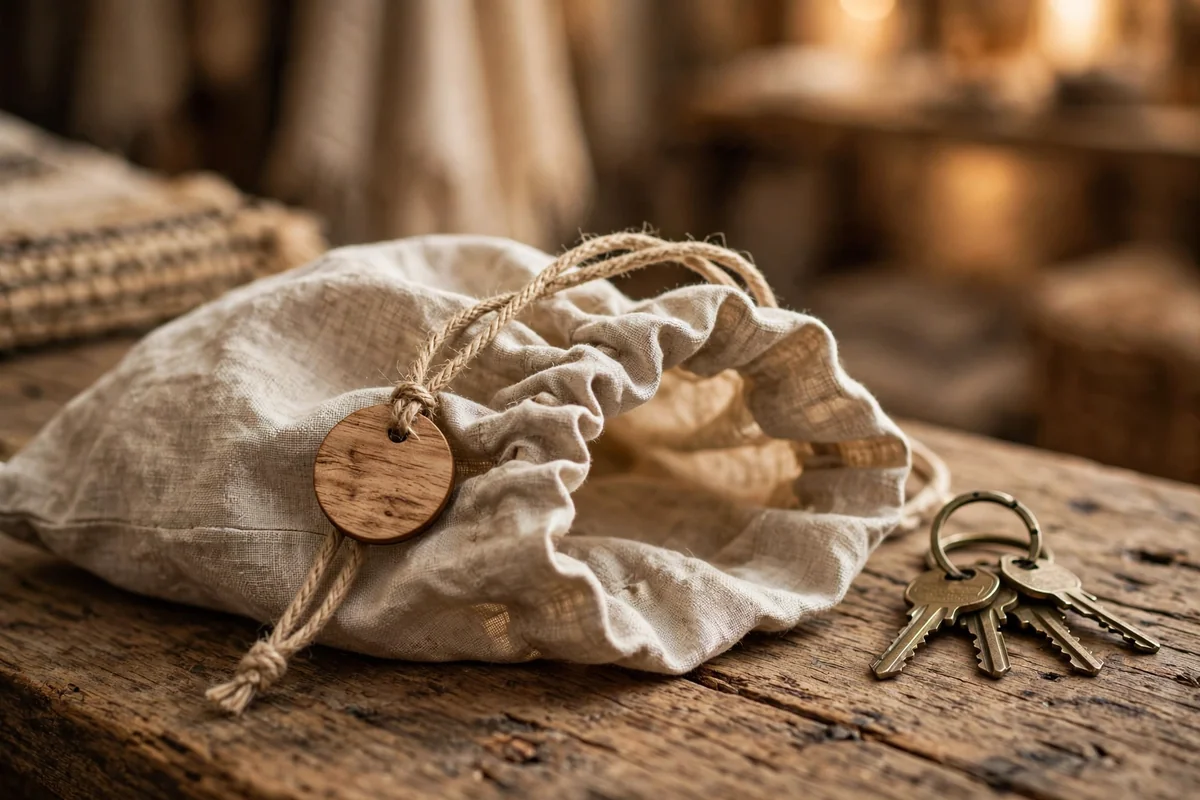
Linen is cotton’s more grown up cousin: a slubbed, natural weave that makes even a modest keychain feel like something from a quiet boutique. Bags of about 9 by 12 centimetres hold a card mounted piece comfortably, and the fabric’s body keeps its shape in photographs and on market tables.
Tie a small round wooden tag to the drawstring, stamped or written with your mark, and the bag becomes a keepsake in its own right. Buyers reuse linen bags for travel jewellery and gift giving for years. Linen costs more than cotton, so let it crown your premium range, and let its presence in photographs lift the perceived value of everything else you sell.
11. Seasonal Sleeves That Change With the Calendar
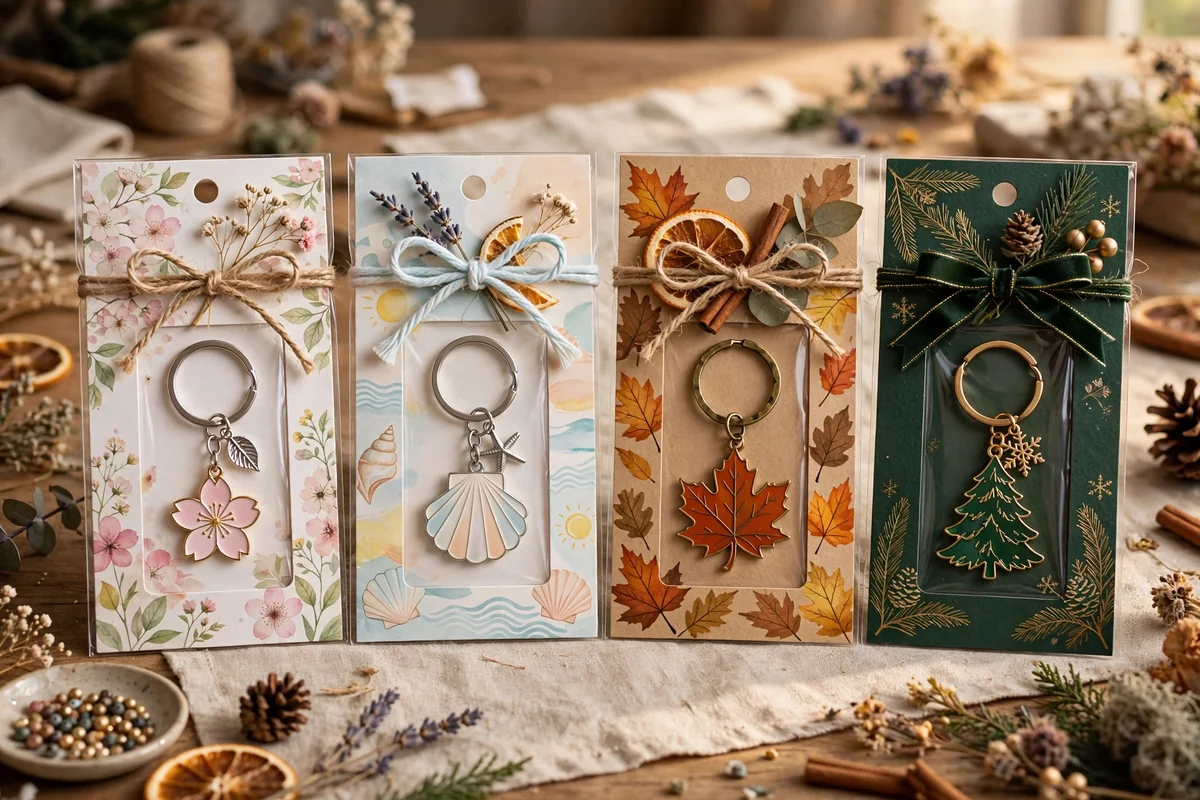
Keeping one packaging system all year is wise, and dressing it seasonally is wiser still. Hold your cards, bags, and boxes constant, and change only a sleeve or a sticker with the seasons: fresh florals in spring, sea pale colours in summer, kraft and rust in autumn, deep green with a touch of gold in winter.
The swap costs almost nothing, because sleeves and stickers are the cheapest supplies you buy, yet returning customers feel the shop is alive and attentive. Photograph each season’s version once and reuse the pictures in listings. Take care to use up a season’s sleeves before ordering the next, since yesterday’s blossom print in November helps nobody at all.
12. Mini Envelopes That Open Like a Letter
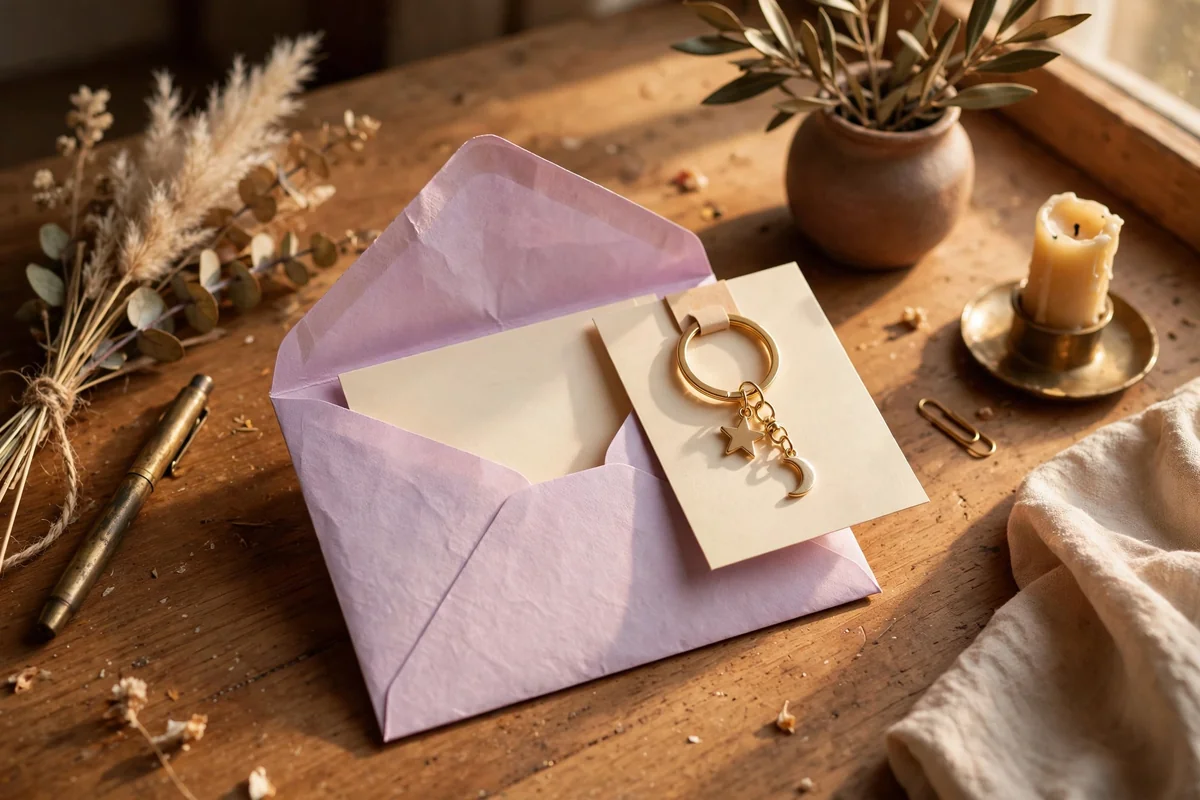
Everyone loves receiving a letter, and a mini envelope borrows that pleasure for a keychain. Size the envelope just larger than your backing card, about 9 by 13 centimetres, slide the mounted keychain inside, and close the flap with a small sticker rather than licking glue that may wrinkle in damp post rooms.
Envelopes in cream, kraft, or soft colours suit birthdays, thank you gifts, and personalised name charms especially well, because the format promises a message inside. Add the handwritten note on the card itself so the opening tells a complete story. Post the envelope inside a padded mailer for protection, since its charm is presentation, not armour.
13. Travel Postcard Cards for Souvenir Keychains

Souvenir and place themed keychains deserve a card with a journey in it. Print backing cards in the style of an old postcard, with faded map lines, a stamp corner, and soft sepia or coastal colours, and the charm of a lighthouse, a compass, or a hometown landmark suddenly has its story told before a word is read.
Leave a few ruled lines on the back so buyers can write a message and post the whole card onward like a real postcard, with the keychain as the gift it carries. Gift shops and market stalls near the places your keychains celebrate will find this format irresistible, and it photographs beautifully for travel themed collections online.
14. Scalloped Edges Cut With a Simple Craft Punch
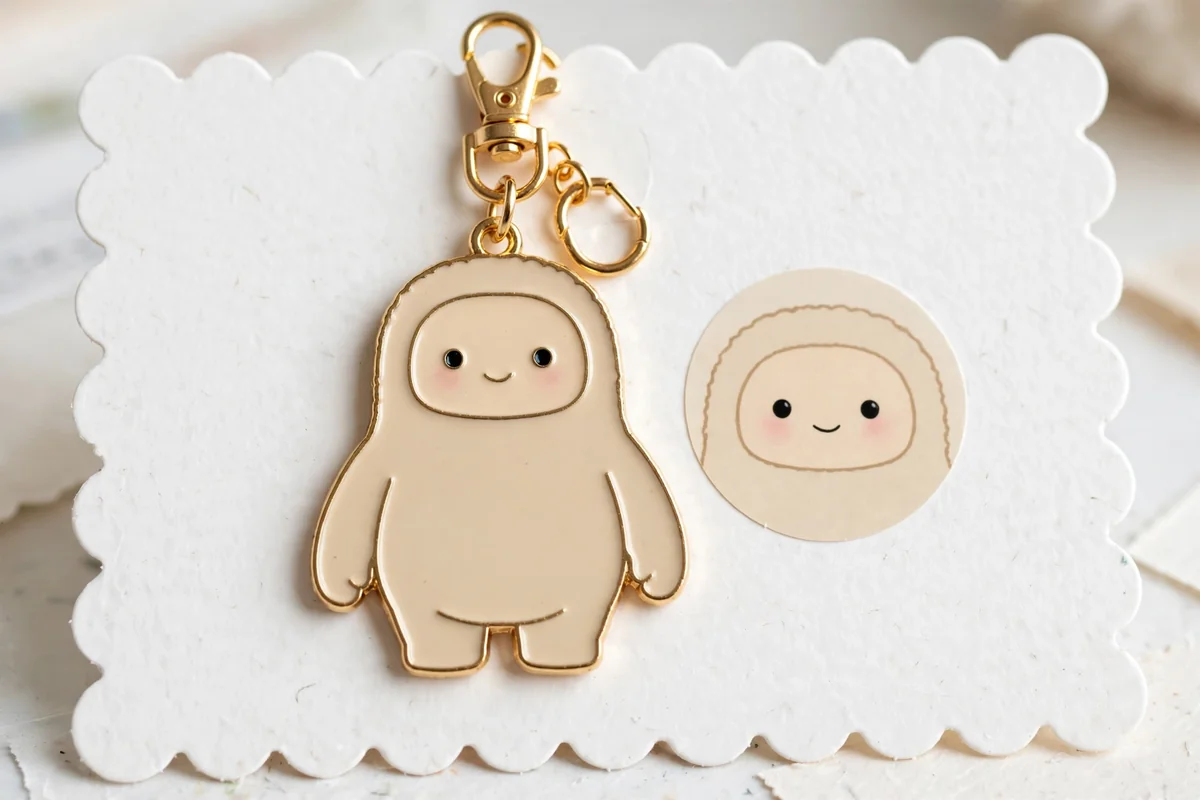
Sometimes the prettiest upgrade is a shape. Running your usual rectangular cards through a scalloped edge punch, or ordering them die cut with a gentle wavy border, softens the whole presentation in one pass. The eye reads the scallop as care, and the cost difference over plain cards is small when bought in modest batches.
Pair the wavy edge with a matching round sticker so the geometry agrees with itself, and keep the printed layout extra simple to let the silhouette work. Scallops suit floral, nursery, and celebration ranges particularly well. Test one punch on your thickest card stock before committing, because very heavy board can tire both punch and hands.
15. Frosted Glassine Bags for Delicate Finishes
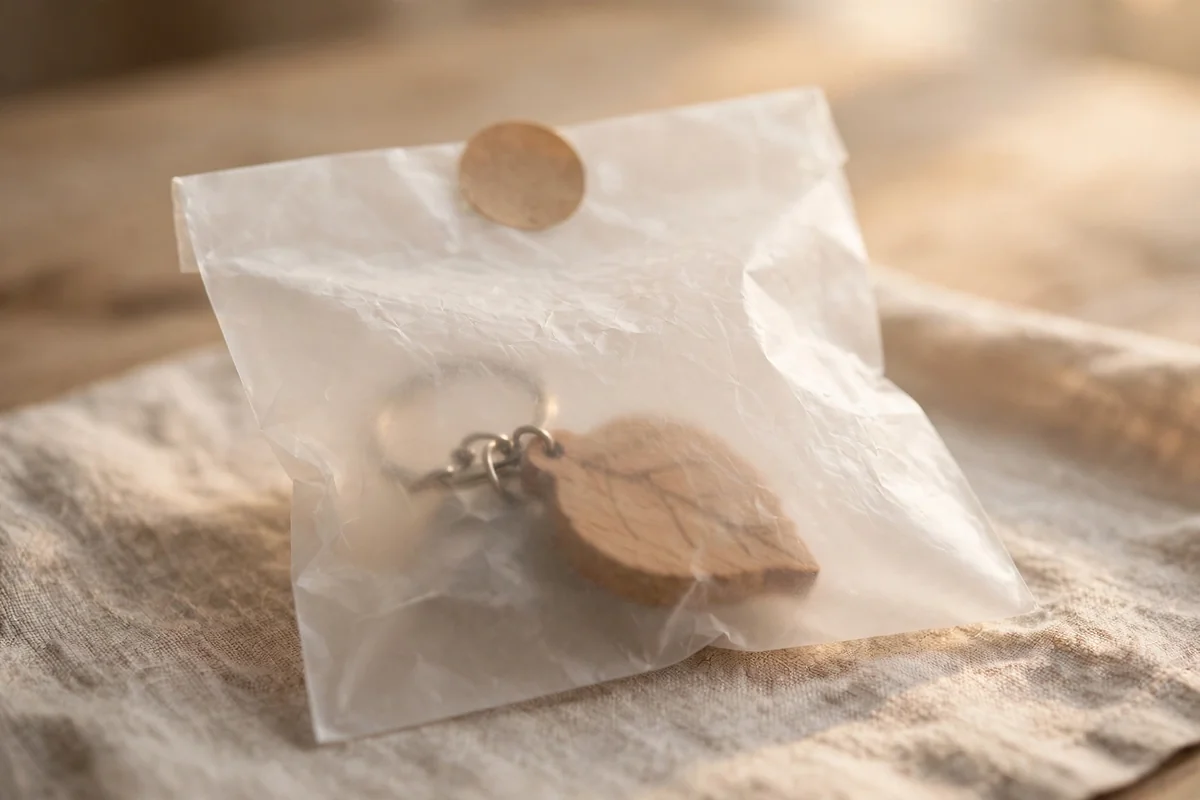
Glassine is the smooth, translucent paper that bakeries and stamp collectors have trusted for a century, and it treats delicate keychains kindly. Its frosted surface shows the shape and colour of the piece in soft focus, resists grease and fingerprints, and never clings or scratches the way some plastics can on polished resin and enamel.
Seal the open end with one small sticker or a fold of washi tape, and the bag looks like it came from a stationer’s drawer. Glassine is also paper, so it recycles with the card, which eco minded buyers notice. For pieces with glitter or hand painted detail that must not be rubbed, this gentle bag is the professional choice.
16. Tiny Jewellery Boxes Lined With Soft Tissue
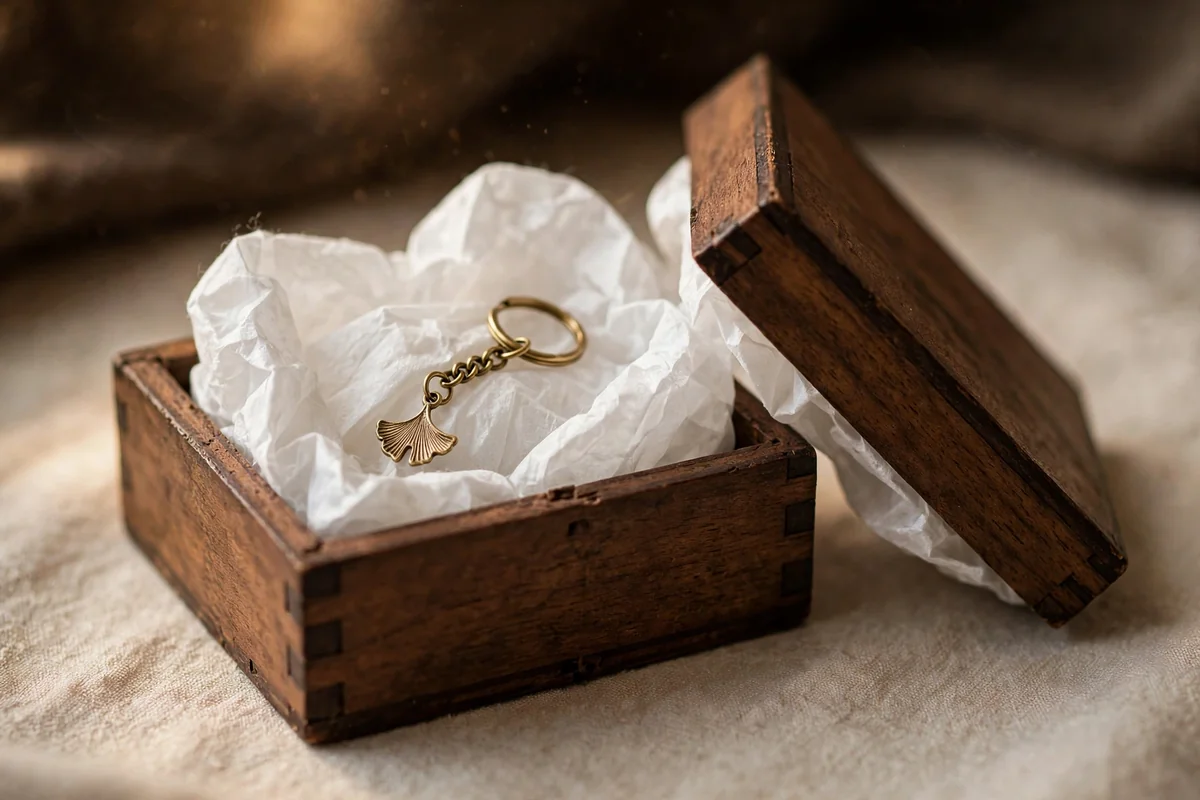
A keychain presented in a tiny jewellery box, about 5 by 5 centimetres for charms or 8 by 6 for ringed pieces, is received like jewellery, which for many handmade pieces is simply accurate. Line the box with a nest of soft tissue or a small foam pad so the piece sits still and centred when the lid lifts.
Buyers keep these boxes, storing the keychain or other small treasures in them for years, and your name on the lid keeps its quiet place in their home. Boxes cost more and post heavier than cards, so offer them as the gift option at fairs and in listings, and let customers choose the ceremony they want.
17. Washi Tape Seals in Patterns for Every Range
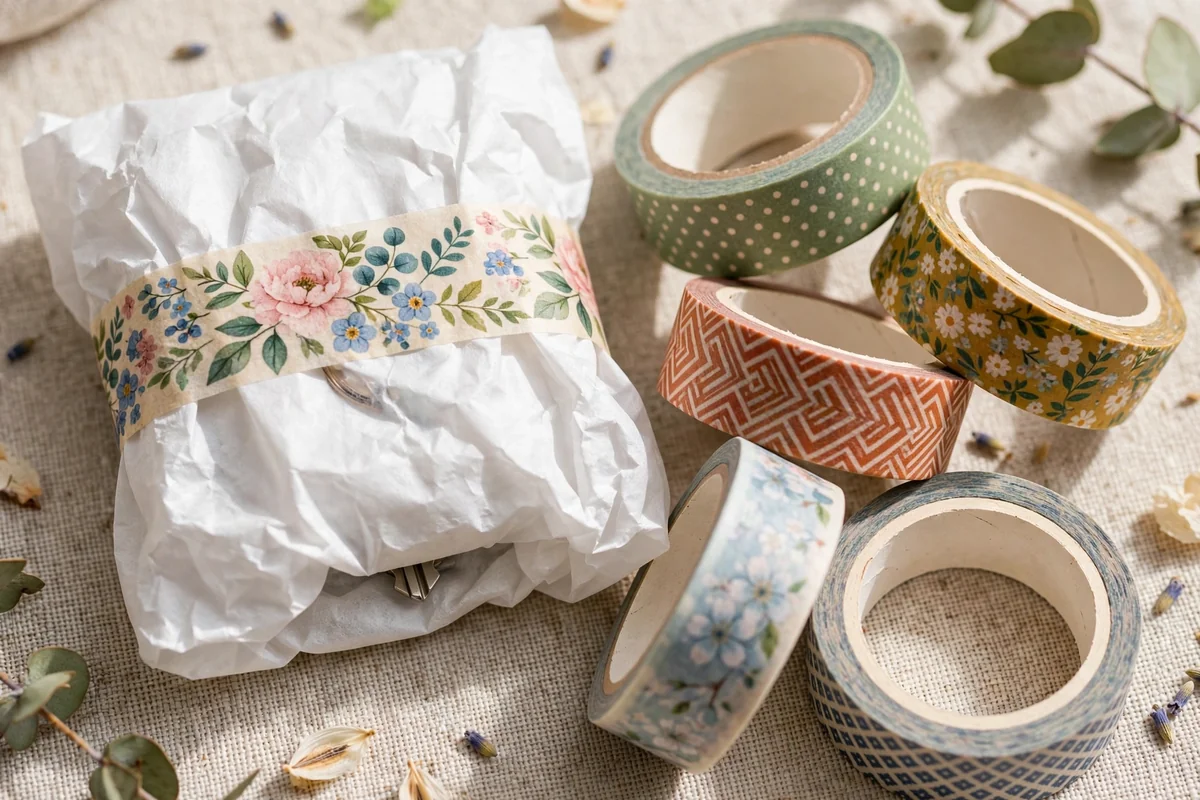
A single strip of washi tape across folded tissue is the cheapest flourish in packaging. The Japanese paper tape tears by hand, sticks kindly, peels without tearing the tissue, and comes in patterns enough to give every range its own: florals for spring pieces, stripes for coastal work, dots for children’s charms.
Keep two or three rolls that match your colour story rather than a drawer of novelties, and the tape becomes part of your signature instead of a distraction. A strip costs a fraction of a printed sticker and needs no minimum order. It also seals glassine bags and envelopes from this article gracefully, which makes it the hardest working supply on the packing table.
18. A Slim Ribbon Tied Once Around the Card
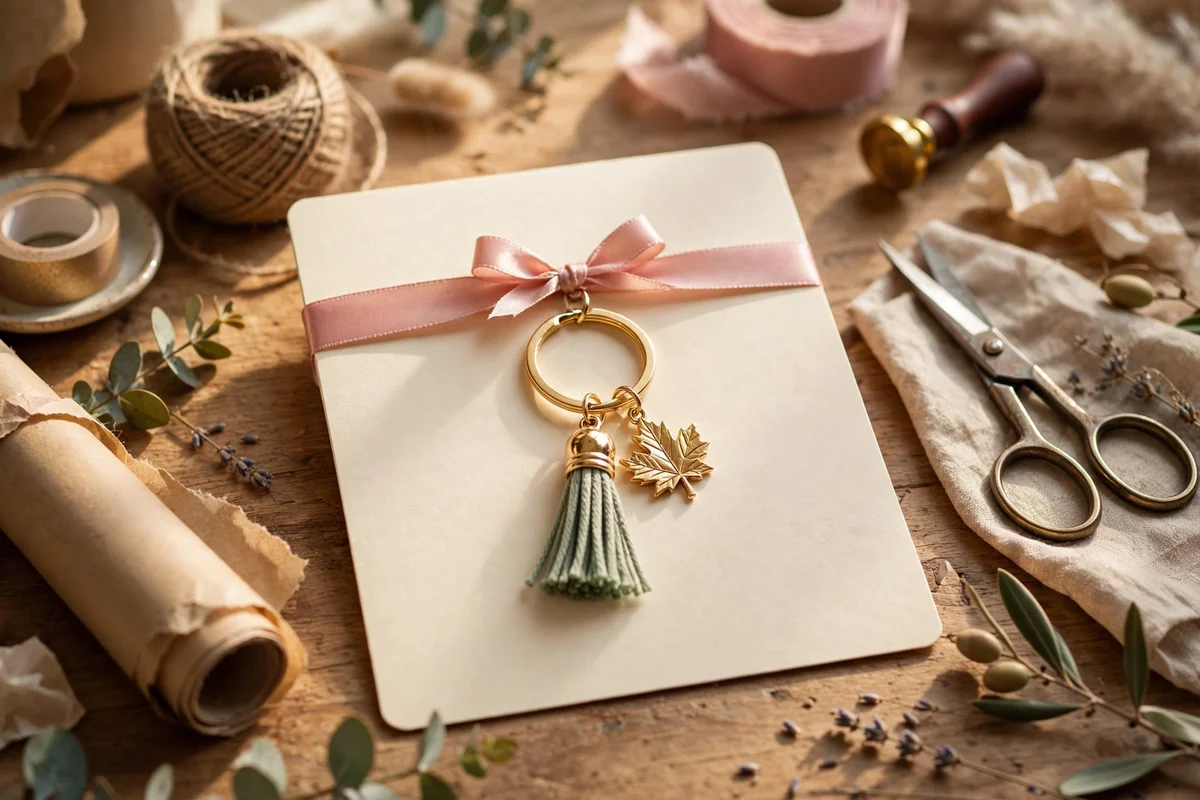
Ribbon turns a card into a present, provided it stays slim and disciplined. Wrap a ribbon of about 6 millimetres width once around the mounted card, cross it neatly at the back, and tie a small flat bow or a simple knot at the front corner. Satin catches light prettily; cotton ribbon keeps a calmer, handmade mood.
Wide or wired ribbons swamp a small product and add awkward bulk in a mailer, so keep them for shop displays. Choose ribbon inside your colour story and buy it on the roll, cutting lengths as you pack. The gesture takes twenty seconds, and buyers consistently describe ribboned parcels as gifts even when they bought the keychain for themselves.
19. Faux Wax Seal Stickers for a Boutique Finish
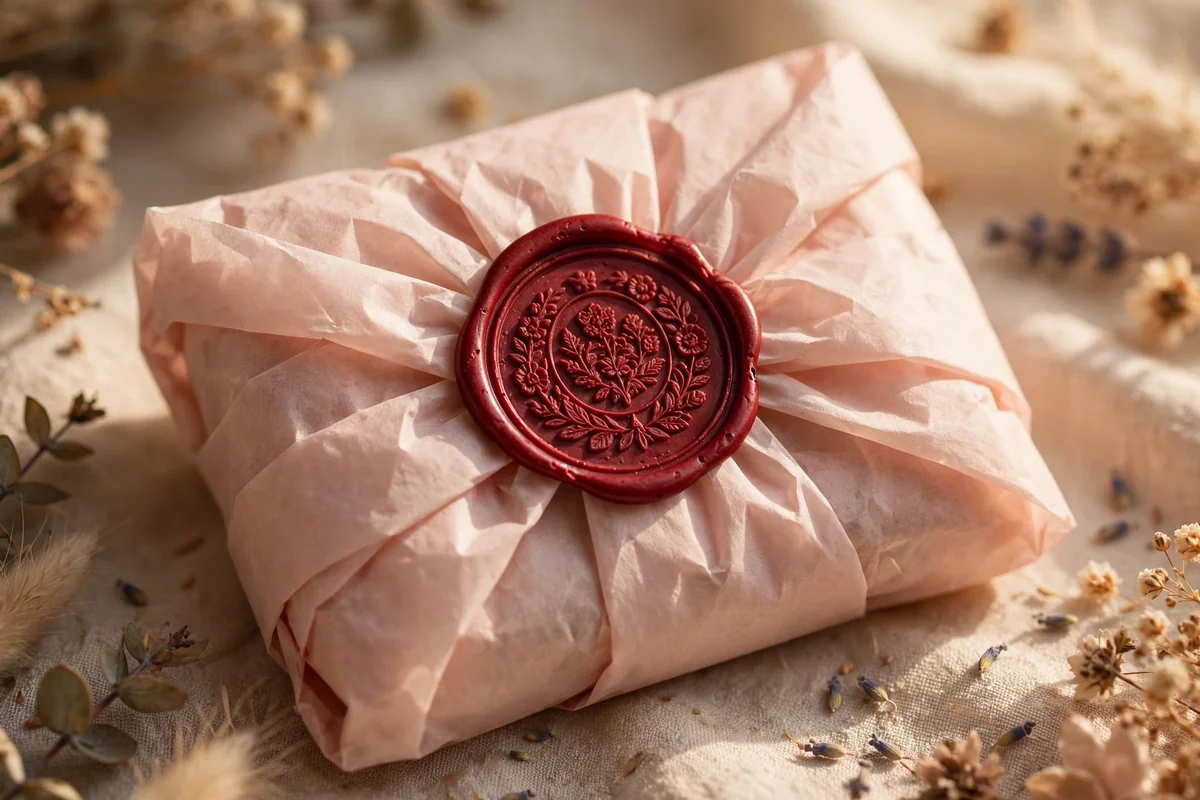
A wax seal carries centuries of ceremony in one small disc, and modern adhesive faux seals deliver the look without a flame, a spoon, or a burnt thumb. Press one onto the closing point of a tissue wrap, a sleeve, or an envelope, in deep red, gold, or your deepest brand colour, with a simple floral or initial emblem.
Reserve seals for your finest range and for gift orders, because their power is scarcity: used on everything, they mean nothing. They add a gentle thickness, so place them where a mailer will not press directly on the charm beneath. Photographed once for your listings, a sealed parcel quietly justifies the prices careful work deserves.
20. Recycled Boards, Paper Tape and Compostable Mailers
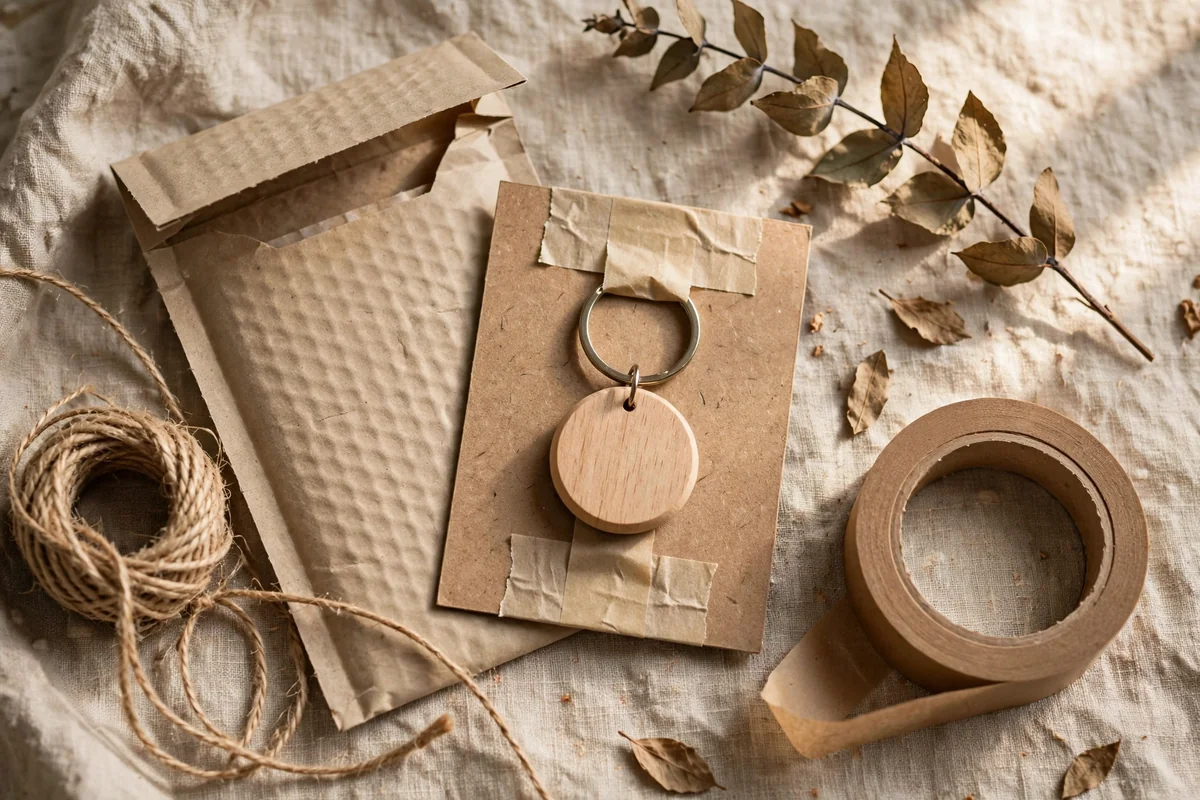
Sustainable packaging is a craft in itself, and keychains are light enough to make it easy. Mount pieces on recycled kraft board, seal bags and boxes with paper tape, wrap in recycled tissue, and post in a compostable or paper padded mailer. Every element can return to the earth or the recycling stream without apology.
Say so, briefly, on the back of the card, because buyers who care cannot reward what they do not know. Keep the message factual and short. One caution: recycled boards vary in stiffness, so test that your chosen stock holds a heavy charm without bowing before you order a large batch and discover the fact at packing time.
21. A Care Card With Instructions on the Reverse
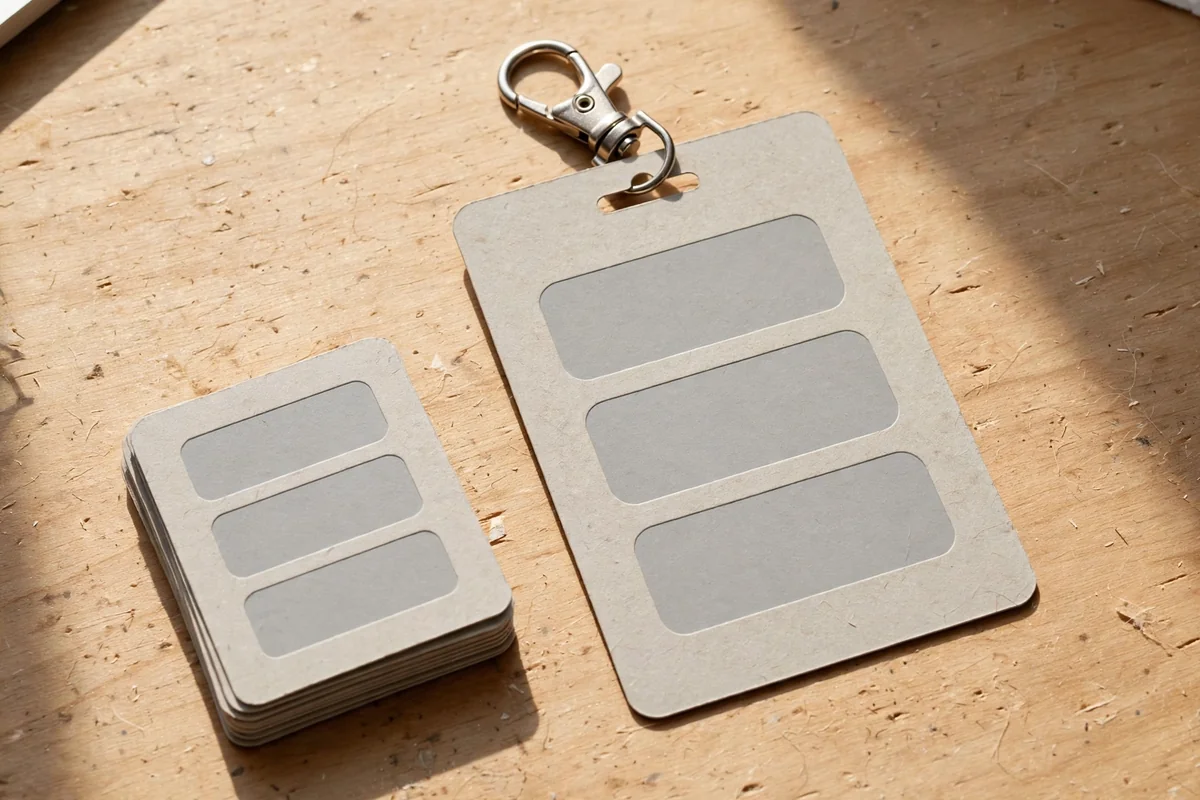
The back of your backing card is free paper, and a care panel there serves the buyer long after the parcel is recycled. Print four or five short lines in friendly type: how to clean the material, what to keep it away from, how to tighten a loose ring, and where to find you for repairs or replacements.
Good care advice prevents the small damages that become disappointing reviews, and it tells the buyer their piece was made to last. Keep the panel calm and uncluttered, with your shop name at its foot rather than a crowd of logos. If you also sell online, a small printed code or address can sit quietly at the panel’s end for those who want more.
22. Two Layers of Tissue in Coordinating Colours
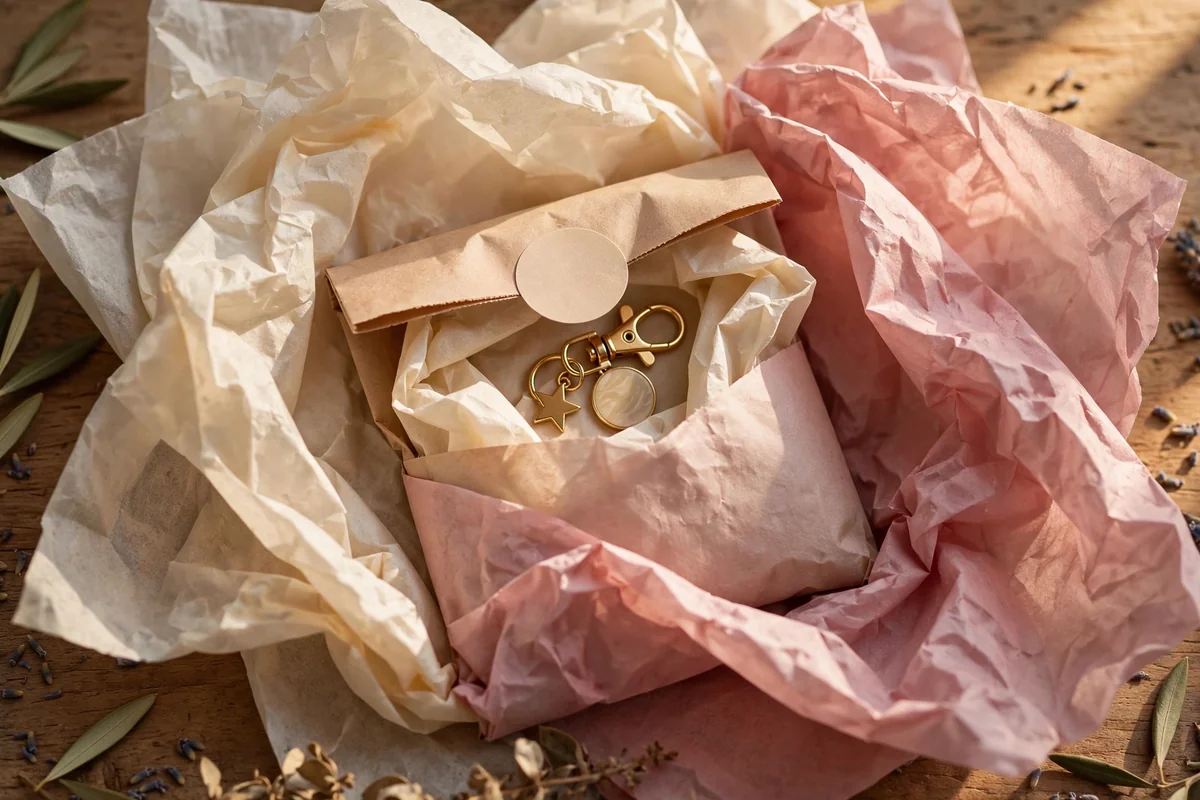
One sheet of tissue wraps; two sheets present. Lay a sheet of your deep colour down first, then your pale colour on top at a slight angle, place the mounted keychain in the centre, and fold both layers over in turn. The double fold creates a soft frame of colour around the piece when the parcel opens.
Seal the parcel with a sticker or washi tape where the last fold lands. The added weight is a gram or two, the added cost is small, and the effect in photographs is considerable, which is why this simple layering appears in so many beloved unboxing pictures. Use acid free tissue for pale leathers and fabrics that could take a dye mark.
23. Bundle Boxes That Present Three as a Gift Set
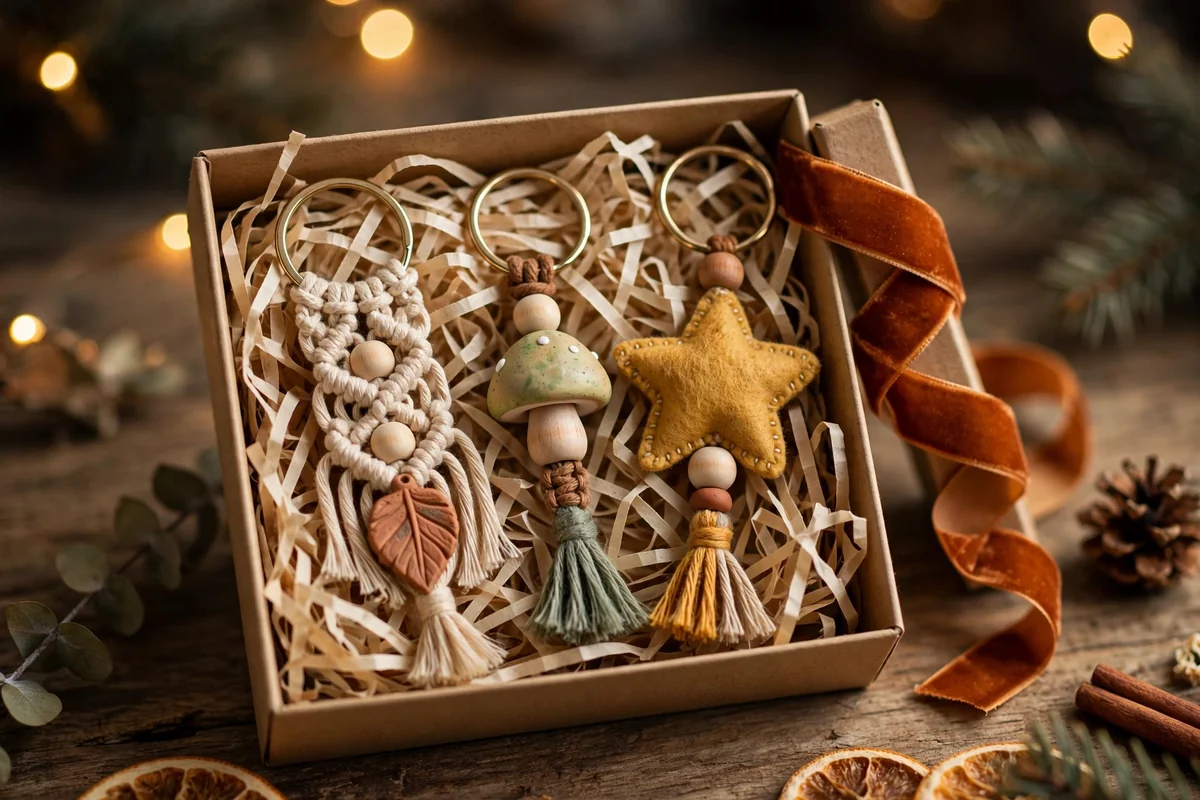
Three keychains in one small box, resting on shredded tissue in a row or a gentle fan, read instantly as a gift set rather than a multiple purchase. Offer bundles by theme, family initials, a trio of friends, a coastal set, and price the set a little kindly against buying three singles, because the box does the persuading.
Keep each piece on its own small card inside the box so the set can be divided into three gifts if the buyer wishes, which doubles the idea’s usefulness. A ribbon around the closed box and one thank you card on top completes it. Bundle boxes also raise the value of every market table and listing they appear in, quietly and reliably.
A Few Final Thoughts
Beautiful packaging is not bought, it is decided. Pick a card, a wrap, and a closing touch that agree with each other, write the thank you by hand, and repeat the same calm system on every parcel until it becomes your signature. Your keychains are small, but the moment of opening them can be generous, careful, and memorable, and that moment is entirely in your hands. Start with the kraft card and the clear bag, add one flourish at a time, and let your parcels grow prettier as your craft does.
Frequently Asked Questions
What size backing card works best for keychains?
For most keychains, a card around 7 by 10 centimetres is the sweet spot: wide enough for the charm to sit without touching the edges, tall enough for the ring at the top and one line of print at the bottom. Slim metal charms can go down to 6 by 9 centimetres. Large tassels, plush charms, and beaded designs deserve 8 by 12 so the piece is framed rather than crowded, and the card should always be stiff enough, around 350 gsm, to stay flat in the post.
How do I protect keychains during shipping without bulky packaging?
Build protection in thin layers. The rigid backing card stops the piece bending, a clear or glassine bag stops scratches and keeps small parts together, one wrap of tissue stops hardware rattling against the card, and a padded mailer absorbs the journey’s knocks. That system weighs very little and survives posting well. For resin and enamel, add the window box or a foam pad inside the bag, because their faces are the parts that suffer when parcels are stacked.
Which packaging is cheapest for a new handmade shop?
Start with kraft backing cards, clear bags, and one roll of round stickers in your colour. That trio costs very little per parcel, looks deliberate, and photographs well. Write your thank you by hand on the back of the card instead of printing separate inserts, and use the same card as your care card by adding four short printed or handwritten care lines. When sales allow, the first upgrades worth buying are textured sleeves and a second tissue colour, both inexpensive and immediately visible.
Are fabric pouches worth the extra cost?
For the right pieces, yes. Cotton and linen pouches suit gift ready ranges, higher priced work, and any keychain likely to be given rather than kept, because the pouch itself becomes part of the present and is reused for years. For everyday market sales and small charms, pouches can push your prices past what buyers expect, and cards with bags serve better. Many sellers keep both: cards as the standard, a pouch offered as the gift option, and the choice itself feels like service.
How can packaging encourage repeat orders?
Repeat orders grow from parcels that felt like gifts from a person. Keep the same colour story so your work is recognised on the doormat, include the handwritten thank you, add one thoughtful extra such as care instructions or a seasonal sleeve, and pack every order to the same standard whether it is the first or the fiftieth. Buyers photograph such parcels, show them to friends, and return for birthdays and celebrations because they already know exactly how good the opening will feel.