Living Room
23 Labour Day Fireplace Mantel Decor Ideas That Feel Warm, Honest and Harvest Ready
By Anna Wells · · 21 min read
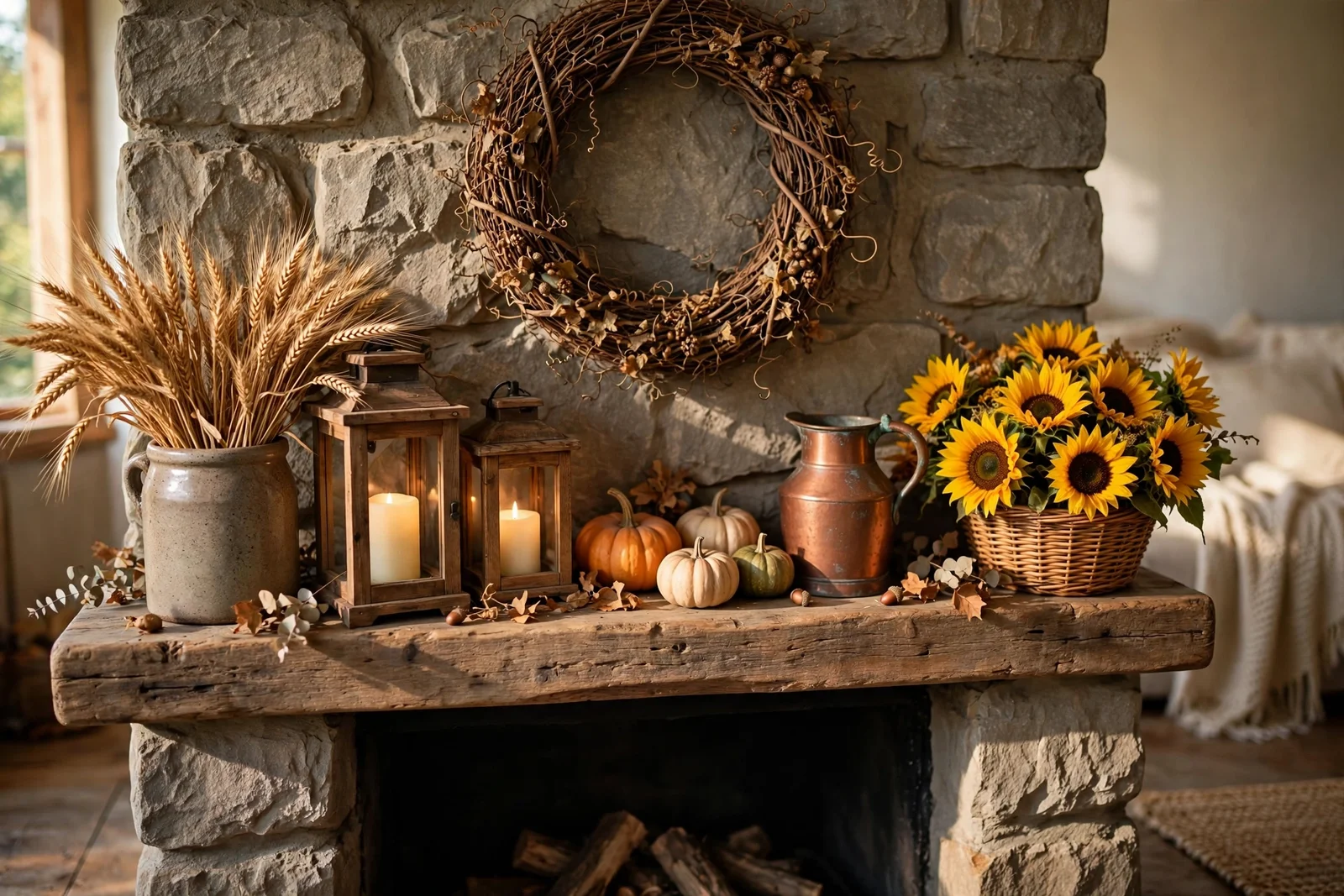
23 warm, practical Labour Day mantel ideas built from wheat, lanterns, cream candles and small pumpkins, for an honest harvest hearth your family will gather around.
Late on the Sunday of Labour Day weekend, the light turns gold a little earlier and the garden starts to offer its last gifts. The fireplace, quiet all summer, becomes the natural heart of the living room again, and its mantel waits for something honest to hold. This is the gentlest decorating moment of the year, when dried grasses, wheat and the first small pumpkins ask for almost nothing but a place to rest.
A harvest mantel suits family life because nothing on it is precious. Wheat sheaves, cream candles, warm wood and copper are materials you can touch, move and enjoy without worry. Children can help gather pinecones, grandparents can admire the old balance scale, and nobody needs to tiptoe around the room.
Below you will find 23 concrete ideas, each one practical enough to try this week. Every idea names real materials, sizes and costs, with a gentle warning about the one mistake most people make. Work from one end of the shelf to the other, and let the mantel grow slowly rather than all in one evening.
Start with the tallest pieces first, then fill the middle ground, and finish with candles and light. By the time you step back, the mantel will hold the whole season: late summer’s gold, early autumn’s warmth, and a quiet welcome for everyone who gathers by the fire. Pour a warm drink and enjoy the first evening of the season together.
1. Bundle Dried Wheat Sheaves in a Tall Stoneware Crock at One End
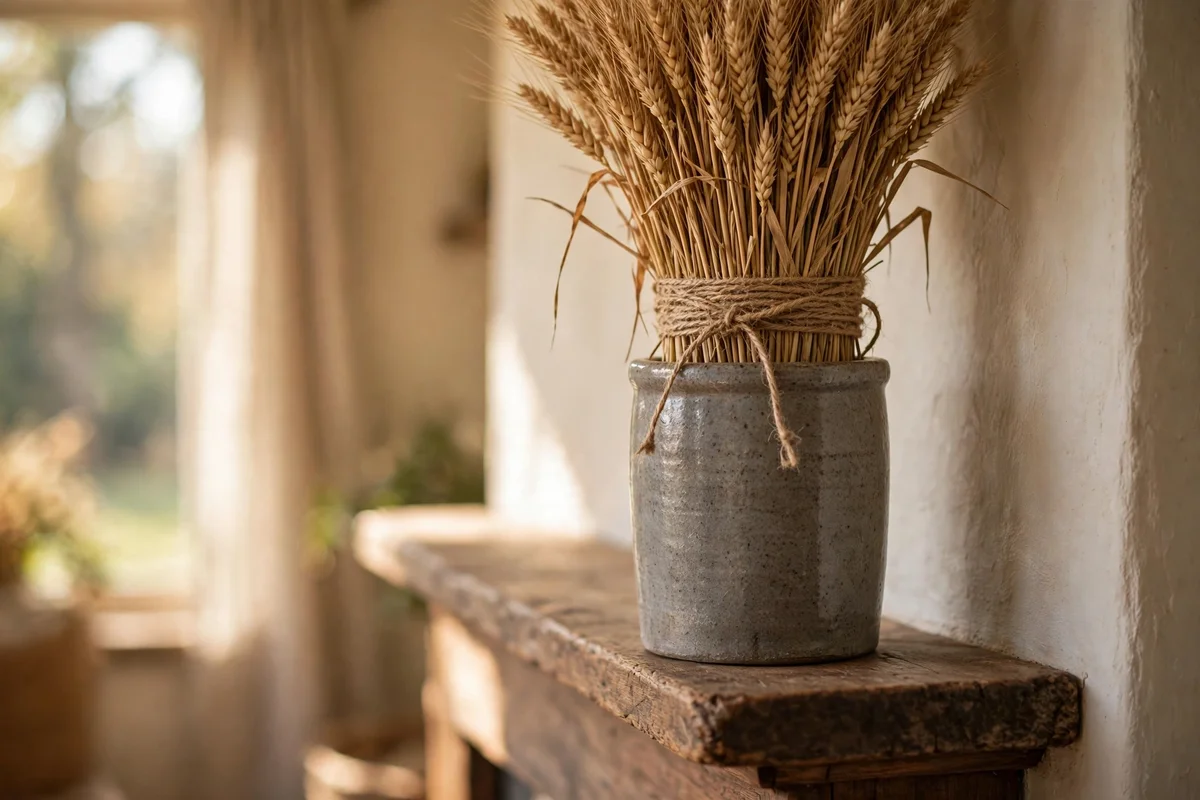
Gather fifteen to twenty dried wheat stalks, tie them loosely with natural twine about a third of the way up, and stand the bundle in a stoneware crock 25 to 35 cm tall. The crock keeps the weight low so the stalks lean safely without toppling. Place it at the left or right end of the mantel, never the centre, so the composition feels weighted rather than symmetrical. Wheat sheaves signal harvest without shouting, and a crock in warm grey or oatmeal glaze suits both cream and white painted mantels.
Buy wheat bundles from a craft store or farm stand for two to five pounds or dollars; one bundle fills the crock fully. Fan the stalks outward by hand so the sheaf opens like a hand tied bouquet rather than a tight broom. The mistake to avoid is using dyed or glittered wheat, which looks cheap against honest materials like wood and stone. Refresh the bundle each autumn; dried wheat keeps for two seasons in a dry room before the heads grow dusty and dull.
2. Pair Two Warm Wood Lanterns With Cream Pillar Candles on Each Side
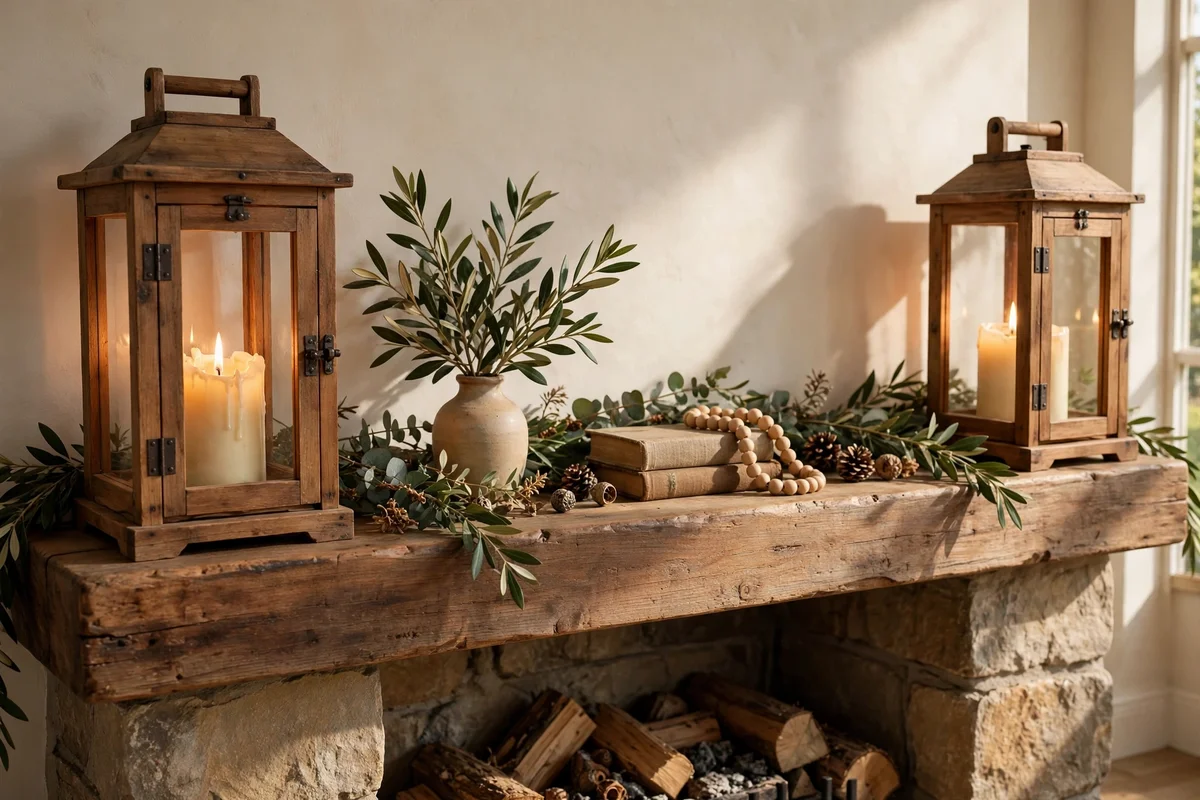
Place a wooden lantern 28 to 35 cm tall at each end of the mantel shelf, leaving at least 20 cm of breathing room between lantern and wall edge. Set one cream pillar candle inside each lantern, choosing heights of 10 and 15 cm so the flames sit at different levels. Use real wax candles in homes without small children; otherwise plain battery pillars give a safe glow without an open flame. Warm oak or walnut lanterns bridge late summer and autumn better than painted metal ones.
Buy lanterns second hand for three to eight pounds or dollars each; the wood ages beautifully with a little beeswax polish. Line the lantern base with a heat safe plate before placing the candle, and trim wicks to 5 mm so the flame stays small and clean. The mistake to avoid is crowding both lanterns with extra filler; an empty lantern with one candle reads calm and lets the grain show. Light them together at dusk through the holiday weekend for a small family ritual.
3. Layer Two Empty Wooden Frames Behind the Centrepiece for Quiet Depth
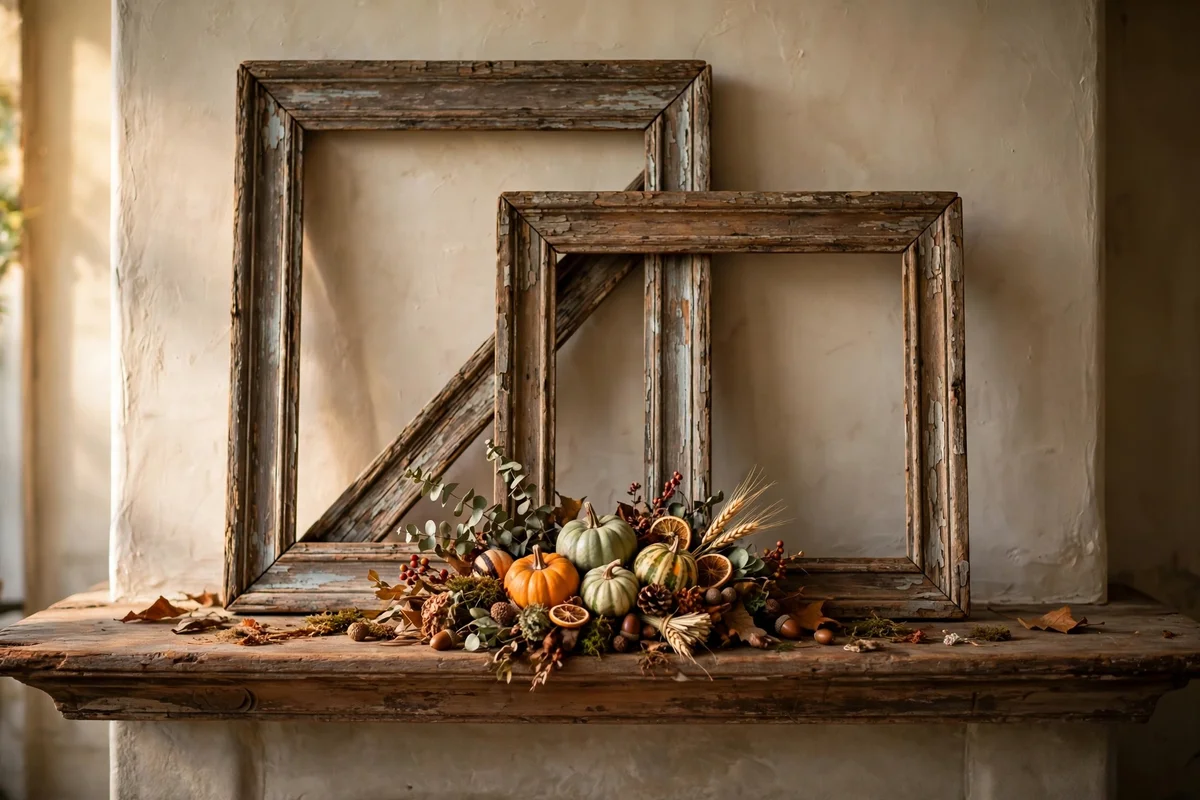
Choose two frames in warm wood, roughly 20 by 25 cm and 25 by 30 cm, and leave them empty so the wall colour shows through as the picture. Stand the taller frame behind the shorter one, slightly off centre, about 10 cm back from the mantel edge. Empty frames add depth without visual noise, and they cost almost nothing from charity shops. Weathered oak or pine suits a harvest mantel; avoid shiny gilt finishes, which fight the honest materials around them.
Secure the frames with small adhesive strips or lean them firmly against the wall so they cannot slip. Layer a dried wheat stalk or two across the lower frame corner for a harvest link, tying them with twine. The mistake to avoid is stacking three or more frames; two gives depth while three starts to look like storage. When the season passes, lift the frames down and hang harvest prints inside them, so the same wood serves autumn and winter.
4. Drape a Simple Dried Grass Garland Along the Mantel Front Edge
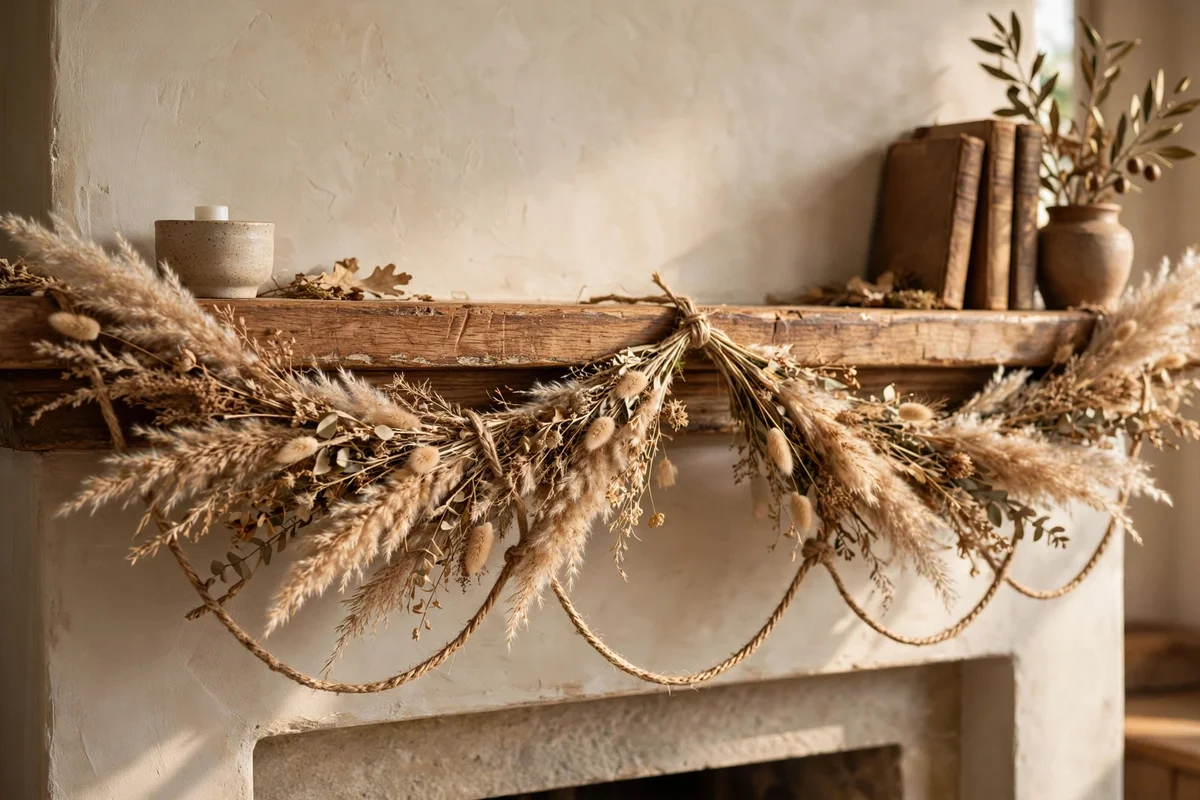
Cut three to four bunches of dried pampas grass or miscanthus into 30 cm lengths and tie them to a length of jute twine with small knots every 10 cm. Hang the garland so it dips 15 to 20 cm below the mantel edge in a gentle scallop, fixing it with clear adhesive hooks. Grasses move the eye along the whole shelf and soften hard lines. Neutral beige or wheat tones keep the look calm; avoid dyed grasses in bright colours, which break the natural palette.
Build the garland on a table first, then lift it into place, which takes about twenty minutes. Keep it away from lit candles by at least 30 cm on each side, since dried grasses catch fire easily. The mistake to avoid is making the garland too thick; a single airy layer shows the mantel behind it and looks gathered, not bought. Shake it gently outdoors before hanging so loose seeds do not fall on the hearth.
5. Set Three Cream Pillar Candles in Graduated Heights on a Wooden Board
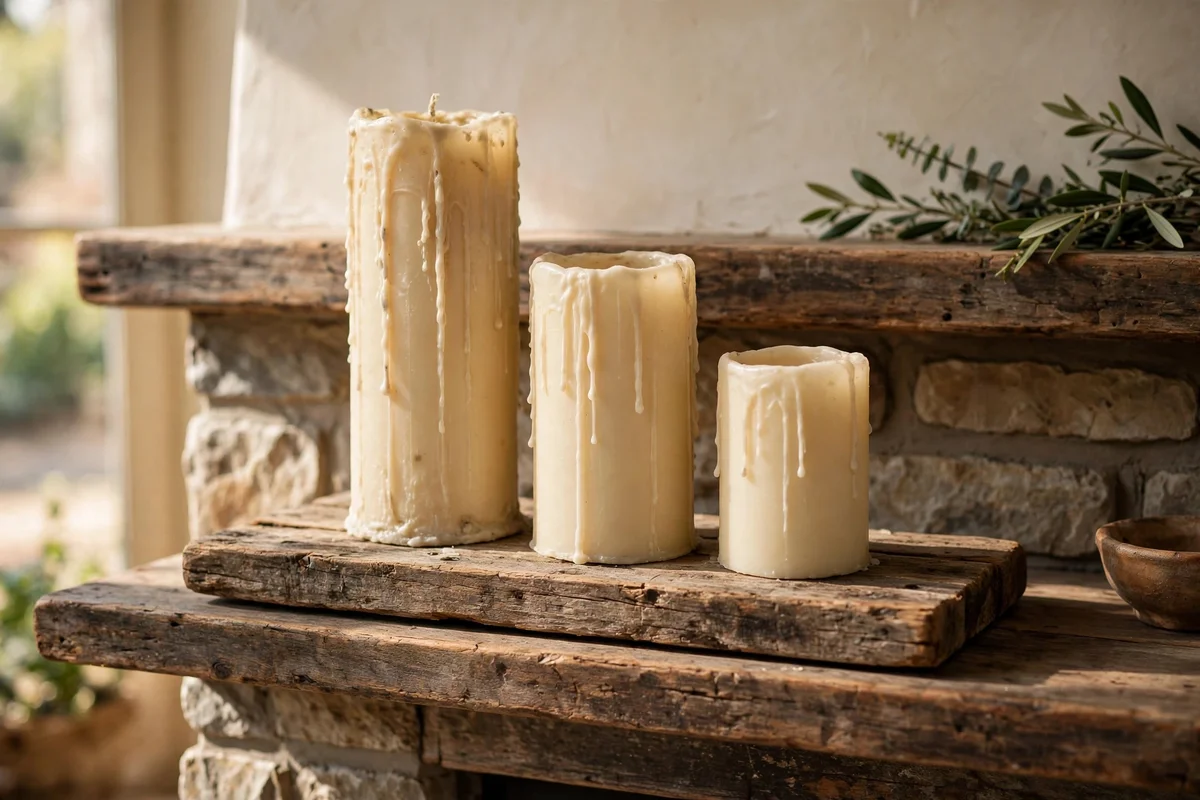
Choose pillar candles in heights of 10, 15 and 20 cm, all in the same warm cream, and stand them on a reclaimed wood board about 40 cm long and 12 cm deep. The board protects the mantel from wax and groups the candles into one deliberate block. Place the board slightly left of centre so it balances a taller arrangement on the right. Cream suits every wood tone; pure white candles look too stark against harvest materials like wheat and dried leaves.
Buy unscented pillars so the smell stays neutral in a living room where people gather. Trim each wick to 5 mm so the candle melts evenly across the top during a two hour first burn. The mistake to avoid is lining up five or six candles in a row; three in a triangle reads as a family, while more becomes a crowd. A set of three costs ten to twenty pounds or dollars, and the board can come from an offcut at a timber yard.
6. Tuck Small Pie Pumpkins Between Lanterns for the First Harvest Note
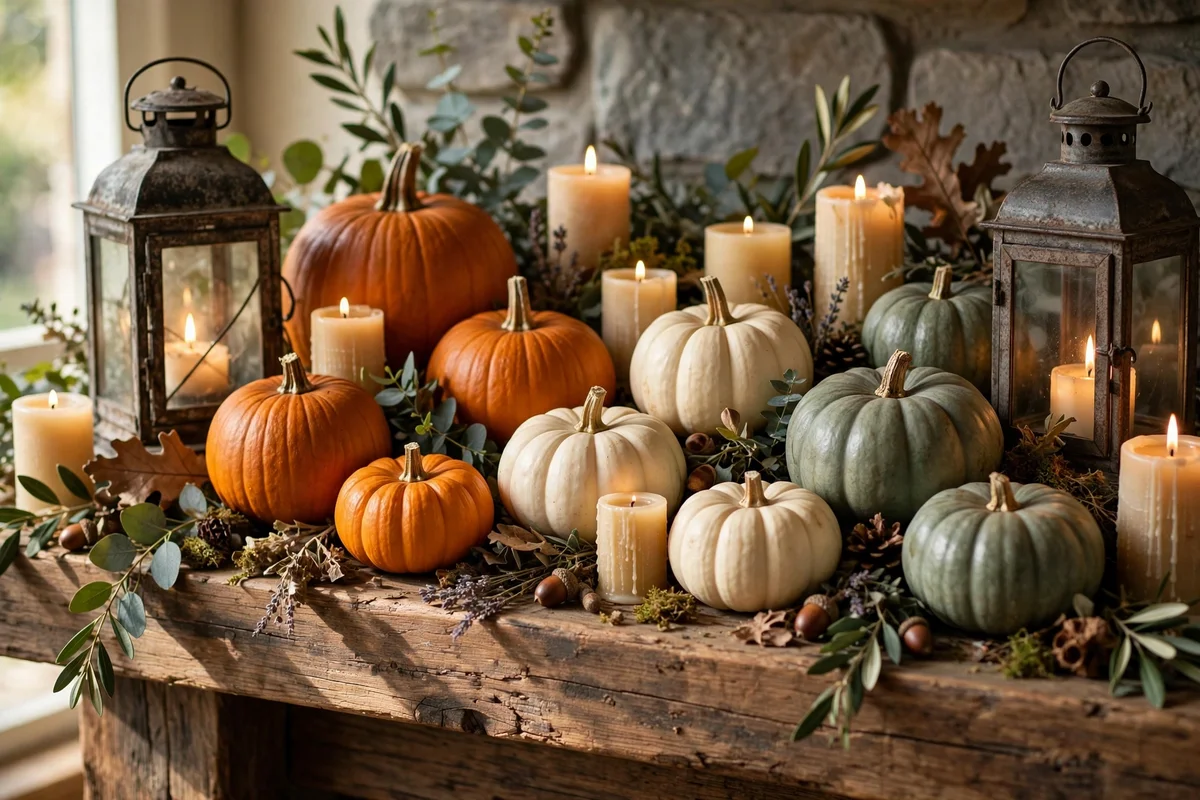
Buy five to seven small pie pumpkins or sugar pumpkins, each 8 to 12 cm across, in mixed shades of deep orange, pale cream and dusky green. Nestle them in the gaps between your lanterns and candle groups, sitting each one directly on the mantel so nothing wobbles. Odd numbers look natural, and the mix of colours echoes a real harvest basket. Small pumpkins keep for six to eight weeks in a cool room, well past the Labour Day weekend.
Check the base of each pumpkin and slice a thin sliver off wobbly ones so they sit flat. The mistake to avoid is stacking pumpkins on top of each other; a single low layer keeps the mantel safe and the shapes readable. When the season ends, roast the flesh for soup or pie filling rather than binning them, which honours the harvest theme. A bag of seven costs three to six pounds or dollars at a farm stand or grocer.
7. Place a Copper Jug Beside the Candles as a Warm Metal Accent
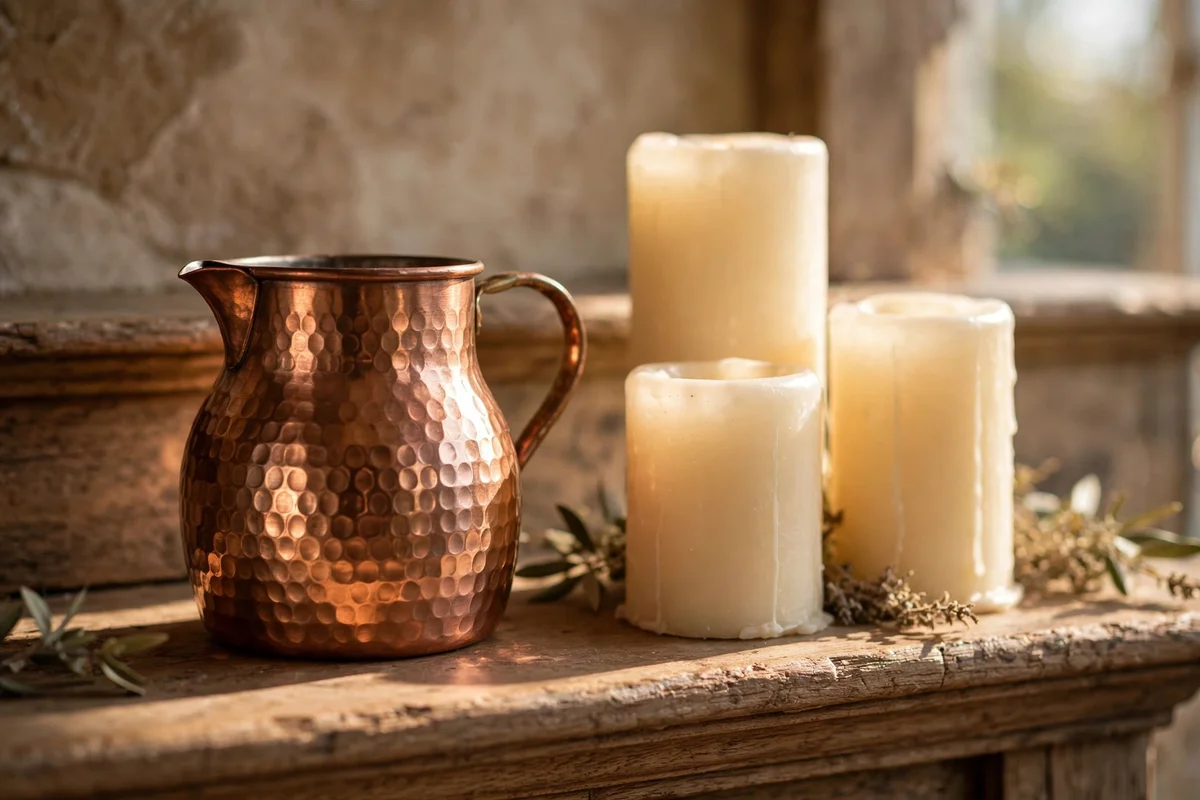
Set a small copper jug or pitcher, 15 to 20 cm tall, beside your candle group so the metal catches their glow. Copper warms the whole mantel with reflected light and links naturally to harvest tones of wheat and pumpkin. Choose plain hammered or smooth copper rather than lacquered pieces with etched patterns. One metal is enough; copper plus brass plus gold on one shelf turns the mantel into a hardware display.
Polish the jug lightly with a soft dry cloth, leaving some patina, since perfectly shiny copper looks new and cold. Fill it with dried wheat or leave it empty; both work, but water with fresh stems is not wise on a wooden mantel. The mistake to avoid is buying a huge copper pot that dominates the shelf; a jug under 20 cm reads as an accent, not the main event. Second hand copper jugs cost five to fifteen pounds or dollars.
8. Fill a Low Wicker Basket With Sunflowers for a Harvest Peak
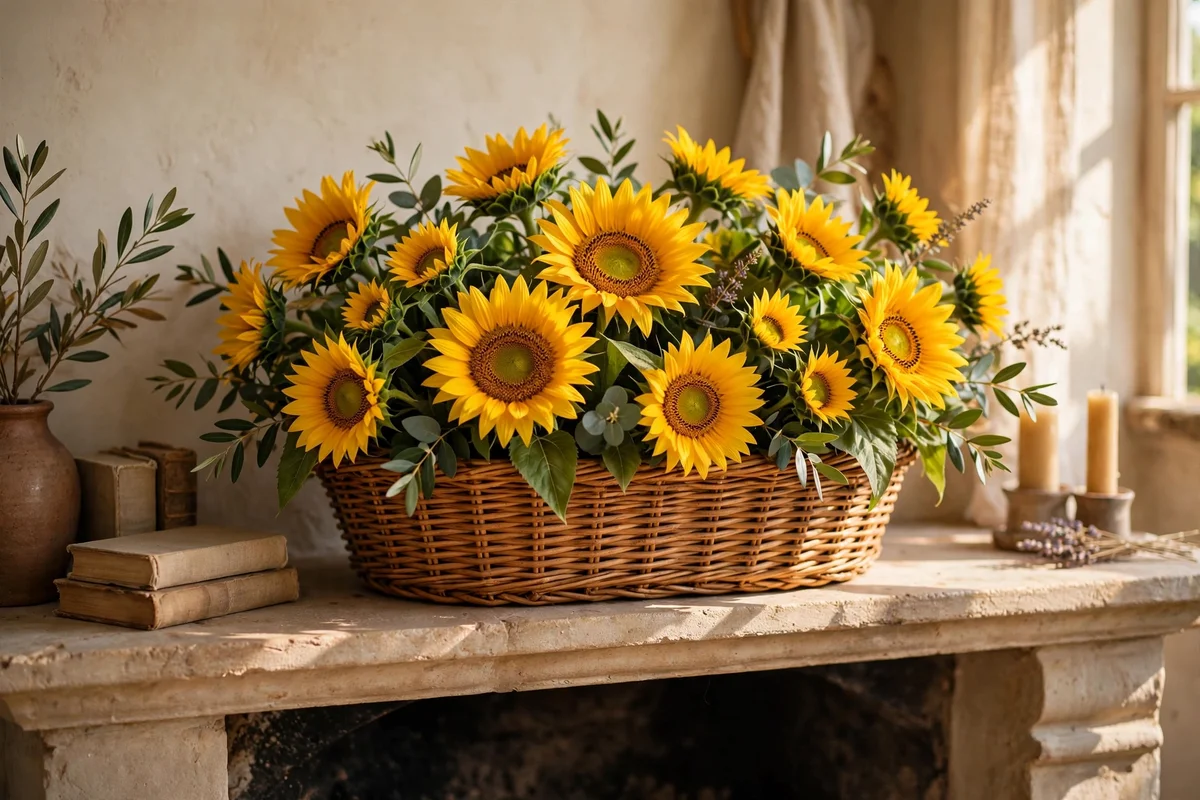
Choose a low wicker basket about 25 cm across and 12 cm deep, and fill it with five to seven fresh sunflower stems cut to 20 cm so the heads sit just above the rim. Line the basket with a small glass jar of water, hidden inside, to keep the flowers fresh for five days. Place the basket as the centrepiece, where its height of about 30 cm sets the peak of the whole arrangement. Sunflowers bring late summer into the room honestly, without any tropical fuss.
Buy sunflowers from a local grower or market for four to eight pounds or dollars a bunch; one bunch fills the basket. Remove lower leaves so no foliage sits in the water, which keeps it clear longer. The mistake to avoid is using a tall narrow vase here; the low wide basket suits the mantel shelf and stops the composition toppling. After the weekend, move fading heads to a side table, where they last another few days.
9. Stand Dried Pampas and Wheat in a Tall Clay Vase for Vertical Height
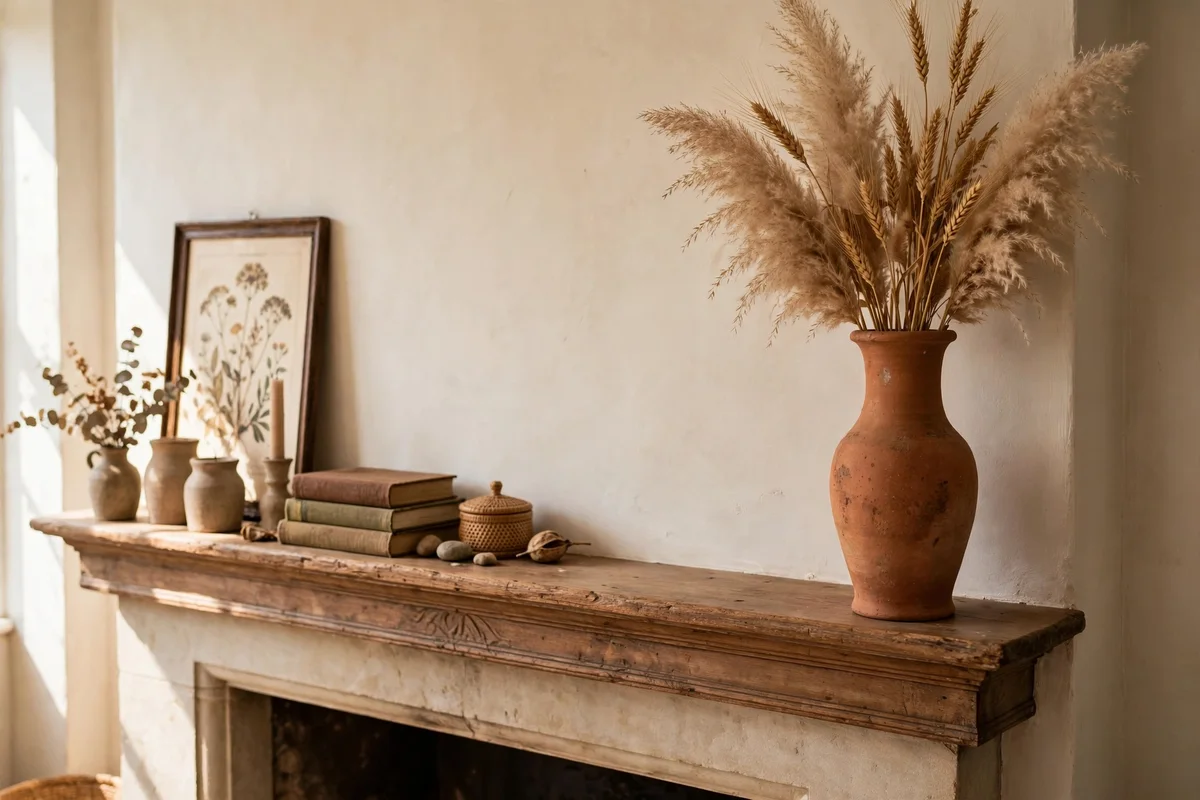
Place a tall clay or terracotta vase, 40 to 55 cm high, at the far end of the mantel opposite your wheat crock. Fill it with five pampas stems and three wheat stalks, all dried, fanned so the total height reaches 80 to 100 cm. The vertical line draws the eye upward and balances the low wide centrepiece. Terracotta brings an earthy warmth that glazed ceramic cannot match; its rough surface catches candlelight beautifully.
Weight the vase base with a handful of clean pebbles so tall stems cannot tip it. Keep the arrangement at least 25 cm from any open flame, since pampas is extremely flammable. The mistake to avoid is cramming in too many stems; eight to ten total gives air and movement, while twenty looks like a broom cupboard. A terracotta vase costs eight to eighteen pounds or dollars, and dried stems keep for years indoors.
10. Lay a Folded Grain Sack Runner Beneath the Mantel Display
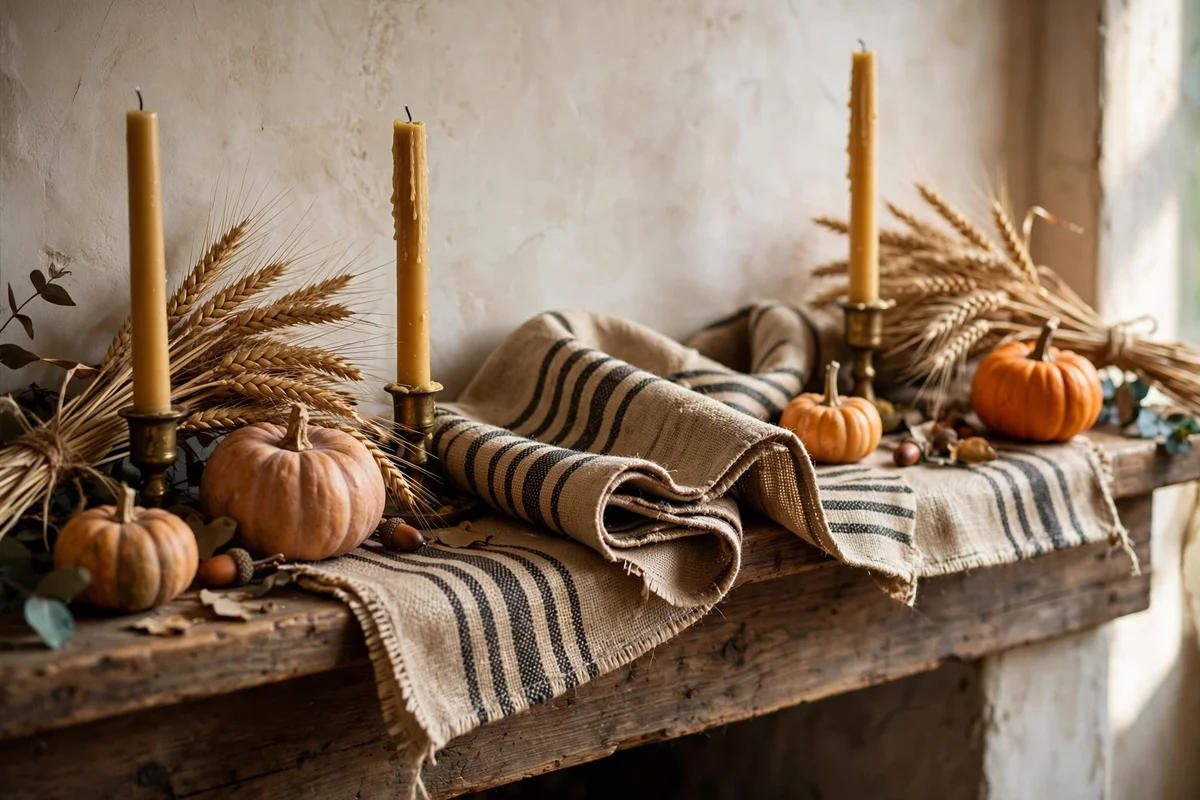
Fold a grain sack or striped ticking runner to about 30 cm wide and lay it along the mantel shelf under your whole display. The fabric layer grounds the objects, protects the wood from scratches, and adds the honest texture of old farmhouse linen. Choose natural hemp or cotton with faint blue or brown stripes; bright printed runners fight the quiet harvest palette. A runner 120 to 150 cm long suits a standard mantel, with 10 cm of wood showing at each end.
Buy a real vintage grain sack for ten to twenty pounds or dollars, or a new reproduction for less. Shake it out and iron it flat before laying, since creases show under candlelight. The mistake to avoid is using a runner that hangs over the mantel edge; it looks sloppy and can catch on sleeves. If your mantel is short, fold the runner double for a narrower, thicker strip that still reads as linen.
11. Flank a Central Round Mirror With Brass Candlesticks and Cream Tapers
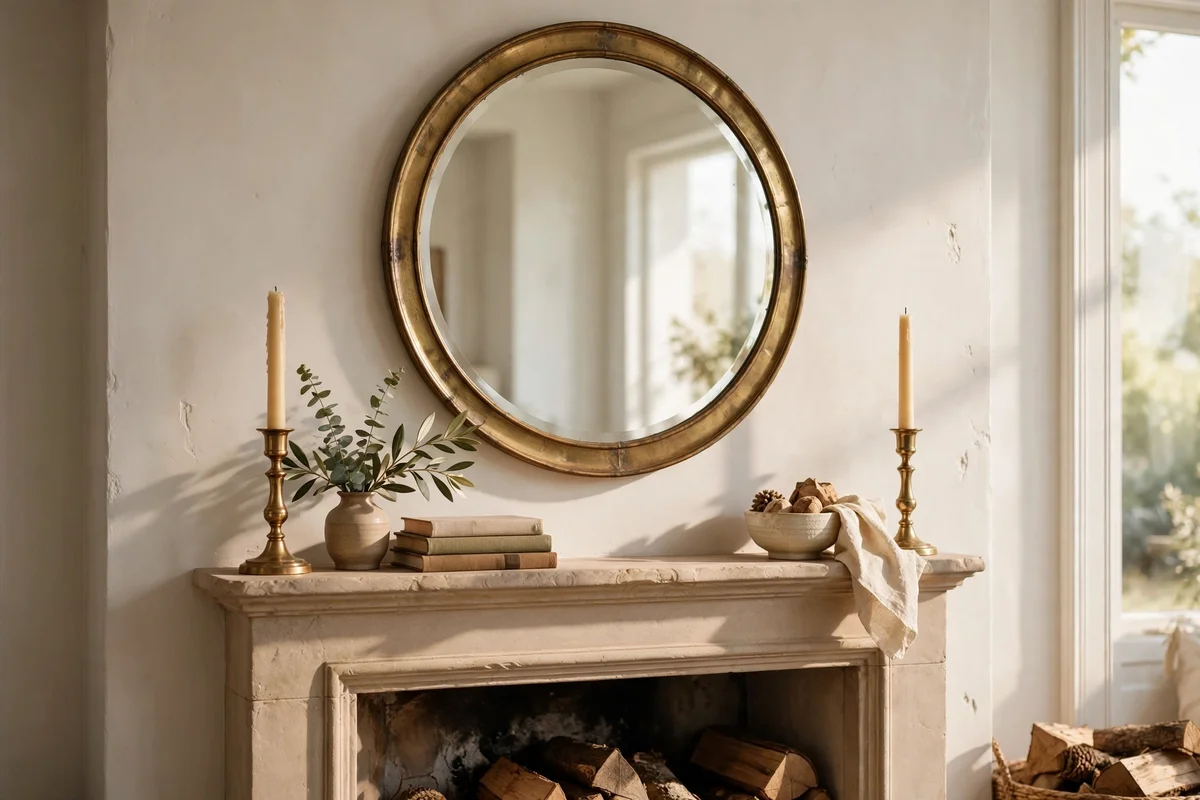
Hang a round mirror 40 to 50 cm across above the mantel centre, with its lower edge 15 to 20 cm above the shelf. Place a brass candlestick 20 to 25 cm tall on each side, each holding a cream taper of 25 cm. The mirror doubles the candlelight and makes a small living room feel deeper. Brass suits harvest styling because its gold tone echoes wheat and copper; chrome or nickel would feel cold here.
Clean the mirror with a vinegar and water mix so reflections stay crisp behind the candles. Use dripless tapers to protect the shelf, and keep a small brass snuffer nearby for safe extinguishing. The mistake to avoid is choosing a mirror wider than the mantel itself; it should span about two thirds of the shelf width. A 45 cm round mirror costs twenty to forty pounds or dollars, with candlesticks often found for less second hand.
12. Rest a Rustic Wooden Dough Bowl of Pinecones on the Hearth Below
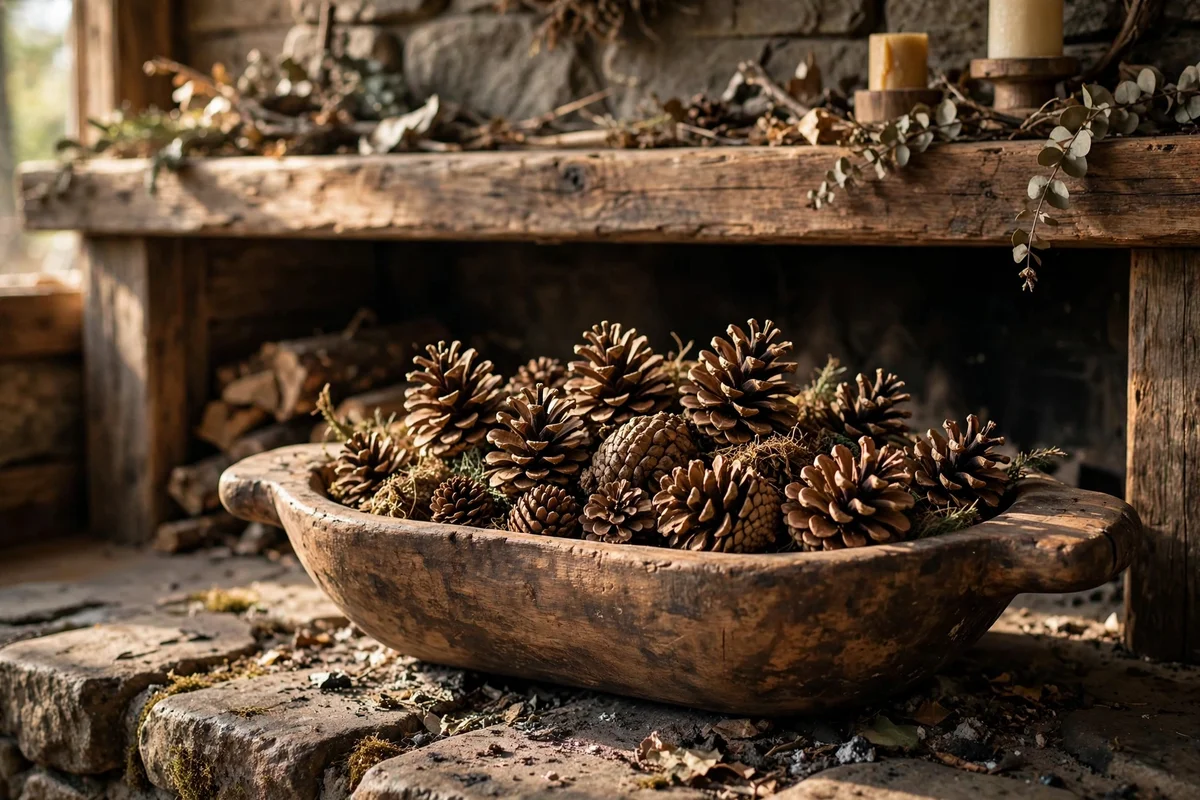
Set a wooden dough bowl 30 to 40 cm long on the hearth directly below the mantel, and fill it with a dozen dried pinecones in mixed sizes. The bowl links the shelf display to the fireplace opening and fills what is often an empty, forgotten strip. Choose a bowl in warm pine or walnut with visible grain; the rougher the better. Pinecones are free from any park walk in autumn and bring honest woodland texture indoors.
Bake gathered pinecones at 100 degrees for an hour to kill insects before bringing them inside. Mix in three or four dried orange slices for a quiet colour note. The mistake to avoid is placing the bowl too close to the fire opening; keep 40 cm of clear space so sparks cannot reach it. A hand carved dough bowl costs fifteen to thirty pounds or dollars at a craft fair, and pinecones cost nothing but a walk.
13. Hang a Small Wheat and Eucalyptus Swag From Each Mantel Corner
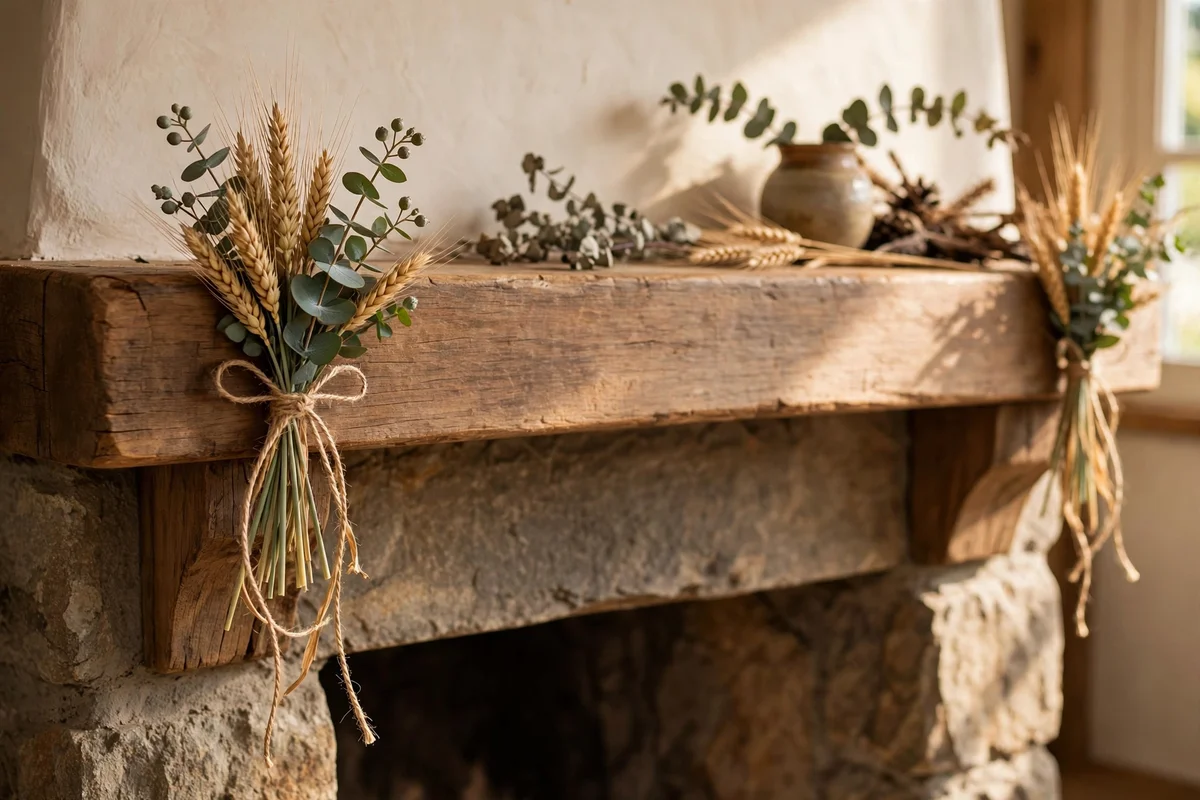
Tie six wheat stalks and three eucalyptus sprigs into a small swag about 25 cm long, binding the tops with twine. Hang one from each front corner of the mantel so they mirror each other, using small clear hooks. Swags frame the display like curtains and add scent as well as shape. Eucalyptus dries beautifully and keeps its soft grey green colour for months, so the swags last through autumn.
Make both swags at the same time from the same bunch so they match in fullness. Trim eucalyptus stems shorter than the wheat so the seed heads stand proud. The mistake to avoid is hanging swags from the mantel centre; corners frame while a centre swag fights the centrepiece. Two swags cost under ten pounds or dollars if you buy one eucalyptus bunch and split it.
14. Stack Two Heritage Cookbooks Under a Stoneware Jug of Sunflowers
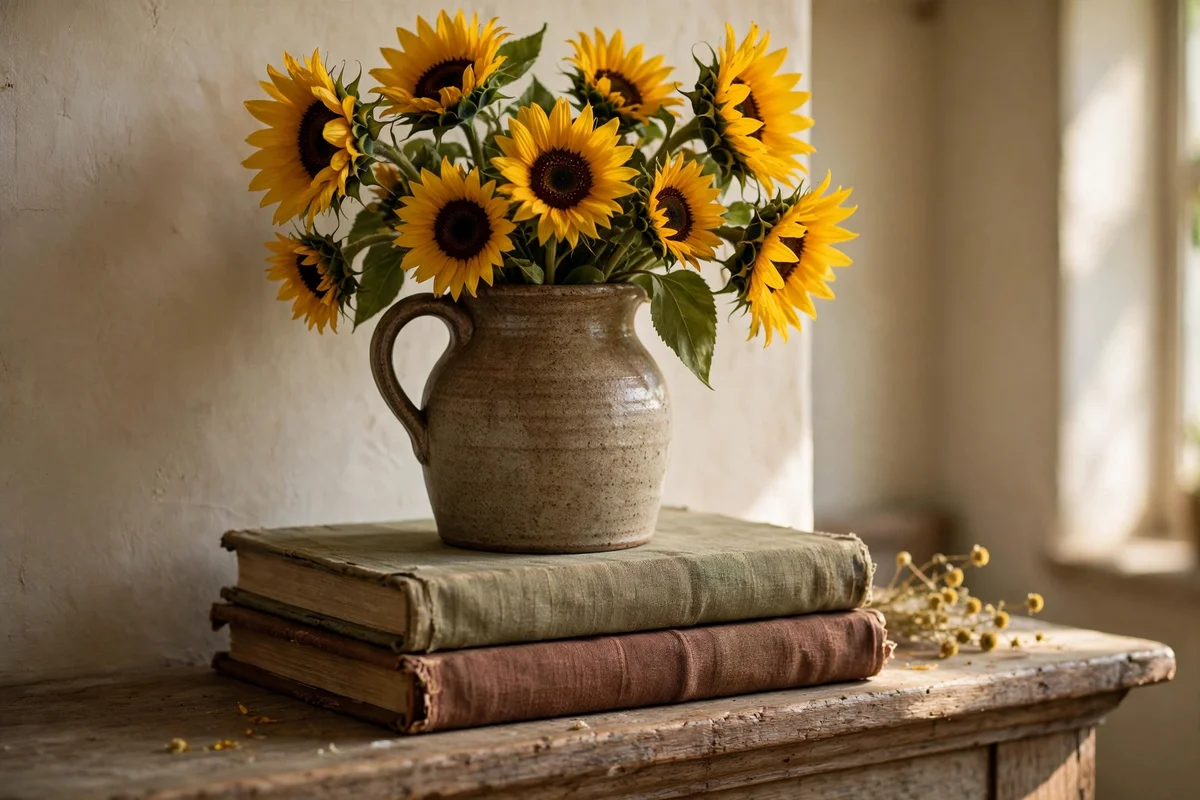
Lay two cloth bound cookbooks, each about 25 by 18 cm, flat in a stack slightly right of centre, and stand a stoneware jug of three sunflowers on top. The stack lifts the jug 8 cm and adds the warmth of printed heritage to the shelf. Choose books with cream or rust coloured spines that echo the harvest palette. Family cookbooks, full of notes and stains, tell a truer story than any new prop.
Keep the jug small, under 18 cm, so the stack stays stable and nothing towers. Put a cork mat under the bottom book to protect the shelf. The mistake to avoid is stacking four or five books; two is a plinth, while more becomes a pile. Charity shops sell cloth bound cookbooks for one to three pounds or dollars each, making this one of the cheapest ideas here.
15. Line Glass Hurricanes With Warm String Lights Along the Ledge

Place three glass hurricane vases, 20 to 30 cm tall, along the back of the mantel shelf, and coil a 3 metre warm white string of fairy lights inside each one. The glass softens the tiny bulbs into a gentle glow that flatters everything nearby. Keep the battery packs hidden behind the vases, tucked against the wall. This trick gives evening light without a single open flame, which suits households with toddlers or pets.
Choose lights with a timer function so they switch on at dusk and off after six hours, saving battery life. Replace batteries every three weeks in heavy use. The mistake to avoid is mixing cool white and warm white strings in one display; the cool bulbs look blue and break the harvest warmth. Three hurricanes cost twelve to twenty five pounds or dollars, with lights adding a few more.
16. Weave Dried Orange Slices and Cinnamon Sticks Into a Simple Garland
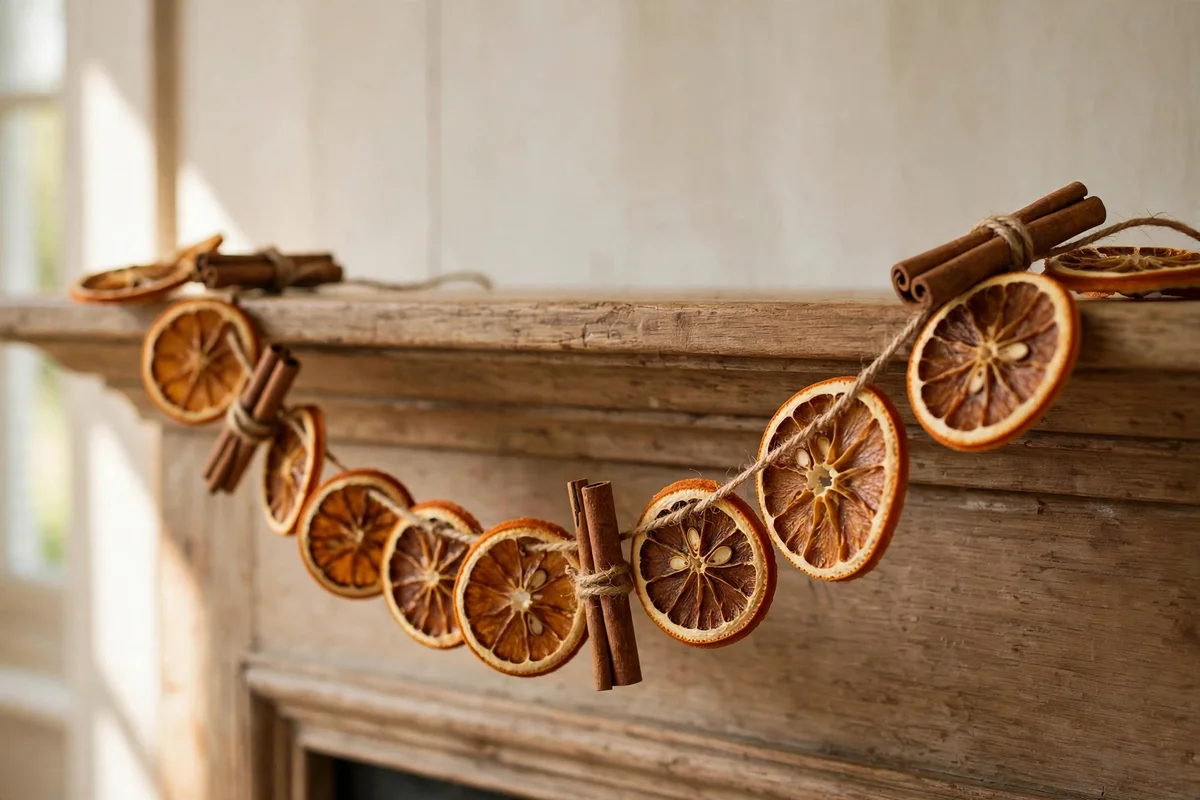
Dry orange slices at 90 degrees for four hours, turning once, until the edges curl and the flesh turns translucent. Thread twelve slices and eight cinnamon sticks onto twine, alternating them, for a garland about 120 cm long. Drape it in a shallow swag across the mantel front, where its amber tones and gentle spice scent greet anyone entering the room. The garland costs almost nothing and smells of honest autumn kitchens.
Fix the garland with small hooks every 30 cm so it does not slide off the shelf edge. Keep it away from open flames, since dried fruit and cinnamon burn easily. The mistake to avoid is slicing the oranges too thin; slices under 5 mm curl into crisps, while 8 mm slices hold their shape. Make a second garland for the kitchen window while you have the oven on, doubling the value of the work.
17. Anchor the Centre With an Antique Balance Scale in Dark Wood
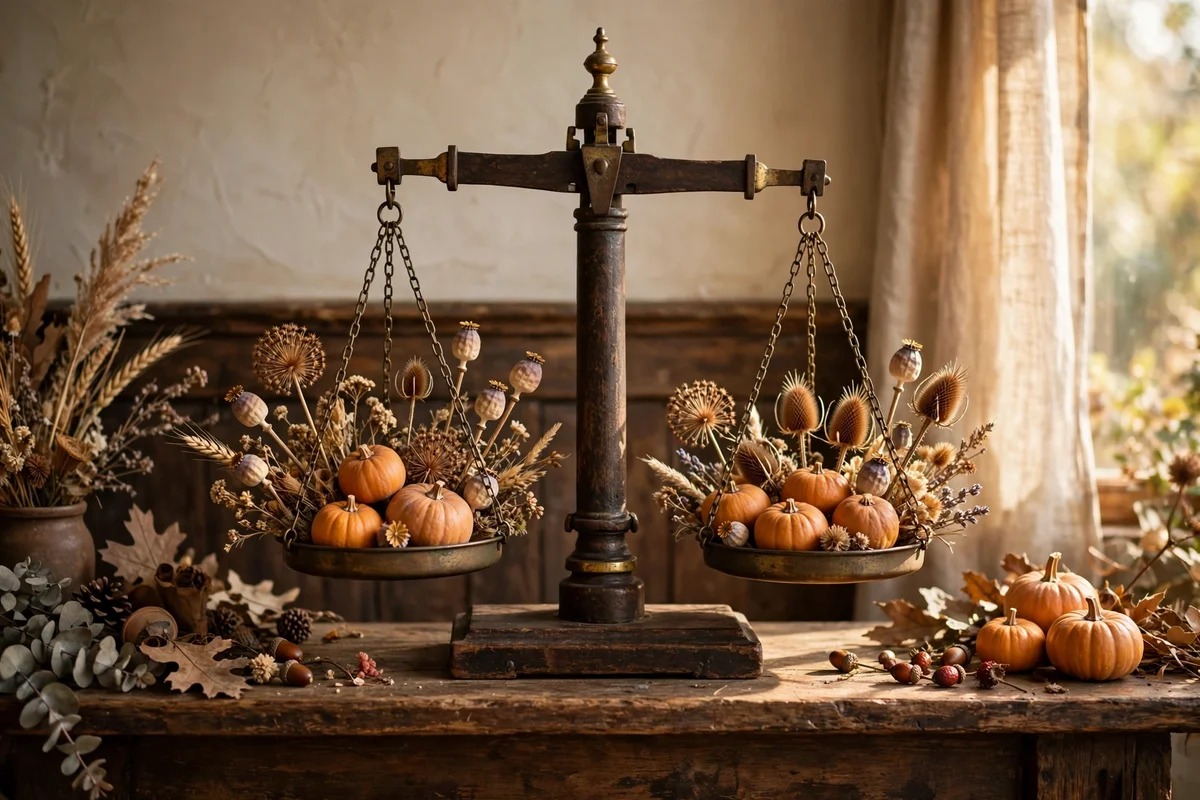
Place an antique brass and wood balance scale, about 35 cm wide, at the very centre of the mantel as the anchor piece. The scale brings heritage weight to the display and its brass pans echo the warm metals around it. Style the pans lightly: three dried seed heads in one, two small pumpkins in the other. An honest old tool like this grounds the whole shelf and starts conversations at family gatherings.
Find balance scales at antique fairs or auction sites for twenty to fifty pounds or dollars; reproductions cost less and look the part. Dust the brass monthly with a soft cloth and keep the mechanism dry. The mistake to avoid is overfilling the pans; two or three small items each side keep the scale readable and safe. If the scale tips easily, rest a small stone in the base pan to steady it.
18. Mount a Small Oak Frame Gallery of Harvest Prints Above the Mantel
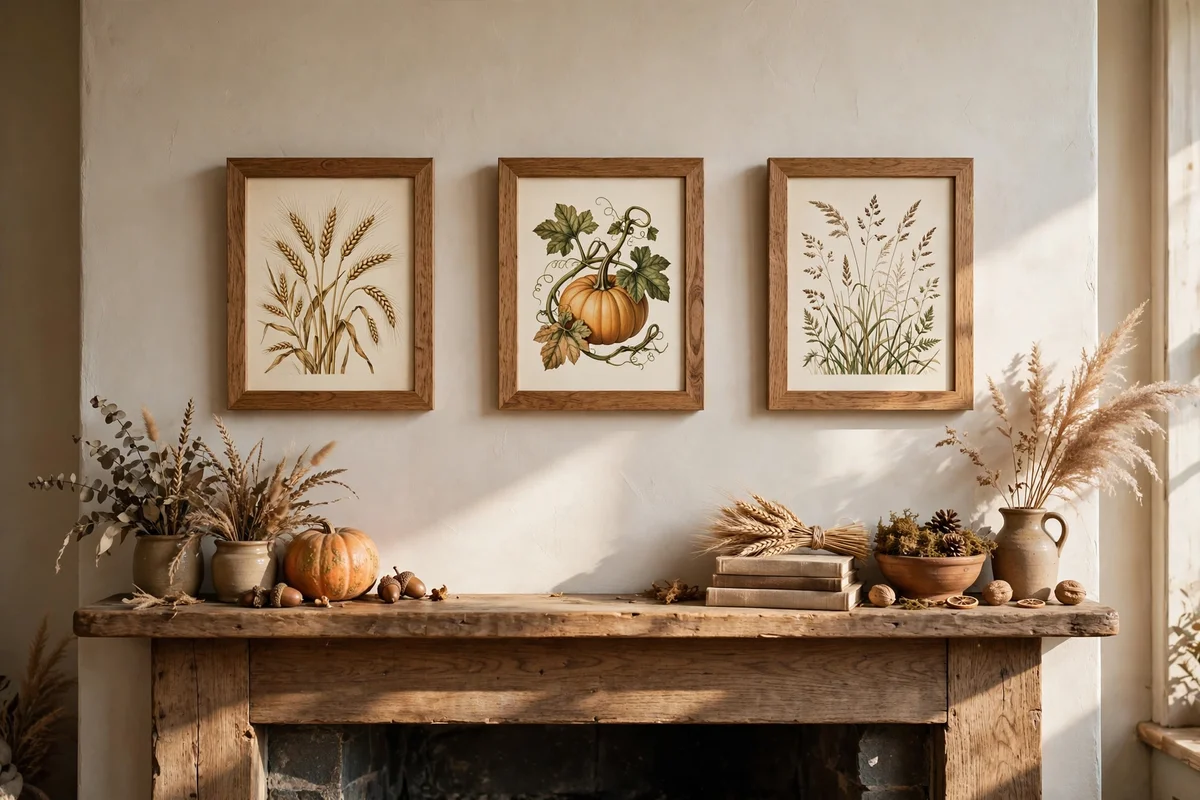
Hang three small oak frames, each 15 by 20 cm, in a neat row 10 cm above the mantel shelf, spaced 8 cm apart. Fill them with simple harvest prints: a wheat stalk study, a pumpkin sketch, a sprig of dried grasses. The row lifts the eye and finishes the wall that the mantel sits against. Oak frames suit the warm wood tones below; black frames would feel too sharp here.
Print the images at home on textured matte paper for an honest, crafted feel; glossy photo paper looks too slick. Use proper wall hooks rated for the weight, checking for pipes and cables first. The mistake to avoid is hanging the row too high; 10 cm above the shelf keeps prints and mantel reading as one composition. Three frames plus prints cost fifteen to thirty pounds or dollars in total.
19. Pile Dried Apple Slices in a Shallow Wooden Bowl for Gentle Scent
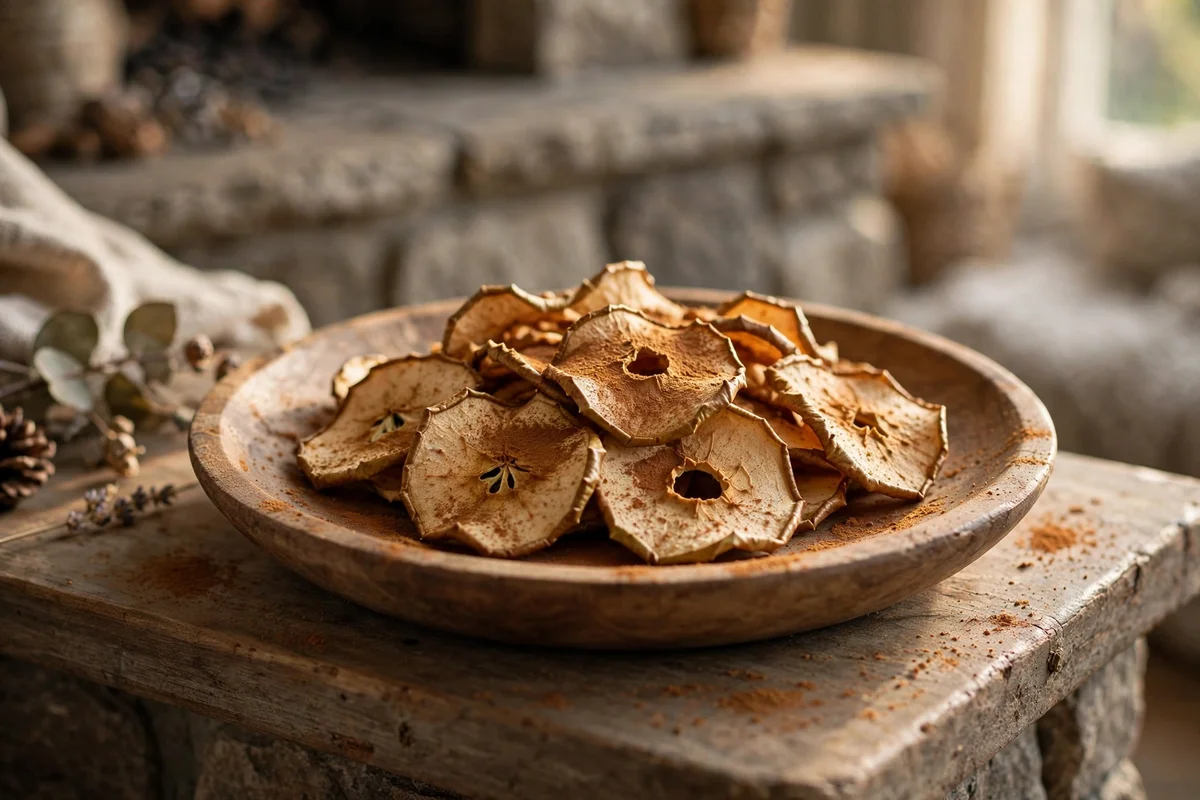
Fill a shallow wooden bowl 20 cm across with a loose pile of dried apple slices, dusted lightly with cinnamon. The bowl sits low between taller pieces and adds a soft fruity scent that suits a living room better than strong potpourri. Dry apple rings at 70 degrees for six hours, or buy them ready dried from a health food shop. Their pale gold colour bridges cream candles and deeper autumn tones.
Refresh the scent by adding two drops of clove oil to the bowl each month, rubbed into the slices with a cloth. Keep the bowl away from direct candle heat so the slices do not scorch. The mistake to avoid is heaping the slices above the bowl rim; a level fill looks generous without spilling. A bag of dried apple rings costs three to five pounds or dollars and fills two bowls.
20. Set a Copper Bucket of Split Logs Beside the Fireplace
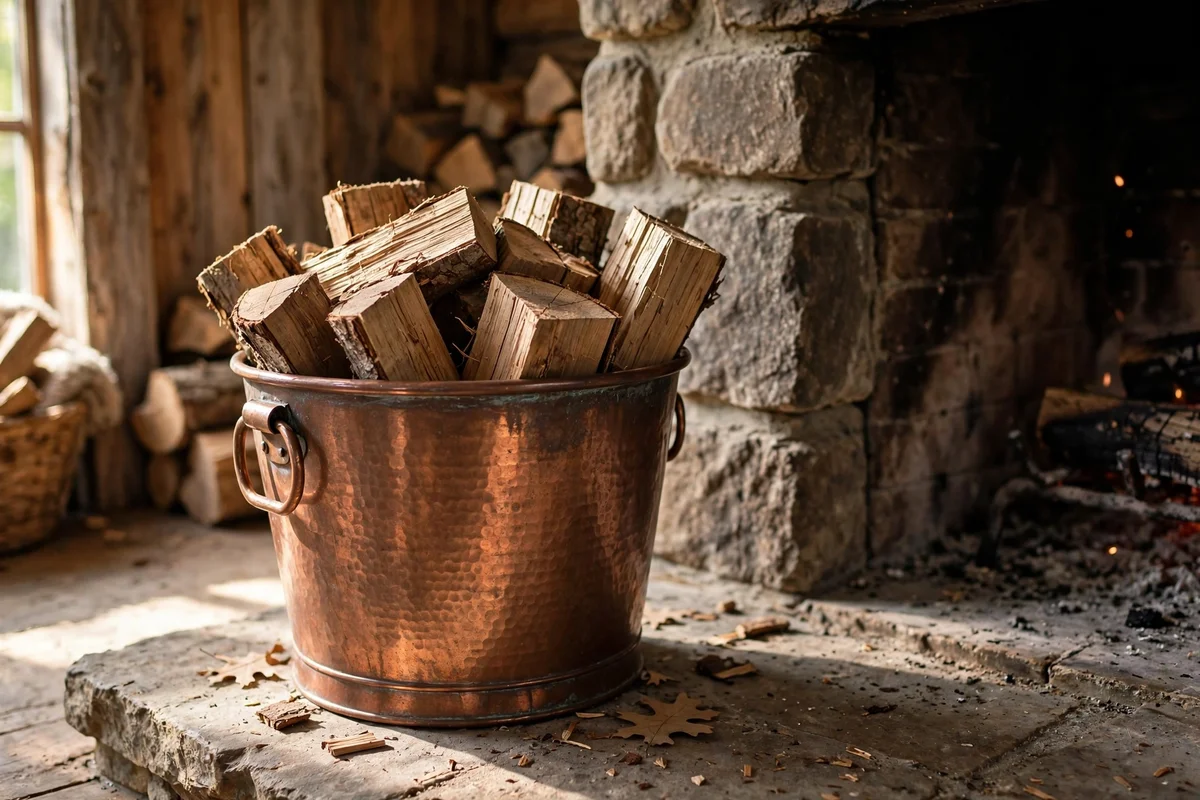
Place a copper bucket 30 to 35 cm tall beside the fireplace, on the hearth or the floor, and fill it with split logs cut to 25 cm lengths. The bucket brings the harvest inside in its most honest form and keeps fuel close for cold evenings. Copper suits the mantel metals above and ages to a soft patina. Fill the bucket loosely; crammed logs look heavy and make the corner feel crowded.
Buy kiln dried logs so they burn cleanly and do not bring insects indoors. Keep a folded cotton cloth over the top to catch bark dust. The mistake to avoid is using an oversized bucket that blocks the fireplace opening; it should sit fully to one side. A copper bucket costs twenty five to forty pounds or dollars, or choose a galvanised one for a third of the price.
21. Dress Each Mantel End With a Terracotta Pot of Dried Wheat Stalks
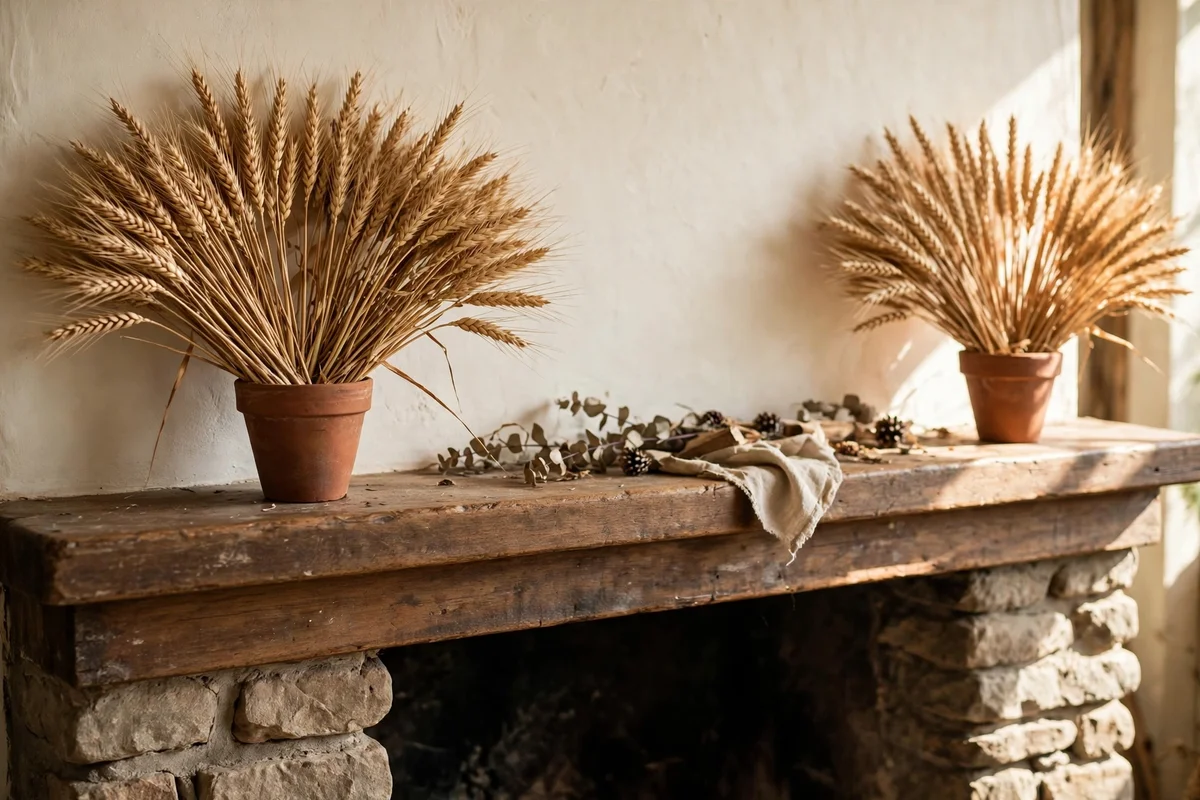
Set a terracotta pot 12 to 15 cm across at each end of the mantel and fill each with nine dried wheat stalks, fanned into a small fountain shape. The matching pots give the shelf pleasing symmetry while the wheat keeps everything natural. Terracotta costs almost nothing and its orange clay tone deepens the harvest palette. Keep the stalks under 40 cm tall so they do not brush the ceiling or the wall art above.
Buy wheat in one bunch and split it evenly so both pots match. Add a spoonful of sand to each pot for weight. The mistake to avoid is using plastic pots painted to look like clay; real terracotta breathes and its texture shows honestly. When wheat heads fade after a season, compost them and refill the pots with dried lavender or seed heads for winter.
22. Fill a Seagrass Tray With Acorns and Hazelnuts as a Low Centre Filler
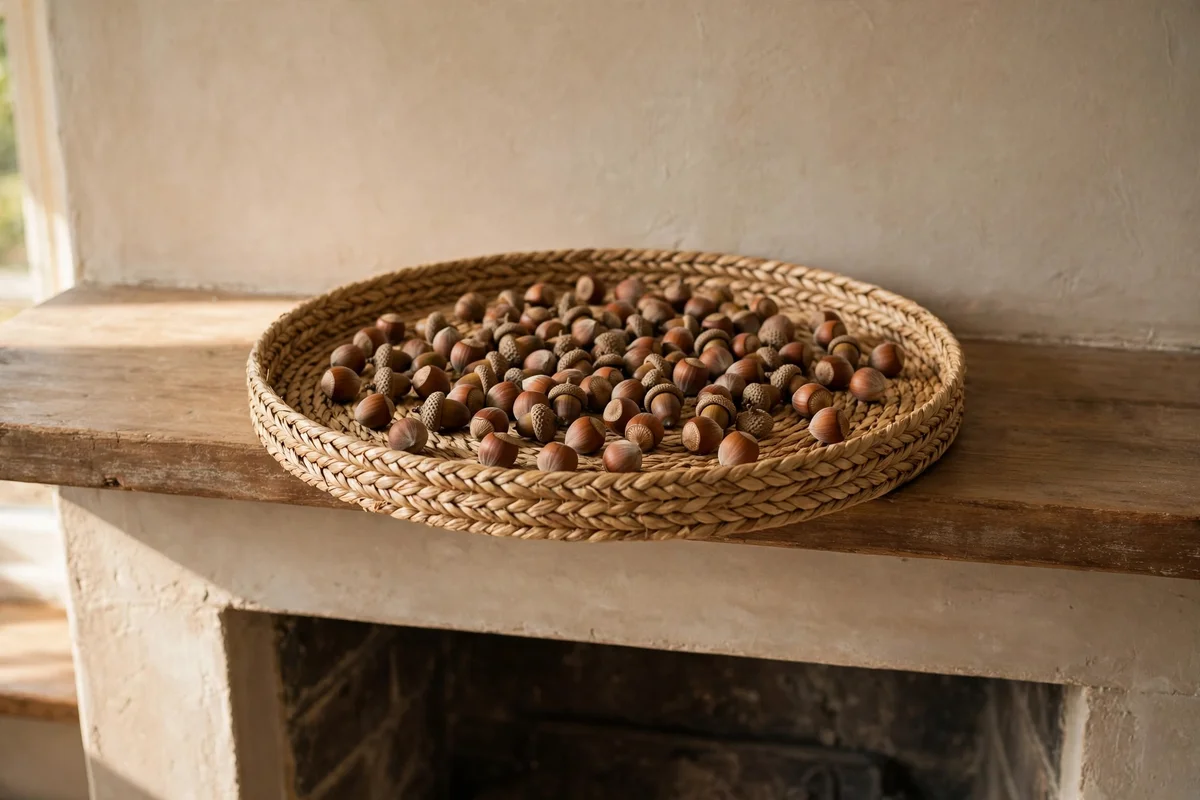
Lay a flat seagrass tray about 35 by 20 cm at the centre of the mantel and scatter two cups of acorns and hazelnuts across it in a single layer. The low tray fills the awkward middle ground between taller pieces and adds honest woodland texture. Use whole nuts in their shells for a natural look; shelled nuts look like a snack bowl and invite nibbling. Children enjoy helping to gather acorns, which makes this a sweet family project.
Dry gathered acorns at 90 degrees for two hours so they do not mould on the tray. Replace the nuts each autumn, since old ones dull and crumble. The mistake to avoid is piling the nuts deep; a single layer shows each shape while a heap looks like storage. A seagrass tray costs eight to fifteen pounds or dollars, and the filling is free from a September walk.
23. Crown the Centre With a Grapevine Wreath Dressed in Wheat and Berries
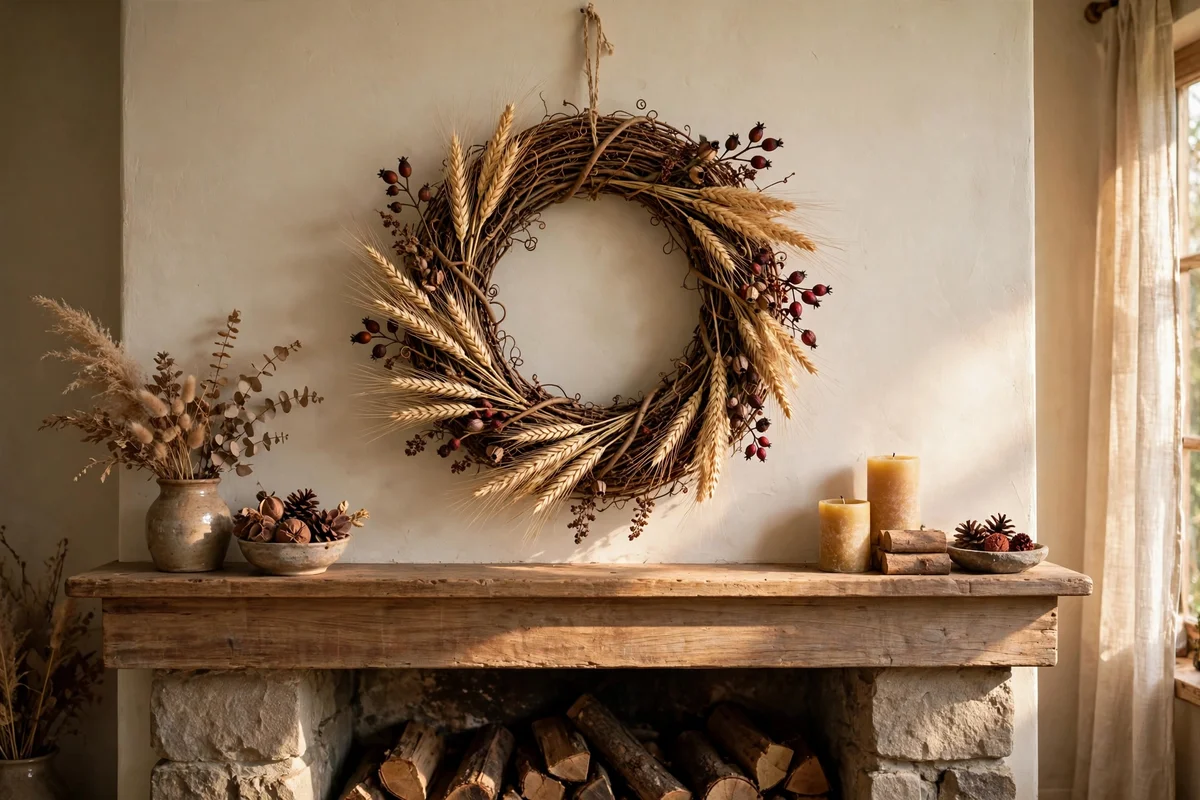
Hang a natural grapevine wreath 35 to 40 cm across on the wall above the mantel centre, or lean it against the mirror as the crowning piece. Tuck eight wheat stalks and six dried berry sprigs into the vines, spacing them evenly around the ring. The wreath gathers every harvest note on the shelf into one circle. Keep additions sparse; the twisted vine itself is beautiful and over dressing hides it.
Buy a plain grapevine wreath for six to twelve pounds or dollars and dress it yourself rather than buying a finished one. Wire each addition with thin florist wire so nothing slips. The mistake to avoid is hanging the wreath so low that it covers the centrepiece; leave 15 cm of clear wall between them. After autumn, strip the wheat and keep the bare wreath for winter greenery.
A harvest mantel is never really finished, and that is its charm. Start with wheat and candles, add pumpkins and lanterns as the weeks cool, and let the shelf change with the season. This week, try the three cream pillar candles on a wooden board: it takes ten minutes, costs little, and gives you the warm glow everything else will gather around.
Frequently Asked Questions
How much does a Labour Day mantel refresh usually cost?
Between twenty and eighty pounds or dollars for most of the ideas here. Dried wheat, small pumpkins and pinecones are cheap or free, while a copper jug or wooden lanterns cost more. Start with candles and wheat, which transform the shelf for under twenty, then add one special piece each week. Buying slowly stops the mantel looking like a shop display.
How do I keep dried grasses and wheat safe near candles?
Keep every dried stem at least 25 cm from any open flame, and never let grasses overhang a lit candle. Use battery operated candles inside lanterns if the display is dense, or place real flames only at the far ends. Dried pampas catches fire in seconds, so treat it with respect. A small fire guard on the hearth adds peace of mind.
Will these ideas work on a short or narrow mantel shelf?
Yes. Choose five or six ideas rather than all twenty three, and favour low, wide pieces like the grain sack runner, the seagrass tray and the apple bowl. Skip the tall clay vase and the wheat crock, which need depth. Measure your shelf first: most ideas suit a shelf 120 cm wide and 15 cm deep, which is standard.
How long will small pumpkins and dried materials last?
Small pumpkins keep six to eight weeks in a cool room away from radiators, so they easily outlast the Labour Day weekend. Dried wheat, grasses and pinecones last for years if kept dry and dusted. Sunflowers are the short lived exception, fading after about five days, so replace them with dried stems once the weekend ends.
Can I reuse these decorations later in autumn?
Almost all of them. Wheat, grasses, lanterns, copper and the grapevine wreath carry straight through to late autumn with small swaps: trade sunflowers for dried seed heads, add deeper toned pumpkins, and bring in the orange and cinnamon garland. Store off season pieces in a dry box, labelled, so next year’s mantel starts in minutes.