Living Room
24 Coastal Entryway Ideas With Calm Seaside Ease
By Anna Wells · · 22 min read
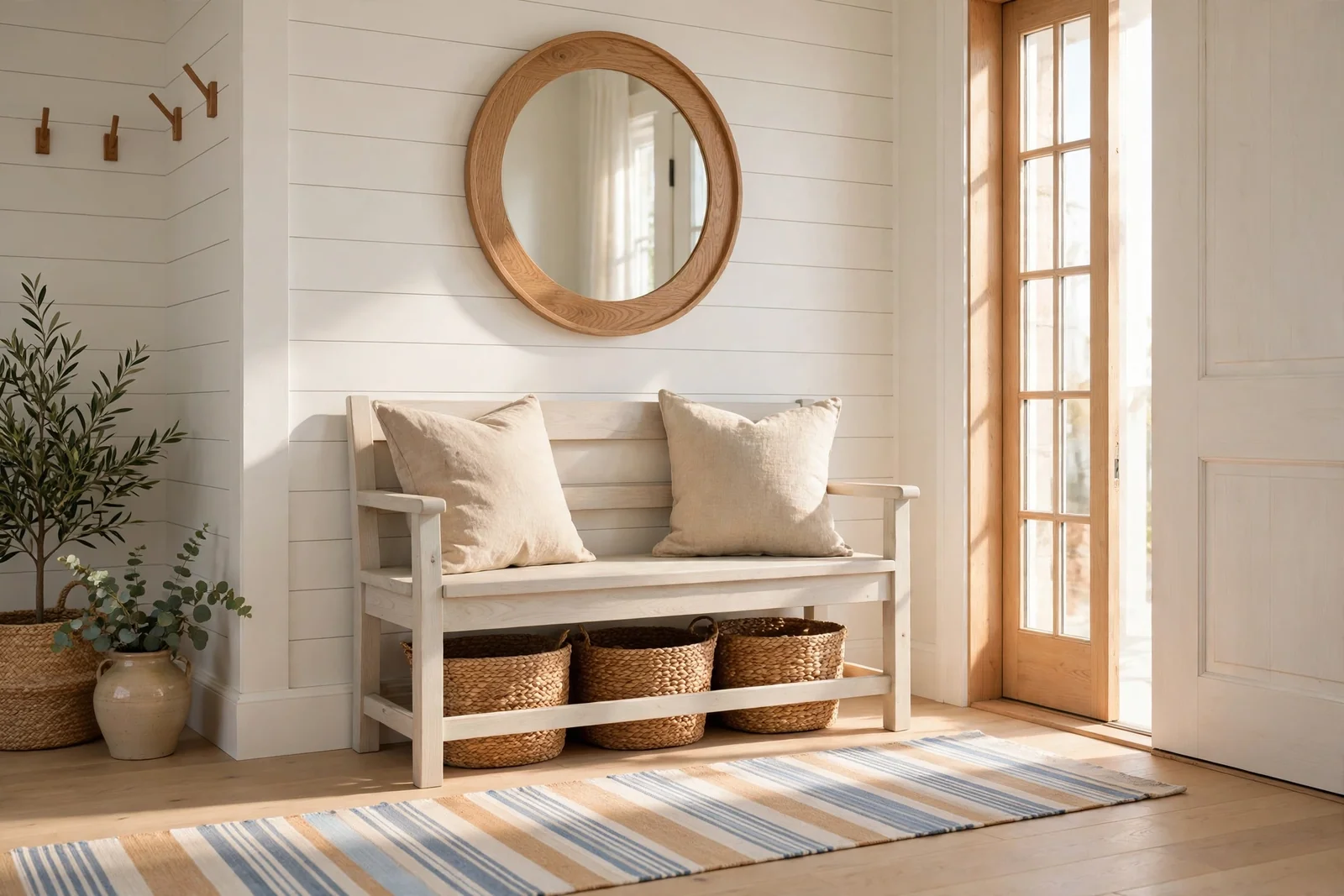
Bring calm seaside ease to your hallway with 24 practical coastal entryway ideas, from washed-wood benches and seagrass baskets to striped runners and light-bouncing mirrors.
The front door swings open and the whole day seems to exhale. Shoes land softly, keys find their tray, and pale daylight drifts down the hallway like a slow tide coming in.
This is the promise of a coastal entryway: a space that feels calm and collected the moment you step inside, serene rather than themed, welcoming rather than staged.
Inside you will find 24 concrete ideas, each one with sizes, materials and budget tips. They are built around washed wood, woven texture, linen softness and colours borrowed from the shoreline.
Start at the door and work your way inward, choosing the pieces that suit your space. Even three or four of these ideas can change how coming home feels.
1. Lay a Striped Cotton Runner in Sand and Soft Blue
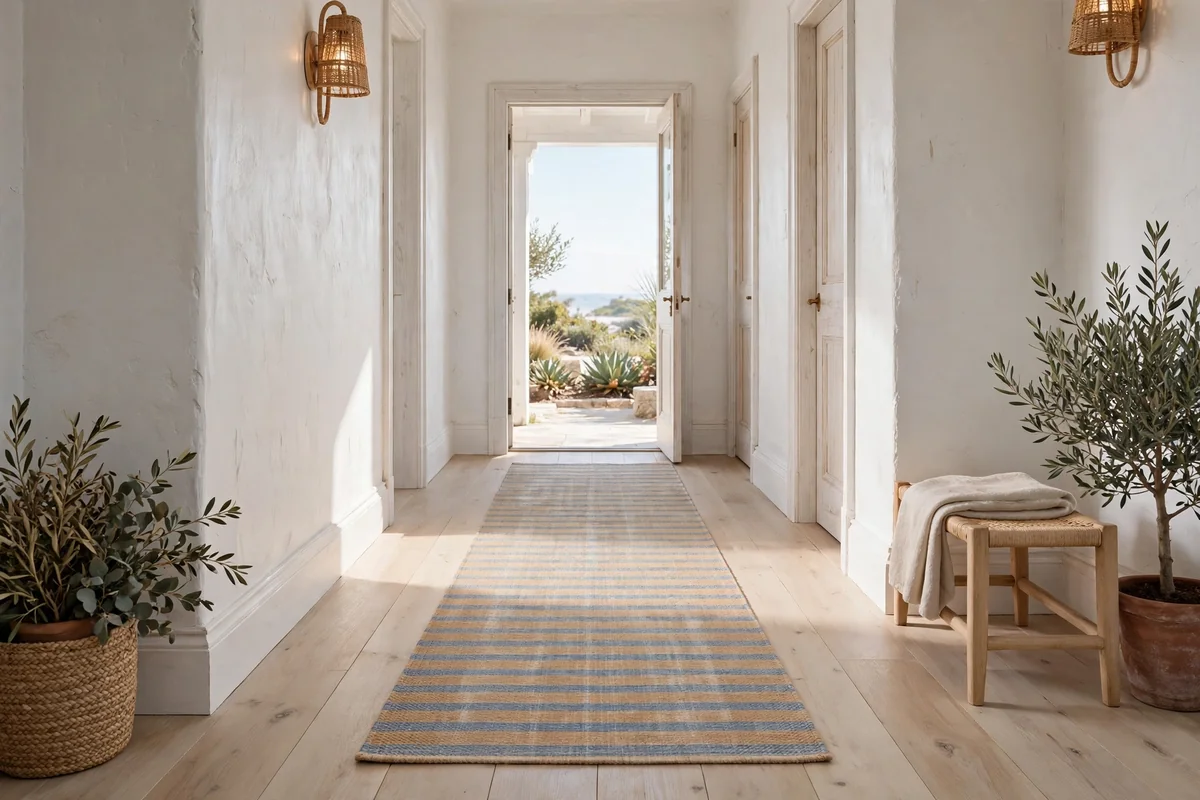
A flatweave cotton runner with sand and soft blue stripes sets the coastal tone the moment the door opens. Choose one 60 to 80 cm wide and long enough to cover two-thirds of the hallway, usually 180 to 240 cm, so it guides the eye without touching the walls. Look for a machine-washable cotton weave around 8 to 10 mm thick, which lies flat underfoot and handles grit from shoes. Budget versions start near 30 pounds or dollars, while handloomed options reach 120.
Leave at least 10 cm of bare floor visible on each side so the runner reads as a defined path rather than wall-to-wall carpet. Tape the ends down with rug tape on hard floors to stop curling, and shake it outside weekly to keep sand from grinding into the weave. The mistake to avoid is choosing a runner so long it bunches against the far wall; measure the hallway first and subtract 40 cm. Wash on cool and line dry to keep the stripes crisp.
2. Set a Pale Washed-Wood Bench Topped With Linen Cushions
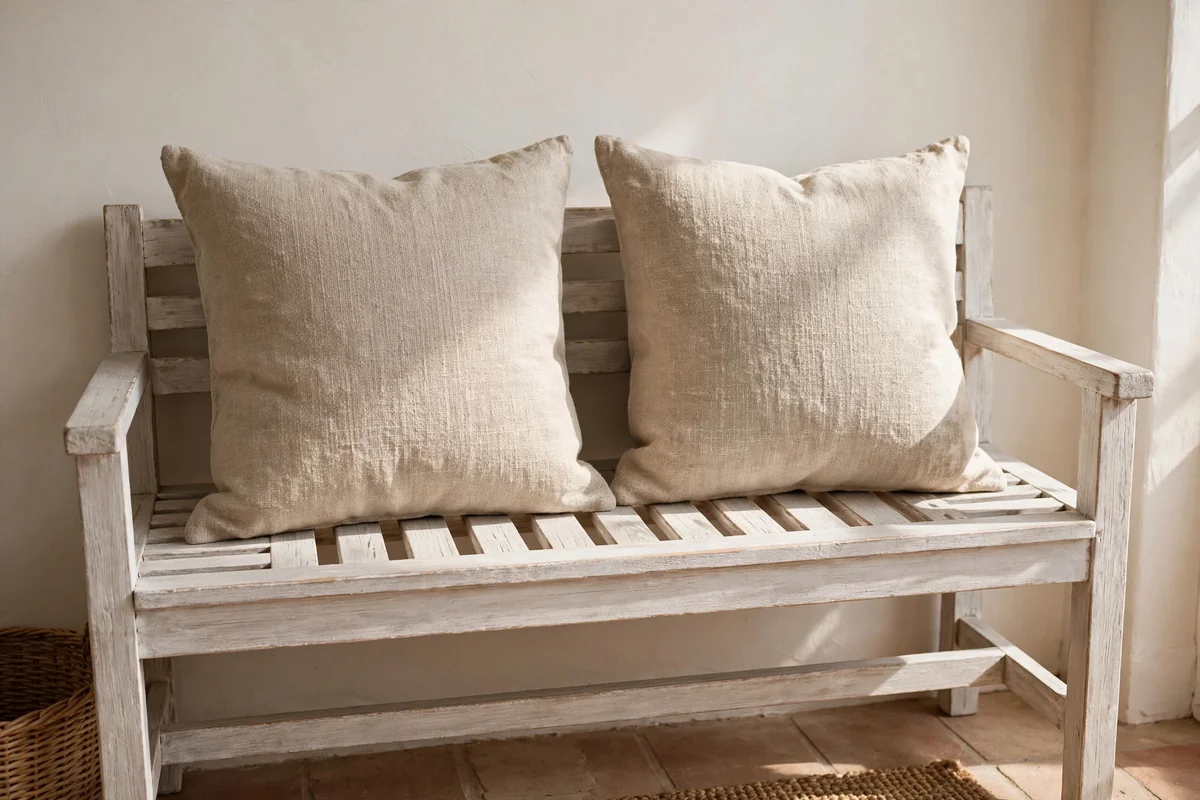
A bench in pale washed wood gives the entry a place to sit for shoes while keeping the look airy. A length of 90 to 120 cm suits most hallways and seats two people, with a seat height near 45 cm for comfortable perching. Choose solid acacia or pine with a whitewashed finish that lets the grain show through, and check the slats are sanded smooth so hosiery never snags. Second-hand benches around 40 pounds or dollars whitewash beautifully with one coat of diluted chalk paint.
Top the bench with two linen cushions in sand or soft white, each 40 to 45 cm square with removable washable covers. Arrange them side by side with a small gap rather than stacked, which keeps the bench usable. The common mistake is picking polyester fills that flatten in a month; choose a plump feather blend or dense foam so cushions bounce back. Rotate and plump them weekly, and keep one spare cover on hand for quick swaps after muddy days.
3. Hang a Round Mirror to Bounce Light Like Water
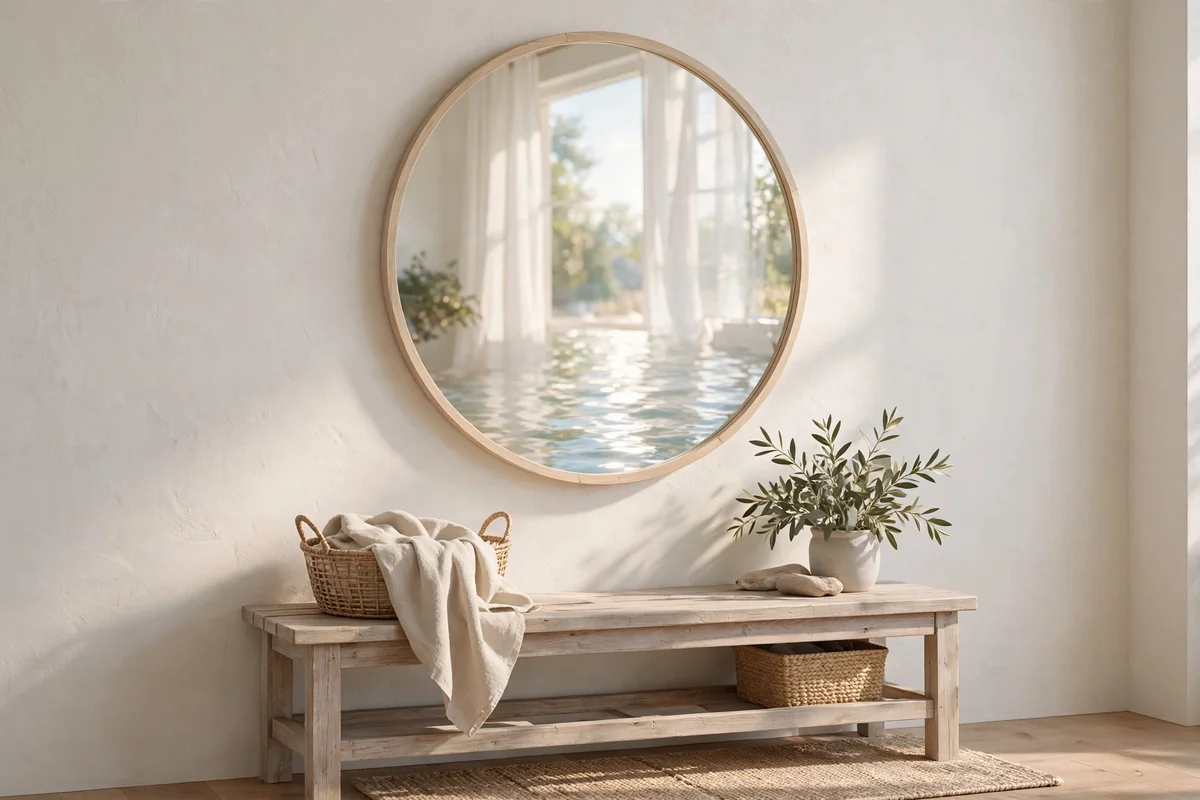
A round mirror 60 to 80 cm across hung above the bench or console bounces daylight through the entry like sun on water. Position its centre at about 150 to 160 cm from the floor so most adults see their faces comfortably. A slim frame in pale oak or whitewashed wood keeps the coastal mood without weight, and a frameless option suits the most minimal halls. Hanging at a slight forward tilt of two degrees catches light from a side window even better.
Use a proper wall anchor rated for the mirror weight, often 4 to 8 kg, and hang from two hooks with wire for stability. Clean the glass with a vinegar and water mix and a microfibre cloth to avoid streaks, since smudged mirrors dull the whole entry. The mistake to avoid is hanging it opposite clutter such as an open coat rack, because the mirror doubles whatever it reflects. Keep the reflection calm: a pale wall, a curtain, or the runner path.
4. Fix Driftwood-Toned Hooks at Two Comfortable Heights
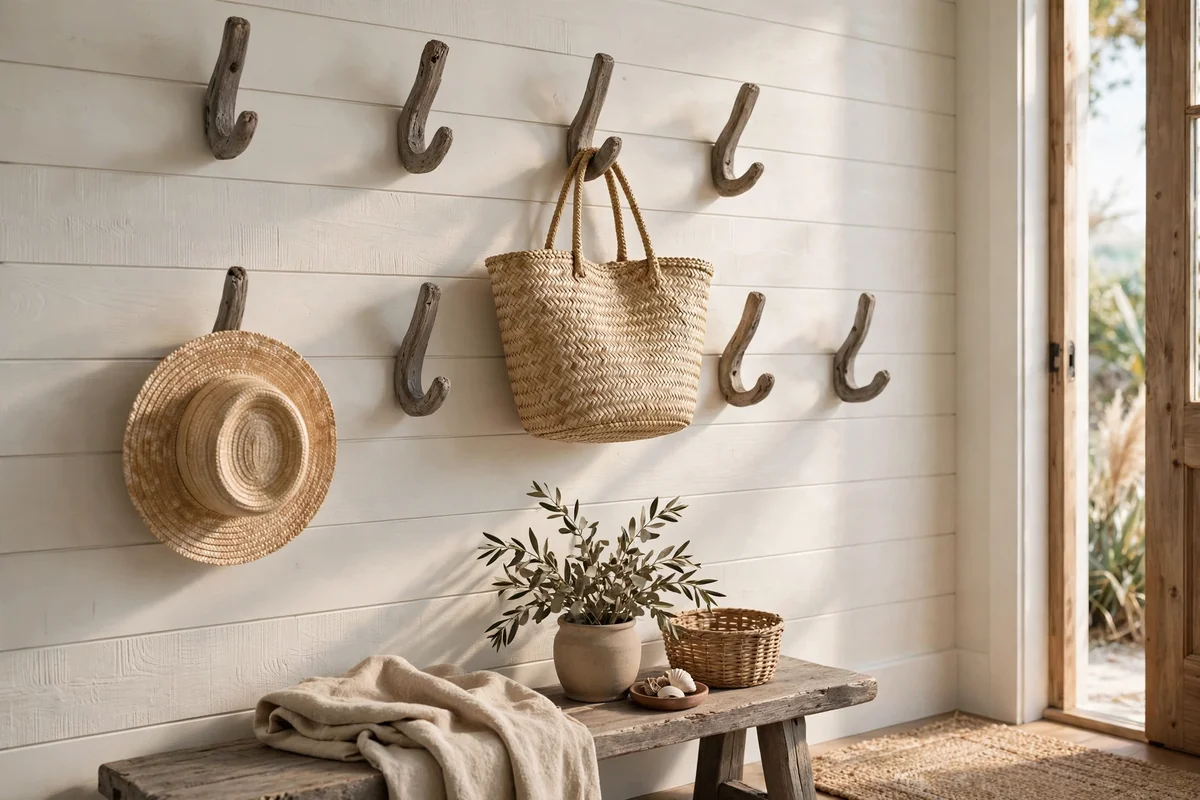
Hooks in a driftwood tone of weathered grey brown hold bags, hats and light jackets without the visual noise of a full coat rack. Mount a row of three at 150 cm for adults and a second lower row at 100 cm for children or shorter jackets. Space each hook 20 to 25 cm apart so garments hang without overlapping, and fix into studs or use toggle anchors since a loaded row can carry 10 kg. Sets of three in a limewash finish cost 15 to 30 pounds or dollars.
Leave one hook in each row deliberately empty so the wall never looks crowded, and hang a single woven tote or a straw hat as the decorative piece. Wipe the hooks with a damp cloth monthly, as entry dust settles on horizontal surfaces quickly. The mistake to avoid is screwing hooks into plasterboard with short screws alone; a coat landing on the floor teaches the lesson fast. Mark positions with painter tape and live with the layout for a day before drilling.
5. Tuck Woven Seagrass Baskets Under the Bench for Shoes
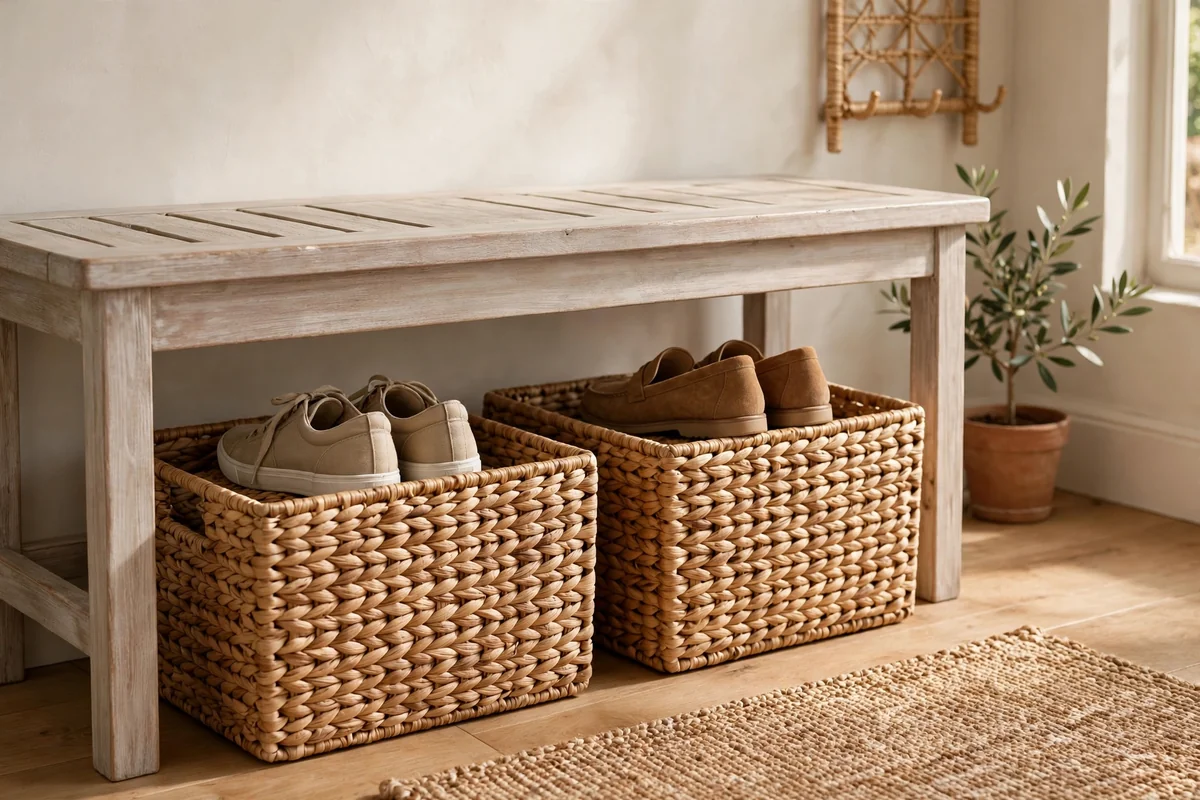
Two or three rectangular seagrass baskets slipped under the bench swallow shoes while adding honey-toned texture. Measure the bench clearance first, then choose baskets 25 to 30 cm tall and 40 cm wide so they slide in without sticking out past the bench edge. Assign one basket per family member to end the pile of mixed shoes, and pick baskets with handles so children can pull them out easily. Expect 12 to 20 pounds or dollars each for sturdy handwoven pieces.
Line each basket with a small washable cotton liner or a cut-to-size mat so grit does not work into the weave. Tip shoes upside down when damp so soles dry faster and odours stay down, and give the baskets a monthly shake outside. The mistake to avoid is buying baskets wider than the bench; protruding edges catch shins and look untidy. Keep one basket free as an overflow for guests, which stops visitor shoes drifting across the runner.
6. Rest a Pale Stone Tray by the Door for Keys
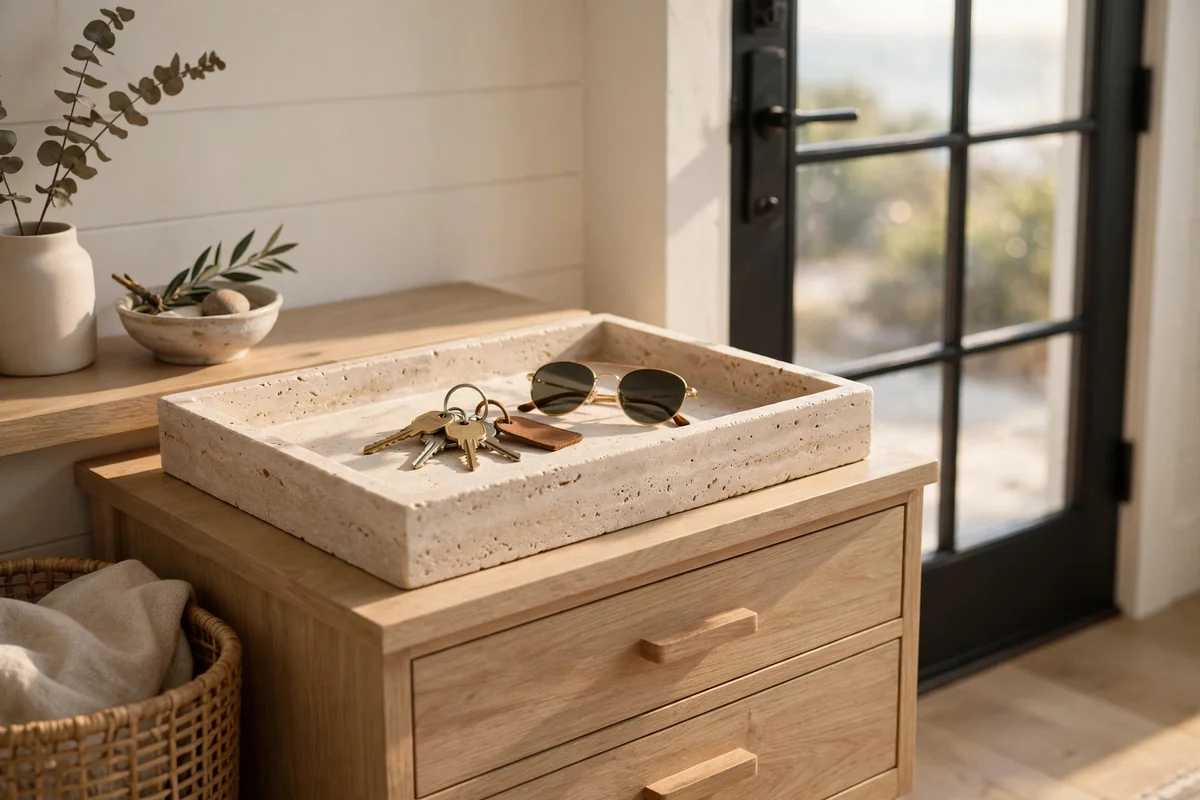
A shallow tray in pale travertine or limestone, roughly 20 by 30 cm, gives keys, sunglasses and small change a single calm home beside the door. Place it on the console or a wall shelf within arm reach of the entrance, ideally 90 to 110 cm high, so dropping keys becomes automatic. The cool stone surface feels pleasant and keeps small metal items from sliding around. Trays start near 18 pounds or dollars at homeware stores.
Limit the tray to five everyday items so it never becomes a clutter bowl; relocate receipts and post immediately to a drawer. Wipe the stone with a damp cloth weekly, since dust shows quickly on pale surfaces, and avoid acidic cleaners that etch natural stone. The mistake to avoid is choosing a tray so small that keys spill off it; a phone-length margin on each side works best. This is the easiest win of the whole set, done in one afternoon.
7. Add a Washable Cotton Mat Just Inside the Threshold
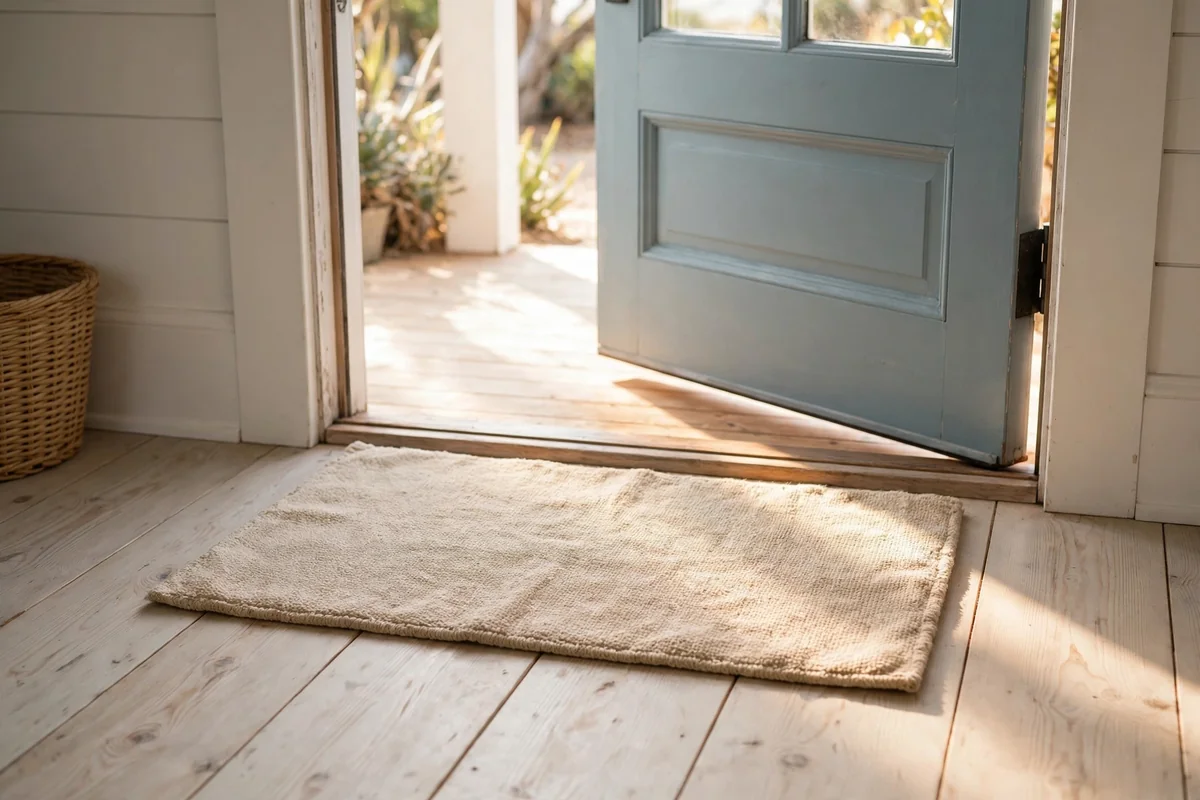
A washable cotton mat directly inside the door catches grit before it reaches the runner, protecting both the floor and the striped cotton. Choose a low-pile mat 50 by 80 cm in a sandy tone that hides dust between washes, with a thin rubber or latex backing so it stays put on tile or wood. Cotton mats dry quickly and go straight into the machine on a warm cycle. Budget options cost 12 to 25 pounds or dollars.
Position the mat so the door swings clear above it, usually leaving a 2 cm gap, and align its edge parallel with the runner for a tidy layered look. Wash it every two weeks in busy households and air dry to keep the backing intact. The mistake to avoid is a thick coir mat inside the door, which sheds fibres and trips underfoot; keep coir outside and cotton inside. Replace the mat yearly, as flat mats lose their grip over time.
8. Float a Slim Shelf Above the Bench for Small Treasures
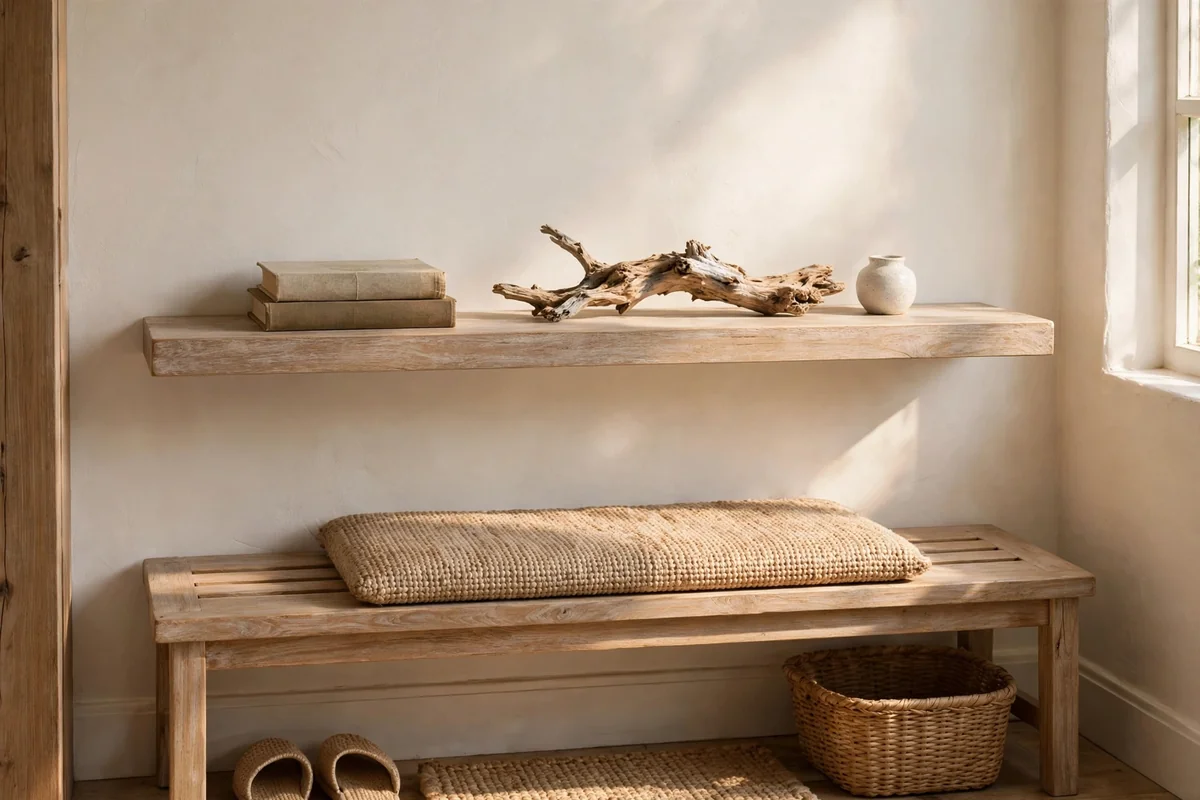
A slim floating shelf 60 to 90 cm long and 12 to 15 cm deep above the bench holds a few chosen objects at eye level. Mount it 30 to 40 cm above the bench seat so seated heads never bump it, and fix brackets into studs for a shelf carrying books or ceramics. A pale washed-wood shelf continues the bench finish for a seamless look. Solid shelves of this size cost 20 to 45 pounds or dollars.
Style it with three items only: a small stack of two books, a piece of driftwood found on a walk, and one tiny ceramic vessel. Restraint is the whole point; an empty stretch of shelf looks calmer than a filled one. The mistake to avoid is loading the shelf with heavy frames that pull away from the wall; keep heavier pieces on the bench itself. Dust the shelf weekly with a dry cloth so pale wood stays bright.
9. Choose a Sheer Linen Curtain for the Sidelight Window
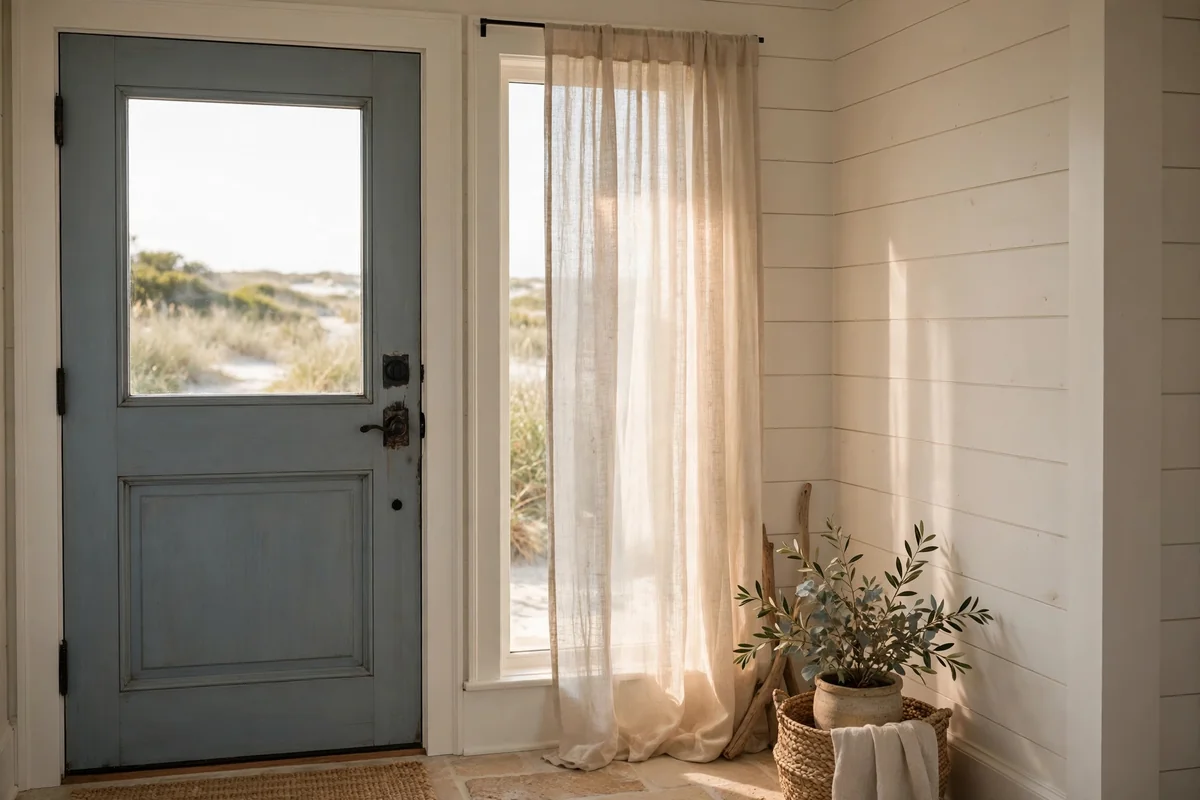
A sheer linen curtain on the sidelight window beside the door filters daylight into a soft glow while keeping the entry private. Hang a slim tension rod or a small cafe rod at the top of the glass and choose a panel 10 to 15 cm wider than the window so it gathers gently. Natural or oatmeal linen lets light through while blurring the view, and a simple hemmed edge keeps it tailored. Panels cost 15 to 35 pounds or dollars.
Machine wash the linen on cool every couple of months, as entry windows collect street dust, and hang it back damp so creases fall out naturally. The mistake to avoid is a heavy blackout fabric on a sidelight; it darkens the whole entry and fights the coastal airiness. If the door has a full-length glass panel, use a magnetic curtain rod that clips to the metal frame without drilling. Iron lightly for a crisp but relaxed finish.
10. Paint the Entry Wall in a Soft Sea-Glass Tint
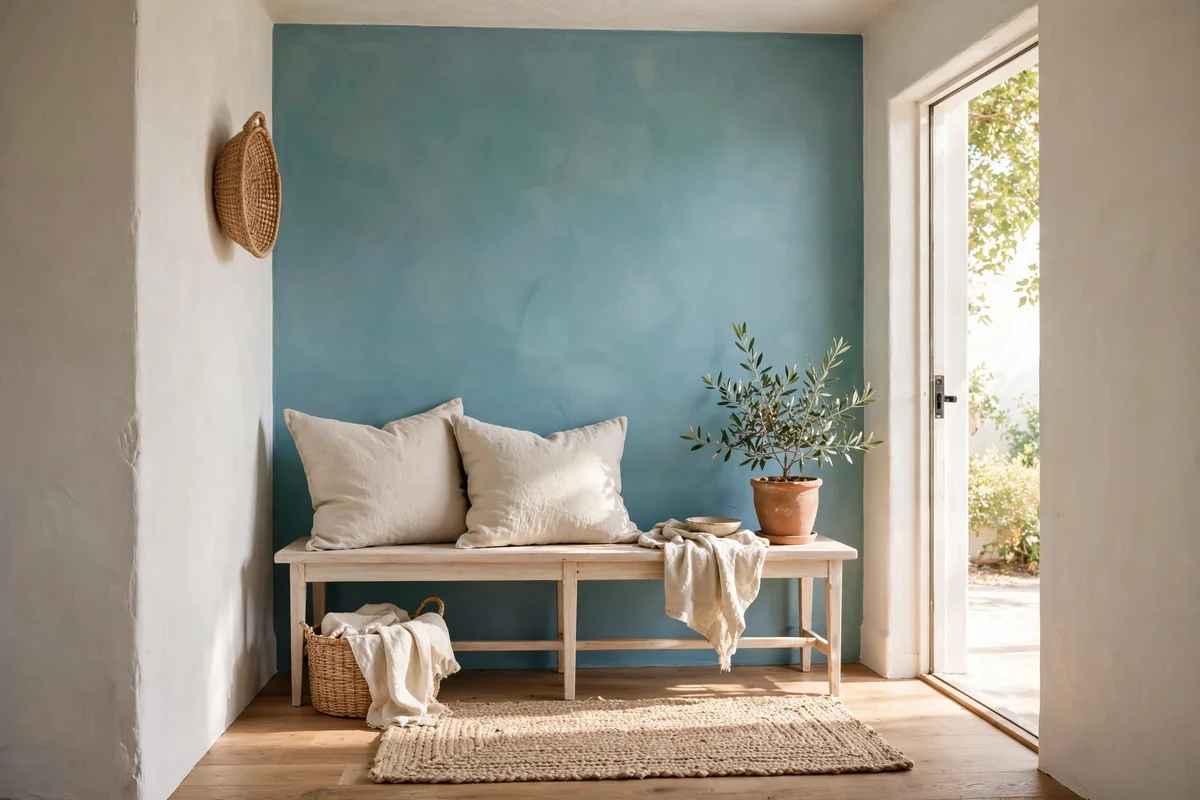
A soft sea-glass tint, a pale blue green with grey undertones, turns an entry wall into a calm backdrop for washed wood and woven textures. Test three sample pots on the wall and observe them at morning, noon and evening before committing, since daylight shifts blue greens noticeably. A matte or eggshell finish hides imperfections and feels restful. One 2.5 litre tin covers about 30 square metres, so most entries need a single tin at 25 to 45 pounds or dollars.
Paint the wall behind the bench or the longest uninterrupted stretch, keeping the other walls a warm white so the tint reads as an accent. Roll two thin coats with a microfibre roller for even coverage, and cut in carefully around skirting with a 5 cm angled brush. The mistake to avoid is painting every wall in the tint, which can make a small entry feel like a box; one feature wall keeps it serene. Allow 24 hours of ventilation before hanging the mirror back up.
11. Place a Tall Ceramic Vase With Dried Sea Grasses
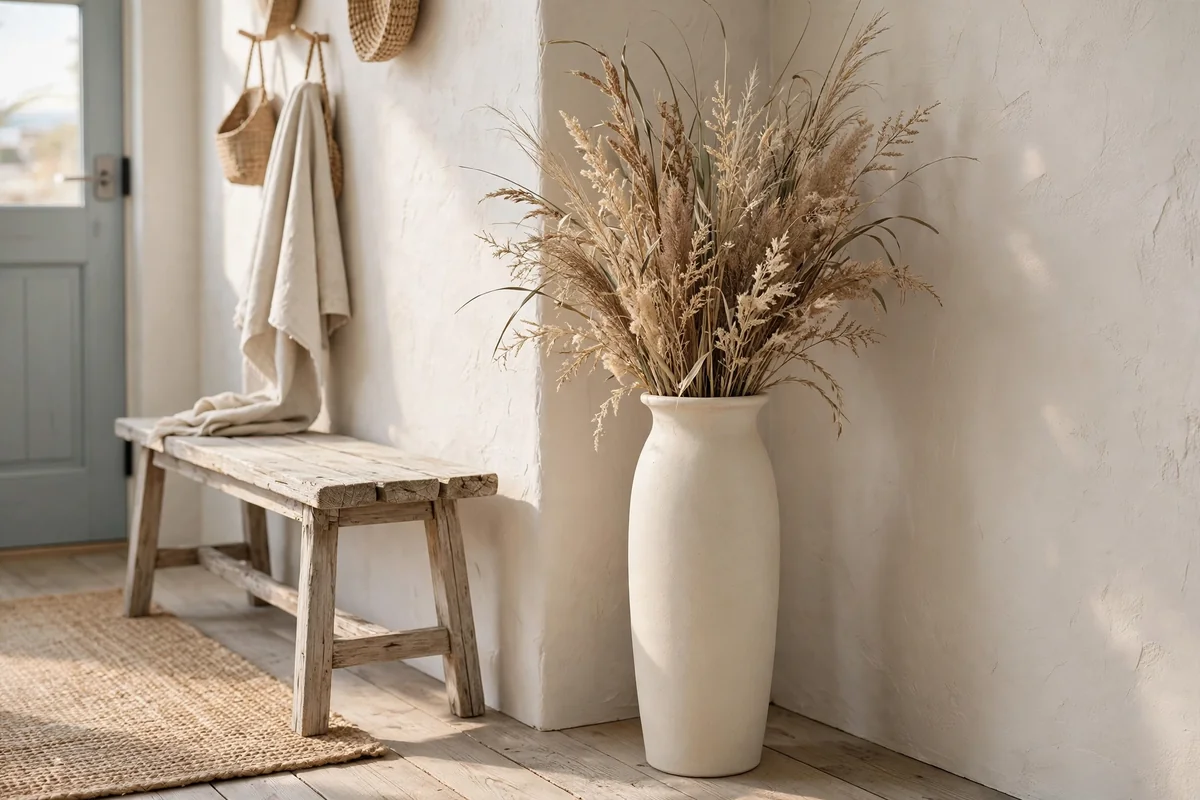
A tall ceramic vase in matte cream or pale sand, 50 to 70 cm high, filled with dried sea grasses adds height without visual noise. Set it in the corner beside the bench where it will not be knocked by the door swing, and choose stems 20 to 30 cm taller than the vase for balanced proportions. Dried grasses cost 10 to 20 pounds or dollars for a generous bunch and last for years.
Give the vase a heavy bottom or add a handful of pebbles inside so it stands steady in a high-traffic entry. Shake the grasses outside every few months to remove dust, and keep them away from direct flame, since dried stems are flammable. The mistake to avoid is overfilling with five different dried varieties; one type in one vase looks calmer and more coastal. Replace any stems that shed heavily, as brittle pieces scatter across the runner.
12. Light Two Glass Lanterns for an Evening Welcome
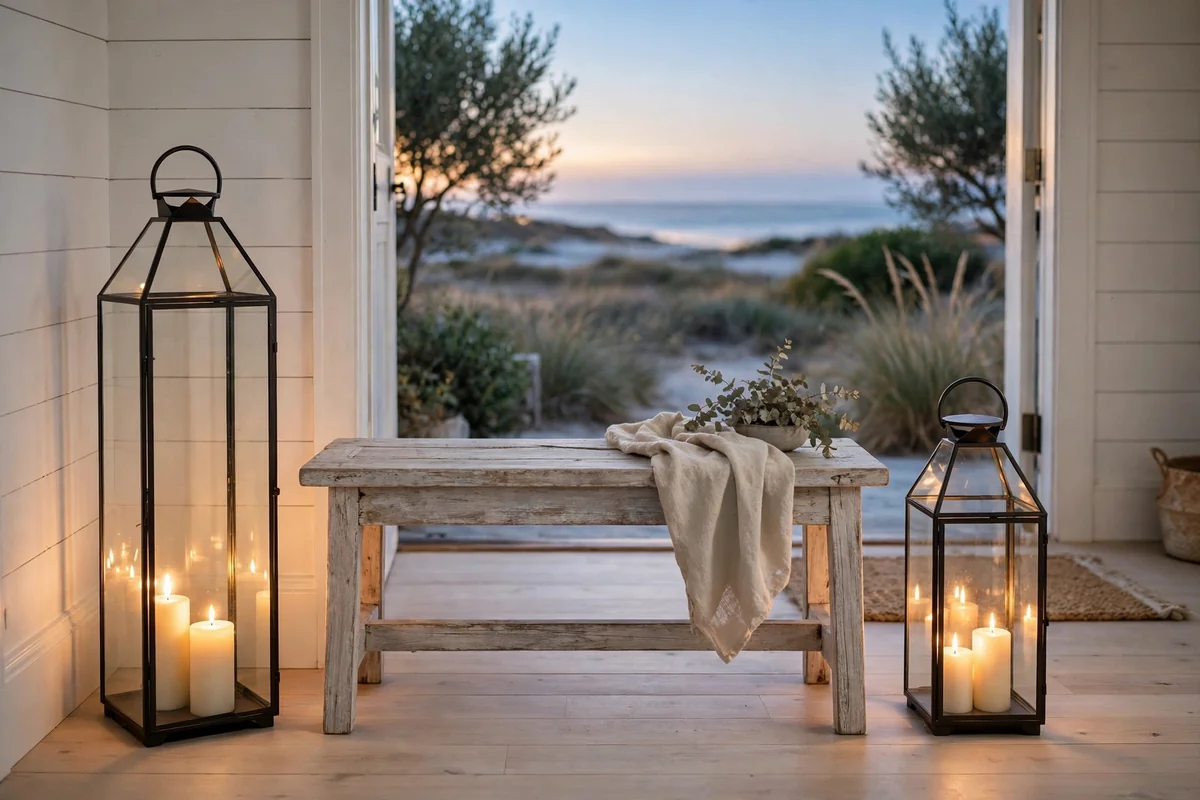
Two glass lanterns with a slim metal frame, one 25 cm and one 35 cm tall, welcome everyone home with warm light after dark. Place them on the floor flanking the bench or on the console, keeping each at least 30 cm from curtains or cushions. Use LED pillar candles with a warm 2700K glow and a timer function so they light themselves at dusk. Pairs cost 20 to 40 pounds or dollars.
Choose clear or lightly seeded glass rather than coloured, which tints the light and fights the serene palette. Dust the glass monthly so the glow stays bright, and keep spare batteries in the entry drawer so a dark lantern never lingers. The mistake to avoid is real flame candles in a busy entry; a knocked lantern near a linen cushion is a genuine fire risk. Timers set for two evening hours keep the welcome effortless and economical.
13. Set a Light-Oak Console With Two Woven Storage Bins
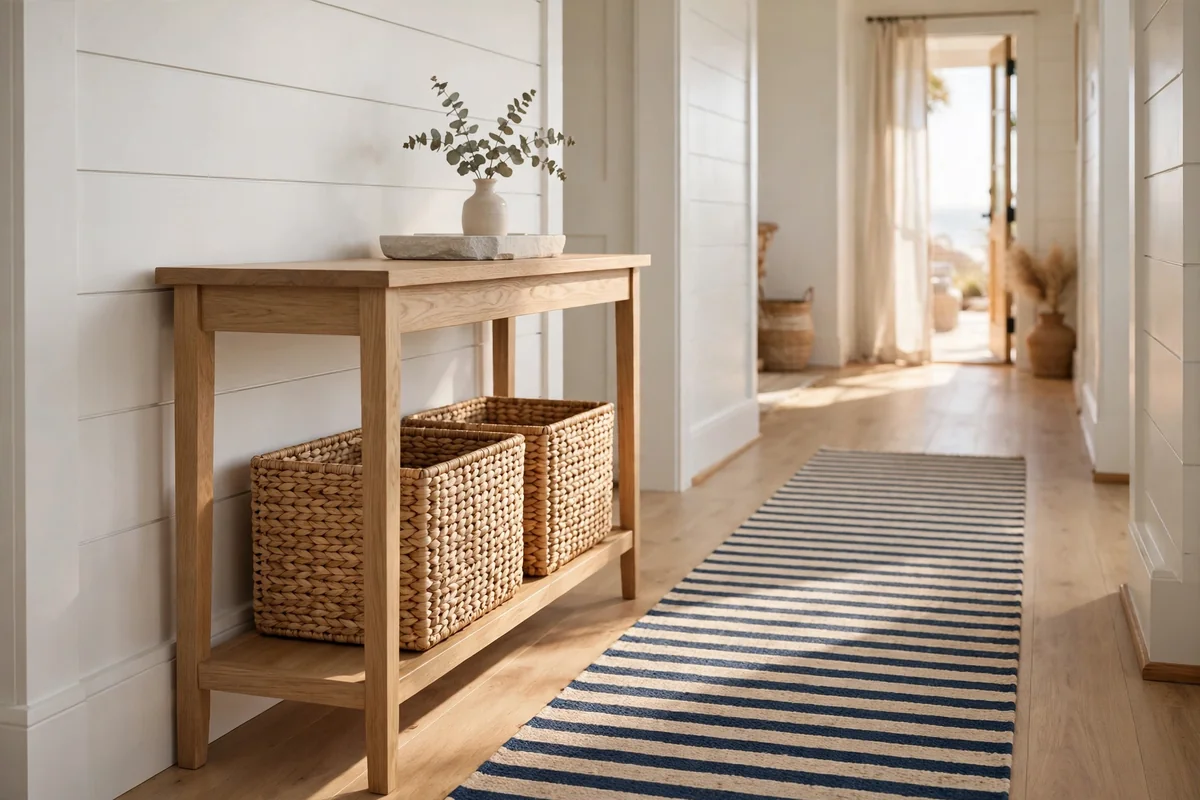
A narrow light-oak console, 80 to 100 cm wide and 30 to 35 cm deep, anchors the entry without blocking the path. Tuck two woven bins, each about 35 cm square, onto the lower shelf or beneath it for gloves, scarves and spare leads. Leave the top for the stone tray and one small vase, keeping three zones across its width. Simple consoles start near 70 pounds or dollars, with solid oak higher.
Position the console against the longest wall with at least 90 cm of walking space in front, which lets two people pass comfortably. Label bins discreetly inside the rim with a small sticker if several people share the entry, then remove the stickers once habits form. The mistake to avoid is using the console top as a dumping ground for post; sort mail the moment you enter and recycle the rest. Wipe oak tops monthly with a barely damp cloth.
14. Line the Wall With Whitewashed Vertical Panelling
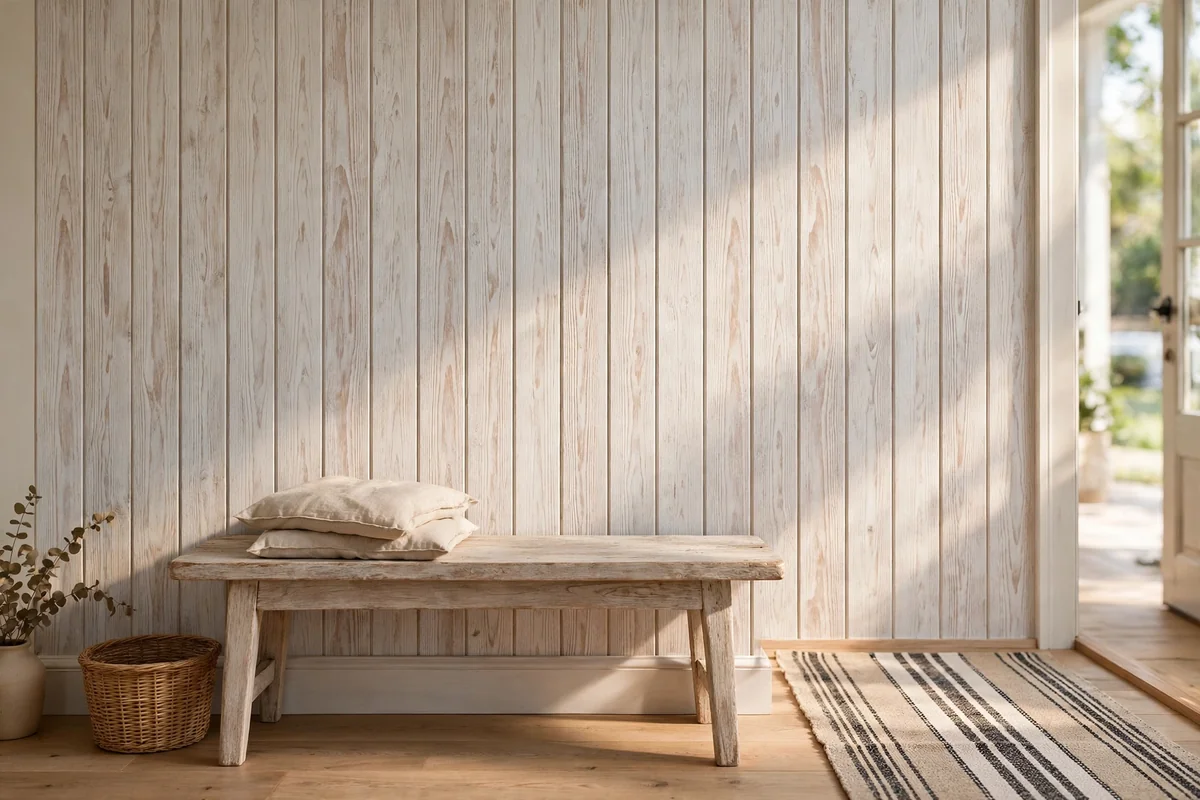
Whitewashed vertical panelling on one entry wall adds heritage texture while bouncing light upward. Use tongue and groove boards 10 to 15 cm wide, fixed over battens with a 5 mm shadow gap, then wash with white paint thinned half and half with water so the grain shows through. Panelling to picture-rail height, about 120 cm, suits entries; full height suits tall halls. Budget MDF boards run 8 to 15 pounds or dollars per square metre.
Let each coat dry fully, usually four hours, before the whitewash pass, and seal with a matte water-based varnish so scuffs wipe clean. The mistake to avoid is panelling a wall that already holds the mirror, hooks and shelf; texture plus fittings equals visual noise. Choose the plainest wall for panelling and let the decorated wall breathe. Check boards for straightness before fixing, since bowed boards cast uneven shadows.
15. Hang a Woven Pendant for a Warm Overhead Glow
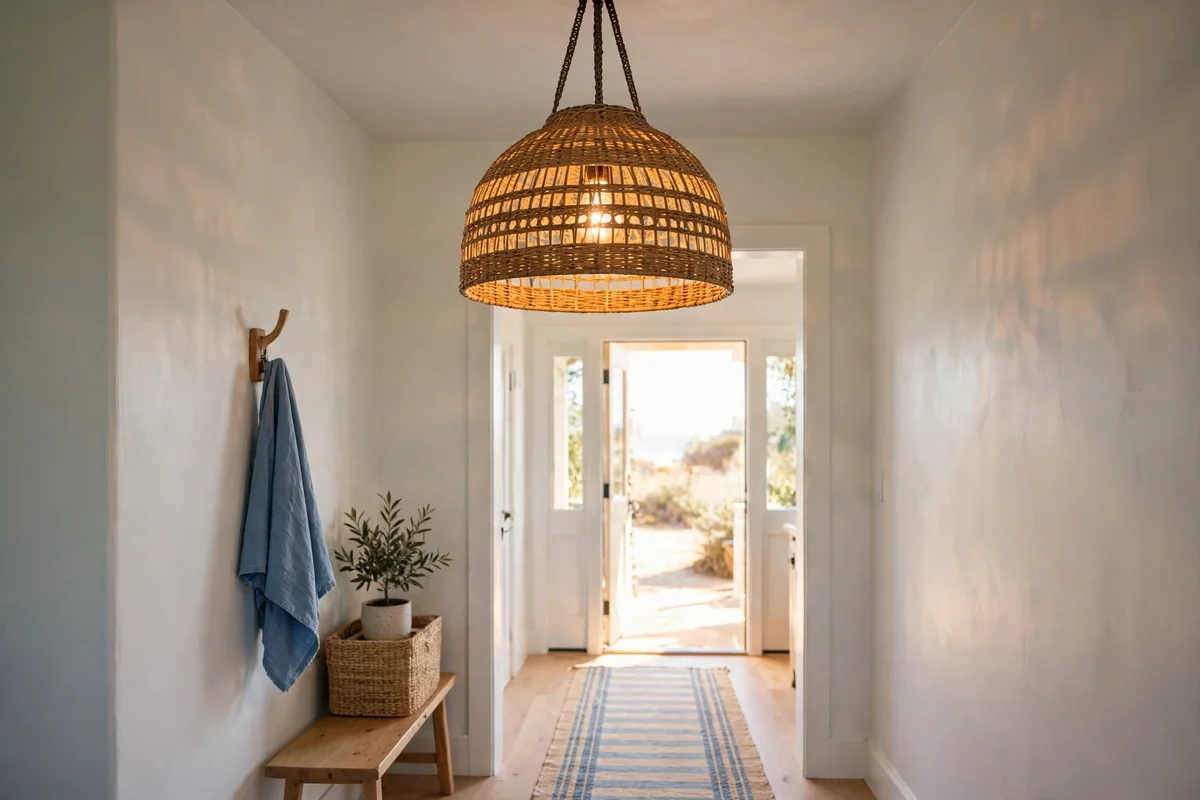
A woven rattan or seagrass pendant hung over the entry centre gives warm overhead light with organic texture. Hang it so the base sits 200 to 210 cm above the floor, high enough to walk under and low enough to glow. Choose a shade 40 to 50 cm across for a standard entry, wired to a warm 2700K bulb of modest wattage so the weave casts gentle shadows. Pendants cost 35 to 80 pounds or dollars.
If wiring a new point feels daunting, a plug-in pendant with a fabric cord and a ceiling hook works in rentals and costs less than an electrician visit. Dust the weave with a soft brush monthly, since open weaves collect cobwebs quickly. The mistake to avoid is a shade so large it dominates a narrow hall; measure the width and choose a shade no wider than one-third of it. Dimmer switches add evening softness for about 15 pounds or dollars.
16. Style a Potted Plant in a Woven Planter by the Door
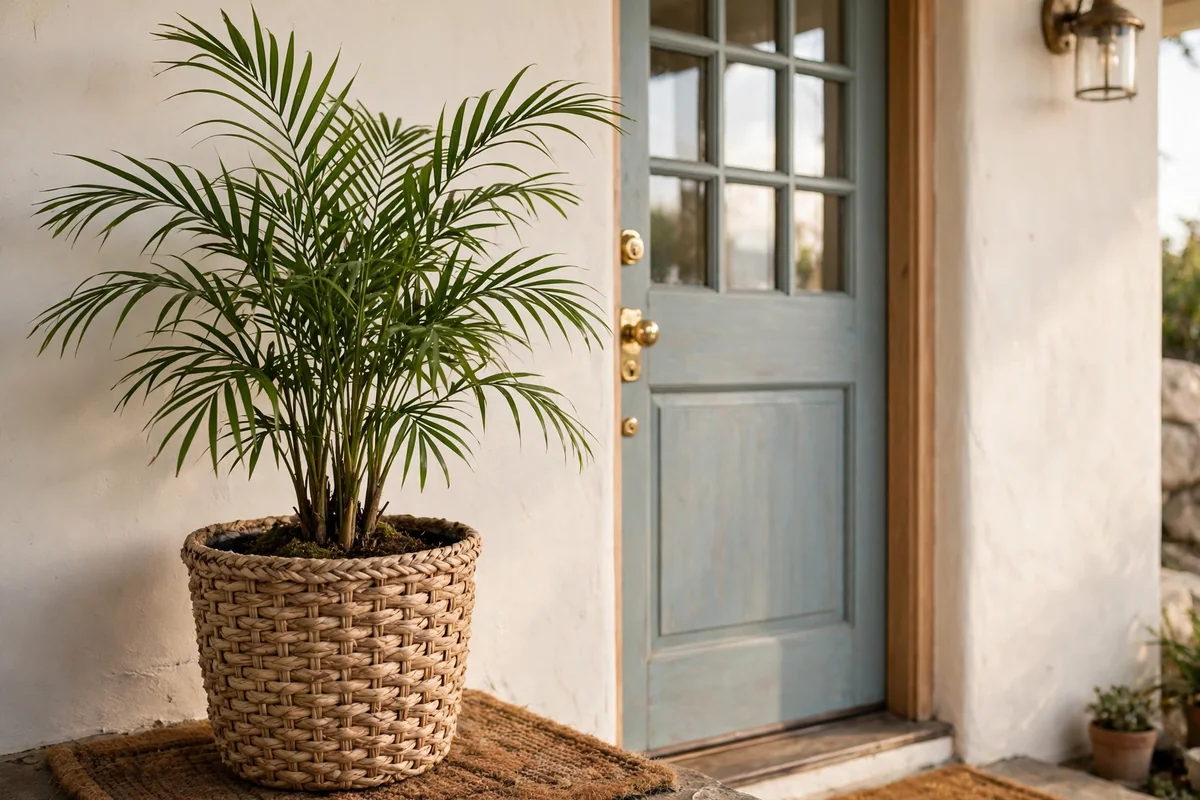
A living plant in a woven seagrass planter brings gentle green to the coastal palette. Choose a forgiving plant such as a parlour palm or a snake plant, 40 to 60 cm tall, which tolerates the draughts of an often-opened door. Set the nursery pot inside a woven planter 5 cm wider so water never touches the fibres, and place it where it catches indirect light. Plants plus planters start near 25 pounds or dollars.
Water only when the top 3 cm of soil feels dry, usually weekly, and empty the cache pot after watering so roots never sit wet. Rotate the plant a quarter turn monthly for even growth. The mistake to avoid is a thirsty fern in a dark corner; it will brown within weeks and spoil the calm. A small pebble tray under the planter protects the floor from condensation marks on wood or tile.
17. Fold Two Linen Throws Over the Bench for Softness
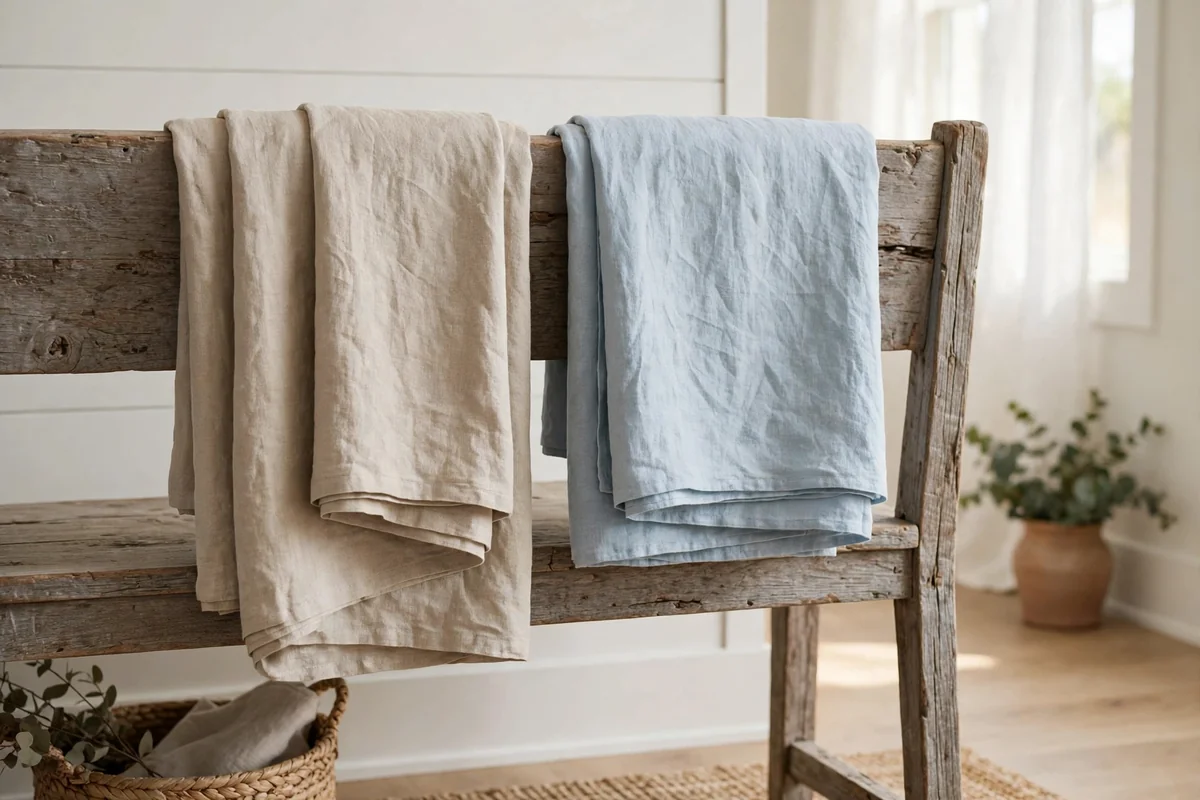
Two linen throws folded over the bench back or arm add layers of softness guests can actually use. Choose throws 130 by 180 cm in washed sand and pale blue, folded into thirds lengthways so they drape 30 cm down the bench front. Stonewashed linen softens with every wash and suits the relaxed coastal mood. Expect 25 to 50 pounds or dollars each for decent weight linen.
Keep one throw for looks and let the other be the working one for chilly shoulders, swapping them monthly so wear stays even. Wash on cool with a mild detergent and line dry; tumble drying linen on low also works but adds creases. The mistake to avoid is throws so long they trail on the floor and collect dirt; folded thirds keep hems safely above the runner. Store a third spare throw in the rattan trunk for guests.
18. Keep a Ceramic Dish Beside the Tray for Small Essentials
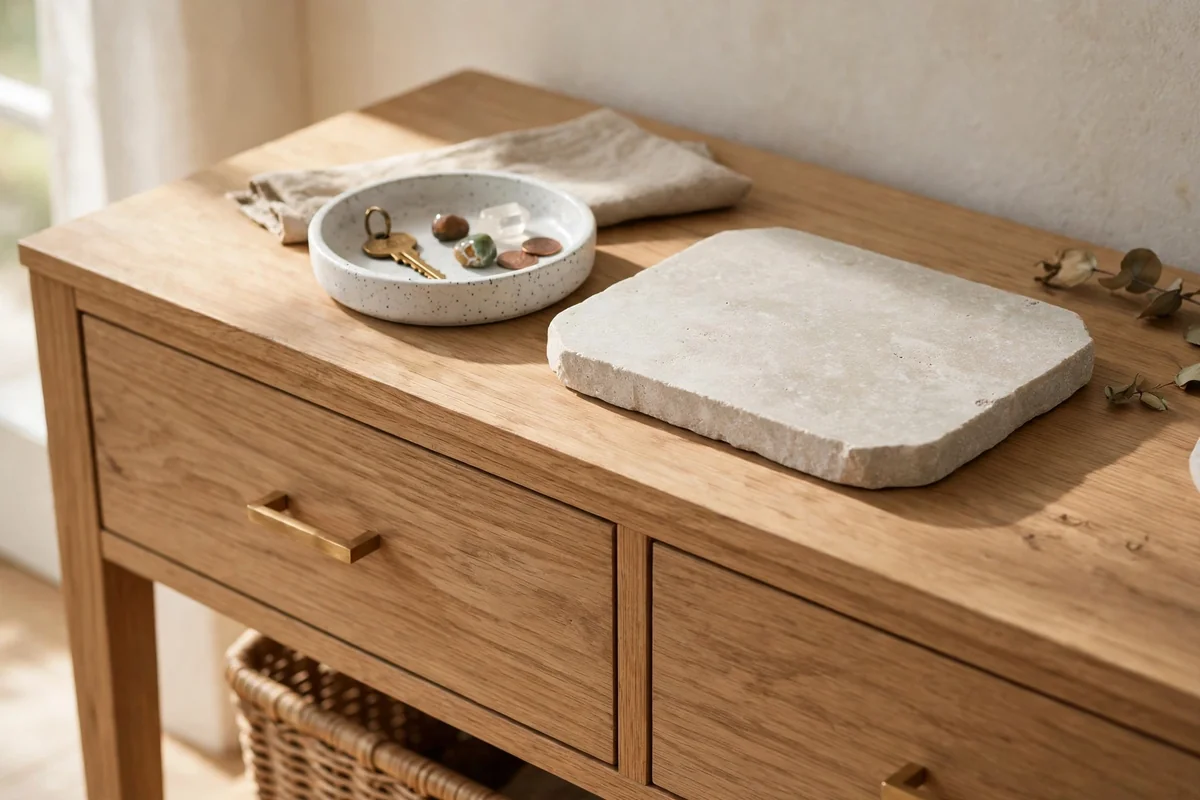
A small ceramic dish in speckled white or pale blue, 10 to 15 cm across, sits beside the stone tray to catch rings, earbuds and hair ties. Keeping two separate vessels stops small items migrating into the key tray and disappearing. Place the dish on the same console within 20 cm of the tray so the drop zone stays one tidy cluster. Handmade dishes cost 10 to 22 pounds or dollars.
Empty the dish into its proper homes once a week, since small dishes fill silently and overflow onto the console. Hand wash rather than dishwashing, as harsh detergents dull handmade glazes over time. The mistake to avoid is a dish with a patterned interior that hides small dark items; a plain pale glaze makes everything visible at a glance. This tiny habit saves the daily hunt for missing essentials.
19. Run a Jute Mat Outside the Door for First Impressions
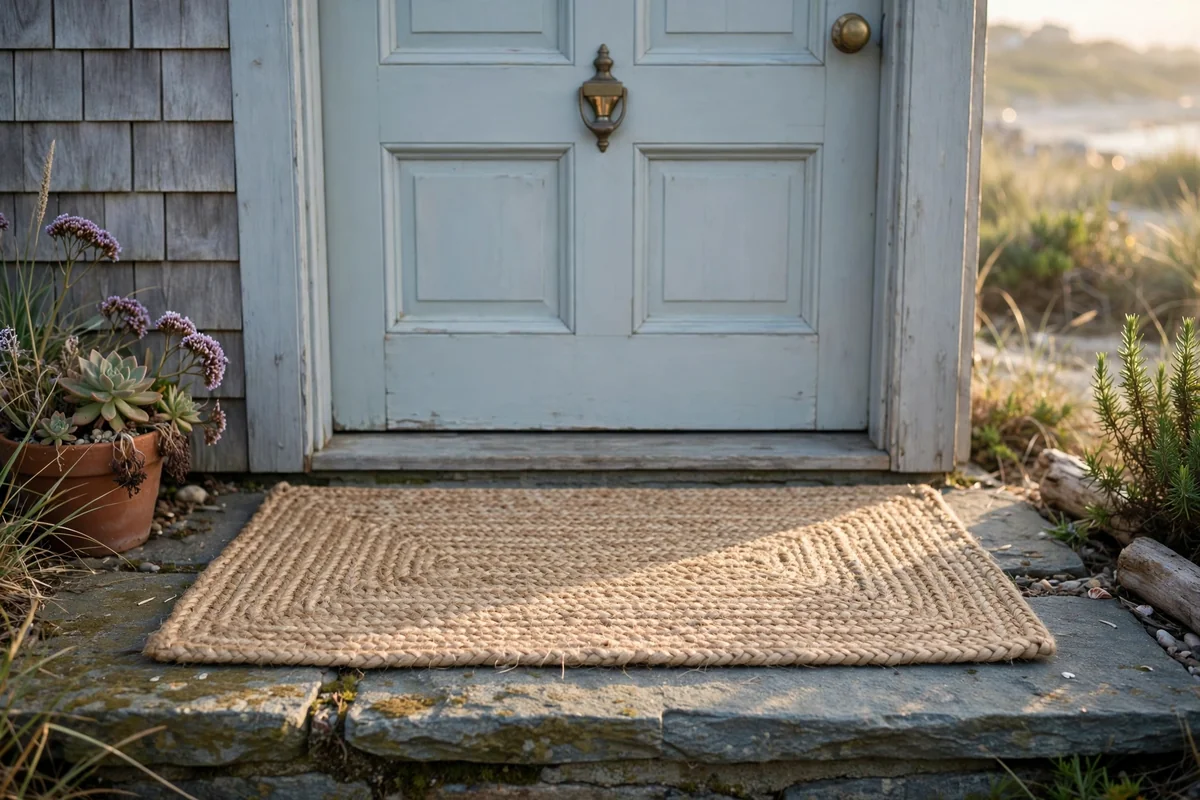
A flat jute mat outside the door, 60 by 90 cm, sets the coastal tone before anyone steps inside and scrapes off heavy dirt. Choose a tightly woven flat jute rather than chunky braided rope, which sheds and looks rustic rather than serene. Keep it 5 cm clear of the door sweep so the door opens freely in all weathers. Mats cost 15 to 30 pounds or dollars.
Shake the mat weekly and hose it down monthly in dry weather, letting it dry fully before replacing it so the step stays fresh. The mistake to avoid is a mat with printed words or pictures; plain weave looks calmer and lasts longer, since prints fade unevenly in sun. In wet climates, store the mat under a small porch overhang or bring it in during storms to stop the fibres rotting.
20. Add a Rattan Trunk at the End of the Hallway
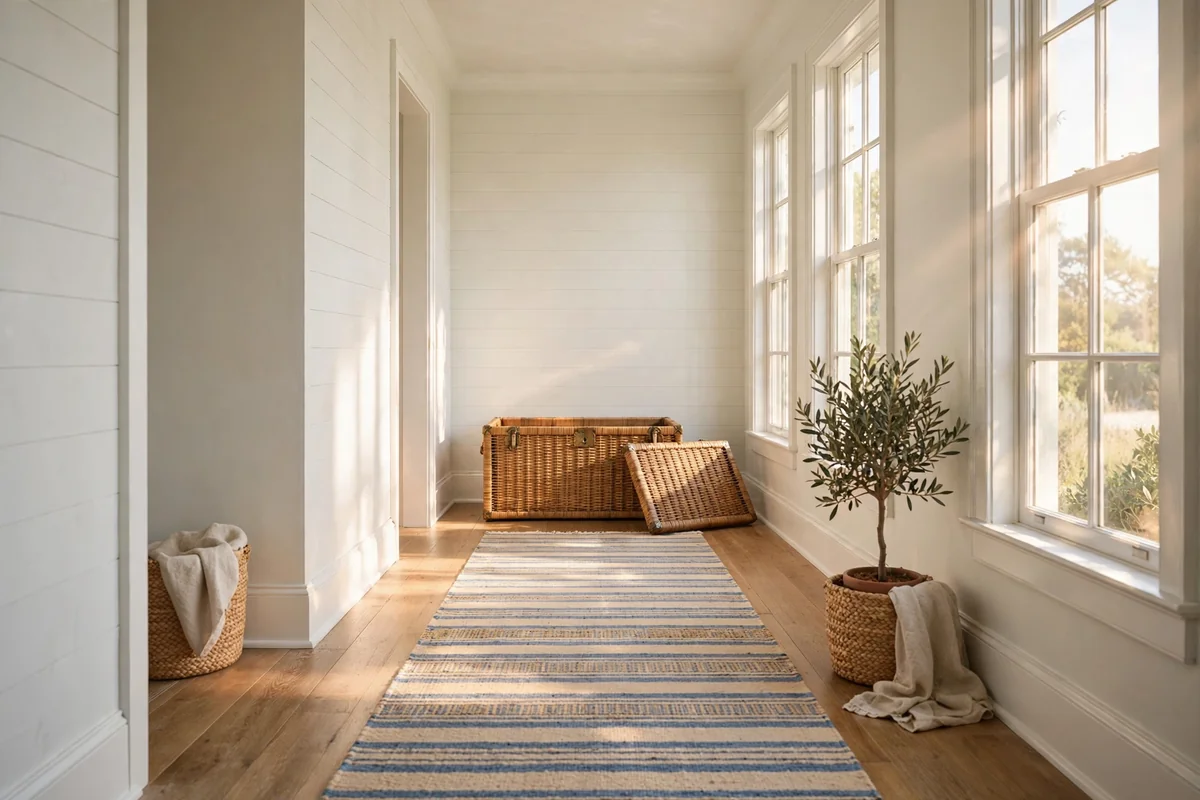
A rattan trunk 80 to 100 cm wide at the end of the hallway stores spare throws, guest slippers and seasonal scarves in woven warmth. Choose one with a lift-off lid rather than hinged, so it doubles as a perch for putting on shoes, and check the weave is tight enough that small items do not poke through. Trunks cost 60 to 120 pounds or dollars depending on size.
Place a folded runner remnant or a small cushion on top to protect the weave from daily sitting, and keep the heaviest items at the bottom so the trunk stays stable. Air it out monthly, since closed trunks trap musty smells in damp entries. The mistake to avoid is a trunk wider than the hallway allows; leave at least 75 cm of clear walking space in front of it. Line it with a cotton sheet for easy seasonal swaps.
21. Frame One Abstract Seascape Print in Pale Oak
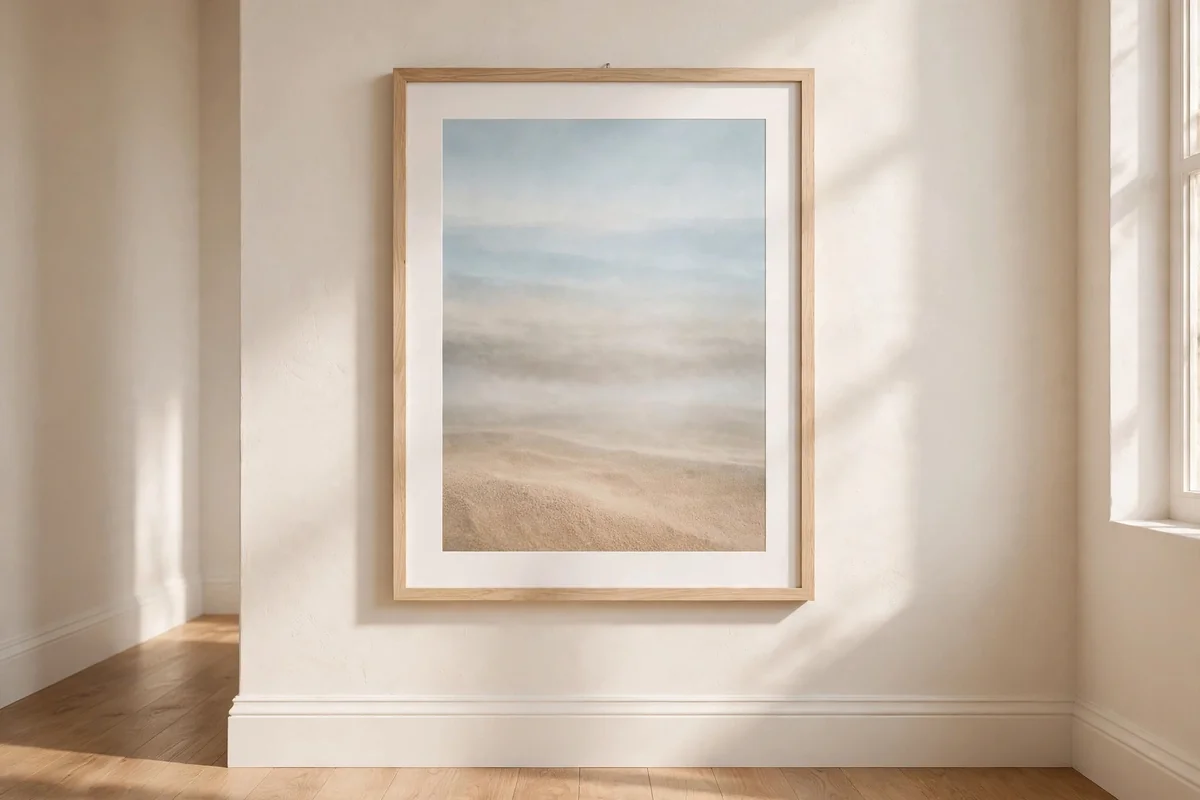
One abstract seascape print, soft horizontal bands of sand, mist and pale blue, brings the sea indoors without kitsch. Choose a print 40 by 50 cm or 50 by 70 cm in a pale oak frame with a wide white mount, which lets the colours breathe. Hang it on the plainest wall at eye level, centre about 150 cm from the floor. Prints plus frames cost 25 to 60 pounds or dollars.
Keep it to a single print; a gallery wall of beach scenes quickly tips into theme-park territory. The mistake to avoid is a photographic sunset with saturated oranges, which clashes with the serene palette; abstract washes of colour stay timeless. Use two picture hooks for frames wider than 50 cm so they hang level, and dust the frame monthly. This one quiet image anchors the whole coastal story.
22. Choose a Low Shoe Shelf With Seagrass Storage Boxes
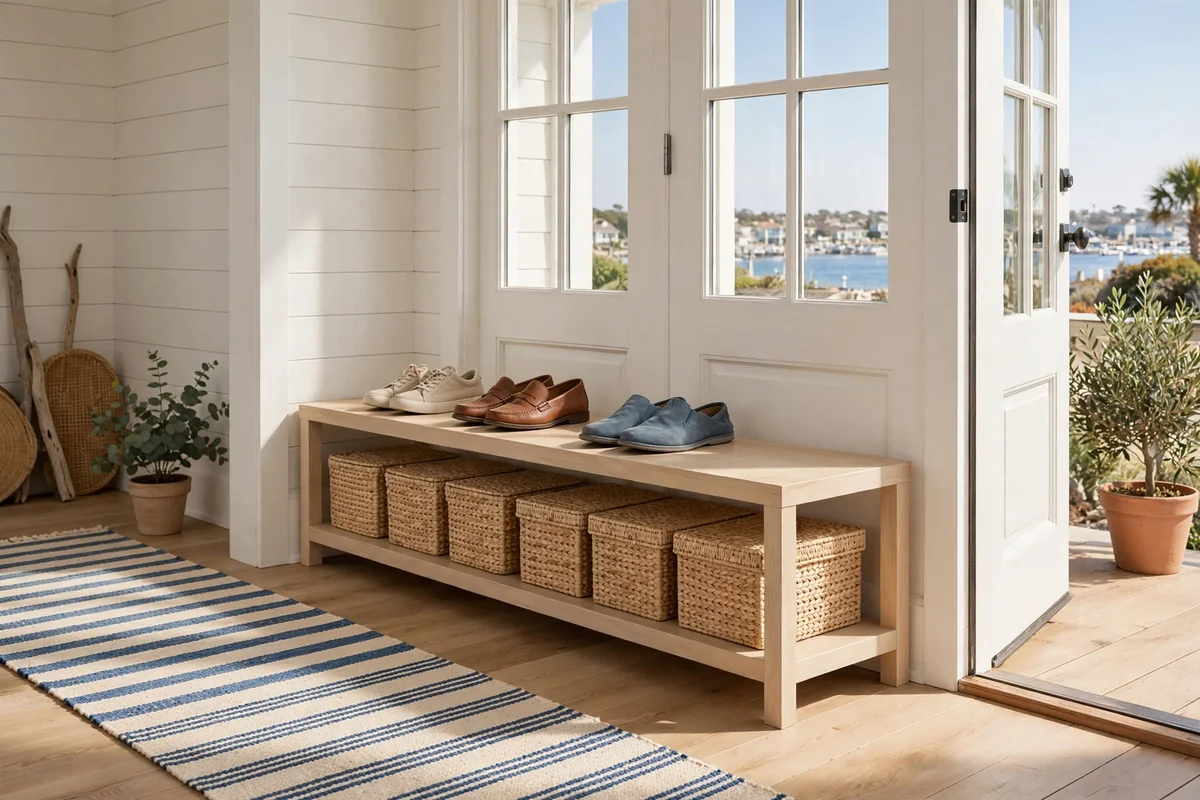
A low two-tier shoe shelf in pale wood, 80 cm wide and 35 cm high, keeps daily shoes off the floor in an orderly row. Slide seagrass storage boxes onto the lower tier for the pairs nobody wears daily, labelling each box inside the lid with a pencil note. The open top tier holds the current rotation of four to six pairs. Shelves cost 30 to 60 pounds or dollars.
Place the shelf against the wall nearest the door so shoes land there immediately, and keep a small brush beside it for quick sole sweeps. The mistake to avoid is a shelf deeper than 35 cm; deep shelves push shoes into dark corners where they are forgotten. Wipe the wood monthly and re-tighten fixings yearly, since daily kicking loosens joints. Cap the household rule at two pairs per person on the open tier.
23. Place a Small Ceramic Table Lamp on the Console
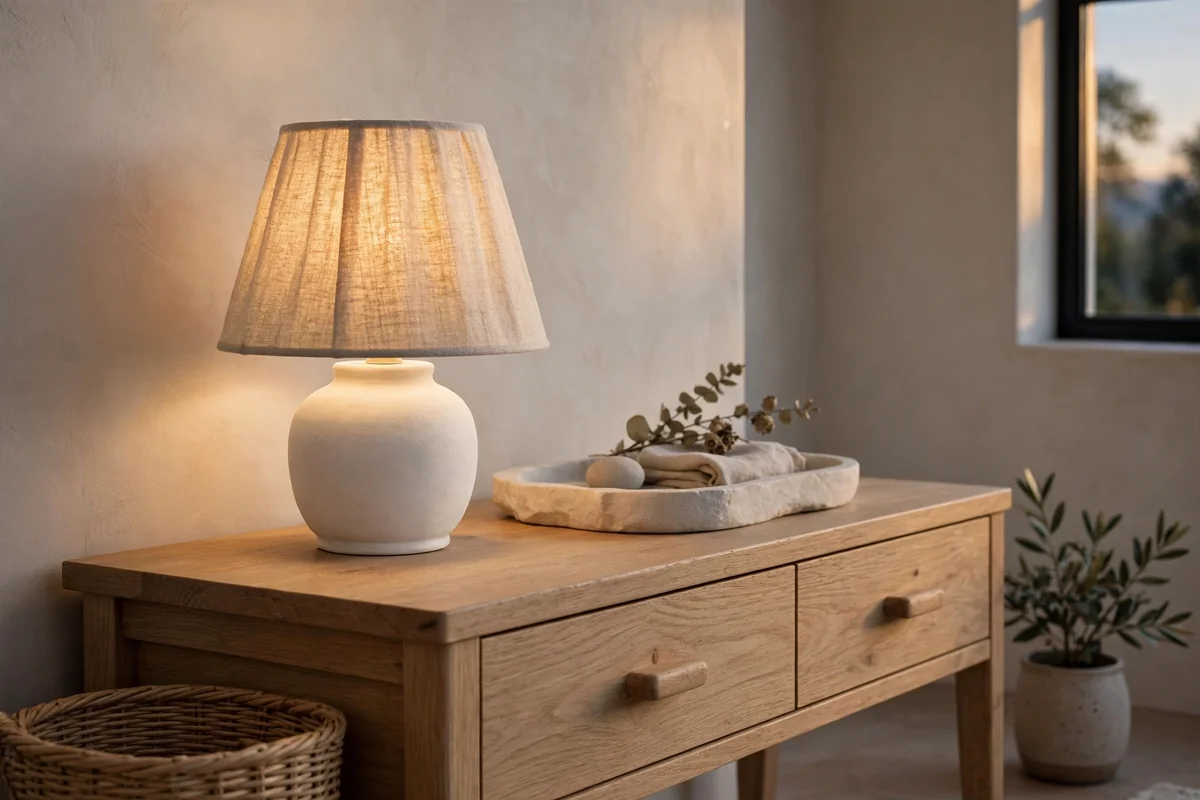
A small ceramic table lamp in matte white or sea-glass glaze, 30 to 40 cm tall, adds a warm pool of light on the console for dark evenings. Pair it with a natural linen shade and a warm 2700K bulb of low wattage so the glow stays soft. Position it at one end of the console, leaving the centre free for the stone tray. Lamps cost 25 to 55 pounds or dollars.
Run the cord along the back edge of the console and secure it with small adhesive clips so it never trails across the walkway. Use a timer plug so the lamp switches on at dusk without a thought. The mistake to avoid is a tall lamp that blocks the mirror above the console; keep the total height under 50 cm including the shade. Dust the shade monthly with a lint roller to keep the glow even.
24. Set a Light Reed Diffuser With a Sea-Air Fragrance
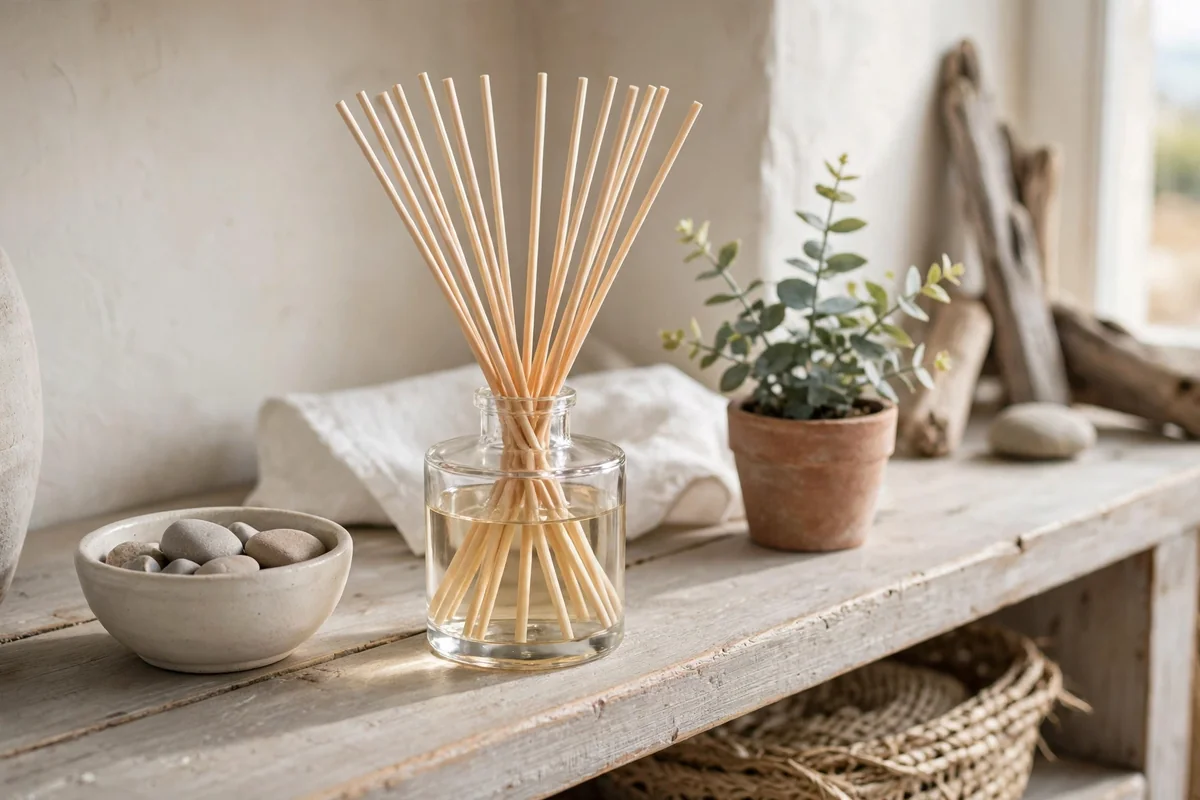
A reed diffuser with a light sea-air or fresh linen fragrance, in a clear glass bottle with pale rattan reeds, scents the entry without overpowering it. Choose a 100 ml bottle, which lasts about three months in a hallway, and start with four reeds, adding more only if the scent feels too faint. Place it on the shelf or console away from the door draught, which evaporates oil too fast. Diffusers cost 12 to 25 pounds or dollars.
Flip the reeds weekly for the first month, then fortnightly, to keep the fragrance steady, and wipe any drips immediately since oils mark pale wood. The mistake to avoid is a heavy marine perfume that smells artificial; a whisper of fresh cotton or sea salt reads far more coastal. Keep the bottle out of reach of small children and pets, and replace reeds when they stop wicking after about six months.
The thread running through all 24 ideas is restraint: pale washed wood, honest woven texture, linen softness and colours borrowed from the shoreline rather than the souvenir shop. Nothing here shouts the coast; everything whispers it through material and light. That quiet approach is what keeps an entryway feeling timeless instead of themed, and it is also what makes the look forgiving to live with day after day.
Start this week with the simplest change of all: set a pale stone tray by the door for keys and small essentials. It takes one afternoon, costs very little, and every homecoming feels calmer from the first day. Once that habit settles, add the runner or the baskets, one layer at a time, until your hallway carries the same easy calm as a morning by the sea.
Frequently Asked Questions
How much does a coastal entryway refresh realistically cost?
Between 150 and 500 pounds or dollars for a full refresh, depending on furniture. A runner, a stone tray, baskets and a mirror cover the essentials for around 150. A bench and console add the most, so buy those second-hand and refinish them. Spread purchases over a month; living with each layer usually prevents one or two wrong buys.
How do I keep a coastal entryway from looking kitschy?
Stick to serene colours like sand, soft blue and sea glass, and avoid lettered signs, anchors and rope motifs entirely. Choose one sea reference at most, such as an abstract print or dried grasses, and let texture do the talking. If any single item looks like a souvenir, remove it; calm coastal style reads through material and light, not symbols.
What colours work best for a calm coastal hallway?
Warm white, sand, oatmeal and soft grey form the base, with sea-glass blue green and pale driftwood grey as accents. Keep saturated navy and bright turquoise out of a serene scheme; they energise rather than calm. A ratio of roughly 70 percent neutrals to 30 percent soft colour keeps the hallway airy and timeless.
How do I store shoes neatly in a small coastal entryway?
Use one seagrass basket per person tucked under the bench, plus a low open shelf for the daily rotation, capped at two pairs each. Baskets hide the clutter while keeping texture, and the shelf stops wet shoes from sitting on fabric. A washable cotton mat inside the door catches grit before it reaches either.
Are seagrass baskets durable enough for daily shoe storage?
Yes, tightly woven seagrass handles daily use well for several years. Choose baskets with reinforced rims and handles, line them with a washable mat so grit does not grind into the weave, and keep them out of standing water. Shake them outside monthly and they stay fresh, firm and attractive.