Living Room
24 Earthy Cottage Home Decor Ideas That Bring Cozy Warmth to Every Room
By Anna Wells · · 12 min read
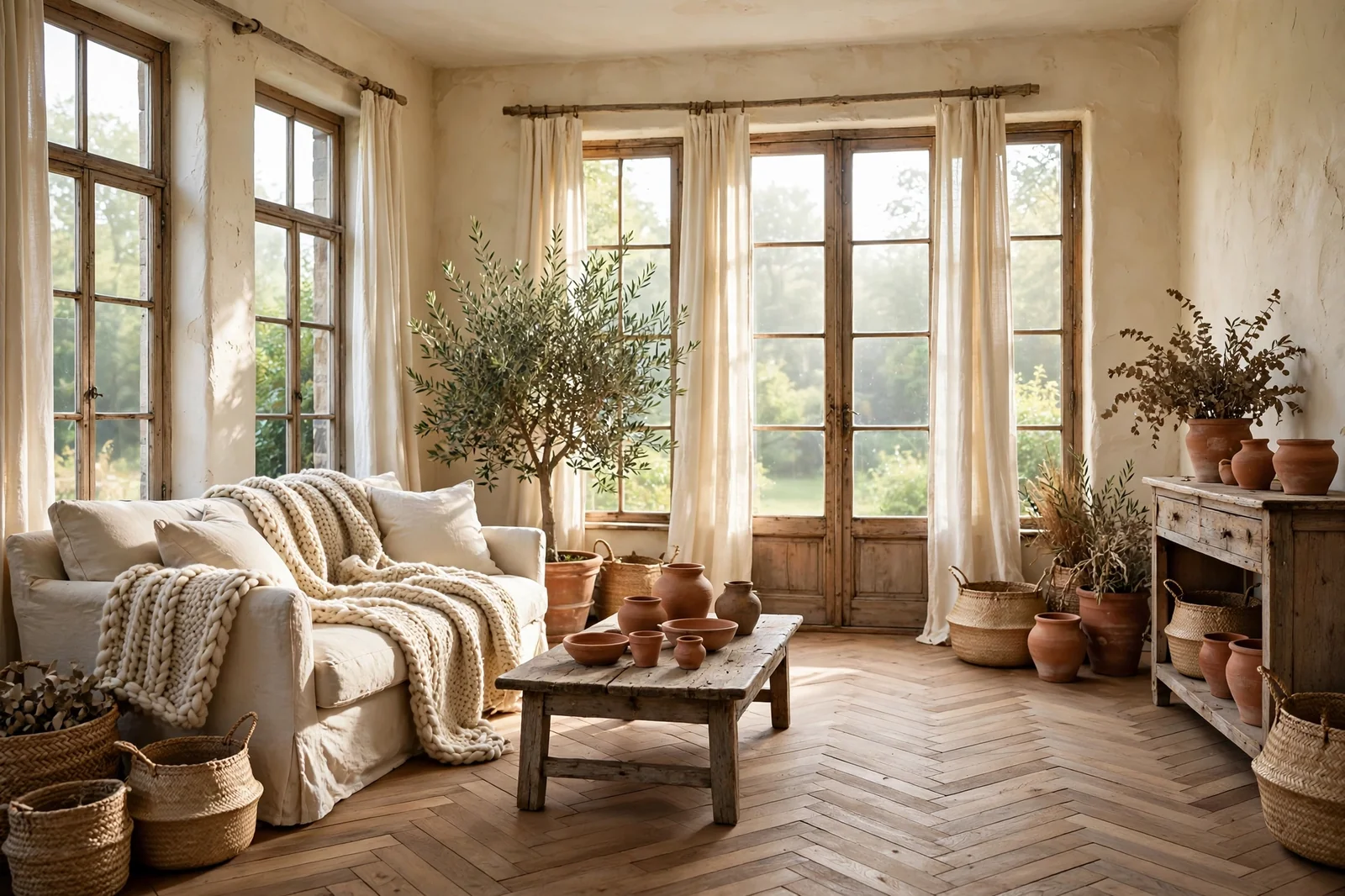
An earthy cottage home feels like a deep breath at the end of a long day. With warm neutrals, honest natural materials and handcrafted details, these 24 ideas help you build rooms that are calm, welcoming and full of quiet character.
1. Dress Every Room in Warm Neutral Linen
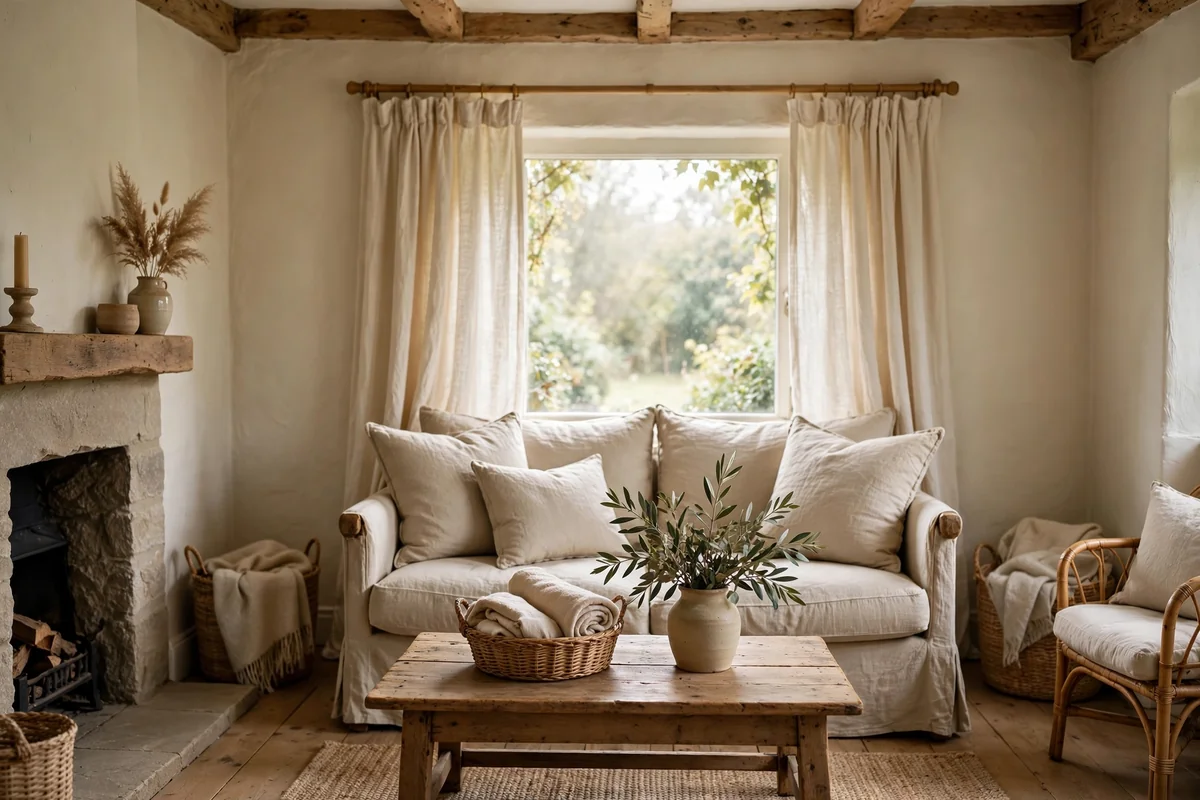
Linen is the fastest way to soften a room because its natural slubs and gentle wrinkles read as relaxed rather than rumpled. Choose curtains, cushion covers, table runners and throws in warm ivory, oatmeal, flax and soft beige instead of cool white, which can feel stark against wood. Hang curtains high and wide, about four inches above the window frame and six inches past each side, so windows feel larger and light filters through the weave beautifully.
Washed linen is the most practical choice for busy homes since it resists creasing less than crisp plain weaves and gets softer with every wash. Budget around 15 to 30 dollars per yard for decent quality, and remember that lining curtains adds fullness and sun protection. A common mistake is buying skimpy panels, so measure each window at two to three times its width for proper gather.
2. Choose Weathered Wood Furniture with History
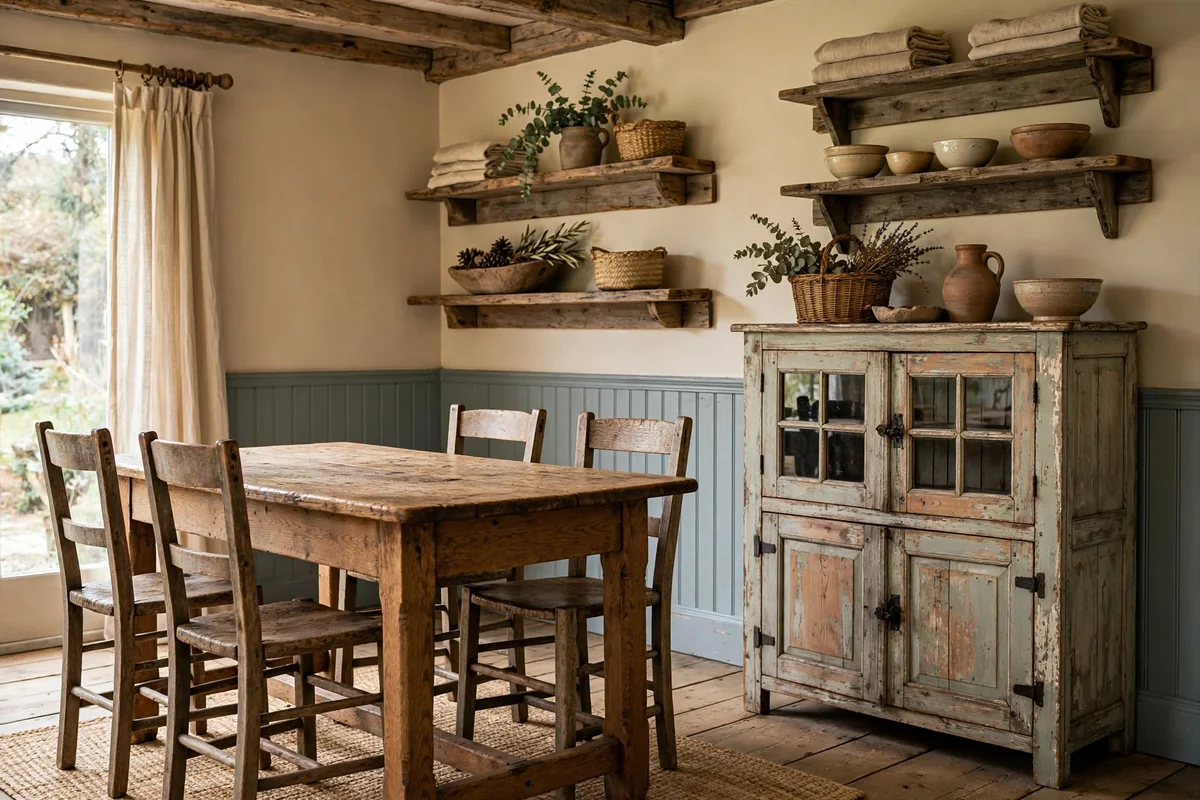
Weathered oak tables, lightly distressed pine cabinets, vintage benches and reclaimed wood shelves bring a warmth that painted furniture alone cannot provide. Scratches, knots and uneven patina tell a story and make new rooms feel settled overnight. When hunting for pieces, check that drawers slide smoothly, joints feel solid and table legs do not wobble, since character should never mean shaky construction.
Mixing wood tones is kinder than matching everything perfectly. Pair honeyed pine with deeper walnut or warm oak for a layered look that feels collected rather than coordinated. Keep pieces away from direct heat vents and bright sun to prevent cracking and fading, and feed dry wood once a year with clear furniture wax. A single good vintage table often costs less than a new mass produced one.
3. Fill Stoneware Crocks with Dried Wildflowers
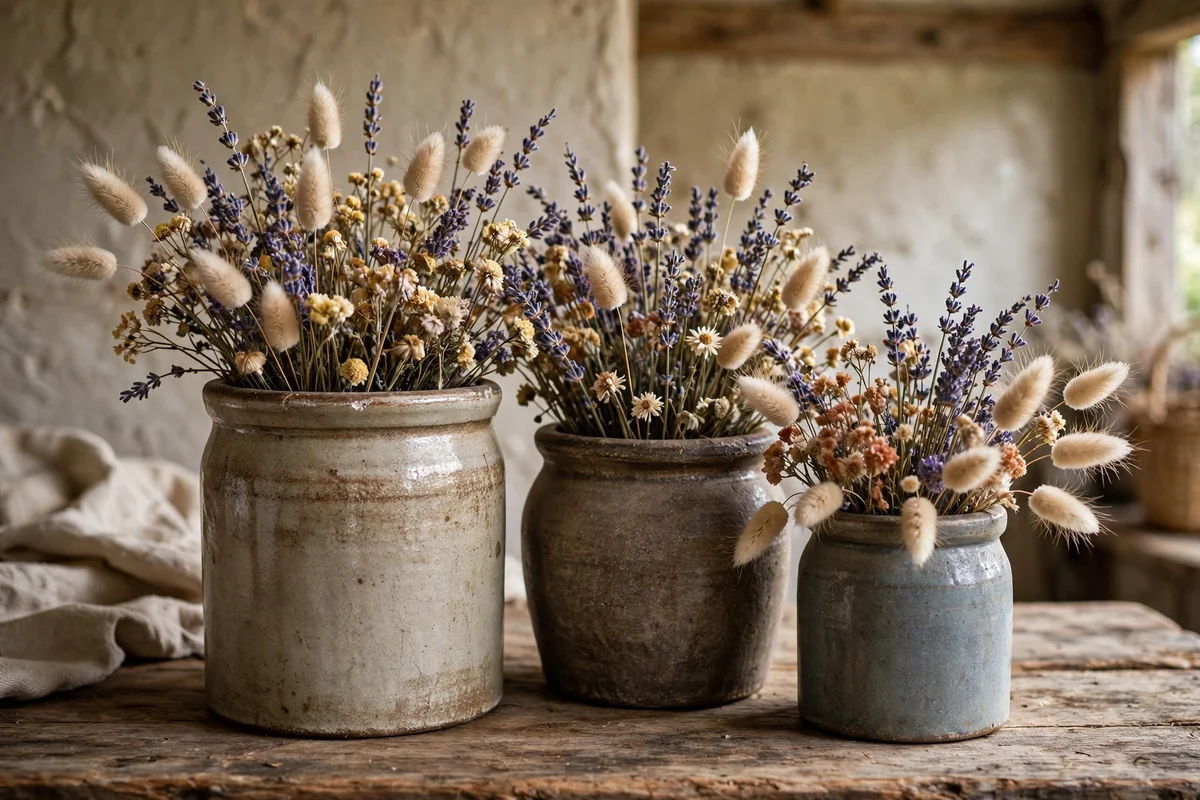
Dried wildflowers last for months with zero watering, which makes them the perfect cottage companion for busy households. Arrange bunny tails, lavender, eucalyptus, wheat stems and delicate grasses in vintage stoneware crocks or handmade ceramic pitchers. Their muted colors complement earthy interiors without competing with bolder decor, and the contrast between rough stems and aged pottery feels wonderfully authentic.
Cut stems to varying heights, tallest in the middle and shorter at the edges, and secure the bunch with a small rubber band hidden inside the vessel. Place arrangements on kitchen counters, bookshelves, dining tables and bedroom dressers where they soften hard surfaces. Keep dried florals away from open flames and humid bathrooms, and refresh the display once a year, since even the prettiest grasses eventually fade.
4. Add Handmade Woven Baskets for Beautiful Storage
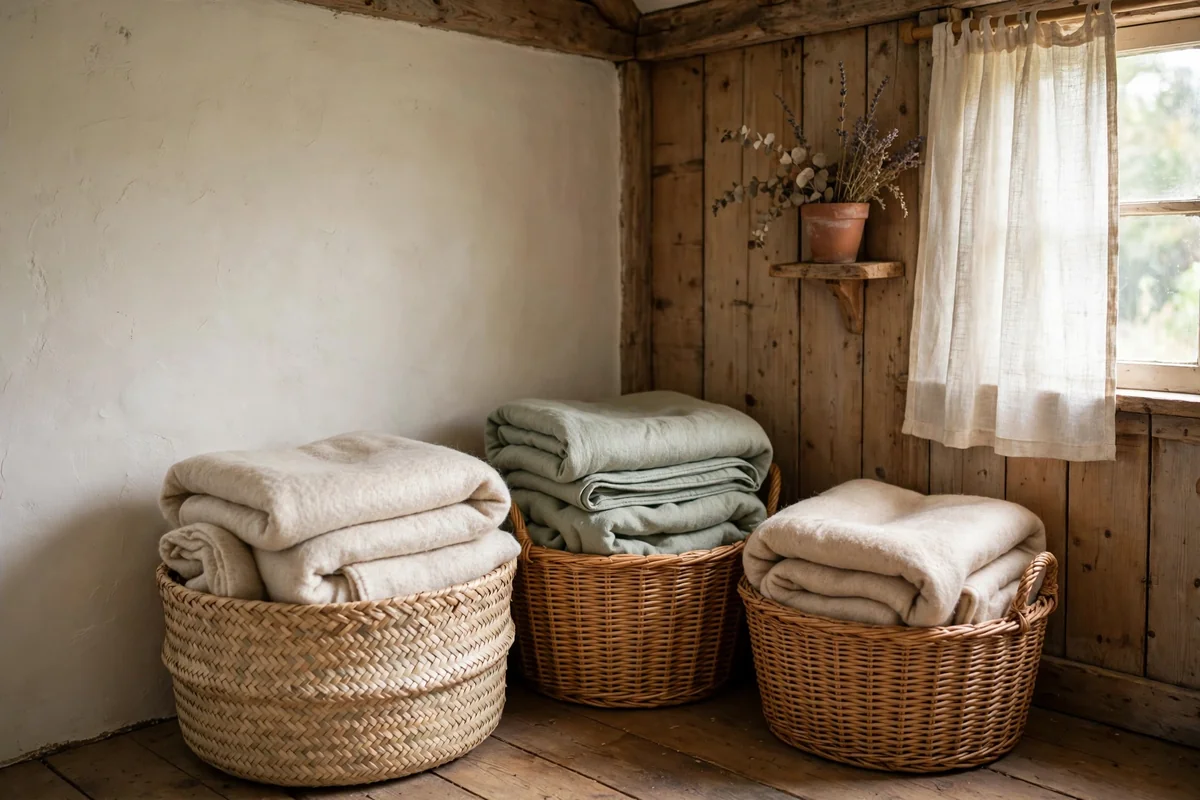
Few storage solutions work as hard as woven baskets while looking this good. Seagrass, rattan, willow and water hyacinth all bring natural texture and hide everyday clutter like blankets, toys, shoes and firewood. Choose large floor baskets to anchor furniture groupings and smaller tabletop ones for remotes, mail and other loose bits that make shelves look messy.
Mix sizes and weaves throughout a room rather than buying matching sets, since the variety feels collected over time. Check baskets for splinters or sharp cane ends before placing them near upholstery, and keep them out of damp spots where mildew can form. A quick dusting or a shake outdoors keeps them fresh, and quality baskets often last a decade or more of daily use.
5. Warm Up Shelves with Clay and Terracotta Pottery

Few materials feel as timeless as clay and terracotta. Their rich earthy tones make white walls, wooden furniture and green plants feel even more inviting, and no two handmade pieces share exactly the same shape or glaze. Use simple vases, rustic bowls and aged planters both practically and decoratively, from holding kitchen herbs to displaying dried flowers or standing empty as sculpture.
Unglazed terracotta breathes, which plants love, but it can leave rings on wood, so tuck felt pads or small saucers underneath. Group pottery in odd numbers and vary heights for a natural look. Prices start around ten dollars at craft markets for small pieces, and learning to spot lead free glazes matters if you will serve food from them.
6. Build a Cozy Reading Corner with Natural Textures
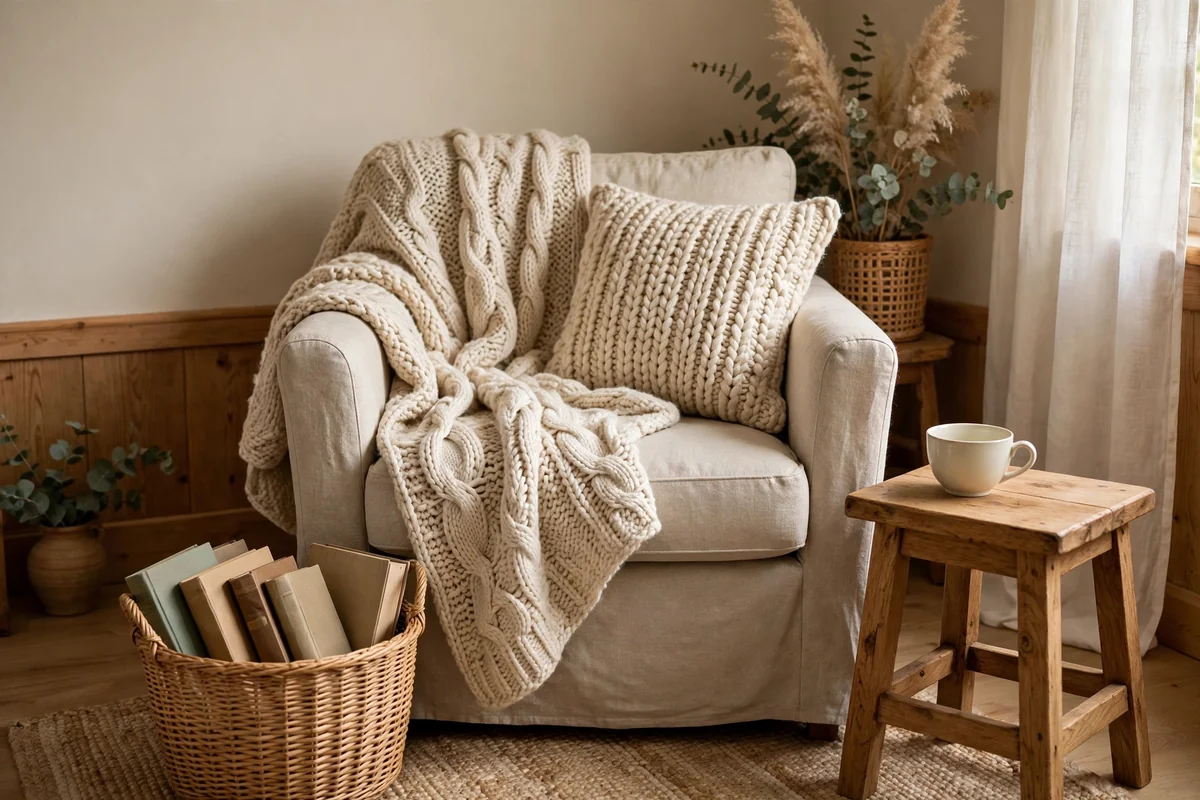
A good reading corner needs only a few honest ingredients: a comfortable chair, warm light and something soft within reach. Start with an upholstered armchair or a deep wooden rocker, then layer a chunky knit throw, a linen cushion, a woven basket for books and a small side table for tea. Position it near a window for daylight and add a floor lamp with a linen shade for evenings.
Allow about four feet square of floor space so the chair reclines without blocking walkways. Choose performance fabrics or washable slipcovers if the spot gets daily use, and keep a folded spare blanket in the basket for chilly readers. The whole corner can come together for under two hundred dollars with secondhand finds, and it quickly becomes the most fought over seat in the house.
7. Display Vintage Wooden Cutting Boards as Kitchen Art
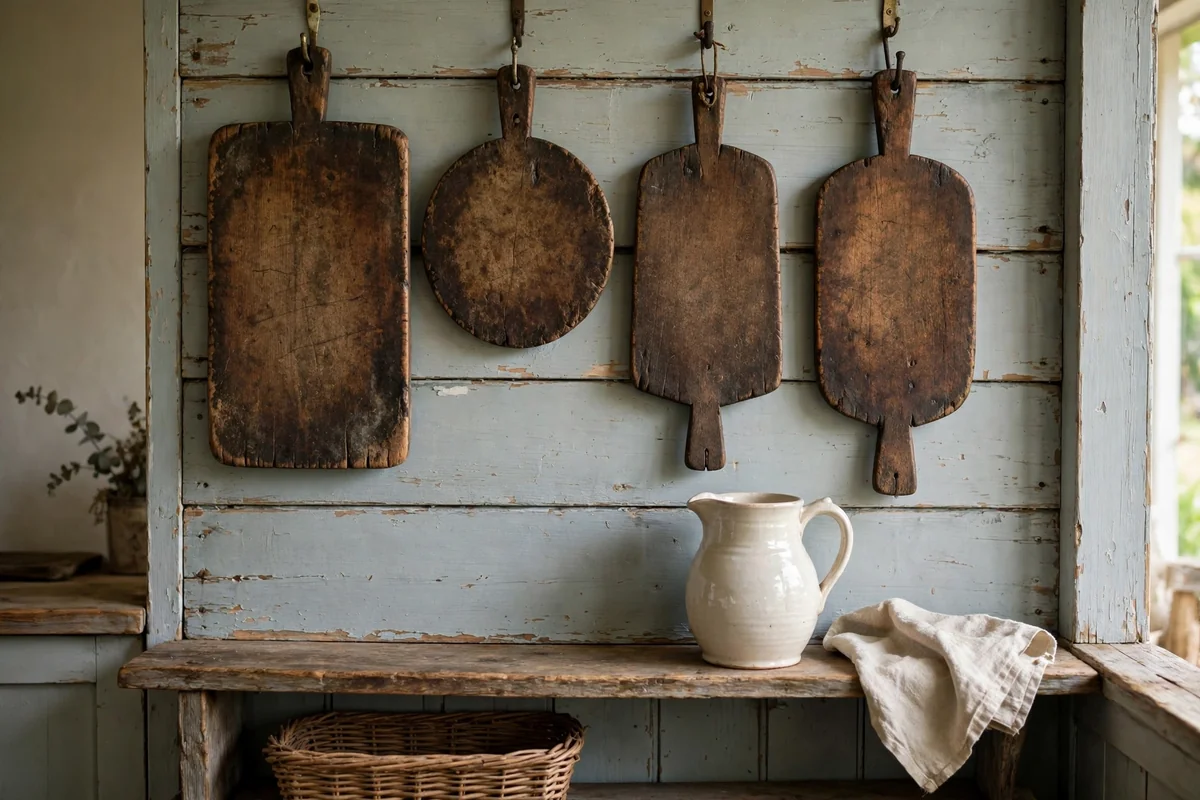
Worn wooden cutting boards deserve better than a dark drawer. Their rounded handles, knife marks and deep patina make beautiful wall decor that celebrates everyday craftsmanship. Gather boards in different shapes and sizes, then lean them against the backsplash or hang them on simple hooks for an arrangement that feels naturally collected rather than staged.
Use sturdy wall anchors rated for the board weight, and keep displayed boards away from the stove where grease and heat build up. If you still chop on them, wash and oil them monthly with food safe mineral oil, and retire any board with deep cracks where bacteria can hide. Flea markets and thrift shops sell lovely boards for just a few dollars each.
8. Bring In Olive Trees and Soft Indoor Greenery
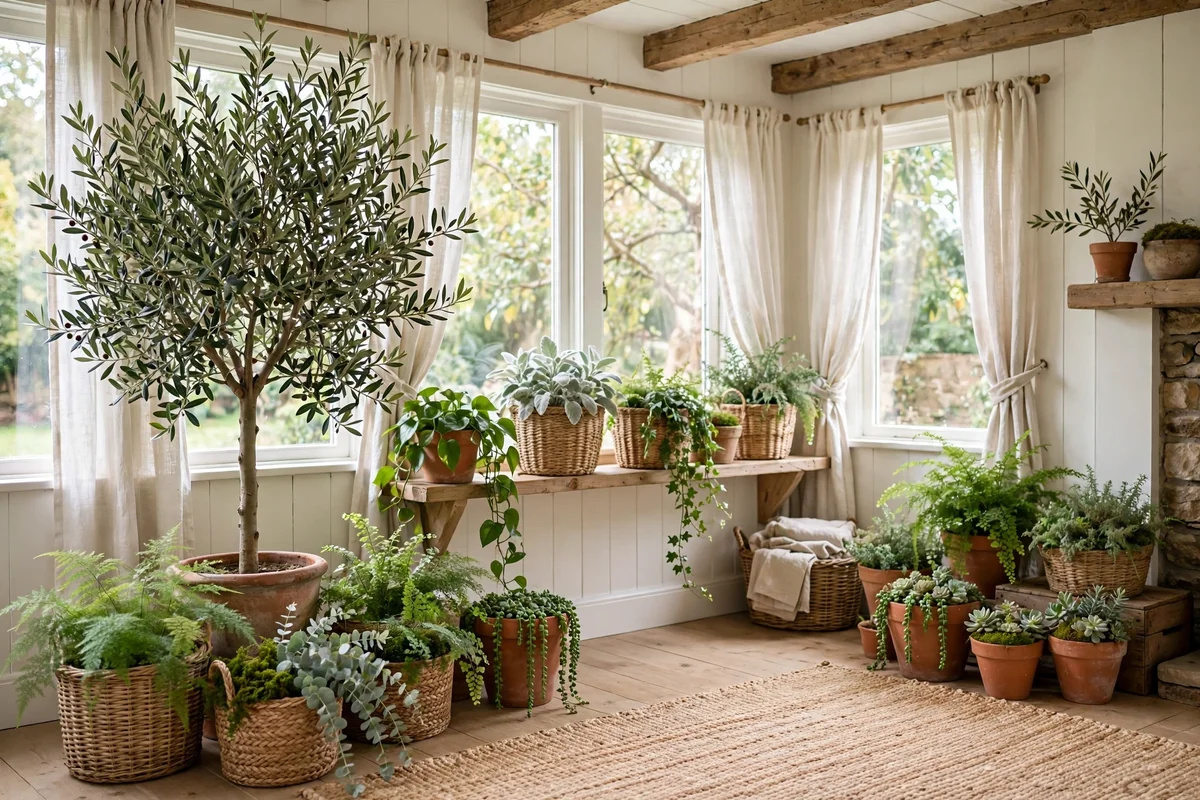
Even a single olive tree or leafy houseplant can make a whole room feel fresher and more alive. Choose plants with soft, natural shapes like olive trees, rubber plants, pothos and trailing ivy, which blend gently into cottage interiors instead of shouting for attention. Set larger plants in woven baskets or aged terracotta pots so the containers look as good as the foliage.
Olive trees want the brightest spot you have and soil that dries between waterings, while pothos tolerates lower light and forgiving owners. Keep plants away from cold drafts and heat vents, and wipe broad leaves monthly so they photosynthesize properly. If you have pets, check toxicity before buying, since some favorites are not safe for curious cats and dogs.
9. Paint and Furnish in an Earthy Palette
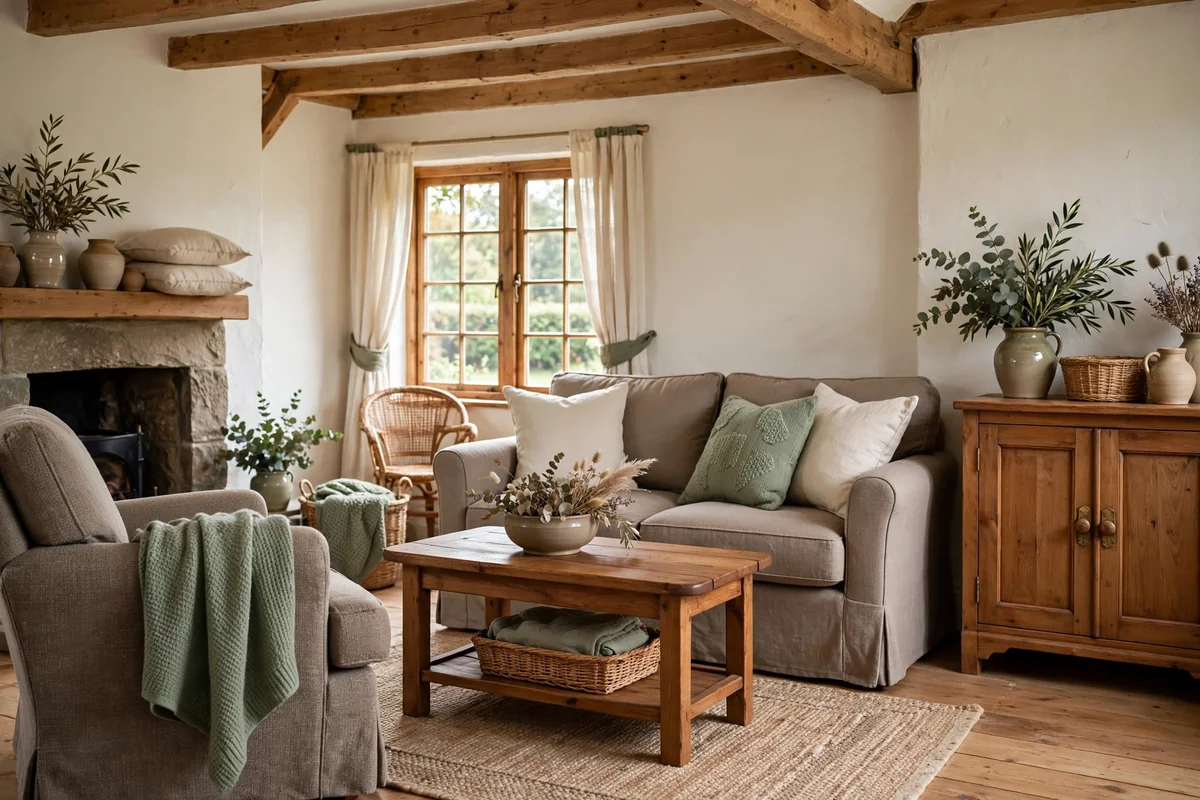
Replacing high contrast colors with warm neutrals changes a home more than almost any other single move. Cream, taupe, mushroom, oatmeal, sand and soft stone create a peaceful backdrop that makes rooms feel larger and calmer. These shades work together instead of competing, which gives you a quiet harmony that never feels boring.
Test paint in large swatches and watch them through a full day before committing, since undertones shift dramatically between morning and lamplight. Keep ceilings warm white rather than stark white so the room glows instead of glares. One gallon covers roughly 350 square feet, so measure carefully, and always buy five percent extra for touch ups later.
10. Style Open Shelves with Handmade Pottery
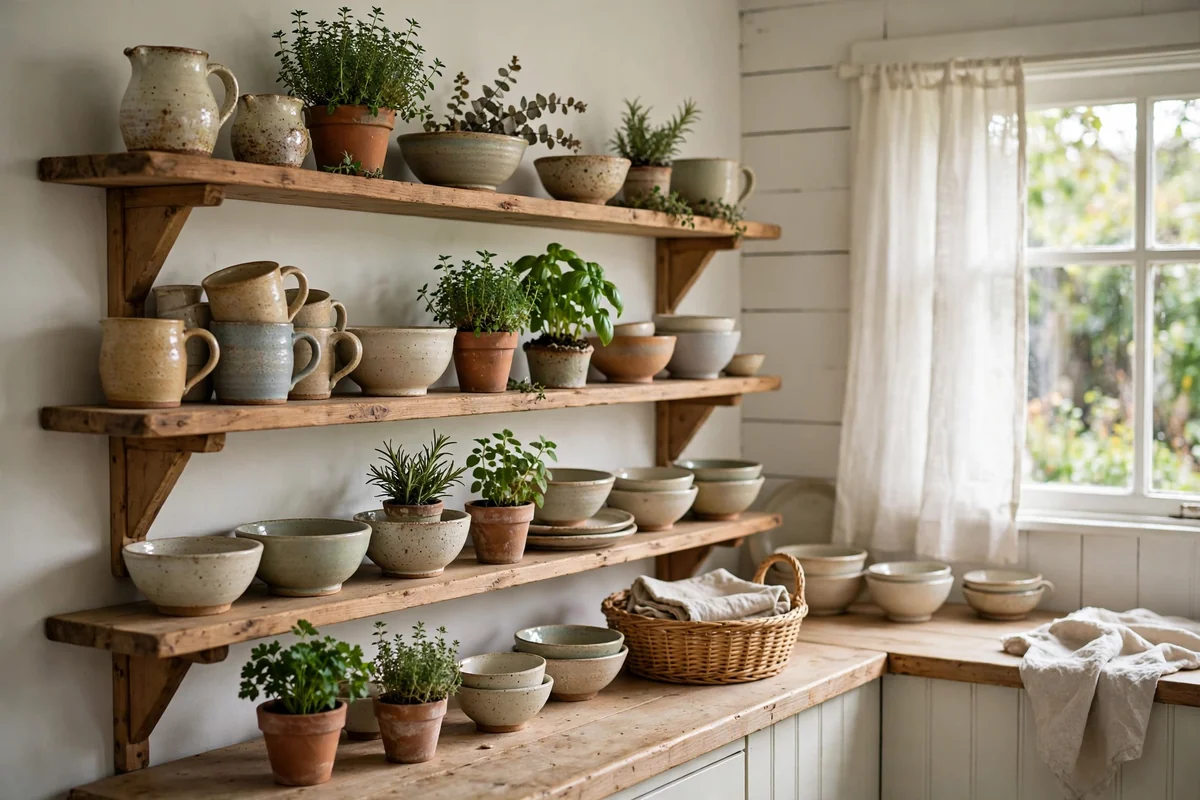
Open shelves turn everyday dishes into decor, but they only look calm when styled with restraint. Handmade ceramic bowls, pitchers, mugs and vases add subtle texture and warmth without visual noise. Leave breathing room between objects and vary heights so the shelf feels collected rather than crowded, and keep everyday pieces within easy reach.
Group items in odd numbers and mix pottery with a few stacked books, small plants or woven baskets for balance. Mount shelves into studs or use heavy duty anchors, since ceramics are heavier than they look. Dust shelves every two weeks and wash little used pieces quarterly. In kitchens, keep everyday dishes on the lowest, easiest to reach shelf.
11. Add Natural Wood Ceiling Beams for Character
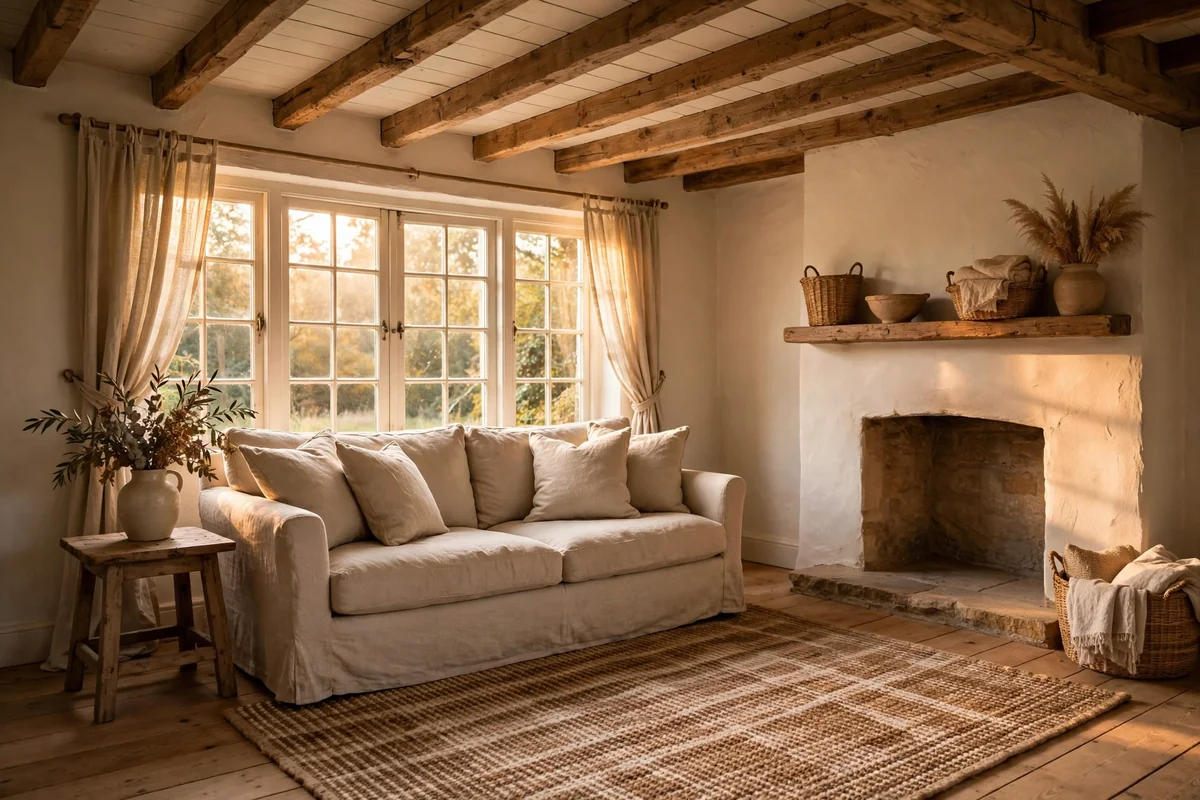
Whether original or decorative, wood beams draw the eye upward and wrap a room in instant warmth. Reclaimed timber boxes can be built around a simple pine core, giving you the look of structural beams without the weight. Stain them to match your wood tones or limewash them for a softer, Scandinavian cottage feel.
Check ceiling joists before installing anything heavy, and never hang beams from drywall alone. In rooms under nine feet, keep beams slim, around six inches deep, so they add texture without pressing down on the space. Budget roughly 10 to 20 dollars per linear foot for faux beams, and seal them against dust since cleaning overhead wood is nobody’s favorite chore.
12. Hang Vintage Botanical Prints in Wood Frames
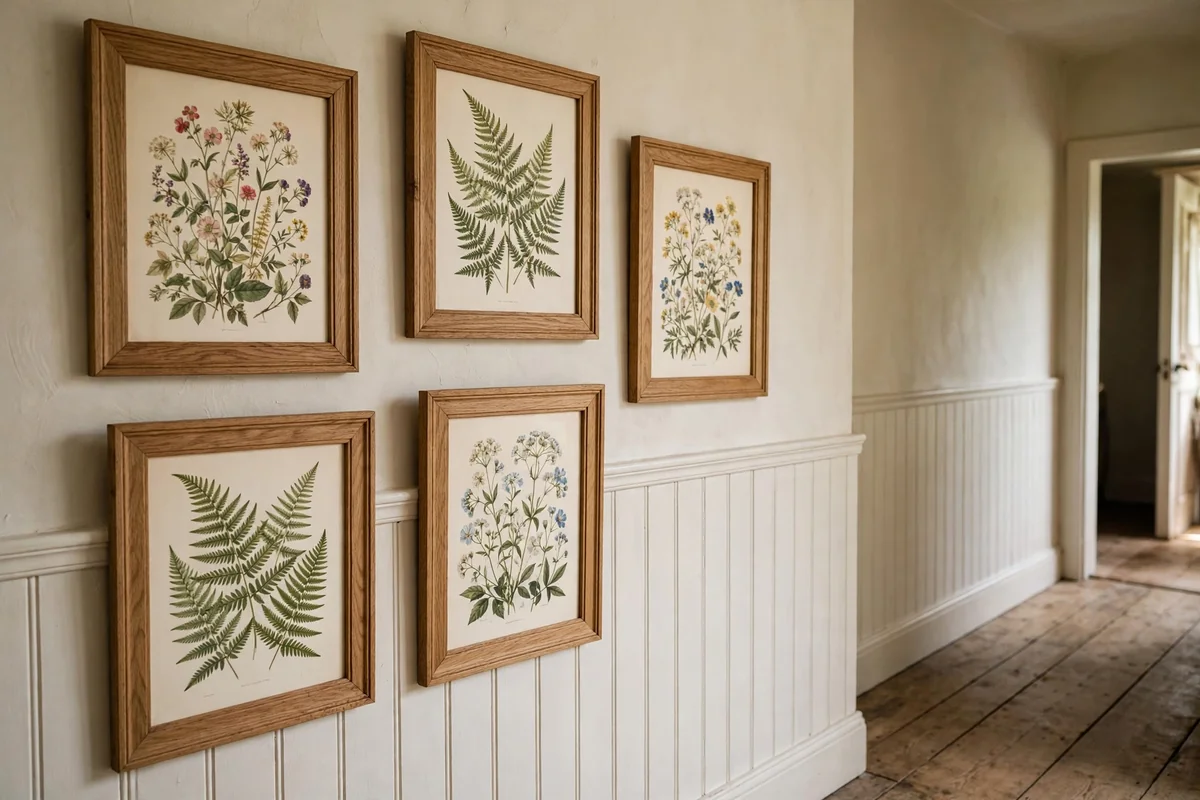
When walls feel empty, vintage botanical prints are the gentlest answer. Illustrations of wildflowers, herbs, ferns and woodland plants suit earthy cottage rooms because they celebrate nature in an understated way. Choose muted prints with soft aging and frame them in natural oak or lightly distressed wood that blends with the rest of the room.
Hang gallery groups at eye level, about 57 inches to the center, and keep two to three inches between frames for a relaxed rhythm. Museum glass reduces glare if the wall faces a window. You can download public domain botanical plates for free and print them affordably, which keeps a whole gallery wall under fifty dollars.
13. Layer Vintage Quilts Over Everyday Furniture
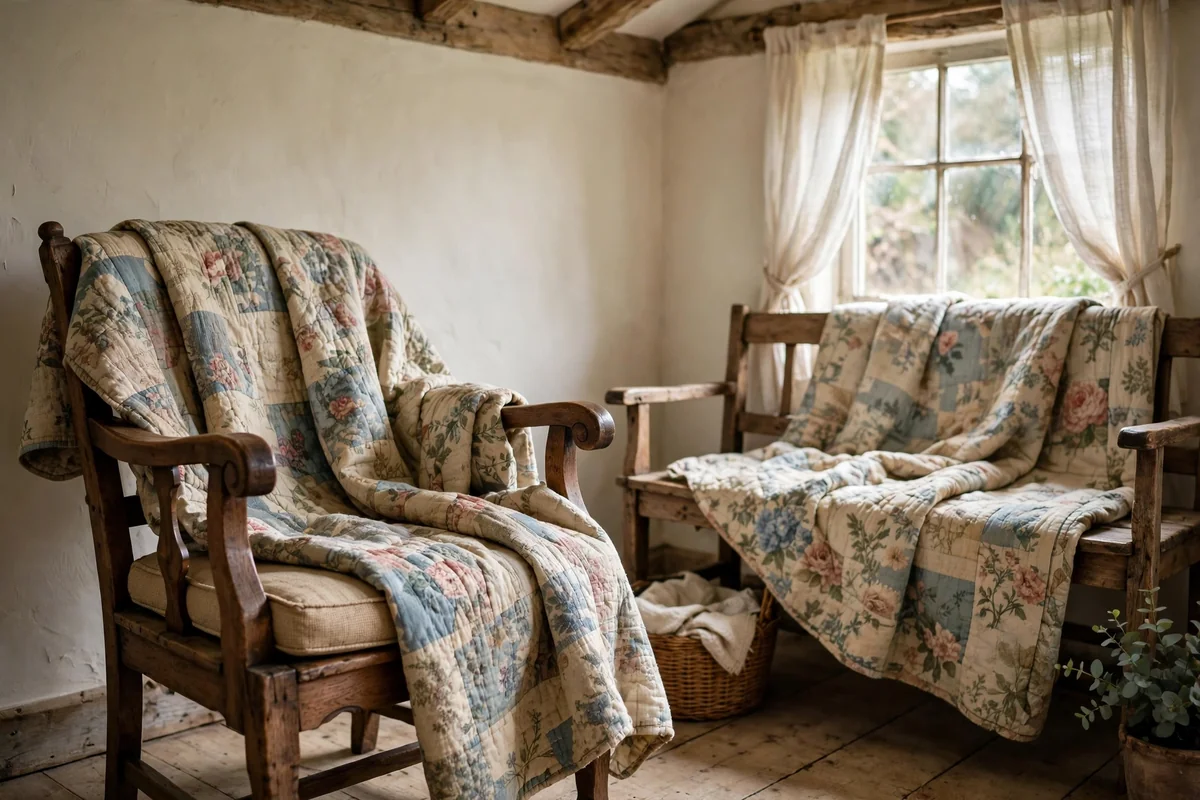
A vintage quilt draped over a chair, bench or bed foot instantly makes furniture feel more inviting. Faded florals and soft patchwork add handcrafted texture and gentle color that plain upholstery lacks. Beyond looks, quilts are practical: they warm chilly evenings and protect chair arms and seat cushions from daily wear.
Fold a quilt in thirds for a neat tailored look or toss it casually for cottage ease. Wash vintage textiles gently in cold water with mild detergent, and dry flat to protect old stitching. Check thrift shops and estate sales, where sturdy quilts often sell for 30 to 80 dollars. Avoid machine drying fragile heirlooms, which can stress the seams.
14. Put Wrought Iron Hooks to Work
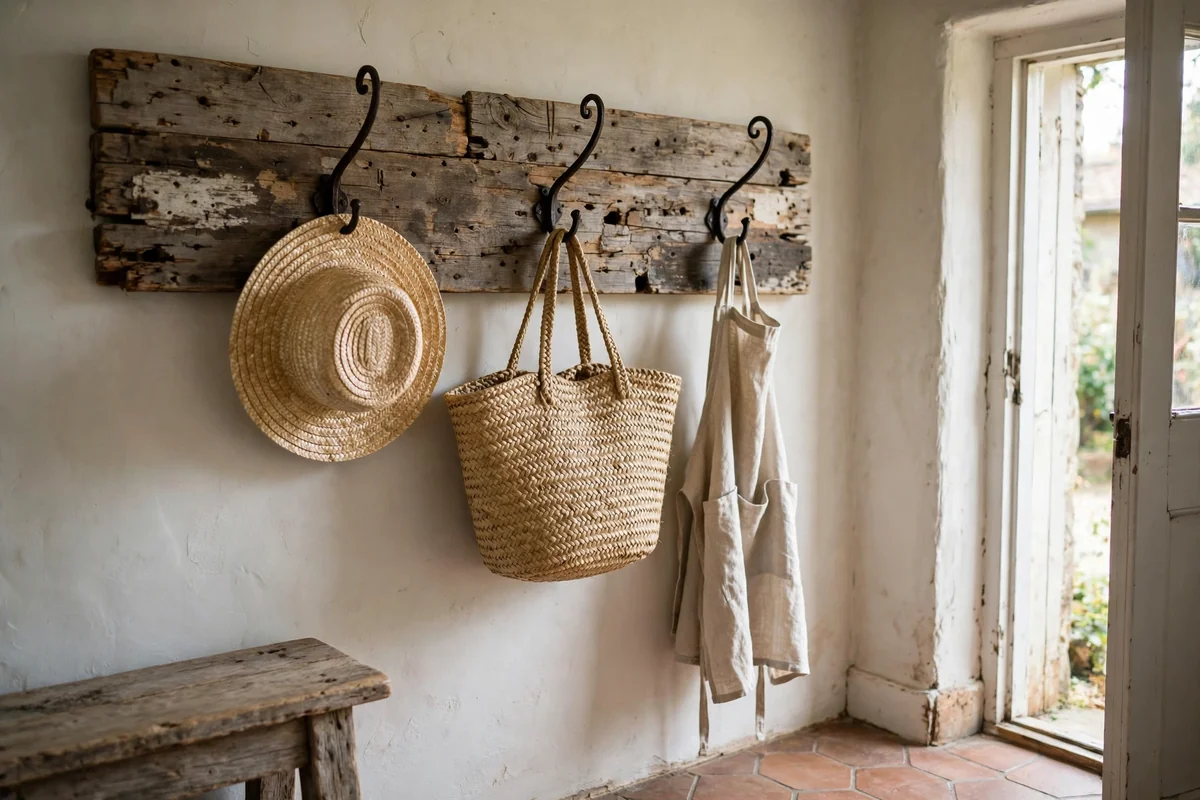
Storage becomes decoration when it is done with intention. Simple black wrought iron hooks mounted on reclaimed wood or painted walls hold hats, baskets, aprons and market bags beautifully. The dark finish contrasts warmly against neutral walls and adds a layer of rustic character to entryways, kitchens, laundries and bathrooms.
Mount hooks into studs or use proper wall anchors, since a loaded hook can easily hold 15 pounds. Space hooks six to eight inches apart so hanging items do not tangle. A row of five hooks costs less than twenty dollars and takes an afternoon to install. Keep frequently grabbed items at reachable height and prettier, lighter pieces higher up.
15. Create a Warm Glow with Layered Lighting
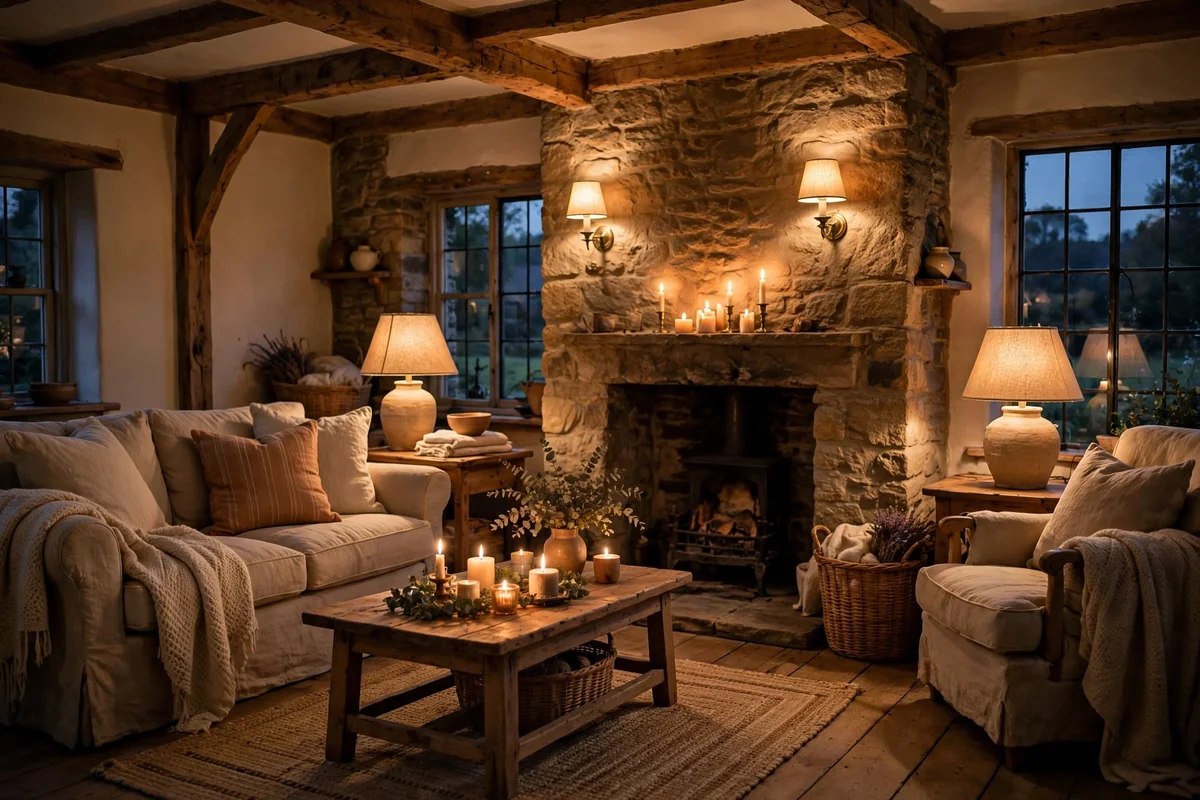
Earthy cottage rooms feel coziest with several small light sources rather than one bright overhead fixture. Combine table lamps with linen shades, ceramic bases, wall sconces and candles to create soft pools of light that make every corner inviting after dark. Warm white bulbs around 2700 kelvin flatter wood tones and skin alike.
Place lamps at varying heights, on side tables, consoles and shelves, and use dimmers wherever possible for full control. Keep fabric shades at least six inches from bulbs to avoid scorching, and choose LED bulbs to reduce heat and energy bills. A common mistake is relying on a single ceiling light, which flattens texture and casts harsh shadows.
16. Style Coffee Tables with Nature-Inspired Pieces
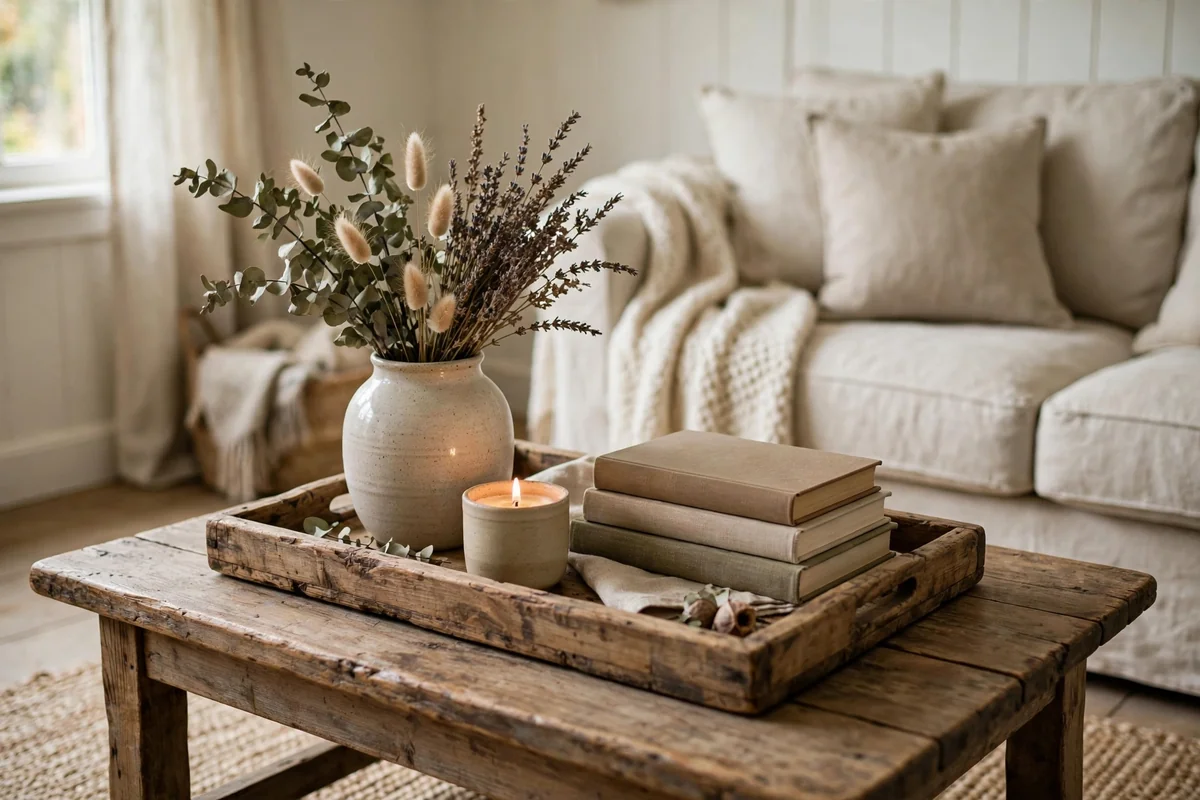
Coffee tables look best decorated simply, with everything earning its place. Start with a wooden tray to keep the arrangement contained, then add a ceramic vase with dried greenery, a candle and one or two beautiful books. Choose handmade pottery, woven coasters, stone bowls or reclaimed wood accents so the styling feels natural rather than staged.
Leave at least a third of the surface clear so the table still works for cups and feet. Use coasters under every drink to protect wood finishes, and keep candles in sturdy holders away from book pages and dried stems. Restyle seasonally by swapping the greenery, which keeps the table feeling fresh for almost no cost.
17. Drape Soft Wool and Chunky Knit Throws
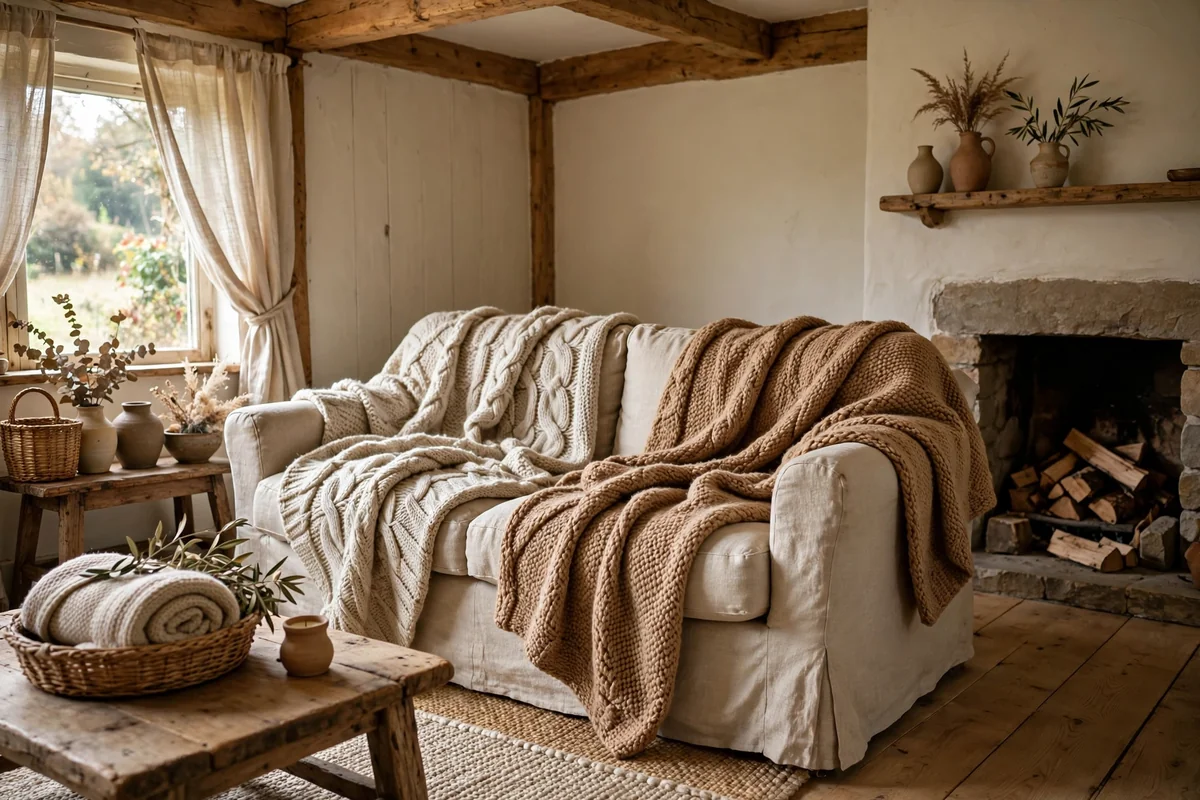
Nothing says cozy like a soft wool throw within arm’s reach. Choose natural fibers in oatmeal, camel, moss green or warm cream, which blend effortlessly with wood furniture and neutral upholstery. Drape blankets casually over sofas, reading chairs and bed ends so they are always ready, and layer different weaves for a collected, lived in look.
Wool regulates temperature beautifully, keeping you warm without overheating. Hand wash or use the wool cycle with gentle detergent, and dry flat to prevent stretching. Store off season blankets in breathable cotton bags with cedar blocks rather than plastic, which traps moisture. A good wool throw costs 60 to 120 dollars and lasts for decades.
18. Dress Dining Tables with Seasonal Greenery
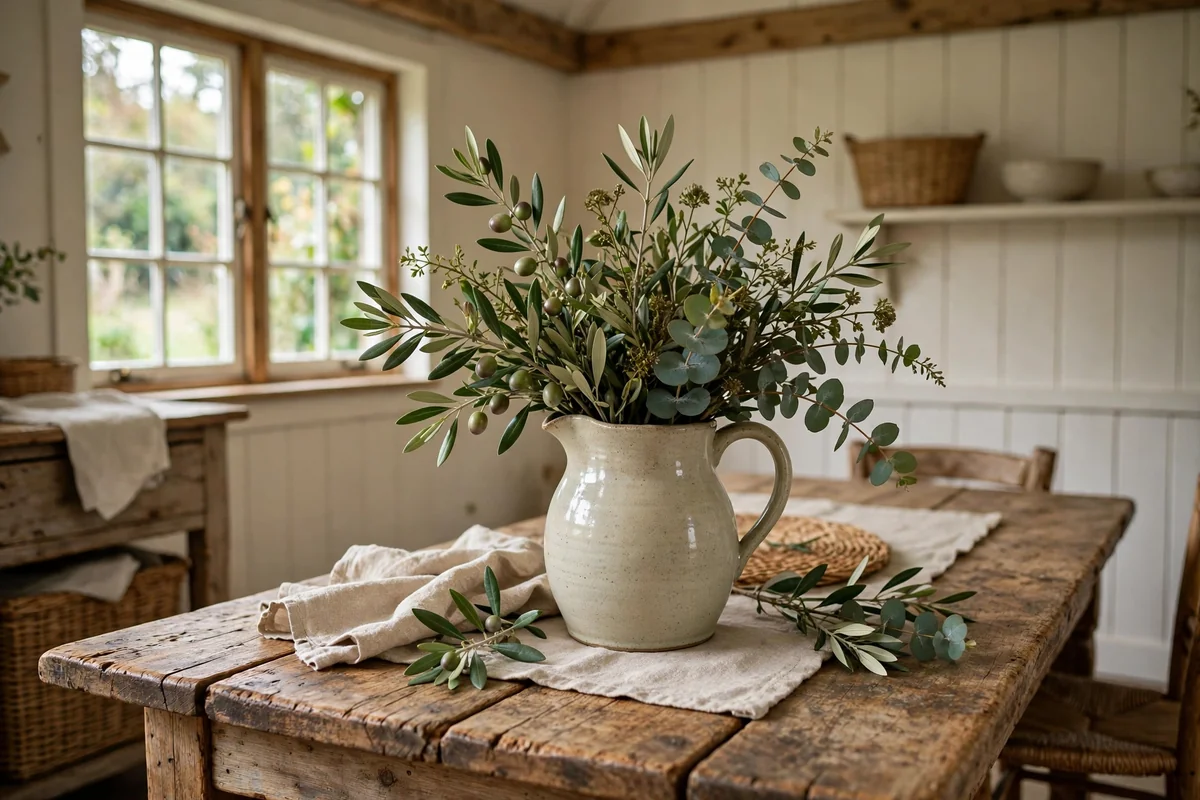
Dining tables need no elaborate centerpiece to feel beautiful. A few olive branches, eucalyptus stems, fresh herbs or garden clippings gathered in a handmade ceramic pitcher create an elegant arrangement that feels effortless. Change the greenery with the seasons: blossoms in spring, leafy branches in summer, dried grasses in autumn, evergreen cuttings in winter.
Keep arrangements low, under twelve inches, so guests can see each other across the table. Trim stems at an angle and change water every two days for fresh cuttings. Place a felt pad under the pitcher to protect the table, and keep arrangements clear of candle flames. This is one of the most affordable decorating habits, often costing nothing at all.
19. Scatter Rustic Wooden Stools Wherever They Fit
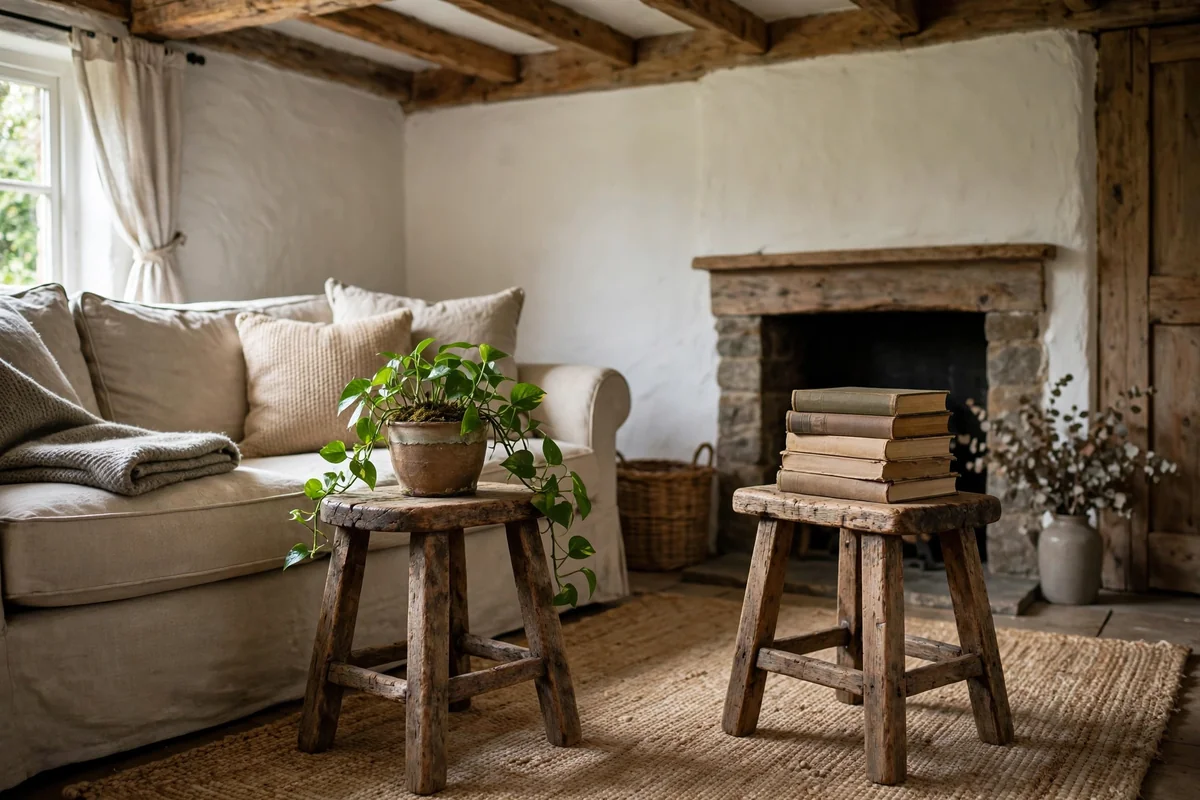
Wooden stools are the hardest working furniture in a cottage home. One day they offer extra seating for guests, the next they become plant stands, bedside tables or book stacks beside a favorite chair. Look for visible grain, slightly worn edges and sturdy handmade construction that feels authentic rather than factory made.
Check that legs sit level and joints feel tight before buying, since a wobbly stool is a safety hazard. Sand any rough spots that could snag clothing, and add felt pads underneath to protect floors. Tuck stools beside sofas, in bathrooms holding rolled towels, or in bedrooms as nightstands. Most vintage stools cost 20 to 50 dollars and work in nearly every room.
20. Mix Stone, Wood and Woven Materials
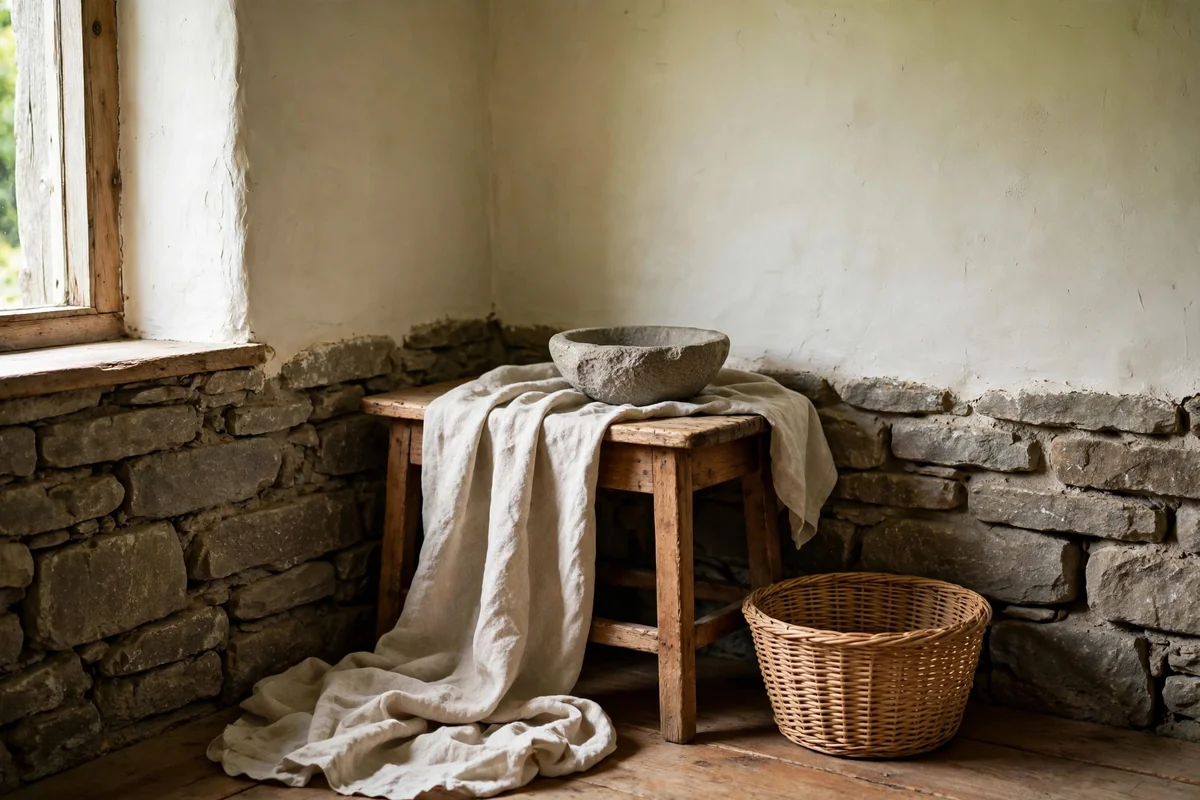
When a room feels flat, the cause is often surfaces that are too similar. Combining natural materials creates richer interiors than any single finish can. Warm wood furniture, stone accessories, woven baskets, linen fabrics and ceramic pottery each add different texture while working together beautifully, echoing the imperfect variety found outdoors.
Let materials differ instead of matching them perfectly: smooth stone beside rough wood, soft linen against woven rattan. Repeat each material at least three times around the room so the mix feels intentional. Seal porous stone coasters and trays to prevent stains, and remember that heavy stone pieces need felt pads to protect wood surfaces underneath.
21. Turn Empty Corners into Displays with Vintage Ladders
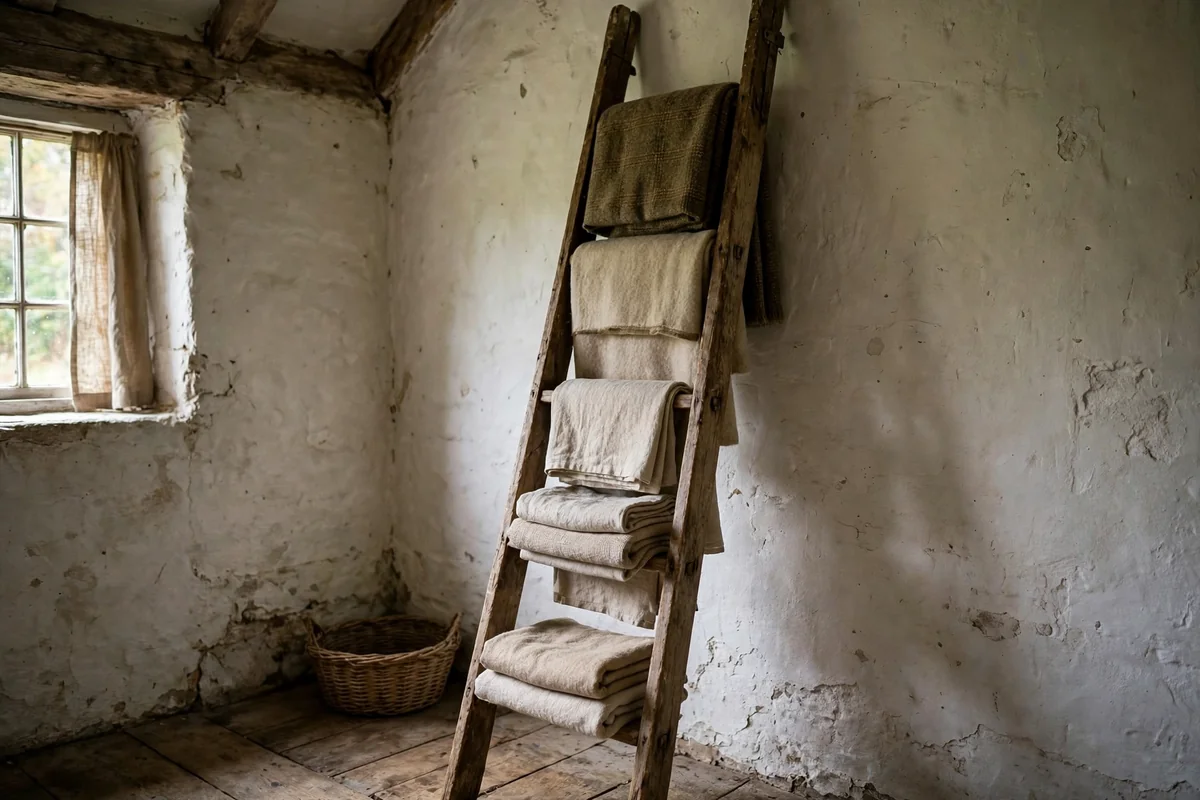
Empty corners become charming focal points with a vintage wooden ladder leaned casually against the wall. Drape it with lightweight blankets, linen towels, woven scarves or a string of dried herbs. The vertical shape adds height without crowding the room, and the aged wood brings rustic character while providing genuinely useful storage.
Anchor the ladder top to the wall with a discreet bracket if children or pets might climb it, since a falling ladder is a real hazard. Check rungs for cracks and splinters before loading them. A secondhand ladder typically costs 30 to 60 dollars. Keep heavier textiles low and lighter pieces high for both balance and visual lightness.
22. Show Off Handmade Ceramic Bowls

Beautiful everyday items deserve to be seen, not hidden in cabinets. Handmade ceramic bowls with organic shapes and slightly imperfect glazes work as both functional tools and small works of art. Arrange them on open shelves, kitchen islands and dining tables, where they add warmth even when empty, and mix sizes for a naturally collected look.
Use larger bowls for fruit on the counter and smaller ones for keys, change or wrapped treats in the entryway. Hand wash treasured pieces rather than trusting the dishwasher, since harsh detergents dull handmade glazes. If you buy vintage ceramics, confirm they are lead free before serving food from them. Craft fair bowls usually run 15 to 40 dollars each.
23. Hang Soft Linen Curtains to Filter the Light
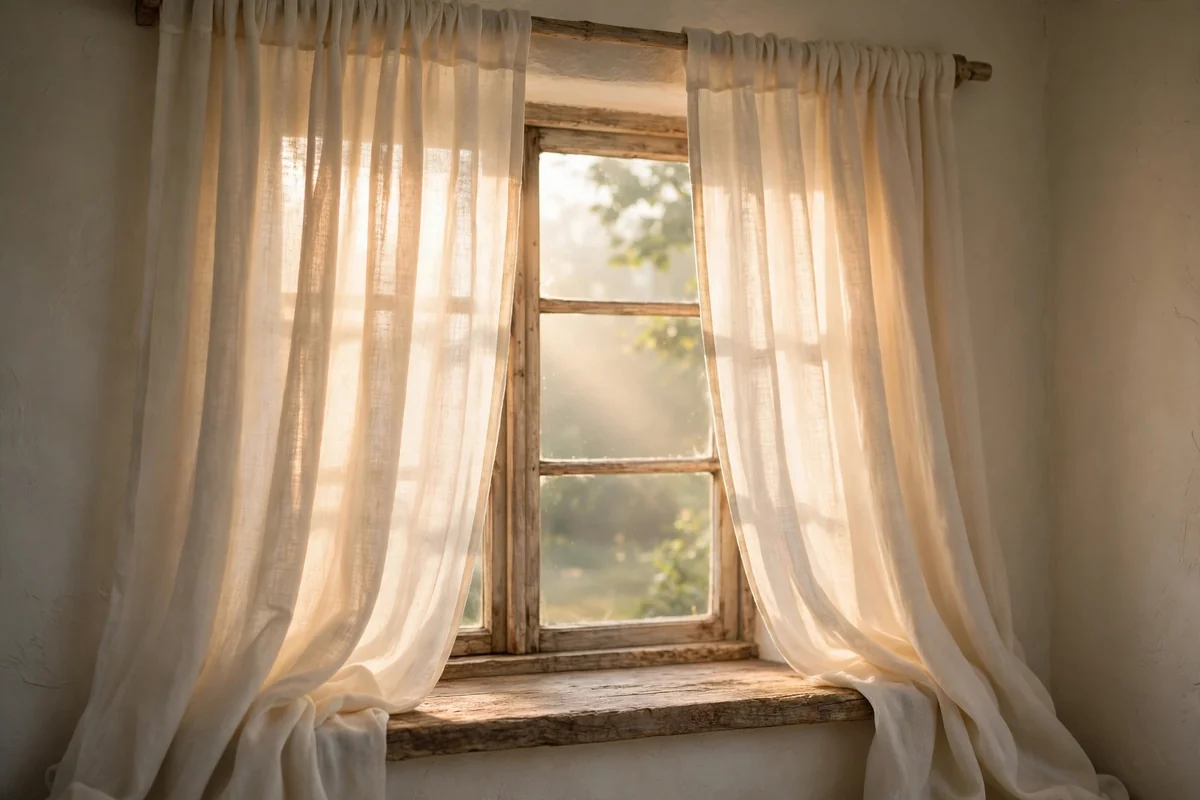
Natural light is one of the most important elements in an earthy cottage home, and lightweight linen curtains honor it beautifully. Warm ivory, oatmeal or flax colored linen softens harsh sun while keeping rooms bright and airy. The fabric’s gentle movement in a breeze makes a room feel alive and peaceful in a way heavier drapes never do.
Hang panels from simple wooden or matte black rods, and let them just kiss the floor for a relaxed drape. Wash linen curtains twice a year and hang them slightly damp to smooth wrinkles naturally. Avoid bleach, which weakens the fibers, and expect about three percent shrinkage on the first wash, so buy panels with a little extra length.
24. Light Earth-Toned Candles Every Evening
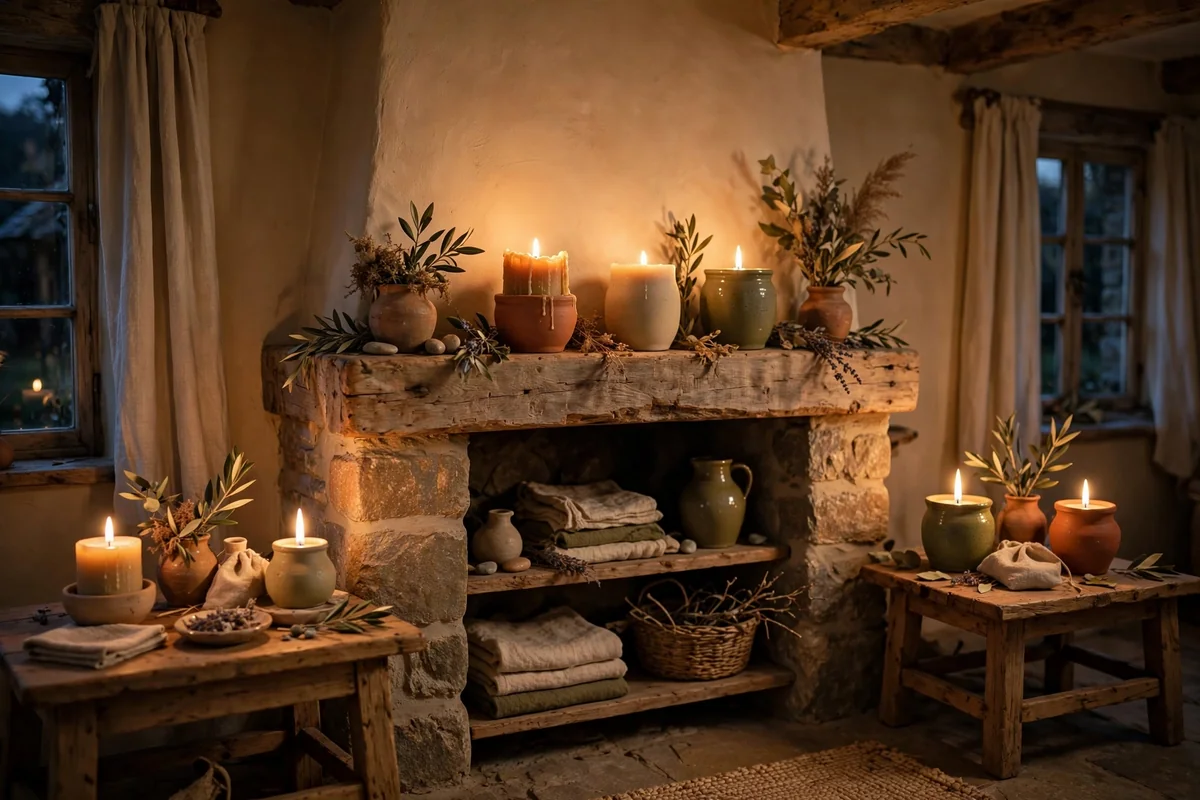
Candles deserve a place in everyday decorating, not just special occasions. Choose unscented or lightly scented candles in clay, sand, olive, cream and soft brown so they contribute to the natural palette even unlit. In the evening their warm glow transforms the atmosphere, softening every surface and encouraging everyone to slow down.
Always place candles in sturdy, heatproof holders on stable surfaces, and never leave them burning unattended or near curtains, dried flowers or children and pets. Trim wicks to a quarter inch before each lighting to reduce soot. Beeswax and soy candles burn cleaner than paraffin. A small collection of pillar candles costs little and makes ordinary evenings feel quietly special.
A Warm Home Worth Coming Back To
An earthy cottage home is built slowly, from honest materials and pieces chosen with care rather than bought in a hurry. Start with one idea that speaks to you, live with it, and let the rest follow naturally. The result is a home that welcomes you back every single day.
Frequently Asked Questions
What colors define the earthy cottage style?
Warm neutrals form the heart of the style: cream, oatmeal, flax, mushroom, taupe, soft stone, sage green and gentle terracotta. These shades echo the landscape and create a calm backdrop that lets texture do the talking. Start with walls and larger furniture in the lightest tones, then layer in mid tones like mushroom and sage through textiles, and finish with small accents of terracotta or clay. This approach keeps rooms feeling airy in summer and cozy in winter without ever needing a full redecoration.
Can I get the cottage look without buying antique furniture?
Absolutely. New furniture made from solid wood, with simple shapes and honest joinery, captures the same spirit. Look for pieces with visible grain, matte finishes and sturdy construction rather than glossy veneers. You can age a plain pine piece yourself with a light gray wash or clear wax, which costs very little. Pair new basics with vintage-look textiles, handmade ceramics and woven baskets, and guests will never guess which pieces came from a flea market and which came from a showroom.
How do I keep a cozy layered home from looking cluttered?
Layer textures, not objects. Two or three tactile materials in one vignette (linen, wood, ceramic) feel rich without crowding. Give every shelf and surface some breathing room: if you can lift any single piece away and the display still looks complete, you have the right density. Use baskets and crocks to corral small items, group decor in odd numbers, and repeat the same materials across the room so everything feels connected. Edit seasonally, removing a few pieces each spring so the house keeps its calm.
Are dried flowers and natural materials hard to maintain?
Not at all, which is part of their charm. Dried arrangements need no watering and last for months; keep them out of direct sun so the colors fade gracefully instead of bleaching. Dust stems gently with a soft brush or a cool hairdryer once a month. Woven baskets just need an occasional wipe with a dry cloth, and solid wood furniture rewards you for years with nothing more than a yearly coat of clear wax. Choose hardy plants like olive trees or pothos if you worry about upkeep, since both forgive irregular watering.
What is the easiest first step toward an earthy cottage home?
Start with textiles, because they deliver the biggest change for the smallest budget. Swap cool white curtains for warm ivory linen, add two or three cushions in oatmeal and flax weaves, and drape a chunky knit throw over your sofa. For most rooms this costs less than a single piece of furniture and takes an afternoon. Live with the change for a few weeks before deciding what comes next. You will quickly see whether your home wants more wood, more plants or more handmade ceramics, and you can add those pieces gradually.