Living Room
24 Fireplace TV Wall Ideas That Blend Classic Warmth With Modern Comfort
By Anna Wells · · 21 min read
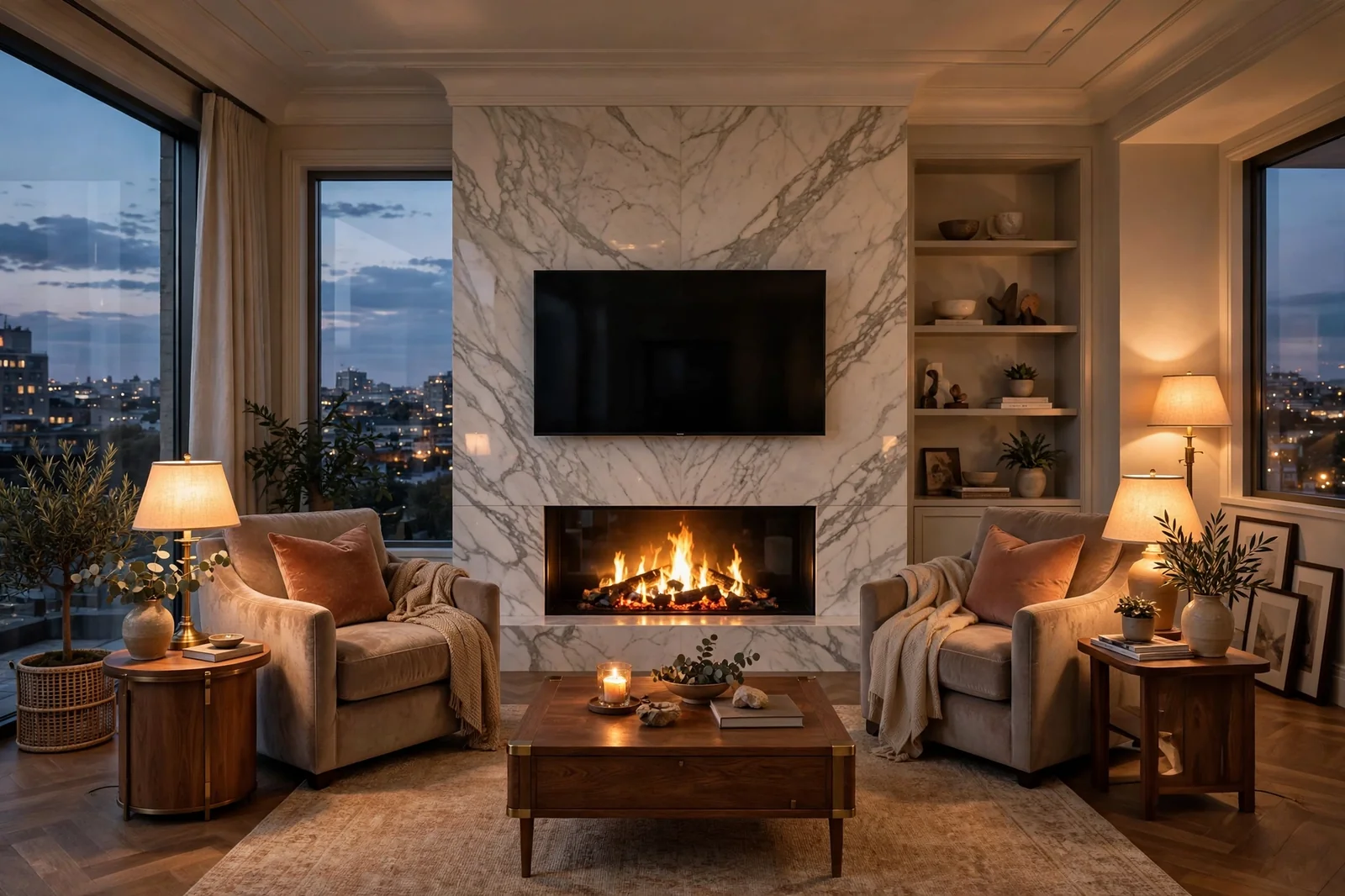
Few design pairings are as satisfying as a fireplace and a television sharing one wall. The fire brings the room its age-old comfort while the screen earns a considered place instead of dominating the space. Whether your taste runs to clean linear flames or a carved Victorian mantel, these twenty-four ideas show how to compose the two into a single, balanced focal point that feels both timeless and completely current.
The fireplace wall has always been the natural heart of the living room. Adding a television to that wall is not a compromise but an opportunity: handled with care, the two elements balance each other, the steady glow of the fire softening the technology above it. From minimalist ribbons of flame to richly carved mantels, here is how to get the pairing right in every style.
1. The Frameless Linear Fire Ribbon
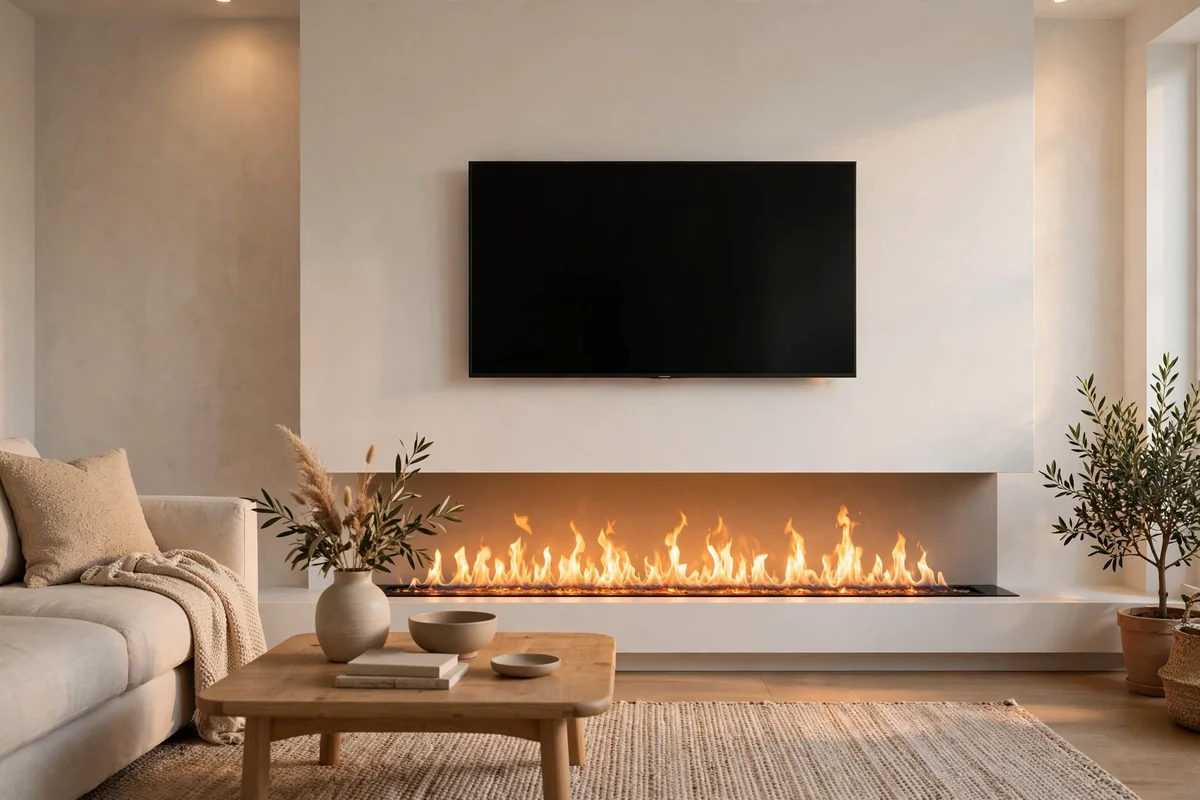
A linear fireplace stretches a single ribbon of flame across the wall, and its long, low proportion sits beautifully beneath a widescreen television. Choose a frameless electric or gas model that recesses flush into the chimney breast so nothing interrupts the clean horizontal lines. The symmetry of matching widths, fire below and screen above, gives the wall an architectural calm that suits modern rooms perfectly.
Keep the surround utterly simple: smooth plaster in warm white or pale stone, no mantel, no clutter. The flames themselves become the decoration, especially with a bed of glowing embers or glass. Because the heat output is gentle and directed forward, the television can sit closer than above a traditional fire, though you should still confirm the model’s specified clearances. It is the most serene version of this pairing.
2. Whitewashed Shiplap With a Floating Mantel
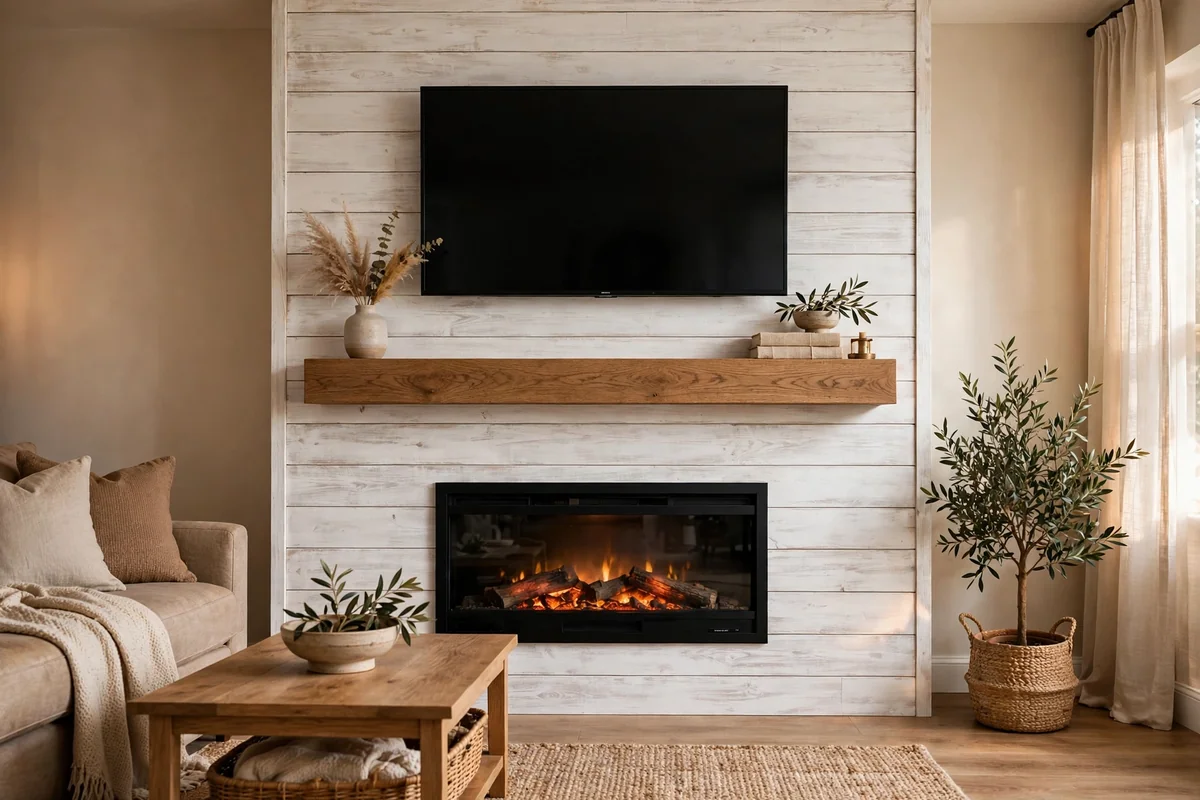
Shiplap brings a relaxed, crafted texture that flatters both firelight and screens. Clad the chimney breast in horizontal boards washed with diluted white paint so the grain ghosts through softly. A thick oak mantel floating on concealed brackets gives you the essential heat deflection above the fire and a shelf for styling, while the television mounts centred above it all.
The beauty of this look is its forgiveness: the washed boards hide the joints of a false breast, and the casual finish suits everything from coastal cottages to modern farmhouses. Dress the mantel sparingly with a small stack of books and a stoneware vase of dried stems. Keep the fire itself simple, a neat electric insert or a small stove, and the wall will feel welcoming without trying too hard.
3. Cabin Warmth With Stacked Log Alcoves
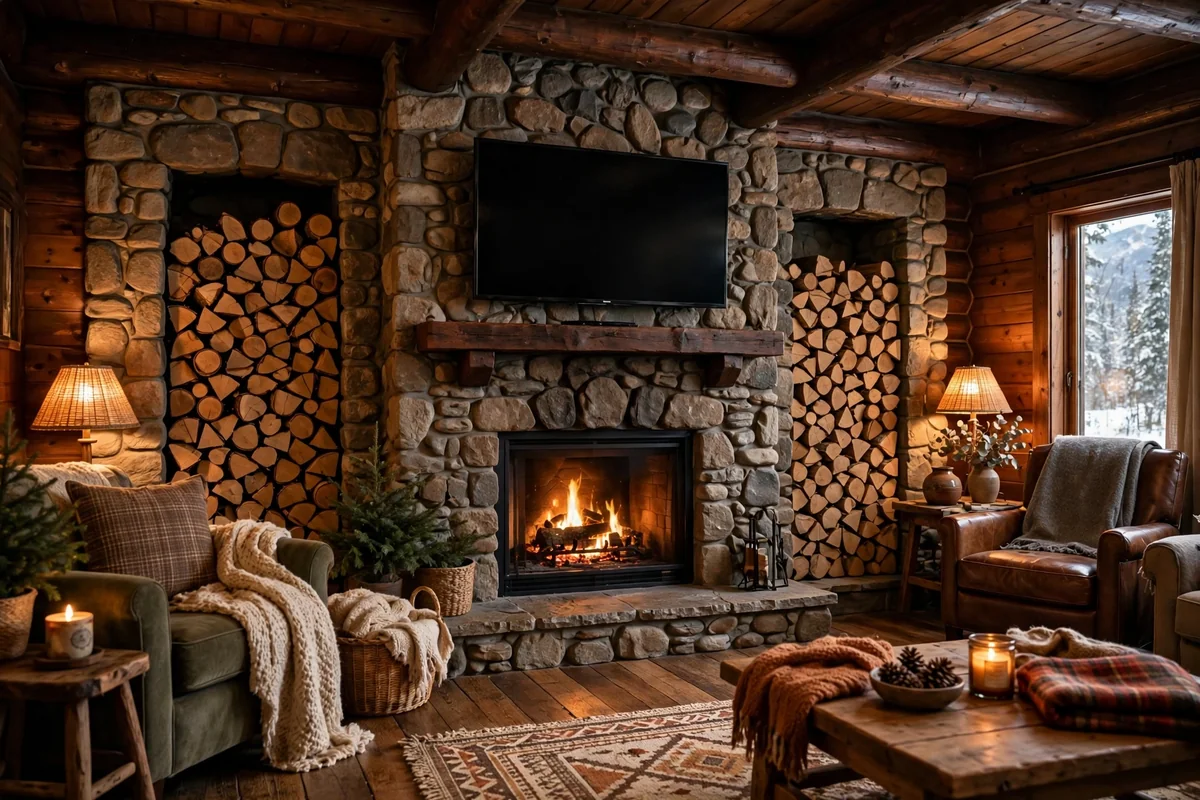
Nothing says fireside quite like walls of neatly stacked logs. Build alcoves into both sides of the chimney breast and fill them floor to ceiling with split hardwood, bark facing out for texture. The logs become a living part of the design, their ends forming a natural mosaic that frames the fire and the television above it beautifully.
This suits stone or timber-clad breasts best, where the rustic materials all speak the same language. Keep the logs dry and the alcoves ventilated, and rotate the front rows into the fire so the display stays fresh. A deep, comfortable sofa opposite, a wool throw and a low light complete the lodge feeling. It is a generous, abundant look that makes even a new-build room feel rooted.
4. Farmhouse Calm in Soft White
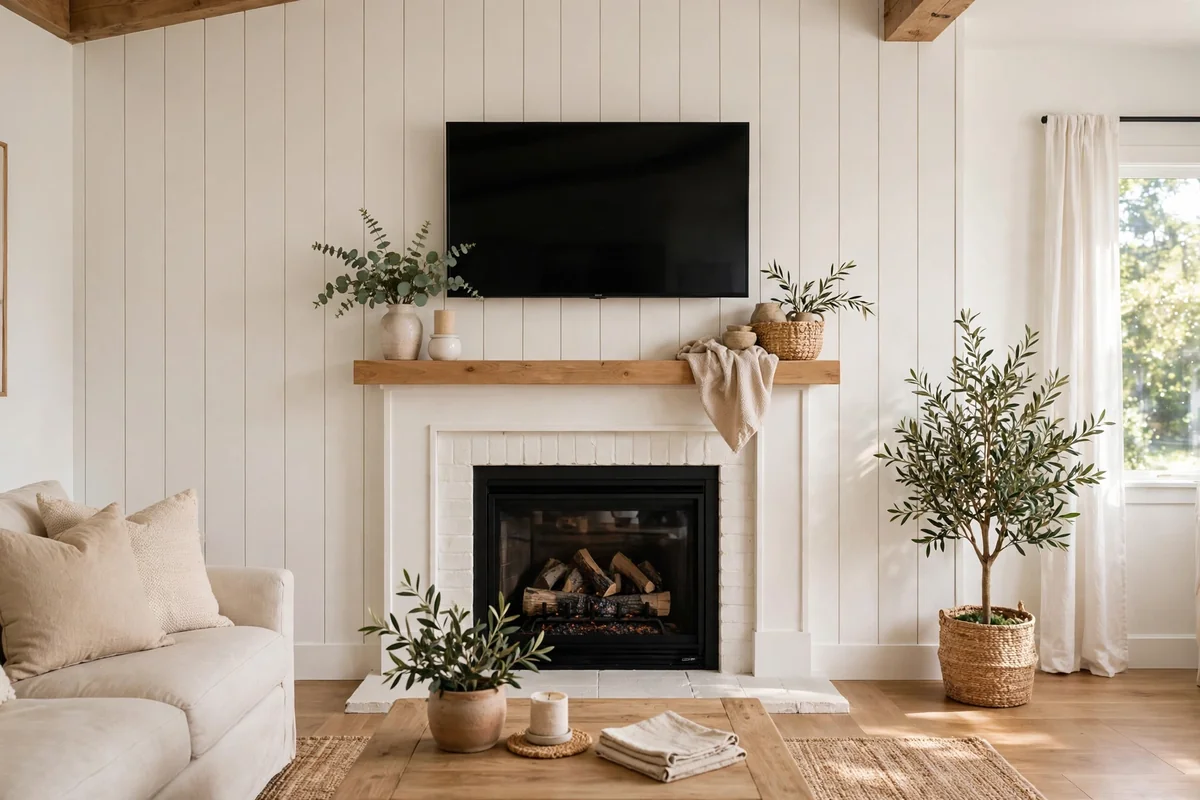
An all-white farmhouse fireplace wall is proof that simplicity carries a room. Paint the breast, mantel and alcoves in the same soft white with a matte finish so the architecture reads as one calm sculptural form. The television almost disappears against the pale ground when switched off, and a modest electric fire with a realistic flame effect provides the evening glow.
Texture keeps white from feeling sterile: a jute rug, a linen slipcovered armchair, a basket of kindling by the hearth. Style the mantel with restraint, perhaps two candlesticks and a small framed print leaning casually. The palette forgives dust and reflects every bit of daylight, making it ideal for smaller or north-facing rooms that need all the brightness they can get.
5. A Full Marble Slab Statement
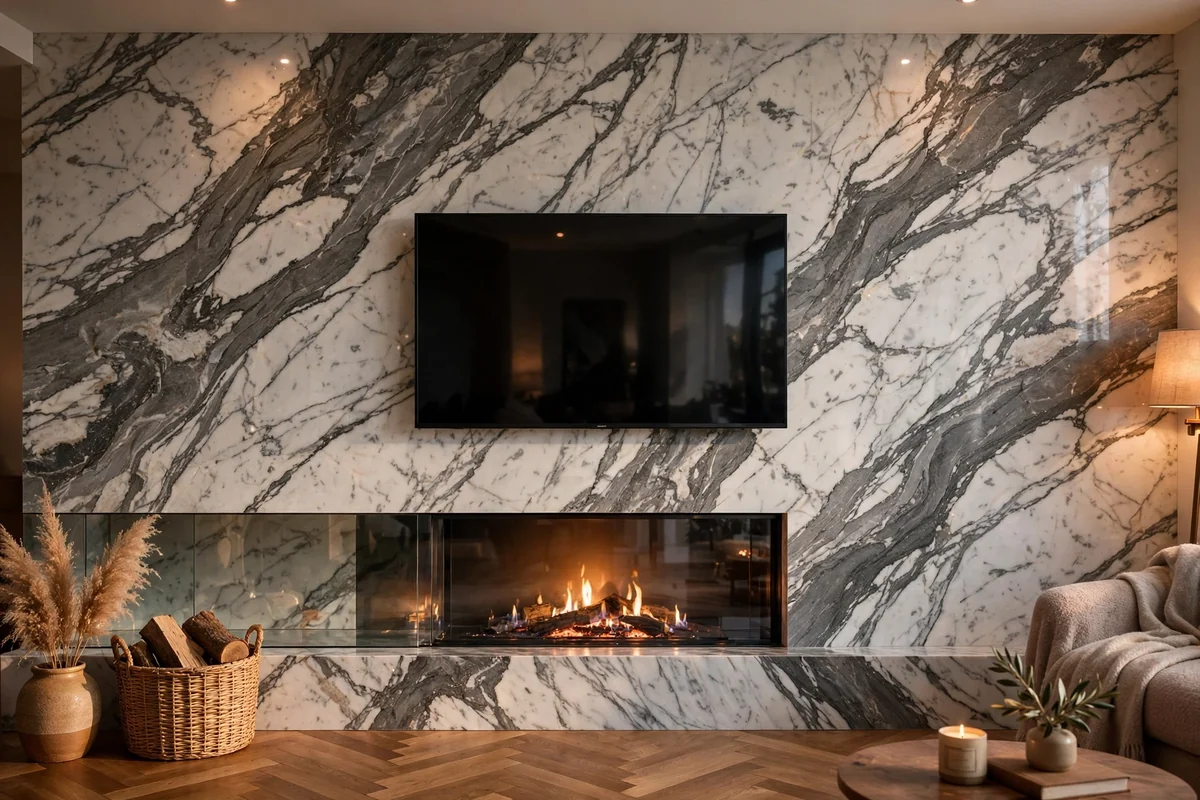
A single full-height marble slab behind the fire is unapologetically grand. Book-matched pairs, mirrored along the centre line, create a butterfly of veining that draws the eye even before the flames are lit. Choose a warm white marble with soft grey or gold movement, and keep the slabs as large as your wall allows to minimise joints.
Mount the television on fixings driven through the stone into solid backing, and choose a glass-fronted fire that echoes the slab’s polished refinement. Because marble conducts heat, confirm clearances with your installer and favour fires with modest rear heat output. Style with almost nothing: a brass lamp, one sculptural object. When the material is this beautiful, restraint is the only styling it needs.
6. Marble-Effect Porcelain for the Budget
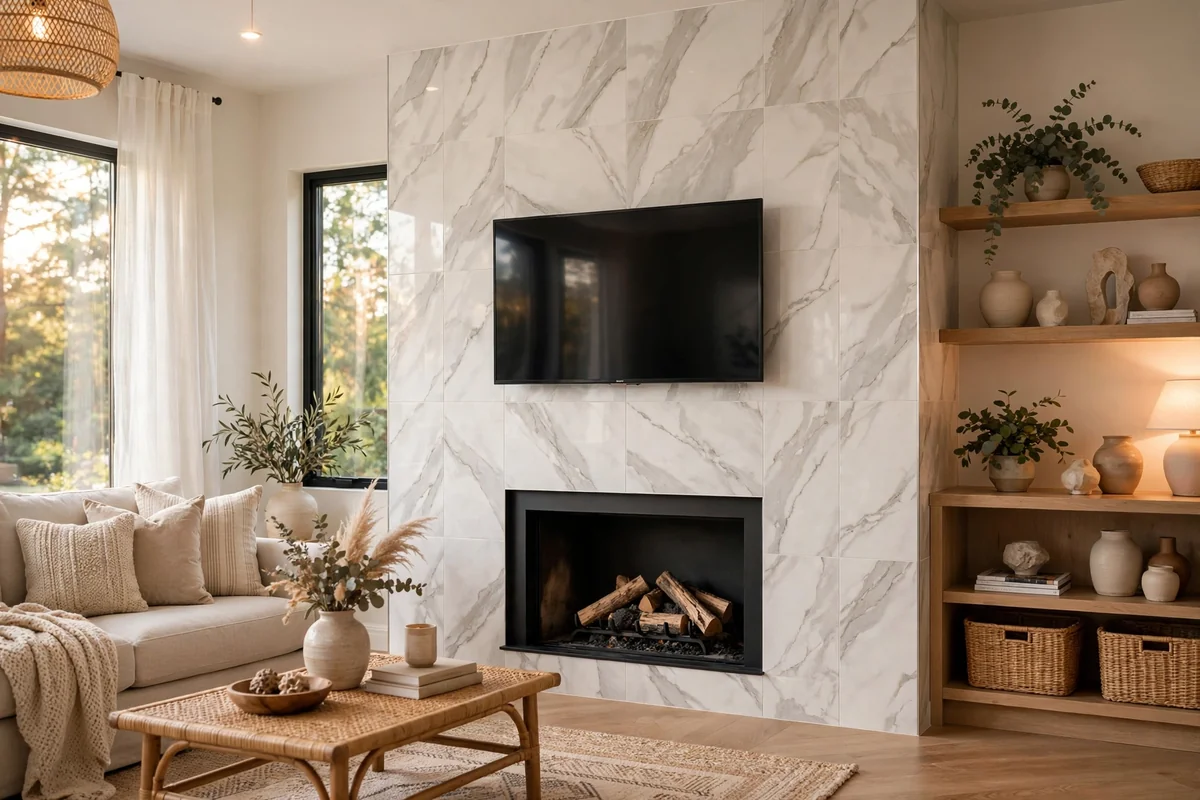
Large-format porcelain tiles printed with marble veining deliver ninety percent of the drama for a fraction of the price. Choose 60 by 120 centimetre panels in a warm white with soft grey movement, lay them with tight 2 millimetre joints, and run them floor to ceiling for a seamless, slab-like effect. Porcelain shrugs off heat and soot, making it genuinely practical around a fire.
The key to the illusion is restraint in grout colour: match it closely to the tile ground so the joints vanish. A slim black-framed electric fire and a neatly mounted television complete the composed look. Most visitors will never guess it is not stone. It is the smart-money route to a luxurious wall, achievable in a weekend by a confident tiler.
7. Midnight Black Tilework
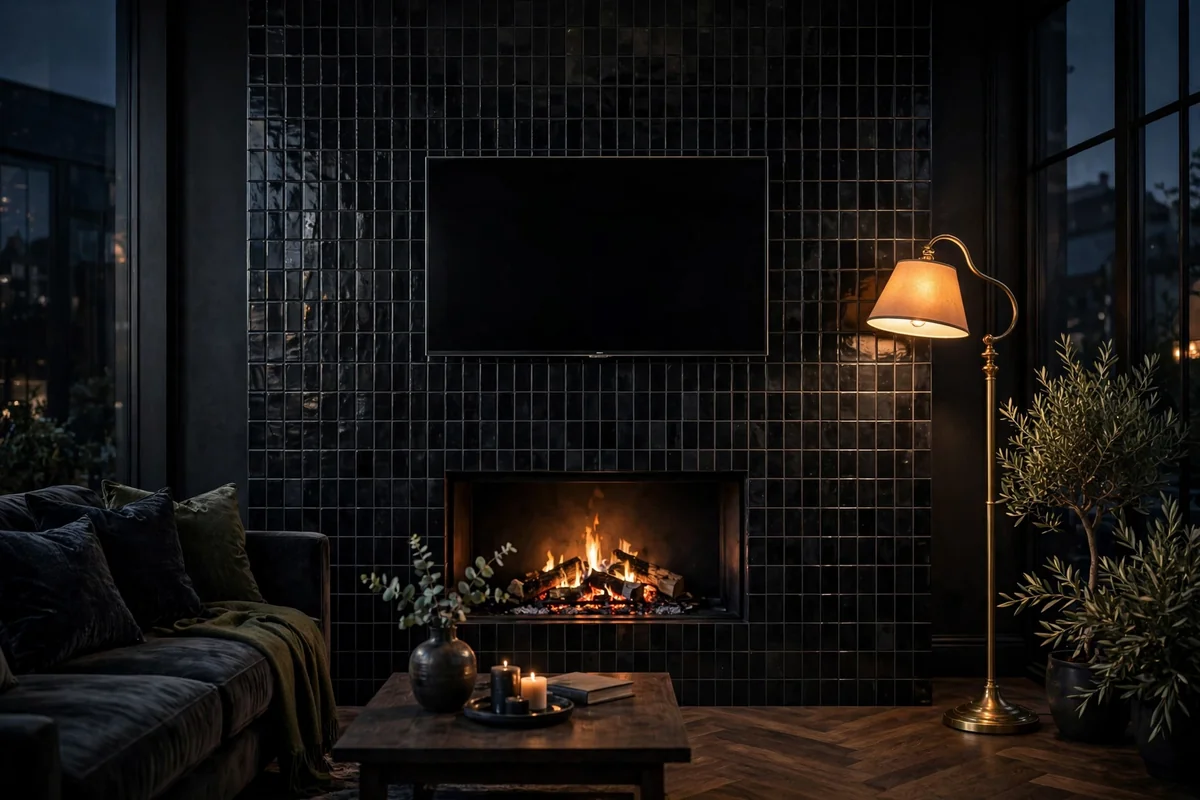
Black tiles turn a fireplace wall into something theatrical. Glossy handmade-look squares or sleek large-format panels in deep black reflect the flames like still water, doubling the firelight in the room. The television, dark when off, merges into the wall so completely that the fire becomes the undisputed star of the composition.
Balance the drama with warm companions: brass sconces, an oak floor, a cognac leather chair. Keep the ceiling and surrounding walls pale so the dark breast reads as a deliberate feature rather than a cave. Black shows dust, so choose tiles with slight variation that forgive a little, and wipe the surround with a microfibre cloth weekly. It is bold, but it is also timeless.
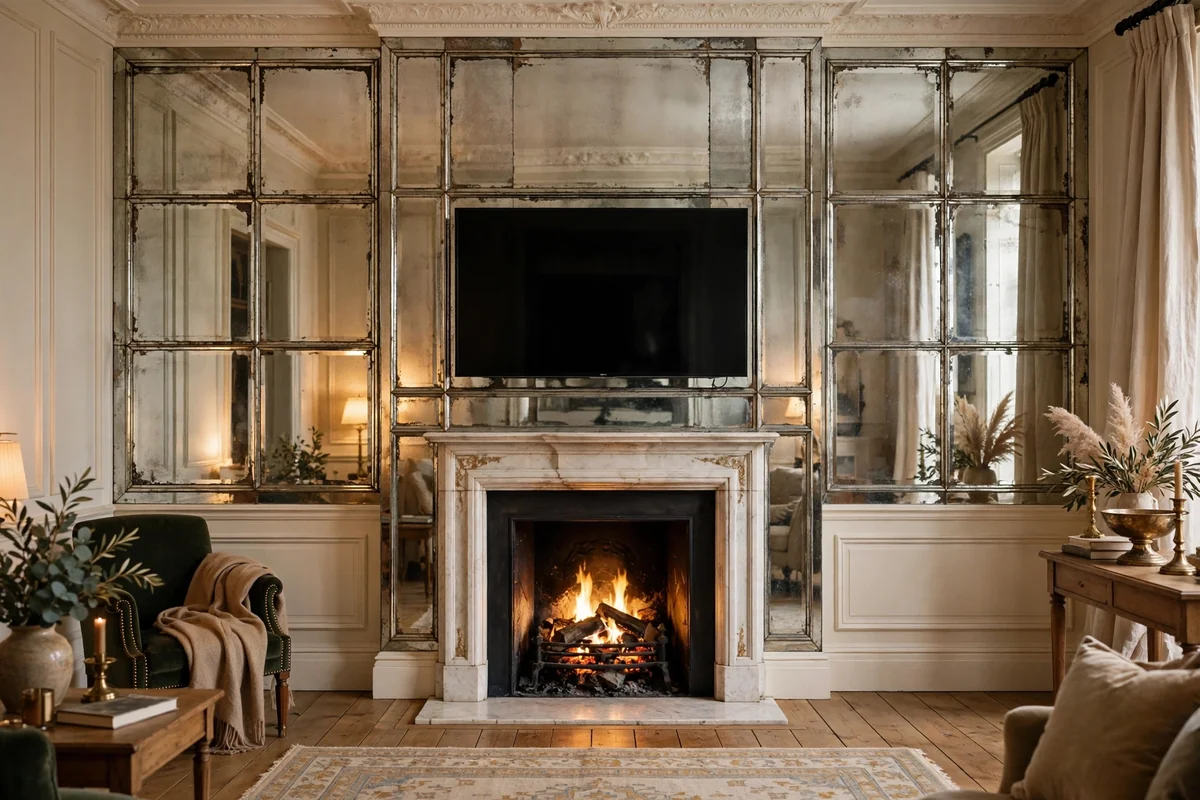
8. The Antique Mirror Surround
Antique mirror panels around a fireplace bring a soft, foxed reflection that flatters candlelight and firelight alike. The gently distressed surface bounces warmth around the room while remaining calm enough not to compete with the television. Frame the fire opening and the TV zone with the mirror, keeping the mantel line clean in timber or stone.
This is a particularly clever choice for smaller rooms, since the reflection doubles the sense of space and light. Pair it with muted, classic furnishings so the mirror stays the quiet luxury in the room rather than one shiny element among many. The television should be slim and neatly mounted, its dark glass echoing the mirror’s tones. It is an old decorator’s trick, and it still works beautifully.
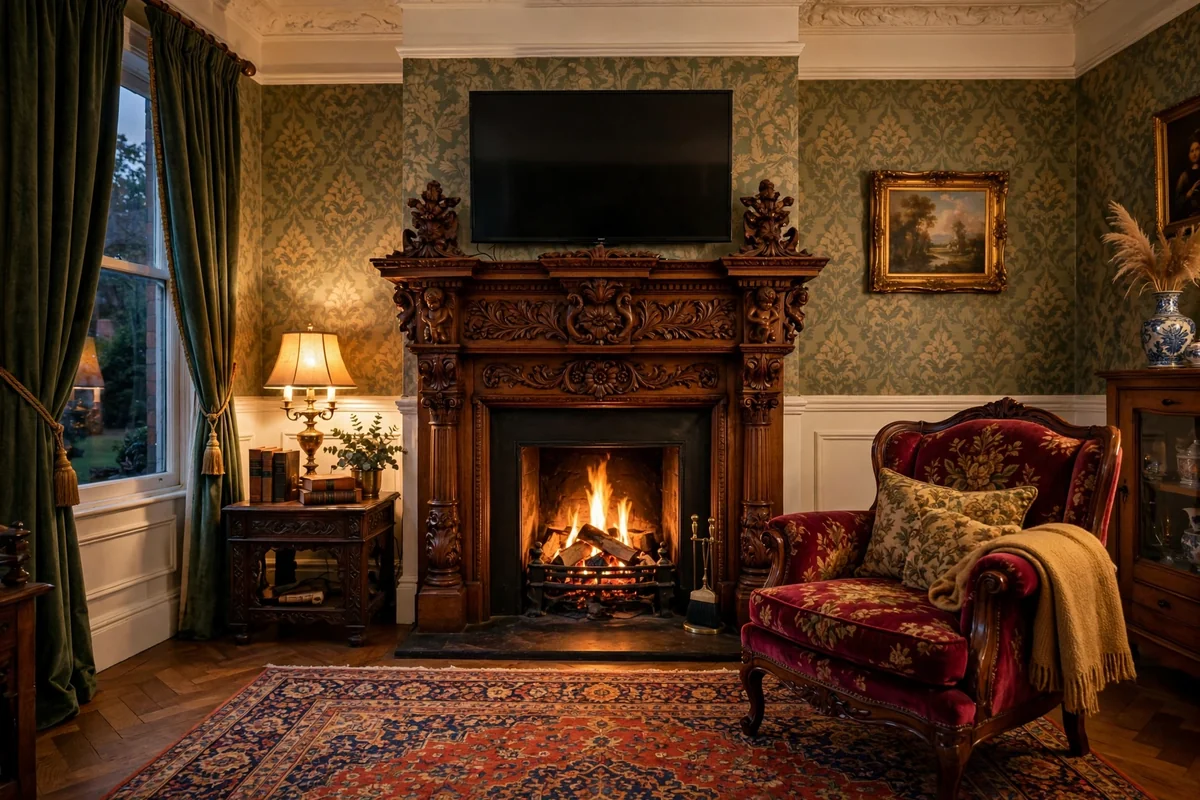
9. Victorian Grandeur With a Carved Mantel
A carved timber or cast-iron Victorian mantel brings a sense of occasion that no modern surround can match. Source an original from a salvage yard or choose a faithful reproduction, and let its detailing set the tone: corbels, tiles, a deep shelf made for styling. The television mounted above creates a delightful contrast, the very latest technology floating over a century of craftsmanship.
Respect the proportions of the period. Centre the screen on the chimney breast, keep its width narrower than the mantel shelf, and dress the shelf with candlesticks and a small clock rather than clutter. An electric fire with a coal effect sits naturally in the Victorian opening and keeps heat away from the screen. It is a look with genuine heritage soul, and it never dates.
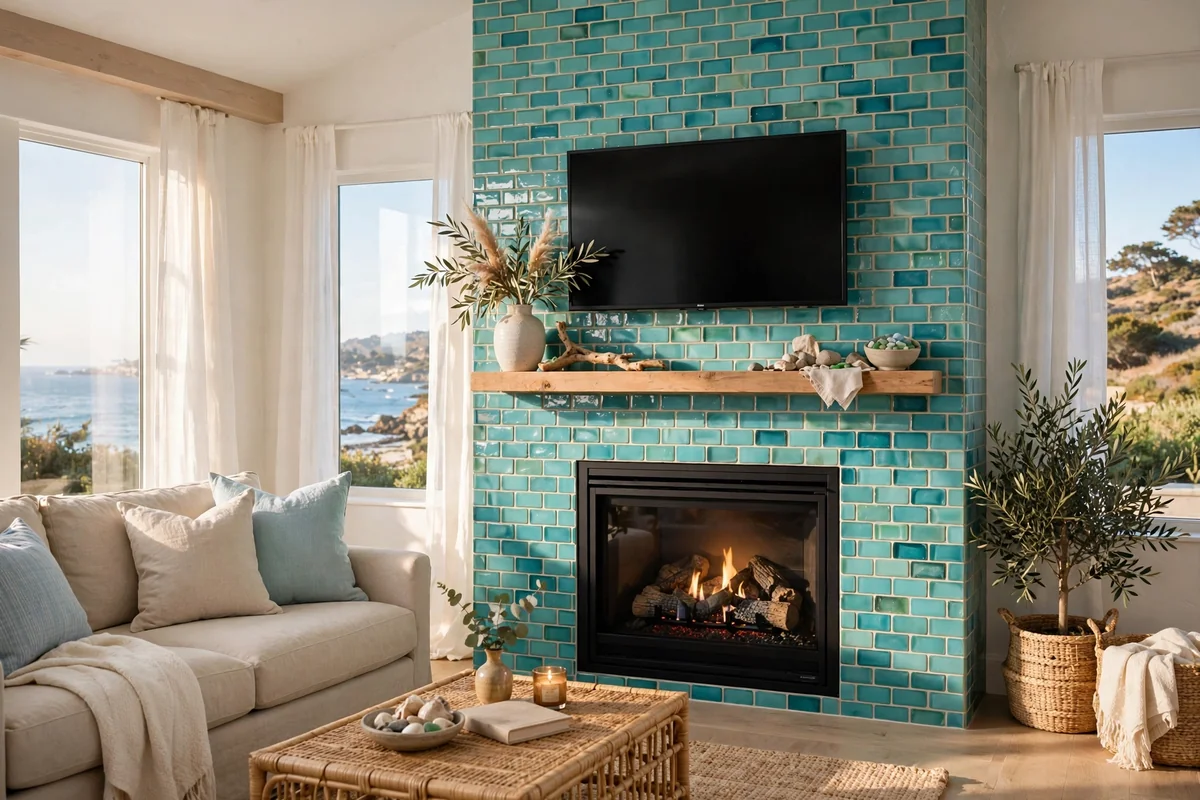
10. Coastal Ease in Sea Glass Tones
Sea glass colours bring a breath of the shore to the fireside. Tile the breast in soft turquoise, pale aqua or seafoam, choosing handmade-look tiles whose variation mimics water. The cool surround makes the orange flames look even warmer by contrast, and the television sits calmly above it all in a room that feels like a permanent holiday.
Keep the palette airy: whitewashed floors or pale oak, linen upholstery in sand and white, a few pieces of driftwood or coral stone on the mantel. The fire itself can be a simple electric model, since the look is about atmosphere rather than heat output. It is an unexpected pairing, fire and seaside, but the contrast is exactly what makes it memorable.
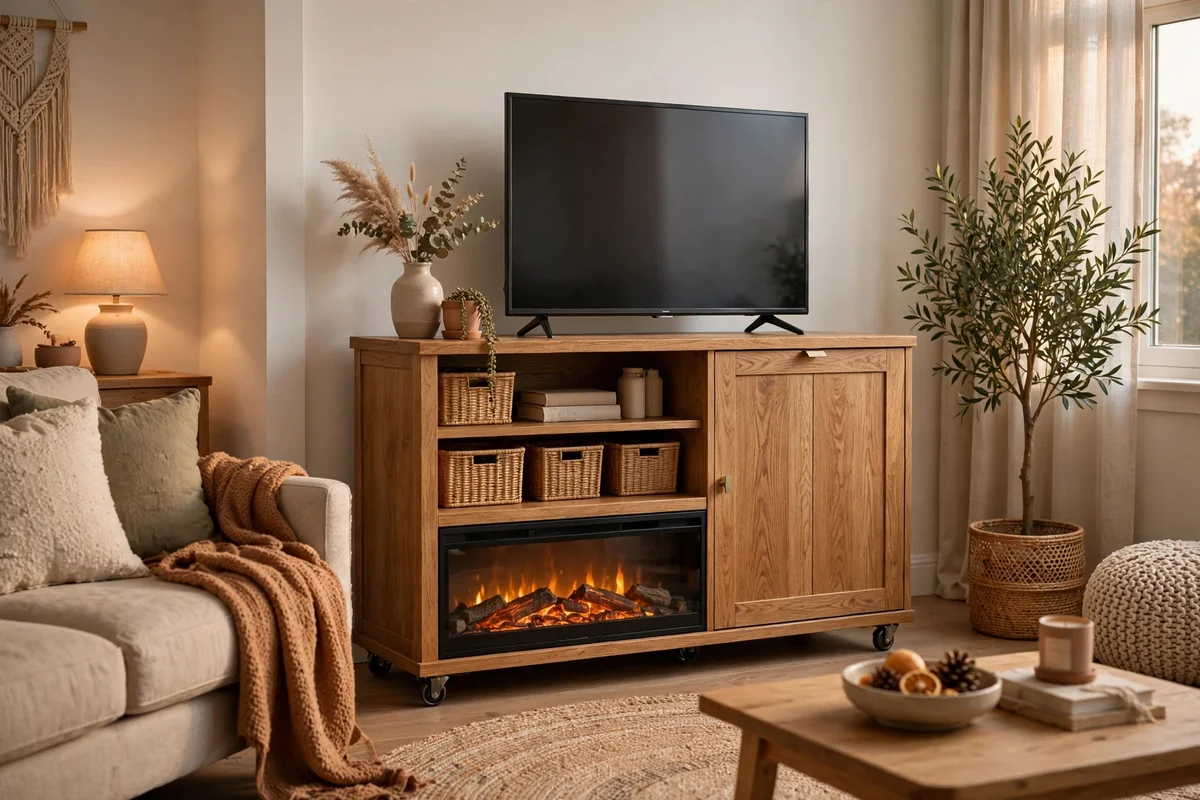
11. The Renter-Friendly Freestanding Unit
Renters deserve a proper fireside too, and a freestanding media console with a built-in electric fire delivers one with no drilling into walls. These handsome units combine a TV stand, an electric fireplace and storage in a single piece of furniture that plugs into a normal socket. Choose one in oak or painted timber that suits your existing furniture, and it looks entirely intentional.
Position it as the room’s anchor, dress the top with books and a lamp, and style around it exactly as you would a built fireplace. When moving day comes, it travels with you to the next home. Check the unit’s depth against your room: around 40 centimetres keeps it neat in smaller spaces. It is proof that a fireplace wall is about the feeling, not the masonry.
12. A Slim Media Wall for Small Rooms
Small rooms need the fireplace television pairing to be disciplined. Build a slim false breast, barely 25 centimetres deep, housing a narrow electric fire below and the television flush above. Paint it the same colour as the walls so it reads as architecture rather than furniture, and the room keeps every precious centimetre of floor space.
The styling rule for compact walls is simple: less, but better. One low console beneath the fire, one piece of art leaning on the mantel line, nothing else. Choose a fire with a realistic flame effect but modest proportions, and keep the screen size matched to your viewing distance rather than the wall. Done right, even a box room gains a proper focal point without feeling crowded.
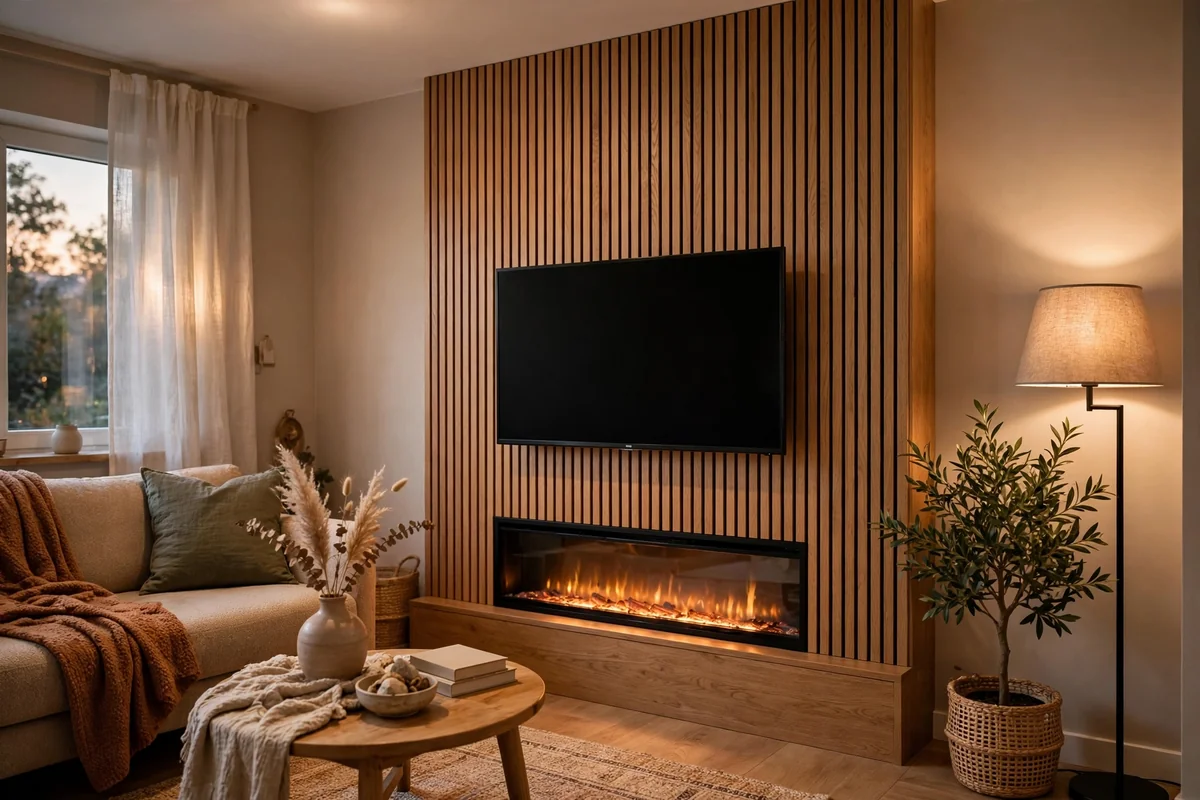
13. Bookcases Flanking the Flames
Built-in bookcases on both sides of the chimney breast turn a fireplace wall into a library wall. Construct them floor to ceiling in painted timber, with adjustable shelves for books, ceramics and a few framed prints, and fit a slim brass picture light over each bay. The symmetry frames the fire and the television beautifully, and the room gains serious storage without a single freestanding bookcase.
Style the shelves with breathing room: vary book heights, lean one frame, leave some shelves partly empty. Run power into the base of one bookcase for the media boxes and router so no cable ever crosses the floor. Paint the joinery a deep, enveloping colour like forest green or warm charcoal for a cocooning feel, or keep it pale for airiness. It is the hardest-working wall in the house.
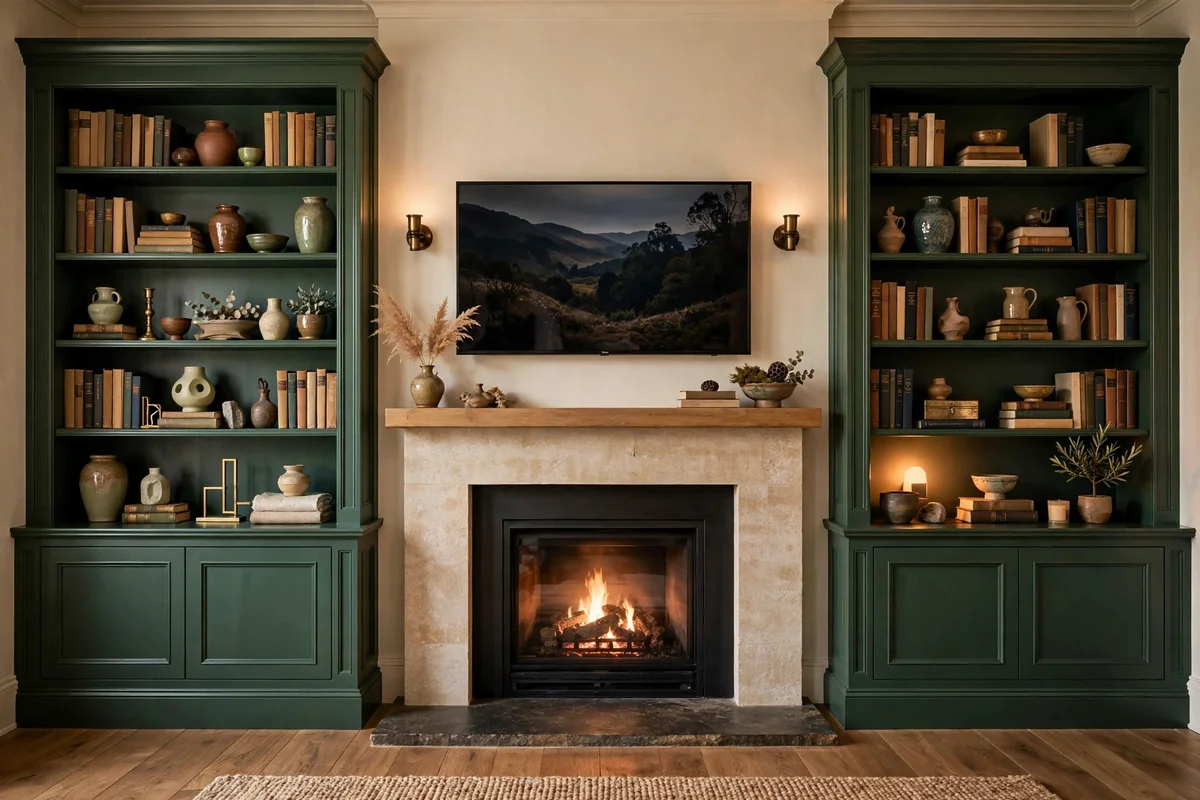
14. Tumbled Stone for Old-World Texture
Tumbled stone, with its softened edges and aged surface, gives a chimney breast the texture of a centuries-old farmhouse. Choose limestone or sandstone slips in warm, varied tones and lay them in a random ashlar pattern, letting the colour shift naturally across the wall. The television mounted above looks almost modernist against such ancient texture, a contrast that feels deliberate and rich.
Seal the stone with a breathable matte impregnator to keep soot from settling into the pits and crevices. A chunky timber mantel and an iron fire basket complete the old-world story, while the screen keeps the room firmly in the present. It is a wall with genuine gravitas, the kind that makes a new house feel as though it has always been loved.
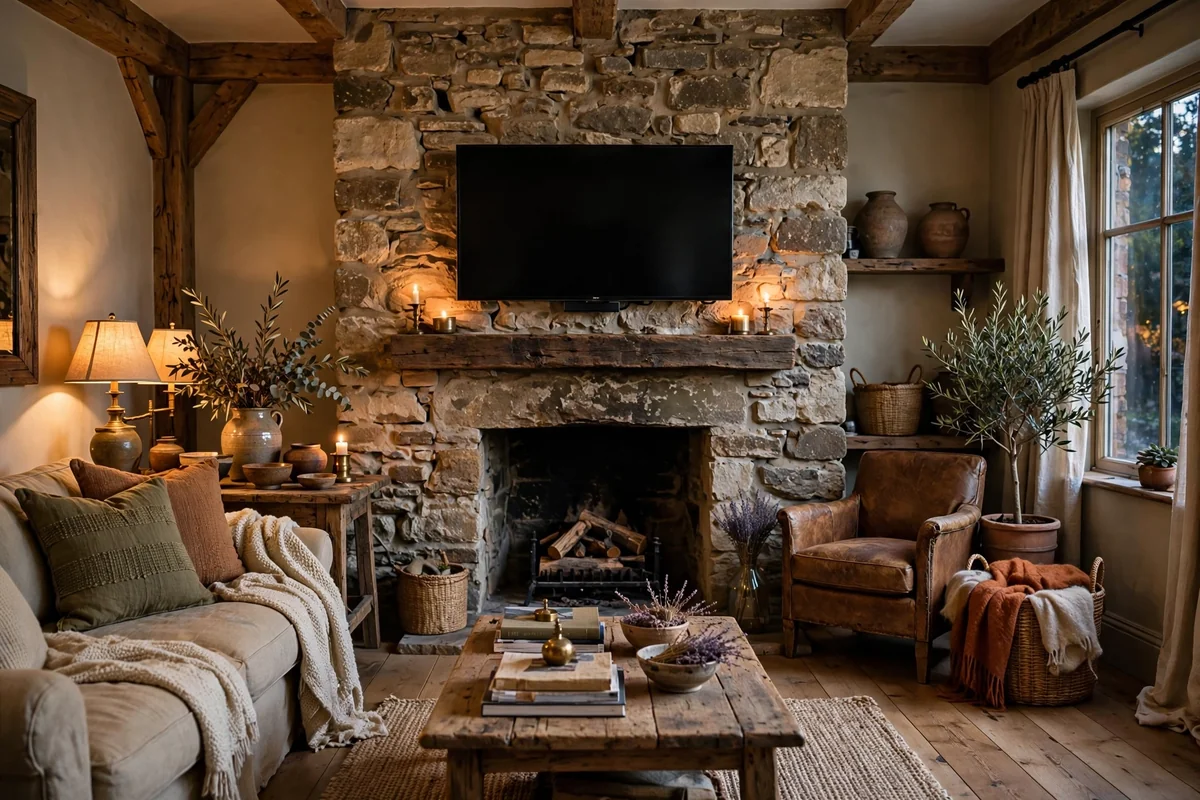
15. Herringbone Brick in Warm Clay
Herringbone brickwork brings craft and rhythm to a chimney breast in a way plain brick never will. Lay slim brick slips in the zigzag pattern from hearth to ceiling in warm clay or terracotta tones that glow under firelight. The pattern catches light and shadow all day, so the wall stays interesting even when the fire is unlit and the screen is dark.
Because the slips are thin, they suit a false breast built over a frame. Seal with a breathable matte sealer and mount the television through into the structure behind. A leather armchair and a brass floor lamp beside the breast complete a corner with real fireside charm. It is pattern with purpose: handmade, warm and quietly confident.
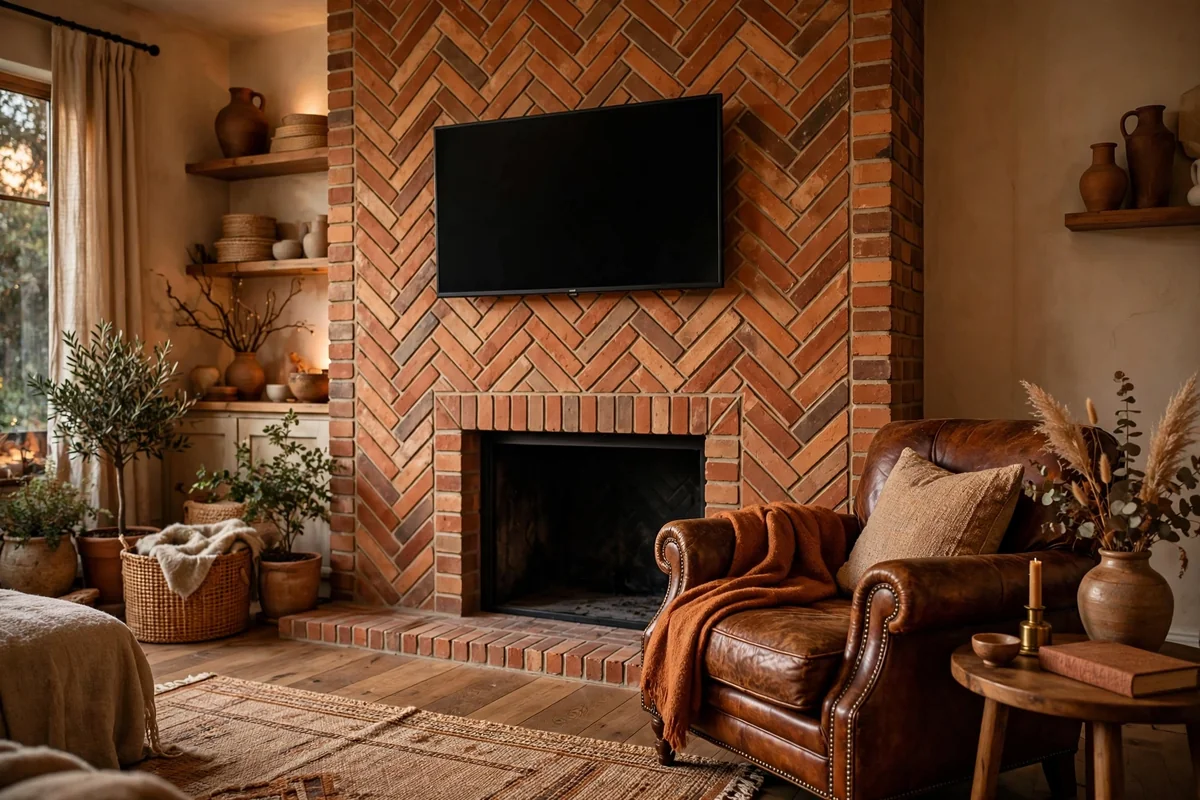
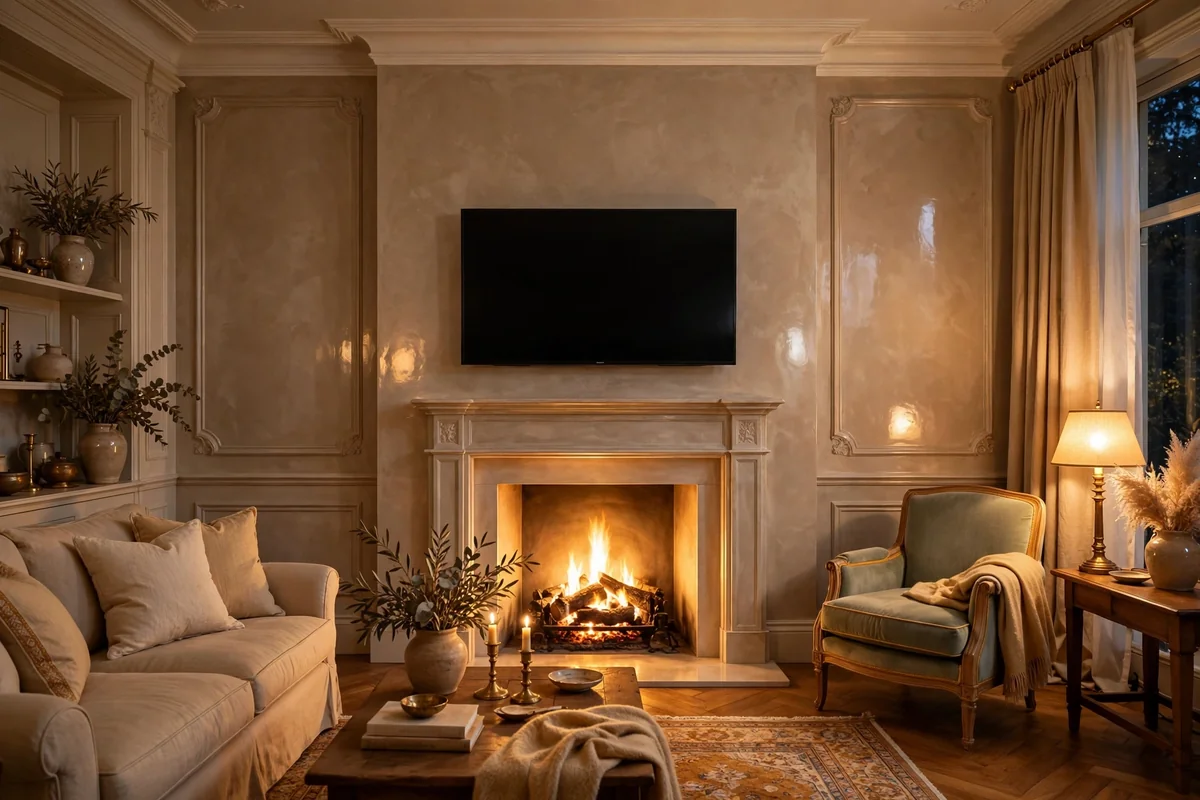
16. Polished Plaster With a Golden Glow
Polished plaster gives a chimney breast the lustre of stone with a softness that flatters firelight. Applied in thin layers and burnished to a gentle sheen, it glows amber in the evening with a depth flat paint cannot imitate. Choose a warm putty, honey or pale gold tone, and consider a subtle metallic wax in the final coat for extra candlelit shimmer.
The plaster is the decoration here, so keep everything else quiet: a simple stone hearth, a slim black fire, the television centred and unobtrusive. One stem of dried foliage in a ceramic vase is enough styling. The finish is durable and wipeable once sealed, and it ages gracefully, developing a patina that makes the wall feel more precious with every year.
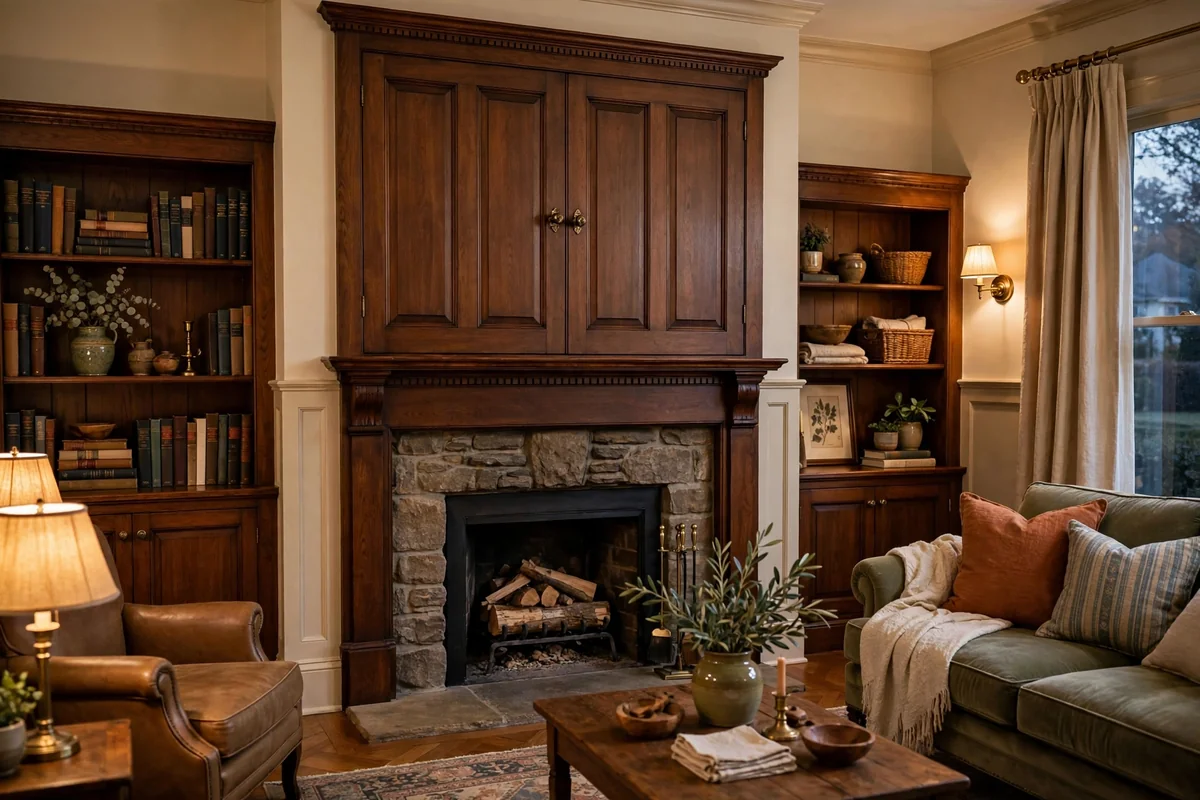
17. The Concealed Screen Behind Panelled Doors
For purists who love a screen-free sitting room, panelled doors that close over the television are the elegant answer. Build a pair of timber-panelled doors into the chimney breast above the mantel, hinged to fold back flat when viewing begins. Closed, the wall shows only the fire, the panelling and your styling: a sitting room from another century.
The joinery needs care to look right. Match the door panels to any panelling elsewhere in the room, use soft-close hinges, and leave ventilation gaps so warmth never builds up behind the closed doors. An infrared remote repeater keeps the hidden boxes controllable. It is the most traditional solution to the modern problem of the black rectangle, and it delights everyone who discovers the secret.
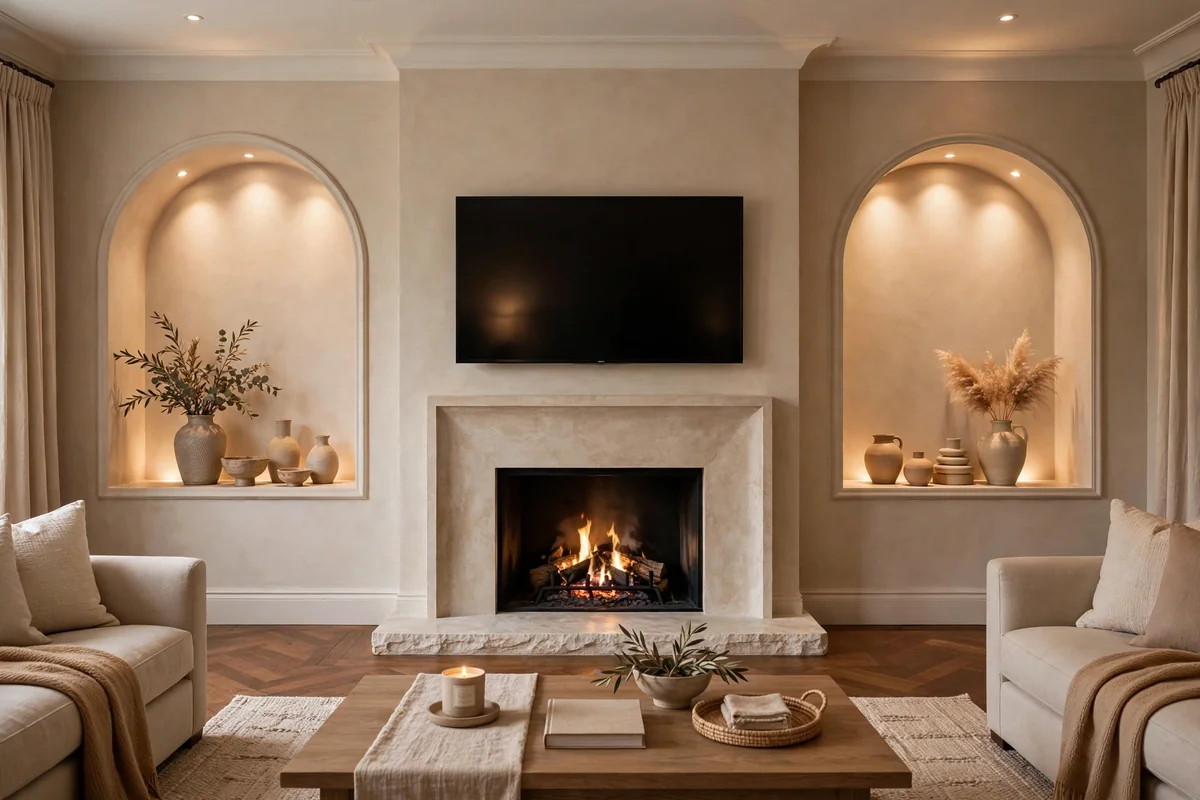
18. Arched Alcoves With Soft Downlights
Arched alcoves bring a gentle classical curve that softens the geometry of a media wall. Build an arch into each alcove beside the chimney breast, fit a warm downlight into the crown of each, and style the niches with ceramics, books or a single piece of art. The pools of light frame the fire and television like a proscenium, giving the whole wall a composed, gallery-like calm.
Arches suit both traditional and Mediterranean-inspired rooms, and they make a standard rectangular breast feel bespoke. Keep the styling inside the niches minimal and tonal so the architecture stays the hero. The downlights should be dimmable and warm, around 2700 Kelvin, so the evening mood stays golden rather than clinical. It is a small architectural gesture with an outsized effect.
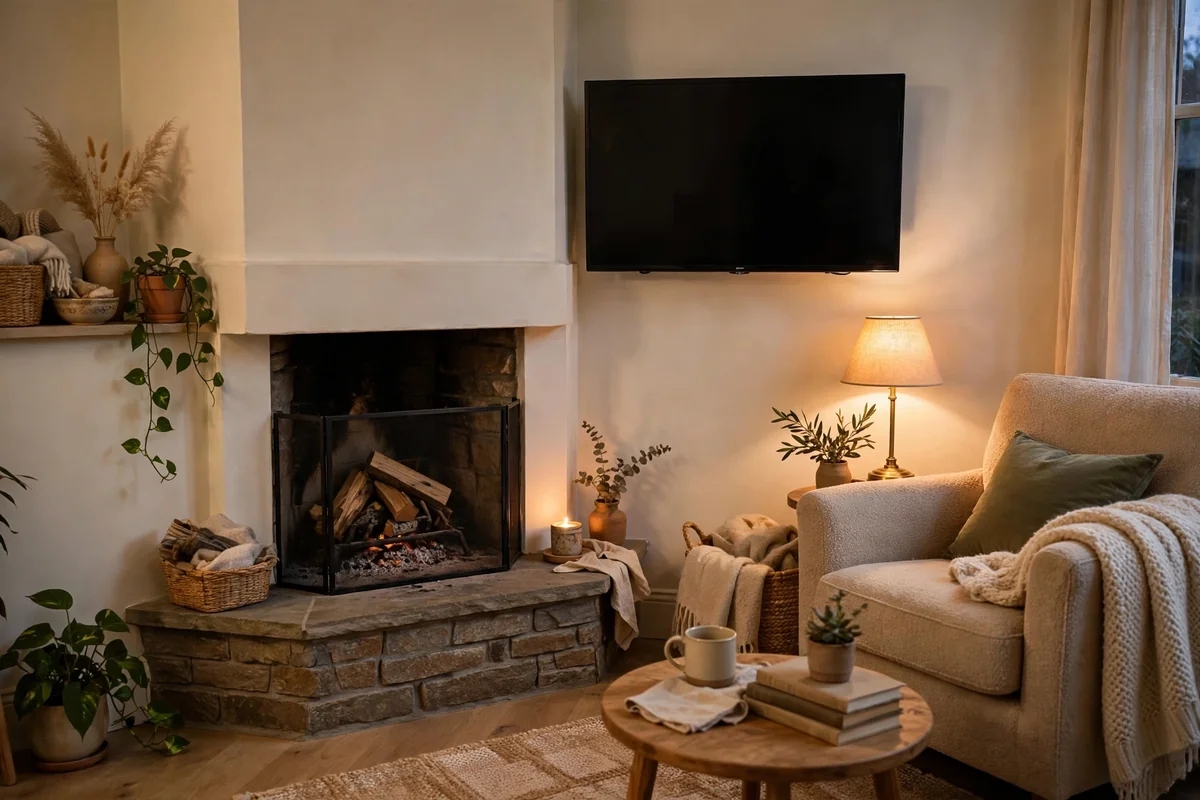
19. A Corner Hearth for Compact Rooms
When no proper chimney breast exists, a corner hearth creates a focal point from nothing. Angle a compact stove or electric fire across the corner on a shaped stone hearth, and mount the television on the longer adjoining wall so both face the main seating. The diagonal arrangement frees the remaining walls for shelving or art and suits rooms where the fireplace was never part of the original plan.
Mind clearances where the flue or the electrics meet two walls, and keep the styling light so the corner does not feel crowded. A small armchair tucked into the opposite corner with a floor lamp makes a natural reading spot that shares the fire’s warmth. It is the most forgiving layout for cottages and terraces with quirky footprints, and often the most affordable to build.
20. Deep Inglenook Seating, Modernised
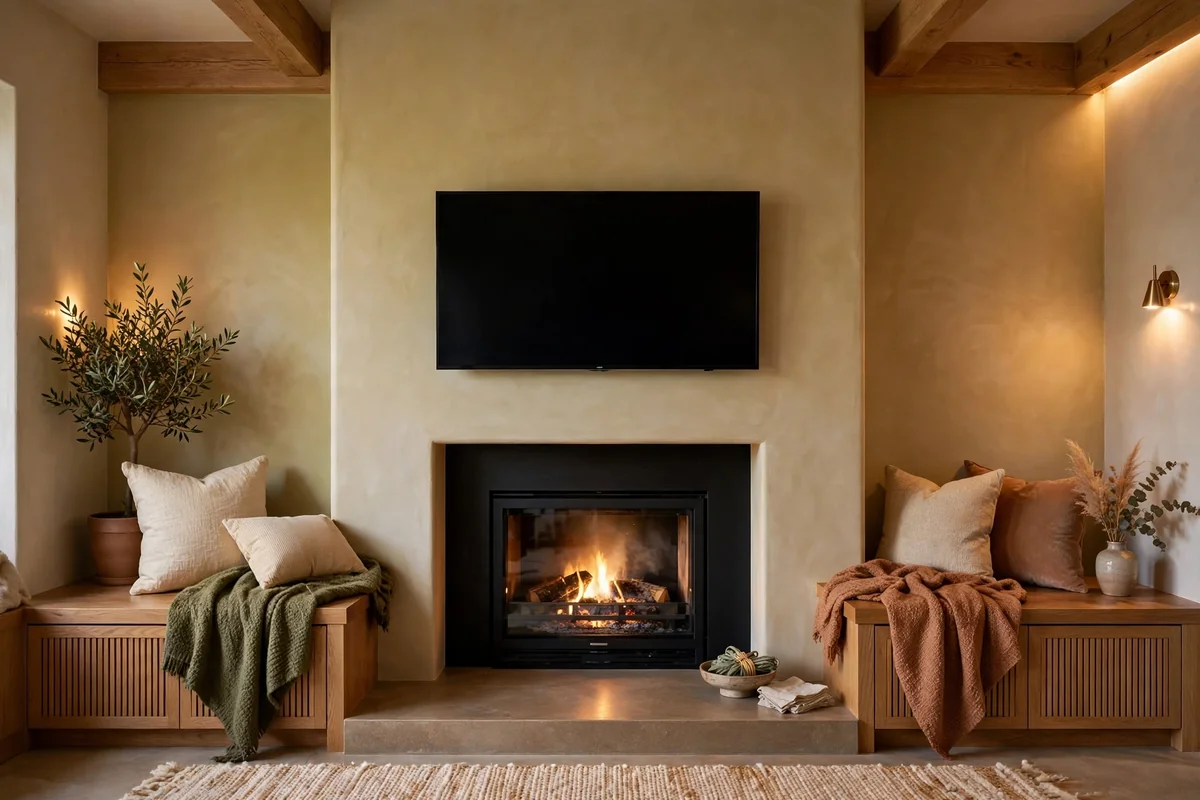
The inglenook, that deep old fireplace recess with seats tucked inside, deserves its modern revival. Build a generous recess around your fire with built-in oak benches on both sides, topped with tailored cushions in hardwearing fabric. The television mounts above the opening, and the whole composition becomes a room within a room, made for long evenings.
This needs genuine depth, at least 60 centimetres, to feel like an inglenook rather than a shallow niche. Line the inner cheeks with brick or stone, fit a small light inside the recess, and keep the bench cushions washable for fireside life. It is a generous use of space, but nothing in a home says welcome quite like a seat beside the fire, updated for the way we live now.
21. Charcoal and Brass Evening Mood
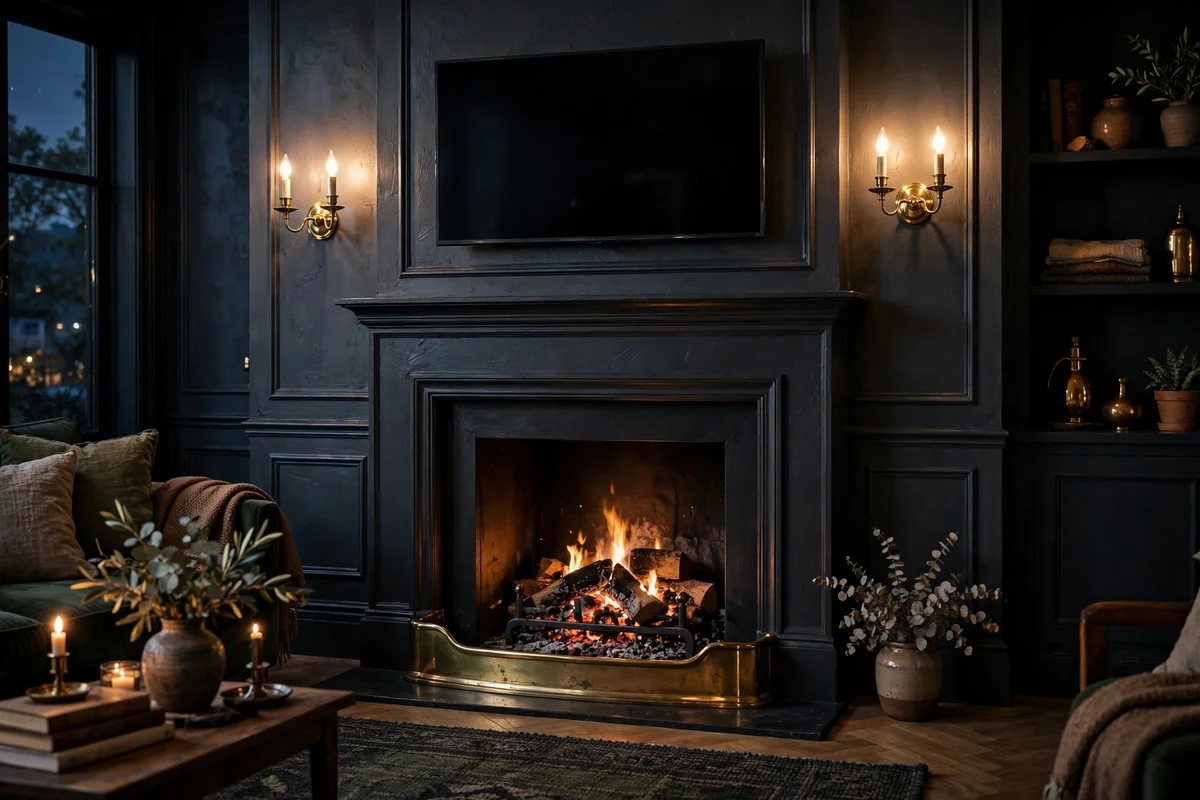
Charcoal walls make firelight look extraordinary, and brass is the metal that loves darkness most. Paint the chimney breast in a deep, warm charcoal with a matte finish, then layer brass deliberately: sconces flanking the screen, a fender at the hearth, a small tray on the mantel. Every flicker is caught and scattered softly around the room.
Keep the ceiling and far walls pale so the room does not close in, and anchor the seating with a patterned rug in warm tones. The television should be slim and close-mounted so it reads as a dark picture rather than a gadget. In the evening, with the sconces low and the fire lit, this wall feels like the snug of a fine old inn. It is mood as a design material.
22. A Raised Hearth for a Cleaner Line
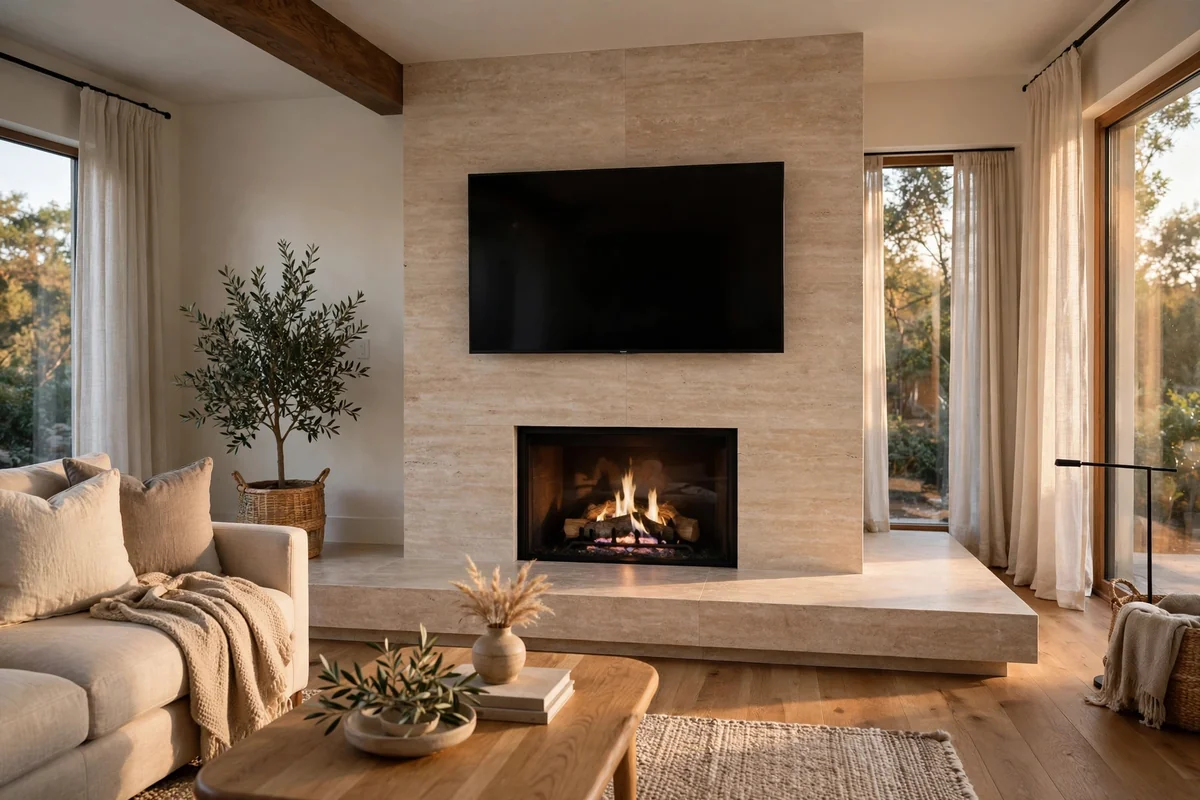
Raising the fire onto a stone platform changes the whole posture of the wall. A hearth of honed slate or limestone, 30 to 40 centimetres high, lifts the flames closer to seated eye level and creates a long, clean horizontal line that the television echoes above. The platform also offers a generous ledge for a row of logs or a line of candles.
Keep the breast above simple so the strong horizontal reads clearly: smooth plaster, no fussy mantel, the screen centred. The raised hearth needs a proper foundation, so confirm the floor can carry the weight or build it as a hollow form clad in stone. It is a quietly architectural move that makes even a modest fire feel designed rather than placed.
23. Limewashed Brick for Softness
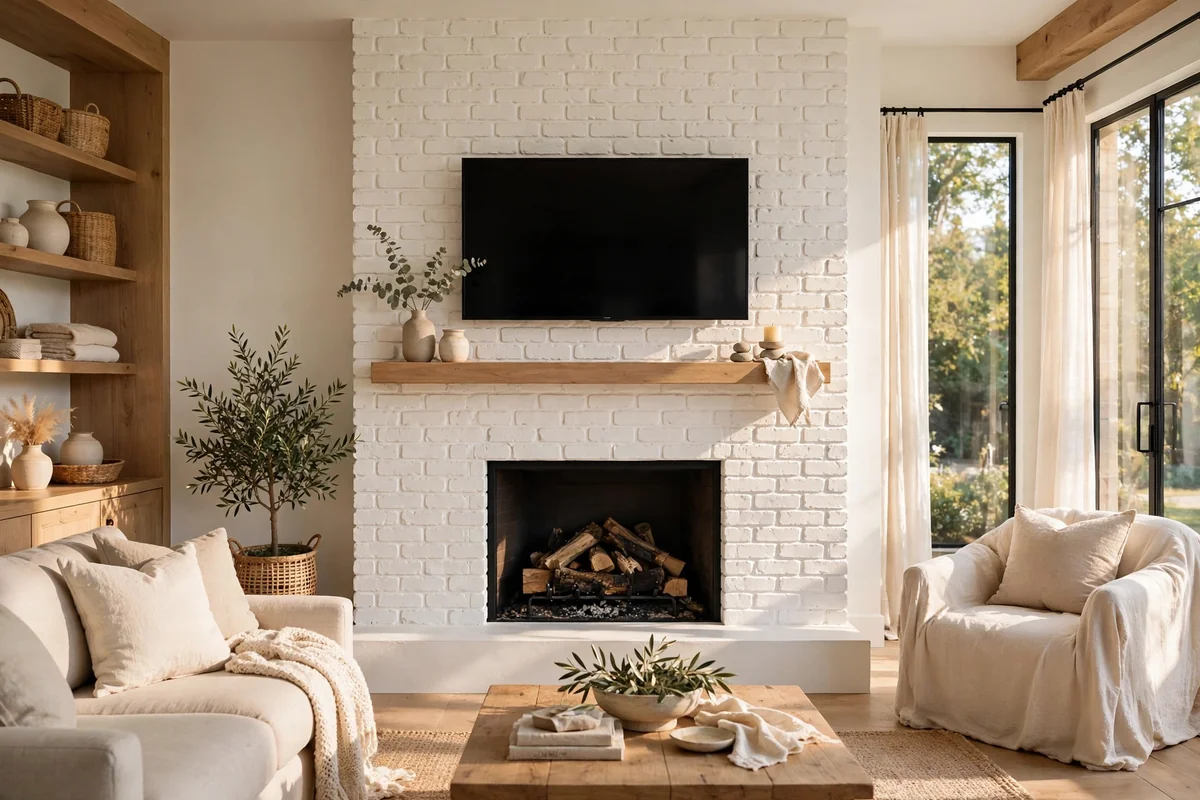
Limewash over brick gives you the texture of masonry with the softness of plaster. Brush diluted limewash over the brick slips in loose, cloudy strokes, letting the mortar joints and brick variation ghost through. The result is a chimney breast with depth and history that still feels light enough for a small or north-facing room.
Because limewash is mineral based, it sits happily in the gentle warmth around a properly installed fire, though it should stay clear of the manufacturer’s exclusion zone. Pair with pale oak floors, simple linen upholstery and one warm lamp. The television nearly vanishes against the soft ground when off. It is the gentlest way to have a brick fireplace, and it flatters every style of furnishing around it.
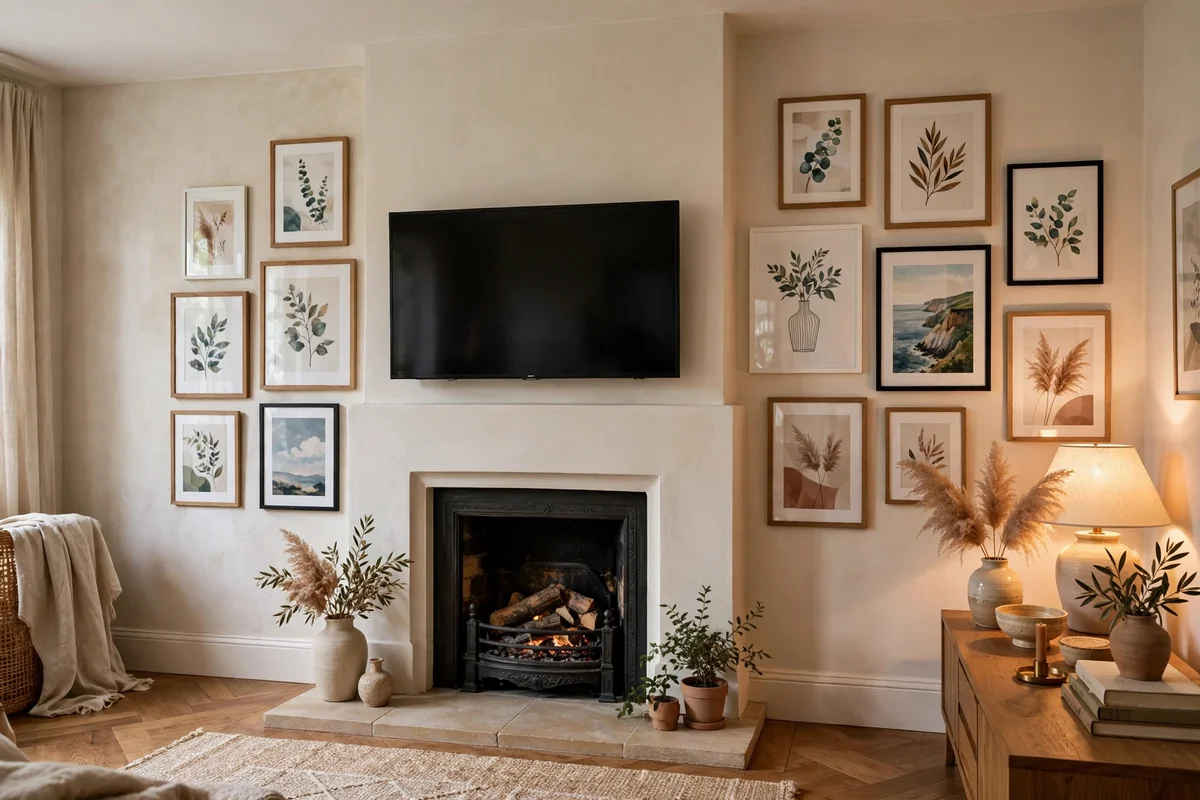
24. The Gallery Wall That Shares the Chimney Breast
A chimney breast is prime hanging space, and sharing it between art and screen makes the television feel like part of a collection rather than an intrusion. Arrange framed prints, small landscapes and family pieces in a relaxed salon hang on the breast around the television, keeping frames tonal: black, oak and brass work beautifully together.
The trick is treating the screen as one more frame. Choose frames of similar depth, keep the spacing consistent, and let the television’s dark rectangle anchor the composition. When the screen is off, the wall reads as a proper gallery; when it is on, the art around it softens the technology. It is the most personal version of the fireplace TV wall, and the most charming.
One Wall, Two Comforts, Endless Character
A fireplace TV wall works when neither element shouts over the other. Give the fire good materials and honest proportions, give the screen a worthy frame or a discreet mount, and let the wall between them breathe. Whichever of these twenty-four ideas speaks to your home, build it with patience and proper clearances, and your living room will gain a focal point the whole family gathers around in every season.
Frequently Asked Questions
Is it safe to mount a TV above a fireplace?
Yes, when clearances are respected. Most heat from a modern fire travels forward into the room, and a projecting mantel deflects rising warmth away from the wall above. Follow the manufacturer’s minimum distances for both the fire and the screen, never mount directly above an open fire without a proper mantel or heat deflector, and test the wall temperature with an infrared thermometer during the first few uses.
How high should the TV sit above the fireplace?
Comfort matters more than symmetry. Aim for the centre of the screen 105 to 120 centimetres from the floor when viewed from your main sofa, which usually means a slim gap of 15 to 30 centimetres above the mantel shelf. If the mantel forces the screen uncomfortably high, consider a pull-down TV mount that brings the picture to eye level for film nights.
Should I choose electric or gas for a TV wall fireplace?
Electric fires are the simplest partner for a television: no flue, no real heat on the wall, and many models are designed to recess neatly beneath a screen. Gas gives a more convincing flame and real warmth but needs professional installation and ventilation. For a purely decorative glow above which a TV sits close, electric is the low-risk, renter-friendly choice.
How do I hide all the cables in a fireplace media wall?
Plan cable routes before the wall is finished. Run HDMI and power inside the studwork or a false chimney breast down to a brush-plate outlet hidden in an alcove cupboard or behind a console. Keep mains and low-voltage runs separated, and use a single soundbar under the screen to eliminate speaker wire. Paintable trunking tucked into a mantel’s shadow line works when the wall is already built.
What fireplace works best in a small living room?
A slim wall-hung electric fire or a narrow linear inset gives the glow without stealing floor space. Mount the TV directly above on the same vertical axis so the composition stays compact, and keep the surround pale to reflect light. Avoid deep hearths and bulky mantels in tight rooms; a flush, frameless design keeps the wall feeling open while still delivering the fireside atmosphere.