Living Room
24 Lantern Decor Ideas That Glow All Night and Make Every Corner Feel Alive
By Anna Wells · · 22 min read
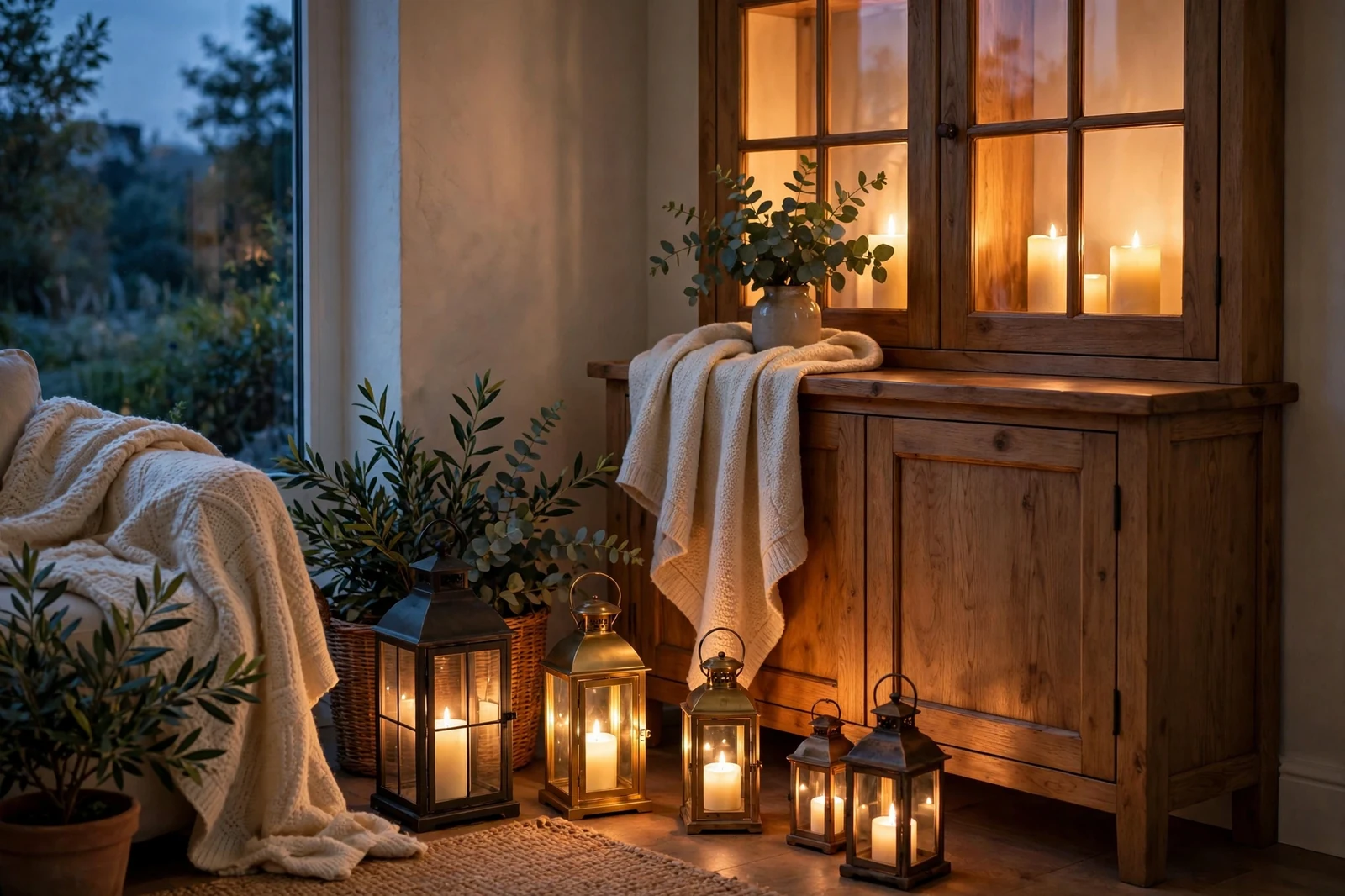
Twenty-four lantern styling ideas that carry gentle light from dusk to bedtime, indoors and out, with sizes, timers and safety rules.
There is a particular hush that falls over a house at dusk, when the daylight thins and every room asks for a little warmth. A lantern answered that call long before electric light, and it still does the job better than most modern fittings: a small, honest flame of light that makes corners feel held and hallways feel safe.
This is not about one lantern on a shelf. These twenty-four ideas carry lantern light through the whole home, from the mantel to the garden path, from the dining table to the stairs. You will find pairs that frame a doorway, clusters that glow on a tray, and hanging lanterns that turn a branch into a chandelier.
Every idea comes with practical detail: heights in centimetres, timer settings, which materials suit which rooms, and the safety rules that keep fabric and flame apart. Most of the looks cost less than a takeaway dinner, and all of them run on flameless candles, fairy lights or solar caps, so the glow lasts from dusk to bedtime without worry.
Start with the easiest one, the tray trio, and let the rest follow one evening at a time.
1. Line Three Brass Lanterns of Rising Heights Along the Mantel
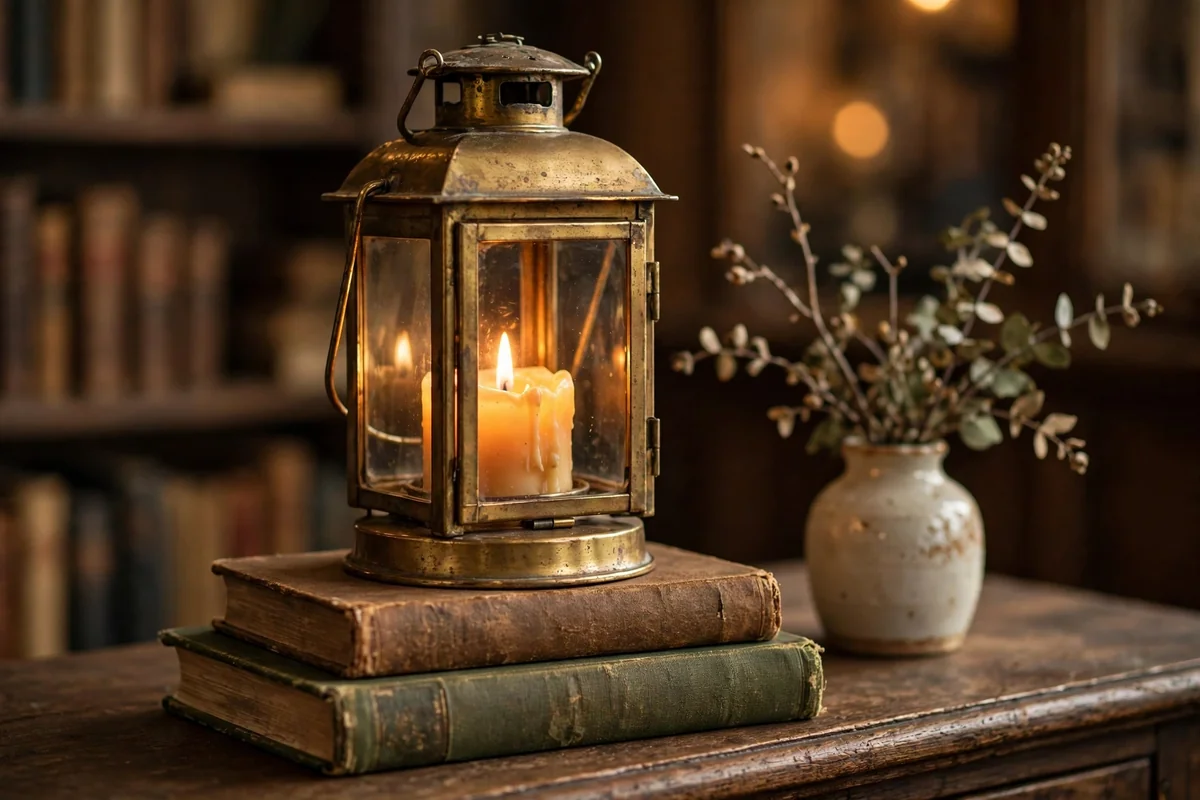
A mantel between 150 and 200 cm wide takes three lanterns comfortably when the tallest sits at the centre or one end and the others step down in height. Choose brass lanterns of roughly 20, 28 and 36 cm so the rhythm reads as a gentle staircase rather than a jumble. Keep at least 15 cm of clear wood between each lantern and the mantel edge, and face the glass panels forward so the light spills into the room.
Inside each lantern place a flameless pillar candle with a six-hour timer set to switch on at dusk, so the row lights itself every evening without you lifting a finger. Brass pairs well with dried eucalyptus or a small garland of olive leaves woven between the lanterns, and the warm metal echoes curtain rods and picture frames. The mistake to avoid is lining up three lanterns of identical height, which reads as a shop shelf rather than a styled mantel.
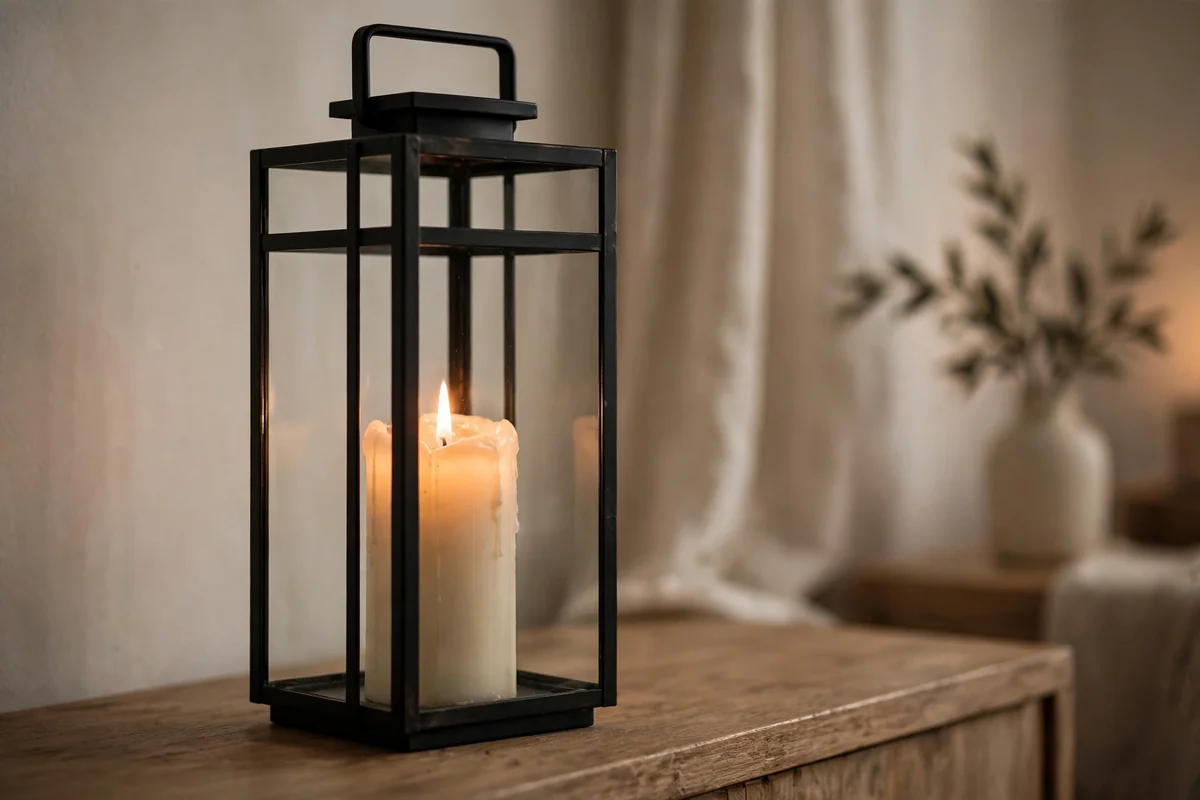
2. Set a Pair of Black Metal Lanterns to Flank the Front Door
Two matching lanterns of 40 to 55 cm placed on either side of the door give the entrance a balanced, welcoming look after dark. Sit them on low stone or brick pillars, or directly on the step if the landing is wide enough, leaving at least 60 cm of clear walkway between them. Black metal suits most door colours, from sage green to navy and classic red, and the dark frame makes the candlelight inside glow brighter by contrast.
Use flameless pillar candles with timers inside outdoor lanterns so they light at dusk and switch off around midnight, saving battery life. Choose lanterns with a hinged door and a weighted base if your porch catches the wind, and wipe the glass with a damp cloth every fortnight to keep dust from dimming the glow. The common mistake is choosing lanterns under 30 cm, which disappear beside a full-size door and make the entrance look underdressed.
3. Hang a Cluster of Small Lanterns From a Sturdy Porch Hook
A trio of small lanterns hung at three different heights from one ceiling hook turns a bare porch corner into a glowing focal point. Fix a hook rated for at least 10 kg into a joist or solid beam, then hang the lanterns on short chains so the lowest sits about 190 cm from the floor and none block the walkway. Small lanterns of 12 to 18 cm work best, since larger ones overwhelm a narrow porch and swing more in the breeze.
Fill each lantern with a battery tealight or a short string of warm fairy lights so the cluster flickers gently without any real flame near the ceiling. Hang them close enough that the glass almost touches, about 10 to 15 cm apart, so they read as one cloud of light. The mistake to avoid is hanging them over the main door swing, where an opening door will knock them daily; choose a corner instead, and check the fixings once a season.
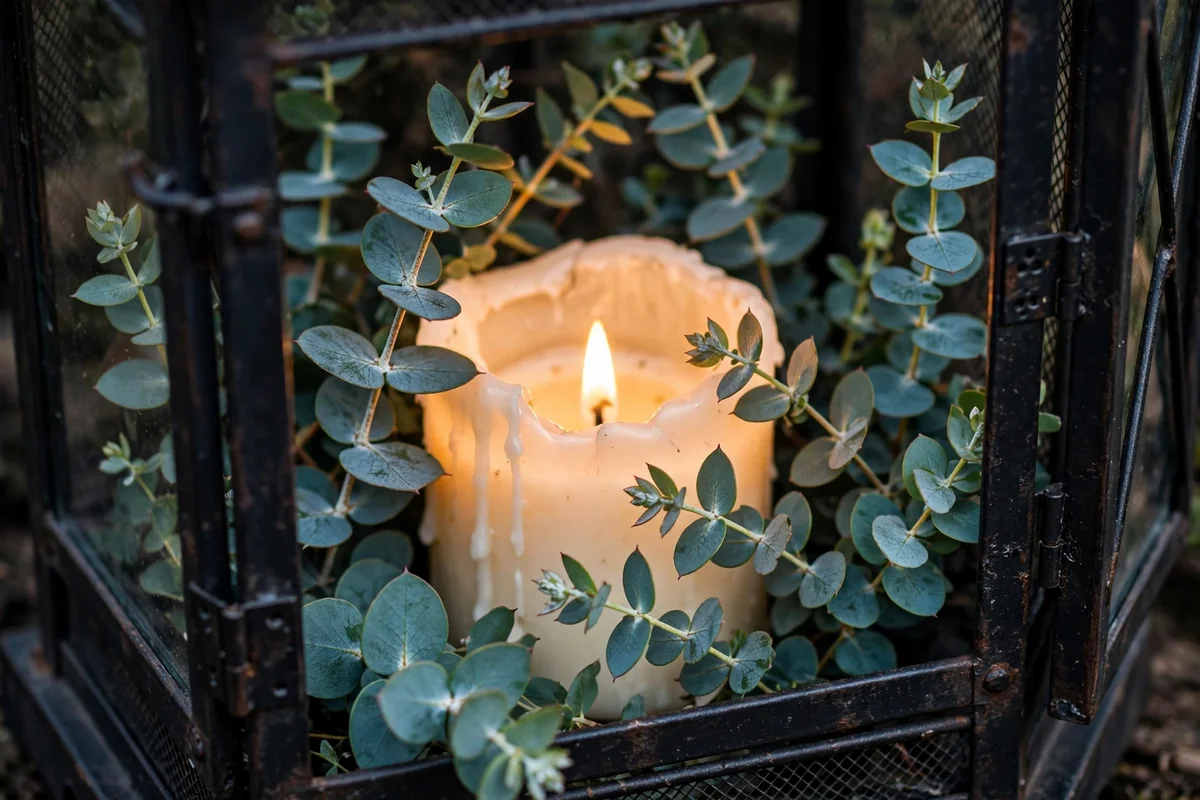
4. Build a Lantern Centrepiece on the Dining Table With Fresh Greenery
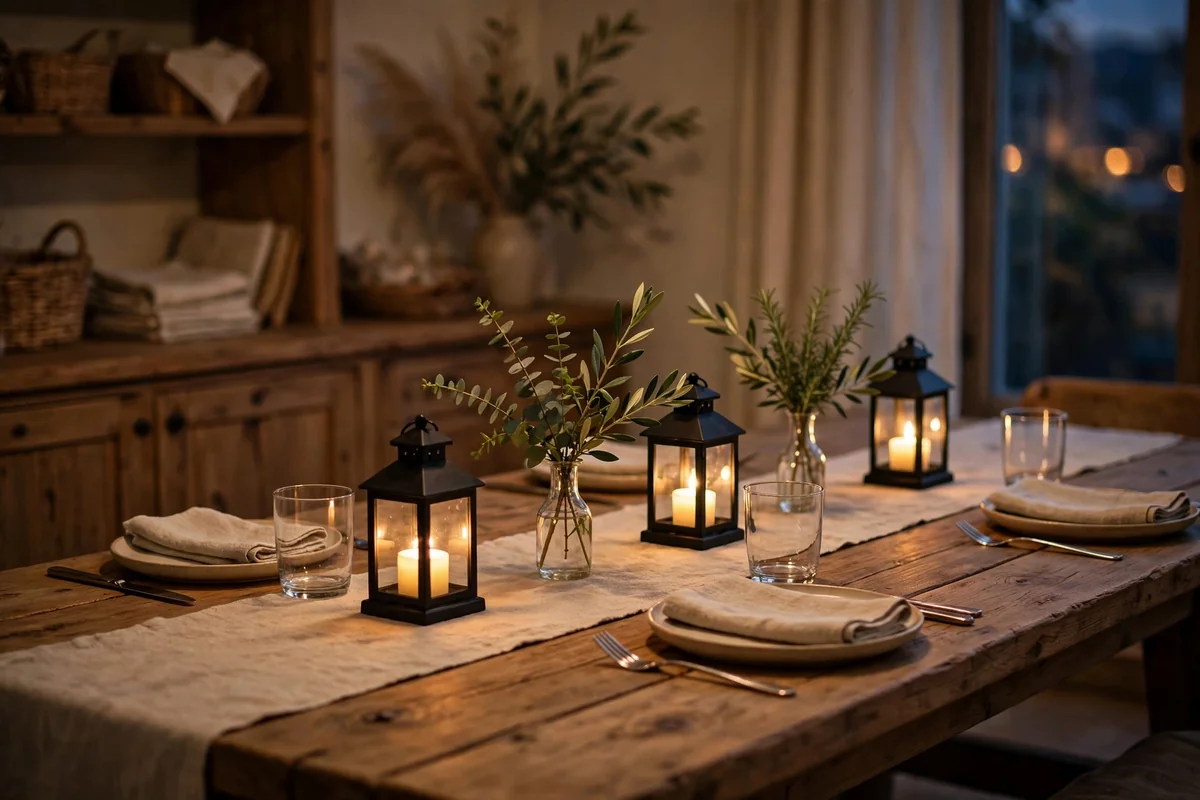
A lantern of 25 to 35 cm tall placed at the centre of a dining table between 140 and 200 cm long grounds the whole setting without blocking conversation across the table. Set it on a low wooden board or woven runner about 60 cm long, then tuck sprigs of rosemary, eucalyptus or pine around its base so the greenery spreads to roughly twice the lantern’s width. The leaves catch the candlelight and throw soft shadows onto the tablecloth.
Use one flameless pillar candle inside so guests never worry about wax or an open flame near sleeves and napkins. Refresh the greenery every five to seven days, or use high-quality faux stems for a centrepiece you can leave all season. The mistake to avoid is adding more than one tall object to the table centre; a single lantern with greenery keeps sightlines clear, while extra candlesticks and vases crowd the view and snag serving dishes.
5. Tuck Two Tall Lanterns Into the Hearth Beside the Firebox
An unused fireplace becomes a feature when two tall lanterns of 50 to 70 cm stand inside the firebox or on the hearth beside it. Angle them slightly toward each other so the light pools on the back wall of the fireplace, and stack two or three birch logs behind them for a hearth that looks dressed even in summer. The height fills the vertical emptiness of the firebox without blocking the mantel above.
Use chunky flameless pillar candles of 10 to 15 cm diameter with timers so the hearth glows every evening from dusk until bedtime. Black metal or aged iron lanterns suit a brick or stone fireplace best, while brass warms up a painted surround. The mistake to avoid is placing real candles in the hearth, where soot stains the fireback and a draught can topple a tall flame; flameless candles give the same look with none of the risk.
6. Stagger Three Lanterns Down the Staircase Steps for a Soft Path
Three lanterns of 15 to 22 cm placed on alternating steps, one near the wall side of each third step, turn a staircase into a softly lit trail after dark. Keep every lantern tight against the riser so at least 60 cm of step width stays clear for feet, and never place one on the top or bottom step where it can be kicked. Battery tealights inside give a gentle flicker that helps eyes adjust on night-time trips up and down.
Choose lanterns with enclosed sides and a low centre of gravity so a passing foot cannot tip them over easily, and set each tealight timer for the hours your household is actually awake, for example 9 pm to midnight. Wood or metal frames in a finish that matches your stair runner tie the look together. The mistake to avoid is using real candles on stairs, where vibration from footsteps can spill hot wax and a falling lantern becomes a fire hazard.
7. Style a Bookshelf Shelf With One Glass Lantern Between Book Stacks
A single glass lantern of 18 to 25 cm placed on a bookshelf shelf between two stacks of books adds light to a corner that lamps rarely reach. Lay one stack flat with three to four books and stand another row upright beside it, leaving a 25 cm gap where the lantern sits slightly forward of the book spines. The glass disappears among the books by day and glows from within after dark.
Put a battery tealight with a six-hour timer inside so the shelf lights itself each evening without you reaching behind the books. A clear glass lantern with a slim brass or black frame suits most shelf styling, and you can fill the base with dried lavender or small pinecones for texture. The mistake to avoid is choosing a lantern deeper than the shelf, which juts out and catches sleeves; measure the shelf depth first and keep 3 cm of clearance.
8. Hang a Lantern From a Tree Branch With a Weatherproof Chain
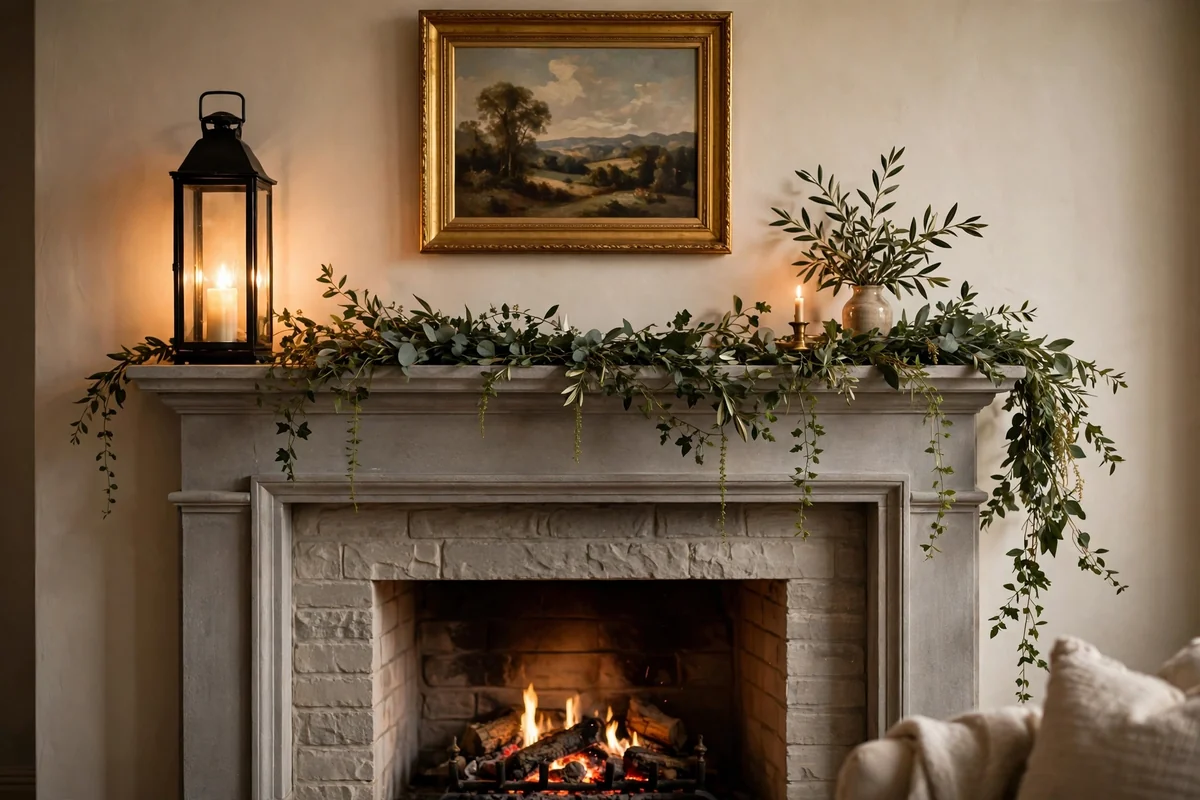
A lantern hung from a sturdy branch at least 8 cm thick brings warm light to a garden seating area without any wiring. Loop a weatherproof chain or marine rope over the branch and set the lantern so its base hangs about 200 cm from the ground, well above head height. A lantern of 20 to 30 cm with enclosed glass protects the candle from wind, and the hanging light sways gently, which feels natural outdoors.
Use a solar cap lantern or a flameless candle with a timer so the light switches on at dusk automatically and needs no evening trip into the garden. Hang it at least 2 m from any wooden fence or dry hedge, and bring the lantern indoors during storms or hard frosts. The mistake to avoid is hanging a lantern from a young or thin branch that cannot bear the weight; test the branch by pulling it firmly before you hang anything.
9. Line the Garden Path With Small Solar Lanterns Every Two Metres
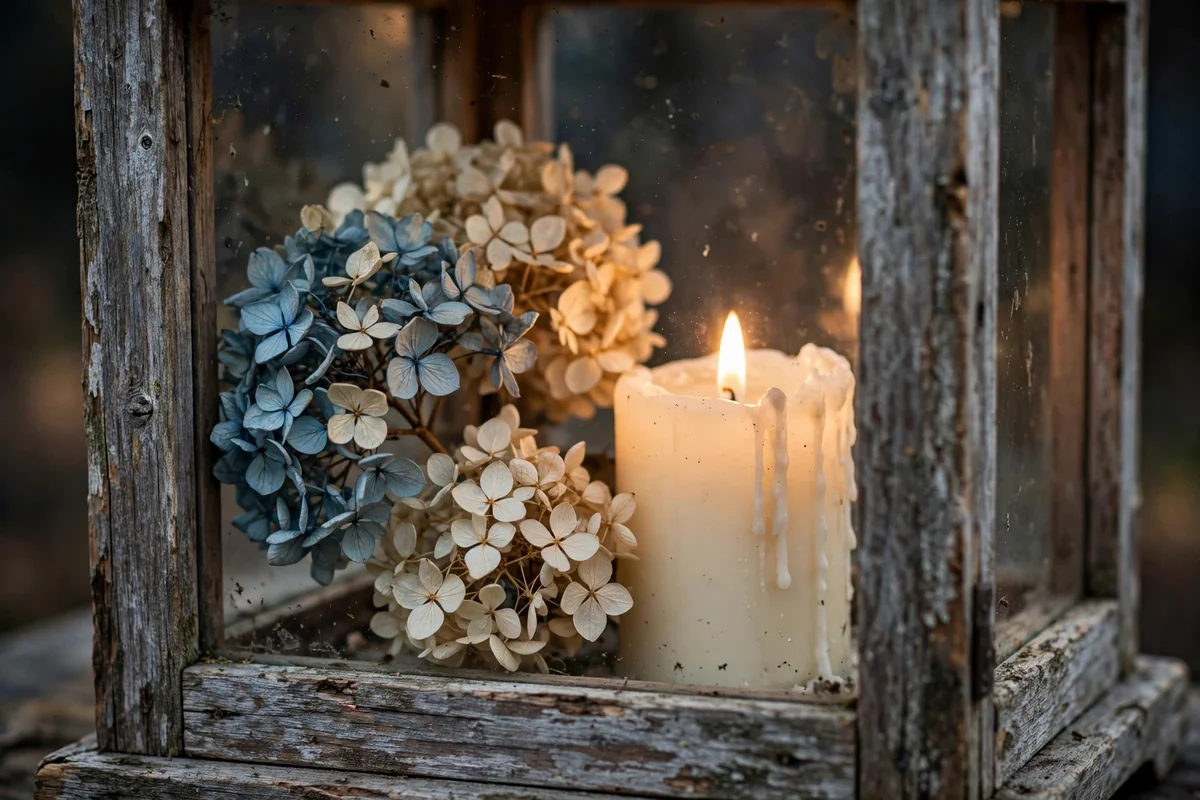
Small solar lanterns of 15 to 20 cm set along both sides of a garden path every 2 m guide footsteps safely from gate to door. Push each lantern 10 cm into the soil or set it on a flat stone so it stands firm, and keep the solar panel clear of leaves and overhanging shrubs so it charges fully by day. The line of small glows reads as welcoming from the street and helps guests find their footing.
Choose solar lanterns with at least six hours of stored light so they last from dusk past bedtime in summer, and store them in a dry shed over winter to protect the batteries. Black or bronze finishes suit cottage and country gardens, while simple glass and wood designs fit modern plots. The mistake to avoid is spacing them unevenly or clustering too many near the door; an even rhythm of light looks calm, and random gaps look like bulbs have failed.
10. Fill a Wooden Lantern With a Flameless Candle on a Bedside Table
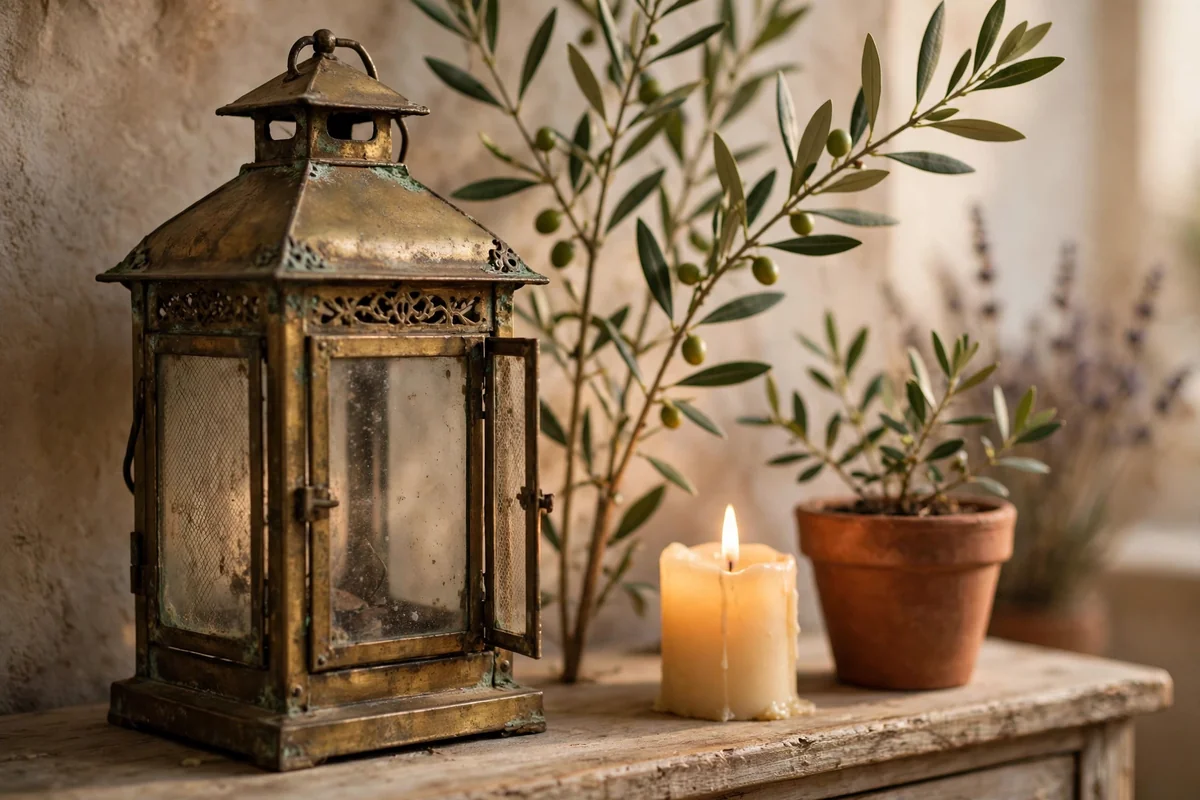
A wooden lantern of 20 to 28 cm on a bedside table between 40 and 55 cm wide gives a bedroom a soft glow for winding down at night. The wood frame diffuses light warmly through the glass and feels less stark than metal in a sleeping space. Place the lantern toward the back corner of the table so it does not crowd a book, a glass of water or a phone charger.
Use a flameless pillar candle with a remote control so you can dim or switch it off from bed, and set a timer so it switches itself off an hour after you usually sleep. Natural wood tones such as oak or mango suit linen bedding and soft wall colours. The mistake to avoid is placing any real candle beside the bed, where a knocked-over flame near bedding is genuinely dangerous; flameless candles give the same gentle light with no risk at all.
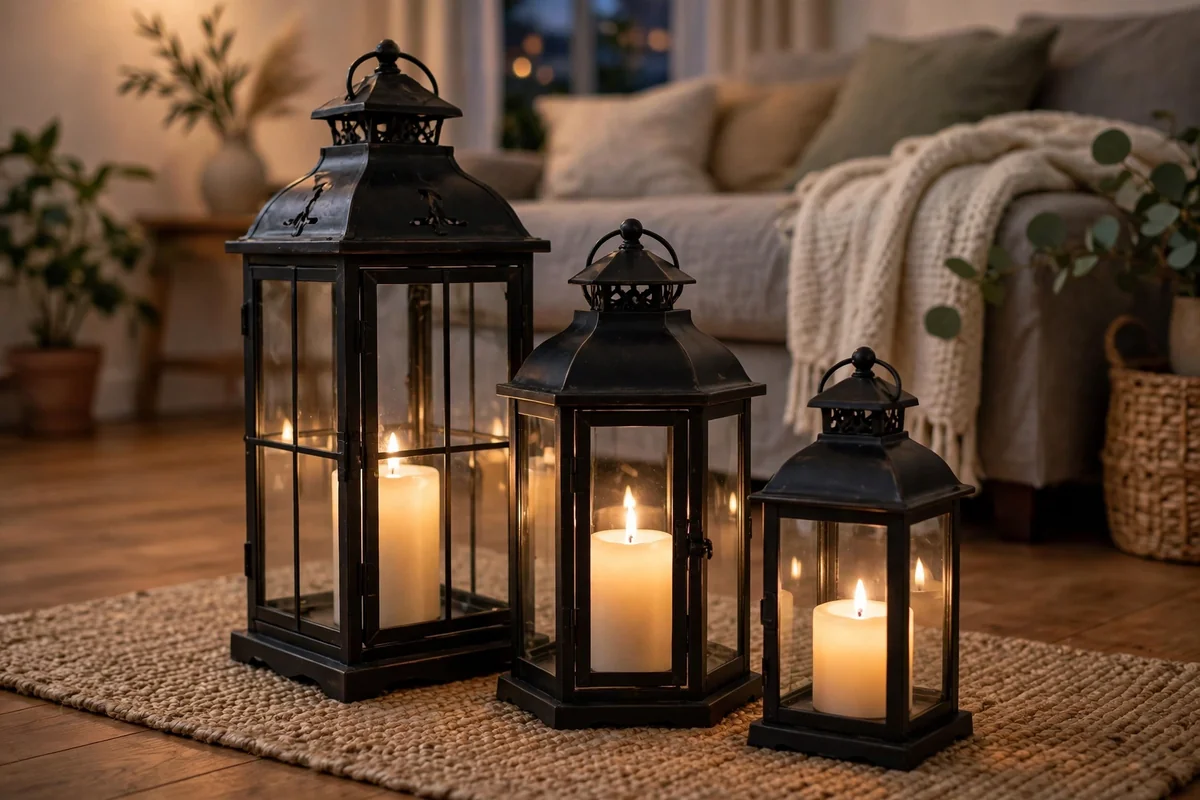
11. Place a Set of Three Lanterns in Mixed Sizes on the Coffee Table
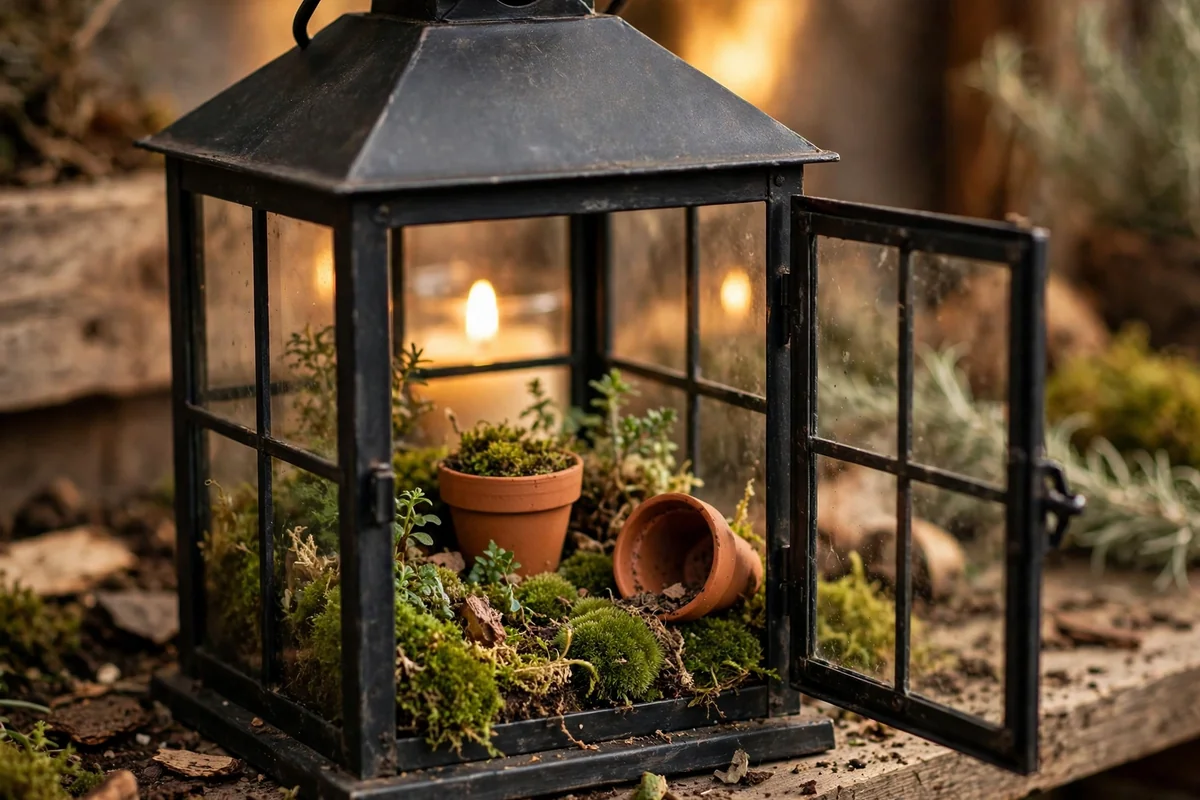
Three lanterns of roughly 15, 22 and 30 cm grouped on a coffee table of 100 to 140 cm length make a centrepiece that works from every seat in the room. Cluster them toward one end of the table so drinks and books still have space, and vary the frame finishes slightly, for example two black metal and one natural wood, so the group feels collected rather than bought as a matching set.
Fill all three with flameless tealights on the same timer so they light together at dusk and the glow looks unified. A low wooden tray about 50 cm long underneath keeps the group tidy and protects the table from scratches. The mistake to avoid is using three identical lanterns, which looks like a shop display; the mixed heights and one contrasting material are what make the arrangement feel styled rather than staged.
12. Hang a Large Rattan Lantern From a Bedroom Ceiling Hook
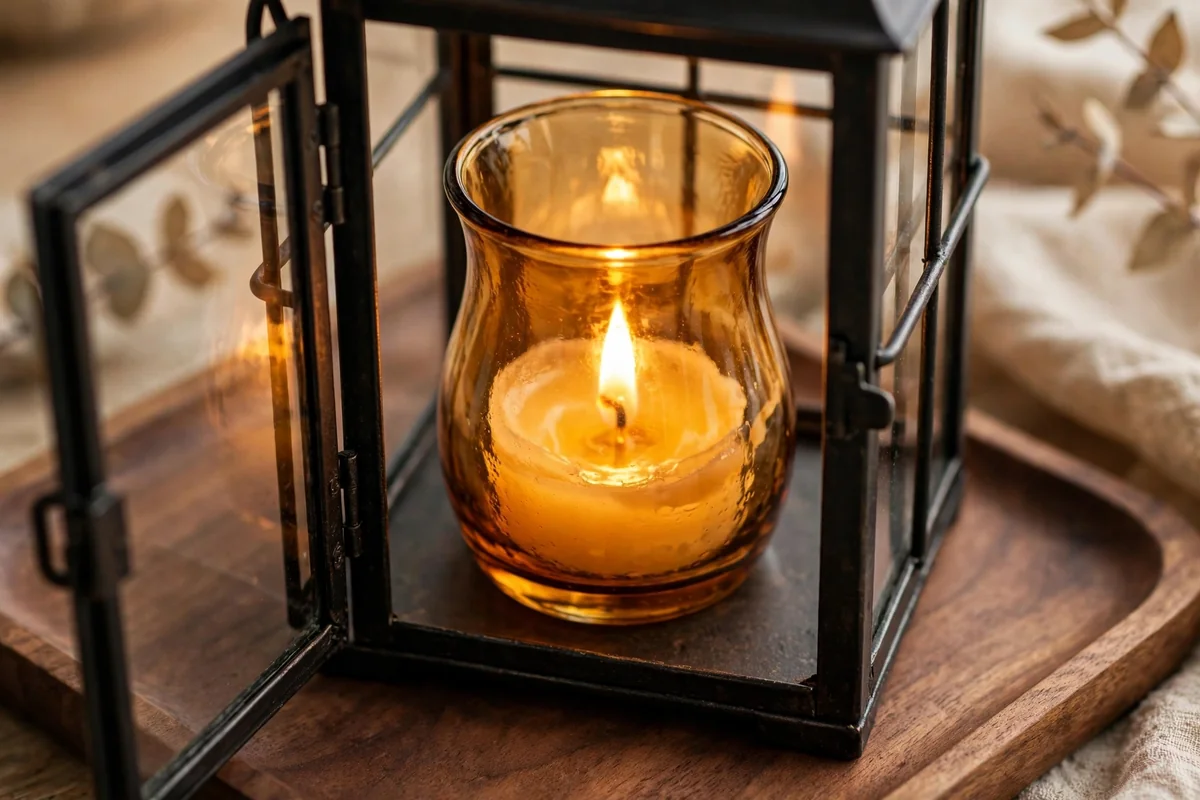
A large rattan or wicker lantern of 35 to 50 cm hung from a ceiling hook over the foot of the bed adds texture and soft light without taking up floor space. Fix the hook into a ceiling joist with a fitting rated for at least 5 kg, and hang the lantern so its base sits 200 to 210 cm from the floor, clear of heads and raised arms. The woven shell filters light into patterned shadows on the ceiling.
Use a single flameless pillar candle or a short string of warm fairy lights inside so no real flame ever hangs above the bed. Rattan suits neutral bedrooms with linen and wood tones, and a battery timer keeps the evening routine effortless. The mistake to avoid is hanging it from a simple adhesive hook, which can fail under the weight and drop the lantern; always fix into timber or use a proper ceiling anchor.
13. Set a Tall Floor Lantern Beside the Armchair for Reading Light
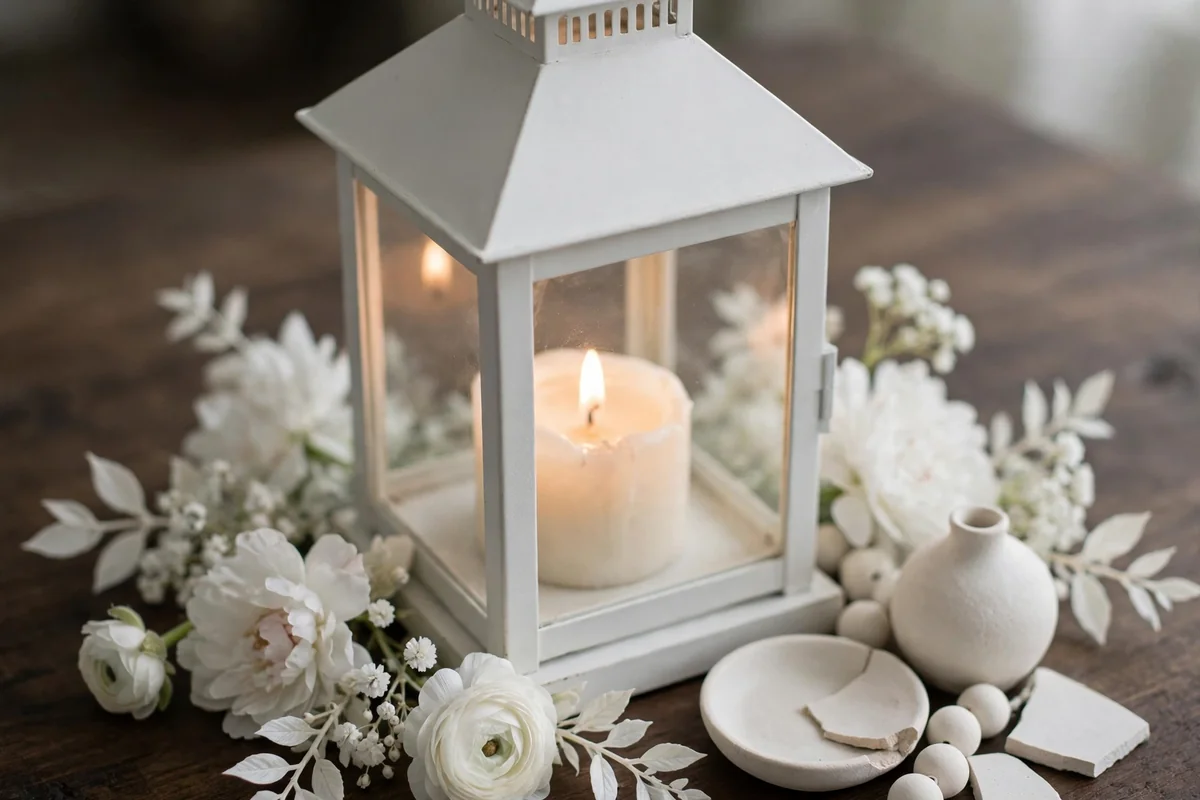
A tall floor lantern of 60 to 90 cm placed 30 to 40 cm from an armchair gives a reading corner a pool of warm light without a wired lamp. Choose a lantern with clear glass on at least three sides so the light spreads widely, and fill it with two or three flameless pillar candles of different heights to build a layered glow that flatters book pages. The vertical shape draws the eye up and fills an empty corner.
Set all the candles on timers for your usual reading hours, for example 7 pm to 11 pm, so the corner is lit when you settle in and dark when you leave. Black metal or dark wood frames read as furniture rather than decoration and suit most living rooms. The mistake to avoid is placing the lantern where its glow falls behind the chair instead of over your shoulder; shift it slightly forward so the light reaches the page.
14. Cluster Three Glass Lanterns With Fairy Lights on the Window Sill
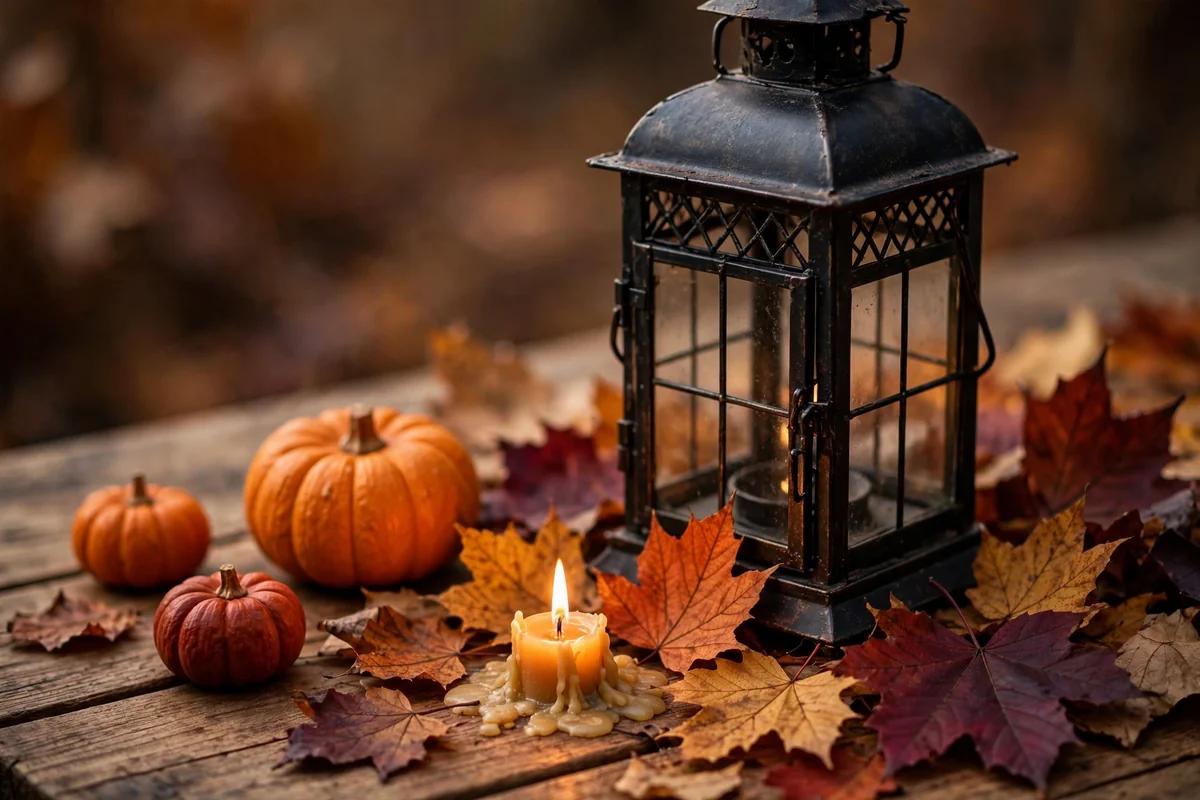
Three small glass lanterns of 10 to 16 cm clustered on a window sill at least 12 cm deep turn a window into a glowing frame after dark. Fill each with a short string of 10 to 20 warm fairy lights rather than a single candle, so the glass sparkles with many tiny points of light. Push the cluster toward one side of the sill so the window can still be opened and closed freely.
Battery fairy lights with built-in timers are the easiest choice, switching on at dusk and off six hours later without any daily fiddling. Clear glass shows the lights best, and a mix of round and tall shapes keeps the cluster interesting. The mistake to avoid is using real candles on a sill near curtains, where a draught can blow the curtain toward the flame; fairy lights give a brighter sparkle with no fire risk near fabric.
15. Place a Pair of Brass Lanterns on the Entryway Console
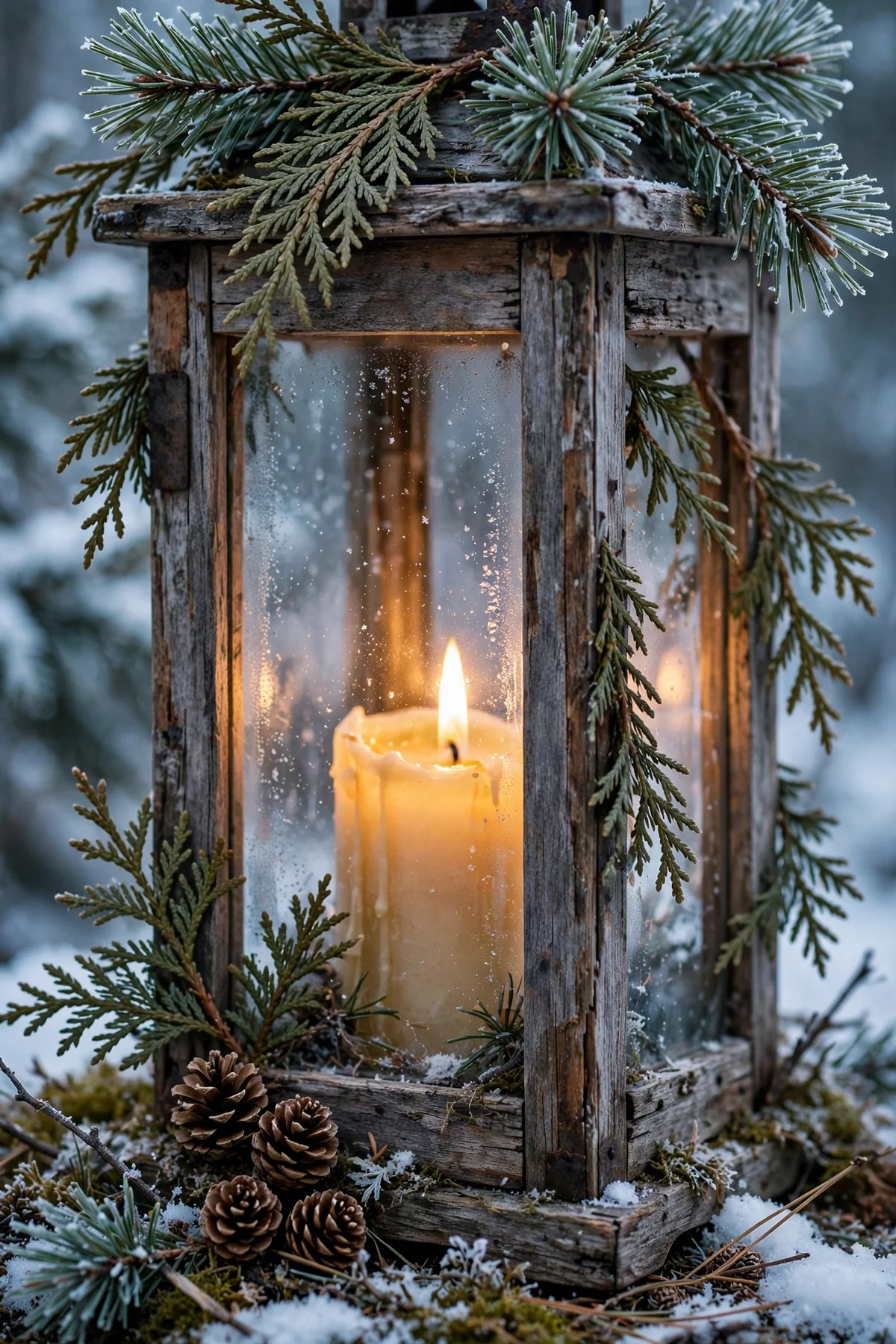
Two brass lanterns of 25 to 35 cm standing at opposite ends of a console table between 120 and 160 cm wide frame the entryway with symmetrical warmth. The metal catches daylight by day and candlelight by night, so the console looks dressed at every hour. Keep the centre of the console for a low bowl, a stack of books or a small tray, so the lanterns act as bookends rather than the whole display.
Use flameless pillar candles with dusk timers inside so the entryway greets you with light when you come home after dark. Unlacquered brass develops a soft patina over time, which suits heritage and vintage interiors; wipe it with a dry cloth to keep the glow. The mistake to avoid is matching the lanterns to every other metal in the hallway, which looks overdone; let brass be the star and keep door handles and hooks in plainer finishes.
16. Hang Lanterns at Two Heights From a Pergola Beam Over the Patio
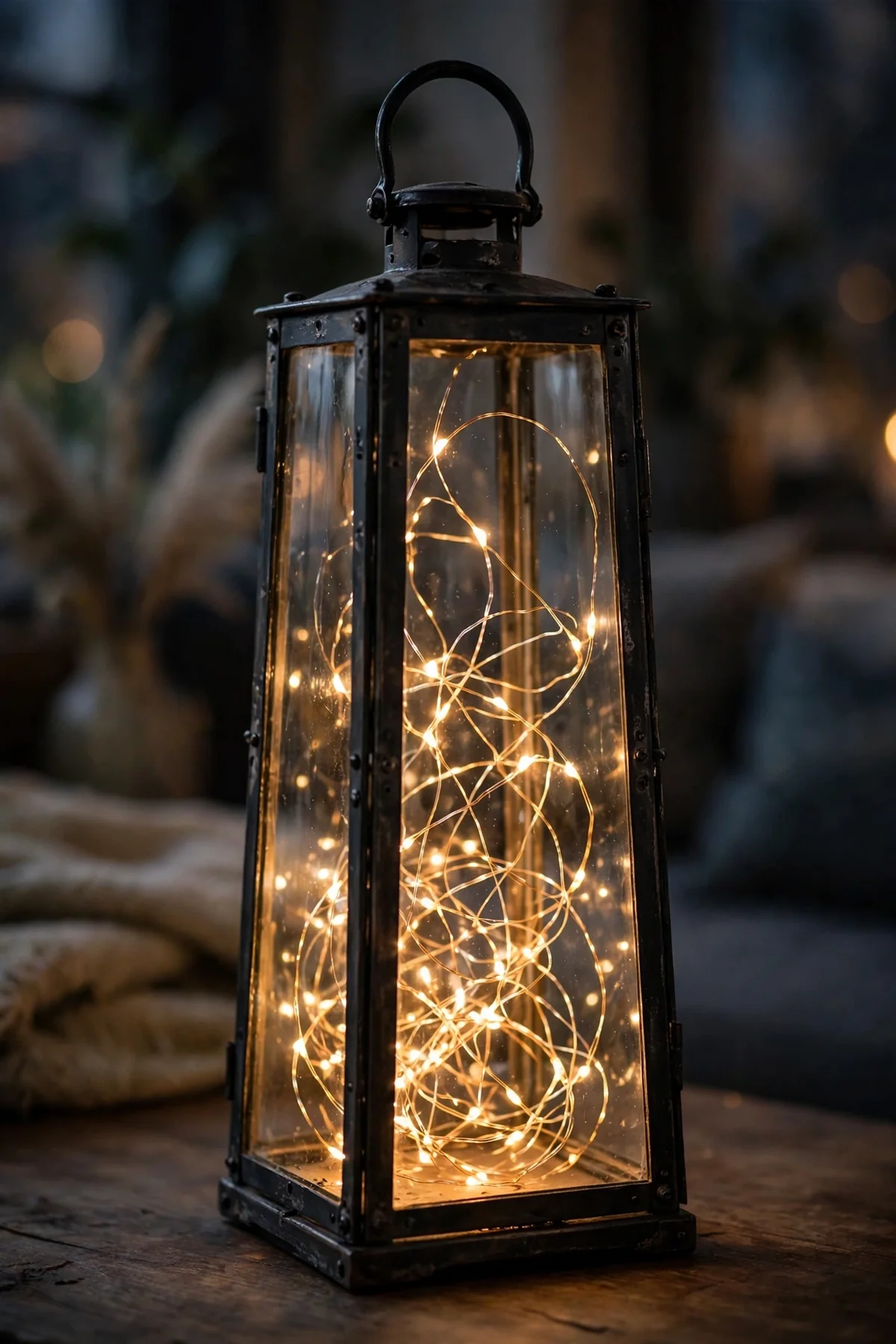
Two or three lanterns hung from a pergola beam at staggered heights, roughly 190 cm and 210 cm from the ground, bring evening light to a patio dining spot without any electrician. Use weatherproof chains or hooks rated for outdoor use and fix them into the beam with screws long enough to bite into solid timber. Space the lanterns 60 to 80 cm apart so each one lights its own zone of the table.
Choose lanterns with enclosed glass and solar caps or battery timers so they light at dusk and need no attention during dinner. Metal or wood frames both work under a pergola, and the hanging glow flatters food and faces better than harsh overhead bulbs. The mistake to avoid is hanging lanterns directly over plates, where drips of condensation can fall into the food; offset each lantern slightly to the side of the table instead.
17. Fill a Hurricane Lantern With Sand and a Flameless Pillar Candle
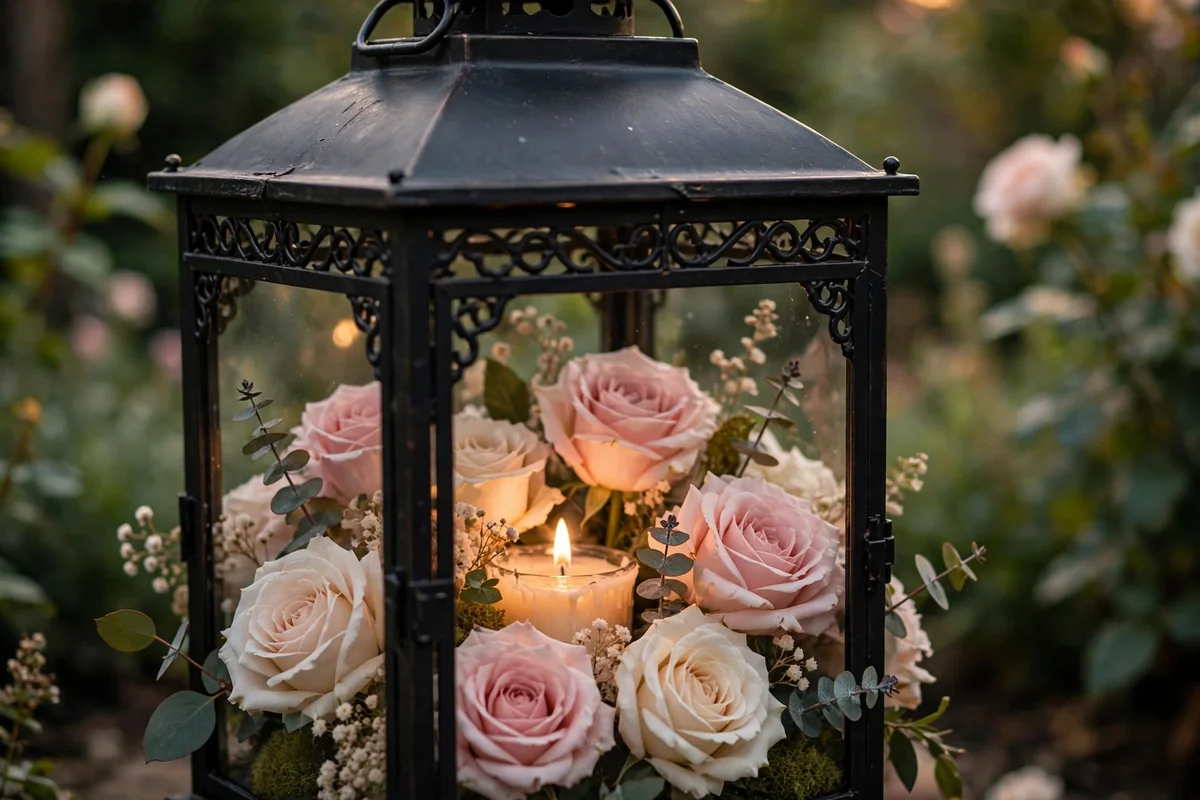
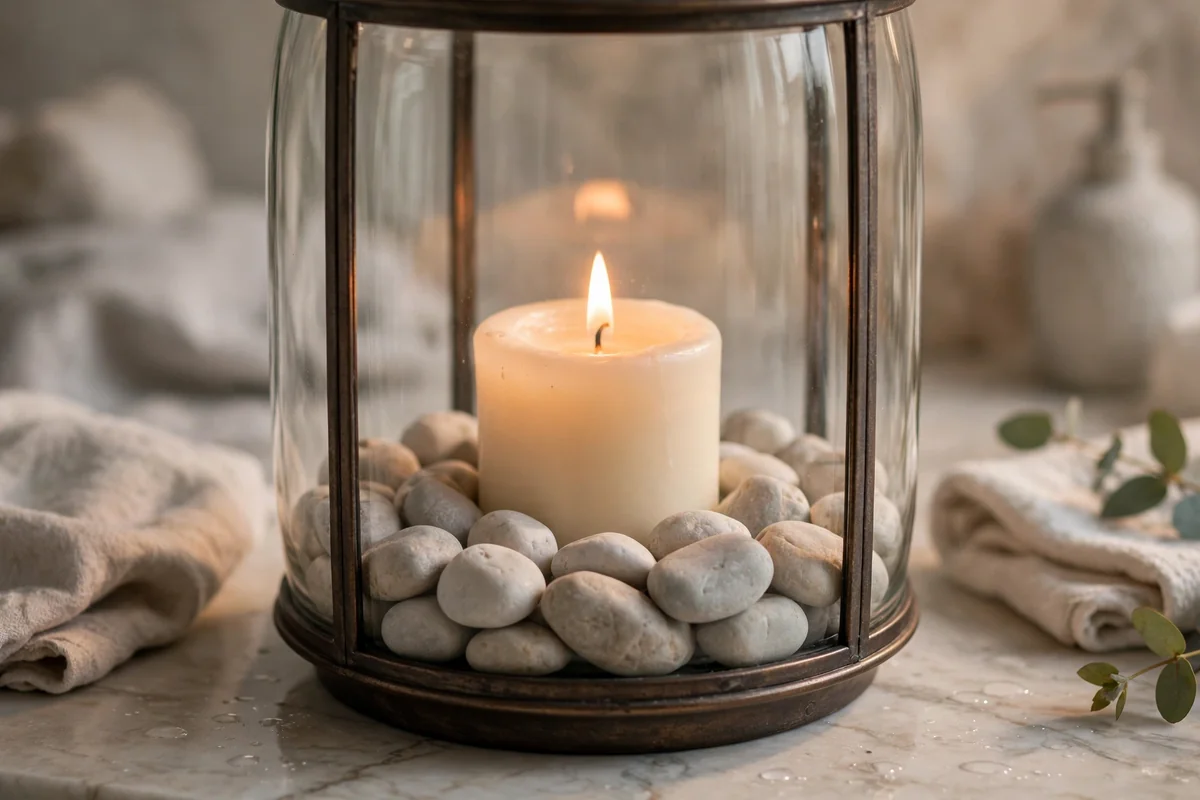
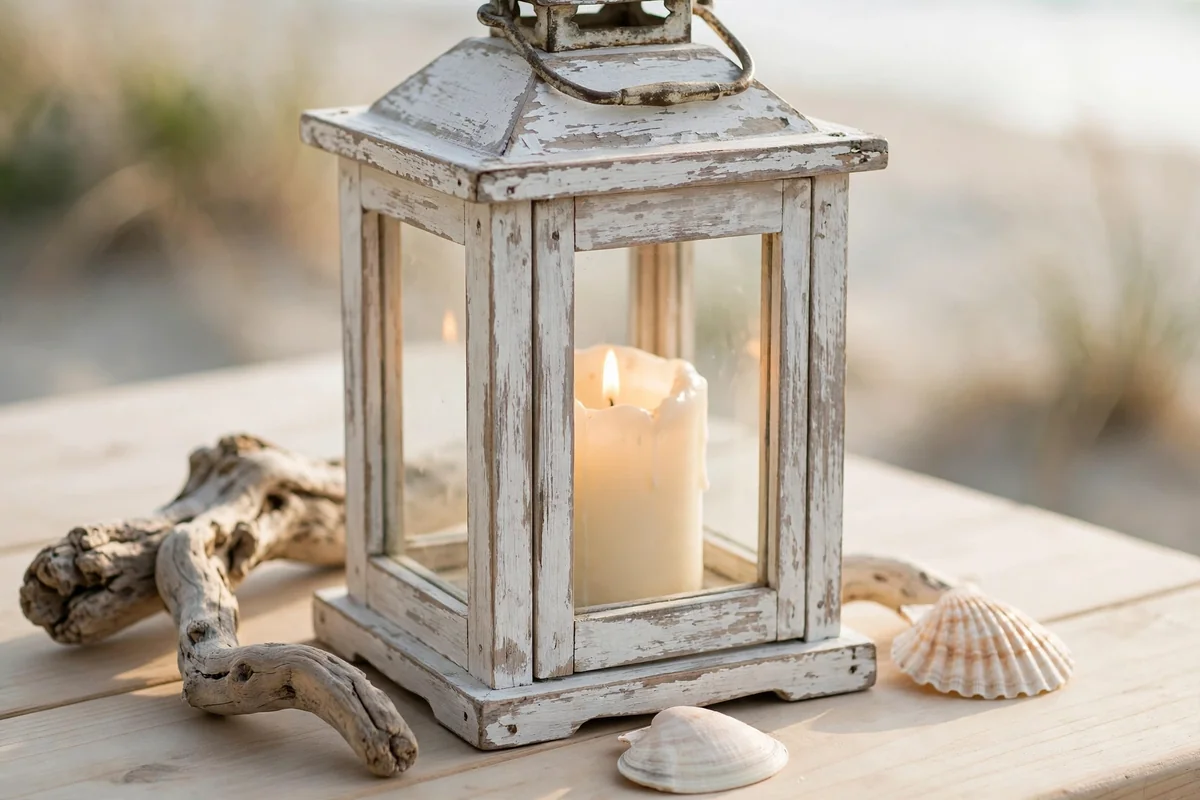
A hurricane lantern with a tall glass chimney of 25 to 40 cm filled with 3 to 4 cm of pale sand makes a beautiful beach-cottage style piece for a shelf, table or bathroom. The sand anchors the candle, hides the battery base and catches the light with a soft golden shimmer. Choose fine craft sand in natural tones and rinse it first so no dust clouds the glass.
Set a flameless pillar candle into the sand so its base sits below the rim, which keeps the candle steady and hides the plastic look of battery candles. The tall glass protects the glow from draughts indoors and from breezes on a sheltered porch. The mistake to avoid is using real candles in sand-filled lanterns near fabric, since the open top can still catch a curtain; keep this arrangement flameless and enjoy the texture without any worry.
18. Set Battery Timers So Lanterns Glow Automatically From Dusk to Dawn
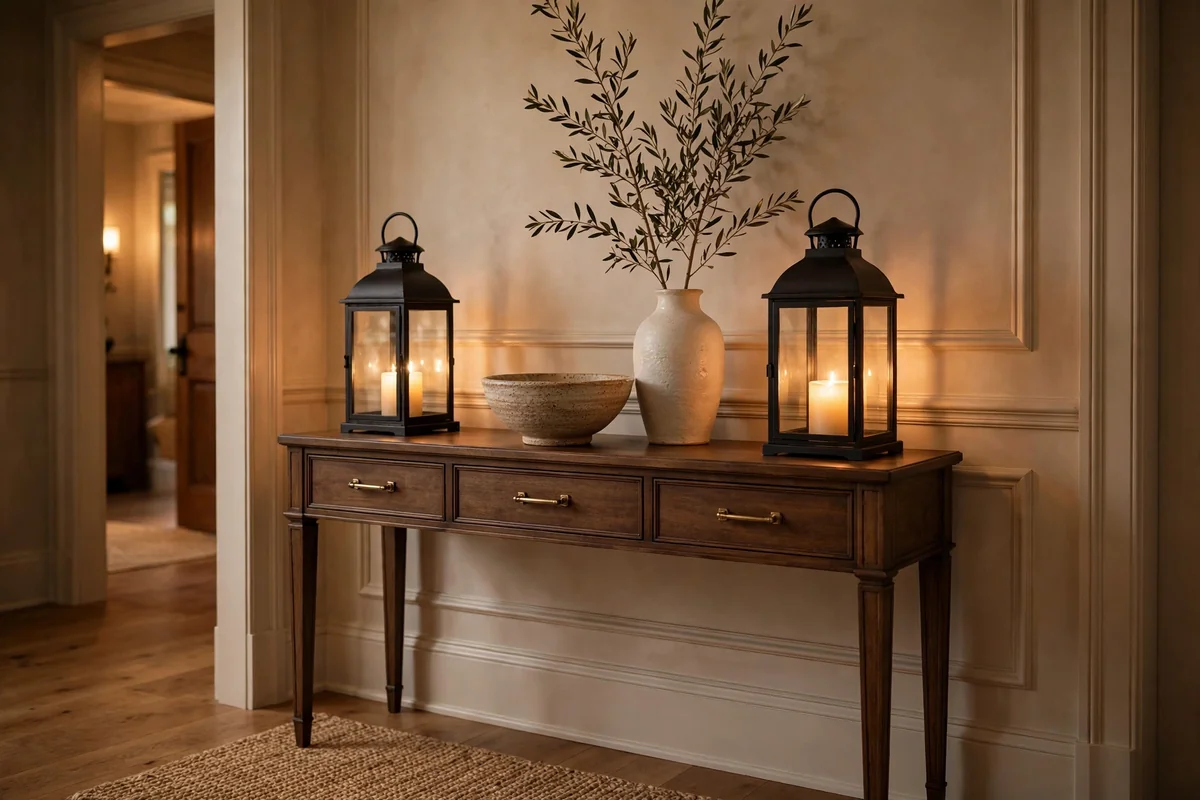
Battery candles with built-in timers, usually a six-hour on and eighteen-hour off cycle, turn a house full of lanterns into an automatic evening display. Set every candle once by switching it on at the hour you want the glow to start, for example 6 pm, and from then on each lantern lights itself at the same time daily. Use the same brand across your lanterns so all the timers stay in sync.
Standard candles run four to six weeks on one set of batteries at six hours a day, so change all batteries on the same day each month to avoid random blackouts. Keep spare batteries in a drawer near the lanterns and note the change date on a small label under each lantern base. The mistake to avoid is mixing timer candles with manual ones, which leaves half your lanterns dark; commit to timers everywhere for a home that glows as one.
19. Dress a Kitchen Island With a Small Lantern Beside a Herb Pot
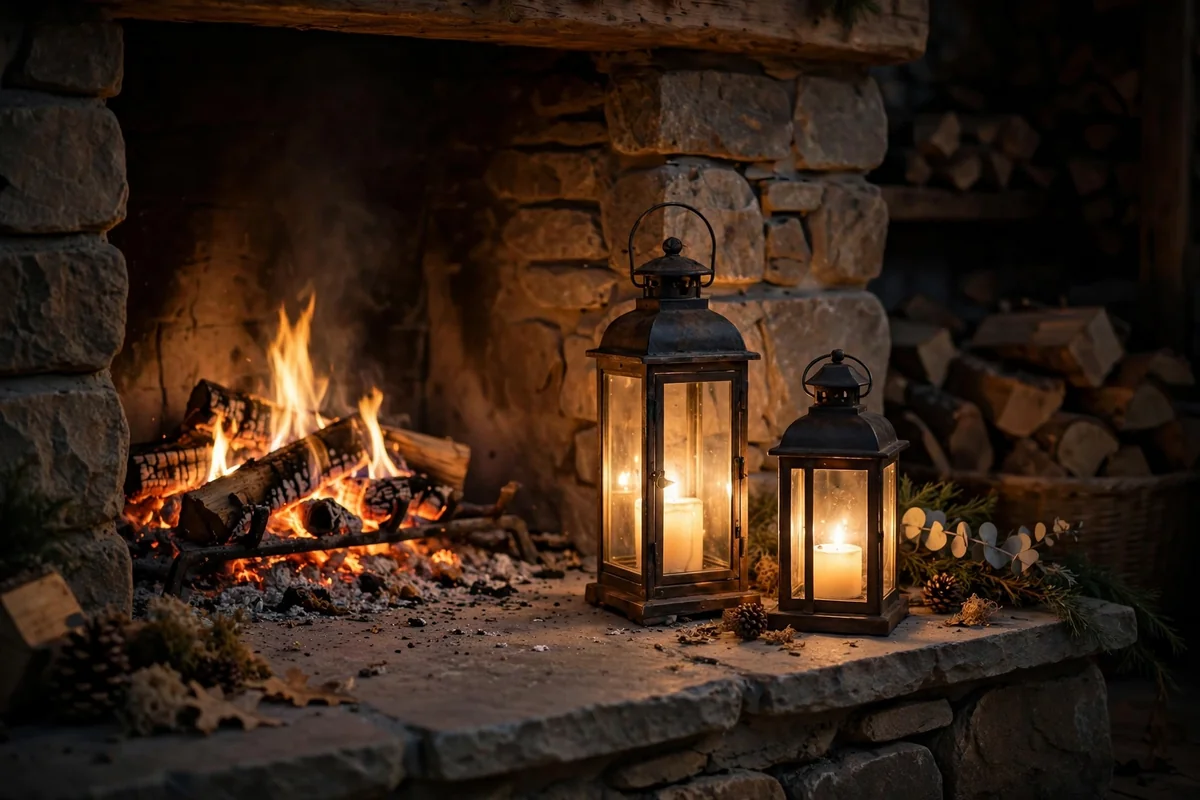
A small lantern of 15 to 20 cm placed at one end of a kitchen island at least 150 cm long adds warmth to a room that is usually all task lighting. Set it beside a terracotta herb pot, about 20 cm away so leaves do not touch the glass, and keep both at the island end farthest from the hob. The lantern softens the hard surfaces of stone and steel after the cooking is done.
Use a flameless tealight with a timer inside, since kitchens involve steam, splashes and busy hands that make real candles unwise. Glass or ceramic lanterns wipe clean easily and suit the kitchen better than fabric shades. The mistake to avoid is placing the lantern in the middle of the island’s working zone, where it blocks chopping and serving; treat one end as the display corner and keep the centre clear for daily work.
20. Hang a Lantern From a Wall Bracket Beside the Garden Gate
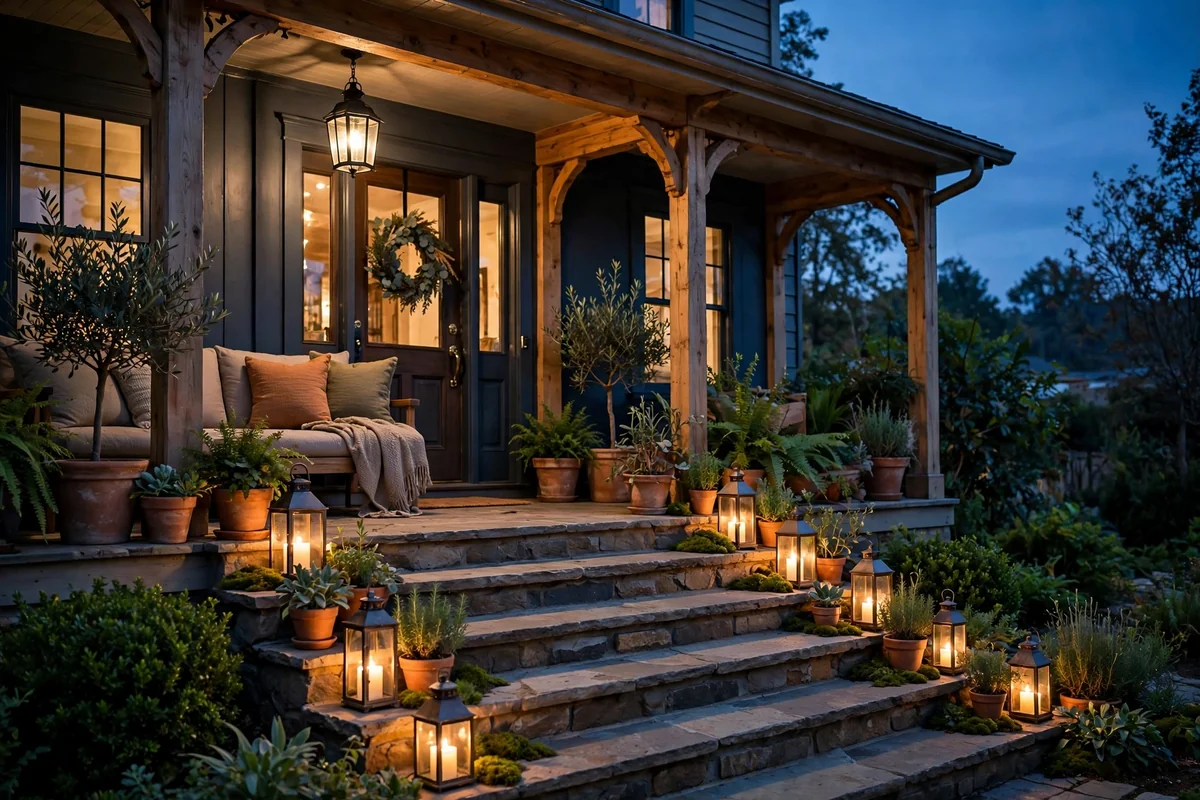
A lantern hung from a sturdy wall bracket beside the garden gate marks the entrance and lights the lock after dark. Fix the bracket into masonry with proper wall plugs at about 180 cm from the ground, and choose a lantern of 20 to 30 cm with a top handle that hooks on securely. The light helps visitors find the gate and gives you a clear view of who is arriving.
A solar cap lantern works best here since no wiring reaches most garden gates; make sure the panel faces the sky and is not shaded by a wall. In winter, wipe the panel monthly so short days still charge it enough. The mistake to avoid is hanging the lantern on the gate itself, where every opening swings it hard and loosens the hook; a fixed bracket on the wall or post beside the gate keeps it steady for years.
21. Arrange a Lantern Trio on a Tray for an Easy Moveable Centrepiece
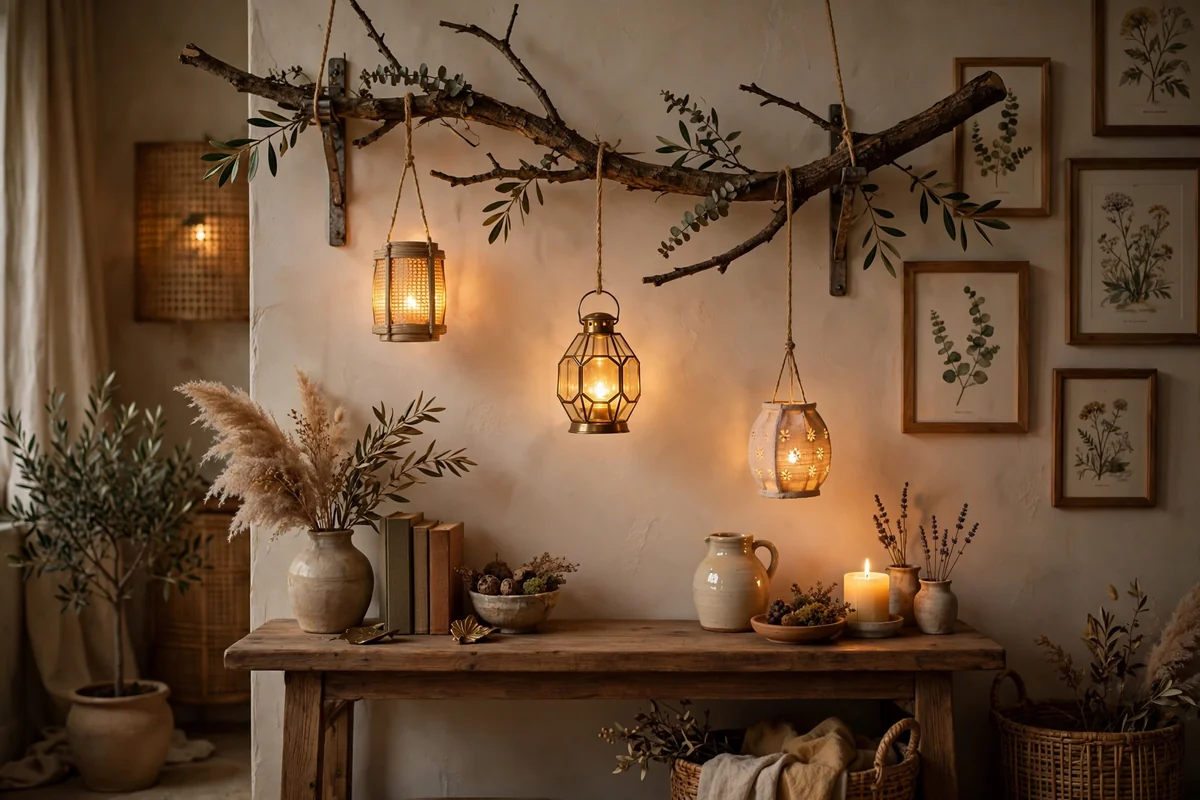
Three lanterns of mixed heights between 12 and 28 cm set on a wooden or metal tray about 45 to 60 cm long make a centrepiece you can lift and move in seconds. The tray keeps the group together when you shift it from dining table to coffee table or out to the patio, and it protects surfaces from scratches. Line the tray with a folded linen cloth for a softer look.
Use flameless tealights on matching timers across all three lanterns so the whole tray glows as one unit wherever it sits. A round tray suits a round table and a rectangular tray suits a long one; either way, keep the lanterns clustered at the tray’s centre with 5 cm of clear edge. The mistake to avoid is choosing a tray without raised edges, which lets lanterns slide off in transit; a 2 cm lip keeps everything safe on the move.
22. Match Lantern Scale to the Room: Size Rules for Mantels, Tables and Floors
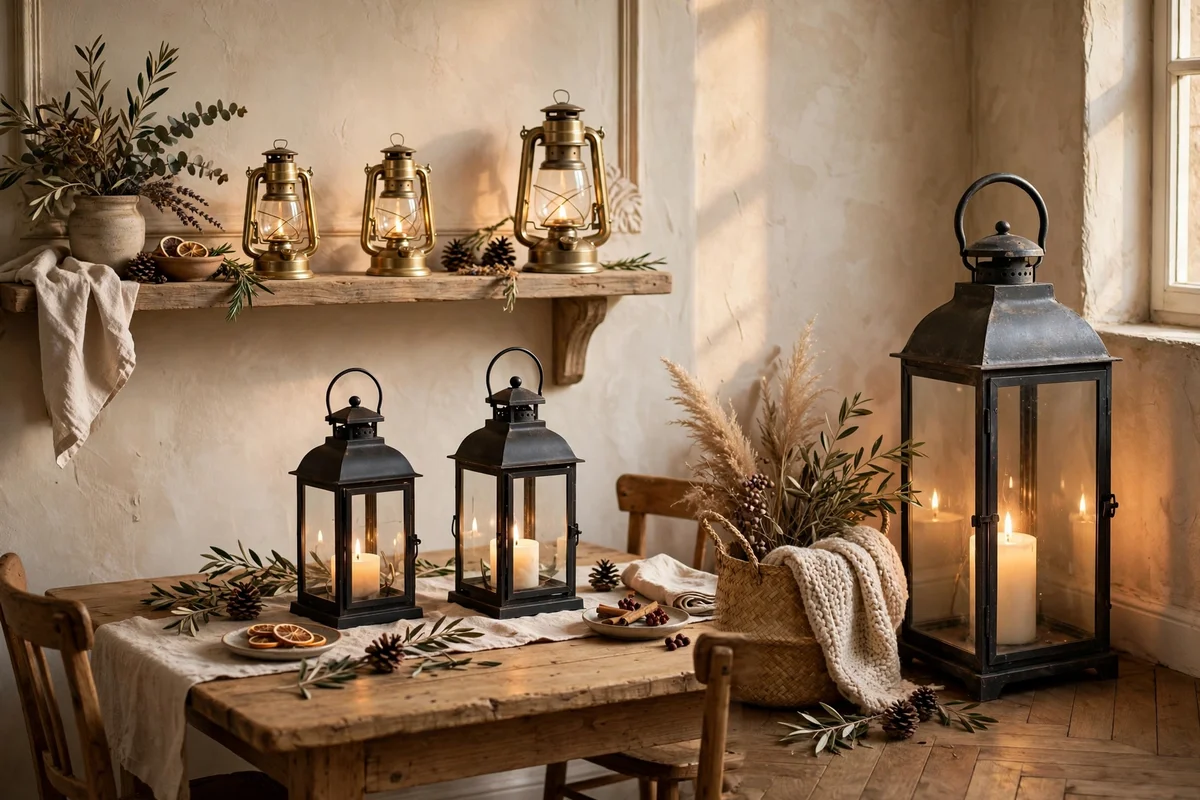
Scale is what separates a styled lantern from one that looks lost or looming, and a few rules keep it simple. On a mantel, lanterns should total about one third of the mantel’s length; on a dining table, the lantern should stay below 40 cm tall so it never blocks faces; on the floor, choose lanterns at least 50 cm tall so they read as furniture rather than forgotten clutter.
When grouping lanterns, follow the one-two-three rhythm of heights, with each lantern 8 to 12 cm taller or shorter than its neighbour, which looks natural to the eye. Before buying, cut paper templates of the lantern heights and tape them to the wall or shelf to test the scale. The mistake to avoid is buying a single small lantern for a large empty corner; one undersized lantern emphasises the emptiness, while a tall or grouped arrangement fills it.
23. Keep Fabrics Safe: Flameless Only Indoors and Near Curtains
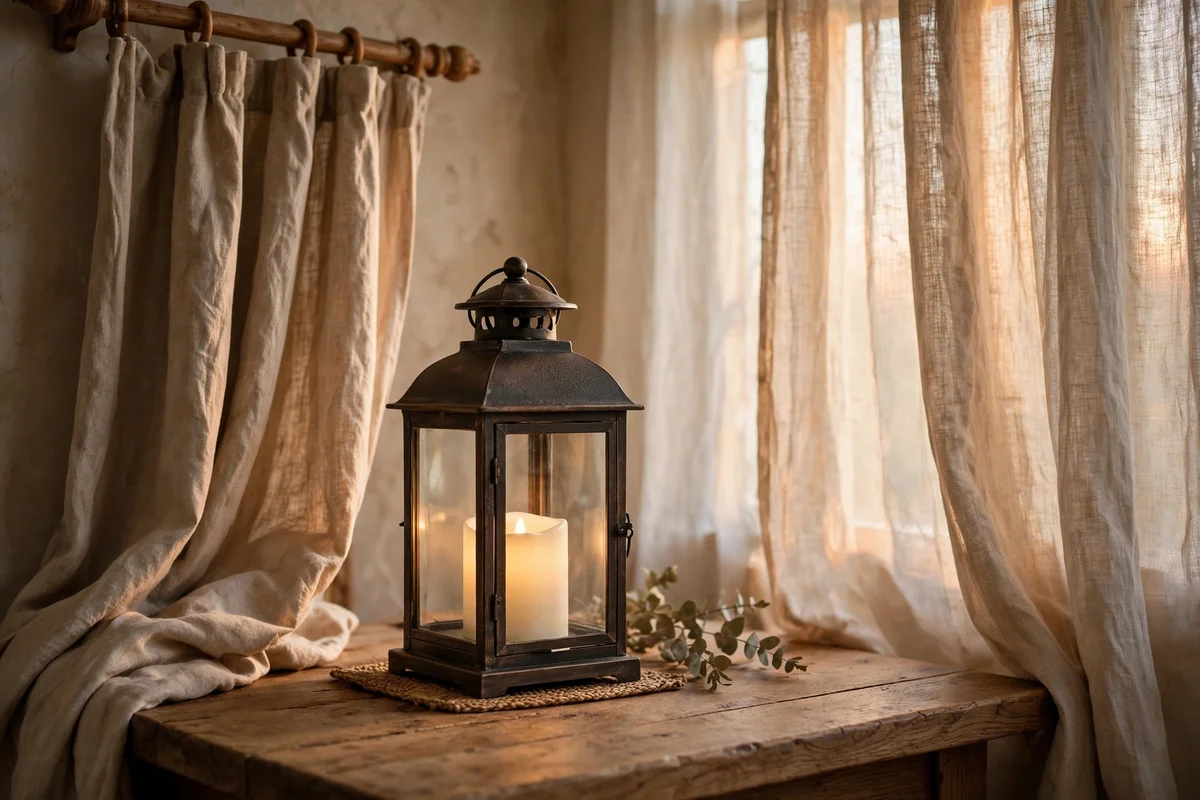
Any lantern placed within 1 m of curtains, bedding, tablecloths or upholstery should burn a flameless candle only, with no exceptions. Battery candles and fairy lights give the same warm flicker without heat, and modern flameless pillars even mimic the uneven glow of a real flame. Indoors, draughts from doors and windows can move fabric toward a flame, so the flameless rule protects the whole room.
Teach the habit to the whole household, especially children, by making flameless the default for every indoor lantern and keeping real candles only for the enclosed-glass outdoor rule in the next idea. Check battery levels monthly so a dim candle never tempts anyone to swap in a real one. The mistake to avoid is assuming a tall glass chimney makes a real candle safe near fabric; heat and soot still rise, and one gust can do what the glass cannot stop.
24. Reserve Real Candles for Enclosed Glass, Far From Curtains
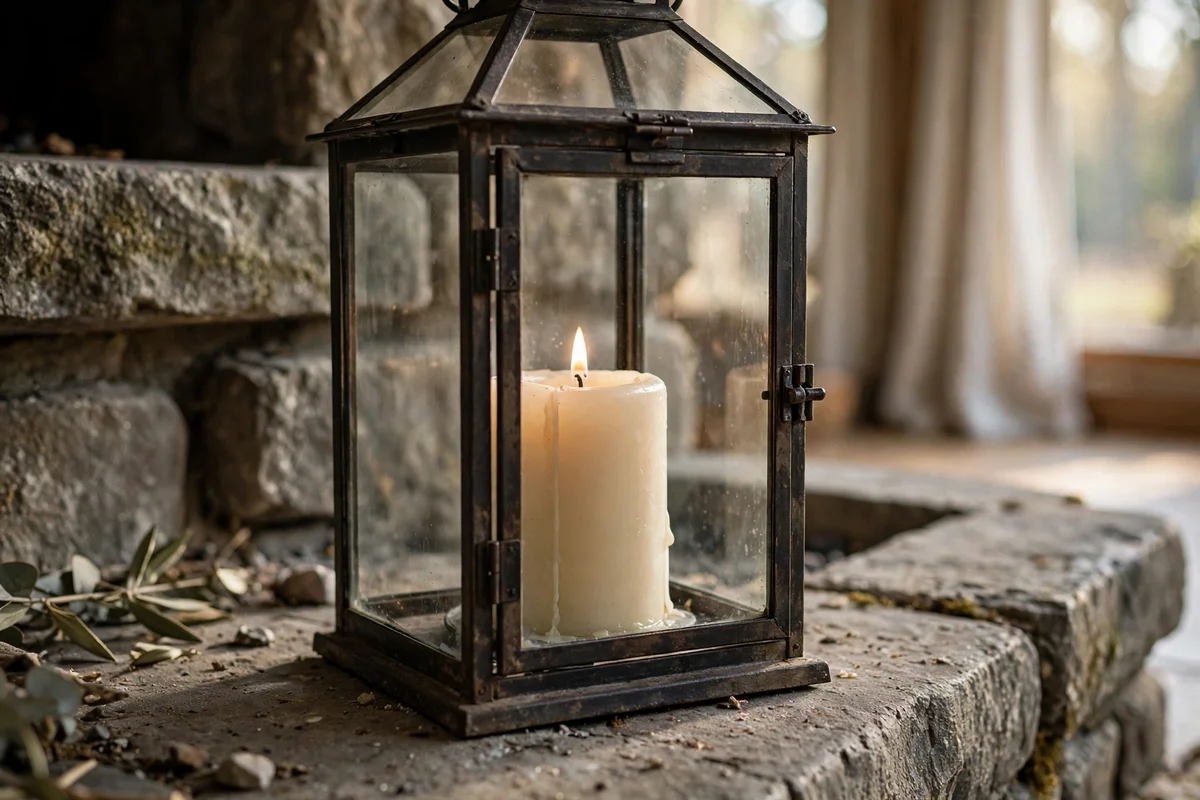
Real candles belong only inside lanterns with fully enclosed glass on all sides, placed at least 1 m from curtains, bedding and other fabrics, and never left burning in an empty room. A pillar candle of 10 cm diameter in a 30 cm glass lantern gives a steady, draught-proof glow that suits sheltered patios and stone hearths. Trim the wick to 5 mm before each lighting so the flame stays small and clean.
Blow out every real candle before leaving the room or going to sleep, and let the glass cool for at least 30 minutes before moving the lantern. Keep a metal snuffer beside any lantern that holds a real candle so you never blow wax across the glass. The mistake to avoid is lighting a real candle in a lantern with an open top near a window, where a night breeze can lift a curtain straight into the flame; enclosed glass and distance are both non-negotiable.
Lanterns ask for very little: a shelf, a step, a branch, and a candle that switches itself on at dusk. In return they give a home its evening rhythm, a trail of small warm lights that carries you from the front door to the bedroom without a single harsh bulb. Start with the tray trio this week, since it costs almost nothing and moves anywhere, then add a pair by the door. The glow will do the rest, one evening at a time.
Keep the flameless rule close as you style: battery candles and fairy lights near every fabric, real flames only in enclosed glass far from curtains, and timers everywhere so the house lights itself. With those habits in place, your lanterns will glow safely all night, every night, turning ordinary corners into places you linger. That is the whole secret: gentle light, honest materials, and a home that feels alive after dark.
Frequently Asked Questions
How many lanterns do I need to make a room feel lit?
Three is the magic number for most rooms: a trio on a mantel, coffee table or tray reads as deliberate styling, while one lantern on its own often looks lost. Larger rooms can take two trios, one on each focal point, such as the mantel and a sideboard. Start with one trio of mixed heights and add more only where the glow feels thin.
Are flameless candles really as warm-looking as real ones?
Modern flameless pillars with a flicker effect come very close, especially behind glass, which softens the light the way a real flame does. Choose warm white, around 2700K, and avoid cool blue-white LEDs, which look clinical. At a glance across a room, guests rarely notice the difference, and the timer means the glow appears without any effort.
What size lantern suits a standard dining table?
For tables between 140 and 200 cm long, choose one lantern of 25 to 35 cm tall, or a trio of 12 to 28 cm on a tray. Keep the tallest piece below 40 cm so it never blocks faces across the table. On a small round table under 120 cm, a single 15 to 20 cm lantern with greenery around the base is plenty.
Can I leave battery lanterns on all night?
Yes, if they use timers rather than burning continuously. A six-hour timer that starts at dusk usually covers the evening and switches off around midnight, which protects battery life. Batteries last four to six weeks at six hours a day, so change them on the same day each month. Never leave real candles burning overnight or in an empty room.
How do I clean lantern glass so the glow stays bright?
Wipe the glass inside and out with a damp microfibre cloth every two to four weeks, since dust dims the light more than you expect. For outdoor lanterns, rinse off pollen and cobwebs with a gentle hose spray, then dry the glass to avoid spots. Avoid abrasive cleaners on brass or black metal frames, which can scratch the finish.