Living Room
24 Layered Living Room Ideas That Feel Rich, Warm and Collected
By Anna Wells · · 21 min read
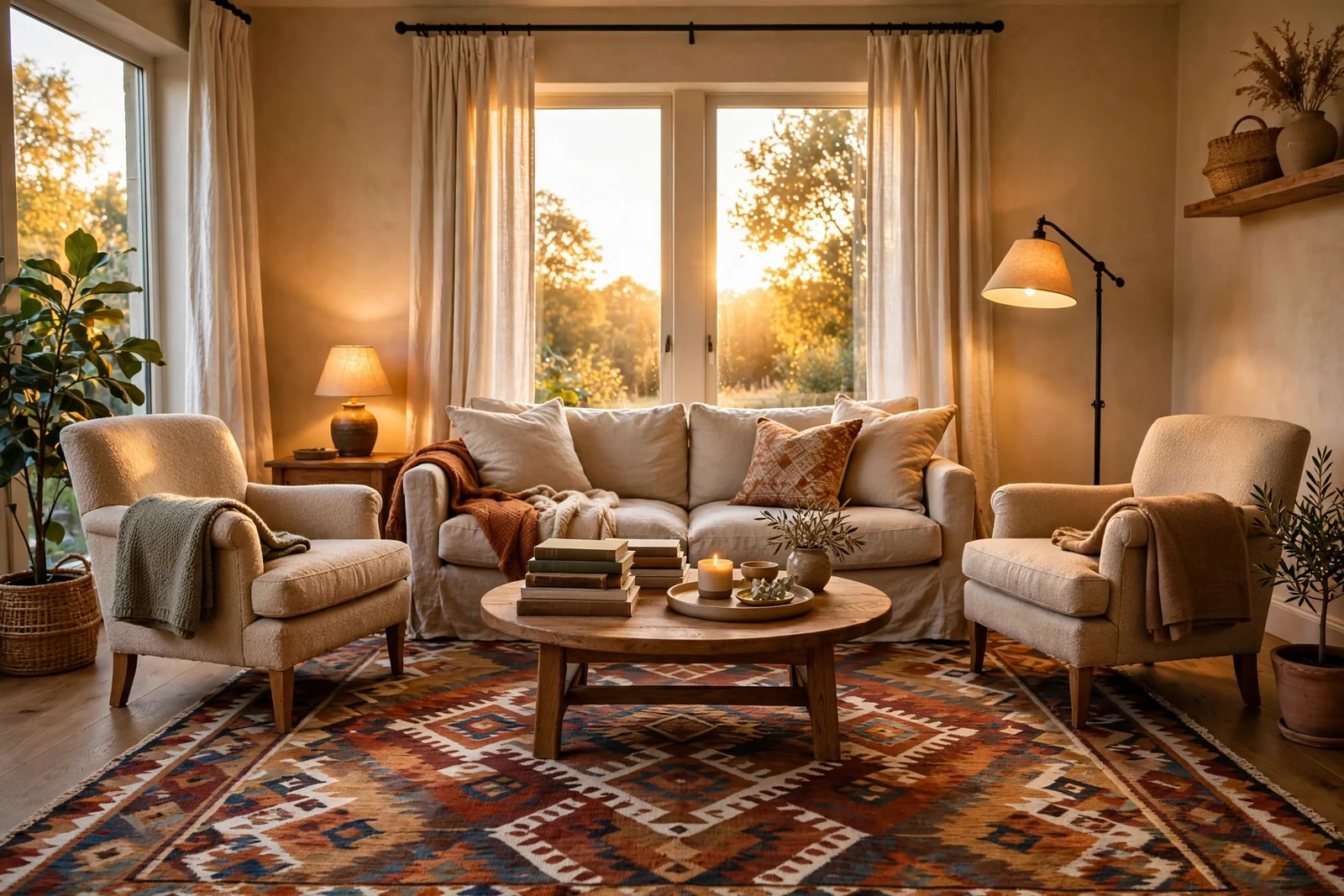
Discover 24 layered living room ideas that teach the base, middle and top method: rug sizing, high curtains, mixed fabrics, five textures and colour in threes.
Evening settles over a living room that feels gathered rather than bought, and you notice it first in the light. A low lamp glows across a wool rug, a folded throw waits on the sofa arm, and books lean in a small, deliberate stack. Nothing shouts, yet everything belongs. That collected feeling is not luck or a large budget. It is layering: small decisions about base, middle and top that stack into richness.
Think of layering in three tiers. The base layer grounds the room: a rug sized to anchor the seating and curtains hung high to lift the walls. The middle layer holds the comfort: a sofa and chairs in mixed but related fabrics. The top layer finishes the story: throws folded with intention, cushions in three pattern scales, lighting at three heights, books and plain objects on the table, and one tray that gathers the small things together.
This guide teaches the method first and then shows it in action across 24 concrete ideas. You will learn to count five textures before calling a room done, to repeat your accent colour in exactly three places, and to add the one layer most rooms miss. Every idea carries real numbers: sizes, distances, materials and budget notes, so you can apply it this weekend.
Work through the ideas in order, because each layer builds on the last. Start with the rug and curtains, move to seating and fabrics, then finish with light and small objects. By the last idea your living room will read as collected, warm and entirely yours. Take photos as you go so you can see the layers building week by week.
1. Size the Rug So the Front Legs of Every Seat Rest on It
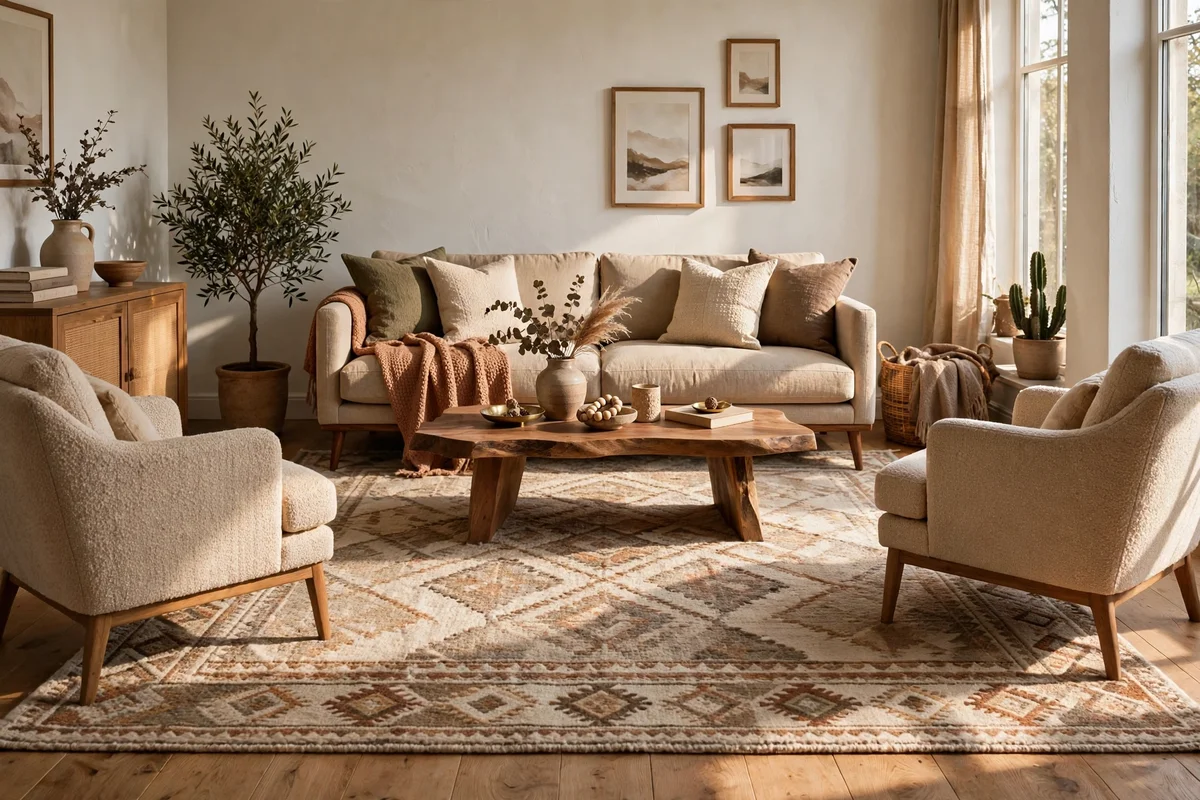
The rug is the foundation of every layer, so it must be generous. Measure the full seating footprint, then choose a rug that extends at least 30 cm beyond the front legs of the sofa and chairs. In a typical 3.6 by 4.5 metre room, a 240 by 340 cm rug usually does the job. A rug that is too small disconnects the furniture, while the right size pulls every seat into one settled conversation.
Wool or a wool blend is the best base investment because it cushions sound, resists crushing and ages gracefully. A low-pile flatweave suits busy family rooms and costs less, while a medium pile adds softness underfoot for quieter spaces. Leave 30 to 45 cm of bare floor between the rug edge and the wall so the room keeps a border of breathing space. The mistake to avoid is buying the rug before measuring; tape the outline on the floor first.
2. Hang Curtains From Rods Set 10 cm Below the Ceiling Line
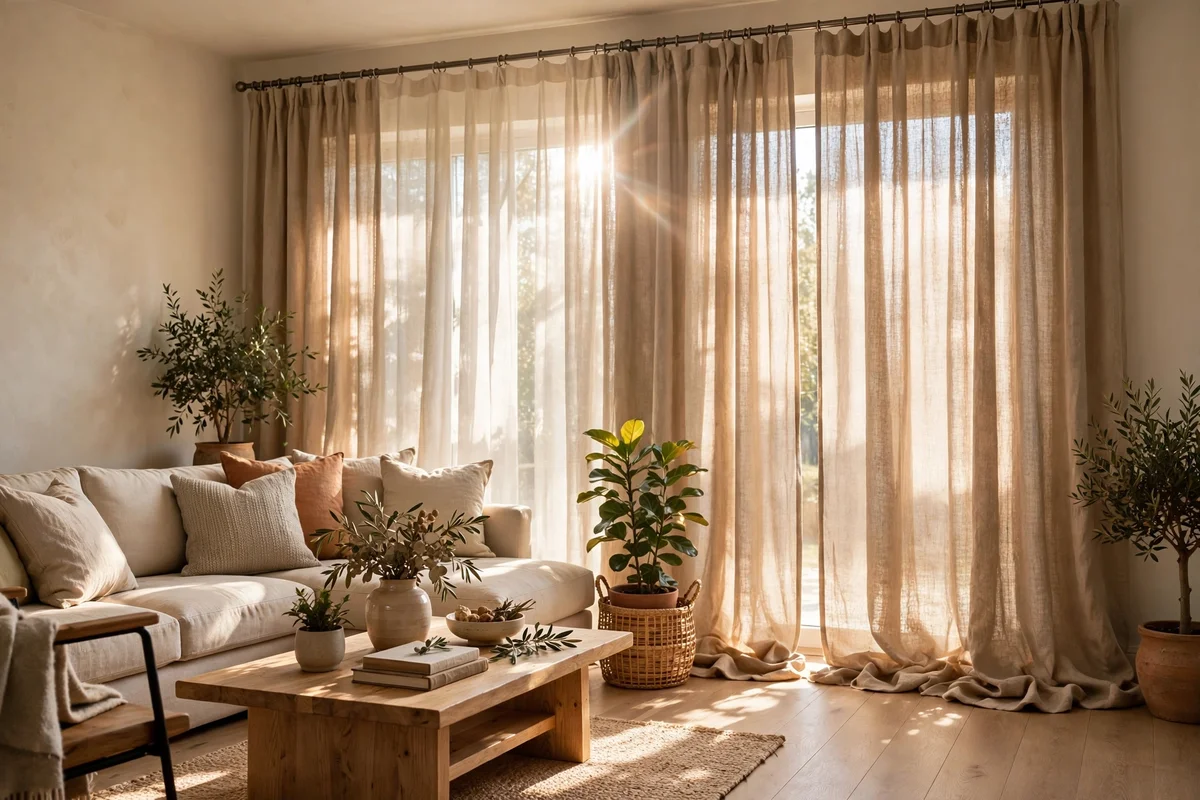
Curtains hung at the frame height shrink a room, while rods set 10 to 15 cm below the ceiling draw the eye upward and make walls feel taller. Extend the rod 15 to 25 cm beyond each side of the window so the panels stack clear of the glass and borrow extra daylight. Panels should just kiss the floor or puddle 2 to 5 cm for a relaxed, collected look.
Choose linen or a linen blend for the outer layer because it filters light softly and wrinkles with charm rather than looking untidy. Hang sheers on a second, inner rod for daytime privacy that still glows. Budget tip: ready-made panels in a warm off-white cost far less than custom work and look expensive once steamed. The mistake to avoid is skimpy fabric; panels should measure 1.5 to 2 times the rod width for proper fullness.
3. Pair a Linen Sofa With Velvet and Cotton Armchairs
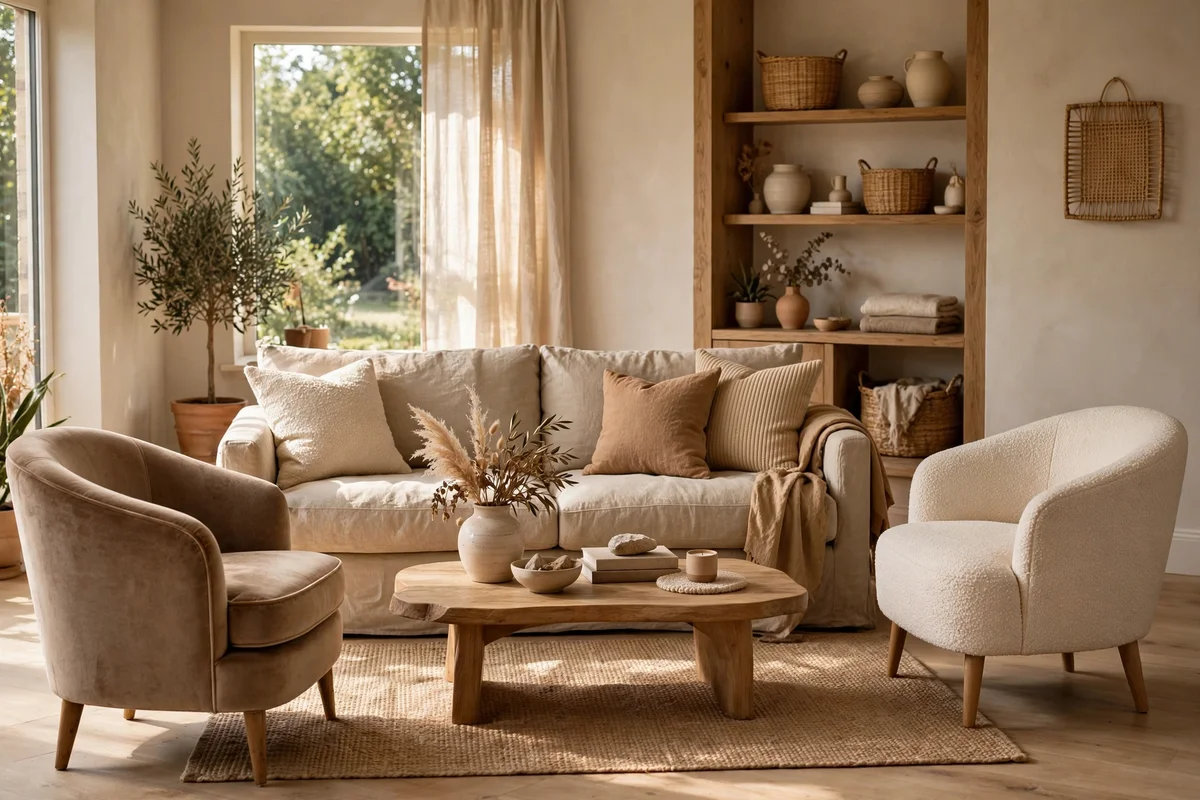
The middle layer of seating feels richest when fabrics are mixed but related. Start with a sofa in a durable weave such as linen or a linen-look cotton, then add armchairs in a contrasting texture like cotton velvet or a nubby boucle. Keep all three in the same tonal family, warm neutrals or muted earths, so the mix reads as intentional rather than accidental. Two chairs in different fabrics add even more collected character.
Test comfort before committing, since a chair you avoid sitting in is wasted money. Mid-range velvet chairs often cost 250 to 450 pounds or dollars each, while second-hand wooden frames can be re-covered affordably. The mistake to avoid is matching every fabric exactly, which flattens the middle layer into a showroom set. One shared undertone across different weaves is the sweet spot.
4. Fold a Wool Throw Into Thirds Along the Sofa Arm
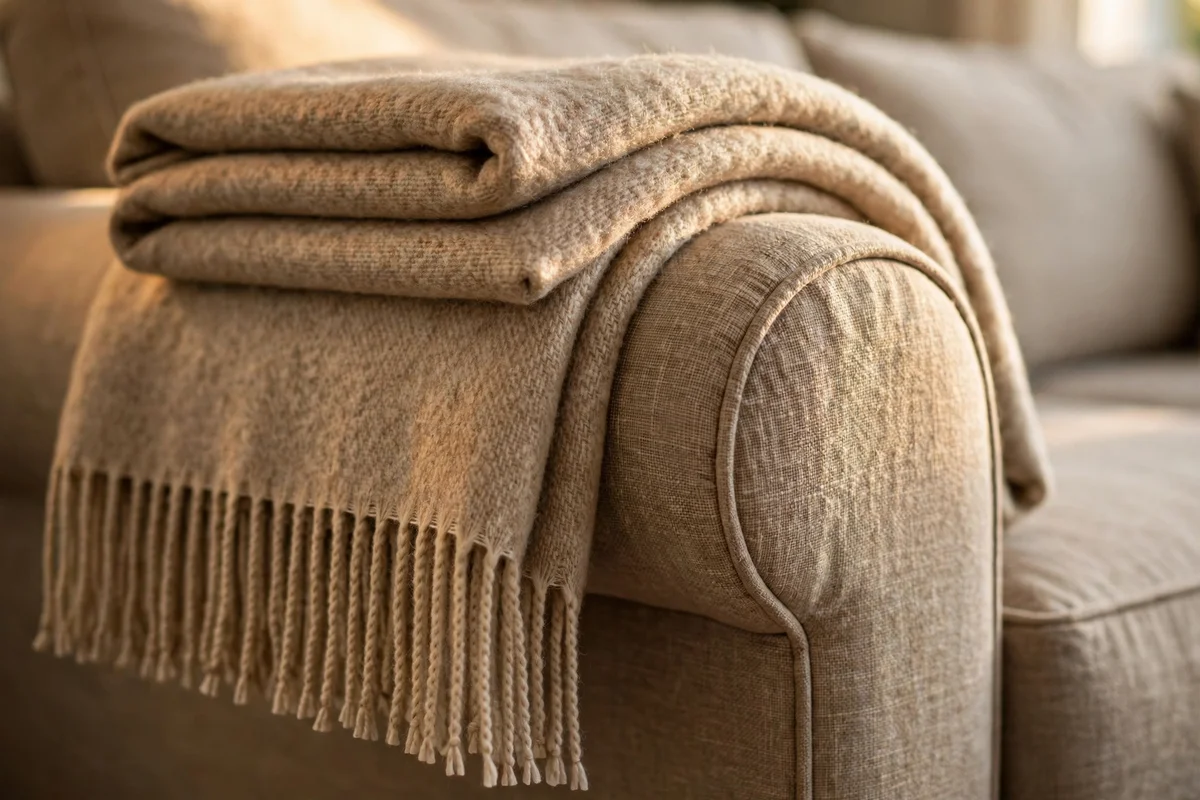
Throws look layered only when folded with intention. Fold a wool or chunky knit throw into thirds lengthwise, then drape it over one sofa arm so the folded edge faces outward and the fringe hangs evenly. Place it on the arm nearest the room’s main light source so the texture catches the glow. One throw per seating piece is enough; two on the same sofa starts to look like storage.
Choose throws in colours already present in the room, pulled from the rug or a cushion, to keep the top layer connected. A 130 by 180 cm throw folds neatly and costs 40 to 90 pounds or dollars in good wool. The mistake to avoid is tossing the throw in a heap, which reads as clutter rather than layering. Sharp folds signal care and make even a modest sofa feel dressed.
5. Combine Cushions in One Large, One Medium and One Small Pattern
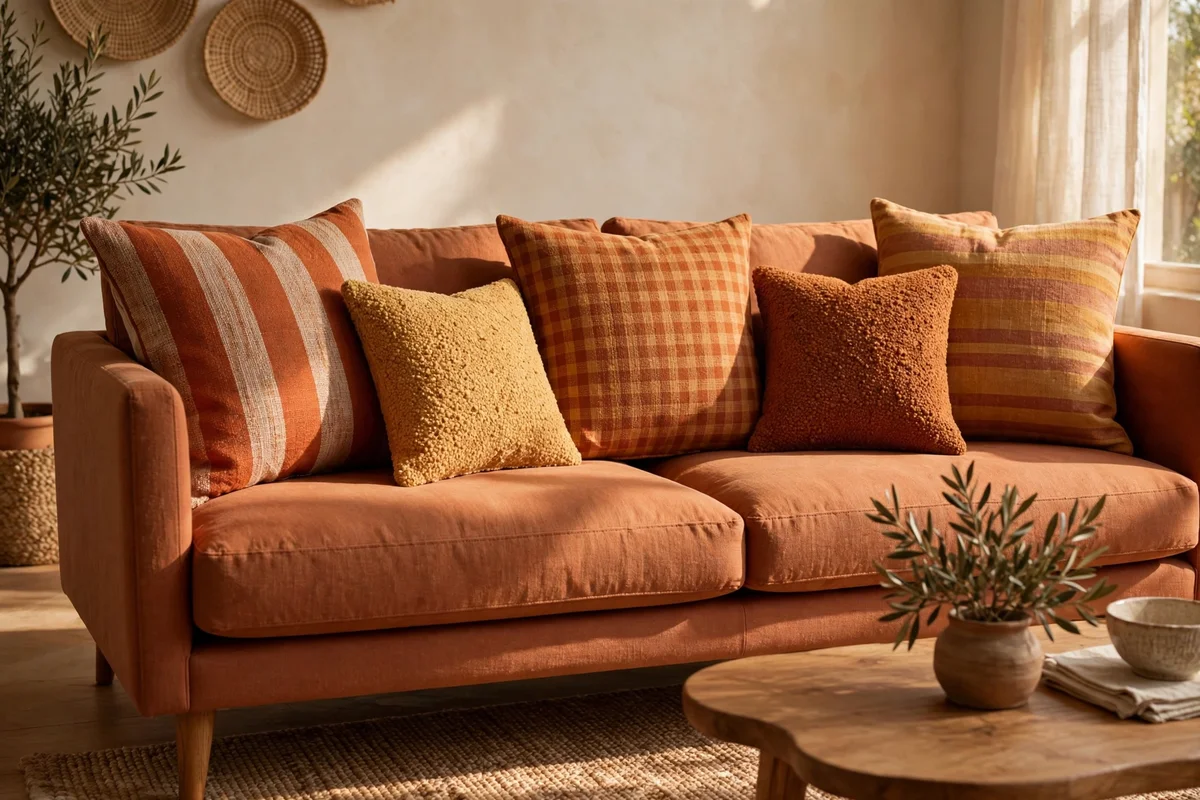
Cushions carry the top layer’s pattern, and three scales keep them harmonious. Choose one large-scale pattern such as a bold stripe or oversized botanical, one medium pattern like a small check or geometric, and one small texture that reads as solid from a distance, for example a nubby weave. Arrange five cushions on a three-seat sofa: two large at the corners, two medium in front, one small centred.
Keep all cushions within one colour family drawn from the rug so the variety feels unified. Feather or feather-blend inserts hold their shape better than hollowfill and can be re-plumped daily. Budget tip: buy inserts once and swap covers seasonally for under 20 pounds or dollars each. The mistake to avoid is using five cushions in five unrelated prints, which fragments the sofa instead of layering it.
6. Light the Room at Three Heights: Floor, Table and Ceiling
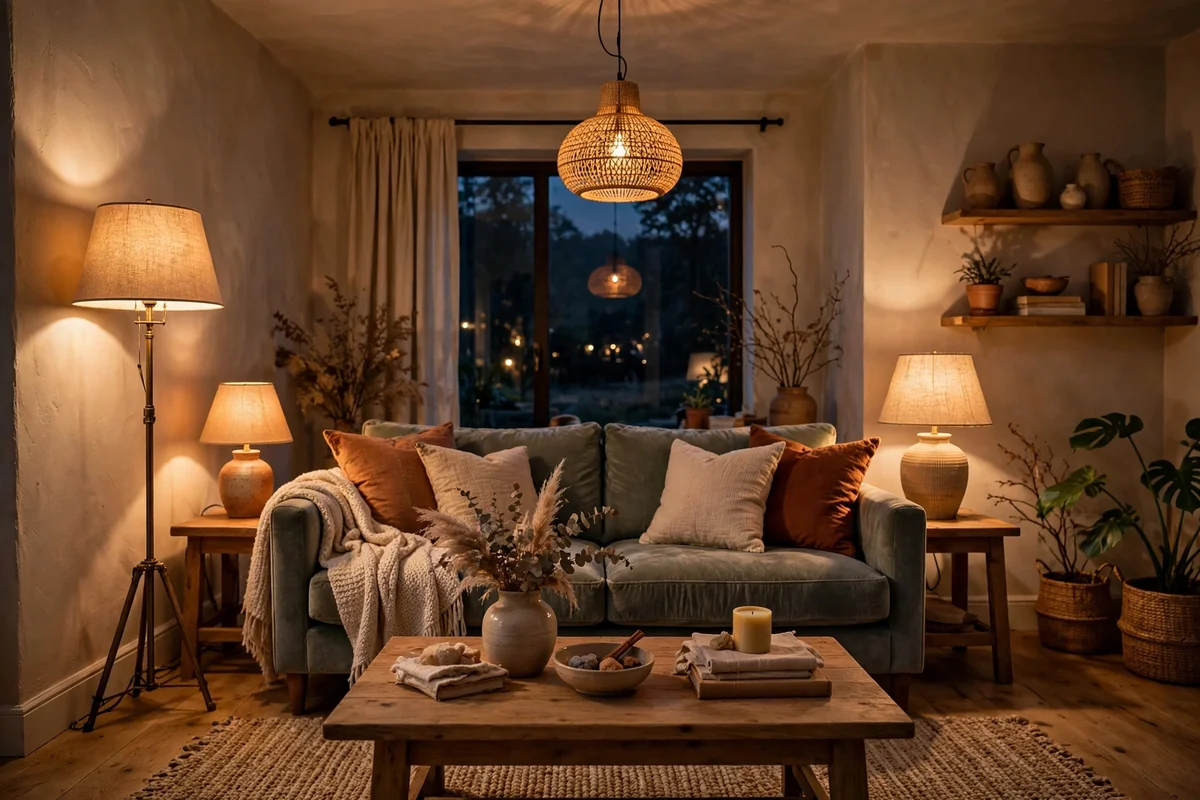
Layered lighting is the fastest way to make a room feel rich after dark. Plan for three heights: a floor lamp beside the reading chair at 150 to 170 cm, table lamps on side tables at 40 to 55 cm tall, and one ceiling source such as a pendant or soft overhead. Each height should be switchable on its own so you can tune the mood from bright daytime to low evening glow.
Use warm 2700K bulbs throughout, since mixed colour temperatures break the layered effect. Opaque or linen shades spread light gently, while clear glass shades sparkle but can glare. Budget tip: a thrifted lamp base with a new linen shade often costs under 35 pounds or dollars. The mistake to avoid is relying on a single bright ceiling light, which flattens every texture you worked to build.
7. Stack Coffee Table Books in Odd-Numbered Piles

Books are the working layer of the coffee table, and odd numbers look naturally collected. Stack three or five books in descending size, largest at the bottom, with the biggest no wider than half the table. Leave the top book’s cover visible if it is beautiful, or turn it spine-out for quiet colour. Two stacks on a large table balance each other; one stack suits a small table.
Mix subjects the family actually enjoys, from design and cookery to travel and nature, so the stack invites touching. Place a small plain object, like a ceramic dish or a smooth stone, on the top book to finish the layer. Budget tip: charity shops sell handsome hardbacks for a few pounds or dollars each. The mistake to avoid is stacking books taller than 25 cm, which blocks conversation across the table.
8. Gather Small Objects on a Single Wooden or Brass Tray
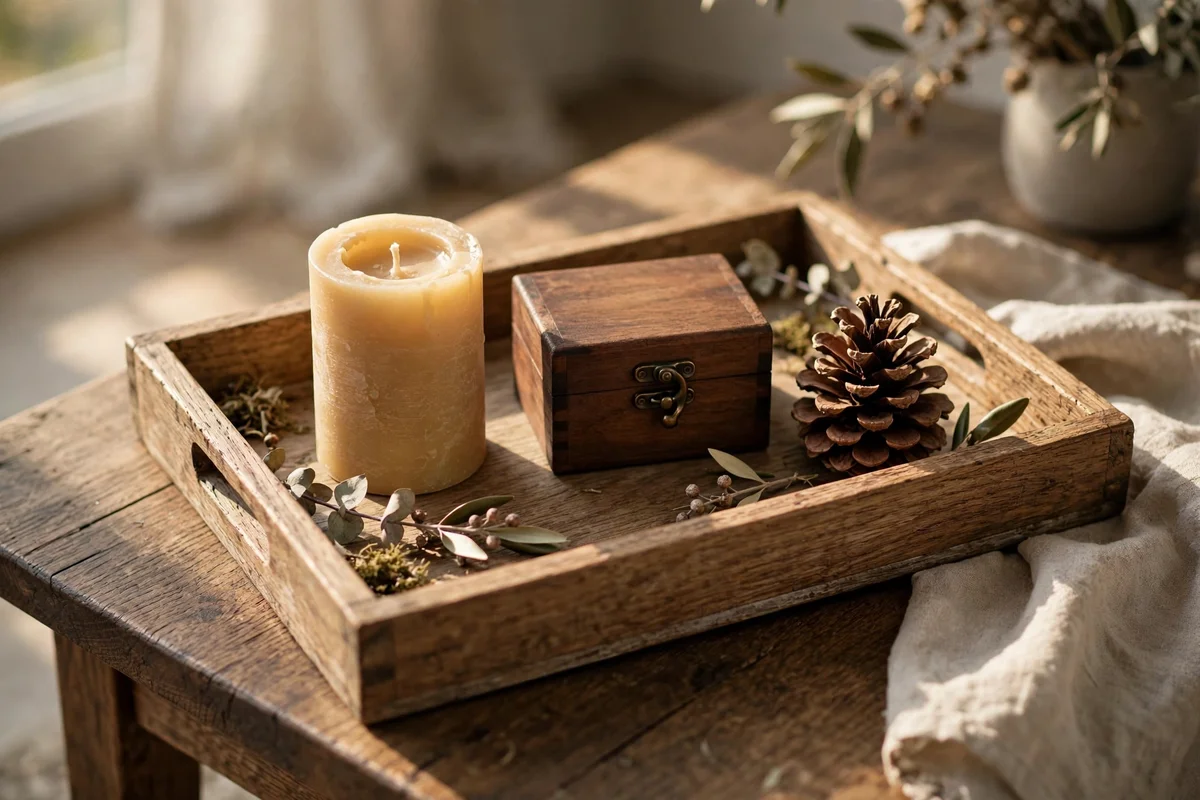
A tray is the layer that turns scattered small things into one composed still life. Choose a tray 35 to 50 cm wide in wood, rattan or aged brass, and place it slightly off-centre on the coffee table. Inside it, group the remote controls in a small box, a candle, and one natural object such as a pine cone or a smooth pebble. The tray’s edge gives every item a boundary.
Keep tray contents to three or four items so it reads as styled rather than stored. Wipe wood trays with a damp cloth and oil them twice a year; brass can be left to develop a soft patina. Budget tip: vintage brass trays appear regularly at flea markets for 10 to 25 pounds or dollars. The mistake to avoid is letting the tray become a dumping ground; reset it every evening in thirty seconds.
9. Count Five Textures Before You Call the Room Done
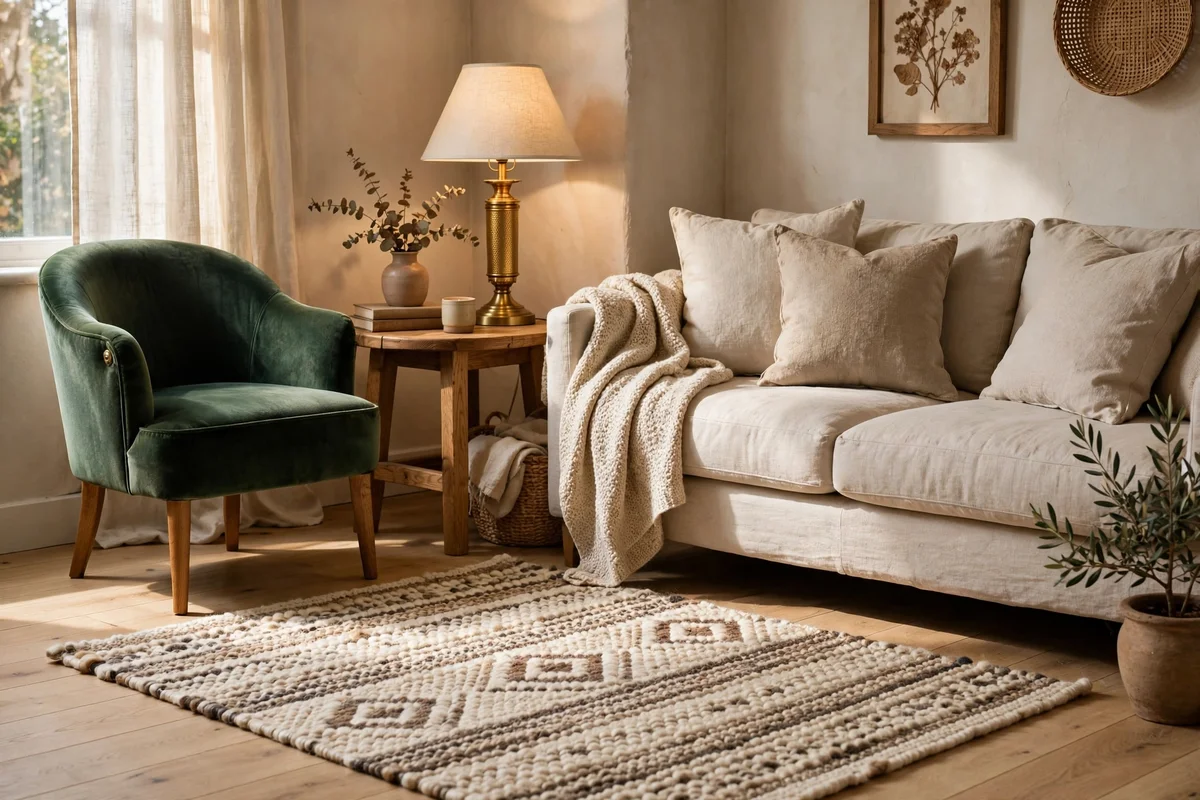
Texture counting is the method’s quality check. Stand at the doorway and name five distinct textures you can see: perhaps wool rug, linen sofa, velvet chair, oak table and brass lamp. If you stall at three, the room will feel flat no matter how good the colours are. Write the list on paper and add the missing textures deliberately, one at a time, until the count reaches five.
Spread textures across all three layers rather than clustering them in one corner. The base can carry wool and jute, the middle linen and velvet, the top ceramic and glass. Natural materials layer best because their imperfections harmonise. The mistake to avoid is adding texture through tiny accessories alone; one large textured piece, like a chunky knit throw or a woven basket, does more work than five small ones.
10. Repeat Your Accent Colour in Exactly Three Places
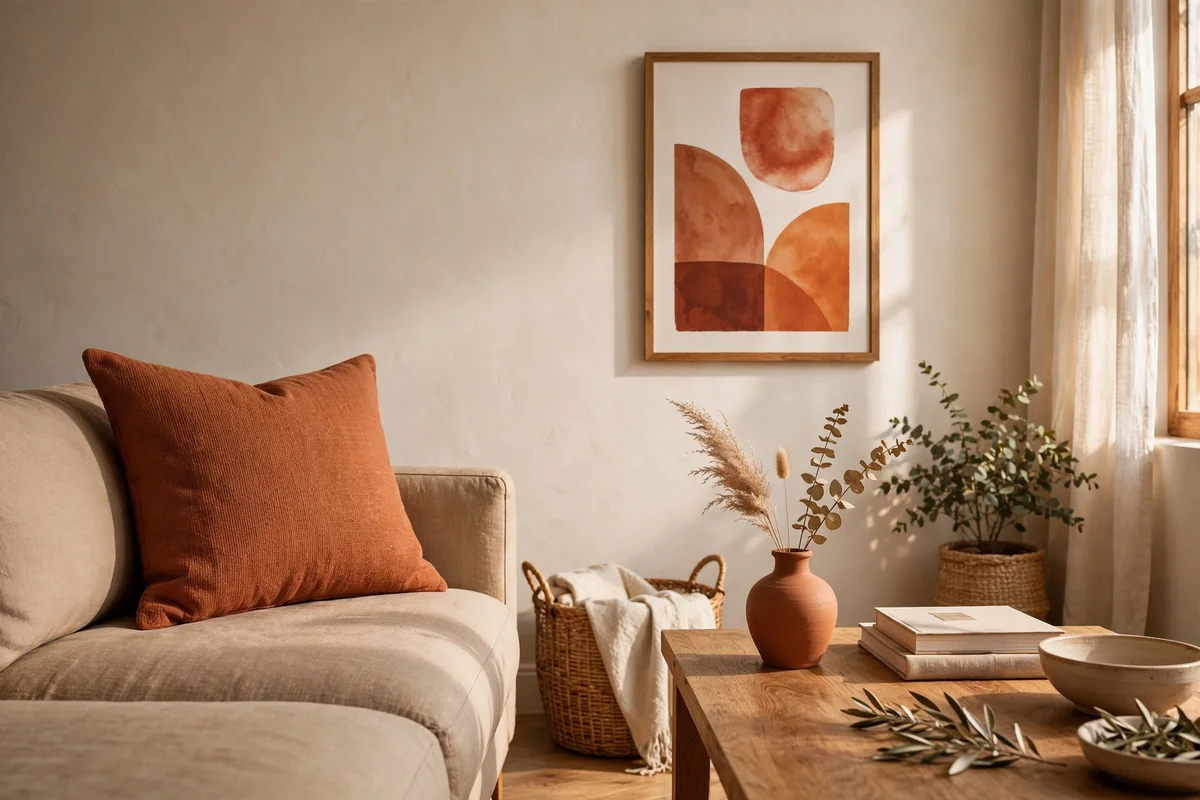
Colour repeated in threes is what makes a layered room feel designed rather than random. Choose one accent, perhaps terracotta, forest green or warm ochre, and place it in three spots at three heights: a cushion on the sofa, a book spine or vase on the coffee table, and a piece of art or a plant pot on a shelf. Each appearance should differ in size so one leads and two support.
Keep the remaining palette quiet, warm neutrals and wood tones, so the accent has room to sing. If you are tempted by a fourth appearance, shift it one shade lighter or darker to avoid a dotted, repetitive rhythm. Budget tip: paint a small wooden stool or frame in the accent colour for under 15 pounds or dollars. The mistake to avoid is using the accent in equal-sized doses everywhere, which turns rhythm into noise.
11. Layer a Smaller Flatweave Rug Over the Large Main Rug
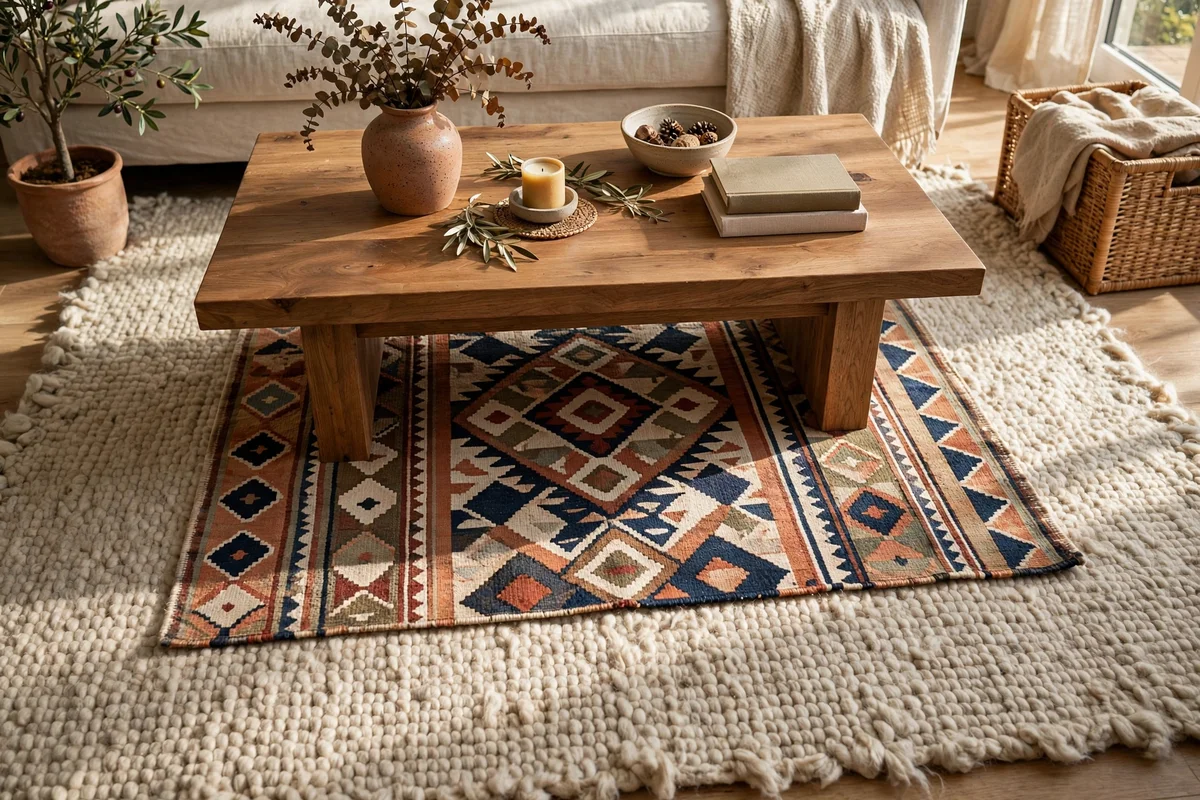
This is the layer most rooms miss: a second, smaller rug laid over the main one. Choose a flatweave or kilim 120 by 180 cm in a pattern that shares one colour with the base rug, and centre it under the coffee table with equal overlap on all sides. The double textile adds depth, pattern interest and extra softness exactly where feet land most.
Keep the top rug thin, under 1 cm, so the coffee table sits level and doors still open if the rug runs near one. Natural fibre tops like jute or cotton breathe well over wool. Budget tip: small vintage-look flatweaves cost 30 to 70 pounds or dollars and hide wear beautifully. The mistake to avoid is pairing two rugs of equal pile height, which looks lumpy instead of layered.
12. Dress Windows With Sheers Under Heavier Curtains
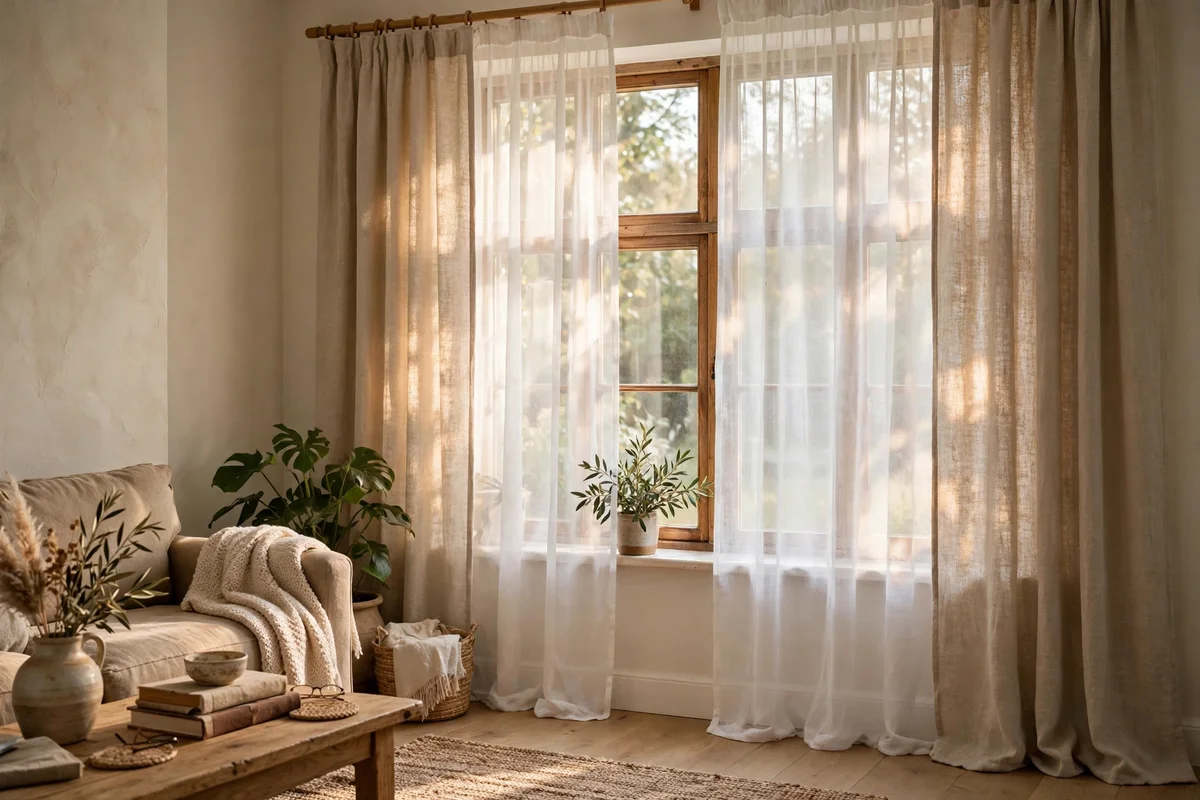
Two curtain layers on one window give you day and night in a single dressing. Hang sheer linen or voile on an inner rod close to the glass for soft daytime privacy that still glows with light. Mount the heavier linen or cotton panels on an outer rod set higher and wider, as described earlier. By day the sheers filter sun; by evening the outer panels close for warmth and quiet.
Keep both layers in the same warm white or ivory family so they blend rather than compete. Sheers cost little, often 10 to 20 pounds or dollars per ready-made panel, and they protect the heavier fabric from sun fading. The mistake to avoid is skipping the sheers and living with either glare or gloom; this middle window layer is one of the cheapest richness upgrades available.
13. Mix One Leather Chair Into a Fabric Seating Set
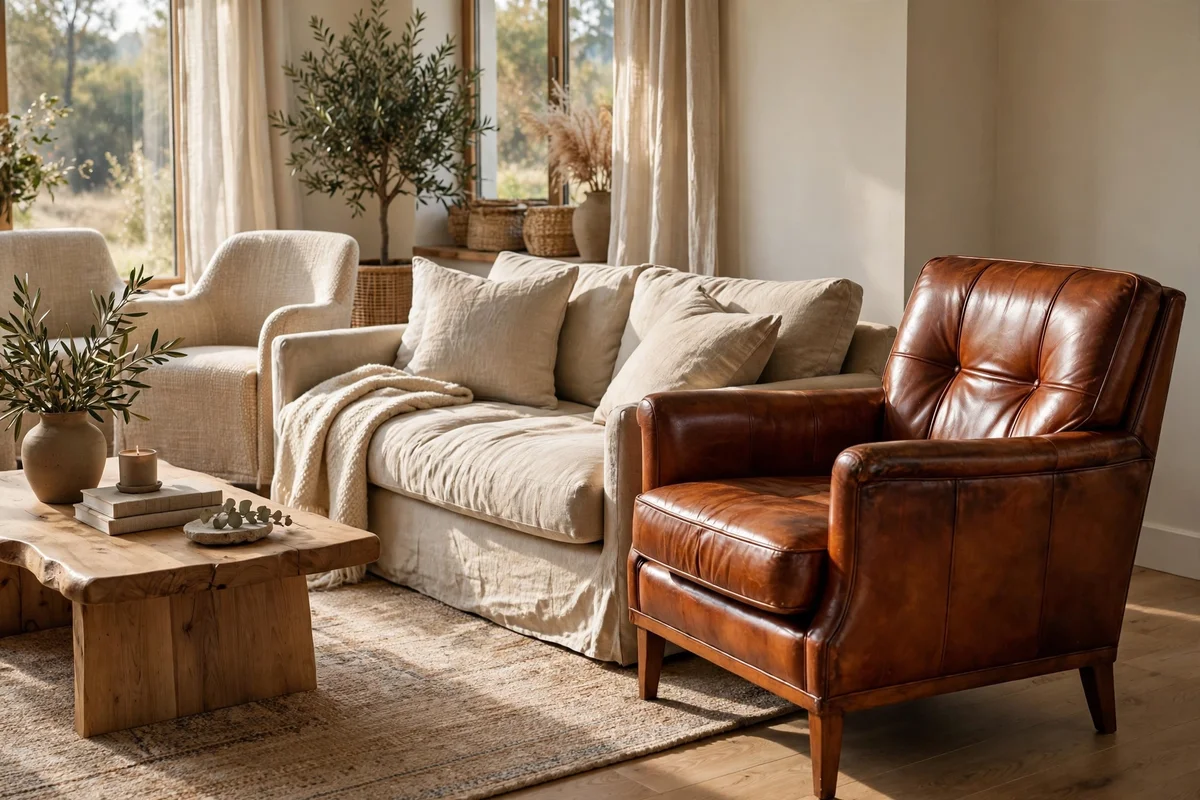
A single leather chair among fabric seats adds a collected, inherited feeling that matched sets never achieve. Choose a warm cognac or chestnut leather armchair and place it at an angle to the sofa, not in a straight line. The smooth leather contrasts beautifully with linen and velvet neighbours, and it grounds the middle layer with a material that improves with every year of family use.
Condition the leather twice a year with a plain cream to keep it supple, and keep it out of direct sun to avoid drying. Second-hand leather chairs are excellent value at 80 to 200 pounds or dollars because the patina is already started. The mistake to avoid is buying leather in a cold grey or black for a warm scheme; the undertone clash will fight every other layer.
14. Drape a Quilted Runner Across the Back of the Sofa
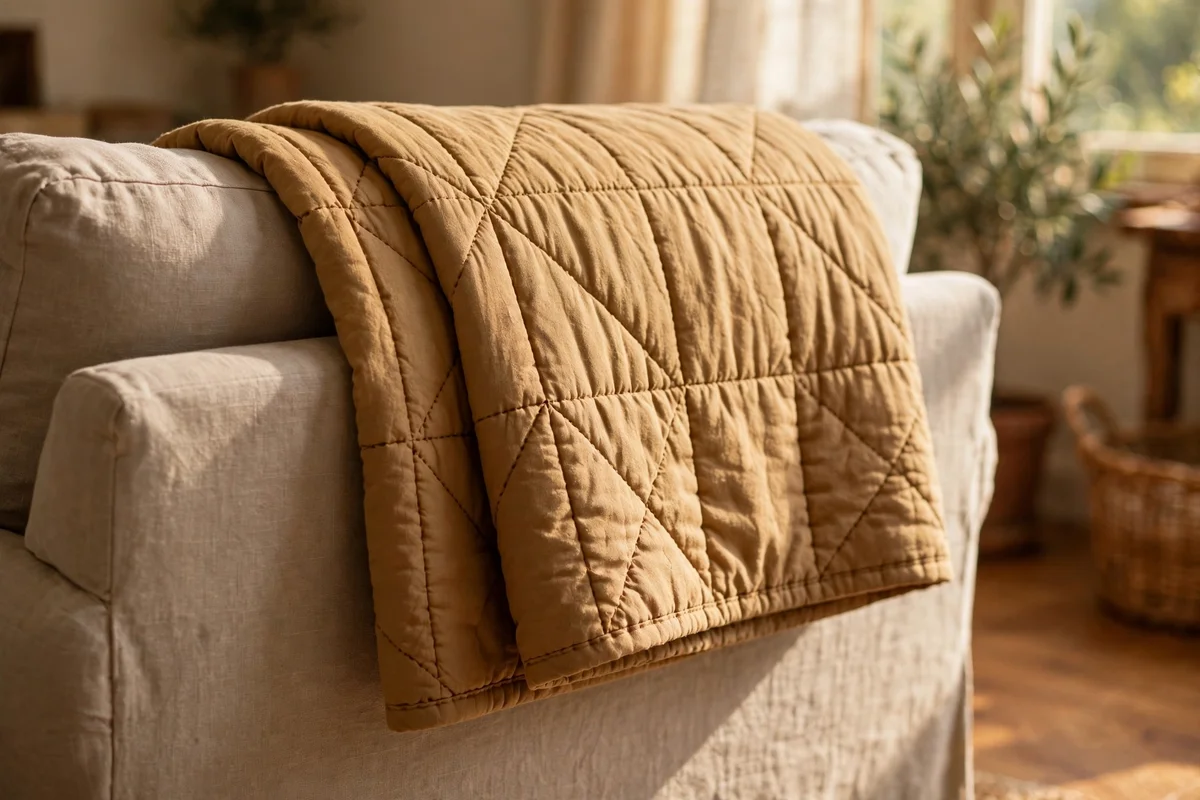
The back of the sofa is an often-bare layer that faces the room, so dress it. Fold a quilted or kantha runner in half lengthwise and drape it over the sofa back, centred or slightly off-centre, with 30 to 40 cm hanging down the front. The stitched texture reads from across the room and introduces pattern at a height most rooms leave empty.
Choose a runner 180 to 220 cm long so the drape proportions suit a standard three-seat sofa. Cotton quilts wash easily, which matters in a family room. Budget tip: hand-quilted runners from craft markets cost 25 to 60 pounds or dollars and bring genuine handmade character. The mistake to avoid is using a runner so wide it slides off; a 45 to 60 cm width stays put.
15. Keep a Basket of Rolled Throws by the Reading Chair
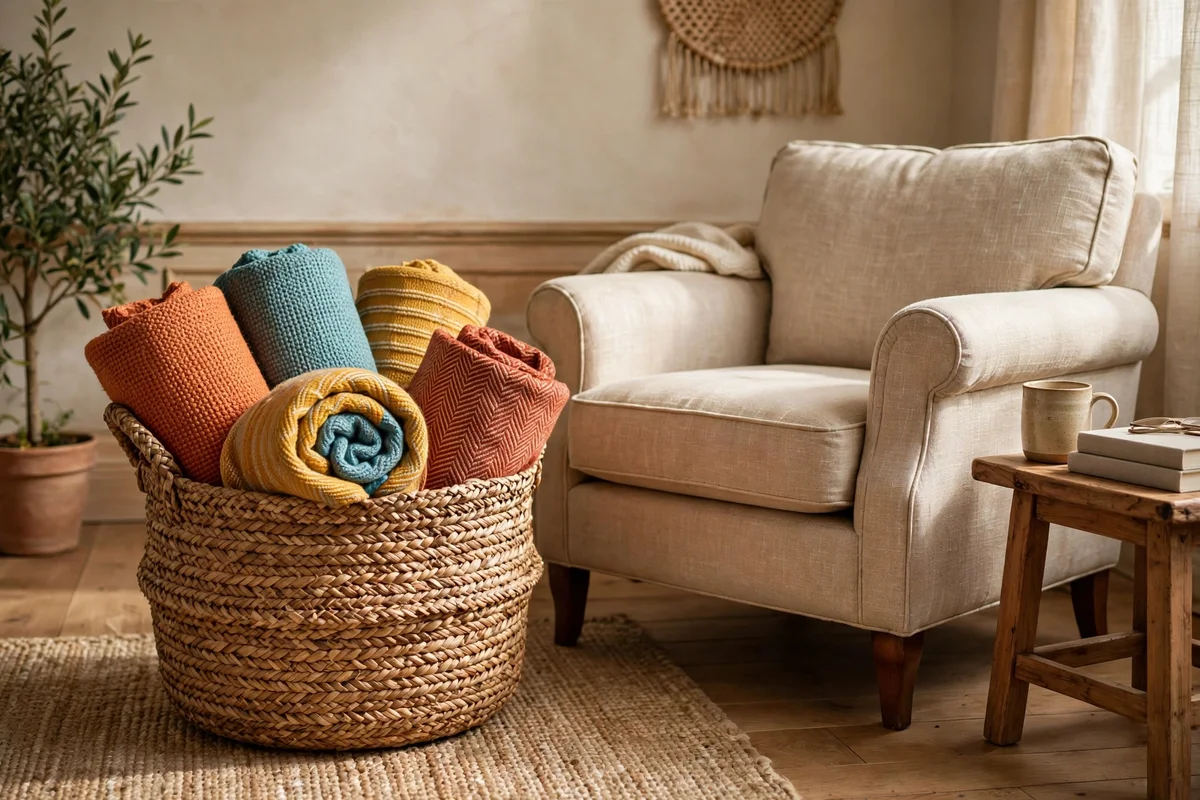
A basket of throws is layering you can touch, and it fills an empty corner with purpose. Choose a woven seagrass or rattan basket 40 to 50 cm tall, roll two or three throws into tight cylinders, and stand them upright inside so the colours show. Place the basket beside the reading chair or at the sofa’s end, within arm’s reach of where the family actually sits.
Roll rather than fold for the basket, since rolls stack higher and display more colour in less space. Wash throws seasonally and rotate which one sits on top to even out sun fading. Budget tip: sturdy baskets cost 20 to 40 pounds or dollars and last for years. The mistake to avoid is overfilling the basket until throws spill; three is plenty and keeps each one inviting.
16. Set a Floor Lamp Behind the Reading Chair at 150 cm
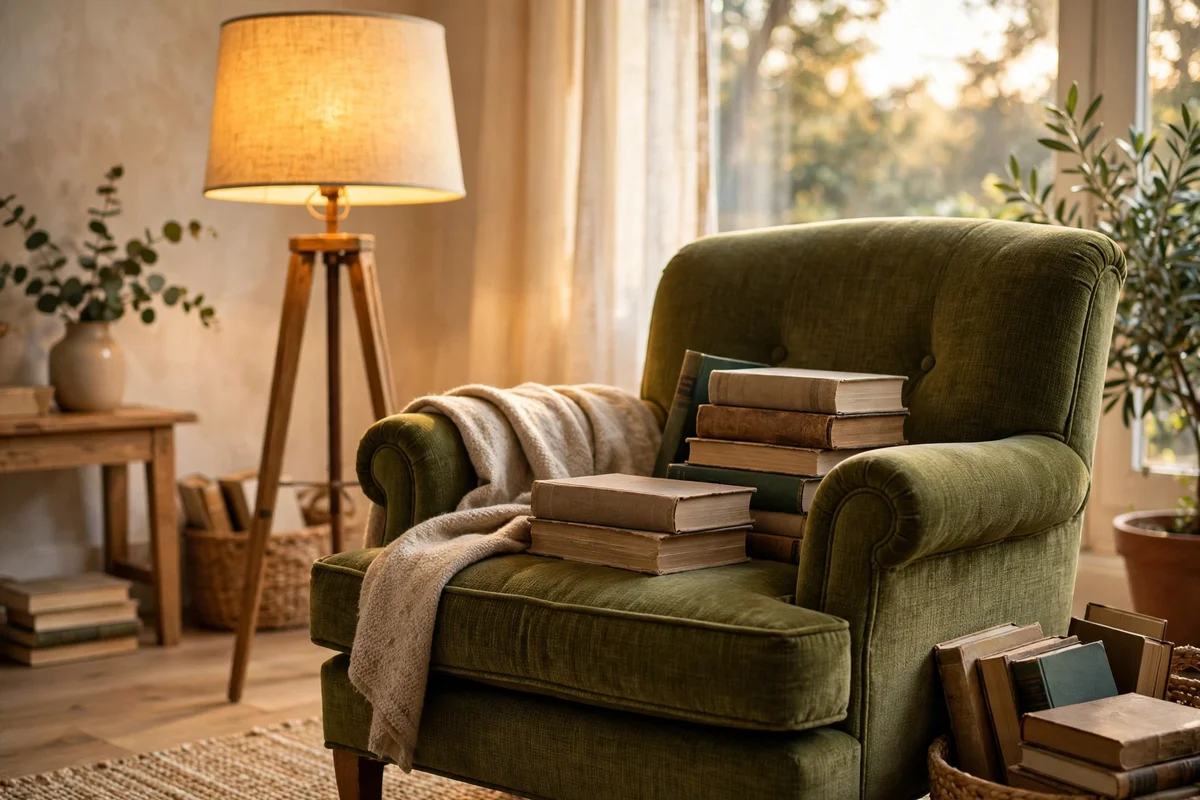
A floor lamp at 150 to 170 cm tall, placed 20 to 30 cm behind and beside the reading chair, creates the room’s evening heart. Choose an arc or a straight stem with a linen shade that directs light down over the shoulder. This single piece covers the tall lighting height, defines the reading corner, and makes the chair the most inviting seat in the house after dark.
A warm 2700K bulb of 800 lumens suits reading without harshness. Keep the lamp base within the rug’s edge so it joins the seating zone rather than floating on bare floor. Budget tip: simple pharmacy-style floor lamps cost 50 to 90 pounds or dollars and suit many styles. The mistake to avoid is placing the lamp directly behind the sitter’s head, which casts shadows on the page; offset it to one side.
17. Place Matching Table Lamps on Both Side Tables
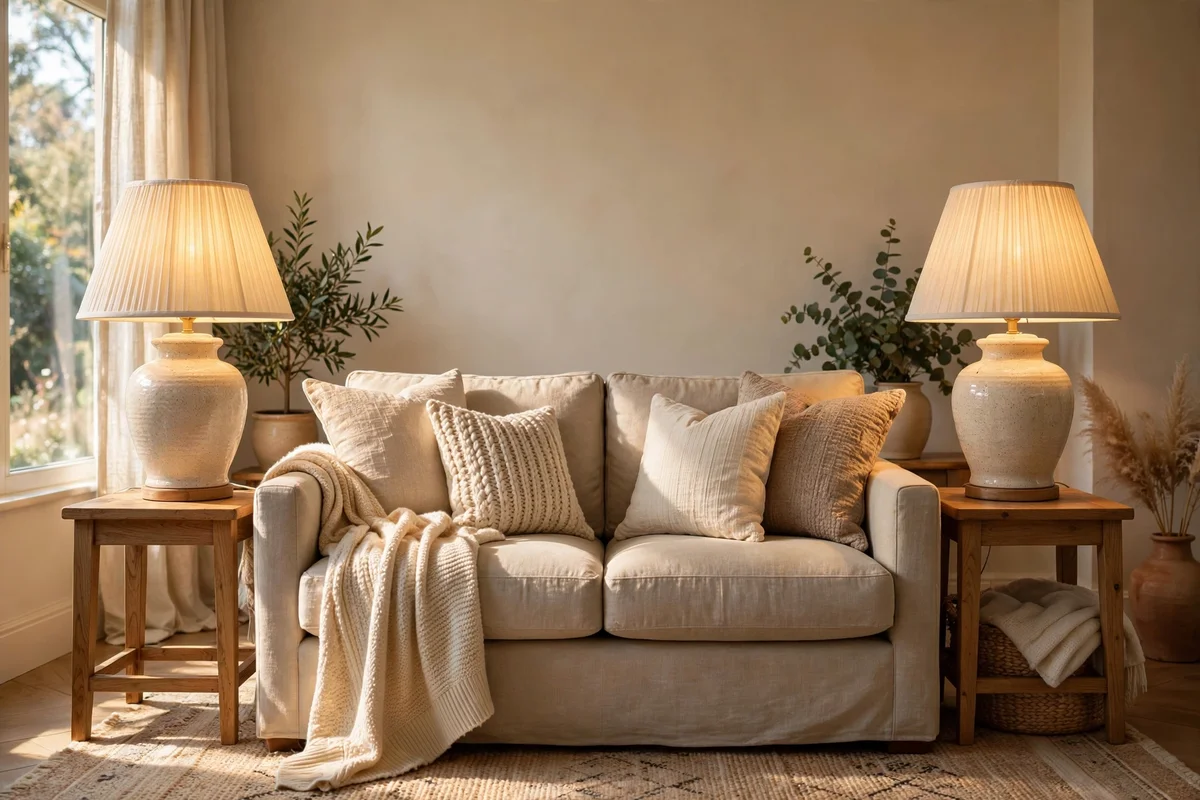
Symmetry at the middle lighting height calms a layered room. Put a matching pair of table lamps, 40 to 55 cm tall, on the side tables flanking the sofa, or on the console behind it. Identical bases and shades frame the seating like bookends and double the warm glow. Turn them on together each evening and the whole room settles within minutes.
Linen or fabric shades in cream diffuse light softly, while the bases can introduce a new texture such as ceramic, wood or aged brass. Keep the lamps’ total height below the top of the sofa back plus 15 cm so they sit in proportion. Budget tip: pairs from outlet stores often cost less than two singles. The mistake to avoid is mismatched lamp heights here; this is the one place where a pair should truly match.
18. Add One Tall Plant in a Woven Pot for a Living Layer
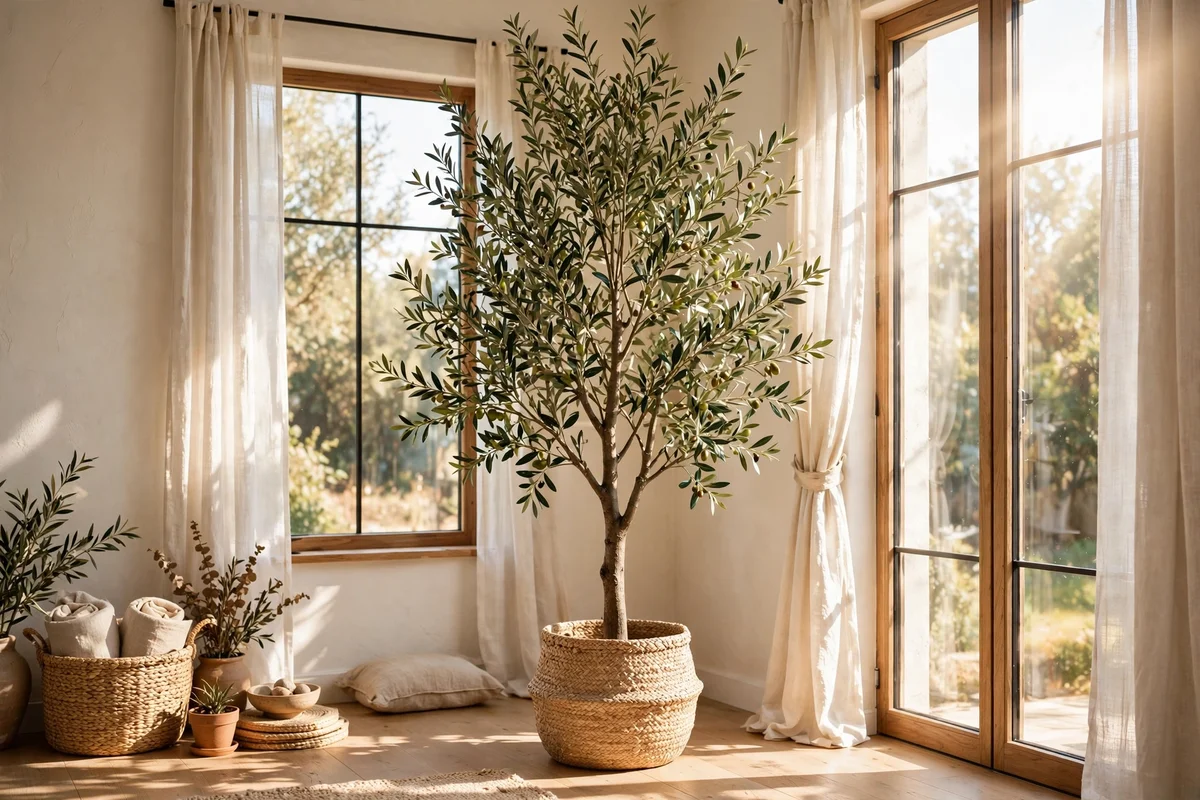
Living green is a texture no fabric can imitate, and one tall plant changes a room’s whole feeling. Choose an olive tree, a fiddle-leaf fig or a tall kentia palm in a 30 to 40 cm woven seagrass pot, and place it in the brightest corner, at least 1 metre from radiators. The height fills the vertical gap between furniture and ceiling that layered rooms often leave bare.
Water according to the plant’s needs rather than a schedule, and rotate the pot a quarter turn monthly for even growth. A healthy large plant costs 40 to 100 pounds or dollars, and the woven pot adds one more natural texture to your count of five. The mistake to avoid is scattering five tiny pots instead; one confident plant layers better than a crowd of small ones.
19. Style a Plain Ceramic Vase Beside the Book Stack

Plain objects give the eye a resting place among pattern, so keep one ceramic vase deliberately simple. Choose a handmade-look vase 20 to 30 cm tall in matte cream, sand or soft grey, and set it beside the book stack on the coffee table. Leave it empty or hold two or three dried stems; the quiet shape balances the busy textures around it.
Matte glazes suit layered rooms better than glossy ones because they absorb light instead of reflecting it. Handmade-look ceramics cost 15 to 35 pounds or dollars at craft markets and each one is slightly unique. The mistake to avoid is filling the vase with tall fresh flowers that need constant replacing; dried grasses or empty simplicity keep the layer effortless and lasting.
20. Layer Framed Art in Two Depths on the Mantel Shelf
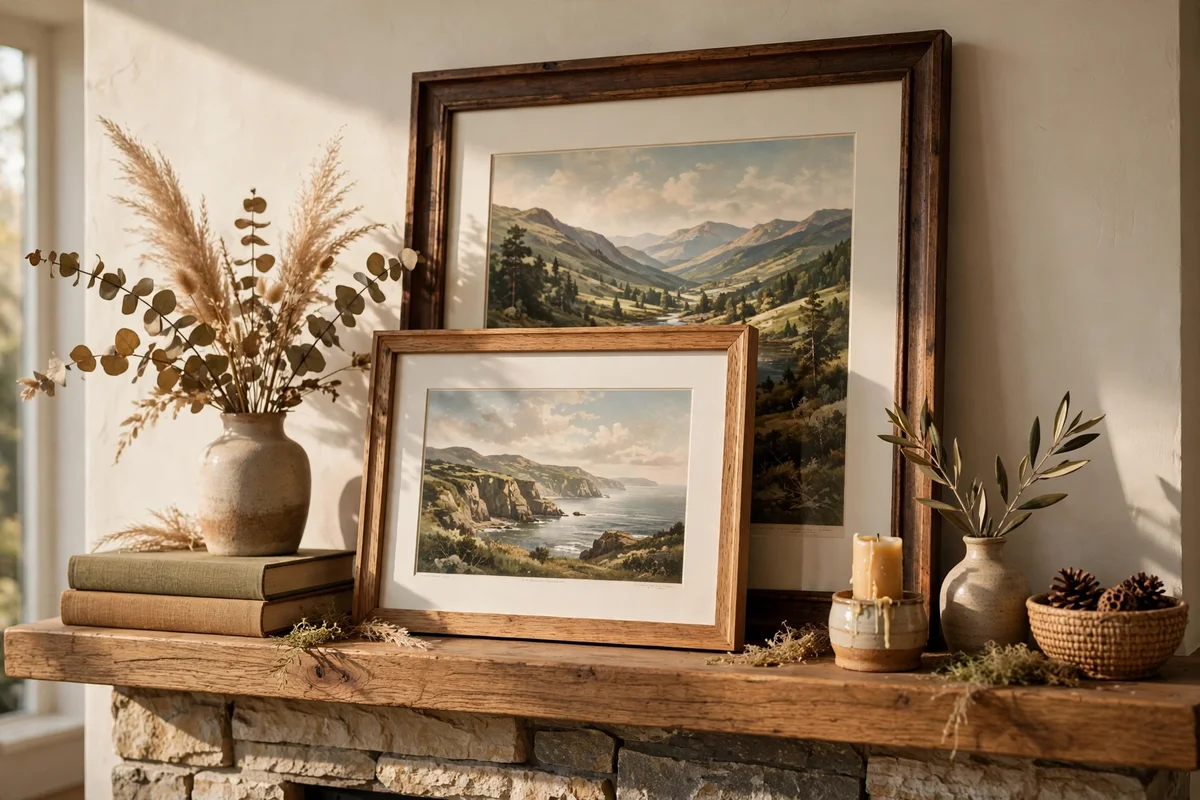
Art layered in two depths turns a flat mantel into a small gallery. Lean a large frame 50 to 70 cm tall against the wall at the back, then place a smaller frame 25 to 35 cm tall in front and slightly to one side so both remain visible. The overlap creates depth that a single centred picture can never achieve, and the arrangement looks collected over time rather than hung in one afternoon.
Use matching or closely related frames, oak with oak or black with black, so the layering reads as intentional. Family-friendly prints of landscapes, botanical studies or architectural sketches suit the heritage mood. Budget tip: frame charity-shop art or print public-domain images at home for a few pounds or dollars. The mistake to avoid is centring everything perfectly; a slight asymmetry is what makes layered art feel natural.
21. Swap One Cushion Cover for a Hand-Knitted One Each Season
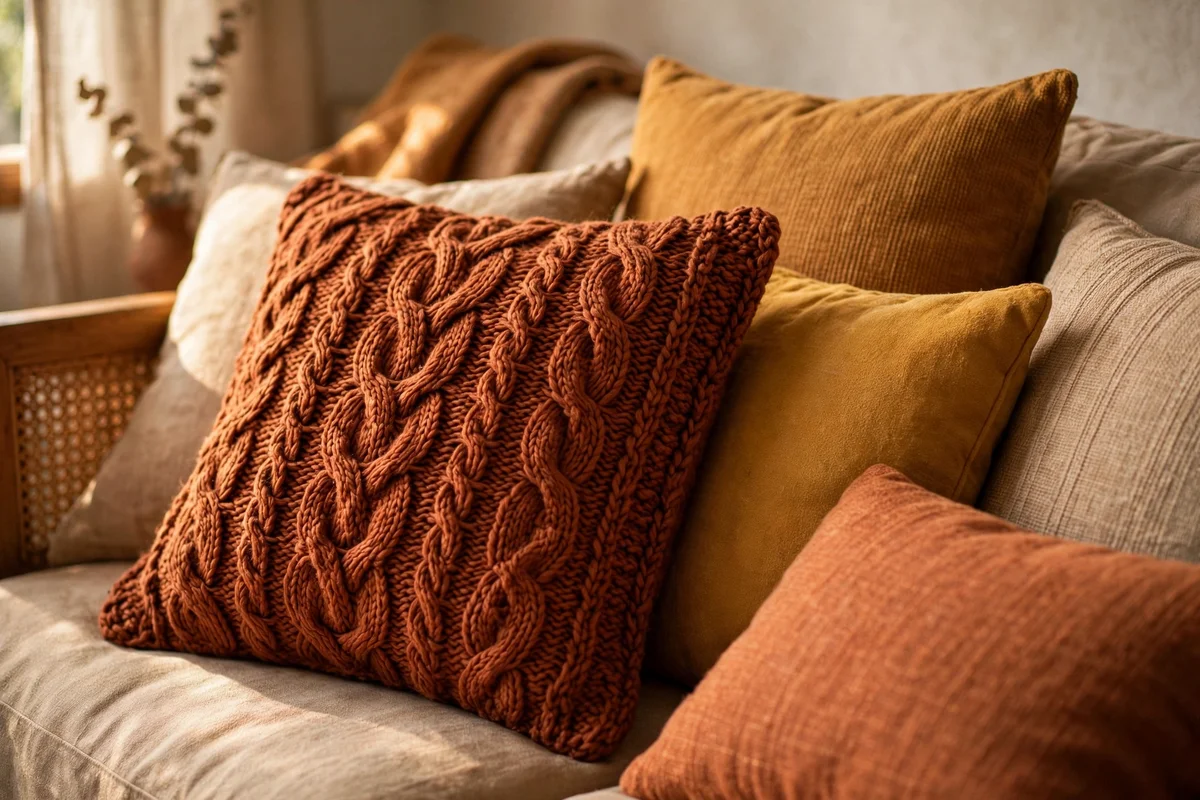
Seasonal layering keeps a room feeling alive without redecorating. Each season, replace one sofa cushion cover with a hand-knitted or crocheted one in a seasonal tone: warm rust for autumn, deep green for winter, soft sage for spring, natural ecru for summer. The single change refreshes the whole cushion arrangement because the eye registers the new texture instantly.
Knitted covers cost 15 to 30 pounds or dollars from craft sellers and wash gently by hand. Store the off-season cover folded inside the basket with the throws so the swap takes two minutes. The mistake to avoid is changing every cushion at once, which erases the collected feeling and restarts the layering from zero; one swap preserves the story.
22. Slide a Low Ottoman Under the Coffee Table Edge
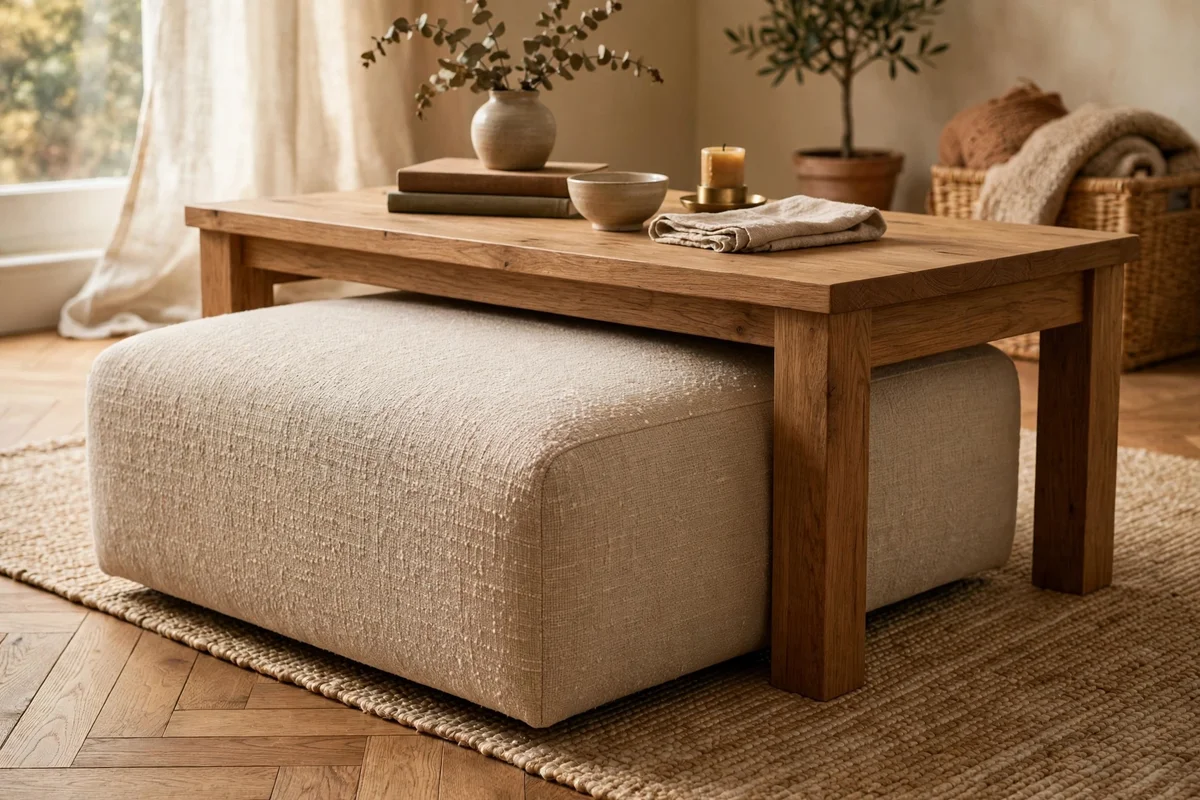
An ottoman tucked halfway under the coffee table is a hidden layer that appears when the family gathers. Choose a low upholstered ottoman 40 to 50 cm square in a fabric that echoes the chairs, and slide it under the table’s edge so one third remains visible. Pull it out for extra seating or as a footrest, then tuck it back to restore the clean lines.
Storage ottomans add even more value by holding the spare throws or board games. Check the coffee table’s clearance height before buying; most ottomans need at least 40 cm of space. Budget tip: second-hand ottomans re-covered in a remnant fabric cost 30 to 60 pounds or dollars. The mistake to avoid is an ottoman taller than the table, which blocks the view across it.
23. Lay a Sheepskin Over the Armchair Seat for Instant Warmth
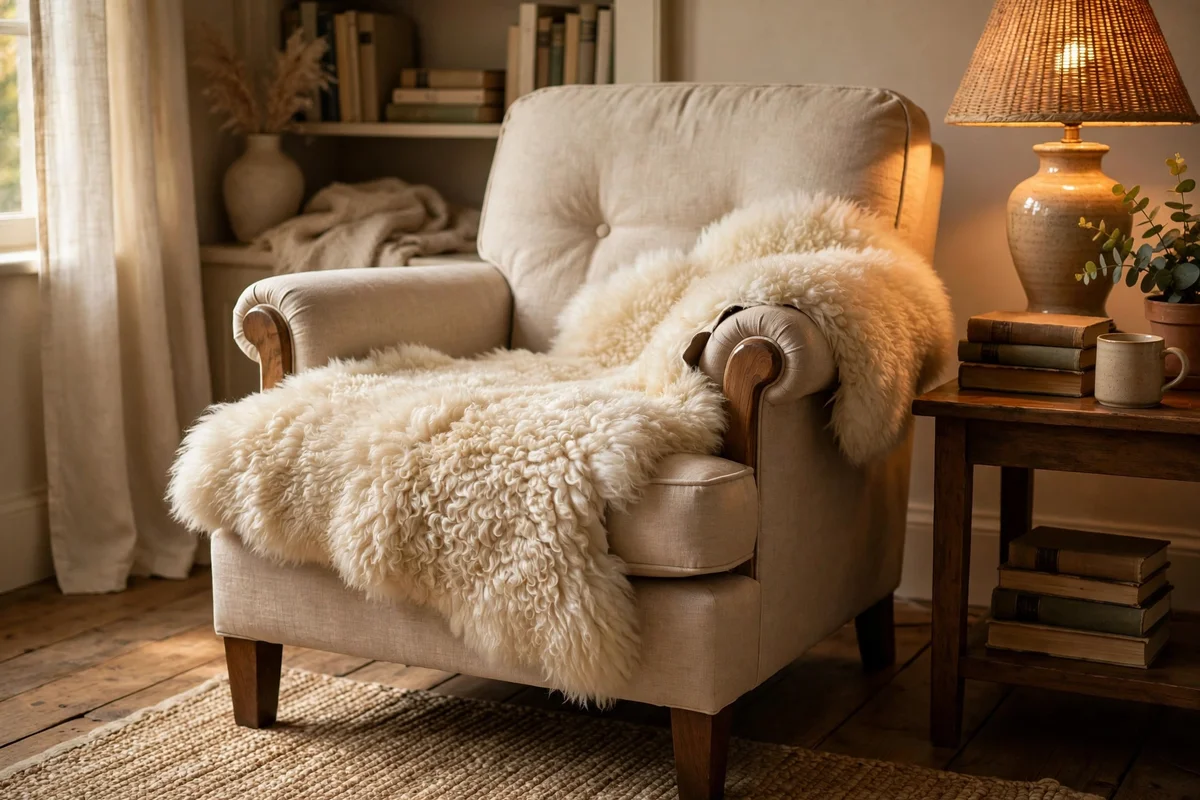
Nothing says layered comfort faster than a sheepskin on a chair seat. Drape a single sheepskin, roughly 60 by 90 cm, over the seat of the reading armchair with the wool side up and the hide hanging slightly over the front edge. The deep pile invites sitting, softens hard chair frames, and adds the fifth texture many rooms are missing.
Shake sheepskins outdoors monthly and brush the wool with a wide-tooth comb to keep it lofty. Good sheepskins cost 40 to 80 pounds or dollars and last for years with basic care. The mistake to avoid is placing sheepskins on every seat, which dilutes their special softness; one on the favourite chair is the collected choice.
24. Edit One Surface Bare So the Layers Can Breathe
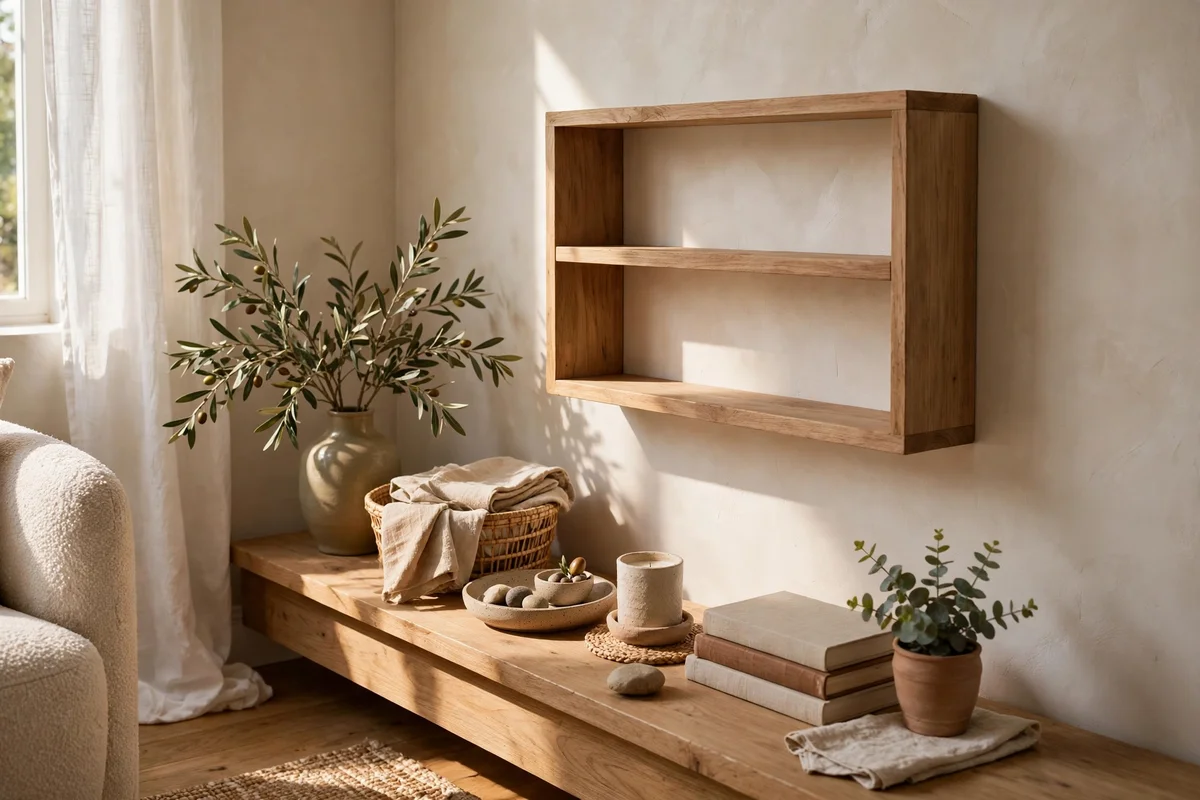
The final layering skill is knowing when to stop. Choose one surface, perhaps the top of the bookshelf or one end of the console, and clear it completely for a week. Live with the empty space and notice how the room’s eye travels more calmly. Layers need contrast to be seen, and a bare surface is what makes the styled ones beside it look intentional.
This edit costs nothing and often reveals that the room was finished two purchases ago. If the bare spot starts to feel lonely, add back a single plain object rather than a group. The mistake to avoid is treating every surface as a display shelf; restraint is the layer most enthusiastic decorators skip, and it is what separates a collected room from a crowded one.
A layered living room grows the way a good garden does: one thoughtful addition at a time, never a single frantic shopping trip. Keep the three tiers in mind, count your five textures, repeat your colour in threes, and add the missing layer only where the room asks for it. Warmth comes from honesty between materials, not from quantity. Trust the method, live with each change for a few days, and let the room collect its character around your family’s real life.
This week, try the easiest win first: refold your throws with intention and set a tray on the coffee table to gather the small things. Those two moves take ten minutes and cost nothing, yet they teach your eye what layering feels like. Once you see the difference, the bigger steps like sizing a rug or hanging curtains higher will feel natural. Enjoy the process; a collected room is a slow pleasure, not a race.
Frequently Asked Questions
What is the correct rug size for layering a living room?
Choose a rug large enough for the front legs of the sofa and chairs to rest on it, usually 240 by 340 cm in a standard room. Measure the seating zone and add at least 30 cm beyond each front leg. A too-small rug is the most common layering mistake and makes even good furniture look scattered.
How many textures should a layered living room have?
Aim for five distinct textures, for example wool, linen, wood, brass and ceramic. Count them across the base, middle and top layers rather than crowding them in one corner. Fewer than three can feel flat, while more than seven starts to look busy. Let one dominant texture lead and the others support it.
Can I layer a small living room without it feeling crowded?
Yes, by keeping layers slim and vertical. Hang curtains high, use a low-profile rug, choose lighting at three heights instead of extra furniture, and fold throws tightly. Edit one surface bare so the eye has somewhere to rest. Small rooms actually layer well because every layer is close enough to be seen together.
How do I repeat a colour in threes without overdoing it?
Pick one accent colour and place it in three spots at different heights: perhaps a cushion on the sofa, a book spine on the table, and a small vase on the shelf. Vary the size of each appearance so one reads as the leader. If you add a fourth, make it a shade lighter or darker to keep the rhythm calm.
What is the layer most living rooms are missing?
Usually it is the middle ground between the rug and the seating: a second, smaller textile layer like a flatweave over the main rug, or sheers under heavier curtains. Rooms often jump straight from the floor to furniture, which leaves a visual gap. Adding that bridge layer is the fastest way to make a plain room feel collected.