Living Room
24 Moody Living Room Ideas That Feel Deep, Warm and Beautifully Intimate
By Anna Wells · · 18 min read
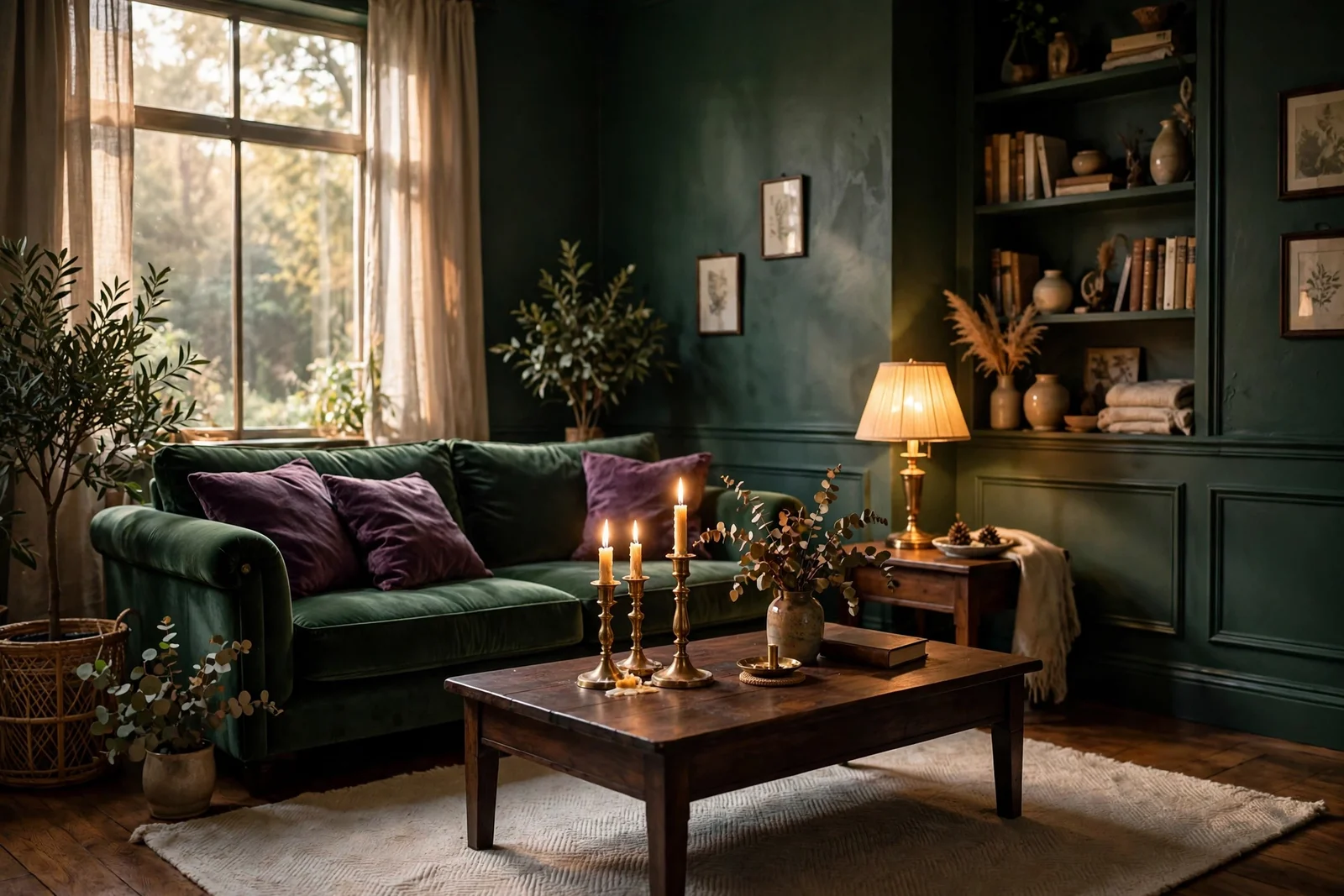
Deep wall colours, low lamplight, velvet and brass: 24 practical ideas for a moody living room that feels warm and cocooning, never gloomy.
The hour after sunset is when a living room earns its keep. The lamps are low, the tea is poured, and the walls seem to draw a little closer, holding the evening in. A moody living room is built for exactly this hour, and the good news is that deep colour done well feels warm and cocooning, never gloomy.
Moody decorating is not about painting everything black and hoping for the best. It is a careful balance of deep wall colours like forest green, ink blue, warm plum and charcoal brown, layered with low lamplight, velvet and wool textiles, dark wood and brass. Candlelight finishes the scene each evening.
Below are 24 concrete ideas that keep moody rooms liveable and beautiful. You will find exact paint guidance, lamp heights and bulb temperatures, sizing rules for rugs and art, and the balance rules that stop dark schemes from feeling heavy. Every idea is practical, budget aware and easy to try one at a time.
Start with the idea that speaks to you first, whether that is a tin of deep green paint or a single brass candlestick. Small changes build the mood faster than a full makeover, and by the end of this list your living room will be ready for slow evenings.
1. Paint the Walls Deep Forest Green for Evening Depth
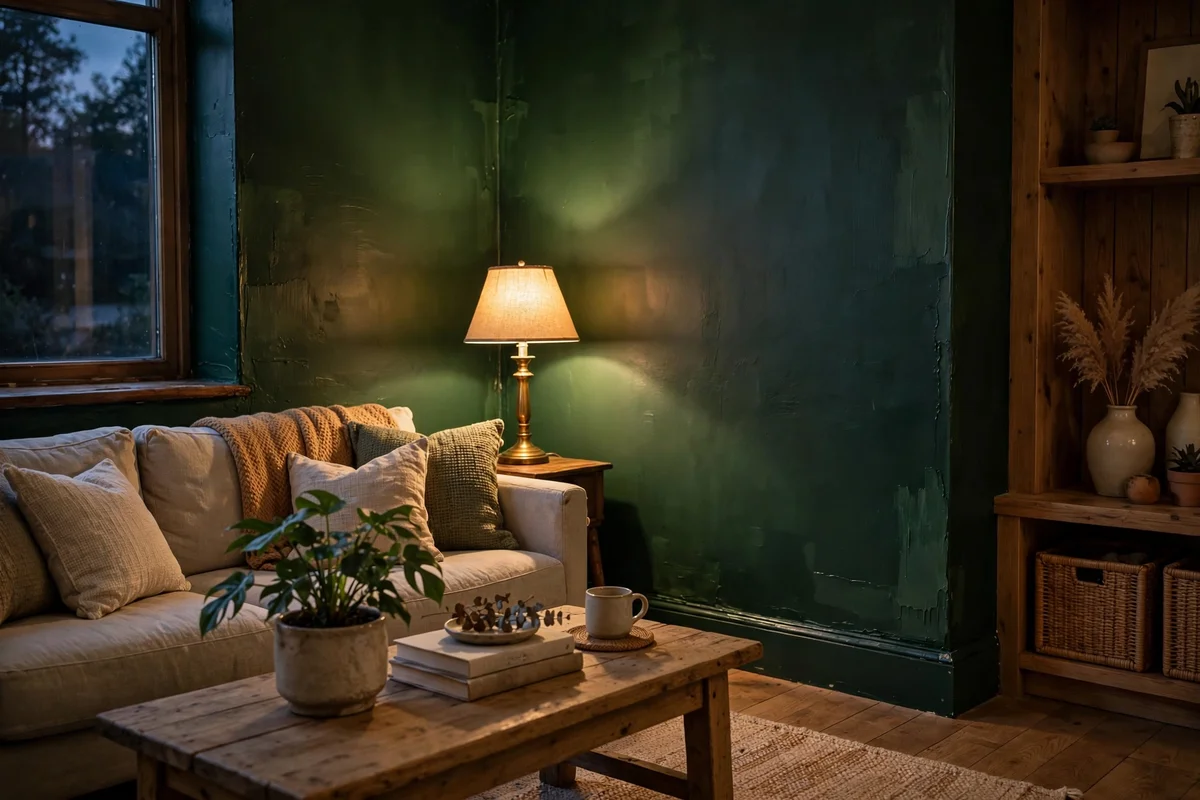
Two coats of a deep forest green turn a living room into an evening room before a single lamp is switched on. Choose a green with a warm undertone, like a moss or pine shade, rather than a cold blue green that can feel chilly at night. Paint all four walls for a cocoon effect, or try three walls with the window wall in warm off white if you worry about daylight.
The common mistake is testing paint on a tiny swatch in daylight only. Paint a one metre square patch and look at it at 9 pm under your usual lamps, because deep greens shift dramatically under warm bulbs. Budget around 40 to 60 pounds or dollars per 2.5 litre tin; most living rooms need two tins for two coats over roughly 35 square metres.
2. Try Ink Blue Walls Behind the Sofa for Quiet Drama
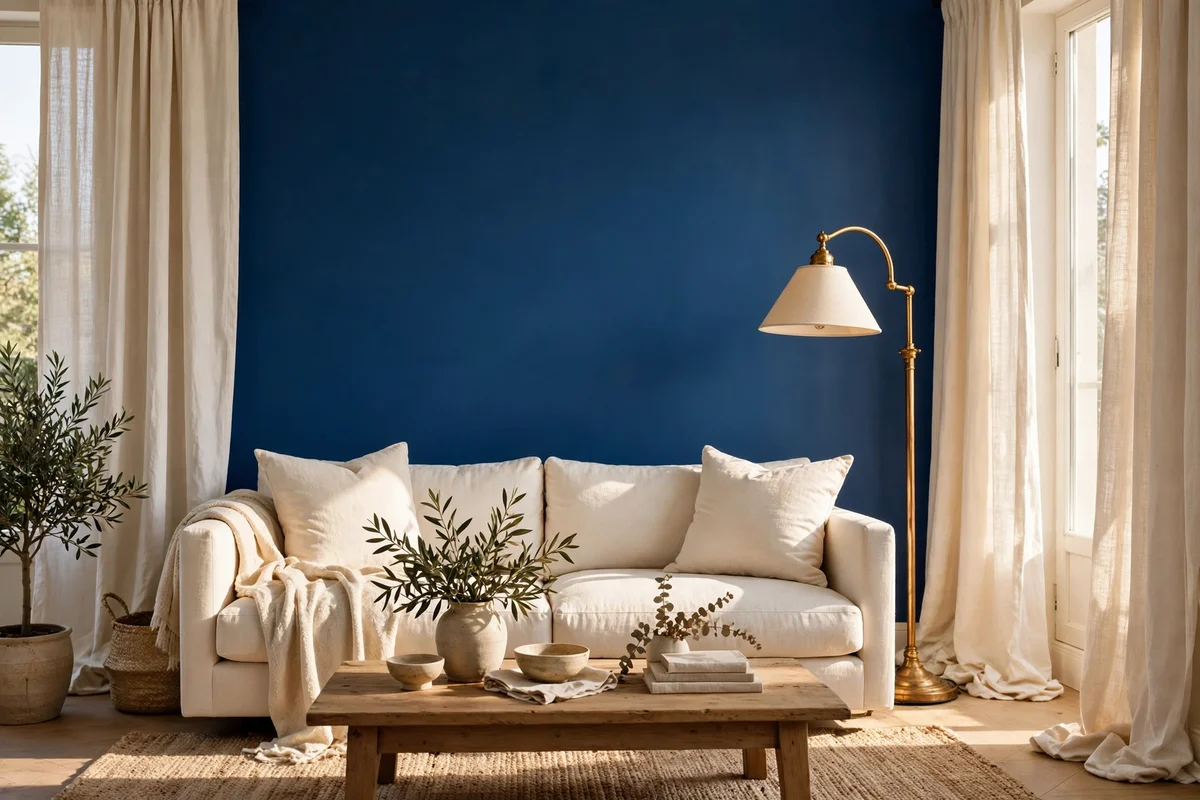
Ink blue works best as an anchor colour behind the largest piece of furniture, usually the sofa, where it gives the eye a deep place to rest. Pick a blue with a hint of slate or smoke so it reads as a timeless classic rather than a trend colour. Matt emulsion suits the mood best; sheen reflects lamplight unevenly and breaks the cocoon.
Hang a cream or pale linen curtain against it and the contrast lifts the whole scheme without effort. Keep the skirting board in the same ink blue for a seamless look, since a white skirting stripe can feel fussy against dark walls. The mistake to avoid is pairing ink blue with stark white furniture, which turns the room cold; cream and warm wood keep it gentle.
3. Layer a Warm Plum Accent Wall Beside the Fireplace
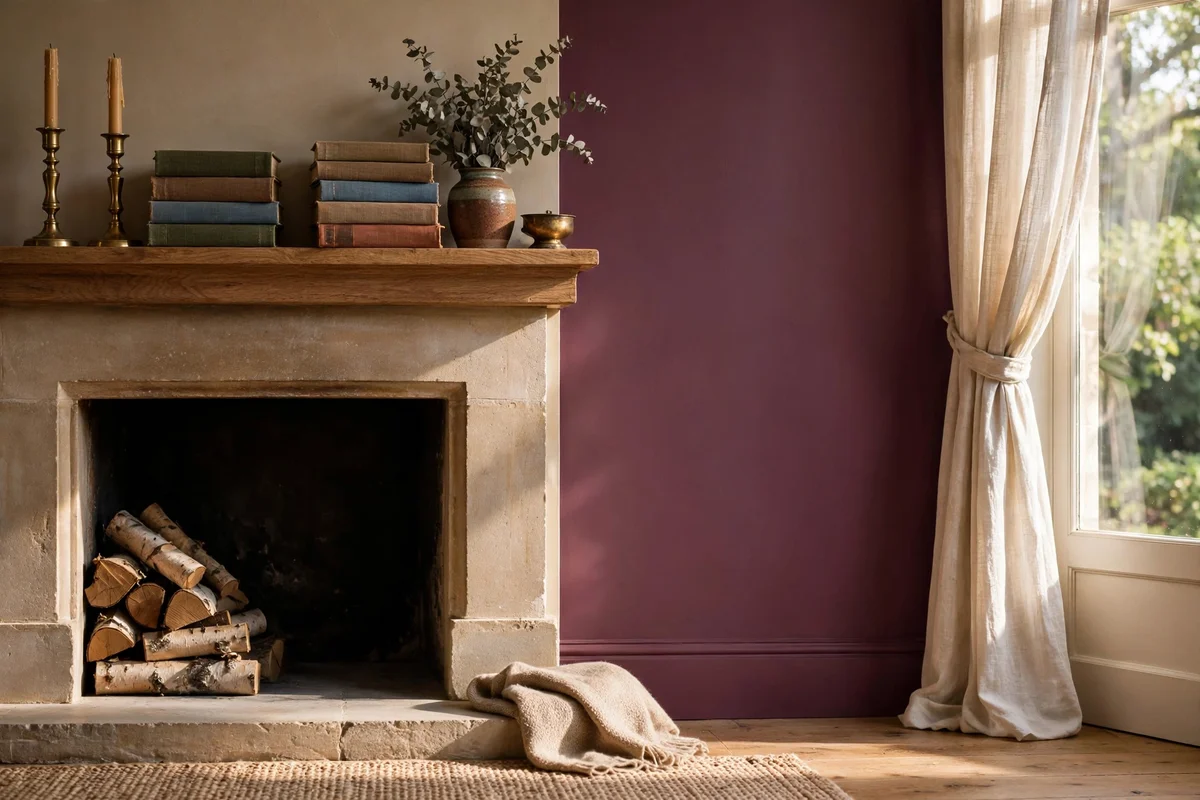
A single warm plum wall beside the fireplace adds a blush of colour without lifting the mood out of its deep, calm register. Look for plum shades with a brown or cocoa base, which feel historic and soft, rather than pink based shades that can read sweet. One feature wall is enough; four plum walls overwhelm most rooms under 20 square metres.
Place a brass candlestick and a stack of clothbound books on the mantel so the plum has warm objects to glow against. The wall behind a dark television can also carry plum well, since the colour absorbs the glare of the screen edges. Budget tip: a single accent wall needs about one litre of paint, so a tester pair can become the whole job.
4. Wrap the Room in Charcoal Brown for a Snug Cocoon
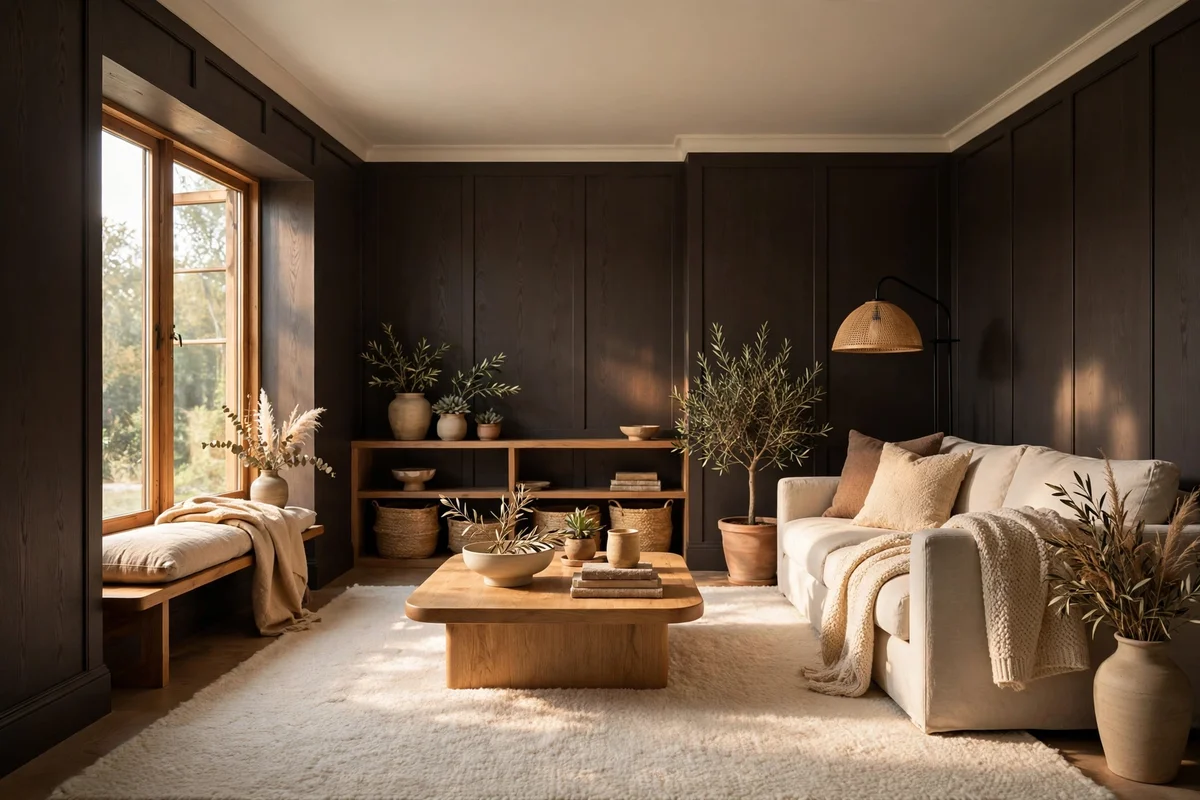
Charcoal brown is the warmest of the dark neutrals, and it suits rooms that face north or east where light is naturally cool. Choose a brown with a visible warm undertone, like a roasted chestnut or walnut, to keep the scheme from drifting grey. Wrapping all walls, including alcoves, makes a small room feel intentional rather than cramped.
The trick that keeps charcoal brown liveable is a pale ceiling in warm white, which acts like a soft lid lifting the space. Add one pale wool rug under the seating group so the floor does not sink into shadow. Avoid pairing charcoal brown with black furniture; walnut wood and cognac leather carry the warmth much better.
5. Layer Three Lamps at Different Heights for Low Warm Light
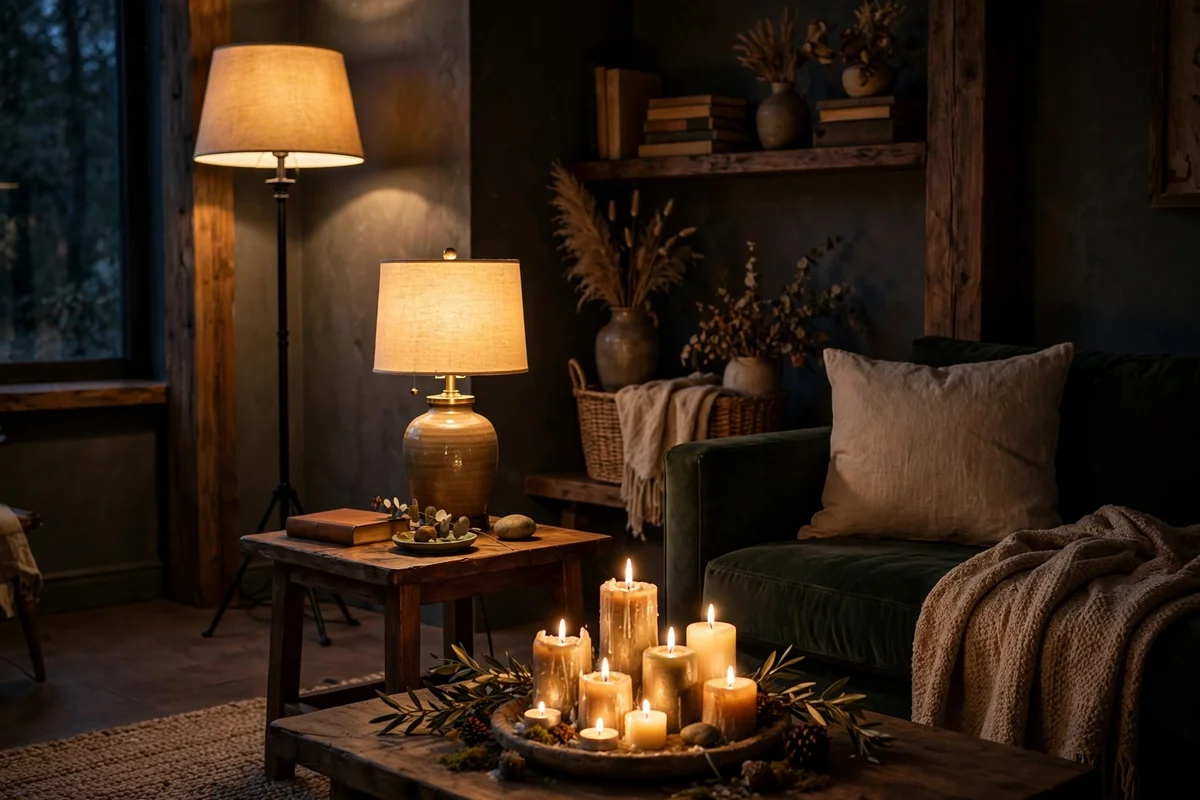
A moody room needs light in layers: one table lamp at 45 cm, one floor lamp at 150 cm, and one low candle cluster near floor level. This triangle of light fills the room without a single harsh overhead source. Place the lamps at least two metres apart so pools of light overlap gently rather than leaving dark gaps.
Fit every bulb at 2700K, the warm candlelight temperature, and choose a dimmer on at least two of the three so you can lower the whole scene at night. The mistake to avoid is a lone ceiling light, which flattens dark walls and kills the mood. Three modest lamps from charity shops often cost less than one designer fitting.
6. Set Table Lamps on a Timer for Dusk Ready Glow
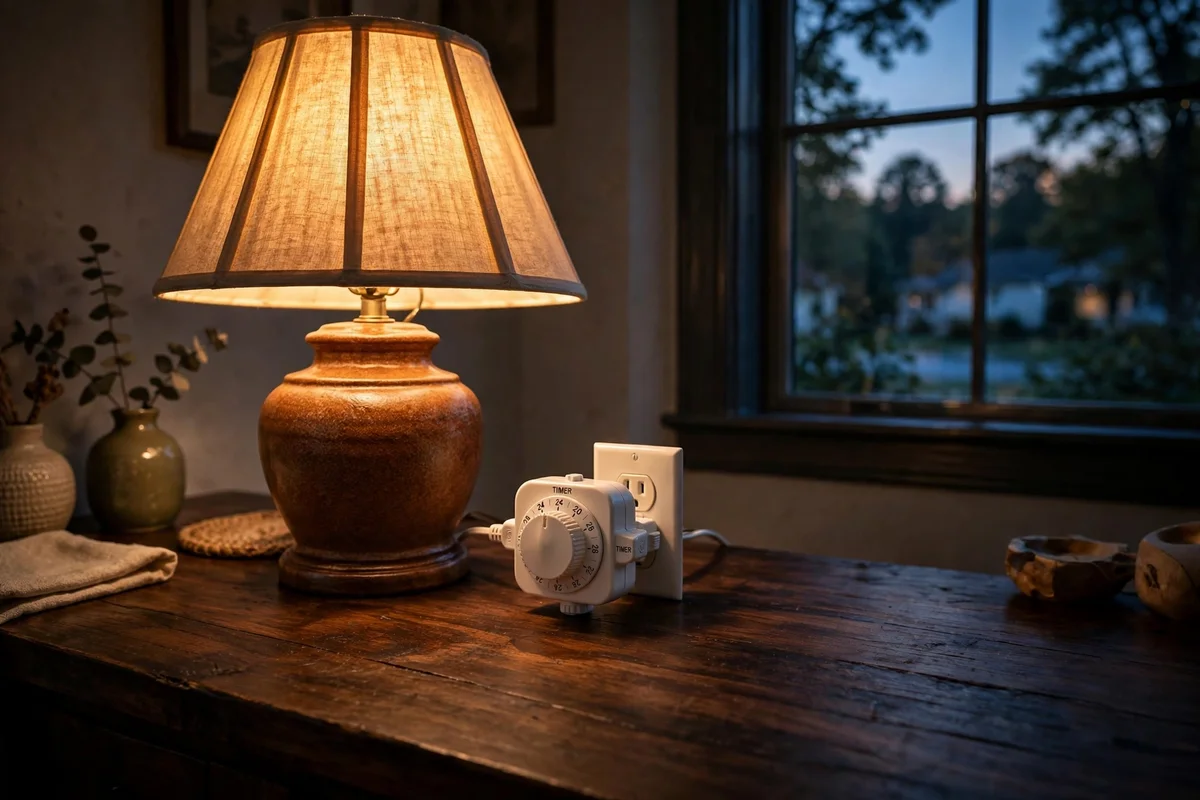
A plug-in timer that switches your two main table lamps on at dusk means you never walk into a dark, gloomy room again. Set the timer for thirty minutes before sunset so the living room greets you with warmth after a long day. Most timers cost under 15 pounds or dollars and handle two lamps on one plug.
Pair the timer with warm 2700K bulbs of 6 to 8 watts, bright enough to read by but soft enough for conversation. Keep the timer routine through the darker months and switch it off in high summer when daylight lasts. The mistake is leaving the lamps on all night; six hours of evening glow is plenty and keeps energy bills calm.
7. Dress the Sofa in Deep Velvet Cushions
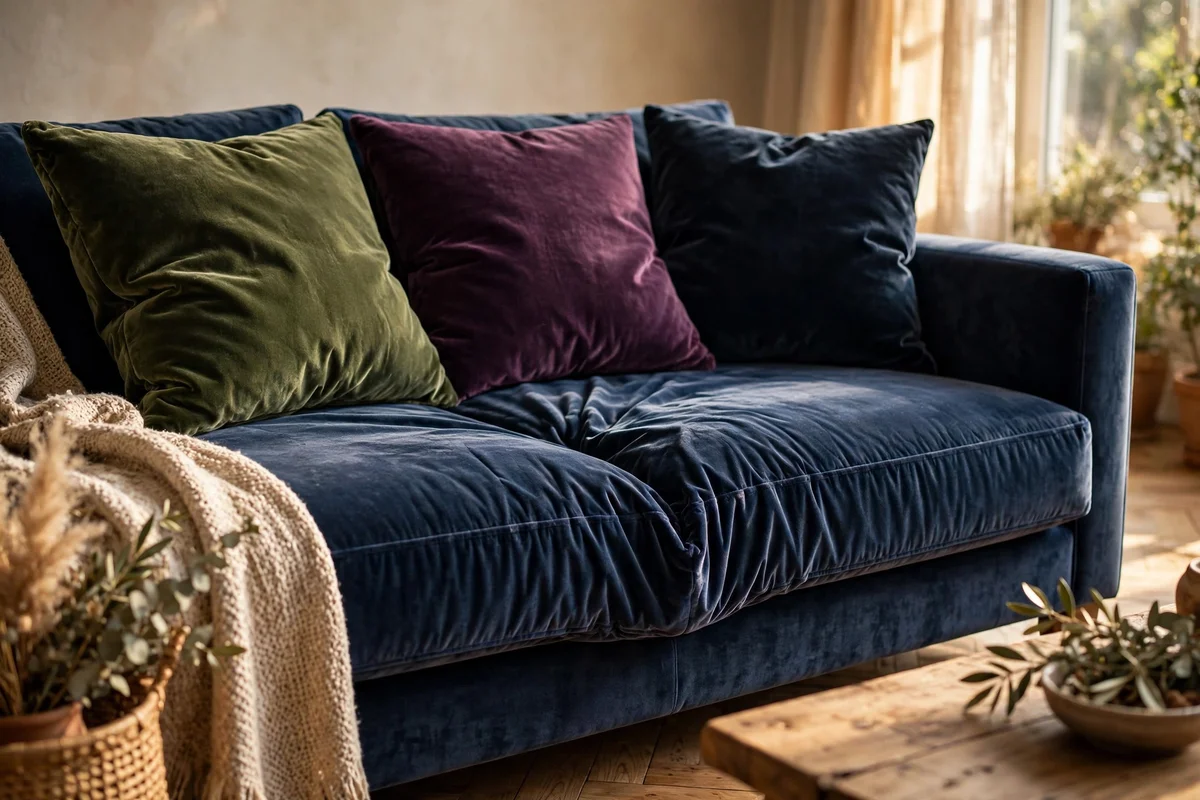
Velvet is the signature texture of a moody living room because it catches lamplight in deep folds and releases it slowly. Choose cushions 45 to 50 cm square in colours one or two tones deeper than the sofa, such as moss, plum or ink. Mix two plain velvets with one in a subtle ribbed weave for tactile variety.
Karate chop the centre of each cushion for a relaxed, lived-in crease that suits the cocooning mood. Two cushions per arm for a two seat sofa is plenty; more than that becomes clutter on dark upholstery. Wash velvet covers inside out on a cool cycle, or buy spare covers so the sofa never sits bare.
8. Fold a Chunky Wool Throw Over the Armchair
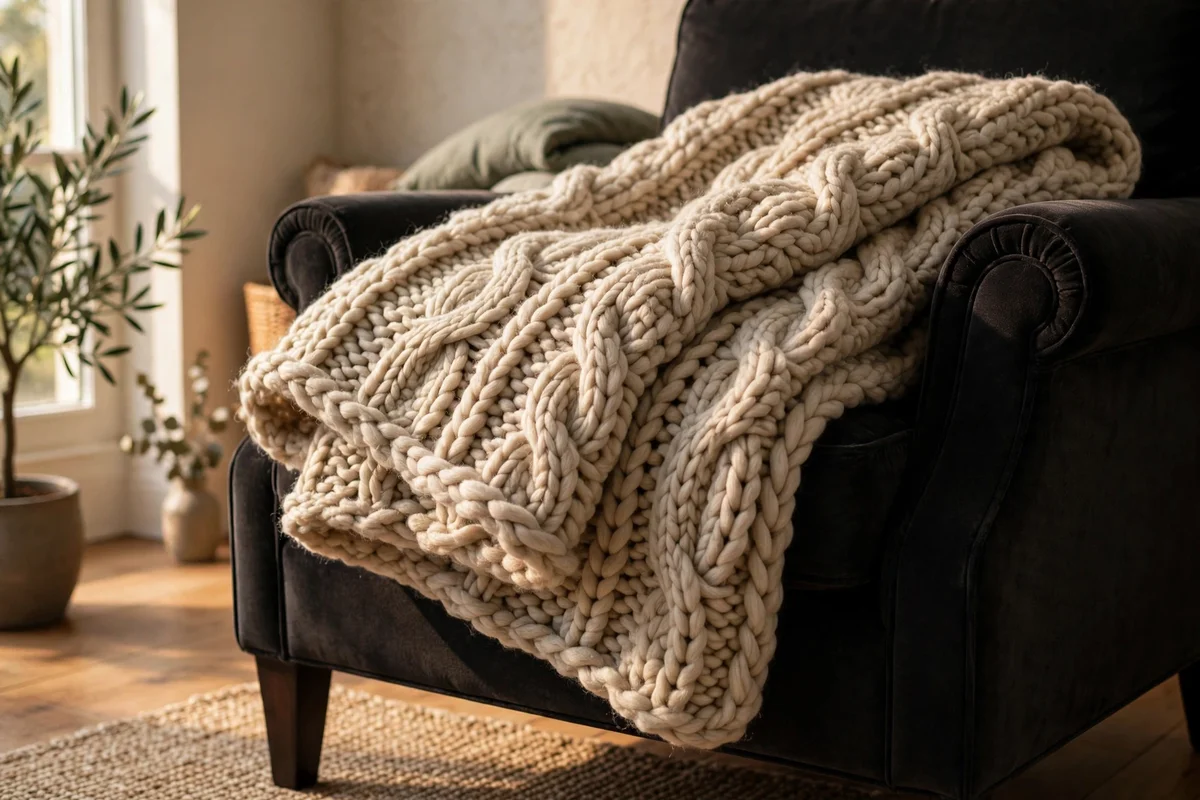
A chunky knit wool throw draped over the armchair does three jobs at once: it adds warmth under lamplight, invites evening use, and breaks up large blocks of dark fabric. Fold it lengthwise into thirds so it sits in a neat band about 40 cm wide, then let the fringe hang 25 to 30 cm below the arm.
Choose a natural wool in oatmeal or warm grey rather than white, which stains quickly against dark wood floors. A genuine wool throw in this size usually costs 50 to 90 pounds or dollars; a wool blend at half the price works nearly as well. The mistake is a throw so small it slips off; look for 130 by 180 cm minimum.
9. Choose Dark Wood Side Tables With Brass Details
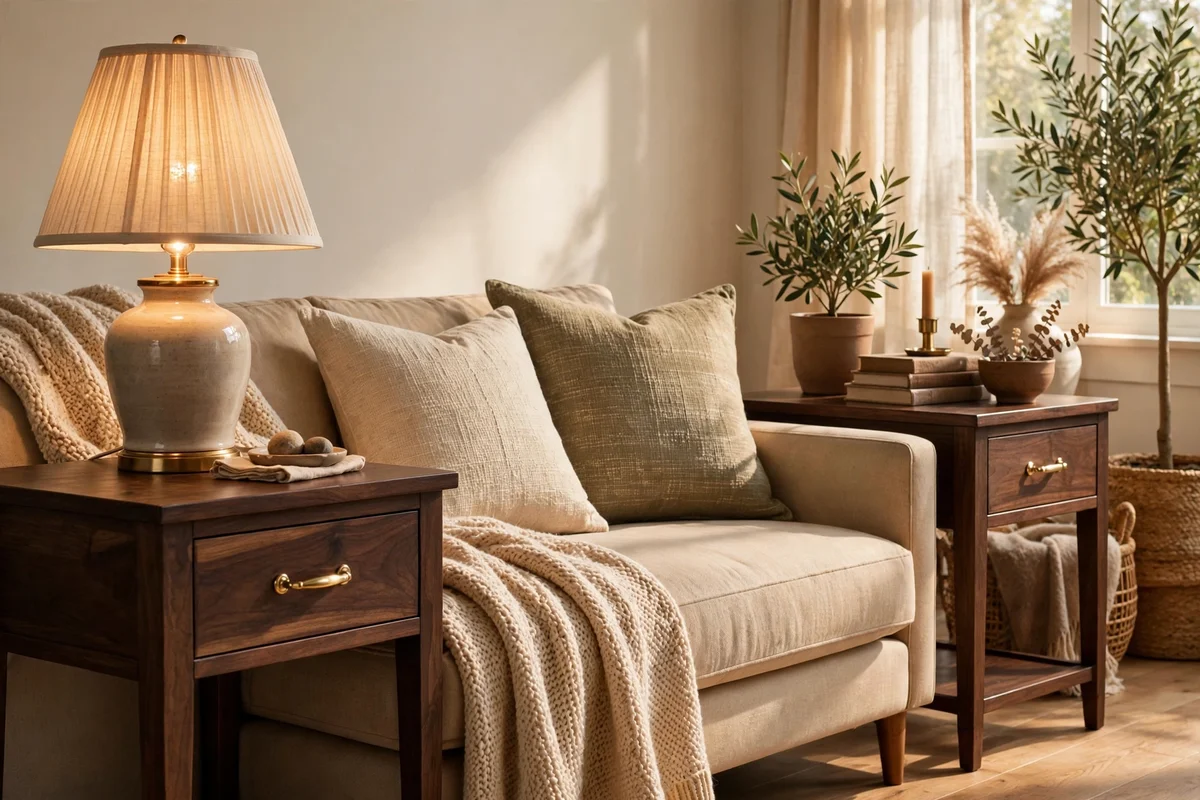
A pair of dark walnut side tables flanking the sofa grounds the whole seating arrangement in heritage weight. Look for solid wood pieces 50 to 60 cm tall with a lower shelf for books, since hollow veneer chips quickly in daily use. Brass handles, brass feet or a brass rim add the warm metallic glint that dark rooms need.
Second-hand shops are full of dark wood tables for 20 to 40 pounds or dollars; a coat of walnut stain revives tired legs. Keep the tabletop styled with one lamp and one small object only, so the wood itself stays visible. Avoid black painted tables here, since they read flat against dark walls where walnut reads deep.
10. Add Brass Candlesticks in Groups of Three
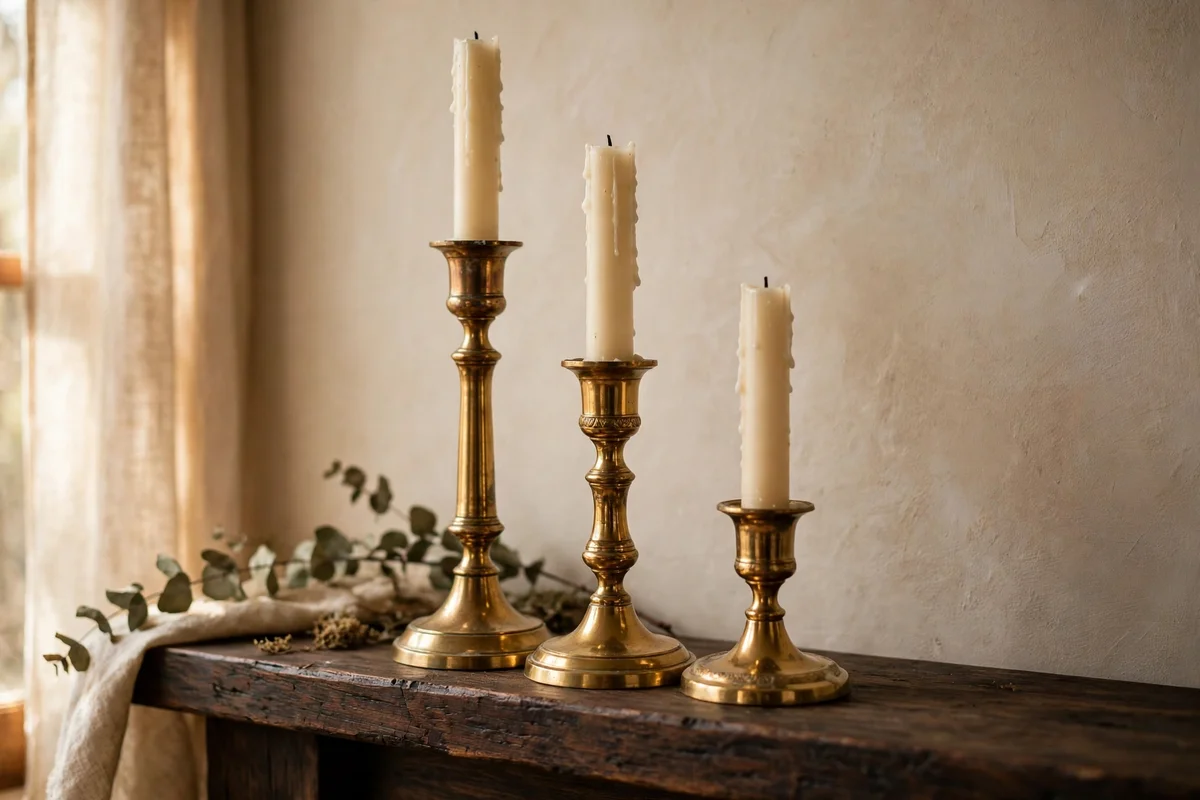
Brass candlesticks in odd numbered groups are the fastest way to bring candlelight into a moody scheme. Cluster three sticks of different heights, for example 15, 22 and 30 cm, on the mantel, the sideboard or the coffee table tray. Unlacquered brass develops a soft patina that suits the timeless mood better than polished shine.
Use plain ivory or beeswax candles rather than scented coloured ones, which can look cheap against deep walls. Drip trays or a small brass saucer under each stick protect dark wood tops from wax. The mistake to avoid is scattering single candlesticks around the room; grouped light reads as intentional, while singles read as leftovers.
11. Light Real Candles Each Evening for Living Flicker
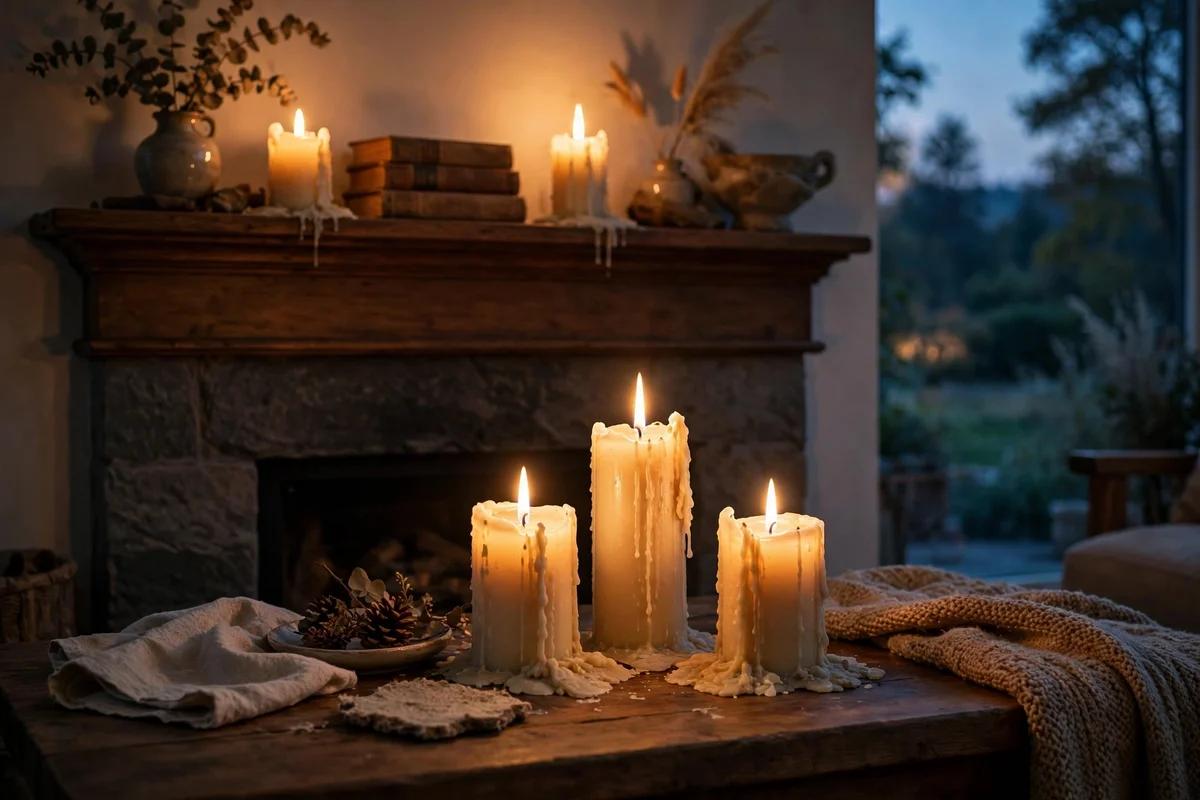
No bulb imitates real flame, and in a moody living room that flicker is the soul of the scheme. Light three to five candles at dusk: two on the mantel, one on the coffee table, and one or two on side tables. Beeswax candles burn for roughly one hour per 2.5 cm, so a 20 cm candle lasts a full evening of slow light.
Keep a long lighter and a small snuffer in a brass dish nearby so the ritual stays easy and safe. Never leave burning candles unattended, and keep them 30 cm from curtains and throws. Battery candles with a warm flicker setting work for high shelves you cannot reach nightly, but reserve real flame for the tables you sit near.
12. Lay a Pale Wool Rug to Lift the Dark Floor
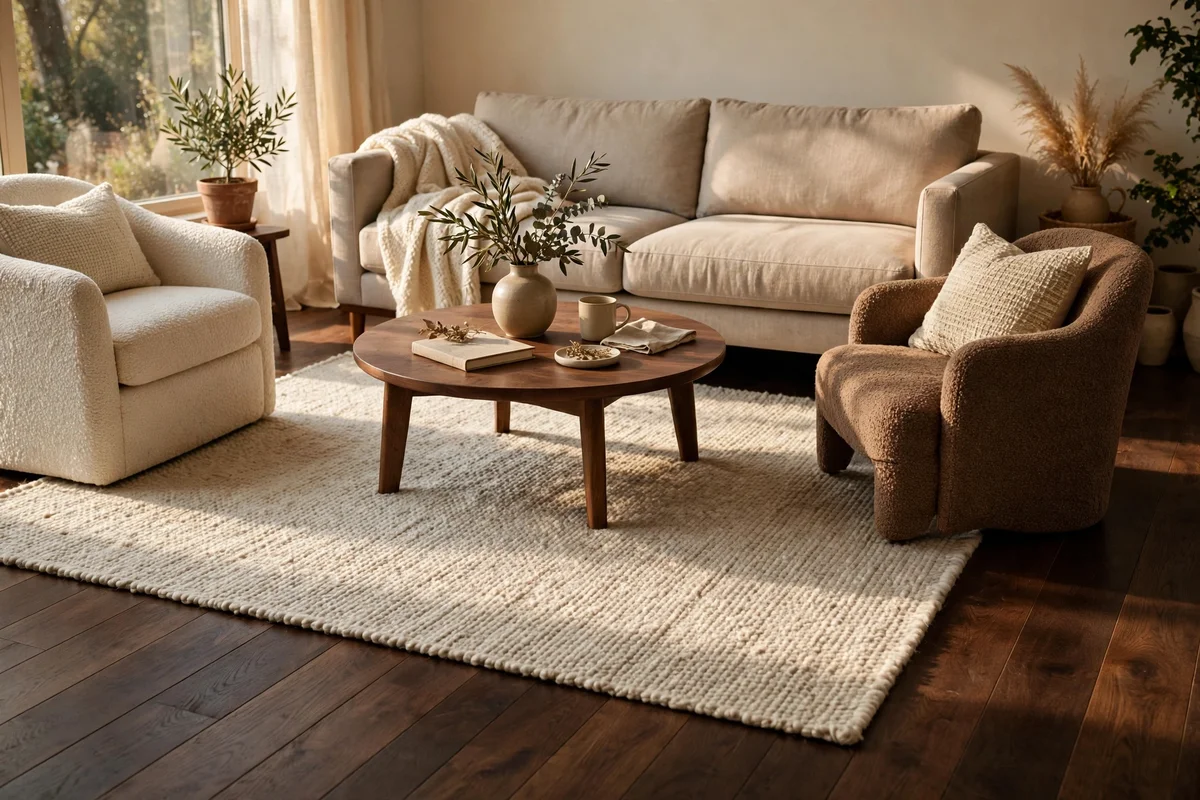
Every moody living room needs one pale element at floor level, and a wool rug in oatmeal or natural cream is the classic choice. Size it so the front legs of the sofa and both armchairs sit on the rug, usually 200 by 300 cm for a standard seating group. A 2 cm pile is plush enough to feel luxurious without trapping crumbs.
The rug should cover about two thirds of the visible floor so the dark boards still frame it. Flip and rotate the rug every six months for even wear, and shake it outside monthly instead of vacuuming weekly to protect the pile. A flatweave cotton rug in pale jute is a budget alternative at a third of the price.
13. Keep the Ceiling Pale and Matte to Raise the Room
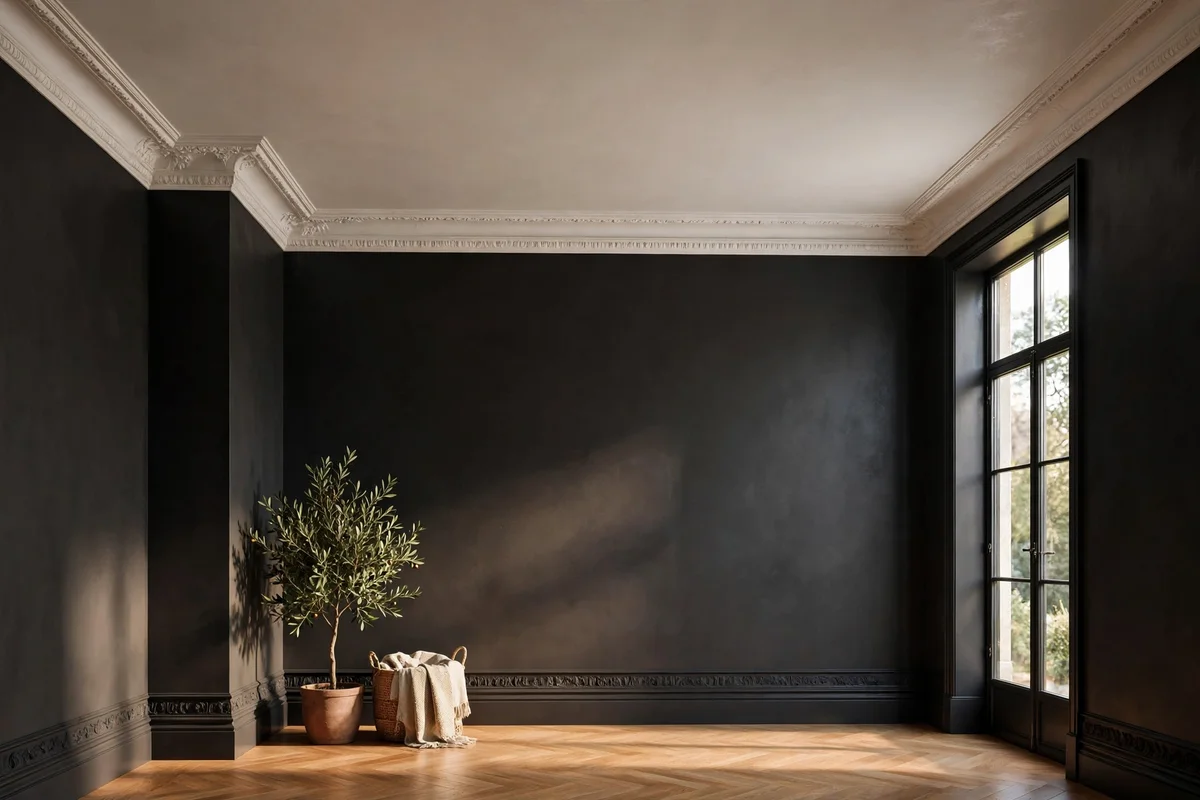
A warm white matte ceiling is the lid that keeps a dark-walled room from feeling low and heavy. Choose an off white with a creamy base, such as a chalk or bone shade, and paint it flat matte so lamplight spreads softly instead of bouncing harshly. Paint the ceiling before the walls to avoid cutting in twice.
If the ceiling is below 2.4 metres, this pale lid matters even more, since dark walls at low height can feel oppressive. Take the pale colour 15 cm down onto the wall as a picture rail line in rooms with cornicing for a heritage finish. The mistake is pure brilliant white, which looks cold against warm dark walls.
14. Hang Floor Length Curtains in Heavy Fabric
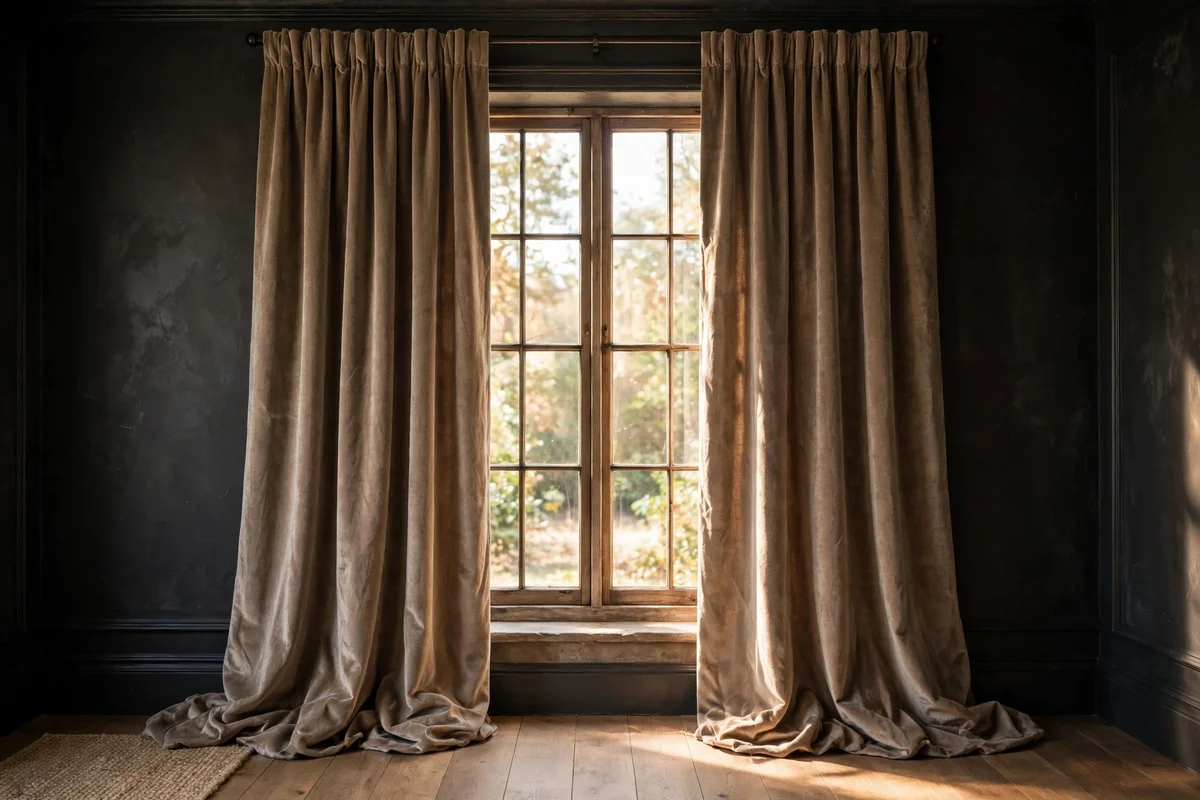
Floor length curtains in a heavy fabric like velvet, wool twill or lined cotton add the vertical softness that moody rooms crave. Hang the pole 15 to 20 cm above the window frame and 10 cm wider each side, so the curtains stack back fully and make the window look grand. The hem should just kiss the floor, not puddle.
Choose a curtain colour one tone lighter than the walls, such as warm taupe against charcoal brown, to keep the window from disappearing. Interlined curtains hold their folds and insulate against evening draughts, a genuine comfort in winter. Budget tip: ready made velvet curtains 228 cm long often cost under 60 pounds or dollars per pair.
15. Style One Lighter Element in Every View
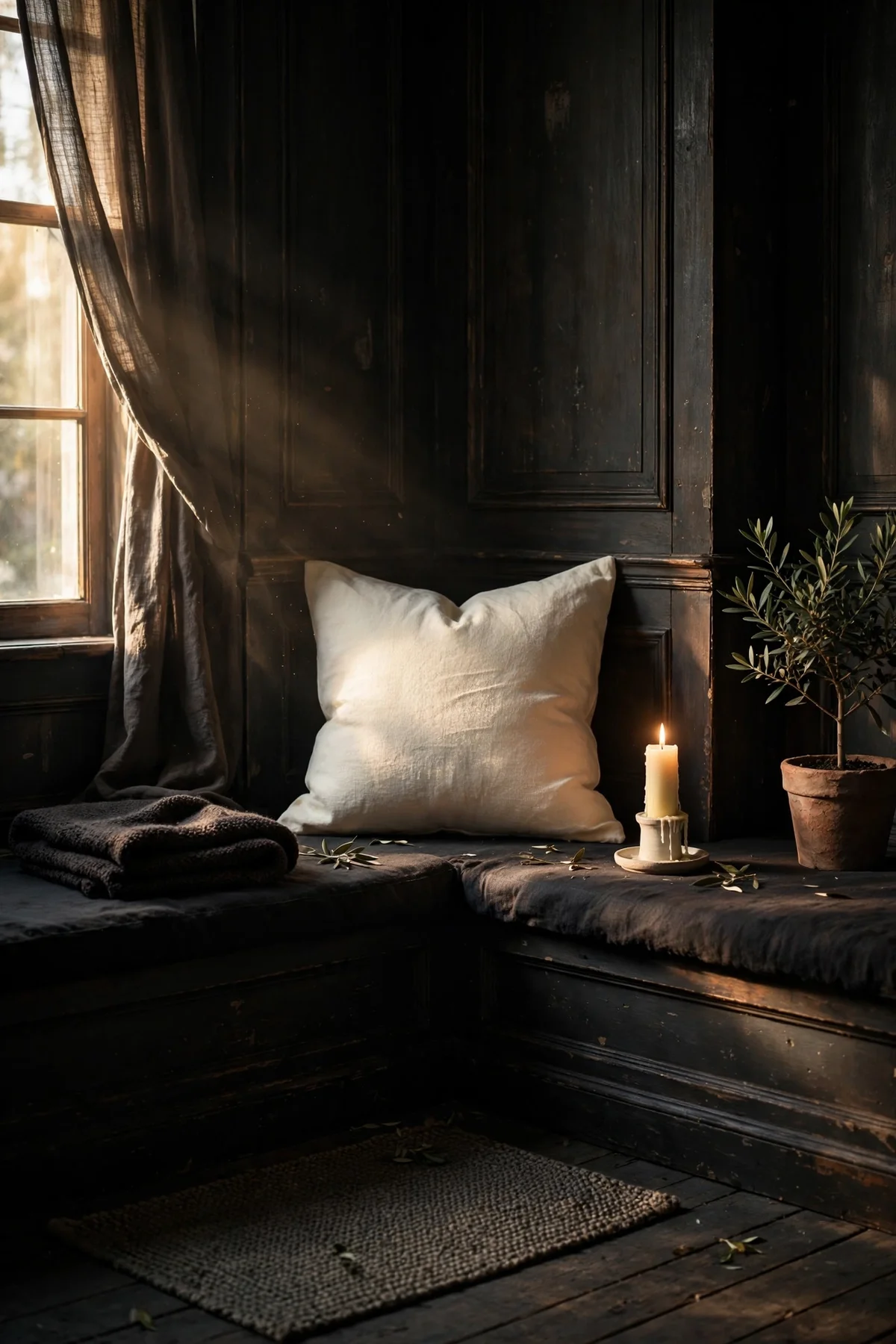
The golden balance rule of moody decorating is simple: from any seat in the room, you should see at least one pale object. It might be a cream cushion, a pale rug, a light oak frame or a stack of ivory books. This single lighter note stops the dark palette from reading as gloom and gives the eye a resting point.
Test the rule by photographing each seat with your phone; the photo reveals gloomy corners your eyes adapt to. If one view lacks a pale note, add the cheapest fix first, usually a 10 pound cream throw or a pale candle. The mistake is adding three or four pale items in one view, which breaks the mood instead of balancing it.
16. Use Texture Over Pattern on Soft Furnishings
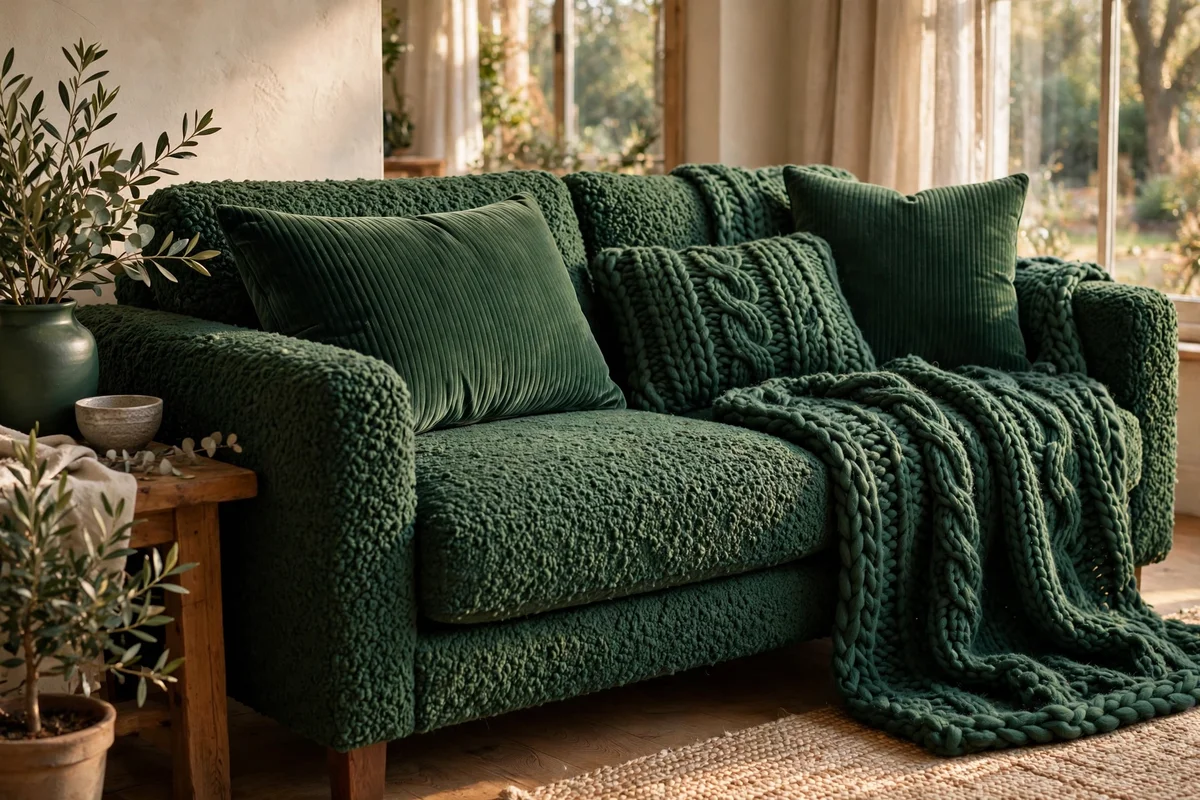
In dark rooms, texture does the work that pattern does in light ones, because deep colours absorb printed designs while lamplight plays across weaves. Choose boucle, ribbed velvet, chunky knits and washed linen instead of bold prints. Three different textures in the same colour family create depth that reads as quiet luxury.
Limit pattern to one small element, such as a single small print cushion or a thin striped throw, and keep it tone on tone. This restraint keeps the scheme calm and timeless rather than busy. The mistake to avoid is a large patterned rug on dark floors, which fights the walls; a plain pale rug always wins here.
17. Place a Dark Leather Armchair in the Reading Corner
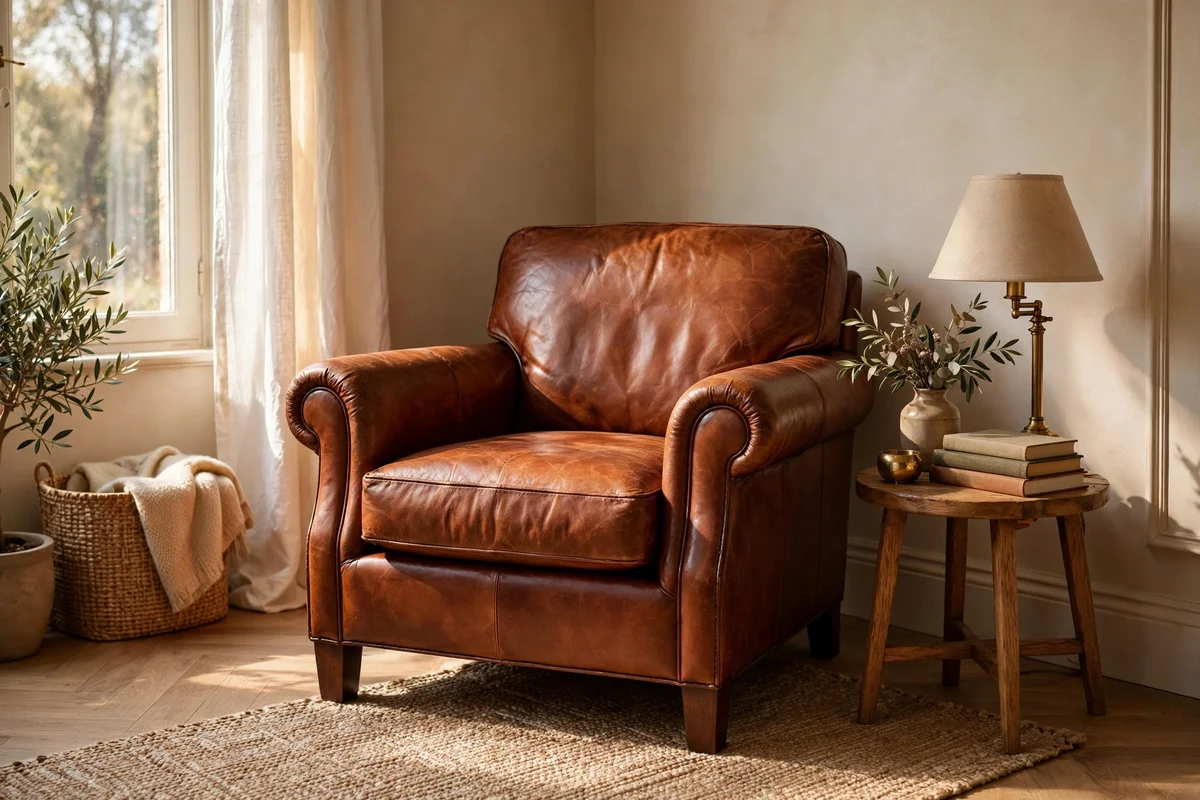
A cognac or oxblood leather armchair in the corner becomes the natural seat for slow evenings with a book. Position it 40 to 50 cm from the wall at a slight angle, with a small side table and a reading lamp within arm’s reach. Leather suits moody rooms because it glows under lamplight and ages beautifully.
Condition the leather twice a year with a balm to keep it supple, and wipe spills at once since dark leather shows water marks. A genuine leather armchair is an investment at 400 to 800 pounds or dollars, but second-hand leather often costs a quarter of that and looks better for its wear. Avoid placing it in direct sun, which fades the rich tone.
18. Hang One Large Framed Print on the Dark Wall
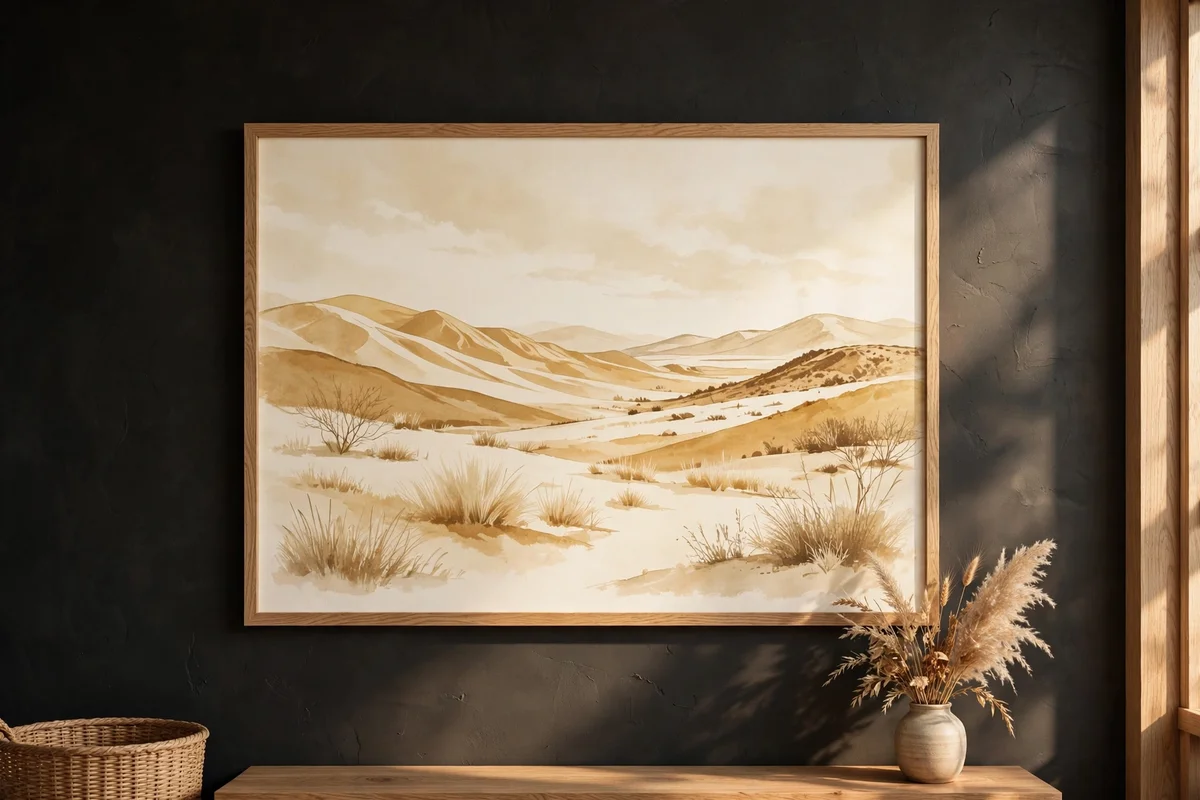
A single large artwork, around 80 by 100 cm, gives a dark wall a focal point that small gallery clusters cannot match. Choose a print with pale or warm tones, such as a landscape in ochre and cream, so it functions as the lighter element in that view. A slim oak or brass frame keeps the heritage feel.
Hang the centre of the print at 145 to 150 cm from the floor, the standard gallery height, and 20 to 25 cm above the sofa back if it hangs over seating. One large piece costs less than a cluster of small frames and looks calmer. The mistake is a tiny print lost on a dark expanse; scale up or leave the wall bare.
19. Add an Antique Brass Floor Lamp Beside the Armchair
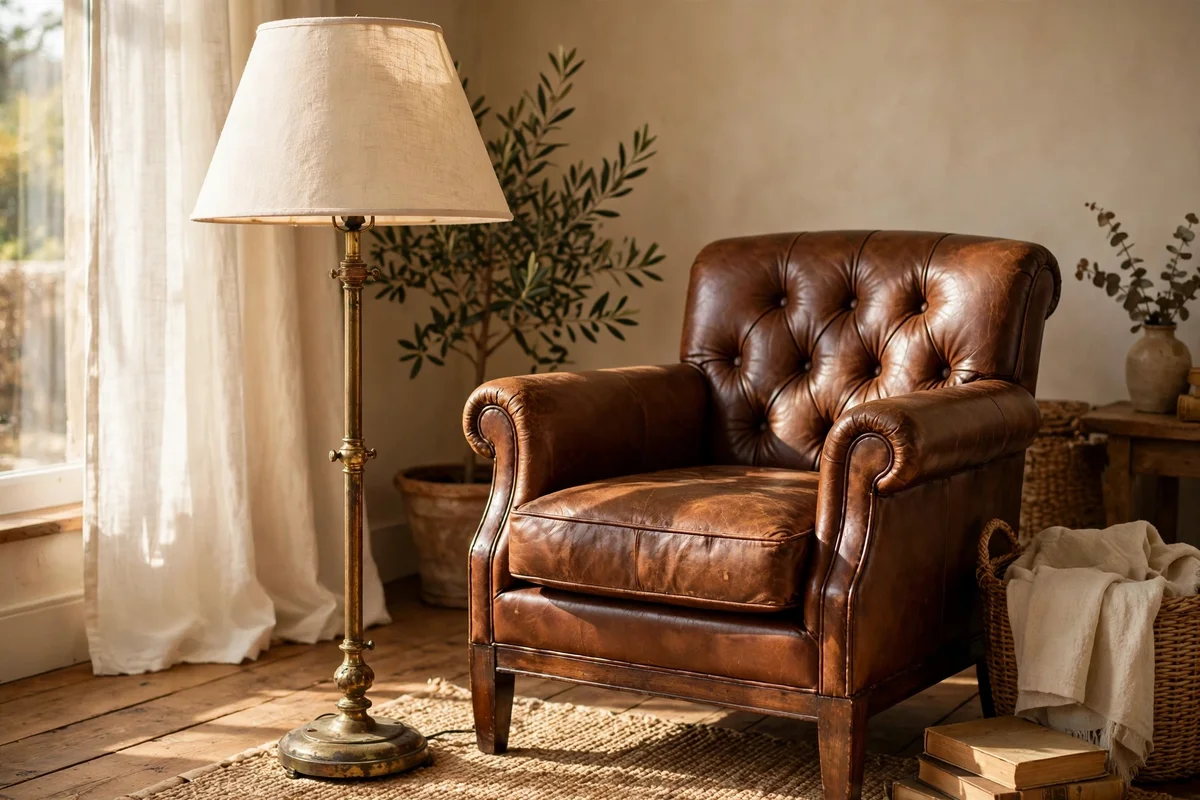
A brass floor lamp with a fabric shade turns a reading corner into the warmest seat in the house. Look for a lamp 150 to 160 cm tall with the shade at seated eye level, so light falls on the page without glare. A linen or cotton shade in cream diffuses the warm 2700K bulb into a gentle pool.
Antique brass lamps appear regularly in charity shops for 25 to 50 pounds or dollars; rewire any vintage find for safety before use. Position the lamp just behind the chair shoulder so it lights over you like a reading light. Avoid cool white bulbs here at all costs, since they undo the entire moody effect in one switch.
20. Style the Mantel With Dried Branches and Candle Clusters
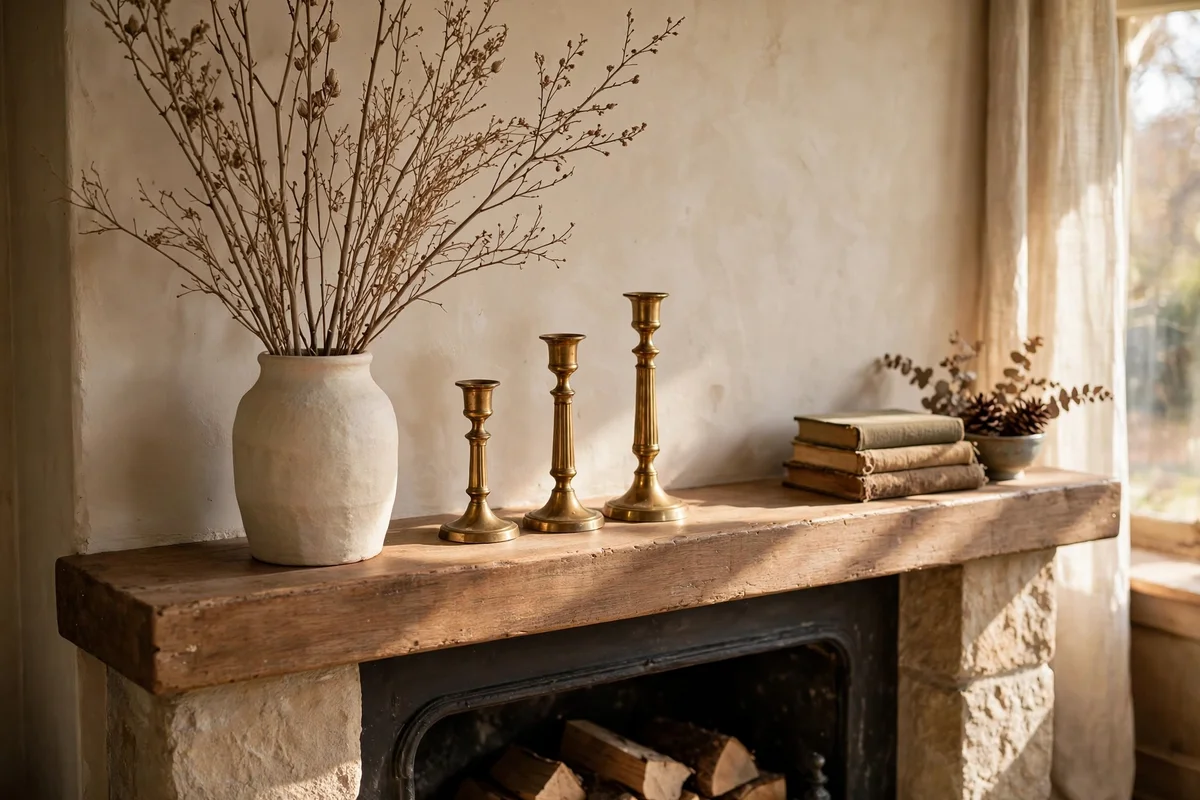
A fireplace mantel is the natural altar of a moody living room, and dried branches give it height without the upkeep of fresh flowers. Choose branches 60 to 80 cm tall in a tall ceramic or brass vase at one end, then balance them with a cluster of three brass candlesticks at the other. The asymmetry feels collected, not staged.
Swap branches seasonally: pussy willow in spring, dried grasses in autumn, eucalyptus in winter. Keep everything 30 cm clear of the fire opening for safety. The mistake to avoid is a mantel crowded with ten small objects; three zones (branches, candles, one small stack of books) keep the deep palette calm and readable.
21. Use a Dark Wood Coffee Table With a Brass Tray
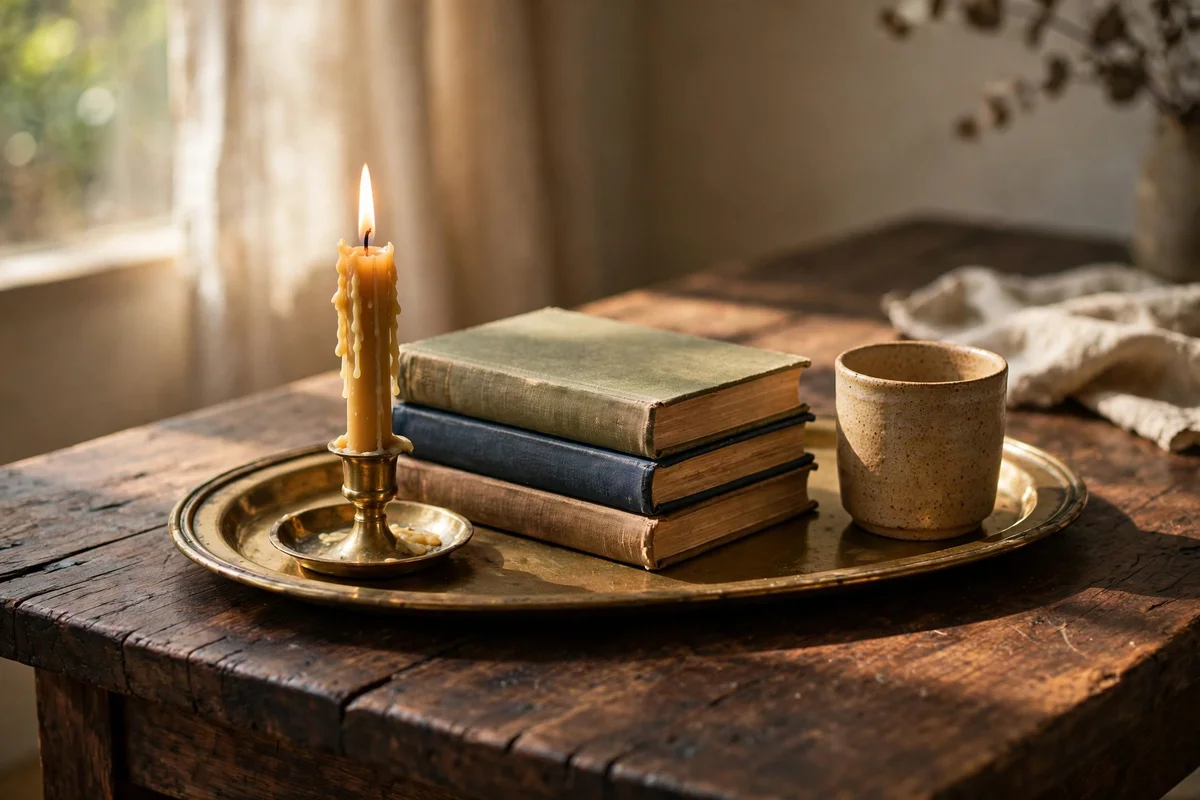
A dark wood coffee table anchors the seating group and gives the pale rug a strong centre. Choose a table 100 to 120 cm long and 40 to 45 cm tall so it sits just below the sofa seat height. Walnut or stained oak matches the side tables and keeps the wood story consistent across the room.
Top it with a single brass tray about 40 cm wide holding a candle, a small stack of books and a ceramic cup; the tray corrals the objects so the table never looks cluttered. Apply a hard wax oil finish once a year to protect against cup rings. The mistake is a glass coffee table, which disappears against dark floors and wastes the anchor.
22. Layer Sheepskin Over the Chair Seat for Softness
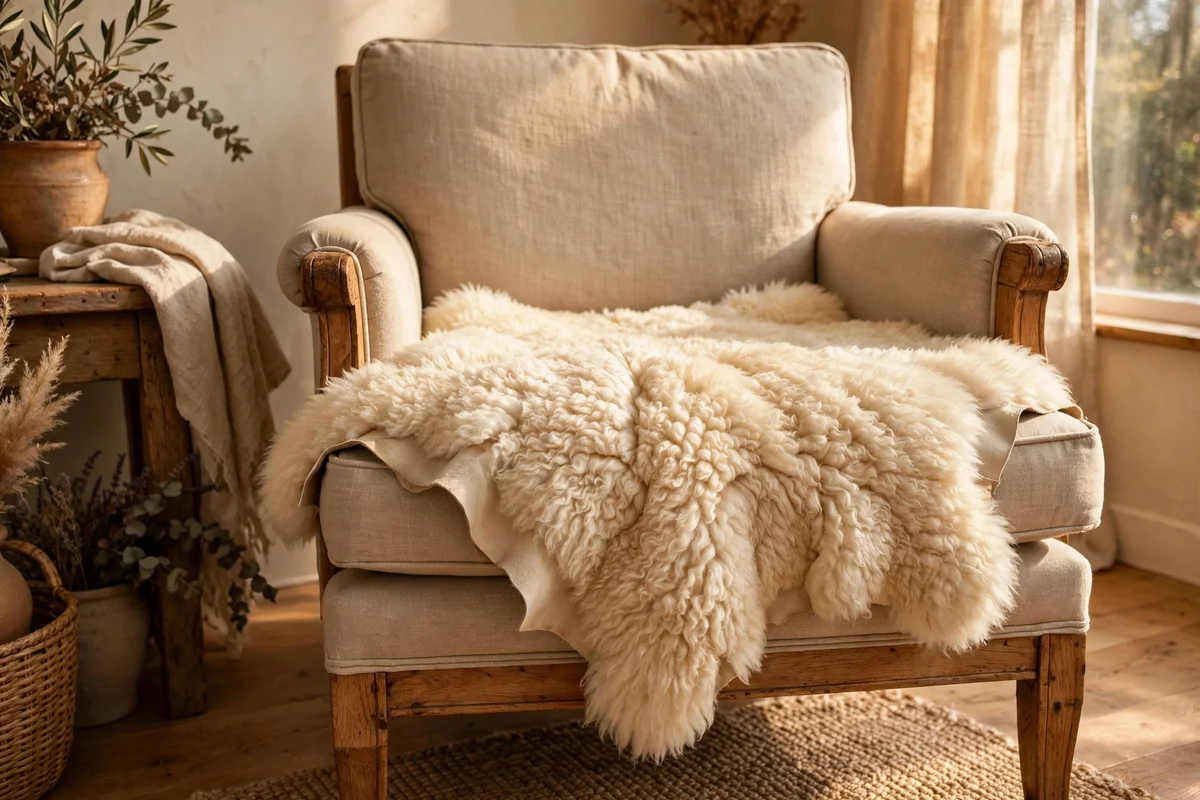
A sheepskin draped over the seat of a dining chair or armchair adds instant softness that lamplight turns to gold. Choose a single pelt around 60 by 90 cm in a natural ivory or warm grey tone, which acts as a lighter element wherever it sits. Drape it loosely rather than tucking it tight, so the texture stays visible.
Shake the sheepskin outside monthly and brush it with a pet brush to keep the fibres open; never machine wash it. One pelt usually costs 30 to 60 pounds or dollars and lasts years with this light care. The mistake is buying bright white sheepskins for a dark room, where they glare; natural undyed tones sit far more calmly.
23. Keep One Corner Bright With a Cream Pouf
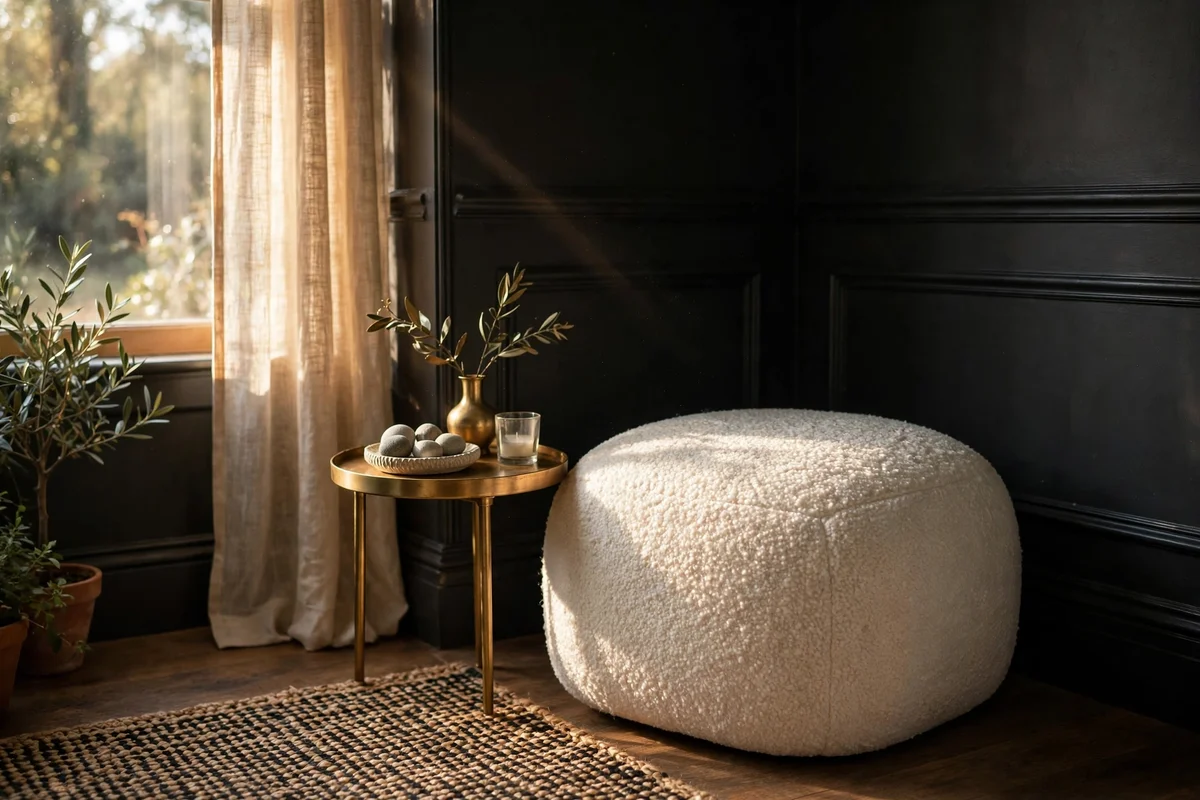
Even the deepest scheme needs breathing room, and a cream pouf in one corner provides it without commitment. A 45 cm round pouf in bouclé or woven cotton costs 30 to 50 pounds or dollars and moves wherever the room needs lift: beside the sofa, under the window, or at the foot of the armchair. It doubles as extra seating for family evenings.
Choose a washable cover if children use the room, since cream shows marks; a removable cotton slip is the practical choice. Pair the pouf with a small brass side table so the corner reads as styled, not spare. The mistake is placing the pouf dead centre, where it floats; corners and edges give it purpose.
24. Finish With a Woven Basket for Throws and Firewood
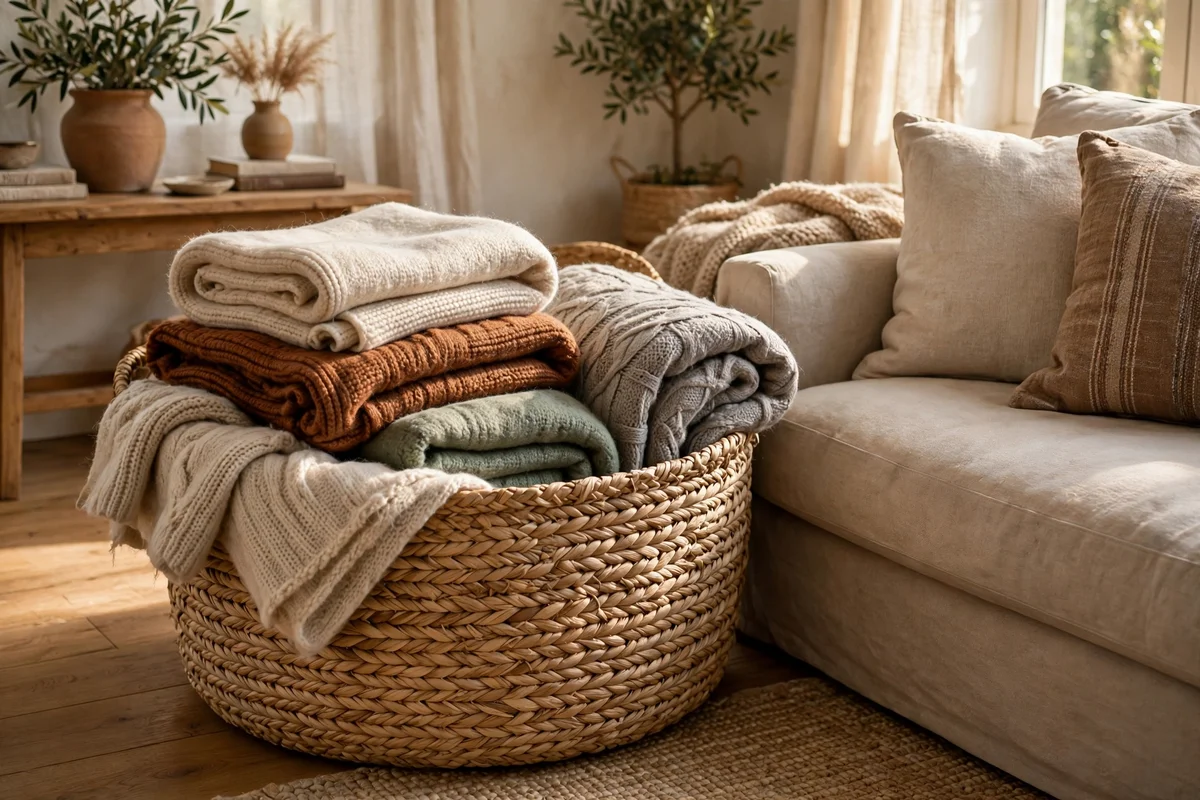
A large woven basket, 50 to 60 cm tall, corrals the throws and spare cushions that moody rooms accumulate, keeping the deep palette tidy. Seagrass or willow in a natural finish adds a pale woven texture that balances the dark walls beautifully. Place it beside the sofa or the fireplace where it is genuinely useful.
If you have a working fireplace, a second smaller basket holds kindling neatly; never store logs against the hearth in a pile. A sturdy basket costs 25 to 45 pounds or dollars and outlasts fabric storage cubes by years. The mistake is an undersized basket that overflows; measure your folded throws first and buy 10 cm taller than you think.
The thread running through all twenty four ideas is balance: deep colour held up by warm light, heavy texture lifted by one pale note in every view. A moody living room works when each dark choice has a warm partner, from the 2700K bulbs that flatter forest green to the cream pouf that lifts the darkest corner. Keep checking that every seat pairs shadow with glow as you build your scheme, and the room will stay cocooning rather than gloomy.
This week, try the simplest idea first and light three candles at dusk, placing them where you sit most often. Notice how the room changes before you spend a single coin on paint or furniture, because candlelight reveals what your walls want. Once you feel that shift, the bigger ideas will follow naturally, and your slow evenings will have the beautiful, intimate room they deserve.
Frequently Asked Questions
Can a moody living room work in a small space?
Yes, small rooms often suit moody schemes best because the deep colour makes the walls recede and the space feel intentional. Paint all walls in one deep tone, keep the ceiling pale, and use the one lighter element rule in every view. Choose smaller scale furniture and at least two lamps so no corner stays dark.
How much does it cost to make a living room moody?
A convincing change costs between 80 and 300 pounds or dollars. Two tins of paint and three brass candlesticks land near the lower end, while adding a velvet chair or wool rug pushes toward the top. Spend first on lighting and paint, since those two change the mood most per coin spent.
What bulb temperature suits dark living rooms?
Use 2700K warm white everywhere, the temperature of candlelight. Cooler bulbs turn deep walls grey and flat, undoing the whole scheme. Put dimmers on at least two lamps so you can lower the light as the evening deepens, and switch every bulb in the room, including hallway spill, to the same warm temperature.
Will dark walls make my living room feel smaller?
Not if the balance rules are followed. A pale ceiling, a pale rug and one lighter element per view keep the room feeling open, while the dark walls themselves blur edges and corners. Rooms under 15 square metres suit a single deep colour on all walls better than a feature wall, which can chop the space up.
Are moody colours hard to repaint later?
No harder than any deep colour. Plan for a stain blocking primer and two coats of your new shade, which covers forest green or ink blue cleanly. Keep a labelled record of your paint brand and colour name in a kitchen drawer so touch ups stay simple, and store leftover paint in a cool, dry place.