Living Room
24 Neutral Fall Decor Ideas That Feel Elegant Instead of Orange
By Anna Wells · · 22 min read
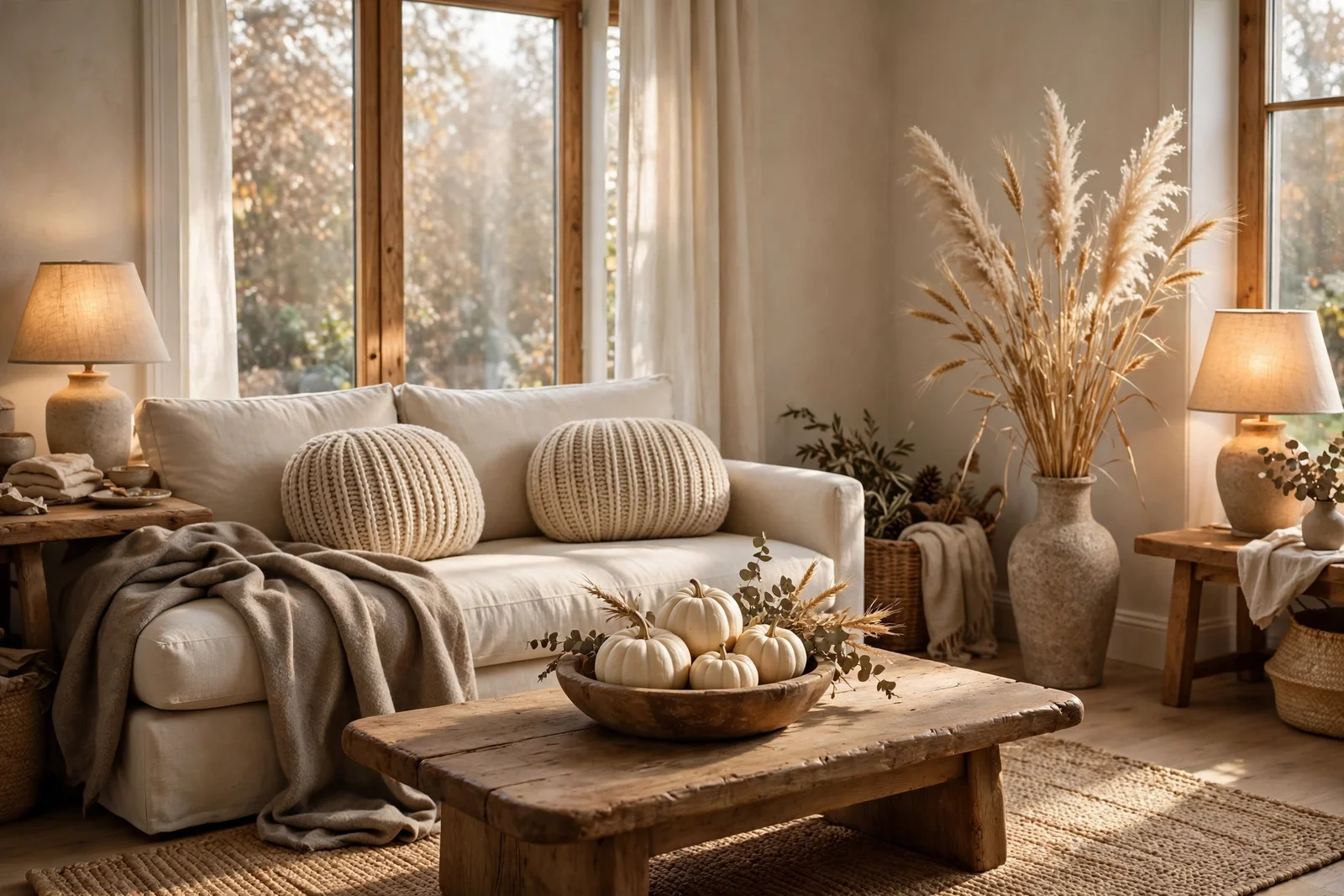
24 neutral fall decor ideas with cream and white pumpkins, dried grasses and soft linen textures. Elegant autumn decorating, room by room, with sizes, budgets and mistakes to avoid.
Morning light falls across the coffee table and catches the curve of a white pumpkin, soft as porcelain. No bright orange shouts for attention; instead, dried wheat leans in a stoneware vase, a linen runner wrinkles gently down the dining table, and the whole room hums at a lower, calmer pitch. This is elegant autumn decorating, proof that neutrals can carry the whole season.
Neutral fall decor works in every corner of the home. In the living room, white pumpkin decor starts on the coffee table while cream cushions and a taupe throw soften the sofa. The dining table gets a linen runner and a low pumpkin centrepiece that never blocks conversation. The entryway welcomes guests with a simple wheat wreath, and the bedroom joins in with one small pumpkin on the nightstand.
This guide gathers 24 concrete ideas, each with exact sizes, materials and placement, so you can build the look room by room instead of guessing. Every idea names quantities and distances, flags one common mistake to avoid, and includes budget tips across three tiers, from under-50-dollar refreshes to investment pieces that return every autumn. Nothing here needs special skills or a big budget.
The secret that ties everything together is warmth without colour: 2700K candlelight, mixed textures like knit, linen and jute, and one deeper wood tone to ground the pale pieces. Keep those three in mind as you read, and the ideas below will fall into place. Start with whichever room you see first each morning.
1. Fill a Wide Wooden Dough Bowl With White Pumpkins on the Coffee Table
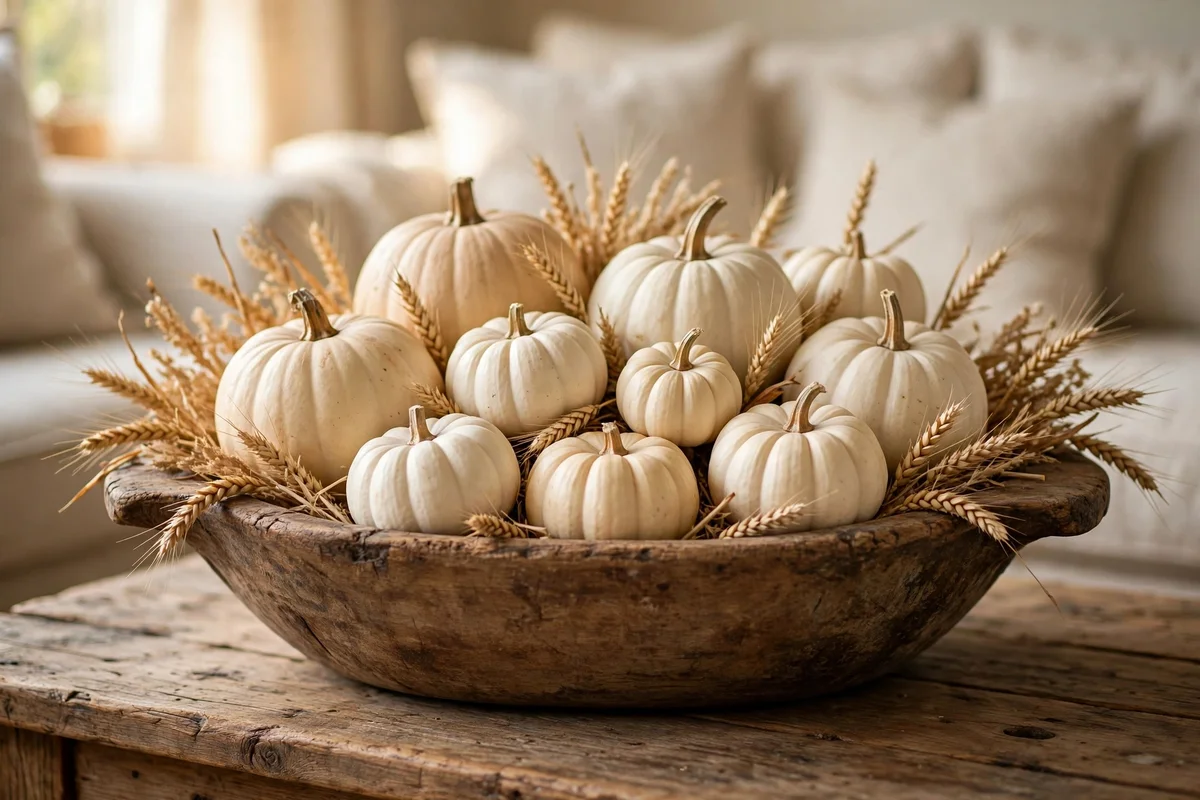
A wooden dough bowl about 40 to 55 cm long makes a generous base for white pumpkins on the coffee table. Choose five to seven pumpkins in mixed sizes, with the largest around 15 cm across and the smallest fitting in your palm. Nestle them closely so no wood shows through, mixing smooth white pumpkins with one or two softly ribbed cream ones. The pale wood and white fruit read as one calm shape from across the room.
Tuck a few dried wheat stems or a sprig of eucalyptus between the pumpkins for height and softness. Keep the bowl low on the table so sight lines stay open, and move it aside easily when guests need space for cups. The common mistake is buying pumpkins all the same size, which looks flat; the mix of sizes is what makes the bowl look gathered rather than bought. A large dough bowl plus seven pumpkins usually costs between 25 and 50 dollars or pounds.
2. Line the Living Room Mantel With Cream Pumpkins and Ivory Candles
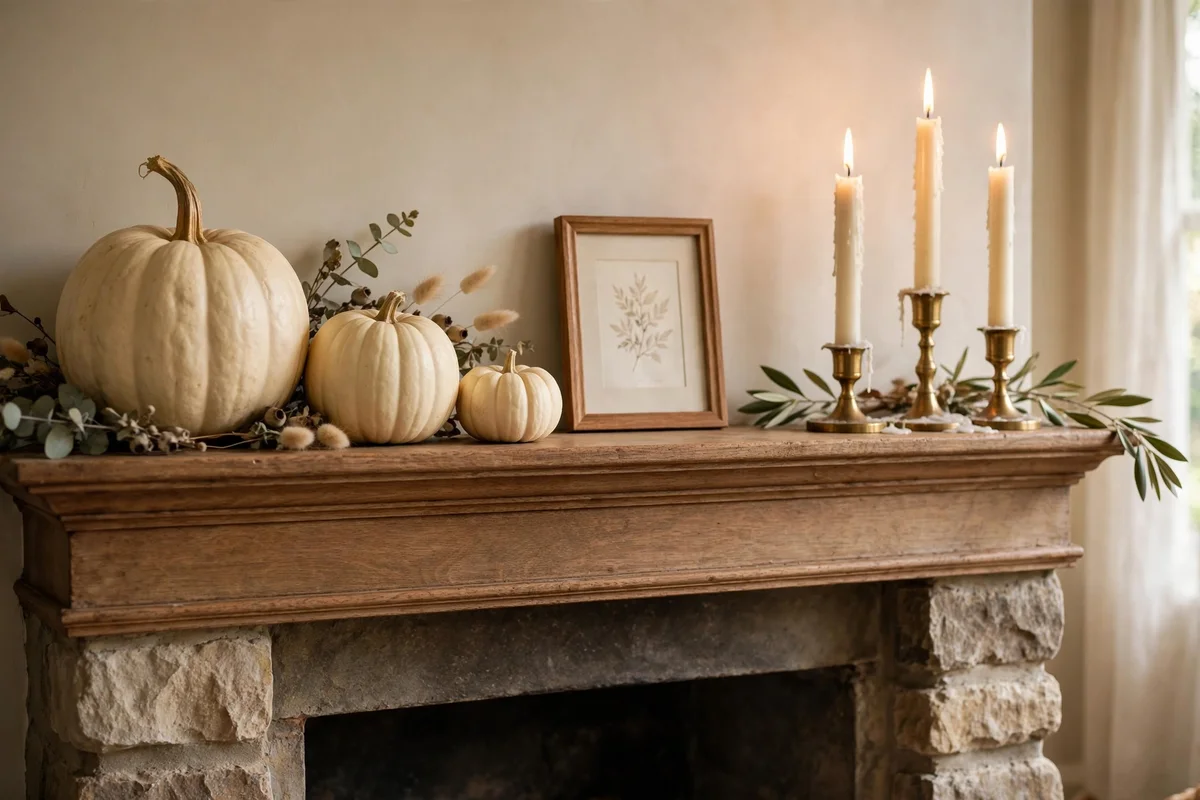
A mantel dressed in cream pumpkins and ivory candles glows without a single orange tone. Place three pumpkins of graduated sizes on one side, from about 18 cm down to 10 cm, and balance them with a cluster of ivory taper candles in simple brass or wood holders on the other side. Keep everything 10 to 15 cm from the mantel edge for safety and a tidy line. This one-sided balance feels calm and leaves the centre open for a small framed print or a trailing dried branch.
Use real or flameless candles with a warm 2700K tone so the cream pumpkins look golden in the evening. The mistake to avoid is lining pumpkins in a perfect row like soldiers; groups of odd numbers feel natural and relaxed. Budget tip: three cream pumpkins, four taper candles and two simple holders usually total under 40 dollars or pounds, and the holders work year round. Dust the pumpkins weekly with a dry cloth to keep them bright.
3. Pair Dried Pampas and Wheat in a Tall Stoneware Floor Vase
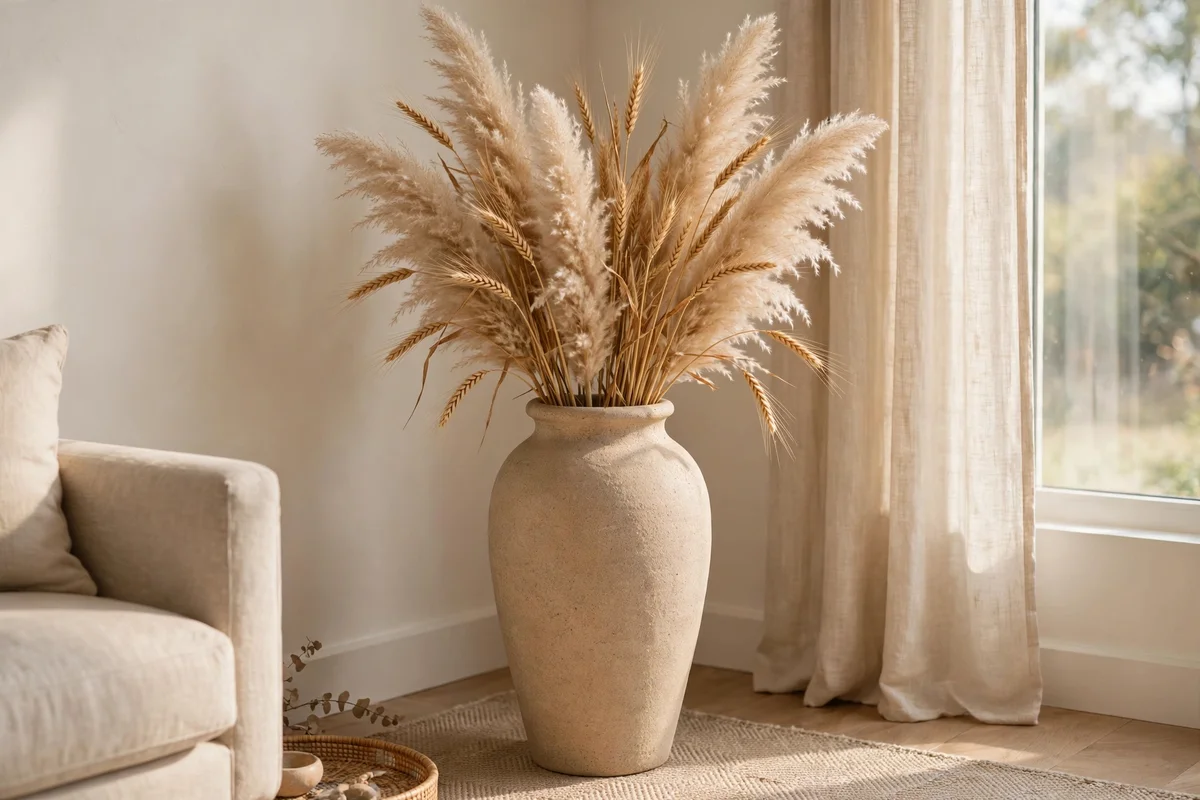
A floor vase 60 to 80 cm tall filled with dried pampas and wheat adds soft autumn height to an empty corner. Choose a stoneware vase in sand, oatmeal or warm grey so the grasses stay the star. Arrange five to seven pampas plumes first for the cloud-like shape, then slide in nine to twelve wheat stems slightly lower for golden structure. Keep the vase at least 30 cm from walkways so the plumes never brush passing shoulders.
Dried grasses last two to three seasons if kept out of direct sun, which bleaches them. The mistake to avoid is cramming in too many stems; the vase should look airy, with each plume visible. Budget tip: a stoneware floor vase plus one bundle of pampas and one of wheat usually costs 35 to 70 dollars or pounds, far less than fresh flowers over a season. Shake stems outdoors once a month to release dust.
4. Layer a Natural Linen Runner Beneath a Dining Table Pumpkin Trio
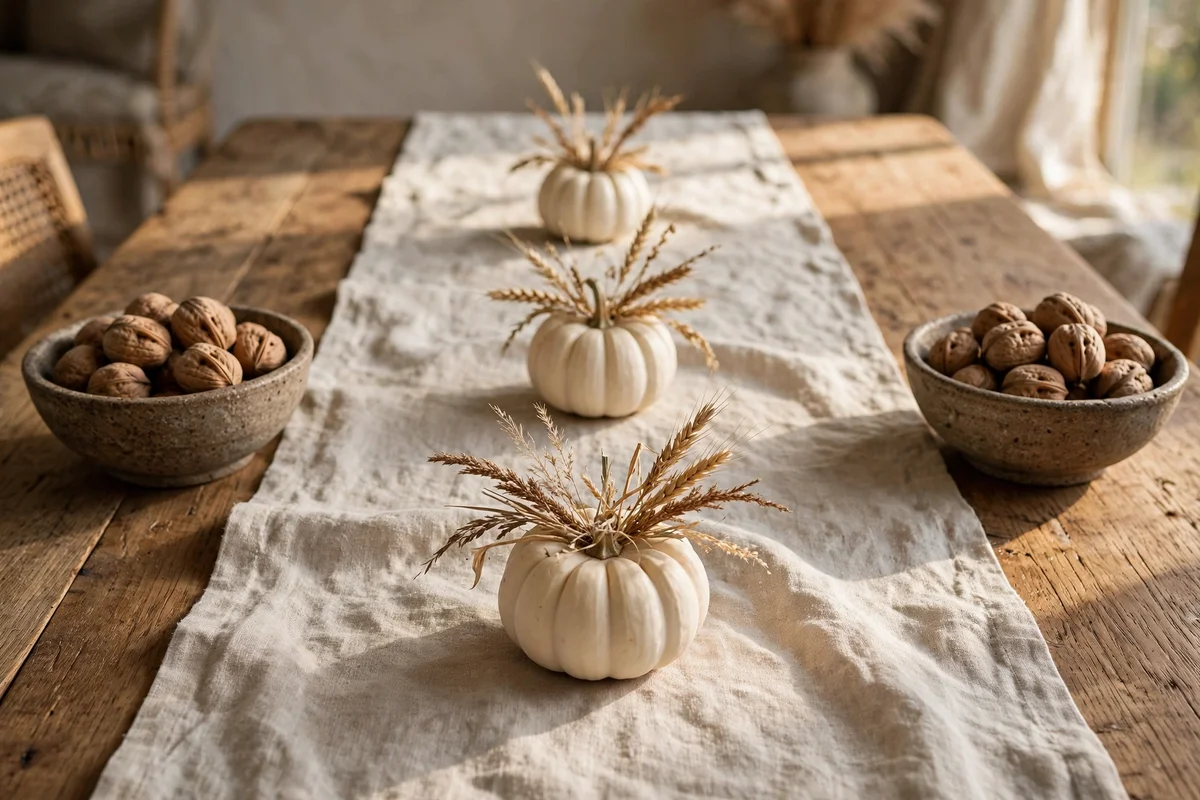
A natural linen runner softens a dining table and gives small pumpkins a home. Choose a runner 30 to 40 cm wide and at least 60 cm longer than the table so 30 cm hangs over each end. Place three small white or cream pumpkins down the centre, spaced about 25 cm apart, with a short dried grass stem tucked beside each. The linen wrinkles slightly, which suits the relaxed look and hides crumbs between courses.
Linen washes well, so this runner survives real family meals; choose a mid-weight weave that drapes without sliding. The mistake to avoid is a runner narrower than 25 cm, which looks lost on a wide table. Budget tip: an unbleached linen runner plus three small pumpkins usually costs 30 to 55 dollars or pounds. For a mid tier, add two low stoneware bowls of walnuts down the centre for texture guests can touch.
5. Drape a Soft Gauze Runner Over a Pale Wood Dining Table
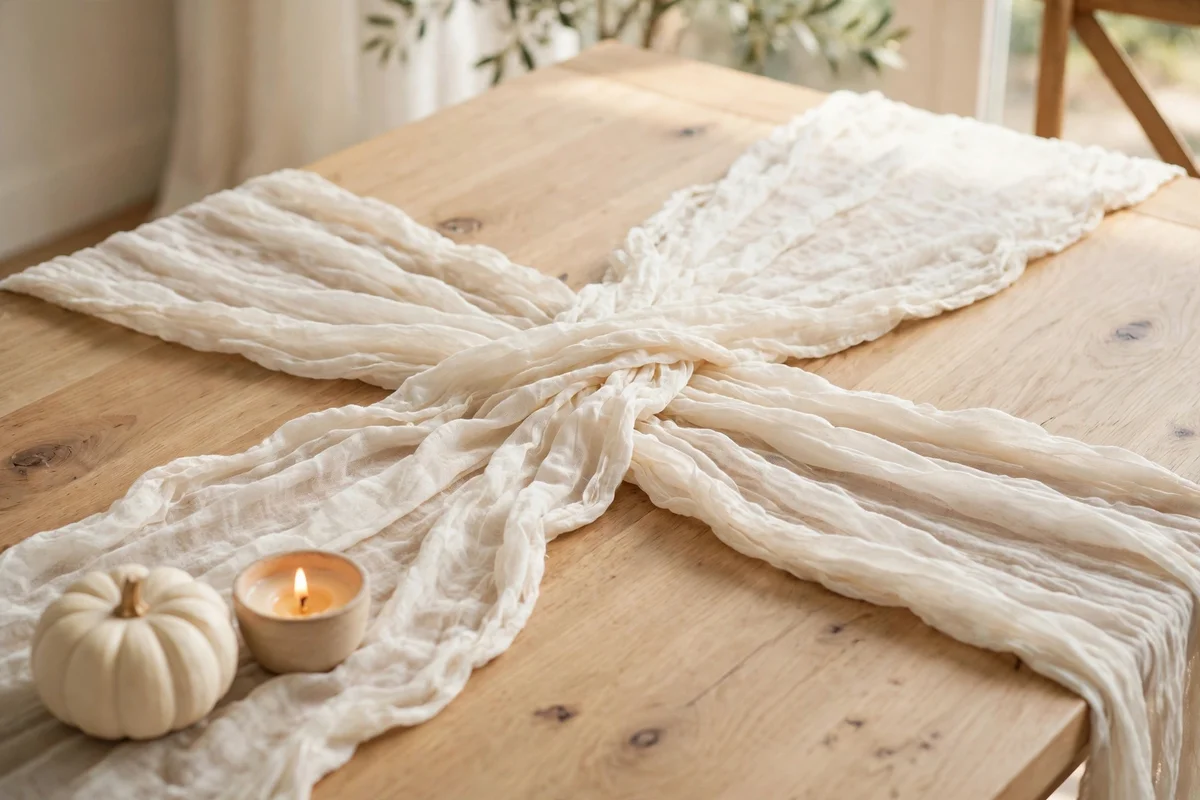
A gauze runner laid over pale wood gives a dining table a soft, misty layer that plain wood lacks. Choose a runner in ivory or warm white, about 35 cm wide, and let it gather naturally rather than ironing it flat. Layer two thin runners crossing slightly off centre for extra depth, or fold one in half for a narrower table. Keep the ends uneven by a few centimetres; perfect symmetry fights the airy mood.
Gauze is delicate, so keep candle flames at least 20 cm away and lift the runner before wiping the table. The mistake to avoid is pairing gauze with heavy dark wood, which swallows its lightness; it sings on oak, ash or whitewashed pine. Budget tip: two gauze runners cost about 15 to 30 dollars or pounds, making this the cheapest big-impact change on the list. Hand wash cold and line dry to keep the weave soft.
6. Welcome Guests With a Stack of White Pumpkins Beside the Front Door
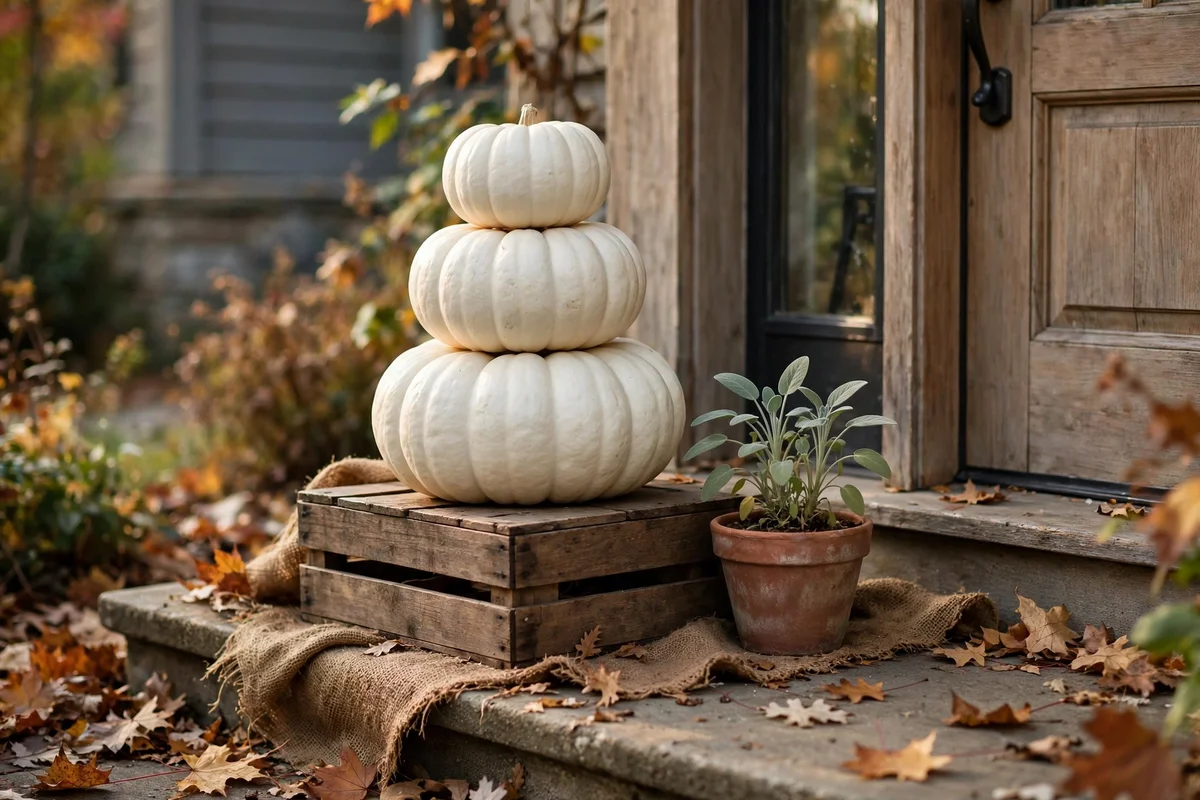
A stack of white pumpkins beside the front door says autumn without shouting it. Choose three pumpkins, roughly 25, 18 and 12 cm across, and stack them from largest to smallest on a low wooden crate or a square of burlap. Place the stack on the side of the door that gets less foot traffic so it never wobbles when bags swing past. If the step is narrow, set the pumpkins in a single row along the wall instead.
Real pumpkins handle a covered porch for four to six weeks; choose ones with firm, uncut stems. The mistake to avoid is placing them on damp soil, which rots the base in days; a crate, mat or stone slab keeps them dry. Budget tip: three white pumpkins and a small crate usually cost 15 to 30 dollars or pounds. Swap one pumpkin for a small potted sage plant and the welcome stays green into winter.
7. Dress the Sofa With Cream Knit and Oatmeal Linen Cushions
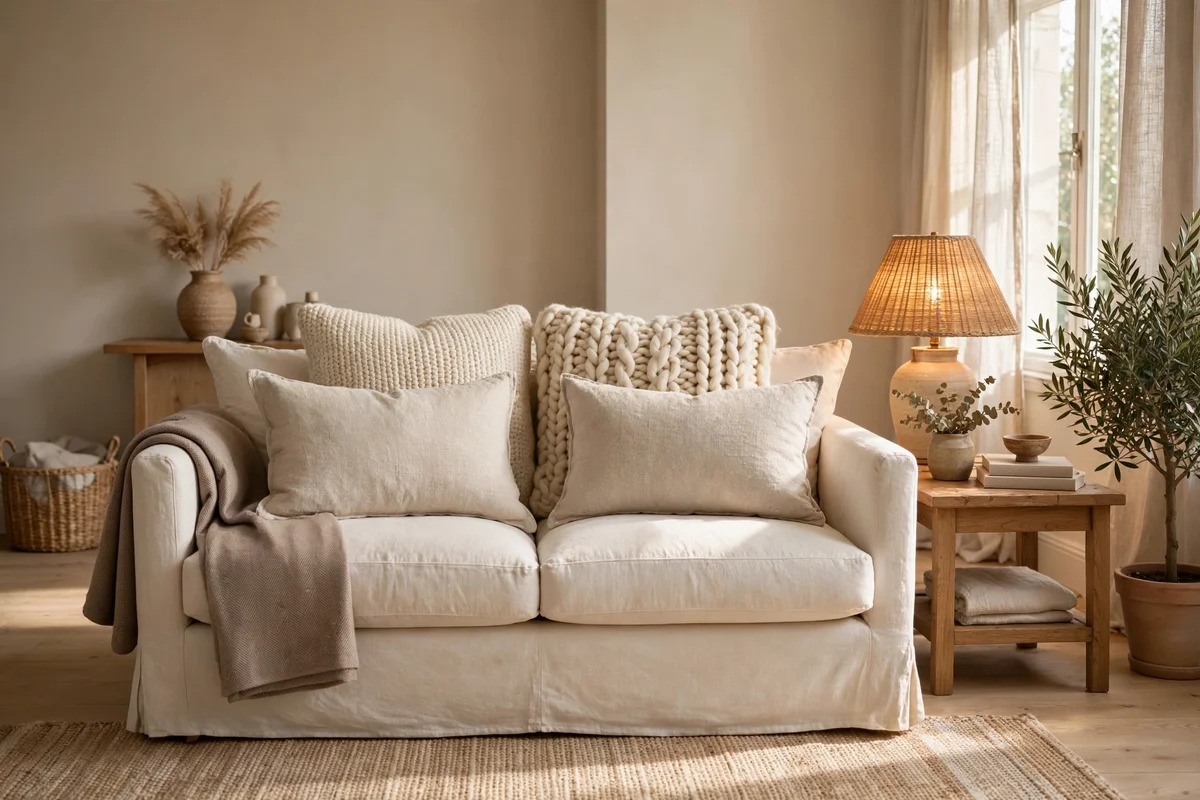
Cream knit and oatmeal linen cushions turn a sofa into a soft neutral landscape. Mix two chunky knit cushions about 45 cm square with three linen ones in slightly smaller sizes, keeping all tones within cream, ivory and oatmeal. Place the larger knits at the back corners and the linen ones forward so textures layer toward the centre. Karate-chop the tops lightly for a relaxed look that still reads tidy.
Stick to covers with removable zips so autumn mud and spills wash out easily. The mistake to avoid is buying five cushions in the exact same cream, which flattens the look; vary the weave and the shade by one step. Budget tip: five mixed covers plus inserts usually cost 40 to 80 dollars or pounds if you shop end-of-line sales. For an investment tier, choose hand-loomed wool covers that last a decade.
8. Fold a Taupe Wool Throw Over the Armchair for Autumn Evenings
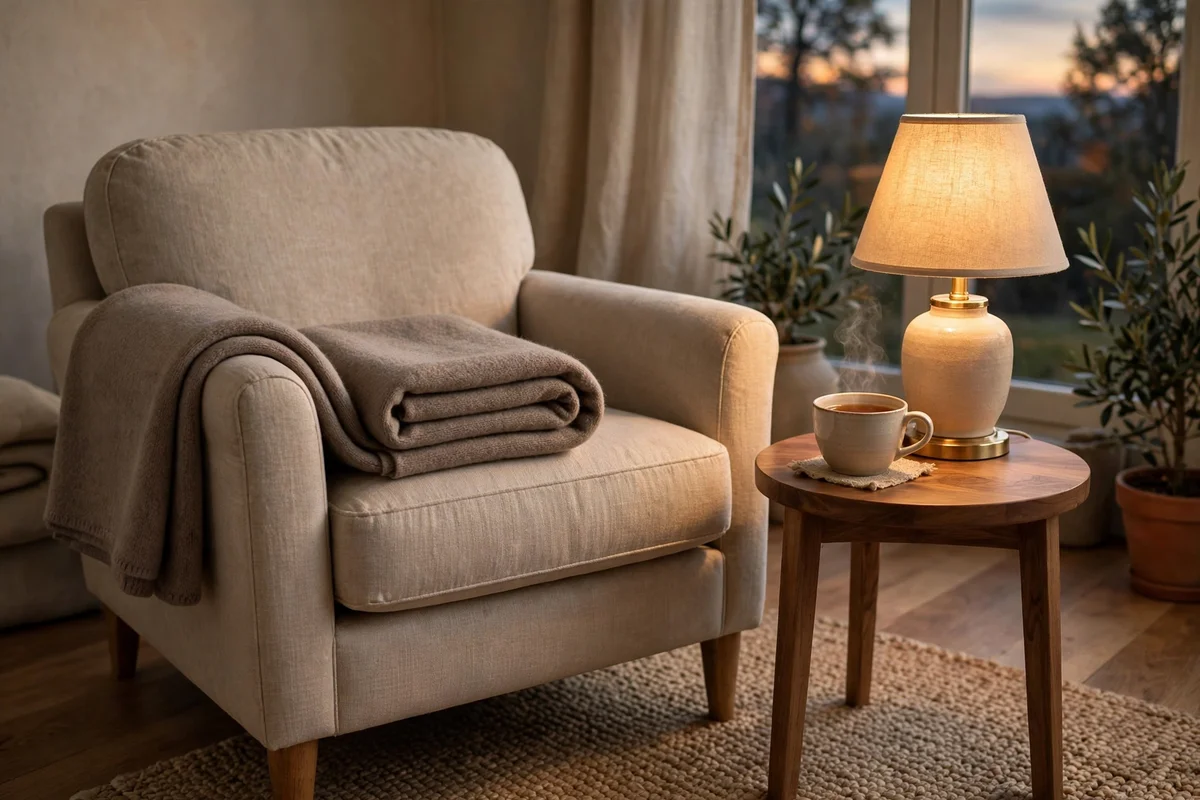
A taupe wool throw folded over one arm of the chair adds warmth exactly where it is needed. Choose a throw about 130 by 180 cm so it covers a lap fully when unfolded, and fold it in thirds lengthwise for a neat band about 40 cm wide. Drape it over the arm nearest the side table so it is within reach during reading or tea. Taupe sits between grey and brown, so it calms both cool and warm rooms.
Wool regulates temperature, so the throw works for chilly evenings and mild afternoons alike. The mistake to avoid is a throw so long it pools on the floor, where it picks up dust; the fold should end at least 10 cm above the seat edge. Budget tip: a pure wool taupe throw costs 35 to 70 dollars or pounds, while a wool-blend version runs 20 to 35. Air it on the line monthly instead of washing.
9. Ground Pale Pieces With One Deeper Walnut Wood Tray
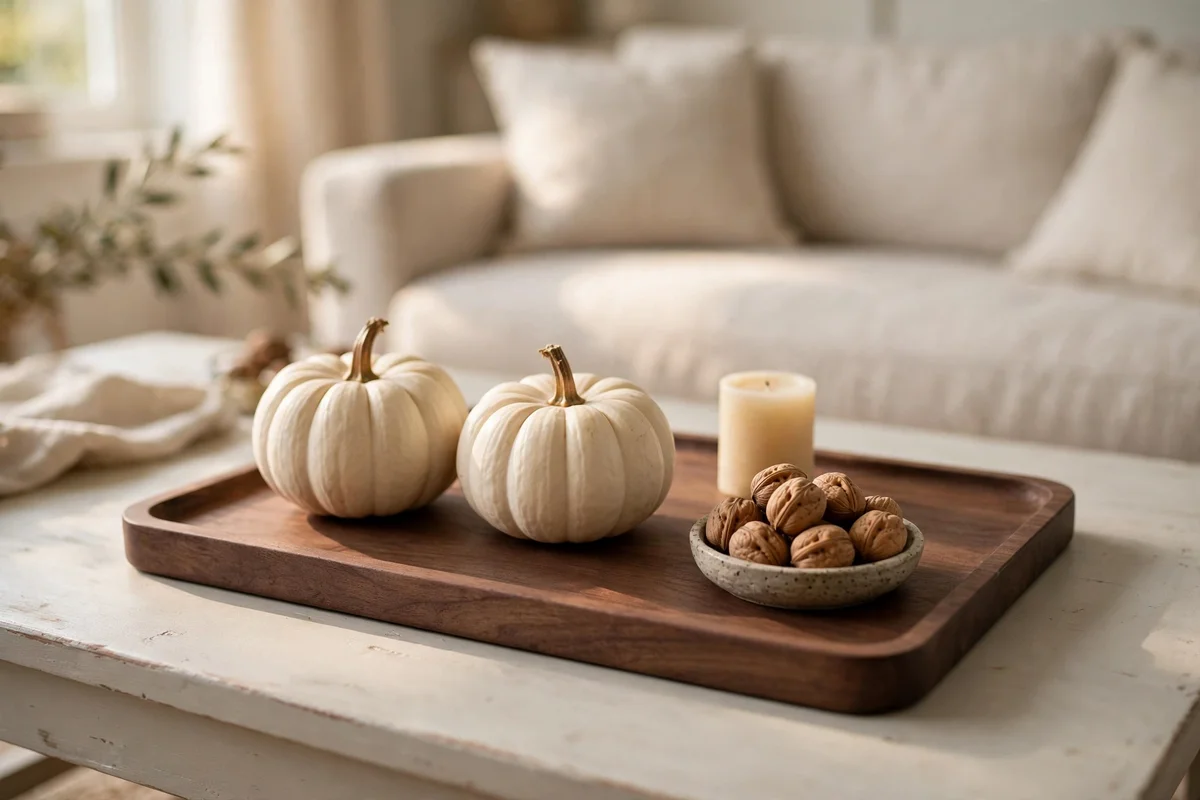
One deeper wood tone stops an all-pale room from floating away, and a walnut tray does the job quietly. Choose a tray about 45 by 30 cm in a medium walnut finish and set it on the coffee table or ottoman as an anchor. Arrange two small white pumpkins, one short candle and a tiny stoneware dish of walnuts on it. The dark wood frames the pale objects the way a picture frame holds a print.
Keep the tray finish matte so it reads calm rather than glossy. The mistake to avoid is adding a second dark wood piece nearby, which splits the eye; one anchor is enough, and everything else stays pale. Budget tip: a solid walnut tray costs 25 to 50 dollars or pounds, while a walnut-stained acacia tray runs 12 to 20. Oil the tray once a year with food-safe oil to keep the colour rich.
10. Warm Every Arrangement With 2700K Candlelight and Soft String Lights
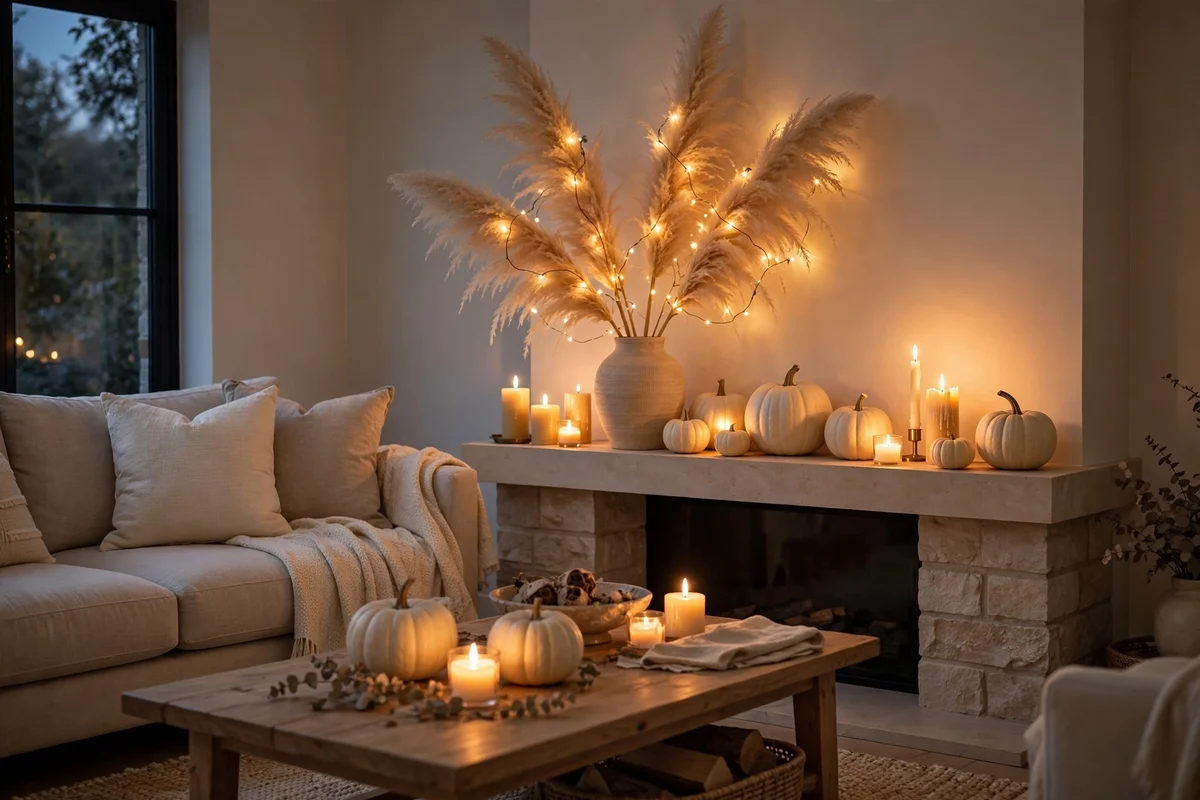
Warm light is what keeps neutral rooms from feeling cold, and 2700K is the magic number. Swap any cool daylight bulbs near your displays for warm white ones, and cluster three to five candles of mixed heights within each arrangement. Drape one short string of 20 warm micro lights through the pampas vase or along the mantel so the glow catches the dried textures. Light from two heights, table and mantel, so no corner stays flat.
Set candles at least 15 cm from dried grasses and never leave real flames unattended. The mistake to avoid is mixing warm and cool bulbs in one room, which makes creams look grey in one spot and yellow in another. Budget tip: a pack of warm micro lights plus six tea lights costs under 15 dollars or pounds, while a set of flameless pillar candles runs 25 to 45. Use a timer plug so lights switch on at dusk automatically.
11. Style the Nightstand With a Small White Pumpkin and Wheat Stems
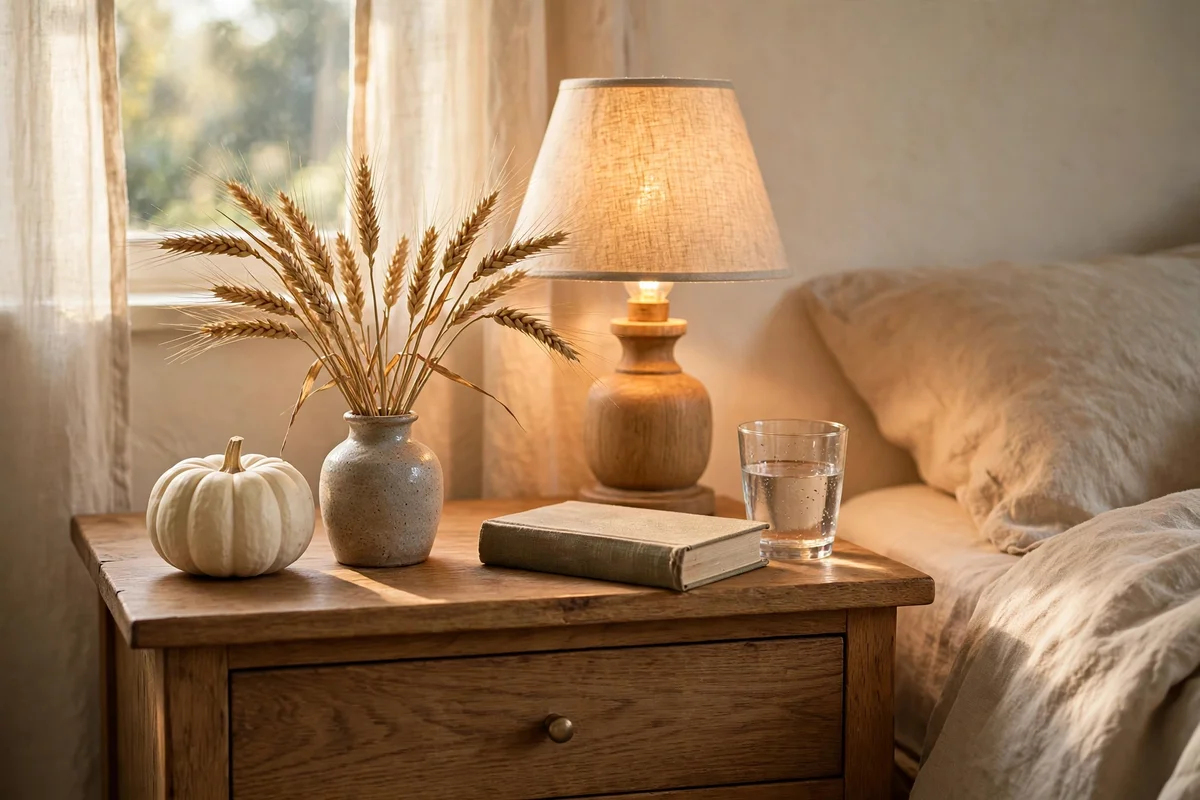
The bedroom joins the season with just two pieces on the nightstand. Set one small white pumpkin, about 8 to 10 cm across, beside a short stoneware bud vase holding five to seven wheat stems cut to 25 cm. Keep the pair on the outer third of the nightstand so the lamp, book and water glass keep their places. The pale shapes catch morning light softly and never crowd the surface you reach for at night.
A small pumpkin lasts three to four weeks indoors away from radiators. The mistake to avoid is a tall arrangement that blocks the lamp; bedroom light matters more than decor. Budget tip: one small pumpkin and a bud vase of wheat costs 8 to 18 dollars or pounds, the cheapest idea in this list. When the pumpkin tires, compost it and keep the wheat, which lasts the whole season.
12. Layer a Cream Knitted Throw Across the Bedroom Foot Bench
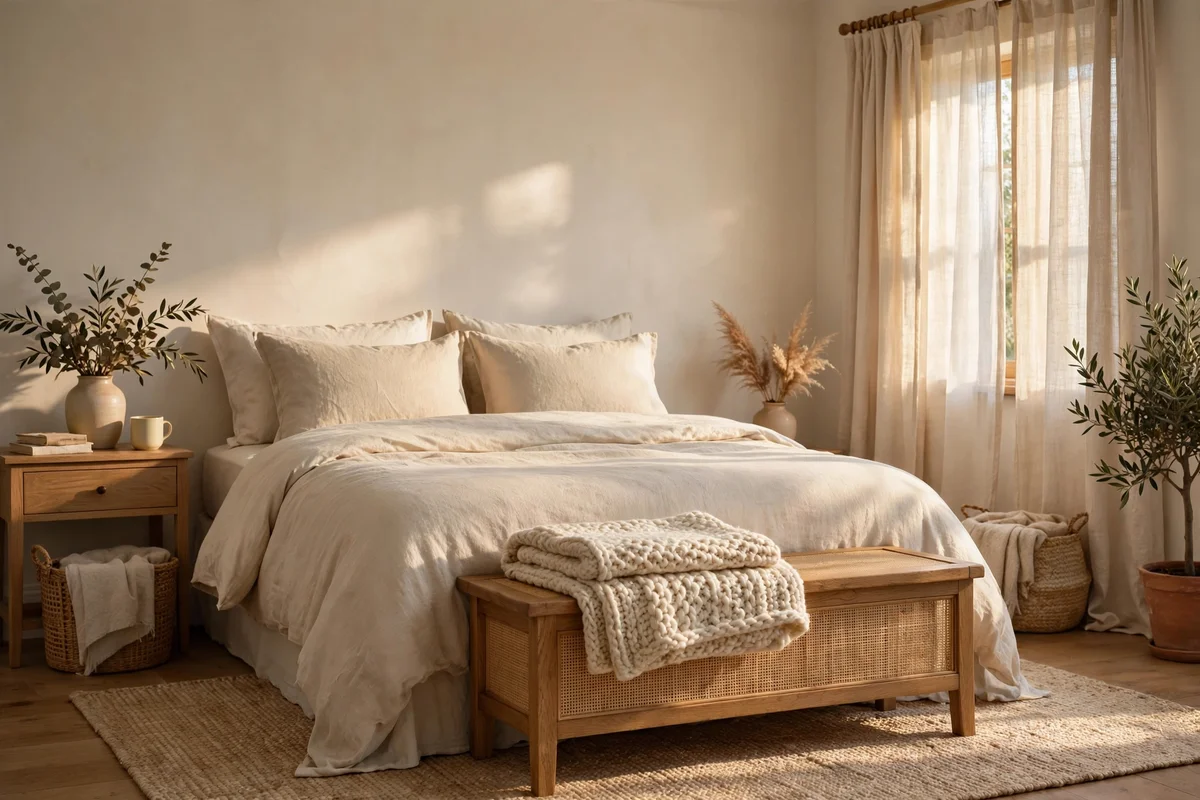
A cream knitted throw folded across the foot bench finishes the bed without touching the pillows. Choose a chunky cable or waffle knit about 120 by 150 cm and fold it in half lengthwise so it sits about 60 cm deep. Lay it across the bench with 15 cm hanging over the front edge for a relaxed fold. The knit adds the texture a plain duvet misses and ties the bedroom to the living room palette.
Cotton knits wash easily, while wool blends need cooler cycles; check the label before the first wash. The mistake to avoid is a throw wider than the bench, which drags on the floor and collects dust. Budget tip: a cotton cream throw costs 25 to 45 dollars or pounds, a wool blend 50 to 90. Shake it outside weekly and it looks fresh all autumn.
13. Group Sand-Toned Stoneware Vases on the Entryway Console
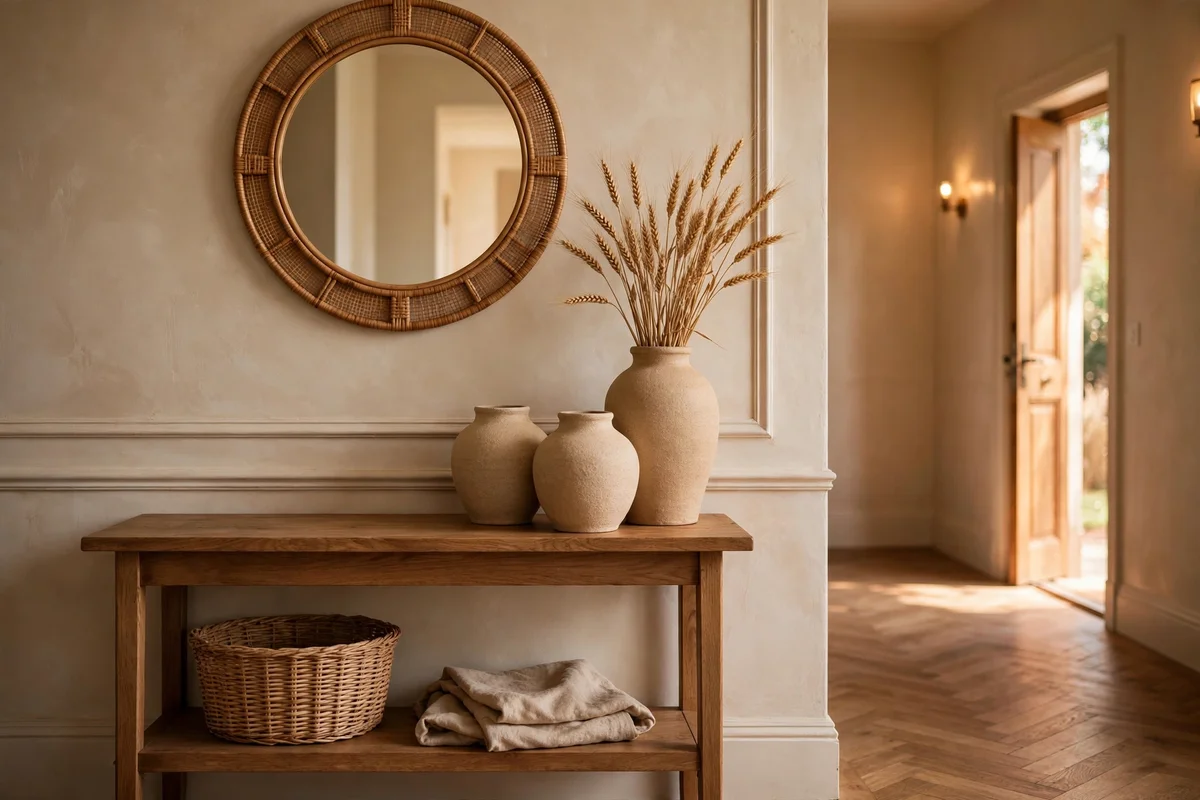
Three sand-toned stoneware vases of different heights turn an entryway console into a quiet gallery. Choose heights around 15, 22 and 30 cm in matte sand, oatmeal or pale clay, and group them on one side of the console with 5 to 8 cm between each. Leave two empty and fill the tallest with three dried wheat stems or one pampas plume. The matte clay surfaces catch light gently and never compete with wall art above.
Odd numbers of objects always settle the eye faster than pairs. The mistake to avoid is filling every vase; empty space is part of the design and lets the one filled vase breathe. Budget tip: three handmade-look stoneware vases cost 30 to 60 dollars or pounds, while thrifted ceramic vases in warm tones run under 15. Wipe them with a damp cloth monthly, since matte clay shows dust.
14. Hang a Simple Dried Wheat Wreath Above the Entryway Console
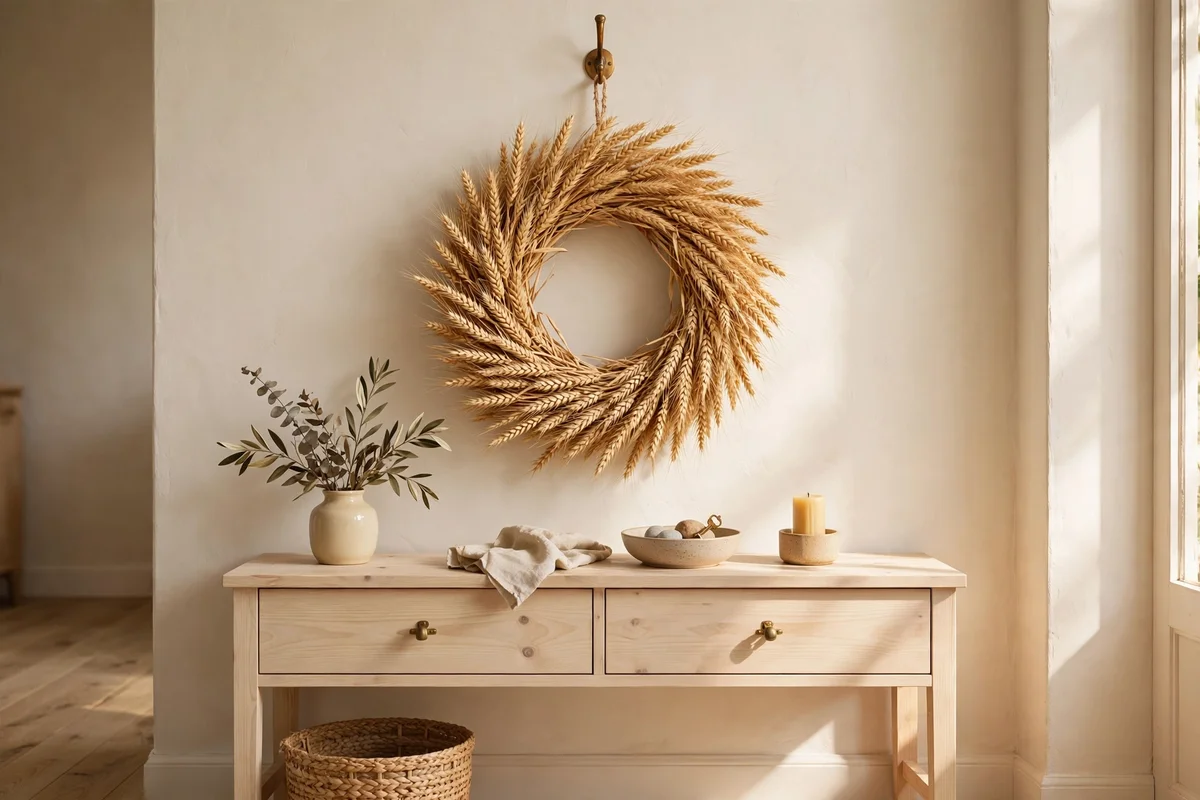
A dried wheat wreath above the entryway console greets every visitor with soft golden texture. Choose a wreath 35 to 45 cm across, bound tightly so no stems shed on the floor below. Hang it on a small brass hook centred about 20 cm above the console top, or rest it on a narrow picture ledge. The round wheat shape softens the straight lines of consoles and mirrors around it.
Dried wheat keeps its colour for two to three years indoors, away from strong sun. The mistake to avoid is hanging it where coats brush past; crushed stems shed constantly. Budget tip: a good dried wheat wreath costs 20 to 40 dollars or pounds, and making one from two wheat bundles and a wire ring costs under 15 if you enjoy simple crafts. Dust it gently with a cool hairdryer each season.
15. Place a Tall Glass Vase of Beige Pampas in the Dining Corner
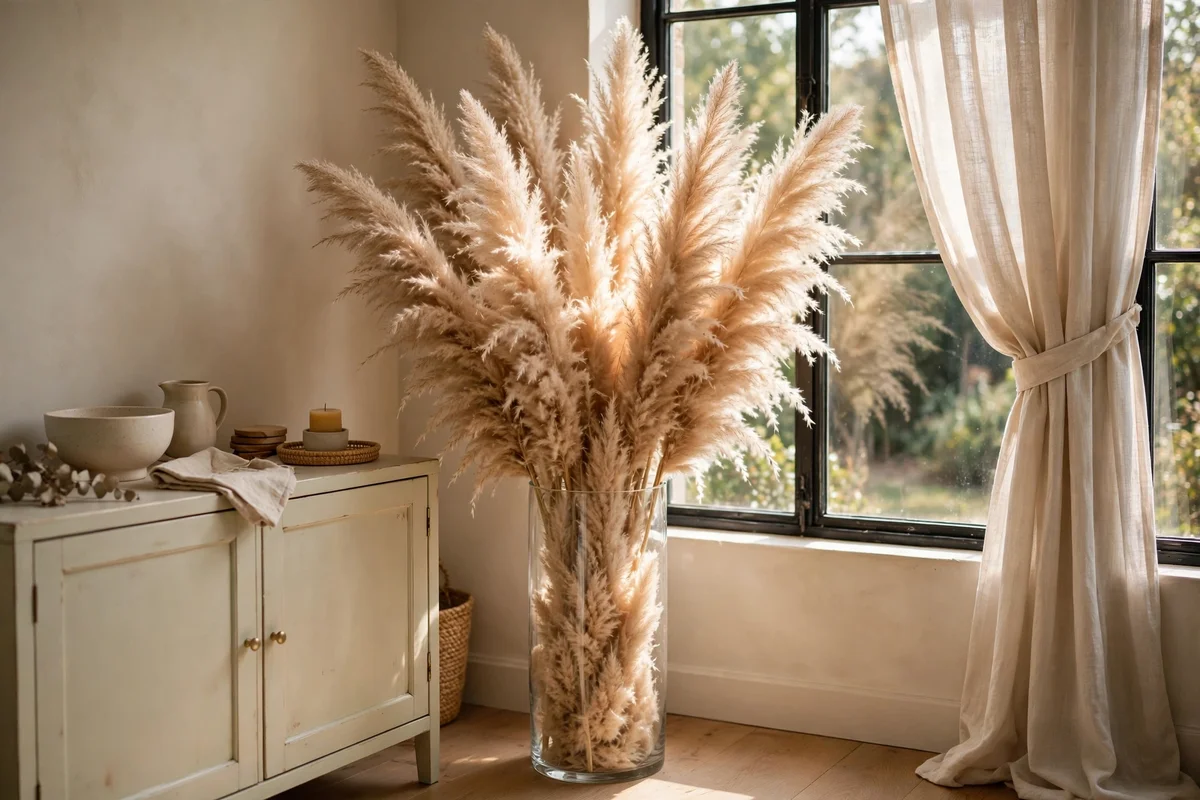
A tall glass vase of beige pampas fills an empty dining corner with soft vertical shape. Choose a clear or lightly smoked vase 50 to 70 cm tall and fill it with seven to nine pampas plumes, letting the tallest reach about 30 cm above the rim. Set it in the corner behind the sideboard or beside the window so it never blocks conversation. The see-through glass keeps the look light while the plumes add warmth.
Spray the plumes lightly with hairspray once, outdoors, to stop shedding. The mistake to avoid is placing the vase where curtains swing into it; crushed plumes drop fluff for weeks. Budget tip: a tall glass vase plus one pampas bundle costs 25 to 45 dollars or pounds. For a mid tier, choose a hand-blown vase with a soft amber tint that warms the whole corner.
16. Tie Small Sage Sprigs Into Cream Linen Napkins for the Table
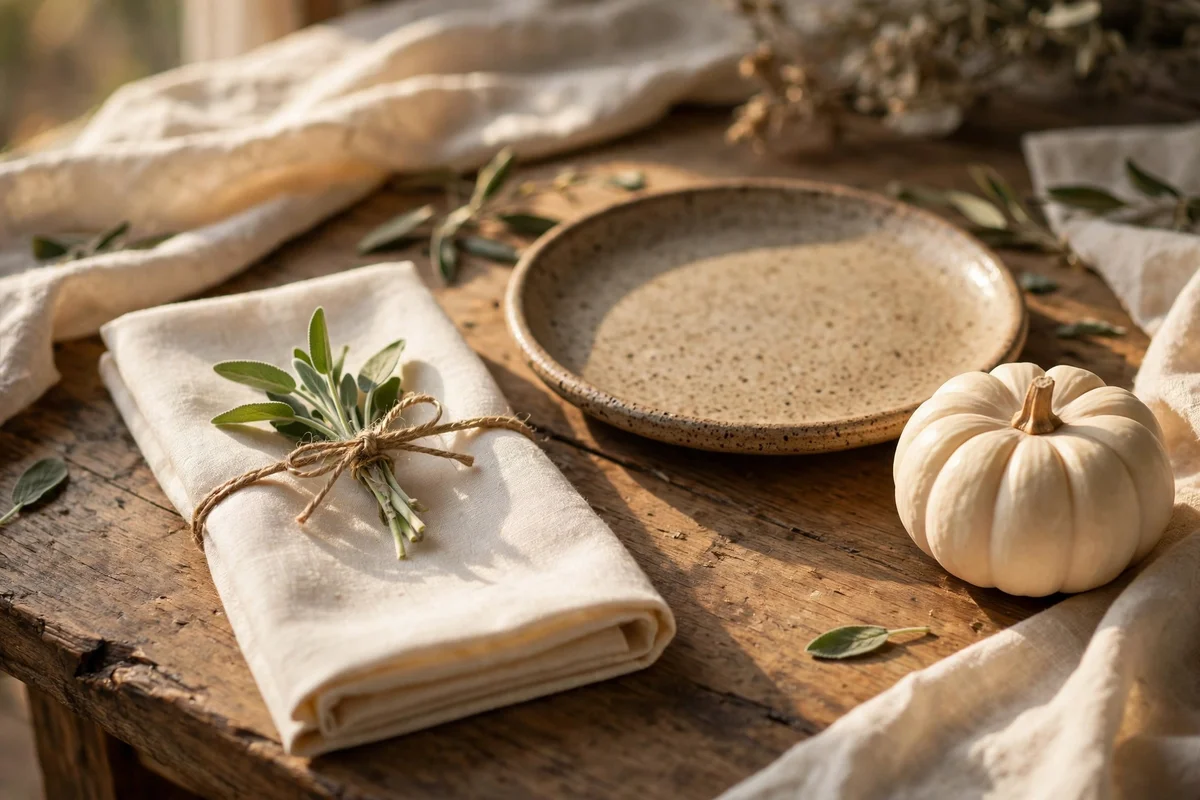
A small sage sprig tied into each cream linen napkin brings the gentlest touch of green to the table. Lay each napkin flat, fold it into a simple rectangle, and tie a 10 to 12 cm sage sprig across the fold with natural twine. Fresh sage lasts the evening and scents the table softly; dried sage keeps for weeks. This tiny detail makes even a simple family supper feel considered.
Keep the sprigs small so napkins still lie flat under cutlery. The mistake to avoid is using dyed or glittery foliage, which fights the honest neutral palette. Budget tip: a bunch of fresh sage and a ball of twine costs under 8 dollars or pounds and dresses twelve place settings. For a mid tier, add a tiny dried wheat stem beside each sprig for extra texture.
17. Build a Dining Centrepiece With a Pale Wood Tray of White Pumpkins
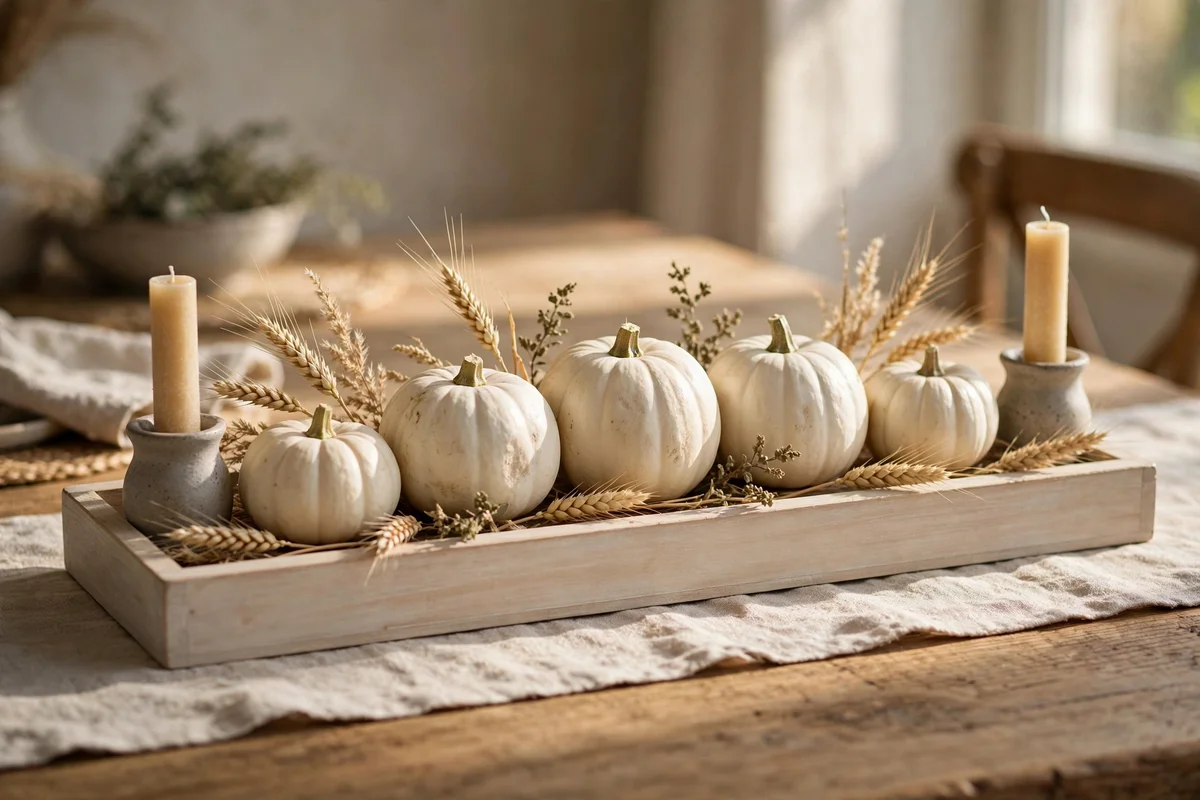
A pale wood tray of white pumpkins anchors the dining table without blocking faces. Choose a tray 50 to 70 cm long and arrange five pumpkins in a loose row, tallest in the middle at about 15 cm and smaller ones tapering outward. Tuck short wheat stems between them and one low stoneware candle holder at each end. Guests can still see each other over the display, which is the whole point of a good centrepiece.
Keep the tray under 20 cm in total height so it never becomes a wall between diners. The mistake to avoid is a centrepiece so wide it steals plate space; leave at least 30 cm of table on each side. Budget tip: a pale wood tray, five small pumpkins and two candle holders usually cost 35 to 60 dollars or pounds. Lift the whole tray off when serving big dishes and set it back after.
18. Style the Entryway Bench With a Folded Throw and a Stoneware Pot
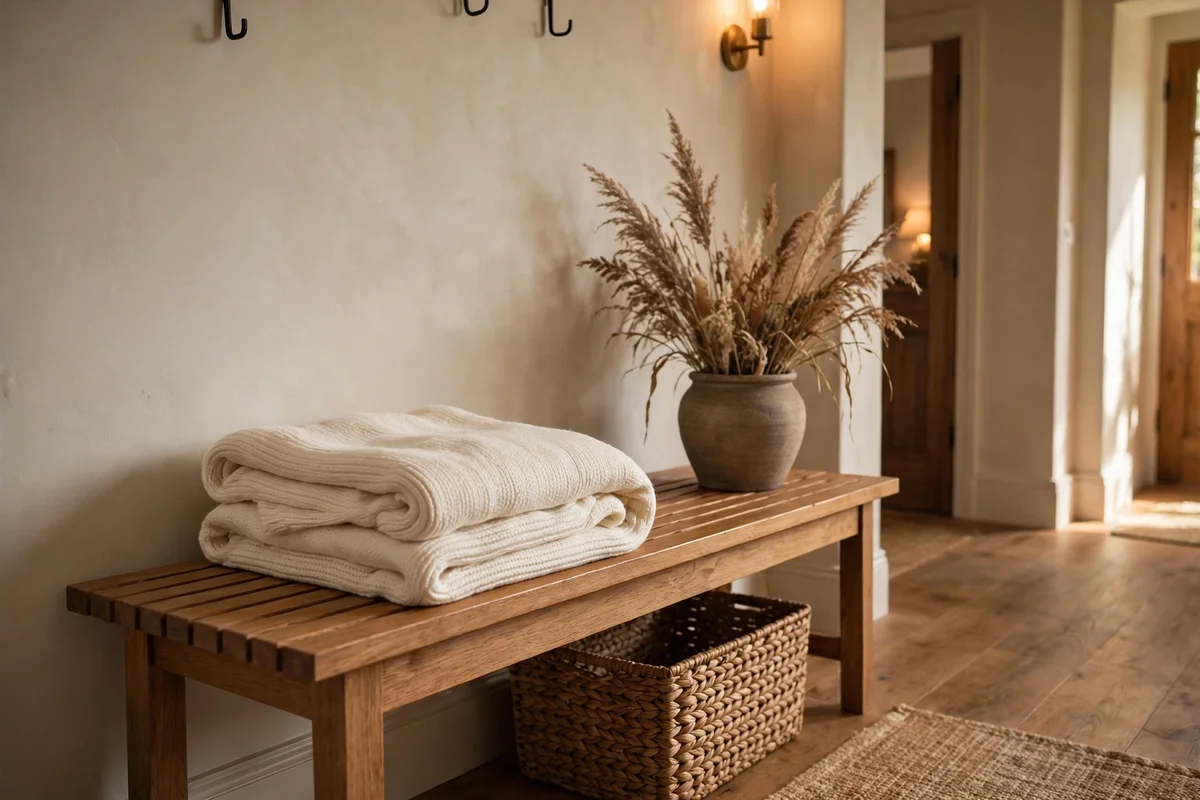
An entryway bench earns its keep with a folded throw and one stoneware pot of dried stems. Fold a cream or oatmeal throw into a neat rectangle and lay it across one half of the bench, leaving the other half free for sitting. Set a medium stoneware pot, about 20 cm tall, at the far end with five to seven dried grass stems. The bench now offers a seat, a layer of softness and a touch of autumn at once.
Choose a bench 90 to 120 cm wide so the styling never crowds the sitting space. The mistake to avoid is piling three cushions on a bench nobody can sit on; one throw is enough in a hallway. Budget tip: a folded throw and a stoneware pot of stems costs 30 to 55 dollars or pounds. If you already own the throw, a simple clay pot and a wheat bundle cost under 15.
19. Swap to Natural Linen Lamp Shades in the Living Room
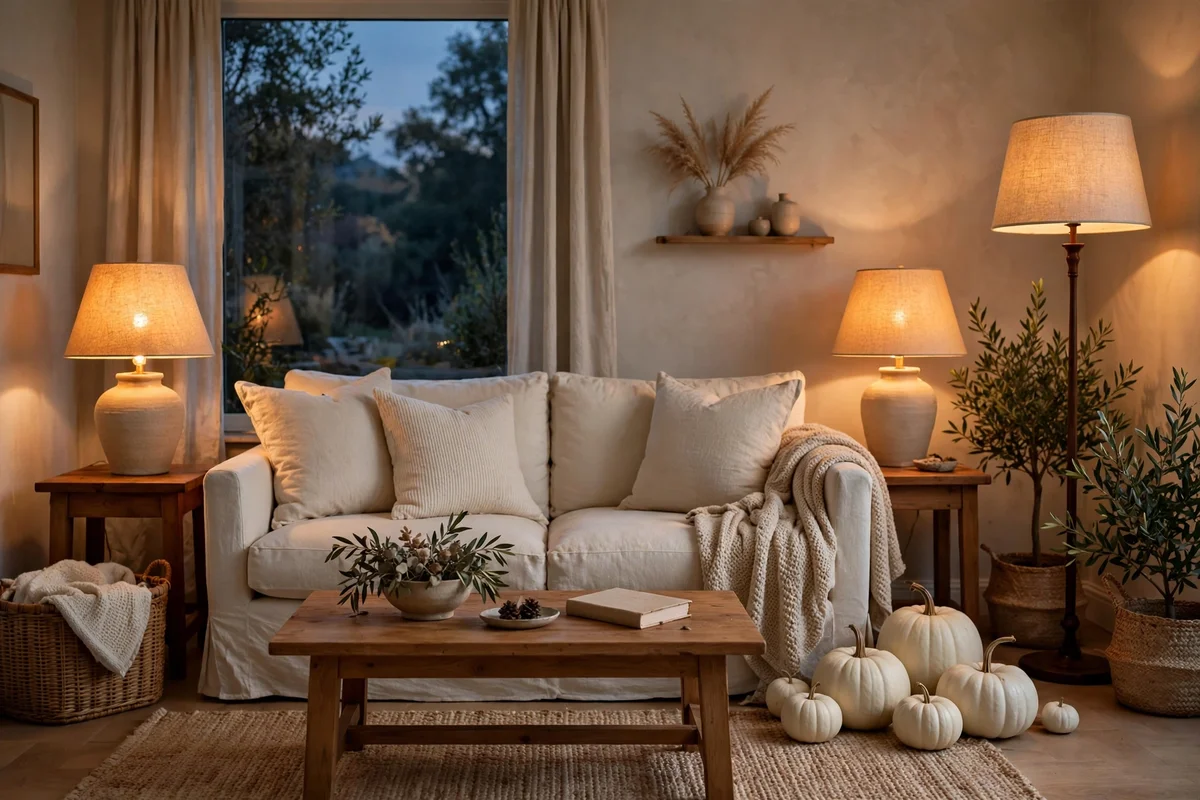
Natural linen lamp shades turn harsh light into a soft glow that flatters every neutral in the room. Replace cool white or glossy shades with unbleached linen ones in a drum or tapered shape, sized about two thirds the height of the lamp base. Use warm 2700K bulbs inside so the linen glows amber at night. Two matching shades on table lamps, plus one on the floor lamp, unify the whole seating area.
Measure the old shade before buying; the fitter type, spider or clip, must match the lamp. The mistake to avoid is a shade wider than the table it sits on, which looks top heavy and tips easily. Budget tip: three linen shades cost 30 to 60 dollars or pounds, while handmade Belgian linen shades run 40 to 80 each. Vacuum shades with a soft brush head twice a season to keep dust from dulling the weave.
20. Make a Bedroom Reading Corner With a Cream Cushion and Wheat Posy
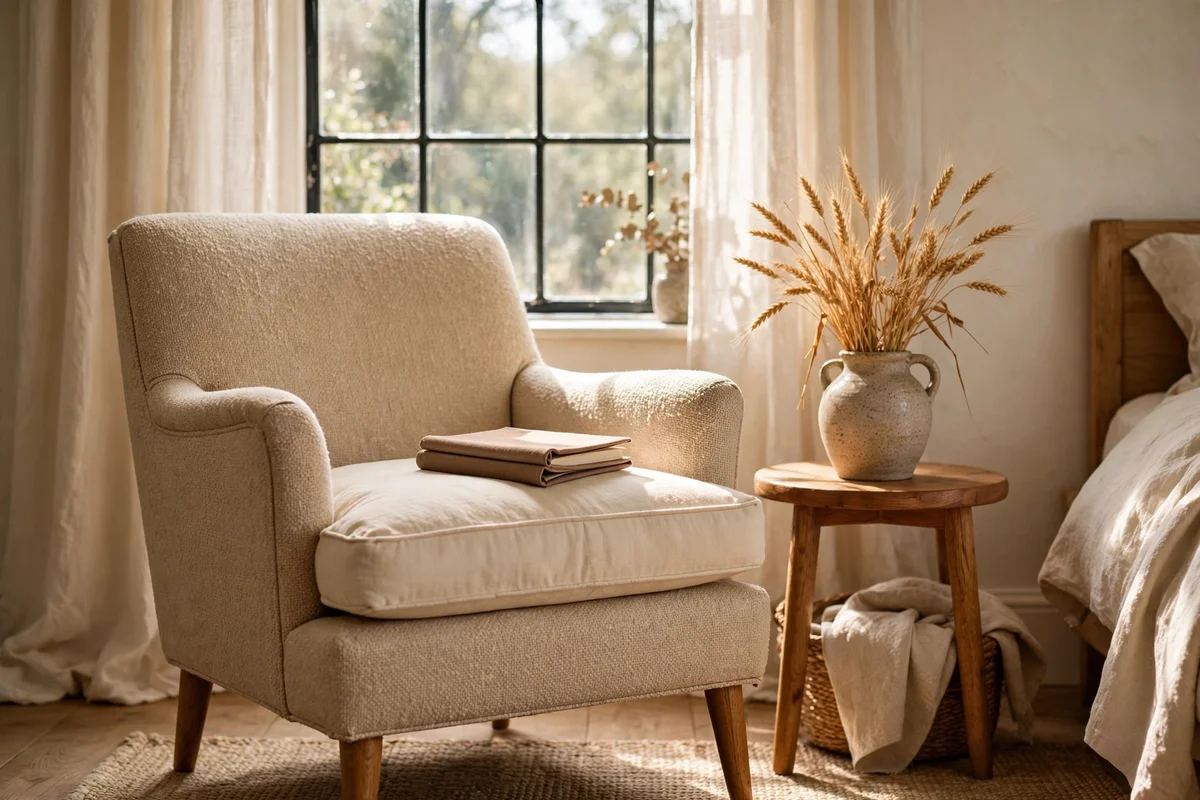
A quiet reading corner needs only a chair, a cream cushion and a small wheat posy. Place a comfortable armchair near the bedroom window where daylight falls across the seat, and add one 45 cm cream cushion for back support. Set a small stoneware jug with nine wheat stems on the side table, cut to about 30 cm so the posy stays below eye level. The corner becomes a gentle invitation to sit with tea and a book.
Keep the side table within arm’s reach, about 40 to 50 cm from the chair. The mistake to avoid is stuffing the corner with three chairs and a bookcase, which kills the calm; one chair and one small table is the whole recipe. Budget tip: a cushion, a jug and a wheat bundle cost 20 to 40 dollars or pounds if the chair already exists. A small wool throw over the chair back completes the corner for cooler evenings.
21. Lay a Flat Jute Rug Under the Coffee Table for Quiet Texture
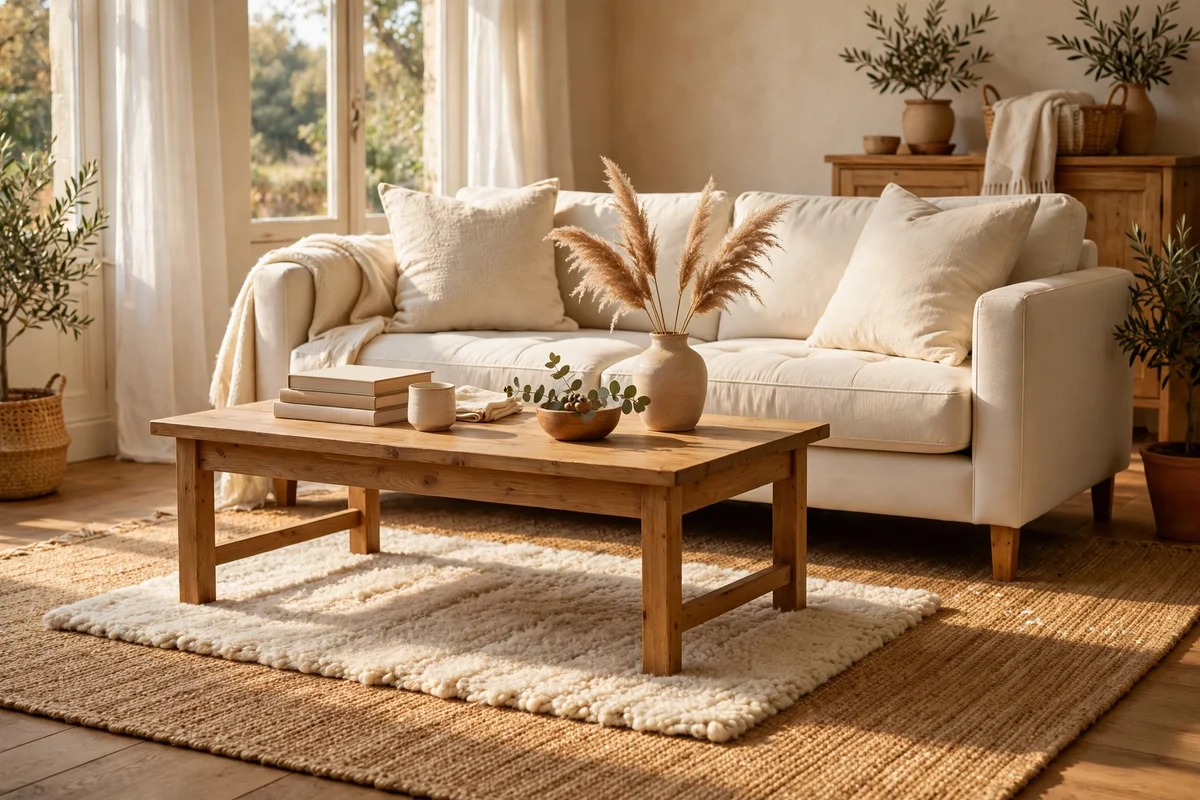
A flat jute rug under the coffee table adds the texture a neutral room needs without adding colour. Choose a rug 160 by 230 cm so at least 30 cm shows on every side of a standard coffee table, and pick a tight flatweave that chairs and feet move over easily. The natural fibre brings a soft golden tone that warms white sofas and pale floors. Layer a small cream wool rug on top for extra softness underfoot.
Jute sheds at first, so vacuum without the beater bar for the first month. The mistake to avoid is a rug that ends mid-room under the table legs only; it should reach under the front legs of the sofa too. Budget tip: a 160 by 230 cm jute rug costs 60 to 120 dollars or pounds, with a small wool layer rug adding 40 to 80. Rotate the rug twice a season so sunlight wears it evenly.
22. Line the Windowsill With Small Stoneware Pots of Dried Grasses
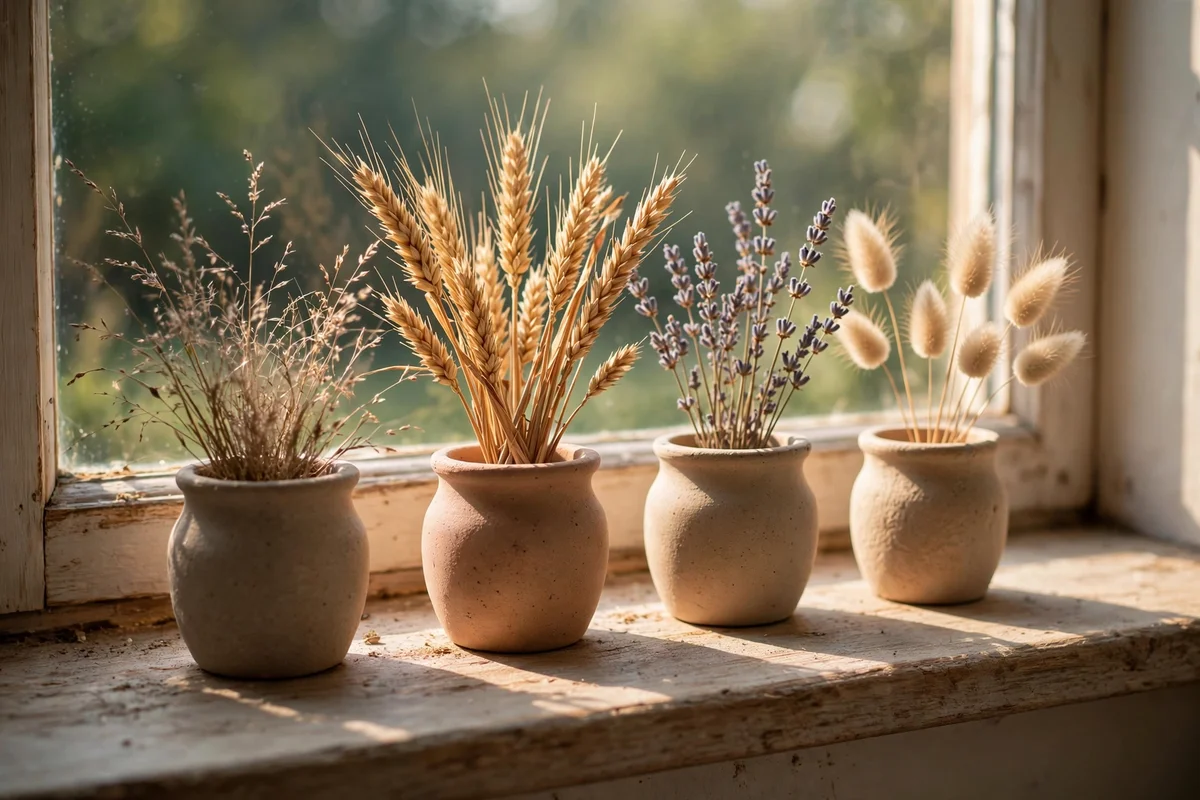
A row of small stoneware pots on the windowsill turns plain glass into an autumn display. Choose three to five pots, each 8 to 12 cm tall, in sand, clay or warm white, and fill each with a different dried grass: wheat, lavender, bunny tails or short pampas. Space them 5 cm apart along the sill and keep them 10 cm from the glass so condensation never reaches the stems. Morning light through the grasses casts soft shadows across the room.
Dried lavender keeps a gentle scent for months, so mix one lavender pot among the grasses. The mistake to avoid is pots without saucers; even dried stems drop tiny seeds that stain painted sills. Budget tip: five small stoneware pots and mixed dried stems cost 25 to 45 dollars or pounds. For a mid tier, choose handmade pots with a speckled glaze that catch the light beautifully.
23. Add Amber Glass Candle Holders to Warm Every Neutral Room
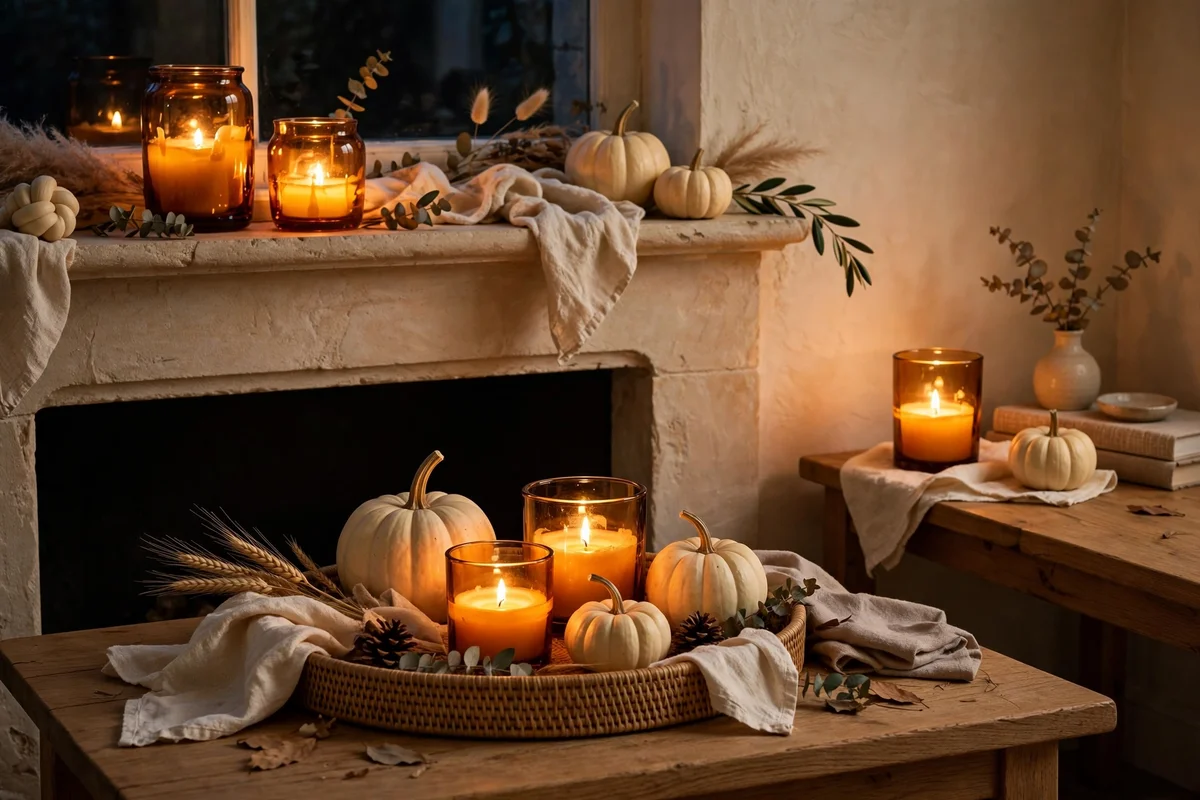
Amber glass candle holders add the one warm glow that keeps neutrals from feeling cold. Place one holder, 10 to 15 cm tall, in each styled spot: the mantel, the coffee table tray, the entryway console and the nightstand. The amber glass turns ordinary tea lights into pools of honey-coloured light that flatter cream, taupe and sage. Choose simple shapes without patterns so the colour does all the work.
Use one size across all rooms so the holders read as a set. The mistake to avoid is mixing amber with bright coloured glass, which breaks the calm palette in one glance. Budget tip: four amber glass holders and a pack of tea lights cost 15 to 30 dollars or pounds. For an investment tier, choose hand-blown amber hurricanes 25 cm tall that double as sculptural pieces by day.
24. Shop the Palette With a Simple Budget, Mid and Investment List
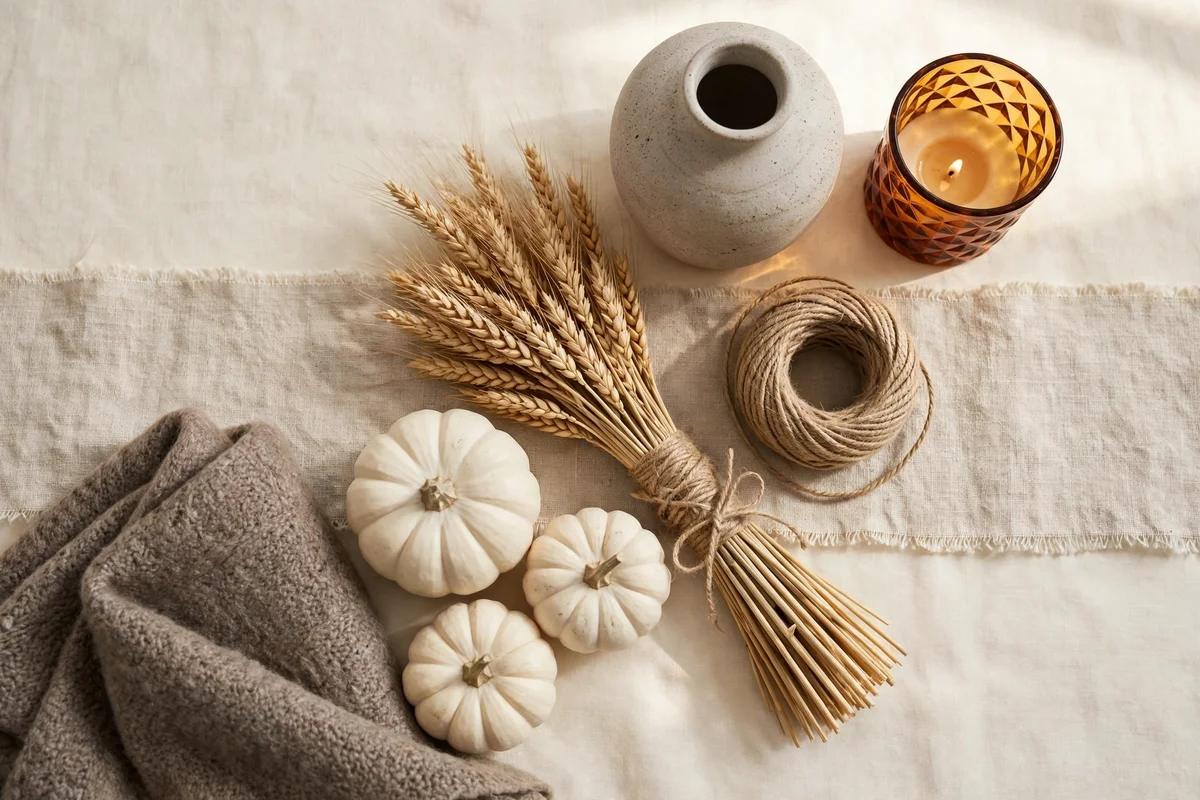
A short shopping list keeps neutral fall decor affordable and focused. Budget tier, under 50 dollars or pounds total: three white pumpkins, one wheat bundle, a ball of twine and a pack of warm tea lights. Mid tier, 100 to 200: add a stoneware floor vase, a linen runner, two linen lamp shades and a taupe wool throw. Investment tier, 250 plus: a walnut tray, hand-loomed cushions, a jute rug and hand-blown amber hurricanes that serve every season.
Buy the budget tier first and live with it for a week before spending more. The mistake to avoid is buying the whole list in one trip, which leads to pieces that fight each other; add one tier at a time and check the palette holds. Most of these pieces return every autumn, so the cost per season drops to almost nothing by year three. Store dried grasses in a tall box and wash linen before packing it away.
Neutral fall decor proves that autumn needs no orange to feel seasonal. Cream pumpkins, dried grasses, linen runners and pale wood carry the whole mood through texture and light, and the gentle touches of sage and taupe keep the palette from ever feeling flat. Every room, from the entryway to the bedroom, can share the same calm language without looking matched or stiff.
Start this week with the easiest win: three white pumpkins in a low bowl on the coffee table, lit by one warm candle beside them. Live with that small cluster for a few days and notice how the room softens. Then add one layer at a time, a linen runner, a wheat posy, a taupe throw, until the whole home glows with quiet autumn warmth.
Frequently Asked Questions
How do I decorate for fall without using orange?
Lean on texture and tone instead of colour. Cream and white pumpkins, dried pampas, wheat, natural linen and pale wood all read as autumn without a drop of orange. Add gentle sage or taupe for depth, and warm the whole palette with 2700K candlelight so the neutrals glow. The season shows in the materials, not the colour wheel, and the look stays elegant into winter.
What does a neutral fall refresh realistically cost?
Between 50 and 200 dollars or pounds for most rooms. The budget tier, three white pumpkins, wheat, twine and tea lights, costs under 50 and covers a mantel and table. Add a linen runner, a stoneware vase and a wool throw to reach the mid tier around 150. Because pumpkins compost and dried grasses return yearly, the cost per season falls fast.
How do I keep white and cream decor from feeling cold?
Warm light and mixed textures do the heavy lifting. Use 2700K bulbs and amber glass candle holders so creams glow golden in the evening. Layer knit, linen, jute and wool so the eye finds softness everywhere, and ground the palette with one deeper wood tone like a walnut tray. These three moves turn a pale room warm without adding a single bright colour.
Will white pumpkins work in a small living room?
Yes, scale is everything. Choose pumpkins 8 to 15 cm across and group three in a low bowl so the display stays compact. Keep arrangements below eye level and leave open space around them; one small cluster beats five scattered pieces. Stick to the coffee table or one mantel corner rather than spreading through the room, and the small space feels calm, not crowded.
How long do dried pampas and wheat decorations last?
Two to three seasons indoors with simple care. Keep dried grasses out of direct sunlight, which bleaches the colour, and away from radiators that make stems brittle. Shake them outdoors once a month to release dust, and give pampas one light mist of hairspray at the start to stop shedding. Store tall stems upright in a box over summer and they return next autumn.