Living Room
24 Quiet Luxury Home Ideas That Feel Timeless and Calm
By Anna Wells · · 22 min read
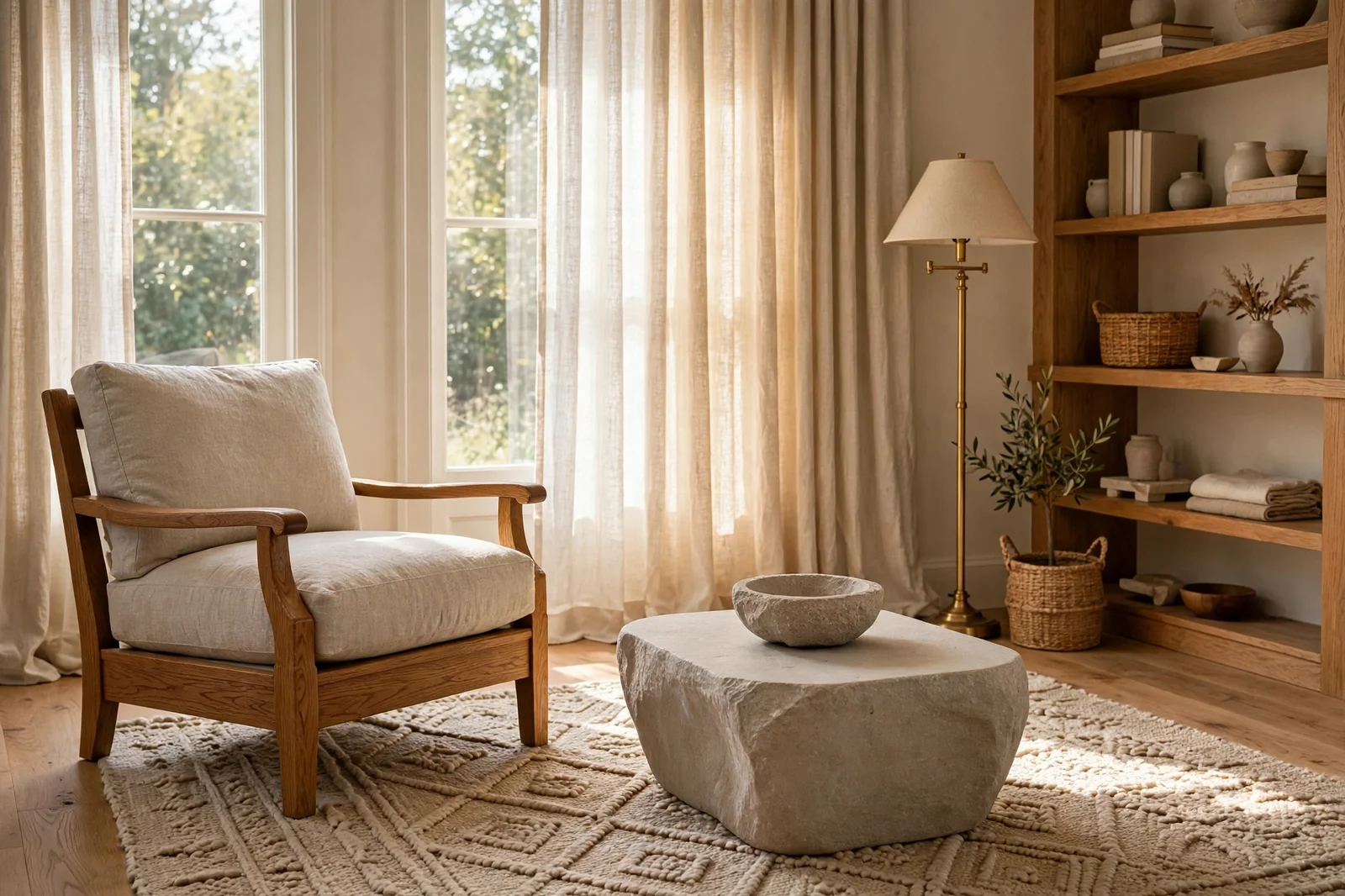
A calm, practical guide to quiet luxury at home: honest materials, edited surfaces and gentle light, with 24 ideas for timeless rooms.
Morning light falls across a solid oak floor, catches the edge of a folded wool throw, and settles on a brass lamp that glows rather than glares. The room is quiet, not because it is empty, but because everything in it was chosen slowly and made well. This is the feeling of quiet luxury: calm you can touch, in materials that grow more beautiful with every year you live with them.
The living room is where this matters most, since it gathers the whole family and every guest. Yet the usual route to an elegant home, more furniture, brighter finishes, louder statements, only creates noise. The quieter route asks a different question: what if one well-made object replaced five cheap ones, and what if the money went where the eye and the hand actually land?
These 24 ideas answer that question in practical terms. Each one names real materials like solid oak, honed stone, linen, wool and unlacquered brass, with honest sizes, placement distances and budget tiers. You will also find clear guidance on where quality spending truly shows, in the sofa, the rug and the light, and where it does not, so every purchase earns its place.
Work through the ideas in order or dip into whichever room need calls loudest. Start with the easiest one this week, keep the palette calm, and let the room change slowly. Quiet luxury is not a shopping list; it is a way of choosing, and the calm it brings will outlast every trend.
1. Begin With One Solid Oak Armchair Instead of a Matching Set
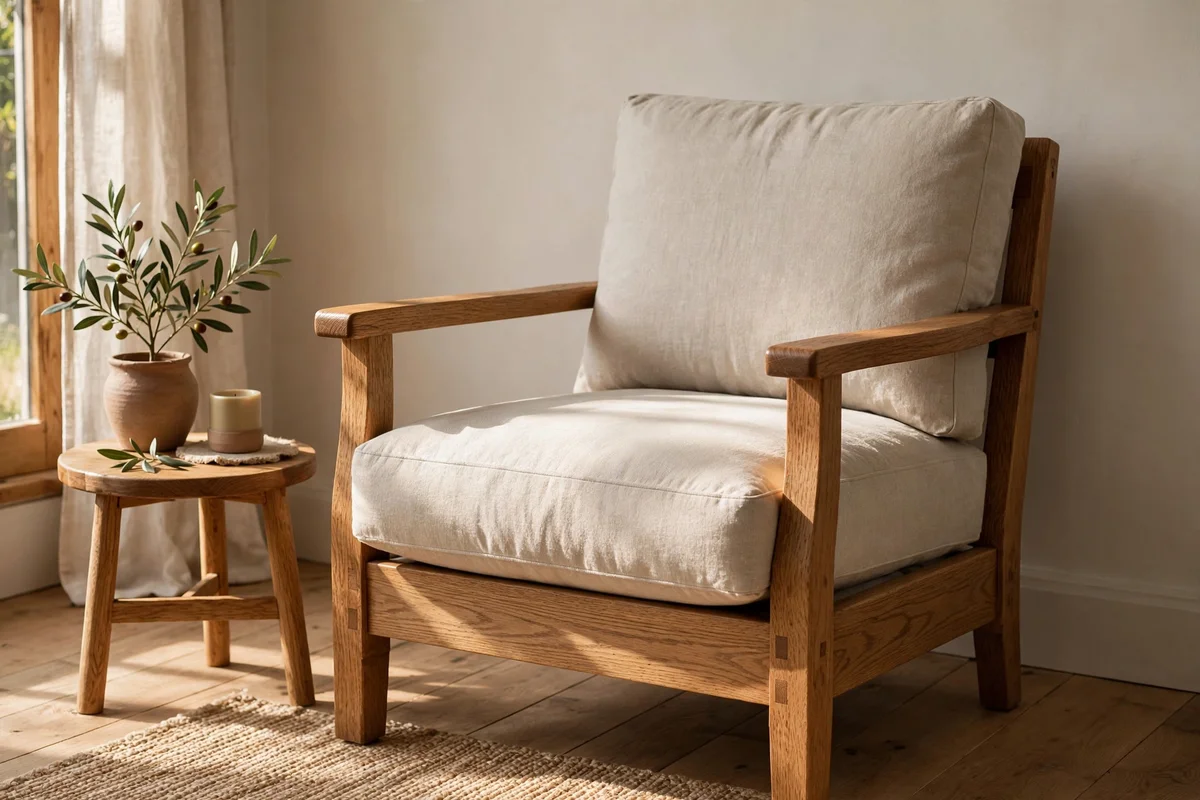
A single well-built armchair in solid oak anchors a living room more gracefully than a matching set of five cheaper chairs. Look for real joinery in the frame, a seat height near 45 cm, and arms around 60 cm so it feels supportive. Upholster it in plain oatmeal linen or undyed wool, and it becomes the seat everyone reaches for first. Buy this piece first; let the rest of the room arrive slowly around it.
This is exactly where quality spending shows, because you touch this chair daily. A sound second-hand oak armchair costs 120 to 250, and reupholstery runs 200 to 400. New solid-frame chairs sit between 500 and 900. The mistake to avoid is buying a matching set of cheap chairs, which wear out together and date the room in a single season. One excellent chair will outlast all five.
2. Lay a Hand-Knotted Wool Rug Beneath the Seating Area
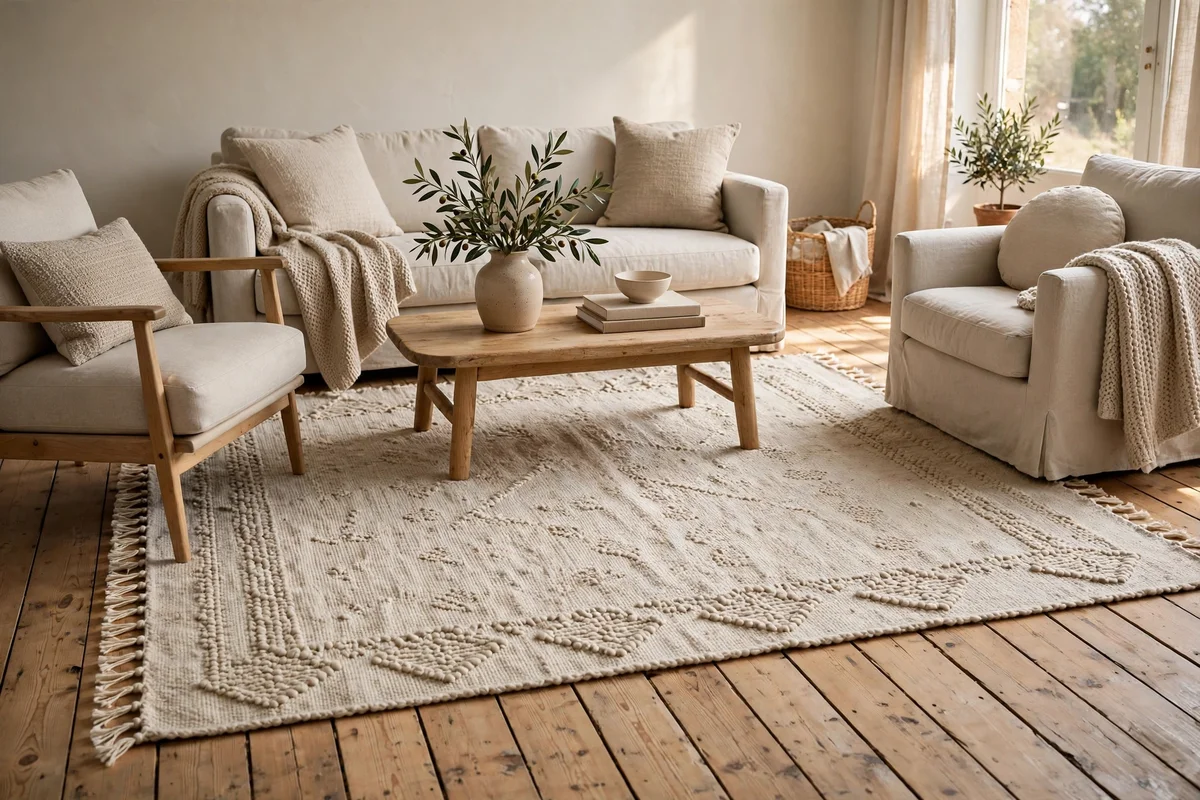
A hand-knotted wool rug is the one textile that makes a whole room feel settled, because wool softens sound and keeps its texture for decades. Choose a flat, calm neutral like undyed ivory, warm grey or soft oatmeal, and let the rug sit under the front legs of the sofa and chairs. For a standard seating group, 200 by 300 cm usually works; measure your own grouping and add 20 cm each side before ordering.
Rugs are another place where quality spending truly shows, underfoot and across the room. Budget options in wool blends start around 200 to 400 for a medium size; genuine hand-knotted pieces begin near 800 and last generations. The common mistake is buying a rug too small, which makes furniture float awkwardly. One correct rug changes the room more than ten small accessories ever will.
3. Hang Linen Curtains From Ceiling to Floor in Warm White
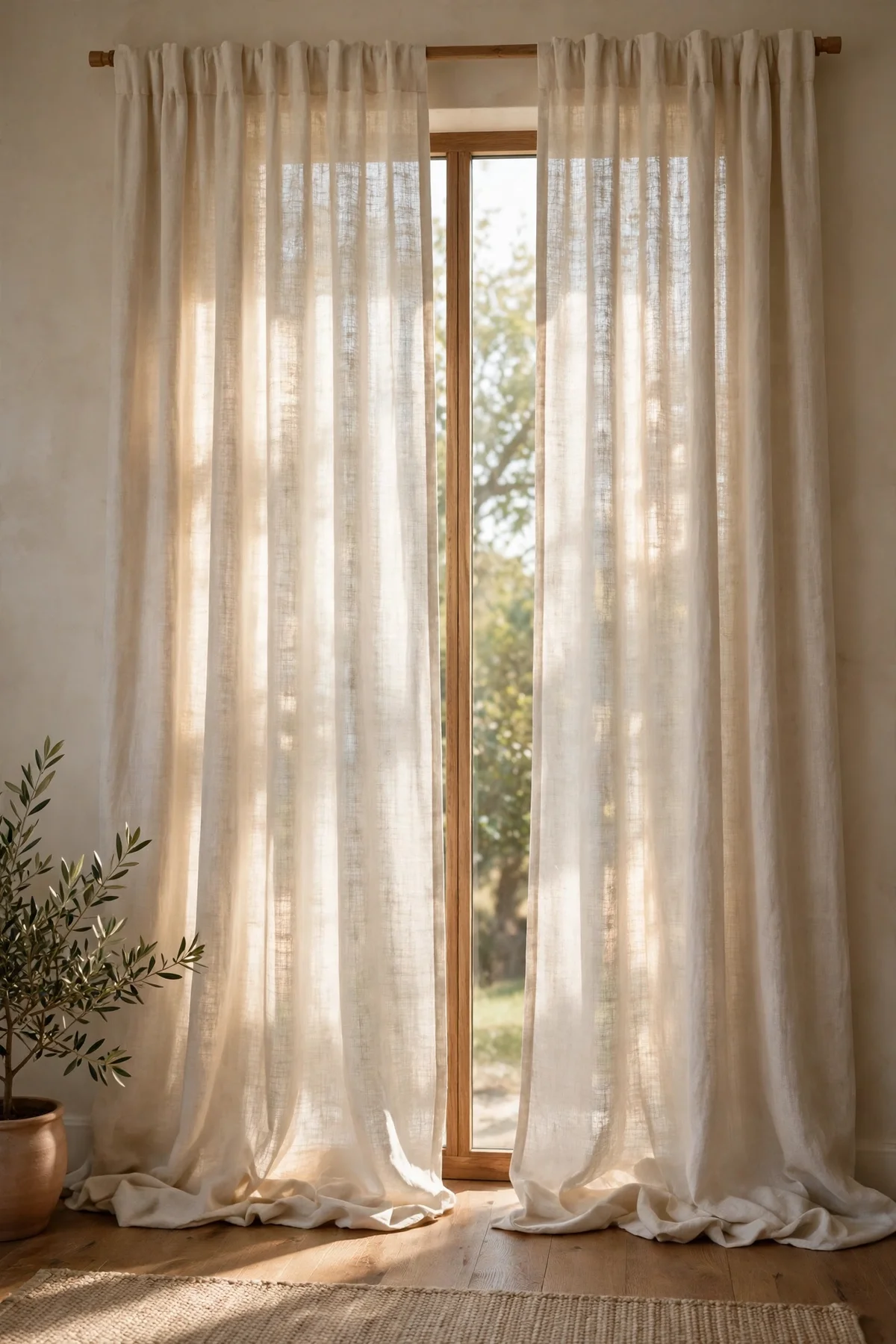
Floor-to-ceiling linen curtains in warm white make windows look taller and soften daylight into something gentle. Mount the rod 10 to 15 cm above the frame and 15 to 20 cm wider on each side, then let the panels fall to just kiss the floor. Choose a medium-weight linen with a simple hem; it filters light without blocking it and falls in honest folds that never need ironing.
Linen is a place to save sensibly, because even mid-priced linen looks rich once hung generously. Ready-made panels in warm white cost 40 to 80 per pair, while made-to-measure runs 150 to 300. The mistake to avoid is hanging short curtains that stop at the sill, which cut the window short and cheapen everything nearby. Width matters too: panels should total at least 1.5 times the window width for calm folds.
4. Choose a Stone Coffee Table With Soft Rounded Edges
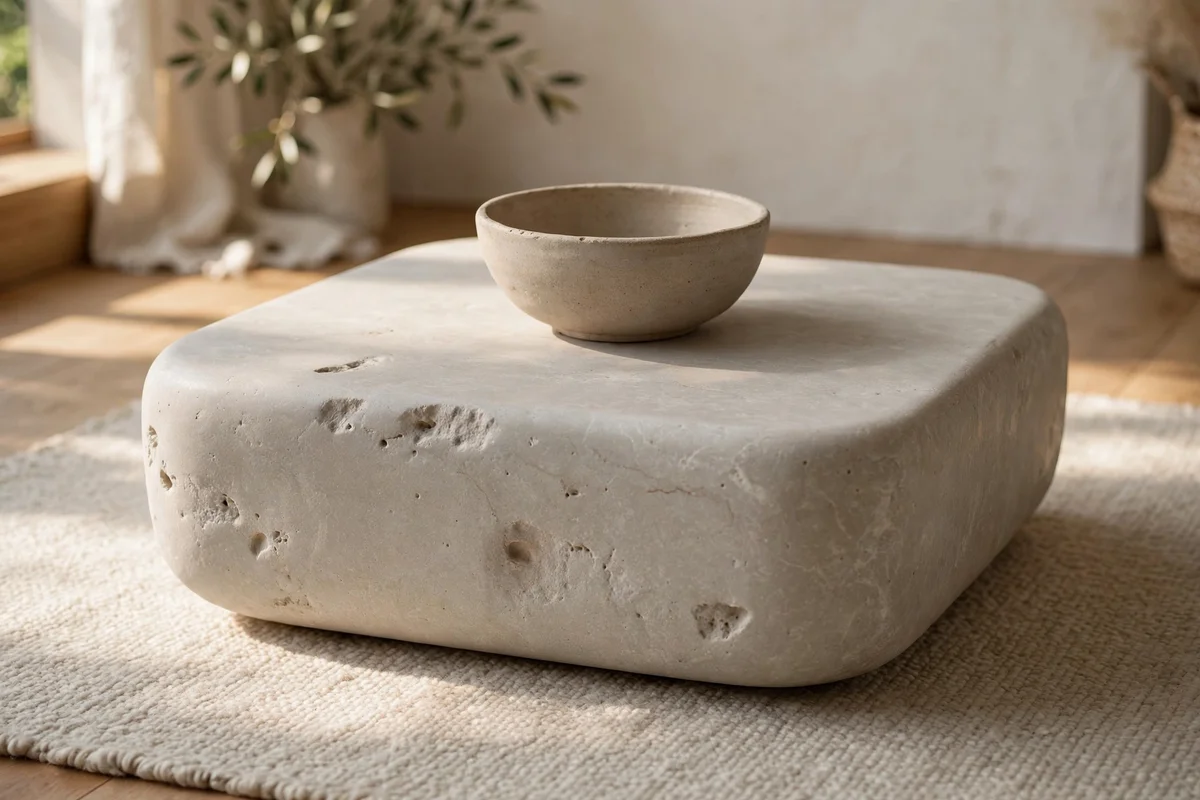
A coffee table in honed stone, with softly rounded edges, brings weight and calm to the centre of a seating group. Travertine, limestone or a light marble all work; the honed finish keeps the look quiet and hides small marks. Keep the table 35 to 45 cm tall and about two-thirds the length of the sofa, with 40 to 45 cm of clear space on each side for comfortable walking.
Stone is an investment that shows, since it anchors the room for decades. Expect 400 to 900 for a well-made piece. The mistake to avoid is choosing a polished, high-shine top, which reads loud and shows every fingerprint. If the budget is tight, one smaller stone side table near the armchair gives the same material honesty for 120 to 250 while you save for the main piece.
5. Light the Room in Layers: Floor Lamp, Table Lamp and Candlelight
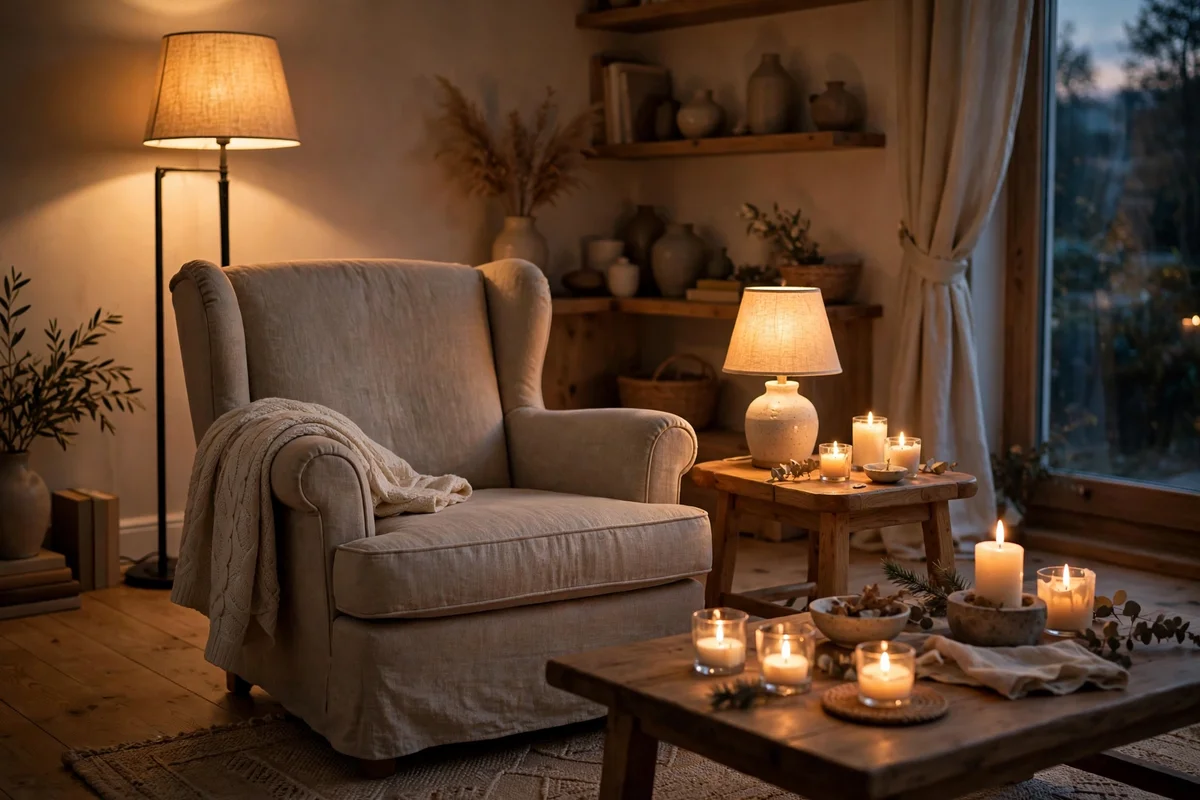
Quiet rooms are lit softly from three heights: a floor lamp near the reading seat, a table lamp on a side table, and candlelight in the evening. Keep every bulb at 2700K, which reads as warm candle-gold, and aim for shades of cream or linen so light spreads gently. Place the floor lamp slightly behind the chair, not beside your eyes, so reading light falls over the shoulder.
Lighting is the cheapest way to change a room’s mood, and it shows everywhere. A good floor lamp costs 80 to 200; matching is unnecessary, since quiet luxury mixes finishes calmly. The mistake to avoid is relying on a single bright ceiling light, which flattens faces and textures. Add dimmers where you can, even plug-in ones, and light one corner at a time until the room glows.
6. Edit Every Shelf Until a Third of It Stands Empty
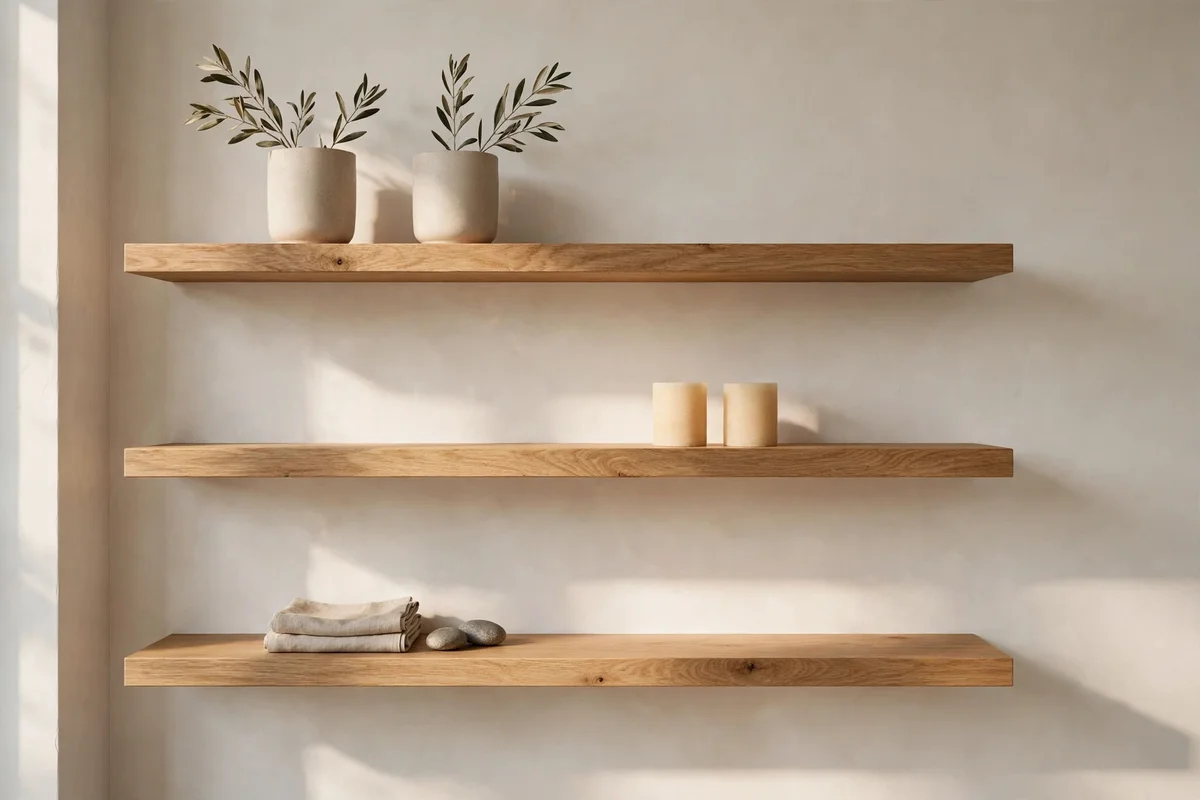
The most luxurious look costs nothing: take everything off the shelves, keep what you love, and put back only two-thirds of it. Group the remaining objects in small sets of two or three, mixing heights, and leave a full third of every shelf empty. Negative space lets each piece breathe, and the eye reads the arrangement as intentional rather than crowded. Do one shelf at a time so the room never looks worse mid-project.
Editing is the easiest idea in this whole list and the one to try first this week. You need no budget, only a box for donations and an hour on Saturday morning. The mistake to avoid is refilling shelves while you edit; decide the empty third first, then arrange within what remains. Photograph each shelf before you start, so you can compare and notice how much calmer the edited version feels.
7. Hide the Everyday Inside Closed Oak Storage
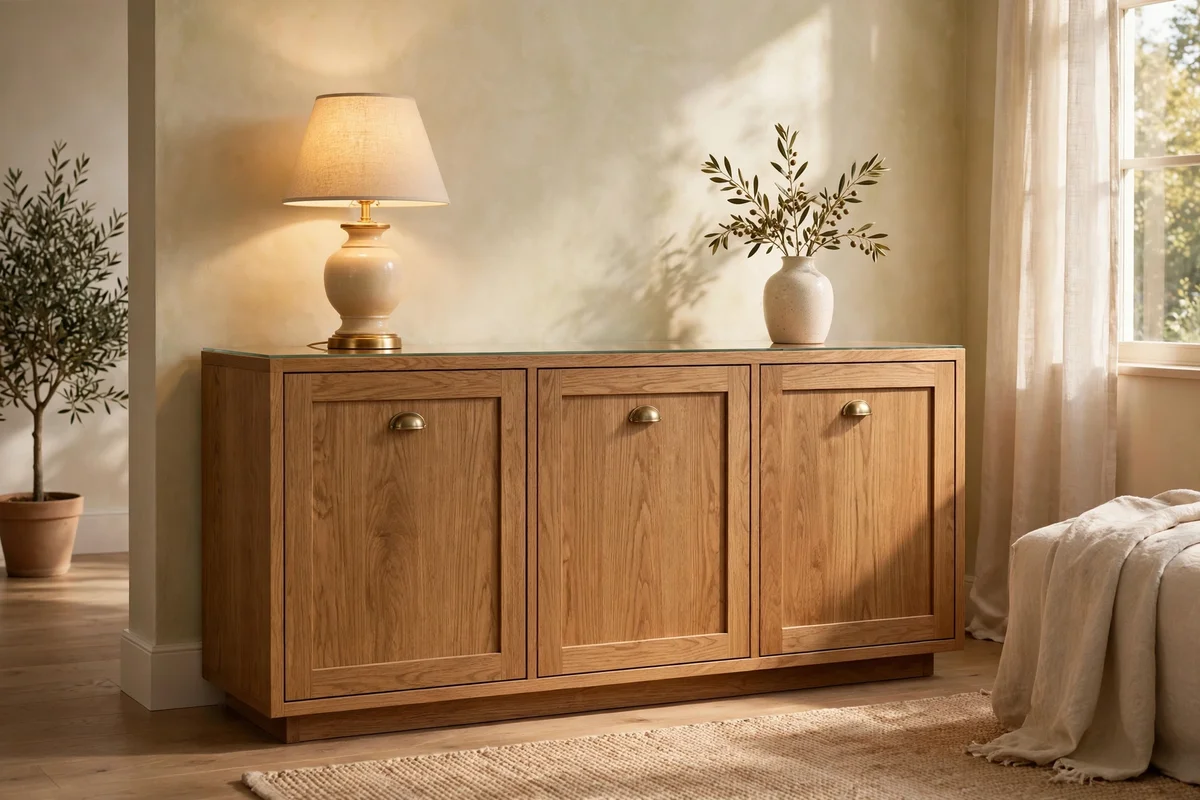
Quiet rooms stay calm because the everyday clutter lives behind closed doors. A solid oak sideboard or a pair of lidded chests between 120 and 180 cm long can swallow chargers, remote controls, spare throws and the children’s small toys. Choose fronts without handles or with small brass pulls, and keep the top nearly clear: one lamp and one object is enough.
Closed storage is where money quietly shows, because tidy rooms read expensive. Solid oak sideboards run 400 to 1,200 depending on size and joinery; well-kept second-hand pieces cost half that. The mistake to avoid is buying open baskets for daily mess, which keep clutter visible and gather dust. Inside the doors, simple boxes or trays keep categories separate so tidying takes two minutes, not twenty.
8. Let Unlacquered Brass Age Into a Soft Patina
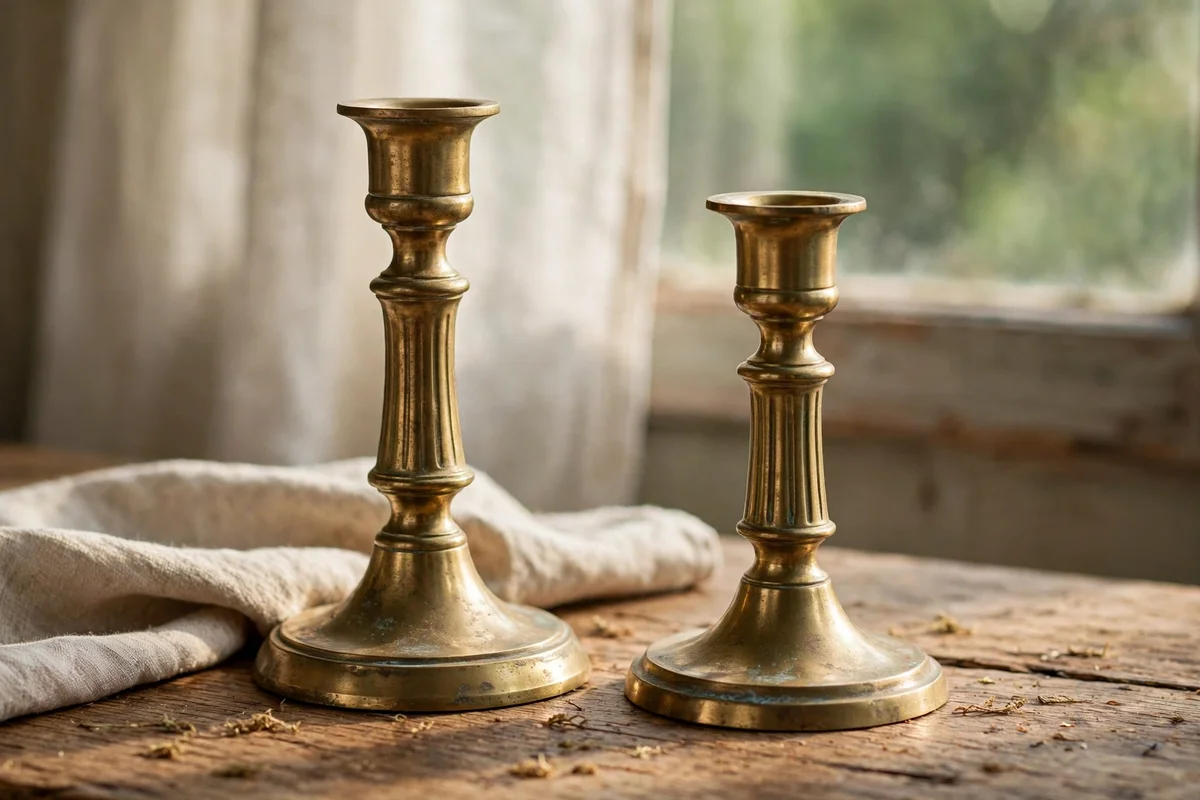
Unlacquered brass begins bright and slowly mellows into a soft, honeyed patina that no factory finish can imitate. Use it in small, repeated doses: lamp bases, a pair of candlesticks, one small tray. Because the metal ages with touch, these pieces grow more beautiful the longer you live with them, which is the heart of quiet luxury. Match the warmth of the brass to other warm tones like oak and cream.
Brass is a modest spend with an outsized effect, so it punches above its price. Solid brass candlesticks cost 30 to 80 a pair; a brass tray runs 40 to 90. The mistake to avoid is polishing unlacquered brass to a mirror shine, which strips the patina you waited for. Wipe with a dry cloth only, and let fingerprints fade naturally. If you prefer instant calm, buy pre-aged or brushed brass from the start.
9. Centre the Coffee Table With One Handmade Stone Bowl
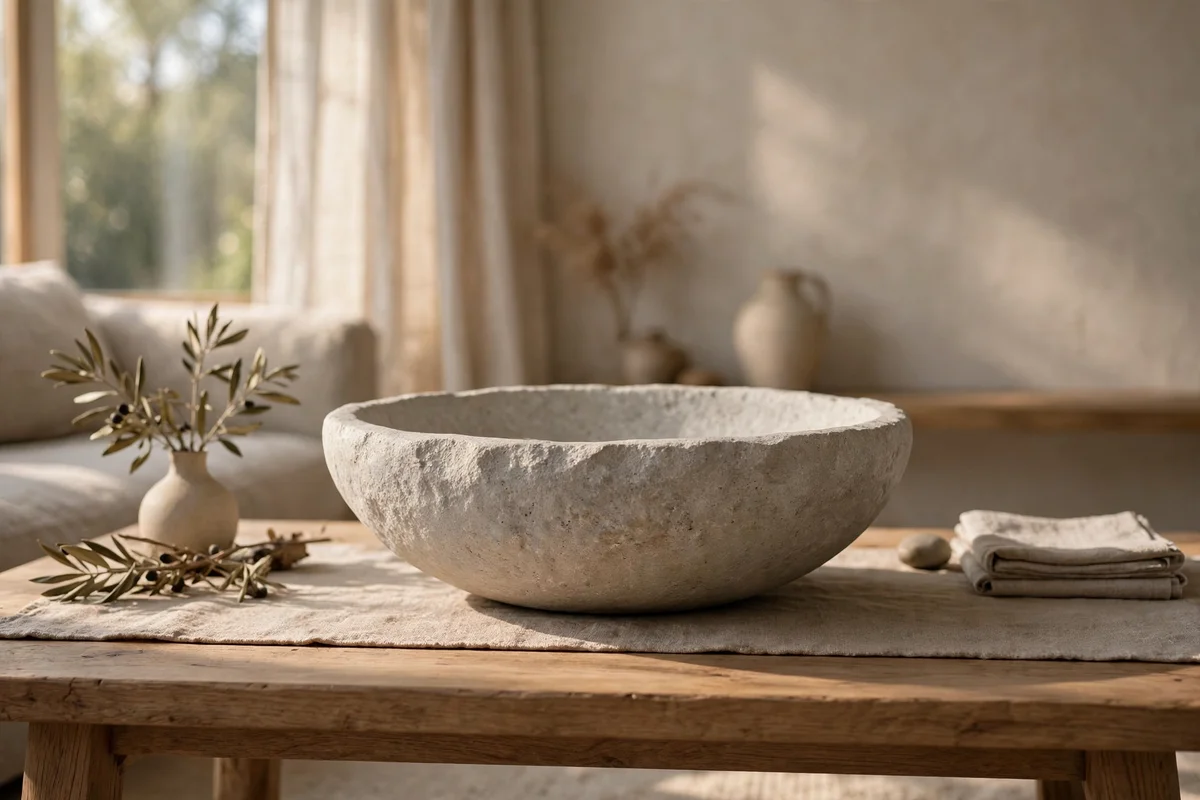
One handmade bowl in stone or clay, wide and low, is the calmest centrepiece a coffee table can hold. Choose a bowl 25 to 35 cm across with a matte finish, and leave it empty or fill it with nothing more than dried grasses, a few pine cones, or smooth river stones. A single object at this scale draws the eye and then lets it rest, which is exactly the feeling quiet rooms need.
This is a small spend with a big visual return. Handmade stone or clay bowls cost 25 to 70 at craft markets and small studios, and each one is slightly unique. The mistake to avoid is filling the table with five small objects around the bowl, which recreates the clutter you just removed. One bowl, and perhaps one book beside it, keeps the centre composed. Dust the bowl weekly with a soft cloth.
10. Invest in a Deep-Seated Sofa in Undyed Wool
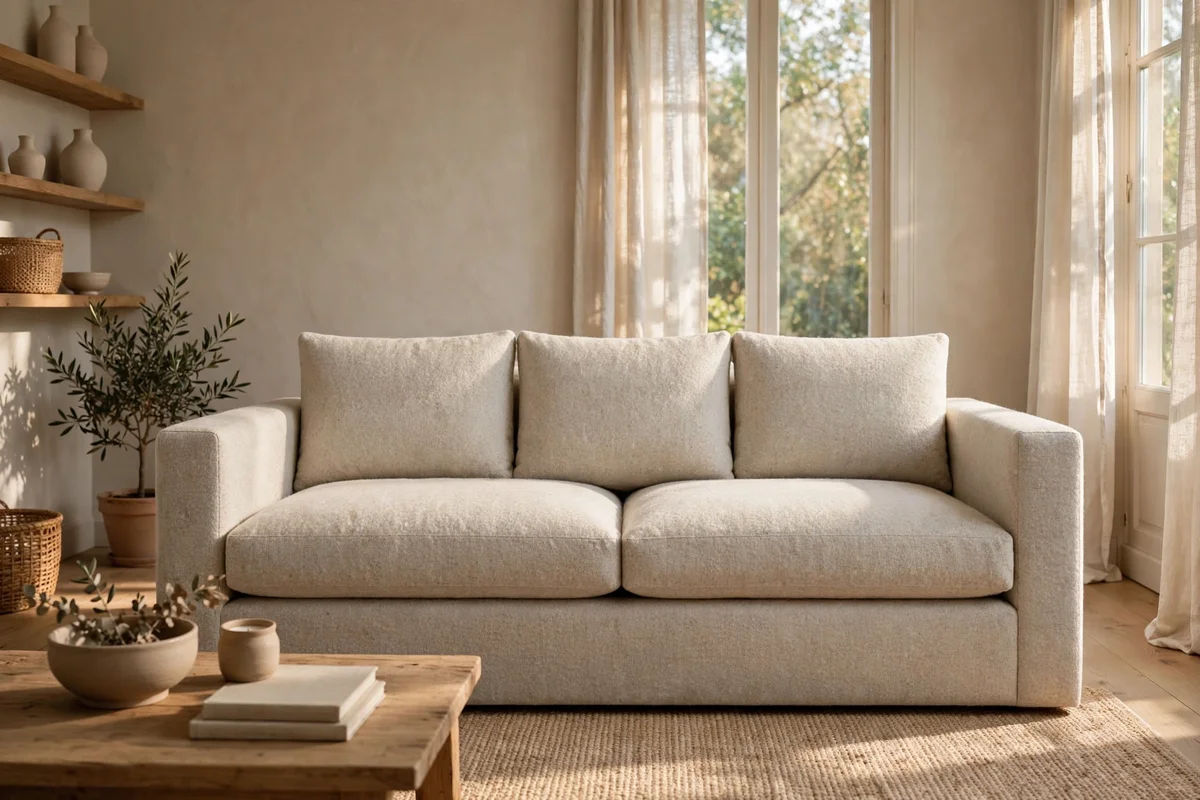
The sofa is the largest surface in the room, so its fabric sets the whole tone. Choose a deep-seated design, around 100 cm deep with a seat height near 45 cm, upholstered in undyed wool or a wool blend in oatmeal, flax or soft grey. Wool resists wear, recovers its shape, and keeps a calm matte surface that never shines. Keep the lines simple: straight arms, one row of back cushions, no fussy details.
This is the single biggest place where quality spending shows, because everyone sees and uses the sofa daily. A well-made wool sofa runs 1,200 to 3,000; budget sofas in synthetic fabric start near 600 but sag and pill within two years. The mistake to avoid is choosing a fashionable colour you will tire of; neutrals let you change the room later with throws and cushions. Buy the best frame you can afford, even if it means waiting a season.
11. Hang One Quiet Piece of Art Above the Sofa or Mantel
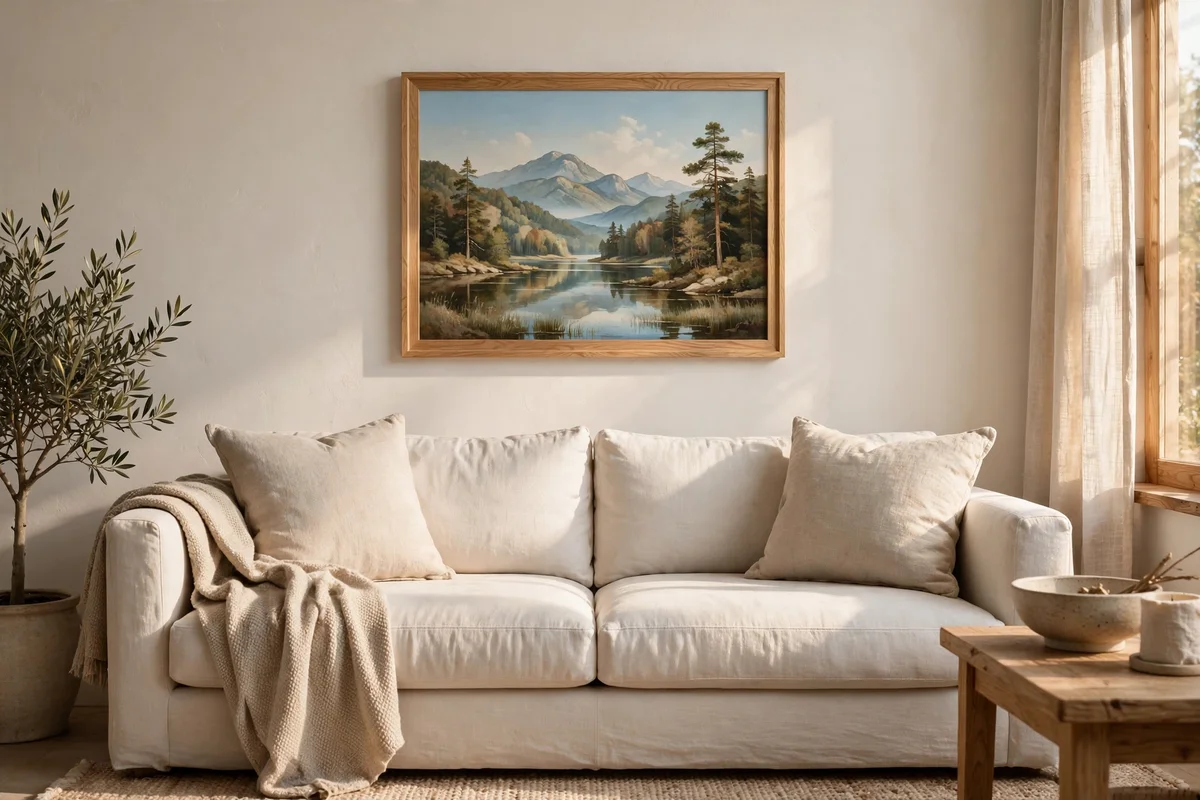
One calm artwork, hung with care, does more than a gallery wall of small prints. Choose a landscape, a study of light, or an abstract in muted tones, sized at roughly two-thirds the width of the sofa below it. Hang the centre of the piece 145 to 155 cm from the floor, which suits a seated view. A simple oak or walnut frame, 3 to 5 cm wide, keeps the focus on the image itself.
Art is a place to spend slowly rather than all at once. Original small works from local artists start near 100 to 300; good quality prints in simple frames cost 40 to 120. The mistake to avoid is hanging art too high, which disconnects it from the furniture and makes ceilings feel low. If you are unsure, live with the empty wall for a week; the right quiet piece usually finds you when you stop rushing.
12. Drape a Folded Wool Throw Over the Sofa Arm
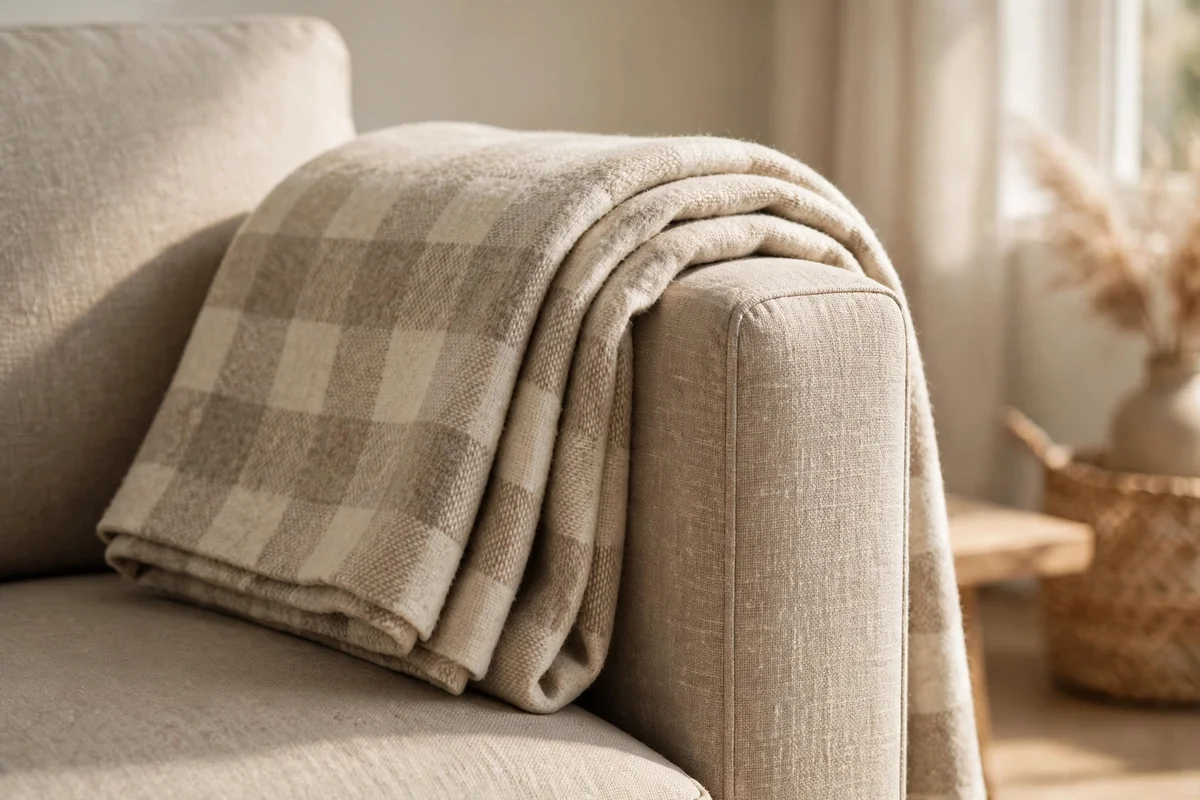
A folded wool throw over one sofa arm adds texture and warmth without any visual noise. Choose a throw around 130 by 180 cm in a soft check, herringbone or plain weave, in oatmeal, charcoal or warm rust. Fold it in thirds lengthwise and lay it over the arm with the folds aligned; the neat rectangle reads calm, while a tossed throw reads messy. Wool keeps its look and resists creasing better than cotton.
Throws are a smart place to save, since even modest wool throws look rich in a calm palette. Good options cost 30 to 70; genuine lambswool starts near 80. The mistake to avoid is layering three throws at once, which turns comfort into clutter. One throw per sofa is the rule, moved to the reading chair in summer if you like. Wash wool throws once a year in cool water and dry them flat.
13. Use Handmade Pottery in Cream and Oatmeal Tones

Handmade pottery in cream and oatmeal brings a human touch to side tables and shelves. Choose vases and small bowls with visible throwing rings and slight asymmetry; those small imperfections are the craft. A vase 20 to 30 cm tall suits a side table beside the sofa, while a tiny bowl near the entry holds keys with grace. Keep every piece within the same pale family so the group reads as one quiet collection.
Pottery rewards small, patient spending rather than big outlays. Individual handmade pieces cost 15 to 45 at studios and markets; a set of three usually stays under 100. The mistake to avoid is mixing bright glazed colours with the pale set, which breaks the calm instantly. If a piece chips, keep using it: honest wear on handmade clay is part of its story and suits the quiet register perfectly.
14. Keep Scents Soft: Wood, Linen and Warm Candlelight Only
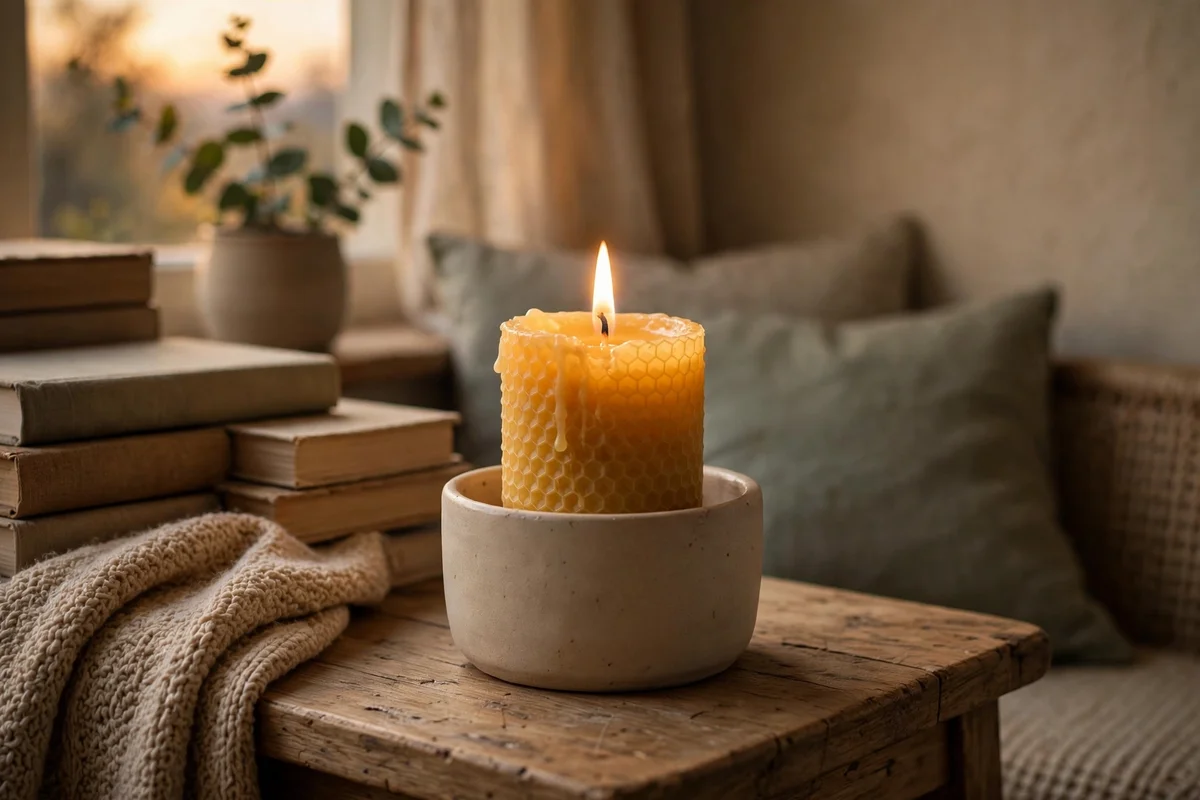
Quiet luxury reaches the nose too: the room should smell faintly of clean wood, fresh linen and warm beeswax, never of heavy perfume. Choose unscented or lightly cedar-scented candles in plain glass or ceramic holders, and let one candle burn in the evening reading corner. Open the windows for ten minutes each morning so the room breathes; fresh air is the finest scent and it costs nothing.
Scent is a place to spend almost nothing. A box of good beeswax candles costs 15 to 30 and lasts weeks of evenings; a gentle linen spray, if you like one, runs under 15. The mistake to avoid is layering three strong scents at once, which turns a calm room into a perfume counter. Keep the rule simple: one gentle scent per room, or none at all. A room that smells of nothing but itself feels the most luxurious.
15. Replace Plastic Baskets With Woven Willow or Cane
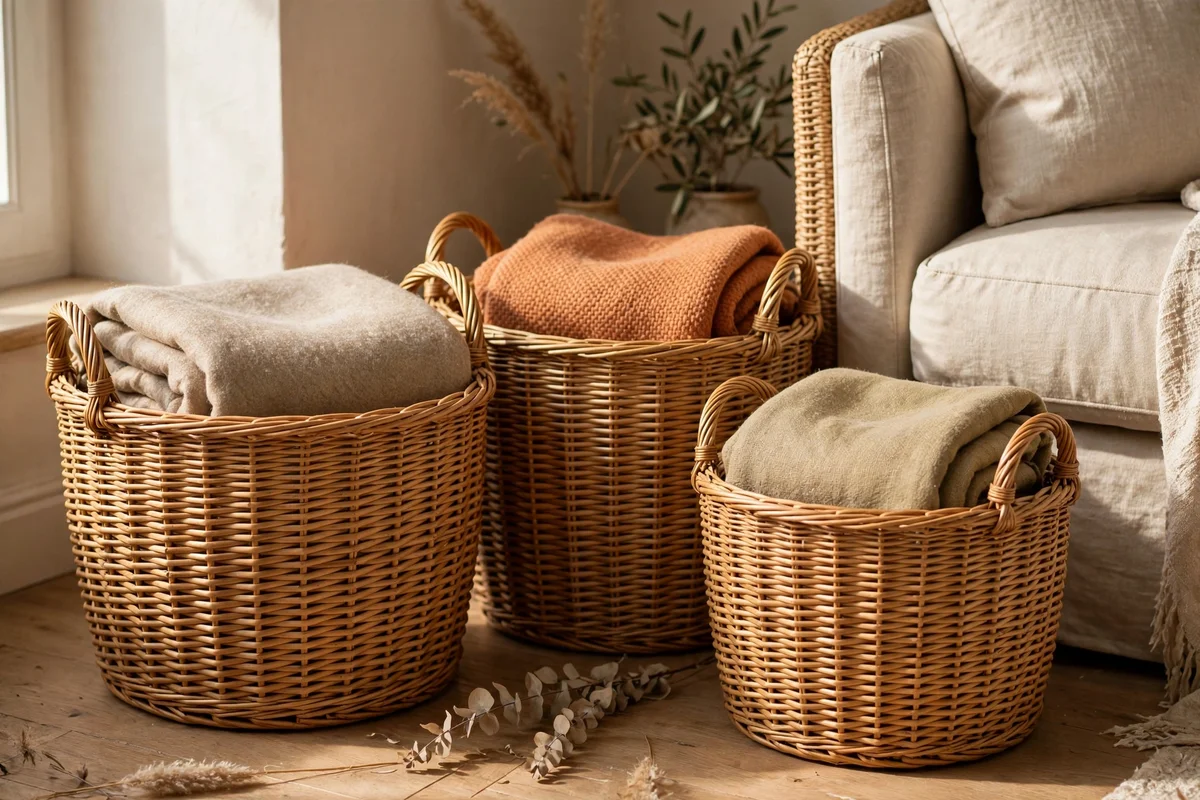
Plastic storage reads temporary; woven willow or cane reads settled and warm. Swap the plastic baskets beside the sofa and under the side tables for handwoven ones in natural honey or weathered grey tones. Choose baskets with tight weaves and sturdy handles, roughly 35 to 45 cm wide for throws and 25 cm for small daily items. The natural texture adds craft to corners that would otherwise look purely functional.
Baskets are an easy mid-level swap with instant effect. Handwoven willow baskets cost 20 to 50 each depending on size; good ones last decades. The mistake to avoid is buying baskets before deciding what lives inside them, which leaves you with beautiful but empty vessels. List the contents first, one basket per category, then buy. Dust woven baskets with a soft brush monthly and keep them out of direct damp.
16. Limit the Palette to Three Neutrals and One Earth Tone
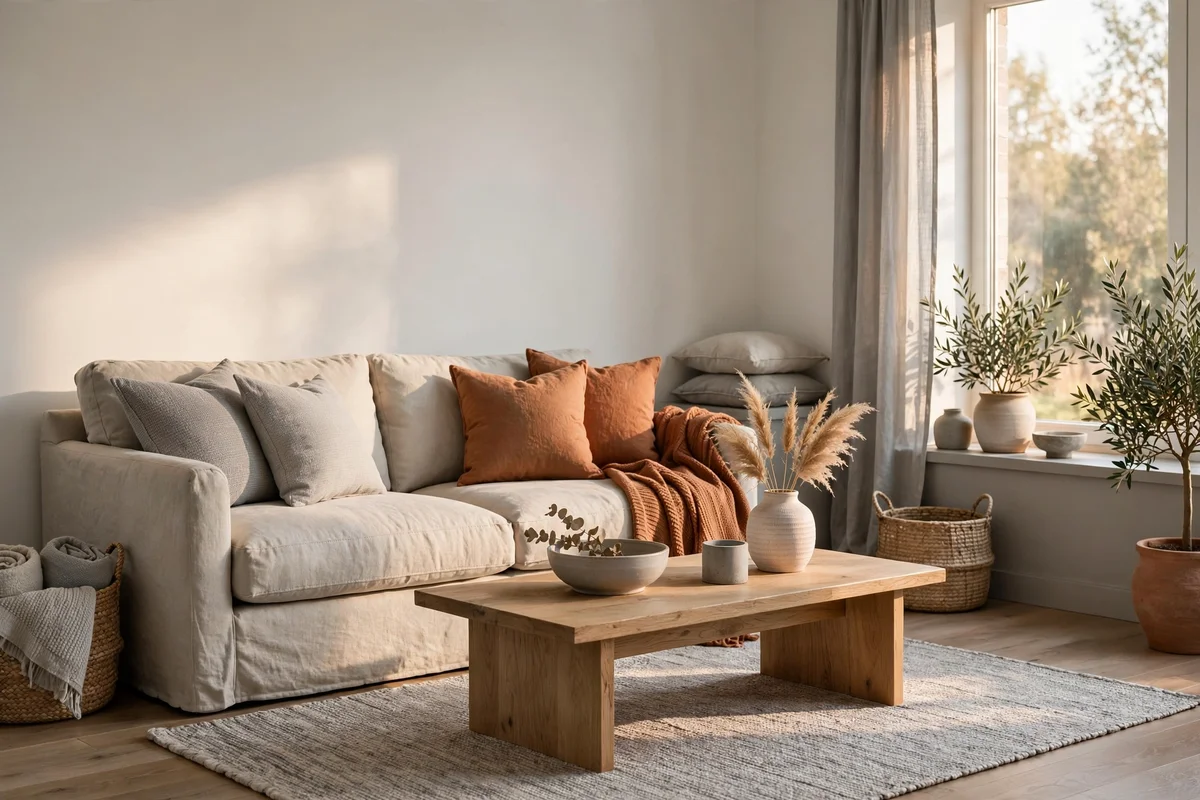
A disciplined palette is the backbone of every calm room: choose three neutrals like warm white, oatmeal and soft grey, then add one earth tone such as clay, olive or warm rust. Repeat those four colours in every textile, from curtains to cushions to the rug, and the room will feel composed without effort. Paint walls in the lightest neutral so daylight bounces and the room feels larger and quieter.
A limited palette also saves money, because everything you already own starts matching. Before buying anything new, gather your cushions and throws and sort them into the four chosen colours; donate what clashes. The mistake to avoid is adding a fifth colour on impulse, which unravels the calm in one purchase. If you crave change, shift the earth tone seasonally: clay in autumn, olive in spring, rust in winter.
17. Leave a Stone or Timber Mantel Unpainted and Honest
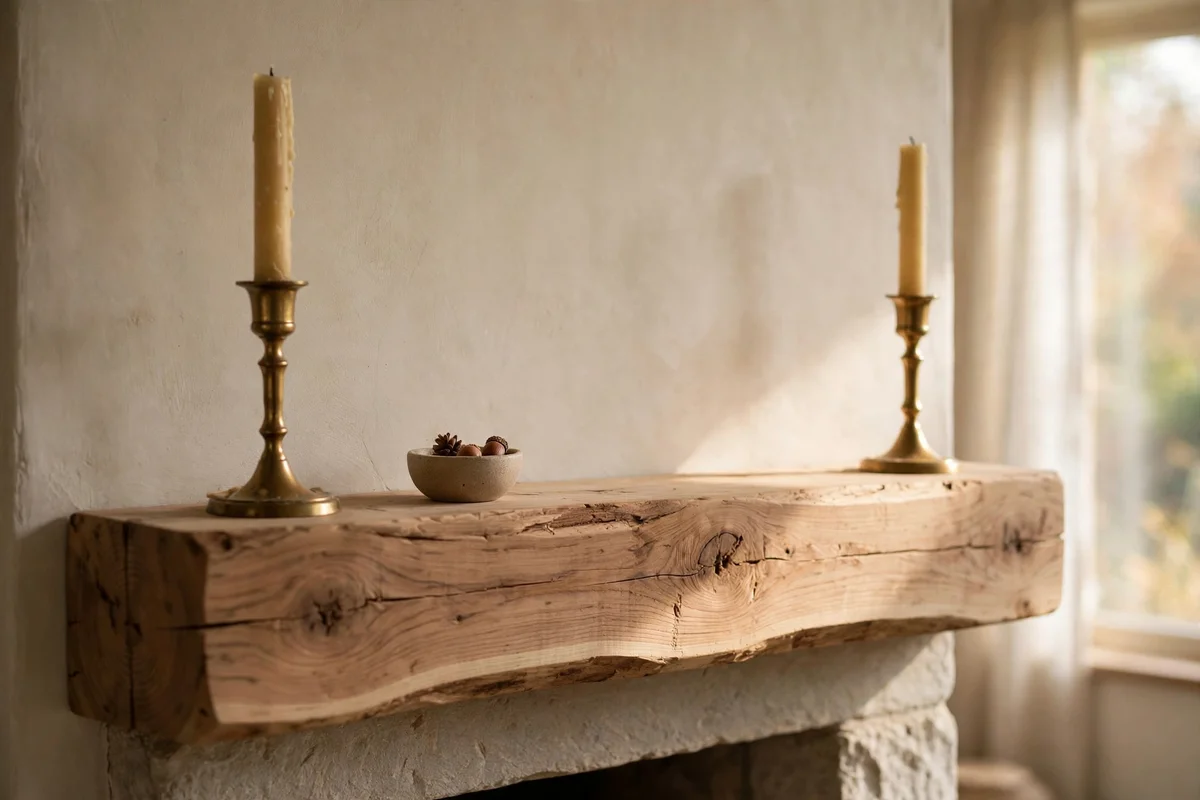
A mantel in natural stone or solid timber needs no paint and no styling tricks; its material is the decoration. If your fireplace surround is timber, oil it once a year with a natural wood oil to deepen the grain. If it is stone, leave the surface matte and let small marks gather as patina. Keep the mantel nearly bare: two candlesticks and one small object are enough, since the material itself holds the eye.
Mantels show quality spending better than almost any wall, because the eye lands there naturally. A solid oak beam mantel costs 150 to 400; a stone surround runs 800 to 2,000 fitted. The mistake to avoid is painting good timber white to match the walls, which erases the very texture you paid for. If the fireplace is purely decorative, place three beeswax candles of different heights inside the opening for a soft evening glow.
18. Build a Reading Corner With an Oak Side Table and Brass Light
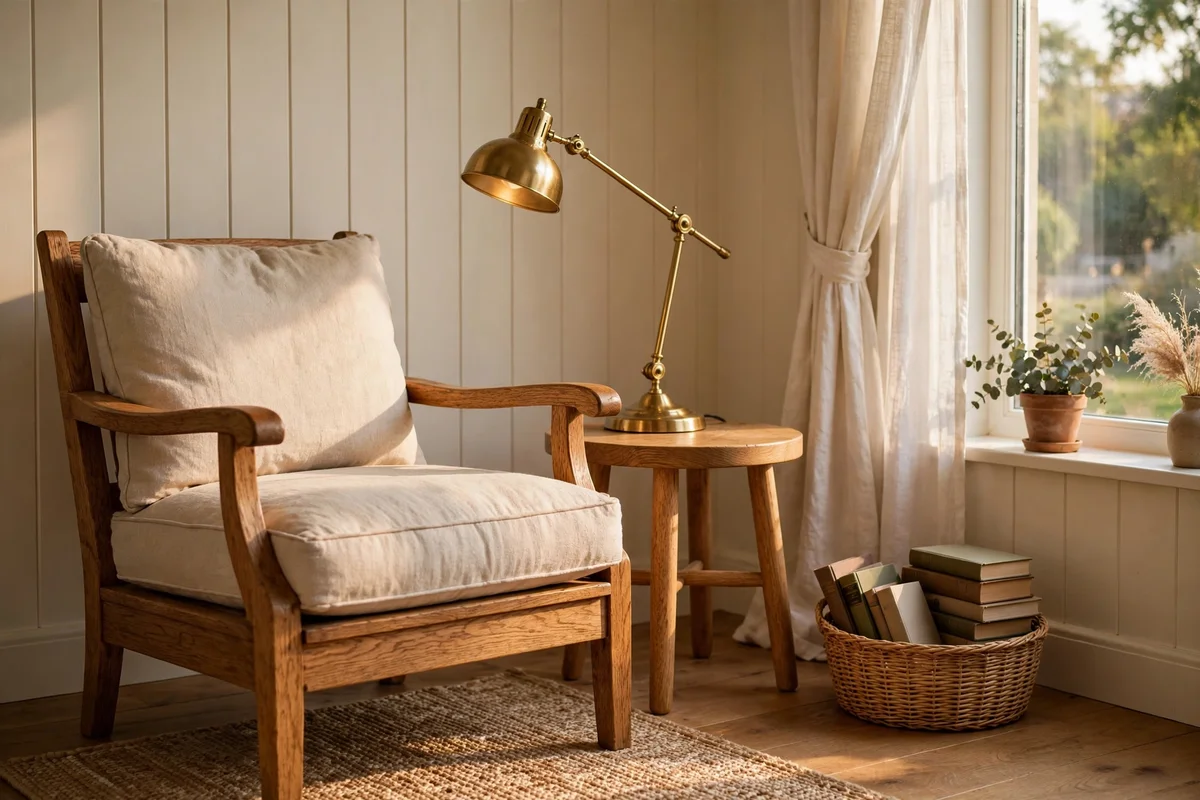
Every calm living room deserves one reading corner: the oak armchair from the first idea, an oak side table 45 to 55 cm tall beside it, and a brass reading light with an adjustable arm. Add a small woven basket for two or three books and a wool throw folded on the seat. Place the corner near a window so daylight does the work by day and the brass lamp takes over at night.
A reading corner is a modest project with a daily reward. The side table costs 80 to 200 in solid oak; an adjustable brass reading light runs 60 to 150. The mistake to avoid is pushing the corner against a dark wall far from the window, which makes reading gloomy at noon. Keep the light on the side of your non-dominant hand, so your arm never casts a shadow across the page.
19. Size the Rug to Reach Under the Front Legs of All Seating
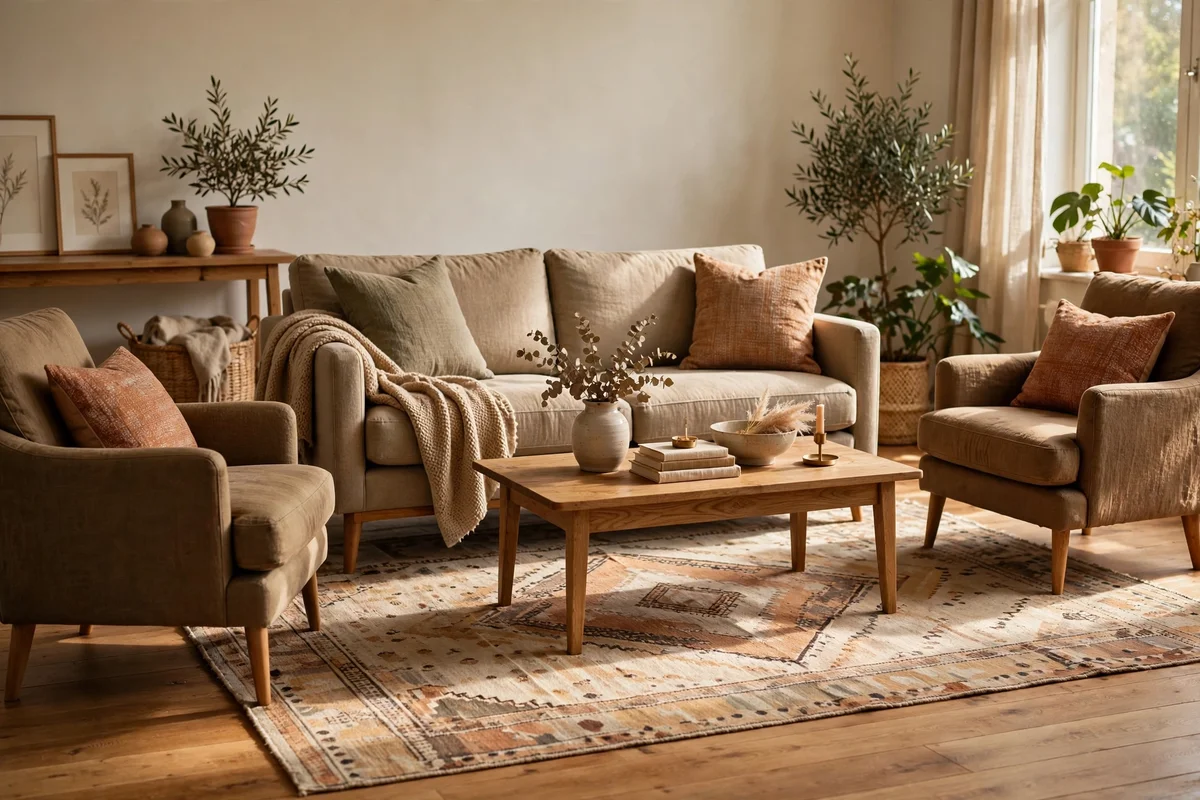
Rug size decides whether furniture feels grouped or scattered, and the rule is simple: the rug must reach under the front legs of the sofa and every chair. For most living rooms that means 200 by 300 cm; in smaller rooms, 160 by 230 cm works if all front legs still land on it. Measure from the outer edge of the sofa to the outer edge of the farthest chair, then add 20 cm on each side.
Getting the size right matters more than getting an expensive rug, so measure before you shop. A correctly sized mid-range rug beats a small costly one every time. The mistake to avoid is floating the rug in the middle of the floor with bare boards showing between it and the furniture; that gap breaks the grouping. Tape the outline on the floor with painter’s tape and live with it for two days before ordering.
20. Choose Solid Wood Side Tables With a Single Drawer Each
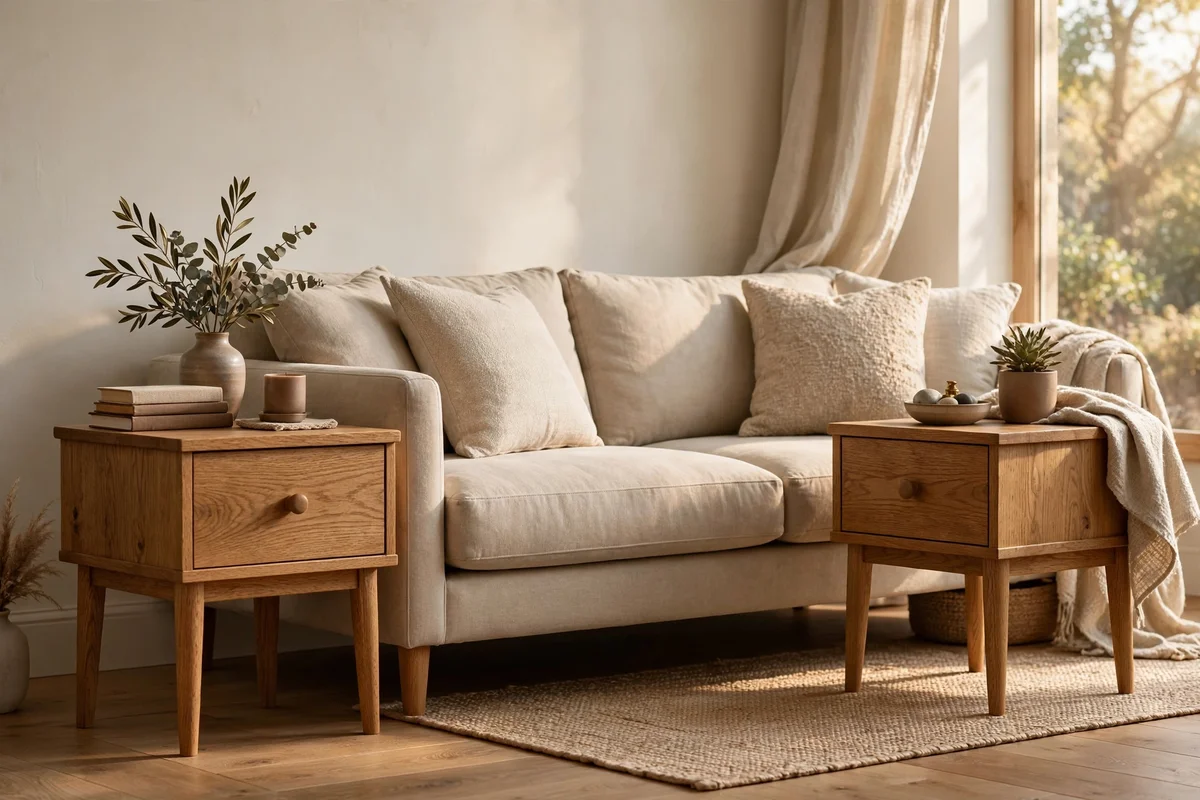
A pair of solid wood side tables with one drawer each keeps remotes, reading glasses and notebooks close but out of sight. Choose tables 50 to 60 cm tall so the top sits just below the sofa arm, and drawers with simple wooden knobs or cut-out pulls. Oak, walnut or ash all suit calm rooms; match the wood tone to the largest wooden piece in the room so the tables feel related, not random.
Side tables are a sensible mid-level spend. Solid wood pairs run 150 to 400; second-hand wooden tables cost far less and only need a light oiling. The mistake to avoid is choosing tables with open shelves, which collect dust and display clutter at eye level. One drawer each is the quiet rule: if an object does not fit in the drawer, it probably does not need to live beside the sofa.
21. Let Sheer Panels Soften Daylight Behind Heavier Linen Drapes
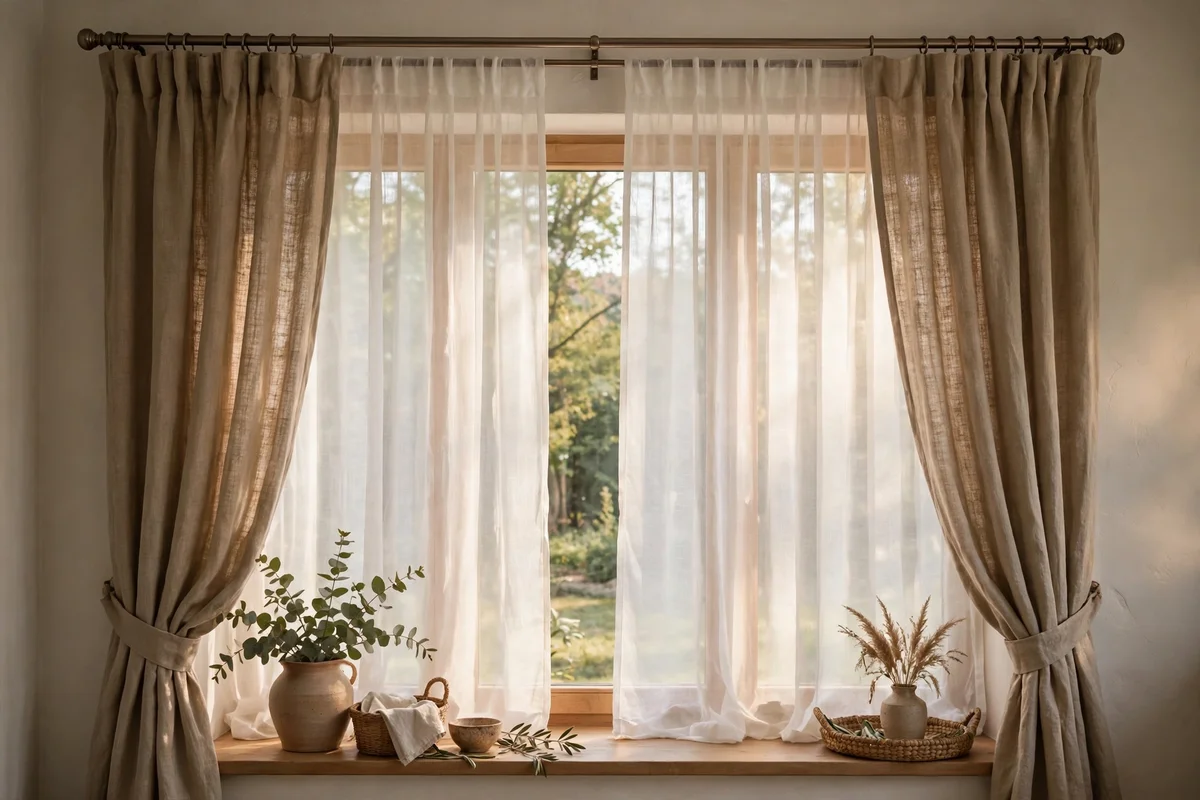
Two layers of curtain give you control over light all day: sheer panels against the glass soften harsh sun, while heavier linen drapes at the sides frame the window and close for evening privacy. Mount a double rod so the sheers hang 5 cm inside the frame and the linen panels extend 20 cm beyond each side. Choose the sheer in plain white with no pattern, so the view stays calm.
Layered curtains are a place to spend on the linen and save on the sheer. Sheer panels cost 15 to 30 per pair; invest the rest in the drapes. The mistake to avoid is skipping the sheer and living with either full glare or full darkness; the middle layer is what makes daylight feel gentle. Wash sheers twice a year in a mesh bag and they will stay bright for years.
22. Style Books in Small Stacks Sorted by Spine Tone
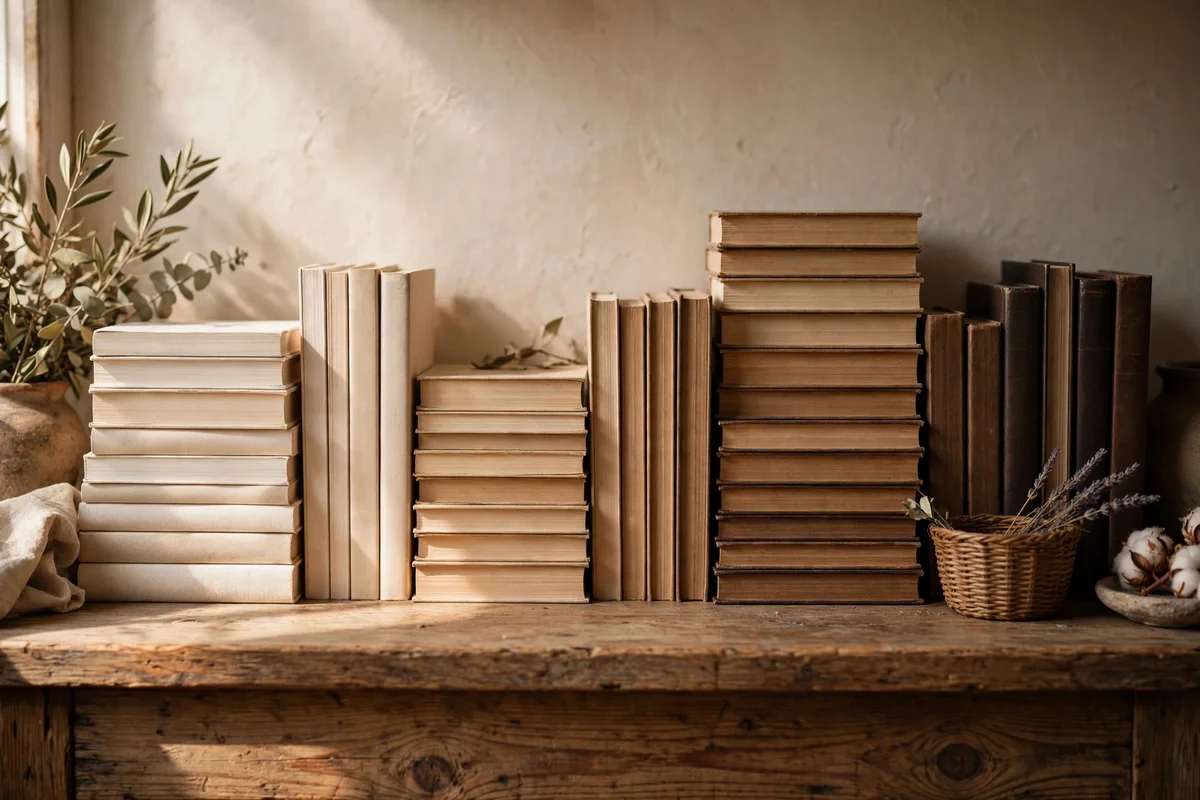
Books look calm when they are grouped by tone rather than scattered at random. Sort your shelves into small stacks of three to five books, spines facing out, arranged from light to dark within each stack. Lay some stacks horizontally and stand others vertically; the rhythm of mixed orientations reads intentional. Keep the tallest books near the ends of shelves, where their height anchors the arrangement.
Book styling costs nothing and rewards the patient. Pull every book off, dust the shelf, then rebuild slowly over an afternoon with tea nearby. The mistake to avoid is turning all spines inward for a uniform look, which hides the titles you love and confuses guests. Keep favourite books at eye level where you can reach them, and move oversized art books to the lowest shelf, lying flat.
23. Close the Cabinet Doors and Tuck Every Cable Away
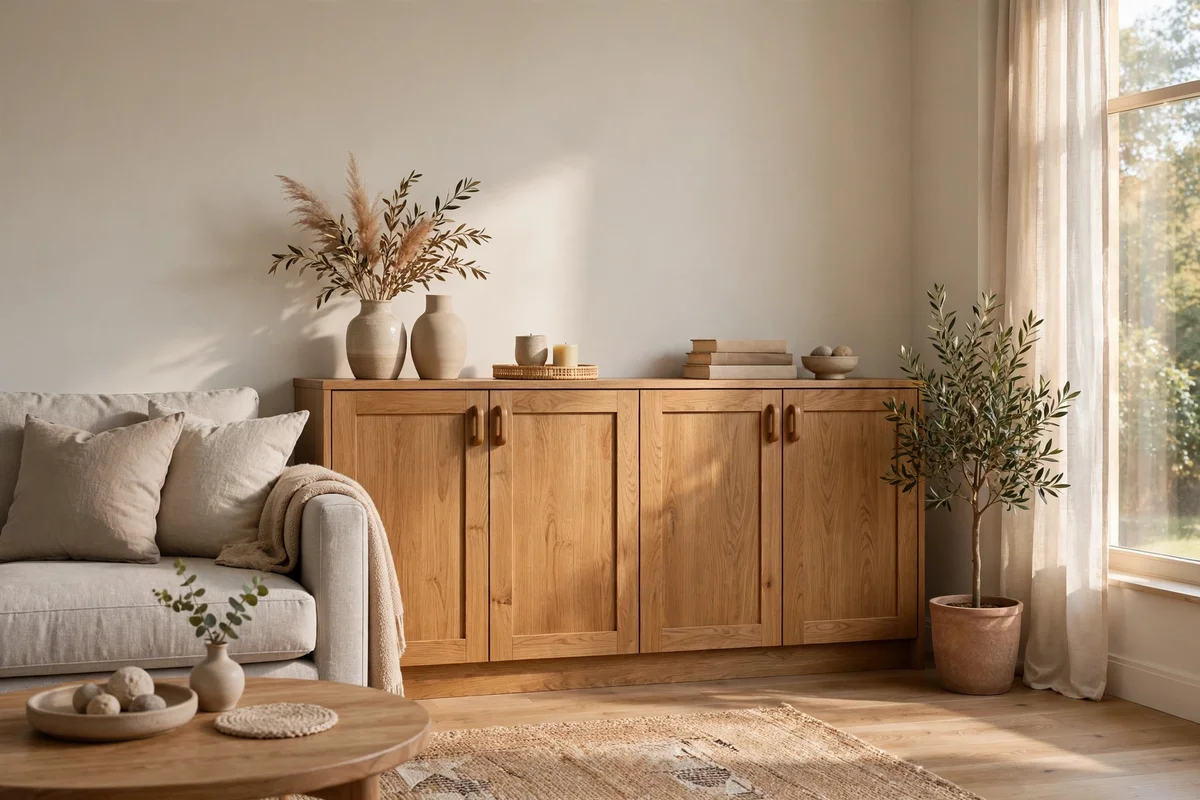
Nothing breaks calm faster than a tangle of black cables behind the television. Gather every cable with reusable fabric ties, run them through a simple cable channel in a wall-matching colour, and close the cabinet doors so the electronics disappear. Place the router and boxes inside a ventilated oak cabinet with a small hole drilled at the back; the signal passes through wood well enough for most homes.
Cable tidying is a one-hour project costing under 20, and it transforms the room instantly. A set of fabric ties and two cable channels usually totals 10 to 18. The mistake to avoid is buying a larger television cabinet to hide the mess instead of fixing the cables; the clutter simply scales up. Do this on the same day you edit the shelves, and the room will feel twice as calm for almost no money.
24. Finish With One Handcrafted Object That Holds a Family Story
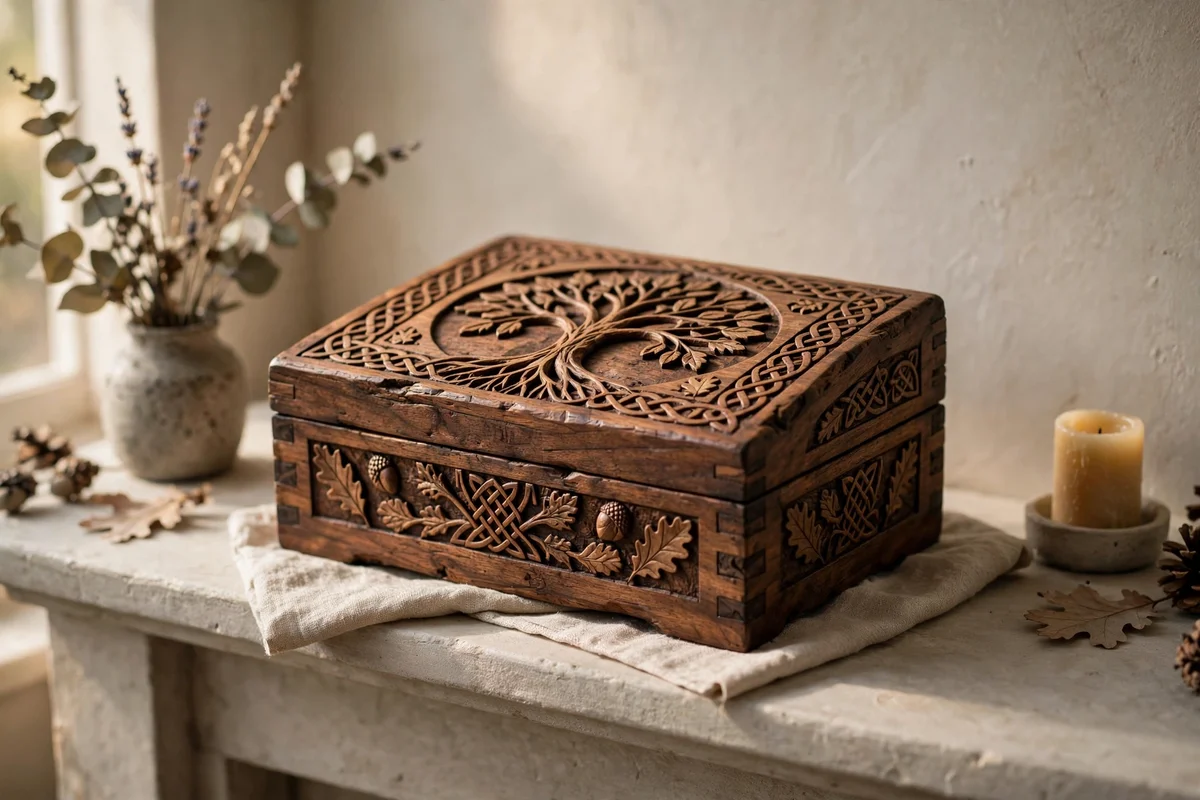
The final idea is not a purchase but a choice: give one handcrafted object a place of honour because it holds your family’s story. It might be a carved wooden box from a grandparent, a hand-stitched cushion made by a relative, or a small clay dish shaped on a family trip. Place it where the eye rests, on the mantel or the edited shelf, with clear space around it so its story can breathe.
This object is the true centre of quiet luxury, because no shop can sell its meaning. If you do not own such a piece yet, begin one: start a simple craft you can finish, like carving a small spoon or stitching a cushion cover, and let the first imperfect result take the honoured place. The mistake to avoid is filling this spot with something expensive but meaningless; the room feels the difference, and so will you.
Quiet luxury is less about what you buy than how you choose. The thread through all 24 ideas is simple: honest materials that age well, surfaces edited until they can breathe, light layered softly, and spending aimed where it shows. A room built this way does not chase attention; it holds it gently, and it still looks right ten years from now because nothing in it was ever trying to impress.
Start this week with the easiest idea of the set: edit one shelf until a third of it stands empty, as the sixth idea describes. It costs nothing, takes an hour, and changes the room immediately. Then save for the one piece you touch daily, the chair or the rug. Choose slowly, choose well, and let your home grow calm around you, one honest object at a time.
Frequently Asked Questions
What does a quiet luxury living room refresh realistically cost?
Between 300 and 2,000 for a meaningful refresh, depending on what you already own. Editing shelves and tidying cables costs almost nothing, while a good wool rug or a solid oak chair are the mid-tier investments. Spend most on the sofa, the rug and lighting, since those shape the whole room. Save on curtains, throws and baskets, where modest prices still look rich in a calm palette.
How do I keep a neutral room from feeling flat or boring?
Layer texture instead of adding colour. Combine smooth honed stone with nubby wool, matte clay with soft linen, and brushed brass with rough woven cane. Keep the palette to three neutrals and one earth tone, then let materials do the talking. A room in one colour family can still feel rich when the eye moves from rough to smooth to soft in every direction.
Where does quality spending show the most, and where can I save?
It shows in what you touch daily: the sofa, the armchair, the rug underfoot and the lamps you switch on each evening. Save on curtains, throws, baskets and decorative bowls, where mid-priced or handmade pieces look equally calm. Never economise on the sofa frame or the rug size; a small cheap rug undermines the whole room, while generous curtains from a budget range still look graceful.
How do I care for natural materials like wood, wool and brass?
Oil solid wood once a year with a natural wood oil, and wipe spills promptly so they never soak in. Vacuum wool rugs weekly and rotate them twice a year for even wear; wash wool throws in cool water and dry flat. Leave unlacquered brass unpolished so its patina develops, wiping with a dry cloth only. Gentle, regular care keeps every material beautiful for decades.
Can I build a quiet luxury look in a small living room?
Yes, and small rooms often do it best, since calm reads larger. Keep furniture scaled down: a two-seat sofa, one armchair, and a 160 by 230 cm rug under the front legs. Use closed storage to hide the everyday, hang curtains from ceiling to floor to lift the height, and limit surfaces to one object each. Edit ruthlessly; in a small room, every extra item speaks twice as loud.