Living Room
24 Rustic Fall Decor Ideas That Bring the Harvest Home With Wood, Wool and Iron
By Anna Wells · · 18 min read
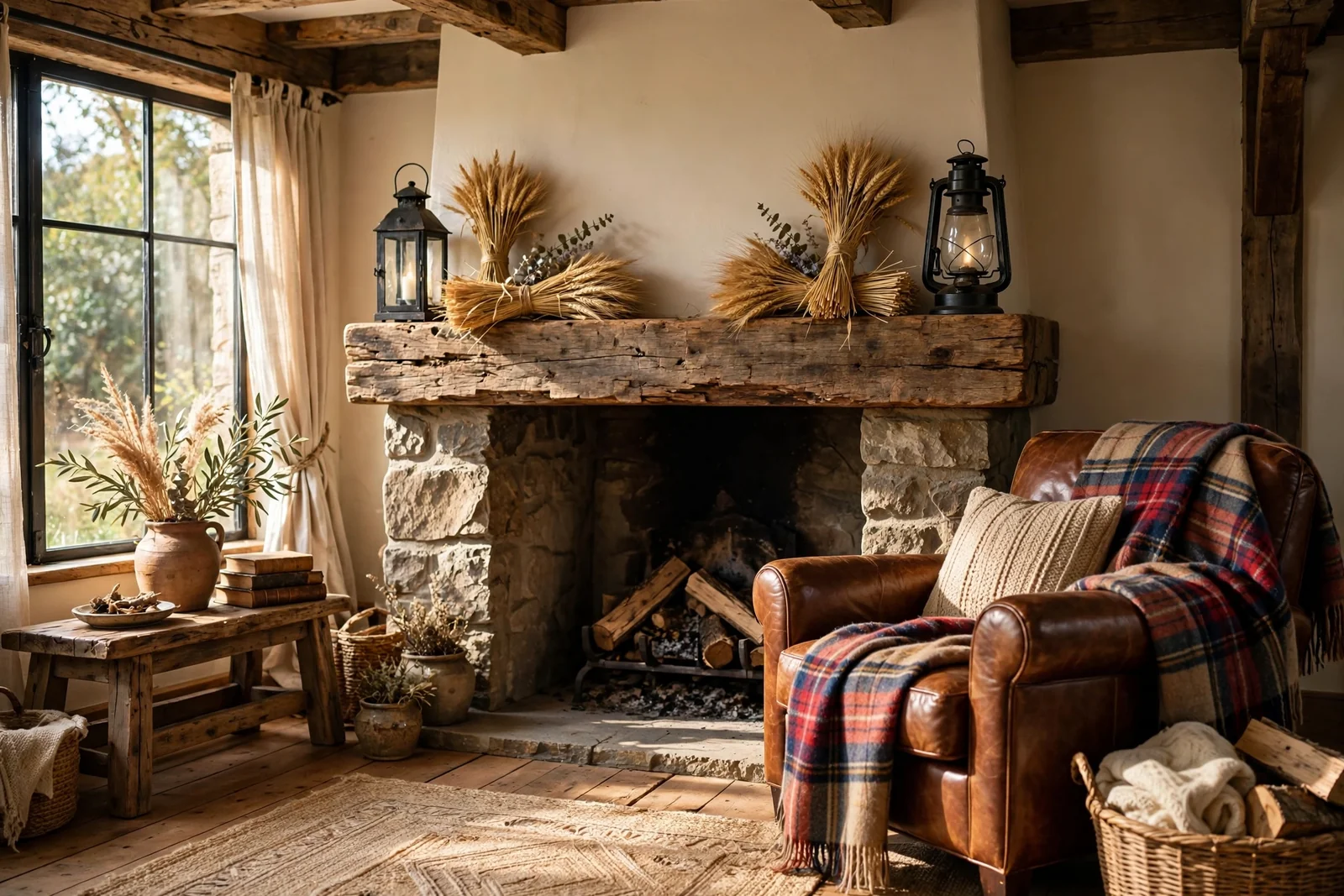
Reclaimed wood, honest wool, dark iron and golden wheat: 24 gathered, budget friendly ideas for a harvest home that feels collected over time.
October light comes in low and gold, catching the rough edge of a wooden crate and the soft nap of a wool throw folded over a chair arm. Somewhere nearby a kettle warms, and the whole room seems to settle a little deeper into the season. That is the feeling rustic fall decor does best: not a theme parked on the mantel, but a quiet shift in materials.
This style is led by honest things. Reclaimed timber with nail holes still showing, galvanised metal gone soft grey with age, burlap and natural linen, wheat sheaves tied with twine, stoneware crocks, black iron lanterns and plaid wool in rust and forest tones. Texture and patina do the work, so nothing needs to shout.
Inside you will find 24 concrete ideas for the mantel, the entry, the dining table, the kitchen and the porch, each with real sizes, placement notes and budget tips. Many pieces cost little or nothing if you thrift, forage and build simply. Pick one corner, start with wood and wool, and let the harvest gather itself.
1. Layer a Reclaimed Wood Mantel With Wheat Sheaves and Iron Lanterns
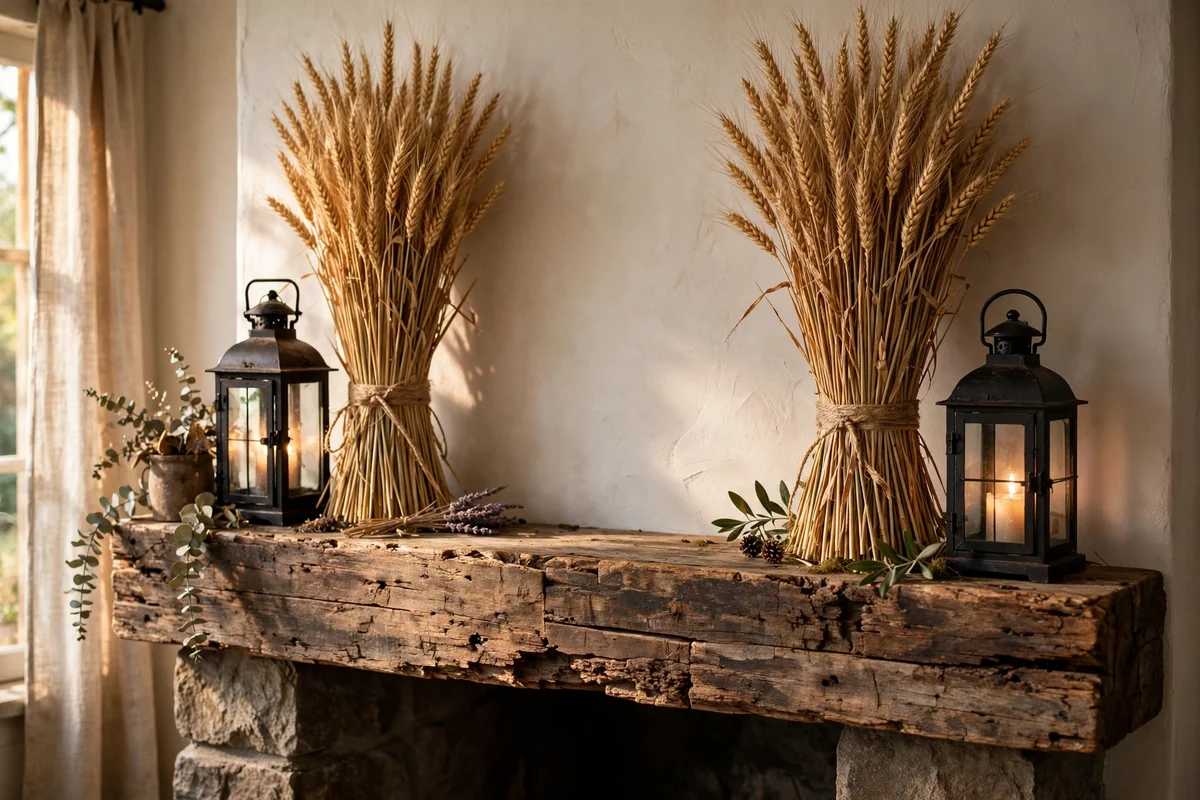
A reclaimed wood mantel shelf between 150 and 180 cm long suits most living room fireplaces and gives tall pieces room to breathe. Lean two or three wheat bundles, each about 60 cm tall, against the wall at one end so the stalks fan upward naturally. Set a black iron lantern of 25 to 30 cm at the other end with a warm LED candle inside for a steady glow.
Keep the middle low: a short stack of old books or a shallow wooden bowl of pinecones stops the eye from jumping between the two tall ends. The mistake to avoid is centring one large item, which makes the mantel look staged. Budget tip: salvaged shelf boards from a reclamation yard often cost less than 20 pounds or dollars, and wheat sheaves keep for years if stored dry.
2. Stack Wooden Crates by the Fireplace for Logs and Blanket Storage
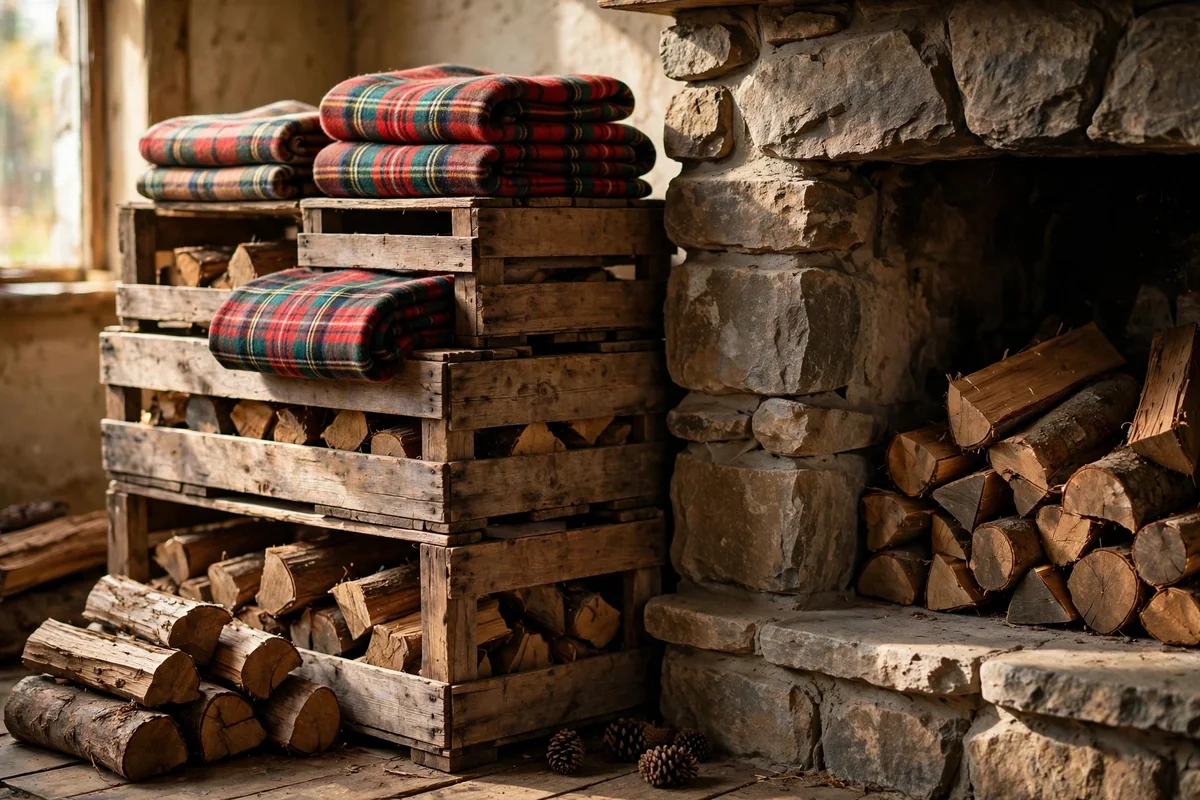
Two or three wooden crates, each roughly 40 cm square, stacked beside the fireplace hold logs below and folded throws above. Turn the top crate on its side so the open face shows a neat roll of kindling or a stack of plaid wool. Sand rough edges lightly and leave the wood bare or rub in a little beeswax for a soft sheen that still looks aged.
Anchor the stack against the wall so it cannot topple, and keep it at least 60 cm from an open fire or stove door for safety. The common mistake is filling crates so tightly that nothing is reachable; leave one crate half empty for daily logs. Thrifted apple crates usually cost 5 to 12 pounds or dollars each, making this one of the cheapest statement pieces in the set.
3. Drape a Plaid Wool Throw Over a Leather Reading Chair
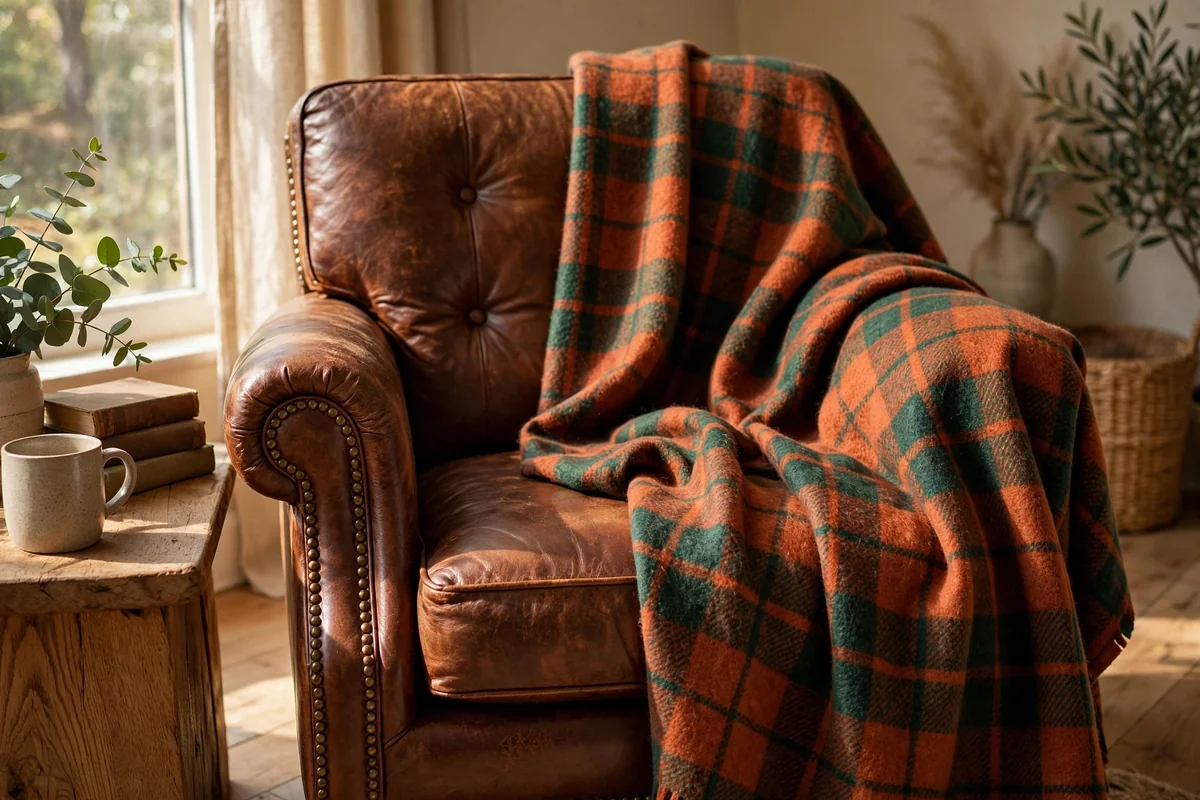
A plaid wool throw in rust, ochre or forest green, about 130 by 180 cm, draped over one arm of a leather reading chair brings instant cabin warmth. Fold it in thirds lengthwise so the pattern shows in a clean band rather than a rumpled heap. Wool holds its shape through the season and shakes free of crumbs and pet hair more easily than fleece.
Pair it with a small cushion in natural linen to keep the chair from looking too heavy. The mistake to avoid is choosing a thin acrylic plaid that pills by December; real wool or a wool blend lasts years. Budget tip: charity shops and end of season sales often yield pure wool throws for 10 to 25 pounds or dollars.
4. Fill Stoneware Crocks With Dried Grasses in the Entryway
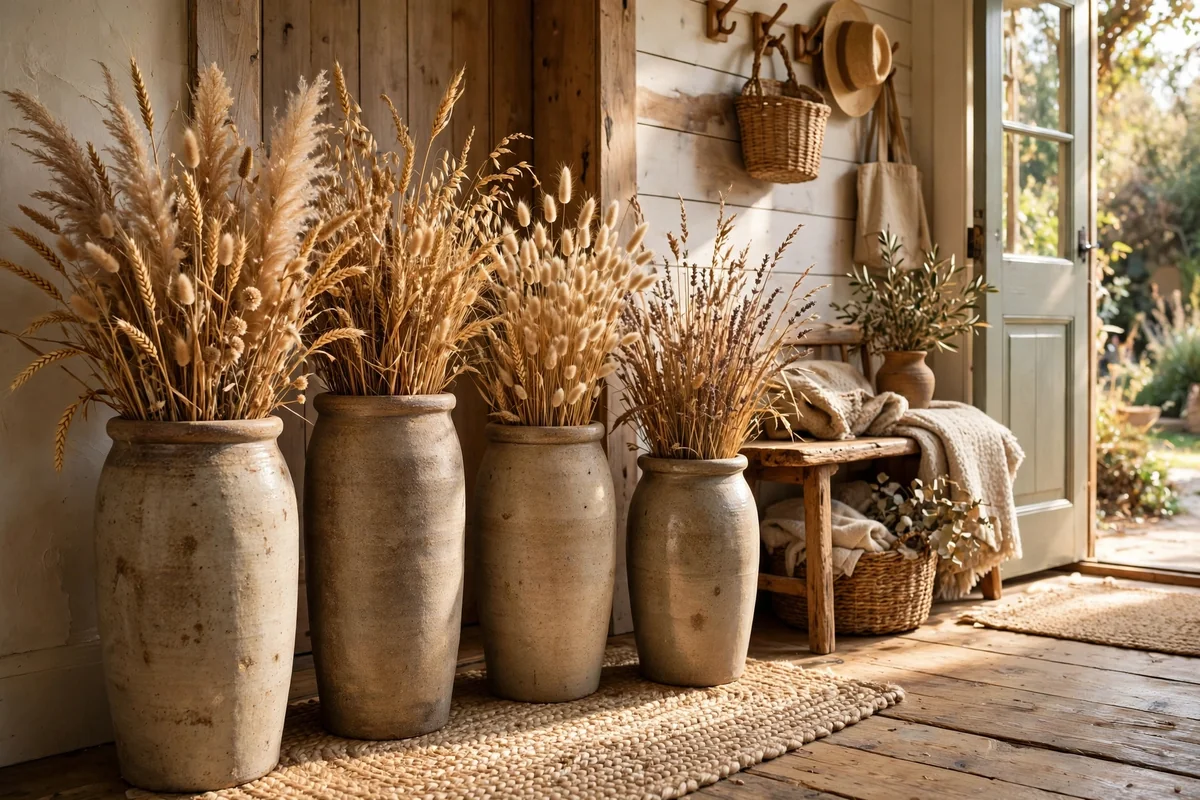
A stoneware crock 25 to 35 cm tall by the entry door, filled with dried grasses or wheat stems cut to about twice the crock height, greets guests with harvest texture. Choose a crock with a salt glaze or simple cobalt band for old farmhouse character. Three heights grouped together, for example 20, 28 and 35 cm, look more collected than a single tall piece.
Keep the arrangement at least a handspan from the door swing so stems are not crushed daily. The mistake to avoid is using fresh cut stems, which droop within days; fully dried grasses hold their shape all season. Old crocks cost 8 to 20 pounds or dollars at flea markets, and a bundle of dried grass is often under 5.
5. Centre the Dining Table With a Galvanised Metal Serving Tray
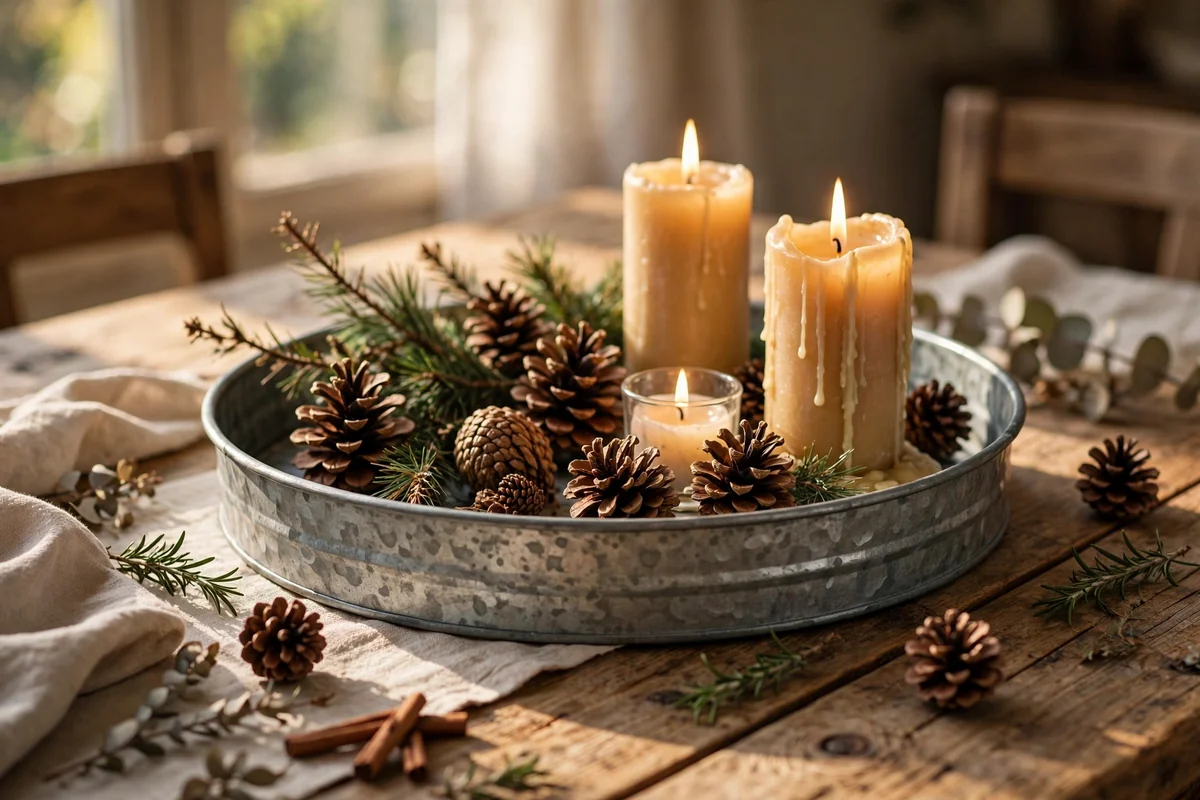
A round or oval galvanised tray 40 to 50 cm across makes a practical centrepiece that can be lifted clear at mealtimes. Fill it with three small stoneware pots of dried lavender, a short pillar candle in an iron holder and a handful of pinecones. The cool grey metal sets off warm wood tables beautifully and shrugs off water rings.
Line the tray with a square of burlap to stop items sliding and add texture. The mistake to avoid is building the tray so tall that diners cannot see across the table; keep everything under 25 cm high. Galvanised trays cost 12 to 25 pounds or dollars new, or half that second hand.
6. Line the Windowsill With Black Iron Lanterns in Three Heights
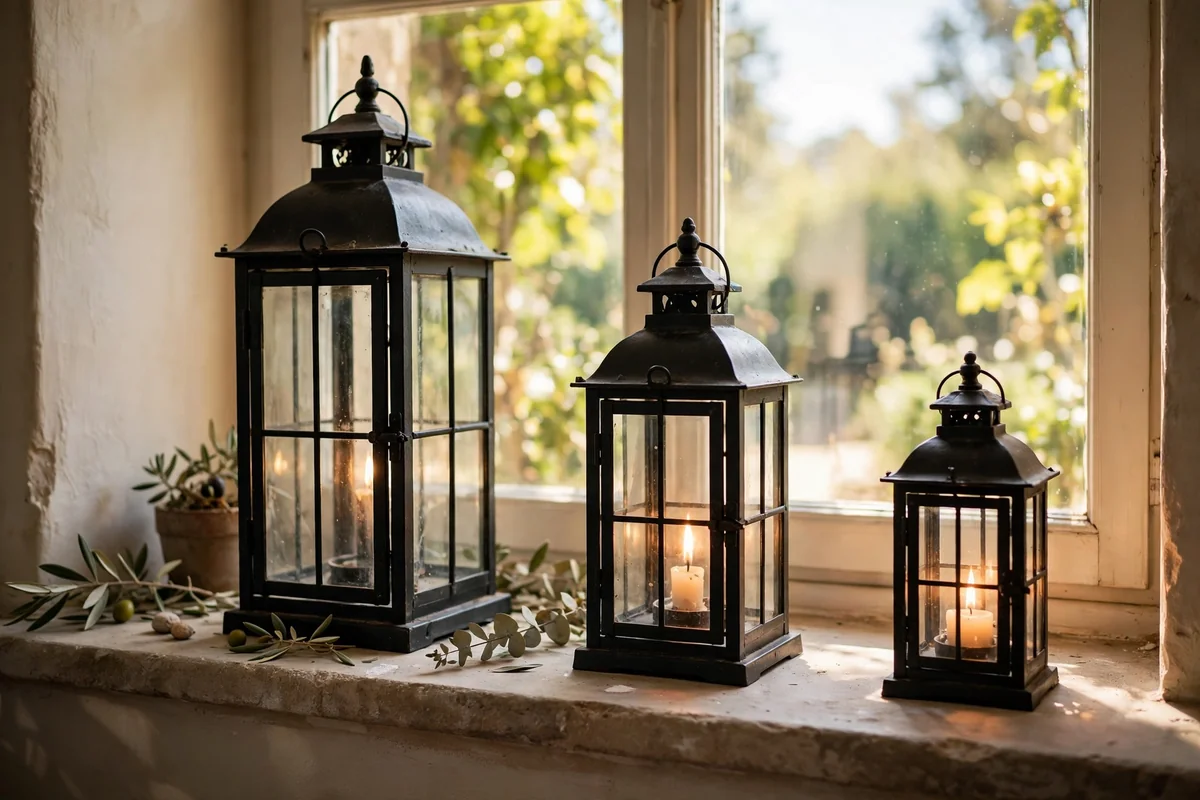
Three black iron lanterns in graduated heights, roughly 20, 30 and 40 cm, spaced 15 to 20 cm apart along a deep windowsill, turn an ordinary window into a harvest feature. Use warm white LED candles with a flicker setting inside each for a glow that is safe near curtains. The dark iron silhouettes read beautifully against pale autumn daylight.
Keep lanterns at least 10 cm from curtain fabric and never use real flames on a sill. The mistake to avoid is lining up identical lanterns in a rigid row; the graduated heights create the rhythm. A set of three iron lanterns typically costs 25 to 45 pounds or dollars, and LED candles last for seasons.
7. Run a Burlap Table Runner Down a Long Wooden Dining Table
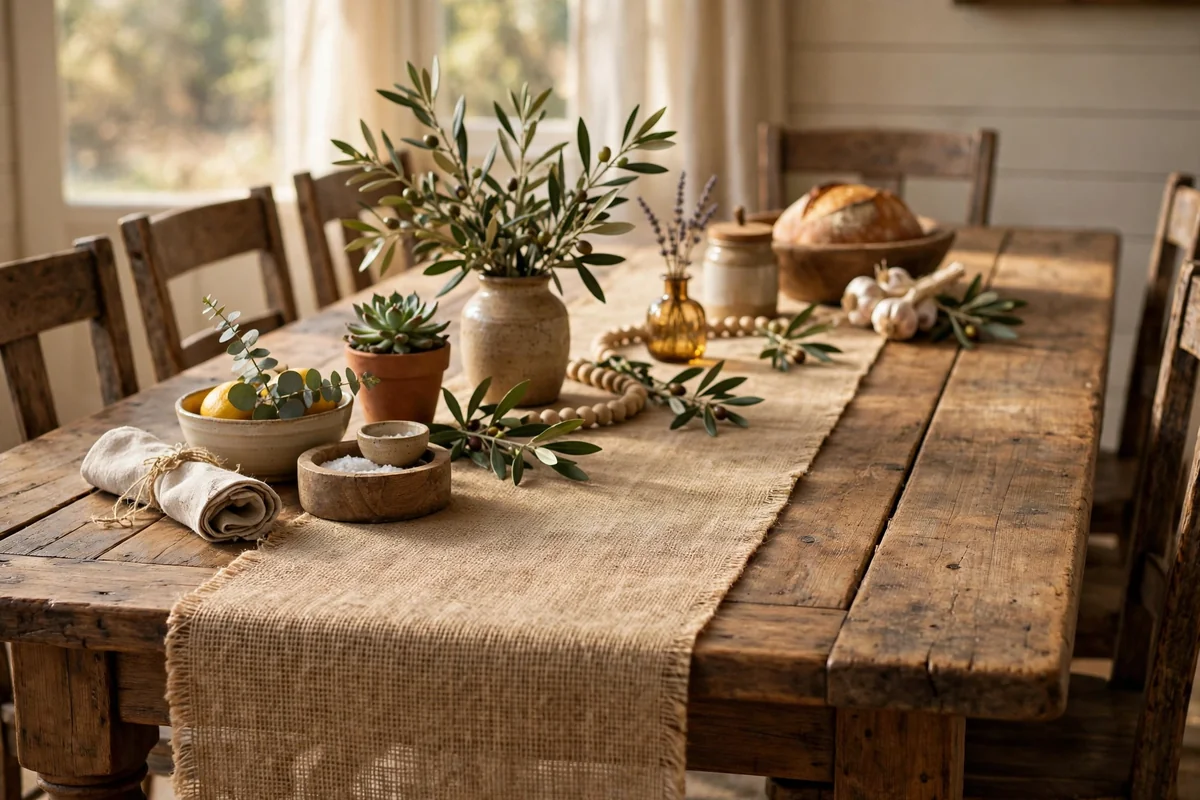
A burlap runner 35 to 40 cm wide and about 60 cm longer than the table lets 30 cm drape over each end. Hem the raw edges with a simple fold and fabric glue, or leave a 2 cm fringe for a handmade feel. Burlap’s open weave shows the wood grain beneath, which keeps a long table from looking covered up.
Shake the runner outdoors weekly, since burlap sheds fibres at first. The mistake to avoid is placing hot dishes directly on burlap, which scorches; use wooden trivets underneath. A 3 metre roll of burlap costs 8 to 15 pounds or dollars and yields two runners, so this is a true budget project.
8. Style the Porch Bench With Linen Cushions and a Harvest Crate
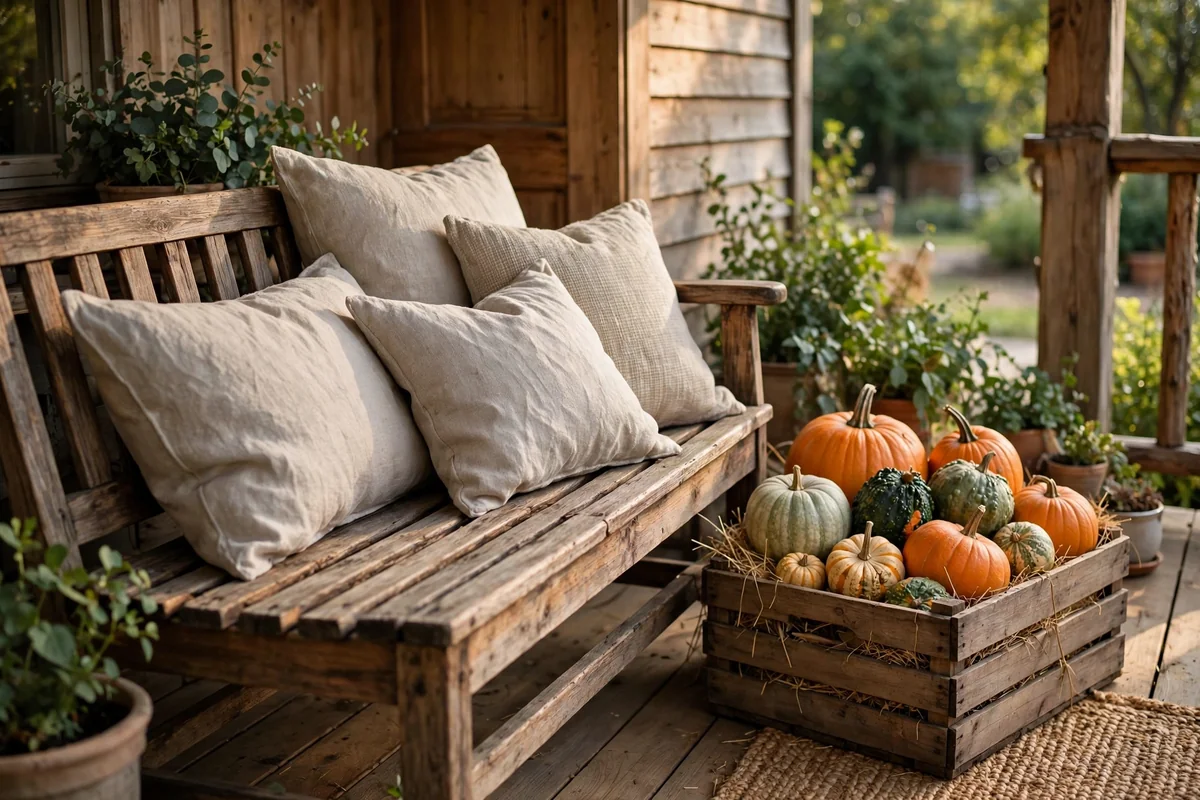
A porch bench dressed with two natural linen cushions in oatmeal and one plaid wool cushion, plus a wooden crate of pumpkins and gourds beside it, welcomes visitors before they reach the door. Choose outdoor friendly cushion inserts or bring them in during rain. The crate can be a simple 40 cm apple box, its slats showing between the harvest colours.
Weigh the crate down with a heavier pumpkin at the base on windy porches. The mistake to avoid is leaving linen cushions out through heavy rain, which stains the covers; store them in a deck box overnight. Two linen covers plus one wool cushion usually total 25 to 50 pounds or dollars.
9. Stand a Wooden Barrel by the Door as an Umbrella Holder
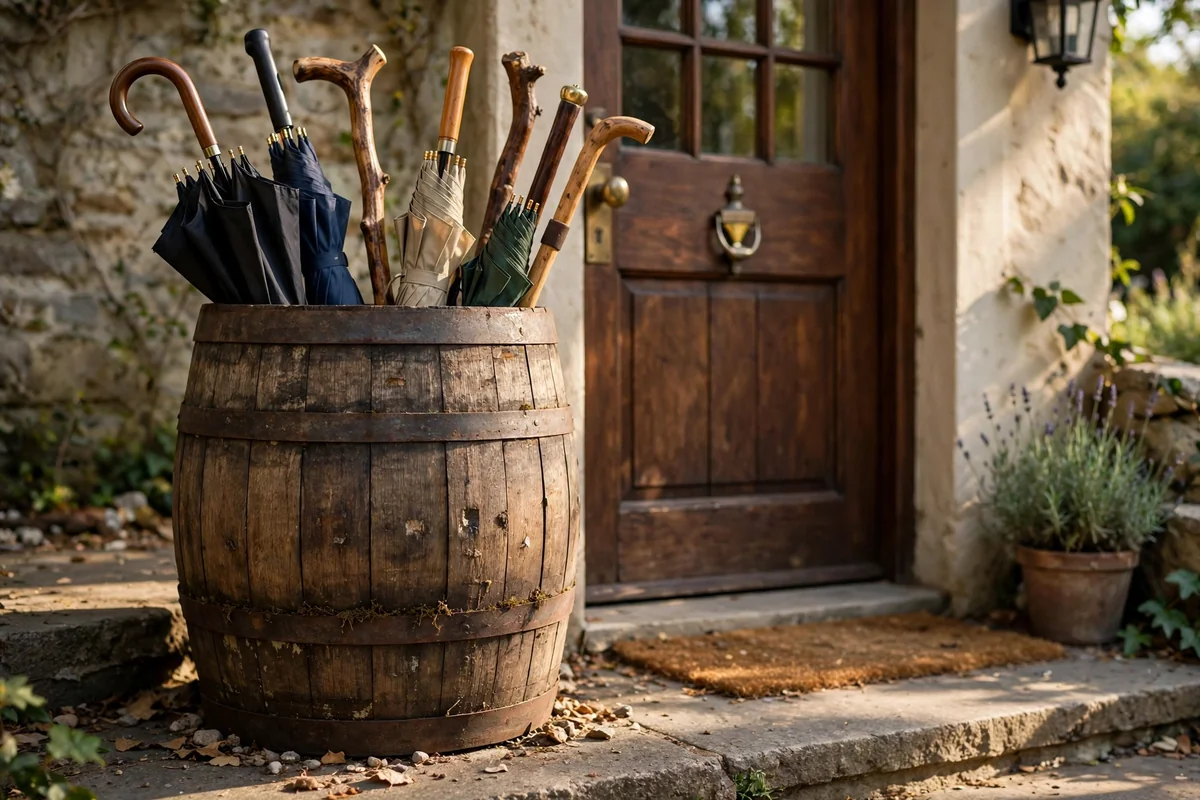
A small wooden barrel or half barrel about 50 cm tall by the front door makes a sturdy umbrella and walking stick holder with real presence. Drop a galvanised bucket or plastic liner inside to catch drips and protect the wood. The curved staves and iron hoops add farmhouse character that a modern stand never will.
Place a folded burlap cloth at the base to absorb splashes on wet days. The mistake to avoid is letting standing water sit in the wood, which rots the base within a season; empty the liner weekly. Half barrels cost 20 to 40 pounds or dollars at garden centres, often less at autumn markets.
10. Tie Natural Linen Napkins With Twine and Wheat Sprigs
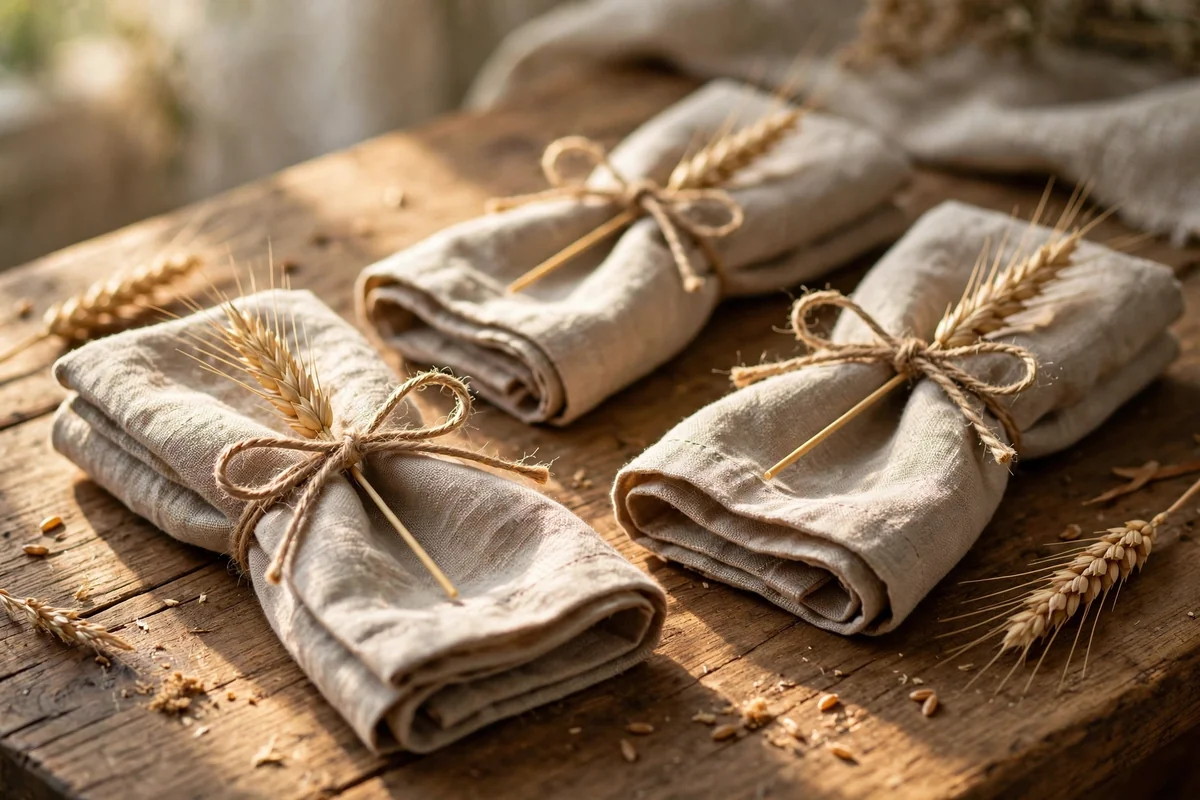
Natural linen napkins in oatmeal or flax, each tied with a 30 cm length of jute twine and tucked with a single 15 cm wheat sprig, make every autumn table feel considered. The sprig should be fully dry so no moisture marks the linen. This detail costs pennies per place setting yet photographs like a styled shoot.
Press napkins before tying so the twine sits flat. The mistake to avoid is using thick rope instead of fine twine, which overwhelms a folded napkin; 2 mm twine is the right scale. A set of four linen napkins costs 12 to 20 pounds or dollars, and one wheat bundle dresses dozens of settings.
11. String a Eucalyptus and Pinecone Garland Across the Mantel
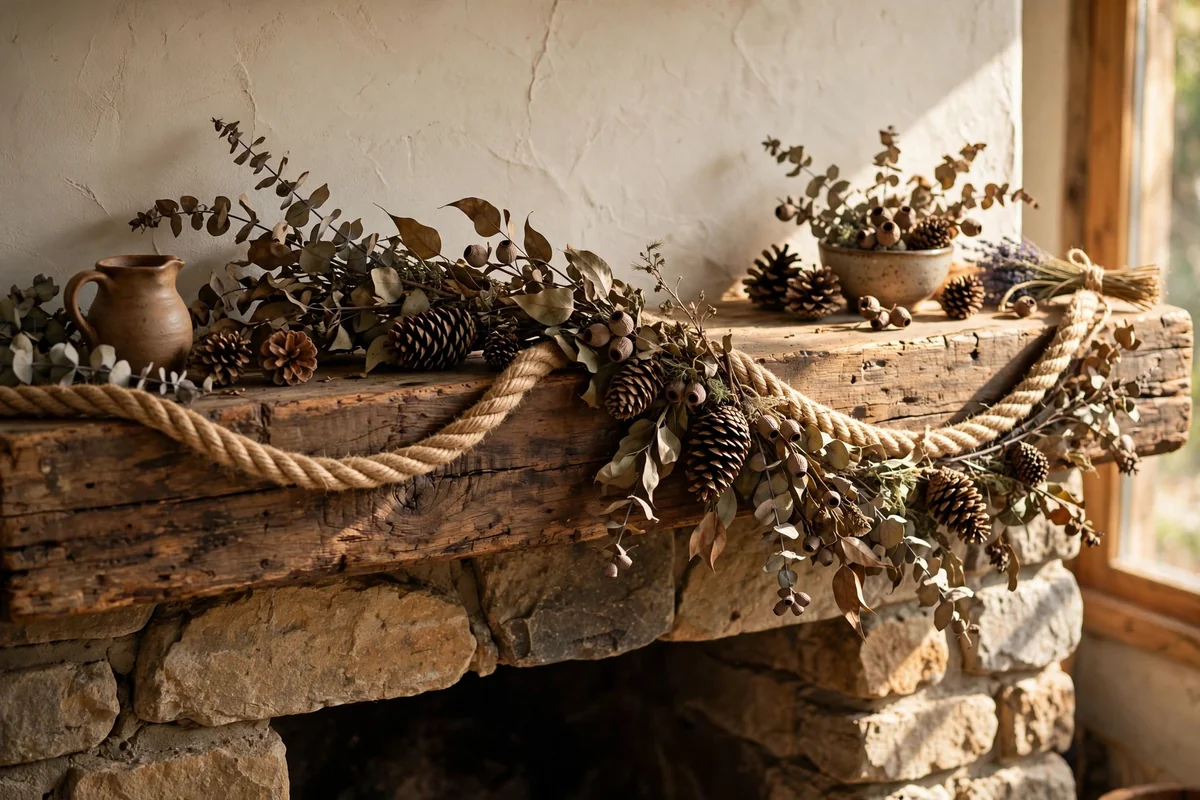
A garland of dried eucalyptus and pinecones wired onto a 2 metre jute rope base drapes beautifully across a mantel or doorway. Space pinecones every 20 cm and let eucalyptus sprigs hang 10 to 15 cm below the rope for a full look. Dried eucalyptus keeps its silvery colour for months indoors away from direct sun.
Secure the garland with small removable hooks rated for 1 kg rather than nails in a rented home. The mistake to avoid is hanging it where a fire or radiator dries it to brittleness within weeks; a cool wall is kinder. A handmade garland costs 15 to 30 pounds or dollars in materials, half the price of shop bought.
12. Pair a Stoneware Pitcher With Amber Glasses on Open Shelving
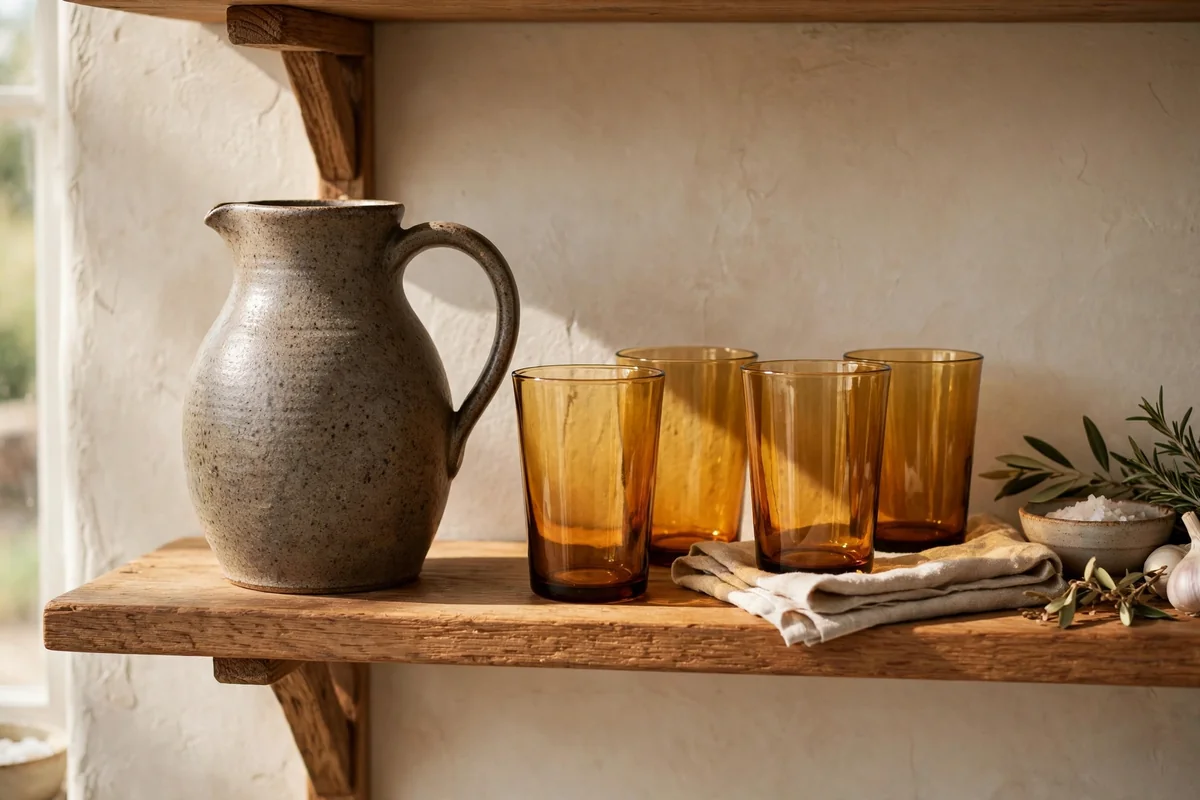
A stoneware pitcher 20 to 25 cm tall beside three or four amber drinking glasses on an open kitchen shelf adds harvest colour at eye level. Fill the pitcher with dried wheat or leave it empty as a sculptural shape. Amber glass glows against cream or sage painted shelves and costs little at thrift stores.
Keep the shelf within easy reach if the glasses are used daily, or dust them monthly if purely decorative. The mistake to avoid is crowding the shelf so the pitcher disappears; give it 10 cm of clear space on each side. A vintage pitcher plus four amber glasses usually totals 15 to 30 pounds or dollars.
13. Anchor the Sitting Area With a Flatweave Jute Rug
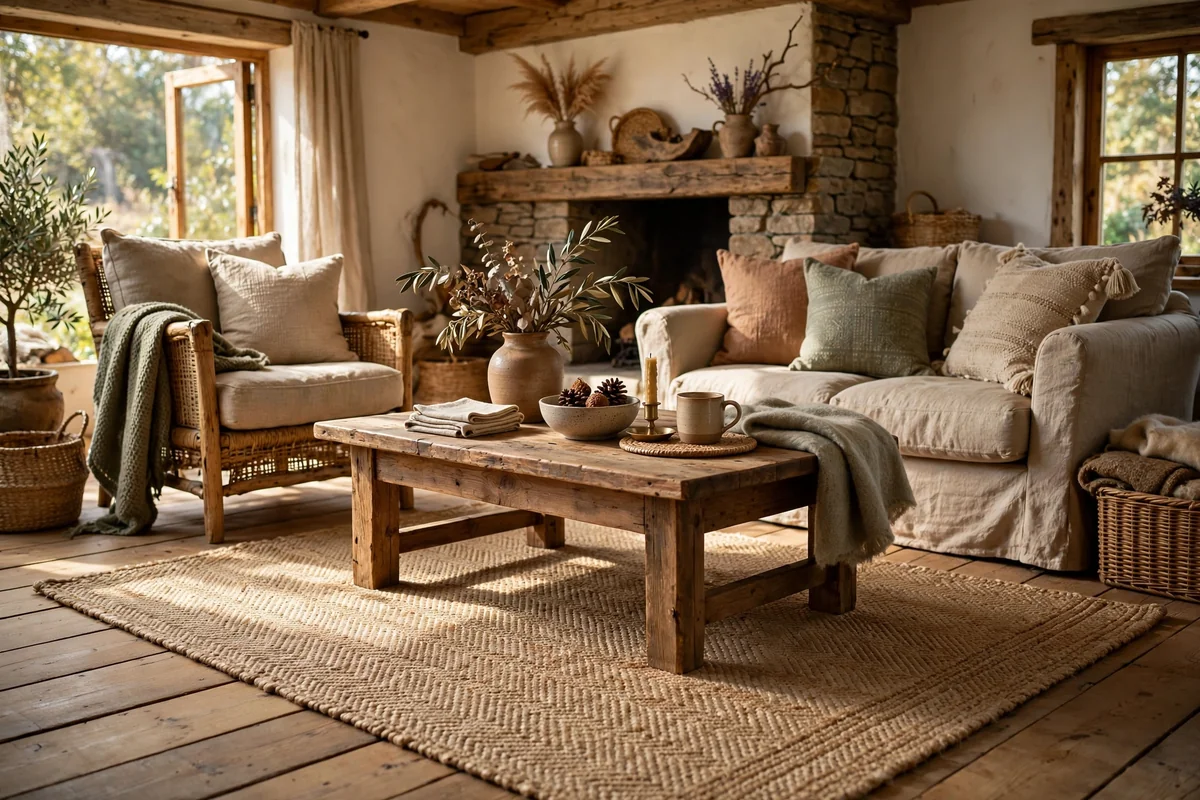
A flatweave jute rug about 160 by 230 cm under the coffee table grounds the sitting area and adds the natural fibre texture rustic rooms need. Jute’s golden tone warms up grey or beige sofas without adding pattern. Choose a rug pad underneath to stop slipping on hard floors and to add a little softness underfoot.
Vacuum jute on suction only, since a beater bar frays the fibres. The mistake to avoid is placing jute in a damp entryway, where it absorbs moisture and darkens; keep it in dry living spaces. A rug this size costs 60 to 120 pounds or dollars, so watch for seasonal sales.
14. Corral Remotes and Coasters in a Small Galvanised Pail
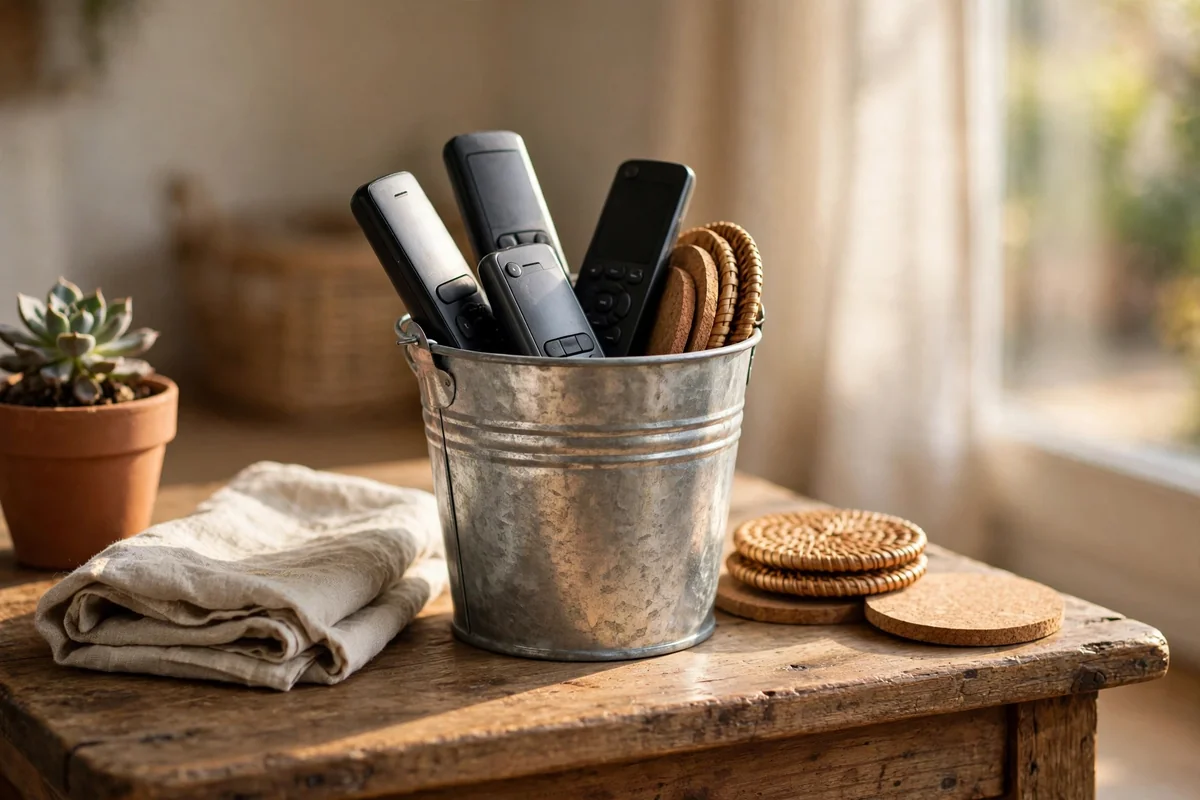
A small galvanised pail 12 to 15 cm across on the side table corrals remotes, coasters and reading glasses into one tidy spot. The metal echoes larger galvanised pieces around the room and keeps clutter from spreading across the tabletop. Line it with a linen napkin to soften the look and muffle clinks.
Choose a pail with a flat stable base so it does not tip when full. The mistake to avoid is letting it become a junk drawer; empty it weekly and keep only the five items you reach for daily. Small galvanised pails cost 5 to 10 pounds or dollars at hardware and craft stores.
15. Hang Dried Corn Husks Beside the Kitchen Window
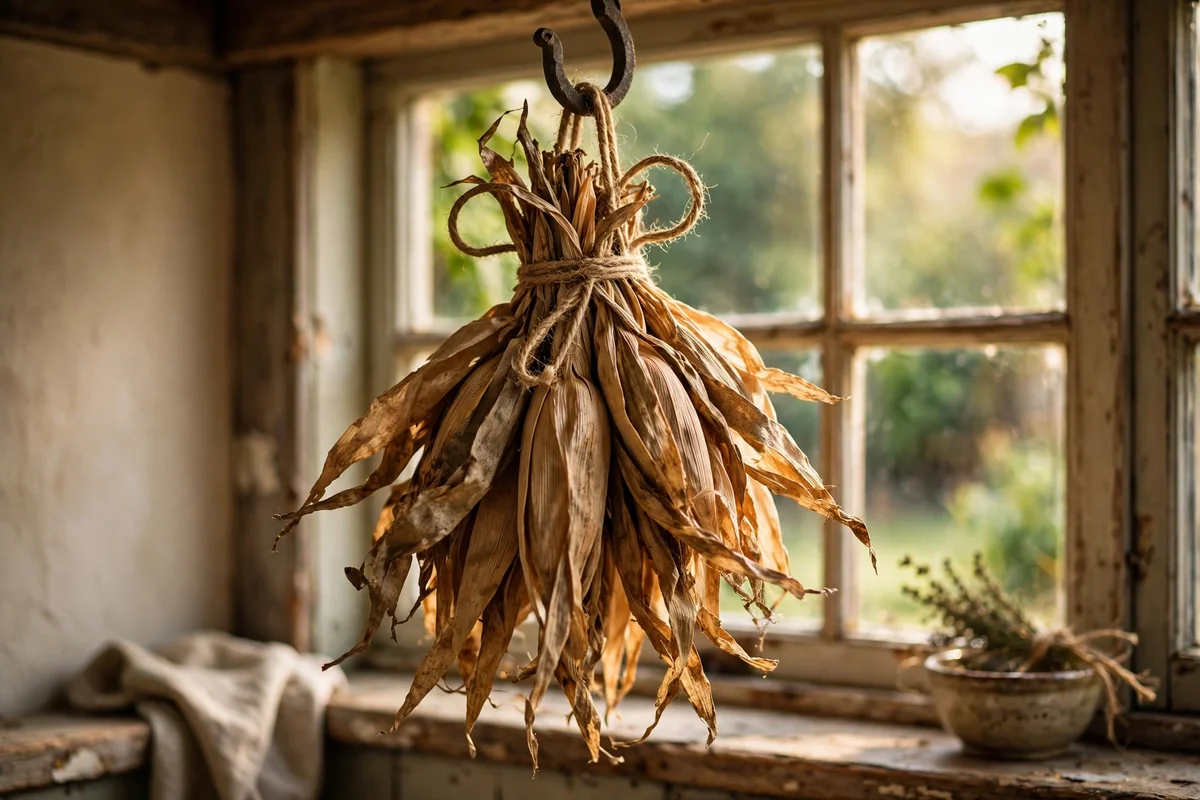
A bundle of dried corn husks tied with twine and hung from a small iron hook beside the kitchen window brings harvest texture to a working room. Use 8 to 12 husks per bundle, fanned so the pale gold tones catch the light. They weigh almost nothing, so a simple adhesive hook holds them in rented kitchens.
Keep the bundle away from the hob, where rising steam softens the husks and loosens the twine within days. The mistake to avoid is hanging them in a spot that gets splashed daily; cooking grease dulls their pale gold colour fast and is hard to clean. Corn husks are often free after autumn markets or cost just a few pounds or dollars per dried bundle.
16. Park a Woven Basket of Plaid Throws Beside the Sofa
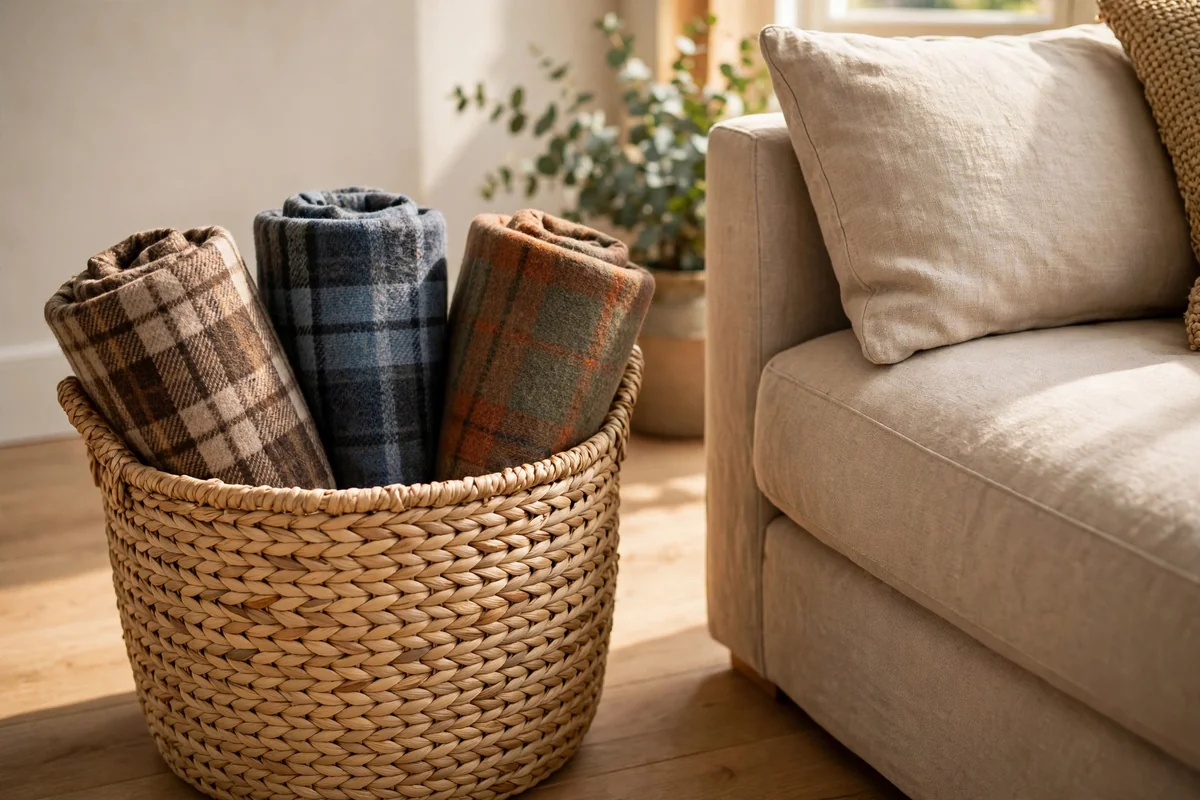
A woven basket about 45 cm tall beside the sofa, holding two or three rolled plaid throws, keeps warmth within arm’s reach on chilly evenings. Roll rather than fold the throws so the plaid patterns show in neat bands over the basket rim. Seagrass or wicker baskets suit the rustic palette and hide the clutter of spare blankets.
Dust the basket monthly, since weave traps fibres. The mistake to avoid is overfilling it so throws spill onto the floor; three is the comfortable maximum for a 45 cm basket. A sturdy basket costs 15 to 30 pounds or dollars, and rolled throws invite use far more than folded stacks.
17. Top the Entry Console With a Reclaimed Wood Mirror and Iron Hooks
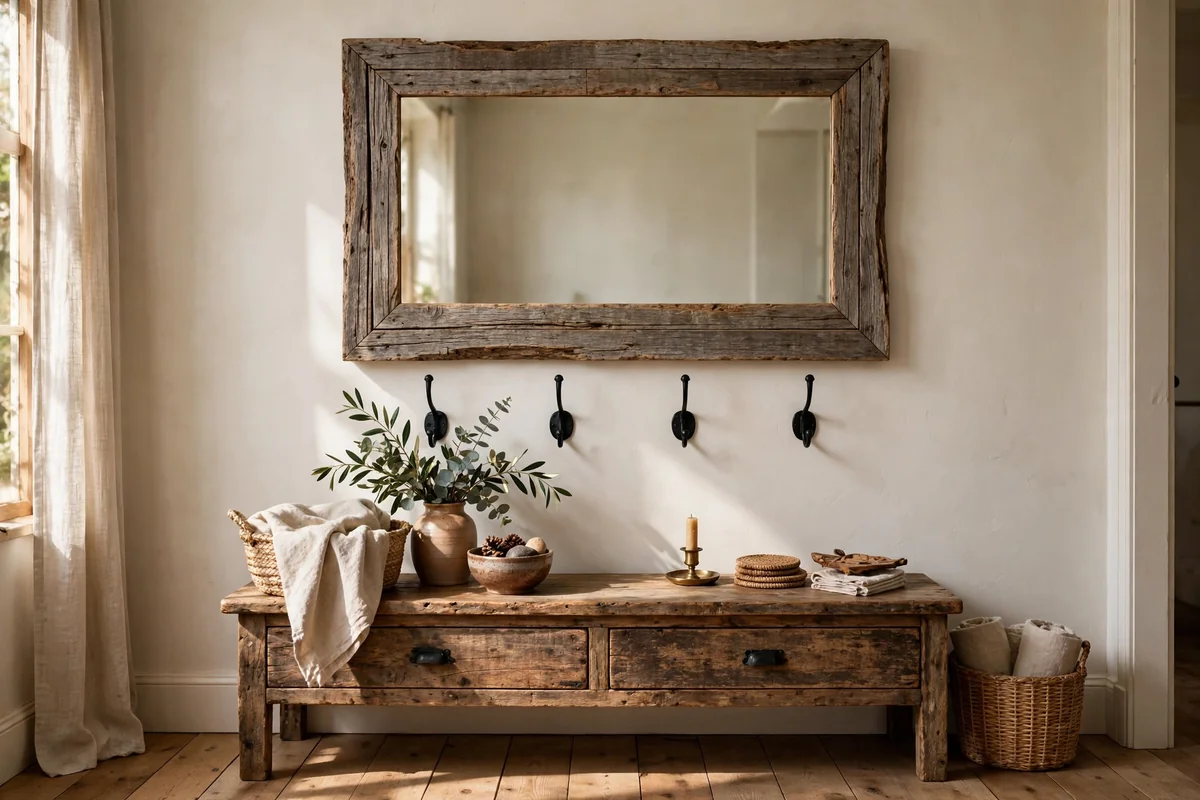
A reclaimed wood framed mirror 60 to 80 cm wide above the entry console doubles light and gives a last check before leaving. Mount three black iron hooks on the frame’s lower rail or on the wall just beneath for keys, a scarf and a market bag. Fix the mirror into a stud or with proper wall anchors, since wood frames are heavy.
Hang the mirror so its centre sits about 150 cm from the floor. The mistake to avoid is placing hooks where swinging bags knock the console items; leave 20 cm of clearance. A reclaimed frame mirror costs 30 to 70 pounds or dollars, with iron hooks 3 to 6 each.
18. Fill a Wooden Dough Bowl With Mini Pumpkins and Pinecones

A wooden dough bowl 40 to 55 cm long filled with mini pumpkins, pinecones and a few acorns makes a harvest centrepiece that lasts the whole season. Nestle the pumpkins in first, then tuck pinecones into the gaps so nothing rolls. Real mini pumpkins keep for 6 to 8 weeks indoors away from radiators.
Check the pumpkins weekly and remove any that soften. The mistake to avoid is varnishing the bowl heavily, which looks new and defeats the rustic feel; a light beeswax rub is enough. Dough bowls cost 20 to 45 pounds or dollars, and a bag of mini pumpkins is usually under 8.
19. Line the Stair Ledge With Beeswax Candles in Iron Holders
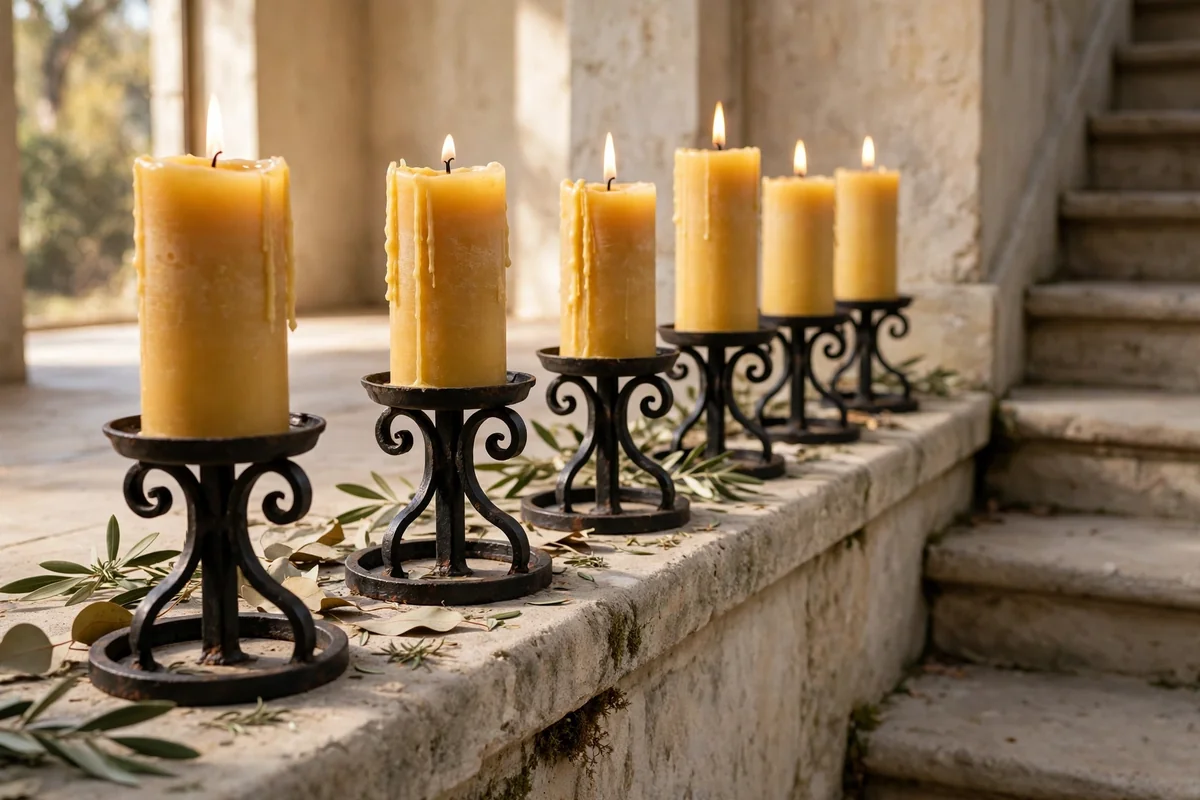
Three to five beeswax pillar candles in black iron holders, spaced 25 to 30 cm apart along a wide stair ledge or hallway shelf, cast a warm honeyed light. Beeswax burns longer and cleaner than paraffin, with a faint natural scent. Vary the candle heights by 5 to 8 cm so the line has gentle rhythm.
Never leave real flames unattended and keep candles clear of the handrail side. The mistake to avoid is using dripless-look candles that are actually paraffin; real beeswax has a warm yellow tone and subtle honey smell. Iron holders cost 4 to 9 pounds or dollars each, with beeswax pillars 6 to 12.
20. Stack Vintage Books Tied With Twine Beside a Stoneware Vase

A stack of three or four vintage hardbacks with cloth or leather bindings, tied with jute twine and set beside a small stoneware vase, adds quiet heritage to a side table. Choose books in rust, brown and forest tones so the spines harmonise. The vase can hold a single wheat stem or stand empty as a shape.
Dust the stack fortnightly with a soft cloth, since horizontal books collect a visible film quickly. The mistake to avoid is stacking more than four books, which reads as storage rather than styling; three is the sweet spot on most side tables. Charity shop hardbacks cost 1 to 3 pounds or dollars each, making this nearly free decor with real character.
21. Dress Kitchen Shelves With Burlap Lined Baskets and Small Crocks
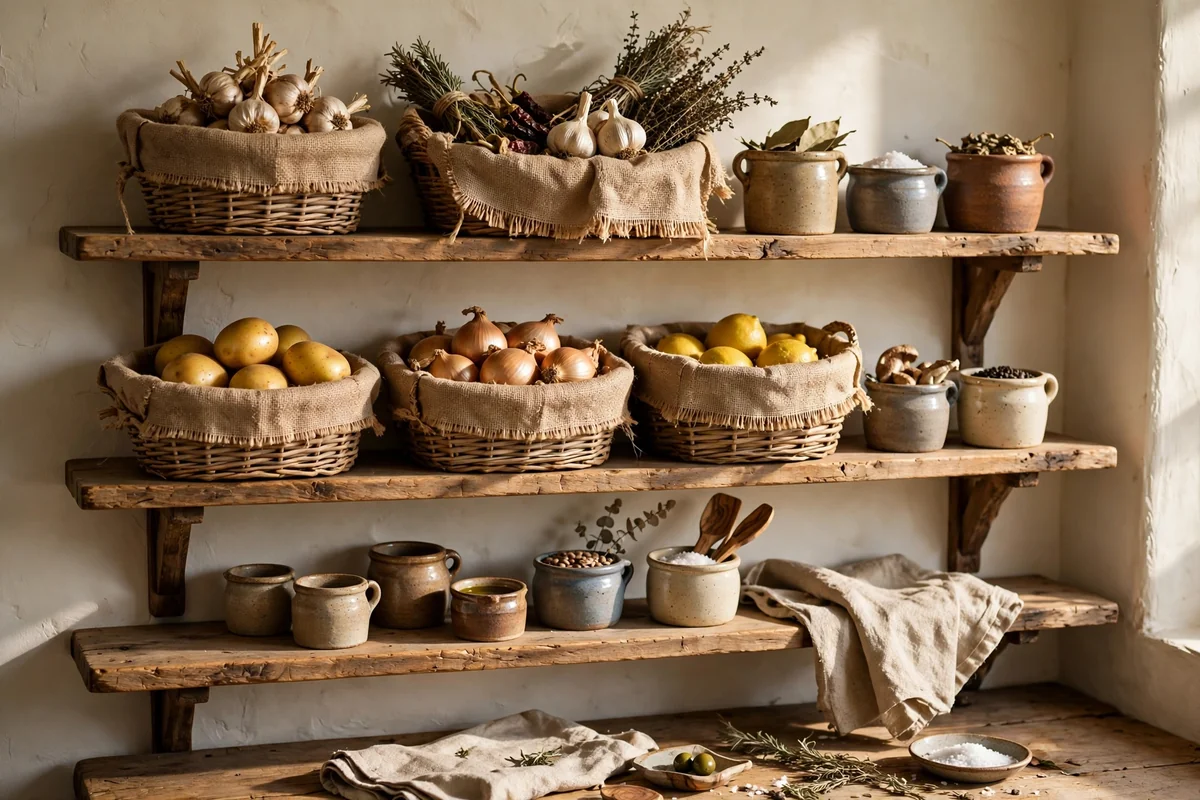
Open kitchen shelves gain rustic order when two or three small baskets lined with burlap hold onions, garlic and cloth napkins, flanked by stoneware crocks for utensils. Cut burlap 5 cm larger than the basket and fold it over the rim for a neat cuff. The natural fibres soften painted or tiled kitchens without hiding their function.
Wash burlap liners monthly on a gentle cycle, since kitchen air leaves a greasy film on open fibres. The mistake to avoid is lining baskets that hold damp produce without a wipeable tray beneath; trapped moisture rots burlap within weeks. Small baskets cost 6 to 12 pounds or dollars each, and a single metre of burlap lines several baskets.
22. Set a Wheat Sheaf Bundle in a Galvanised Bucket by the Hearth
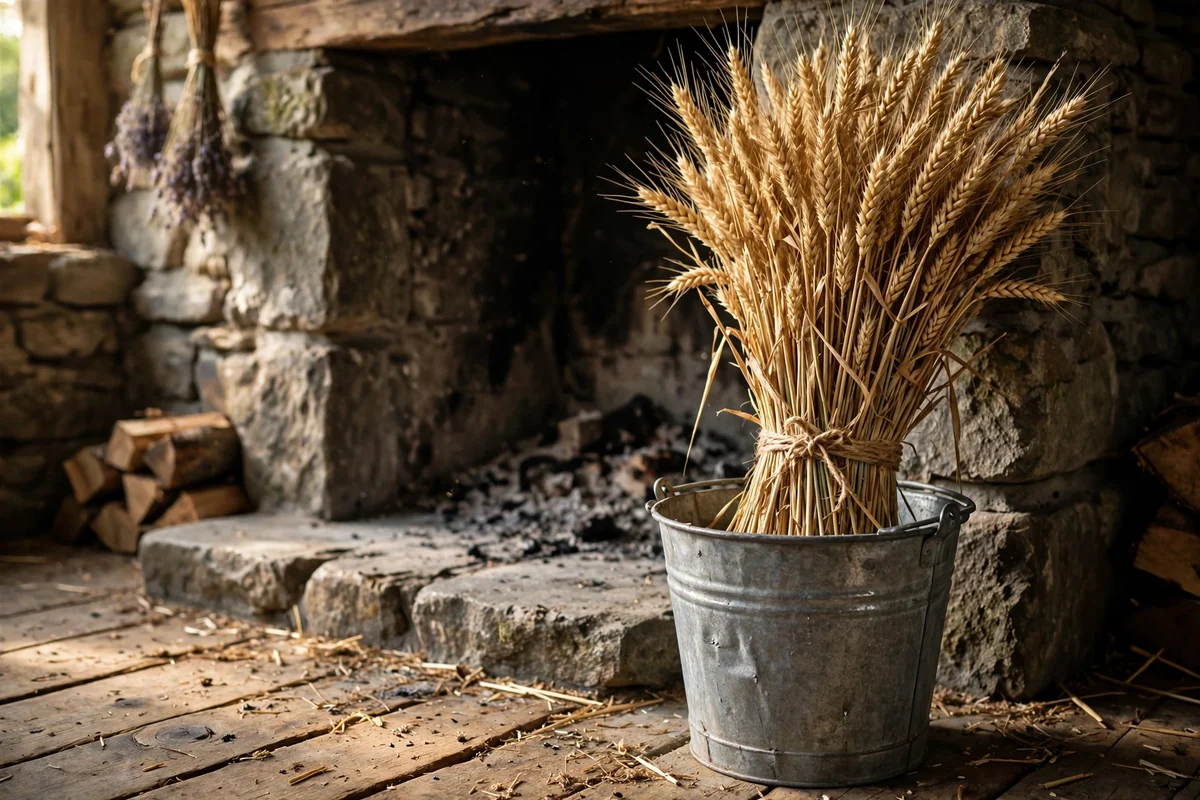
A full wheat sheaf bundle about 70 cm tall standing in a galvanised bucket 30 cm high beside the hearth makes a striking harvest statement. Fan the stalks so the heads spread 40 to 50 cm wide at the top. The cool metal against golden wheat is the classic farmhouse pairing and needs nothing else around it.
Keep the bucket at least a metre from open flames, since dry wheat is flammable. The mistake to avoid is trimming the stalks too short; the height is what gives the arrangement its drama. A wheat bundle costs 8 to 15 pounds or dollars, and the bucket 10 to 20.
23. Swap Sofa Cushions for Natural Linen in Oatmeal and Rust
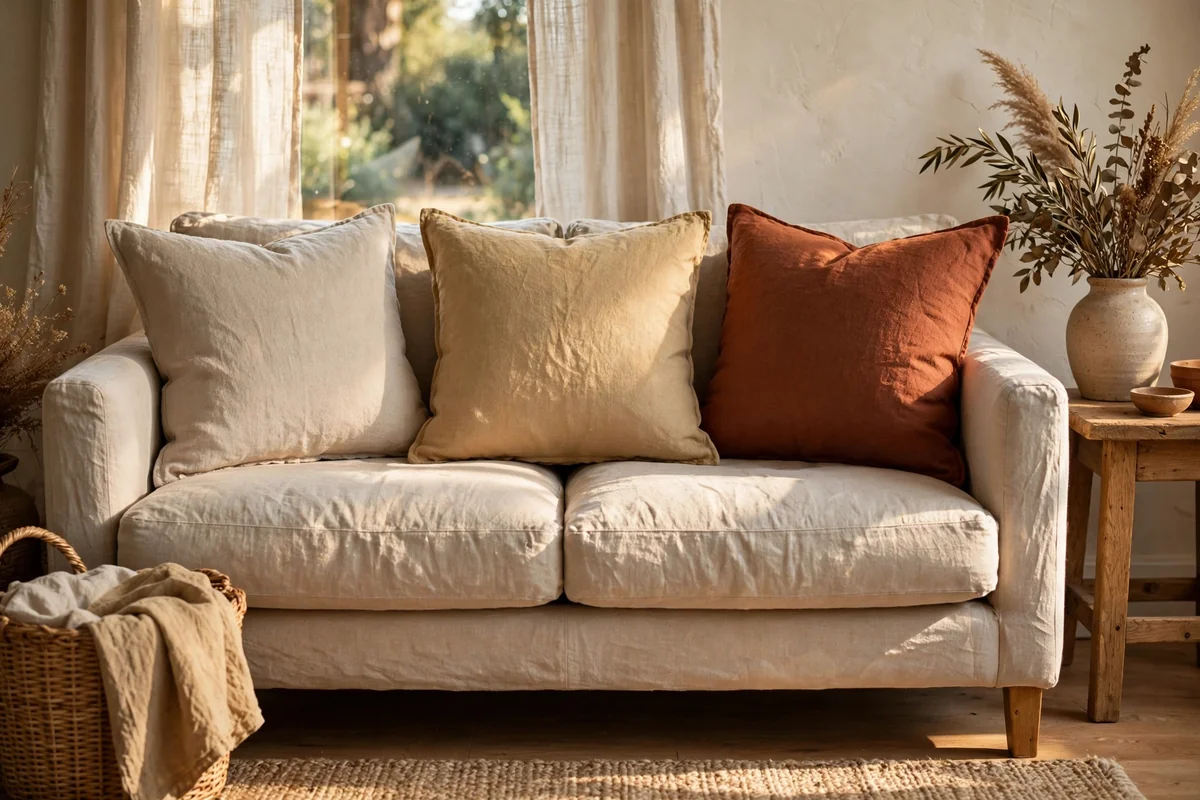
Swapping sofa cushion covers for natural linen in oatmeal, flax and rust, in 45 to 50 cm squares, shifts the whole room into autumn in under an hour. Use three oatmeal covers and two rust for a balanced five cushion arrangement on a standard three seat sofa. Linen’s slubbed texture reads rustic without any pattern at all.
Wash the covers inside out on a cool cycle to protect the slubbed weave, and line dry them for the softest finish. The mistake to avoid is mixing more than three tones across the sofa, which turns calm into clutter; two neutrals plus one accent is enough. Linen-look covers cost 8 to 15 pounds or dollars each, far less than pure linen.
24. Build a Reading Corner Around a Crate Side Table and Wool Throw
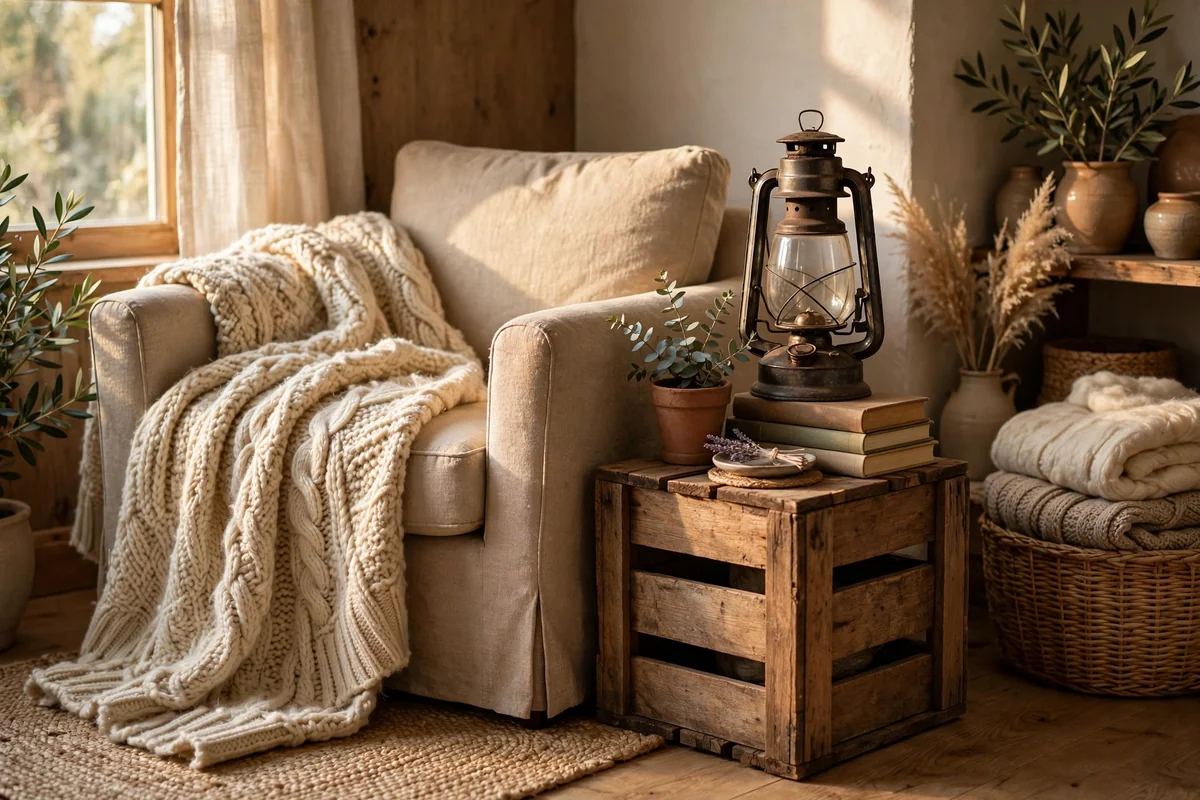
A wooden crate turned on its side beside an armchair becomes a side table with a cubby for books, topped with a small iron lantern and a cup of tea. Drape a wool throw over the chair arm and add a floor cushion in natural linen for feet. A warm 2700K bulb in a nearby lamp completes the corner for evening reading.
Place the crate table within 40 cm of the chair arm so the tea is reachable. The mistake to avoid is choosing a crate with splintered slats at hand height; sand and wax any surface you will touch often. The whole corner can cost under 40 pounds or dollars if the crate and throw are thrifted.
Rustic fall style is really a short list of honest materials used with confidence: wood with a past, wool with real weight, iron with a dark patina, burlap and natural linen, golden wheat and salt glazed stoneware. When every piece is allowed to show its texture, rooms feel gathered over time rather than decorated in a day, and that collected warmth is what guests remember long after the season ends.
This week, try the easiest win first: drape a plaid wool throw over your favourite chair and set a wheat bundle or a crock of dried grasses beside the front door. Those two small moves take about ten minutes and change the whole mood of a room. Then let the rest of the harvest gather slowly, one thrifted crate, iron lantern or linen cushion at a time.
Frequently Asked Questions
How much does a rustic fall refresh realistically cost?
Between 60 and 200 pounds or dollars for a full room if you thrift wisely. Wheat bundles, burlap, pinecones and twine cost very little, while a good wool throw or jute rug is the main spend. Start with textiles and one wooden piece, then add iron and stoneware over a few weeks to spread the cost.
Where can I find reclaimed wood pieces on a budget?
Reclamation yards, architectural salvage shops and farm auctions are the best sources, with shelf boards often under 20 pounds or dollars. Ask local builders about offcuts from renovation work, and check online marketplaces for free pallets and crates. Always sand reclaimed wood and check for old nails before bringing it indoors.
How do I stop burlap from shedding fibres everywhere?
Shake new burlap outdoors and run a lint roller over it before use, which removes most loose fibres. Hemming or gluing the cut edges stops further fraying. For table runners, place a thin cotton cloth underneath to catch stray fibres, and avoid burlap in homes where shedding would bother allergy sensitive family members.
Can rustic decor work in a small living room?
Yes, by choosing fewer, better scaled pieces. One wheat bundle in a corner, a single crate side table and two linen cushions give the full effect without crowding. Keep larger items like barrels and log stacks for bigger rooms, and use wall hooks and mantel styling to add texture without using floor space.
How do I mix rustic pieces with my existing modern furniture?
Let modern furniture be the quiet background and add rustic texture in layers: a wool throw on a plain sofa, a wooden tray on a glass coffee table, iron lanterns beside a sleek lamp. Stick to one wood tone and one metal finish so the mix looks intentional. Two or three rustic pieces per room is usually the right balance.