Living Room
24 Woven Basket Storage Ideas That Are Actually Beautiful
By Anna Wells · · 20 min read
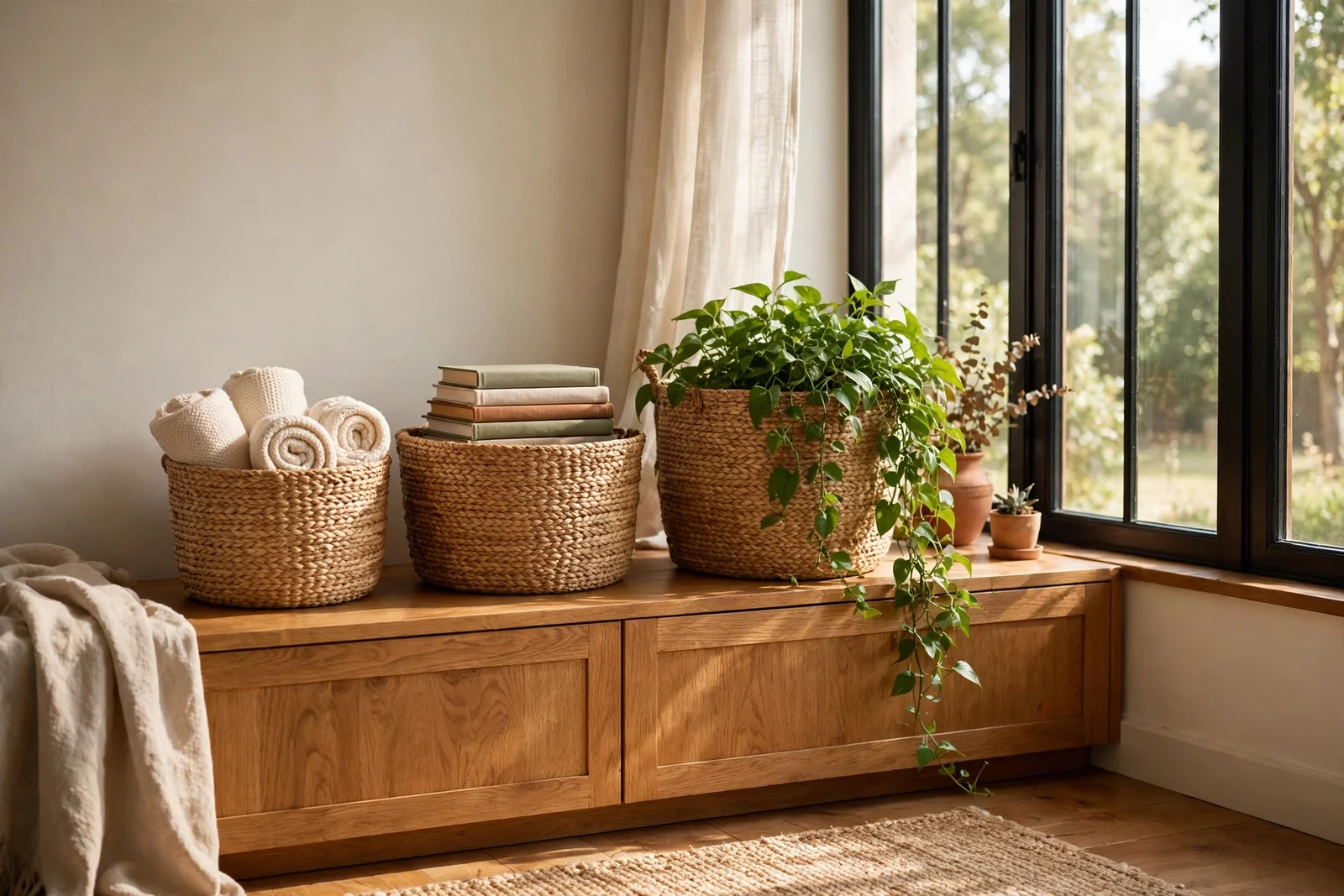
Beautiful woven basket storage for every room, from matching seagrass families to lidded baskets for chargers, with measuring tips, honest dust-cleaning notes and simple repairs throughout.
Every home has that drawer of doom, the one where chargers tangle and remote controls vanish. Baskets promise to fix it, yet most baskets end up looking like clutter in a nicer container. The difference between a basket that hides mess and one that quietly organises it comes down to a few calm decisions: matching families, honest sizes, and a place for every item before the basket arrives.
This is not a list of woven curios to admire from afar. These are twenty-four storage ideas that work across the whole house, from the entry bench to the bedside, each one tested against real life: dust, damp bathrooms, toy avalanches, and the charger that belongs to nobody. You will find the right basket for fruit and for logs, the fix for a sagging weave, and the one measurement that prevents most returns.
Grab a tape measure before you start, since every idea here names the sizes that fit standard shelves and benches. By the end, each room will have its own quiet family of baskets, and the clutter will have somewhere beautiful to go.
1. Repeat One Seagrass Basket Shape in Three Sizes Down the Shelf Run
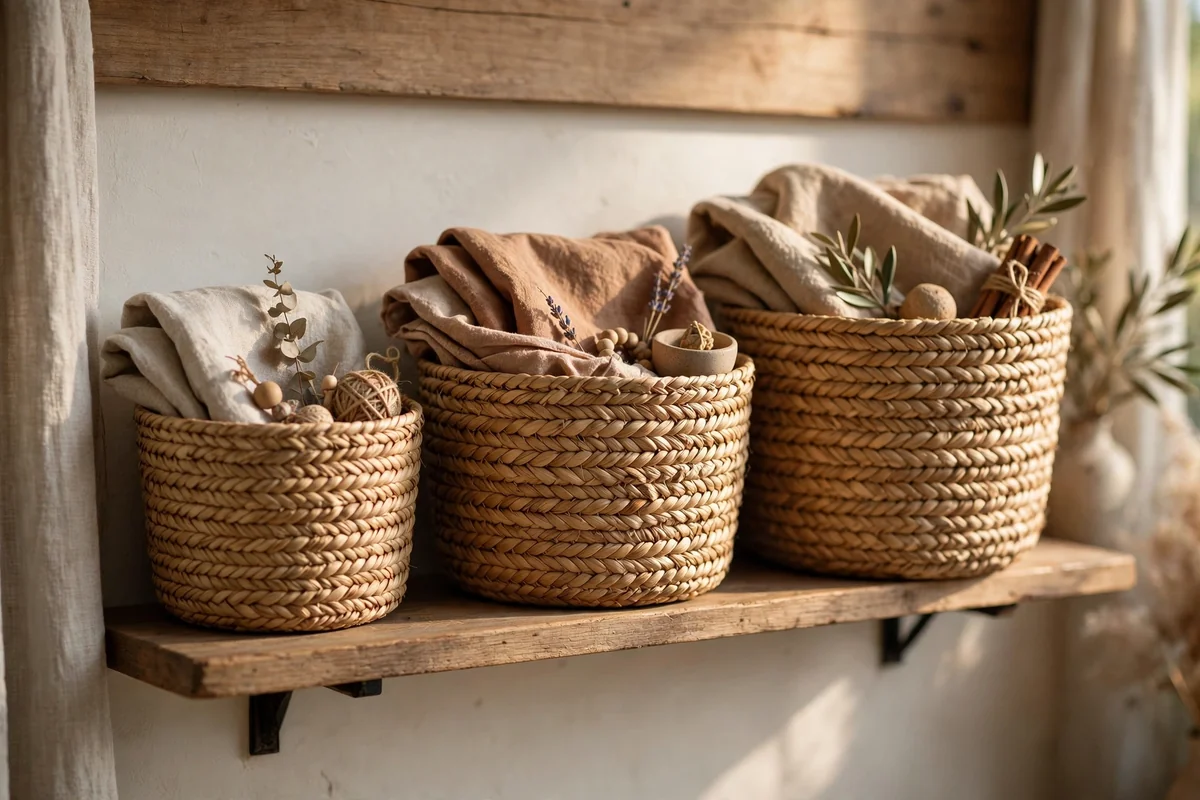
Buy the same seagrass weave in three graduated sizes, roughly 25, 35 and 45 cm wide, and line them along one open shelf. The repetition reads as a calm rhythm instead of random storage, and each size earns a job: small for keys and loose batteries, medium for folded throws, large for toys or board games. Keep the weave tone identical, honey or natural pale, so the trio looks bought as a set even if you collected it slowly.
Leave two to three centimetres of breathing room between each basket and the shelf above so fingers can lift lids without scraping. The classic mistake is mixing four different weaves in similar tones, which photographs as clutter rather than calm. A matched trio usually costs 30 to 60 pounds or dollars at high-street stores, less second-hand, and it does the styling work that five mismatched baskets cannot.
2. Tuck Low Lidded Baskets Beneath the Entry Bench for Shoes and Scarves
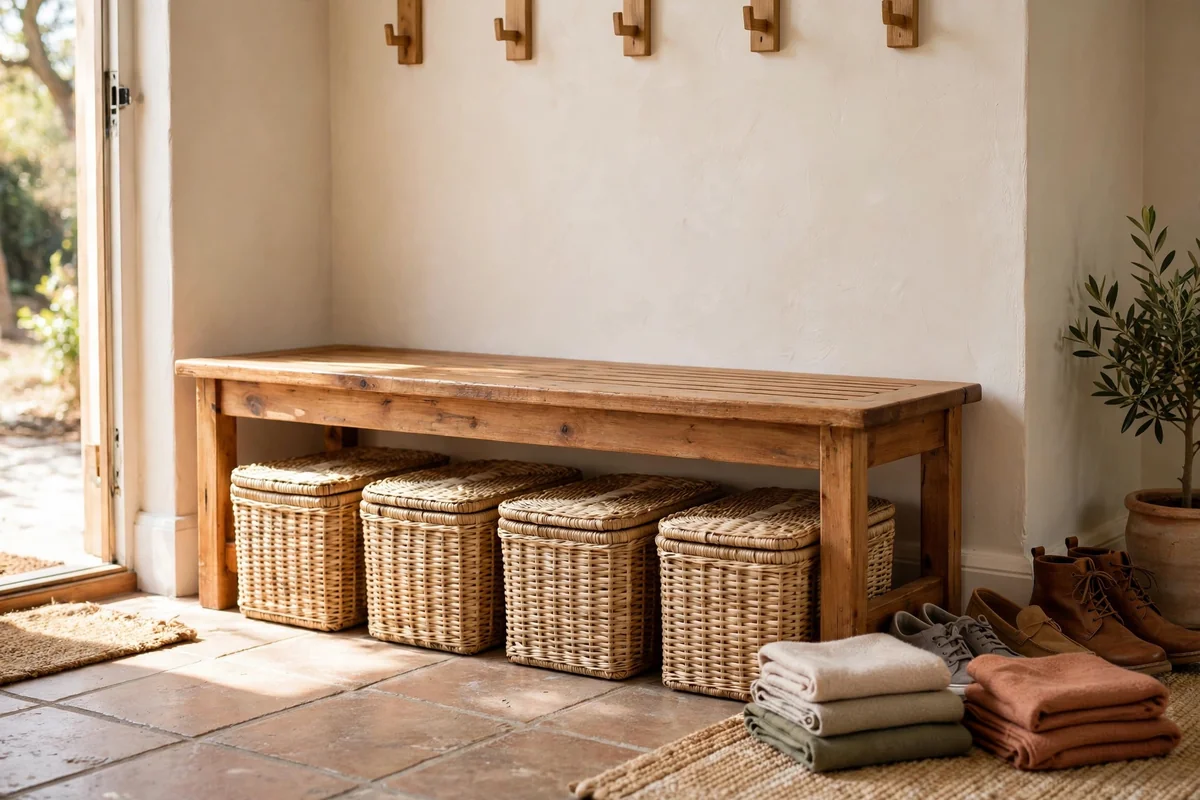
An entry bench with a 20 to 25 cm clearance underneath hides a row of low lidded baskets perfectly. Choose baskets 18 to 22 cm tall and 30 to 40 cm wide so they slide in fully without catching the bench edge. Lids matter here: they turn scattered gloves and dog leads into a clean line, and they stop dust settling on soft items. Seagrass or woven palm keeps the look natural against wood or painted benches.
Give each basket a job and a rhythm: shoes by the door every evening, scarves and hats each morning. A weekly two-minute tidy, on laundry day for instance, keeps the system honest without becoming a chore. The mistake to avoid is buying baskets taller than the gap, forcing you to tilt them in and snagging the weave; measure the clearance with the shoes removed first, then subtract two centimetres.
3. Corral Remotes and Chargers in a Lidded Round Basket by the Sofa
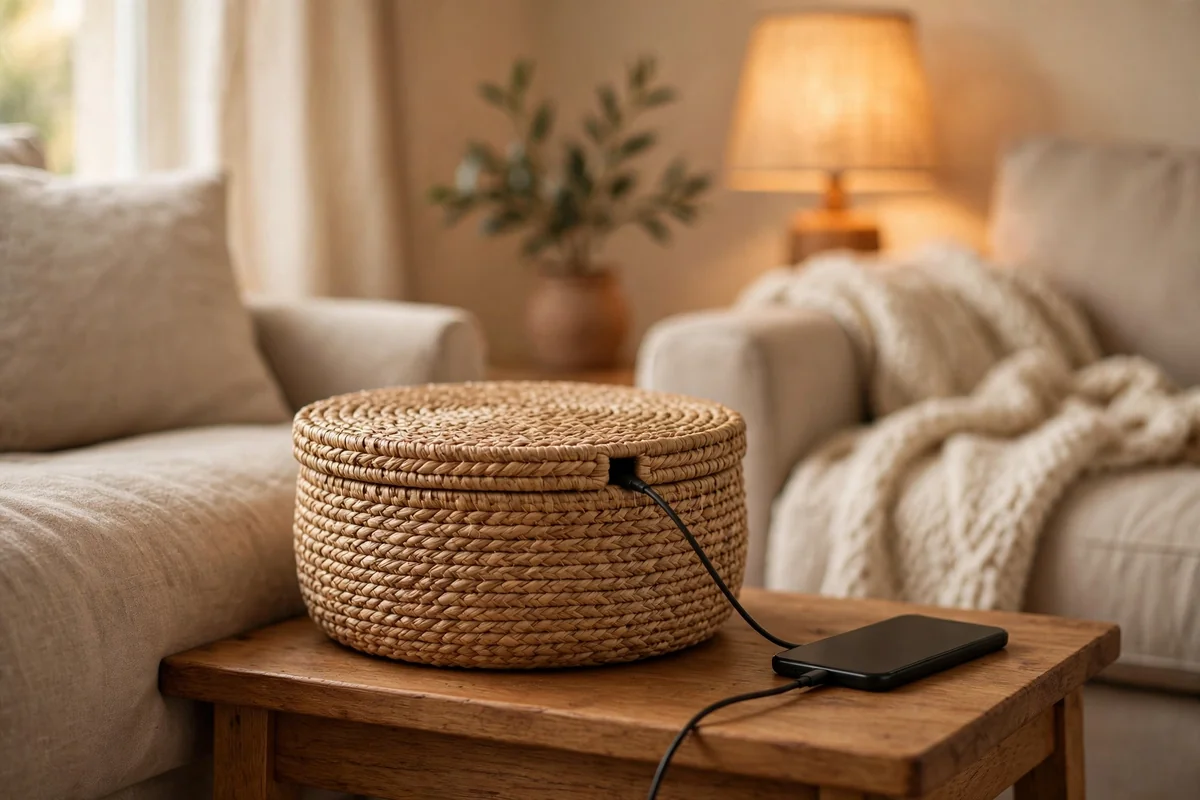
A round lidded basket of 20 to 25 cm diameter sits neatly on a side table or the sofa end, swallowing the remote, the streaming stick remote, and two phone chargers. Cut a small notch in the back rim if you like, wide enough for one cable, so the basket lid closes while a phone charges inside. Choose a tight weave in a mid tone, darker than the table, so cable dust and fingerprints stay invisible between cleans.
Add a small fabric pouch inside for earbuds and a single multi-plug, and the whole charging mess lives in one liftable lid. Keep the basket at least a metre from radiator heat, since dried grasses can turn brittle and pale near constant warmth. Budget versions in seagrass run 12 to 25 pounds or dollars; a lidded willow piece at mid range costs more but lasts a decade of daily lid lifting.
4. Set a Distinct Basket Per Person Along the Entry Wall
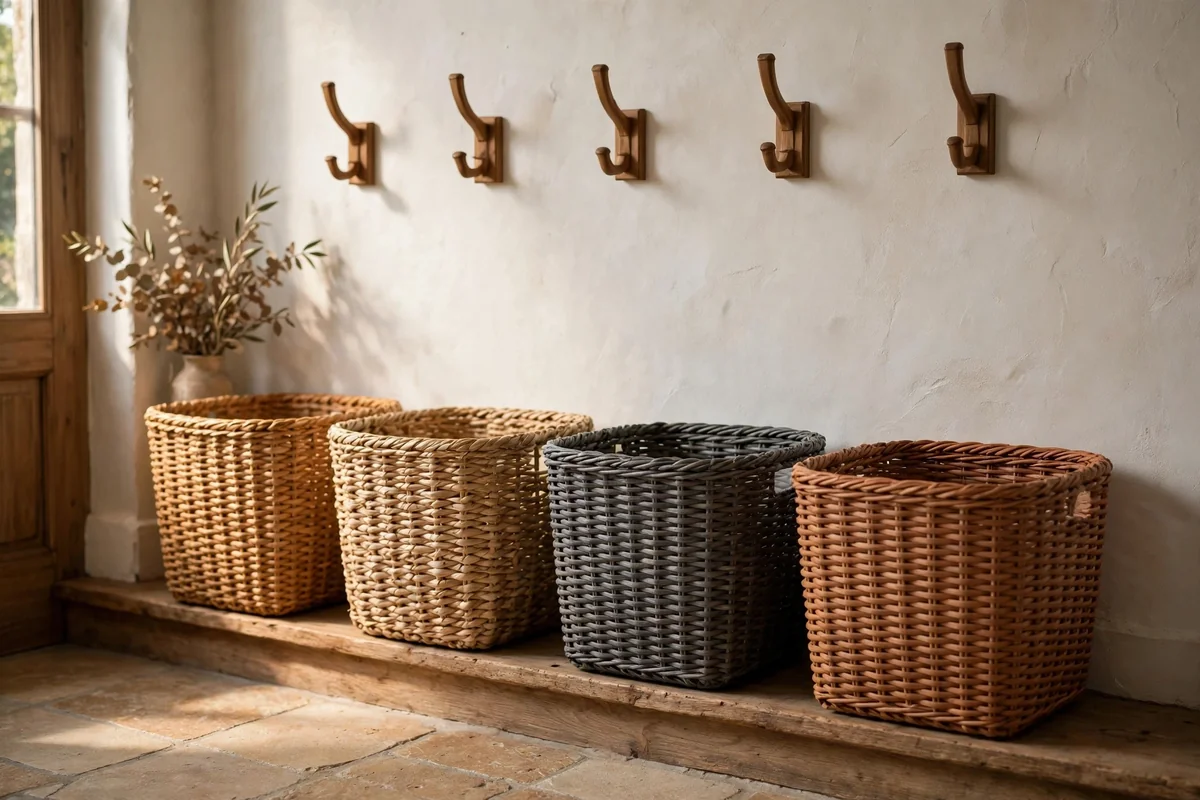
Give every household member their own basket by the door, and the entry finally stays sorted without nagging. Choose the same shape in four to five subtly different tones, natural, honey, tea-washed, charcoal and clay, so the row looks designed while each person recognises theirs at a glance. Baskets of 28 to 32 cm width hold a wallet, keys, sunglasses and the day’s post with room to spare.
Mount two rows of hooks at 120 and 150 cm on the wall above, so coats hang over baskets without burying them. The honest note: baskets this busy collect dust weekly, so a quick shake outside every Sunday keeps fibres fresh. The mistake is sizing for the smallest load; size each basket for winter, when gloves and scarves double the volume, and summer will simply feel airy.
5. Slip Plant Pots Inside Woven Cache Pots for Instant Softness
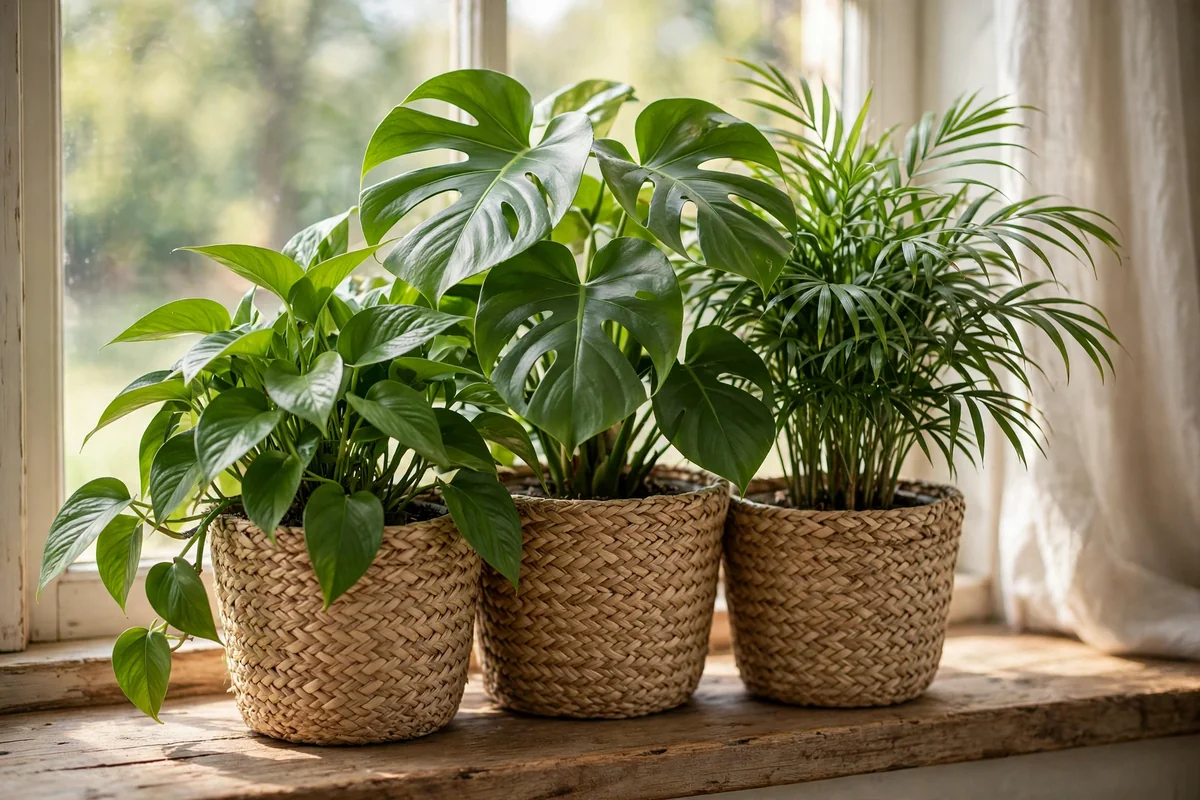
A woven cache pot turns a plain plastic nursery pot into decor in ten seconds. Pick a cache pot two to three centimetres wider than the nursery pot and at least as deep, so the plastic rim hides fully. For a 12 cm nursery pot, a 15 cm cache pot suits; for 17 cm pots, step up to 20 cm. Always set the nursery pot on a small saucer inside, because woven fibres and standing water are a short road to mildew.
Water the plant over the sink, let it drain ten minutes, then return it to the cache pot; this one habit doubles the life of any woven planter. The mistake to avoid is planting directly into the basket with a plastic liner, which traps condensation and rots the base within a year. Seagrass cache pots cost 8 to 20 pounds or dollars and group beautifully in threes on a sill.
6. Roll Bath Towels Into a Tall Belly Basket Beside the Vanity
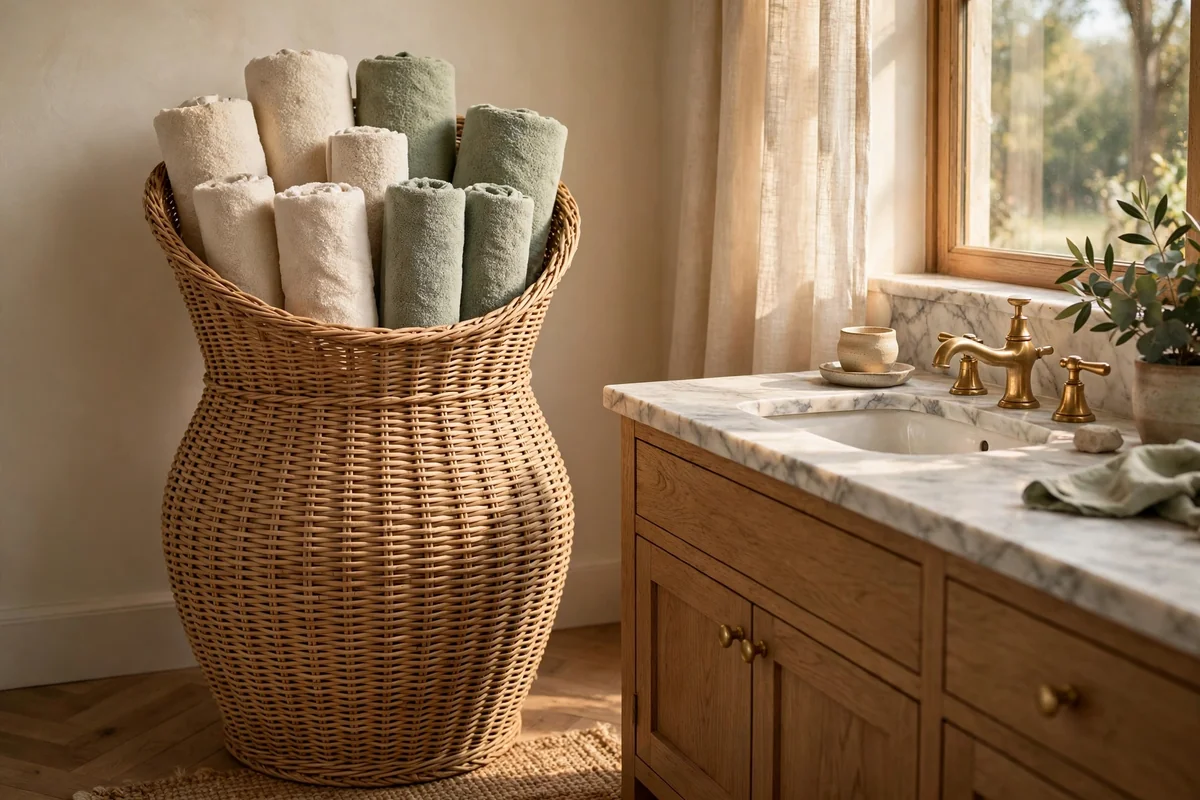
A belly basket 40 to 50 cm tall holds six to eight rolled bath towels within arm’s reach of the sink. Rolling beats folding here: rolls stand upright, show off the towel colours, and let you grab one without toppling the stack. Choose a wide weave so air circulates, which matters in a steamy bathroom, and pick a tone that echoes the floor or the bath mat for a settled look.
Towels must be bone dry before they go back in the basket, so hang used towels on a rail first and only roll fresh ones. Empty the basket monthly and wipe the base, since bathroom humidity can leave a musty film on natural fibres. The budget play is one large belly basket around 20 to 35 pounds or dollars instead of three small ones that cost the same and hold less.
7. Keep Fruit in a Shallow Counter Basket Lined With a Cotton Cloth
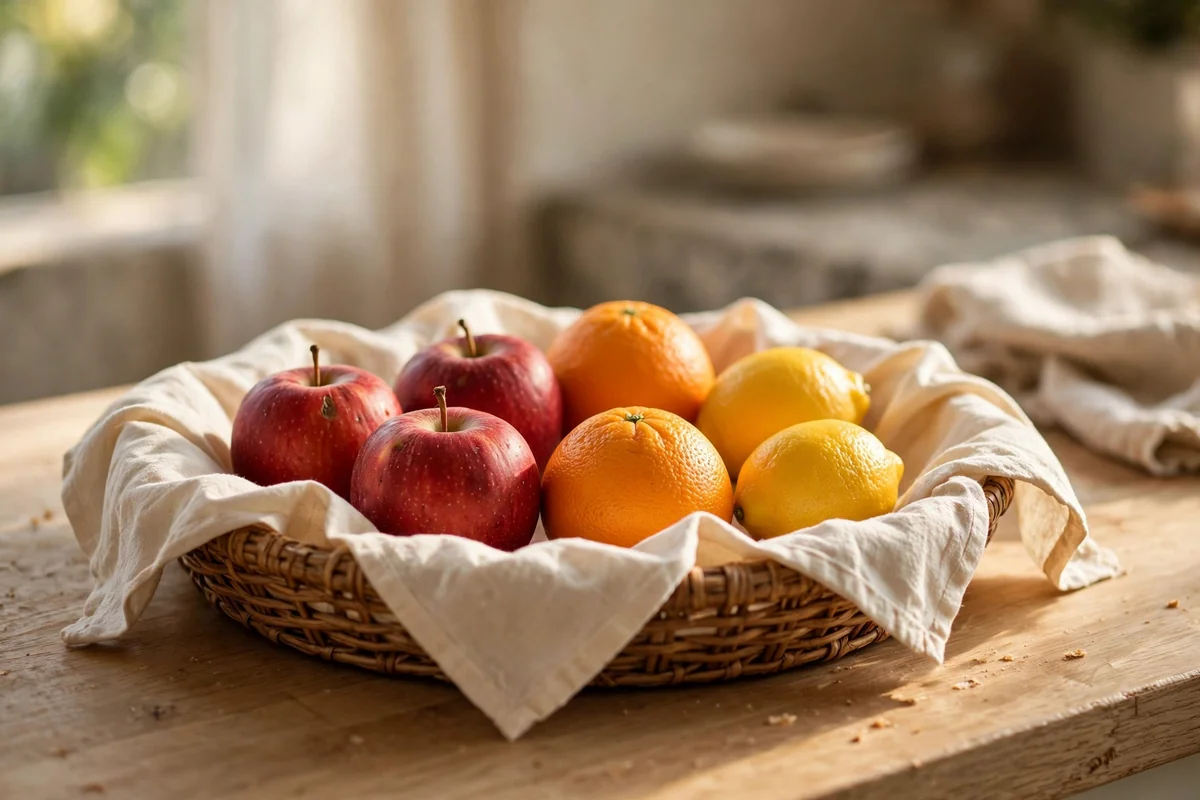
A shallow basket 25 to 30 cm across and no deeper than 10 cm keeps fruit visible so nothing ripens into regret. Line it with a washable cotton cloth, tucked under at the edges, which catches drips and comes out for a hot wash weekly. A low open weave lets air move around apples and citrus, while bananas do better in their own small basket to avoid crowding and bruising.
Place the basket at least 30 cm from the cooker, since heat speeds ripening and softens the weave over time. The mistake is piling fruit three deep, which hides the bottom layer until it spoils; keep it to a single generous layer and refill twice a week. A lined seagrass tray basket usually costs 10 to 18 pounds or dollars, and spare cloth liners cost almost nothing.
8. Store the Daily Loaf in a Lidded Bread Basket on the Counter
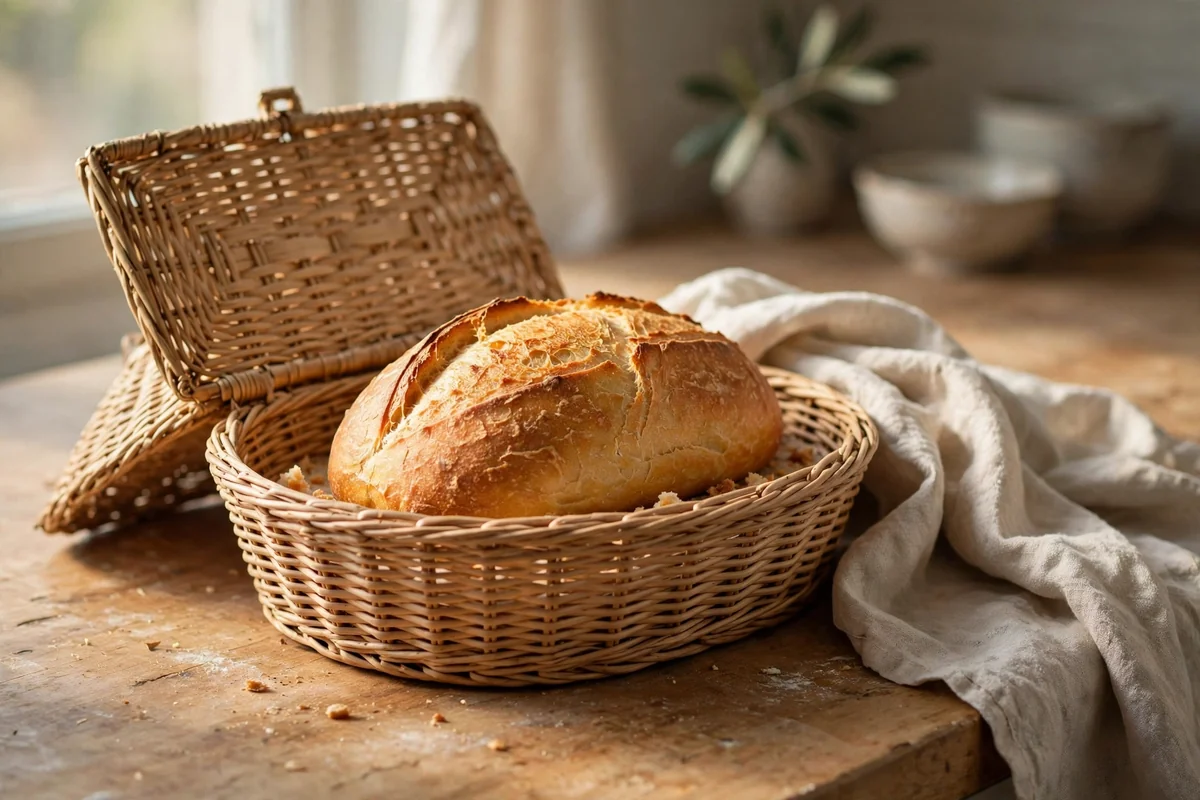
A lidded basket 35 to 40 cm long keeps a daily loaf fresher than an open bowl and kinder to the counter than a plastic bag. The weave breathes just enough to stop condensation while the lid slows staling, a balance plastic cannot match. Line the base with a clean tea towel, changed twice weekly, and the basket wipes clean with a damp cloth rather than needing a full wash.
Keep the basket away from the kettle’s steam path, since constant moisture softens woven fibres and loosens joints. The honest note: crumbs collect in the weave, so a weekly shake over the bin and a dry brush keep it hygienic. Willow and palm bread baskets run 18 to 30 pounds or dollars, a fair price for a piece that serves breakfast every single day.
9. Repair Frayed Rims With a Whipstitch of Matching Twine
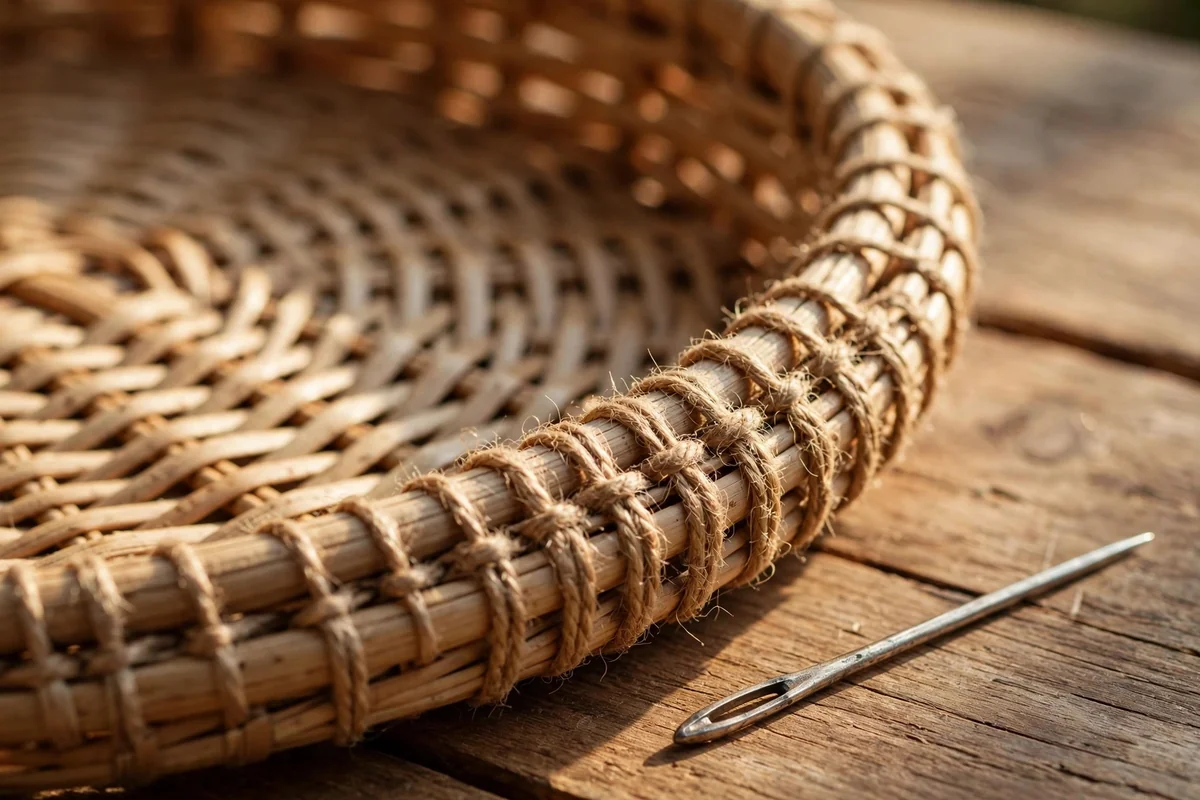
A fraying rim does not mean a dead basket. Thread a tapestry needle with jute or paper twine in the closest tone you own, and whipstitch around the rim in stitches of about one centimetre, pulling snug but not crushing. Work the full circuit twice for a rim that carries weight, and dab the start and finish knots with a drop of wood glue so they never loosen. The whole repair takes under twenty minutes.
The mistake is using thread thinner than the original wrap, which slices between strands instead of binding them. Twine of similar weight distributes the pull and blends into the weave. Keep a small repair kit, needle, twine in three tones, glue, in a drawer, and you will rescue baskets that others would bin. A small supply of twine keeps five to ten baskets in service for years.
10. Reshape a Sagging Basket With a Damp Towel and a Warm Night
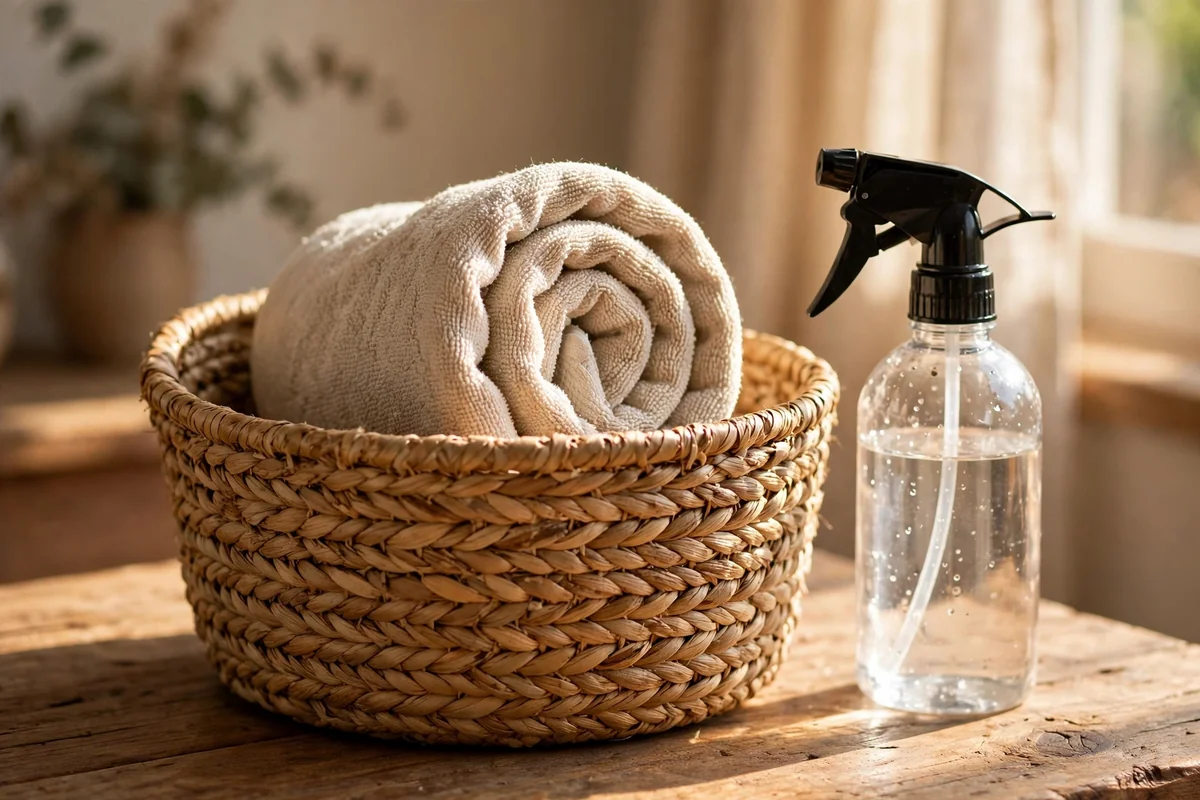
A basket that slumps to one side usually just needs reshaping, not replacing. Mist the sagging side lightly with water, press it back into shape by hand, then pack the inside with a rolled dry towel to hold the curve and leave it in a warm room overnight. By morning the fibres set straight again, since most weaves respond to gentle moisture the way they did at the maker’s bench.
Never soak a basket or use a hairdryer, since both shock the fibres and cause cracking or bleaching. If the sag returns within a week, the basket was likely stored in a damp spot; move it somewhere drier and repeat the treatment once more. This rescue works best on seagrass and palm, less well on painted weaves, and costs nothing but a little patience.
11. Measure Shelf Gaps and Door Clearances Before Buying a Single Basket
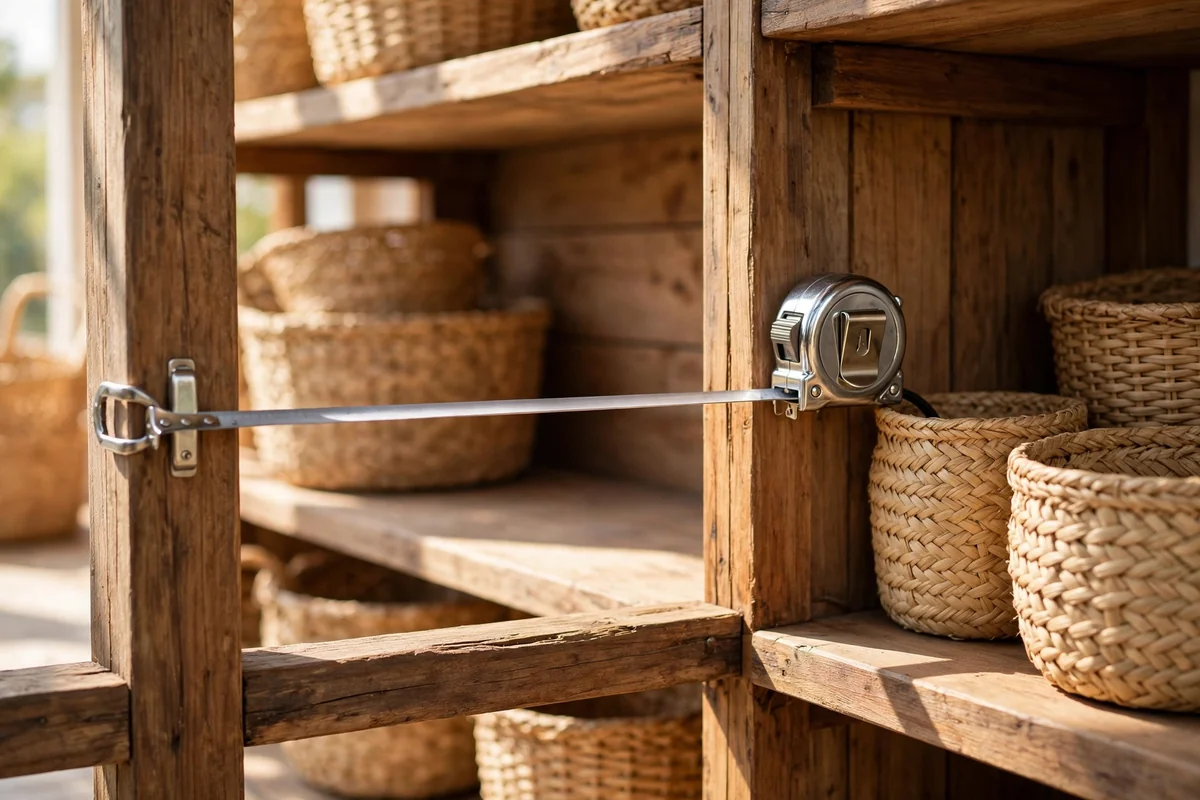
The single habit that prevents basket returns is measuring first. Note the shelf height, the depth to the back panel, and the width between uprights, then subtract three centimetres from each for easy handling. For baskets under a bench, measure the floor clearance with shoes in place. For lidded baskets, measure twice: once with the lid on, once with it open, since an open lid needs another 15 to 20 cm of headroom.
Carry the measurements on your phone, in a notes app or a photo of a tape measure held in the gap, so impulse buys pass the test in the shop aisle. The classic mistake is trusting the label’s ‘fits most shelves’, which usually means nothing. A tape measure costs a few pounds or dollars and pays for itself the first time it stops a basket that almost, but not quite, fits.
12. Vacuum and Brush Baskets Seasonally to Keep Dust From Settling
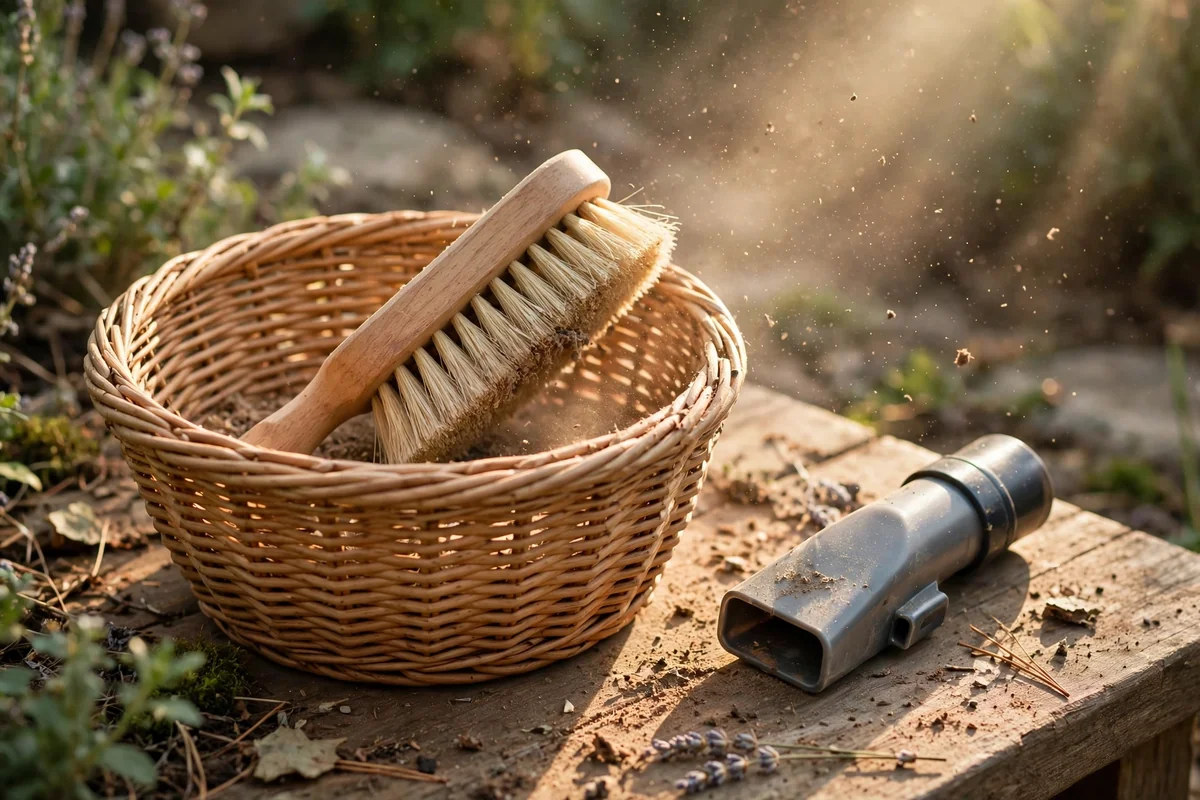
Dust is the honest downside of woven storage, and it has a simple fix. Once a season, take each basket outside, give it a firm shake, then vacuum with a brush attachment on low suction, working with the weave direction. Follow with a dry soft brush into the crevices where dust beds down. The whole routine takes about five minutes per basket and keeps fibres looking fresh instead of grey.
For kitchen baskets, wipe quarterly with a barely damp cloth and dry fully before refilling, since cooking grease traps dust into a film that dry brushing cannot shift. Never steam clean woven storage; heat and moisture together warp the shape and loosen dye. The honest truth: a tight weave collects far less dust than an open one, so choose your weave with cleaning day in mind.
13. Sort Toys Into Two Mid-Size Baskets on the Nursery Shelf
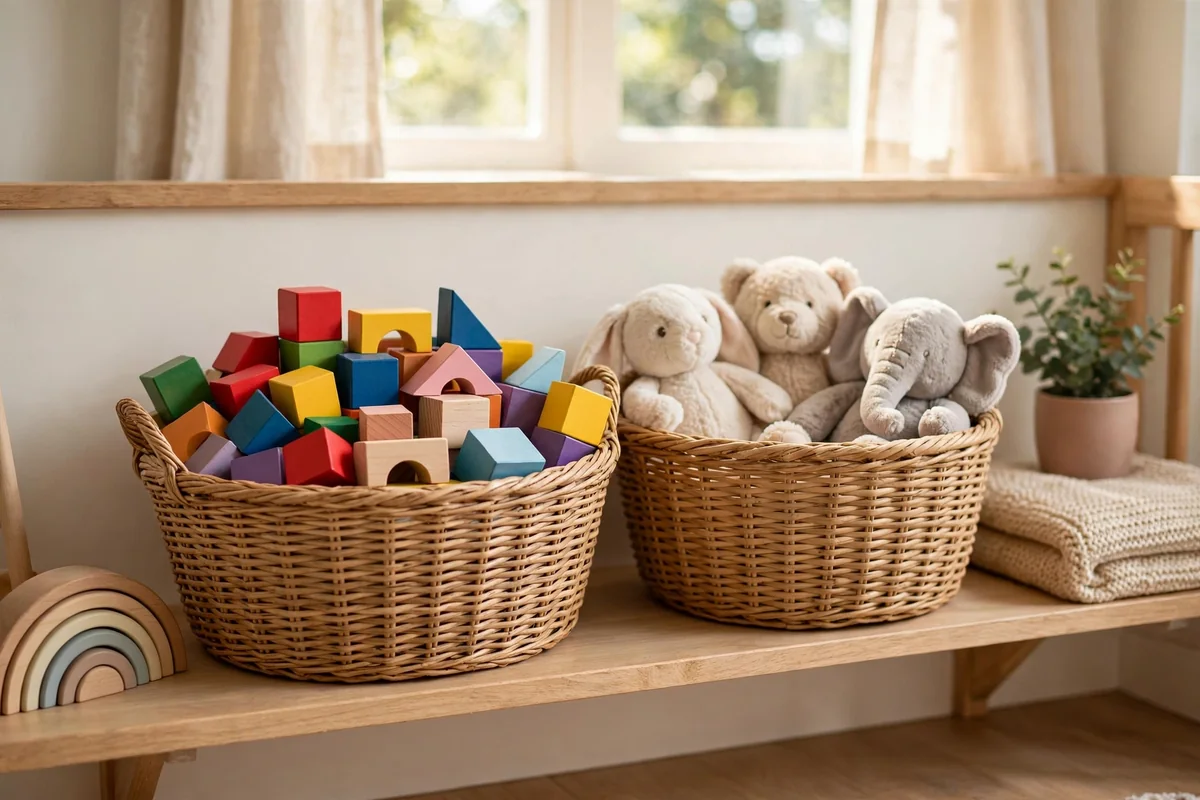
Two baskets beat one giant toy box every time. Use two mid-size baskets, each 30 to 35 cm wide, one for building blocks and one for soft toys, on a low shelf a child can reach. Rounded rims with no sharp stake ends matter most here, so run your hand around every basket before it enters a child’s room. A washable liner in each basket makes spill clean-ups a one-minute job.
Keep the system to two baskets per shelf zone, since three or more becomes a sorting job nobody does. At tidy time, everything lands in the nearer basket; once a week, sort it properly together in five minutes. The mistake is buying tall deep baskets, which become bottomless pits; shallow baskets show the toys and invite actual play.
14. Slide Long Flat Baskets Under the Bed for Off-Season Linen
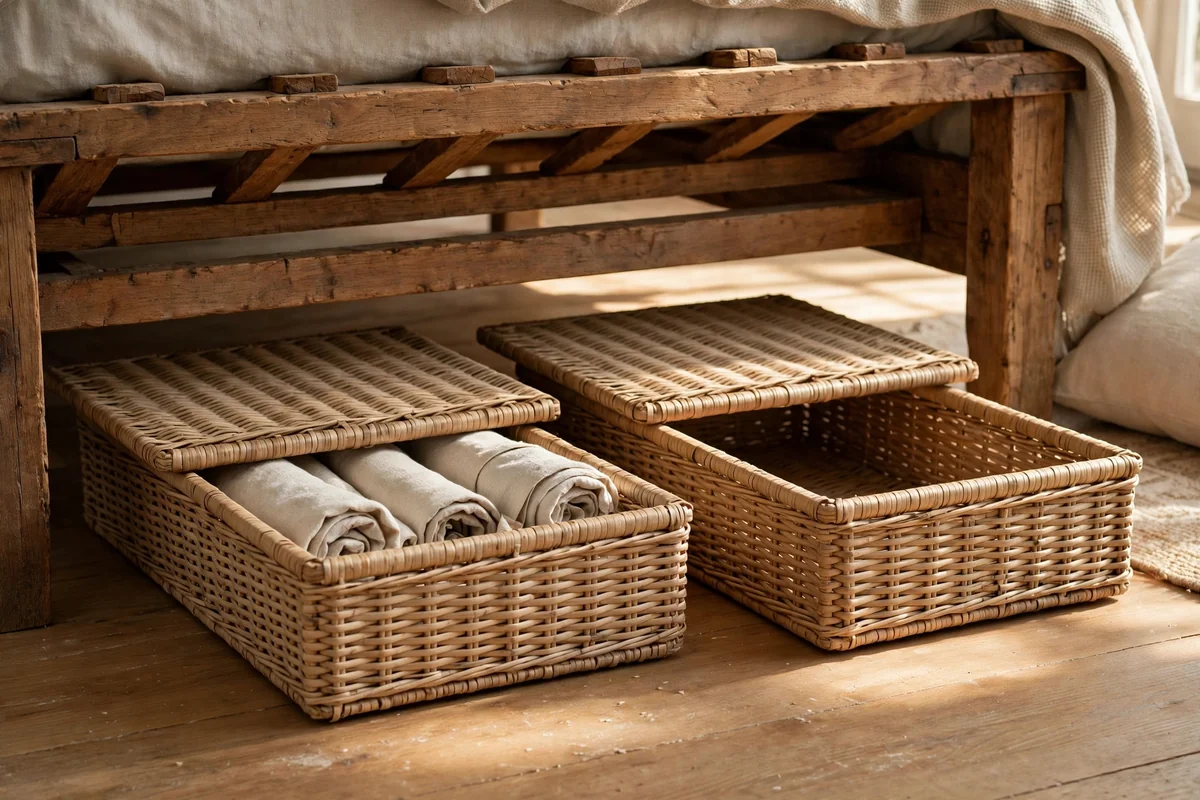
The 12 to 15 cm gap under most beds fits long flat baskets of 60 to 80 cm beautifully, and they pull out far more gracefully than plastic boxes. Use them for off-season duvets, spare pillows and guest linen, rolled tight to fit. A lid or a fabric cover keeps dust out, which matters most under beds where fluff gathers, and a woven texture stops the storage looking like a warehouse.
Leave a centimetre of clearance above the basket so the base does not drag on carpet or scrape hard floors. The mistake is storing anything damp under the bed; even slightly damp linen in a closed basket turns musty within weeks. Wash, dry fully, then store with a sachet of dried lavender if you like. Two flat baskets usually cost 25 to 45 pounds or dollars.
15. File Papers Upright in a Tall Square Basket Beside the Desk
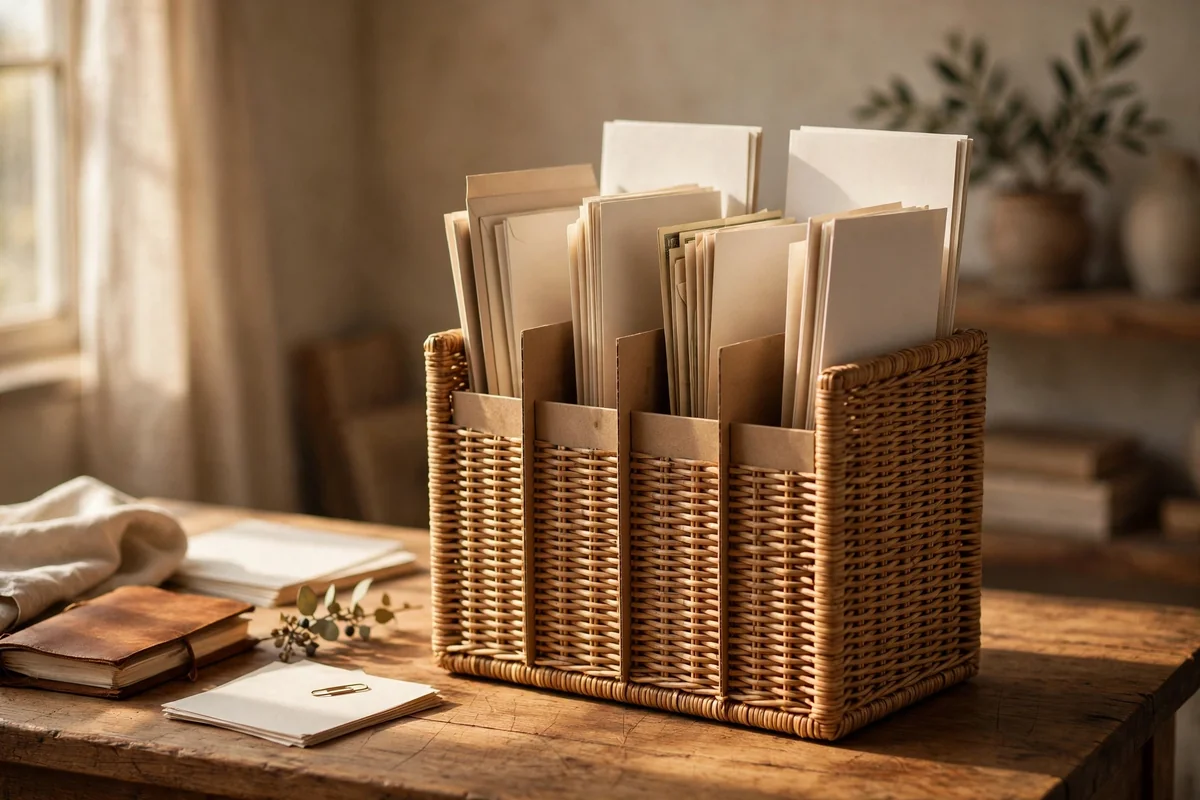
A tall square basket, roughly 30 cm on each side and 35 to 40 cm deep, stands papers upright like a filing cabinet with manners. Slot in upright dividers, simple card or thin plywood, to split bills, school letters and receipts into three sections. Papers stay visible and sortable, which is the whole point; buried paper becomes a pile of anxiety, upright paper becomes a system.
Place the basket within arm’s reach of where you open post, not across the room, since distance kills the filing habit. Once a month, pull everything out and recycle what expired; ten minutes keeps the basket honest. The mistake is letting it become a second bin for unopened envelopes. A sturdy square basket costs 15 to 28 pounds or dollars, less than a filing tray set.
16. Stack Folded Sweaters in Shallow Baskets Across the Wardrobe Shelf
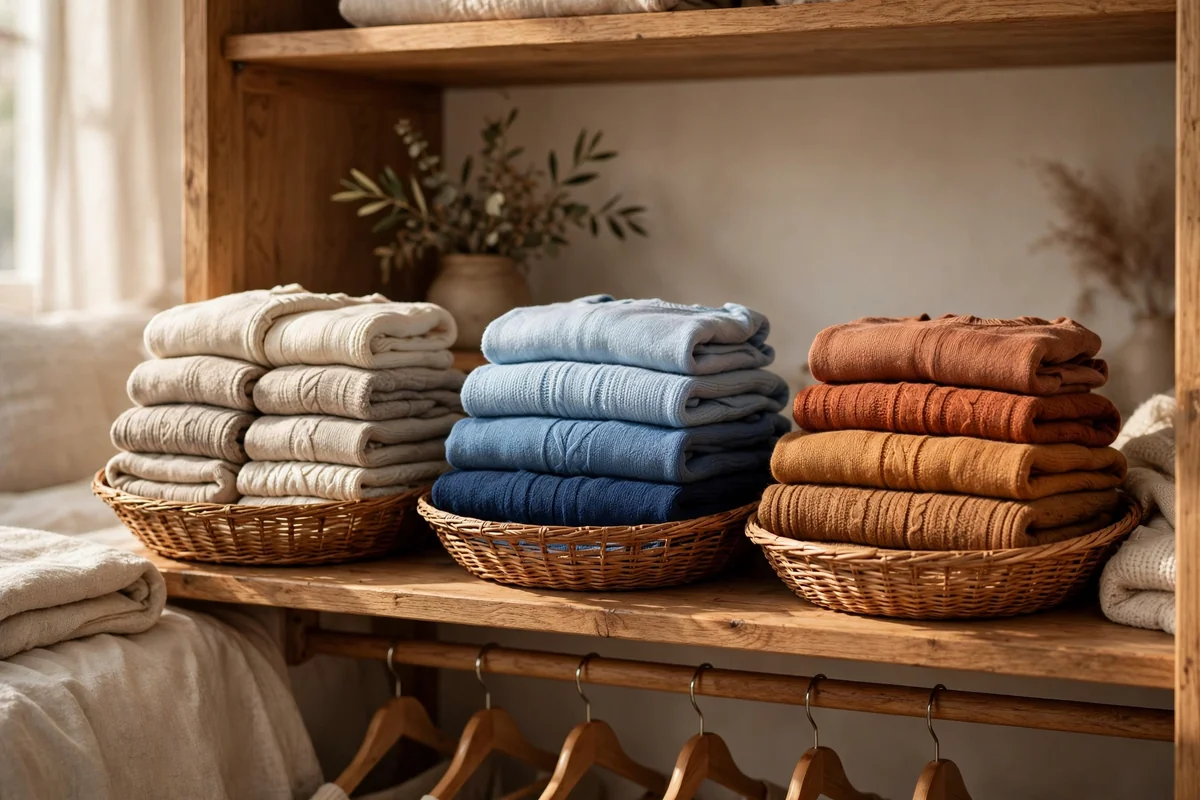
Deep wardrobe shelves swallow folded sweaters whole, but shallow baskets of 10 to 12 cm depth turn them into visible stacks. File-fold each sweater so the folded edge faces up and every colour shows at a glance. One basket per colour family, neutrals, blues, warm tones, keeps the shelf calm and stops the avalanche that happens when you pull the bottom jumper.
Measure the shelf depth first, since baskets should stop two centimetres short of the shelf edge to avoid catching sleeves on the frame. Cedar balls or a lavender sachet in each basket keeps moths uninterested without chemicals. The mistake is overfilling; leave a finger’s width of air above each stack so knits slide out without stretching. Three baskets usually run 20 to 35 pounds or dollars.
17. Set a Lidded Basket on the Hearth for Logs and Kindling
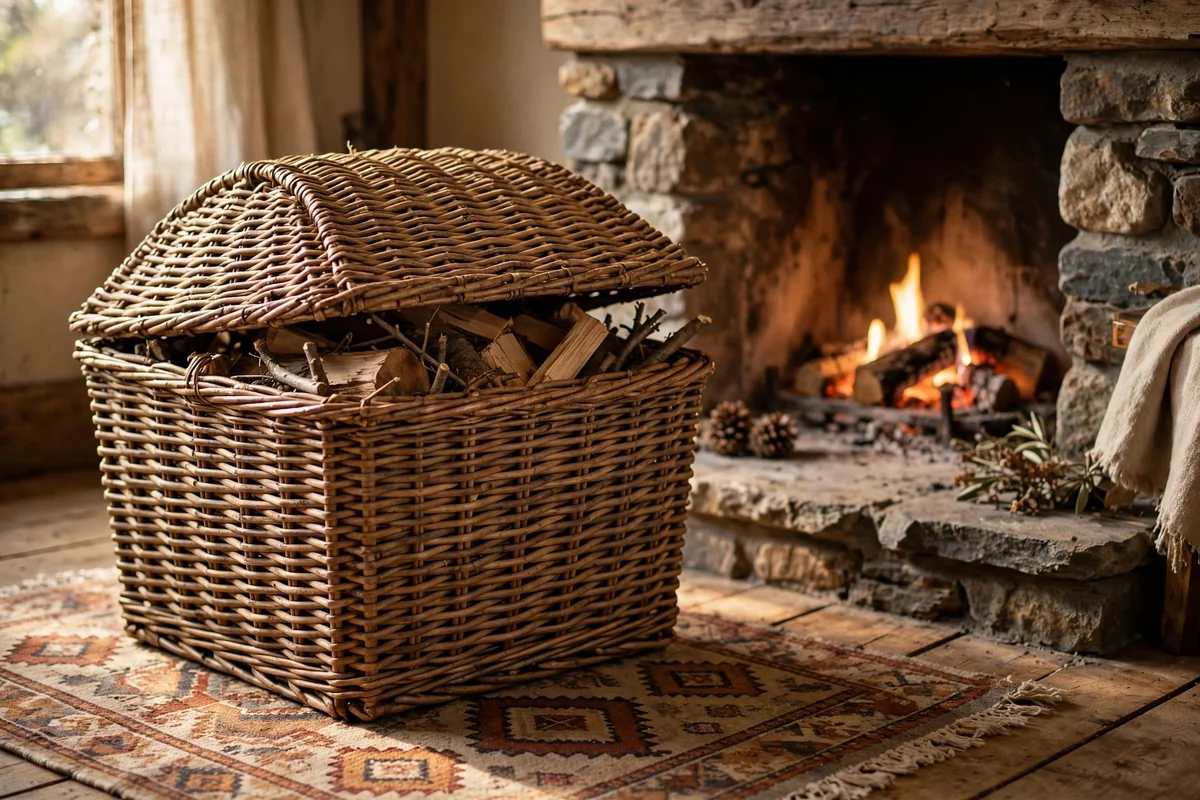
A sturdy lidded basket beside the fireplace holds a night’s worth of logs and kindling while keeping bark and ash off the rug. Choose woven willow or thick palm, 40 to 50 cm wide, since thin seagrass scorches too easily near a working fire. Keep the basket at least 60 cm from the firebox opening, and store it with the lid on between fires so sparks and dust stay out.
Shake the basket outside weekly during burning season, since bark fragments build up fast and trap moisture against the weave. The honest note: even a sturdy basket is not a season’s wood store; refill it from the main log pile daily. A hearth basket of 35 to 60 pounds or dollars is an investment piece, but it outlives several cheap ones and looks better every winter.
18. Line the Console Table With a Long Tray Basket for Keys and Post
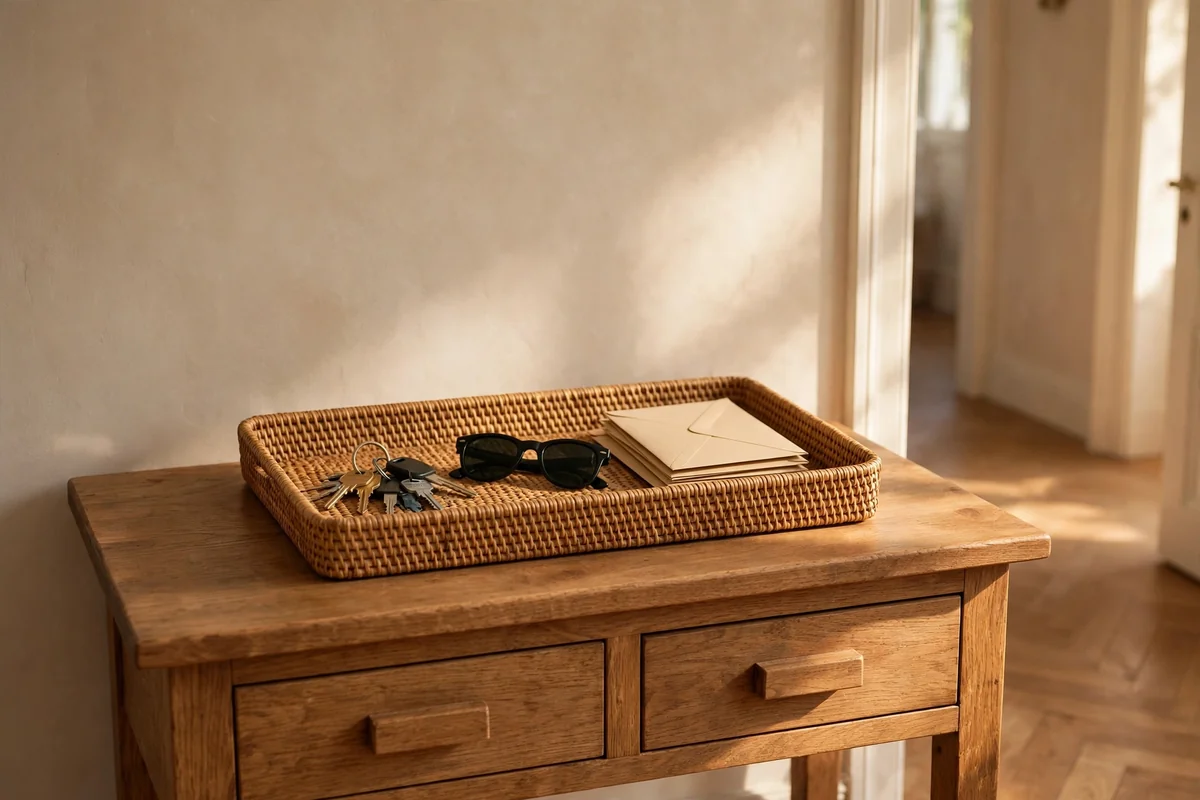
A long shallow tray basket, 45 to 55 cm wide and 8 to 10 cm deep, gives the console table one defined landing zone. Keys, sunglasses and the day’s post all land in the tray instead of migrating across the tabletop, and the basket’s edges stop things sliding behind. Choose a tight flat weave that sits stable, since a wobbly tray defeats the purpose and scratches the table.
Set a small felt pad or cork mat under the basket to protect the tabletop from weave abrasion. Empty the tray every Friday, filing or recycling the post, so it never becomes a paper drift. The mistake is choosing a tray deeper than 10 cm, which hides the keys you are looking for. Tray baskets of this size cost 14 to 24 pounds or dollars.
19. Group Pantry Packets Into Two Baskets Sorted by Mealtime
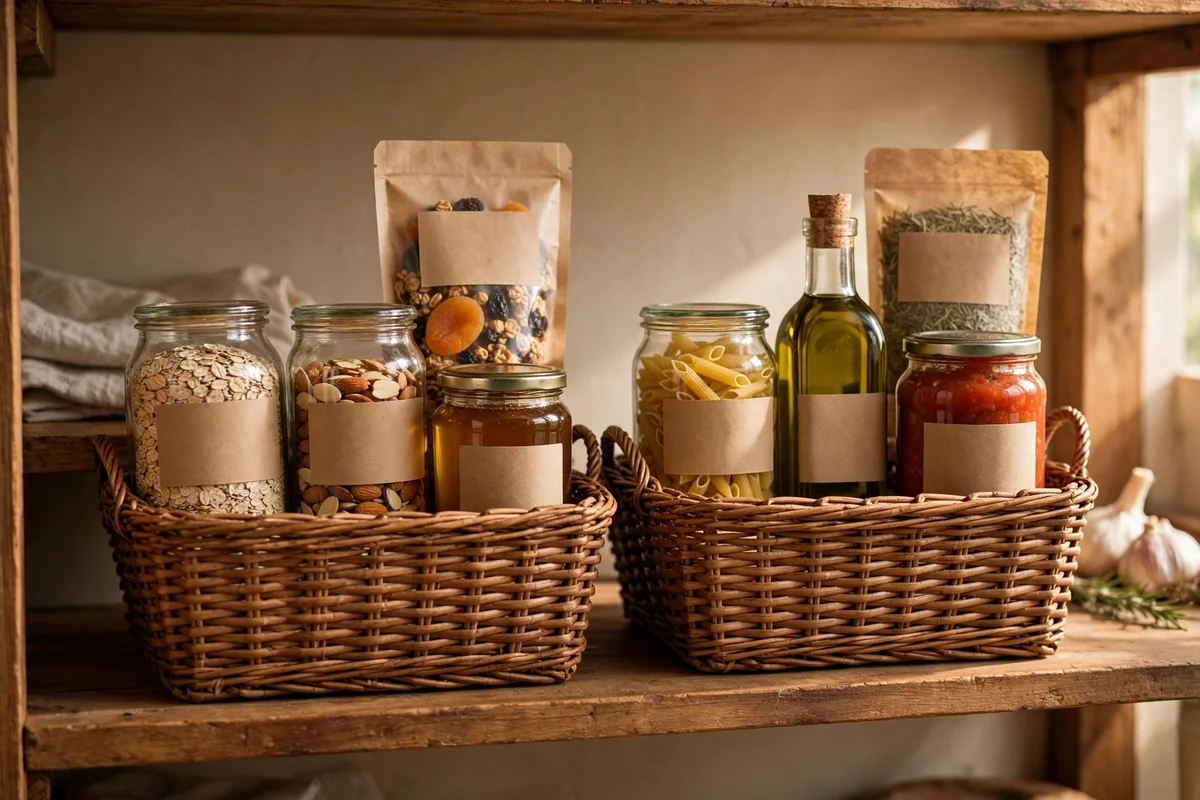
Two medium baskets, each about 30 cm wide, bring order to a chaotic pantry shelf: one for breakfast things, one for evening meal ingredients. Packets stand upright, labels forward, so a glance tells you what is running low. A wipeable liner or a basket with a tight weave handles the odd flour puff or rice grain without trapping it forever.
Tag the shelf edge, not the basket, with a small removable tag, since baskets get repurposed and stickers peel off weaves anyway. Check expiry dates when you refill, rotating older packets to the front like a tiny shop. The mistake is buying baskets deeper than the shelf; packets vanish into the dark. Two pantry baskets usually cost 16 to 28 pounds or dollars.
20. Keep a Throw Basket Within Arm’s Reach of the Reading Chair
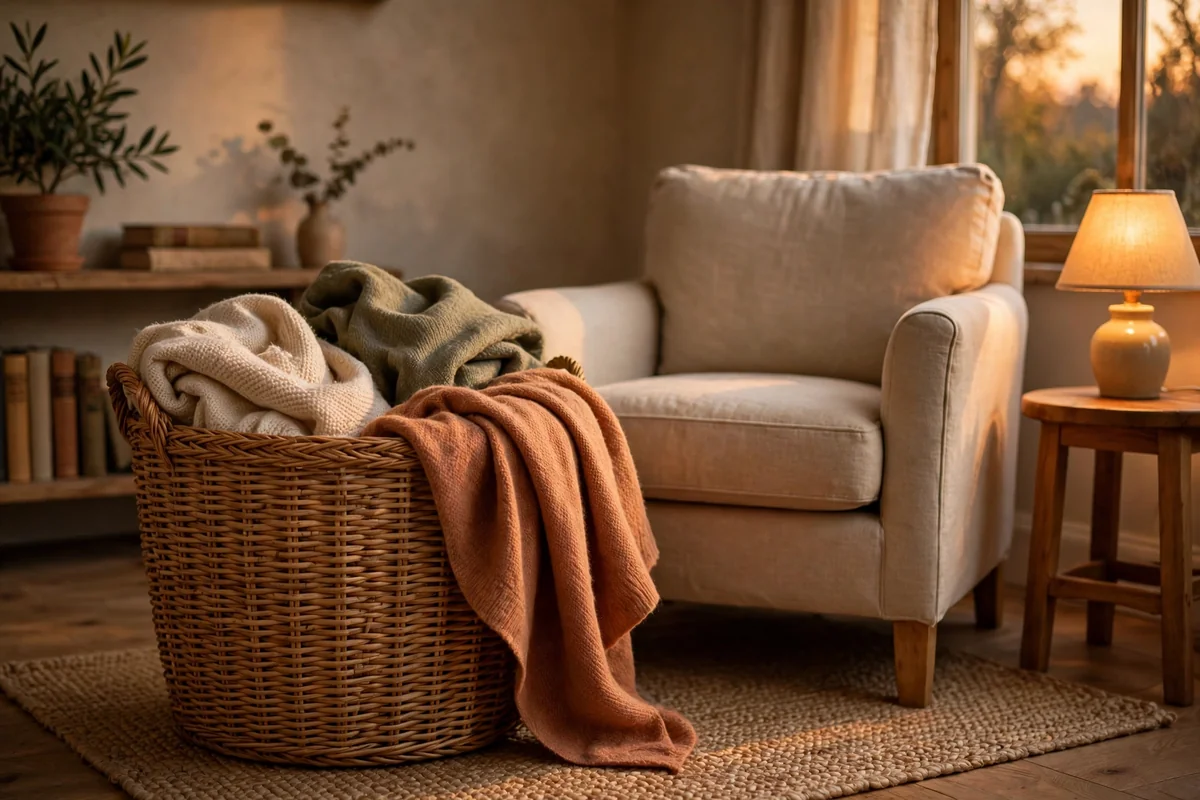
A medium basket of 35 to 40 cm diameter beside the reading chair holds two to three folded throws ready for cold evenings. Roll or fold them loosely so the basket looks generous rather than stuffed, and let one throw drape over the rim for an inviting look. A basket this close to daily use should have smooth interior stakes, so check the inside for splinters before filling.
Wash the throws seasonally and shake the basket outside at the same time, since reading corners collect quiet dust. The mistake is parking this basket where the chair reclines; measure the recline arc first, or the basket becomes a footrest. A good seagrass or palm basket of this size costs 18 to 30 pounds or dollars.
21. Corral Magazines and Library Books in a Slim Floor Basket
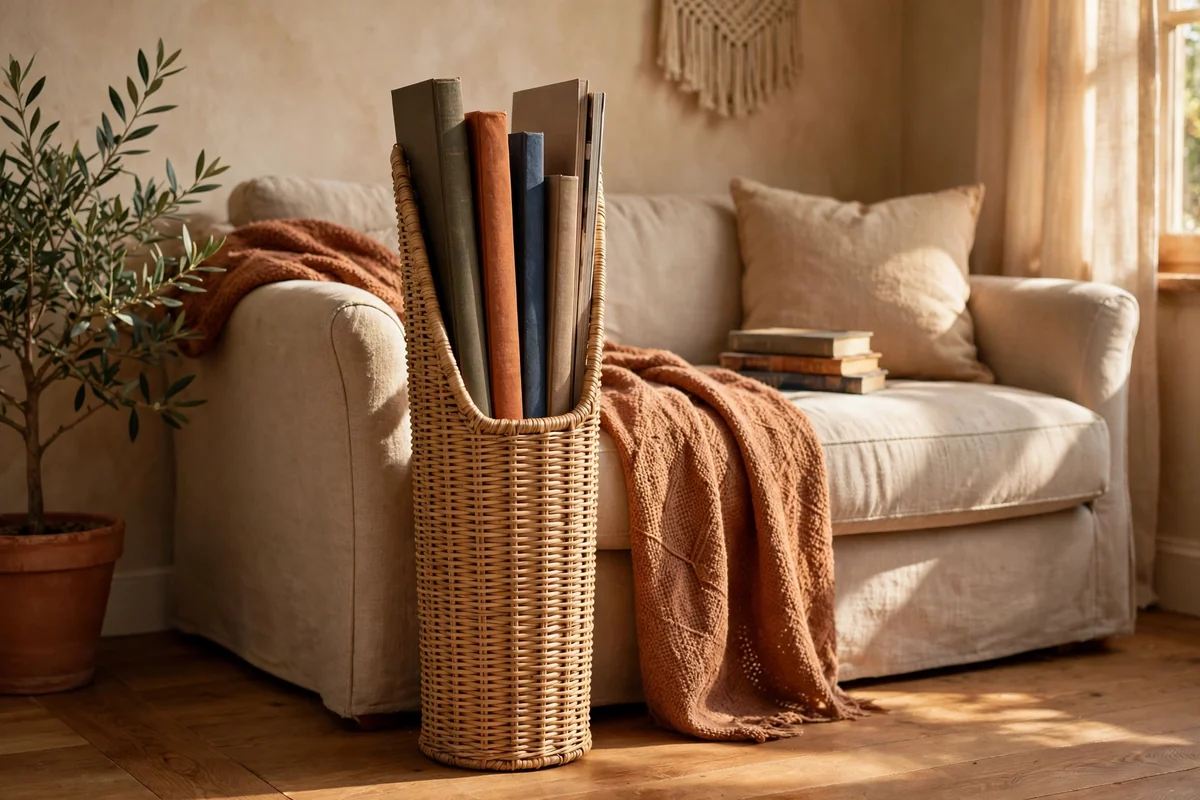
A slim tall basket, about 25 cm wide and 35 to 40 cm tall, stands magazines and library books upright beside the sofa without sprawling. Slide each issue spine-out so titles show, and keep the stack to ten or fewer so nothing sags and creases. The narrow footprint fits the dead space beside most sofas, the 20 to 30 cm gap that otherwise collects dust.
Recycle or return magazines monthly, since a basket that grows becomes a commitment rather than a convenience. The honest note: glossy magazines are heavy, so choose a basket with a reinforced base or double thickness at the bottom. Slim floor baskets cost 12 to 22 pounds or dollars, a small price for a reading corner that stays civilised.
22. Leave a Welcome Basket of Basics on the Guest Bed
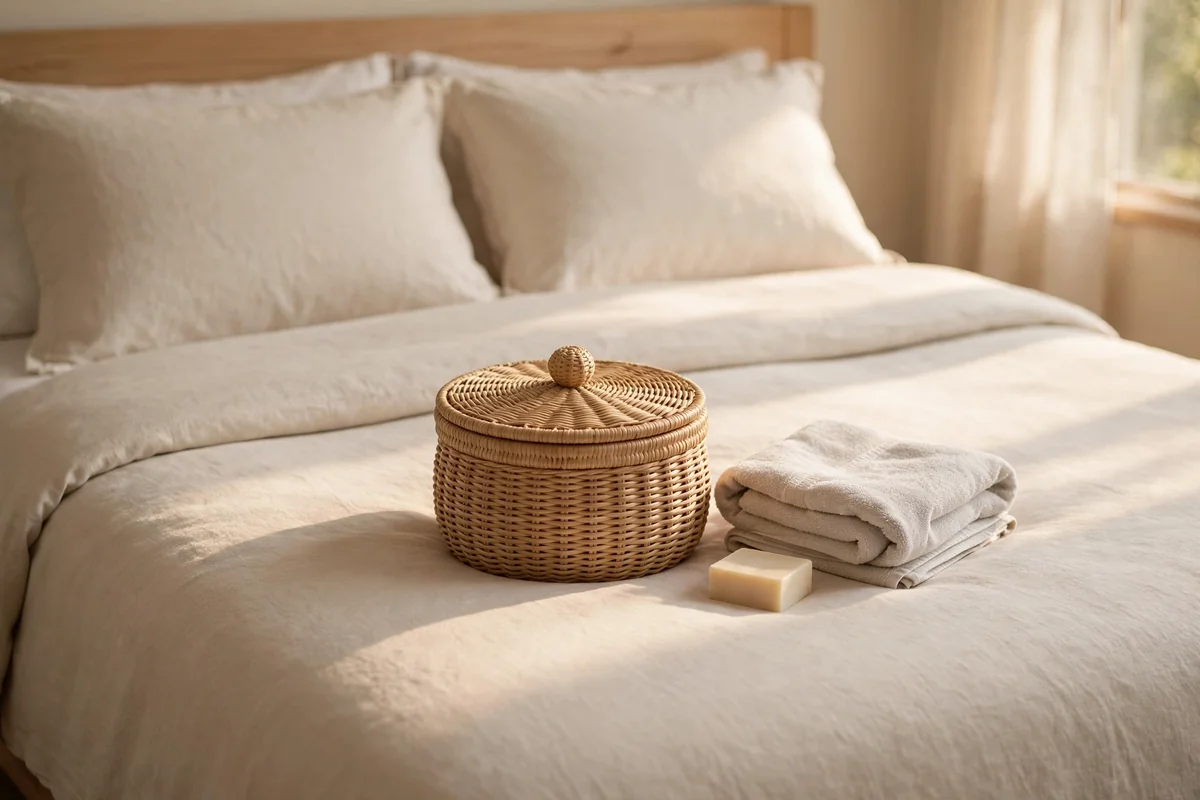
A small lidded basket on the guest bed turns a spare room into a thoughtful welcome. Fill it with a fresh towel, a bar of soap, a spare phone charger and a small bottle of water, everything a tired traveller needs without asking. A 30 cm basket with a lid keeps the contents dust-free between visits and lifts off the bed in one motion when guests arrive.
Refresh the contents twice a year, checking charger cables still work and toiletries are in date. The mistake is filling it with clutter guests must find a home for; keep it to genuine basics and let the basket be the gift. A pretty lidded basket costs 14 to 25 pounds or dollars and gets admired on every visit.
23. Park the Laundry Sorter Basket Where the Dirty Clothes Actually Land
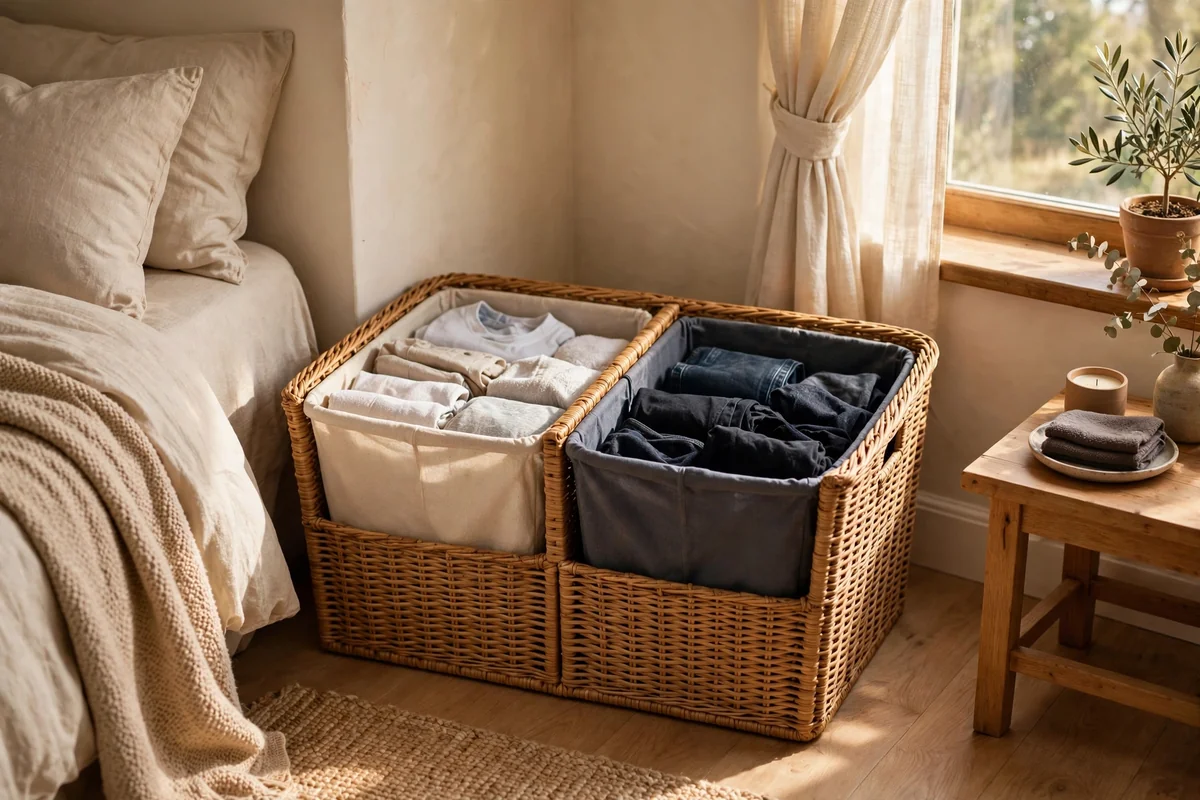
Laundry sorting fails when the sorter lives far from where clothes come off. Place a two-compartment woven sorter in the bedroom corner or bathroom, wherever the pile actually forms, and sorting happens by itself. Compartments of 25 to 30 cm each take a day’s worth of lights and darks, and a lidded design keeps the room looking calm instead of laundromat-chic.
Line each compartment with a washable laundry bag so the full load lifts straight to the machine, basket untouched. Air the basket weekly by leaving the lid open for a day, since damp clothes in a closed weave invite mustiness. A two-compartment sorter costs 30 to 55 pounds or dollars, and it pays back in sorting time saved every single week.
24. Finish the Set With a Small Catch-All Basket on the Stair Landing
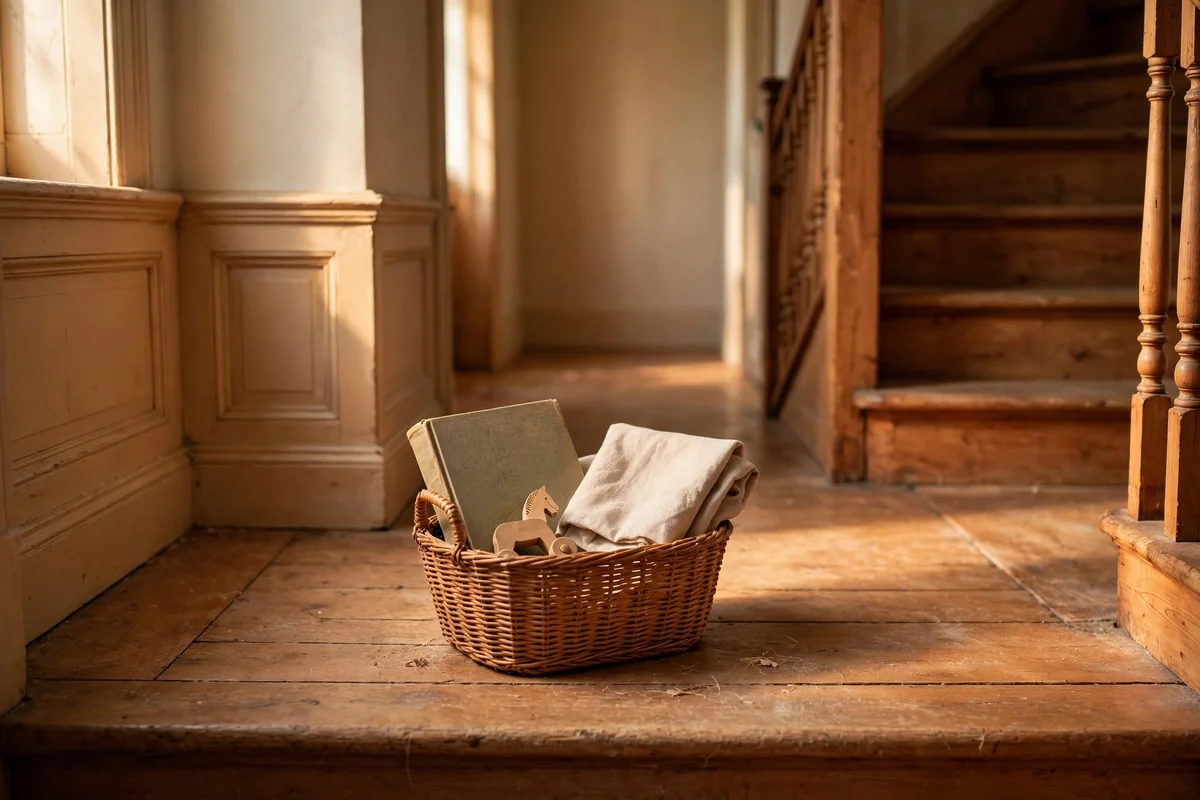
Every home has a stair landing that collects the upward-bound: library books, a forgotten charger, the toy that belongs upstairs. A small basket of 20 to 25 cm on the landing gathers these strays in one spot, and one daily trip upstairs empties it. Choose a sturdy weave with handles, since this basket travels, and keep it light enough to carry one-handed.
The rule that makes it work: the basket must be emptied every evening, or it becomes a second storage spot rather than a ferry. Teach the household the habit of dropping upstairs things in on the way past. A small handled basket costs 8 to 15 pounds or dollars, the cheapest organisational habit in this whole list.
The thread through all twenty-four ideas is simple: baskets work when they are chosen for a job, sized with a tape measure, and kept to matching families that calm a room. From the entry bench to the stair landing, each basket here earns its place by hiding something real while looking like it belongs. Start with the mess that bothers you most, and let one good basket prove the system before you buy the next.
This week, measure one gap, the shelf or bench that needs a basket most, and buy exactly one that fits it. Live with it for seven days: notice how the lid closes, how the weave handles dust, how the room feels calmer. When that single basket proves itself, the rest of the house will follow naturally, one measured, matching basket at a time, until every room has its quiet family.
Frequently Asked Questions
How do I stop woven baskets smelling musty?
Air is the cure. Keep baskets away from damp walls and never store anything damp inside. Once a month, empty each basket and leave it open in sunlight for an hour, since UV freshens natural fibres quickly. If a musty smell persists, wipe the inside with a cloth barely dampened with white vinegar, then dry fully. Bathroom baskets need this routine twice as often.
Are seagrass baskets strong enough for heavy items?
For books and logs, choose willow or thick palm over seagrass, since dense weaves carry weight without stretching. Seagrass suits lighter loads: towels, toys, throws and pantry packets. Whatever the fibre, check the base before buying; a double-woven or reinforced base handles daily carrying while a single thin base sags within months. Expect 8 to 15 kg from a sturdy medium basket.
What size basket fits a standard bookshelf cube?
Most cube shelves have 33 to 35 cm openings. Choose baskets 30 to 32 cm wide and 30 cm tall so they slide in with finger room, and keep depth at or under the shelf depth, usually 30 to 39 cm. Measure your own shelf before buying, since brands vary by a centimetre or two. A cube basket should never need forcing; if it wedges, it is too big.
How do I clean a basket that has collected kitchen grease?
Dry brush off the loose dust first, then wipe with a cloth wrung almost dry in warm water with a drop of washing-up liquid. Work with the weave, rinse the cloth often, and never soak the basket. Dry it in a warm airy spot, never on a radiator. For stubborn grease, a second barely-damp pass beats any harsh cleaner, which strips the fibre’s natural finish.
Can I use woven baskets in a rented home?
Yes, baskets are among the most renter-friendly storage there is. They need no screws, no holes and no adhesive, and they move with you. Choose freestanding baskets that sit on shelves, under benches and beside furniture, and avoid anything that needs wall mounting. When you move, they pack your belongings and then furnish the new place, so the investment travels.