Living Room
25 Cosy Fall Decor Ideas That Make the Whole Home Feel Like a Warm Embrace
By Anna Wells · · 23 min read
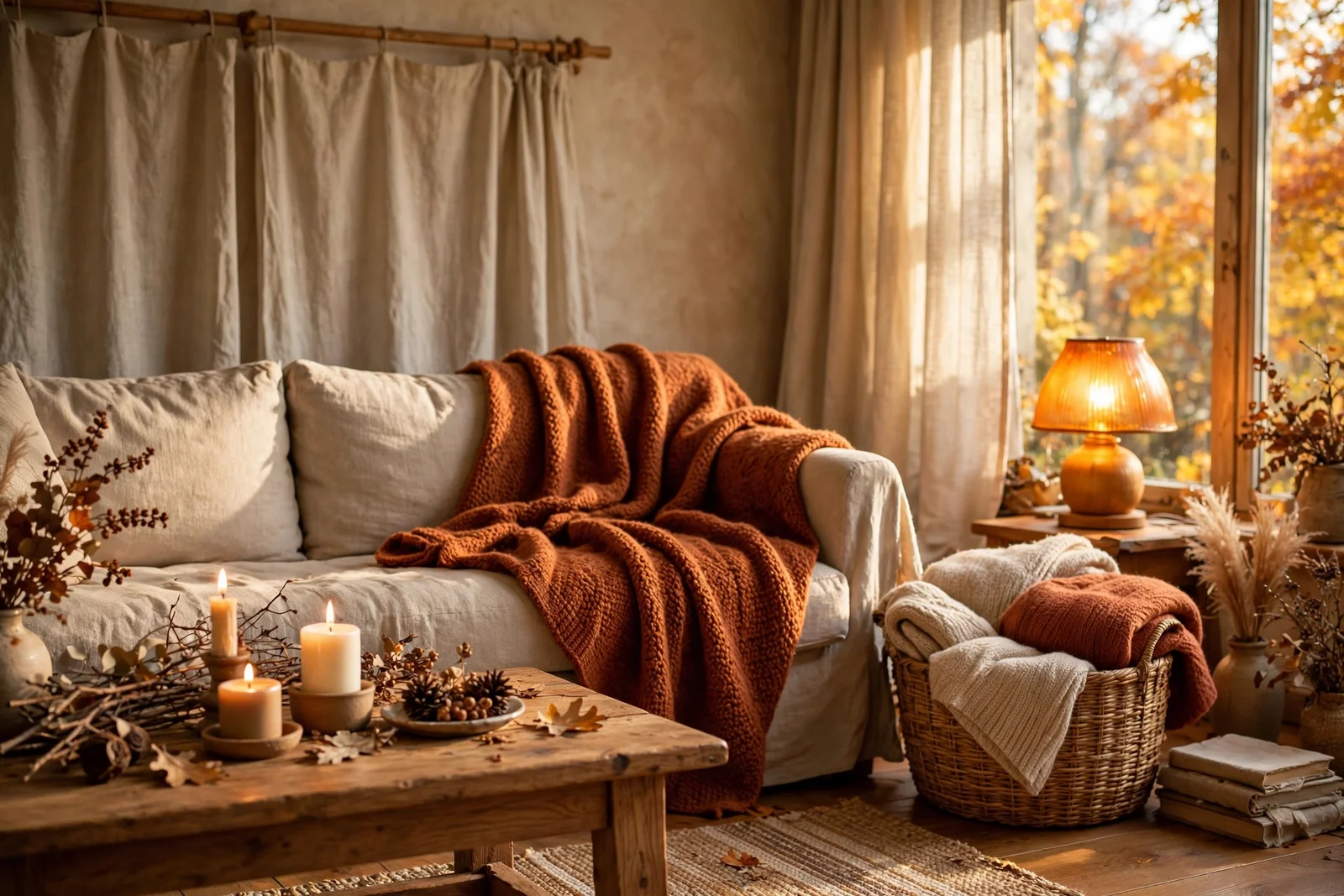
25 room-by-room ideas to wrap your whole home in autumn warmth, from the entryway to the stairs, on a gentle budget.
There is a particular Saturday in October when the light turns honey-coloured and the house seems to ask for something warmer. The mornings carry a chill, the evenings arrive earlier, and suddenly the rooms you loved all summer feel a little bare. That is the moment to begin: not with a grand makeover, but with small, deliberate layers added room by room.
This collection gathers 25 practical ideas that dress the whole home for autumn, from the entryway bench to the bathroom shelf. Each one names real materials, honest sizes and gentle budgets, so you can start this weekend with whatever you already own. The thread running through them all is simple: warm lamplight, natural textures, and the quiet comfort of wood, wool and woven fibres.
Work through the rooms in any order you like, one idea at a time, and let the house warm up gradually. By the time the first frost arrives, every doorway you cross will feel like stepping into an embrace.
1. Dress the Entryway Bench With a Folded Plaid Throw and One Cushion
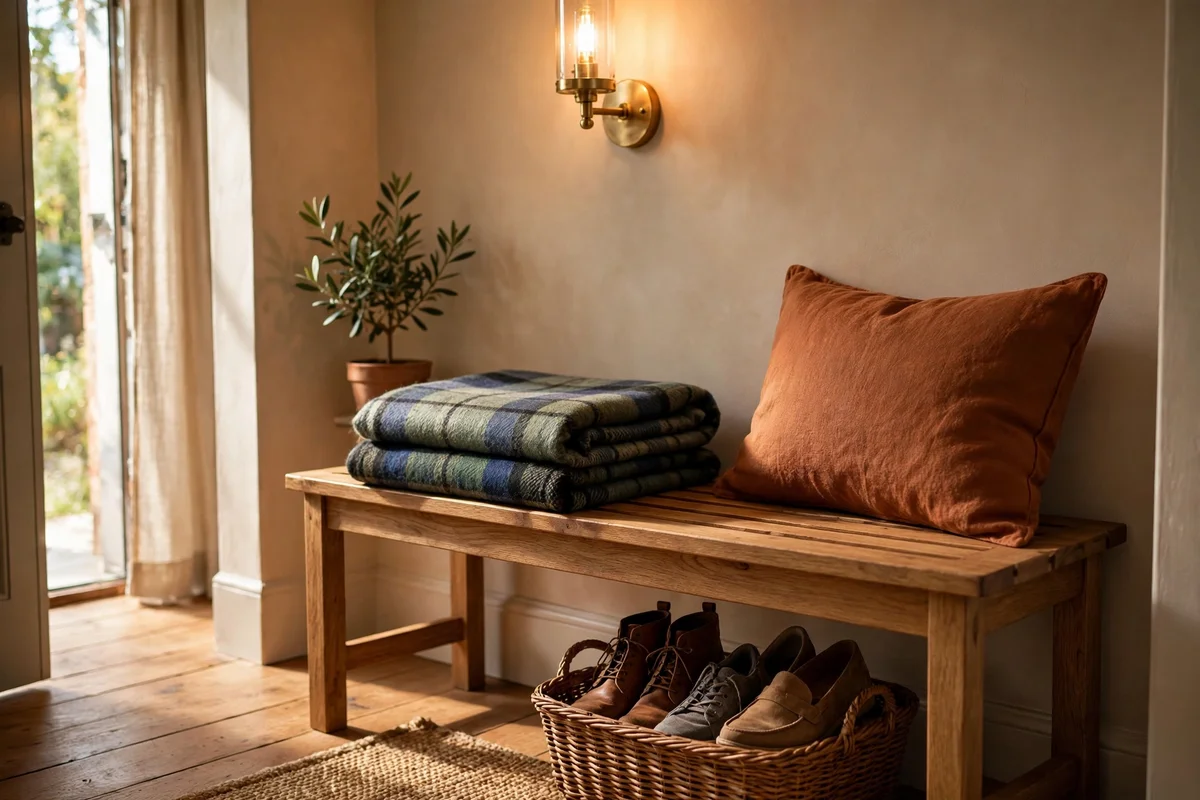
A bench between 90 and 120 cm wide fits most entryways and gives guests somewhere to sit while they pull on boots. Fold a plaid wool throw in thirds and lay it across one end, letting one corner drape toward the floor for a relaxed line. Add a single cushion in rust or ochre linen against the wall side, around 40 cm square, so the bench reads styled rather than stored. Keep the other end clear for bags.
Tuck a low woven basket under the bench for the shoes everyone actually wears, one pair per person and no more. A small wooden tray on the seat holds keys and sunglasses, which stops clutter spreading across the whole bench. The mistake to avoid is piling four or five cushions here; an entryway bench works hard, so one cushion and one throw is plenty. Budget tip: charity shops often have wool throws for under 15 pounds or dollars.
2. Hang Wooden Wall Hooks for Scarves Above a Woven Basket
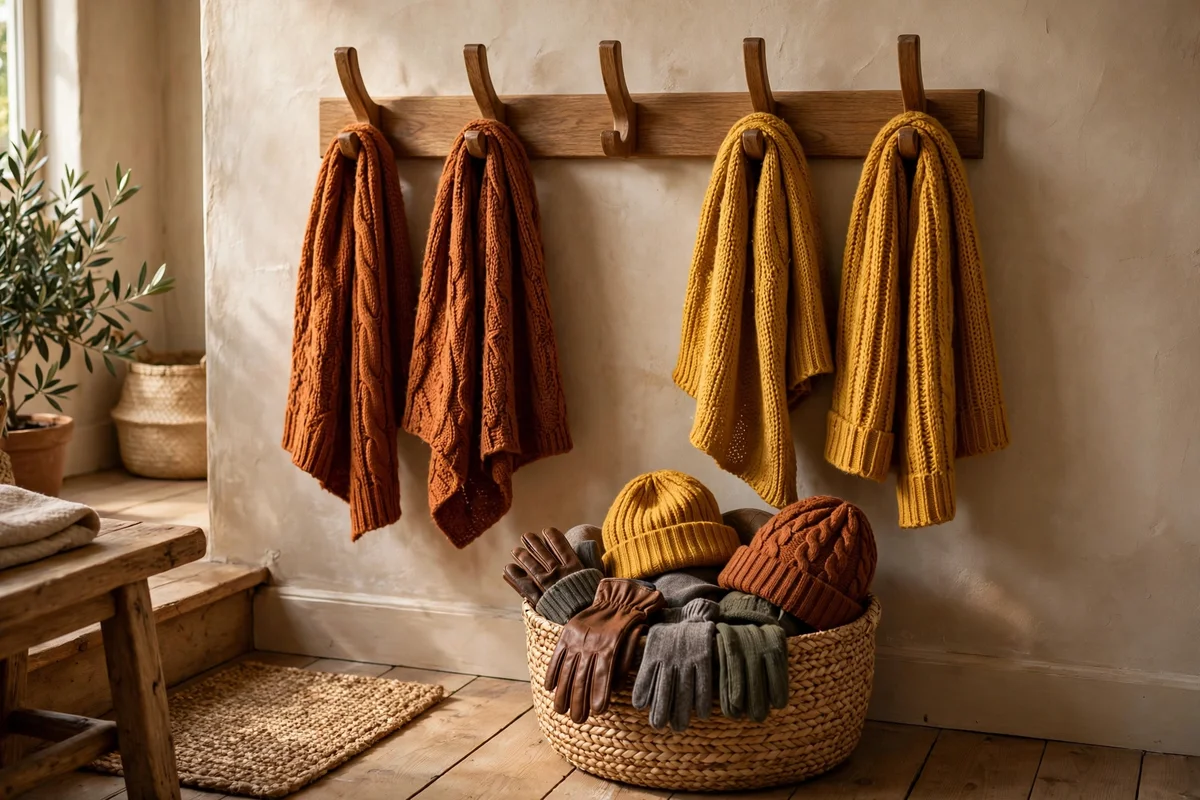
Fix a rail of three or four solid wood hooks at about 150 cm high, which suits adults and older children alike. Mount into a stud or use wall anchors rated for 10 kg, since winter scarves and bags add up fast. Space hooks 20 to 25 cm apart so a chunky knit scarf can hang without crushing its neighbour. Oak, beech or a warm stained pine all suit autumn palettes, and unfinished wood can be oiled with a little beeswax for a soft sheen.
Hang one scarf per hook in rust, mustard or forest green, and leave one hook empty for a guest. Place a round woven basket, about 35 cm across, directly underneath for gloves and hats, so everything lands in one spot. The common mistake is choosing stick-on hooks for heavy wool; they slide off within a week. A solid wood rail with proper fixings costs 20 to 40 pounds or dollars and lasts for years.
3. Warm the Entry Console With a Small Amber-Glass Table Lamp
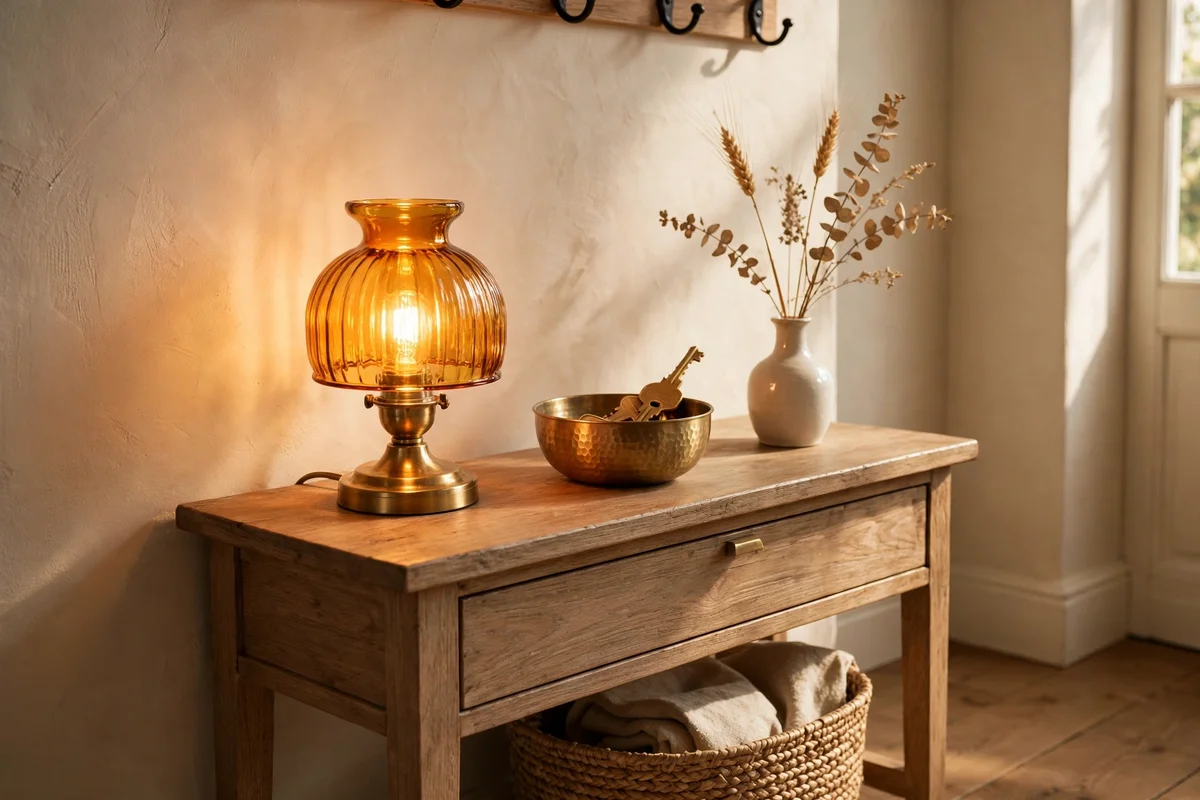
Choose a lamp 30 to 40 cm tall with an amber or smoked glass base, which throws a honey-coloured pool of light across the console. Fit a warm 2700K LED bulb of 400 to 600 lumens; anything brighter feels harsh in a small entry. Set the lamp at one end of a console 100 to 140 cm wide, leaving the centre free for a tray or a small stack of books. Amber glass suits oak, walnut and painted furniture equally well.
Plug the lamp into a timer so it glows from late afternoon, which means you always arrive home to warmth. Pair it with a small brass or ceramic bowl for keys, about 12 cm wide, and one dried stem in a bud vase. The mistake to avoid is using a cool daylight bulb here; it turns amber glass grey and kills the cosy effect. Budget tip: second-hand glass lamps often cost 10 to 20 pounds or dollars.
4. Layer Two Wool Throws Over the Living Room Sofa Arm
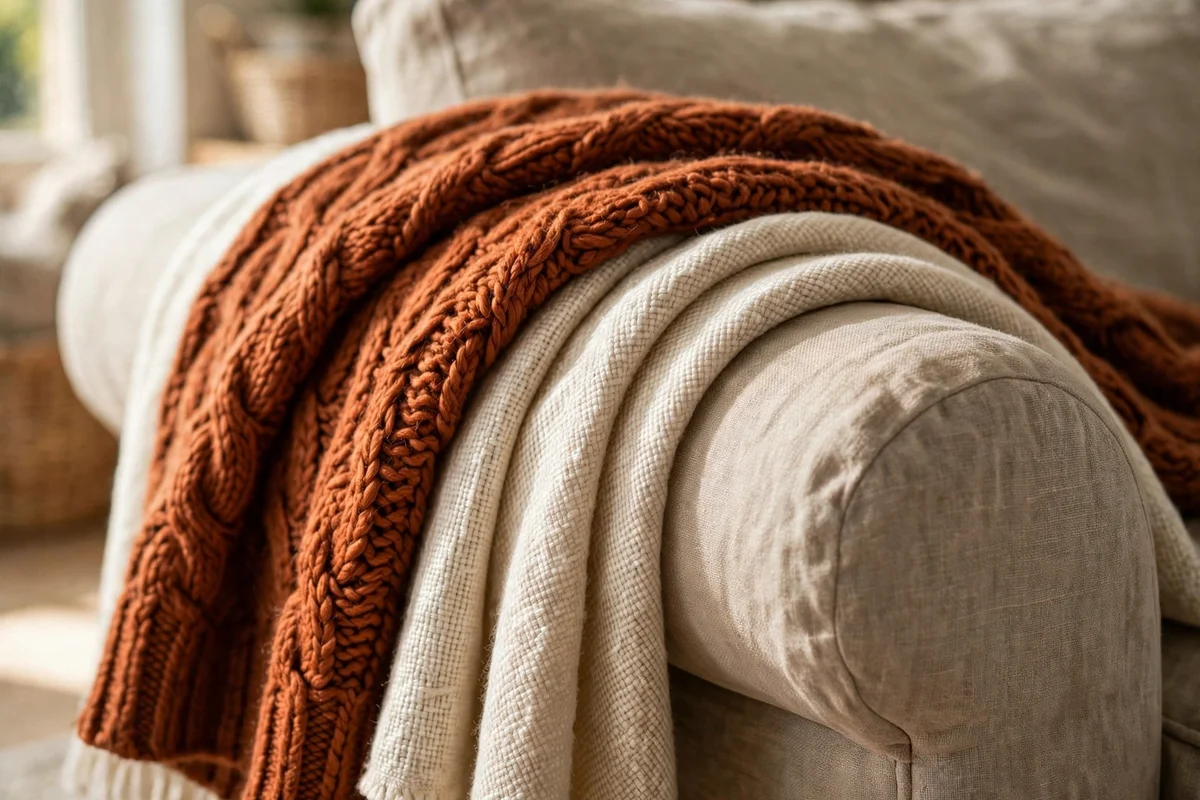
Drape one throw over the sofa arm in a rust or terracotta tone, then fold a second in cream or oatmeal across the seat back beside it. Throws around 130 by 180 cm are the most useful size, big enough to wrap around shoulders on a chilly evening. Wool and wool-blend throws hold their shape and look better with age, while very cheap acrylic ones pill within a month. Two throws in different weaves, one chunky knit and one flat weave, give the sofa depth.
Rotate which throw sits on top every couple of weeks so wear spreads evenly. Shake throws outdoors rather than washing weekly; wool freshens well with air and needs a proper wash only a few times a season. The mistake to avoid is matching the throw exactly to the sofa colour, which makes both disappear; aim for two tones warmer or deeper. Budget tip: end-of-line wool throws often drop to 25 to 40 pounds or dollars.
5. Mix Rust, Ochre and Cream Cushions in Three Sizes on the Sofa
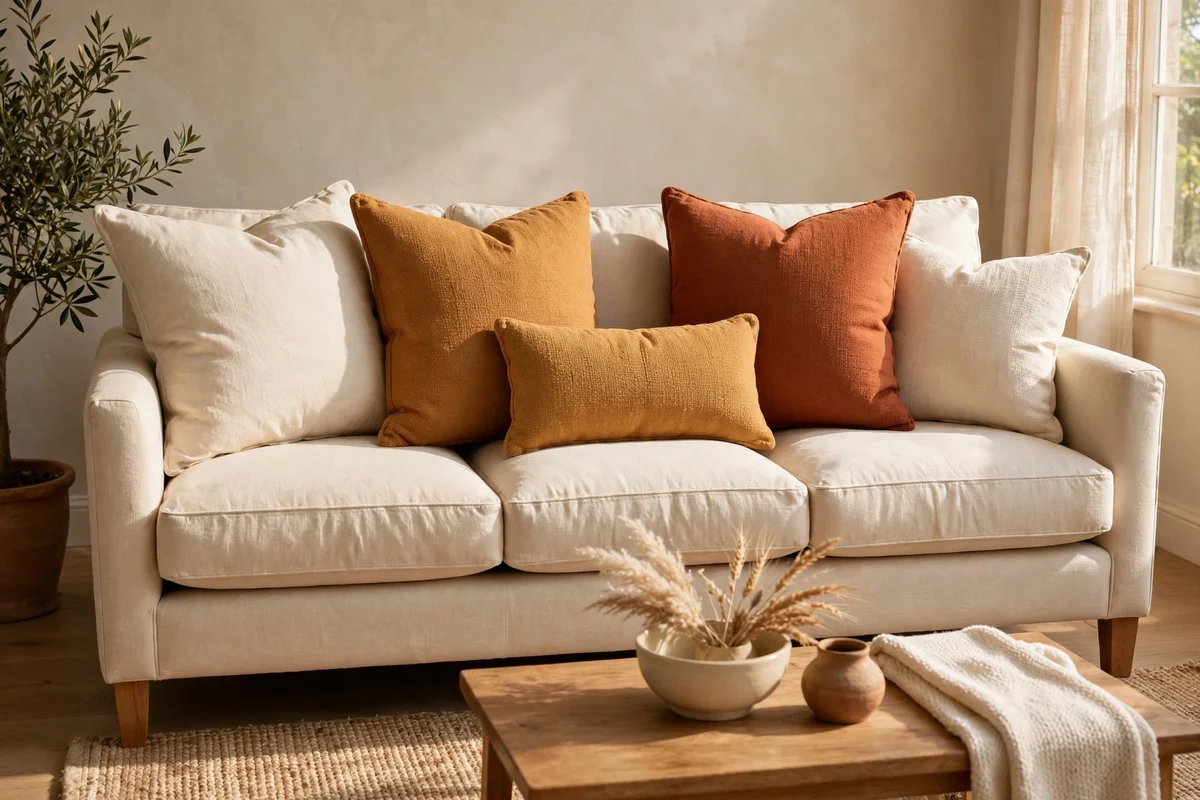
Use an odd number, five cushions for a three-seat sofa, in three sizes: two 50 cm squares at the back, two 45 cm squares in front, and one 30 by 50 cm lumbar cushion in the middle. Keep the palette tight: rust, ochre, cream and one pattern such as a small check or stripe. Feather or feather-blend inserts hold a plump shape far better than hollowfibre, which flattens within weeks. Chop the top of each cushion once for that relaxed, lived-in look.
Place the largest cushions against the sofa arms and step sizes down toward the centre for a tidy, layered shape. Washable linen or cotton covers make autumn practical, since darker evenings mean more time curled up on the sofa. The mistake to avoid is buying every cushion in the same rust shade; without cream or oatmeal to lift it, the sofa looks heavy. Budget tip: buy good inserts once and swap covers seasonally for 8 to 15 pounds or dollars each.
6. Park a Knitted Pouf Beside the Armchair for Feet and Texture
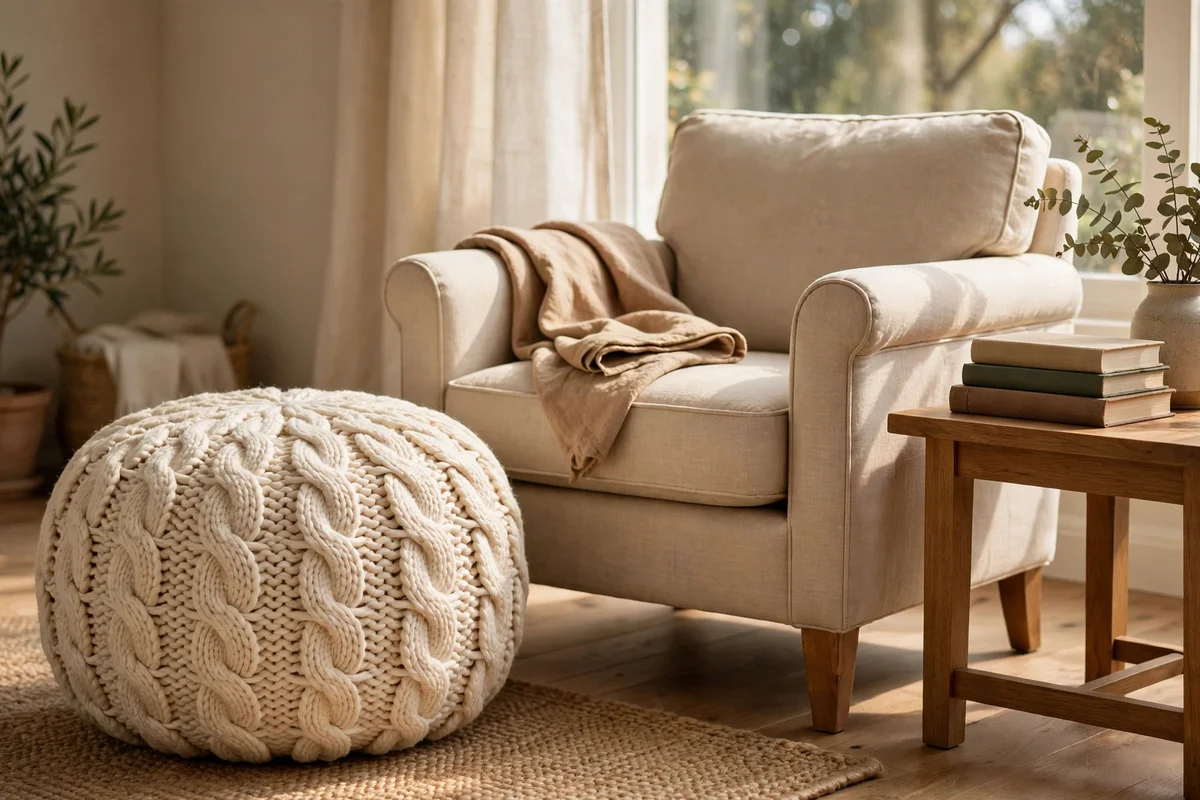
A round knitted pouf 45 to 55 cm across and about 35 cm high doubles as a footrest and an extra seat when family visits. Choose a chunky cable knit in cream, oatmeal or soft grey, which adds texture without shouting for attention. Place it 20 to 30 cm from the armchair so feet reach it easily but the walkway stays clear. Cotton-knit poufs with a firm fill hold their shape better than loosely stuffed ones.
Drape a small folded throw over one side of the pouf for an extra layer of autumn colour. Keep the top clear of remotes and cups so it always invites someone to put their feet up. The mistake to avoid is buying a pouf wider than 60 cm for a small chair; it crowds the corner and becomes a trip hazard. Budget tip: sturdy knitted poufs start around 30 pounds or dollars, and second-hand ones often just need a wash.
7. Swap Cool Bulbs for 2700K Warm Light in the Reading Corner
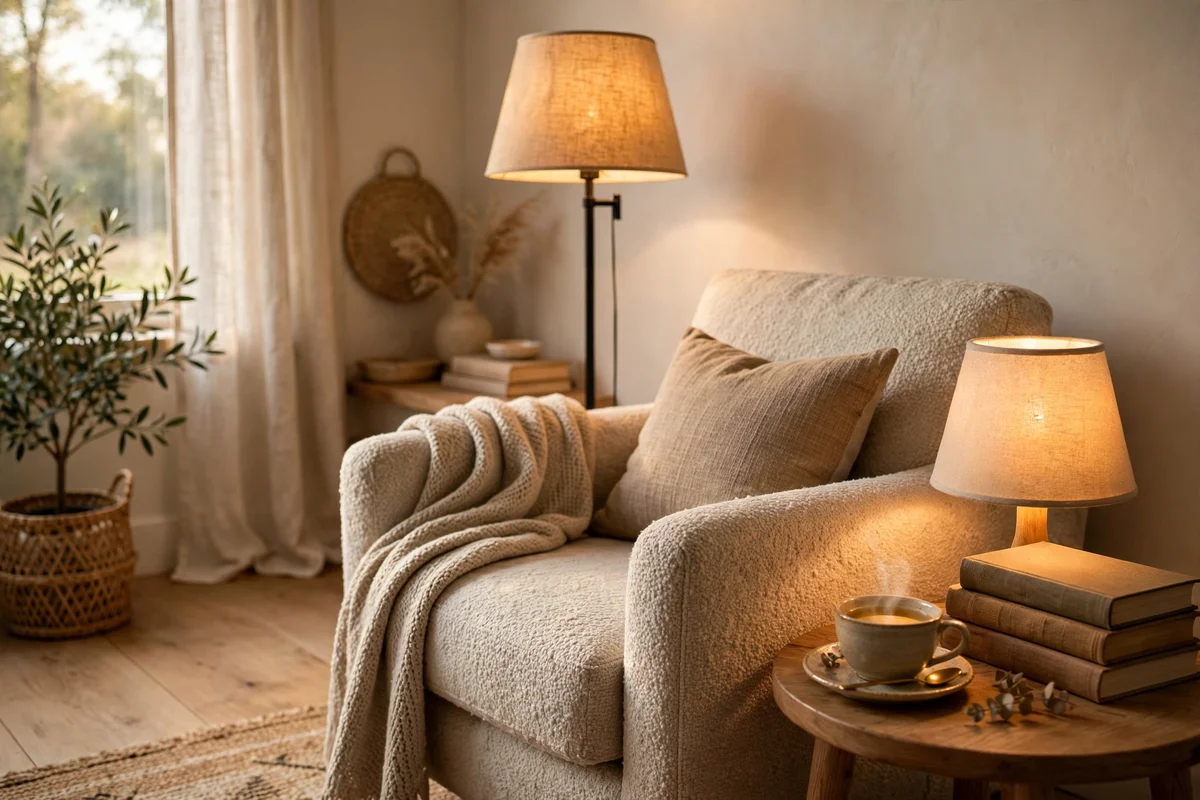
Replace any daylight or cool-white bulbs in the living room with 2700K warm white LEDs, which mimic the glow of late-afternoon sun. Aim for 400 to 800 lumens per lamp depending on size; a floor lamp beside an armchair suits the higher end. Warm light makes wood, wool and leather look richer, while cool light flattens those same materials. Change every bulb in one go so the room feels consistent rather than patchy.
Add a small table lamp on the side table, about 35 to 45 cm tall, so the reading corner has light at two heights. A fabric or paper shade softens the bulb and spreads a gentle pool of light for books and tea. The mistake to avoid is relying on a single bright ceiling light; it creates harsh shadows and kills any cosy mood. Budget tip: warm LED bulbs cost 2 to 4 pounds or dollars each, the cheapest autumn upgrade there is.
8. Build the Dining Centrepiece Around Pumpkins, Candles and Dried Branches
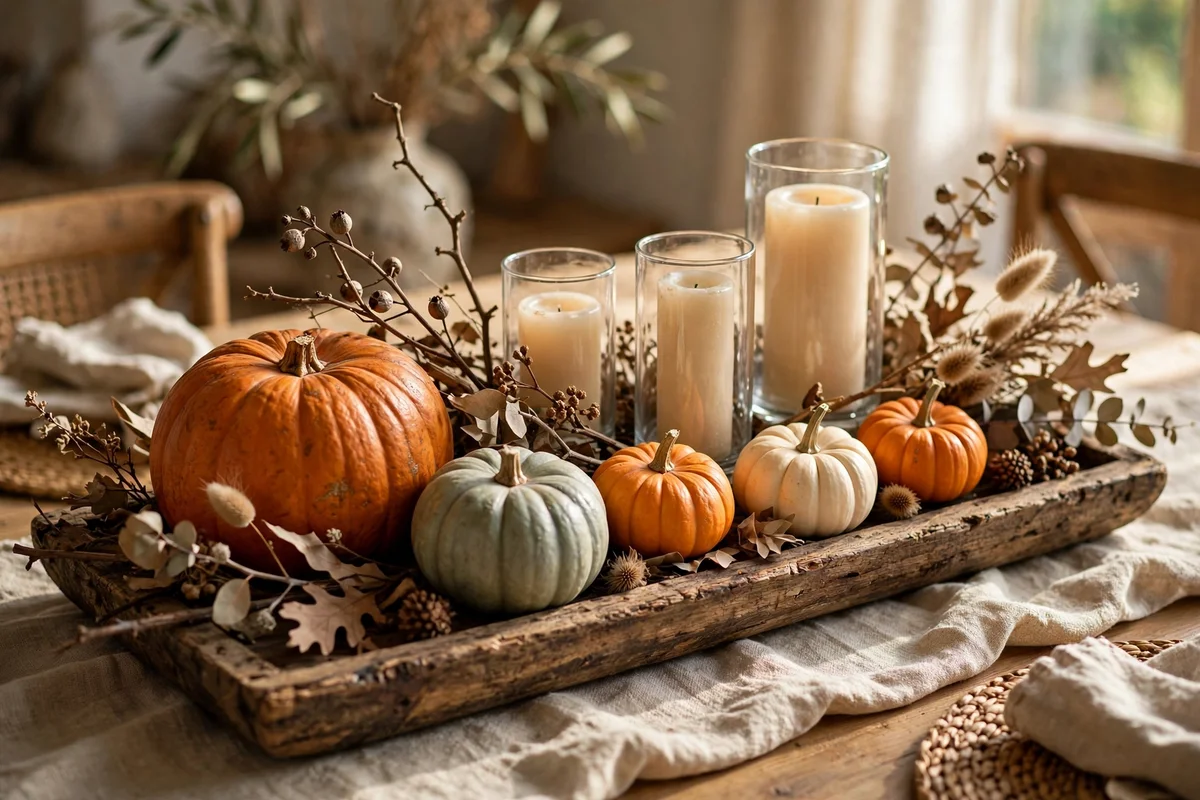
Start with a low wooden tray or board, 60 to 90 cm long, as the base so the arrangement can be lifted in one move for meals. Cluster three pumpkins of different sizes, real or good-quality faux, with the largest about 20 cm across. Tuck dried branches, wheat stems or preserved eucalyptus between them at varied heights, keeping everything below 30 cm so guests can see over it. Add two or three pillar candles in glass holders for evening glow.
Use flameless LED candles if little ones sit at the table, choosing warm-toned ones that flicker realistically. Refresh real pumpkins every three to four weeks, or switch to faux for a one-time cost of 15 to 30 pounds or dollars. The mistake to avoid is building the centrepiece too tall; anything above eye level blocks conversation and gets knocked over. Budget tip: dried stems from a craft shop cost a few pounds and last for years.
9. Run a Linen Runner With a Trail of Eucalyptus Down the Table
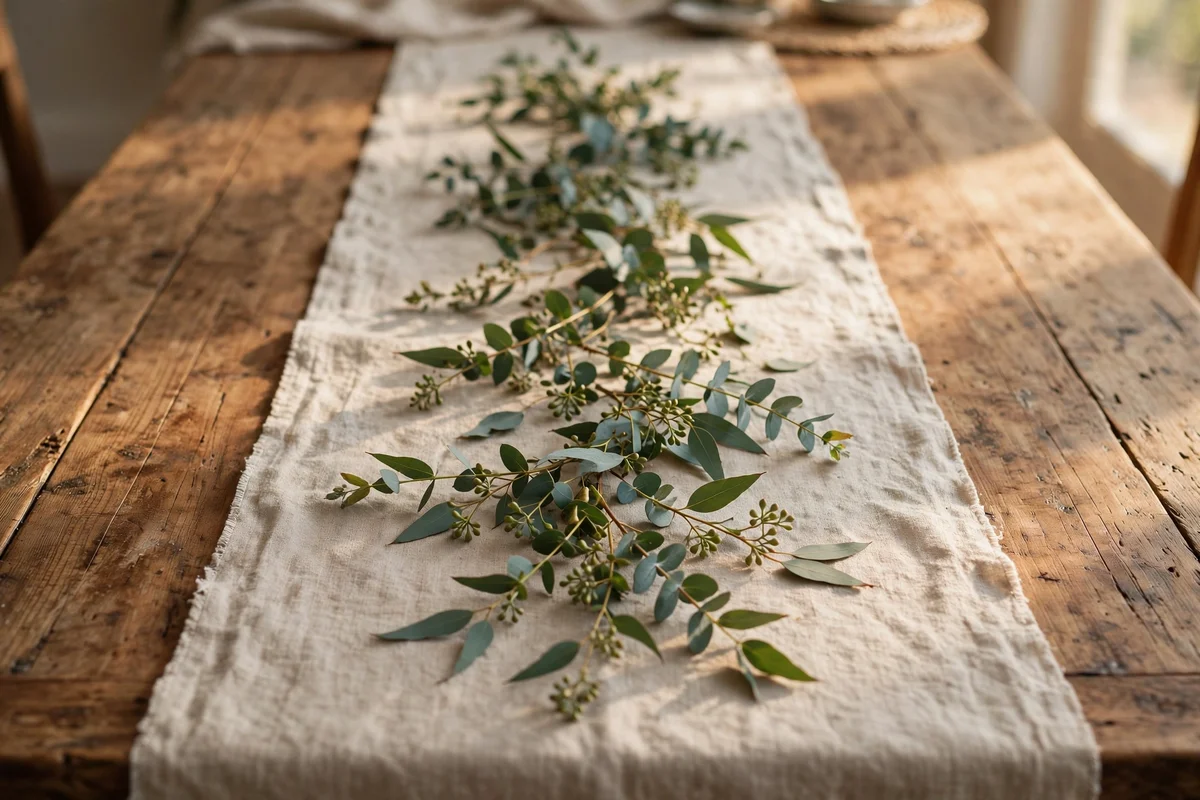
Choose a natural linen runner 35 to 45 cm wide and at least 60 cm longer than the table, so 30 cm hangs over each end. Lay a loose trail of eucalyptus sprigs or dried lavender along the centre, letting stems overlap by 5 to 10 cm for a continuous line. Natural linen in oatmeal, flax or soft rust wrinkles beautifully and suits both everyday meals and family gatherings. Secure the runner with a non-slip pad if the table surface is polished.
Replace fresh eucalyptus every ten to fourteen days, or use preserved stems that keep their colour for months. Scatter a few dried orange slices or small pinecones along the trail for extra autumn interest. The mistake to avoid is a runner narrower than 30 cm on a wide table; it looks like a ribbon and gets lost. Budget tip: a good linen runner costs 15 to 30 pounds or dollars and works for every season.
10. Line Three Brass Candlesticks Down the Table Centre
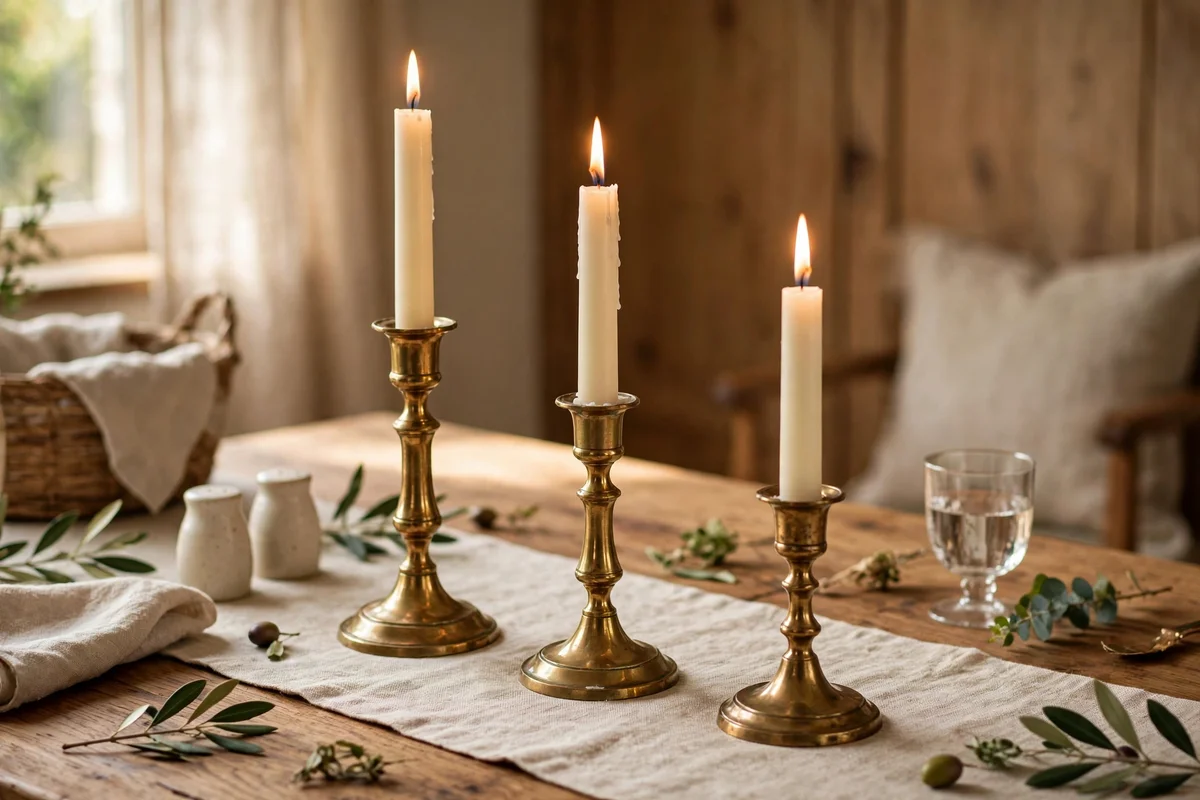
Group three brass candlesticks of staggered heights, roughly 15, 22 and 30 cm, down the centre of the table with 25 to 30 cm between each. Unlacquered brass develops a soft patina that suits autumn perfectly, and a weekly wipe with a dry cloth keeps it glowing. Use ivory or beeswax taper candles about 25 cm tall, trimming wicks to 5 mm before lighting for a clean flame. Keep the arrangement to one side of the centrepiece so the table still holds serving dishes.
Light the candles only when the family sits down to eat, so the ritual feels special rather than routine. Never leave tapers burning unattended, and keep them 30 cm from dried stems or curtains. The mistake to avoid is mixing silver and brass in the same row; pick one metal and let it shine. Budget tip: charity shops often sell solid brass candlesticks for 3 to 8 pounds or dollars each.
11. Style One Open Kitchen Shelf With Amber Glass and Copper
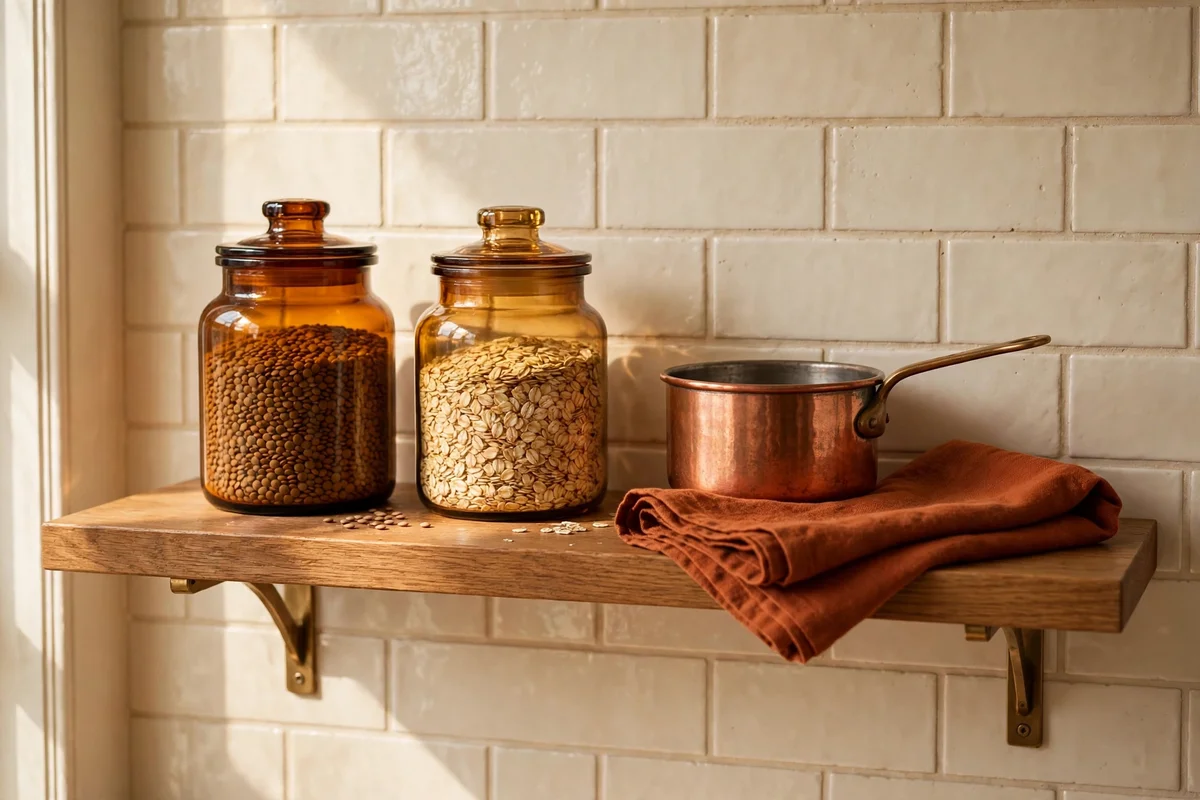
Pick the shelf you see first when you enter the kitchen and limit styling to that one, about 60 to 90 cm wide. Group three amber glass jars of different heights for dry goods like lentils, oats and rice, with lids that seal properly. Add one small copper pot or jug and a folded linen cloth in rust for warmth. Keep everyday plates and mugs on a lower shelf so the styled shelf stays tidy and dust-free between weekly wipes.
Store anything you use daily within easy reach and keep decorative pieces to the back, so the shelf works as well as it looks. Wipe amber glass with a damp cloth weekly to keep it glowing; dust dulls glass fast in a kitchen. The mistake to avoid is styling every open shelf in the kitchen; one styled shelf plus practical storage elsewhere looks calm. Budget tip: amber jars cost 4 to 10 pounds or dollars each at home stores.
12. Lean Wooden Boards Against the Splashback Beside a Herb Pot
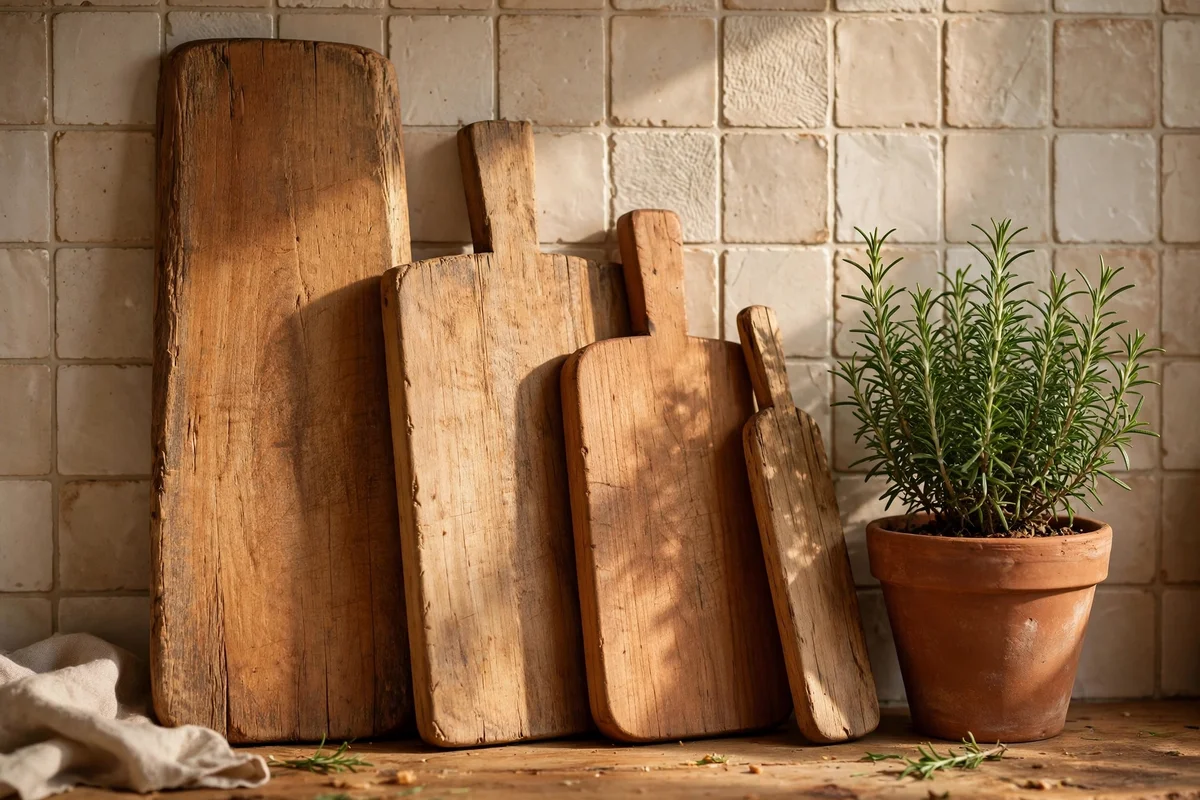
Lean two or three wooden chopping boards against the splashback, varying heights between 30 and 50 cm, with the tallest at the back. Acacia, olive wood and oak all bring warm honey tones that suit autumn kitchens. Place a small terracotta pot of rosemary or thyme, 10 to 12 cm across, at one end of the row for living green. Keep boards at least 15 cm from the hob so heat and splashes do not damage the wood.
Oil wooden boards monthly with food-safe mineral oil to stop them drying and cracking in a warm kitchen. Snip herbs as you cook so the pot stays bushy, and replace the plant when it gets leggy, usually every two to three months. The mistake to avoid is leaning boards where the kettle steam hits them daily; moisture warps wood fast. Budget tip: good wooden boards start around 8 pounds or dollars, and a herb pot costs about 3.
13. Simmer Apple, Orange and Cinnamon on the Stove for Natural Scent
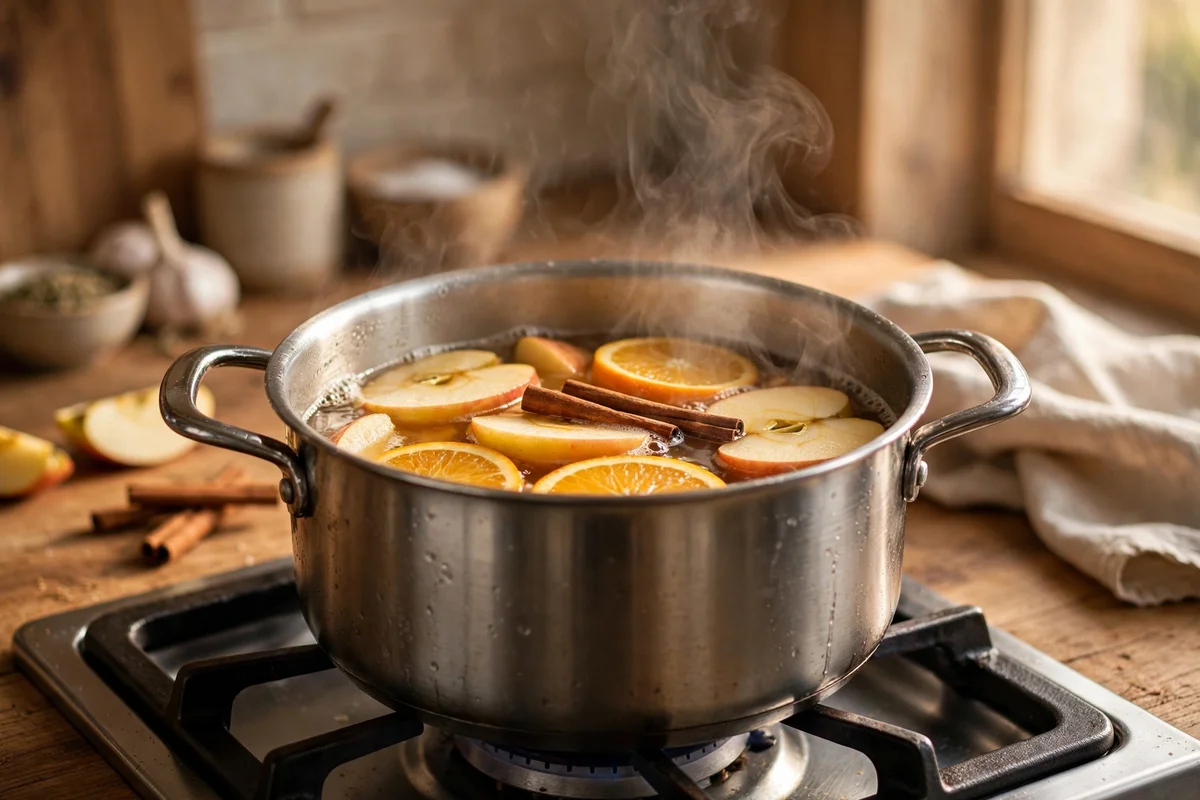
Fill a small saucepan with water and add one sliced apple, one sliced orange, two cinnamon sticks, a tablespoon of cloves and a sprig of rosemary. Bring to a gentle simmer, then lower the heat so it barely bubbles; a rolling boil evaporates the water too fast. The scent fills the kitchen within twenty minutes and drifts through nearby rooms. Keep the pot on the back burner, away from little hands, and never leave it simmering unattended.
Top up the water every hour, since a dry pot scorches within minutes and ruins the pan. One batch of fruit and spices lasts two to three days in the fridge; just reheat with fresh water. The mistake to avoid is using ground cinnamon, which clouds the water and sinks; whole sticks release scent cleanly. Budget tip: the whole pot costs under 3 pounds or dollars using supermarket fruit, far less than scented candles.
14. Layer a Waffle Blanket Over Crisp Cotton Bedding
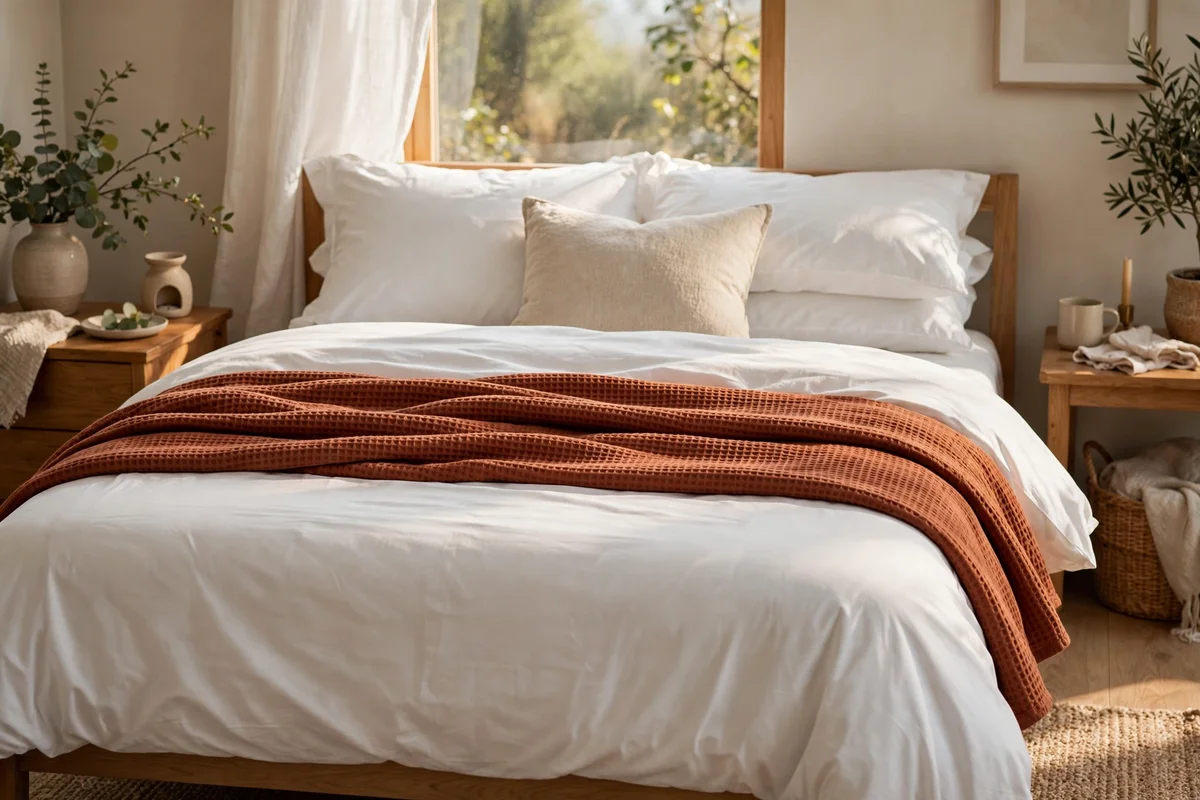
Start with plain cotton sheets in white, cream or soft sage, then add a duvet in a warm neutral. Fold a waffle-weave cotton blanket in thirds and lay it across the middle of the bed, so a band of texture shows between the pillows and the folded duvet. Waffle blankets in rust, terracotta or warm taupe bring autumn colour without a full bedding change. Choose a blanket slightly narrower than the bed so the duvet edges still show.
Wash the waffle blanket every two to three weeks; cotton softens with each wash and needs no fabric softener. Layer a second lighter throw at the foot for the coldest nights rather than buying a heavier duvet. The mistake to avoid is tucking every layer in tightly; loosely folded layers look inviting and let you adjust warmth easily. Budget tip: cotton waffle blankets cost 20 to 35 pounds or dollars in double size.
15. Add a Fabric-Shade Bedside Lamp for Golden Evening Light
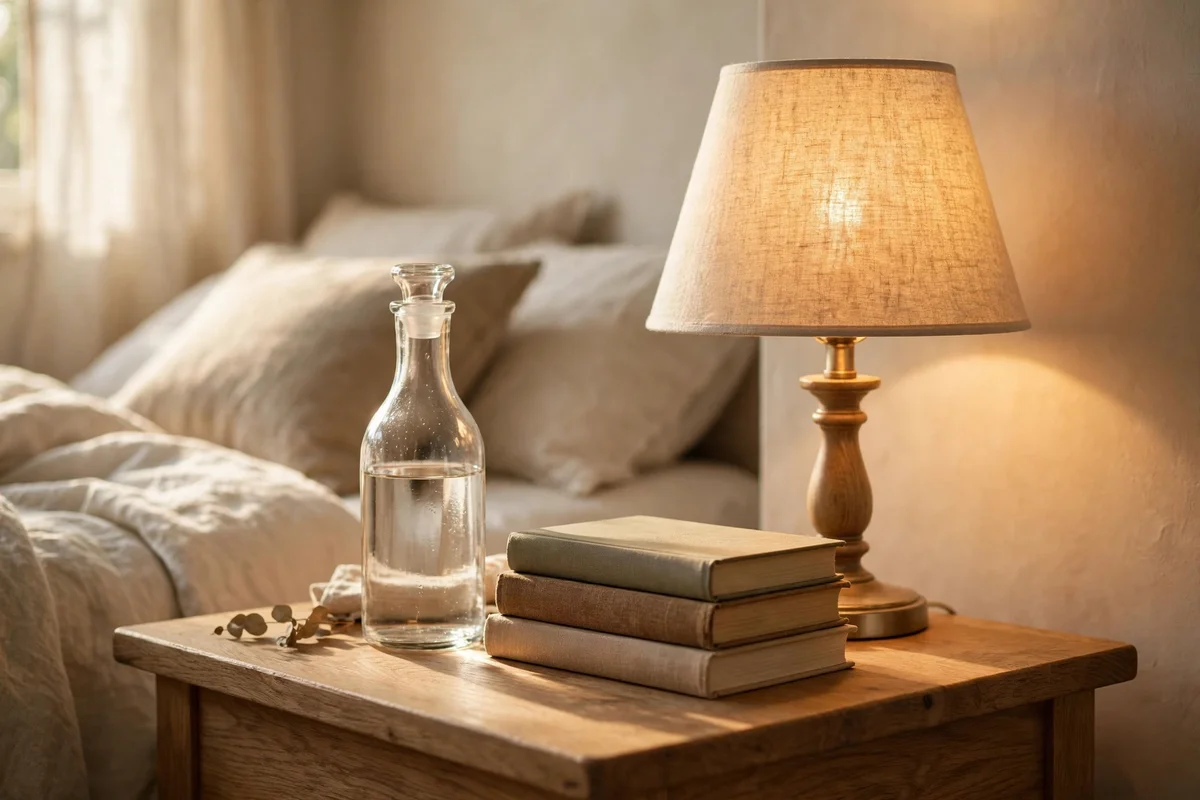
Choose a bedside lamp 40 to 50 cm tall with a linen or cotton shade, which spreads a soft golden glow across the bedroom. Fit a 2700K bulb of 400 to 600 lumens and add a dimmer plug so light can drop low for the last hour before sleep. Place the lamp on a nightstand 55 to 65 cm high so the shade sits near eye level when you are in bed. Matching lamps on both sides suit a calm, symmetrical look.
Keep the nightstand surface simple: lamp, one small stack of two books, and a carafe of water. Warm light before bed helps the body wind down, so switch the lamp on an hour before sleep and dim it gradually. The mistake to avoid is a bare bulb or glass shade at face height; it glares straight into tired eyes. Budget tip: linen-shade lamps start around 25 pounds or dollars at home stores.
16. Fold a Chunky Knit Throw Across the Foot of the Bed
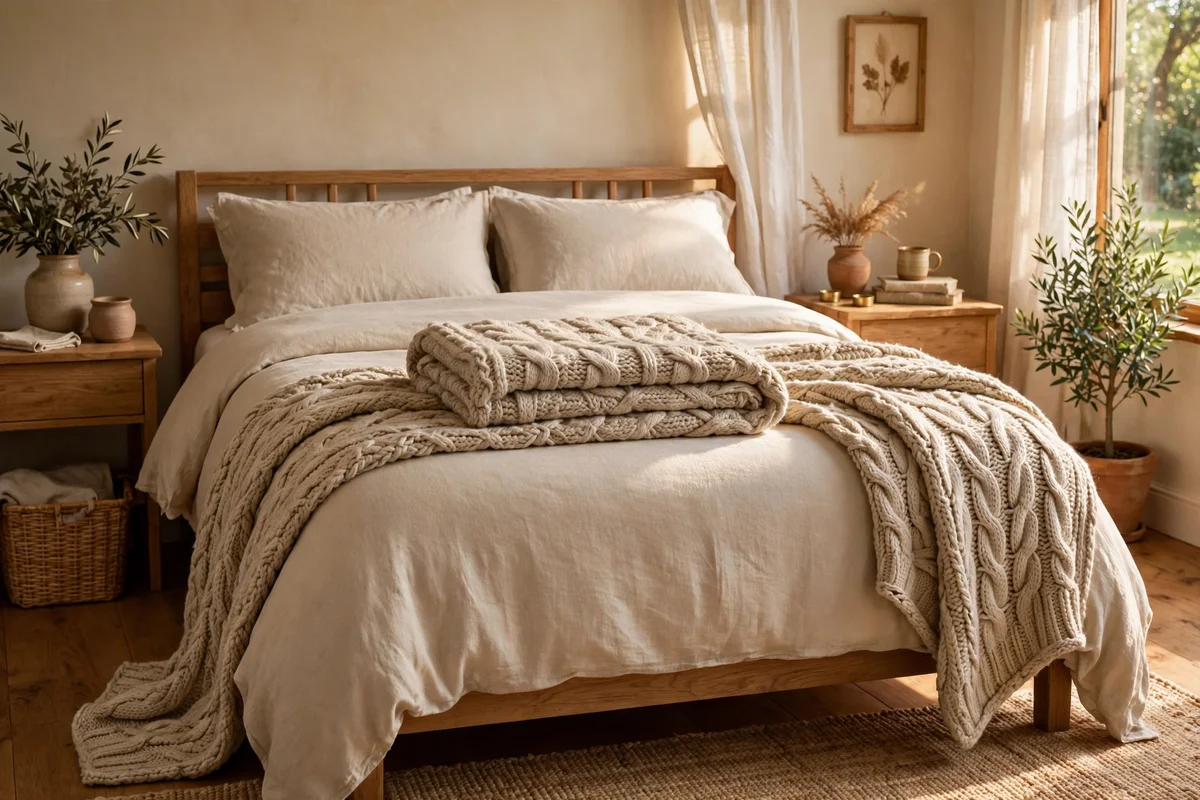
Fold a chunky knit throw in half lengthways and lay it across the foot of the bed, letting 20 to 30 cm hang over each side. Cream, oatmeal or warm grey knits suit most bedroom palettes and pick up the texture of the waffle blanket beneath. A throw 130 by 180 cm folds neatly on a double bed; on a king, choose 150 by 200 cm. The knit adds weight and warmth exactly where feet get cold first.
Pull the throw up over the duvet on chilly nights instead of adding another blanket; one good knit is surprisingly warm. Air it on the line monthly and wash only when needed, since heavy knits dry slowly. The mistake to avoid is a throw so small it looks like a scarf on a big bed; scale matters more than pattern. Budget tip: chunky knit throws cost 25 to 45 pounds or dollars, less in end-of-season sales.
17. Lay a Small Warm Rug Beside the Bed for Bare Feet
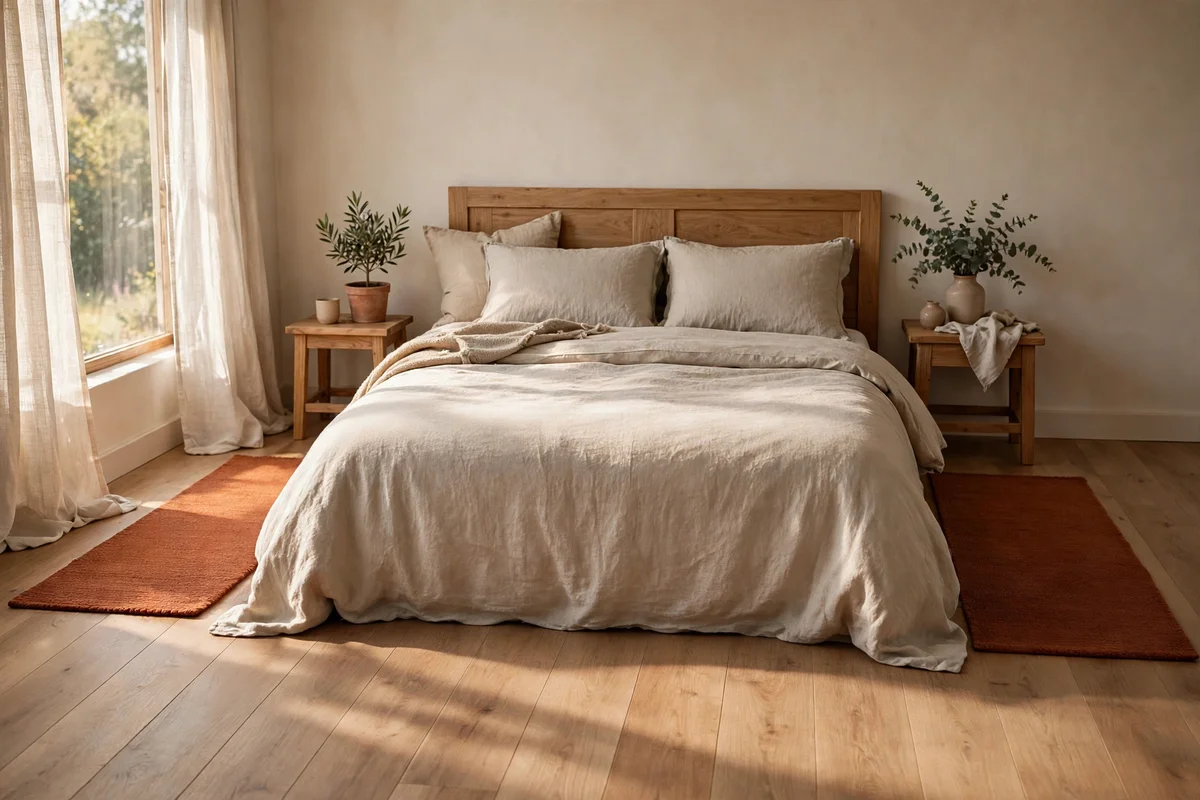
Place a soft rug 60 by 90 cm or 70 by 120 cm along each side of the bed, so feet land on warmth on cold mornings. Low-pile wool or cotton rugs in rust, terracotta or a simple stripe suit autumn and clean easily. On hard floors, add a thin non-slip underlay so the rug never creeps toward the bed leg. One rug per side works better than a single small mat that only one person reaches.
Shake rugs outdoors weekly and vacuum the underside monthly to keep dust down in the bedroom. In a small room, a single runner 70 by 180 cm across the foot of the bed warms both sides at once. The mistake to avoid is a deep shag rug here; it traps dust and feels too warm underfoot by morning. Budget tip: cotton bedside rugs cost 15 to 30 pounds or dollars each.
18. Roll Amber and Cream Towels in a Wooden Bathroom Tray
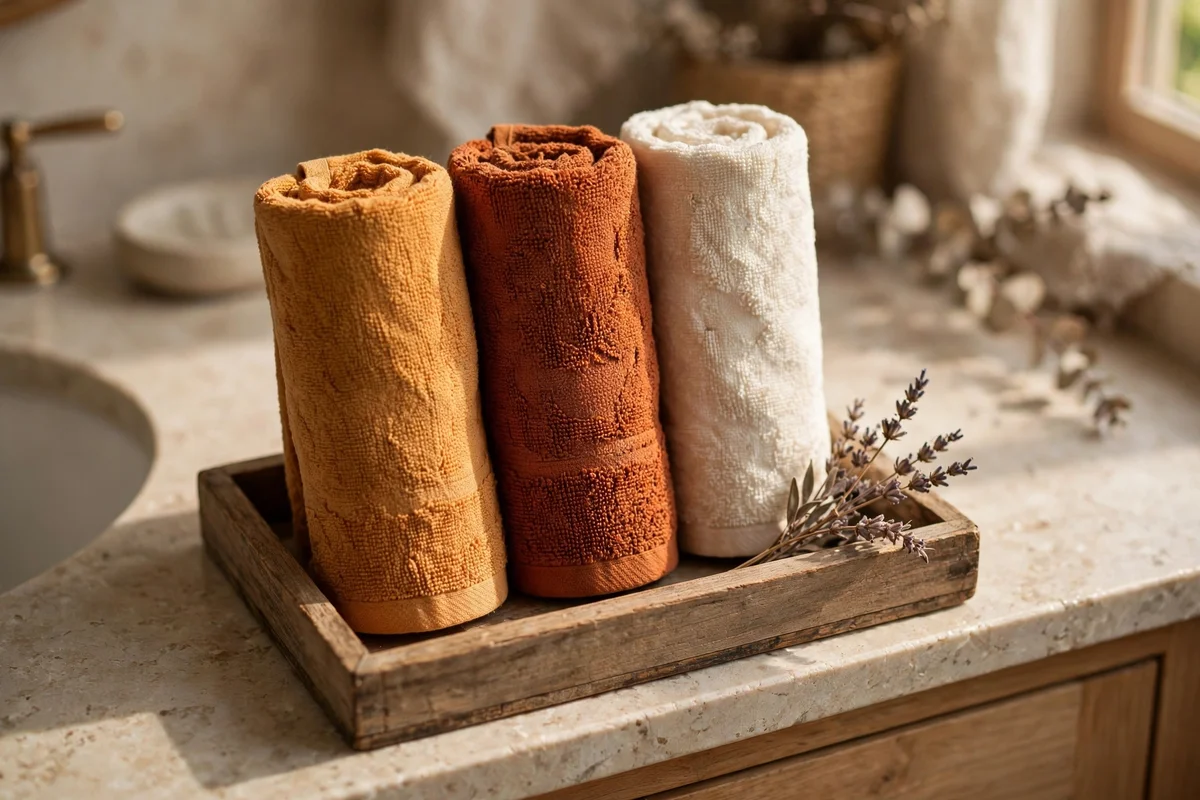
Roll three or four hand towels in amber, rust and cream and stand them upright in a shallow wooden tray, about 30 by 40 cm, on the vanity or a stool. Rolled towels look tidy, dry faster than folded stacks, and let guests take one without disturbing the rest. Choose 100 percent cotton towels of 500 GSM or more for a plush, hotel-like feel. Keep the tray away from direct splashes so the wood stays in good shape.
Wash towels every three to four uses and skip fabric softener, which coats fibres and reduces absorbency. Add a small sprig of dried lavender on top of the rolls for scent and colour. The mistake to avoid is overfilling the tray; towels need air around them or they stay damp. Budget tip: good cotton hand towels cost 6 to 12 pounds or dollars each, and a wooden tray about 10.
19. Hang a Eucalyptus Bundle From the Showerhead for Steam Scent
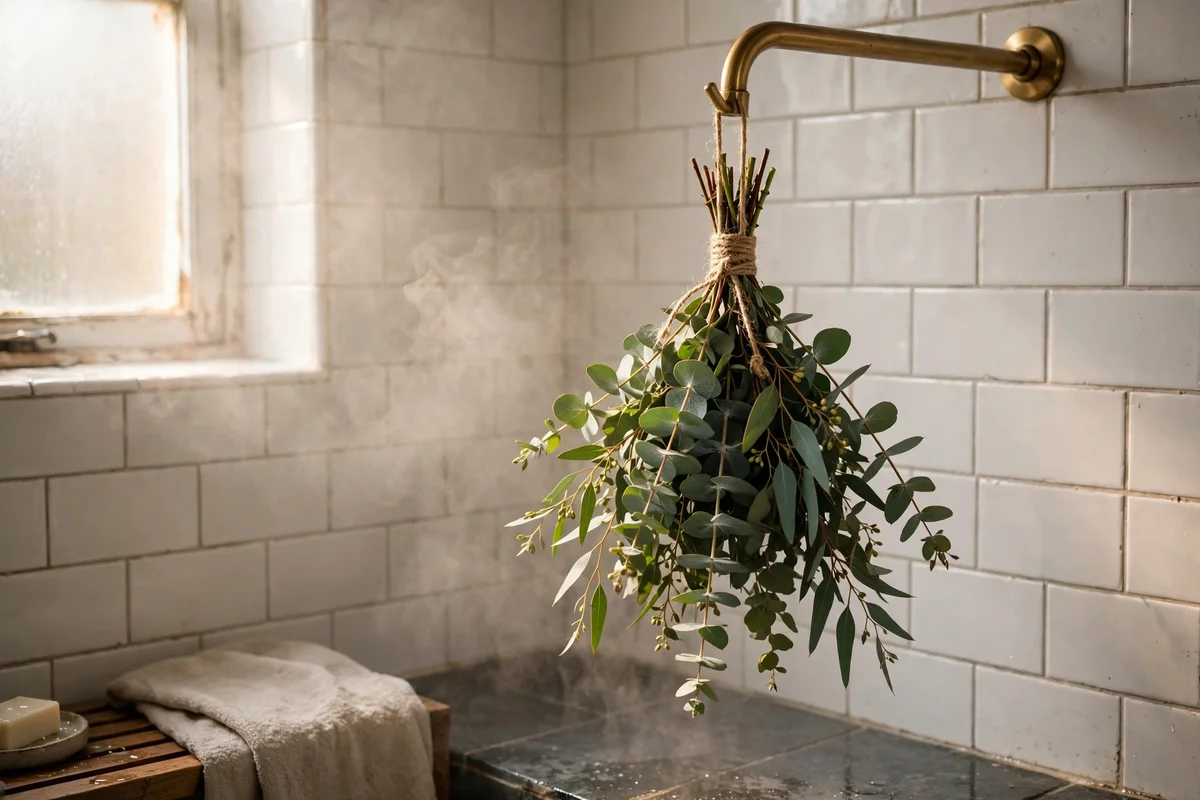
Tie five to seven fresh eucalyptus stems together with natural twine and hang the bundle from the shower arm with a loop of string, keeping it clear of the direct water stream. Steam releases the leaves’ gentle scent during every shower, which feels like a small daily luxury. A bundle lasts two to three weeks before the scent fades; refresh it when the leaves turn brittle. Choose silver dollar eucalyptus for the fullest, roundest leaves.
Trim half a centimetre off the stem ends weekly and run them under water so the leaves stay supple longer. Compost the old bundle when the scent fades and hang a fresh one. The mistake to avoid is letting the bundle sit in the water stream; soaked leaves go slimy within days. Budget tip: a bunch of eucalyptus costs 4 to 8 pounds or dollars at florists and makes two bundles.
20. Lay a Long Patterned Runner Down the Hallway
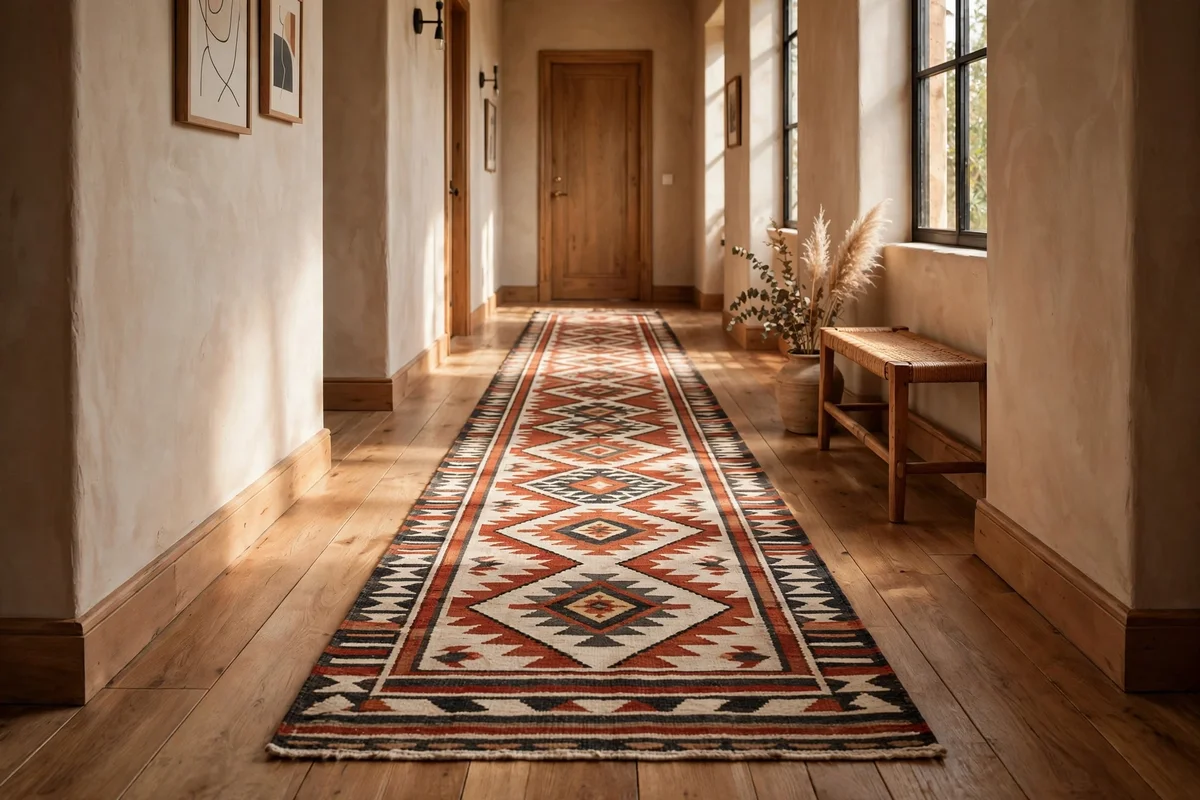
Measure the hallway and choose a runner that leaves 10 to 15 cm of floor showing on each side, usually 70 to 80 cm wide. A runner 2 to 3 metres long suits most halls; for longer halls, use two matching runners with a 15 cm gap rather than one oversized piece. Flatweave wool in a rust, cream and charcoal pattern hides dust and suits autumn perfectly. Lay a non-slip underlay beneath so the runner never bunches.
Vacuum the runner twice a week, since hallways collect the most dirt in the house. Rotate it end to end every couple of months so foot traffic wears it evenly. The mistake to avoid is a runner that stops halfway down a long hall; it chops the space visually. Budget tip: flatweave wool runners cost 40 to 80 pounds or dollars, while good cotton ones start around 25.
21. Hang Three Small Framed Autumn Prints Along the Hall Wall
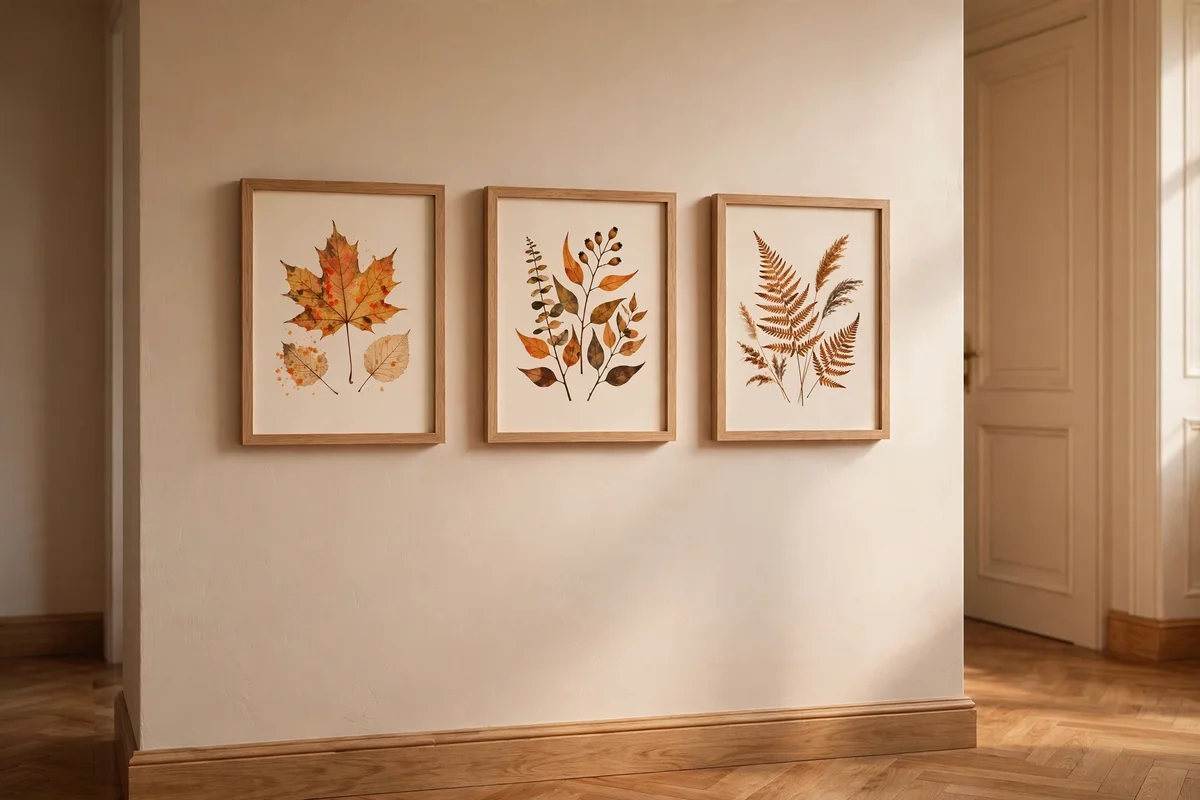
Choose three prints of the same size, 20 by 25 cm or 25 by 30 cm, in matching slim oak frames for a calm gallery line. Hang them in a row with 8 to 10 cm between frames, centred at 150 cm from the floor, which is comfortable eye level for most adults. Botanical sketches, harvest landscapes or simple leaf studies suit the season; keep the palette to rust, ochre, cream and charcoal. Use proper picture hooks so frames sit level.
Print your own art at home on matte paper for pennies, or buy printable downloads for 5 to 10 pounds or dollars. Swap the prints seasonally, storing the off-season set flat in a drawer. The mistake to avoid is hanging frames too high; anything above 160 cm centre feels disconnected from the hallway. Budget tip: three matching oak frames cost 15 to 30 pounds or dollars at home stores.
22. Set a Woven Basket of Throws at the Bottom of the Stairs
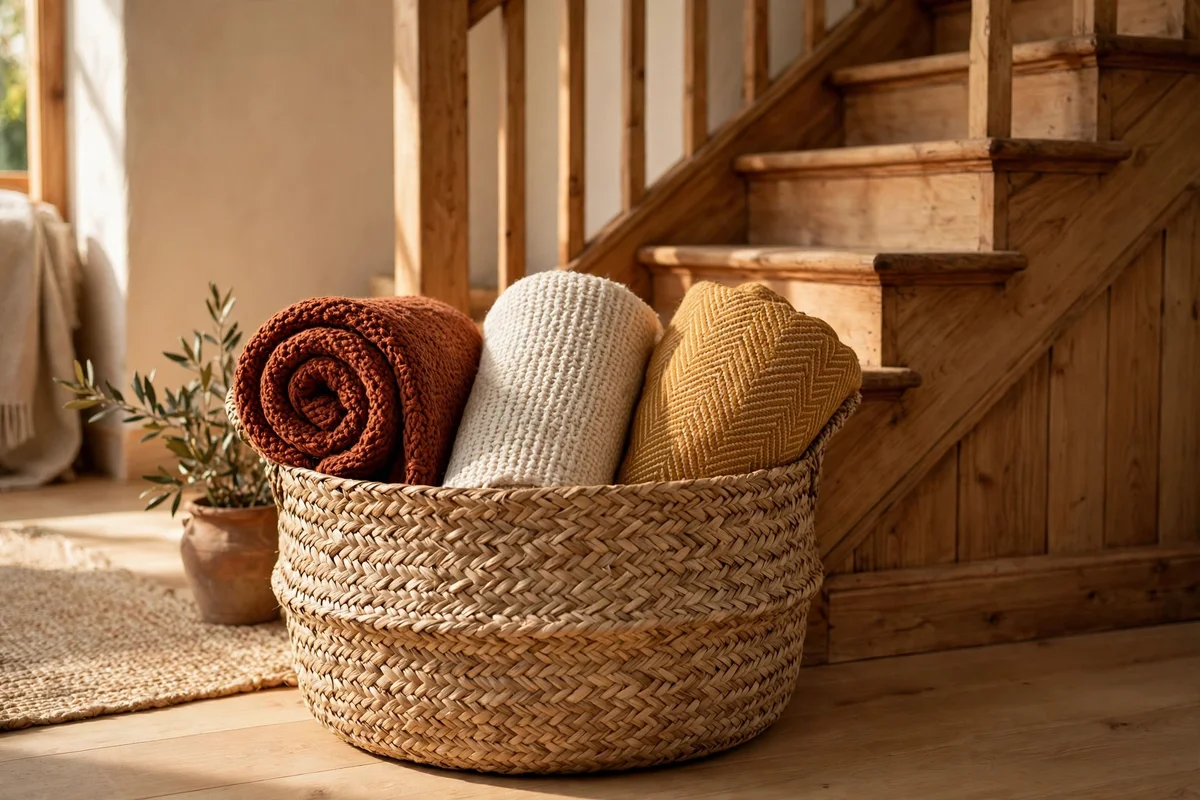
Place a sturdy woven basket, 40 to 50 cm across and 35 to 45 cm high, against the wall at the foot of the stairs. Roll three throws loosely and stand them upright inside, mixing rust, cream and ochre so the colours show from the hallway. Seagrass, rattan or water hyacinth baskets all suit autumn and hide clutter beautifully. Keep the basket clear of the first two steps so nobody trips on the way up.
Use the basket as the family’s grab-and-go spot: whoever heads upstairs takes a throw for the evening. Refold the throws monthly so creases do not set in one place. The mistake to avoid is a basket with no liner on a pale carpet; natural fibres can shed, so add a cotton liner. Budget tip: large woven baskets cost 20 to 40 pounds or dollars and work in any room.
23. Dress Windows With Linen Curtains in a Warm Oatmeal Tone
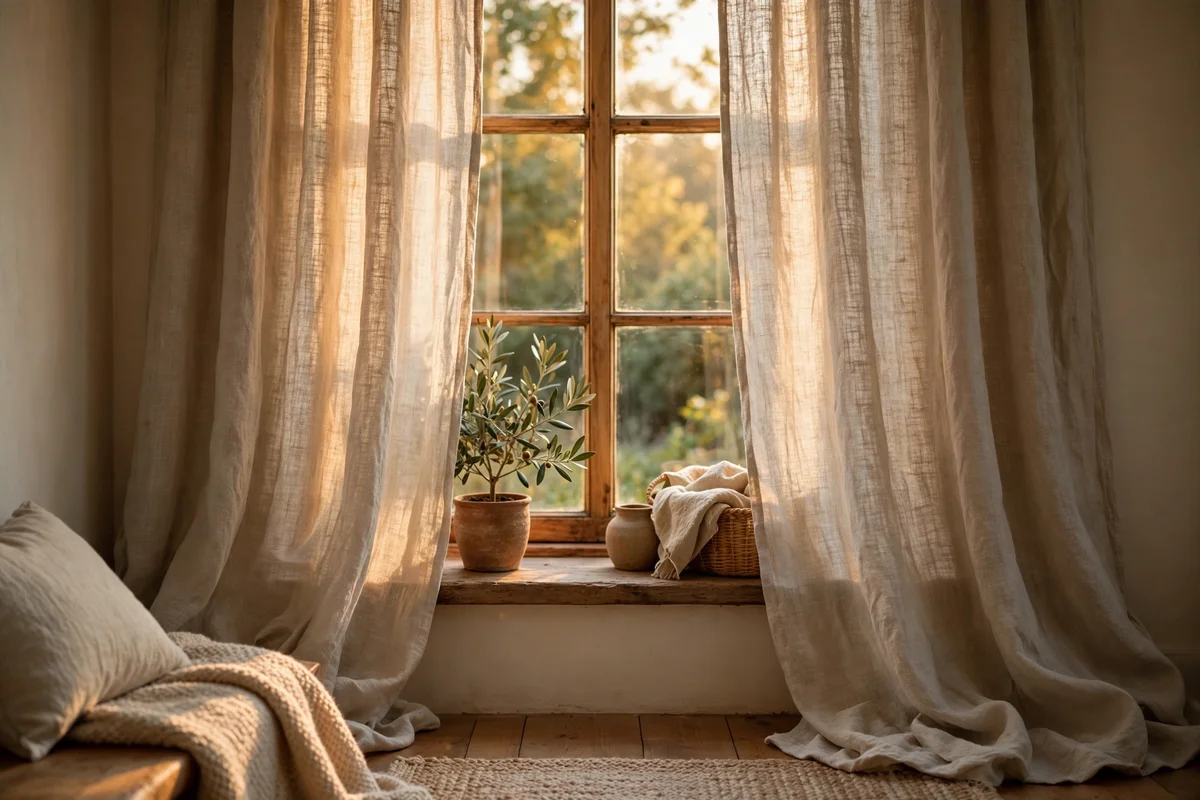
Hang linen curtains in oatmeal, flax or warm stone, which filter daylight into a soft golden wash. Mount the rod 10 to 15 cm above the window frame and 10 cm wider on each side, so the window looks larger and the curtains stack clear of the glass. Choose a drop that just kisses the floor or puddles by 3 to 5 cm for a relaxed feel. Linen’s natural slubs add texture that plain cotton cannot match.
Wash linen curtains twice a year on a gentle cycle and hang them damp so creases fall out naturally. Pair them with a simple roller blind behind for privacy after dark. The mistake to avoid is curtains that stop at the sill; short curtains chop the window and look unfinished. Budget tip: ready-made linen curtains cost 25 to 50 pounds or dollars per pair, far less than made-to-measure.
24. String Dried Orange Slices and Cinnamon on the Mantel
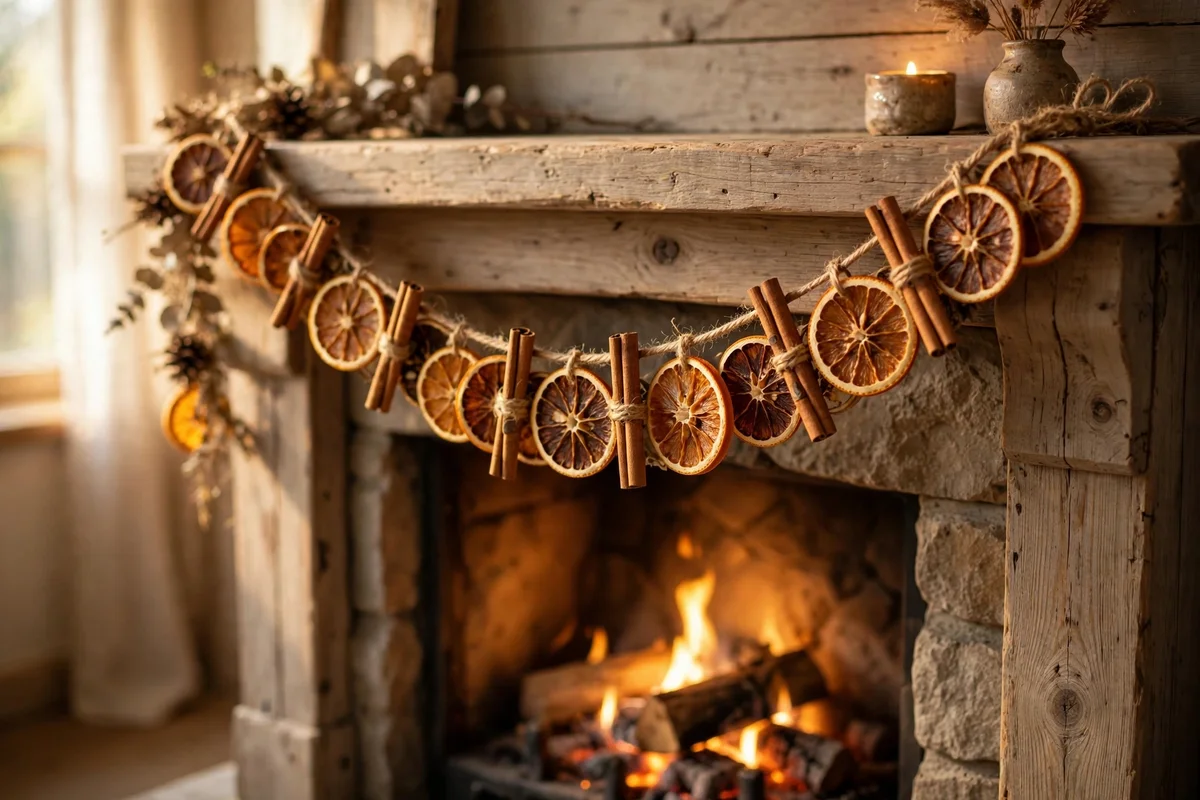
Thread dried orange slices and cinnamon sticks onto natural twine with a large needle, alternating two slices with one stick. Make the garland 120 to 150 cm long so it drapes across the mantel with a gentle swag in the middle. Dry orange slices at 100C for three to four hours, turning halfway, until they feel leathery rather than sticky. The garland gives gentle colour and a faint spiced scent for weeks.
Secure the garland ends with small clear hooks or a dab of museum putty so it never slips. Store it flat in tissue paper after the season and reuse it next year. The mistake to avoid is hanging the garland above a working fire without clearance; keep dried fruit 30 cm from any flame. Budget tip: the whole garland costs under 5 pounds or dollars if you dry the oranges yourself.
25. Follow a One-Room-a-Week Plan to Keep the Budget Gentle
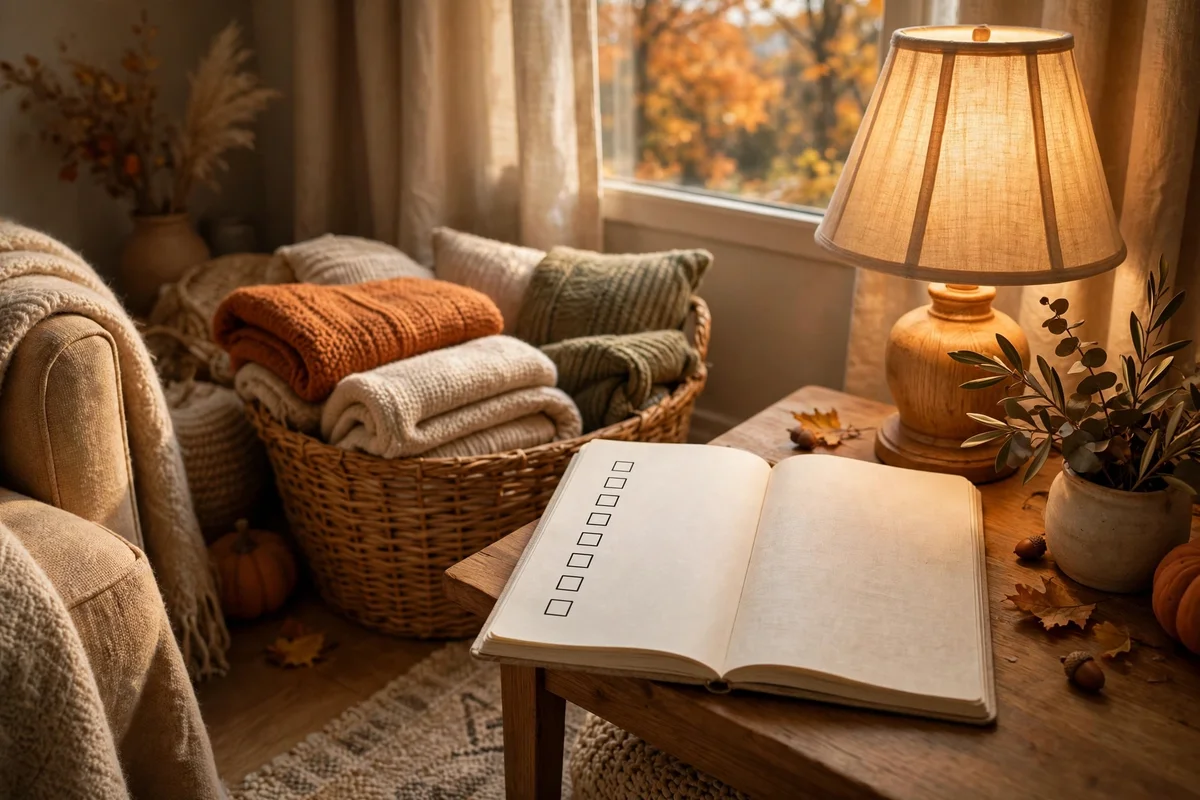
Spread the whole-home refresh over eight weeks, tackling one room or corner each week in the order you use it most. Start with the living room, where the family spends autumn evenings, then move through the entry, kitchen, dining room and bedrooms. Set a weekly budget of 20 to 40 pounds or dollars and buy only what that week’s room needs. A written list per room stops impulse buys that do not match the plan.
Shop your home first: move throws, baskets and candles between rooms before buying anything new. Charity shops, end-of-line sales and printable art keep each week’s spend low while the house still changes. The mistake to avoid is buying all 25 ideas in one weekend; the house ends up matching a catalogue instead of feeling like home. By week eight, every room carries a little autumn warmth.
Look back at what these 25 ideas share and a pattern appears: nothing here demands a renovation or a large budget. A warmer bulb, a folded throw, a basket by the stairs, a pot of apple and cinnamon breathing scent through the kitchen. Each change is small on its own, yet together they shift the whole house from summer-bright to autumn-soft, one gentle layer at a time.
The kindest way to begin is the slowest: choose the room where your family gathers most and add just one thing this week. Maybe it is the amber lamp on the entry console, or the waffle blanket folded across the bed. Live with that single change for a few days and notice how it alters the mood of the whole room before you reach for the next idea on the list.
If you take only one idea from this whole collection, make it the simmer pot. Slice an apple and an orange, add two cinnamon sticks and water, and let it breathe on the back burner this evening. Within half an hour the kitchen smells of orchards and spice, and the rest of the house follows. It costs almost nothing, and it captures the entire spirit of a cosy autumn home.
Frequently Asked Questions
How much does it cost to make the whole home feel cosy for autumn?
Most families spend 150 to 300 pounds or dollars across the season when they work room by room. Start with the cheapest wins: warm bulbs, a simmer pot and throws you already own. Add one 20 to 40 pound purchase per week, such as a runner or a basket, and shop charity stores for wood and brass. Buying gradually also lets you see what each room actually needs.
Which room should I decorate for autumn first?
Start with the living room, since that is where the family spends dark autumn evenings. Warm bulbs, layered throws and a few cushions change the mood in a single afternoon. Next, tackle the entryway, because it sets the tone every time someone walks in. Bedrooms and bathrooms can wait until later in the season; small touches there matter, but they are felt less often.
How do I keep autumn decor from looking cluttered?
Give every room one hero texture and keep the rest quiet. If the living room has a chunky knit throw, skip extra ornaments on the coffee table. Use trays and baskets to corral small items into single visual blocks, and leave some surfaces completely empty. The rule that works: for every decorative object you add, remove one everyday item to a cupboard.
Are simmer pots safe to use every day?
Yes, with two simple habits. Never leave the pot simmering unattended, and top up the water every hour so the pan never boils dry. Keep it on the back burner, out of reach of small children, and turn it off when you leave the kitchen. One batch of fruit and spices keeps for two to three days in the fridge, so daily use costs very little.
Can I do cosy autumn decor in a rented home?
Absolutely, since most of these ideas need no drilling or painting. Throws, cushions, baskets, lamps and simmer pots move with you, and adhesive hooks hold scarves and light garlands without damage. Choose freestanding pieces like floor lamps and leaning boards over fixed shelving. Keep original light bulbs in a labelled bag so you can swap them back on moving day.