Living Room
25 Fall Decorating Ideas for a Whole Home Seasonal Refresh
By Anna Wells · · 22 min read
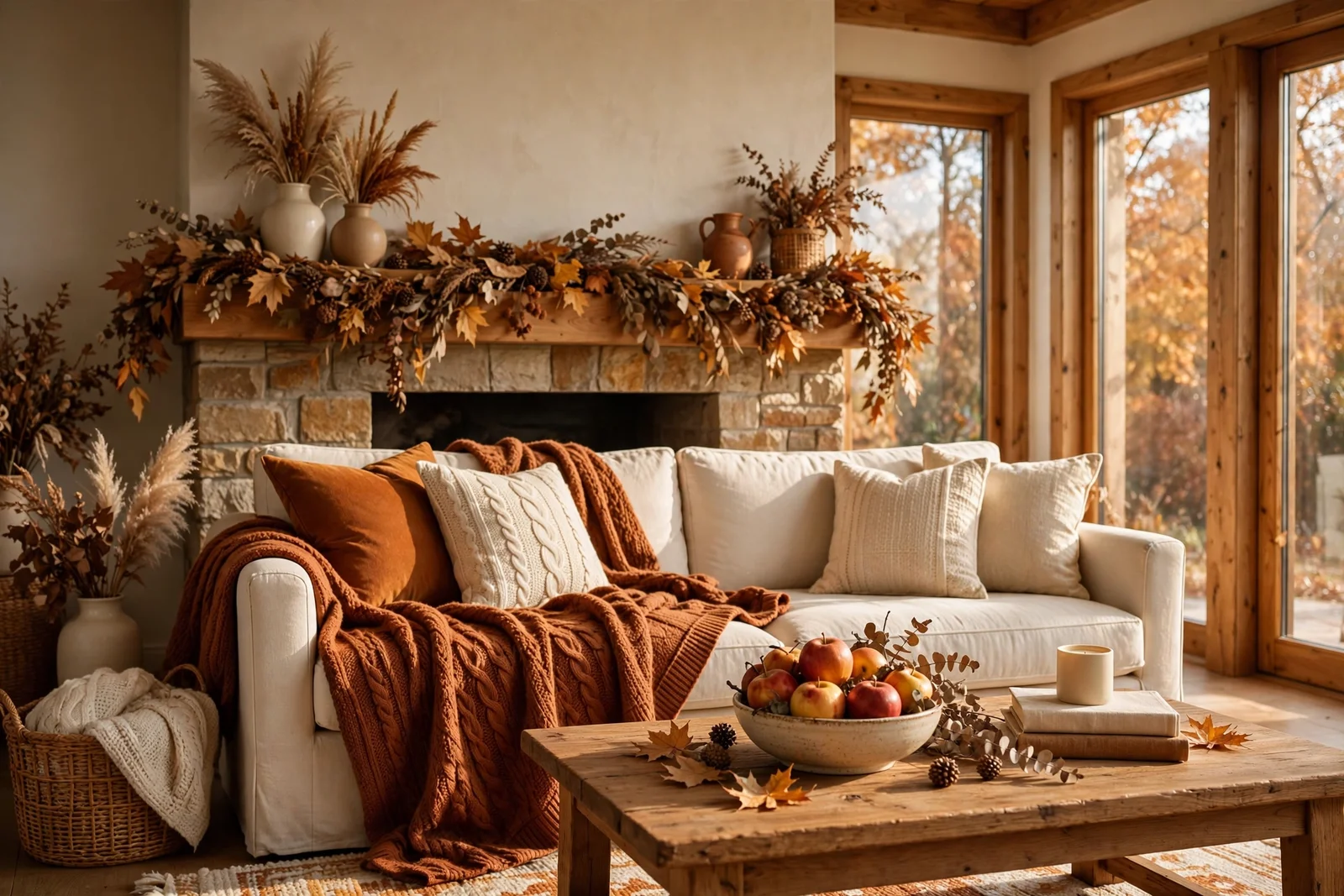
A whole home fall refresh that starts at the front door and moves room by room, all in one warm russet, amber and cream palette.
The first week of real autumn always shows in the small things: the hallway smells faintly of woodsmoke from somewhere down the street, the evening light turns honey coloured an hour earlier, and the basket of market apples on the counter suddenly looks like decor on its own. That is the right moment to walk through the house with fresh eyes, room by room, and let the season in.
This collection gives you 25 concrete ideas that work together as one whole home refresh. Every room carries the same warm palette of russet, amber, cream and walnut wood, so nothing looks like a one-off purchase. The plan starts at the entry, moves through living room, dining, kitchen, bedroom and bath, finishes on the porch, and ends with the storage system that makes next autumn easy.
Most ideas cost very little and take under an hour. Work one room a day, keep your palette swatch nearby, and by the end of the week the whole house will feel of a piece.
1. Dress the Entry Bench With a Russet Cushion and a Folded Wool Throw
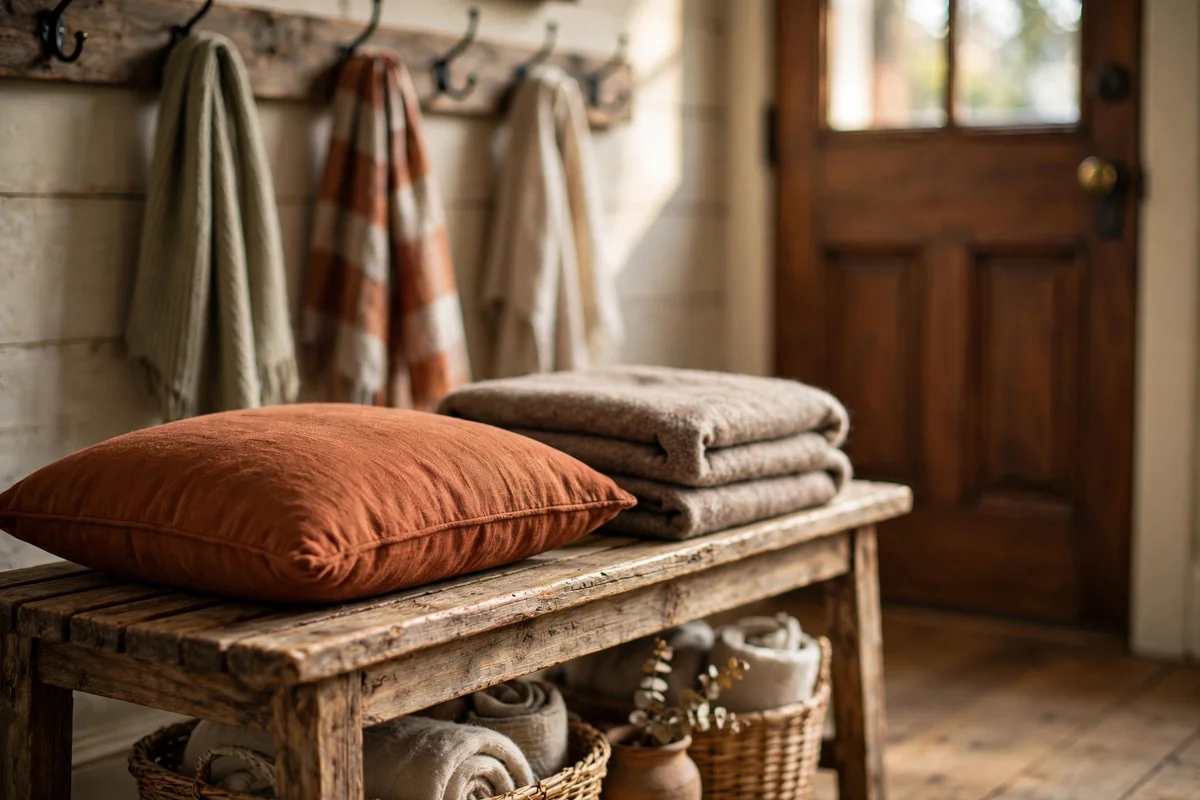
A low wooden bench between 90 and 120 cm long gives the entry a landing spot for bags and shoes while guests take their coats off. Top it with one russet or burnt orange cushion about 45 cm square in a washable cotton or linen cover, since entry textiles take daily wear. Fold a wool throw into thirds and lay it across one end of the bench so it looks meant to be used, not just looked at. Keep the rest of the bench clear: the cushion and throw carry the season here.
Choose bench wood in the same walnut or oak tone you will repeat on the sideboard and trays elsewhere, which ties the palette together from the first room. The common mistake is piling on three extra pillows that slide onto the floor within a day. Budget tip: a single good cushion cover plus a second-hand wool throw usually totals under 40 dollars, and both pieces earn their keep through winter too.
2. Mount a Row of Wooden Hooks for Scarves and Market Baskets
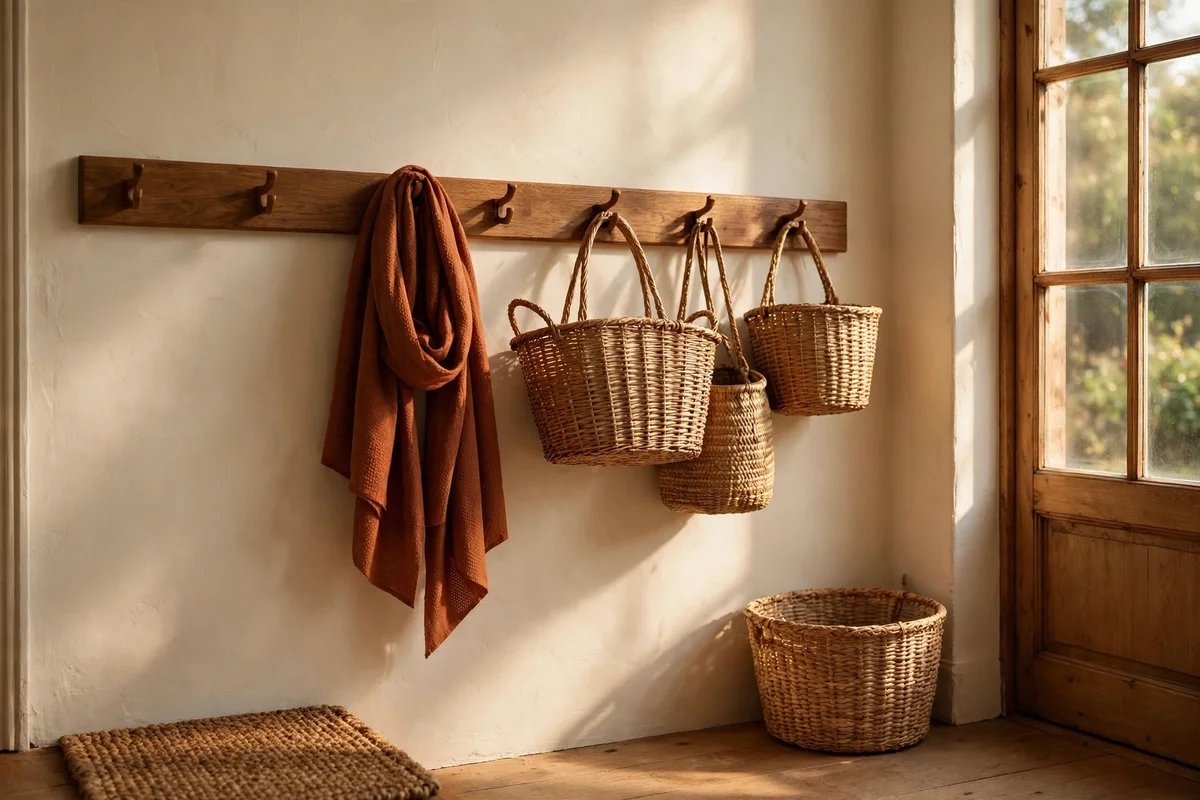
Fix a wooden hook rail 60 to 90 cm long at about 160 cm height on the entry wall, using wall anchors rated for at least 5 kg per hook if it will hold coats. Hang one warm scarf in a muted rust or ochre tone and one woven market basket per hook, leaving at least one hook empty so the row never looks crowded. The basket catches keys, mail and gloves; the scarf adds the season without a single purchased decoration.
Space hooks 18 to 22 cm apart so a basket swings without knocking its neighbour. Match the hook rail wood to your palette, for example oak stained walnut, and repeat that tone in the kitchen tray and bathroom shelf for a quiet thread through the house. Avoid plastic adhesive hooks here: they fail with baskets and mark paint. A five hook solid wood rail plus anchors is a mid range project, usually 30 to 60 dollars.
3. Place One Pair of Pumpkins Beside the Entry Bench
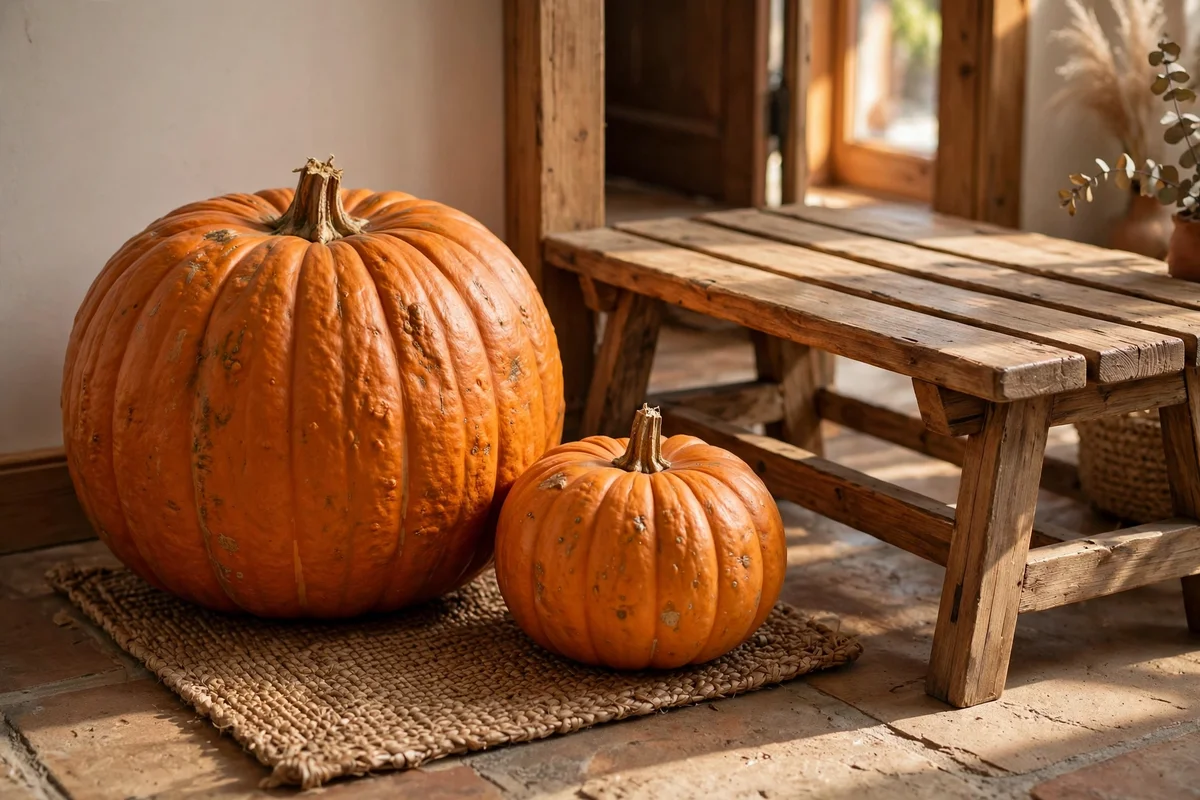
Set two pumpkins of clearly different sizes, one about 25 cm tall and one about 15 cm, on the floor beside the entry bench, slightly forward of the wall so they catch the doorway light. Real pumpkins last six to eight weeks in a cool hallway; faux ones from last year work if the colour is a deep true orange rather than shiny plastic bright. Two is the right number for a bench, three starts to look like a display in a shop doorway.
Choose stems intact and sides unblemished, and stand the pair on a small woven mat or a folded burlap square to protect wood floors. The mistake to avoid is scattering five or six small gourds around them: the calm pairing is what reads elegant. Budget tip: two real pumpkins from a farm stand usually cost under 12 dollars and compost at the end of the season.
4. Swap the Sofa Cushion Covers for Russet and Amber Tones
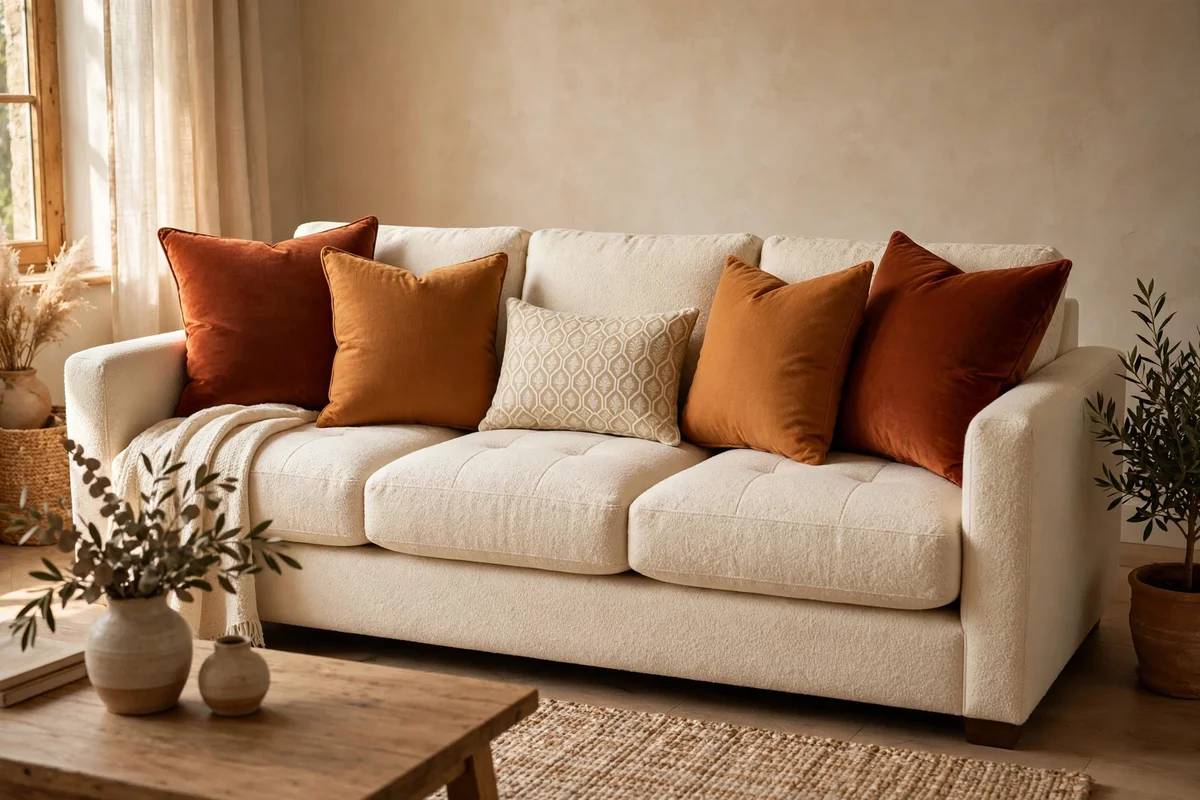
Replace summer cushion covers on the main sofa with a set in russet, amber and warm cream, keeping the same inserts you already own to save money. For a standard three seat sofa, five cushions work well: two russet, two amber and one cream patterned piece in the centre as a bridge. Zip off covers in cotton twill or linen hold their shape best and wash easily after the season.
Arrange cushions in descending size order from the arms inward so the colours mix instead of sitting in blocks. The mistake to avoid is buying covers in every shade of orange you find: three controlled tones read rich, six read noisy. Budget tip: plain covers in good fabric usually run 8 to 15 dollars each, so the full sofa refresh stays under 70 dollars. Store summer covers folded inside one cushion for next year.
5. Drape a Chunky Knit Throw Over the Sofa Arm
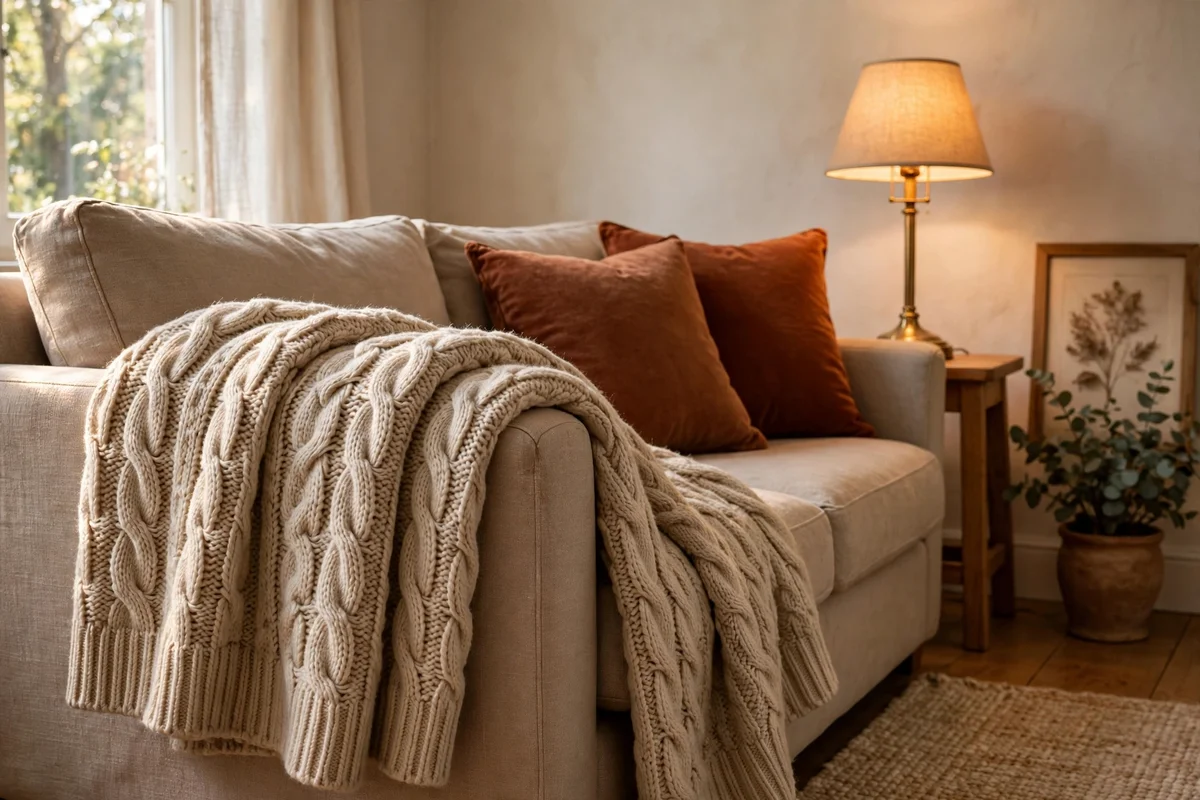
Fold a chunky knit throw, roughly 130 by 180 cm, lengthwise into thirds and drape it over one sofa arm so the folds fall evenly on both sides. A cable knit or waffle weave in cream or warm oatmeal reads autumn without competing with the russet cushions. Natural fibres like cotton, wool or a wool blend keep their texture after washing, which matters for a piece that gets daily use through the season.
Place the throw on the arm nearest the reading lamp so it becomes part of an invitation to sit down with a book or a cup of tea. Avoid throws with long fringe in a house with small children or pets, since fringe pulls and tangles. Budget tip: mid range knit throws in good cotton usually cost 35 to 55 dollars, and this single piece transforms the sofa more than any other one purchase.
6. Layer a Warm Wool Rug Under the Coffee Table
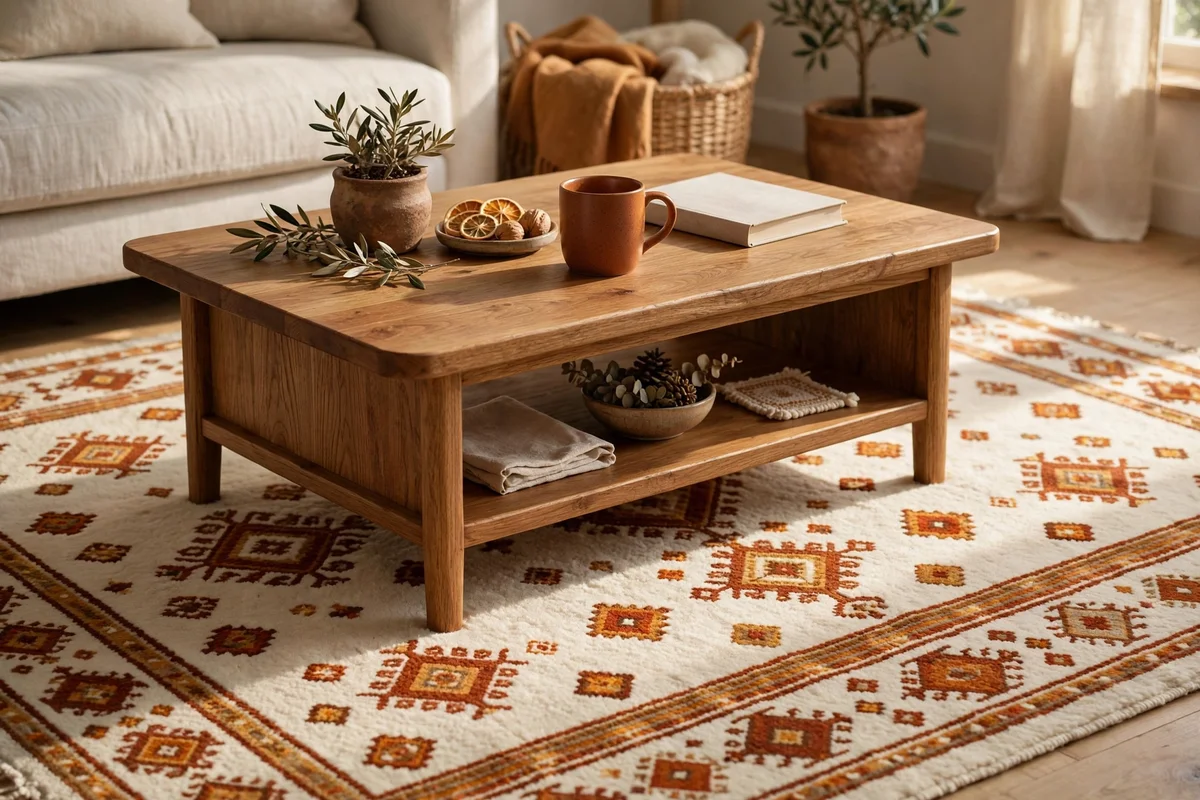
Slide a flatweave or low pile wool rug under the coffee table so it extends 20 to 30 cm past the table on each side; for a typical 120 cm table that means a rug around 160 by 230 cm. Choose warm tones in the shared palette, for example a cream ground with russet and amber motifs, which grounds the seating area and hides autumn dust from boots. A rug pad underneath stops sliding on wood floors and adds welcome softness underfoot.
Keep the rug edge at least 30 cm clear of the doorway swing so the door never catches it. The mistake to avoid is a rug that stops exactly at the table legs: too small rugs chop the room into fragments. Budget tip: second-hand wool rugs in good condition often sell for a third of new, and a good shake out plus a wash restores them. A mid range new wool rug runs 120 to 250 dollars.
7. Style the Mantel With a Dried Foliage Garland
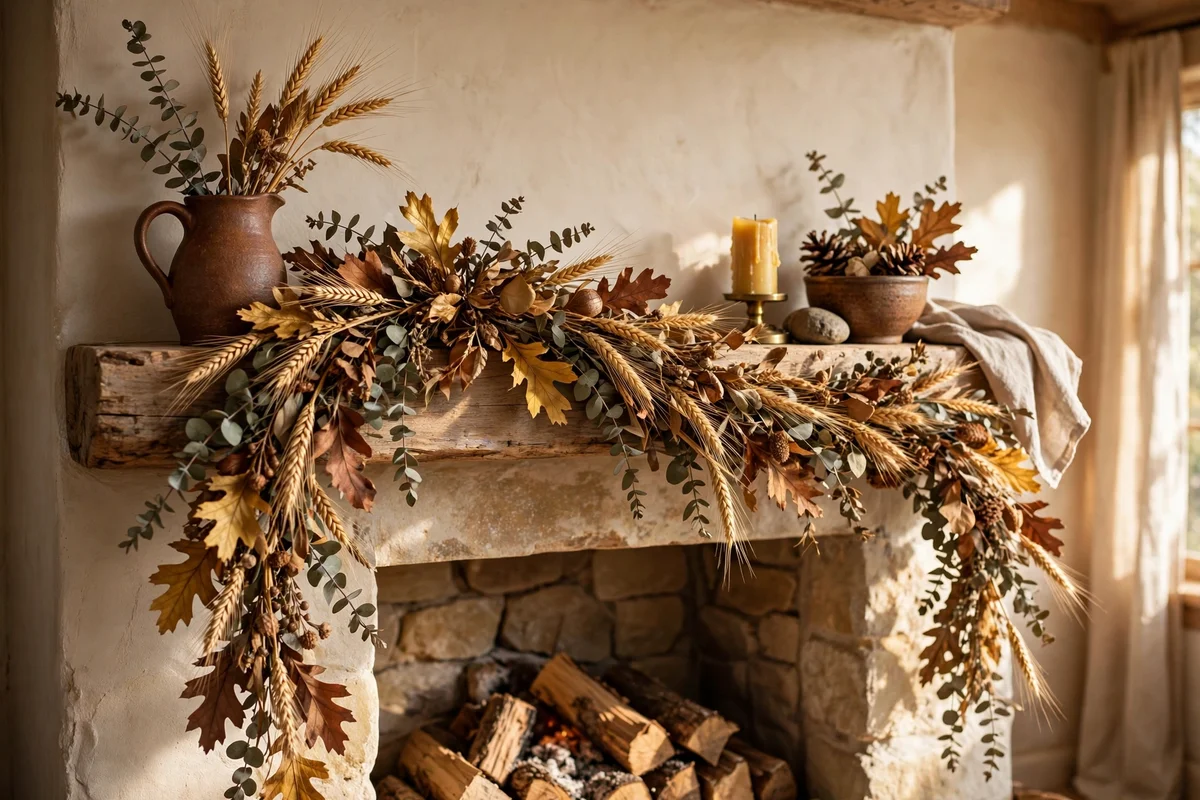
Lay a dried foliage garland along the mantel shelf, letting the ends trail 15 to 20 cm over each edge for a relaxed line. Good autumn choices are dried eucalyptus, wheat stems and preserved oak leaves, all in muted golds and russets that match your palette. Weave the garland through itself once or twice so it holds a full shape, and keep it at least 30 cm above any candle flame for safety.
Anchor the garland with one small cluster of dried berries at the centre for a focal point, and leave the garland’s natural asymmetry alone rather than trimming it perfectly even. The mistake to avoid is mixing glossy faux leaves with matte dried ones: the finish clash looks cheaper than either alone. A 150 cm dried garland usually costs 25 to 45 dollars and stores in a box for reuse.
8. Stack Three Candles of Different Heights on the Mantel
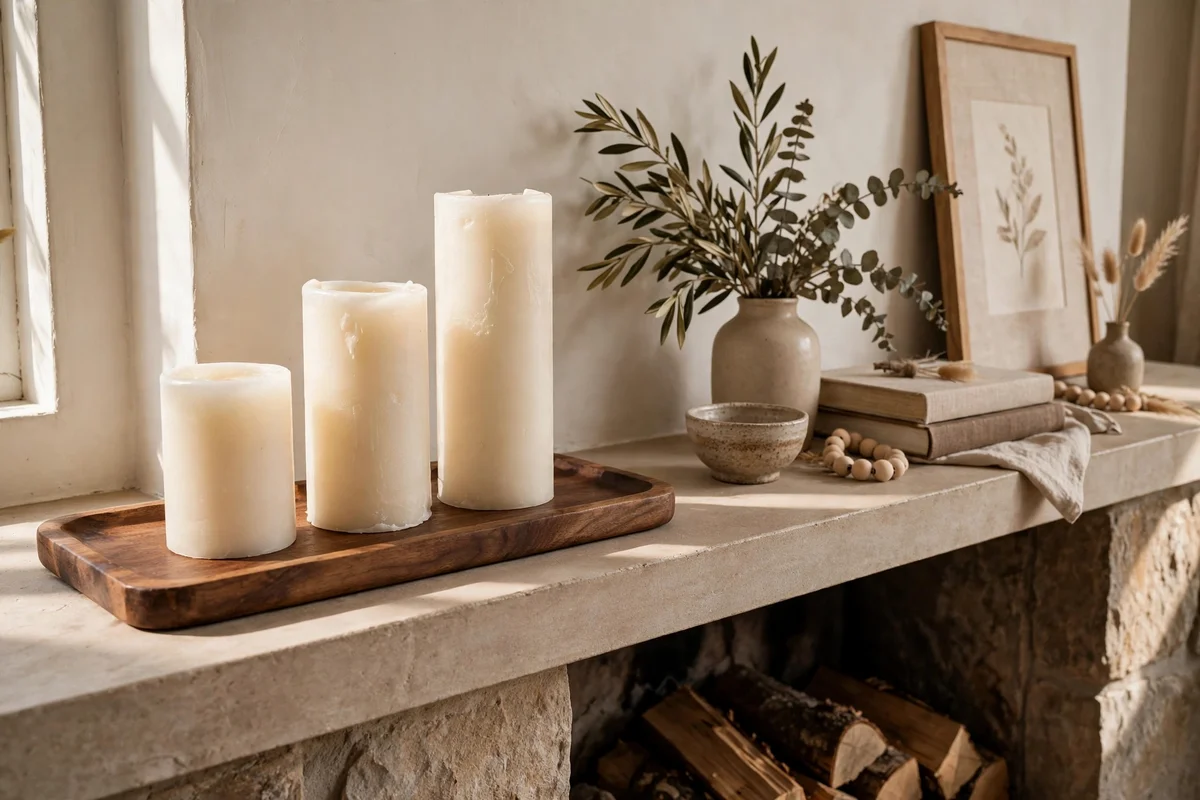
Group three unscented pillar candles on the mantel at heights of roughly 10, 15 and 20 cm, set on a walnut tray or a low brass stand so wax never touches the shelf. Cream or warm amber candles in the shared palette glow softly in the evening and pick up the dried garland above. Keep the cluster toward one end of the mantel, balanced by the garland’s trailing end at the other, for an easy asymmetrical calm.
Trim wicks to 5 mm before each lighting so flames stay small and soot never marks the wall. Never leave lit candles unattended, and keep them 30 cm clear of the garland. The mistake to avoid is five or six candles in a row, which turns a mantel into a shrine. Three good pillars plus a tray usually cost 20 to 35 dollars and last the whole season with weekend use.
9. Swap One Table Lamp Shade for Amber Glass
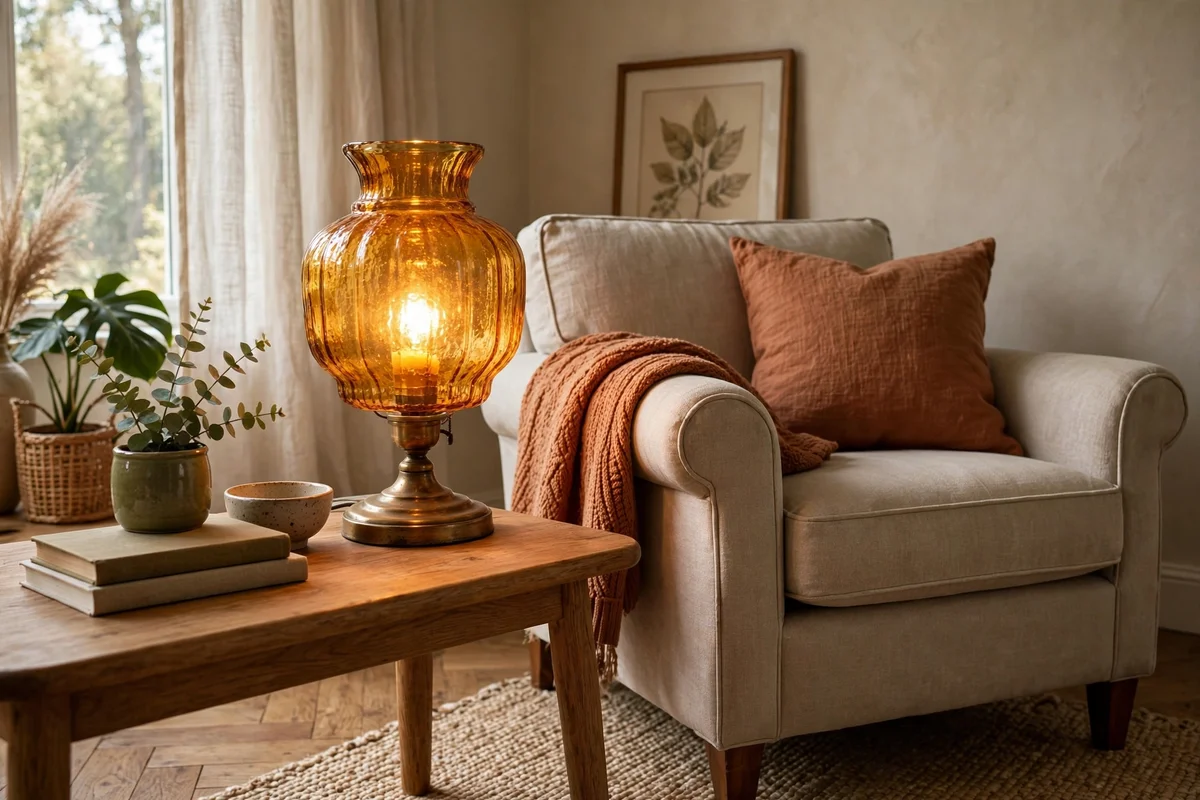
Replace one living room lamp shade with an amber glass or amber tinted fabric shade of similar diameter, usually 30 to 35 cm at the base for a side table lamp. The amber tint warms the bulb glow to a candle-like 2200K feel without changing a single bulb, which deepens the whole room’s evening mood. Fit it on the lamp nearest the reading chair so the warm pool of light lands exactly where people sit.
Keep the other lamps in the room in their original shades so the amber one reads as an accent, not a rule. Check the shade’s spider fitter matches your lamp harp before buying, a detail many shoppers skip. The mistake to avoid is pairing the amber shade with a cool white bulb, which cancels the effect. A single amber shade usually costs 25 to 50 dollars, a small spend for the room’s biggest mood change.
10. Run a Linen Runner Down the Dining Table
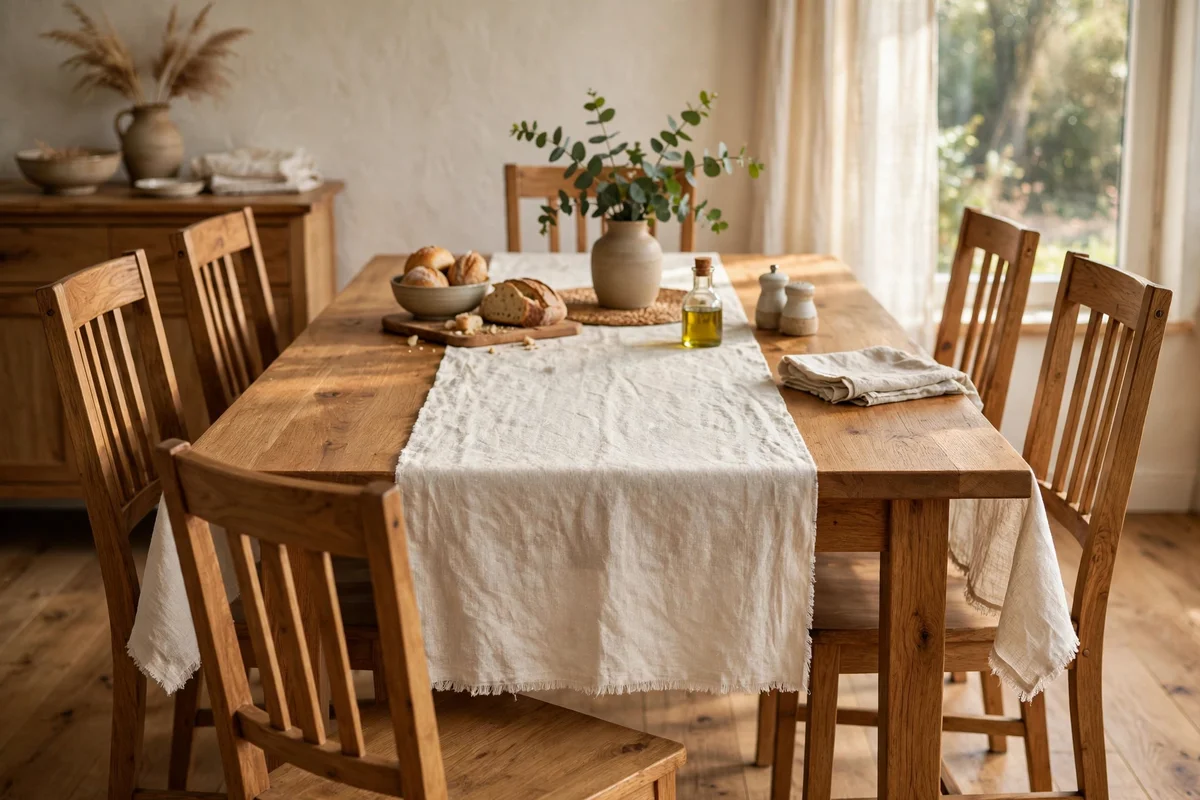
Lay a natural linen runner 35 to 40 cm wide down the centre of the dining table, overhanging 25 to 30 cm at each end for a finished drape. In cream or oatmeal it becomes the quiet base your autumn palette sits on, and linen wrinkles gracefully instead of looking messy. For a 180 cm table, a runner around 230 cm long gives the right proportion without puddling on chairs.
Iron the runner once at the start of the season and accept the soft creases that follow: linen’s charm is its lived-in texture. The mistake to avoid is a plastic backed runner under real dinnerware, which sweats and slips. A good linen runner costs 20 to 40 dollars; stonewashed linen looks softer from day one and never needs breaking in. Roll it, never fold it, between seasons.
11. Build a Low Harvest Centerpiece for the Dining Table
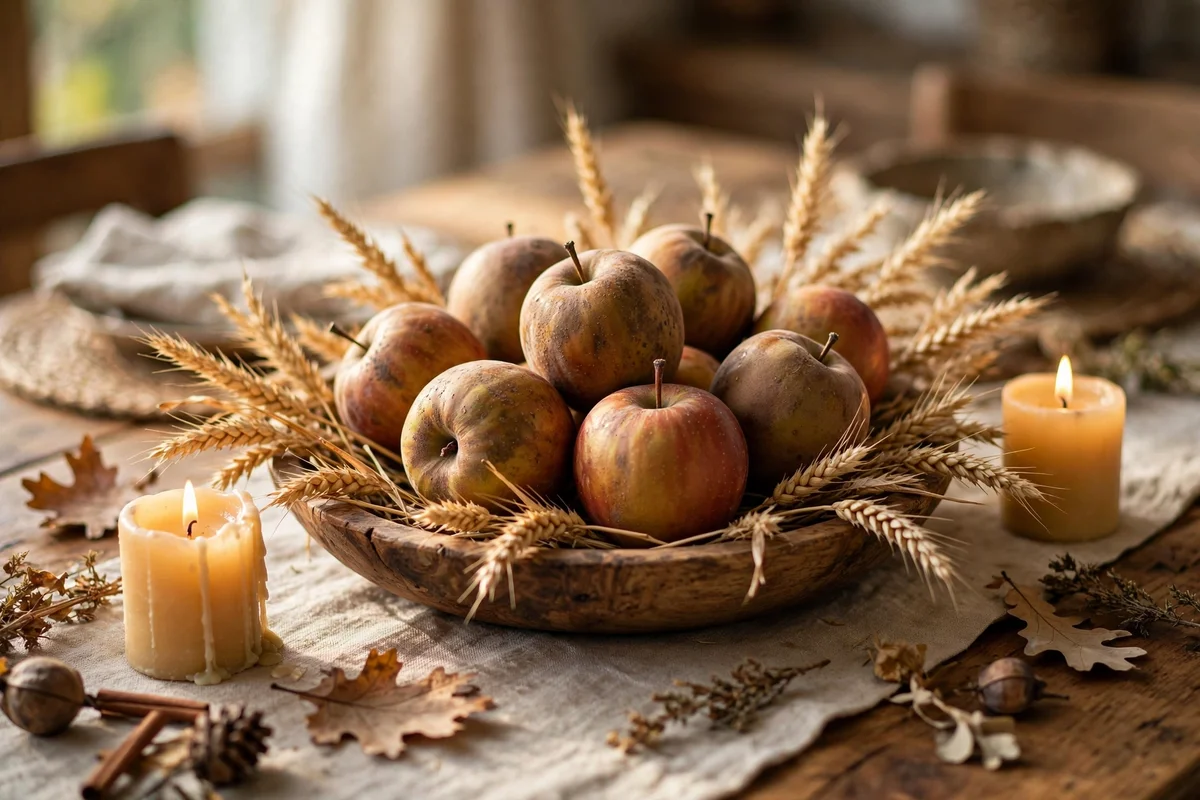
Centre a low arrangement on the runner so conversation flows across the table: a shallow wooden bowl filled with three russet apples, a few dried wheat stems laid flat, and two short pillar candles. Keep the total height under 25 cm so nobody peers around it during dinner. Odd numbers of each element, three apples, five wheat stems, feel natural to the eye.
Refresh the apples weekly from the kitchen bowl so the centrepiece never shows a soft spot. The mistake to avoid is a tall arrangement that blocks faces and gets moved to the sideboard at every meal, defeating the point. Everything here doubles as kitchen stock or reusable decor, so the centrepiece costs almost nothing beyond the bowl, usually 15 to 30 dollars. Light the candles only at dinner.
12. Style the Sideboard With a Pitcher of Dried Branches
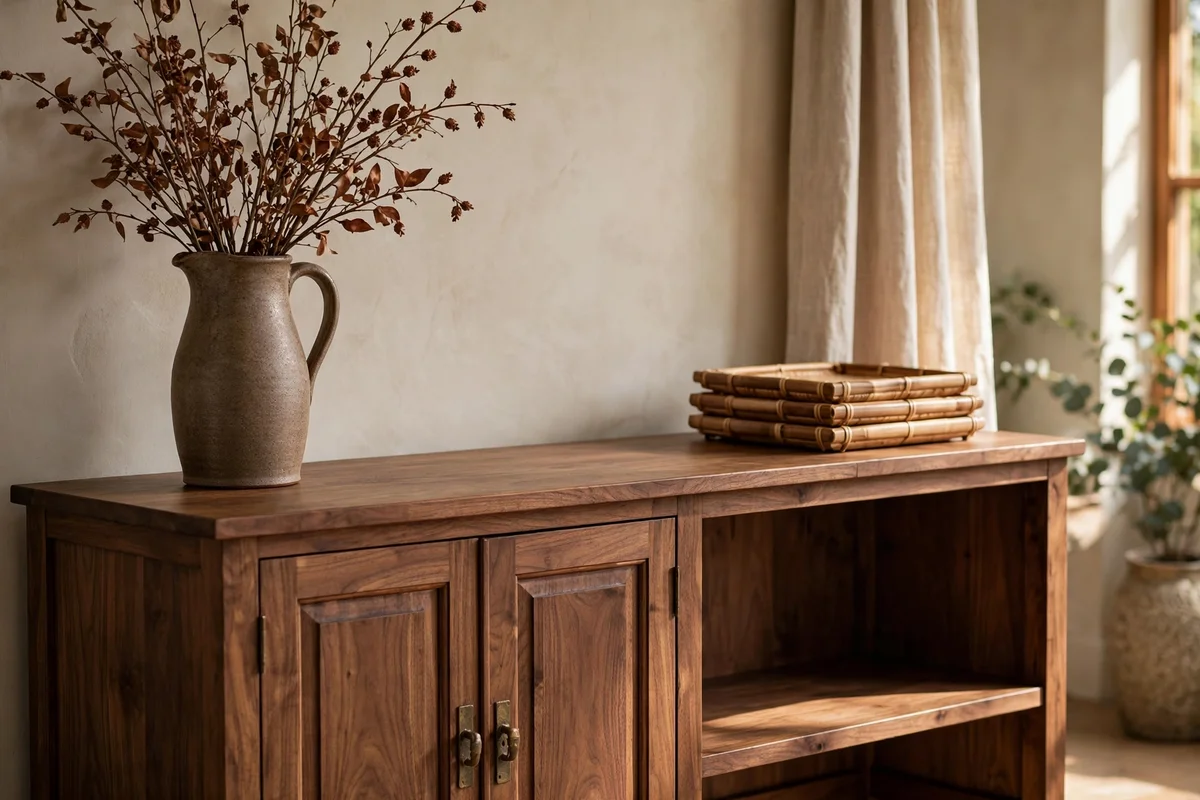
Place a tall stoneware or ceramic pitcher, 25 to 35 cm high, at one end of the sideboard and fill it with dried branches such as contorted hazel or preserved russet oak. Branches should rise 40 to 60 cm above the pitcher mouth for graceful proportion without hitting wall art. At the other end, stack two serving trays or lay a folded runner remnant so the sideboard reads as two balanced zones with clear space between.
Wipe dried branches with a dry cloth once a month; they hold dust otherwise. The mistake to avoid is filling the pitcher with so many stems it cannot stand steadily. Choose branches in the shared palette, russets, golds, walnut browns, so the sideboard echoes the mantel garland across the room. A stoneware pitcher costs 20 to 40 dollars and serves drinks or branches for years.
13. Hang a Set of Ochre Kitchen Towels on the Oven Rail
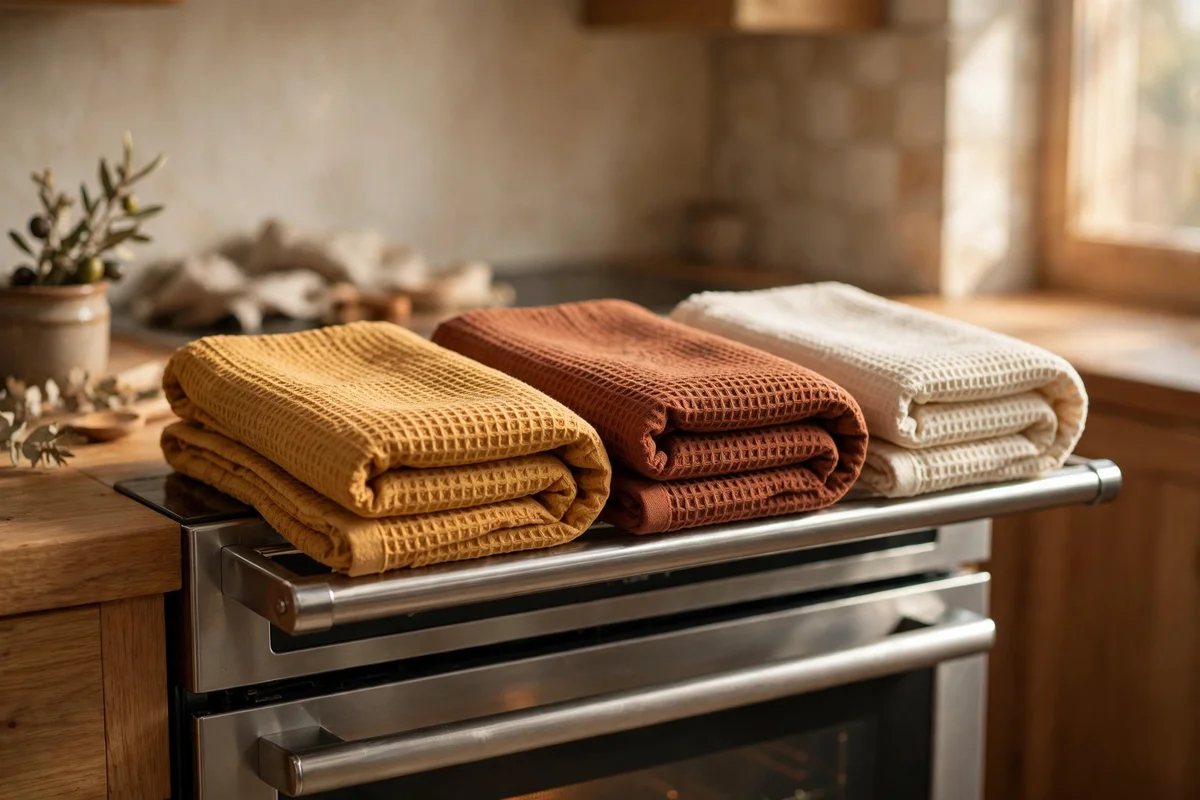
Replace kitchen towels with a set of three in ochre, russet and warm cream, folded in thirds over the oven rail or a wall hook so each colour shows. Cotton waffle weave or linen blend towels dry hands well and soften with every wash, unlike decorative towels that never leave the rail. Rotate the front towel daily so wear spreads evenly across the set through the season.
Keep the palette identical to the bathroom towels one room away so the whole floor feels coordinated when doors stand open. The mistake to avoid is novelty print towels that clash with everything else you just placed. A set of three quality cotton towels usually costs 15 to 25 dollars. Wash them alone the first time in cold water, since deep russet dyes can run.
14. Fill a Wooden Bowl With Russet Apples for the Counter
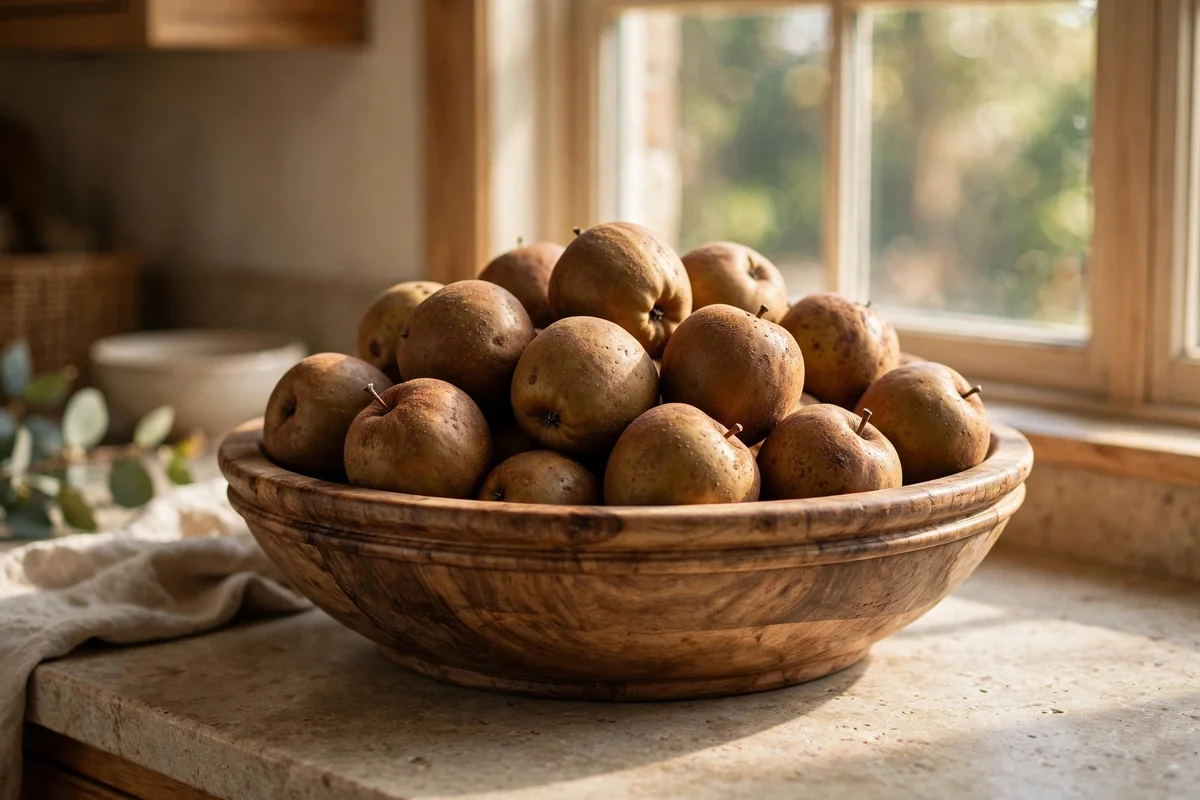
Set a wide wooden bowl, 30 to 35 cm across, on the kitchen counter near the window and fill it with eight to ten russet apples, the brown skinned heritage variety that looks made for the season. Keep the bowl at least 15 cm from the hob so heat never reaches the fruit. A single layer with a few apples stacked in the centre shows the russet skins best and lets air circulate.
Eat from the bottom of the bowl and top up from the market bag so nothing sits for weeks. The mistake to avoid is a bowl of waxed, perfect looking fruit that nobody touches: the point is that the decor is dinner too. Russet apples store two to three weeks at cool room temperature. A turned wood bowl costs 20 to 40 dollars and earns its place year round.
15. Line the Open Shelf With Dried Herb Bunches
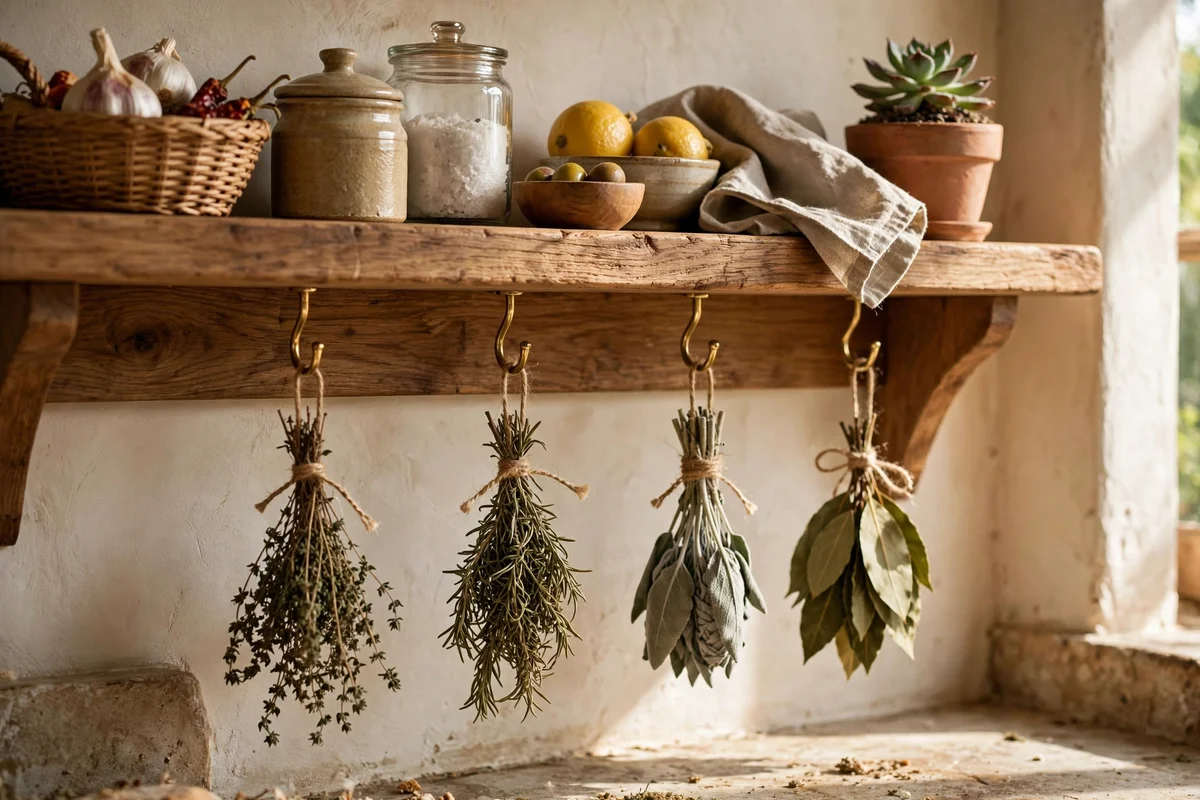
Tie small bunches of dried herbs, thyme, rosemary, sage and bay, with natural twine and hang them from the underside of the open kitchen shelf with small brass hooks. Five to seven bunches spaced 10 cm apart give a generous look without crowding the jars below. Dried herbs in muted greens and greys add the one cool note that keeps an all warm palette from feeling heavy.
Snip what you need for cooking from the bottom of each bunch; they stay fragrant for months. The mistake to avoid is hanging herbs above the hob, where steam and grease ruin them fast. A handful of herb bunches from the market usually costs under 10 dollars, or dry your own in two weeks hung upside down in a dark cupboard. Label each bunch with a small paper tag.
16. Swap the Summer Coverlet for a Quilted Autumn Blanket
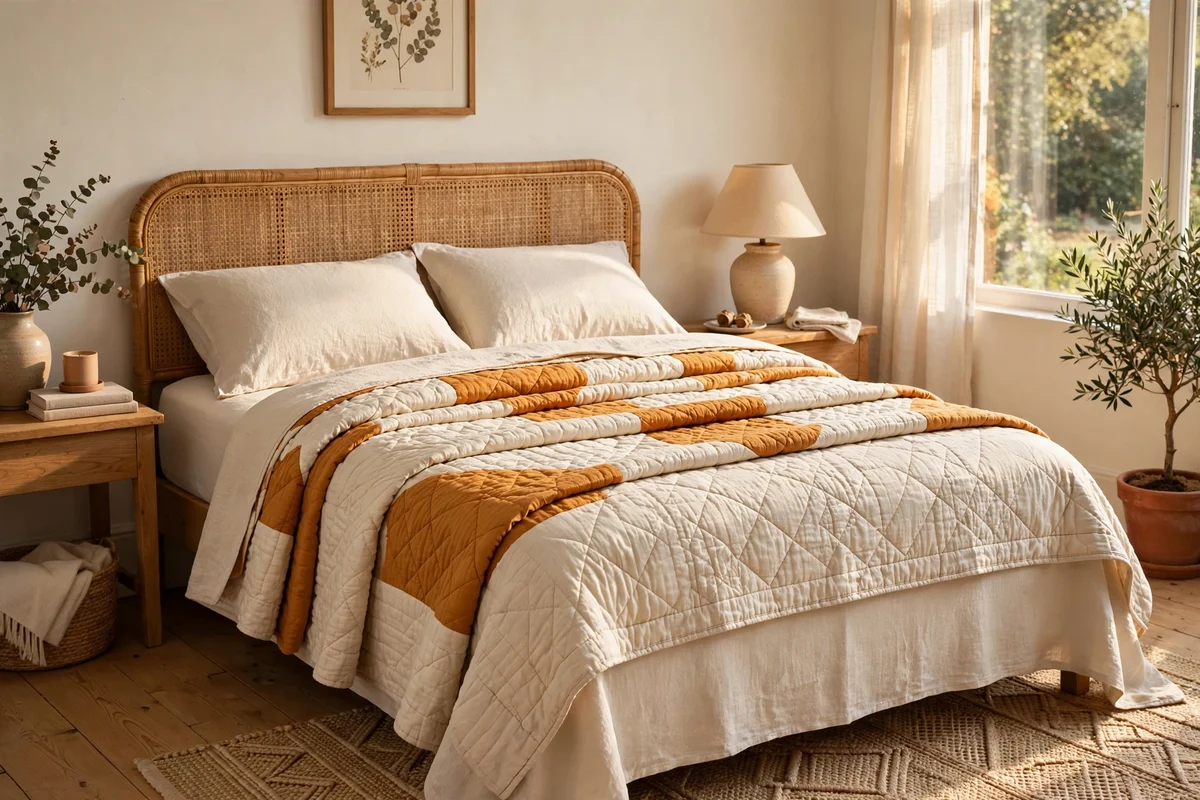
Fold back the light summer coverlet and replace it with a quilted blanket in warm cream or a soft amber check, sized to reach 25 to 30 cm past the mattress edge on each side. For a queen bed that usually means a blanket around 230 by 260 cm. Quilted cotton or a cotton wool blend adds visible texture that reads autumn instantly and layers easily under the duvet on colder nights.
Fold the top third of the blanket back over itself at the head of the bed to show the quilting pattern and to make morning bed making a one minute job. The mistake to avoid is a blanket that barely covers the mattress top: short bedding looks untidy no matter the fabric. A good quilted blanket costs 60 to 120 dollars mid range and becomes the bedroom’s whole season in one piece.
17. Layer Amber and Sage Cushions Across the Bed
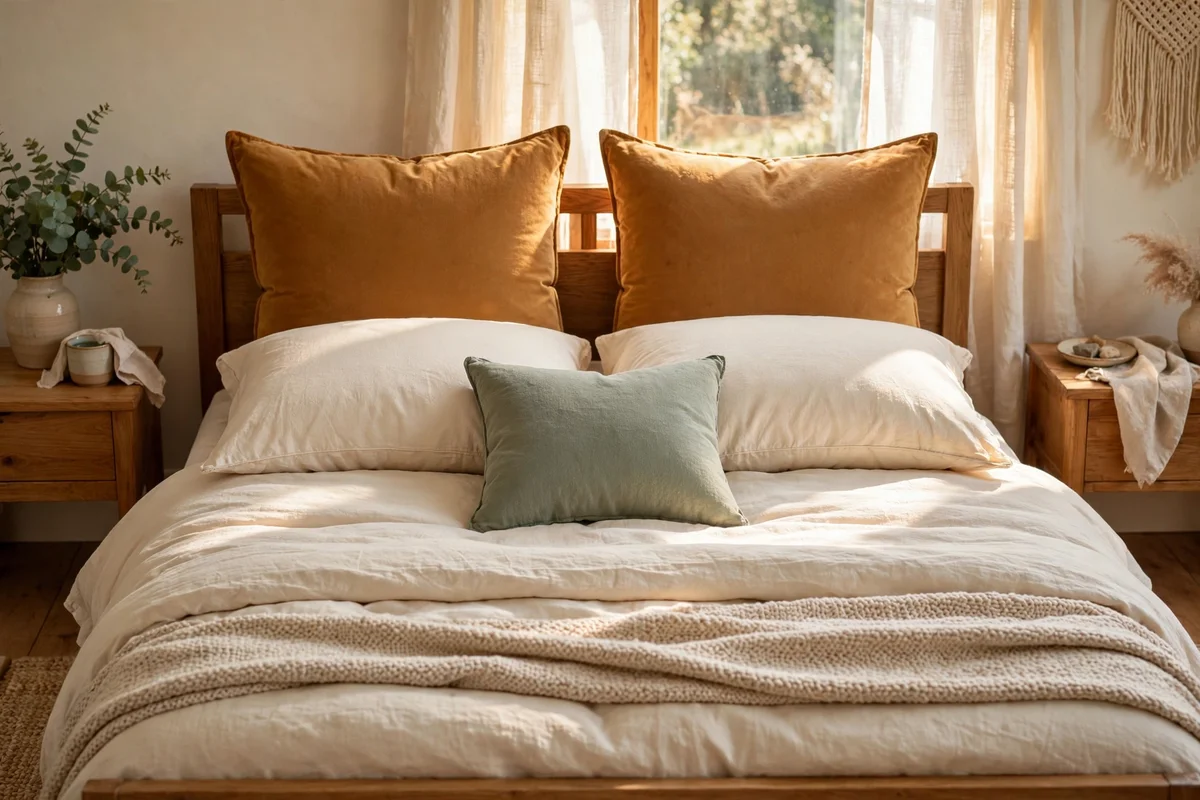
Dress the bed with sleeping pillows in cream cases, then add two amber euro cushions 65 cm square standing against the headboard and one smaller sage cushion 40 cm square centred in front. The sage is the cool note that stops the warm palette from tipping into monotony, echoing the dried herbs in the kitchen. Keep to these three pieces plus sleeping pillows: a bed with six cushions just moves them to a chair every night.
Choose removable covers in cotton or linen so the whole set washes at season end. The mistake to avoid is buying the exact cushion set shown on a shop display: three planned colours in your palette always sit better than a matched pack. Covers usually cost 10 to 20 dollars each, so the full bed layering stays under 60 dollars. Fluff daily for two minutes to keep the arrangement crisp.
18. Place a Small Vase of Dried Grasses on the Nightstand
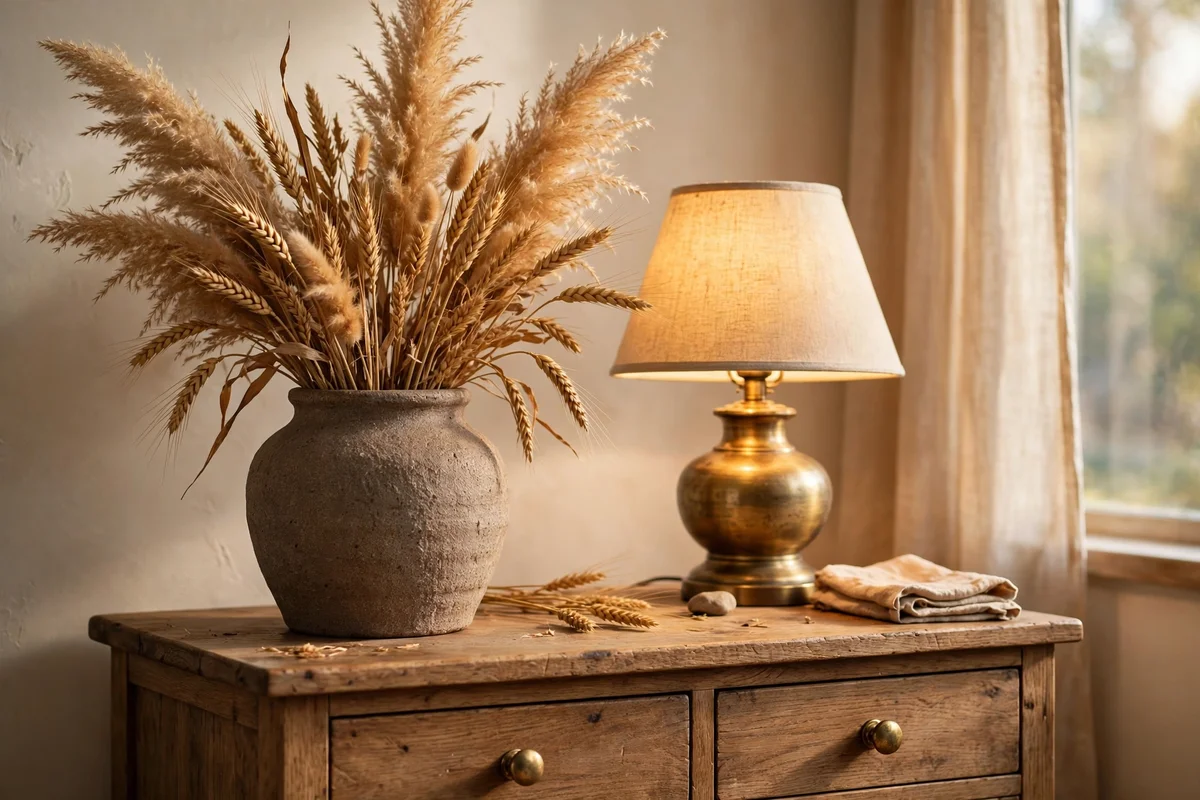
Set a small ceramic vase 15 to 20 cm tall on the nightstand, holding five to seven stems of dried pampas grass, bunny tails or preserved wheat. Keep the arrangement at least 20 cm from the lamp shade so nothing brushes hot fabric. Dried grasses in soft golds pick up the amber cushions and bring the garden’s end of season into the quietest room.
Choose a vase heavy enough to stay put when you reach for the lamp in the dark: stoneware or a filled ceramic works well. The mistake to avoid is fresh cut flowers here in October: they wilt within days while dried stems last the season. A small vase plus a bunch of dried grasses usually costs 15 to 25 dollars. Shake the stems outside once a month to release dust.
19. Fold Russet and Cream Towels in the Bathroom Stack
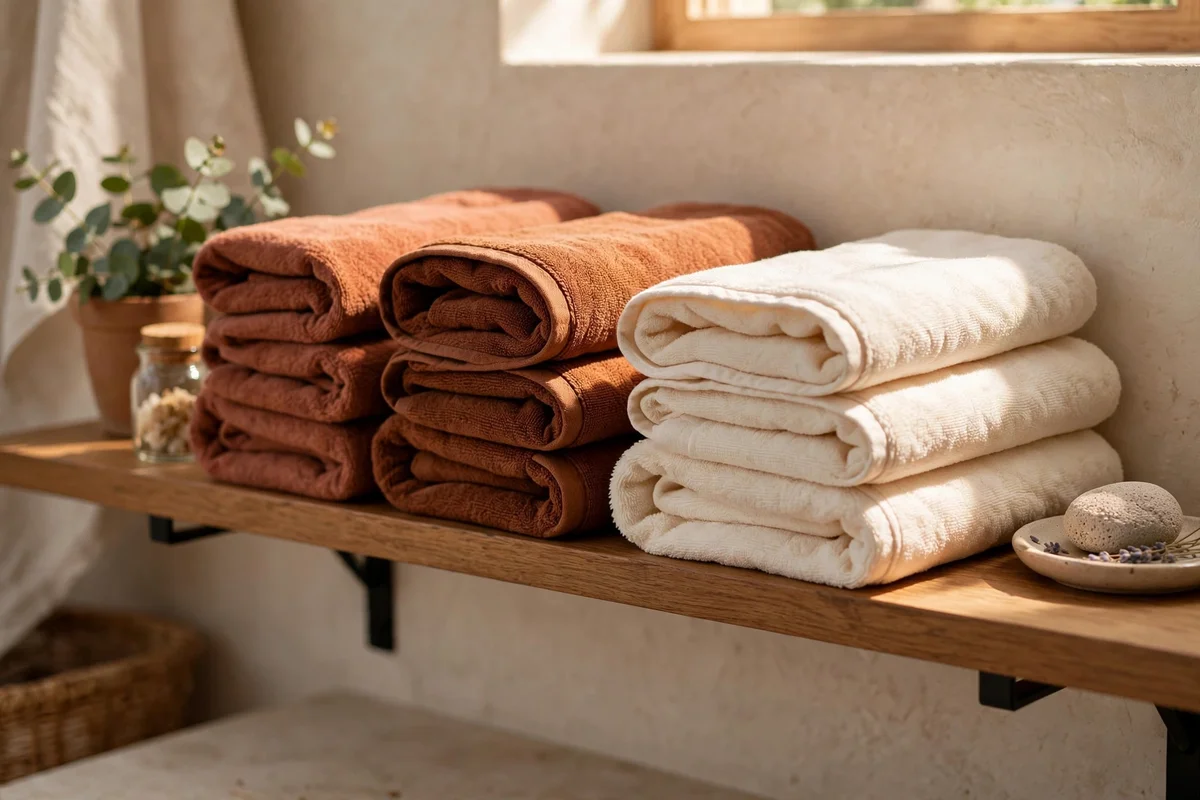
Replace the bathroom towel stack with the same russet and cream palette running through the rest of the house, folding each towel in thirds so the fold edge faces forward on the shelf. Bath towels 70 by 140 cm in a 600 GSM cotton feel substantial and absorb well; stack two bath towels with two hand towels 50 by 100 cm on top. The shared palette means the open bathroom door never breaks the home’s rhythm.
Wash new towels in cold water with half a cup of white vinegar to set the dye and boost absorbency. The mistake to avoid is fabric softener on good towels: it coats fibres and ruins absorbency within weeks. Four quality cotton towels usually cost 40 to 70 dollars. Rotate the stack so the same towel is never always on top and wearing fastest.
20. Set a Wooden Tray With Amber Soap by the Sink
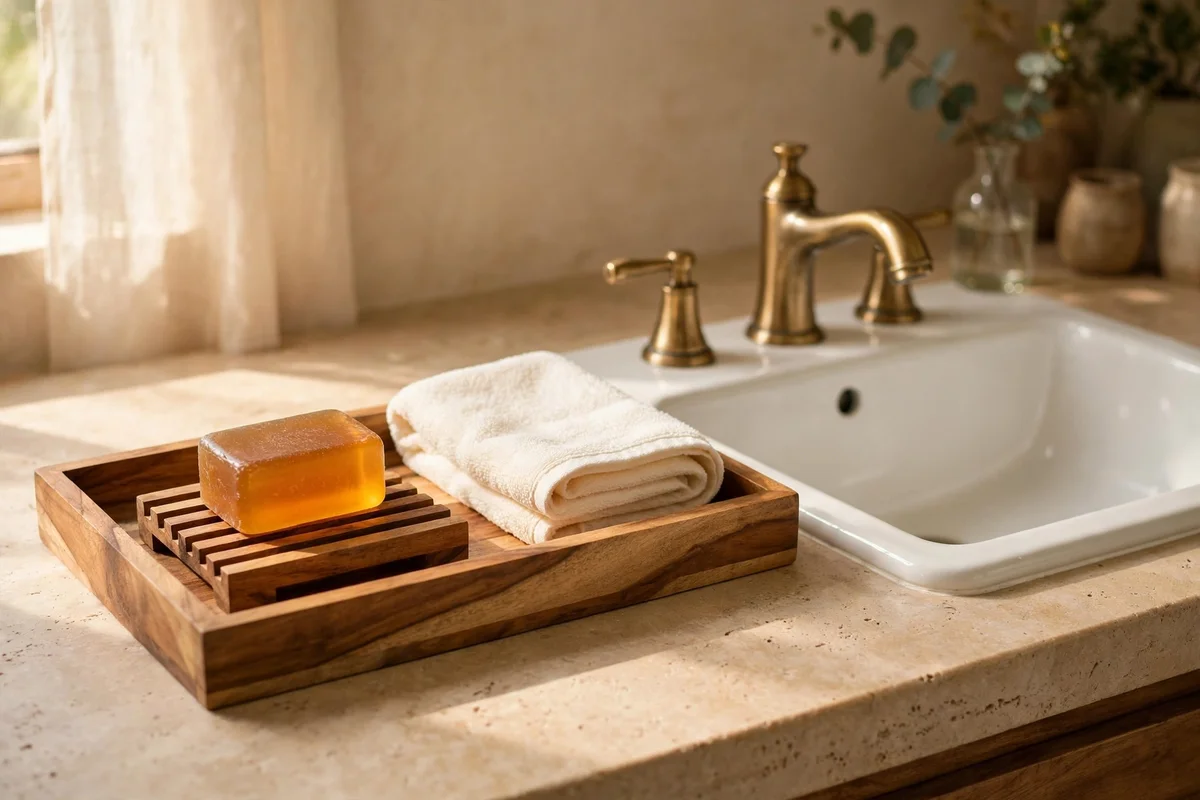
Place a small acacia or walnut tray 20 by 30 cm beside the sink, holding a bar of amber coloured soap on a slatted soap dish and a folded cream hand towel. The tray corrals the wet zone so soap never sits directly on the basin edge, and the wood repeats the entry bench and kitchen bowl tones. Choose soap in a warm honey or amber colour rather than bright packaging that fights the palette.
Let the tray dry between uses by standing the soap dish on small feet, since trapped water darkens wood fast. The mistake to avoid is three half used bottles cluttering the basin: decant into one pump bottle in a neutral tone if you prefer liquid soap. A wooden tray plus soap dish usually costs 15 to 30 dollars. Oil the tray with mineral oil twice a season to keep it watertight.
21. Flank the Front Door With Two Storm Lanterns
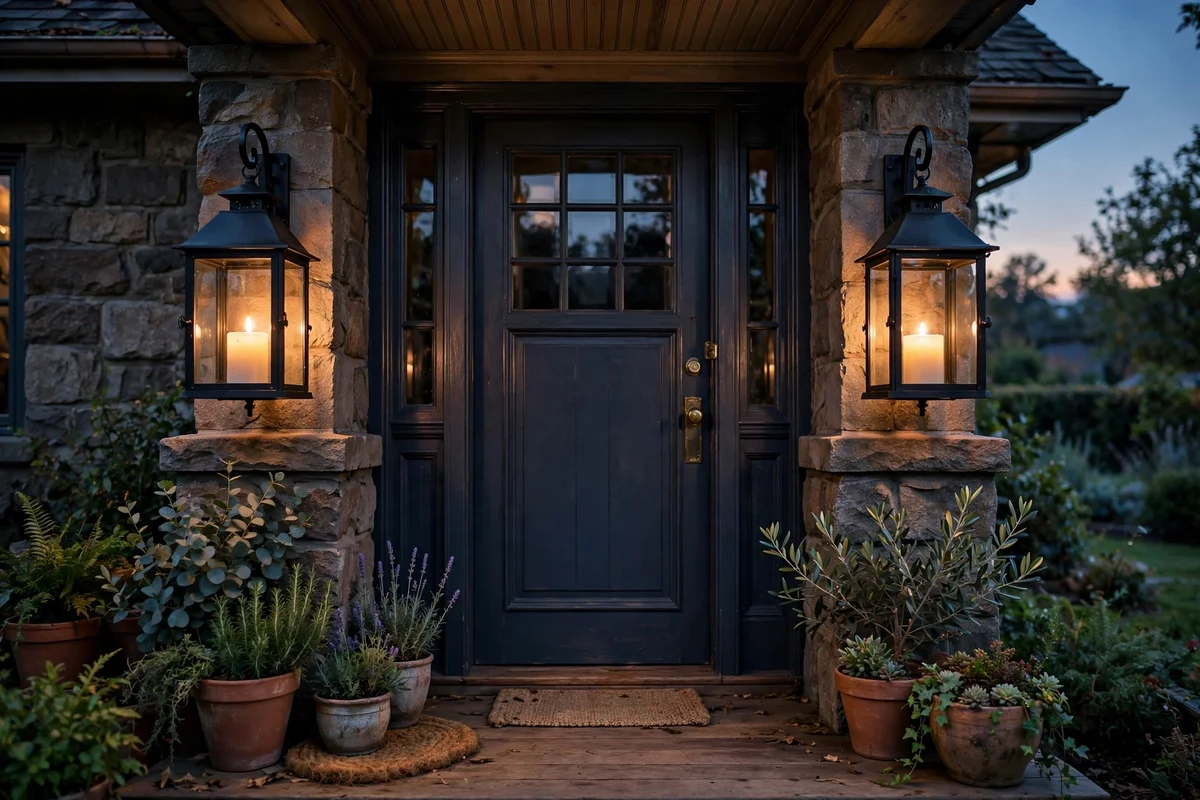
Set two storm lanterns 30 to 40 cm tall on the porch floor, one each side of the door, about 60 cm out from the wall so they frame the entrance without blocking the swing. Use battery pillar candles with a built-in timer so the lanterns glow from dusk without daily attention. Black metal or aged bronze lanterns suit every house style and survive rain far better than painted wood.
Anchor each lantern with a flat stone inside the base so autumn winds never topple them. The mistake to avoid is real flame candles in porch lanterns left unattended: battery candles with a warm 2700K tone look identical from the street. A pair of good storm lanterns costs 40 to 80 dollars and returns every autumn. Wipe the glass monthly so the glow stays clear.
22. Pot Mums in Plain Terracotta Pots on the Porch
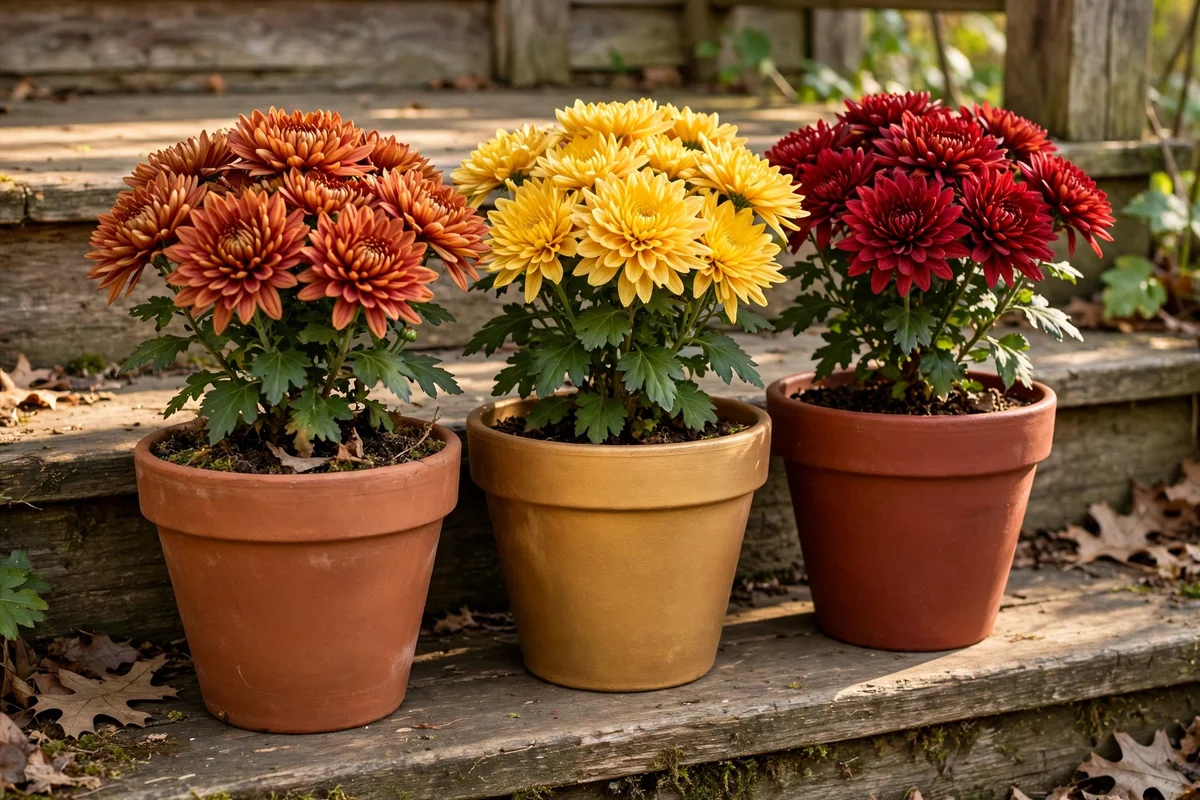
Group three chrysanthemums in plain unglazed terracotta pots, 20 to 25 cm diameter, in russet, gold and deep red, clustered at one corner of the porch steps. Plain pots are the point: their matte orange clay is the season’s colour already, and they cost a fraction of glazed planters. Water mums deeply twice a week and deadhead spent blooms so the display lasts six to eight weeks.
Raise the pots 2 cm on small feet or a wooden pallet so the drainage holes never sit in puddles. The mistake to avoid is one lonely small mum by the door: odd groups of three read generous, singles read forgotten. Three potted mums plus plain terracotta pots usually cost 25 to 45 dollars total. When frost threatens, move the pots against the house wall for extra warmth.
23. Layer a Coir Mat Over a Flatweave Porch Rug
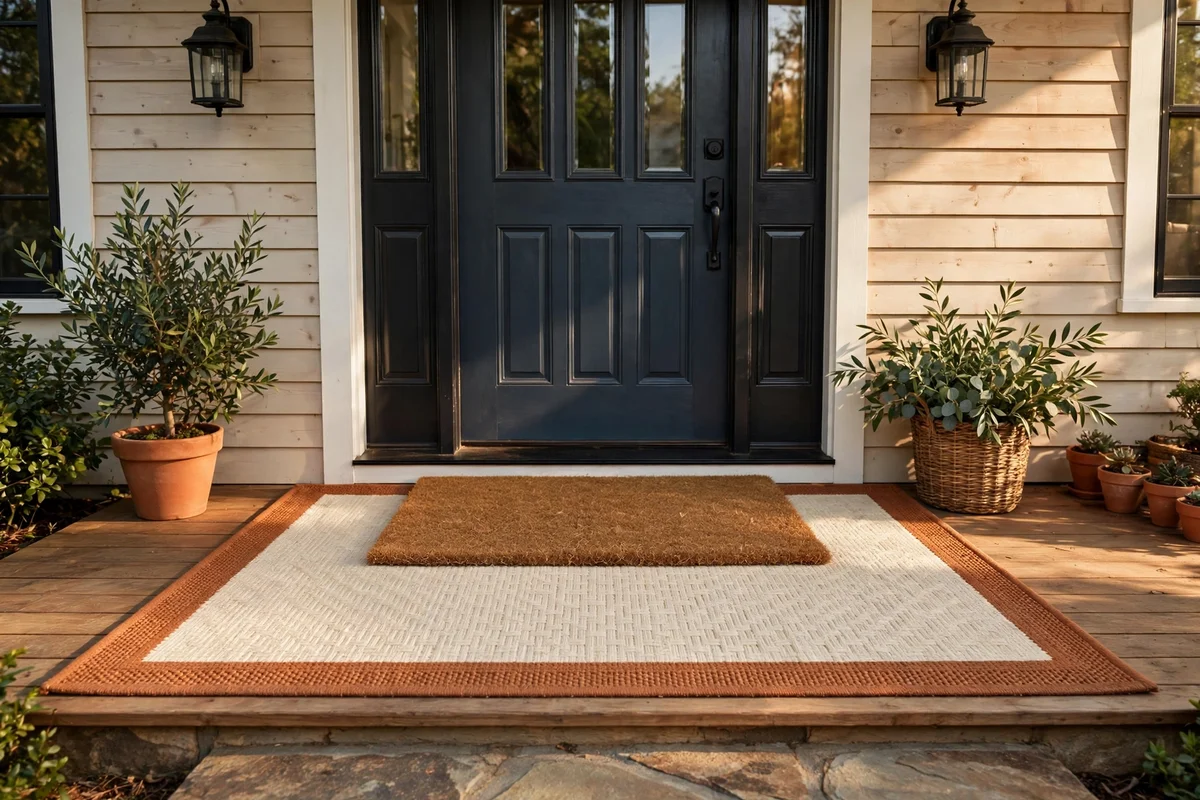
Lay a flatweave outdoor rug 60 by 120 cm on the porch boards, then centre a coir doormat 45 by 75 cm on top of it, aligned with the door. The layered look reads generous and welcoming, and the coir scrapes boots while the rug softens the boards. Choose the rug in a muted stripe or solid that echoes the indoor palette, cream with a russet border, so the threshold feels continuous.
Shake the coir mat weekly and hose the flatweave monthly, since porch layers trap grit. The mistake to avoid is a rug that extends past the step edge: it curls, trips and rots. A flatweave outdoor rug plus coir mat usually costs 30 to 55 dollars. Bring both inside or under cover before the first hard frost to double their life.
24. Pack Decor Into Labelled Boxes by Room for Next Year
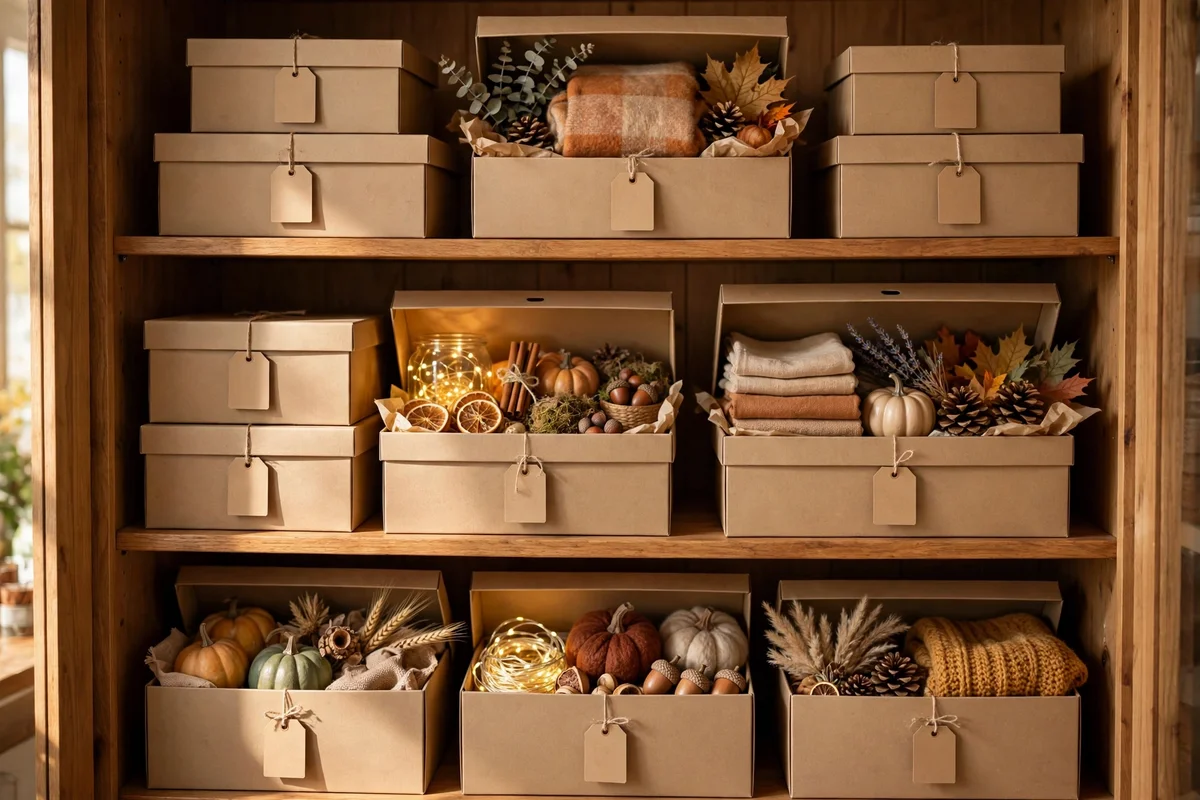
When the season ends, pack each room’s autumn decor into its own sturdy box, entry, living room, dining, kitchen, bedroom, bath, porch, and label each box on two sides with a luggage tag or masking tape strip written in marker. Wrap dried items in tissue, nest candles upright with paper between them, and coil garlands loosely so stems never snap. One box per room means next October you unpack in an afternoon instead of a weekend.
Store boxes off the floor in a dry cupboard or on a high shelf, since ground level damp reaches cardboard fast. The mistake to avoid is one giant mixed box: it guarantees a tangled, dusty mess and a lost November evening sorting it. Seven medium boxes usually cost 20 to 35 dollars total, and clear boxes let you see contents at a glance. Keep the inventory list inside the lid of each box.
25. Photograph Each Finished Room Before You Pack It Away
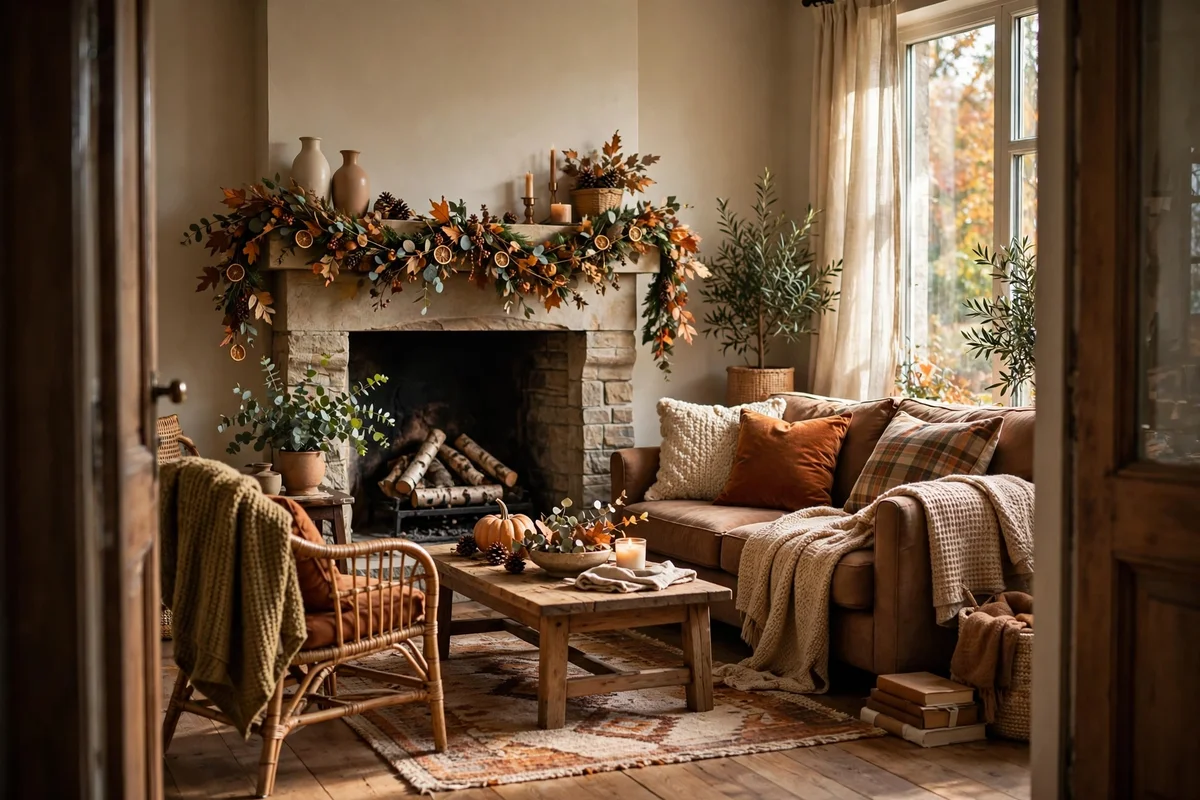
Before a single box comes out, photograph each finished room in daylight from the doorway and from one corner, using the same two angles every year. These photos become next autumn’s setup guide: you will place the garland, the cushions and the lanterns exactly where they worked, in half the time. Keep the photos in one phone album named for the season so they never scatter across the camera roll.
Note one small change per photo while it is fresh, for example move the branch pitcher 20 cm left, so next year’s refresh improves instead of just repeating. The mistake to avoid is trusting memory: a year later every room blurs together and you start from scratch. This costs nothing and takes ten minutes, yet it is the single habit that makes seasonal decorating feel easy instead of exhausting.
A whole home refresh works because every room speaks the same quiet language: russet cushions echoing russet apples, walnut wood repeating from bench to tray to soap dish, and warm light pooled in every corner as the evenings draw in. Nothing here required a renovation or a large budget, only a shared palette and one calm hour per room. The house now feels gathered and ready, the way a table feels ready before guests arrive.
If the full list feels long, start this week with the single easiest change: swap the sofa cushion covers for russet and amber tones. It takes twenty minutes, costs less than a takeaway dinner, and it shifts the whole living room into the season at once. Photograph the result, enjoy it through the darkening evenings, and let that one success pull the rest of the rooms along behind it.
Frequently Asked Questions
How much does a whole home fall refresh realistically cost?
Between 150 and 400 dollars if you buy the key pieces new, far less if you reuse last year’s boxes. Spend most on textiles you touch daily, like cushion covers and throws, and almost nothing on consumables such as pumpkins and apples. One shared palette stops the impulse buys that quietly double the bill.
How do I keep one colour palette flowing through every room?
Pick three colours plus one wood tone and write them on a card you carry while shopping: russet, amber, cream and walnut, for example. Every purchase must match at least two of the four. Repeating the same wood tone on the bench, trays and soap dish does more for cohesion than matching every cushion exactly.
What is the fastest single room to refresh for fall?
The living room, because textiles do the heaviest work there. Swapping cushion covers, draping a knit throw and styling the mantel takes about an hour and changes the room completely. Kitchens and bathrooms come second: new towels and a bowl of fruit take twenty minutes and read instantly seasonal.
How should I store fall decor so next year is easy?
Pack one labelled box per room, wrap dried items in tissue, and store boxes off the floor in a dry spot. Photograph each finished room from the same two angles before packing, and keep the photos in one phone album. Next October you will unpack and place everything in an afternoon instead of a weekend.
Can I decorate for fall in a small rented home?
Yes, renters get the same effect with fully reversible changes. Use cushion covers, throws, towels and freestanding pieces like lanterns, bowls and potted mums, and skip anything nailed or painted. A hook rail on adhesive mounts rated for the weight gives you the entry storage without touching the walls.