Living Room
25 Golden Autumn Living Room Ideas That Glow With Warmth From Morning to Dusk
By Anna Wells · · 24 min read
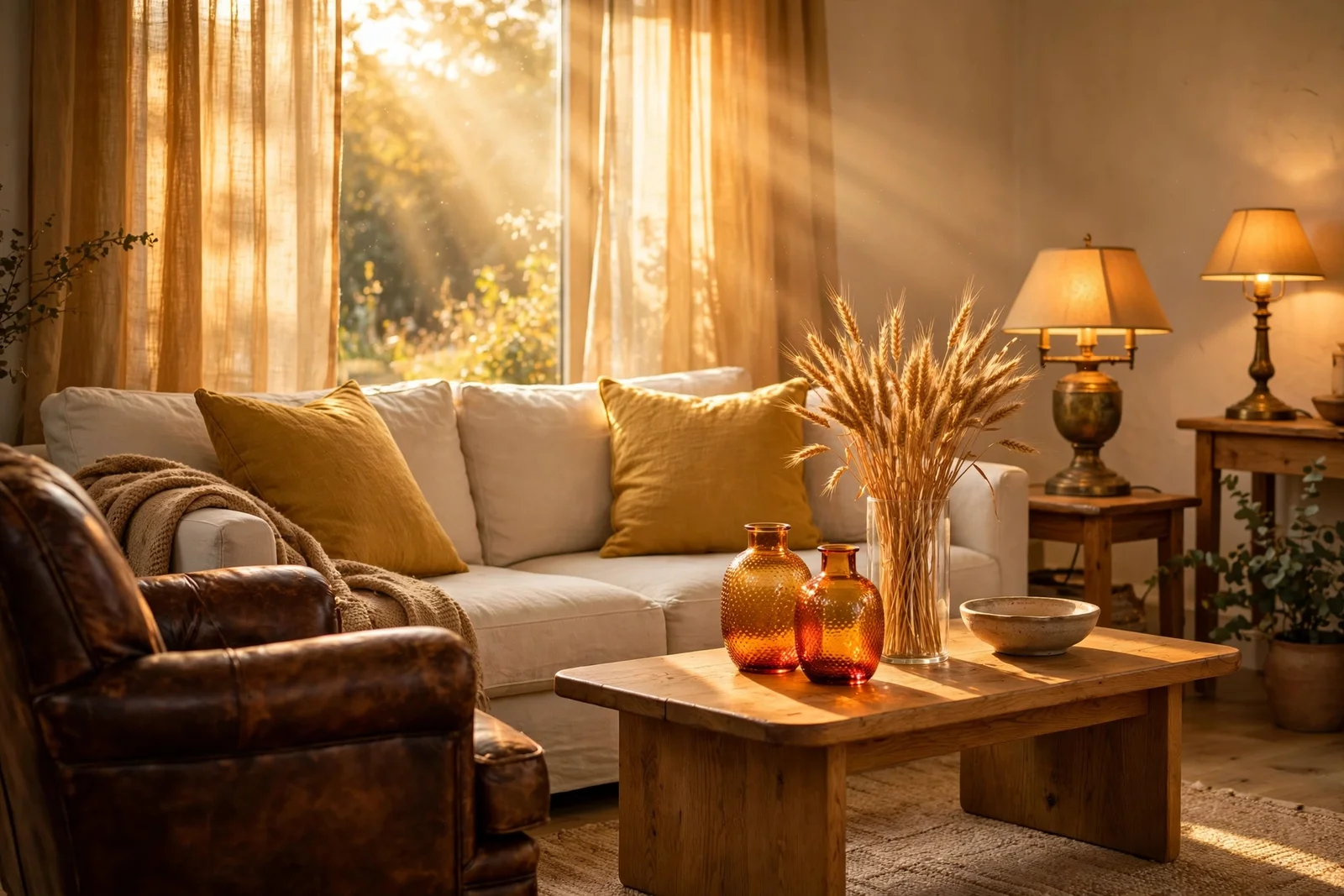
Twenty-five golden living room ideas built on aged brass, amber glass, honeyed wood and layered warm light, so your room holds the late afternoon sun from morning to dusk.
There is a particular hour in autumn when the whole living room turns to honey. The sun drops low, the light comes in sideways, and every warm surface in the room seems to hold it a little longer. This article is about keeping that hour all day, not through luck but through colour and light chosen on purpose.
The palette is simple: cream walls and a cream sofa for calm, honey toned wood in the middle, deep brown leather and dark wood to anchor it all. Into that base we layer the golds, aged brass used sparingly, amber glass that glows from inside, mustard and ochre textiles that catch the lamplight.
Light does half the work. Instead of one cold ceiling bulb, this room glows from three heights: a floor lamp, a table lamp and candles, all in warm 2700K. A mirror set to catch the evening sun doubles the effect for free.
Below are twenty-five concrete ideas, each one a specific thing to buy, move or make, with sizes, costs and the mistakes worth avoiding. Work through them in any order, and the room will feel like late afternoon from the first cup of tea to the last page of the evening.
1. Swap in Aged Brass Lamp Bases Beside the Sofa
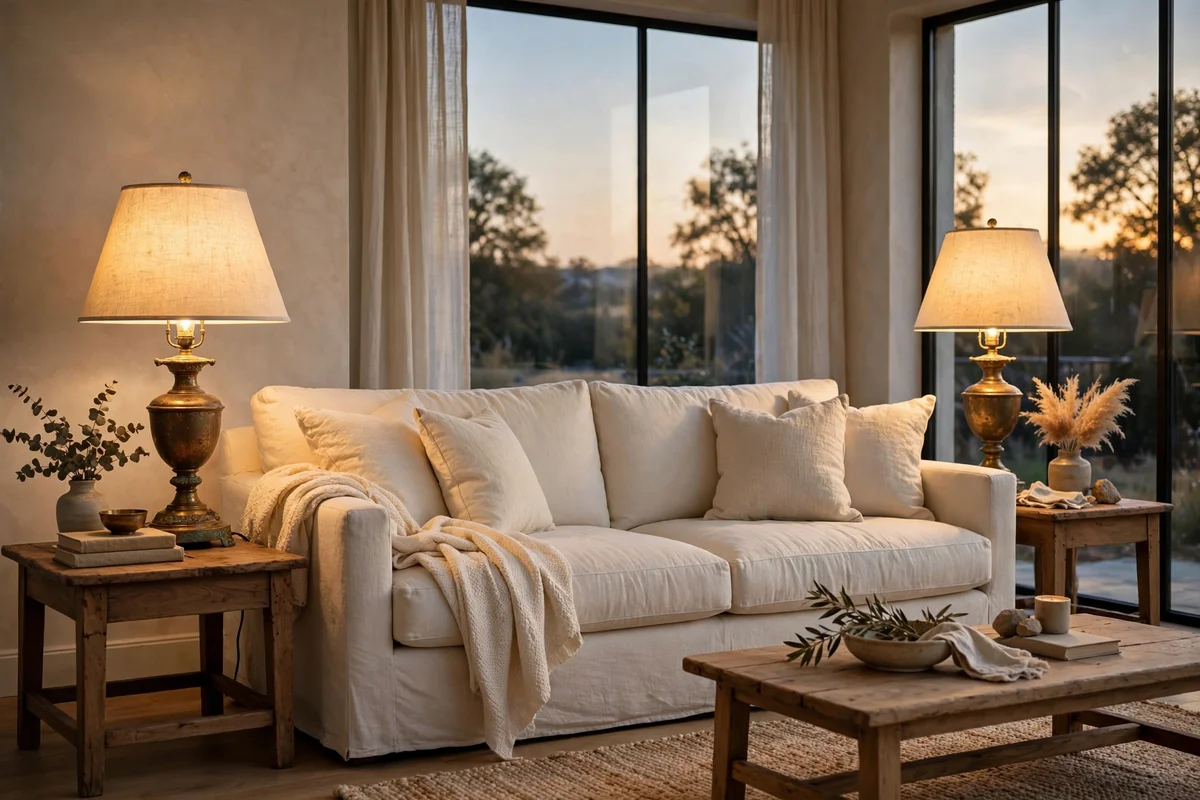
An aged brass lamp base adds a soft golden note without the mirror shine of polished brass. Choose bases between 35 and 45 cm tall so the light sits just above seated eye level when placed on a side table of 55 to 65 cm. Pair them with cream or oatmeal linen shades and a warm 2700K bulb, which turns the glow honey coloured at dusk. Two matching lamps flank the sofa best, since a single brass piece can look like an afterthought in a large room.
The mistake to avoid is scattering small brass objects across every surface, which turns warm into gaudy in minutes. Limit the room to three brass touches: the lamp pair counts as one statement, so add only one tray and one candlestick. Budget wise, aged brass bases cost 25 to 60 pounds or dollars each second hand, and new ones run 70 to 120. Dust them with a dry cloth monthly; never polish aged brass, because the soft patina is the whole point of the finish.
2. Cluster Amber Glass Vases on the Coffee Table
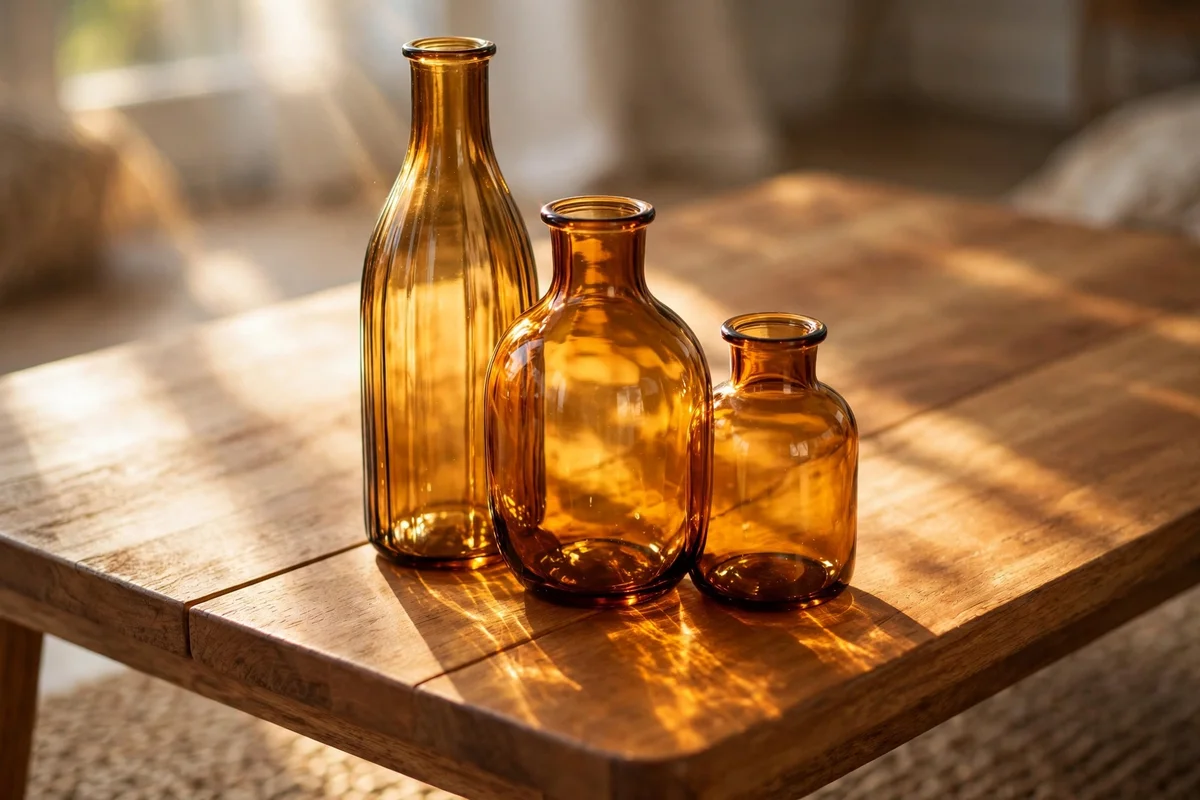
Amber glass glows like captured sunset when evening light passes through it. Gather three vases of different heights, roughly 15, 22 and 30 cm, on one corner of the coffee table so the cluster reads as a single arrangement. Leave them empty or fill with a few stems of dried wheat; full water and fresh flowers are unnecessary here. Amber pairs beautifully with honey toned wood and cream linen, and each piece can cost under 15 pounds or dollars at a thrift shop.
The common mistake is spreading amber pieces all over the room until the glow feels scattered and cheap. Keep the cluster tight, with no more than 5 cm between vases, and resist adding a fourth unless the table is very long. Wipe glass with a soft damp cloth to keep dust from dulling the colour. For renters, this is one of the easiest golden touches of all, since vases move with you and need no fixings, no drilling and no permission from a landlord.
3. Choose a Honey Toned Wood Coffee Table as the Centrepiece
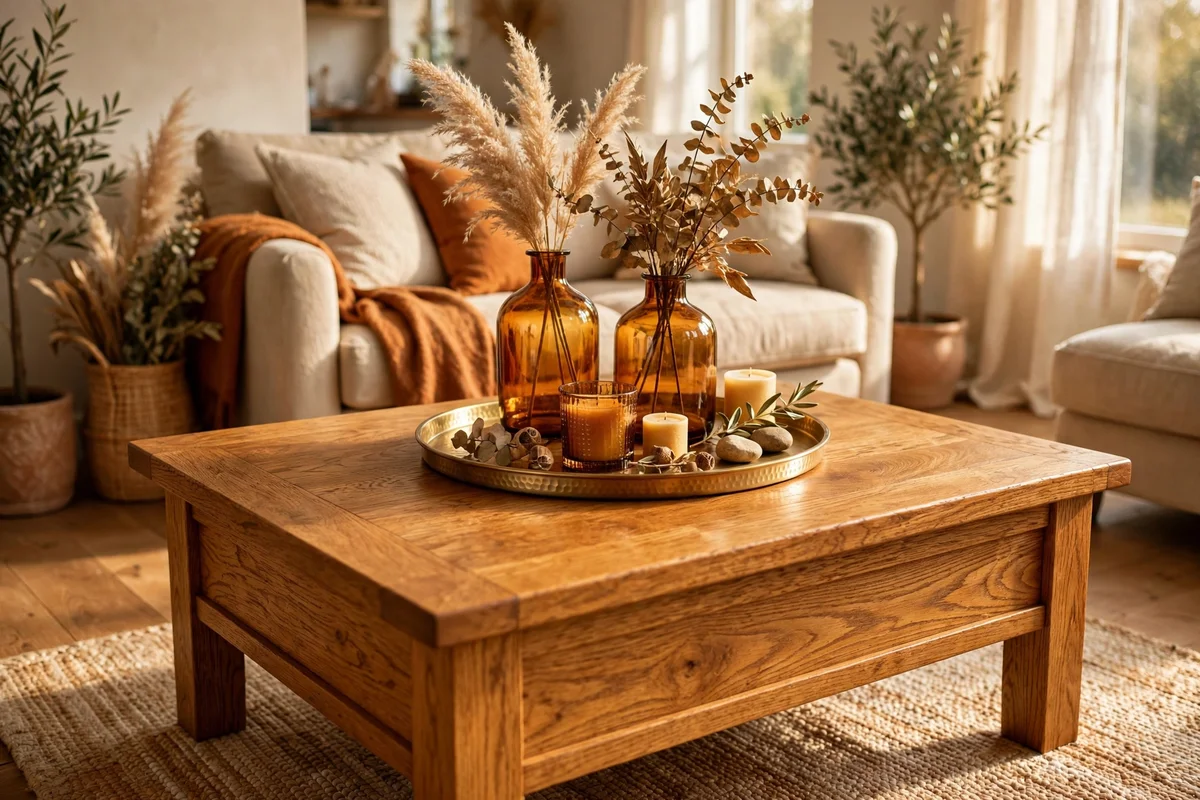
A coffee table in honey toned wood, such as oak with a warm oil finish or light walnut, sets the golden base the whole room builds on. Aim for 100 to 120 cm long and 40 to 45 cm high, leaving 40 cm of clearance around it for easy walking. The warm grain reflects lamplight softly and anchors the amber glass and brass you layer on top. Second hand oak tables in this tone often sell for 40 to 90 pounds or dollars.
The mistake to avoid is choosing a dark espresso finish here, which swallows the warm light instead of bouncing it. Honey tones work because they sit between cream and deep brown, giving the eye a middle step. Oil the top once a year with food safe wood oil to keep the glow alive. If buying new, mid range tables run 150 to 300 pounds or dollars; budget finds come from charity shops and online marketplaces where solid oak sells for a fraction of new prices.
4. Dress the Sofa With Mustard Linen Cushions
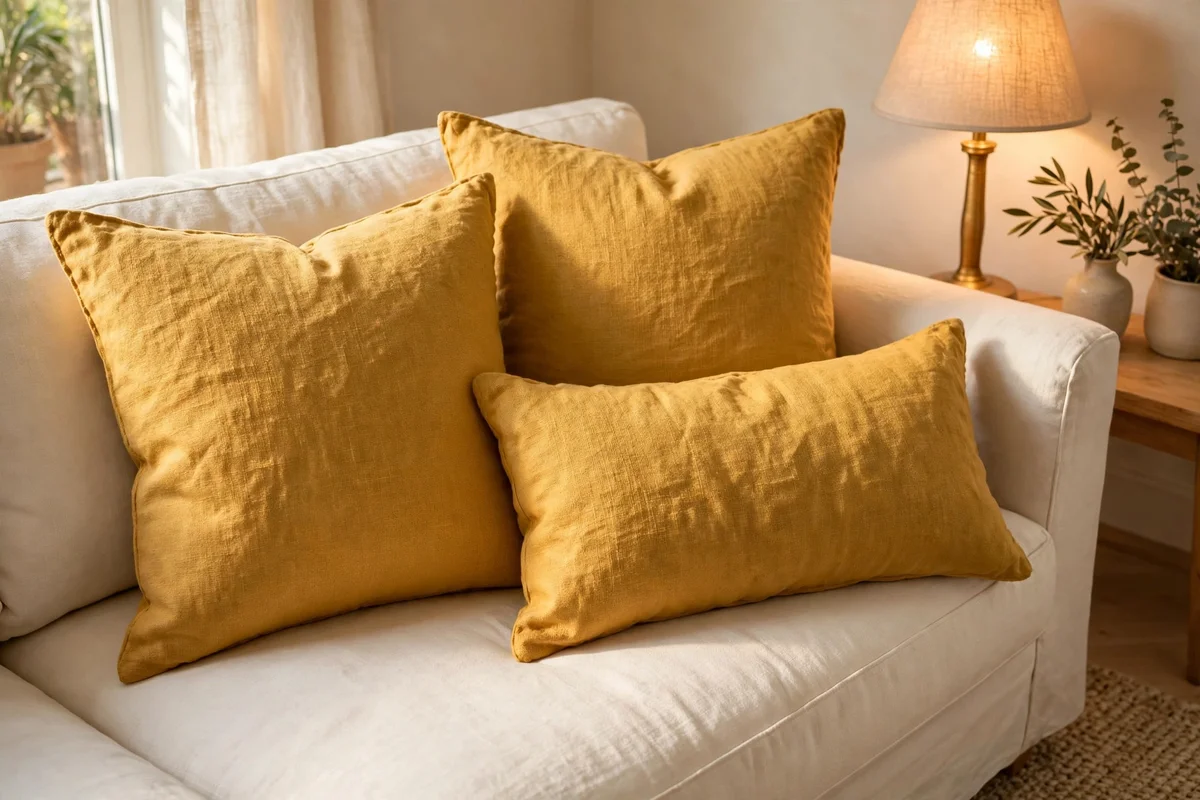
Mustard linen cushions bring the golden story right onto the seating. Use three cushions on a standard two seat sofa: two 45 cm squares at the corners and one 30 by 50 cm lumbar in front. Linen keeps the look relaxed rather than heavy, and its weave catches lamplight in a way flat cotton never does. Mustard sits happily against cream, oatmeal and soft grey, so it suits almost any base sofa you already own.
The mistake to avoid is matching every cushion in the same mustard, which flattens the room into one note. Mix in one cream and one warm brown cushion so the mustard has company and contrast. Budget cushions cost 8 to 15 pounds or dollars per cover; mid range linen covers run 20 to 35. Wash covers inside out on a cool cycle and line dry them, since tumble heat fades mustard faster than any other dye in this palette.
5. Layer Warm Lighting at Three Heights
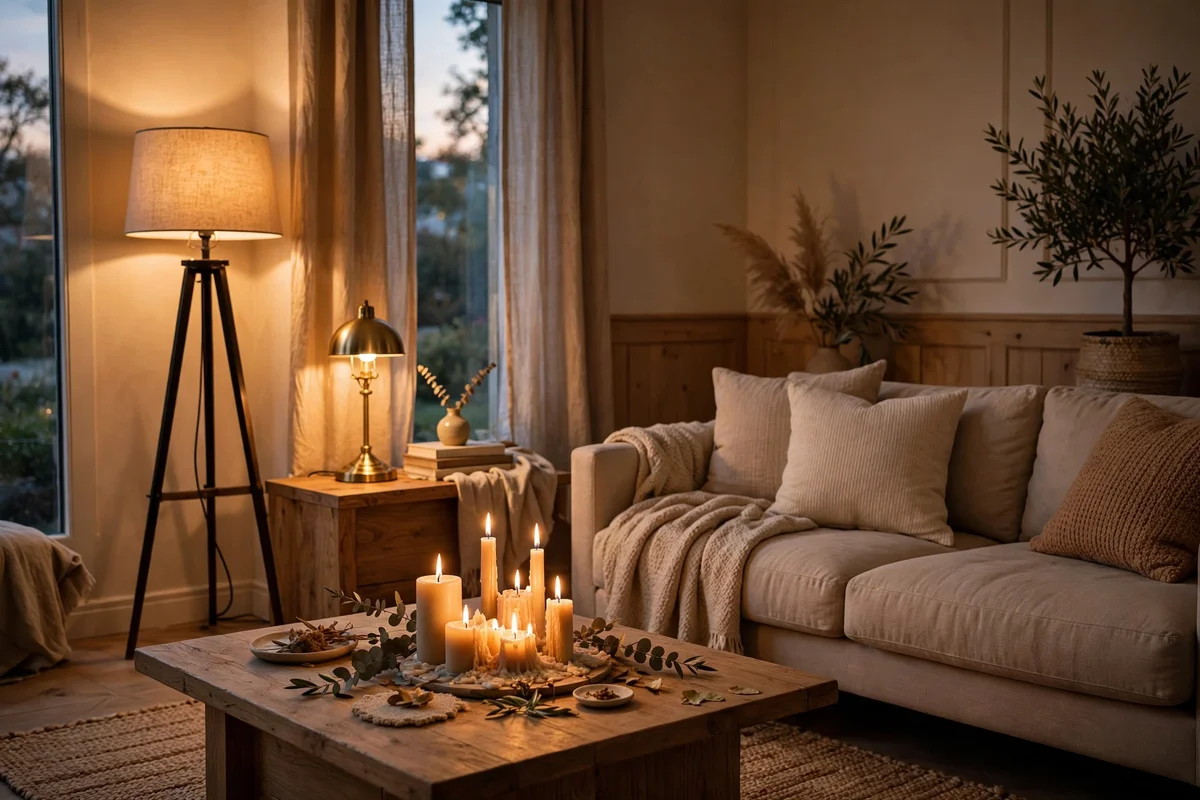
Golden rooms are built from light, not just colour. Place one floor lamp behind the reading corner at about 150 cm, one table lamp on the side table at 55 to 65 cm, and a cluster of candles or a small lantern at 15 to 25 cm on the coffee table. This trio keeps the room glowing from morning to dusk without a single harsh ceiling light. Use 2700K bulbs everywhere, since anything cooler turns gold flat and grey.
The mistake to avoid is switching on the overhead light out of habit, which washes out every golden layer you built. Put the ceiling light on a separate dimmer switch or simply leave it off from October onward. Budget for this layer is small: a warm floor lamp starts near 40 pounds or dollars, a table lamp near 25, and a set of real wax candles under 10. Total under 75 transforms the room more than any single piece of furniture ever will.
6. Fill a Tall Floor Vase With Dried Golden Grasses
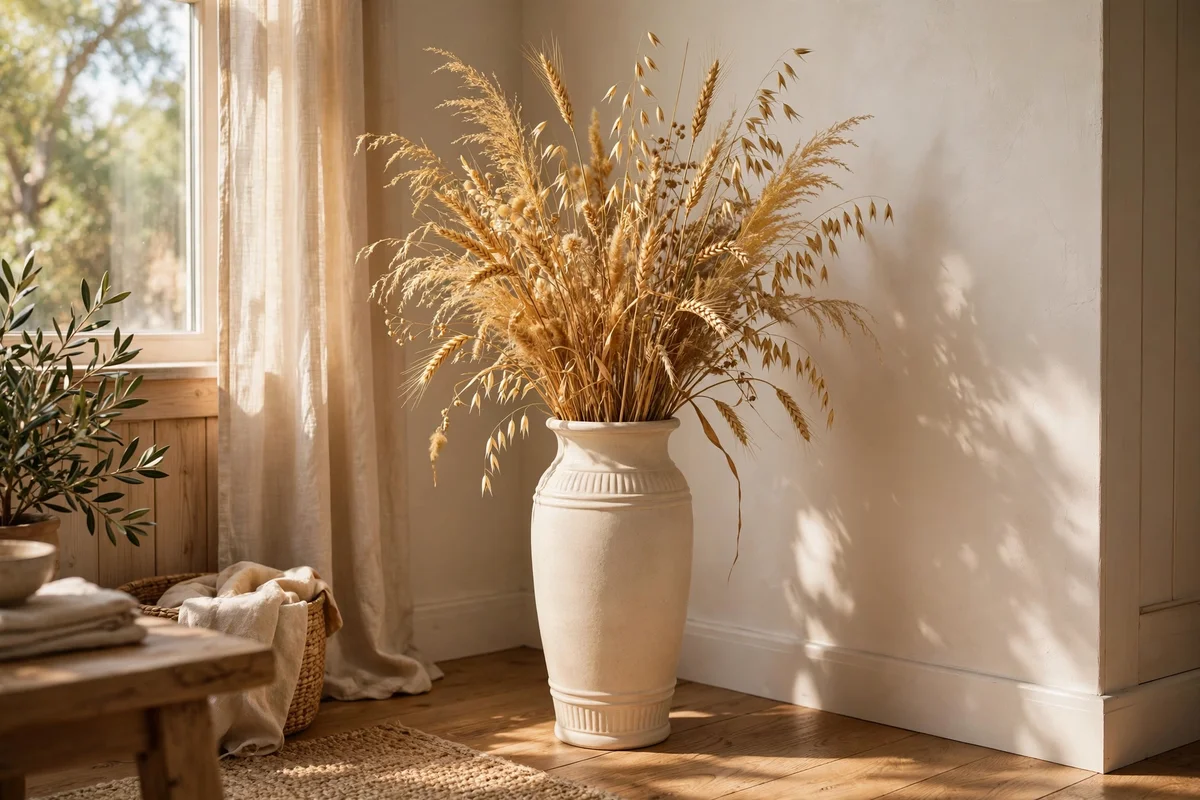
Dried golden grasses and wheat stems bring the autumn field indoors without a single fresh flower. Choose a floor vase 60 to 80 cm tall in cream ceramic or honey toned glass, then add five to seven stems of pampas style grass, wheat or dried oats cut to rise 30 to 40 cm above the rim. Place it in the corner that catches the last of the afternoon sun. A full bundle of stems costs 10 to 20 pounds or dollars and lasts for years.
The mistake to avoid is overfilling the vase until it looks like a haystack, or placing it where people brush past and snap stems daily. Seven stems fan gently; fifteen turn it into clutter. Keep it 30 cm from walkways and out of direct reach of small children. Shake stems outdoors every few months to release dust, and keep them away from open flames, since dried grass catches fire fast. Replace only when stems start to crumble, usually after two or three seasons.
7. Hang a Mirror Where It Catches Evening Light
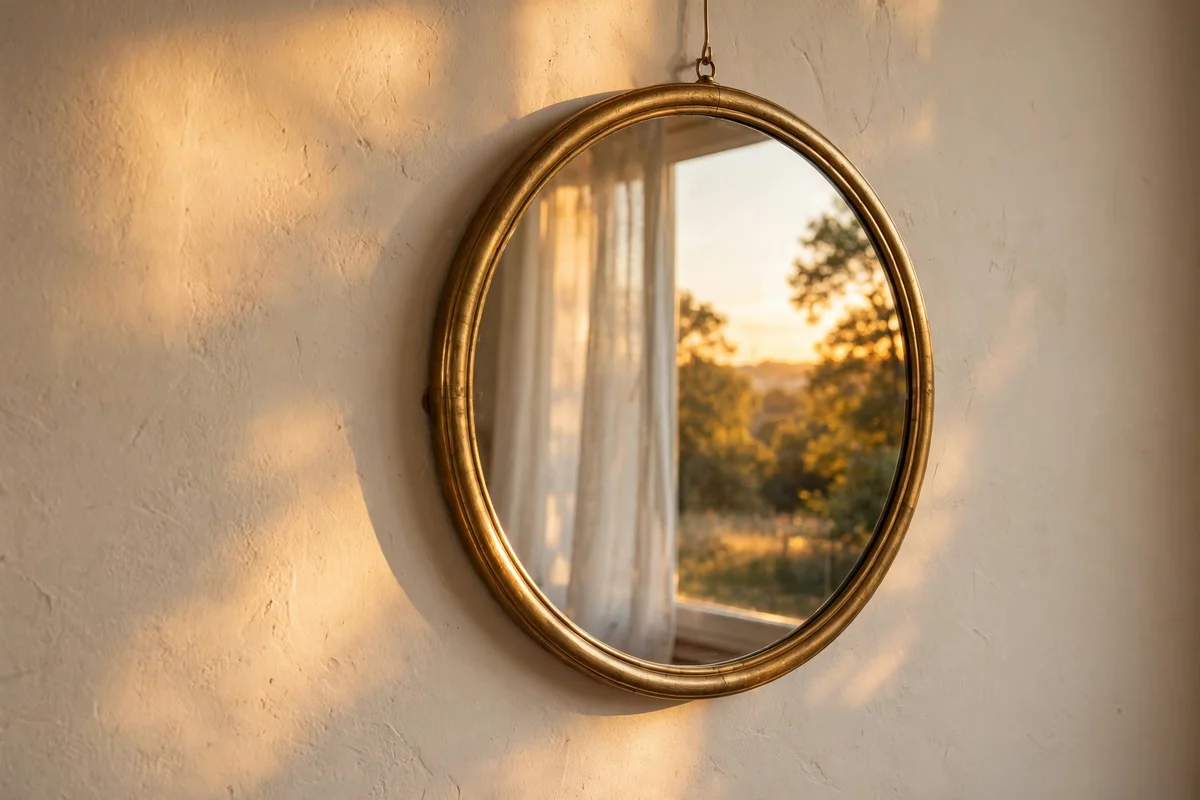
A mirror placed opposite or beside a west facing window doubles the golden hour and pours it back into the room. Hang a round or arched mirror 60 to 90 cm wide so its centre sits at standing eye level, about 150 to 160 cm from the floor. The glass should face the window at a slight angle rather than head on, which softens glare and spreads a warm wash across the cream wall. A simple oak or brass rim keeps the frame inside the golden story.
The mistake to avoid is hanging the mirror where it reflects clutter, a television or a blank wall, which wastes the trick entirely. Stand in the spot first and check what the glass will show at dusk. Budget mirrors in this size start near 50 pounds or dollars; vintage brass rimmed finds run 80 to 150. Clean the glass monthly with a microfibre cloth and plain water, since streaks kill the glow. For renters, a leaning floor mirror achieves the same bounce with zero fixings.
8. Keep Walls Cream to Let the Gold Do the Talking
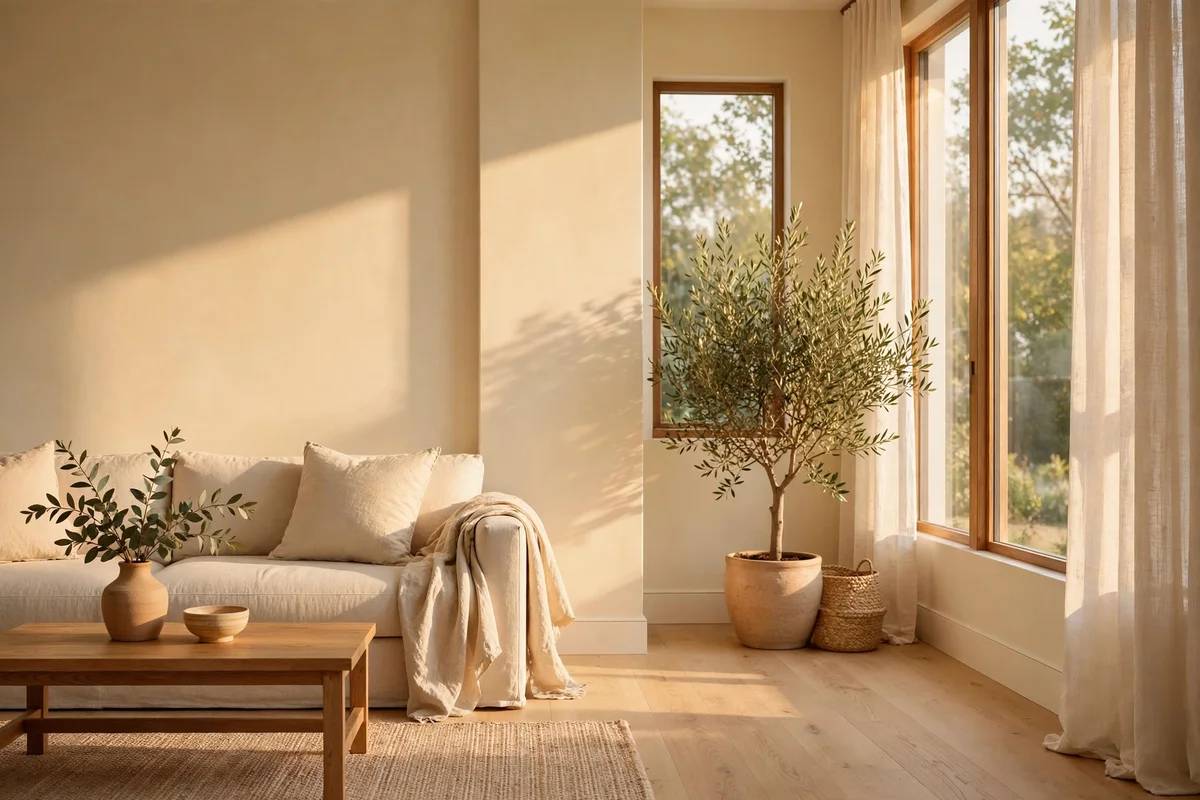
Cream walls are the calm canvas every golden accent needs. Choose a warm cream with a yellow undertone, such as ivory or buttermilk, rather than a cool brilliant white, which turns gold harsh by contrast. One coat over a sound base usually covers well, and a 2.5 litre tin paints roughly 25 square metres, enough for most living room walls. Keep skirting and ceiling in the same cream to let the room feel seamless and sunlit.
The mistake to avoid is painting one wall mustard or gold as a feature, which usually reads loud instead of rich and fights the textiles. The golden story works through layered objects and light, not wall colour. Budget for a repaint is modest: two tins of quality emulsion plus rollers and tape run 60 to 100 pounds or dollars. Renters can fake the effect with a large cream throw and cream curtains if painting is off the table, keeping the base calm without touching a brush.
9. Start With a Cream Sofa as the Calm Base
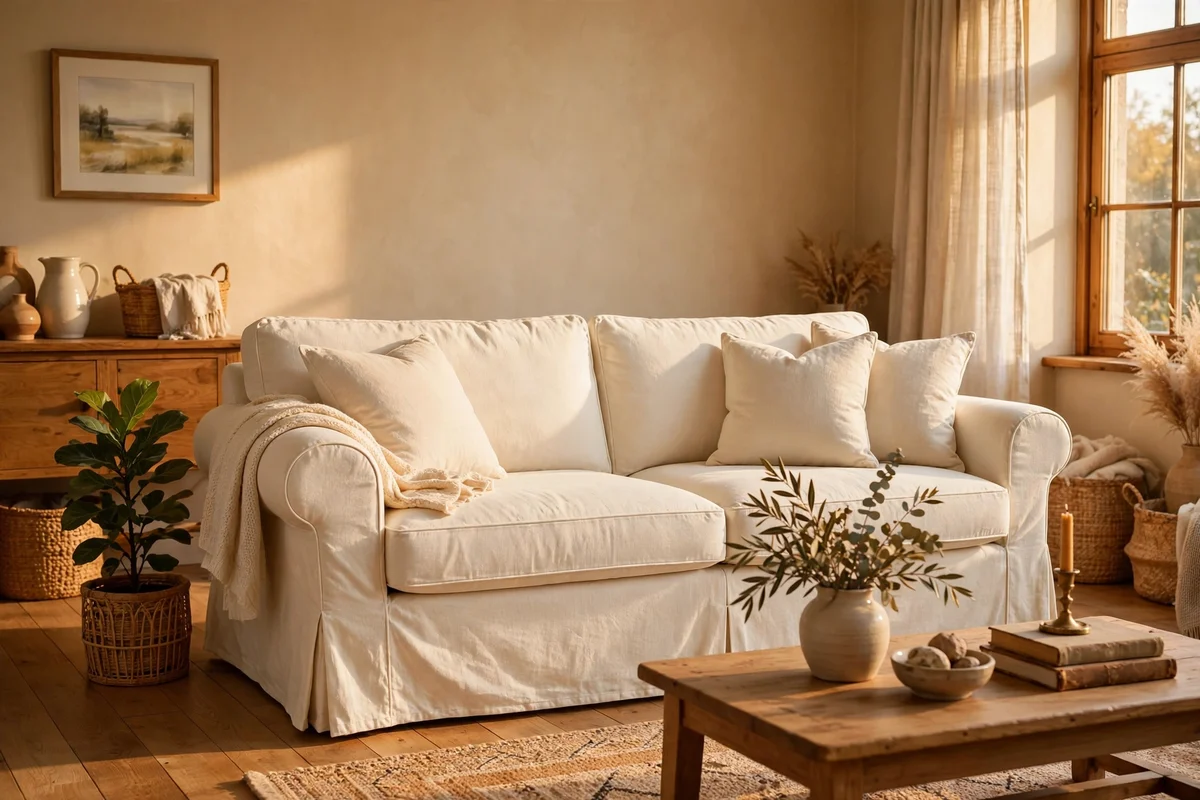
A cream sofa is the quiet foundation that lets mustard, amber and brass shine. Choose a washable slipcover or performance fabric in warm ivory, which survives family life far better than a dry clean only weave. A standard two or three seat sofa of 180 to 220 cm gives enough neutral ground for the golden layers to build on. Keep the silhouette simple and classic, since fussy shapes fight the calm this palette promises.
The mistake to avoid is choosing a cool grey or bright white sofa, which makes every golden accent look muddy or jaundiced. Warm ivory is the bridge colour here. A new slipcovered sofa starts near 600 pounds or dollars, while a quality cream throw draped over an existing sofa costs 40 to 80 and achieves most of the effect. Vacuum weekly with an upholstery head and treat spills at once, since cream forgives nothing and stains set within hours.
10. Anchor the Room With a Deep Brown Leather Armchair
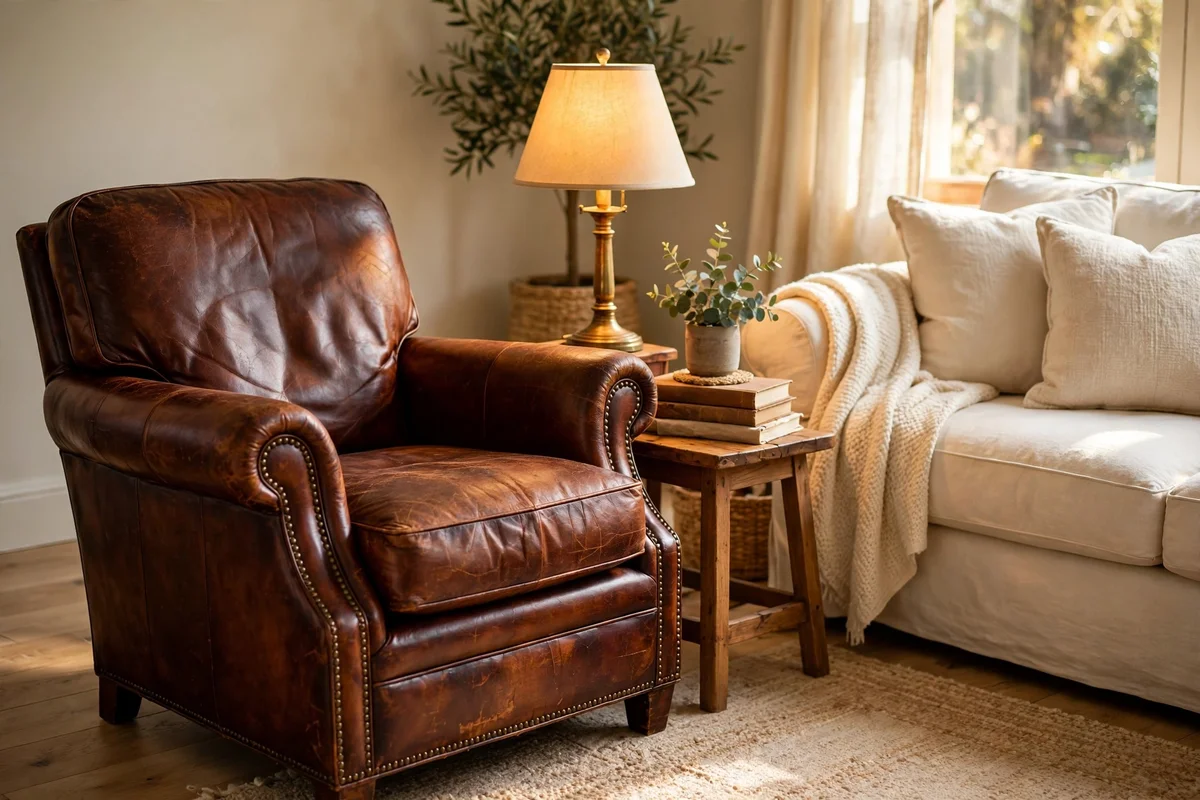
Deep brown leather anchors the golden glow the way dark soil anchors a field of wheat. Place one armchair at an angle to the sofa, close enough for conversation, with a small side table beside it for tea. Full grain or top grain leather in chestnut or espresso ages beautifully and wipes clean. A second hand leather chair often costs 150 to 350 pounds or dollars, a fraction of new, and the patina only deepens with use.
The mistake to avoid is pairing the leather with black metal or cold chrome, which drags the whole room toward a harsher modern mood. Keep every nearby metal warm: brass, bronze or aged copper. Condition the leather twice a year with a proper leather balm, and keep the chair 60 cm or more from radiators, since dry heat cracks the hide. If leather is out of budget, a deep brown cotton velvet armchair gives the same grounding at half the price.
11. Add a Dark Wooden Sideboard for Grounding
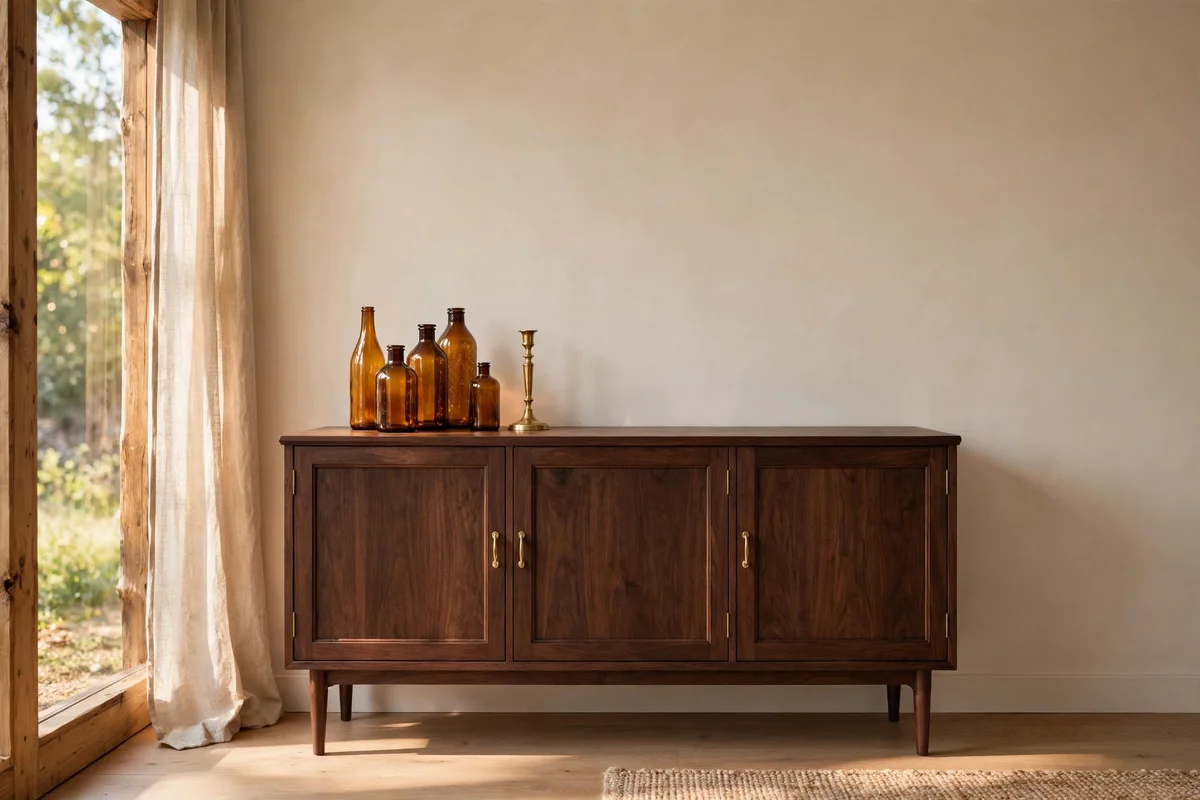
A dark wooden sideboard in walnut or stained oak gives the golden accents something solid to lean against. Place it along the longest free wall, roughly 140 to 180 cm wide and 80 cm high, so its top becomes a styling stage for amber glass, brass and dried grasses. The dark mass balances all the light above it and stops the room floating away. Vintage sideboards in this size run 120 to 300 pounds or dollars.
The mistake to avoid is filling every centimetre of the sideboard top, which turns grounding into clutter. Leave a third of the surface empty and group objects in odd numbers: three amber bottles here, one brass candlestick there. Budget styling for the top costs 30 to 60 pounds or dollars if you thrift the pieces. Dust the wood weekly and use felt pads under every object, since dark finishes show scratches and water rings far faster than light ones.
12. Use Soft Gold Picture Frames Sparingly
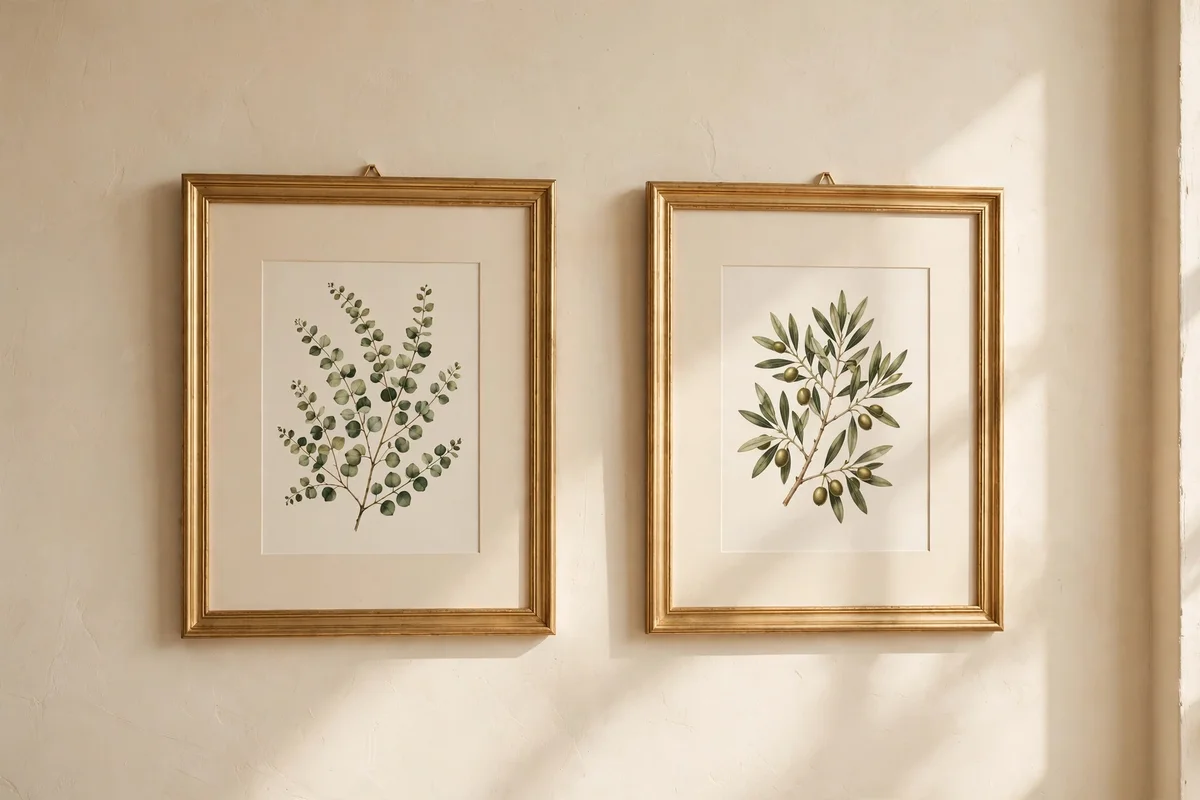
Soft gold picture frames, in brushed or antique finishes, add tiny sparks of light around the walls. Hang two or three on one wall, no larger than 40 by 50 cm each, with at least 10 cm between frames so each one breathes. Fill them with botanical prints, family photographs or simple line art in cream mounts. The mounts matter: wide cream mounts keep the gold from looking brassy and cheap. Charity shops sell such frames for 5 to 12 pounds or dollars.
The mistake to avoid is mixing gold frames with silver, chrome or black frames on the same wall, which breaks the calm in one glance. Commit to one metal story per wall. Hang frames with proper picture hooks rated for the weight, and keep the centre of the arrangement at 145 to 155 cm from the floor. If you cannot find matching gold frames, spray paint mismatched wooden frames in one soft gold; a single can of paint unifies five frames for under 12 pounds or dollars.
13. Drape an Ochre Wool Throw Over the Arm
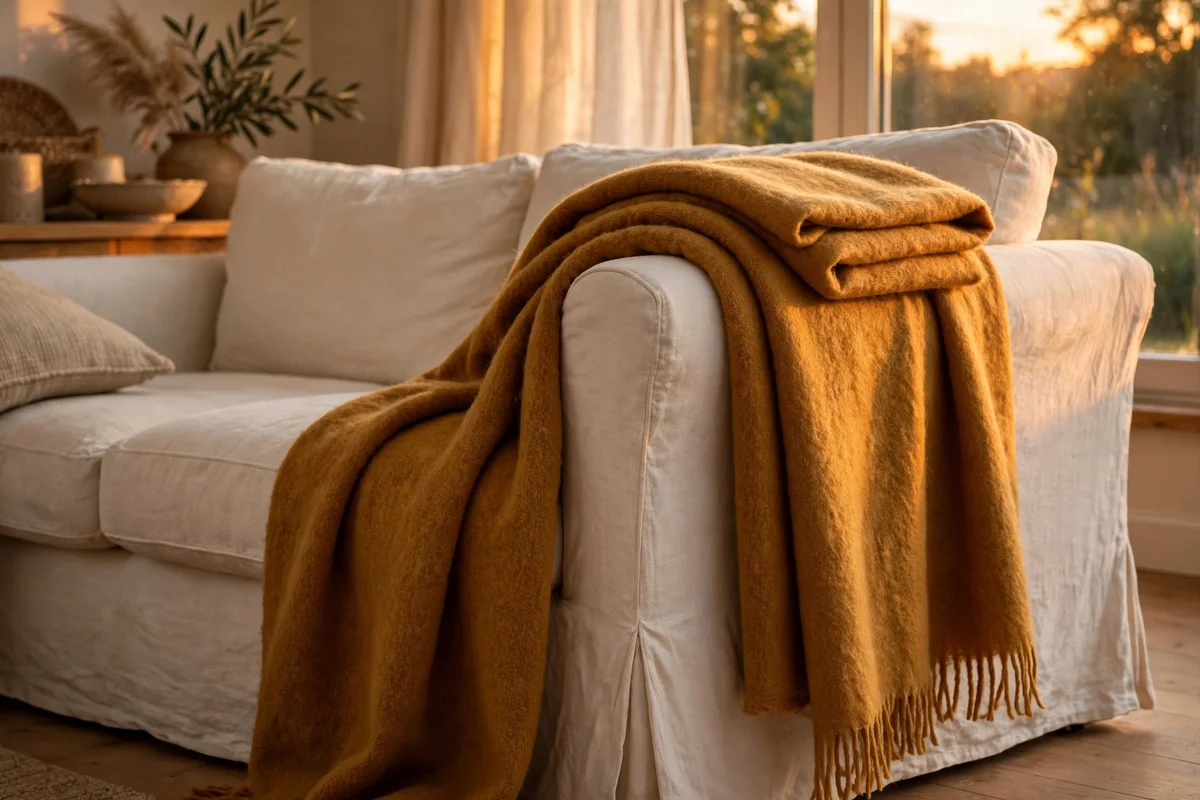
An ochre wool throw folded over one sofa arm is the fastest golden update in this whole list. Choose a throw 130 by 180 cm, heavy enough to stay put, in a deep ochre or burnt honey tone. Fold it in thirds lengthwise and lay it so one end hangs 30 to 40 cm down the side. Wool brings natural warmth that synthetic throws cannot copy, and it softens the cream sofa exactly where hands rest most.
The mistake to avoid is spreading the throw flat across the whole sofa like a bedsheet, which looks stiff and covers the calm cream you worked to create. One folded throw on one arm is enough. Budget wool throws start near 25 pounds or dollars; mid range lambswool runs 45 to 80. Air the throw outdoors monthly instead of washing it often, and brush it with a soft clothes brush to lift dust. Store it folded in a cedar lined basket through summer.
14. Set Three Brass Candlesticks at Mixed Heights
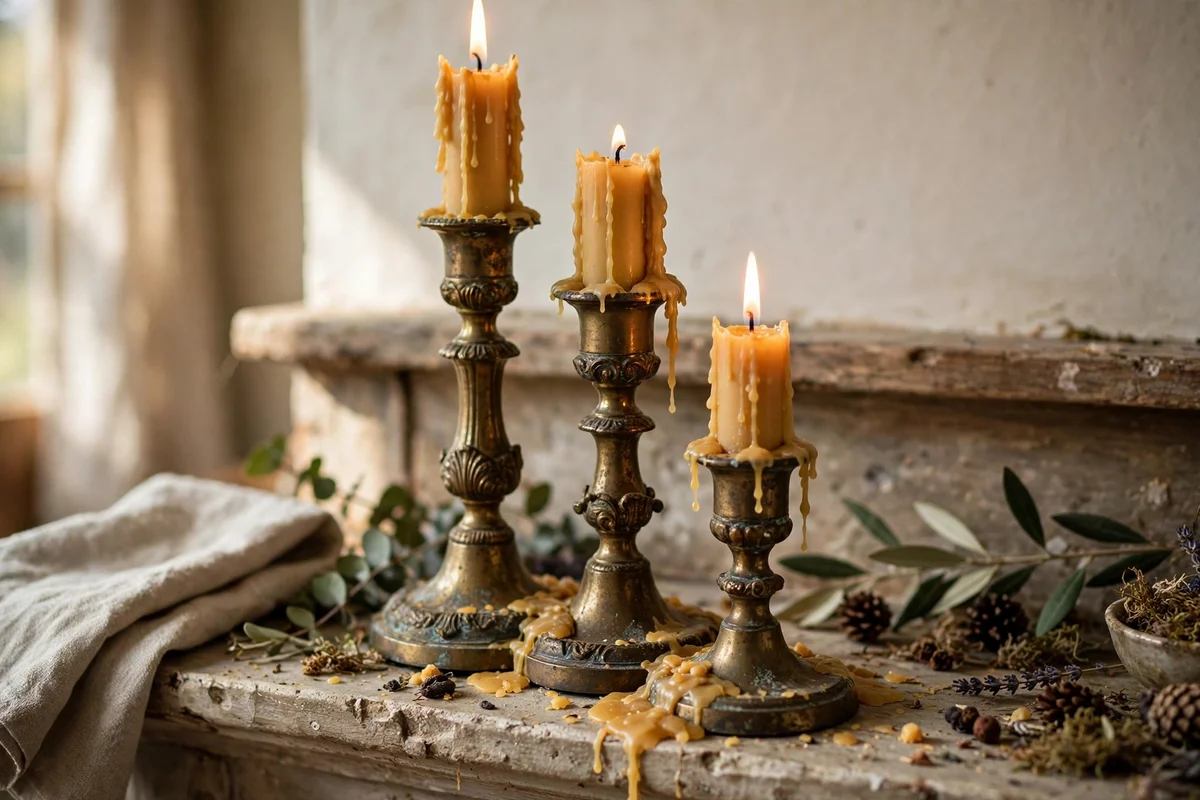
Three brass candlesticks at mixed heights turn an empty corner of the mantel or sideboard into a small golden sculpture. Choose heights around 15, 23 and 30 cm and keep the finish aged rather than polished, so they glow instead of glare. Use real beeswax or soy candles in honey tones, never white, since white candles break the colour story. Group them tight, within 15 cm of each other, and let one trail a little forward.
The mistake to avoid is lighting them all at once every evening and burning through candles in a week, or worse, leaving flames unattended near dried grasses. Light one or two for atmosphere and save the full trio for family evenings. A set of three candlesticks costs 20 to 45 pounds or dollars at markets; honey toned candles add 8 to 12. Trim wicks to 5 mm before lighting so the flame stays small, clean and safe.
15. Lay a Honey Toned Rug Under the Seating
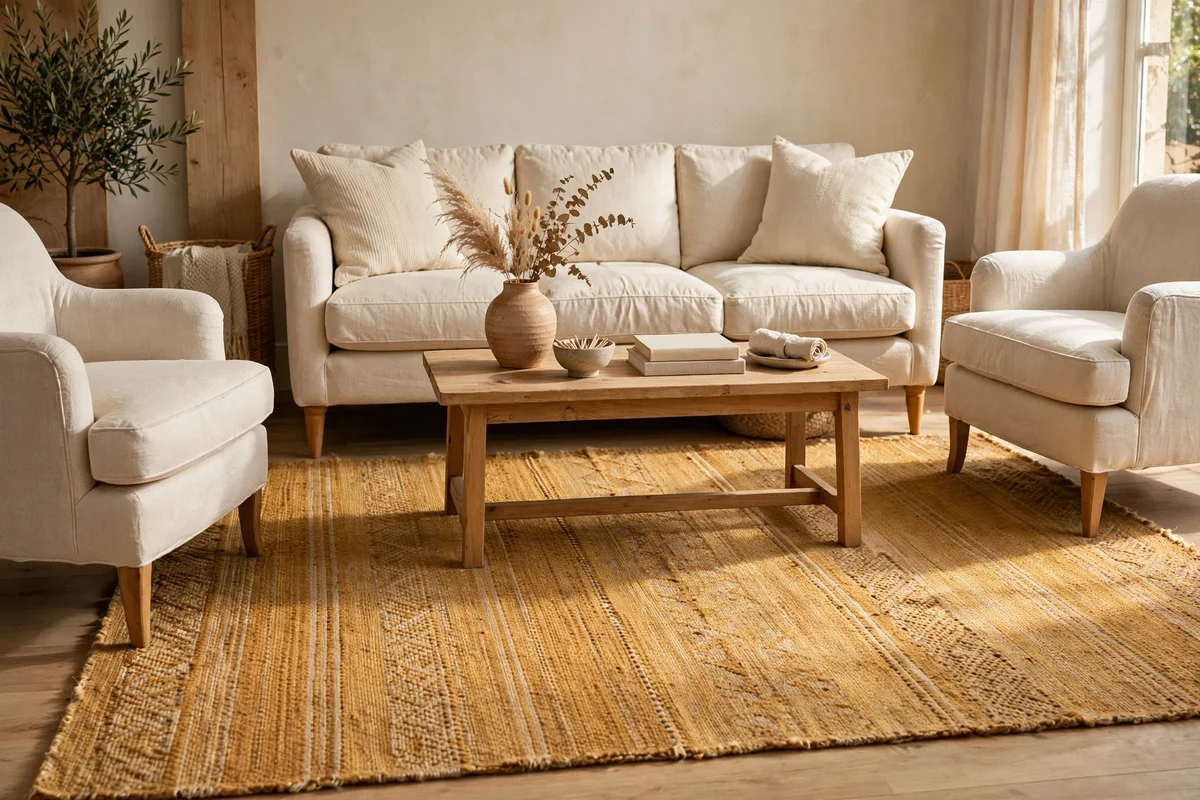
A rug in honey, wheat or warm sand tones pulls the whole seating group into one golden island. Choose a rug at least 160 by 230 cm so the front legs of the sofa and both armchairs sit on it; anything smaller makes the furniture look marooned. Flatweave wool or jute keeps the texture honest and easy to clean. The rug should sit about 15 cm from the skirting on each side, framing the arrangement like a border.
The mistake to avoid is choosing a grey or cool beige rug, which turns the golden palette muddy from the floor up. Warm undertones are non negotiable here. Budget flatweaves start near 60 pounds or dollars; mid range wool rugs run 150 to 300. Vacuum twice weekly without the beater bar on jute, and rotate the rug 180 degrees every six months so sunlight fades it evenly. A rug pad underneath adds 5 cm of softness and stops sliding on wood floors.
16. Tuck a Mustard Velvet Footstool by the Armchair
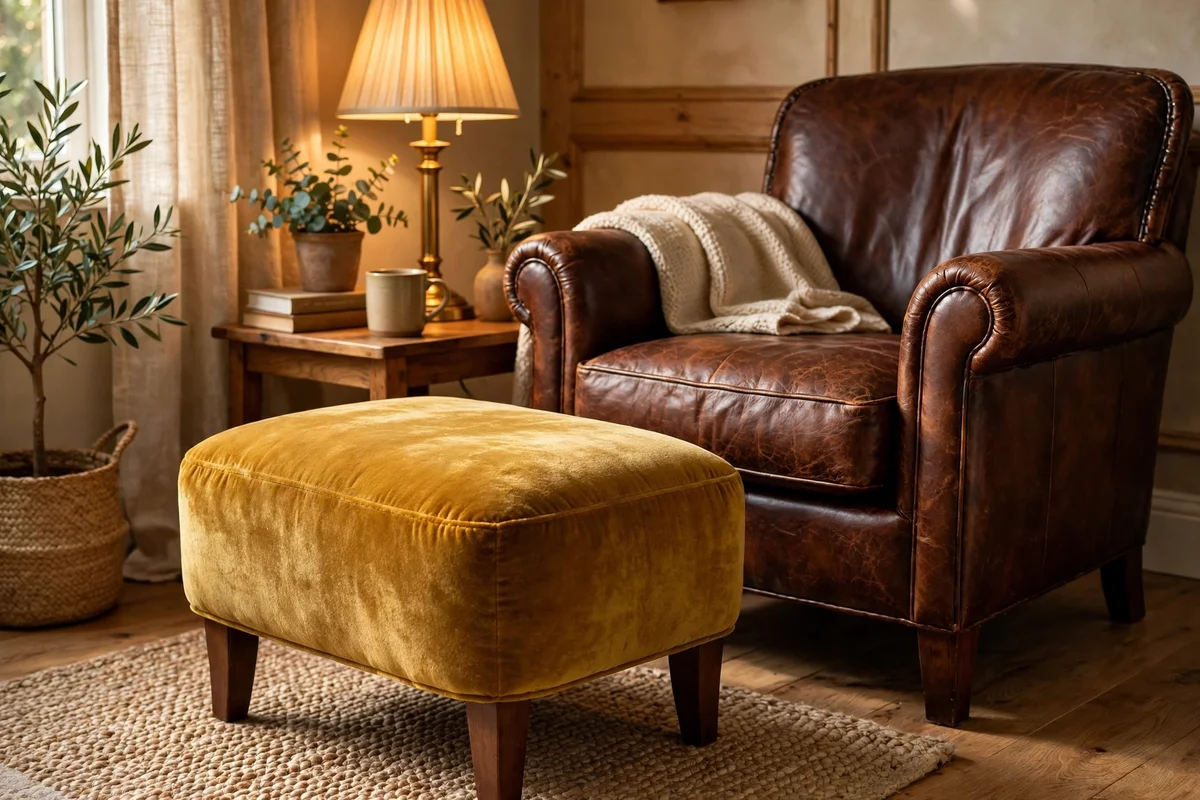
A mustard velvet footstool beside the leather armchair adds a plush golden note at the lowest level of the room. Choose a round or square stool about 40 cm wide and 30 cm high, so it doubles as extra seating for little ones. Velvet drinks the lamplight and glows without any shine, which keeps it rich rather than gaudy. Cotton velvet in mustard costs less than silk blends and wears better under daily feet.
The mistake to avoid is placing the footstool where it blocks the walkway between the chair and the coffee table. Leave at least 45 cm of clear passage, and push the stool under a side table when guests need room. Budget footstools run 30 to 60 pounds or dollars; upholstered mid range pieces cost 80 to 140. Brush velvet weekly with a soft clothes brush in one direction to keep the pile even, and blot spills at once since mustard shows watermarks.
17. Switch Every Bulb to Warm 2700K
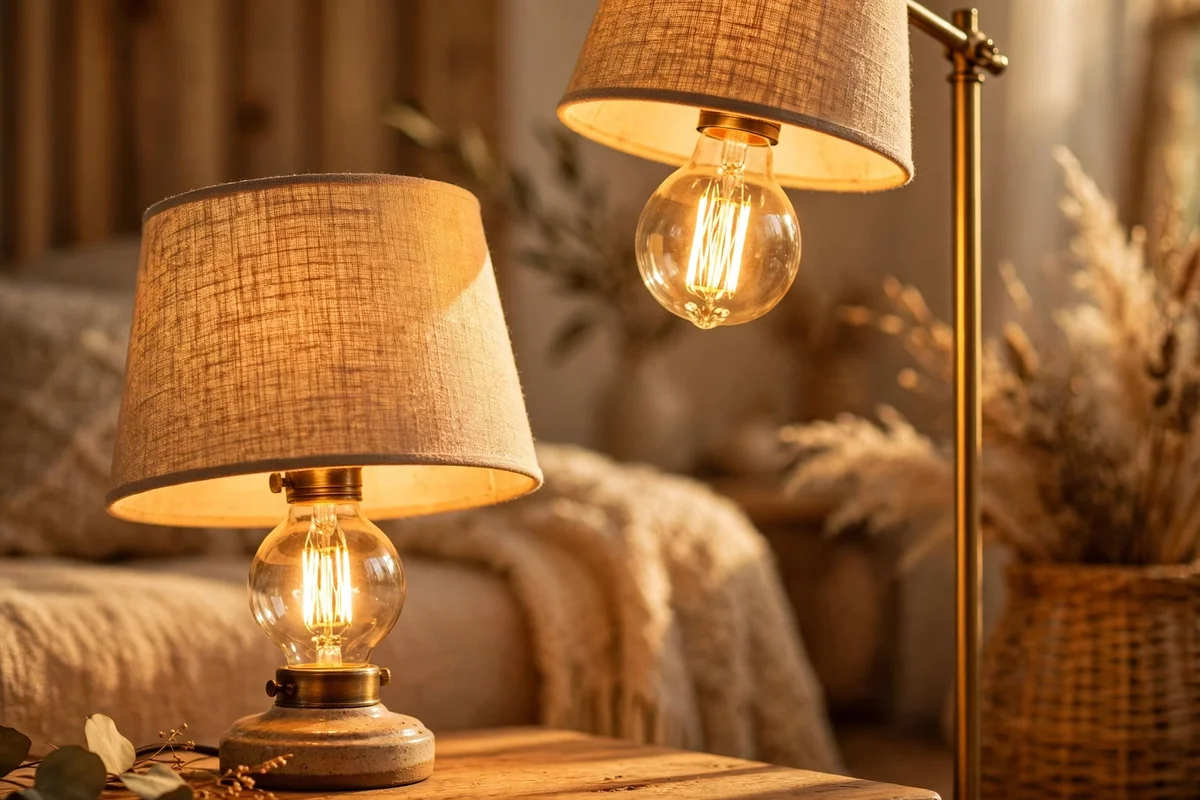
Bulb colour is the invisible force behind every golden room. Replace every bulb in the living room with 2700K warm white, including the hallway light that spills in, since one cool 4000K bulb will flatten the whole palette. Choose dimmable LEDs so the evening glow can sink low. A 6 to 8 watt LED now matches an old 60 watt bulb, so the swap costs almost nothing to run. Ten bulbs cover most living rooms.
The mistake to avoid is mixing colour temperatures, which the eye reads as dirty light even when each bulb alone looks fine. Check the box: 2700K or lower, never daylight. A box of four dimmable LEDs costs 8 to 14 pounds or dollars, so the whole room converts for under 30. Put table lamps on plug in dimmers if the room has no dimmer switches; they cost 10 to 15 each. The payoff is instant: the same room suddenly holds the late sun from morning to dusk.
18. Hang Sheer Honey Tinted Curtains
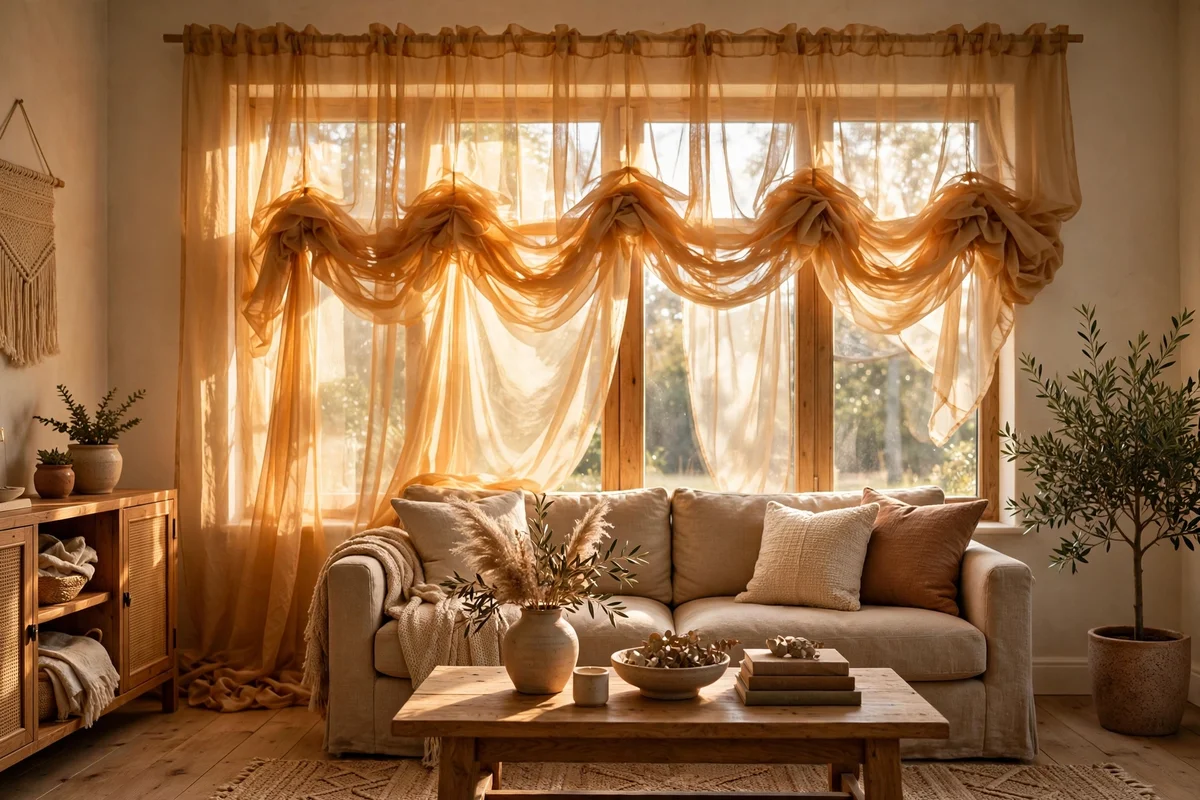
Sheer curtains in a honey tint filter daylight into liquid gold before it ever reaches the room. Hang them on a rod 10 to 15 cm above the window frame and 15 to 20 cm wider on each side, so the fabric stacks off the glass and never blocks the view. Linen look sheers cost 15 to 30 pounds or dollars per panel and wash easily. The tint should be pale, barely there, like weak tea, never orange.
The mistake to avoid is choosing heavy orange drapes, which darken the room and kill the very light the golden palette needs. Sheers work because they colour the light, not the wall. Layer them over a simple cream blind for privacy at night; the blind disappears by day. Iron sheers on a cool setting or hang them straight from the dryer to skip ironing. Replace the tint if it fades to grey after two or three summers of strong sun.
19. Weave a Dried Wheat Wreath for the Wall
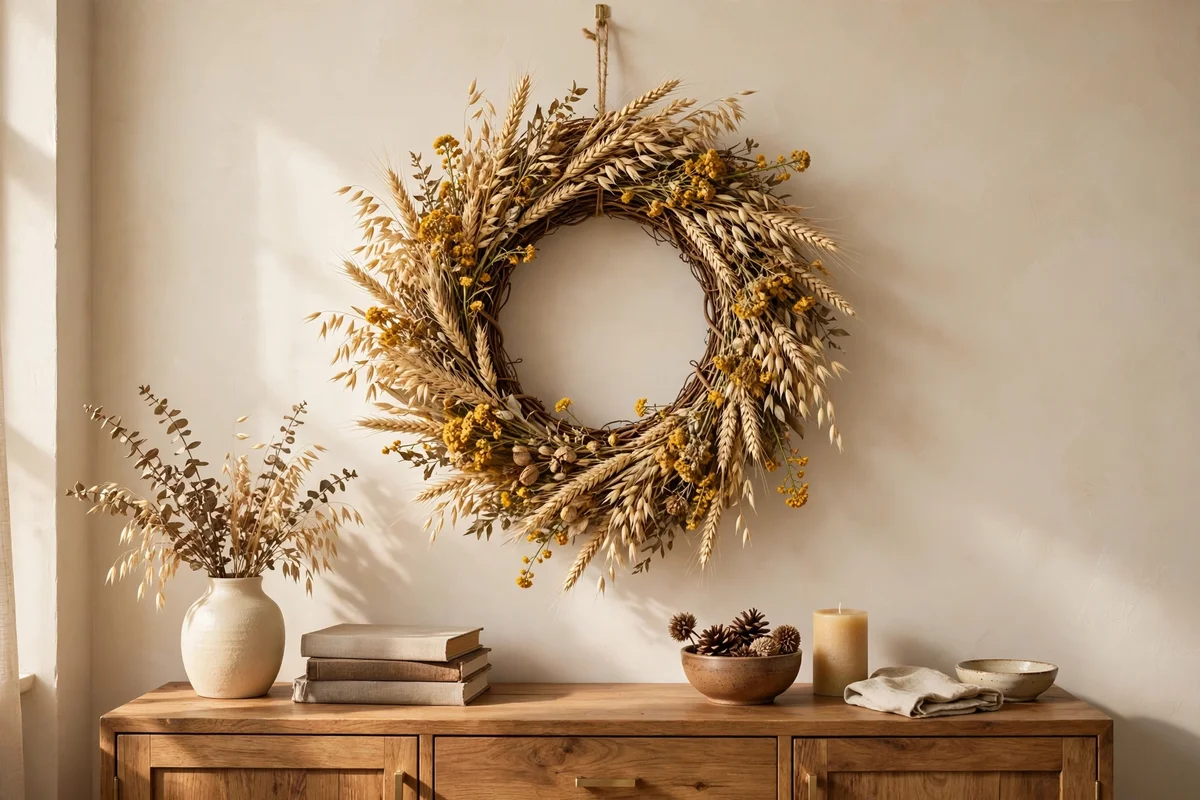
A dried wheat wreath brings the golden field to the wall in one handcrafted circle. Buy a 30 to 40 cm grapevine base and bundle dried wheat, oats and a few mustard dried blooms around it with thin florist wire, working clockwise and overlapping each bundle by half. The whole project takes under an hour and costs 15 to 25 pounds or dollars in materials. Hang it above the sideboard or on the chimney breast.
The mistake to avoid is hanging the wreath where cooking steam or bathroom moisture reaches it, since damp turns dried wheat grey and limp within weeks. Living room walls are ideal. Hang the wreath on a small brass hook rated for 2 kg, since a full wreath weighs more than it looks. Shake it gently outdoors each season to release dust. A well kept wreath lasts three to five years, making it one of the cheapest golden accents per year of use.
20. Light Amber Glass Candle Holders at Dusk
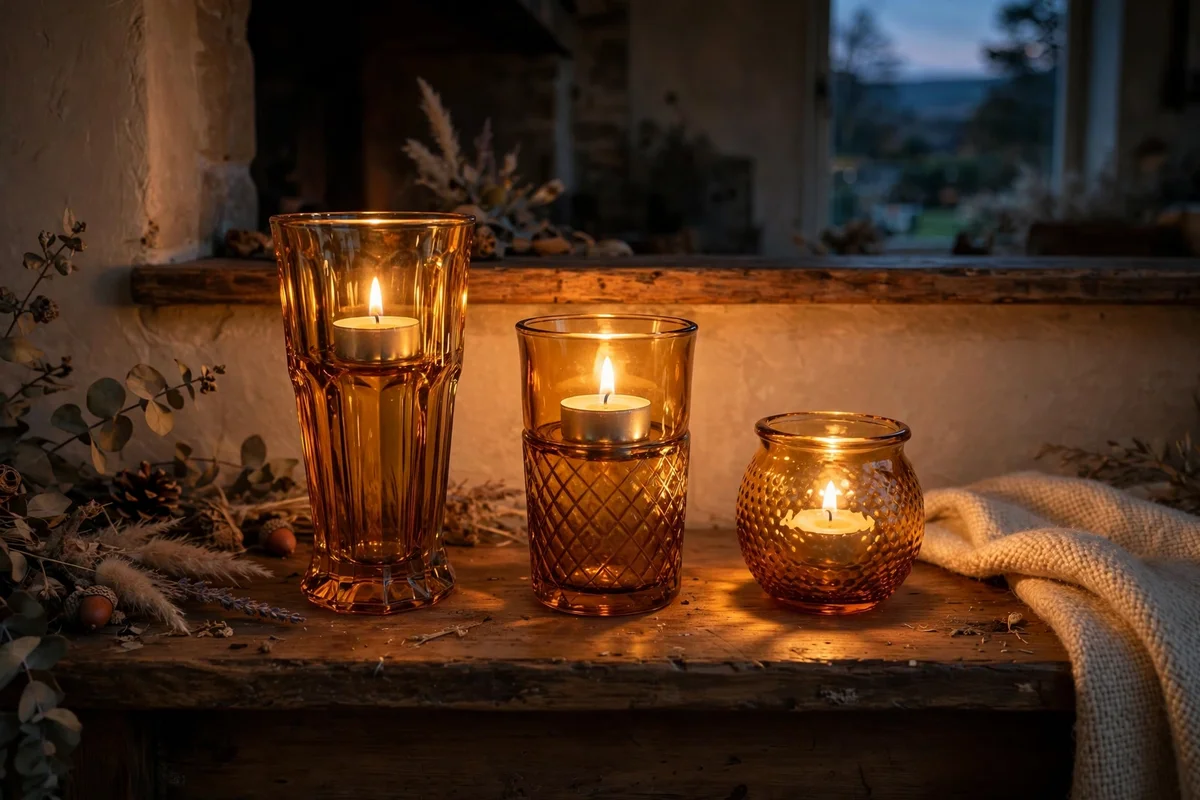
Amber glass candle holders turn a single tealight into a pool of honeyed light. Place three holders of staggered heights, 8, 12 and 16 cm, on the mantel or a window ledge where the setting sun catches them first. The coloured glass does the work, so plain cream tealights are all you need. Sets of three cost 12 to 25 pounds or dollars. Keep them away from the dried grasses, since glass magnifies heat near open flame.
The mistake to avoid is using scented candles in every holder, which fills the room with a fog of competing fragrances and cheapens the effect. Choose unscented or one gentle honey note across the whole set. Never leave a burning candle unattended, and keep holders 30 cm from curtains and upholstery. Wipe soot from the glass rims weekly with a damp cloth. LED tealights with a warm flicker are a safe alternative in homes with small children or curious pets.
21. Style a Brass Tray on the Coffee Table
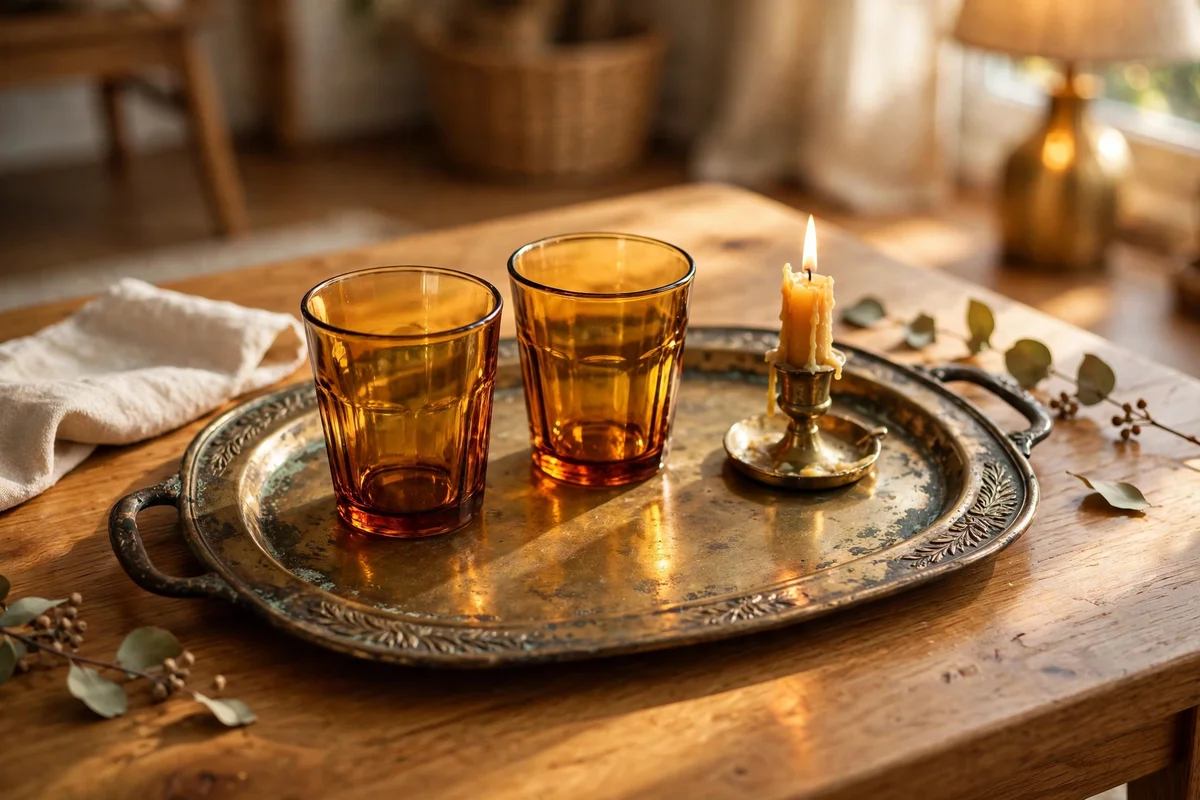
A brass tray on the coffee table gathers small golden objects into one deliberate island. Choose an oval or round tray 40 to 50 cm across in aged brass, then set two amber glasses and one small candle holder on it. The tray corrals clutter and gives the eye a single warm focal point instead of scattered bits. Thrifted brass trays cost 10 to 25 pounds or dollars; new ones run 30 to 60.
The mistake to avoid is overloading the tray until it becomes a storage shelf for remote controls and loose change. Keep it to three objects and clear it nightly. Wipe the brass with a dry cloth after handling, since fingerprints dull the patina fast. A tray also protects the honey toned wood beneath from candle heat and glass rings. If brass feels too yellow for your taste, an aged bronze tray gives the same warmth with a deeper, quieter tone.
22. Let a Dark Wood Floor Carry the Golden Light
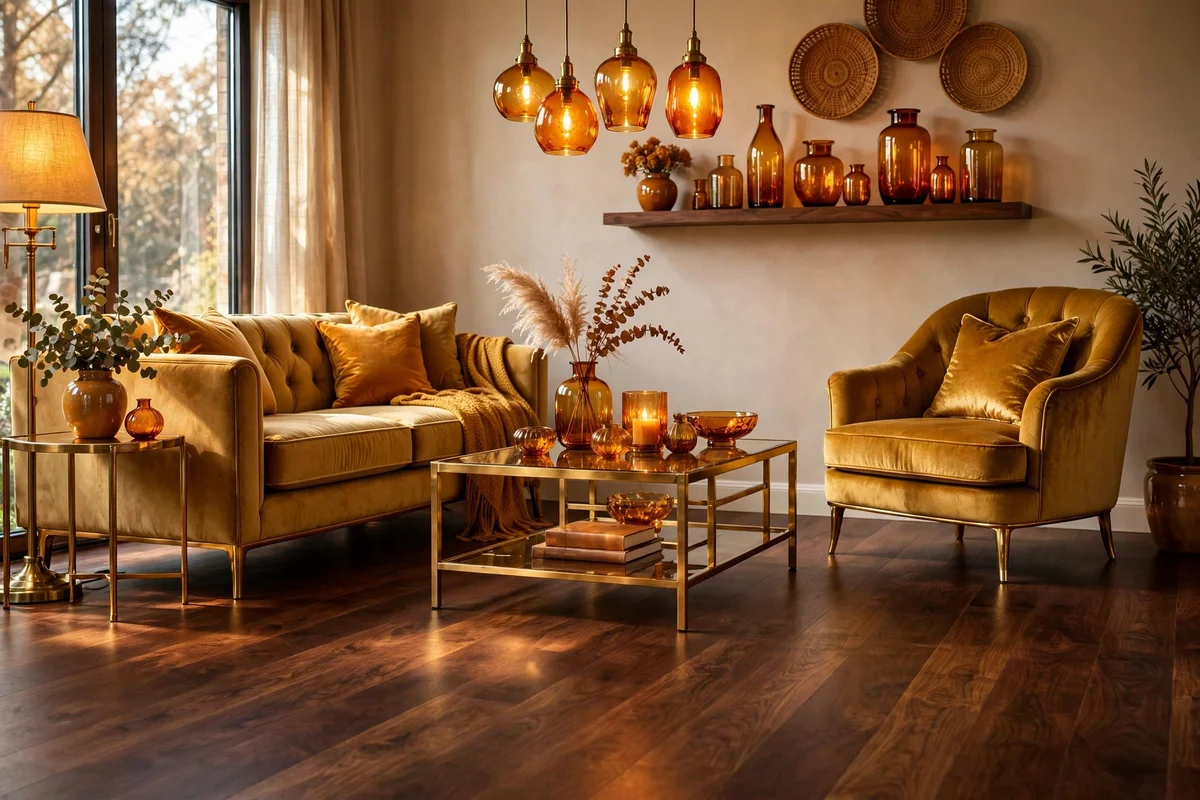
Dark wood floors, in walnut or deep stained oak, act like still water for the golden light above them. The contrast makes every amber and brass accent read richer, while the floor itself glows softly under lamplight. If your boards are already dark, simply clear them: lift small rugs that chop the floor into islands and let one large honey toned rug float instead. The eye then travels from dark floor to golden middle to cream walls in one calm sweep.
The mistake to avoid is staining pale boards dark without testing, since the wrong stain turns pink or purple under warm light. Test three shades on a hidden board and live with them for a week. Refinishing a living room floor costs 400 to 900 pounds or dollars professionally, or 80 to 150 for a weekend of sanding and staining yourself. A simpler route is a dark stained console or sideboard that gives the same anchoring at a fraction of the cost.
23. Stack Honey Toned Wooden Boxes on the Shelves
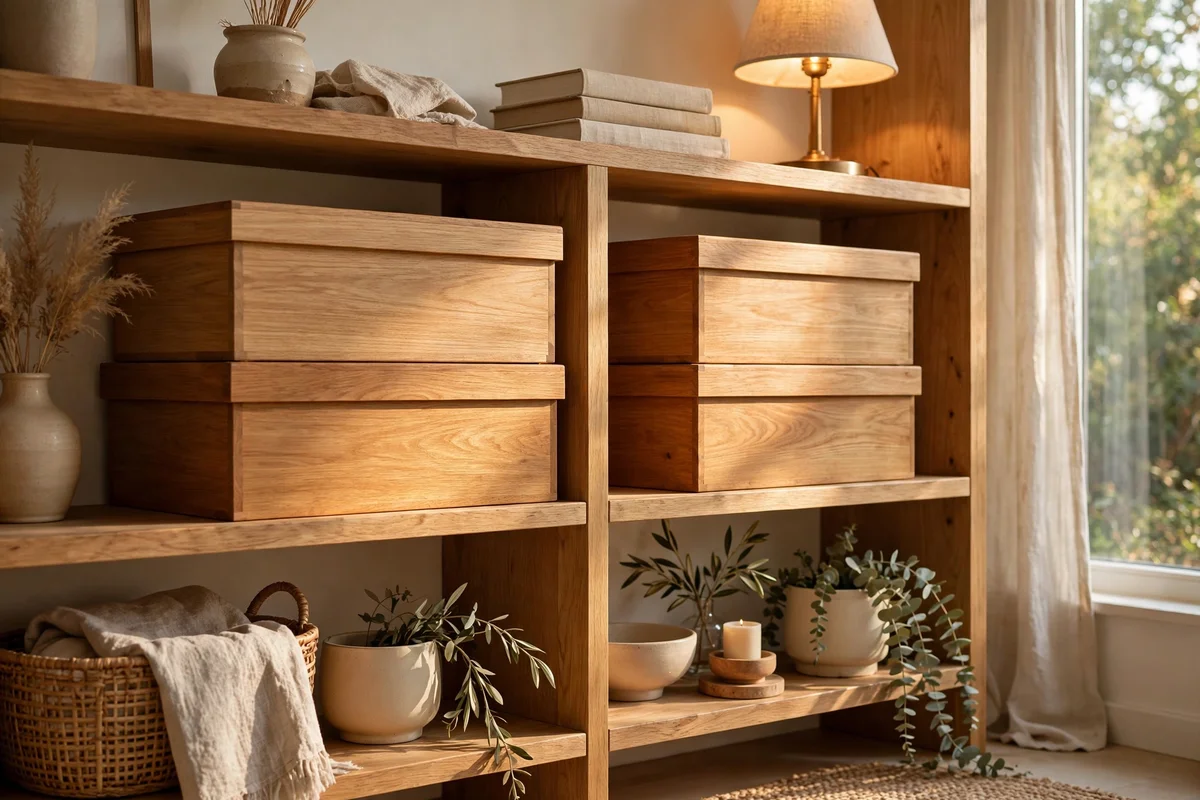
Honey toned wooden boxes, stacked two or three high on open shelves, add golden warmth in useful form. Choose boxes 20 to 30 cm wide in light oak, acacia or bamboo, and use them to hide remote controls, chargers and the small clutter that ruins a calm room. The wood grain catches lamplight far better than plastic ever could. Sets of nesting boxes cost 15 to 35 pounds or dollars at home stores.
The mistake to avoid is stacking boxes so high they wobble or block the shelf above. Three boxes is the safe limit, and the heaviest items go in the bottom one. Line the inside with a scrap of mustard fabric so opening them feels considered rather than chaotic. Dust the tops monthly, since shelf boxes collect a surprising film. For a renter friendly version, use lidded seagrass baskets in warm wheat tones, which bring the same golden grain with softer texture.
24. Gather Curtains With Soft Gold Tiebacks
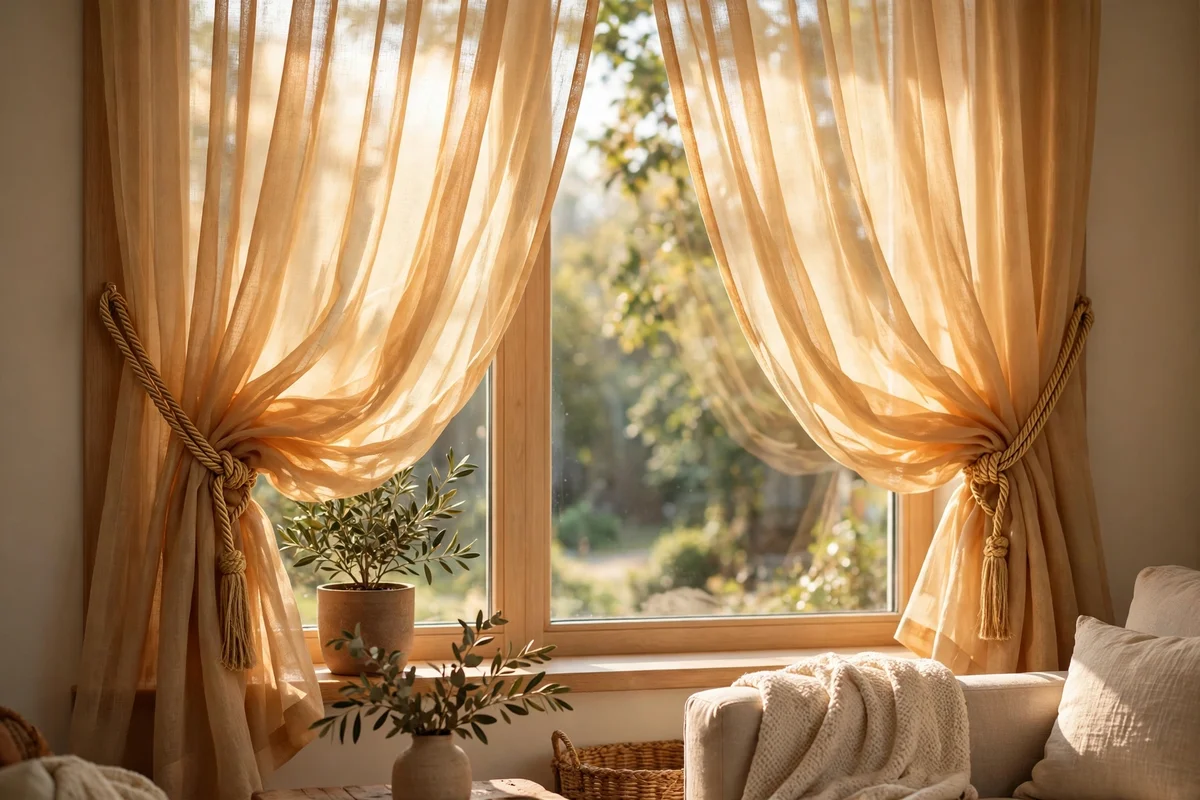
Soft gold tiebacks gather the honey tinted sheers into elegant folds that catch the light all day. Fix the hooks 90 to 100 cm from the floor and about 10 cm out from the window frame, so the curtain sweeps back in a deep, generous curve. Rope or tassel tiebacks in antique gold cost 8 to 18 pounds or dollars per pair. The gathered fabric glows where the sun strikes it and falls into calm shadow behind.
The mistake to avoid is pulling the tiebacks so tight the fabric bunches into a hard knot, which looks fussy and strains the sheer. The drape should fall in loose waves, with the tieback holding rather than strangling the cloth. Match the tieback metal to your other golds: aged brass with aged brass, soft gold with soft gold. For renters, adhesive hooks rated for 3 kg hold sheers perfectly and remove cleanly on moving day.
25. Build a Reading Corner in the Three Heights of Light
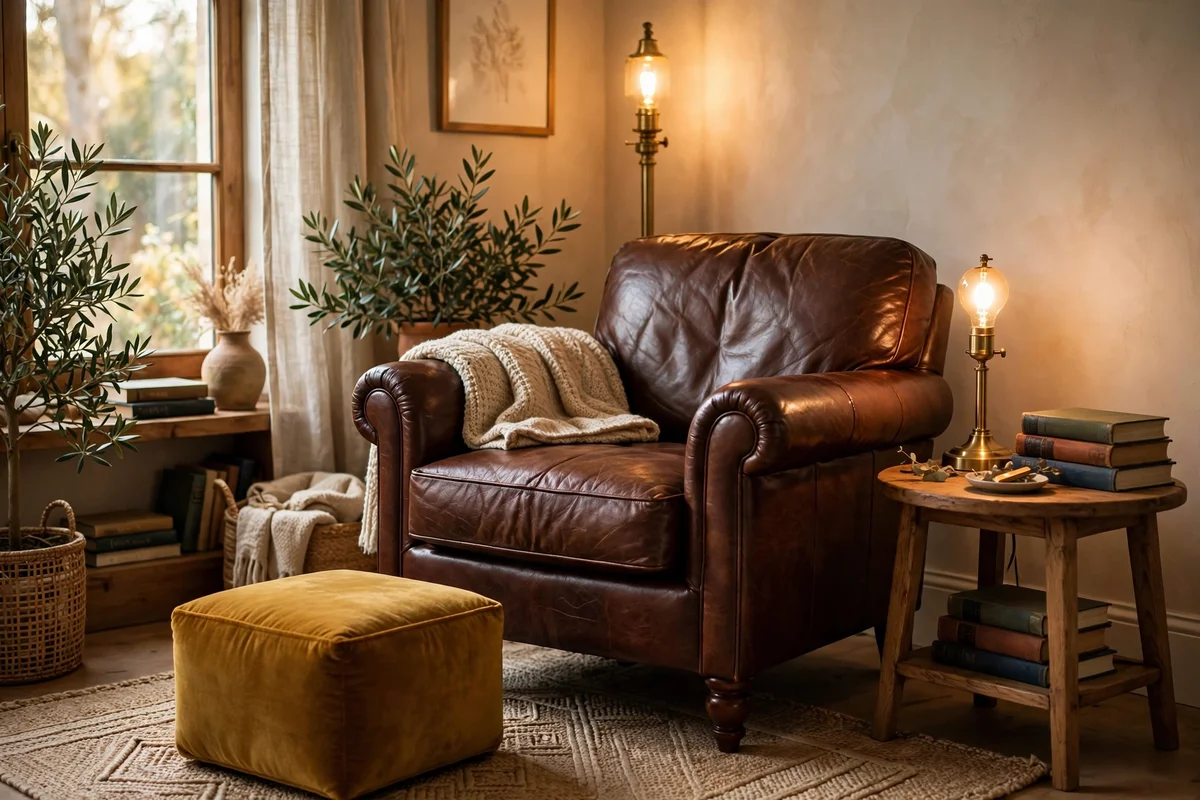
The reading corner is where the three heights of light come together for one person. Place the leather armchair at a 45 degree angle in the corner, set the floor lamp behind its left shoulder so light falls over the page, and put a small side table at the right with the brass table lamp and a stack of two books. A mustard footstool completes the seat. This corner uses every golden idea in miniature and becomes the most loved seat in the house.
The mistake to avoid is tucking the chair so deep into the corner that the lamp light falls behind your head instead of over your shoulder. Pull the chair 40 to 50 cm out from the walls so the light lands where you read. The whole corner costs little if you already own the chair: a floor lamp near 40 pounds or dollars and a footstool near 30 complete it. Keep a small brass tray on the side table for tea, and the corner stays tidy without effort.
A golden autumn living room is not about owning more gold things; it is about choosing fewer, warmer ones and lighting them well. The cream base keeps everything calm, the honey tones carry the middle, and the deep brown leather holds the whole glow in place. Each small change, a bulb swapped, a throw folded, a mirror angled, adds another minute of that late afternoon feeling. Start with the easiest idea this week and let the room teach you what it wants next.
The cheapest first step is the bulb swap: every light in the room to warm 2700K, which costs under thirty and changes the mood in an afternoon. After that, fold one ochre throw over the sofa arm and angle a mirror toward the evening sun. Those three moves cost little and need no permission, yet they set the golden story in motion. From there, add brass, amber and wheat one piece at a time, always leaving breathing room between them.
Frequently Asked Questions
How do I keep a gold living room from looking gaudy?
Use gold as an accent, not a base: keep walls and the sofa cream, and limit brass and gold frames to three or four touches per room. Aged and brushed finishes read richer than polished shine. Every gold piece needs calm space around it, so leave empty surface between objects. If in doubt, remove one piece; restraint is what separates rich from gaudy.
What is the cheapest way to get the golden look?
Swap every bulb to warm 2700K LEDs for under 30 pounds or dollars; this single change does more than any furniture. Then add a mustard throw, a brass tray from a thrift shop, and a bundle of dried wheat in a jar you already own. Those four moves cost under 80 in total and give you the golden glow, the textile warmth and the natural texture in one afternoon.
Can I do this look in a small living room?
Yes, and small rooms suit it well because the golden light feels cosier in close quarters. Keep the cream base, use a mirror to double the light, and choose the three height lighting on a small scale: one slim floor lamp, one table lamp and one candle cluster. Skip the floor vase and use a small wheat bundle on the shelf instead. Three brass touches are plenty; small rooms punish clutter fast.
How do I match brass, gold frames and amber glass together?
Keep them in the same warmth family: aged brass, soft antique gold and honey amber all share a muted yellow undertone. Avoid mixing in polished chrome, silver or rose gold, which clash in one glance. Cream mounts and honey wood sit happily with all of them. As a rule, if a piece looks yellow and loud under daylight, it will fight the palette; choose the quieter, aged version instead.
How do I care for dried wheat and grasses so they last?
Keep dried stems away from direct sun, which bleaches them pale within months, and away from damp rooms, which turns them grey and limp. Shake them outdoors every few months to release dust, and never place them near open flames since dried grass catches fire fast. Stored well, wheat and grasses last two to three seasons; replace individual stems as they crumble rather than the whole bundle.