Living Room
25 Home Decorating Ideas That Look Far More Expensive Than They Are
By Anna Wells · · 21 min read
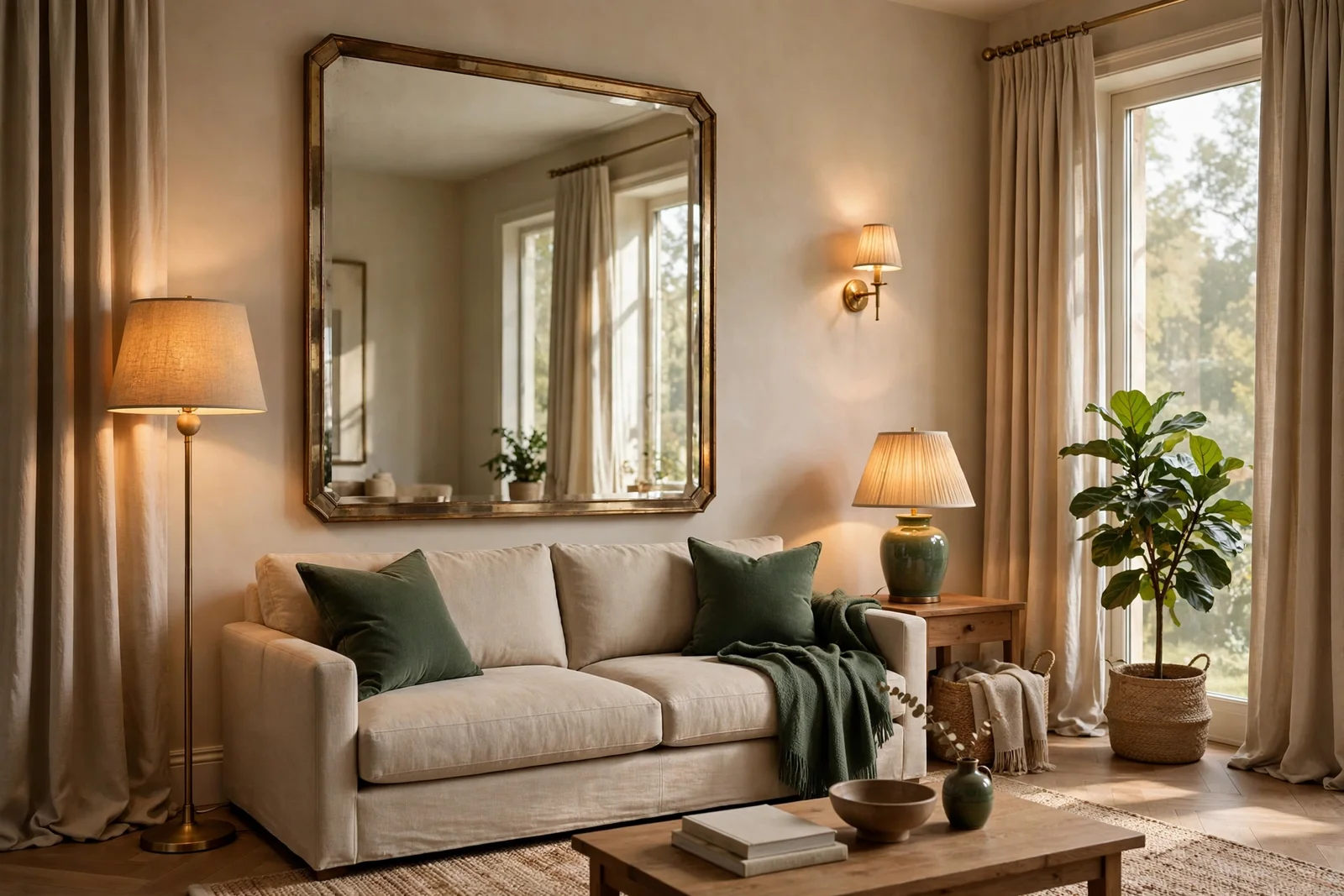
Twenty five room-by-room decorating ideas that make your home feel composed and costly, with honest budget numbers for every single one.
Some rooms simply feel expensive before you can say why. The light falls softly at three heights, the curtains hang like they were measured twice, and every surface holds just enough. Nothing shouts, and nothing needs to. That quiet confidence is not a big budget at work; it is a set of small, deliberate decisions repeated until they feel effortless.
This guide gathers twenty five of those decisions into one place. Each idea comes with real numbers: what it costs at charity-shop prices, what it costs new, and what size or distance actually works. You will not find trend-chasing here, only timeless moves that have made homes feel gracious for generations: generous scale, honest materials, and colour kept on a short leash.
Work through them in any order. Some cost nothing but an afternoon of rearranging; others need a single confident purchase. Together they layer into a home that looks thoughtfully assembled rather than expensively bought, which is the whole secret.
Start with whichever room you use most. A living room that holds one oversized mirror, lamps at three heights, and curtains hung properly will already feel transformed before you spend a single pound on anything new.
1. Hang One Oversized Mirror Above the Sofa to Double the Light
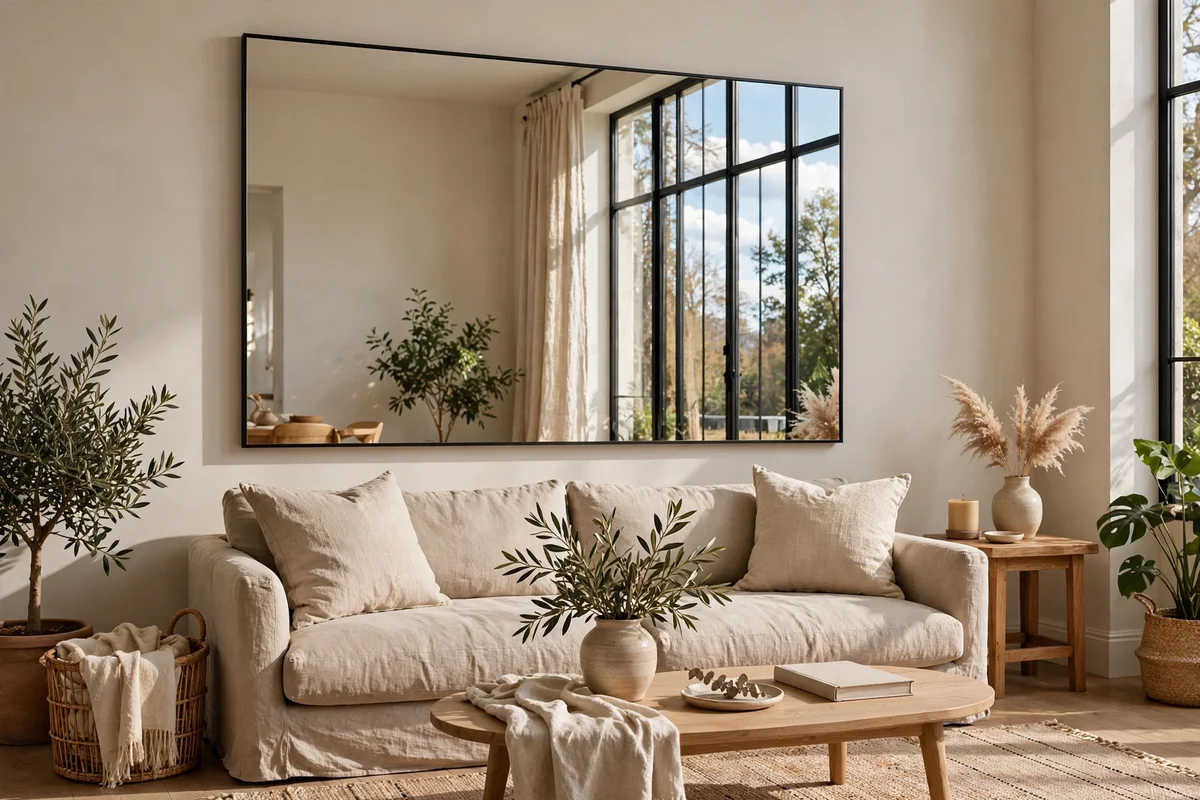
An oversized mirror is the fastest way to make a living room feel twice as generous. Choose a mirror at least 120 cm wide for a standard two-seat sofa, and hang its centre about 145 to 150 cm from the floor so it catches window light rather than the ceiling. Position it opposite or beside a window so daylight bounces deep into the room. A simple timber or slim black frame keeps the look calm and quiet.
Thrift shops and auction sites regularly sell large mirrors for 20 to 50 pounds or dollars; clean old glass with white vinegar and water before judging it. Hang into a wall stud or use anchors rated for at least 10 kg, since big mirrors are heavier than they look. The common mistake is hanging the mirror too high, which shows only ceiling. Budget tip: one big second-hand mirror beats three small new ones at the same price.
2. Centre the Room With One Large Artwork Instead of Small Prints
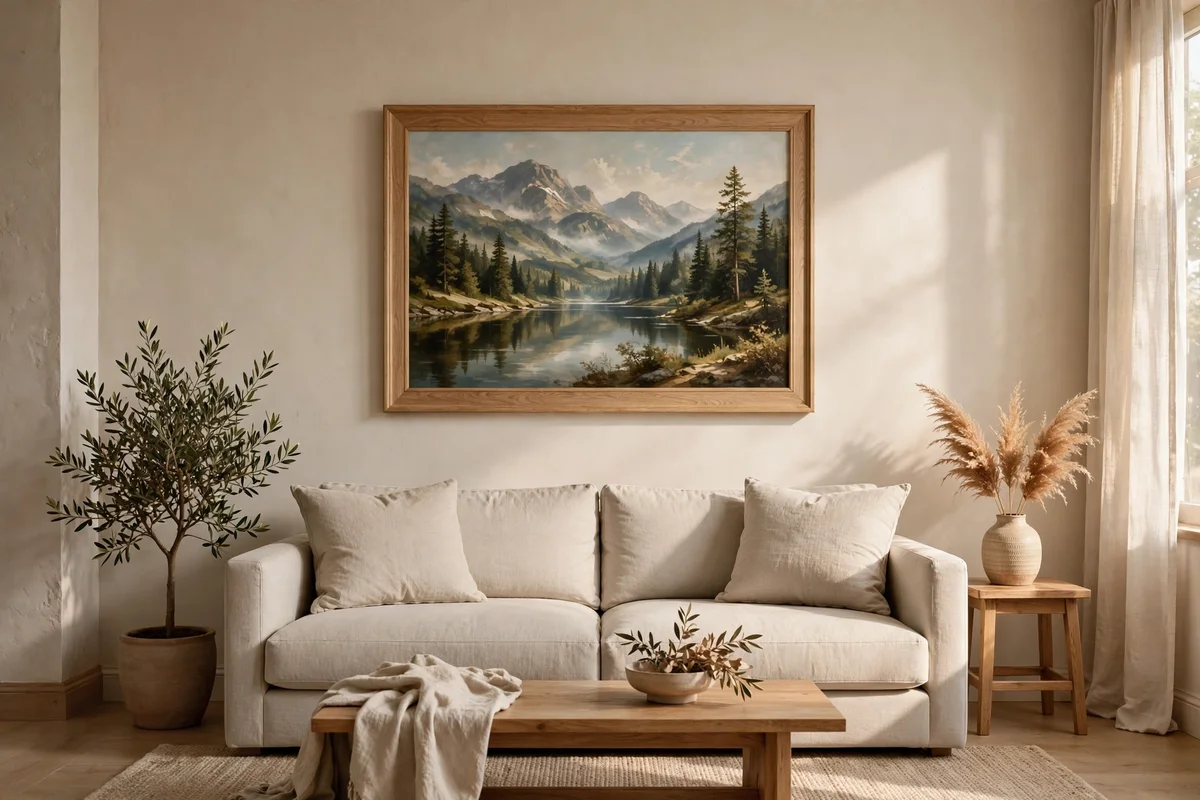
One generous artwork above the main sofa or mantel reads as confident, where a scatter of small prints reads as hesitant. Aim for a piece roughly two thirds the width of the furniture beneath it: for a 200 cm sofa, look for art 120 to 140 cm wide. Hang the centre at 145 to 150 cm from the floor so it sits at eye level. A calm landscape, an architectural print or an abstract in your palette all work beautifully.
Canvas prints at 100 cm wide cost 40 to 80 new, while thrifted framed prints with good bones can cost under 15. If the frame is tired, repaint it in matte black or deep bronze for a custom look. The mistake to avoid is hanging art too high, which disconnects it from the furniture. As a rule, the bottom of the frame should sit 15 to 20 cm above the sofa back.
3. Layer Lighting at Three Heights Across the Seating Area
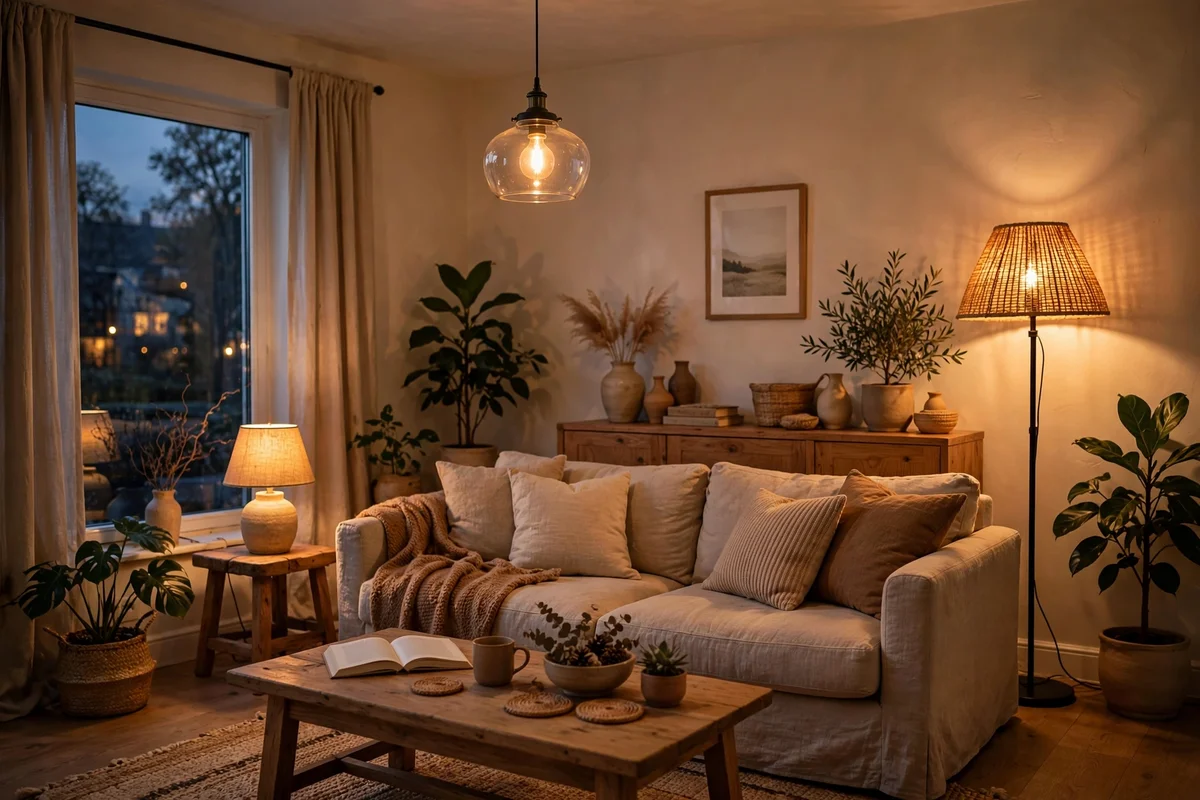
Rooms that feel expensive are rarely lit by one bright ceiling fitting; they glow from three heights at once. Combine a dimmable overhead light with a floor lamp around 150 cm tall and a table lamp of 45 to 55 cm beside the sofa. Keep every bulb at 2700K warm white so the tones match. Three pools of light let you lower the mood in the evening without a single harsh shadow.
A set of three second-hand lamps often costs 30 to 60 in total, and a dimmer plug for a floor lamp is under 15. Place the tallest light in the darkest corner and the smallest near reading spots. The mistake to avoid is mixing colour temperatures; one cool 4000K bulb among warm ones reads as cheap instantly. Budget tip: change bulbs first, since mismatched light ruins even good furniture.
4. Set a Reading Nook With a Tall Floor Lamp and a Small Table
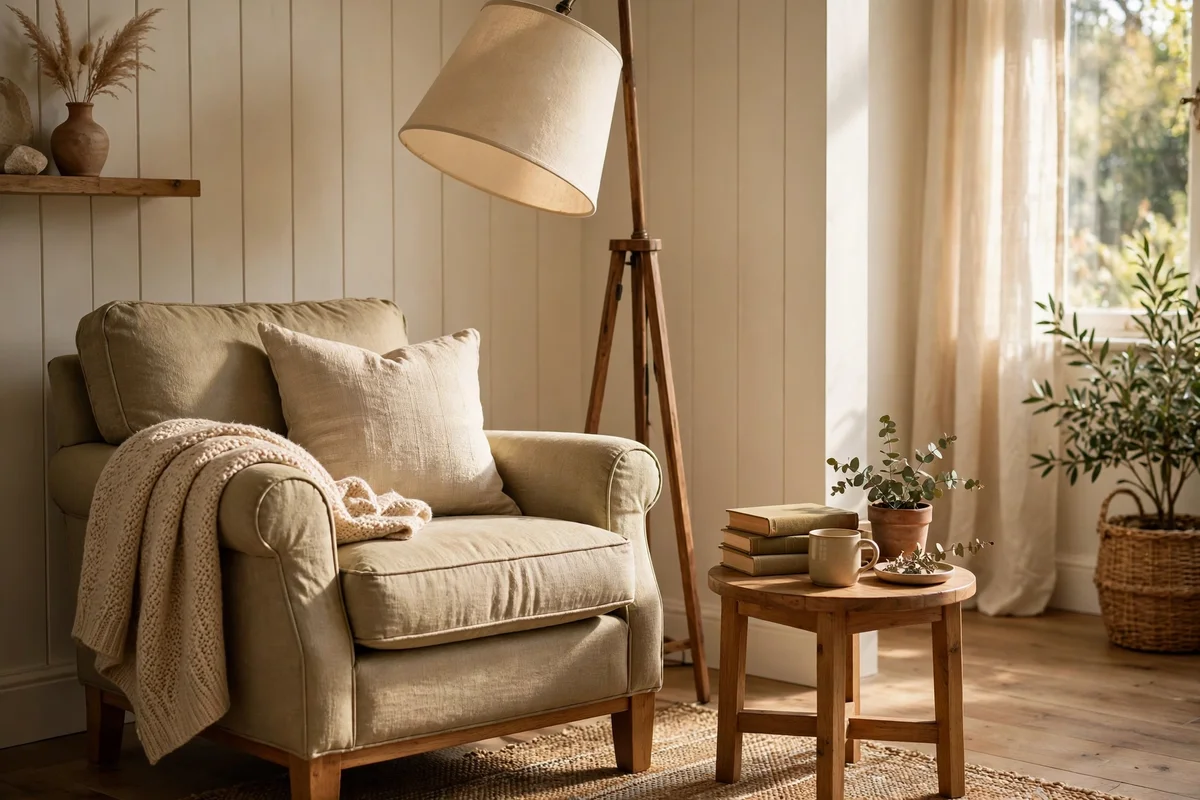
A corner becomes a destination with just two pieces: a floor lamp 150 to 180 cm tall and a side table 40 to 50 cm wide. Angle the lamp head over the chair shoulder from the left or right side, whichever suits a right- or left-handed reader. A drum shade in cream linen spreads light evenly and hides the bulb. This small setup adds one of your three lighting heights exactly where it matters.
Charity-shop floor lamps run 10 to 25, and a wooden stool works perfectly as the table. Add a folded wool throw and the nook looks intentional rather than leftover. The mistake to avoid is pushing the chair flat against the wall; pull it out 15 cm and angle it slightly for a relaxed look. Budget tip: a warm LED bulb at 8 watts gives the glow of an old 60-watt bulb for pennies a day.
5. Hang Curtain Panels High, Wide and Generous With Fullness
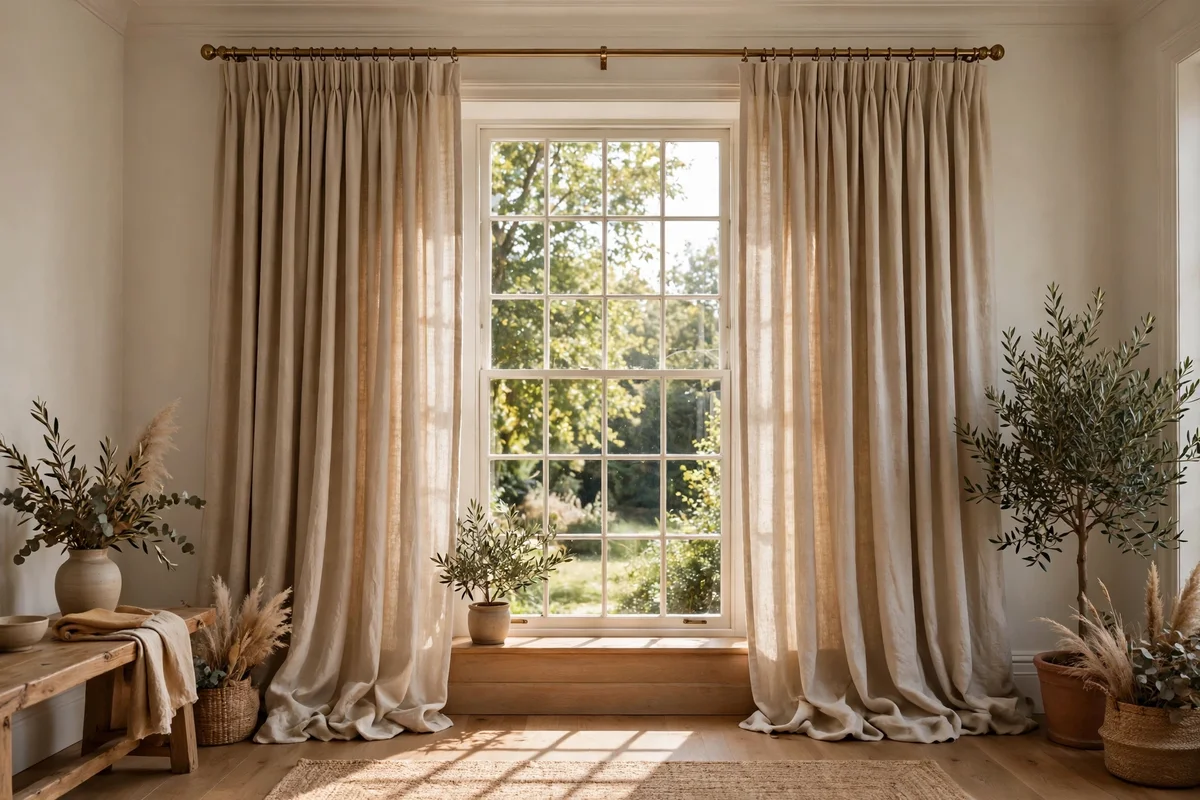
Nothing cheapens a window faster than short, skimpy curtains. Mount the rod 15 to 20 cm above the frame and extend it 8 to 10 cm past each side, so panels stack on the wall instead of covering glass. Each panel should be at least twice the width of its window section for proper fullness: a 120 cm window needs two 120 cm panels. Choose floor length with hems kissing the floor.
Ready-made linen-look panels cost 15 to 30 per pair, and a matte black or brass rod runs 20 to 40. The mistake to avoid is hanging curtains at the frame edge, which makes windows look smaller and rooms darker. Budget tip: buy panels slightly too long and hem them with iron-on tape for 3, which looks tailor-made. Wash new panels before hanging so they drop evenly.
6. Keep One Disciplined Colour Palette Across the Whole Floor
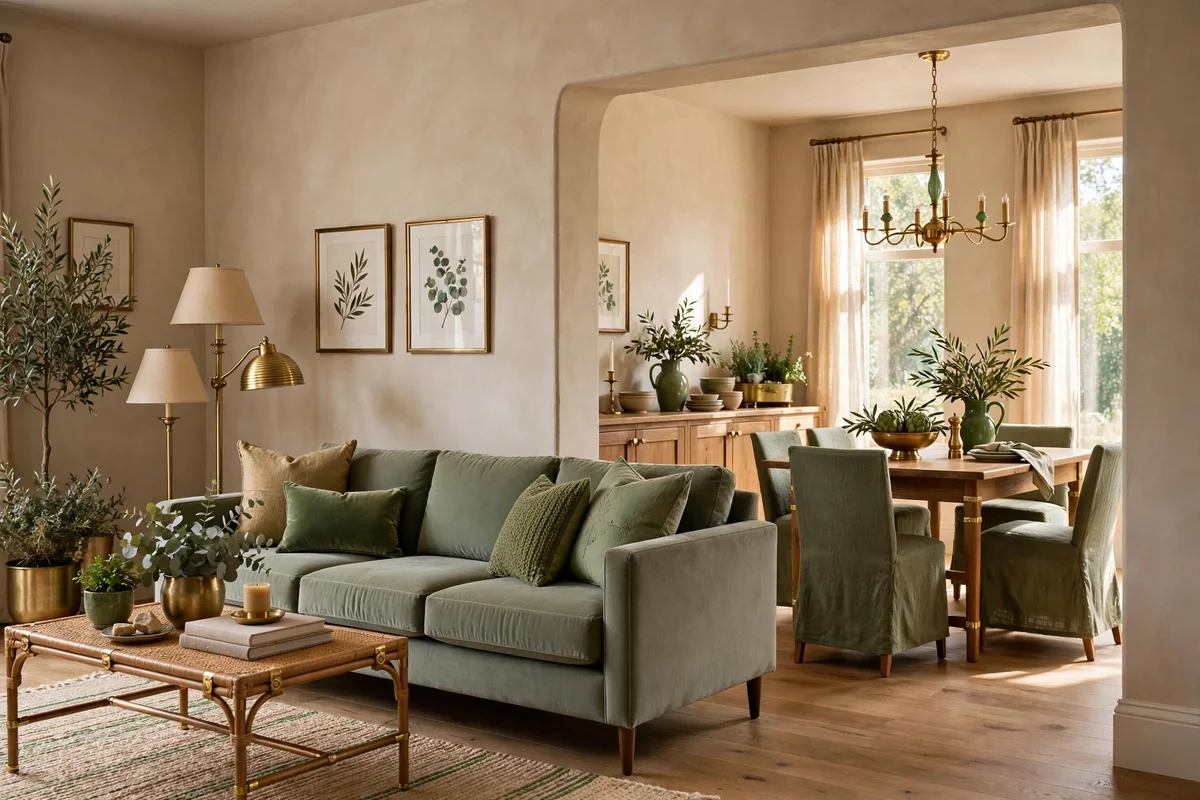
Expensive-looking homes rarely surprise you from room to room; they whisper the same palette. Choose three colours for the entire ground floor: a dominant warm neutral for sixty percent of surfaces, a secondary tone for thirty percent, and one accent for ten percent. Paint walls the neutral, bring the secondary in through the sofa or rug, and scatter the accent in cushions and art.
This costs almost nothing to start, since you are simply editing what you own toward one family. A 2.5-litre tin of quality emulsion covers one average wall for about 30. The mistake to avoid is buying a bold accent piece before the neutrals are settled; it will fight everything. Budget tip: collect paint cards and fabric swatches for a week before spending, and photograph rooms in daylight.
7. Repeat a Single Accent Colour From Room to Room
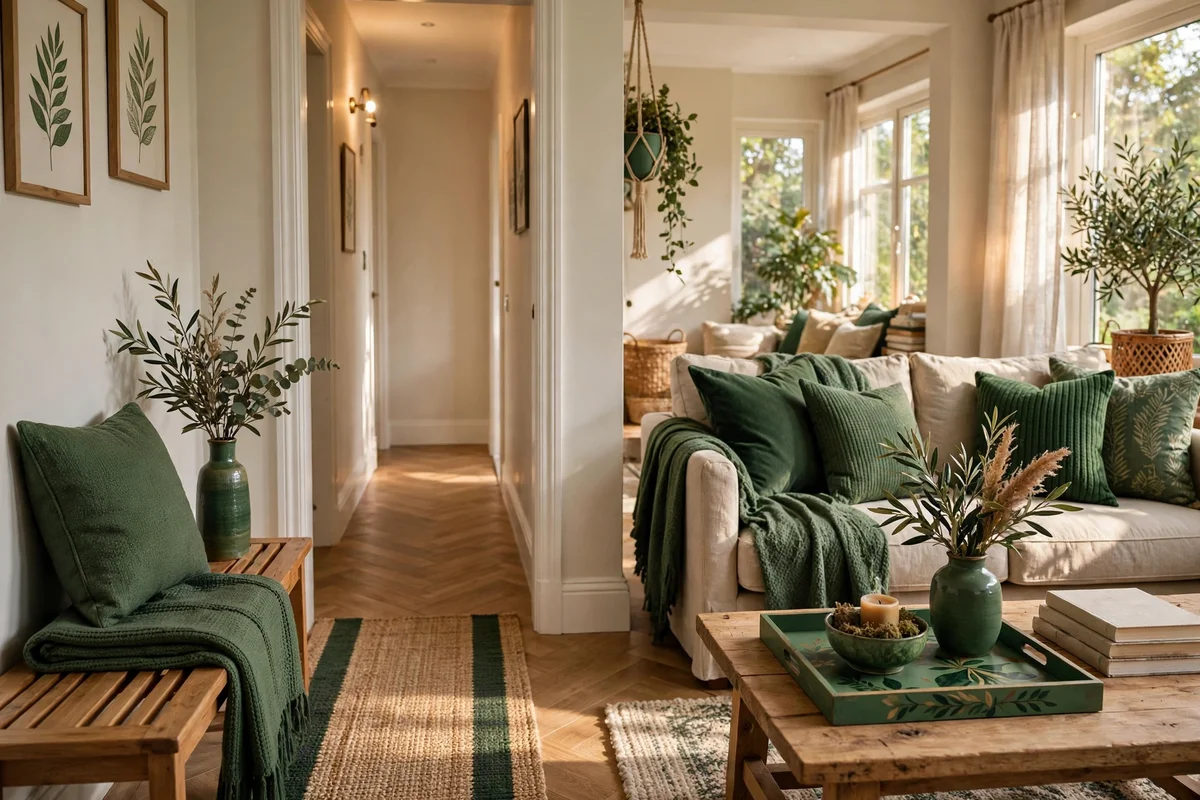
Once your neutral base is calm, choose one accent and let it travel. If your cushions are forest green, echo that green in the bedroom throw, the hallway runner and a small vase in the kitchen. Three to five repeats across the home are enough; the eye registers the connection without counting. This simple echo makes separate rooms feel like one considered home.
The cheapest way is paint: one tester pot for 4 to 6 repaints a small frame or tray in your accent. Charity shops yield green glass, brass and ceramic pieces for a few pounds each. The mistake to avoid is choosing three accents at once, which reads as busy rather than rich. Budget tip: decide the accent from something you already own and love, then repeat it.
8. Swap Cabinet Handles for Solid Brass Pulls
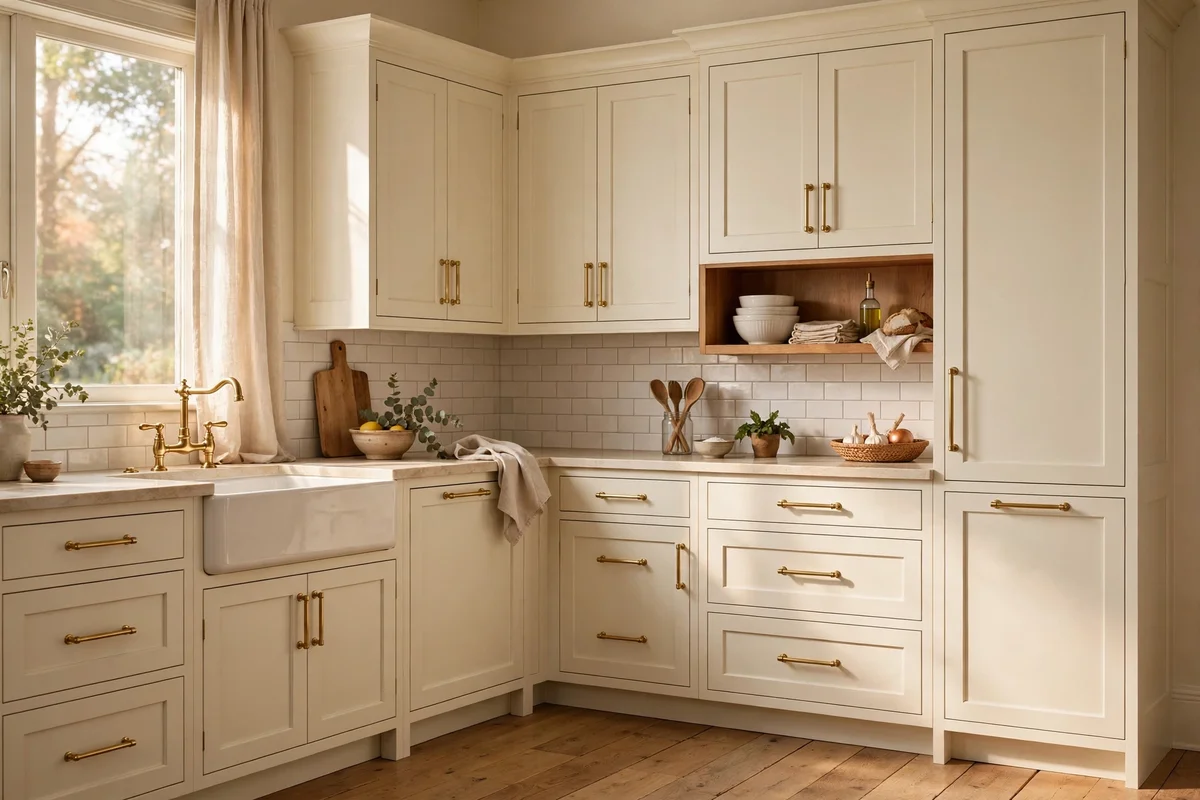
Kitchen and bathroom cabinets age visibly at the handles first, and new pulls transform them in an afternoon. Measure the hole centres, usually 96 or 128 mm, before buying. Solid brass or brushed bronze pulls cost 3 to 8 each, so a twelve-door kitchen runs 40 to 95. Keep every handle in the same finish for a calm, deliberate line, and choose a simple bar or knob shape that will not date.
Installation needs only a screwdriver and about five minutes per handle. Keep the old handles in a labelled bag in case of a rental move-out. The mistake to avoid is mixing finishes across one run of cabinets; two metals in one kitchen looks accidental. Budget tip: buy one sample first to check the feel and colour against your cabinets in daylight before ordering the full set.
9. Replace Tired Light Switch Plates With Solid Brass Covers
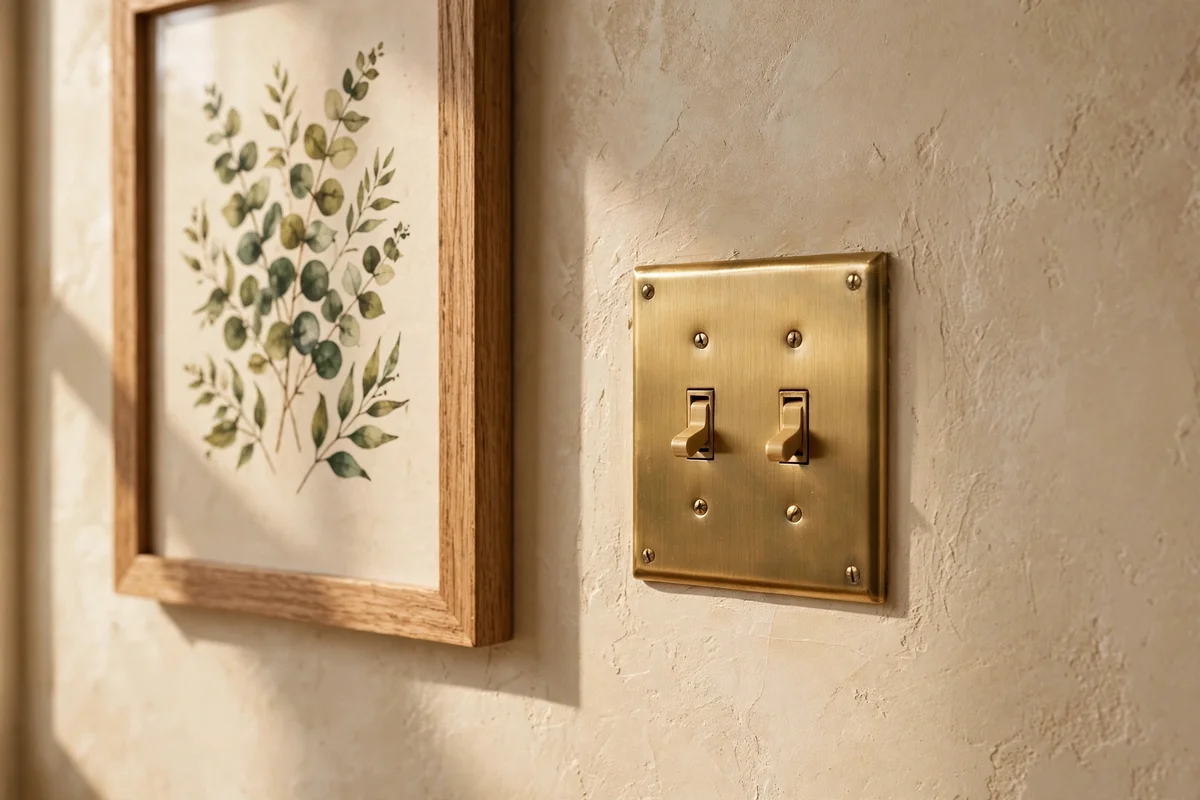
Switch plates are touched daily and noticed more than most people expect. Solid brass or bronze covers cost 4 to 10 each and screw on in under two minutes. Match the finish to your cabinet handles so the metals speak to each other. In a living room, changing four plates for under 30 removes a surprising amount of visual tiredness. Turn off the circuit first, even for this tiny job.
This is one of the cheapest luxury moves in the whole list. Keep the original plastic plates in a bag taped inside a cupboard for move-out day if you rent. The mistake to avoid is choosing a glossy finish that shows fingerprints; brushed or aged brass forgives daily touching. Budget tip: change only the plates in rooms guests see first, and do bedrooms later.
10. Fit Weighted Interior Door Handles in a Matching Finish
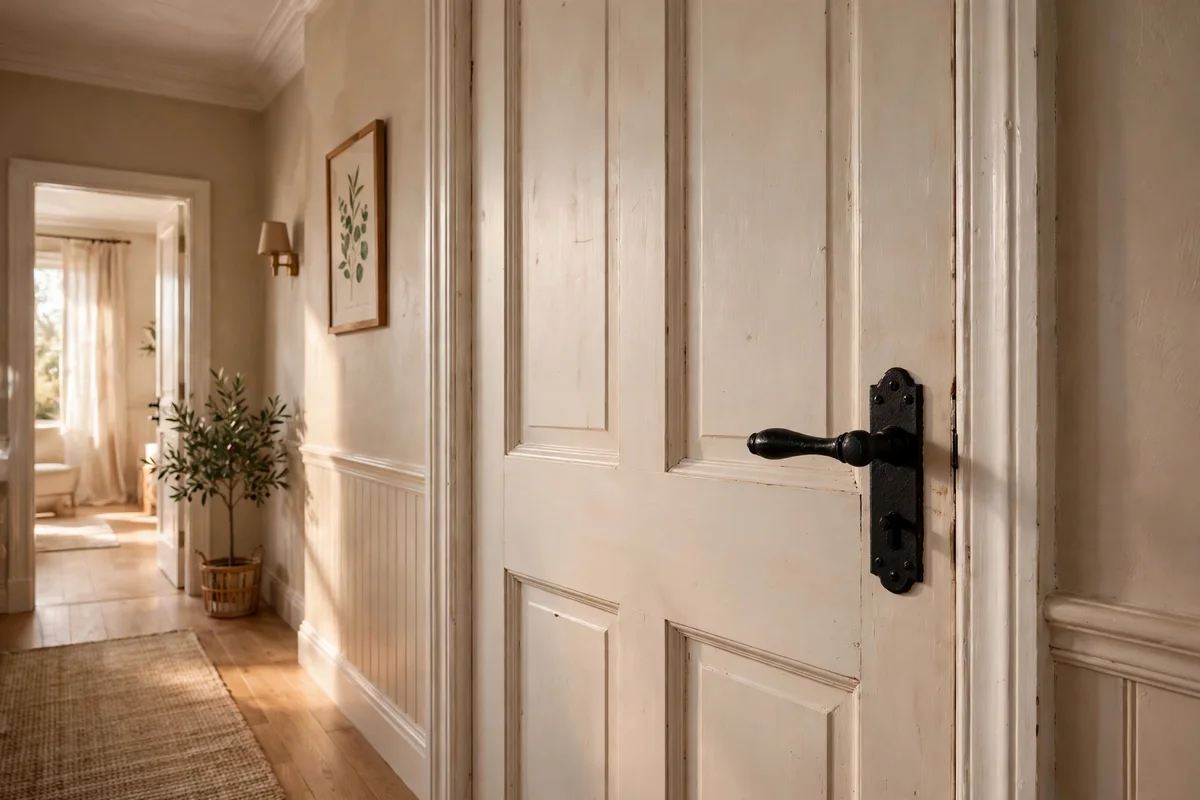
A door handle with real weight in the hand signals quality instantly. Solid brass or black iron lever handles cost 15 to 35 per door and fit standard 54 mm latch holes. Choose the same finish as your cabinet pulls for continuity through the home. Replacing the handles on the two or three doors guests use most, usually the living room and bathroom, gives the biggest return.
Fitting takes a screwdriver and about ten minutes per door, and most handles include clear templates. Keep old handles labelled by room for rental reversals. The mistake to avoid is mixing lever styles across one hallway; one shape repeated looks designed. Budget tip: start with the living room door alone for 20, and add others as budget allows each month.
11. Layer a Flatweave Rug Over a Large Natural Jute Base
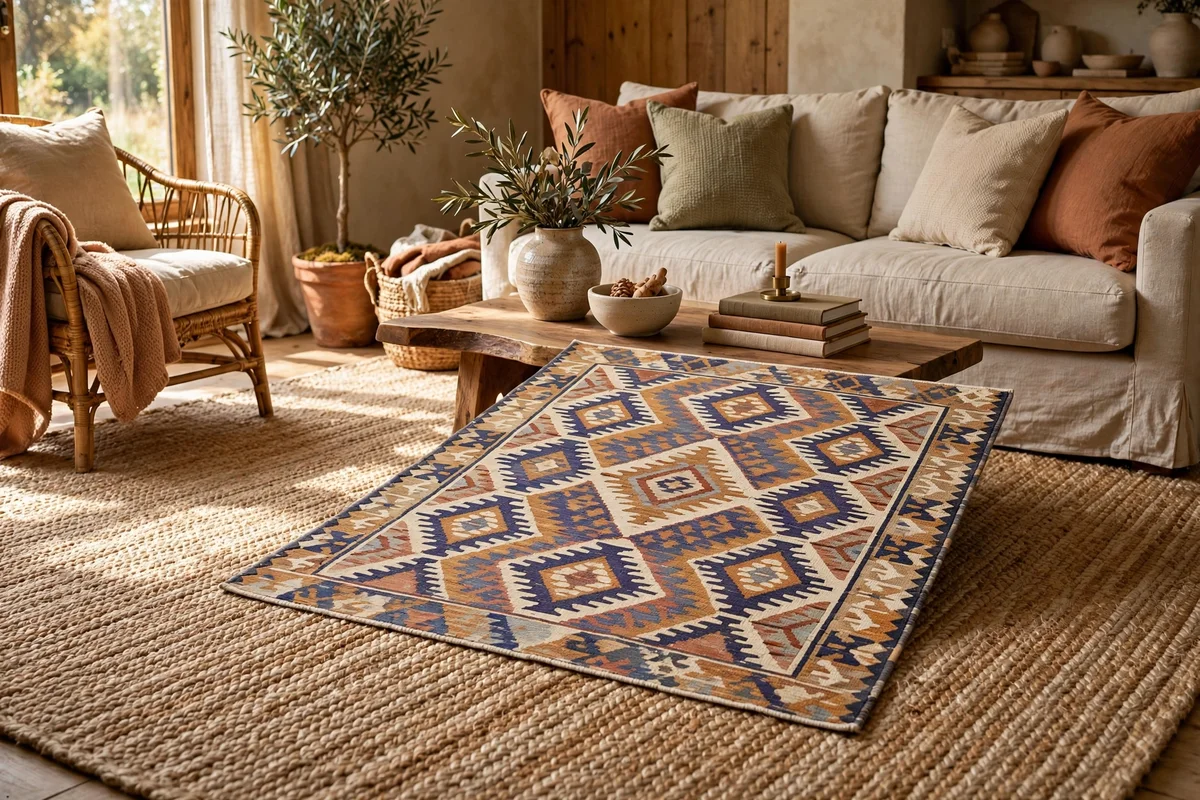
Layering rugs is the stylist trick for floors that feel generous on a budget. Start with a large jute or sisal rug, at least 200 by 300 cm for a seating area, then layer a smaller flatweave or wool rug 120 by 180 cm on top at a slight angle. The bottom layer gives scale and texture for 60 to 100, while the top layer brings colour and softness for 40 to 80.
Keep at least the front legs of every seat on the rugs so the grouping feels anchored. Vacuum the jute regularly, since grit wears the fibres. The mistake to avoid is choosing two busy patterns together; let one layer be plain. Budget tip: buy the jute new for even wear, but hunt the patterned top rug second hand, where wool rugs often sell for a quarter of retail.
12. Mix Linen, Wool and Cotton Cushions Instead of Matching Sets
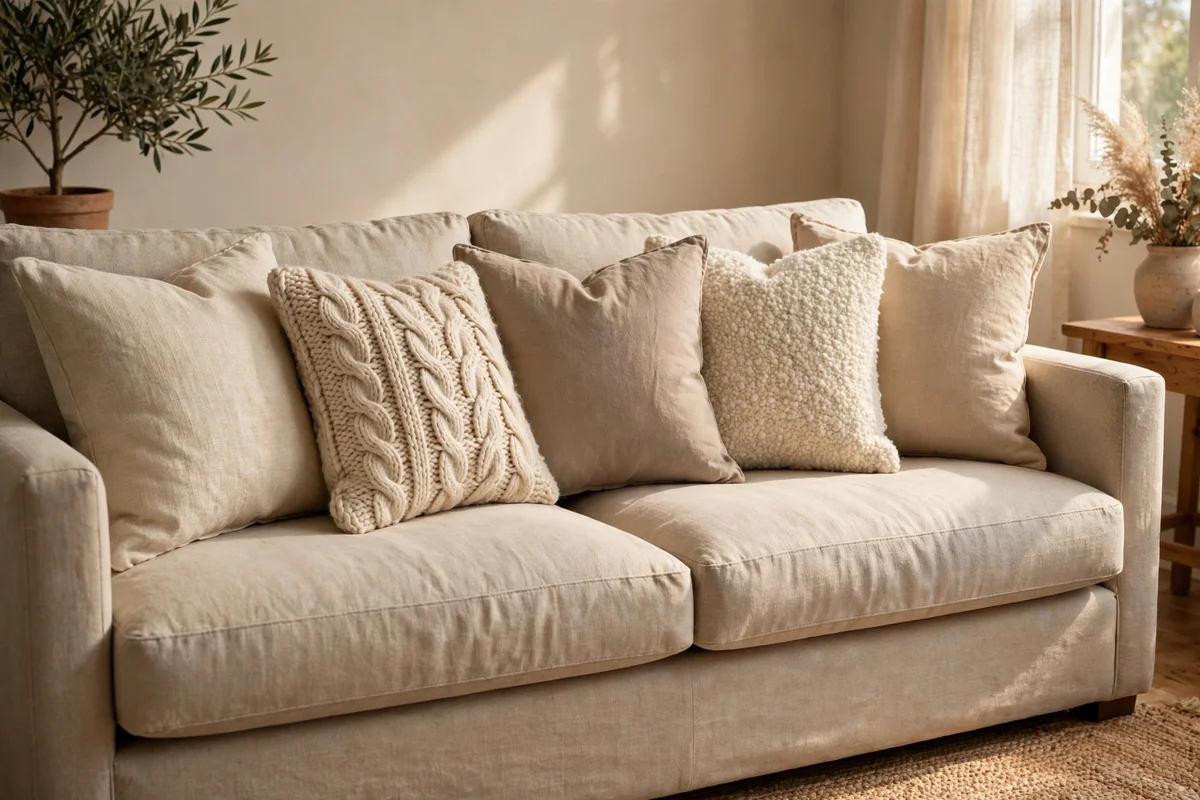
Matched cushion sets read as a showroom; mixed natural fibres read as a home. Build the sofa with five to seven cushions in odd numbers: two large 50 cm linen squares at the back, two 45 cm wool or cotton in front, and one small lumbar in a textured weave. Keep them inside one palette with varied tones and let the textures do the talking. Feather inserts plump better than fibre for 8 to 12 each.
Quality cushion covers cost 10 to 25 each, so a full sofa refresh runs 60 to 120. Charity shops are excellent for wool and linen covers. The mistake to avoid is buying every cushion in the same fabric and colour, which flattens the whole sofa. Budget tip: keep good inserts and replace only the covers when you want a seasonal change.
13. Fold a Heavy Wool Throw Across the Sofa Arm
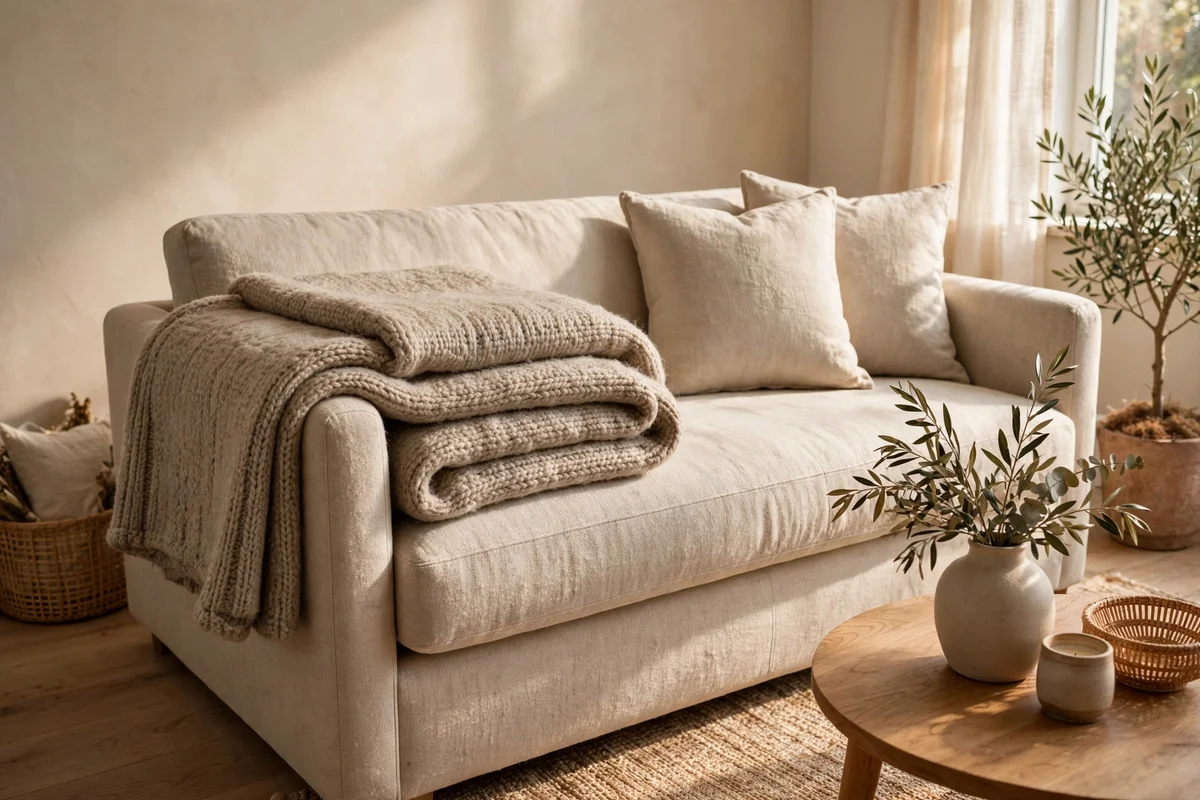
A single wool throw, folded in thirds and laid across one sofa arm or the back corner, adds the kind of texture expensive rooms always have. Choose 130 by 180 cm in lambswool or a wool blend, in a tone that echoes your accent colour. The fold should look placed rather than tossed: smooth the top layer once and let the ends hang evenly. This one piece softens leather and plain fabric alike.
Good wool throws cost 30 to 60 new and 8 to 15 second hand. Wash on a wool cycle and dry flat to keep the fibres springy. The mistake to avoid is draping three different throws at once, which looks like a laundry pile. Budget tip: one excellent throw used daily beats three thin ones, and it lasts for years.
14. Hunt Thrift Shops for Solid Wood Pieces With Good Bones
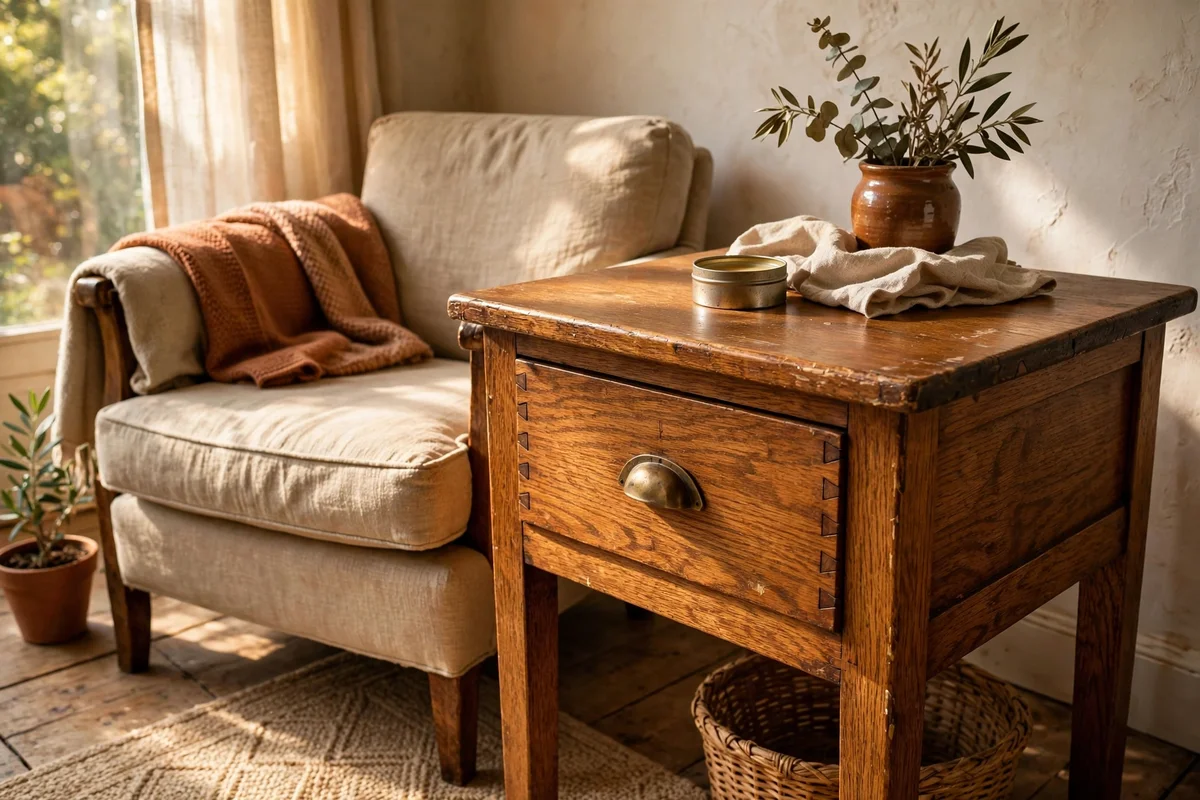
The pieces that make a room look costly are usually the oldest ones in it. Look for solid wood side tables, stools and small chests with dovetail joints, smooth drawer runs and honest weight; veneer that is bubbling or chipboard underneath is not worth rescuing. Expect 15 to 40 for a good side table. A wipe with wood oil or a coat of furniture wax revives most tired finishes in an hour.
Visit shops midweek when new stock lands, and check the back and underside before buying. Avoid wobbly legs that need more than a glue repair, and skip anything smelling strongly of damp. The mistake to avoid is buying for size alone; a sturdy 40 cm table beats a rickety 60 cm one. Budget tip: solid pine and oak pieces repaint beautifully if the wood tone clashes.
15. Refinish One Vintage Frame With Paint for a Custom Look
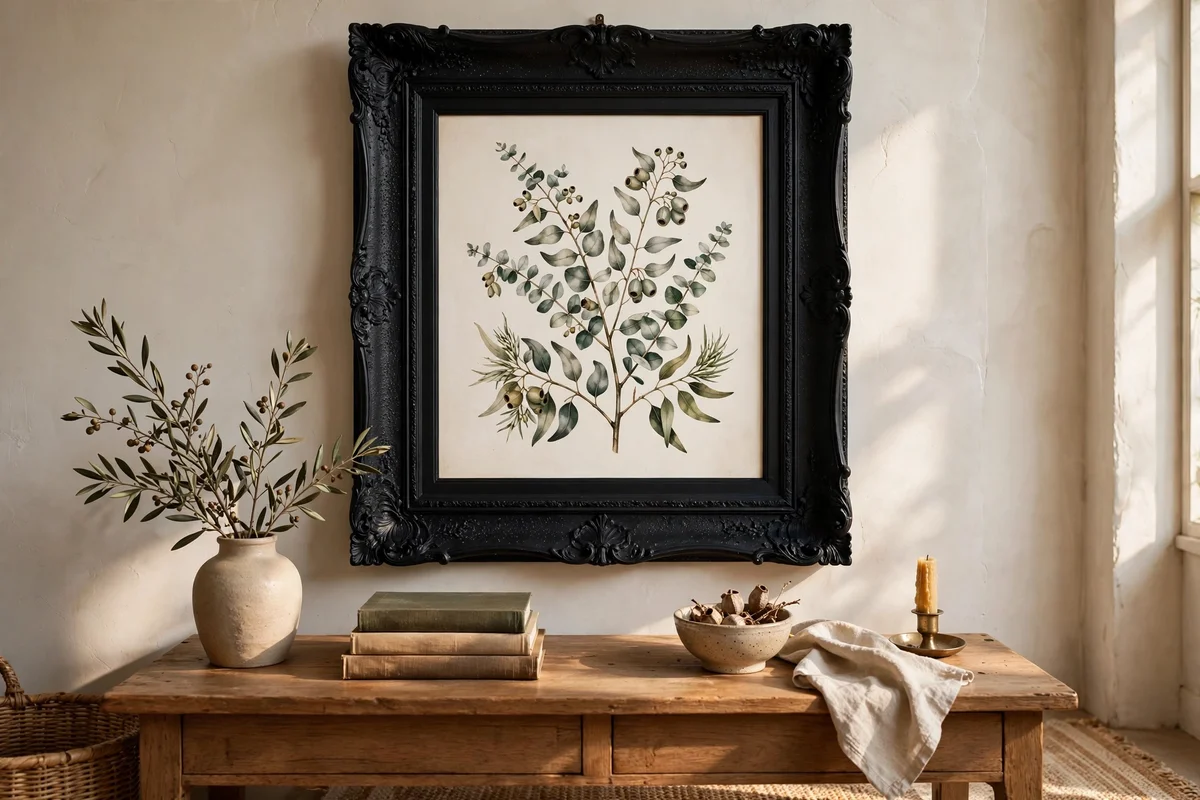
A large second-hand frame with a dated gilt finish becomes a custom piece with one coat of paint. Sand lightly with 120-grit paper, wipe clean, then apply two thin coats of matte paint in black, deep bronze or your accent colour. A 70 by 100 cm frame costs 5 to 15 at a charity shop and paint costs almost nothing if you have leftovers. The result looks like a gallery frame.
Let each coat dry four hours before the next to avoid tacky patches. Hang the finished frame with proper picture hooks, not the old wire. The mistake to avoid is thick gloopy coats, which hide the frame detail you paid for. Budget tip: paint the mount too if it is yellowed; a fresh white or cream mount modernises old prints instantly.
16. Style Surfaces in Groups of Three With Room to Breathe

Objects grouped in threes look composed; the same objects spaced singly look scattered. On a coffee table or console, build a trio with one tall piece, one medium and one low: a 30 cm vase, a stack of two books, and a small bowl. Keep the group within an imaginary triangle and leave at least 20 cm of empty surface around it so the eye can rest.
This arrangement costs nothing, since you are simply editing what you own. Try the rule on the mantel, the bedside table and one shelf before buying anything. The mistake to avoid is lining objects up in a straight row like soldiers, which feels stiff. Budget tip: if a trio feels thin, add height with a book stack underneath rather than buying a taller object.
17. Leave Clear Breathing Space Between Every Vignette
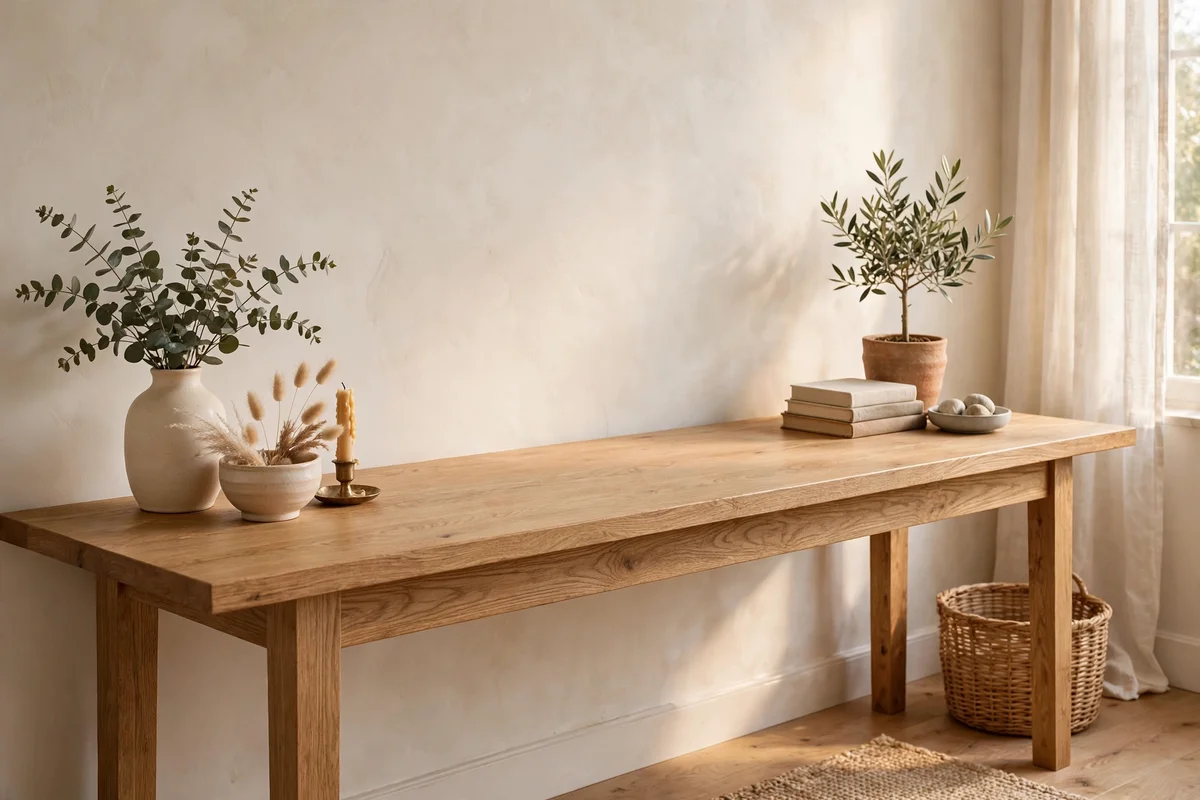
Expensive rooms feel calm because their styled corners do not touch. Leave 30 to 50 cm of clear surface between groupings on long consoles and shelves, and resist filling every shelf of a bookcase; one empty shelf per case reads as confidence. This negative space is free, and it makes each object look more considered. Step back to the doorway to judge the rhythm.
When in doubt, remove one object from each surface and live with it for a week. Most people find the room feels larger within a day. The mistake to avoid is spreading objects thinly across the whole surface instead of clustering them with gaps. Budget tip: breathing space costs nothing and is the single fastest way to make charity-shop finds look deliberate.
18. Limit Every Surface to Three Loved Objects or Fewer
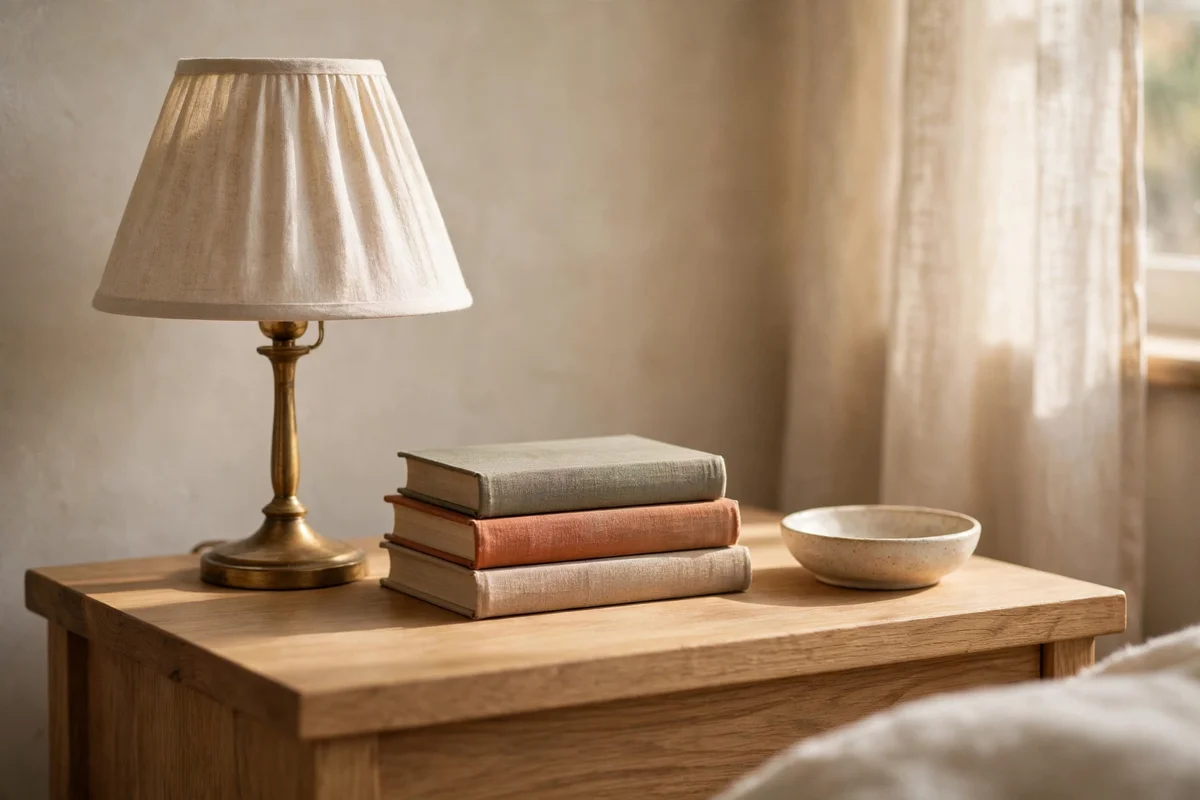
Clutter is the fastest way to make good furniture look cheap. Walk each room with a basket and remove everything from surfaces, then return only three objects per surface at most: something tall, something personal, something useful. Bedside tables, consoles and coffee tables all follow the same rule. The pieces you keep will suddenly look twice as valuable with room around them.
Box the removed items for a month before donating, in case you miss something. Dusting becomes dramatically faster, which is a daily reward. The mistake to avoid is keeping objects out of guilt rather than love; if it needs explaining, it should not be on display. Budget tip: this is the only idea on the list that pays you back in time as well as looks.
19. Hide Everyday Clutter in Lidded Baskets and Closed Storage
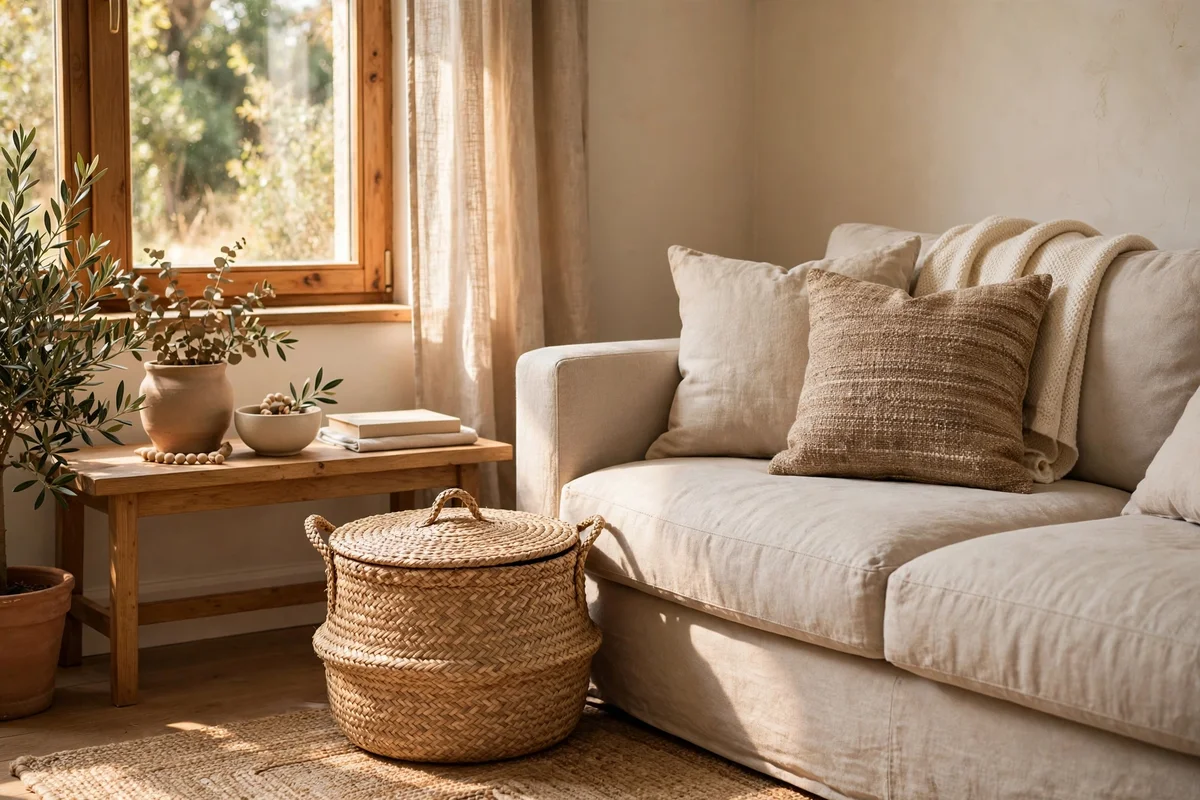
A calm room is rarely a tidy room; it is a room where the mess has somewhere to go. Place one lidded basket or box per room for the daily drift: remote controls, chargers, toys and post. Natural seagrass baskets 40 cm wide cost 12 to 25 and look good enough to leave visible. Give every basket a purpose and label it mentally so things return to the right home.
Spend ten minutes each evening returning strays to their baskets and surfaces stay clear. Choose baskets with lids, since open baskets still read as clutter. The mistake to avoid is buying storage before decluttering; containers for things you do not need just hide the problem. Budget tip: charity shops sell sturdy baskets for 3 to 8, often in better materials than new ones.
20. Style Bookshelves With Two Thirds Books and One Third Objects
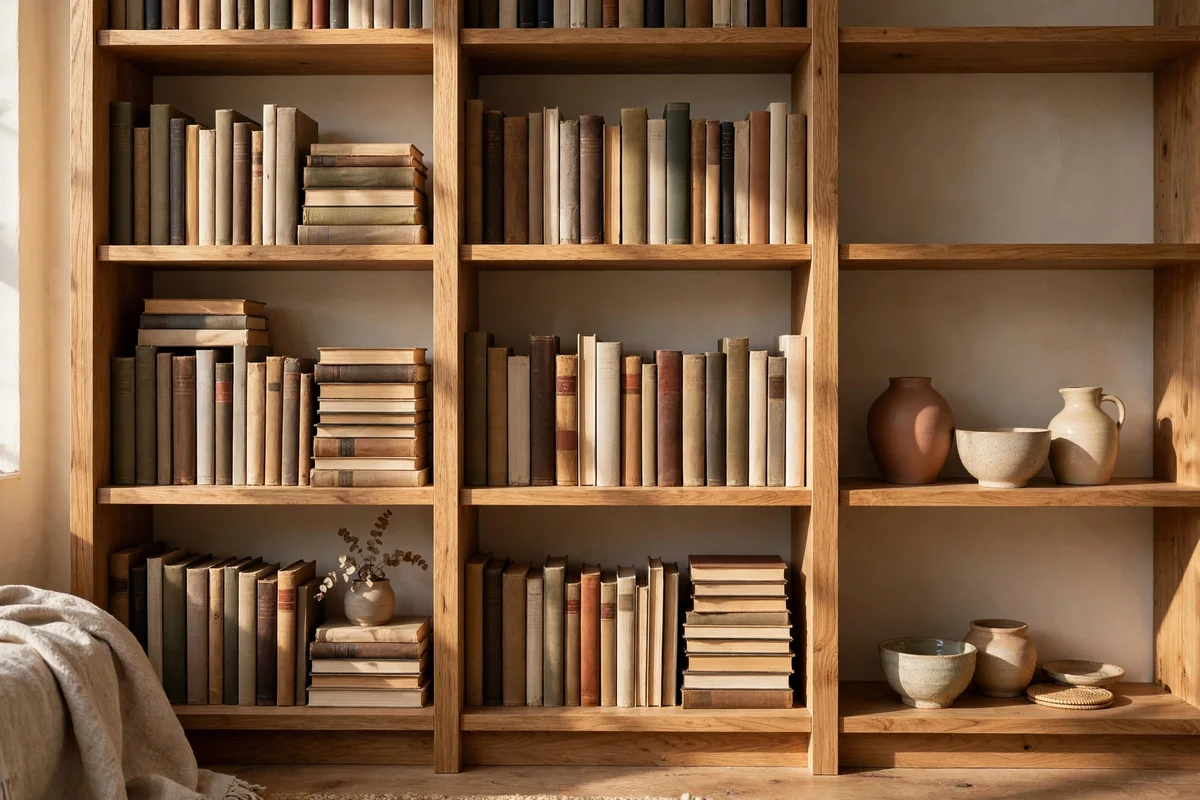
A bookcase filled edge to edge with books feels heavy; one styled with breathing room feels curated. Keep roughly two thirds of each shelf for books, shelved both upright and in short horizontal stacks, and leave one third for objects and empty space. Vary shelf heights visually by stacking three or four books flat as a plinth for a small vase. This rhythm suits both paperbacks and hardbacks.
Pull every book forward to within 2 cm of the shelf edge for a tidy line; books pushed to the back look forgotten. Dust shelves as you restyle. The mistake to avoid is arranging books by rainbow colour, which fights a disciplined palette. Budget tip: library sales and charity shops fill a shelf for under 20, and cloth-bound classics add texture for pennies.
21. Paint the Back of a Bookcase in Your Accent Colour
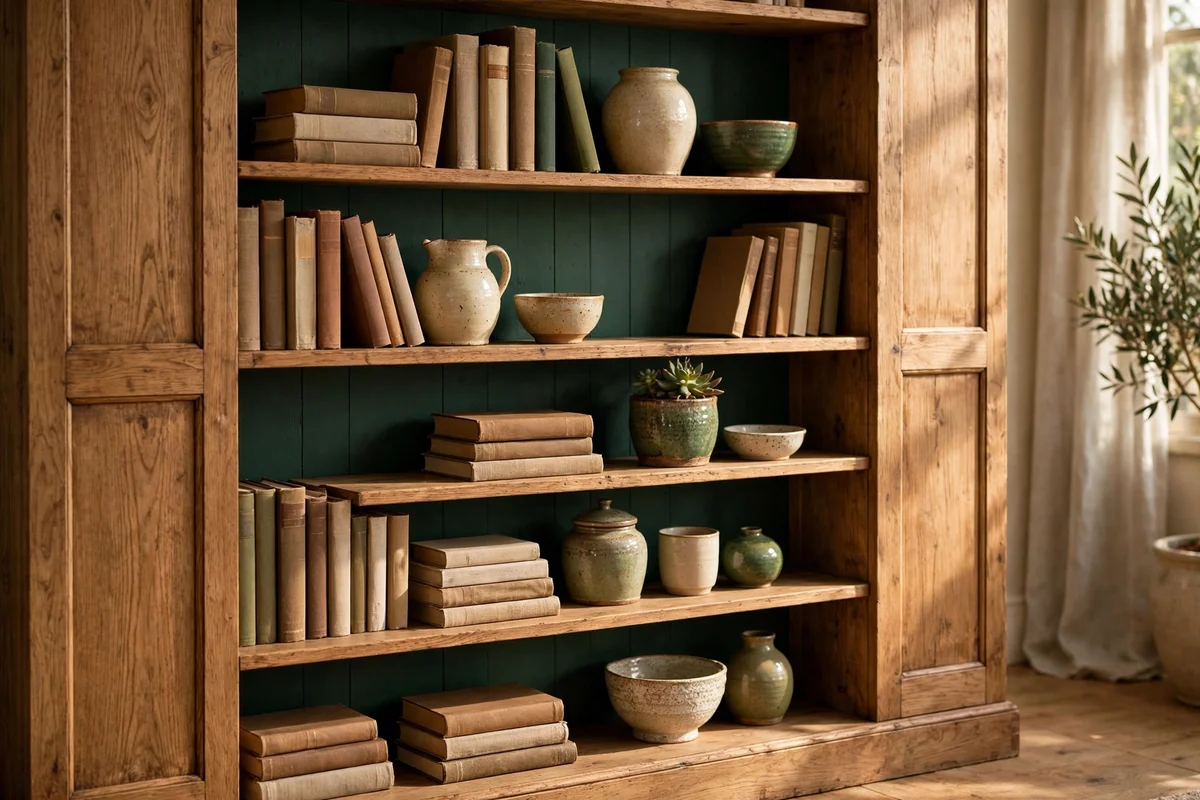
One tin of paint turns a plain bookcase into a furniture piece. Remove the shelves, sand lightly, and paint the back panel in your accent colour: deep green, navy or charcoal all work. Two coats with four hours drying between them give full coverage, and one litre covers a standard 80 cm bookcase twice over. The colour frames your books and objects like a gallery wall.
A litre of quality emulsion costs 12 to 18, making this one of the cheapest transformations here. Refit the shelves only when fully dry to avoid sticking. The mistake to avoid is painting the whole bookcase including the frame, which can look heavy; the back panel alone gives the gallery effect. Budget tip: use leftover wall paint from another room for a perfect palette match.
22. Add Simple Picture Ledge Trim for Architectural Detail
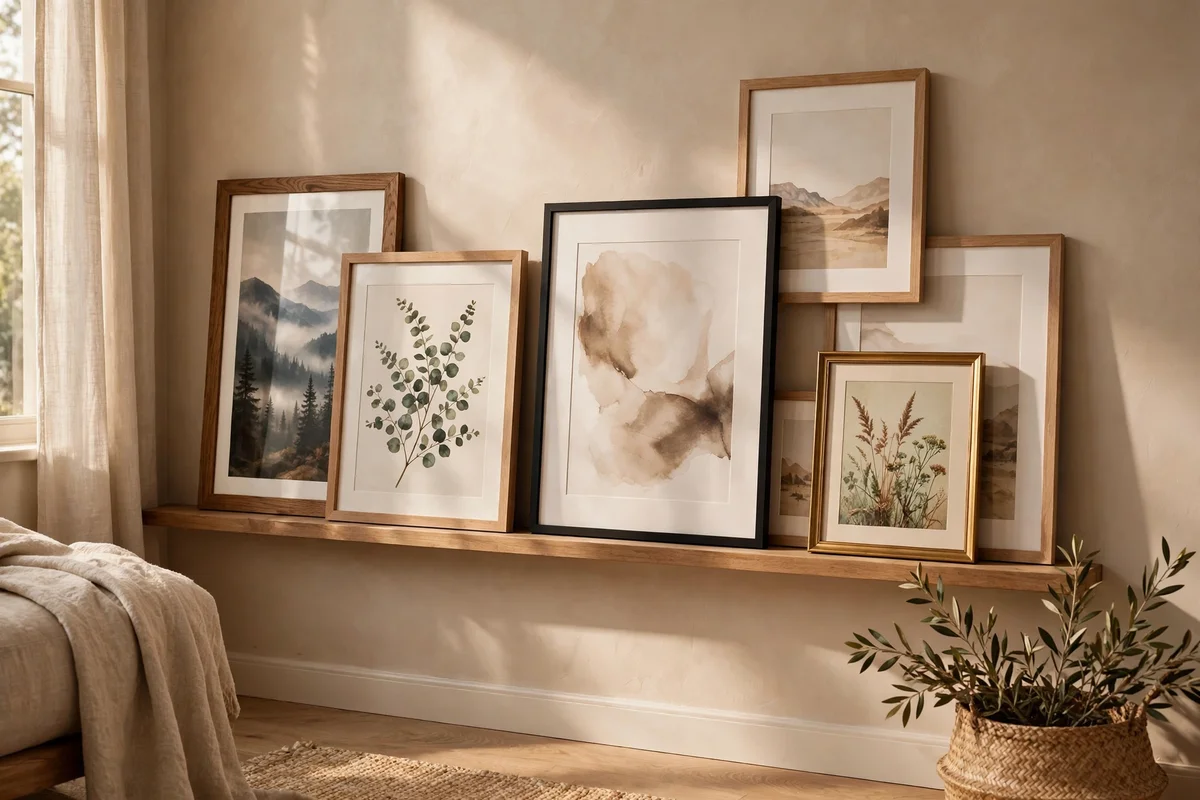
Plain walls look richer with a little architecture, and a picture ledge adds it for the price of timber. Fix a 10 cm deep shelf at 150 cm from the floor along one wall, painted the same colour as the wall so it reads as moulding rather than furniture. Lean framed prints and small objects along it in overlapping layers. A 2.4 m length of pine costs 10 to 18 plus fixings.
Use a spirit level and fix into studs or proper anchors, since a loaded ledge can carry 5 kg. Overlap frames at slightly different heights for a collected feel. The mistake to avoid is loading the ledge edge to edge; leave one third empty for the gallery look. Budget tip: paint the ledge before fixing it, which is far easier than cutting in afterwards.
23. Choose Floor-Length Curtains That Just Kiss the Floor
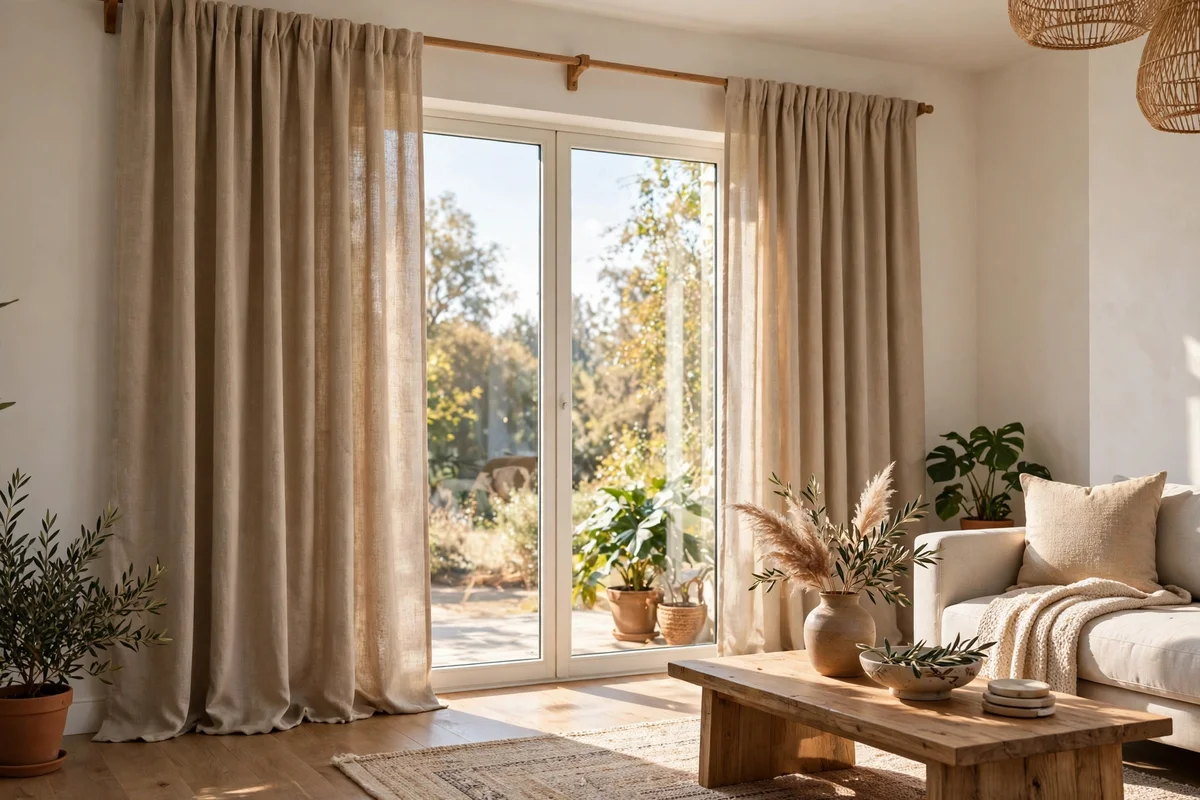
Curtain length is the detail that separates tailored rooms from makeshift ones. Measure from the rod to the floor and buy panels that finish exactly at the floor or break by 2 cm; anything shorter looks accidental. If panels are too long, a 5 cm hem with iron-on tape takes twenty minutes per pair. Full-length curtains draw the eye upward and make ceilings feel higher.
Standard 228 cm drops suit most rooms with rods mounted 15 cm above the frame; measure your own drop rather than guessing. Steam or iron panels before hanging so they fall straight. The mistake to avoid is puddling fabric on dusty floors, which looks untidy and wears the hem. Budget tip: buy the longer standard size and hem down, since extra length is easier to fix than a shortfall.
24. Place One Large Living Plant in Each Main Room
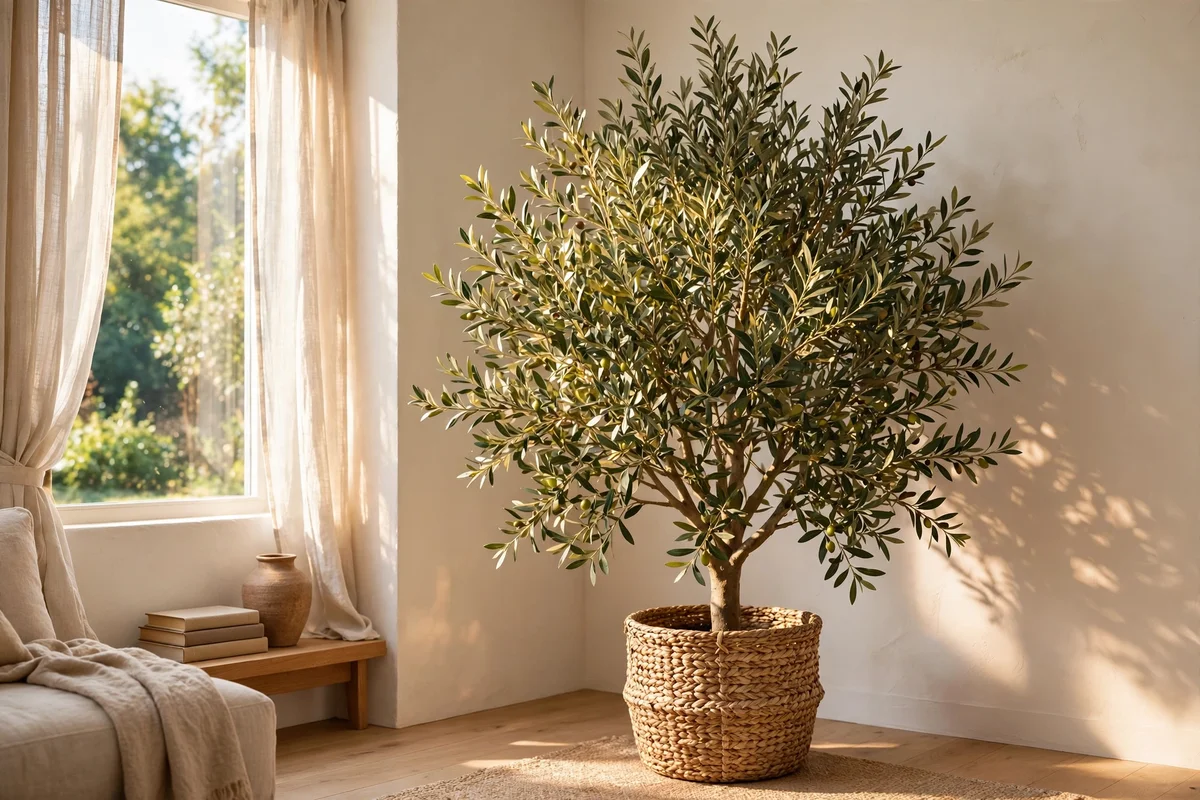
Nothing makes a room feel finished like something alive in it. Choose one large plant per main room: an olive tree, a fiddle-leaf fig or a tall parlour palm in a 25 to 30 cm pot. Place it in an empty corner where it gets indirect light, and set the pot inside a woven basket 5 cm wider for a styled finish. Large plants cost 20 to 45 at garden centres.
Water only when the top 3 cm of soil is dry, and wipe leaves monthly so they catch the light. If your rooms are dark, a large faux olive in a good pot is an honest fallback for 30. The mistake to avoid is scattering six tiny pots around; one generous plant has ten times the impact. Budget tip: supermarkets sell large healthy plants for half the garden-centre price.
25. Refresh Walls in Warm White and Paint One Door Deep and Dark
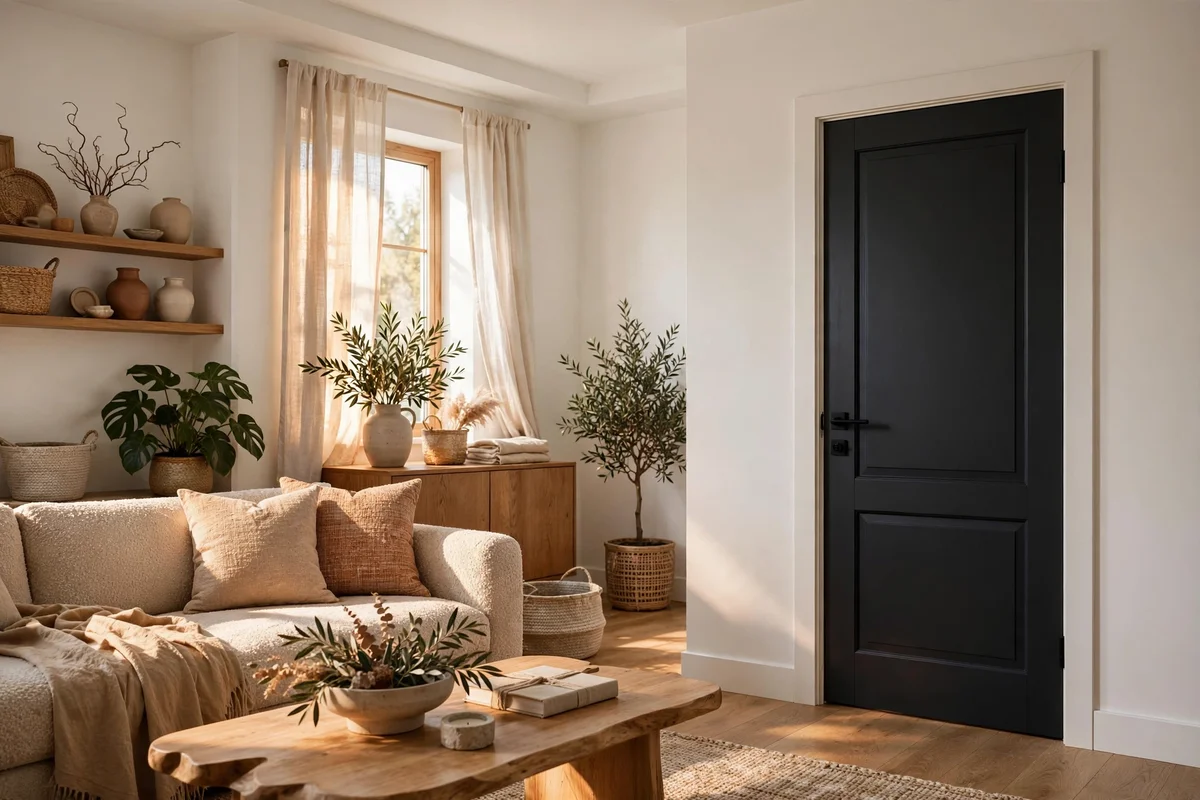
A fresh coat of warm white paint is the highest-return change in decorating. Choose a warm white with a hint of cream rather than a stark blue-white, and repaint the main living walls for about 30 in paint per room. Then paint one interior door, usually the living room door, in a deep charcoal or near-black. That single dark door reads as confident and custom.
Use eggshell or satin on the door so it wipes clean, and remove the handle before painting for a crisp edge. Two coats with light sanding between give a furniture finish. The mistake to avoid is painting every door dark, which overwhelms; one is a statement and three are a theme park. Budget tip: a 750 ml tin covers two doors for about 15, so the statement costs almost nothing.
The ideas in this guide share one quiet logic: fewer, bigger, better placed. One generous mirror outshines three small ones. Three lamps at different heights do more than a single bright ceiling fitting. Colour repeated calmly from room to room ties a whole home together for the price of a paint tin. None of this asks you to buy a new personality; it asks you to look at what you already own and give it more room.
Begin this week with the easiest win of all: clear one surface completely. Choose the coffee table or the hall console, keep three objects you love, and put everything else out of sight. It costs nothing, takes twenty minutes, and the change is instant. Once you feel how much calmer that one corner becomes, the mirror, the curtains and the paint will follow naturally.
Frequently Asked Questions
What does an elegant-looking refresh really cost for one room?
Between 150 and 400 pounds or dollars if you shop second hand and paint yourself. A thrifted mirror, brass handles, new curtain panels and one large plant cover most of the visible change. Spend up to 800 if you buy a quality rug new, since rugs are touched daily. Start with the free moves first: clearing surfaces and rearranging cost nothing.
How big should an oversized mirror be above a sofa?
Aim for a mirror roughly two thirds the width of the sofa, so about 120 to 150 cm wide for a standard three-seater. Hang the centre at 145 to 150 cm from the floor, the average eye line when standing. Keep at least 15 cm between the sofa back and the mirror bottom. The mistake to avoid is going too small; a timid 60 cm mirror over a big sofa looks lost.
How wide should curtains be for a proper expensive look?
Each curtain panel should be at least double the width of the window section it covers, so a 120 cm window needs two panels of about 120 cm each. Mount the rod 15 to 20 cm above the frame and extend it 8 to 10 cm past each side so panels stack on the wall, not the glass. Floor length is essential: hems should just kiss the floor or break by 2 cm.
Which colours make a home look more expensive on a budget?
Warm neutrals do the heavy lifting: soft white, warm beige, greige, sage, and one deep accent like charcoal, navy or forest green. Keep walls light and spend your colour on textiles and one painted piece. The 60-30-10 rule keeps it disciplined: sixty percent dominant neutral, thirty percent secondary tone, ten percent accent. Repeat the same palette room to room for cohesion.
Can renters try these ideas without losing their deposit?
Yes, almost everything here is renter friendly. Choose adhesive or freestanding options: lean the oversized mirror instead of hanging it, use command-strip hooks for lightweight frames, and swap handles and switch plates while keeping the originals in a labelled bag. Curtains only need a tension rod or existing fixings. Paint is the one step to skip unless your landlord approves it in writing.