DIY Projects
25 Wedding Table Decor Ideas That Bring Timeless Romance to Every Reception
By Anna Wells · · 24 min read
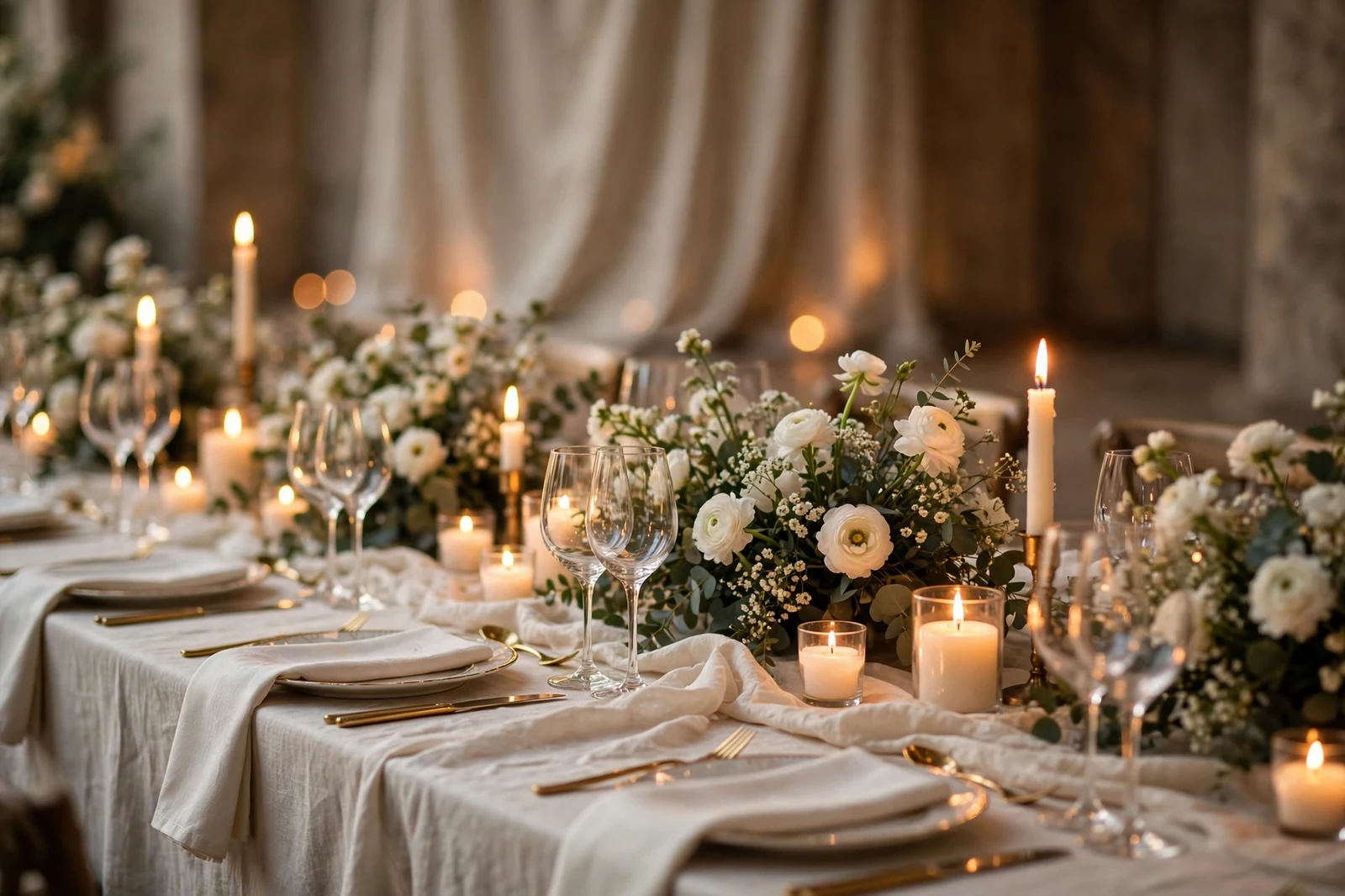
Wedding tables deserve more thought than they get, since guests spend the celebration seated at them. These 25 ideas bring timeless romance to every reception, from low ivory florals to candlelit bare wood. Choose one clear direction and repeat it with intention.
Wedding tables deserve more thought than they usually get. Guests spend a large part of the reception seated at them, eating, talking, listening to speeches, and catching up with loved ones. A beautiful table should photograph well, but it must also work in real life, with room for plates and glasses, centerpieces that never block conversation, and candles suited to the venue.
An elegant wedding table does not require towering roses or an enormous budget. Some of the most beautiful tables rely on restraint: lovely linen, thoughtful glassware, a handful of flowers, and warm candlelight. Others use color, fruit, pottery, or greenery to create something memorable. The secret is choosing one clear direction and repeating it with intention.
The twenty five ideas below cover every style, from timeless white florals to bold modern palettes, and each one is designed to look polished without feeling overdone. Whether you are planning an intimate dinner or a grand ballroom reception, you will find a direction that suits your venue, your budget, and your story.
1. Low Ivory Blooms in a Classic Bowl
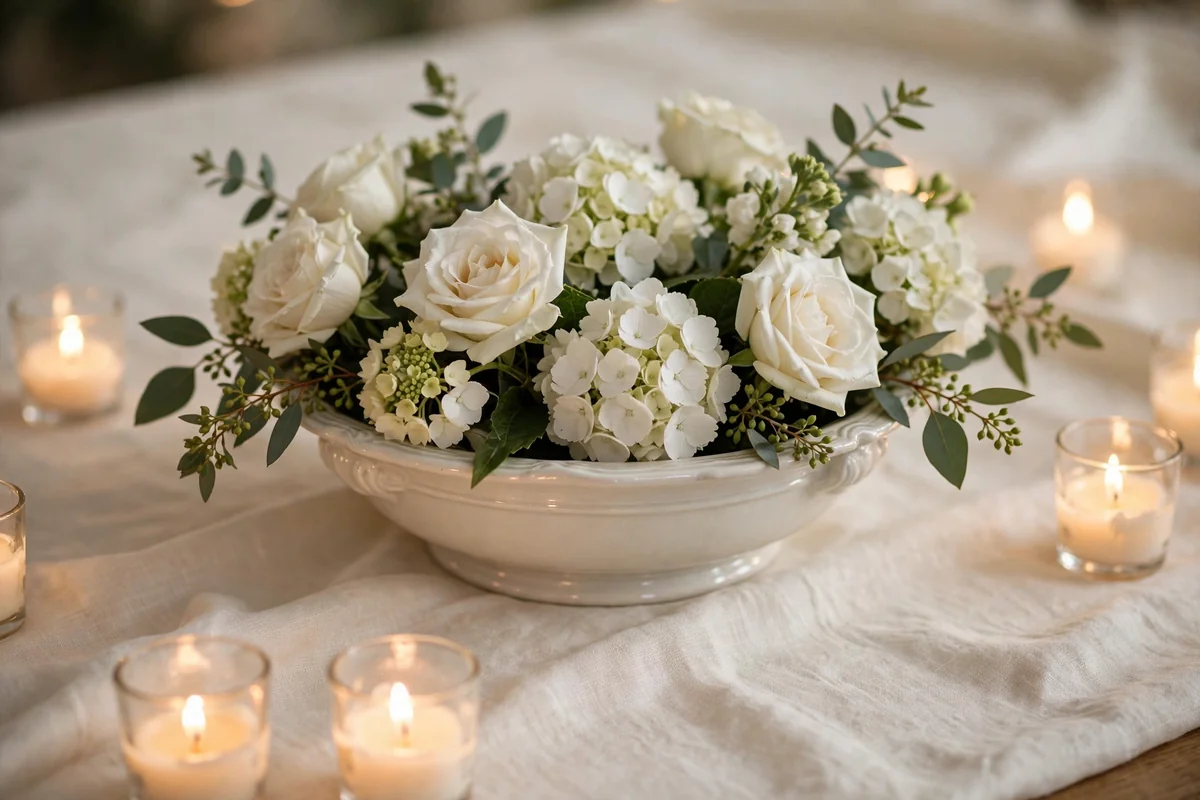
For a look that never dates, gather ivory roses, ranunculus, lisianthus, and hydrangeas in a low bowl or footed compote, adding just enough foliage to keep the white from feeling stiff. Set the arrangement on a neutral linen and let its quiet beauty carry the table. The result feels clean, romantic, and quietly expensive without demanding attention.
Low arrangements have a practical gift too: guests can see and talk across them without leaning sideways around a bouquet. Keep the rest of the setting restrained with ivory napkins, clear glassware, simple flatware, and a few small candles. When the centerpiece is soft and classic, the table needs very little else to feel complete.
2. A Gathering of Little Bud Vases
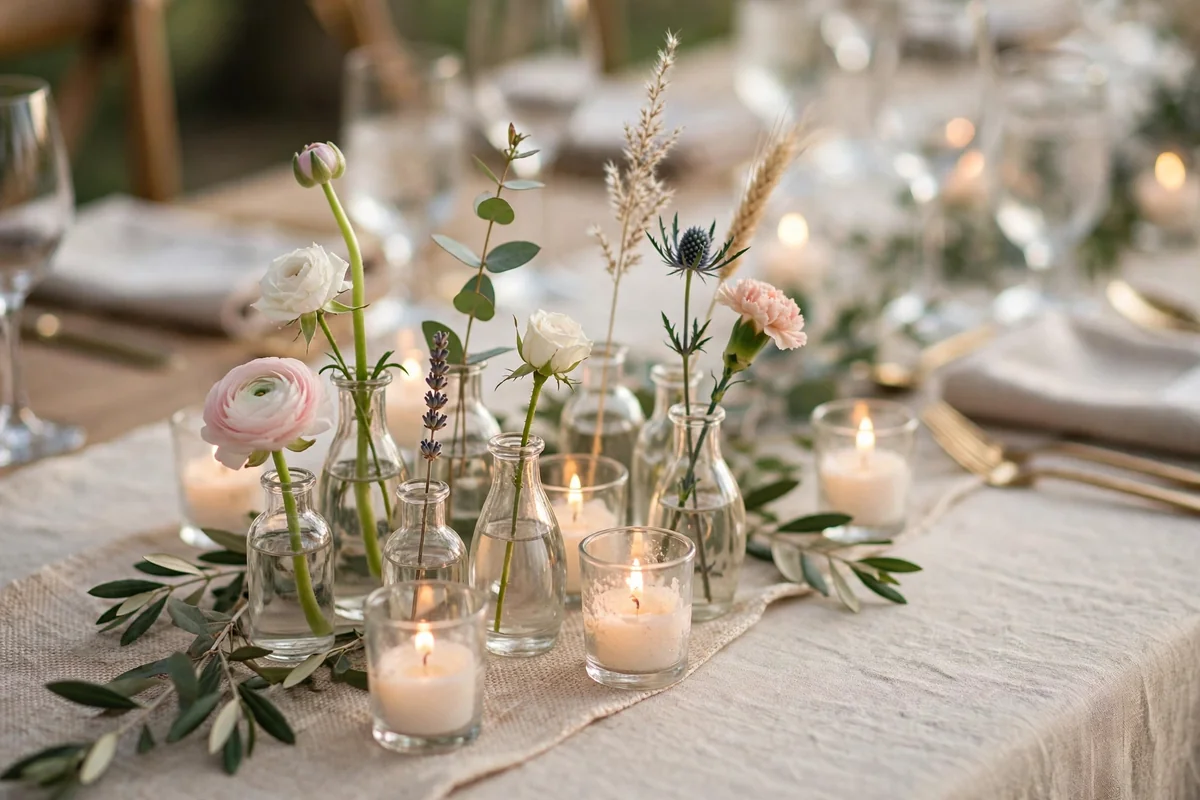
When a large arrangement does not suit the room or the budget, a cluster of bud vases works beautifully. Group five to nine small vessels together and place one or two lovely stems in each. The vases can match for formality or mix clear, ceramic, and vintage glass shapes for a collected, personal feeling.
Repetition is what makes the cluster read as a centerpiece rather than scattered clutter. Weave small votives or short candles between the flowers, and on long tables repeat the grouping every few place settings. The rhythm carries down the table while leaving generous room for dinner, wine glasses, and easy conversation.
3. A Loose Greenery Runner Down the Table
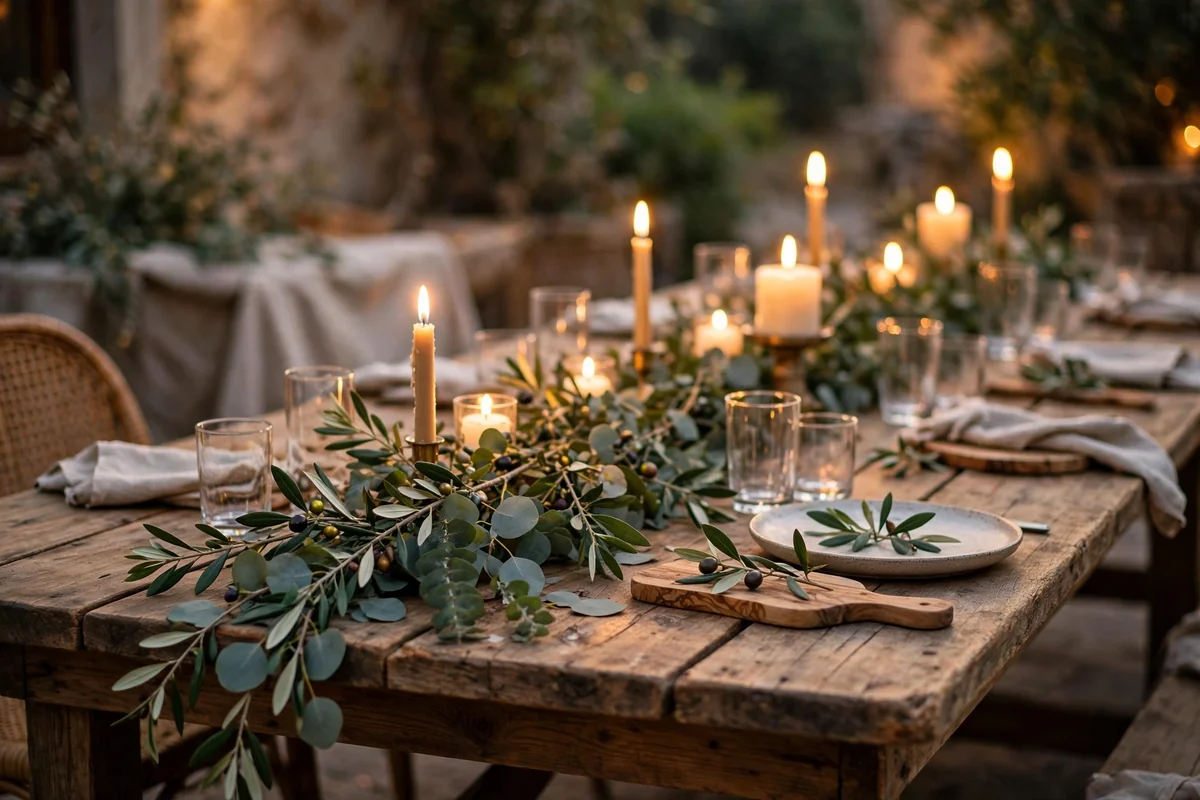
For long banquet tables, a greenery runner brings drama without the cost of massed flowers. Lay olive branches, ruscus, eucalyptus, or smilax loosely down the center, letting the foliage wander naturally instead of forming a stiff, symmetrical rope. Allow sections of linen or bare wood to show through for an effortless, abundant feeling.
Keep the greenery low and tuck candles in at irregular but balanced intervals, since pockets of light stop the runner from reading as a plain strip of leaves. This approach is especially beautiful on bare wood tables, where grain, foliage, and candlelight already supply plenty of texture. Ask your florist to build it on site for the freshest, most natural result.
4. Candlelight First, Flowers Second
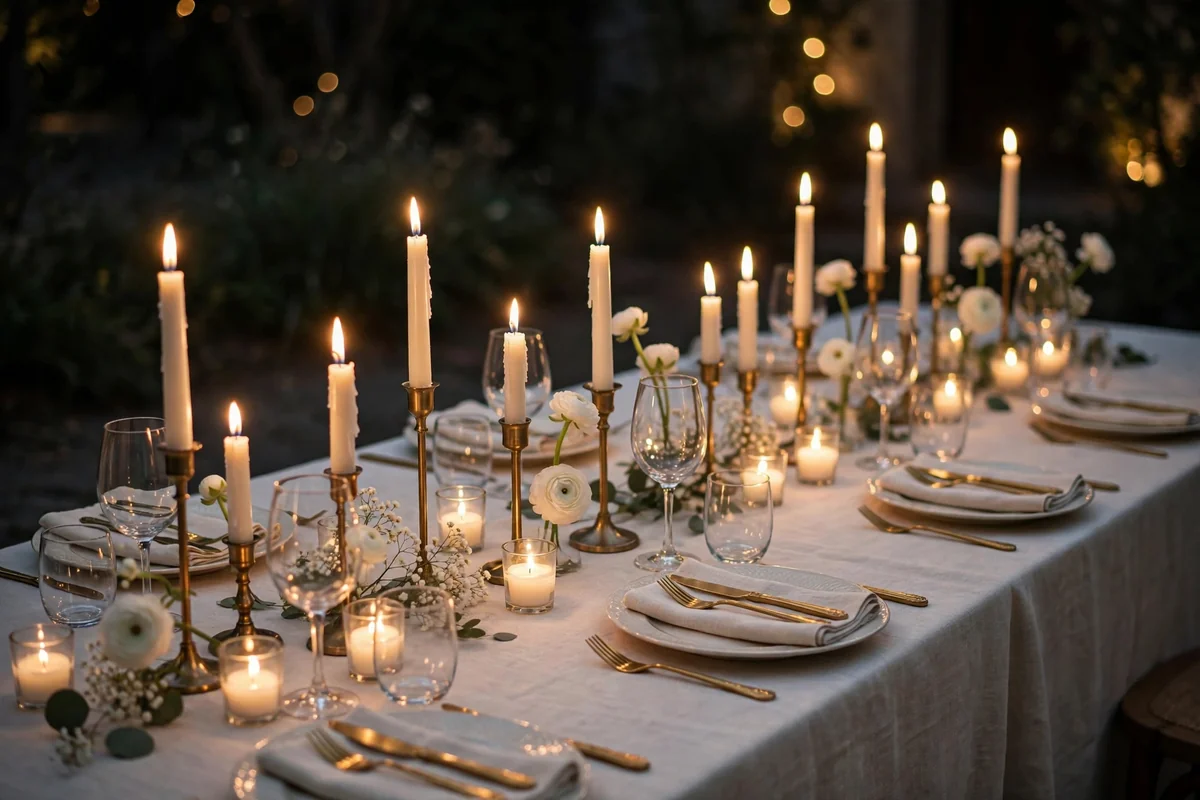
Sometimes the wisest use of a decorating budget is to let candlelight create the atmosphere. A layered mix of taper candles, small votives, and sheltered pillar candles turns even the simplest table deeply romantic once the room begins to darken. Vary the heights for depth, but keep the tallest flames out of guests’ direct sightlines.
Before ordering anything, confirm with the venue whether open flames are permitted and whether candles need glass enclosures. Many venues require hurricanes or lanterns, which still look gorgeous. If real flames are not possible, invest in good quality flameless candles with a warm color temperature, since cheap cool white imitations will flatten the whole mood.
5. A Warm Champagne and Ivory Palette
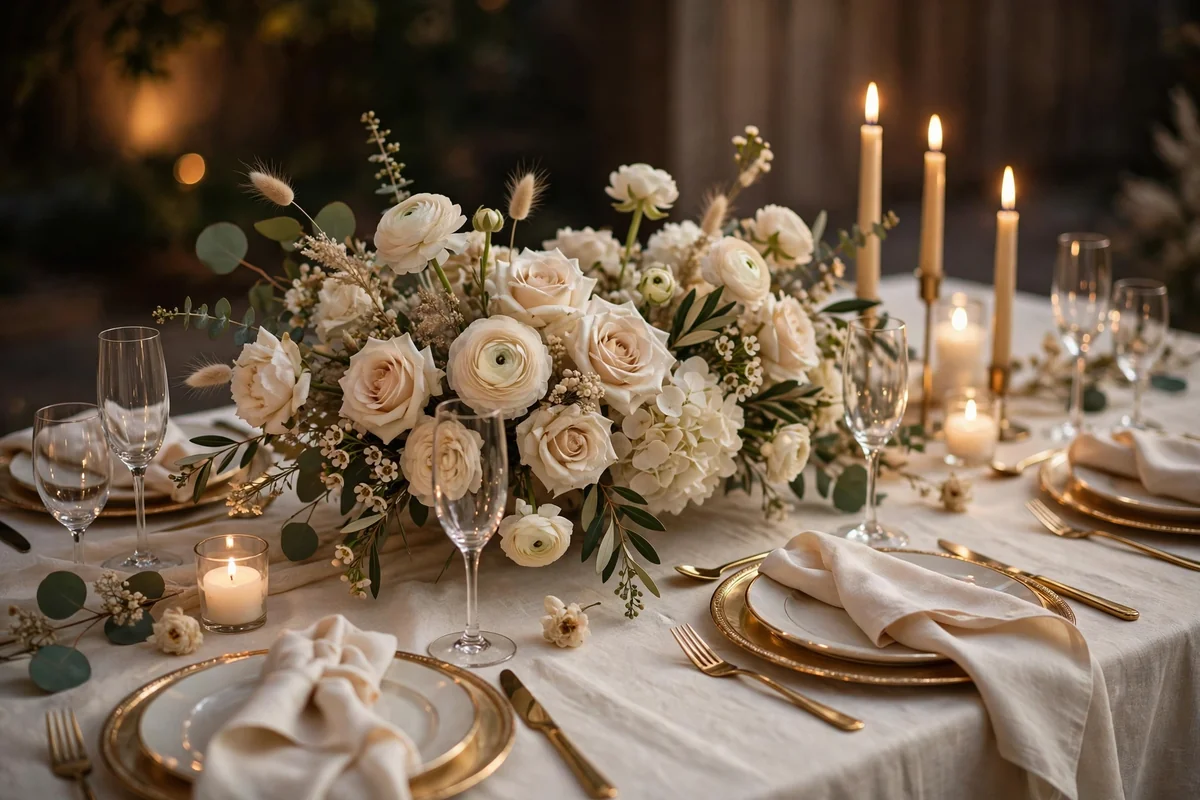
For a reception warmer than all white, champagne and ivory are an easy, forgiving combination. Use ivory tablecloths, champagne toned napkins, warm metallic candleholders, creamy flowers, and clear glassware. The tones sit close enough to feel calm, yet different enough to give the table real depth and richness, especially as the evening light turns golden.
This palette glows beautifully at evening receptions, when warm lighting deepens every subtle tone. Rather than piling on gold accessories, choose one metallic finish and repeat it sparingly: a thin rim on the charger, the candleholders, or the flatware is plenty. Restraint with metallics keeps the table feeling refined instead of flashy.
6. Crisp Black, White, and Leaf Green
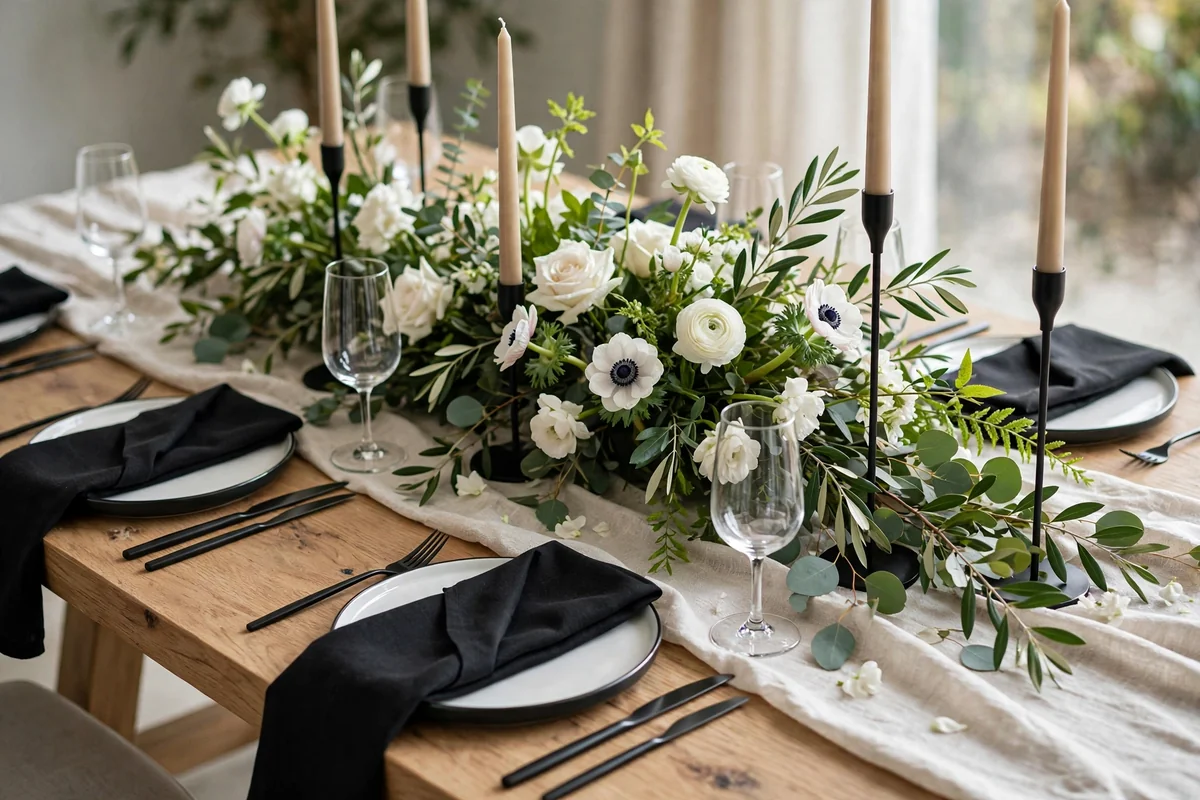
Black can look remarkably elegant at a wedding when used as punctuation rather than a flood. Keep white flowers and linens as the foundation, then add black napkins, slim black candleholders, or printed menus for contrast. Fresh green foliage woven through stops the palette from feeling stark and gives it living warmth.
This trio shines in modern venues like lofts, galleries, and contemporary hotels. Resist the temptation to add more accent colors, since the design’s strength comes from its discipline. Clear glassware and uncluttered centerpieces let the three colors do all the work, and the result photographs with striking, timeless clarity forever.
7. Soft Dusty Blue With Cream Details
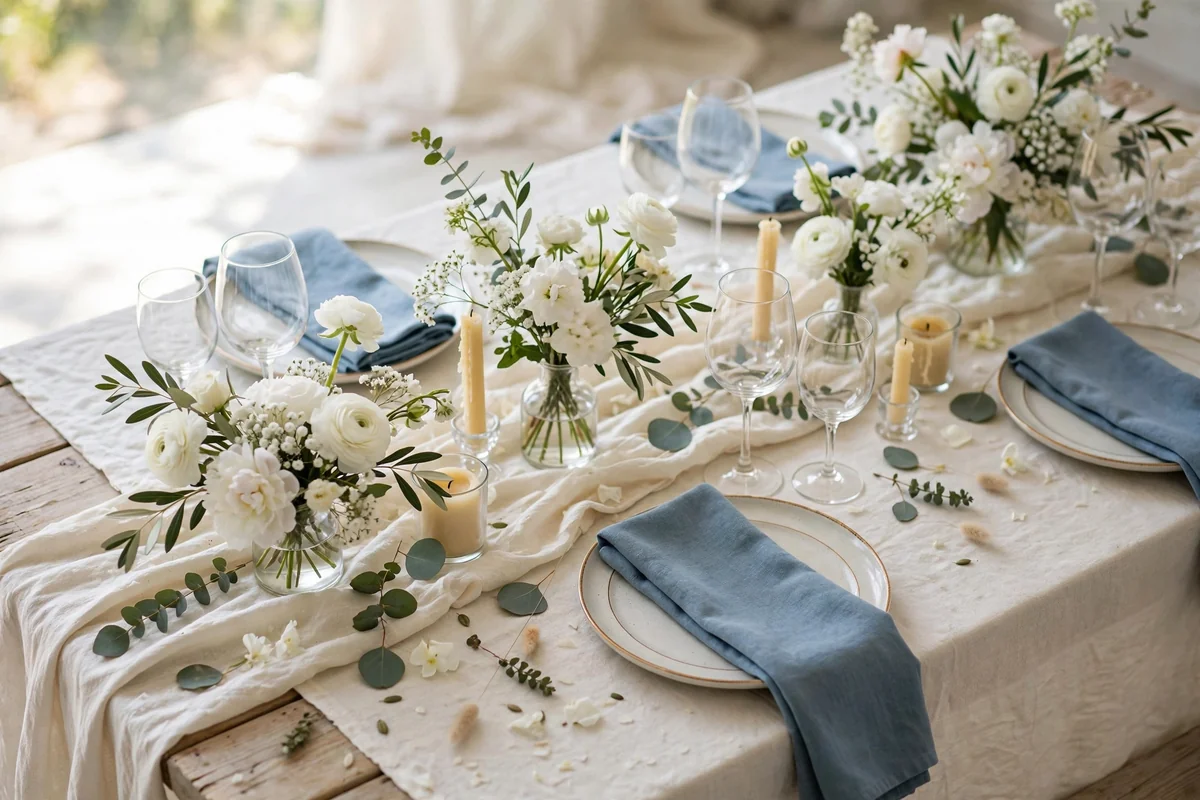
Dusty blue is soft enough to feel romantic while giving the table more personality than a fully neutral scheme. Introduce it through linen napkins or a delicate runner, keeping plates, candles, and the main florals white or cream. The blue reads as a gentle whisper of color rather than a bold statement.
Small amounts of greenery help bridge the cool blue with warmer natural elements, and clear glassware keeps the whole table feeling airy. This palette suits spring, coastal, and garden weddings beautifully, especially in light filled rooms. For a personal touch, echo the blue once more in the stationery or a ribbon tied around each napkin.
8. Gentle Sage Green Linens
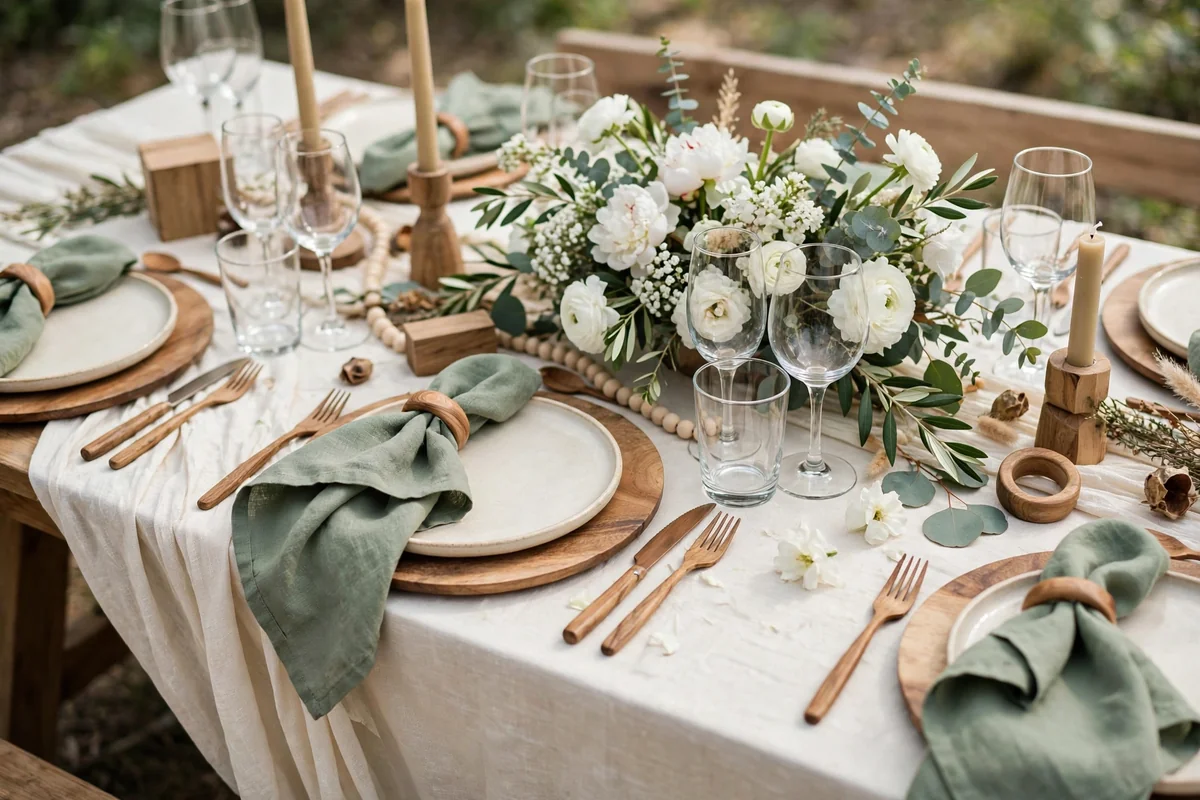
Sage green works almost like a neutral, bringing softness without demanding attention. A sage napkin against ivory linen instantly relaxes the table, and the color pairs beautifully with white flowers, natural wood, warm metals, and clear glass. It is a forgiving choice that flatters nearly every venue style with ease.
If the venue has gardens or greenery visible through the windows, a whisper of sage on the tables ties indoors to outdoors elegantly. Use the color once or twice with intention rather than everywhere: sage napkins plus a touch of greenery in the flowers is plenty. One or two deliberate uses always feel more sophisticated than a full sage overload.
9. Romantic Blush Paired With Deep Burgundy
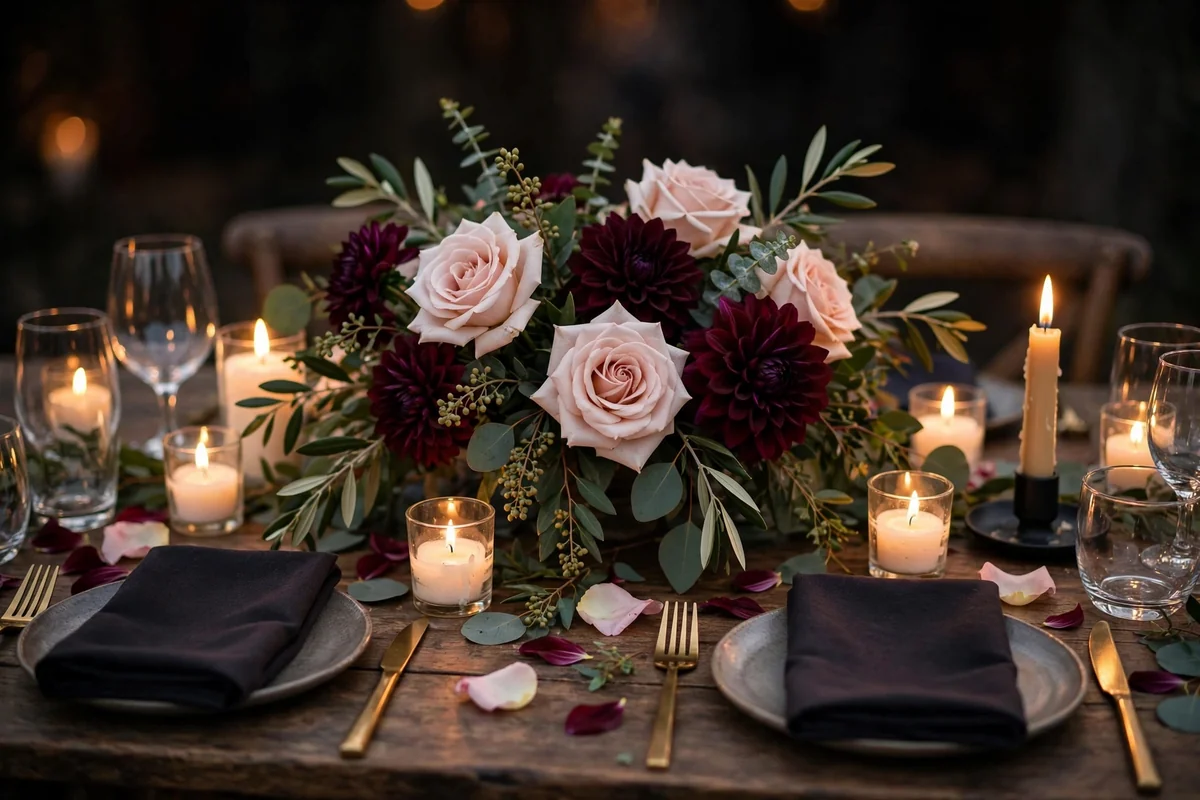
For romance with real depth, pair soft blush blooms with the drama of burgundy. Blush roses or ranunculus keep the arrangement tender, while deep dahlias, dark foliage, or burgundy napkins add contrast and maturity. The darker notes stop the pastels from becoming overly sweet, giving the table a grown up, cinematic richness.
This pairing glows at late summer and autumn weddings, though it suits any season with the right flowers. Use the burgundy selectively: a few dark blooms or linen details are enough, since too much dark color can swallow the lightness that makes the contrast beautiful. Candlelight makes both tones look even more luxurious after sunset.
10. Sun Warmed Terracotta and Cream
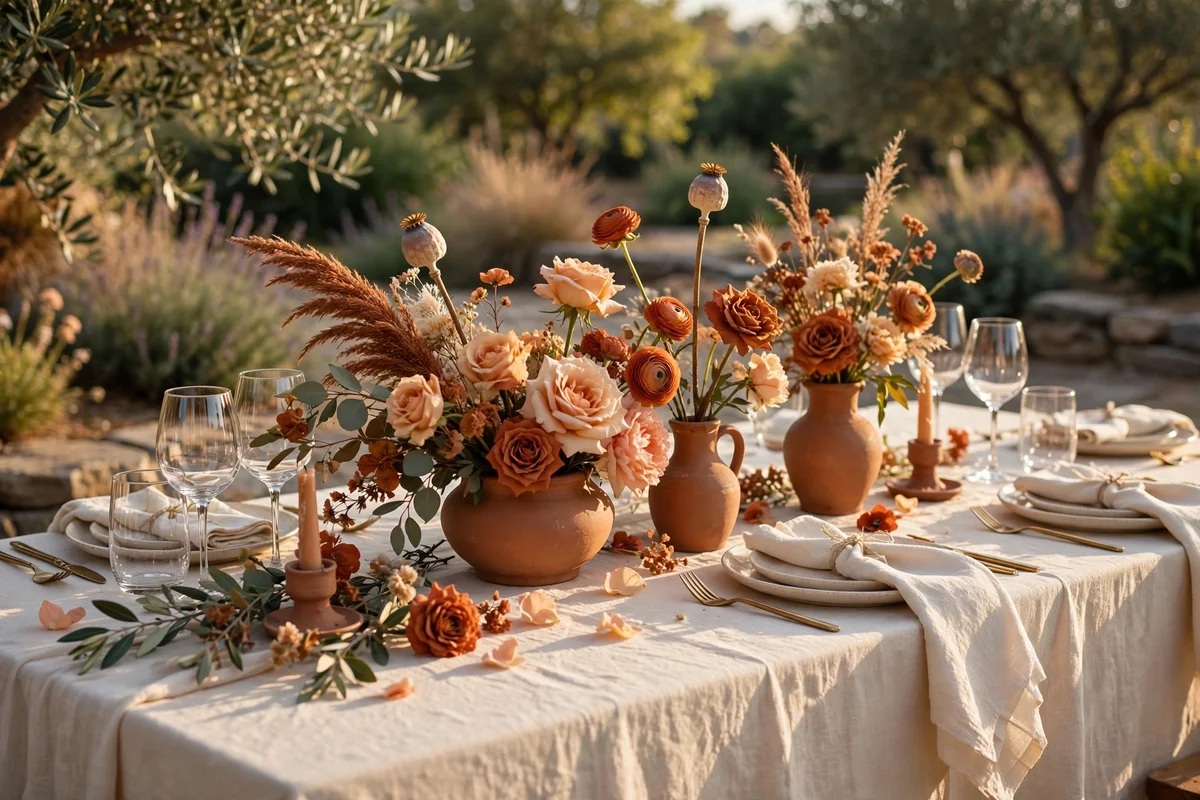
Terracotta brings warmth without a single shiny metallic in sight. Pair it with cream linen, warm white candles, natural ceramics, and flowers in peach, rust, muted pink, or soft yellow. The palette feels earthy and abundant, like a long table set in a sunlit courtyard, and it suits outdoor venues beautifully.
This combination sings in vineyards, courtyards, barns, and Mediterranean inspired spaces. Try small terracotta vessels for some of the flowers while keeping the main arrangement in a more refined container. Mixing one rustic material with polished glassware and fine linen keeps the table feeling elegant rather than simply casual and warm.
11. Orchard Fruit Woven Into the Centerpiece
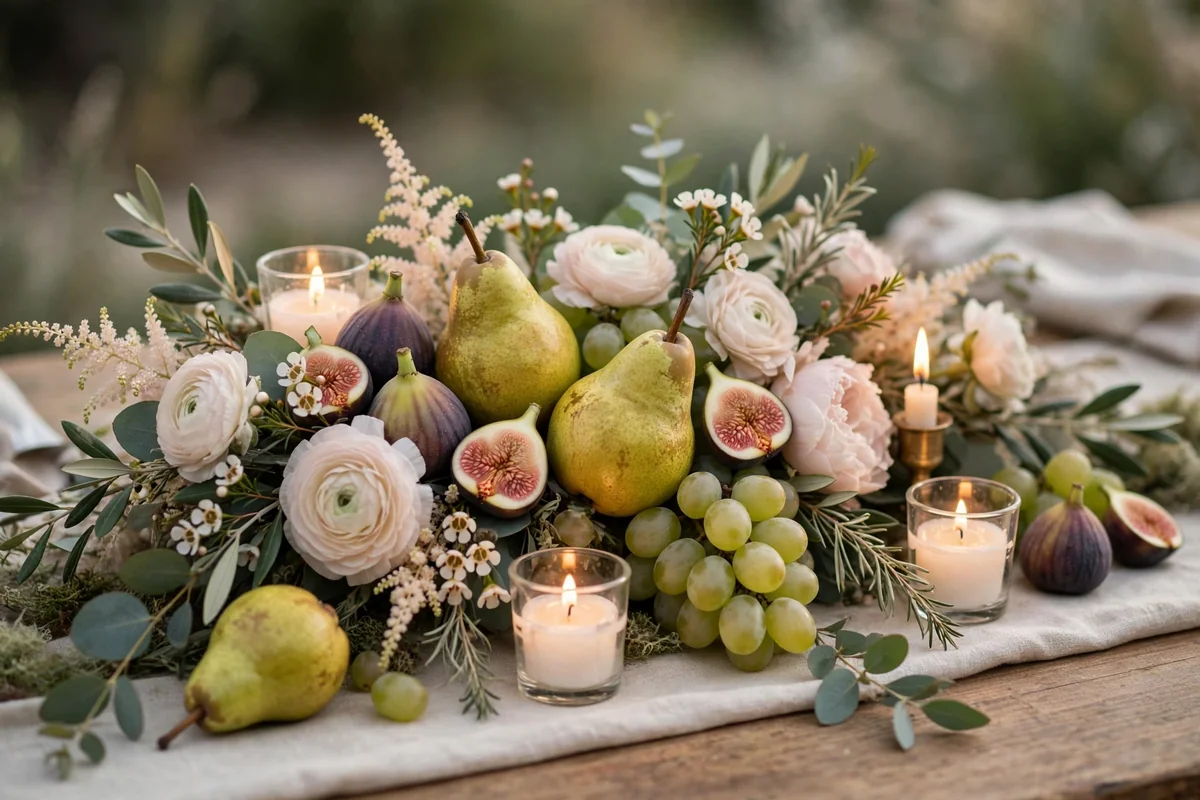
Fruit looks surprisingly sophisticated when treated as part of a still life rather than scattered at random. Tuck pears, grapes, figs, citrus, or pomegranates around low flowers and candles, letting their natural shapes and colors enrich the arrangement. The result feels abundant and artful, like a painting you can dine beside.
Choose fruit that harmonizes with your floral palette instead of building a rainbow produce display. A few clusters of dark grapes beside burgundy blooms, or golden pears with cream roses, feels intentional and refined. This approach suits late summer, autumn, vineyard, and Italian inspired weddings especially well, and guests love its natural generosity.
12. Garden Posies With Ripe Stone Fruit
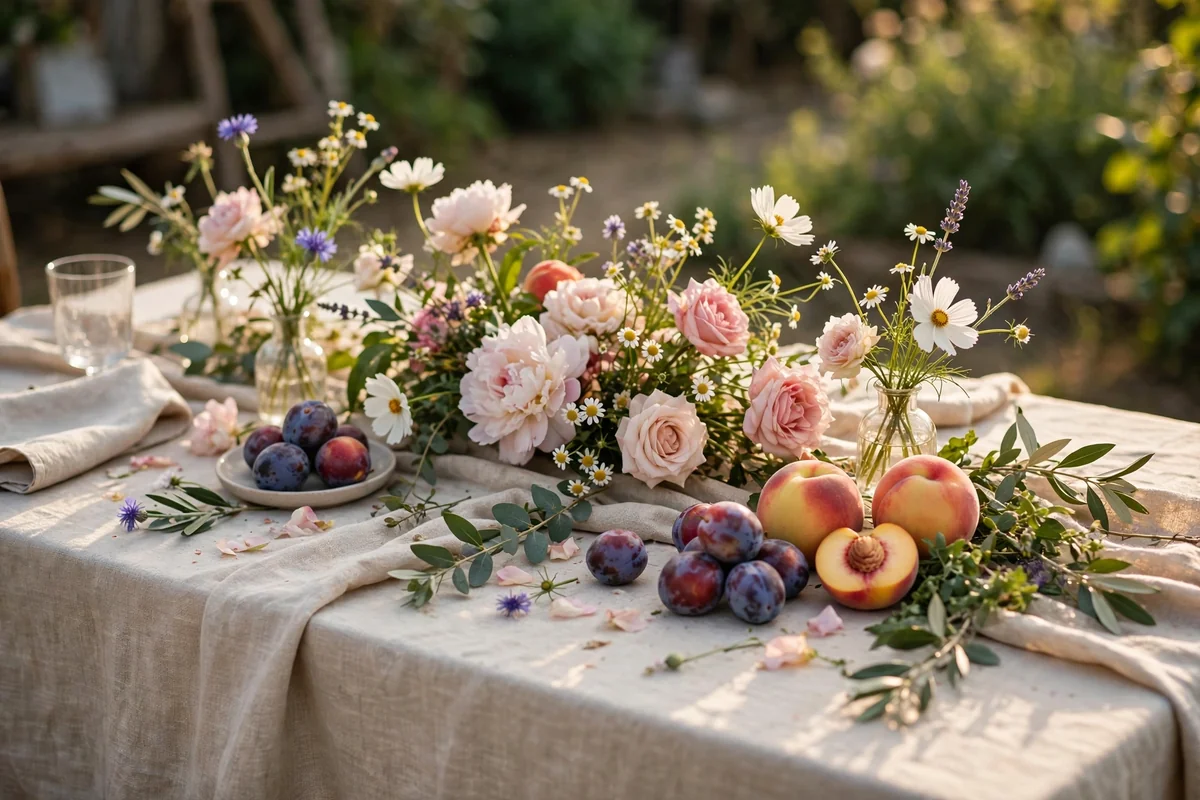
Peaches, plums, apricots, and nectarines look beautiful nestled beside loose garden flowers. Place them in small groups near low arrangements so the tablescape feels like an abundant summer dinner rather than a formal ballroom piece. Their imperfect, natural shapes are part of the charm, so do not worry about finding identical specimens.
Pair that relaxed naturalism with beautiful linen and polished glassware, since the contrast between casual fruit and fine tableware is exactly what makes the table feel elegant yet welcoming. Keep the fruit fresh by adding it on the day, and choose varieties whose colors echo your flowers. The whole table will smell faintly of summer.
13. A Collection of Aged Brass Candlesticks
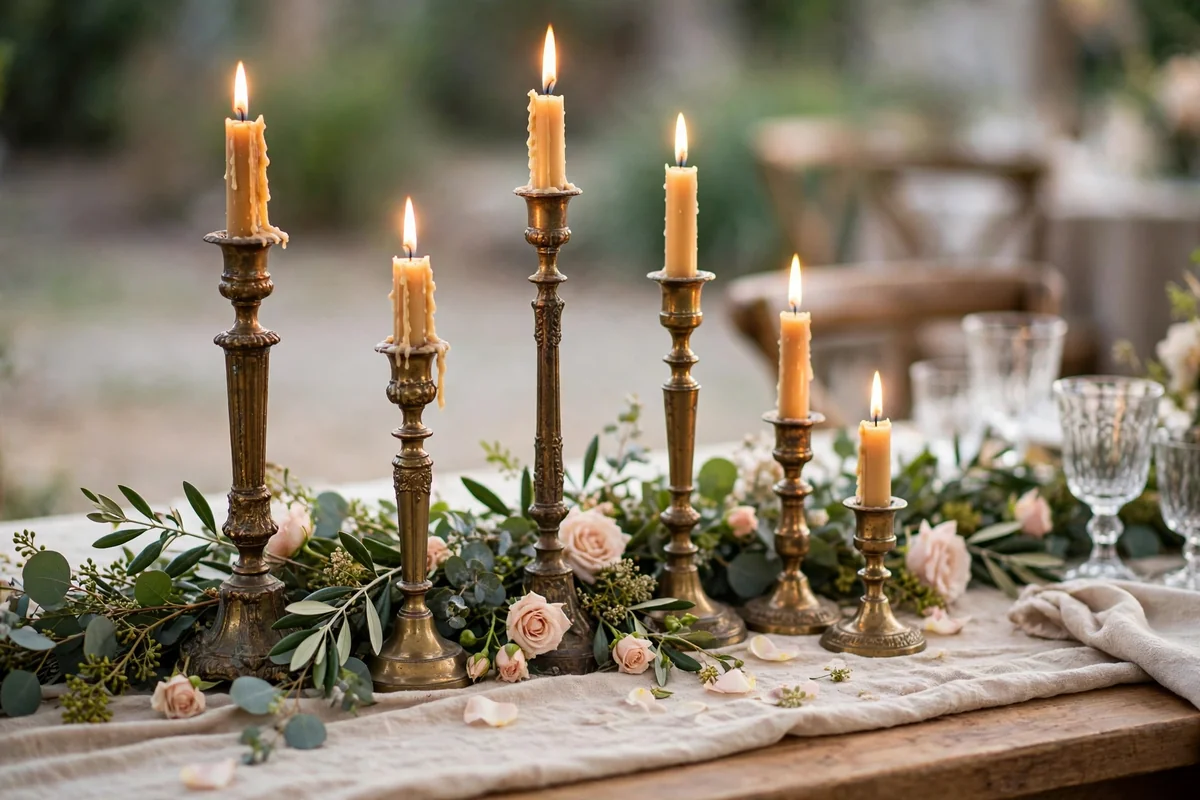
Vintage or vintage inspired brass candlesticks bring instant character to a wedding table. Instead of dozens of identical pieces, gather a collection with slightly different bases and heights in the same warm finish. When every piece shares the metal and the candle color, the differences look deliberate and collected rather than mismatched.
Let the candlesticks be the jewelry and keep the florals simple, since the brass already supplies plenty of detail. They shine in historic homes, estates, libraries, barns, and old hotels, yet they can also warm up a plain modern room beautifully. Once the candles are lit, the aged metal glows with a softness that new pieces rarely match.
14. Sparkling Clear Glass and Cut Crystal
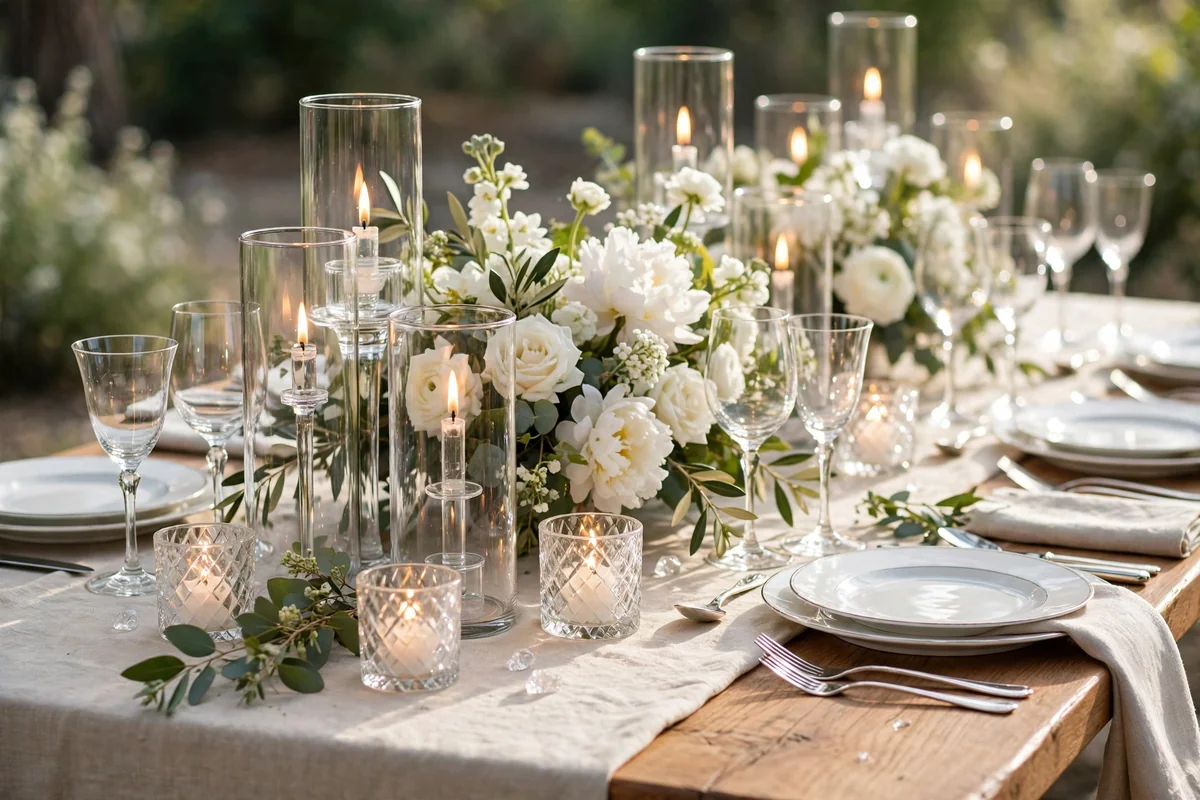
Clear glass creates a surprisingly luxurious table without adding a single new color. Glass candleholders, crystal style votives, clear bud vases, and elegant stemware catch and scatter the light beautifully, especially at an evening reception. The sparkle becomes the decoration, so everything else on the table can stay beautifully quiet and simple.
Because so much glass can turn visually busy, keep the flowers and linens calm: white or pale blooms and a simple cloth let the sparkle show. Avoid mixing every cut glass pattern you own unless you deliberately want a collected vintage look. A little restraint lets each reflective surface earn its moment in the candlelight.
15. A Footed Vintage Compote of Flowers
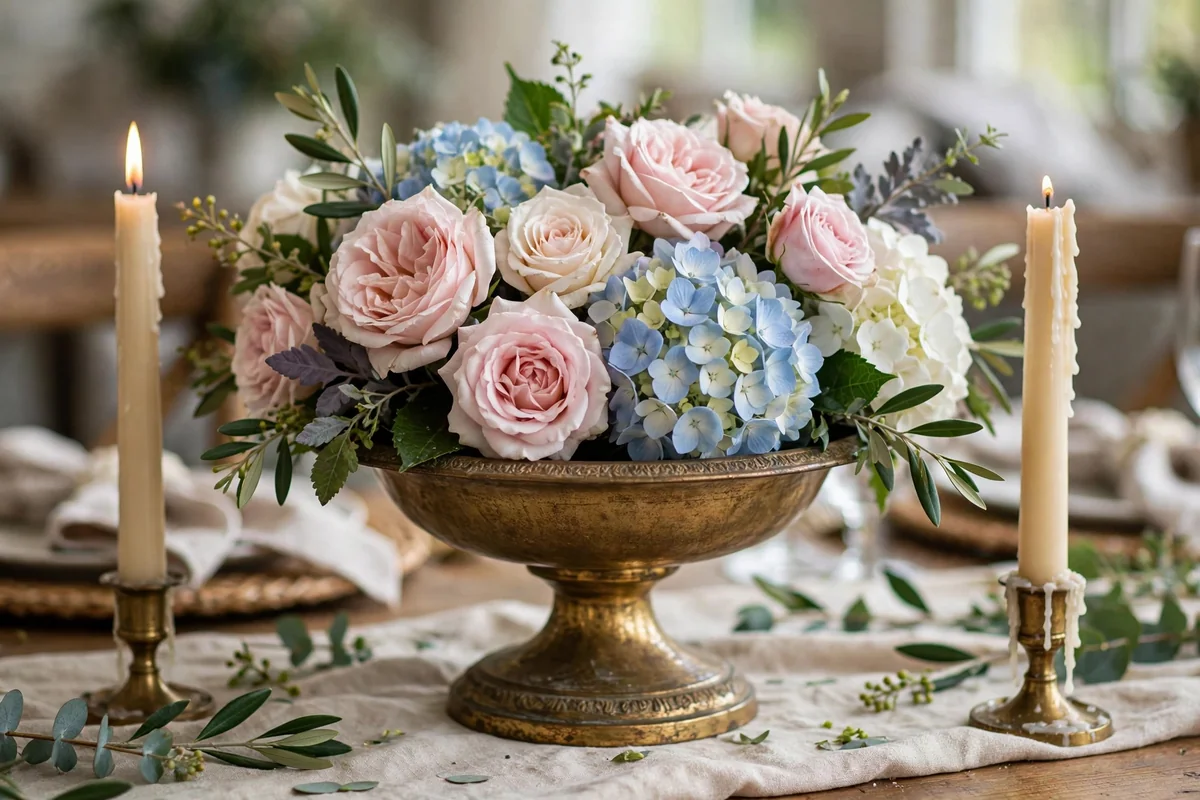
A footed compote makes even a modest flower arrangement feel special. The bowl lifts the blooms just above the table without creating a towering centerpiece, and its shape carries a lovely old world grace. Fill it loosely with garden roses, hydrangeas, lisianthus, seasonal foliage, and a few trailing stems for softness.
Pair the compote with simple taper candles, which add height elsewhere without building a dense wall of flowers. Keep the overall shape loose and low so guests can chat across it easily. A vintage compote also photographs beautifully, giving your table that timeless, heirloom quality that never looks dated in albums.
16. A Wild Meadow Strip Down the Center
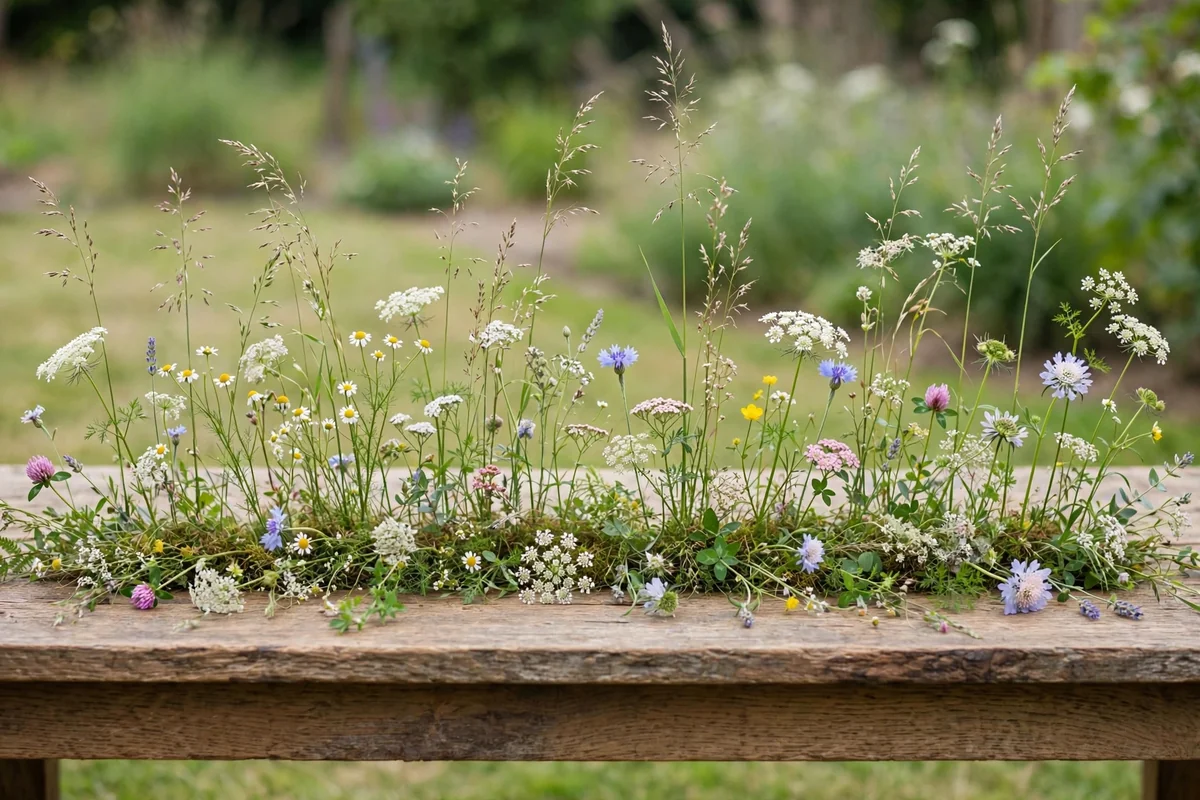
Instead of flowers bursting from an obvious vase, imagine blooms that seem to grow naturally along the table’s center. Arrange stems at different heights in a loose, wispy line to create the impression of a tiny meadow. The effect feels organic and romantic, as if the table were set in the middle of a summer field.
Stay practical beneath the romance: keep stems clear of plates, keep blooms away from open flames, and plan the mechanics carefully so the arrangement only looks spontaneous. A shallow tray or a series of small water tubes hidden under the foliage keeps everything fresh for hours. Wild on top and well engineered underneath is the winning formula.
17. One Flower Variety, Repeated With Confidence
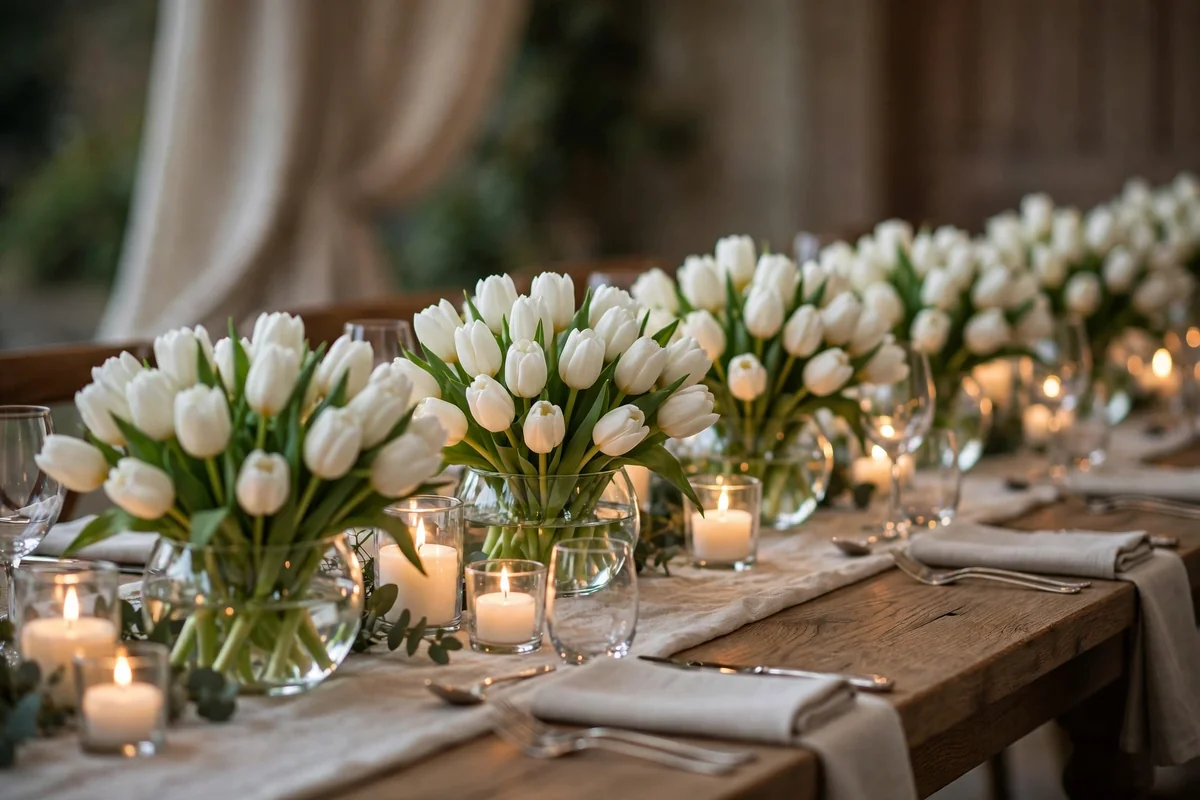
Using a single flower variety can be incredibly chic. Fill several low vessels with only white tulips, garden roses, hydrangeas, or dahlias, choosing whatever suits the season best. The repetition makes an ordinary bloom feel deliberate and luxurious, and it simplifies every other styling decision you need to make today.
With one bloom doing the visual work, you can focus your energy on beautiful linens and candlelight instead of coordinating a complicated centerpiece. This approach also tends to be kinder to the budget, since buying one variety in volume usually costs less than assembling many different stems. Simple, confident, and smart.
18. A Single Color Story in Many Blooms
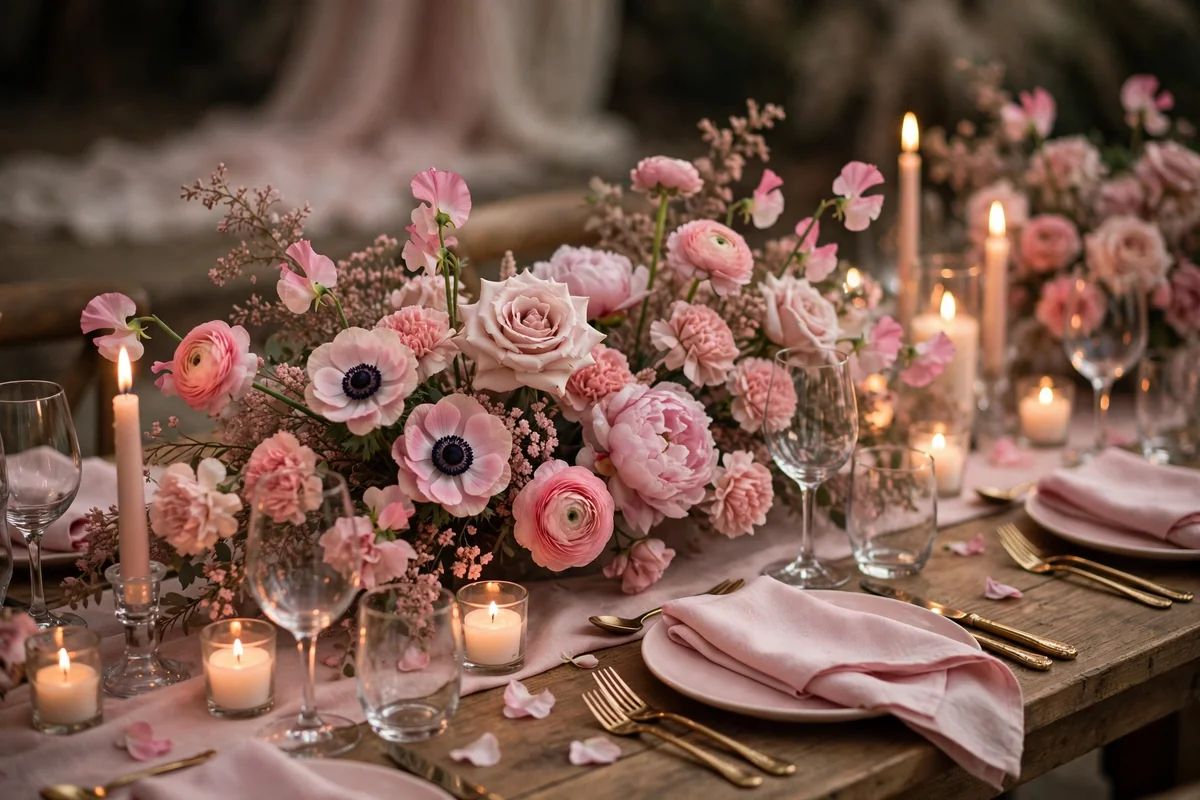
A monochromatic table takes the single color idea further while still using many flower varieties. Combine roses, ranunculus, sweet peas, and hydrangeas all in shades of blush pink, or build the story in creamy white, deep red, or lavender. Different petal shapes keep the arrangement interesting even though the color stays controlled.
Echo the chosen color once elsewhere, perhaps in the napkins or the candles, rather than trying to match every object on the table. That single echo makes the palette feel deliberate and designed. A monochromatic scheme is also wonderfully forgiving, since blooms in neighboring shades always harmonize without precise matching.
19. Rhythm for Long Banquet Tables
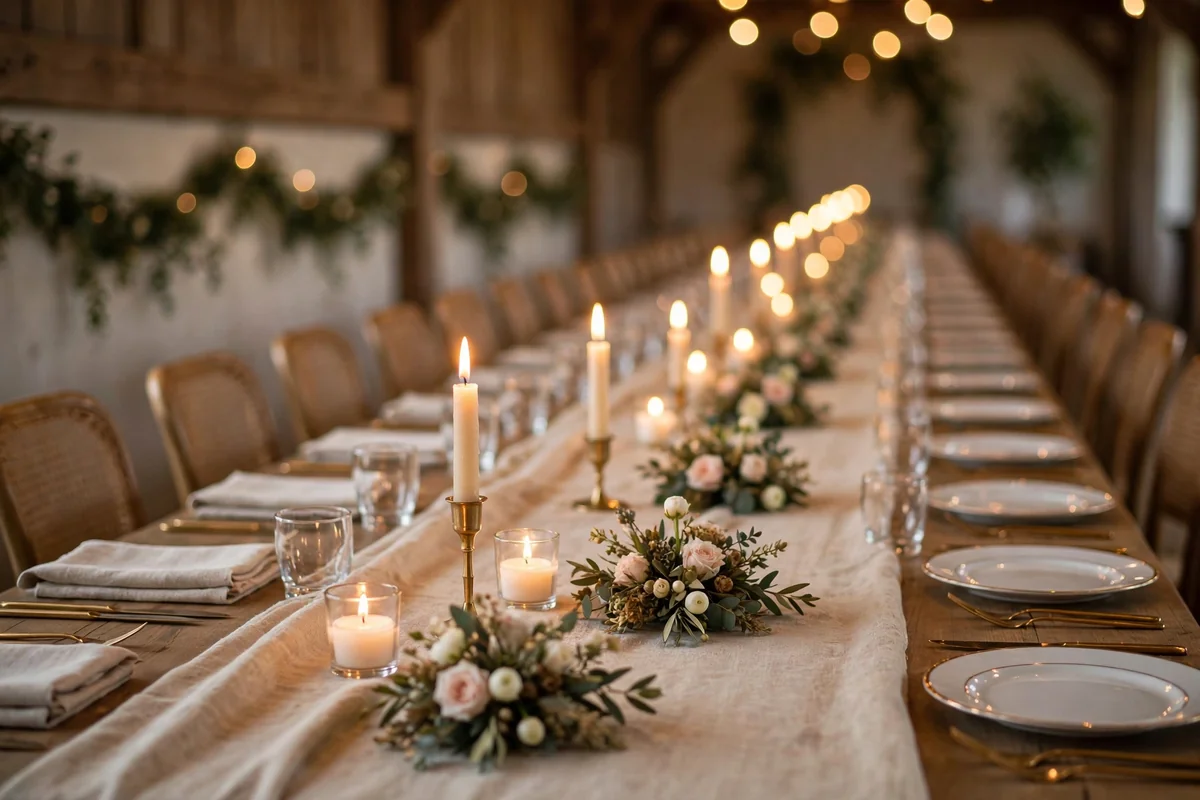
Long tables need a different decorating rhythm than round ones. Instead of one centerpiece in the middle, repeat small arrangements down the entire length: a low floral cluster, two candles, another cluster, then a few bud vases. The repetition creates movement and makes the table look finished and inviting from either end.
Leave intentional empty spaces between the groupings so servers have somewhere to set shared dishes, water pitchers, and wine. A good rule is to decorate about two thirds of the table’s length and let the rest breathe. The table should feel abundant but never crowded, with every guest enjoying both beauty and elbow room.
20. One Confident Centerpiece for Round Tables
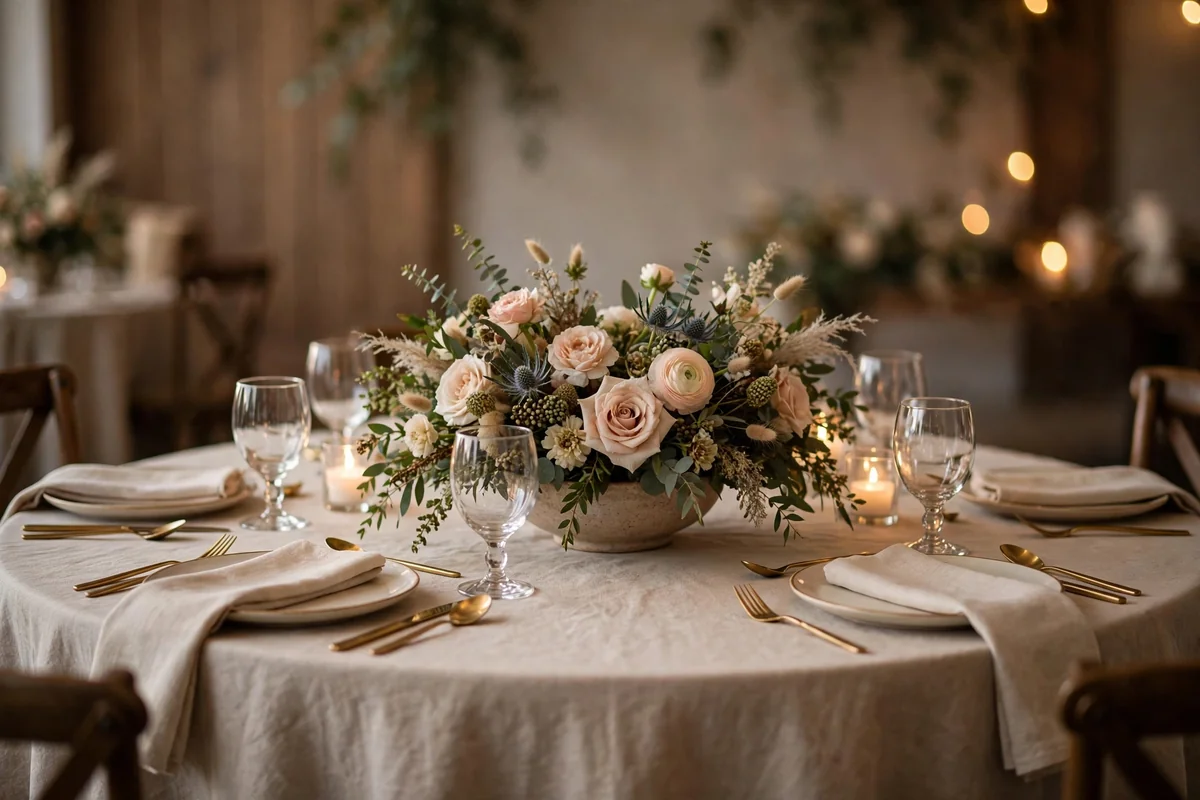
On a round table, one confident centerpiece usually beats a scatter of small unrelated decorations. A beautiful low compote or floral bowl creates a natural focal point while keeping the surrounding place settings visually calm. Guests’ eyes land in the middle, then travel happily around the circle of friends all evening.
Scale the arrangement to your actual table rather than choosing from a photograph alone. A centerpiece that looks perfect on a small sample table can feel lost on a large sixty inch round. Before finalizing flowers, confirm the table diameter, guest count, charger size, and how much service space the caterer needs. Proportion is everything.
21. Letting Luxurious Linen Lead
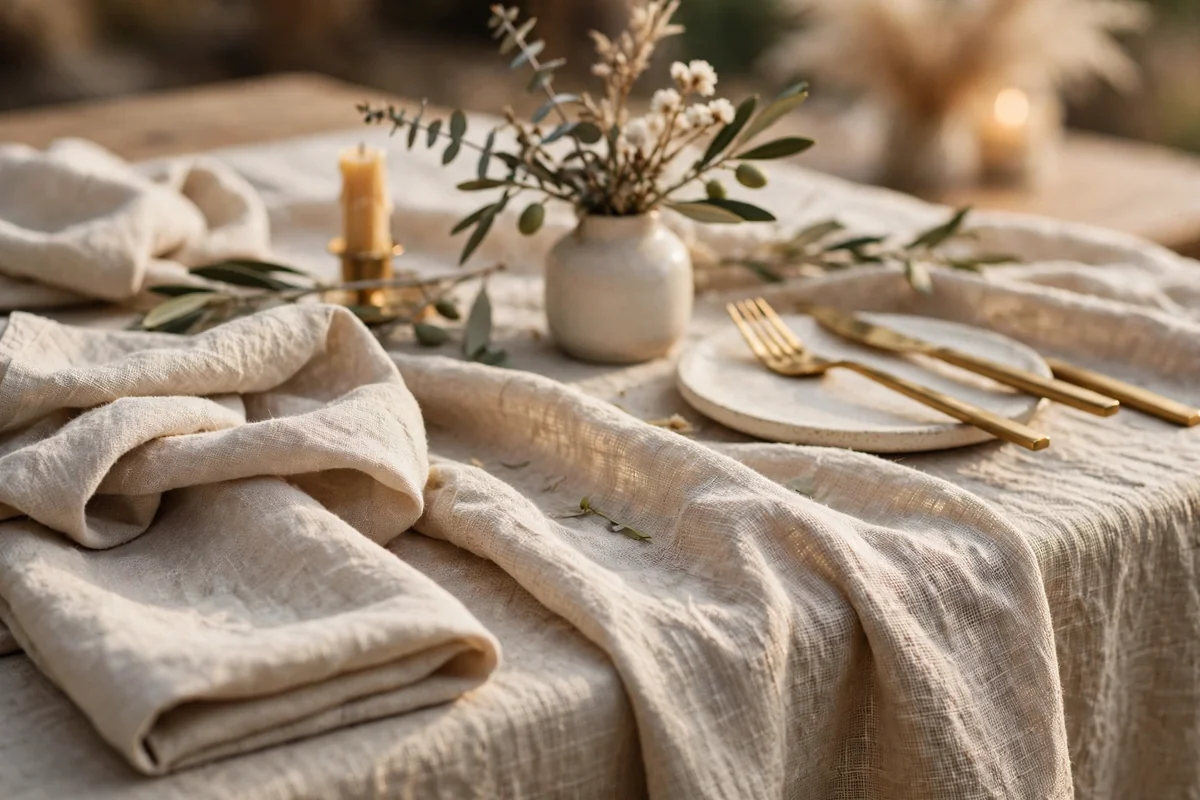
Flowers are not the only path to a luxurious table. Beautiful fabric can transform the entire mood before a single stem arrives: a textured tablecloth with a soft hand, generous linen napkins, or a subtle runner with a delicate weave. Cloth brings depth, softness, and a sense of occasion that nothing else quite matches.
Invest in the best linen your budget allows, since guests touch it all evening and quality is obvious up close. A beautiful cloth with simple white flowers often outshines an expensive arrangement on a thin, shiny polyester cover. Press or steam everything before the event, because wrinkles will undermine even the loveliest fabric.
22. Beautiful Bare Wood Tables
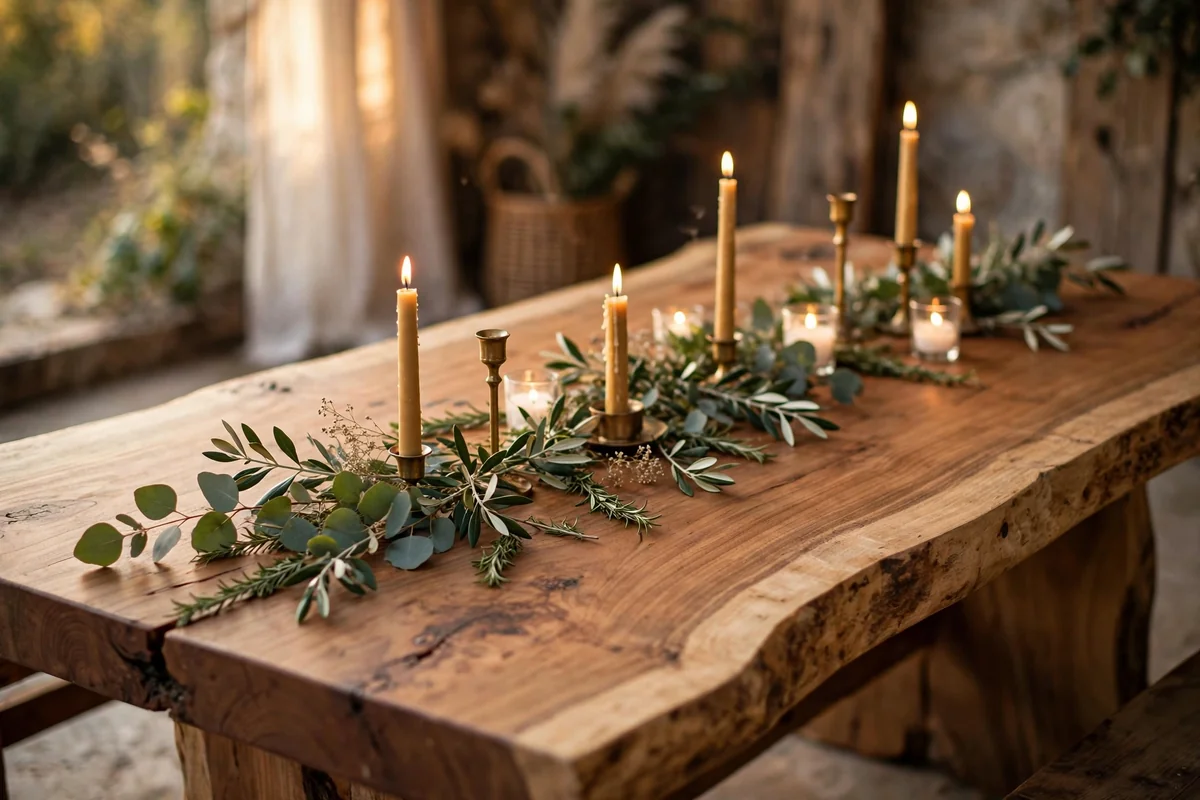
Some tables are too beautiful to cover. A well made farmhouse or harvest table with rich grain and a soft patina can stand bare, letting the wood itself be the foundation of the design. Dress it directly with a greenery runner, low flowers, and plenty of candles, and the natural texture does half the decorating work.
Protect the wood with discreet measures like clear chargers under plates and small coasters beneath sweating glasses, agreed with the venue in advance. A bare wood table suits garden, barn, vineyard, and rustic elegant weddings perfectly. The look feels warm, honest, and welcoming, and it saves the entire cost of tablecloths.
23. Little Terracotta Pots of Herbs and Blooms
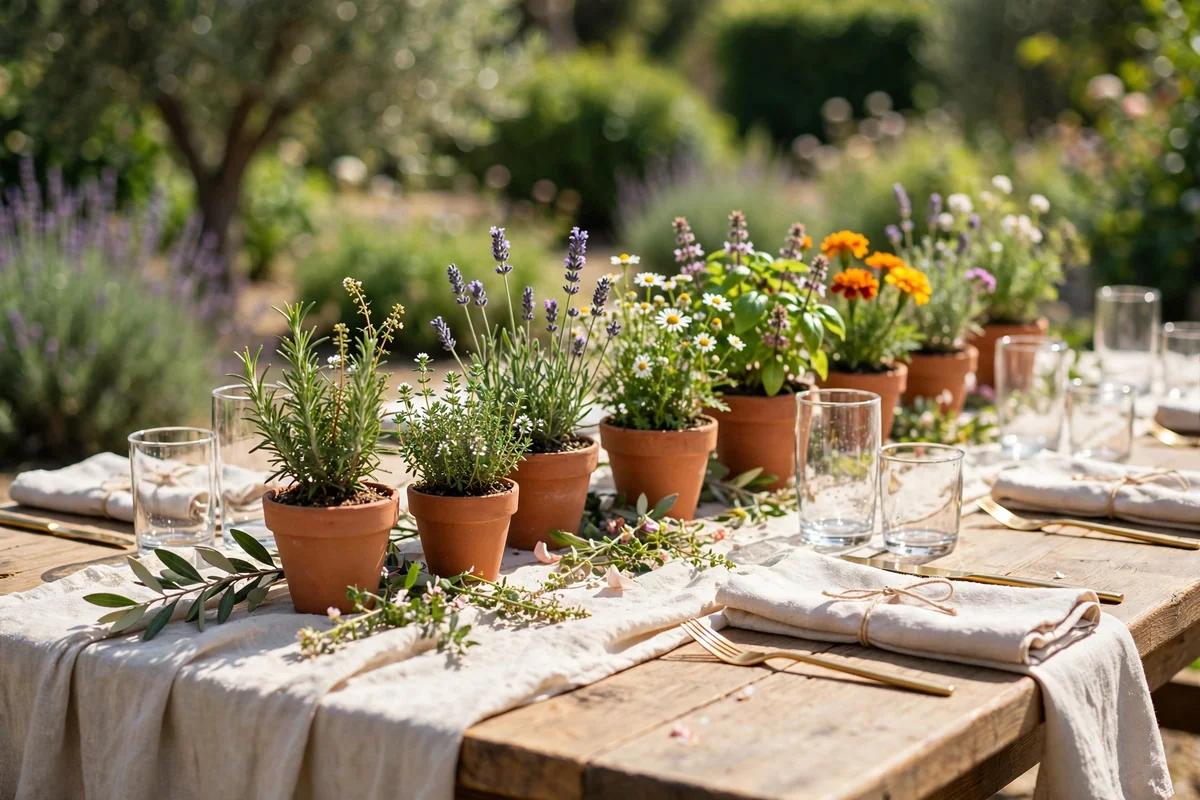
Small terracotta pots filled with herbs or simple blooms make charming, budget friendly centerpieces with a garden soul. Group three or five pots of different heights down the table, mixing rosemary, thyme, and small flowering plants. Guests can even take a pot home as a favor, which makes the decor do double duty.
Keep the pots small so they never block conversation, and set each one on a little saucer to protect the linen from moisture. This idea loves outdoor and greenhouse weddings, where the potted plants echo the surroundings. For a personal touch, tie a handwritten tag with each guest’s name around one pot at every place.
24. Elegant Tables Without a Single Flower
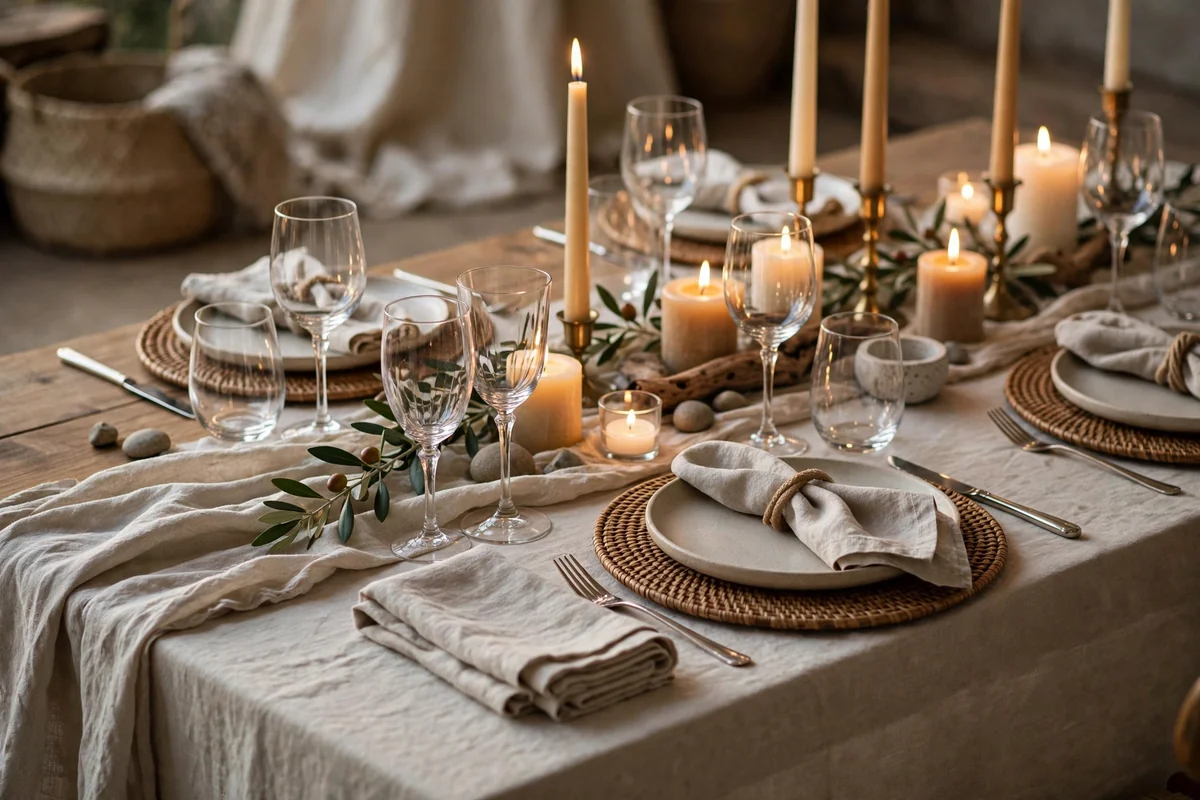
A wedding table can be completely flower free and still feel utterly elegant. Build the design from candlelight, beautiful linen, fine glassware, and natural textures like wood, stone, and woven fibers. The result is sculptural and serene, proving that romance does not require a single petal to bloom beautifully tonight.
This approach is a gift for anyone with pollen allergies, and it often costs far less than a floral heavy design. Focus your budget on the finest candles, the softest linen, and the most beautiful glassware you can find. Restraint becomes the luxury, and the table glows with a quiet confidence that guests remember.
25. An Intimate Family Style Feast Table
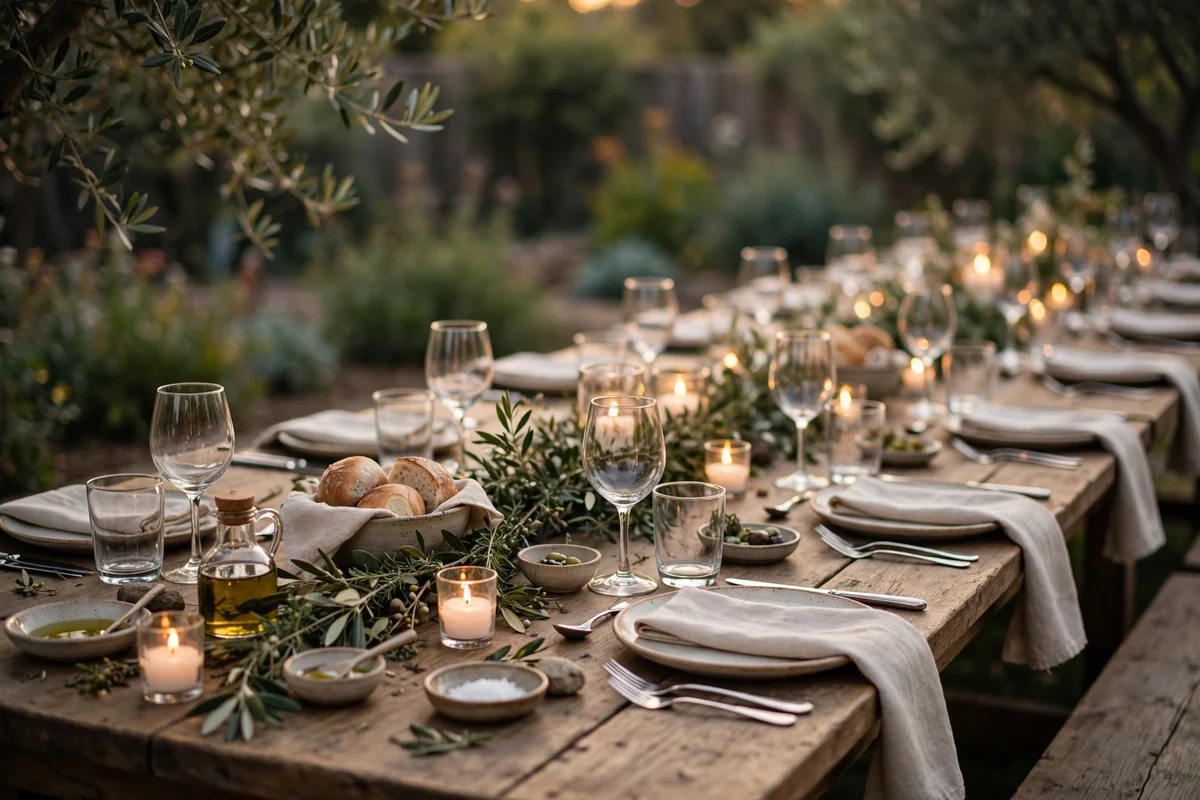
For a warm, convivial celebration, style one long table for a family style feast. Keep the center clear enough for shared platters, bread baskets, and wine bottles, decorating the edges with low greenery, scattered votives, and small seasonal fruits. The table should look generous and welcoming before a single dish arrives.
Plan the logistics with your caterer early: confirm which dishes will be shared, how large the platters are, and where serving spoons will rest. Leave more empty space than you think you need, since a crowded feast table quickly turns chaotic. Done well, this style creates the most memorable atmosphere of all, with everyone passing, sharing, and lingering.
Closing Thoughts
A beautiful wedding table is never about having the most decorations. It is about one clear vision, carried through with care, so every guest feels welcomed into the celebration.
Choose the direction that feels most like you, keep the practical details in mind, and let candlelight do the rest. Your tables will look timeless in every photograph for decades to come.
Frequently Asked Questions
How many centerpieces do I need for long banquet tables?
Plan one small arrangement or cluster every four to six feet, which usually means three to five groupings for a twelve foot table. Alternate floral clusters with candles and bud vases to create rhythm, and always leave empty space for shared dishes and wine. Walk the full length in your mind from a guest’s seat to check that every spot feels considered.
How do I keep wedding table decor affordable?
Choose one clear direction and repeat it instead of buying many different decorations. Greenery runners, bud vase clusters, candlelight focused tables, and potted herbs all look luxurious for less. Buy in season flowers in volume, rent vases and candleholders instead of purchasing, and let beautiful linen do heavy lifting. A restrained table almost always costs less than a maximalist one.
What centerpiece height is best for conversation?
Keep arrangements at or below twelve inches so guests can see over them, or go dramatically tall and thin above twenty four inches so eyes pass underneath. The awkward middle zone, roughly twelve to twenty four inches, is what blocks faces and forces leaning. When in doubt, stay low and let candles provide the vertical interest.
Can I decorate wedding tables myself?
Yes, many couples handle their own table decor beautifully, especially with simpler styles like bud vases, greenery runners, candles, and potted plants. Do a full trial run at home, time how long each table takes, and recruit reliable helpers for the wedding morning. Leave the most complex floral work to a professional, and keep your DIY designs comfortably within your skill level.
How far in advance should I plan table decor?
Start gathering ideas six to nine months ahead, and finalize your design, florist, and rentals three to four months before the wedding. Order candles, vases, and linen details once guest counts firm up, usually six to eight weeks out. Do your trial centerpiece at least a month before the day so there is time to adjust colors, heights, and quantities without stress.