Bedroom
21 Bedroom Layouts When Only One Nightstand Fits
By Anna Wells · · 18 min read
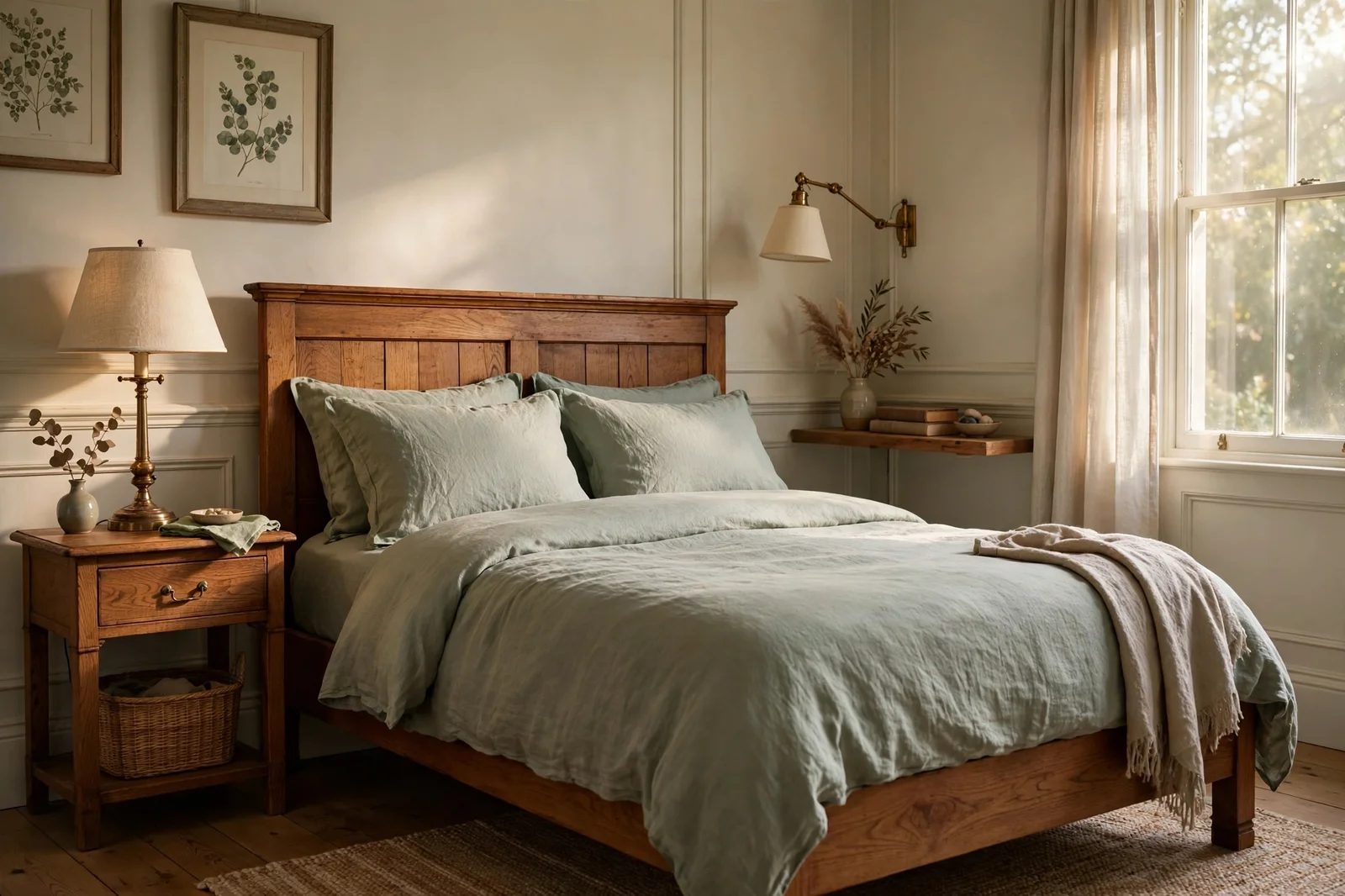
One nightstand does not mean an unfinished bedroom. These 21 practical layouts give the empty side its own light, surface and storage, so the asymmetry looks deliberate.
There is a particular frustration in a bedroom where the second nightstand simply will not fit. One side of the bed gets a lamp, a drawer and a home for the midnight glass of water, while the other side gets a bare wall and a phone balanced on the mattress. It feels like the room is unfinished.
The good news is that a single nightstand can look entirely intentional. With a wall lamp here, a narrow shelf there and matching pairs where it counts, the asymmetry starts to read as a design choice rather than a missing piece. Many heritage bedrooms were furnished exactly this way.
This guide gathers 21 practical layouts and ideas for exactly this situation. Every idea is concrete, with measurements, materials and budget notes, so you can pick the two or three that fit your room and your sleepers. Each sleeper still gets water, a book and a phone within reach.
Start with the side that has no table, give it its own light and its own surface, then add one matching pair across the bed. Watch how quickly the whole room settles into balance.
1. Mount a Swing-Arm Wall Lamp on the Side Without a Table
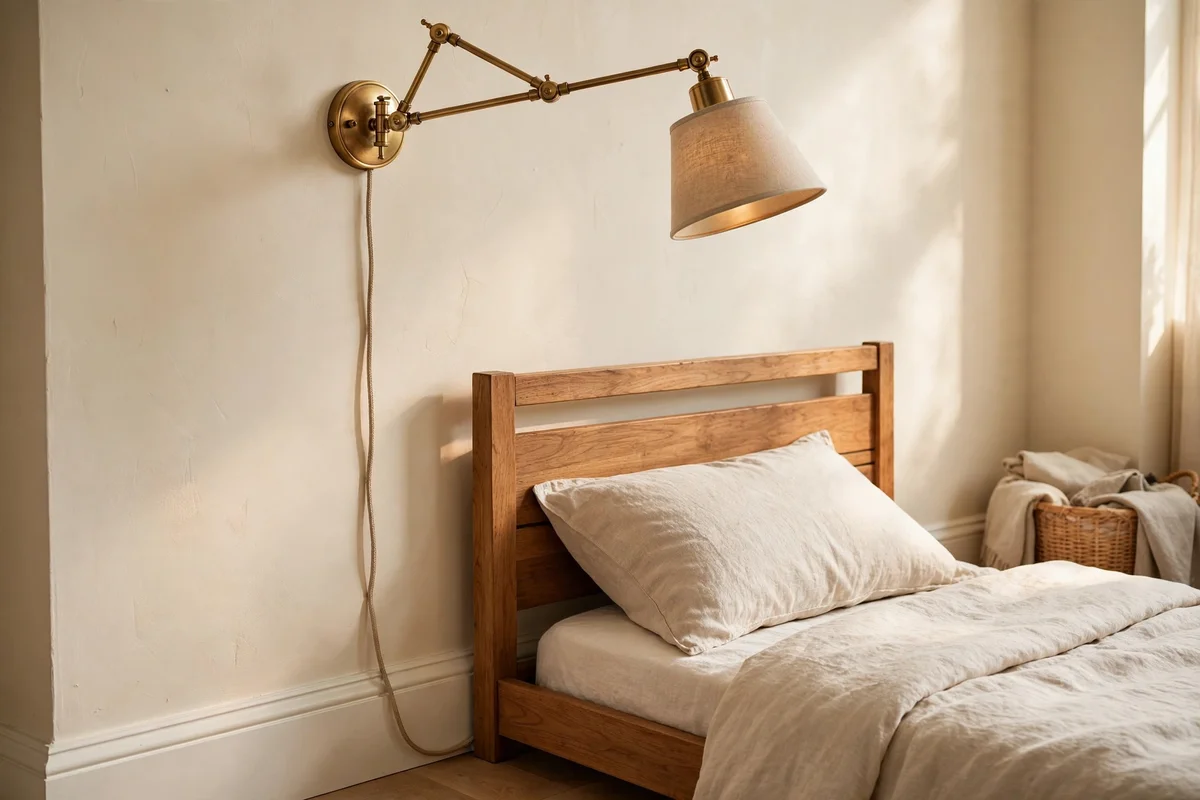
The empty side still needs light, and a swing-arm wall lamp solves it without a single centimetre of floor space. Fix the base about 120 to 140 cm above the floor so the shade clears a plump pillow with room to spare. Choose a warm 2700K bulb of 6 to 8 watts for reading light that feels gentle rather than harsh. A metal arm in aged brass or matte black suits linen bedding and timber bedheads beautifully.
Run the cable neatly with a fabric-covered cord and a small adhesive cable clip every 25 cm down to the skirting board. Many plug-in versions need no electrician and suit renters perfectly. The mistake to avoid is mounting the lamp directly above the pillow, where the shade becomes a head-bump hazard. Budget tip: a simple plug-in swing-arm lamp usually costs 25 to 50 pounds or dollars, far less than a second nightstand.
2. Hang a Pendant Lamp at Reading Height Beside the Bed
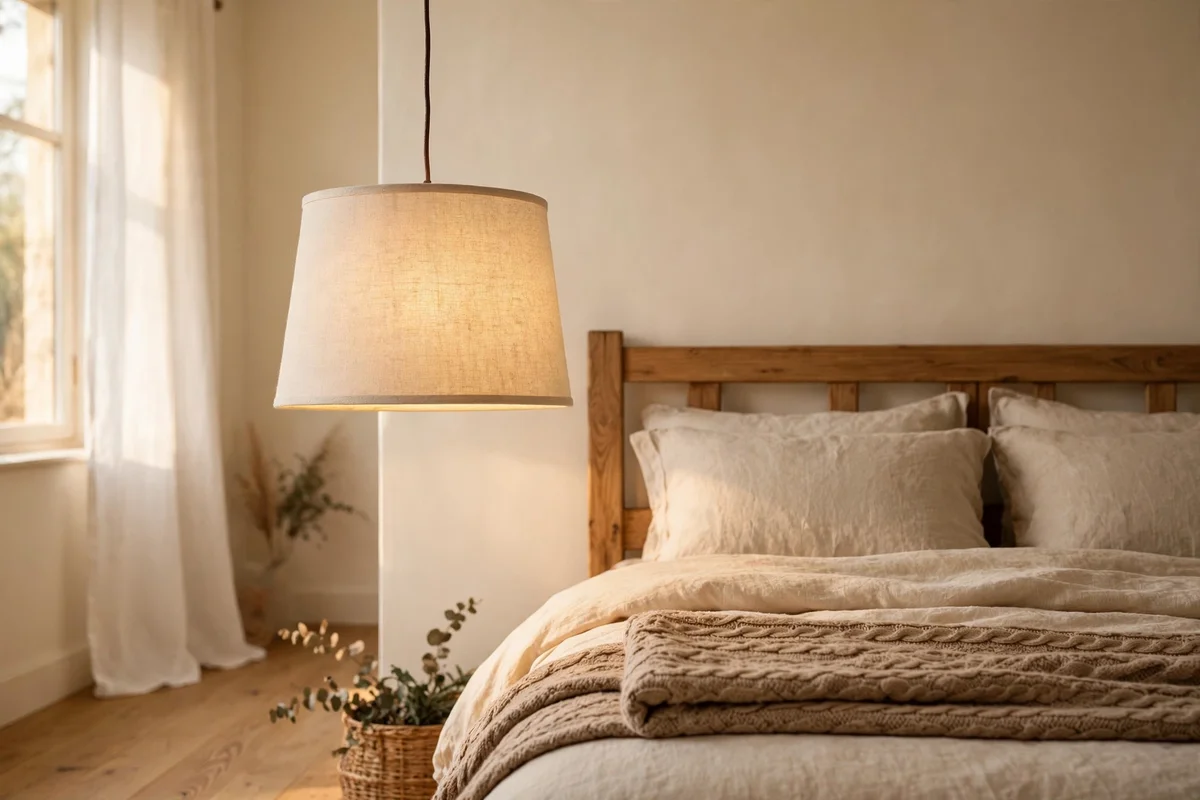
A pendant lamp hung low over the open side gives that corner presence and purpose. Hang the bottom of the shade 130 to 150 cm from the floor, which keeps the light near the pillow without crowding it. A fabric drum shade of 20 to 25 cm diameter casts a soft pool of light that is ideal for reading before sleep. Plug-in pendant kits with long fabric cords suit renters, while hardwired versions sit cleaner in a permanent layout.
Centre the pendant about 40 to 50 cm from the bed edge so the shade never brushes the bedding. Pair the drop height with the lamp on the other side so both light sources sit at a similar level, which keeps the asymmetry feeling calm. The mistake to avoid is choosing a heavy glass shade on a thin cord, which can sway and strike the wall. Most pendant kits cost 30 to 60 pounds or dollars.
3. Fit a Narrow Floating Shelf as a Slim Stand Substitute
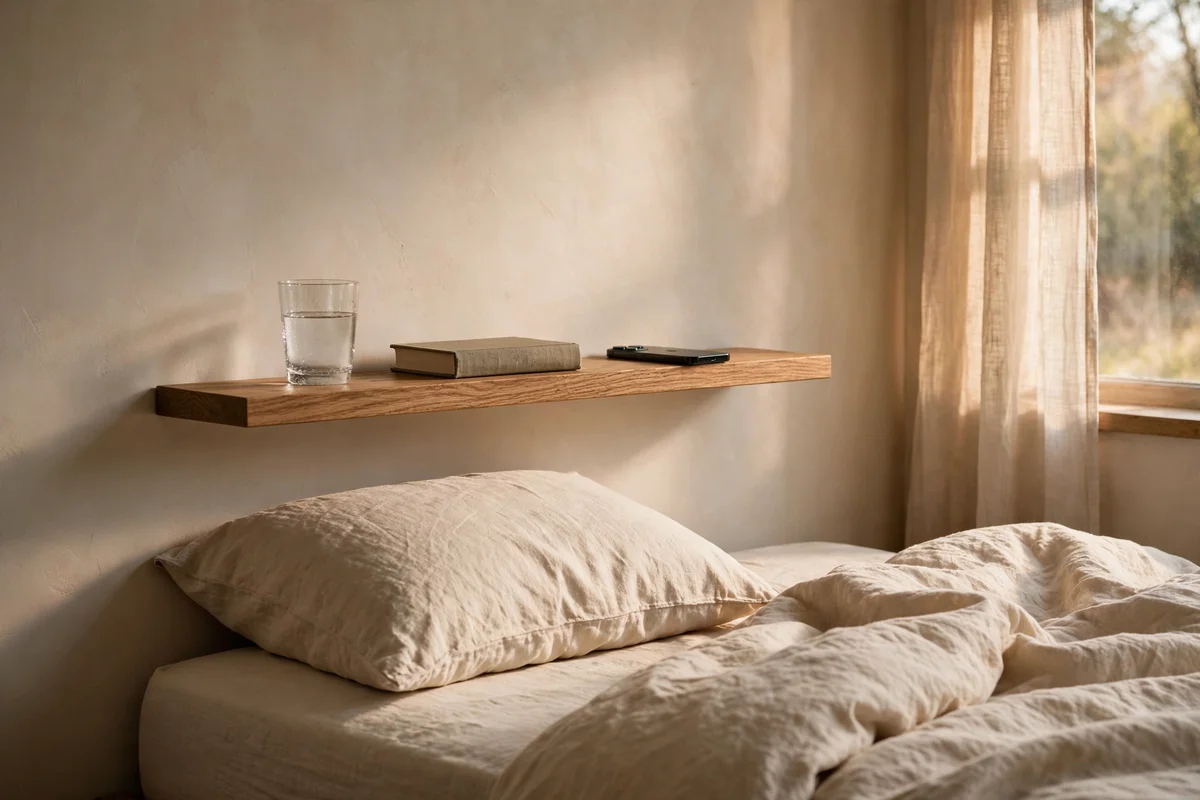
A floating shelf only 12 to 15 cm deep works as a nightstand for the side with no floor room. Mount it 65 to 75 cm from the floor, level with the mattress top, so a glass of water or a phone feels easy to reach. Fix it into studs or use strong plaster anchors rated for at least 5 kg, since shelf, lamp and book add up quickly. An oak or walnut board 40 to 60 cm long gives enough room for a water glass, a small book and a phone.
Add a tiny lip or upstand along the front edge, about 2 cm high, so a phone cannot slide off in the night. Style it with just three items to keep the narrow board from looking crowded. The mistake to avoid is mounting the shelf higher than the mattress, which turns every reach into a stretch. A solid timber shelf with concealed brackets usually costs 20 to 45 pounds or dollars.
4. Use a Picture Ledge to Hold the Night-Time Essentials
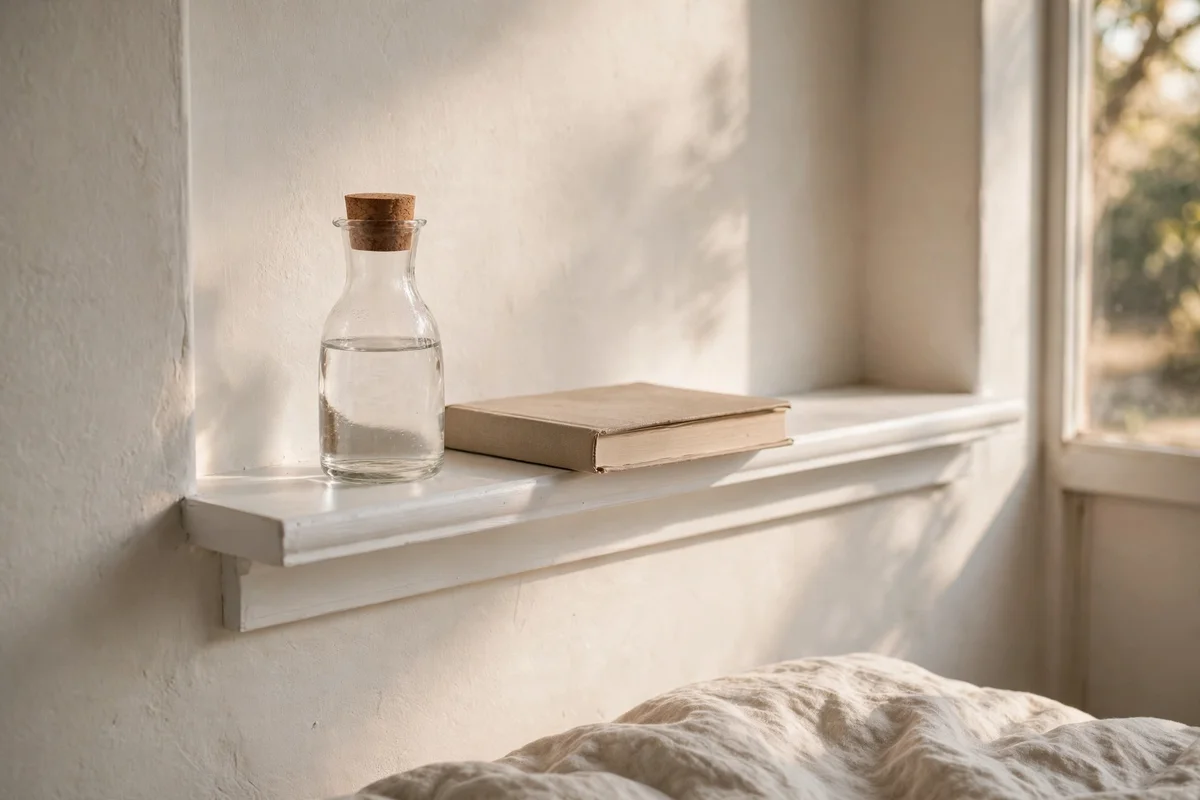
A picture ledge doubles beautifully as a slim nightstand when wall space is short. Choose a ledge 45 to 60 cm long and 10 to 12 cm deep, mounted level with the top of the mattress. Its raised front lip, usually around 3 cm, keeps a water bottle and a phone safely in place. Oak and painted pine ledges are widely available and take stain or paint well. Mount into studs for a firm, wobble-free hold.
Keep the ledge to two or three objects: a small carafe, a paperback and the phone. A tiny clip-on lamp can perch on one end for light without a table. The mistake to avoid is loading the ledge with framed art above the essentials, which crowds the resting space and risks a fall. Most ledges cost 12 to 30 pounds or dollars, making this the cheapest genuine stand substitute.
5. Place a Small Wooden Stool on the Open Side
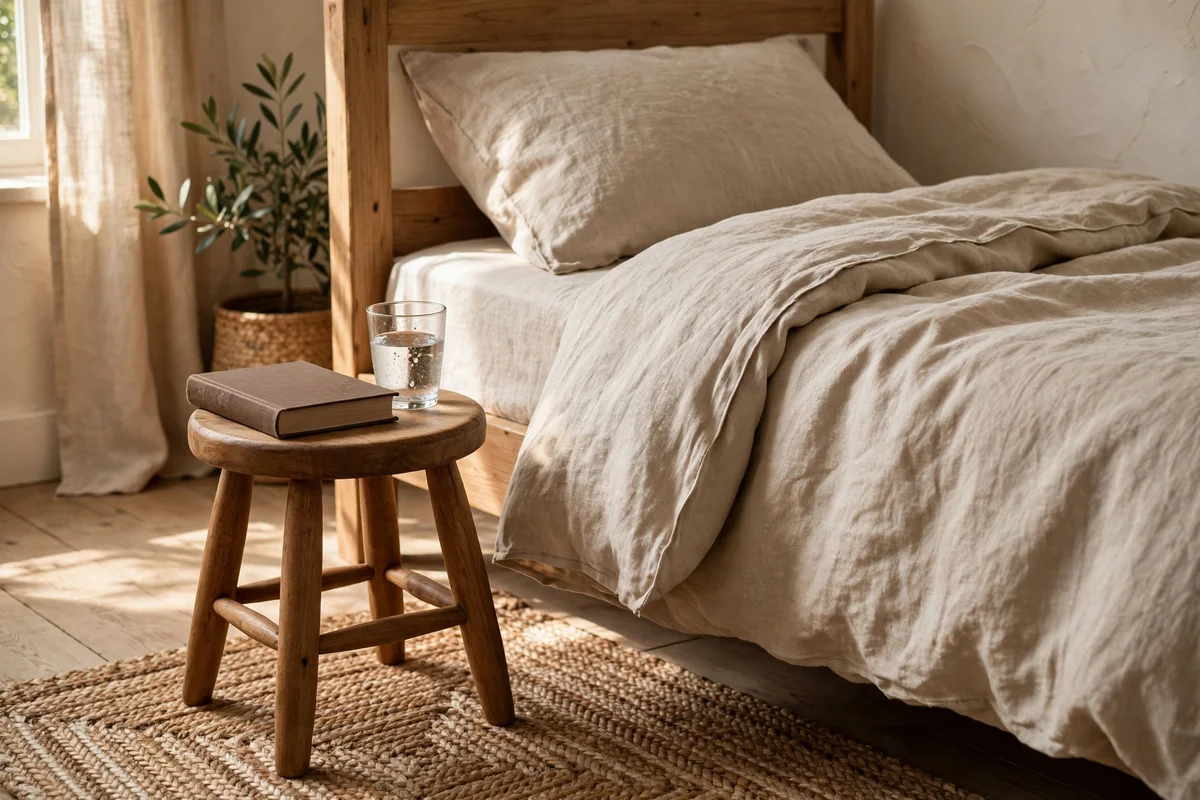
A small stool brings height and warmth to the side without a table, and it moves anywhere in seconds. Pick one 40 to 45 cm tall with a seat about 30 cm wide, roughly matching mattress height so reaching is easy. Solid wood stools in oak, beech or acacia suit classic bedrooms and age gracefully. A round seat feels softer against bedding, while a square one offers a steadier surface for a book and a glass.
Use the stool’s rungs or a lower shelf for a spare blanket or slippers to keep the top clear. The mistake to avoid is choosing a stool with splayed legs on a thick rug, which can rock and tip a water glass. Test stability on your own floor before committing. A well-made wooden stool usually costs 30 to 70 pounds or dollars, and it doubles as a plant stand or dressing-table seat later.
6. Stack a Stable Tower of Books as a Low Bedside Platform
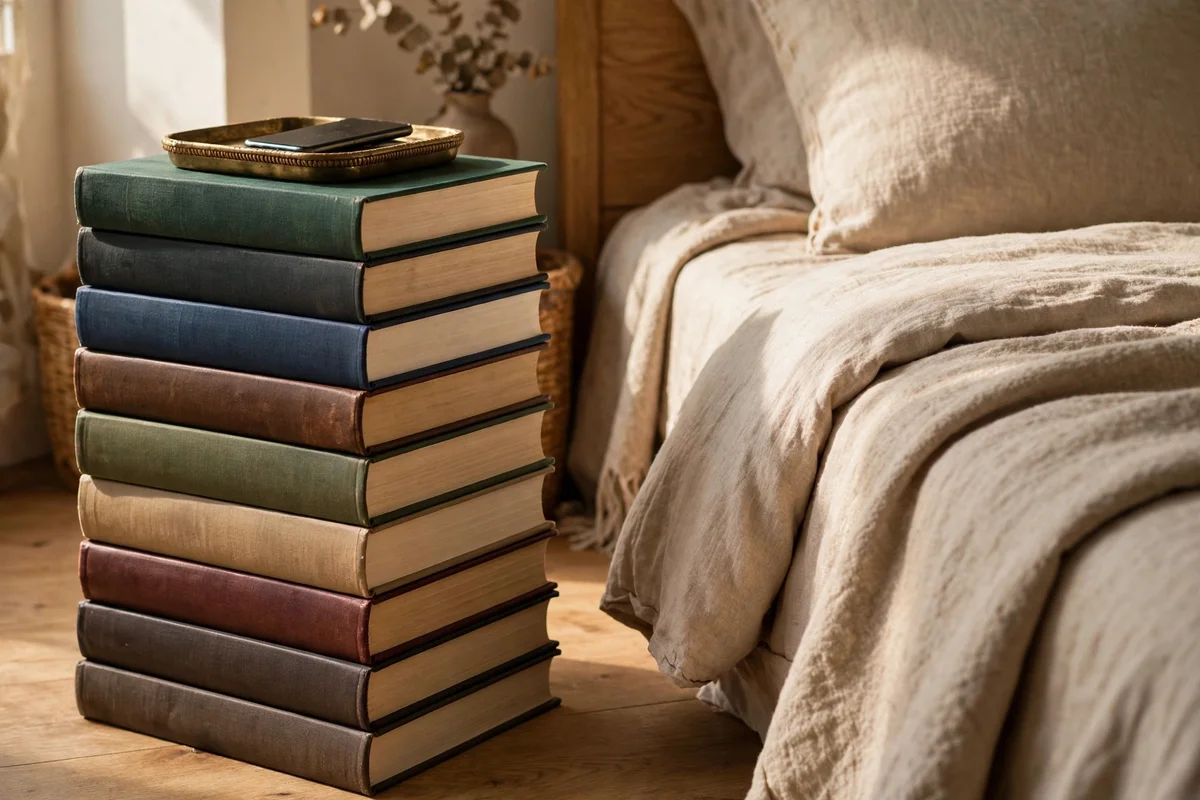
A neat stack of large hardback books creates a charming low platform for a phone and a small lamp. Build the tower 35 to 45 cm high on the open side, using the biggest and heaviest books at the bottom. Alternate the direction of each book so the stack stays balanced and square. Twelve to fifteen coffee-table books usually give the right height beside a standard mattress. A small tray on top makes the surface even and protects the books.
This costs almost nothing if you already own the books, and charity shops sell large hardbacks for 2 to 4 pounds or dollars each. The mistake to avoid is stacking near a damp wall or a window where condensation can stain pages. Keep a coaster under any glass of water. This solution suits readers who like their current book within arm’s reach and enjoy a handcrafted, lived-in look.
7. Let the Single Nightstand Carry a Shared Centre Tray
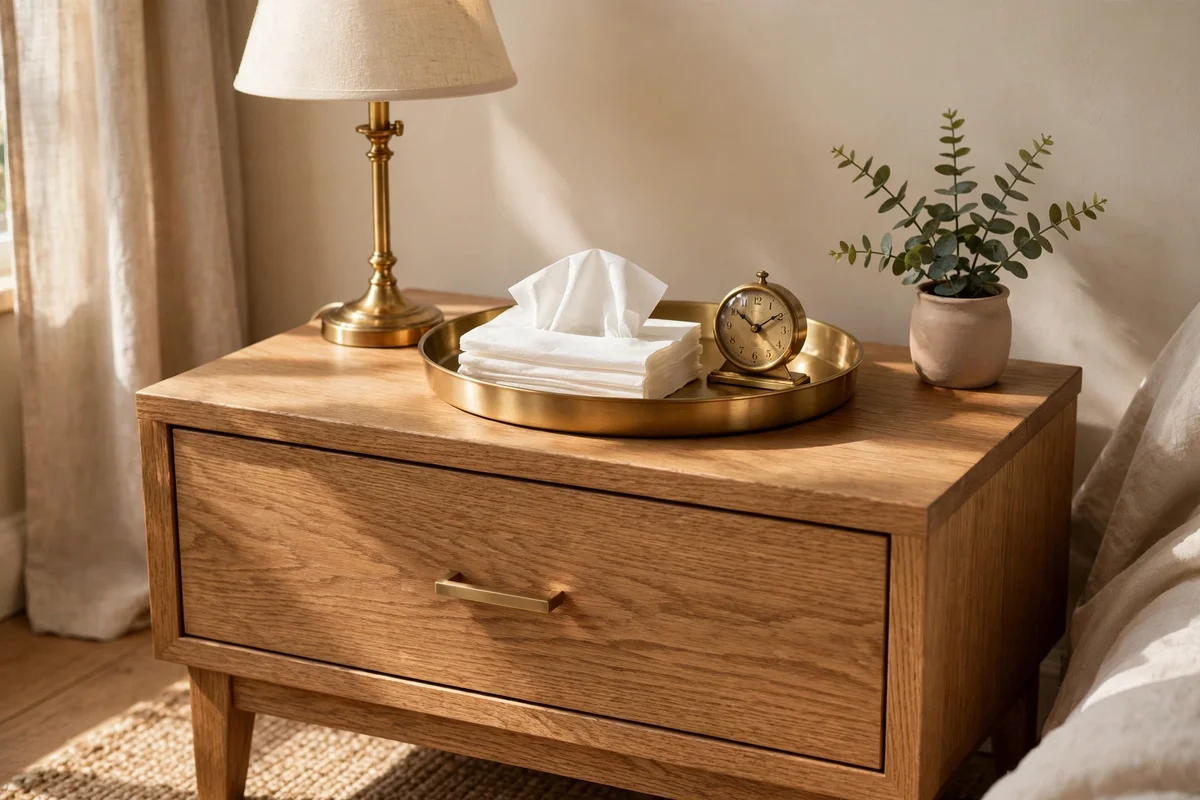
When one nightstand serves two sleepers, a centre tray keeps it calm and organised. Choose a tray 25 to 35 cm wide that leaves room for one lamp and one personal item on each side of it. A shallow brass, rattan or oak tray corrals the shared bits like tissues and a small clock. Each sleeper then keeps their own water, book and phone on their side of the bed, while the tray handles everything common.
Line the tray with a piece of felt or linen to stop small items rattling at night. The mistake to avoid is letting the tray collect three weeks of receipts and old glasses, which defeats its purpose. Clear it once a week as a small ritual. A handsome tray costs 10 to 25 pounds or dollars and instantly makes a single nightstand feel considered rather than overworked.
8. Pair Two Identical Lamps So the Asymmetry Reads Deliberate
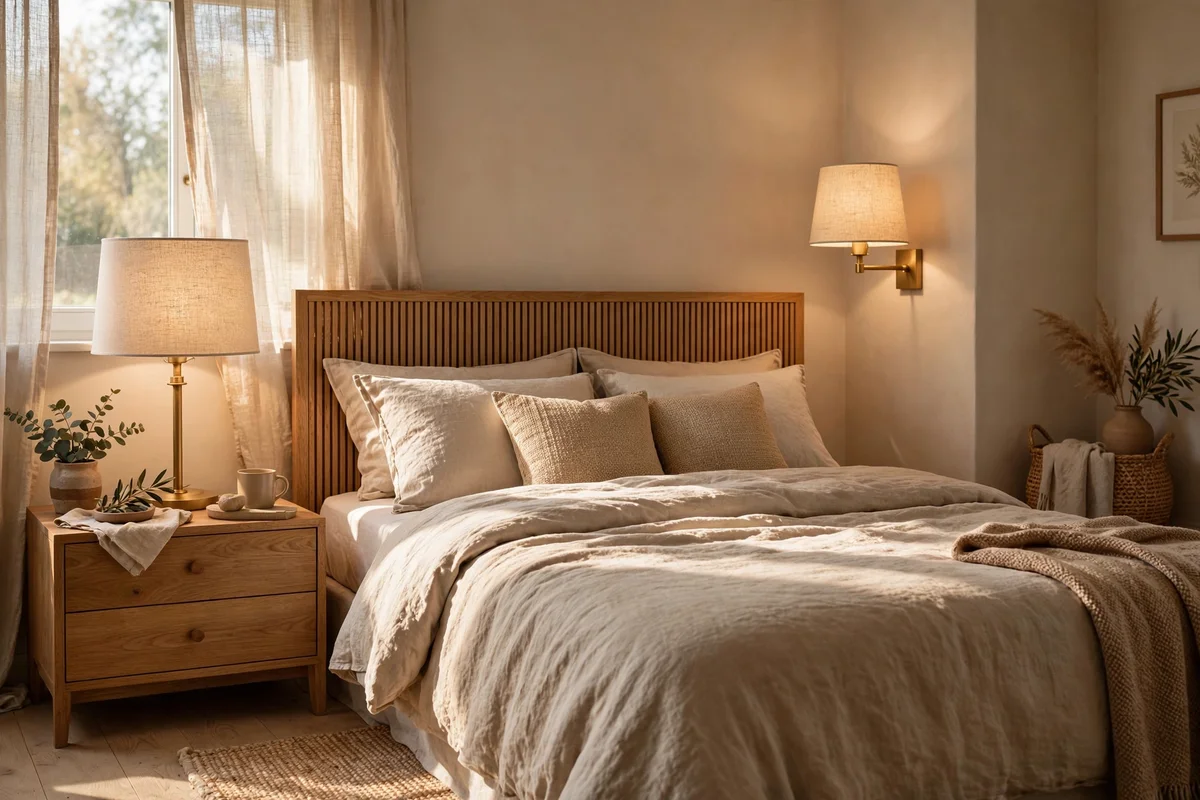
Two matching light sources make one nightstand look like a design choice rather than a compromise. If the single table holds a lamp, place the same model as a wall lamp or pendant on the other side. Matching shades in linen or cream, with warm 2700K bulbs, tie the two sides together at a glance. Keep both lights at roughly the same height above the mattress so the glow feels balanced from the doorway.
Choose a plug-in version for the wall side so no rewiring is needed. The mistake to avoid is using two lamps with different colour temperatures, because one side will look cool and clinical while the other glows warm. Check the kelvin rating printed on each bulb. Matching pairs from one shop often cost 40 to 80 pounds or dollars together, a small price for a room that looks planned.
9. Mirror Cushions and Throws Across the Bed for Balance
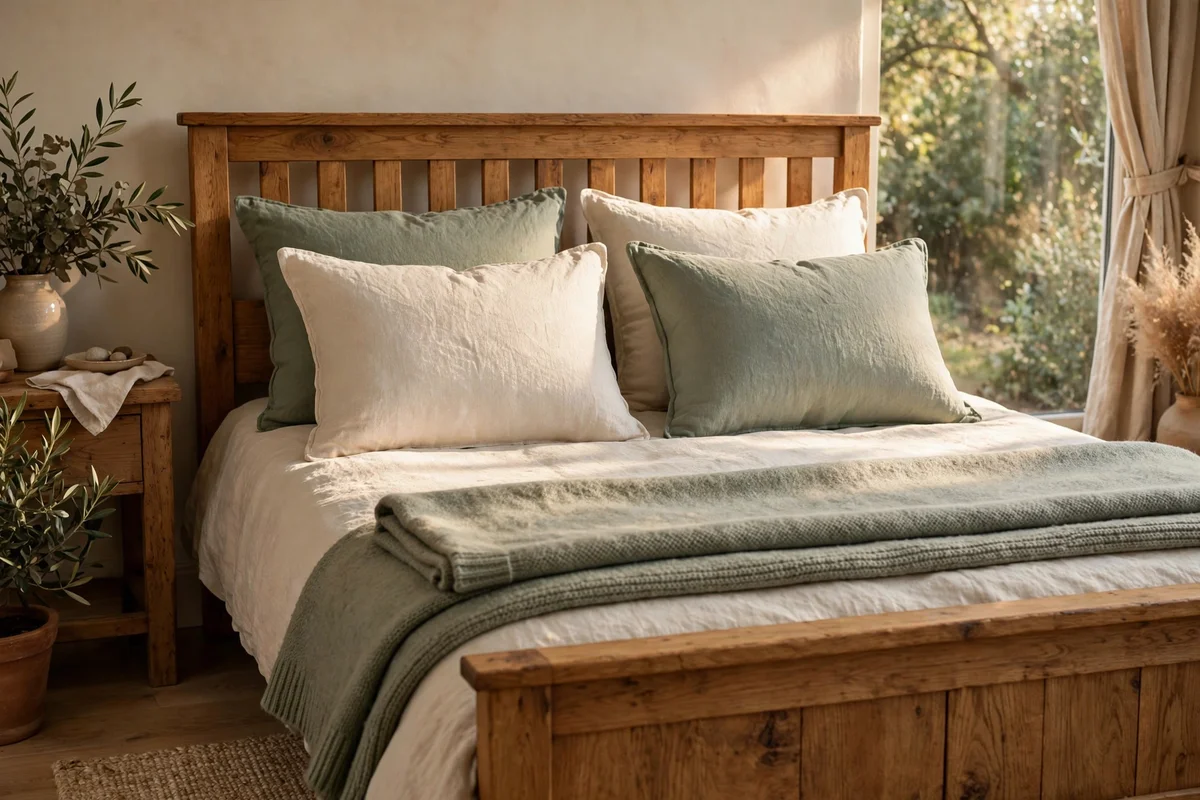
Symmetrical bedding draws the eye and softens the missing nightstand. Place two sleeping pillows and two matching decorative cushions, one arrangement mirrored on each side of the bedhead. A folded throw across the foot of the bed adds a horizontal line that balances the room. Choose linen or cotton in heritage tones like sage, ochre or dusty rose for timeless warmth.
This trick costs nothing if you restyle cushions you already own. The mistake to avoid is piling six or seven cushions on one side to fill the gap, which emphasises the emptiness instead of hiding it. Keep the bed dressing even and calm. Two quality cushion covers in natural fabrics usually cost 20 to 40 pounds or dollars and refresh the whole room’s mood.
10. Fix a Wall-Mounted Fold-Down Shelf for Phone and Water
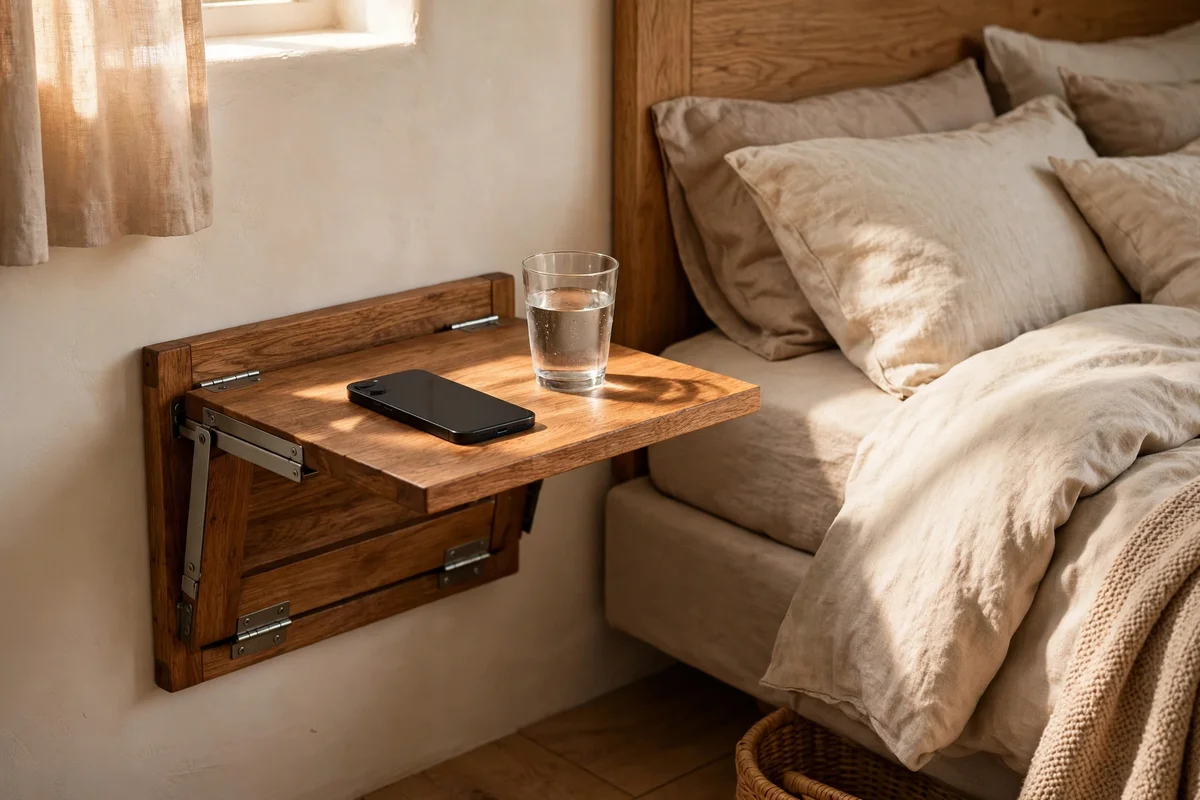
A fold-down shelf gives the open side a nightstand that disappears by day. Choose a model 30 to 40 cm wide that folds flat against the wall when not needed. Mount it level with the mattress top, about 65 to 75 cm from the floor. Strong folding brackets rated for 5 kg or more keep a water glass steady. Oak or painted MDF versions suit most bedrooms.
Fold it down only at bedtime so the wall stays clean and calm through the day. The mistake to avoid is mounting it on a wall with a radiator or a curtain directly behind, which blocks the fold. Check the swing arc before fixing. Fold-down shelves cost 20 to 40 pounds or dollars and suit small rooms where every centimetre matters.
11. Slide an Under-Bed Basket Within Arm’s Reach
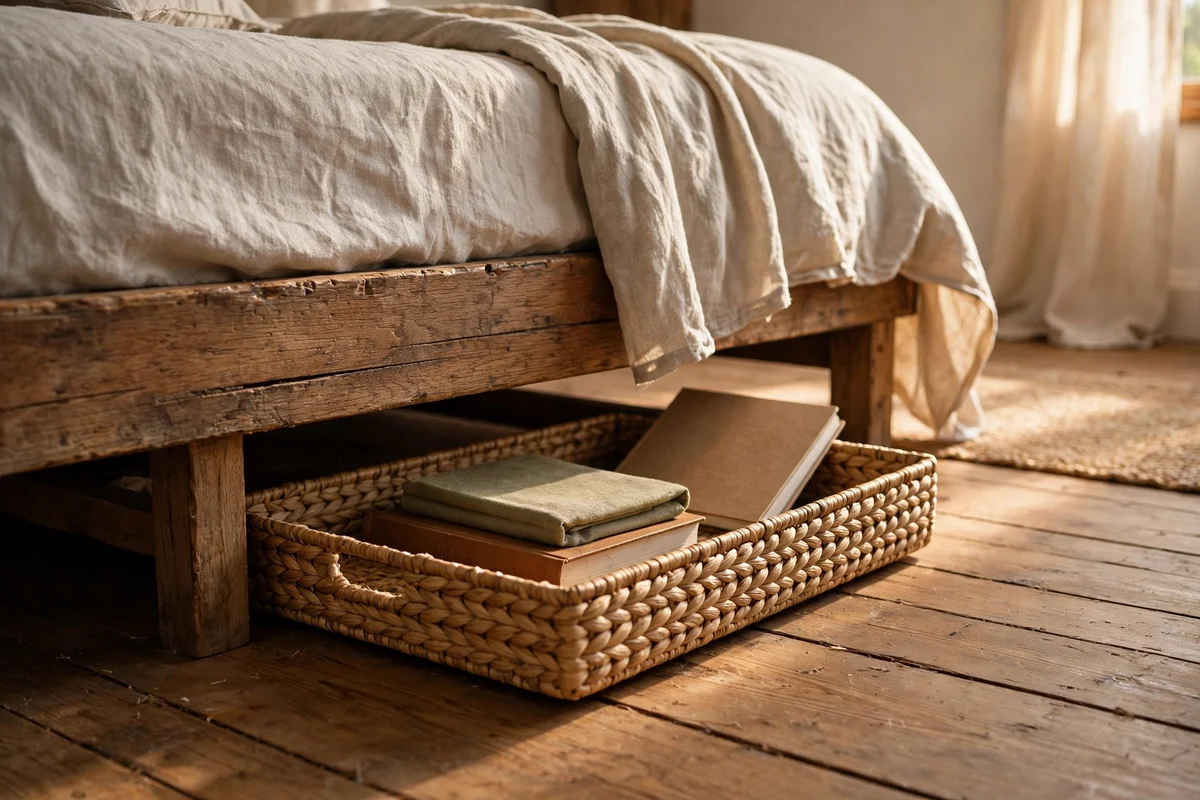
A flat woven basket under the bed near the open side stores books and magazines out of sight. Choose a basket no taller than 20 cm so it slides easily over carpet or hard floors. Wicker, seagrass or cotton rope baskets add natural texture and cost little. Keep the current book and a small notebook inside, so the open side still serves a reader even without a table surface.
Add small felt pads under a rigid basket to protect hard floors from scratches. The mistake to avoid is letting the basket drift to the middle of the bed, where reaching means lying flat. Pull it to the bed edge each evening as part of the bedtime routine. Good storage baskets cost 12 to 30 pounds or dollars and keep the floor looking tidy.
12. Tuck a Slim Rolling Cart Beside the Frame
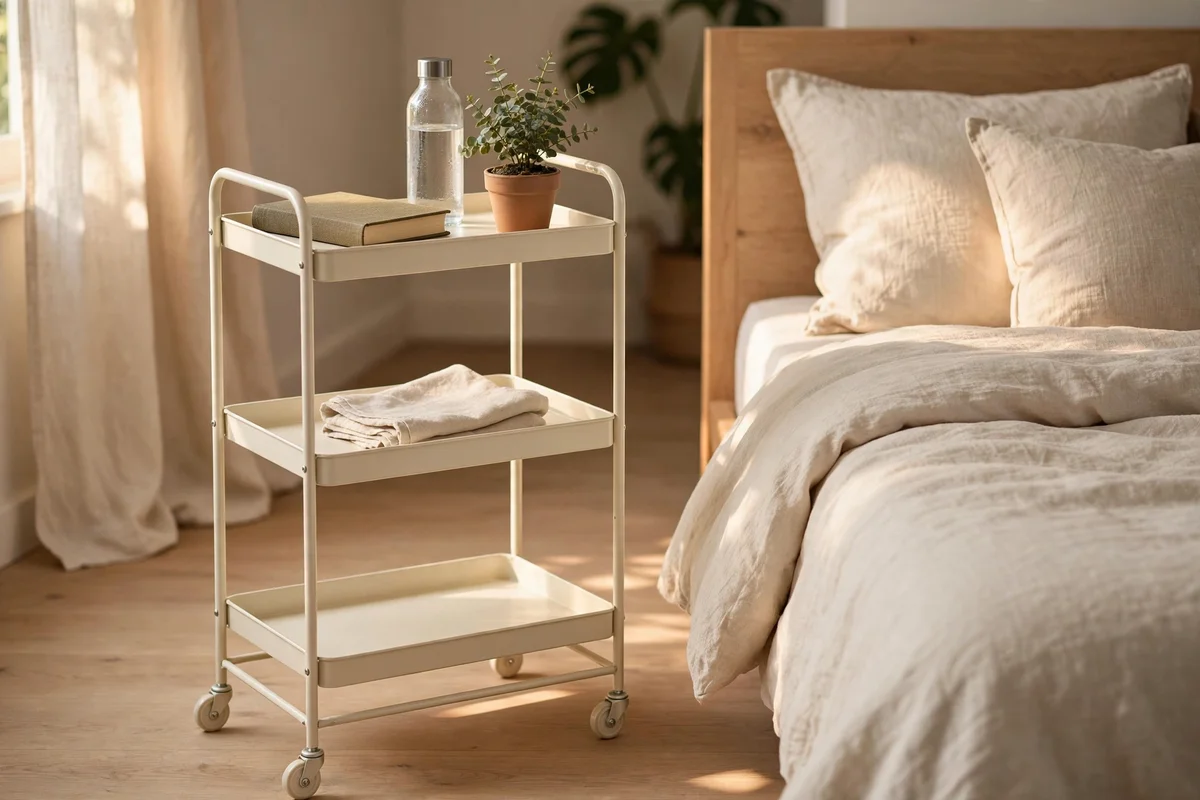
A slim rolling cart, only 15 to 20 cm wide, can slip into a gap that fits no furniture. Wheel it beside the bed on the open side at night and roll it away by day. Two or three tiers hold water, books, a phone and a small lamp with a clip base. Metal carts in cream, black or brass tones suit many styles. Locking castors keep it steady through the night.
Lock the wheels before sleep so the cart cannot roll against the bed. The mistake to avoid is overloading the top tier with a heavy lamp, which makes a tall cart top-heavy. Keep heavier items on the lowest tier. Slim carts cost 25 to 55 pounds or dollars and work brilliantly for renters who need flexible storage.
13. Hang a Bedside Caddy From the Mattress Edge
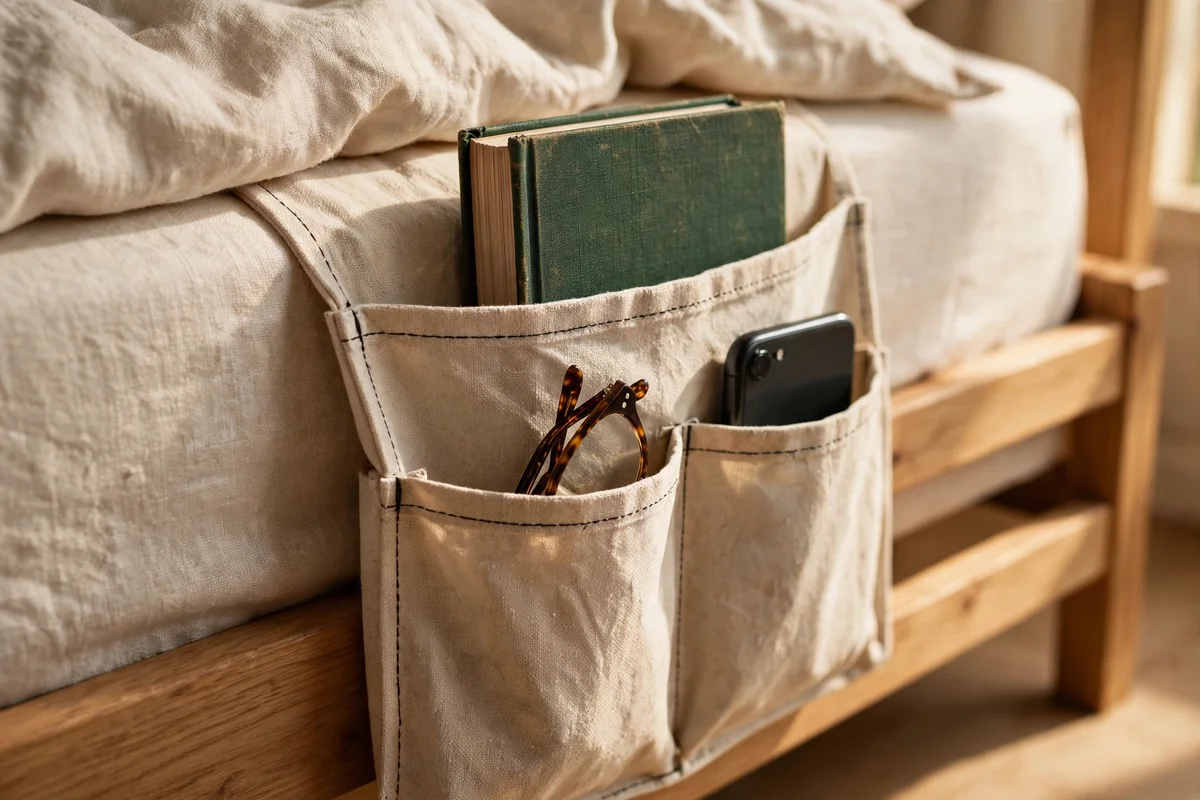
A fabric bedside caddy slides between mattress and bed frame to give the open side pockets for essentials. Choose one with at least three pockets in sturdy cotton canvas or linen. It holds a phone, a paperback, reading glasses and a small water bottle without any floor space at all. Natural canvas and striped ticking fabrics suit heritage bedrooms.
Weigh the caddy down with the mattress firmly on top of its flap so it cannot slip. The mistake to avoid is hanging a caddy from a divan with a loose-fitting sheet, where it slides and dumps its contents. Test it for a night before trusting it with a full water bottle. Caddies cost 10 to 25 pounds or dollars and need no tools at all.
14. Balance the Composition With a Tall Floor Vase
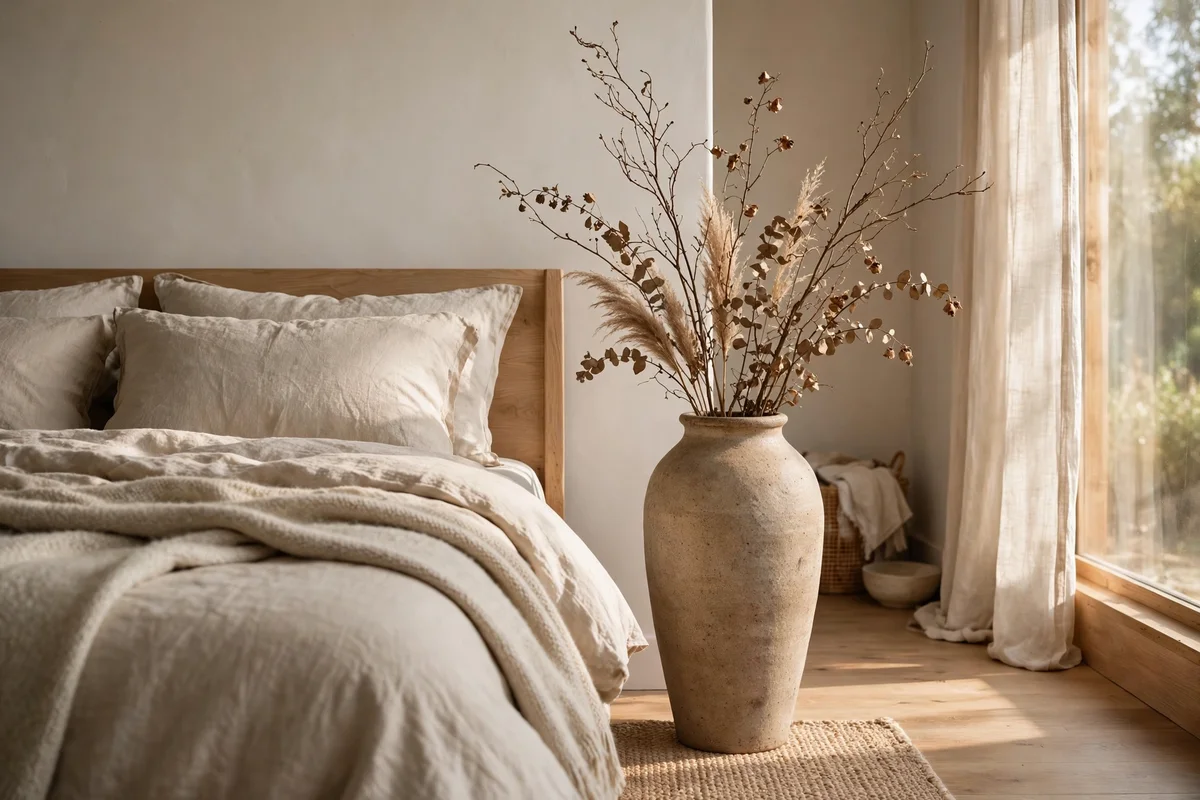
A tall floor vase on the open side fills the visual gap the missing nightstand leaves. Choose a vase 50 to 70 cm tall in ceramic, stoneware or rattan, placed about 30 cm from the bed edge. Fill it with dried branches, pampas grass or tall dried flowers for height without watering. This gives the eye something to rest on at the same scale as the nightstand opposite.
Keep the vase stable by choosing a wide-based shape and adding a handful of pebbles inside the base. The mistake to avoid is placing a tall vase in the walking path, where a midnight trip becomes a hazard. Tuck it between bed and wall. Good dried arrangements cost 20 to 50 pounds or dollars and last for years without maintenance.
15. Fix a Wall Cup Holder for Night-Time Water
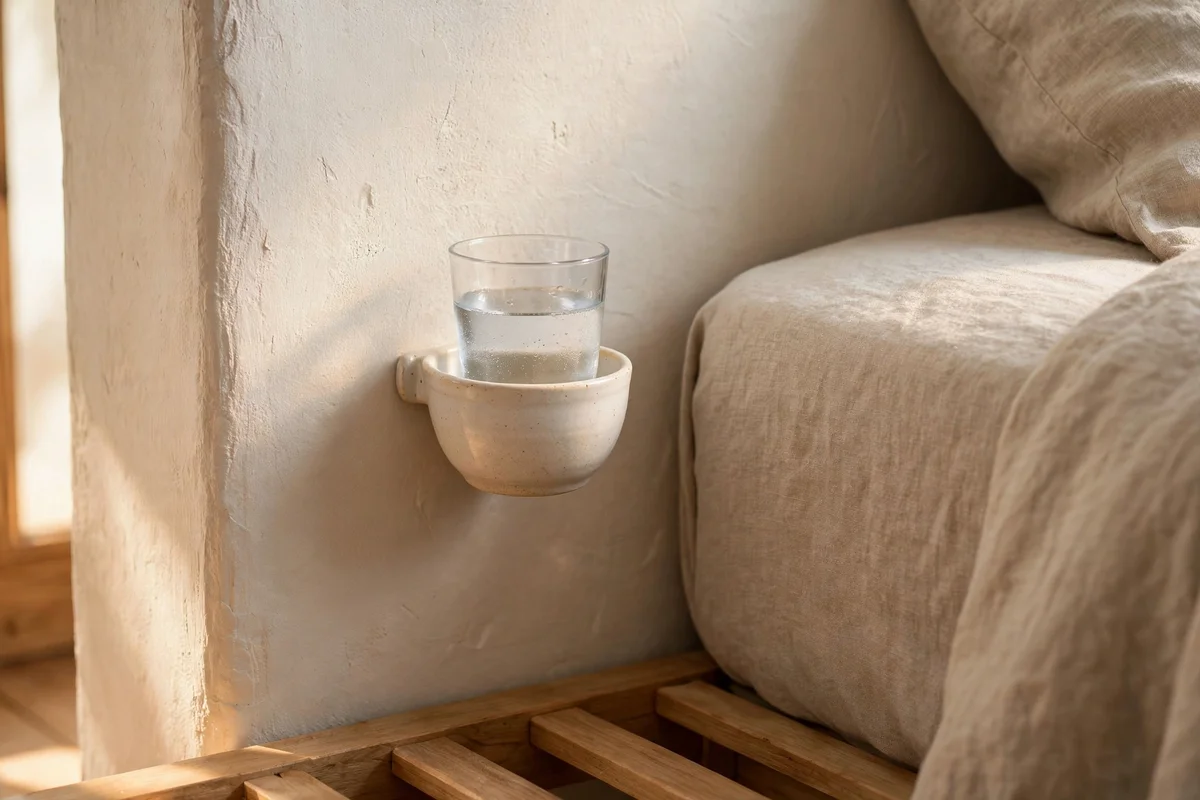
A small wall-mounted cup holder keeps water within reach where no table fits. Choose a ceramic or metal ring holder sized for a standard glass or a small bottle. Mount it about 10 cm above mattress level on the wall or bed frame, within easy arm’s reach. Solid fixings matter here, since a full glass of water is heavier than it looks.
Use a short, stable glass rather than a tall bottle so nothing topples when half asleep. The mistake to avoid is mounting the holder above the pillow, where a knocked glass lands on bedding. Place it slightly toward the foot of the bed. Wall cup holders cost 8 to 20 pounds or dollars and suit tiny bedrooms perfectly.
16. Measure the Tight Side Honestly Before Buying Anything
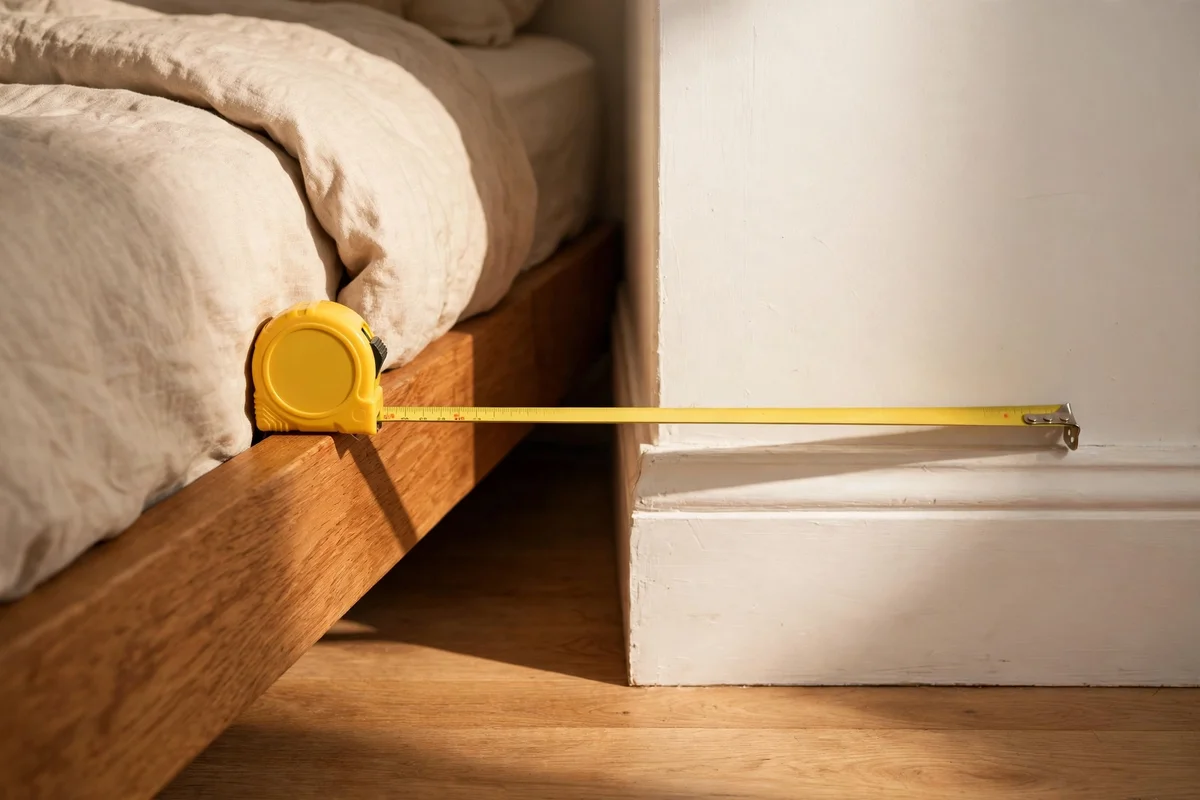
Honest measuring saves money and disappointment on the tight side of the bed. Measure the wall gap from mattress edge to skirting board in three places, since walls are rarely straight. Note the mattress height from the floor, because shelf and stool heights must match it. Write both numbers on your phone before shopping, and take a tape measure to the shop. A gap under 20 cm suits only a wall solution like a shelf or cup holder.
Photograph the gap with a ruler in frame so online sizes are easy to compare later. The mistake to avoid is guessing from memory, which is how a 45 cm stool ends up in a 30 cm gap. Measure twice and buy once. A decent tape measure costs under 10 pounds or dollars, and this ten-minute habit prevents the most common small-bedroom regret.
17. Give Each Sleeper Their Own Water, Book and Phone Zone
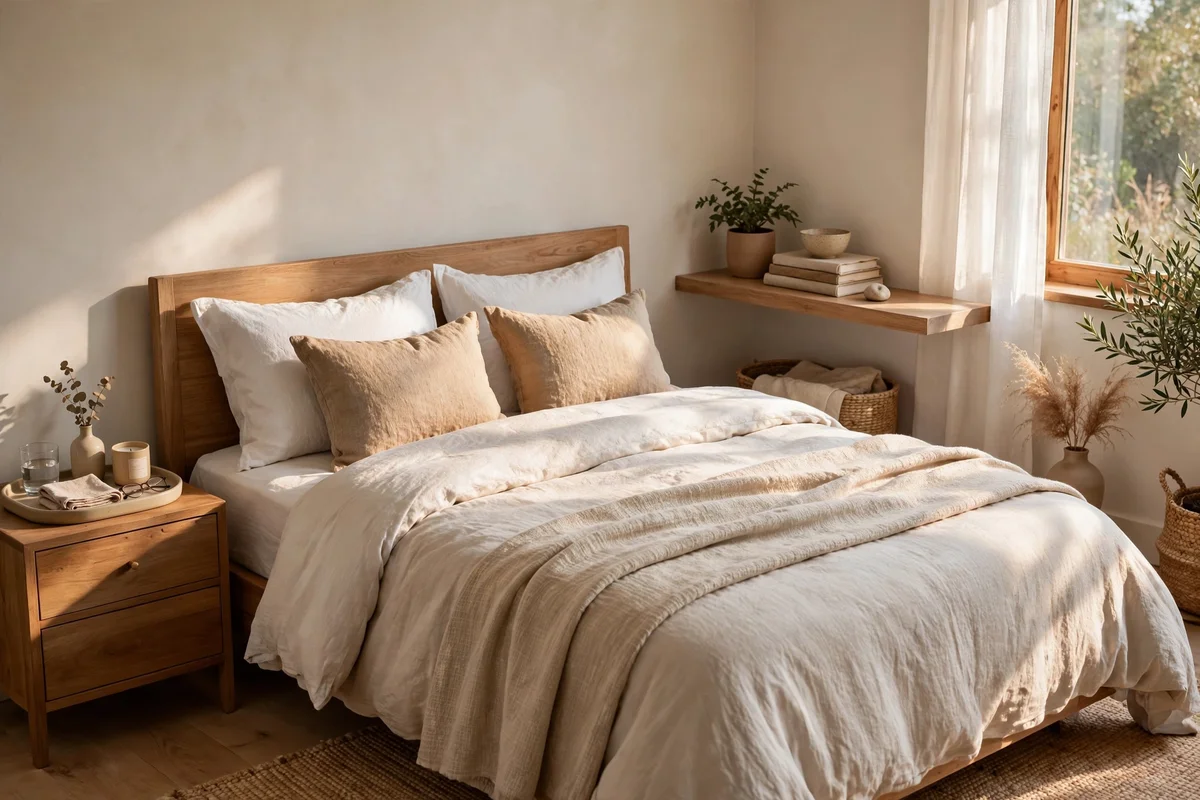
Clear zones stop the two sides of the bed from arguing over one table. The sleeper beside the nightstand keeps water, book and phone on the table, while the other sleeper uses the wall shelf, stool or caddy on their side. Agree the arrangement together so nobody rearranges things in the dark. A small personal tray or pouch per side keeps each trio tidy and easy to find.
Keep the habit for a week until it feels natural, without labelling anything. The mistake to avoid is both sleepers reaching across to the single table, which crowds it and wakes the other person. Respect the zones even when one side looks emptier. This costs nothing to set up and solves most of the friction that a single nightstand can cause.
18. Shift the Bed Toward the Nightstand Side for a Walkway
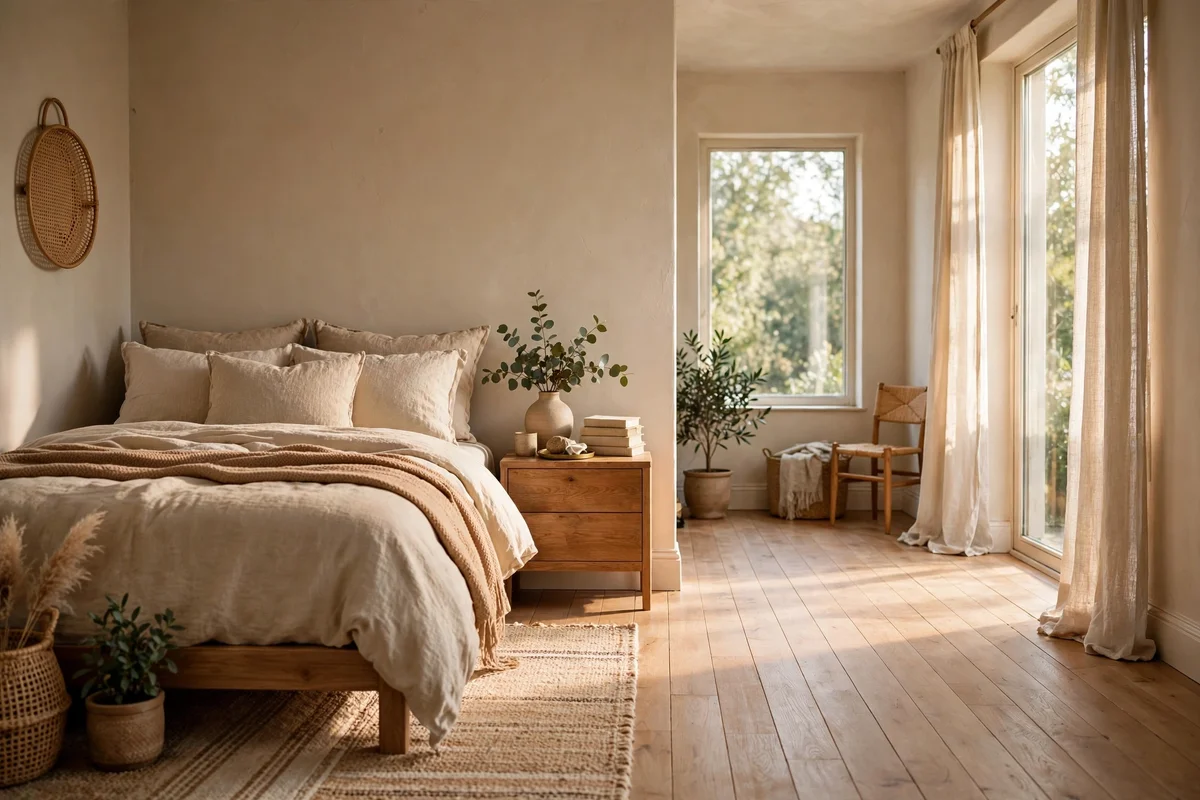
Pushing the bed a little toward the nightstand side can free a walkway where you need it most. Leave at least 60 cm between the open side and the opposite wall so the sleeper there can get out comfortably. The nightstand then sits close to the bed with a snug, intentional look. This layout suits rooms where a door or wardrobe needs clearance on the far side.
Check that the shift does not block heating vents or power sockets before settling on it. The mistake to avoid is shoving the bed flush against the wall, which traps the sleeper there every time they need the bathroom. A gap of 45 to 60 cm is the minimum for comfortable movement. This rearrangement costs nothing and often reveals space you did not know you had.
19. Hang Matching Art Above Each Side of the Bed
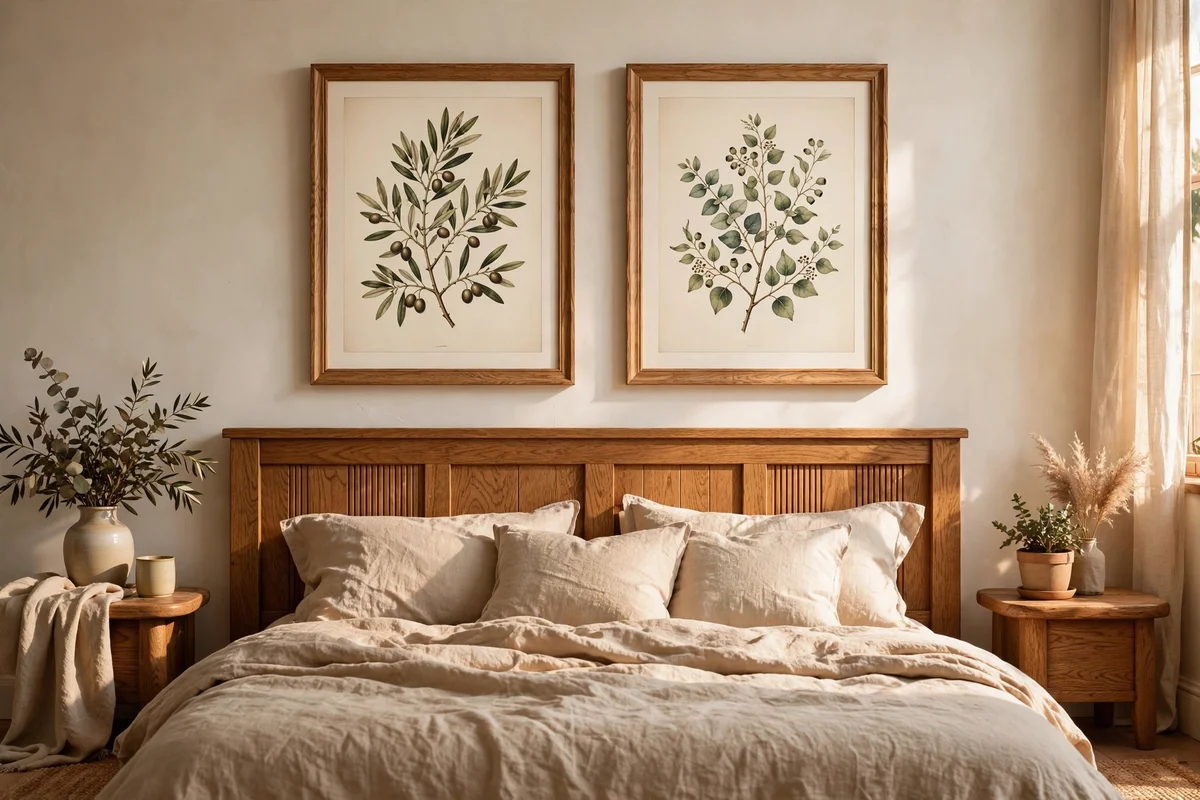
A pair of matching frames above the bed pulls the wall together and distracts from the uneven furniture below. Choose two prints of the same size, ideally 30 by 40 cm, hung level about 15 to 20 cm above the bedhead. Botanical prints, landscape sketches or framed linen panels suit heritage bedrooms. Identical oak or black frames keep the pair reading as one deliberate line.
Hang the centres at the same height so the pair looks calm from the doorway. The mistake to avoid is hanging one large frame over the nightstand and nothing on the other side, which underlines the asymmetry. Keep the art balanced even when the furniture is not. Two matching prints with frames cost 30 to 60 pounds or dollars from high-street shops.
20. Choose a Nightstand With Drawers to Carry the Load of Two
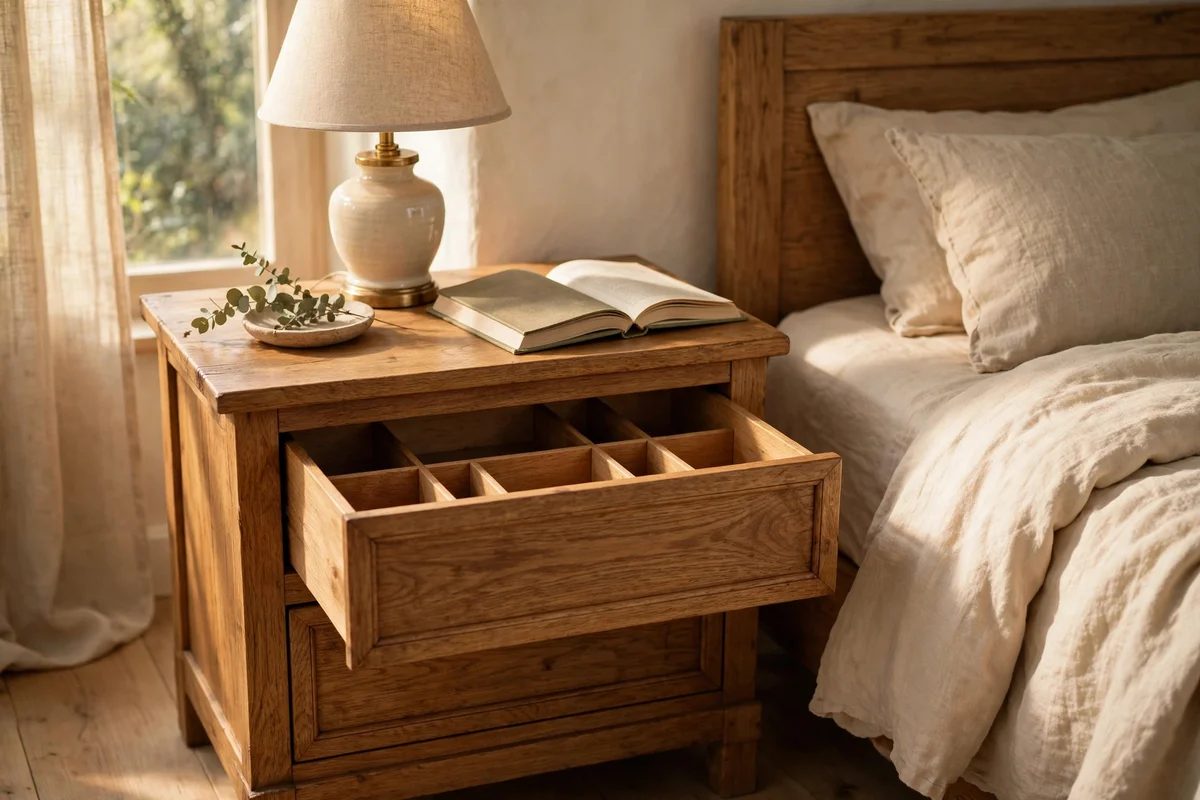
One hardworking nightstand with two drawers can quietly serve both sleepers. Choose a table 45 to 55 cm wide with a top that holds one lamp, one glass and one book comfortably. Use the top drawer for shared items like tissues, lip balm and a spare charger. The lower drawer can hold one sleeper’s book and glasses while the other uses their side’s shelf or caddy.
Add small drawer dividers, 5 to 10 pounds or dollars for a set, so the shared drawer never becomes a jumble. The mistake to avoid is buying a nightstand with an open shelf instead of drawers, since clutter stays visible and the single table looks messy fast. Drawers hide the load and keep the room calm. A solid drawer nightstand costs 60 to 120 pounds or dollars.
21. Centre a Rug Under the Bed to Anchor the Whole Room
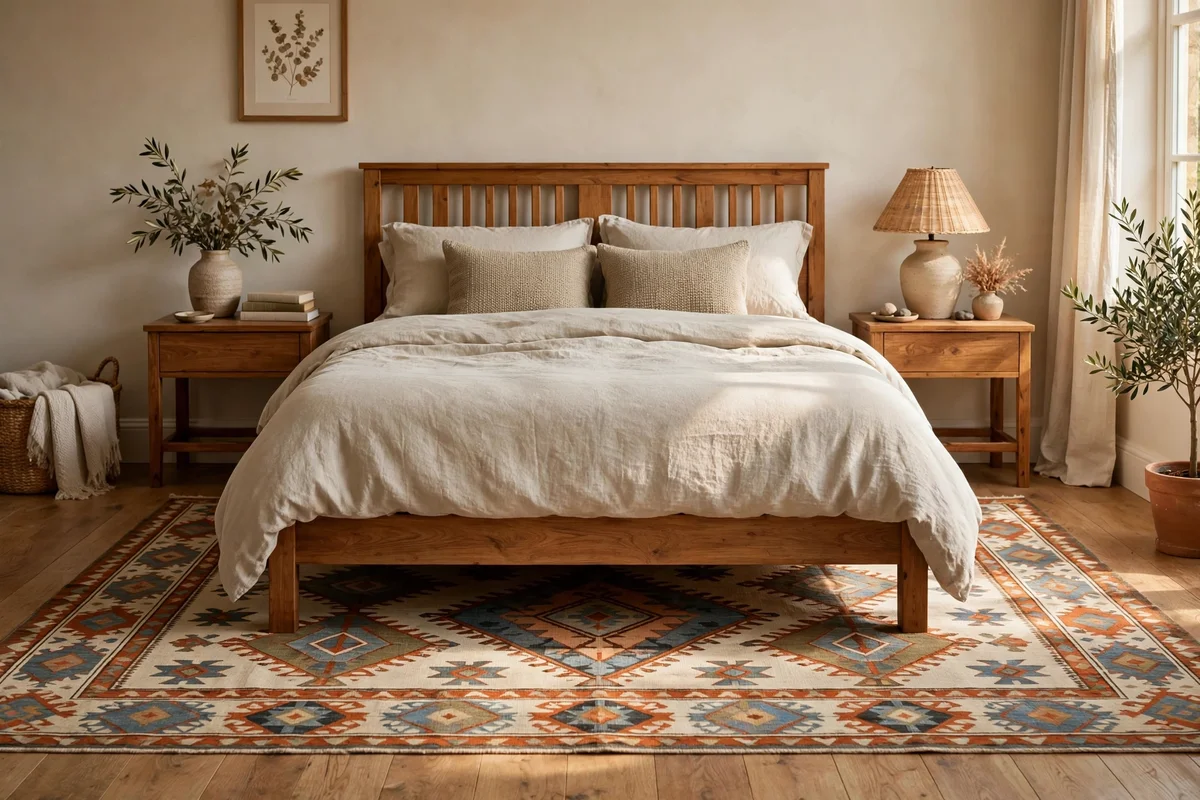
A rug centred under the bed grounds the room and makes asymmetry feel like a deliberate plan. Choose a rug that extends 60 to 90 cm beyond the bed on both sides and at the foot. Flatweave cotton or low-pile wool in a heritage pattern suits classic bedrooms and sits well under furniture. The rug’s border draws the eye outward, softening the uneven sides.
Use a thin rug pad underneath to stop slipping on hard floors. The mistake to avoid is a rug that is too small, which floats awkwardly and makes the room feel more unbalanced. Measure the bed and add the extensions before buying. A quality flatweave rug for a double bed costs 80 to 180 pounds or dollars and transforms the whole floor.
A bedroom with one nightstand does not need to feel like a bedroom with something missing. Once the empty side has its own light, its own shelf or stool, and its own place for water and a book, the asymmetry settles quietly into the background. The matching pairs you keep, in lamps, cushions and frames, do the gentle work of making the room look planned. Guests will notice the calm, not the count.
This week, try the easiest win first. Move a small stool or a neat stack of books to the open side and set your night-time trio of water, book and phone on it. Live with that arrangement for a few nights, then add one matching element across the bed, like a second cushion or a matching shade. Small honest steps turn a lopsided room into a balanced one, and both sleepers will feel the difference.
Frequently Asked Questions
Can one nightstand really work for two sleepers?
Yes, if each sleeper has their own zone for water, book and phone. The single table holds shared items and one sleeper’s trio, while the other side uses a wall shelf, stool or bedside caddy. Agree the arrangement together and keep to it for a week until it feels natural. Clear zones prevent most of the friction.
What is the cheapest way to replace a missing nightstand?
A picture ledge or a slim floating shelf costs 12 to 30 pounds or dollars and needs only basic wall fixings. A stack of large hardbacks from a charity shop costs even less and doubles as a book display. A fabric bedside caddy at 10 to 25 pounds needs no tools at all. All three keep water and a phone within reach.
How do I stop the bedroom looking lopsided?
Repeat elements across the bed. Use matching lamps or matching shades, mirrored cushions and identical frames above the bedhead. A rug centred under the bed draws the eye outward and grounds the room. Symmetry in bedding and lighting makes the missing table read as a deliberate choice rather than an accident.
Is a wall lamp safe beside the bed in a rented home?
Yes. Choose a plug-in swing-arm or pendant lamp that needs no rewiring, and run the fabric cord down to the nearest socket with small adhesive clips. Mount the shade so it clears the pillow and cannot be knocked. Plug-in lamps are renter friendly, and you can take them with you when you move.
How high should a floating shelf be beside the bed?
Mount it 65 to 75 cm from the floor, level with the top of the mattress, so reaching is easy. A shelf 12 to 15 cm deep and 40 to 60 cm long fits a glass, a book and a phone. Fix into studs or use anchors rated for at least 5 kg. Add a small front lip so a phone cannot slide off at night.