Kitchen
21 Cozy Breakfast Nook Ideas for Slow, Sunny Mornings
By Anna Wells · · 19 min read
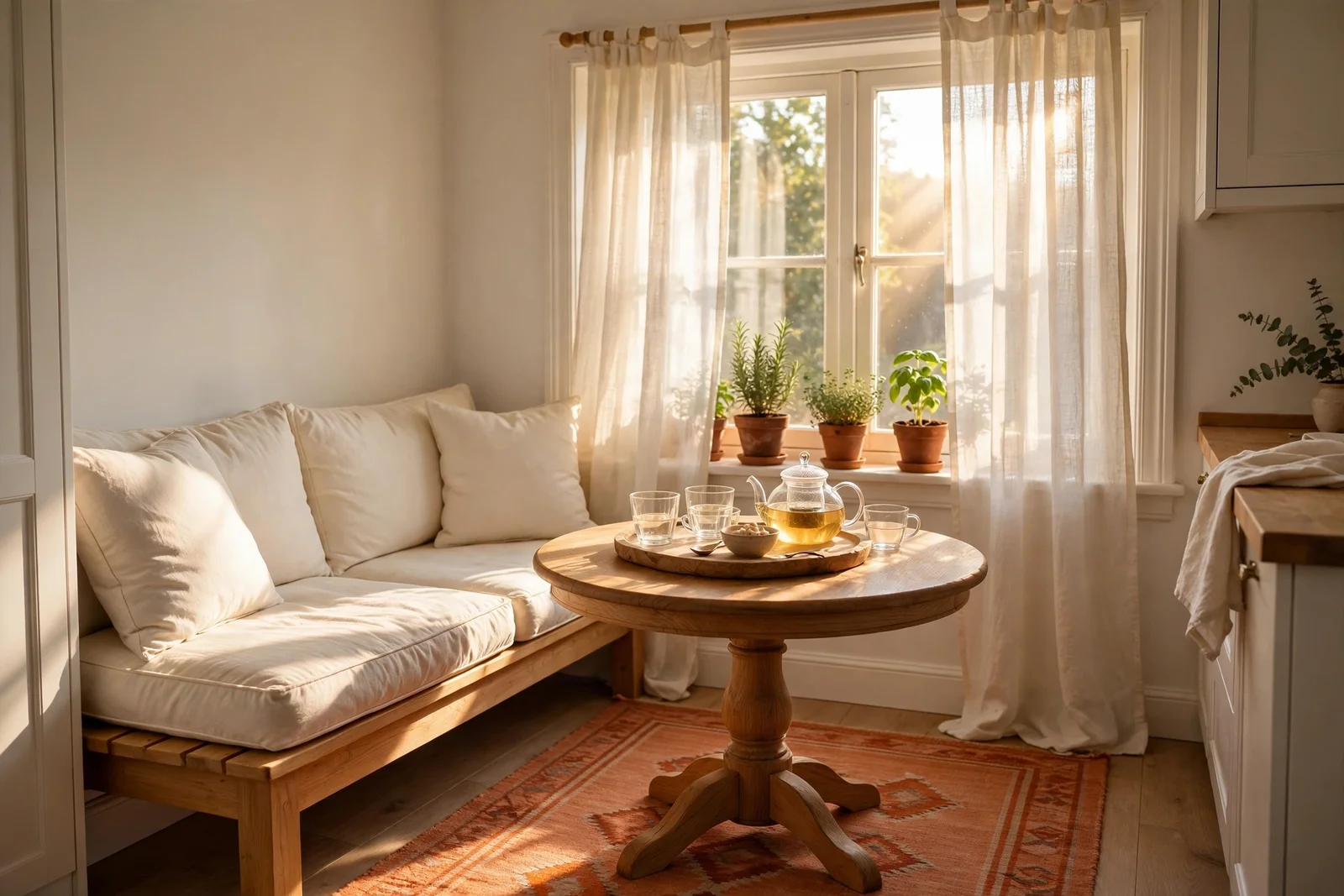
Turn a quiet kitchen corner into a sunlit morning ritual with 21 practical ideas for bench seating, soft light and a tray that is always ready.
Sunlight arrives before the kettle boils, and the kitchen holds a small quiet that the rest of the house has not claimed yet. This is the hour a breakfast nook is made for: tea steeping, toast warm, the weekend papers or a board game waiting for whoever sits down first.
A cosy nook does not need much space or a big budget. It needs a comfortable place to sit, a table that fits knees and plates, and light that feels gentle rather than glaring. Get those three right and the corner starts pulling you in every morning.
These 21 ideas cover the whole corner: a cushioned bench with covers you can wash, a round pedestal table sized for two, three or four people, sheer curtains, a warm rug, a tray kept ready, a dimmer for dark mornings and clever storage inside the bench.
Each idea is concrete and practical, with sizes, materials and budget tips, so you can build your nook one weekend at a time.
1. Set a Cushioned Bench Against the Brightest Wall
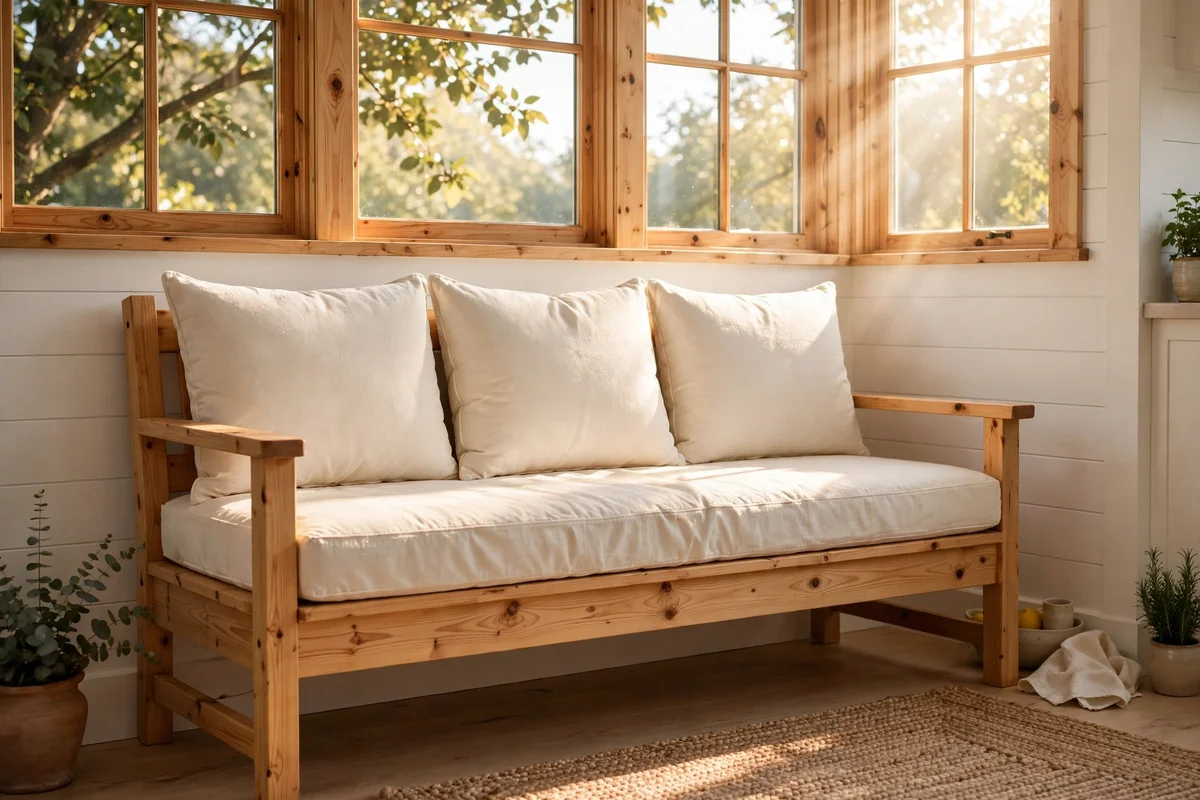
Place the bench along the wall that receives the first light of the morning, usually an east-facing window, so sitters face the glow without it striking their eyes directly. A bench 120 to 150 cm long seats two people in comfort, while 180 cm seats three, and a seat height of 45 to 48 cm lines up with standard dining chairs. A simple pine or oak frame with a hinged lid gives you hidden storage from day one.
Anchor the bench on the wall rather than floating it, since a fixed back feels sturdier and saves about 15 cm of floor space. Add a shaped timber back or a row of firm back cushions so long breakfasts stay comfortable. The mistake to avoid is pushing the bench hard against a cold exterior wall with no backing; even a thin timber panel makes the seat feel warmer. Budget versions in painted pine start around 80 to 120 pounds or dollars at home stores.
2. Dress the Bench in Washable Cotton Slipcovers
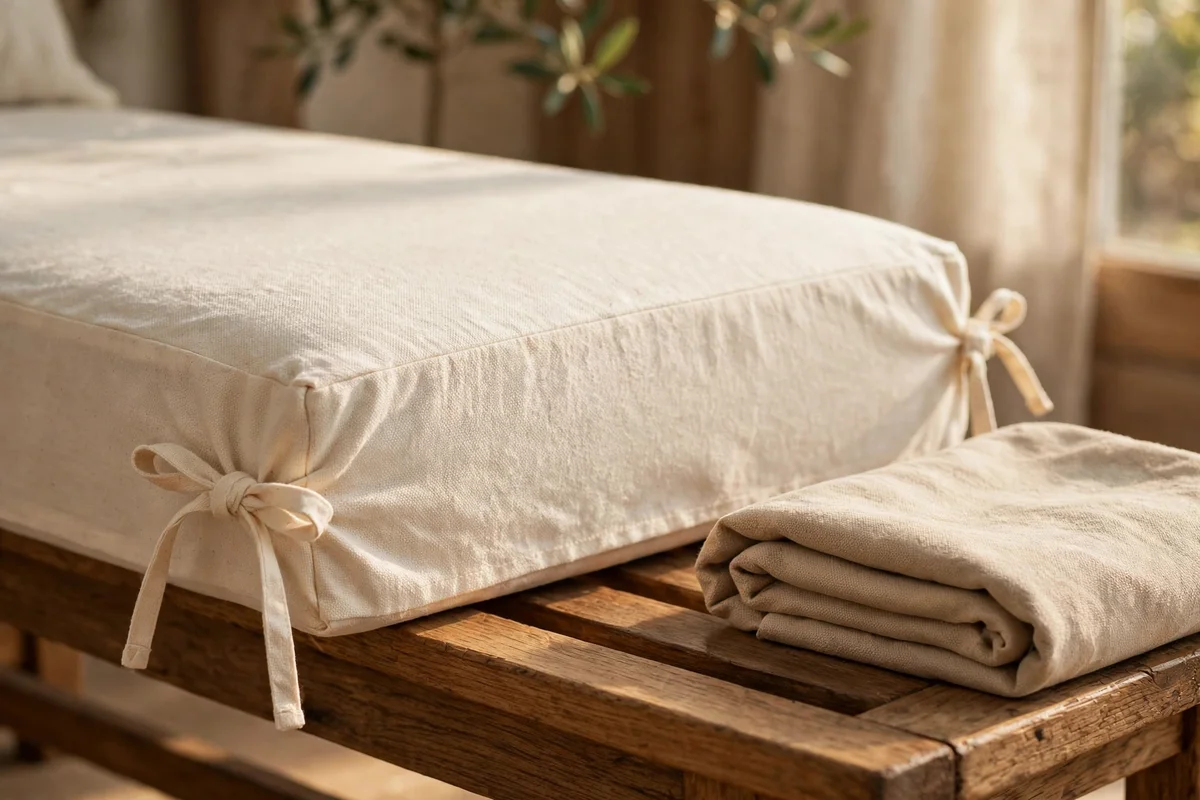
Washable slipcovers are what make a breakfast bench practical for everyday family life, because crumbs and tea splashes happen at every meal. Choose medium-weight cotton canvas or a cotton and linen blend in cream, oatmeal or soft grey, which hides light wear and washes at 40 degrees without fading. Measure the seat, back and any loose cushions, then add 5 cm of ease so the cover slips on and off without a struggle.
Keep two sets of covers so the bench never sits bare while one set is in the wash. Tie closures or hidden zips work better than elastic alone, which loosens after a year of daily use. The common mistake is choosing white cotton with no pattern in a busy kitchen; a small stripe or subtle texture conceals far more. A ready-made bench cover costs 25 to 45 pounds or dollars, while a made-to-measure set runs 80 to 140.
3. Choose a Round Pedestal Table That Knees Slide Under
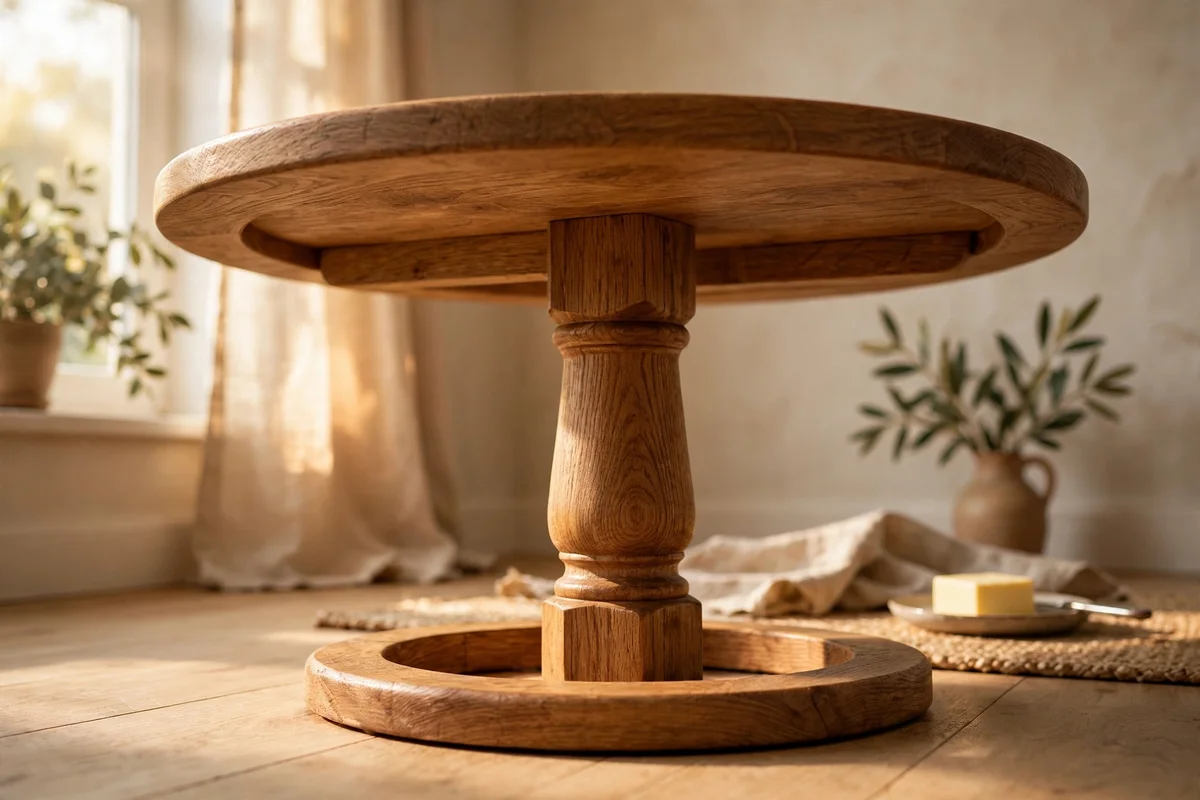
A round top on a single central pedestal is the kindest shape for a breakfast nook, because nobody bumps a corner and knees fit wherever they land. For a 75 cm table, allow about 23 cm from the table edge to the pedestal base so legs rest comfortably, and keep the apron, if any, at least 63 cm above the floor. A solid oak, beech or birch top with a sealed finish wipes clean after porridge and honey.
Test the table before you buy by sitting at it in the shop with your knees drawn up the way you would at home. The mistake to avoid is a four-legged table with a wide apron, which forces knees into the legs and wastes the corner of a bench seat. Round pedestal tables in the 75 to 90 cm range cost 90 to 180 pounds or dollars in painted or solid timber; vintage ones appear often in second-hand shops for half that.
4. Angle the Table Toward the Morning Sun
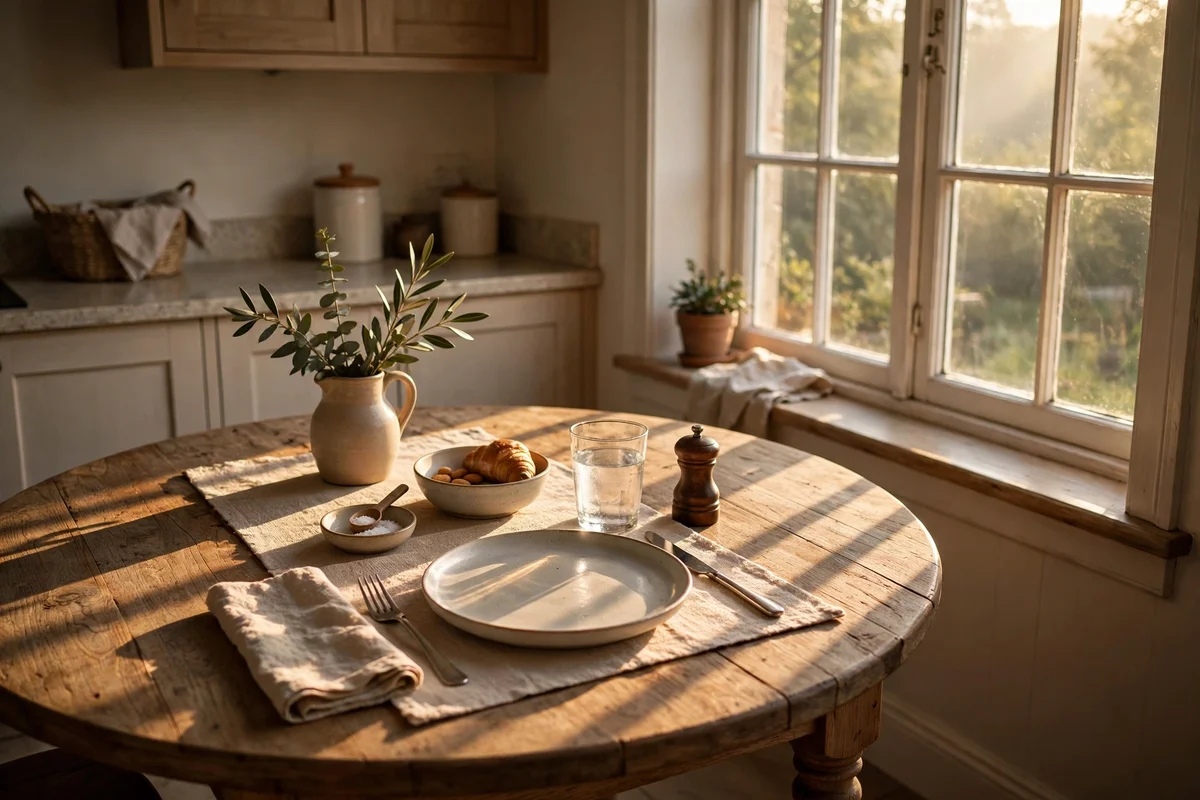
Morning light placement decides whether the nook feels cheerful or harsh, so orient the table where the sun lands softly rather than glaring across plates. In an east-facing kitchen, set the table about one metre back from the window so light washes over the surface instead of striking faces at breakfast time. A round table helps here, because you can rotate seating so nobody stares straight into the sun.
If the only window faces south or west, morning light arrives later and stronger, so plan sheers from the start and keep the table slightly to the side of the window. The mistake to avoid is placing the table dead centre in a narrow shaft of sun; plates glare, butter melts and the seat facing the window becomes the one nobody wants. Moving the table even 30 cm sideways can fix the balance.
5. Hang Sheer Linen Curtains to Soften the Glare
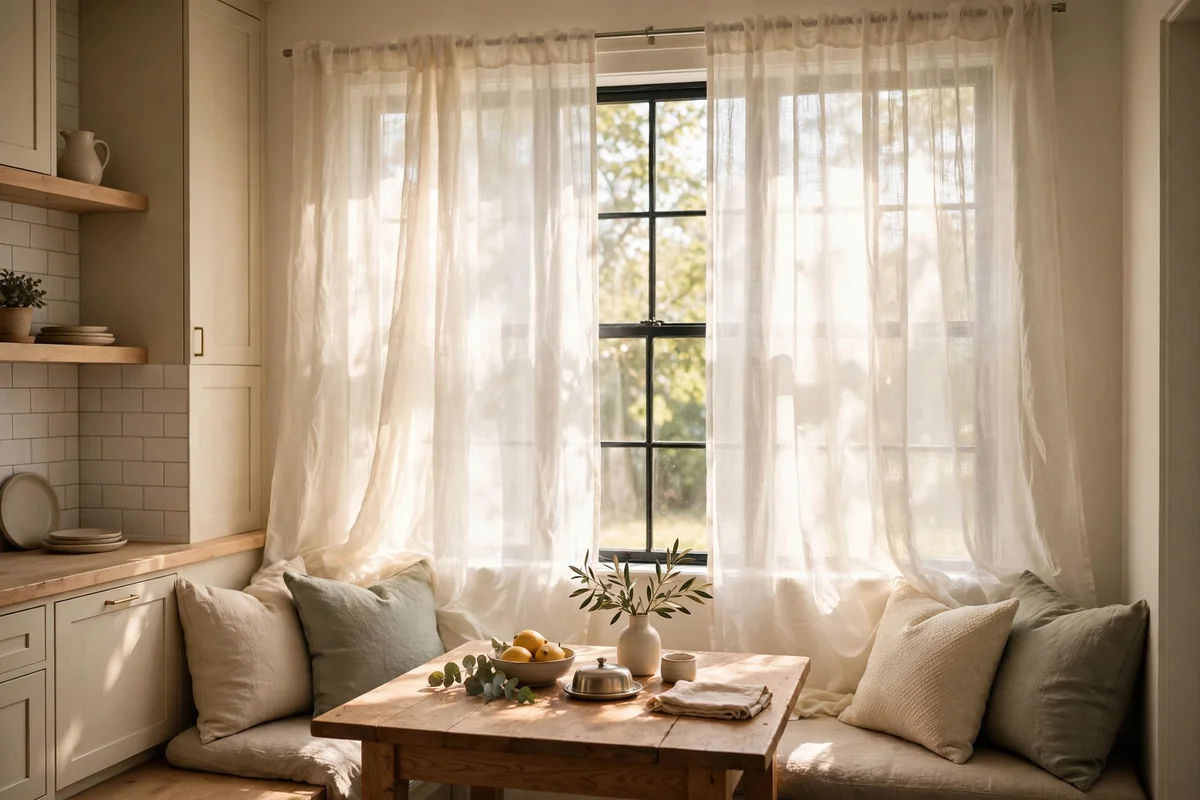
Sheer linen curtains turn hard morning sun into a soft glow that flatters the whole corner. Hang them on a simple rod 10 to 15 cm wider than the window frame on each side, and let the panels fall to the sill or just to the floor, since floor-length sheers pool dust in a kitchen. A natural flax or ivory colour filters light without tinting it, keeping toast, tea and faces looking true.
Choose a washable linen or cotton voile so the panels can go through the machine every few months; kitchen air leaves a film that dulls sheers over time. The mistake to avoid is a heavy blackout lining in a breakfast nook, which kills the very light the corner is for. Two ready-made sheer panels usually cost 20 to 40 pounds or dollars, and a tension rod inside the frame avoids drilling for renters.
6. Lay a Warm Flatweave Rug Underfoot
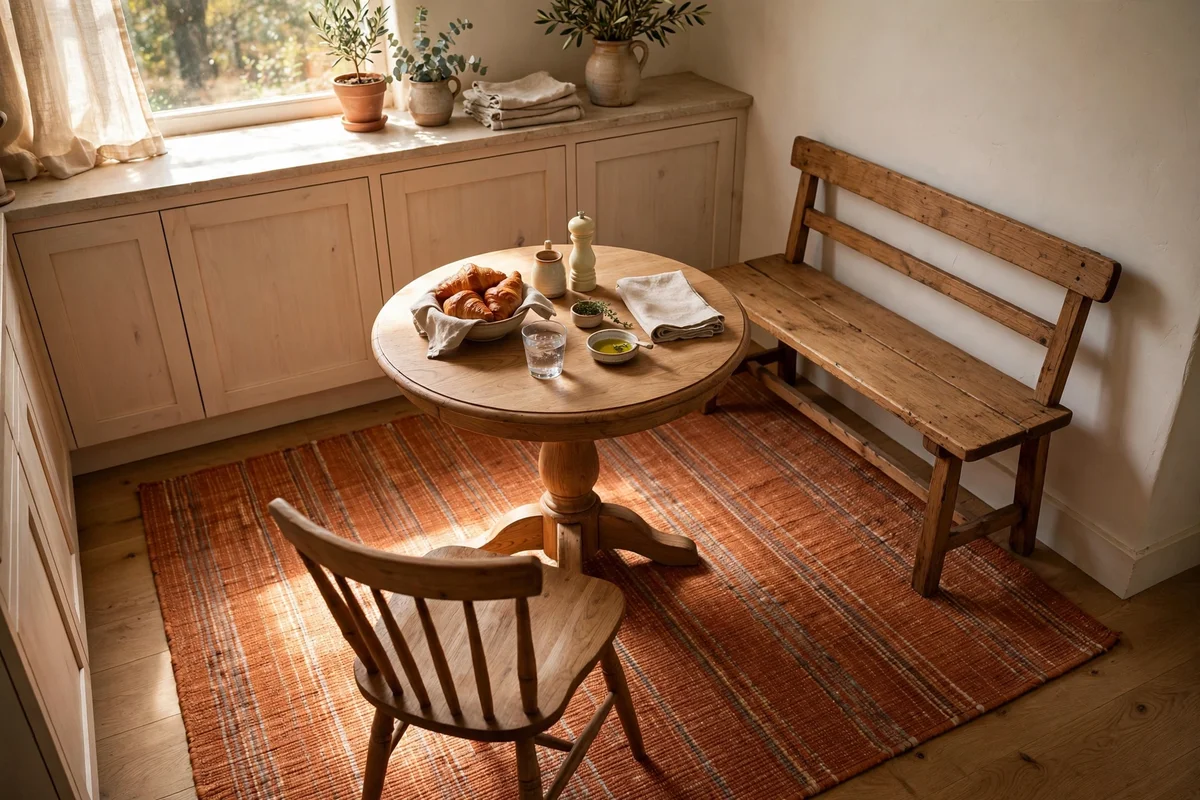
A rug under the nook makes bare feet happy on cold mornings and marks the corner as its own little room. Choose a flatweave cotton or low-pile wool rug about 160 by 230 cm, large enough that the table pedestal and the front legs of chairs sit on it while back legs stay on the floor. Warm terracotta, rust, golden beige or a small check pattern suits the breakfast mood and hides crumbs.
Put a non-slip rug pad underneath so the rug never creeps when chairs slide; a pad 2 cm smaller than the rug on every side stays invisible. The mistake to avoid is a deep shag or high-pile rug in an eating spot, which traps crumbs and resists the vacuum. Shake the rug outside weekly and spot-clean spills at once. A washable flatweave in this size costs 40 to 90 pounds or dollars.
7. Keep a Tray Ready With Cups and a Glass Teapot

A small tray kept permanently ready turns breakfast into a ritual instead of a rummage through cupboards. Choose a round or rectangular tray about 35 to 45 cm across in wood, bamboo or enamelled metal, and load it with two or three cups, a glass teapot, a small milk jug and teaspoons. Store the loaded tray on the table or a nearby shelf so the morning starts with one carry, not five trips.
Wash the cups and teapot each evening and reload the tray before bed, so the morning ritual begins the night before. The mistake to avoid is overloading the tray with everything at once; a crowded tray spills and defeats the calm. Keep honey, sugar and dates in a second small dish beside the tray rather than on it. A good wooden tray costs 15 to 35 pounds or dollars and lasts for years.
8. Hang a Pendant 75 cm Above the Table on a Dimmer
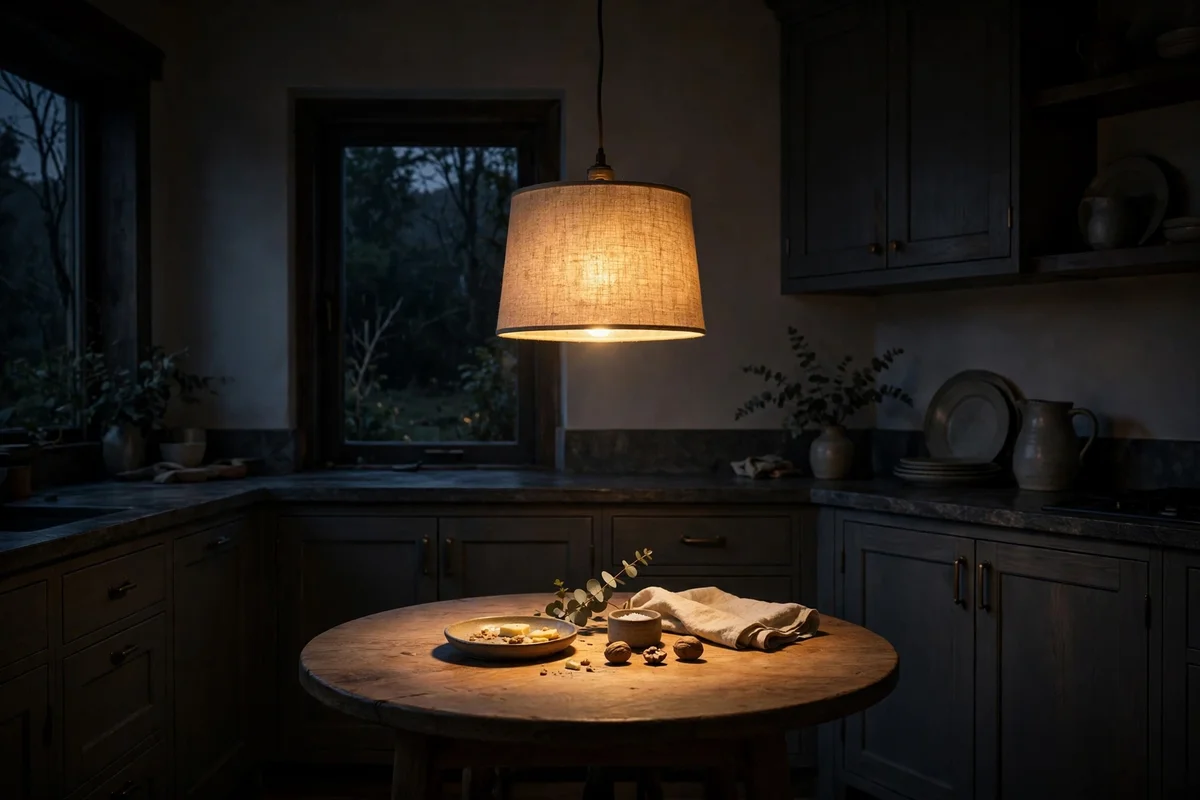
A low pendant on a dimmer keeps the nook usable on dark winter mornings and cosy after sunset. Hang the shade so its lowest point sits about 75 cm above the tabletop, which lights plates without shining into eyes, and choose a shade 25 to 35 cm wide for a small round table. A warm 2700K bulb, or a dim-to-warm bulb that drops toward 2200K, keeps the light golden as you lower it.
Wire the dimmer as a simple rotary or slide control beside the nook entrance so anyone can adjust it without hunting. The mistake to avoid is a pendant hung too high, which turns into a glaring ceiling spot instead of a pool of table light. Check that the bulb is dimmable before buying, since non-dimmable LEDs buzz or flicker. A pendant plus dimmer switch typically costs 40 to 90 pounds or dollars installed.
9. Line the Sill With Small Pots of Herbs and Plants
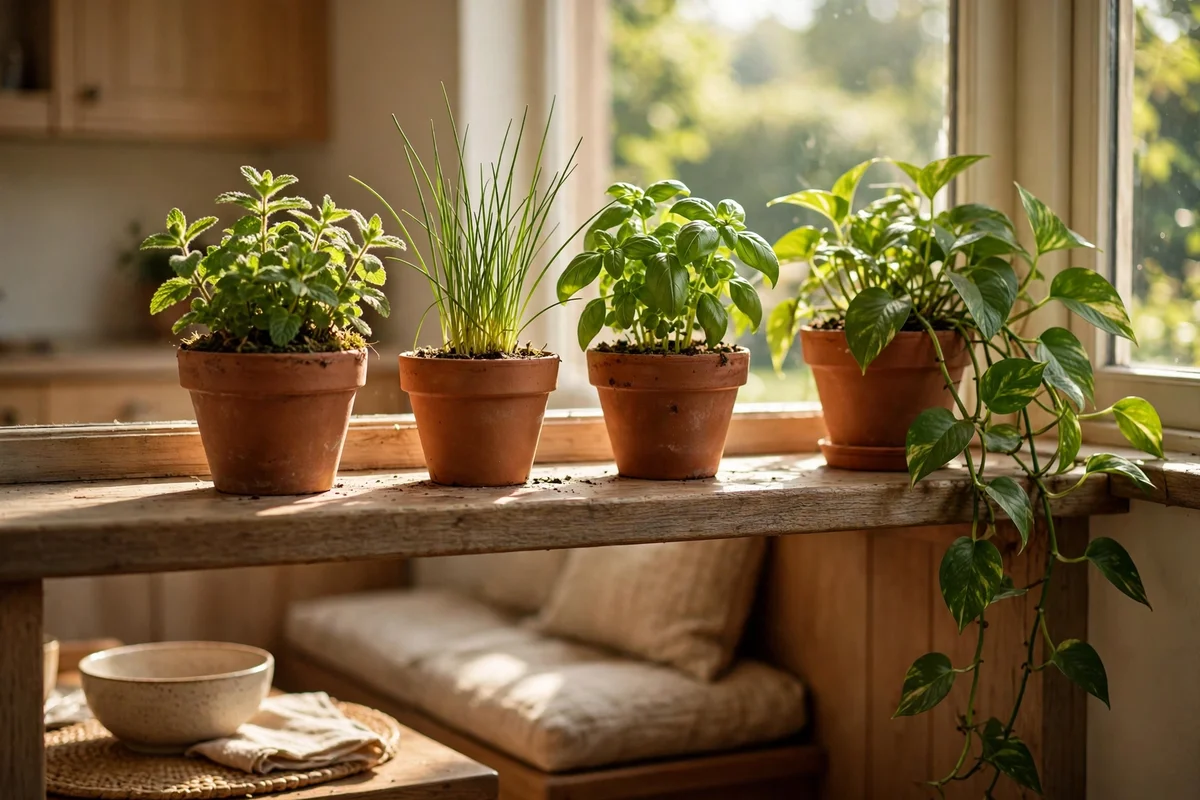
Plants on the sill bring the morning garden indoors and soften the window line behind the table. Choose easy herbs like mint, chives and basil in pots 10 to 12 cm wide, plus one trailing plant such as pothos at the sill end where it can spill without touching plates. Group odd numbers, three or five pots, and vary heights by 10 to 15 cm so the row looks natural rather than regimented.
Water herbs little and often, and snip mint and basil regularly to keep them bushy; a small saucer under each pot protects the painted sill. The mistake to avoid is crowding the sill so tightly that watering splashes the curtains or the window cannot open. Leave a 15 cm gap at one end for airflow and cleaning. Small potted herbs cost 3 to 8 pounds or dollars each at garden centres.
10. Store Board Games and Papers Inside the Bench
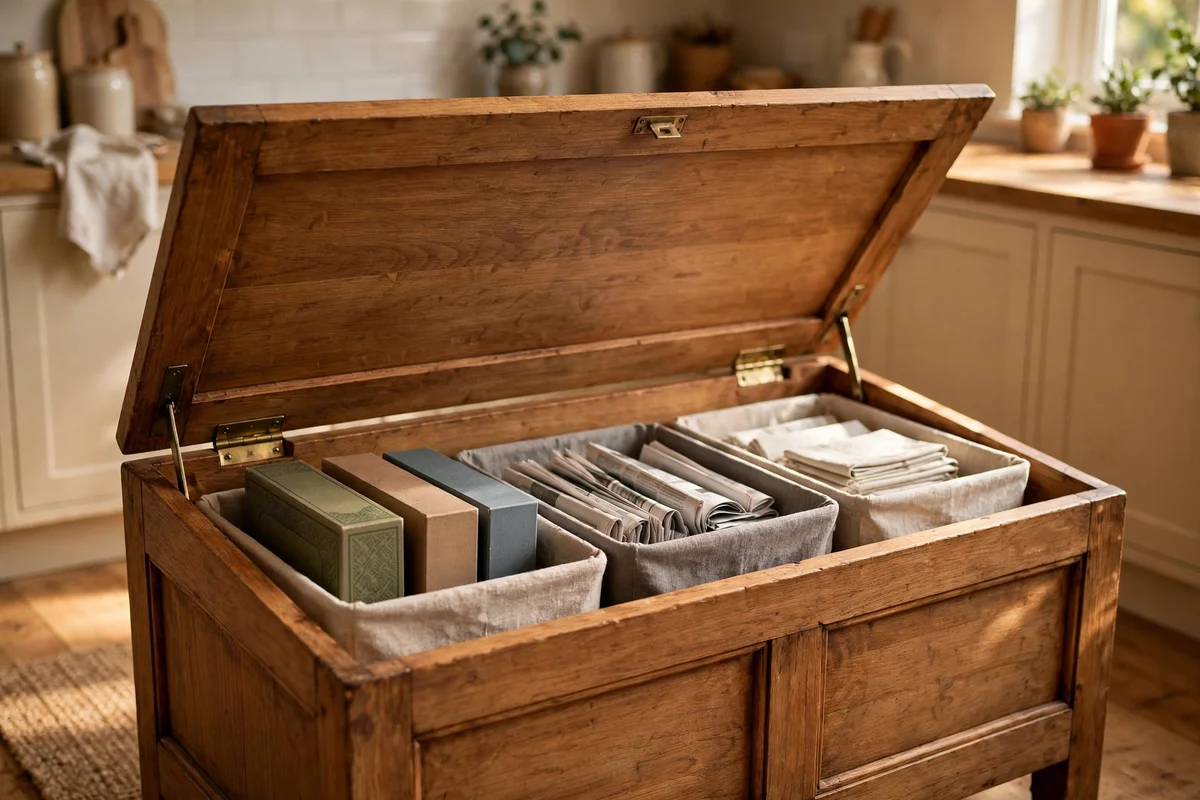
The space inside a bench with a hinged lid is perfect for the slow-morning things: board games, card decks, the weekend papers and a few magazines. Sort items into two or three shallow boxes or cloth bins so small pieces never vanish into the depths, and keep the games you reach for most at the front. A bench 120 cm long holds roughly four standard game boxes side by side.
Line the bench interior with a wipeable mat so paper edges stay dry and crumbs brush out easily. The mistake to avoid is storing heavy items like photo albums at the back, where lifting the lid against their weight strains the hinges. Keep heavier boxes low and near the front edge. Shallow storage boxes cost 6 to 12 pounds or dollars each, or reuse sturdy shoe boxes wrapped in kraft paper.
11. Plan the Two-Person Nook Around a 75 cm Table
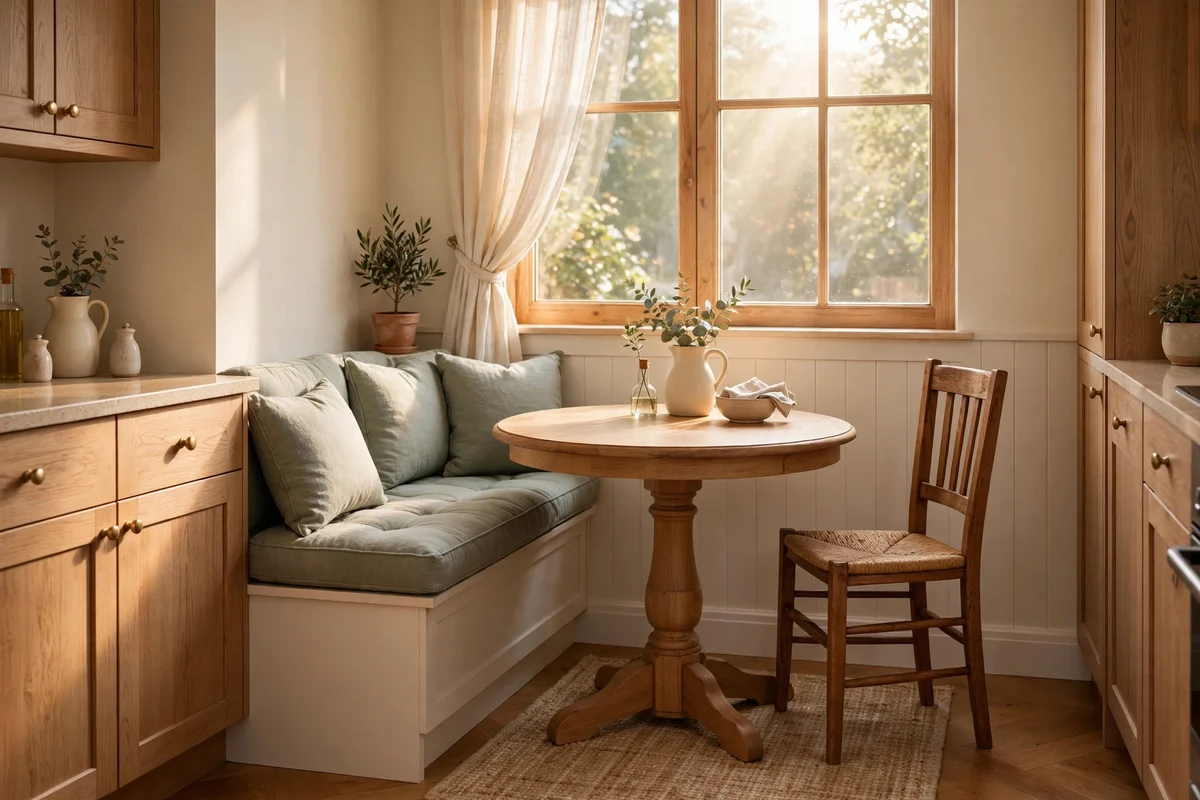
A 75 cm round table is the sweet spot for two people, giving each diner roughly 60 cm of elbow room around the curve. Pair it with a 120 cm bench on one side and a single chair on the other, so one person slides in easily while the other has the bench. The whole arrangement fits a corner about 180 cm by 150 cm, small enough for most kitchens yet comfortable for long, unhurried breakfasts.
Keep the chair lightweight so it pulls out without scraping the rug, and choose a seat height within 2 cm of the bench height so nobody sits lopsided. The mistake to avoid is a table larger than 80 cm in a tight two-person corner; it steals the clearance you need to slide along the bench. A 75 cm pedestal table plus bench and chair usually totals 200 to 350 pounds or dollars.
12. Add a Third Seat With a Corner Bench and One Chair
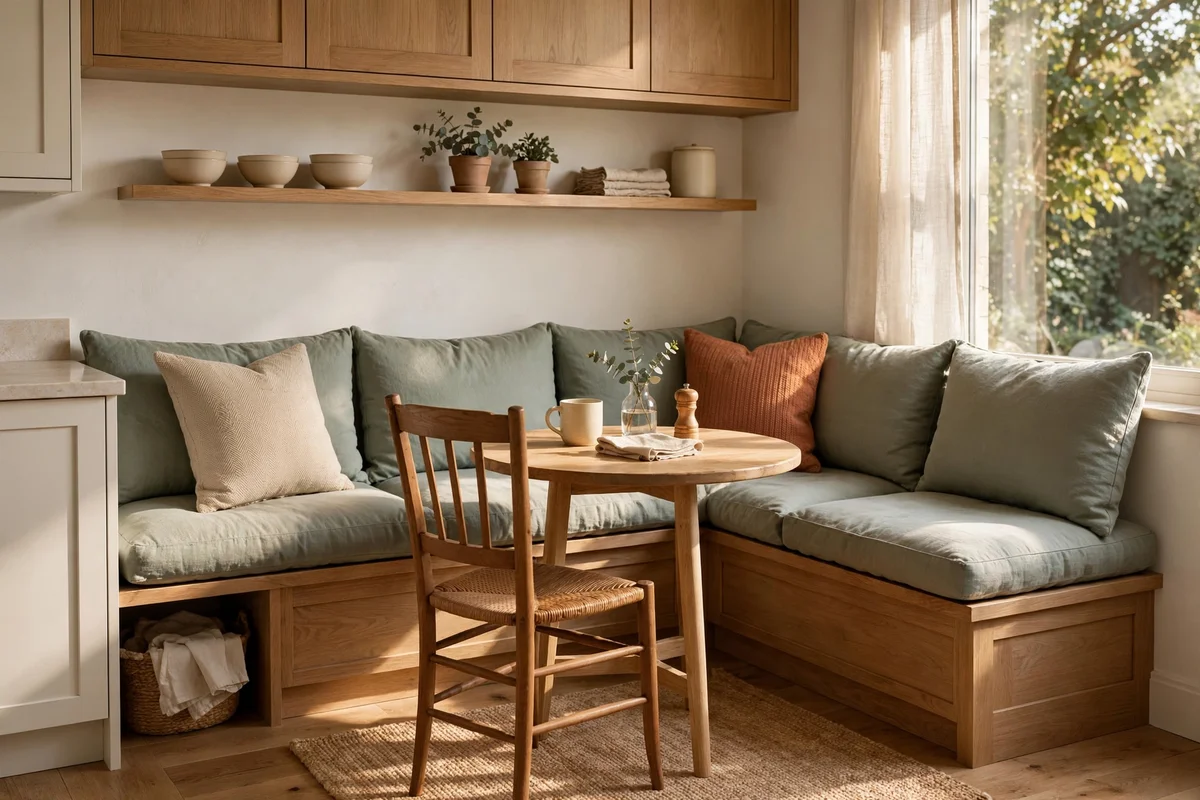
Three people fit beautifully when the bench turns the corner in an L shape, giving two seats along the wall and one freestanding chair opposite. Keep the same 75 to 80 cm round table, since three diners need only about 55 to 60 cm of curve each. Build the L from two bench sections, each 120 cm long, meeting at the corner with a small triangular cushion to soften the join.
Leave the chair side of the table free of the rug edge so the chair legs move smoothly on the hard floor. The mistake to avoid is squeezing three chairs around a small table instead of using the bench; knees collide and the morning feels cramped. A bench naturally seats two in the space of two chairs but with softer edges. Adding the second bench section costs 60 to 100 pounds or dollars.
13. Size the Four-Person Nook With a 105 cm Table
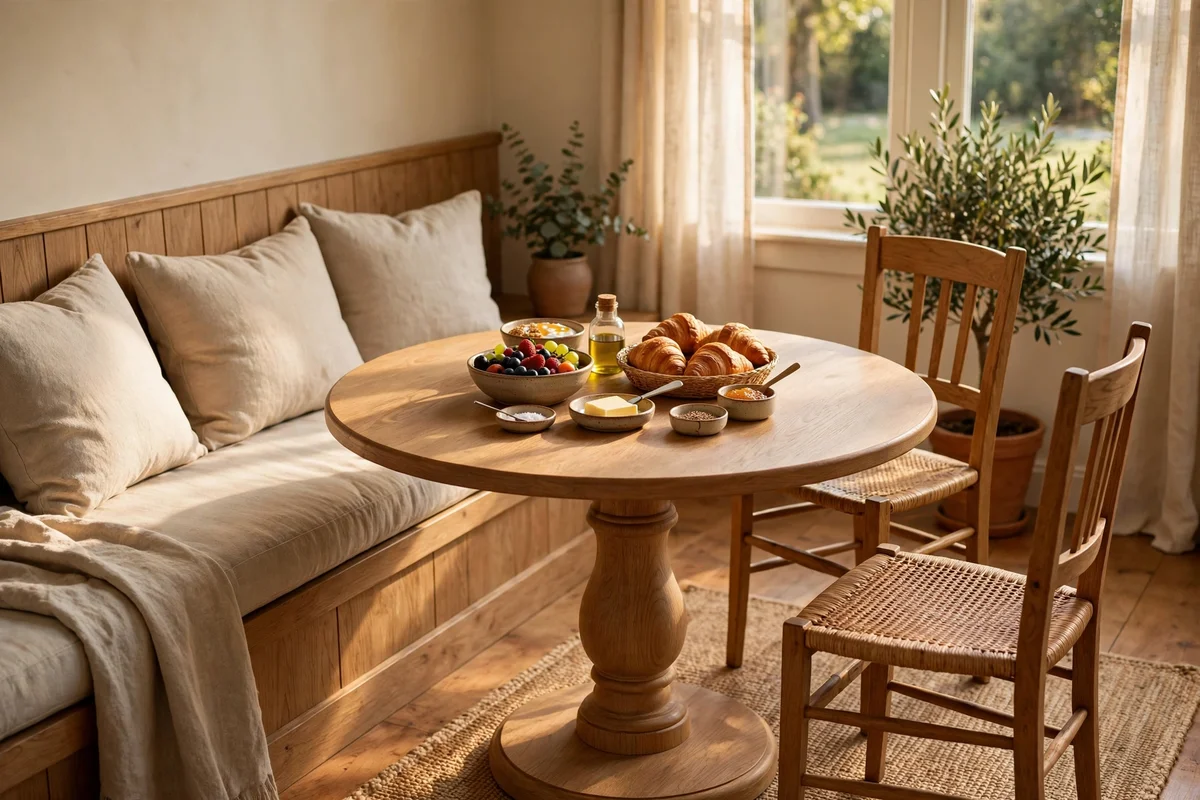
Four people need a 100 to 110 cm round table, which gives each diner about 75 cm of curve and room for shared dishes in the middle. Pair it with a 180 cm bench along one side and two chairs opposite, or two 150 cm benches facing each other for a booth feeling. The footprint grows to roughly 240 cm by 200 cm, so measure the kitchen corner before committing.
Choose a pedestal base rated for the wider top, since a 105 cm top on a narrow base tips when someone leans on the edge. The mistake to avoid is mixing a deep bench with a wide table in a narrow kitchen; the far seat becomes unreachable and plates slide out of reach. Keep the bench depth to 40 cm. A four-person set typically costs 350 to 600 pounds or dollars.
14. Leave 60 to 75 cm of Clearance Behind Every Seat
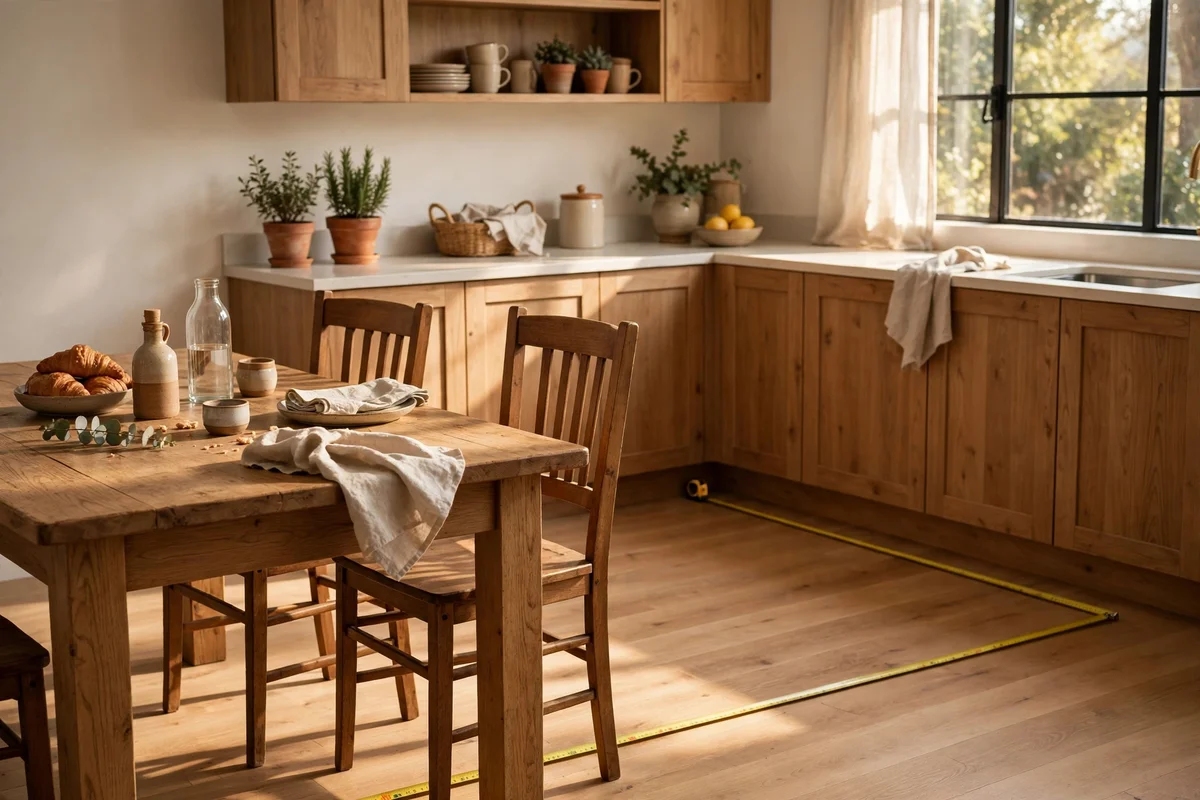
Clearance is the invisible ingredient that keeps a nook comfortable, so leave 60 to 75 cm between the table edge and any wall or counter behind the chairs. That gap lets someone push back and stand without shoving the table, and it gives the person sliding along the bench room to swing their legs in. In a tight kitchen, 60 cm is the workable minimum; 75 cm feels generous.
Measure the clearance with the chairs pulled out, not tucked in, since the tucked measurement flatters the plan by 20 cm or more. The mistake to avoid is placing the nook in a walkway; a busy path behind the bench turns every breakfast into a shuffle of chairs. If space is tight, choose the bench side for the wall and keep the chairs on the room side. Painter’s tape on the floor marks the footprint before you buy.
15. Layer Two Washable Cushions in Cream and Oatmeal
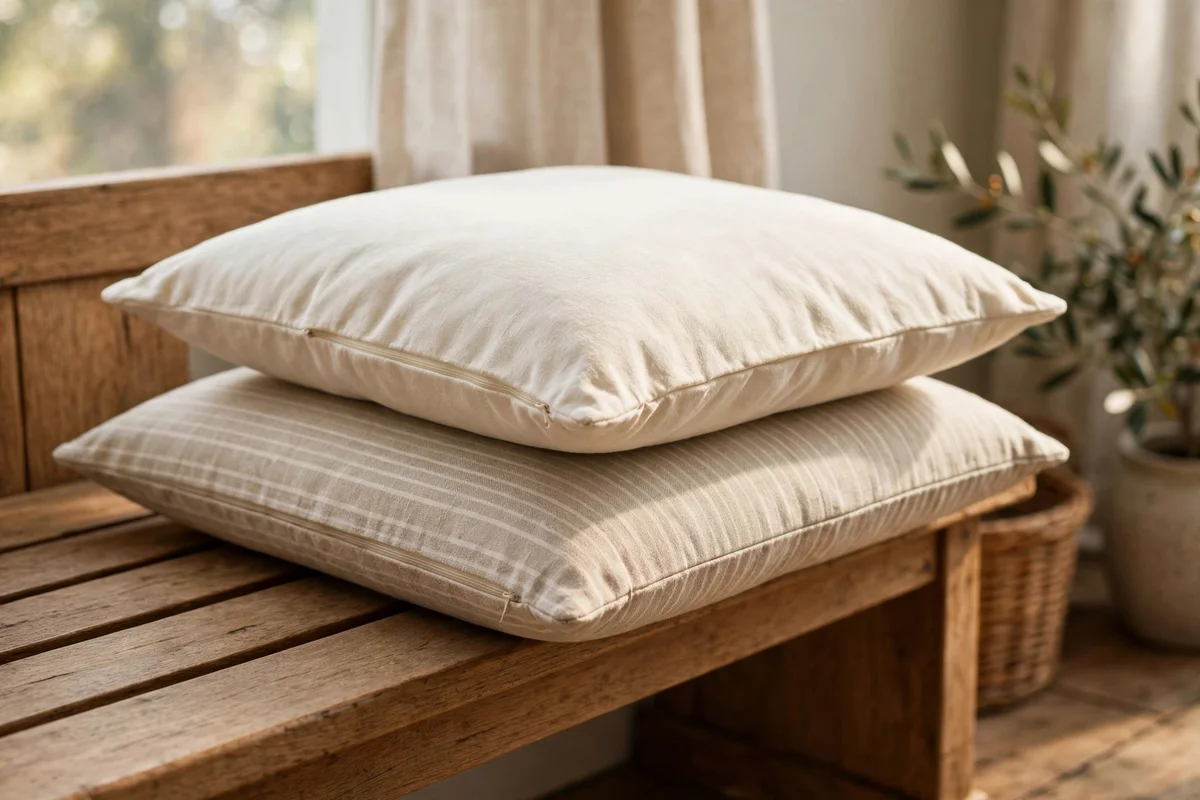
Two loose cushions layered on the bench seat make long breakfasts comfortable and let you change the mood with the seasons. Choose 45 cm square cushions with removable covers in cream and warm oatmeal, one plain and one with a subtle stripe or texture. A feather and fibre blend filling holds its shape through daily use better than pure foam, which flattens within months.
Plump the cushions each morning with a quick shake and rotate them weekly so wear spreads evenly. The mistake to avoid is piling on five or six cushions in a breakfast spot; they migrate to the floor and eat into seat depth. Two is plenty, plus the tray and teapot need the table space. Good washable cushion covers cost 12 to 25 pounds or dollars each.
16. Choose a Central Pedestal Base to Free Knee Space
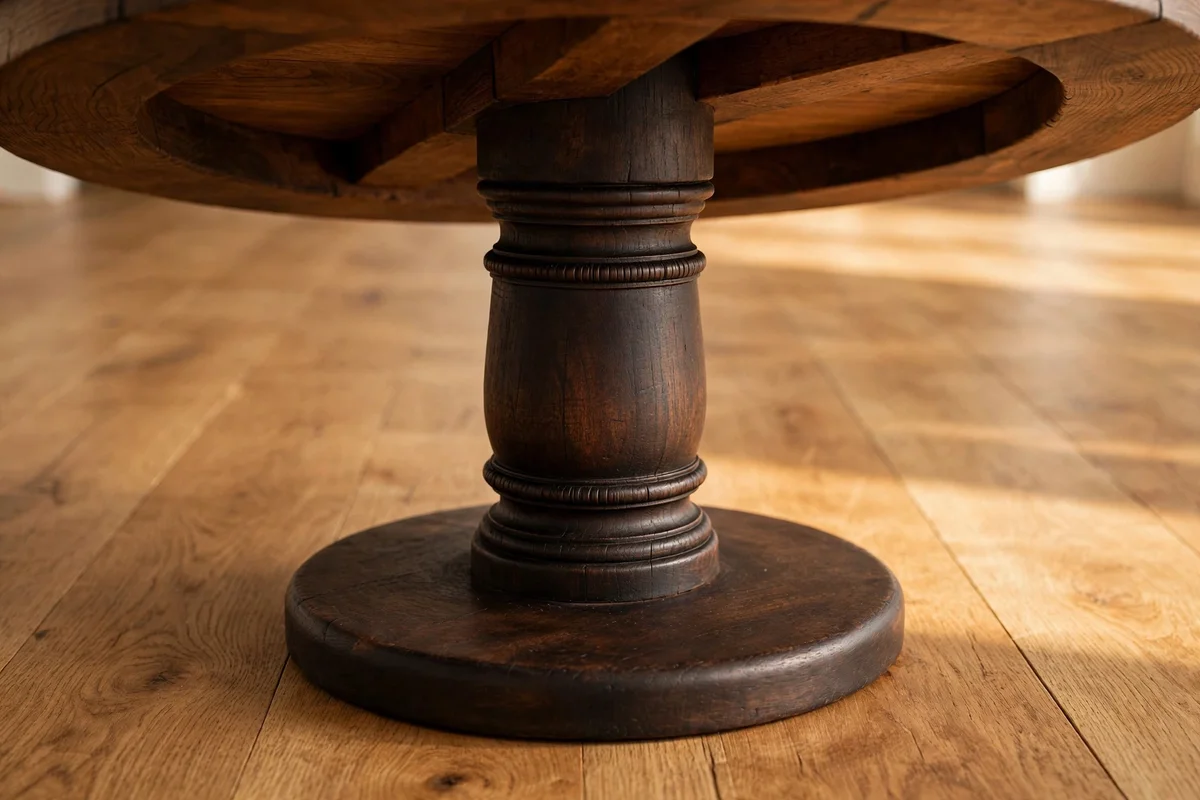
The pedestal base deserves its own mention because it solves the two biggest nook annoyances: bruised knees and a wobbly corner leg on the rug edge. A single cast-iron or solid timber column centred under the top leaves the full circle of floor space open, so bench sitters slide in sideways and chair users cross their legs freely. Look for a base that weighs at least 8 to 10 kg for stability.
Check the base diameter against the top: a 60 cm base suits a 105 cm top, while a 45 cm base steadies a 75 cm top. The mistake to avoid is a pedestal with a high-gloss chrome finish in a warm timber nook; it reads cold against wood and linen. Powder-coated black, aged bronze or painted timber blend better. A quality pedestal base alone costs 60 to 120 pounds or dollars.
17. Keep Napkins and Spare Covers in a Woven Basket
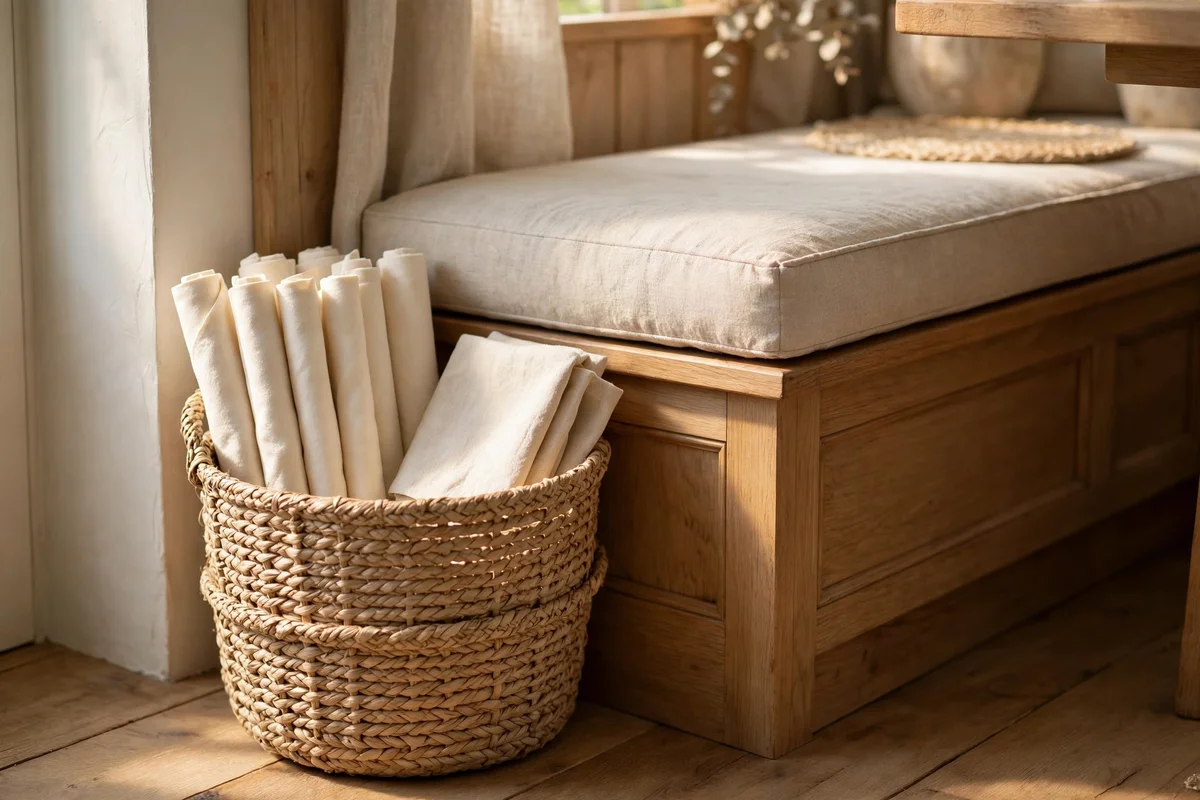
A woven basket beside the bench holds the practical bits: cloth napkins, spare slipcovers, a lint roller and the table runner. Choose a seagrass or rattan basket about 40 cm tall that tucks beside the bench end without blocking the walkway. Rolled napkins stand upright in the basket like files, so everyone grabs one without unfolding a stack.
Wash napkins with the slipcovers so the whole set stays the same shade of cream over time. The mistake to avoid is letting the basket become a junk drawer for mail and chargers; once clutter moves in, the napkins migrate out. Keep one small tray on top for the current papers if needed. A sturdy woven basket costs 20 to 40 pounds or dollars.
18. Finish the Woodwork in Warm White or Soft Sage
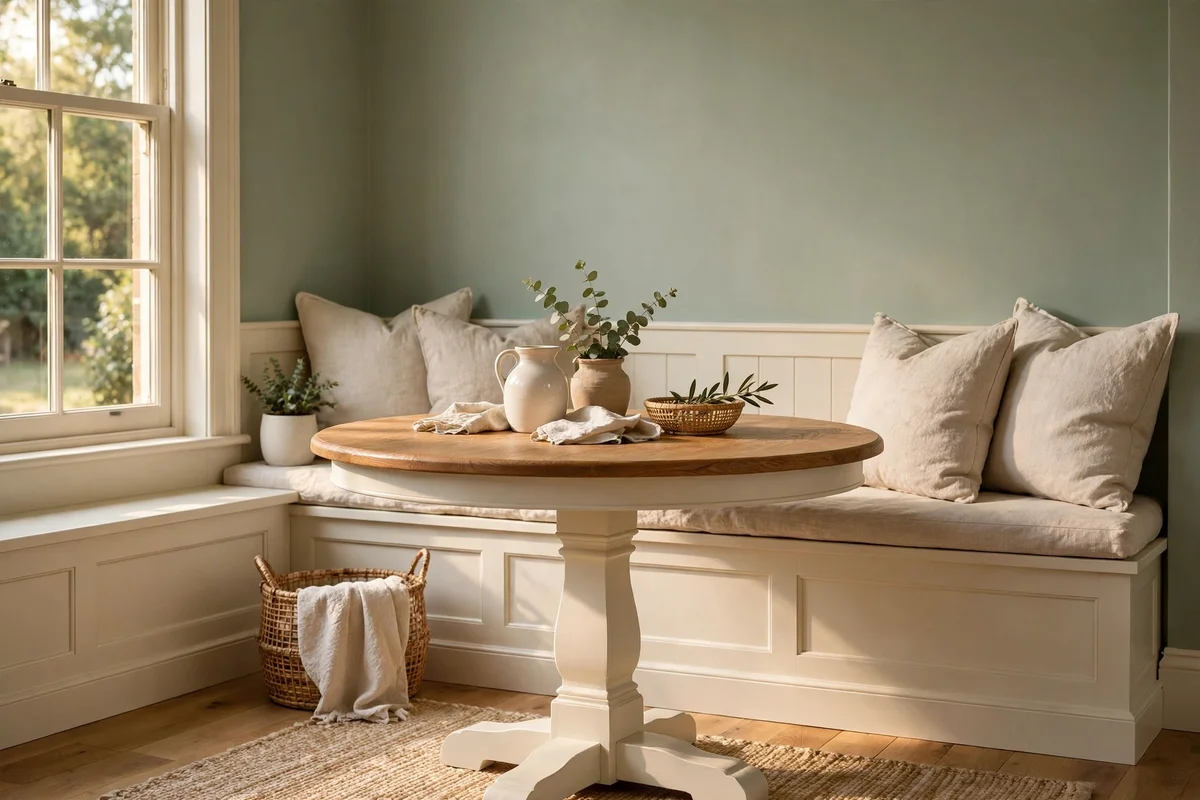
Paint colour sets the nook’s whole temperature, and warm white or soft sage keeps the corner calm in bright morning sun. A warm white with a hint of cream, rather than a blue-white, stops the light from feeling clinical, while sage green sits beautifully against oak and linen. Use a scrubbable eggshell or satin finish on the bench and table base so sticky fingers wipe off.
Test paint swatches on the bench itself and look at them at breakfast time, since morning light shifts colours cooler than evening light does. The mistake to avoid is a high-gloss finish on the bench seat, which shows every scratch and feels cold to sit on. Reserve gloss for trim if you love shine. A litre of quality eggshell covers a bench and table base and costs 15 to 30 pounds or dollars.
19. Build a Simple Morning Ritual Tray With Honey and a Pitcher

Beyond the tea tray, a second small ritual tray holds the foods that make mornings feel unhurried: a honey jar with a dipper, a small pitcher of milk, a dish of dates or dried figs, and a butter dish. A 30 cm round wooden board or shallow ceramic tray keeps it all together and carries to the table in one hand. Glass jars with lids keep honey and dates fresh between mornings.
Refill the jars on shopping day so the tray is always ready, and wipe the board weekly since honey drips find every groove. The mistake to avoid is leaving dairy on the tray all day; return the milk pitcher to the fridge after breakfast and keep only the dry goods out. A wooden board plus three small jars usually costs 20 to 45 pounds or dollars.
20. Fold a Lightweight Wool Throw Over the Bench Corner
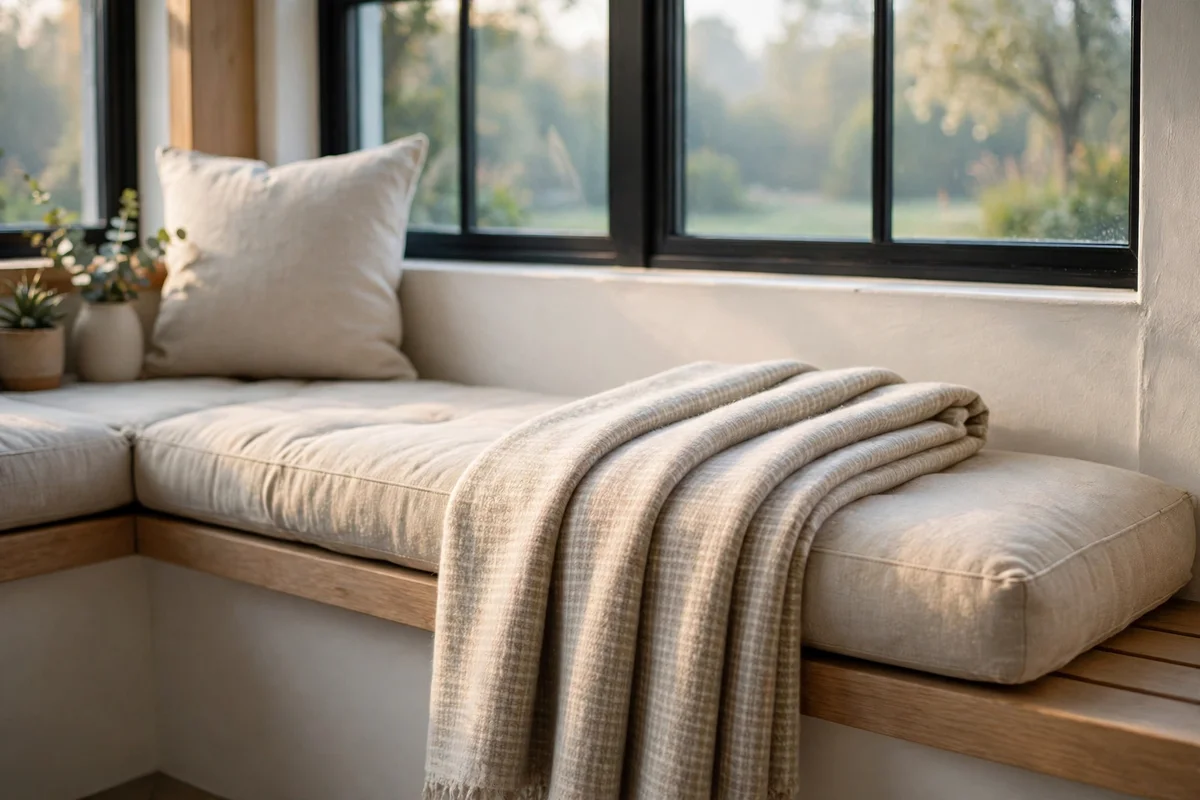
A lightweight wool throw folded over the bench corner is the nook’s invitation to linger when mornings turn cool. Choose a throw about 130 by 180 cm in a soft check or plain oatmeal, light enough to drape over shoulders without slipping. Wool regulates temperature naturally, so it warms without overheating, and a washable wool blend survives the machine on a gentle cycle.
Fold it in thirds lengthwise and drape it over the bench back or arm so it looks intentional rather than abandoned. The mistake to avoid is a heavy, bulky blanket that swallows the seat and has to be moved before anyone sits down. Keep the throw light enough to sit on comfortably. A good washable wool throw costs 35 to 70 pounds or dollars.
21. Fit Felt Pads Under Table and Bench to Protect Floors
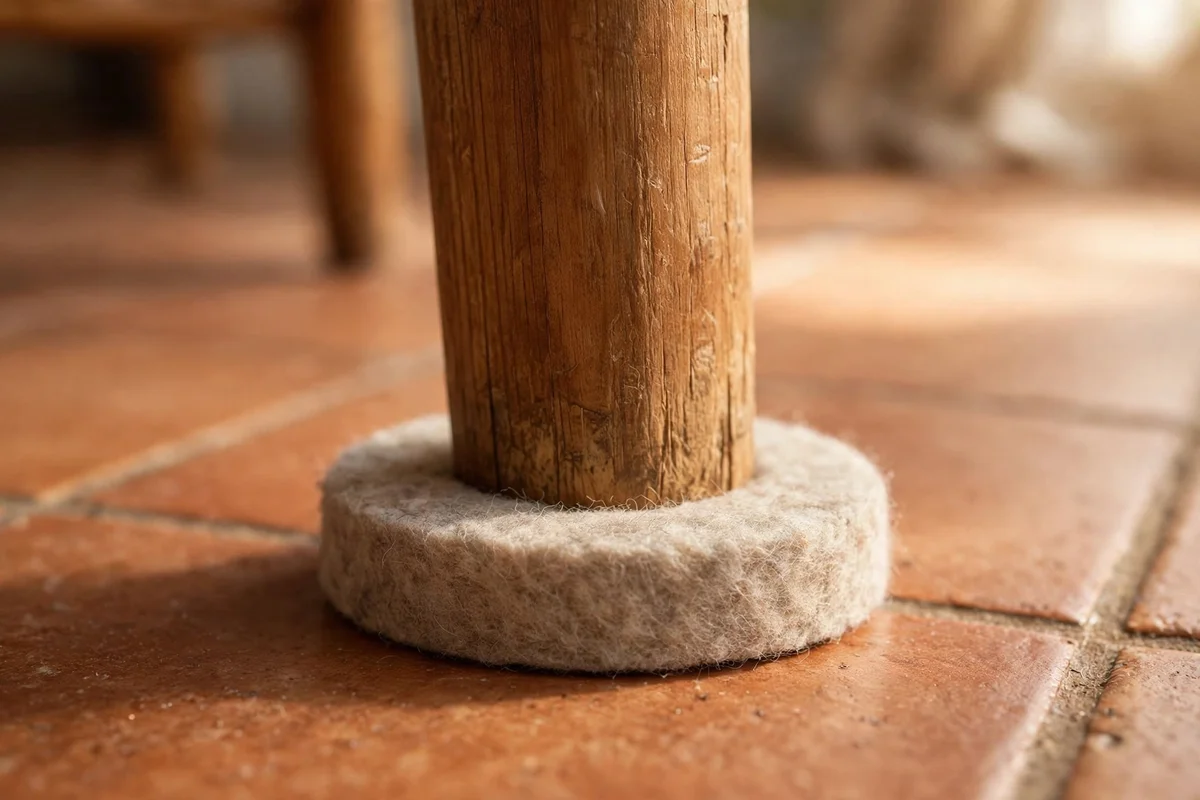
Felt pads under every leg and bench foot protect timber or tile floors from the daily shuffle of breakfast seating. Use thick 5 mm adhesive felt pads cut to fit, pressing them on clean, dry feet so they bond properly. Replace them every six to twelve months, since grit embeds in worn felt and turns the pad itself into sandpaper.
For chairs that slide daily, screw-on felt glides outlast stick-on pads and survive mopping. The mistake to avoid is skipping pads because the rug covers the middle; chair legs still travel past the rug edge onto bare floor. A full set of pads for a table, bench and two chairs costs under 10 pounds or dollars and takes ten minutes to fit.
A breakfast nook is really a small promise you make to your mornings: a sunny corner, a comfortable seat and a warm drink within easy reach. Start with the bench and the table, since seating and knee room decide whether the nook gets used or admired from afar. Then layer the softness: washable covers, a rug underfoot, sheers on the window and a tray that is always ready. The details that take ten minutes, like felt pads and a folded throw, are the ones you will notice every single day.
Pick one idea to try this week and let the nook grow around it. Hanging the sheer curtains is the easiest first step, because it changes the light in an afternoon and costs less than a takeaway dinner for two. Once the light feels right, the bench, the tray and the ritual follow naturally. Slow mornings are not bought in one shopping trip; they are built one comfortable, sunlit detail at a time.
Frequently Asked Questions
How much does a small breakfast nook cost to set up?
A simple two-person nook costs 250 to 450 pounds or dollars using ready-made pieces: a bench, a 75 cm pedestal table, one chair, a rug and sheers. Buying second-hand or building the bench yourself can halve that. Spend first on the table and seating, since comfort decides whether the nook gets used daily.
What size table works best for a breakfast nook for two?
A 75 cm round table suits two people, giving each about 60 cm of elbow room. Keep the pedestal base narrow, around 45 cm, so knees fit underneath, and allow 60 to 75 cm of clearance behind the chairs. In a tight corner, a 70 cm top still works if the bench side needs no pull-out room.
How do I keep bench cushions clean with daily breakfast use?
Use removable, washable covers in cotton canvas and keep a spare set so the bench never sits bare. Wash covers at 40 degrees every few weeks, shake cushions daily and rotate them weekly for even wear. Wipe the bench base with a damp cloth, and choose patterns or texture over plain white to hide light marks.
Can I build a breakfast nook in a rented kitchen?
Yes, with renter-friendly choices throughout. Use a freestanding bench and table rather than built-ins, hang sheers on a tension rod inside the window frame, and lay the rug over a non-slip pad instead of fixing anything to the floor. Felt pads protect the flooring, and everything moves with you on moving day.
What is the best lighting for a breakfast nook on dark mornings?
A pendant hung 75 cm above the table on a dimmer switch, fitted with a warm 2700K dimmable bulb. Turn it up for reading the papers and dim it low for a soft glow while the tea steeps. Avoid cool white bulbs, which make early mornings feel stark; dim-to-warm bulbs shift toward candlelight tones as they dim.