Kitchen
22 Above Kitchen Sink Ideas for Sinks Without a Window
By Anna Wells · · 21 min read
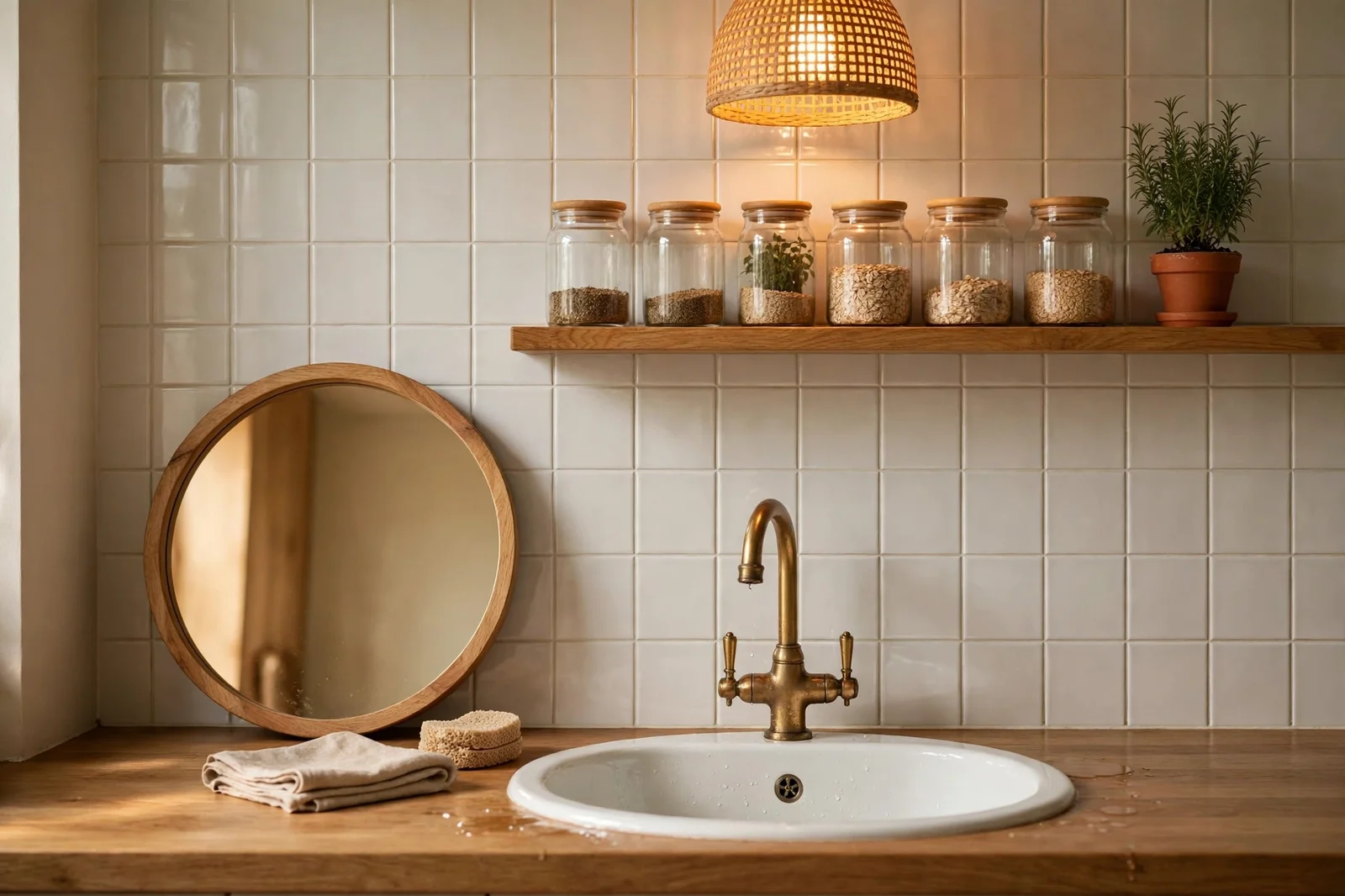
A blank wall above a windowless sink becomes a small stage of everyday beauty: twenty-two concrete ideas for shelves, steam-safe lighting, mirrors, herbs and sealed artwork.
A kitchen sink without a window can feel like a small cave, especially when the tap sits against a blank wall. The water runs, the dishes stack, and there is nothing to look at except painted plaster. Yet some of the warmest kitchens keep their sinks on an inside wall, and the owners would not move them for anything.
The wall above a windowless sink is usually treated as dead space, which is a pity, because it is the surface you stare at for half the chores of the day. Given a shallow shelf, a kind light and one living plant, it becomes a small stage of everyday beauty. These ideas respect steam, splashes and wiring rules while making rinsing feel less like a chore.
Below you will find twenty-two concrete ideas, each one sized, costed and shaped for moisture. There are shallow shelves and rails, pendant and strip lighting with proper IP ratings, mirrors and pale tiles that borrow light, herbs that thrive on steam, and artwork sealed safely behind glass. Nothing trails into the sink, and every electrical idea keeps water and wiring apart.
Work through them in order, or jump to the one that solves your own blank wall. Let us begin.
1. Fit a Shallow Wooden Shelf 15 cm Above the Splashback for Jars
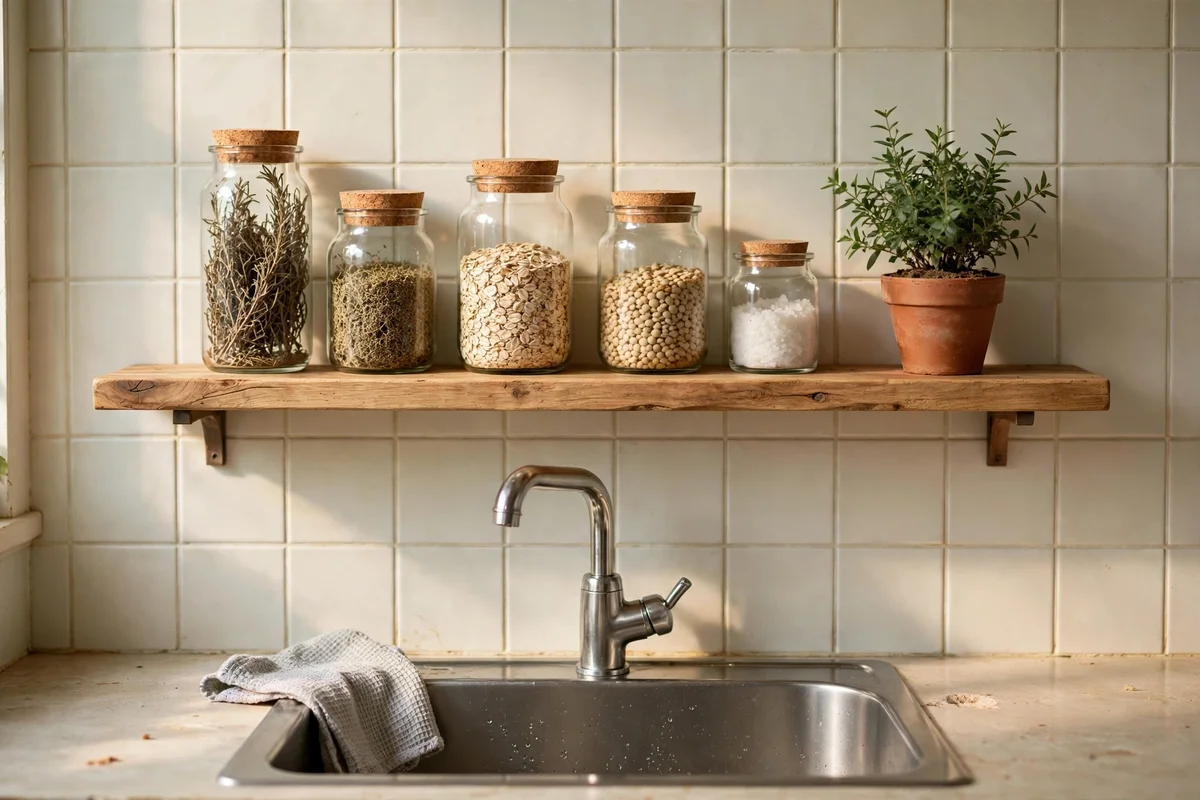
A shelf 12 to 15 cm deep, mounted 15 to 20 cm above the splashback, turns a blank wall into daily storage without stealing counter space. Choose sealed oak, beech or a moisture-proof laminate board 60 to 90 cm wide, since raw timber warps above steam. Fix it into masonry or studs with concealed brackets rated for at least 8 kg, because a row of filled jars adds weight quickly. Keep the underside wipeable so steam condensation never lingers on raw edges.
Style it with three to five plain jars, one small plant and nothing else, since overloading invites damp dust. Leave at least 30 cm of clear wall above the shelf so the arrangement breathes. The common mistake is fitting the shelf level with the tap top, which lets splashes soak the board edge; a 15 cm gap keeps most spray off. Budget tip: a cut-to-size shelf board from a timber merchant plus two hidden brackets usually costs 20 to 40 pounds or dollars.
2. Style Plain Glass Jars With Dried Herbs and Pantry Staples
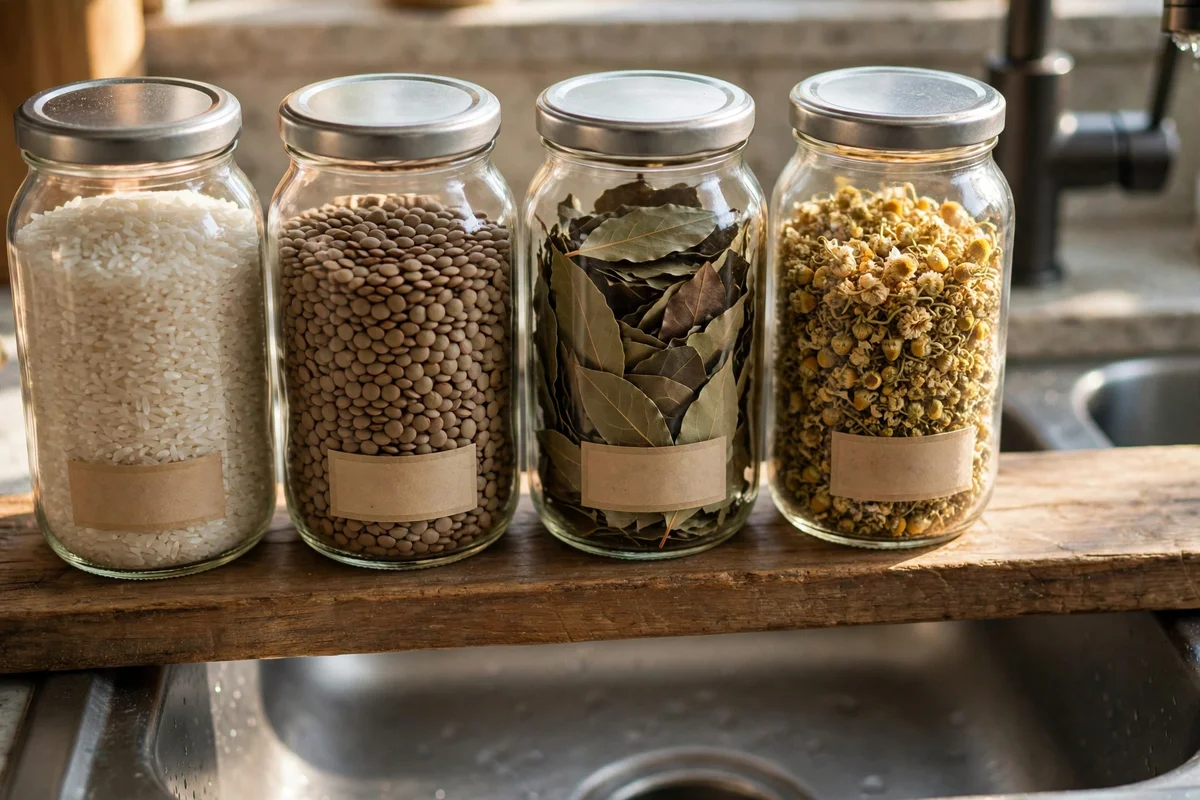
Clear glass jars turn shelf contents into decoration while keeping rice, lentils and dried herbs visible at a glance. Use jars of 500 ml to 1 litre with tight screw lids, since steam from the sink softens loose cardboard lids. Group jars in odd numbers, three or five, with the tallest at the back. Keep labels small and uniform on the front so the row reads tidy from across the kitchen. A set of five matching jars costs little and looks far calmer than mixed containers.
Fill the front jar with the item you reach for most, such as sea salt or dried oregano, to shorten the walk during cooking. Dried bay leaves, cloves and chamomile keep their scent behind glass for months if the lids seal. The mistake to avoid is placing jars directly over the tap, where spray mists the glass and dampens labels; shift them 20 cm to either side. Budget tip: reuse jam jars with matching metal lids for a zero-cost version that looks just as neat.
3. Hang a Small Pendant 75 cm Above the Sink Work Area
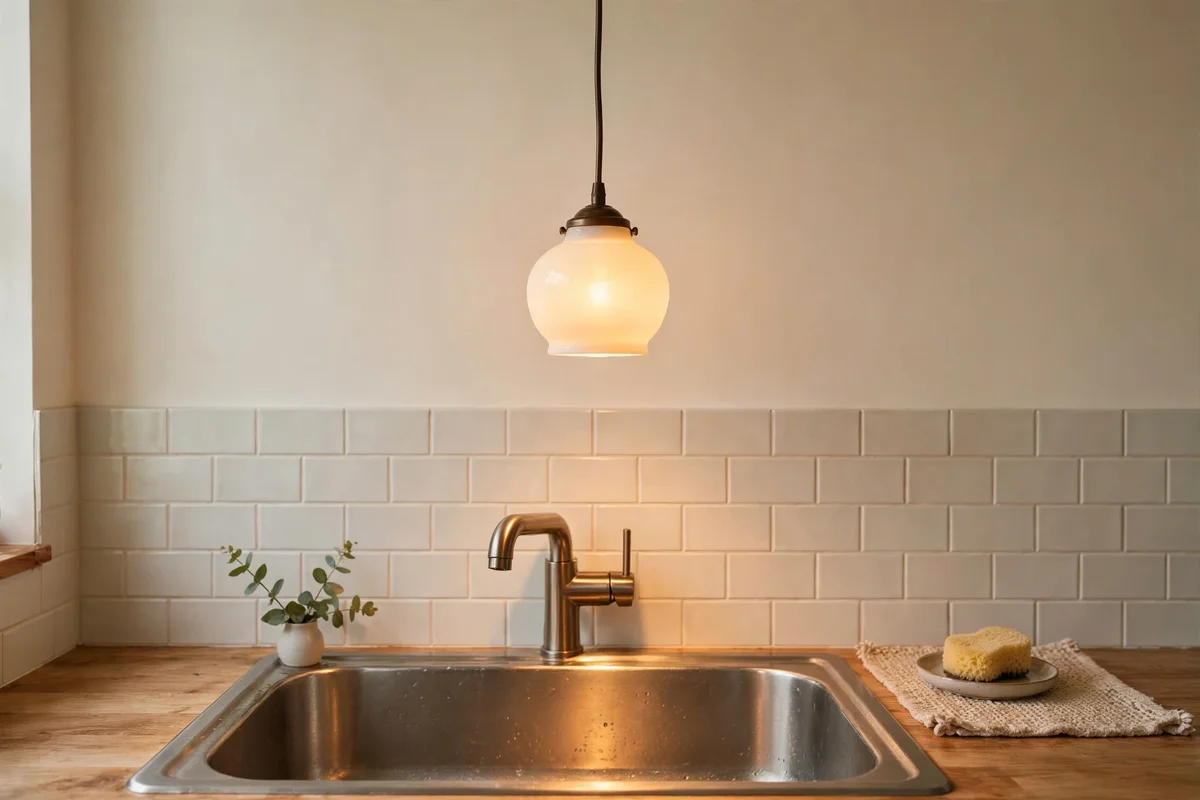
A pendant hung directly over the sink replaces the flat glare of a distant ceiling light with a focused pool of warmth. Hang the shade base about 75 cm above the worktop and 150 cm above the floor, so the light clears heads but still washes the basin. Choose an opal glass or ceramic shade 20 to 30 cm wide; metal shades need an earth connection and should sit clear of splash reach. Use a warm 2700K bulb of 400 to 600 lumens for gentle task light.
Position the pendant slightly behind the tap line so your head never shadows the bowl while you rinse. If the ceiling joist sits off centre, hang from a ceiling hook and swag the cable across with a simple chain, keeping the drop at least 160 cm from the floor on the walking side. The mistake to avoid is a clear glass shade at eye level, which blinds you over the sink; frosted glass solves it. A budget fabric or glass pendant with fitting often costs 25 to 50 pounds or dollars.
4. Mount an IP44 Wall Light Beside the Splashback
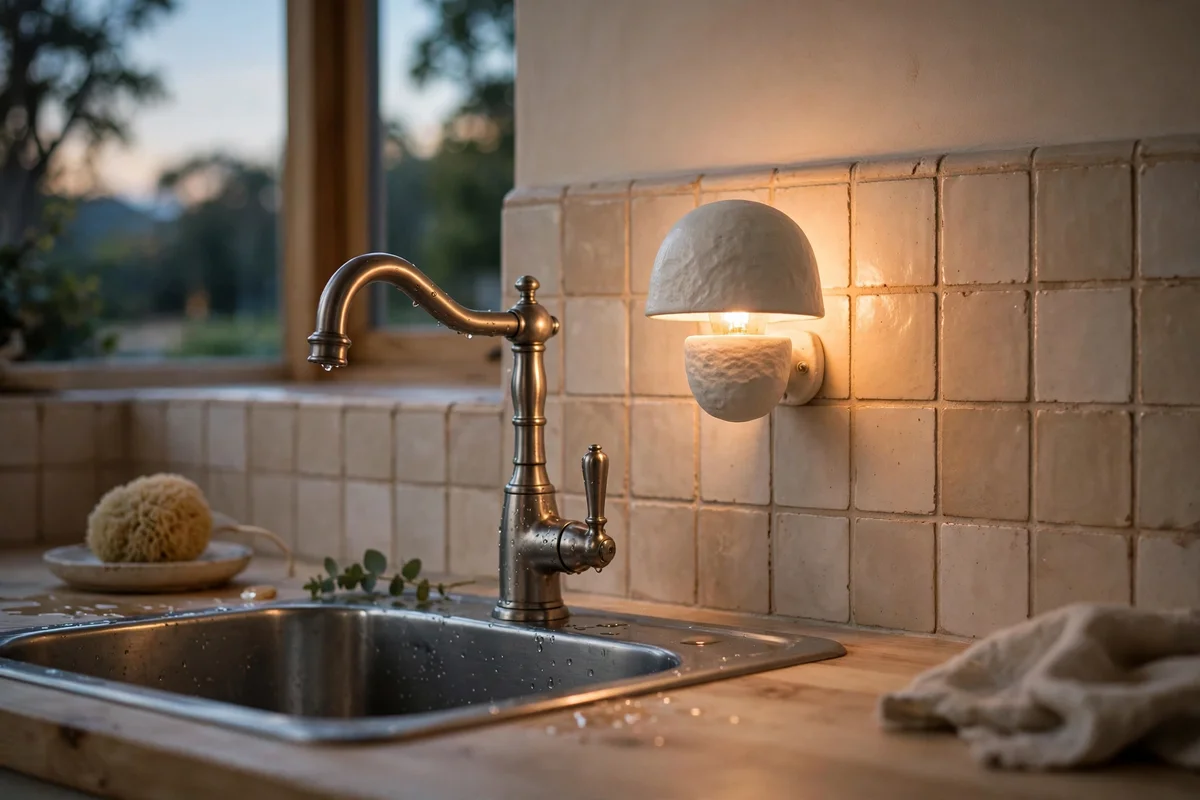
A wall light rated IP44 or higher is built to shrug off splashes, which makes it the safe choice beside a sink. Mount it 40 to 50 cm above the worktop and at least 30 cm to the side of the tap, outside the main splash zone. Small ceramic or glass sconces 15 to 25 cm tall suit narrow walls and throw a soft upward and downward wash. Connect it to the same switch as the main kitchen light or a separate dimmer so the sink corner glows gently in the evening.
Ask an electrician to fit it if the wall sits within a bathroom-style splash zone; kitchen sinks still count as water areas in wiring rules. Never hang a fabric-only shade without an IP rating over a sink, since steam stains it and moisture reaches the bulb holder. Choose LED bulbs with a warm colour temperature and a sealed cap for long life. Budget tip: a single IP44 sconce with an integrated LED module typically costs 20 to 35 pounds or dollars and lasts years.
5. Fix a Slim LED Strip Under the Wall Cabinet
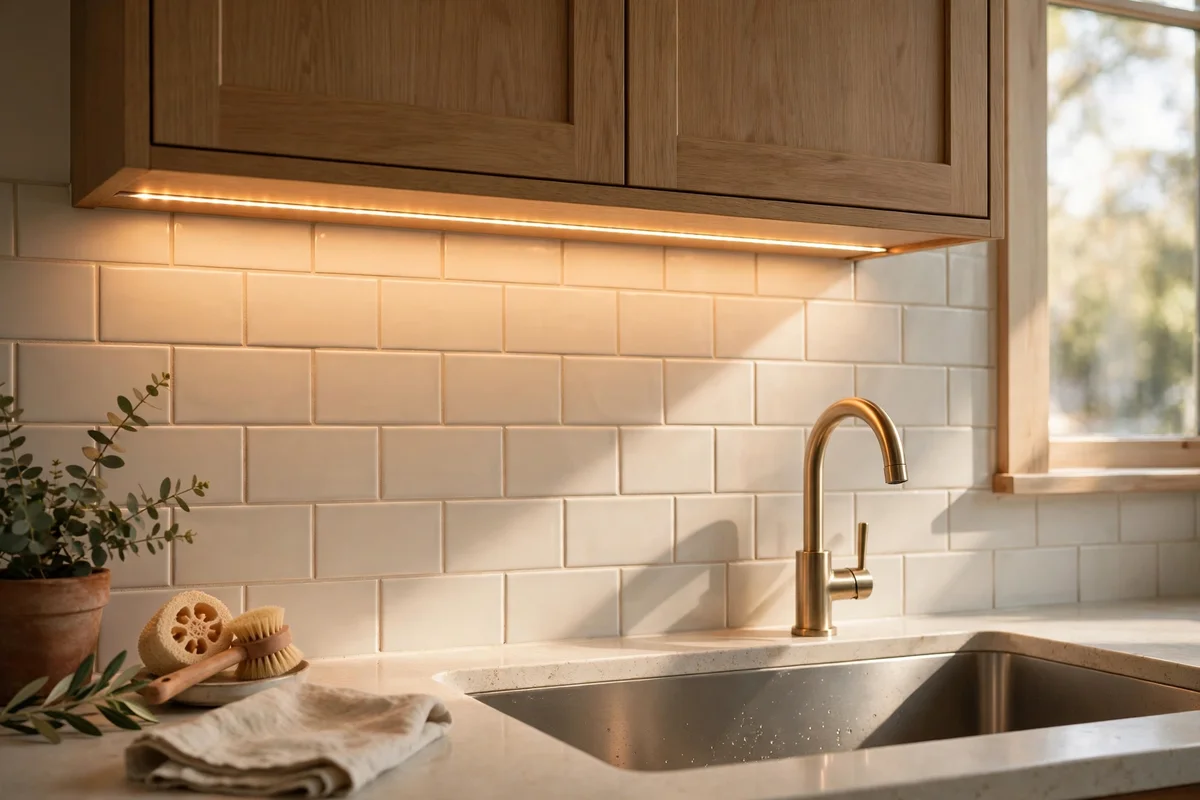
A self-adhesive LED strip tucked under the wall cabinet directly above the sink removes the shadows your head casts over the basin. Choose a warm white strip of 2700 to 3000K with an IP65 silicone sleeve, which resists steam and splashes. Cut it to the cabinet width, usually 60 to 90 cm, and mount it 3 to 5 cm back from the front edge so the light washes down the wall without glare. A 12-volt plug-in driver keeps wiring simple and safe.
Run the cable neatly along the cabinet underside with clips so nothing dangles near the tap. If you cook at night often, wire the strip to a small motion sensor or a plug timer for hands-free light. The mistake to avoid is a bare strip without an aluminium channel, which traps grease and yellows quickly; a slim diffuser channel costs little and doubles the life of the look. Budget tip: a two-metre IP65 kit with driver usually costs 15 to 30 pounds or dollars.
6. Lean a Round Mirror Against the Splashback to Bounce Light
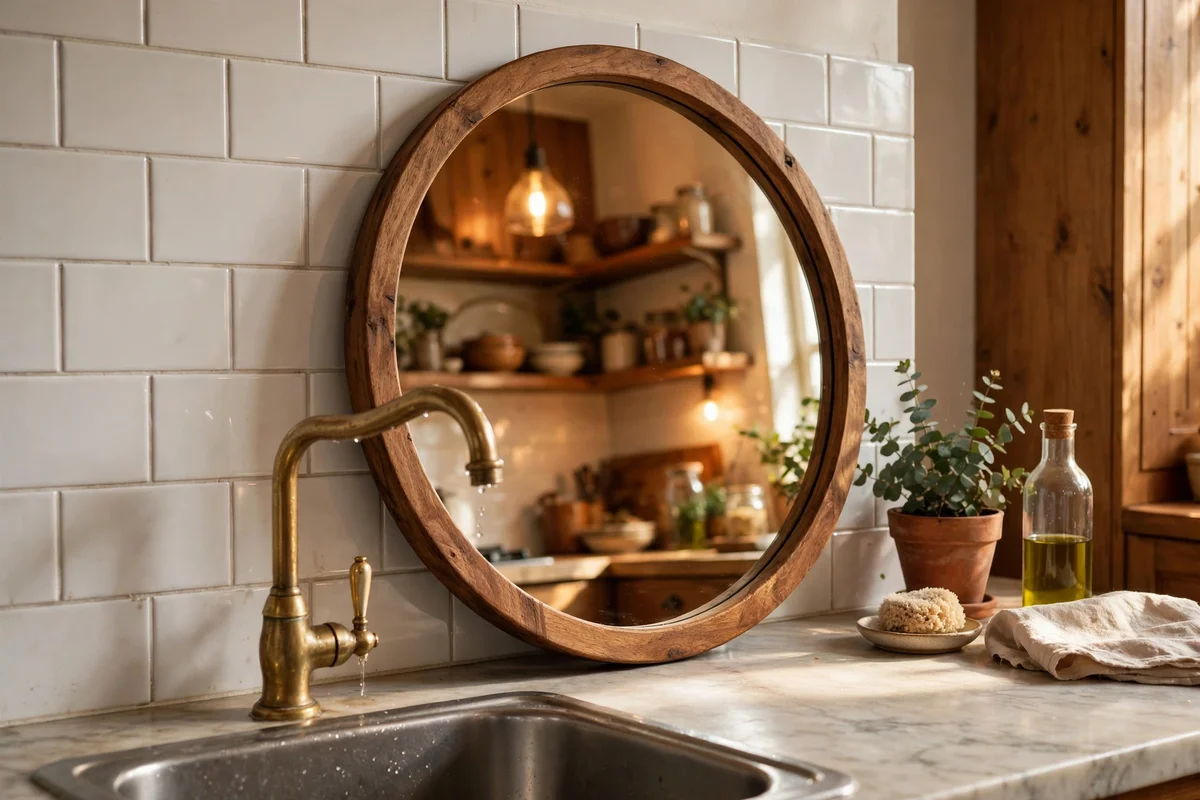
A round mirror 40 to 60 cm across, leaned against the splashback, borrows light from across the kitchen and doubles the glow over the basin. Choose a frame in sealed wood, powder-coated metal or rattan over a sealed edge, since bare timber swells with steam. Lean it at a slight tilt with a rubber stop behind so it never topples into the sink. Place it a few centimetres behind the tap so splashes fall short of the glass.
An arched mirror works just as well and echoes a classic cabinet line. Wipe the glass weekly with a dry microfibre cloth to stop steam haze from building into a film. The mistake to avoid is hanging the mirror with ordinary string in a steamy spot, since it rots within months; use coated picture wire or a fixed bracket. Budget tip: charity shops often carry plain round mirrors for under 15 pounds or dollars, and a new sealed frame adds 10 more.
7. Tile the Splashback in Pale Gloss Zellige Squares
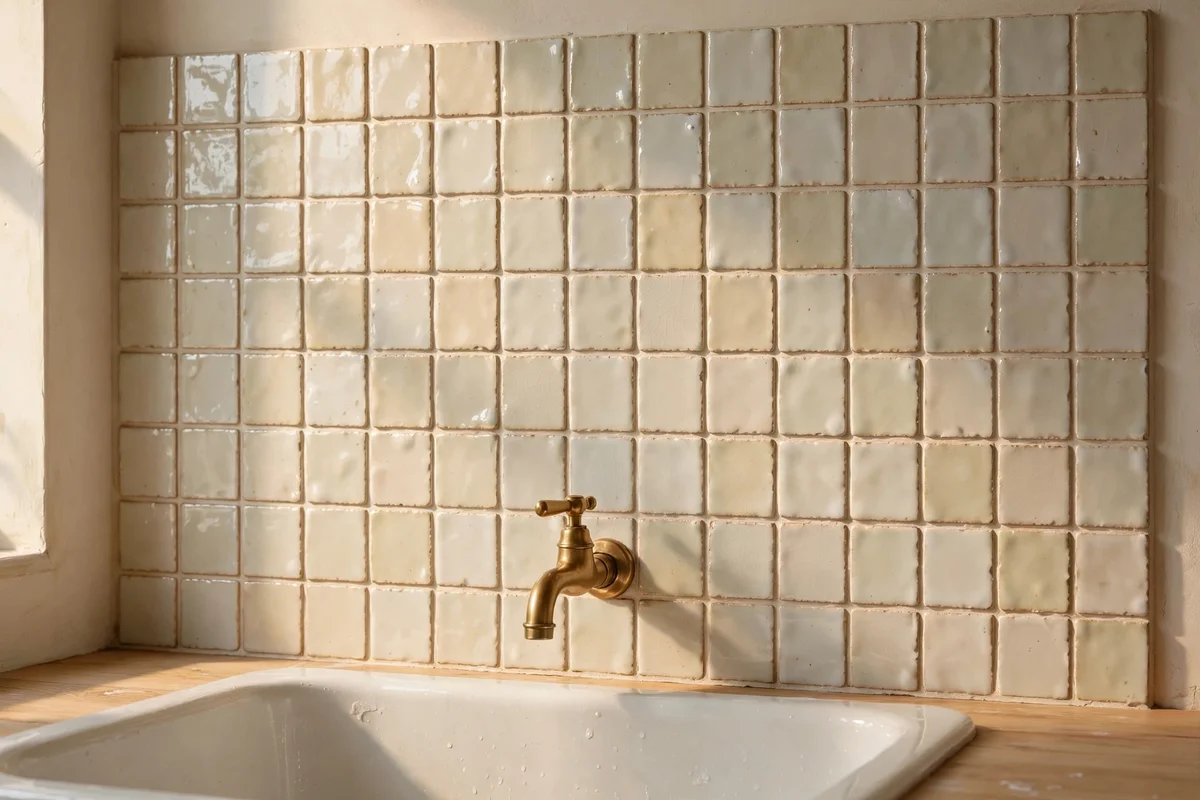
Pale gloss tiles behind a windowless sink act like a second light source, bouncing every lumen back toward the work area. Handmade-look zellige squares in warm white or pale sage, 10 by 10 cm, catch the light with their uneven glaze. Tile from the worktop up to at least 40 cm high, or full height to the cabinet base for maximum reflection. Use a mould-resistant grout in a matching tone so the lines stay clean behind the steam.
Seal natural grout lines yearly with a food-safe sealant to stop tea and coffee splashes from staining. The mistake to avoid is dark matt tiles here, which swallow the little light a windowless wall gets and make rinsing harder to see. If retiling feels too big, a peel-and-stick gloss tile panel gives a similar lift for a season. Budget tip: a small 60 by 40 cm area needs under two square metres of tile, often 30 to 60 pounds or dollars.
8. Hang a Trailing Pothos in a Hook Away From the Tap
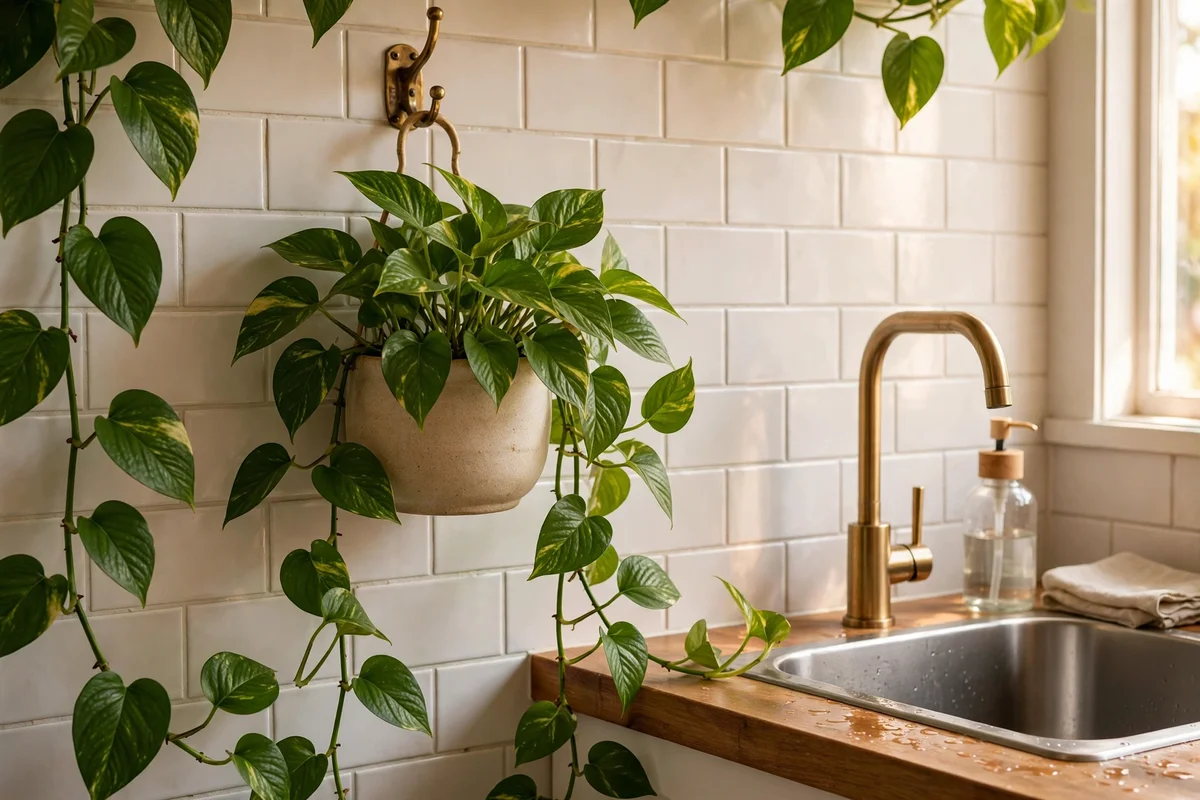
A trailing pothos softens a bare wall and asks almost nothing in return, which suits the humidity above a sink. Hang it from a ceiling or wall hook 40 to 60 cm to the side of the tap, with the pot rim at least 25 cm above the worktop so leaves never trail into the basin. Choose a ceramic or sealed plastic pot with a saucer, since terracotta wicks steam and drips. Water only when the top 3 cm of soil feels dry, roughly every seven to ten days.
Trim the trails to 60 cm so they frame the wall instead of reaching for the taps. Rotate the pot a quarter turn every fortnight for even growth. The mistake to avoid is hanging the plant directly over the bowl, where falling leaves land in washing water and the plant sits in a constant damp cloud. Budget tip: a small pothos in a plain ceramic pot with a hook and chain usually costs 10 to 20 pounds or dollars.
9. Grow Basil and Mint in Small Pots on the Shelf Edge
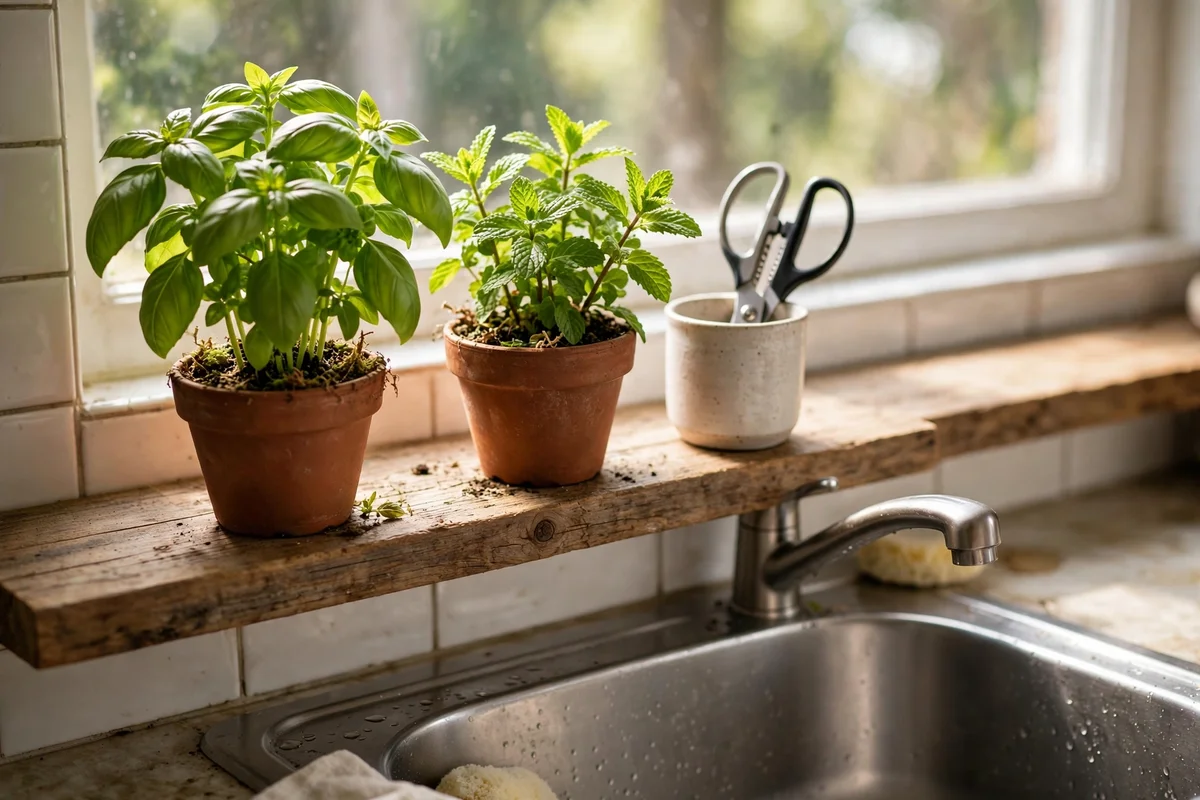
Fresh herbs on the shelf edge turn the sink wall into a working garden that flavours dinner. Basil and mint both tolerate the steam of a busy sink and need only three to four hours of indirect light a day. Use pots 10 to 12 cm across with drainage holes and saucers, set at the shelf end farthest from the tap. Pinch basil weekly above a leaf pair to keep it bushy, and give mint its own pot since it crowds neighbours.
Snip stems in the morning when oils are strongest, and never strip more than a third of the plant at once. Keep a small pair of scissors in the rail cup so harvesting becomes part of washing up. The mistake to avoid is letting pots sit in standing water, since steam plus soggy roots invites mould; empty saucers after watering. Budget tip: two herb plants in plain pots cost 8 to 15 pounds or dollars and replace shop-bought bunches within weeks.
10. Fix a Wall Rail With Hooks for Utensils and a Cup
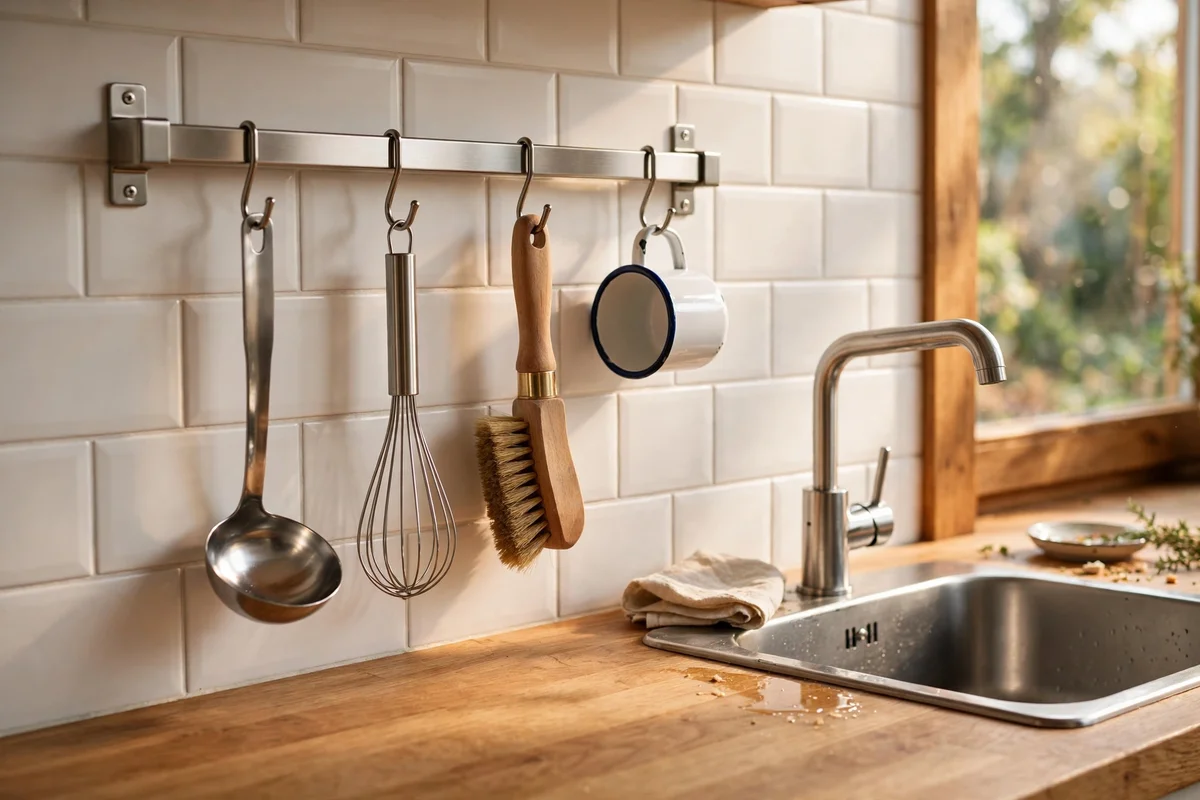
A 60 to 90 cm stainless steel rail fixed 15 to 20 cm above the worktop keeps daily tools off the draining board and within arm’s reach. Mount it at least 25 cm to the side of the tap so utensils stay out of the splash arc. Use S-hooks 6 to 8 cm long for ladles, a whisk and a vegetable brush, and add one wider hook for a small enamel cup holding scissors and a bottle opener. Stainless wipes clean and never rusts in steam.
Limit the rail to five or six items so it reads as decor rather than clutter. Hang the heaviest tool nearest a bracket and keep a folded cloth on the end hook for quick wipes. The mistake to avoid is mounting the rail above the tap itself, where dripping utensils fall into clean water and handles corrode. Budget tip: a 60 cm rail with ten hooks usually costs 15 to 25 pounds or dollars and fixes in under half an hour.
11. Hang a Framed Botanical Print in a Sealed Glass Frame
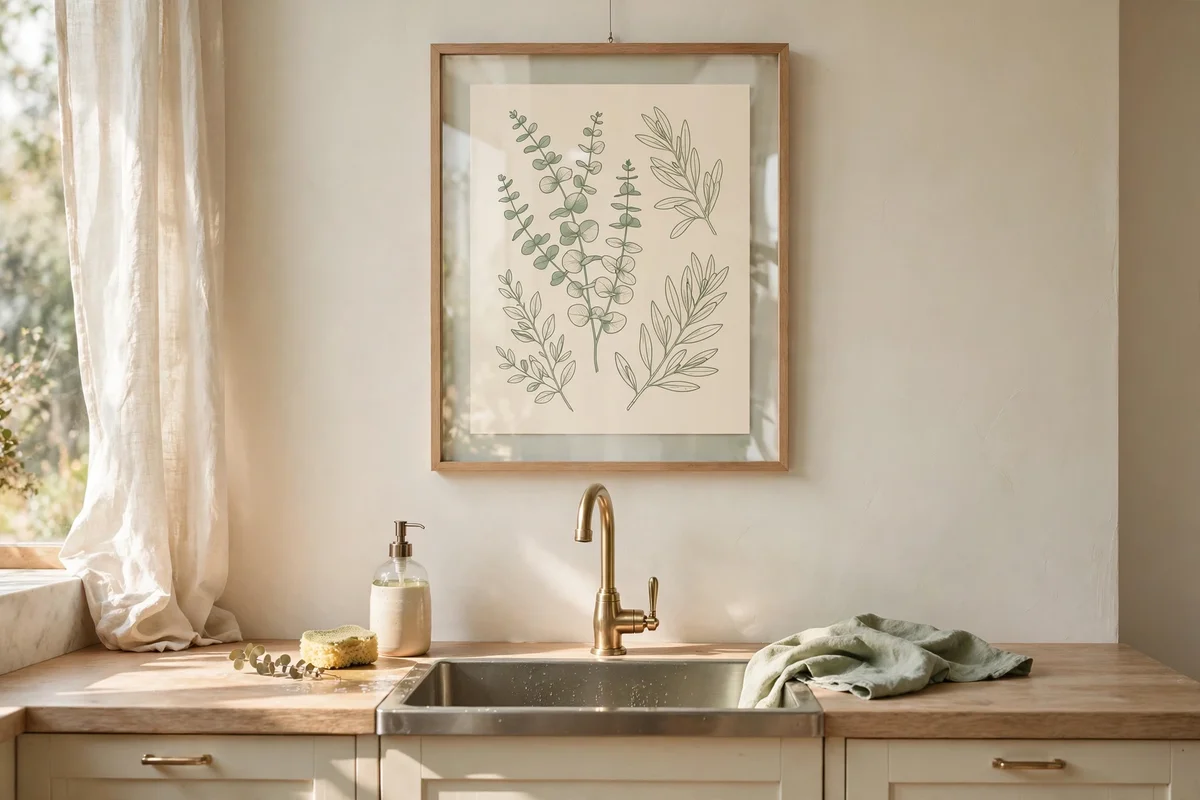
A framed botanical print gives the eye somewhere gentle to rest while the tap runs. Choose a frame with a sealed back and glass front, 30 by 40 cm or similar, since open backs let steam curl the paper within weeks. Hang it at eye level, about 150 cm from the floor, and at least 30 cm from the tap edge. Soft sage or cream prints with simple line drawings suit the small wall and never fight the shelf styling.
Print your own artwork on heavy 200 gsm paper for a fraction of shop prices, then seal the back with kraft tape. A slim 2 cm frame in oak or matt black keeps the look calm. The mistake to avoid is an unglazed canvas print above the sink, which absorbs steam and spots within a month; always choose glazing. Budget tip: a charity-shop frame plus a home print and a sheet of glass usually totals under 12 pounds or dollars.
12. Keep the Shelf Line Uncluttered With a Two-Colour Palette
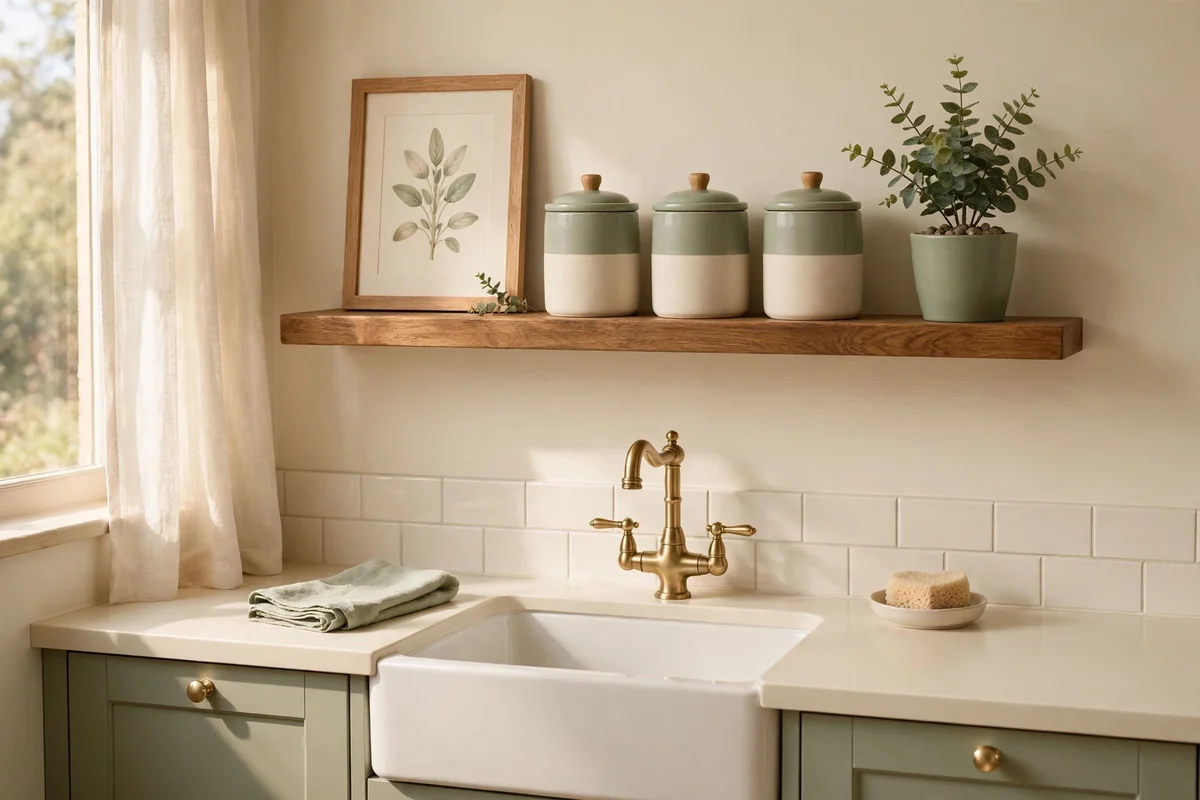
Limiting the sink wall to two calm colours, such as cream and sage or warm white and soft grey, makes a small area feel twice as composed. Pick the palette before you buy anything, and check every jar, pot and frame against it. Repeat each colour at least twice along the shelf so the eye travels in a line instead of jumping between mismatches. Neutral bases with one gentle green accent work in nearly every kitchen.
Move any item that breaks the palette to a cupboard instead of squeezing it in. Photograph the shelf with your phone and study the picture, since a photo reveals clutter your eyes skip. The mistake to avoid is adding a third or fourth bright colour one item at a time, which erodes the calm you built. Budget tip: spray-painting odd jars in one matte tone costs about 6 pounds or dollars and unifies a whole shelf.
13. Use a Narrow Magnetic Knife Strip on the Side Wall
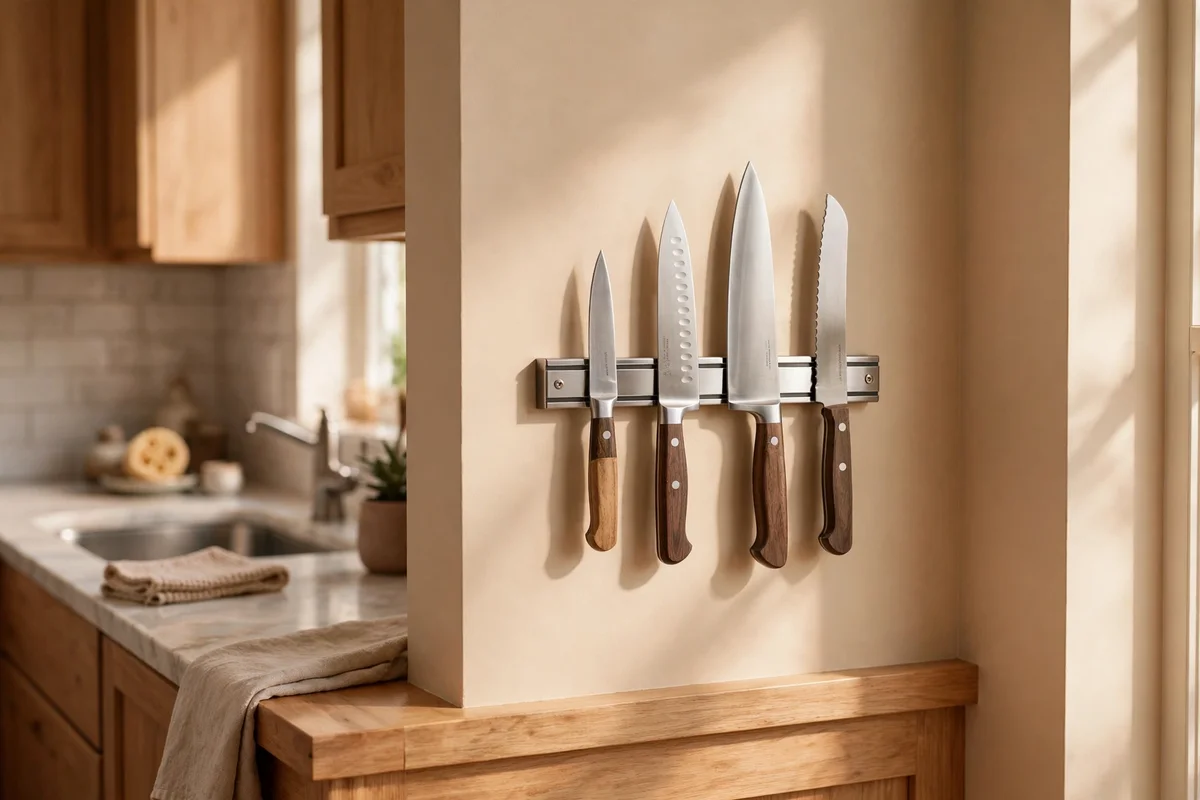
A magnetic knife strip 30 to 45 cm long on the wall beside the sink frees drawer space and keeps blades visible but out of the way. Mount it at least 40 cm from the tap and 20 cm above the worktop, on a side wall rather than the splashback, so water never runs down onto the blades. Choose a sealed hardwood or stainless strip; raw magnets rust in steam. It holds four to six everyday knives safely.
Wipe blades before storing so no damp lingers against the magnet. Keep the strip clear of the herb pots, since soil and knives should never share a splash zone. The mistake to avoid is fixing the strip directly above the bowl, where wet knives drip into rinsing water and handles sit in steam. Budget tip: a 33 cm stainless magnetic strip usually costs 12 to 20 pounds or dollars and fixes with two screws.
14. Rest a Folded Tea Towel on a Small Wooden Dowel
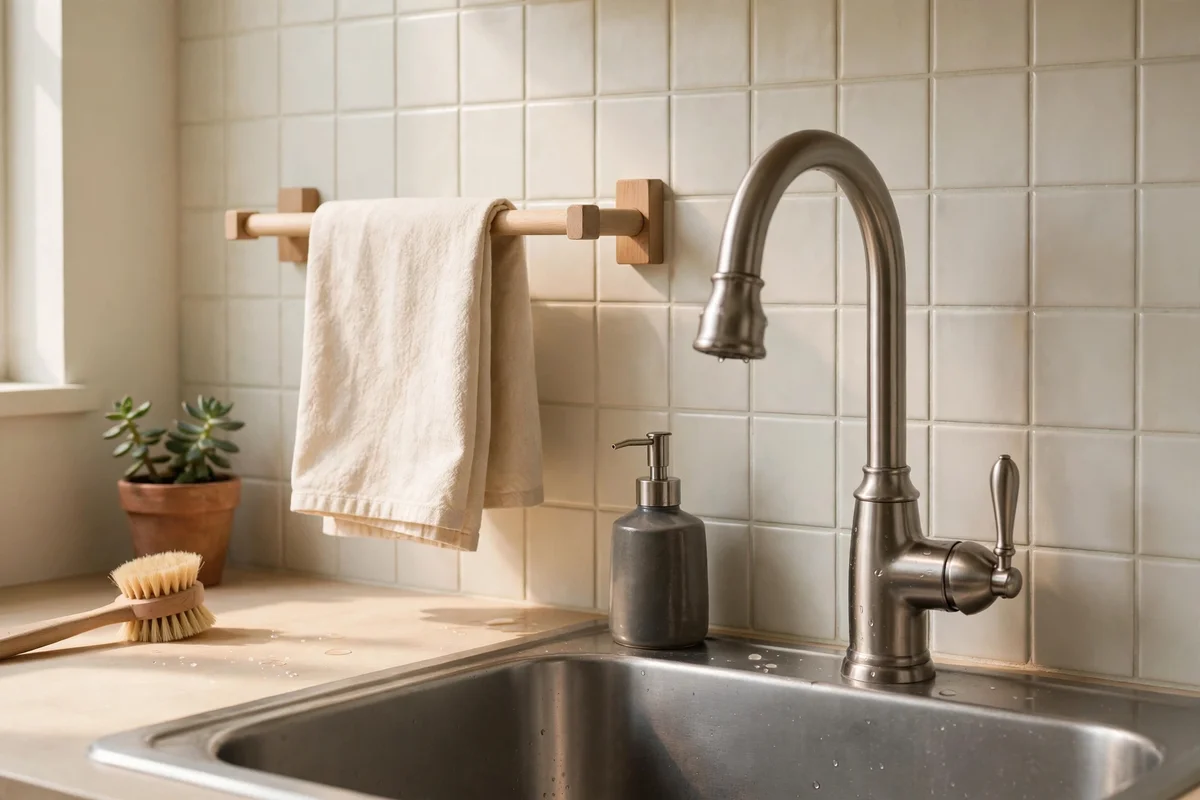
A 25 to 30 cm wooden dowel fixed 10 cm above the worktop and beside the tap holds the working tea towel where you need it. Choose a dowel 2.5 cm thick in sealed beech or bamboo, fixed with two small brackets into the splashback. Fold the towel in thirds so it drapes neatly and dries between uses. Keeping the towel on the wall, not the counter, stops it soaking up countertop spills all day.
Swap the towel every two days in a busy kitchen, since a damp towel near steam turns musty fast. Keep a spare folded on the shelf so the swap takes seconds. The mistake to avoid is draping the towel over the tap itself, where it blocks the spray and soaks through in minutes. Budget tip: a dowel, two brackets and a pair of plain cotton towels usually costs under 12 pounds or dollars.
15. Place a Tiny Ceramic Planter With Succulents on the Worktop Corner
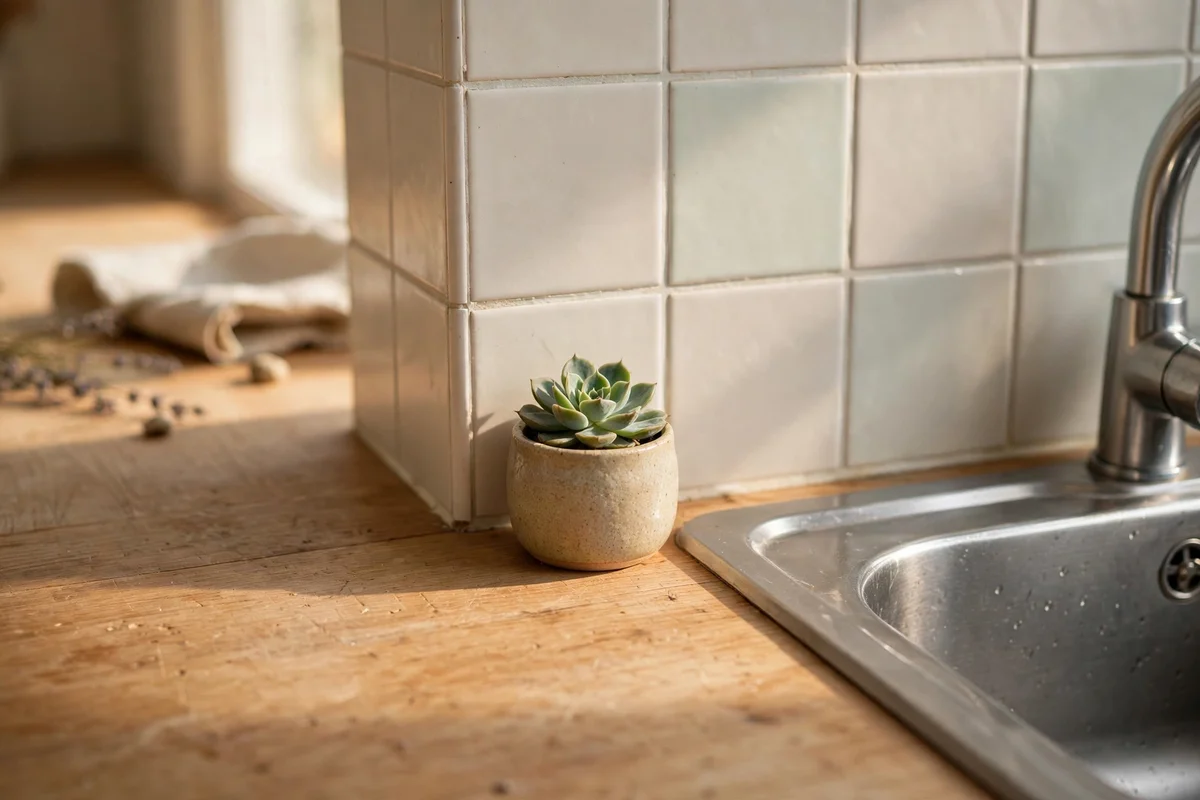
A single succulent in a 7 to 9 cm ceramic planter brings living green to the sink corner without crowding it. Place it at the back corner of the worktop, at least 20 cm from the tap, so it never sits in pooled water. Choose a planter with a drainage hole and a small saucer, since succulents rot in damp soil. They need only a weekly splash of water, about 30 ml, and bright indirect light.
Echeveria and haworthia keep compact rosettes that suit small spaces and shrug off steamy air. Rotate the pot weekly so it grows evenly toward the light. The mistake to avoid is a large arrangement of five or six pots here, which steals prep space and collects splashes; one small plant is the whole point. Budget tip: a small succulent in a plain ceramic pot usually costs 5 to 10 pounds or dollars.
16. Choose a Splash-Resistant Clock With a Sealed Face
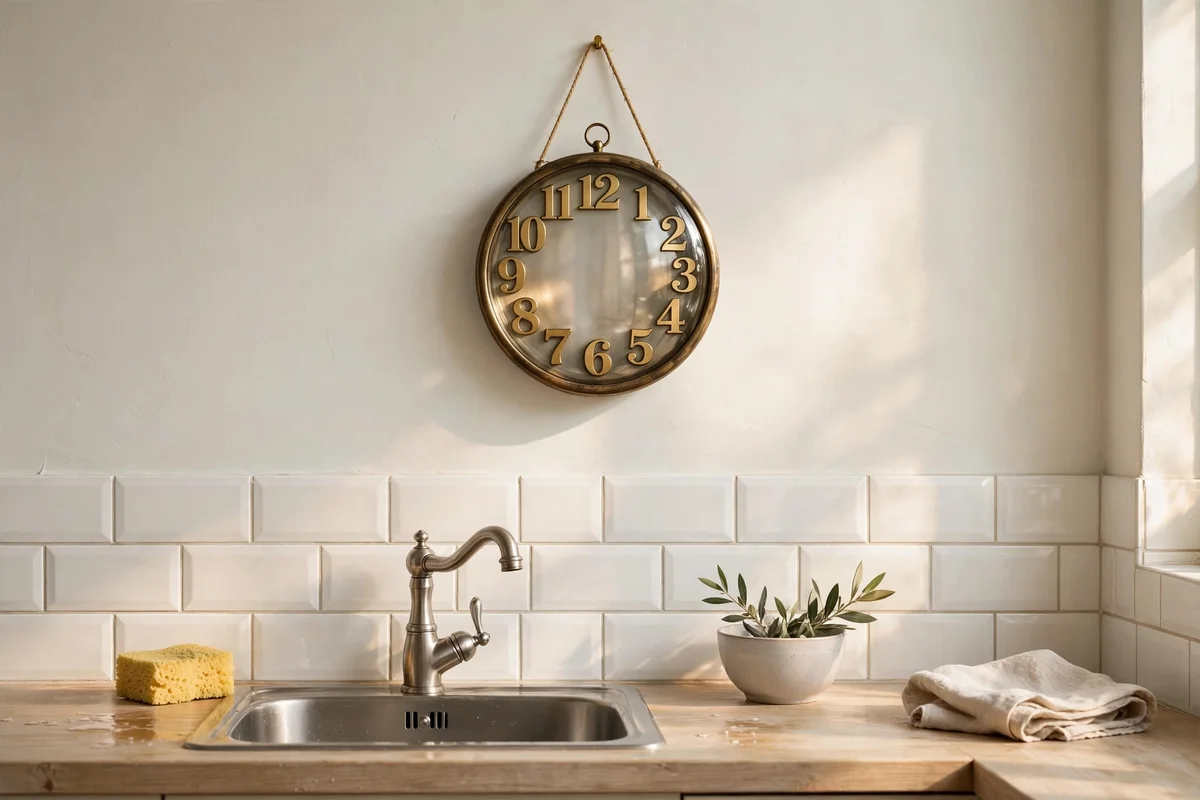
A small wall clock 20 to 25 cm across gives the sink wall a gentle focal point and times pasta water without a phone. Choose a model with a sealed glass face and a plastic or powder-coated case, since open-backed clocks let steam fog the dial. Hang it 20 cm above the splashback line and well clear of the tap. A quiet sweep movement keeps the kitchen calm while you wash up.
Pick large clear numerals in a warm tone so the time reads at a glance through steam. Avoid battery covers that need tools, since you will change the battery yearly. The mistake to avoid is a fabric or paper-faced clock here, which warps and stains within weeks of sink steam. Budget tip: a sealed-face kitchen clock usually costs 12 to 22 pounds or dollars and hangs from a single screw.
17. Mount a Small Cordless Picture Light Over Framed Art
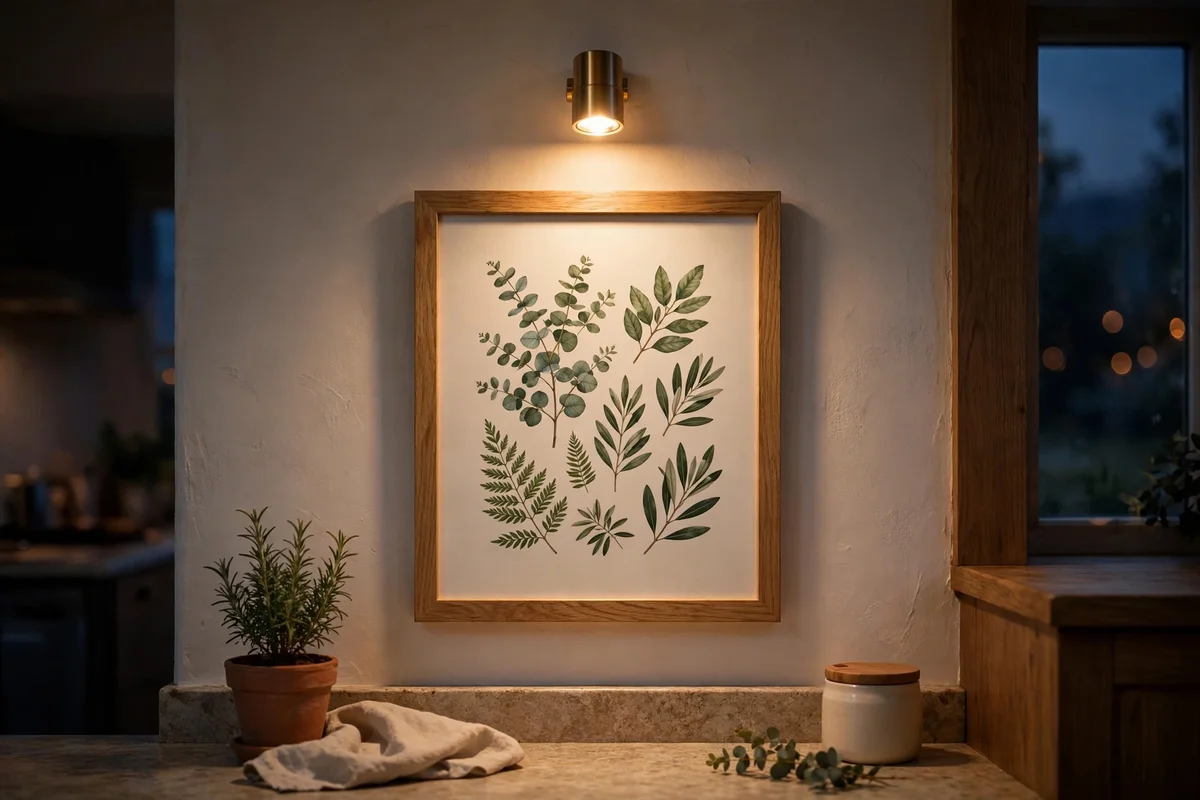
A cordless LED picture light 20 to 30 cm wide, mounted above the framed print, turns the artwork into an evening feature. Choose a rechargeable model with a warm 2700K output, since cool light flattens gentle prints. Fix it with the supplied magnetic mount or two small screws, 8 to 10 cm above the frame top. Most models run 6 to 10 hours per charge on a medium setting, so a weekly overnight charge covers daily use.
Set the light on a timer or remember to tap it on at dusk for a consistent glow. Keep the charging cable in a drawer, never draped near the sink while charging. The mistake to avoid is a plug-in picture light here, which leaves a cable trailing toward the tap; cordless keeps water and electrics apart. Budget tip: a rechargeable picture light usually costs 18 to 35 pounds or dollars.
18. Keep Cords and Plugs Behind a Splash Guard and Away From the Tap
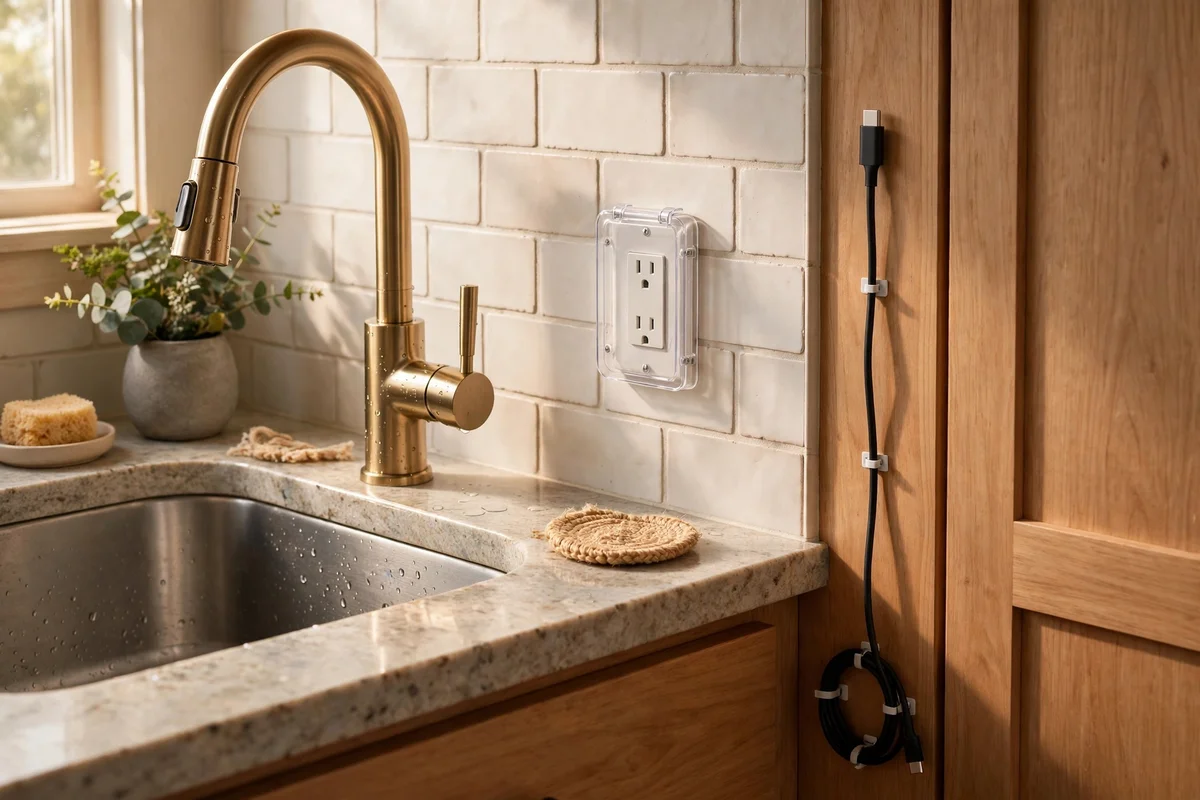
Every cable near a sink deserves a splash guard, since a single spray can reach a socket you thought was safe. Fit a hinged splash cover over any outlet within 60 cm of the tap, and route charging cables behind a small cable tidy clipped to the cabinet side. Keep plug-in appliances unplugged when not in use, and never run an extension lead across the worktop behind the basin. These small habits remove most electrical risk.
Dry your hands fully before touching any plug or switch near the sink. If a socket sits directly behind the tap, ask an electrician about moving it or fitting an RCD-protected outlet. The mistake to avoid is trailing a phone charger across the draining board, where it sits in a permanent puddle; charge devices on a shelf or in another room. Budget tip: splash covers and cable tidies usually cost under 10 pounds or dollars combined.
19. Style a Three-Step Tiered Stand for Soaps and Bottles
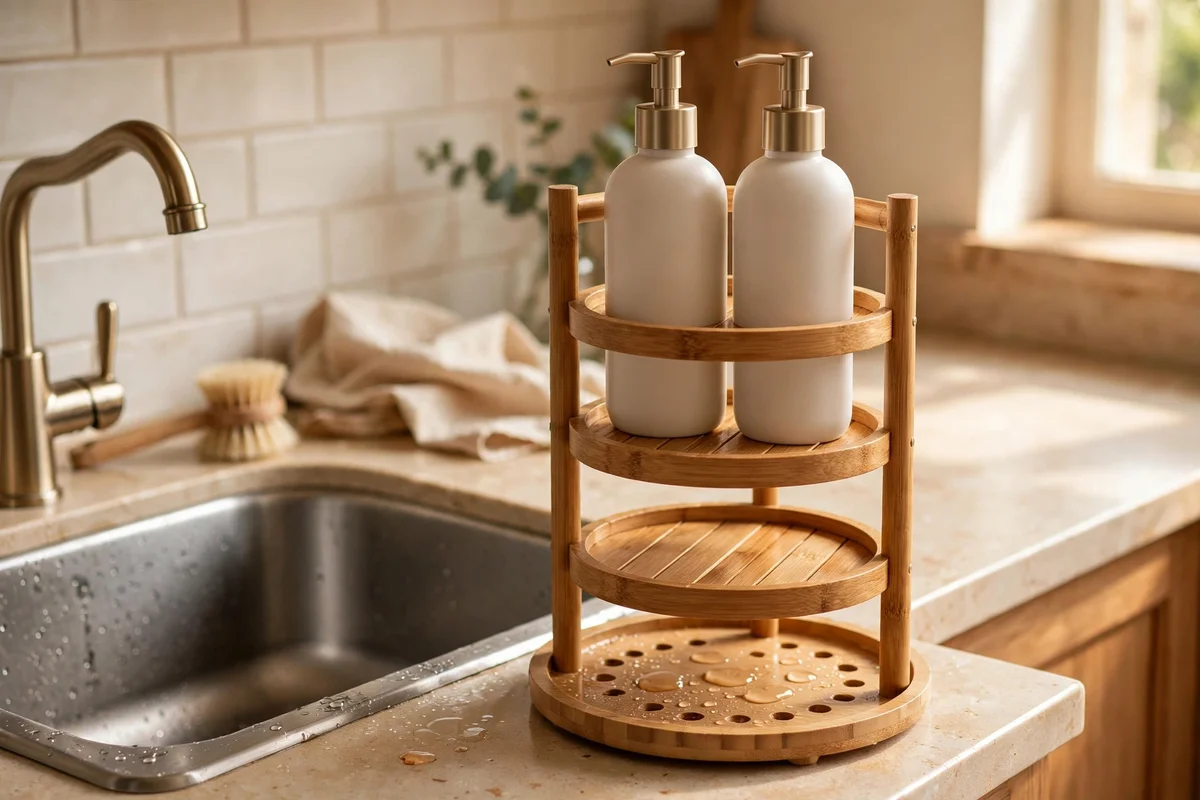
A three-tier wooden or metal stand 25 to 35 cm wide turns soap, hand cream and washing-up liquid into a tidy display. Choose a sealed bamboo or powder-coated metal stand with a drip tray base, since unsealed wood stains from bottle drips. Place it 15 to 20 cm to the side of the tap, never behind it, so bottles stay out of the main splash. Keep each tier to two or three items for a calm look.
Decant washing-up liquid into a matching pump bottle so the stand reads as one set. Wipe the trays weekly to stop soap scum from building under the bottles. The mistake to avoid is a tall stand directly in front of the wall art, which hides the frame and crowds the shelf line; keep it low and to the side. Budget tip: a three-tier bamboo stand with trays usually costs 15 to 30 pounds or dollars.
20. Add a Pale Runner Rug in Washable Cotton by the Sink
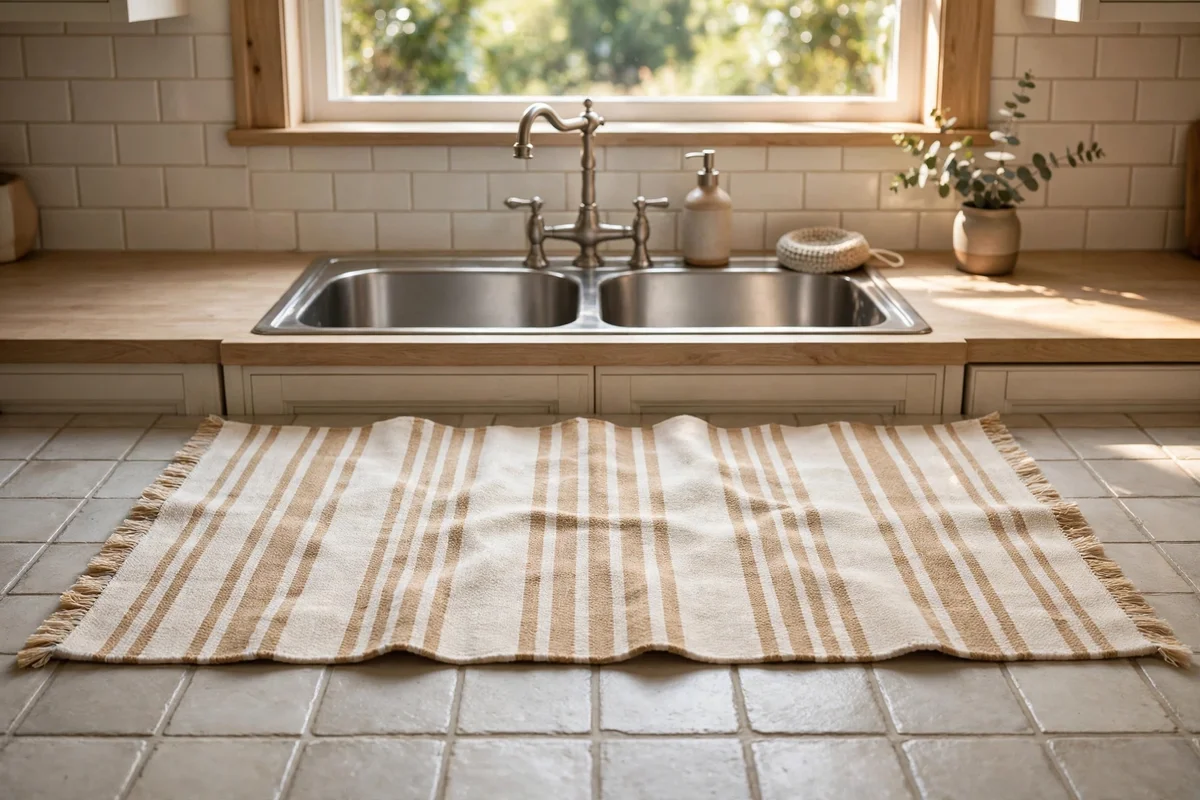
A pale washable cotton runner 50 by 120 cm in front of the sink softens the floor and catches the odd drip before it spreads. Choose a low-pile flatweave in cream, sand or pale stripe, since high pile traps water and stains. Machine wash it monthly on a warm cycle and line-dry it flat. The runner also warms bare feet during long washing-up sessions in winter.
Use a non-slip underlay or a rug with a rubberised backing, since a damp runner on tile slides dangerously. Fold the runner edges under by 2 cm if it sits too close to a cupboard door swing. The mistake to avoid is a long-pile bath mat here, which holds water for days and smells musty; flatweave dries within hours. Budget tip: a washable cotton runner usually costs 20 to 40 pounds or dollars.
21. Swap the Tap for a Matte Brass Filler With a High Arc
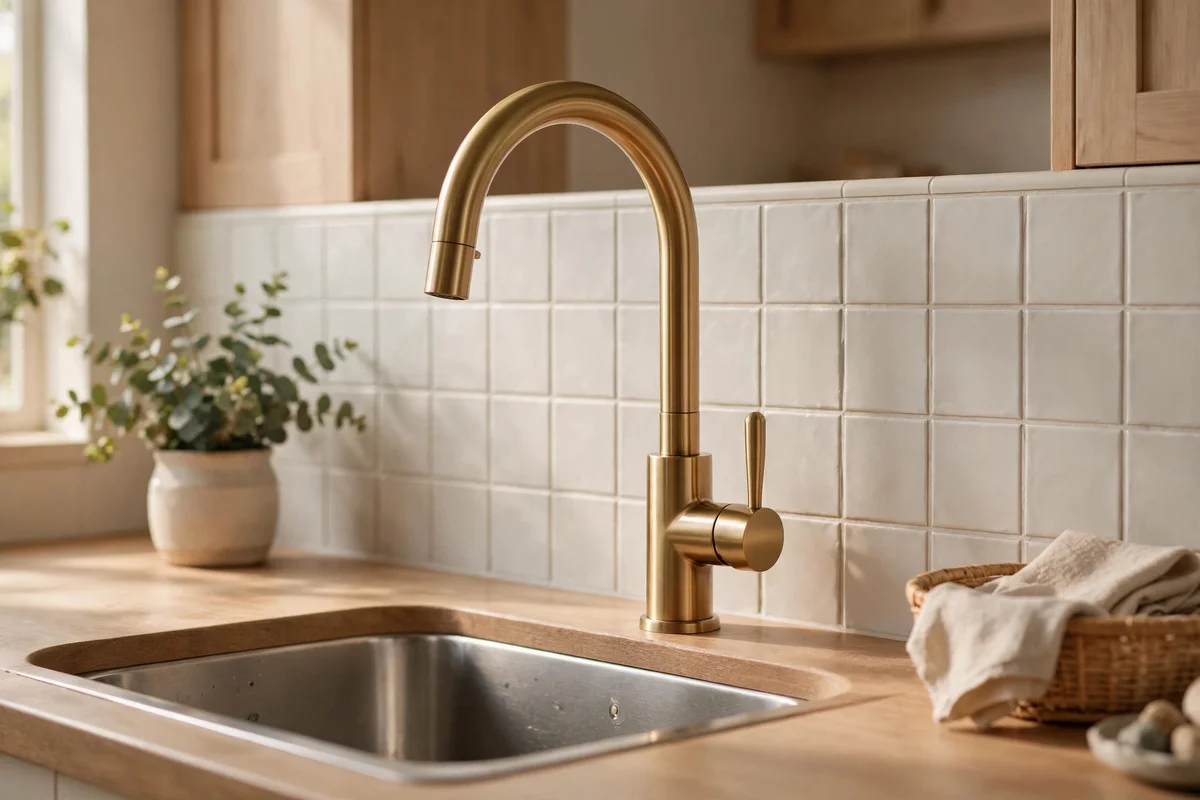
A high-arc tap in brushed brass turns the sink itself into the feature when the wall above is plain. Choose a single-lever mixer with a 25 to 30 cm spout height so tall pots slide underneath easily. Brushed or matte brass suits cream, sage and warm white kitchens and wipes clean with a dry cloth. Have a plumber fit it, since tap replacement involves isolating valves and checking seals.
Match the tap finish to the rail and shelf brackets so the metalwork reads as one deliberate choice. Run the hot tap for 30 seconds after fitting to flush any residue from new pipework. The mistake to avoid is a chrome tap with brass rails, which splits the palette and looks unfinished; one metal family keeps the corner calm. Budget tip: a mid-range brass mixer tap usually costs 80 to 150 pounds or dollars.
22. Set a Weekly Five-Minute Shelf Wipe Into the Routine
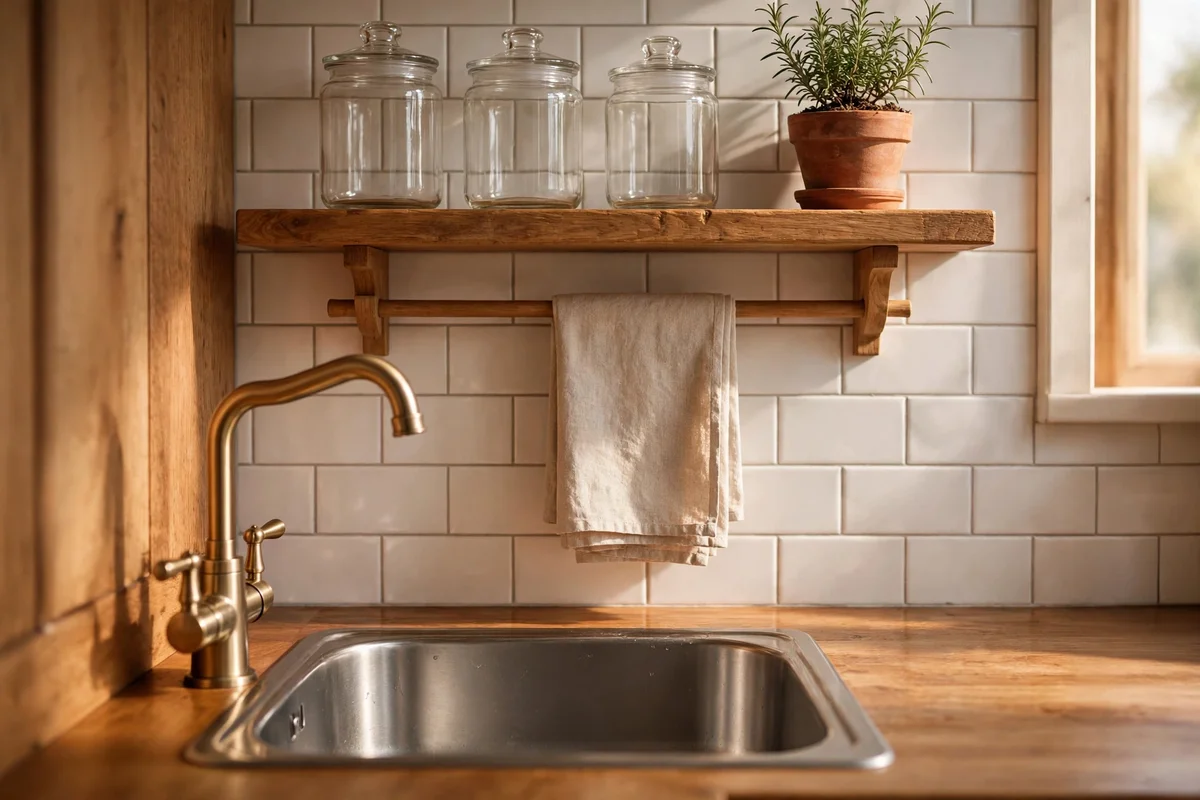
A windowless sink wall collects a fine film of grease and steam faster than an open wall, so a weekly five-minute wipe keeps everything fresh. Keep a microfibre cloth in the rail cup and run it over the shelf, jars and rail hooks every Sunday evening. Lift each jar once a month to wipe the ring it leaves behind. This tiny habit stops the slow build-up that turns a styled shelf dull.
Check the plant leaves for dust during the same wipe, since clean leaves photosynthesise better in low light. Replace the tea towel and empty herb saucers in the same five minutes so the whole corner resets. The mistake to avoid is a monthly deep clean only, which lets grime bake on between sessions; little and often wins. Budget tip: this routine costs nothing beyond the cloth and takes less time than brewing tea.
A sink without a window asks for a different kind of care, not a lesser one. The twenty-two ideas above all share one thread: they work with steam, splashes and low light instead of fighting them. A sealed shelf, a moisture-rated light, a small plant that loves humidity and artwork behind glass turn a blank wall into the calmest corner of the kitchen. Choose pieces that forgive water, keep every cable clear of the tap, and let one small patch of green do the decorating.
If the whole list feels like a lot, start with the easiest win this week: fit the shallow shelf and set three plain jars on it. One bracket, one board and an hour on Saturday morning change the wall completely, and everything else can follow one idea at a time. Wash up tonight and notice how different the corner already feels with something useful and pretty above the tap.
Frequently Asked Questions
How do I light a kitchen sink with no window?
Combine a focused task light with reflected light. A pendant hung 75 cm above the worktop or an IP65 LED strip under the cabinet removes shadows over the basin, while a mirror or pale gloss tiles bounce the glow across the wall. Use warm 2700K bulbs for a gentle feel. Keep all fittings moisture rated and clear of the main splash zone.
What can I hang above a kitchen sink without damaging the wall?
Renters can use strong adhesive hooks rated for the weight, a leaning mirror that needs no fixings, and a freestanding tiered stand instead of a shelf. A tension-rod dowel between two cabinets holds a tea towel with zero holes. Keep every item clear of the tap and choose sealed, wipeable materials. Remove adhesive mounts slowly with heat on moving day.
Which plants survive the steam above a kitchen sink?
Pothos, spider plants, basil and mint all tolerate the humidity of a busy sink, and succulents cope if placed at the dry back corner. Hang trailing plants 40 to 60 cm to the side of the tap so leaves never dip into the basin. Water only when the top 3 cm of soil dries out, and empty saucers so roots never sit in water.
How much does decorating above a windowless sink cost?
A tidy refresh runs 60 to 150 pounds or dollars: a shelf board with brackets, five matching jars, a small plant and a tea towel dowel cover the basics. Adding an IP65 LED strip and a picture light lifts the total to around 200. Spend most on the light you use daily, and keep jars and frames second-hand for the rest.
Is it safe to put electrical items above a kitchen sink?
Yes, with moisture-rated fittings and sensible placement. Use IP44 or higher lights, keep sockets at least 60 cm from the tap behind splash covers, and never drape charging cables across the draining board. Cordless and battery lights avoid the issue entirely. For fixed wiring inside splash zones, a qualified electrician should fit it.