Kitchen
21 Kitchen Rug Ideas That Add Warmth Underfoot and Survive Real Cooking
By Anna Wells · · 19 min read
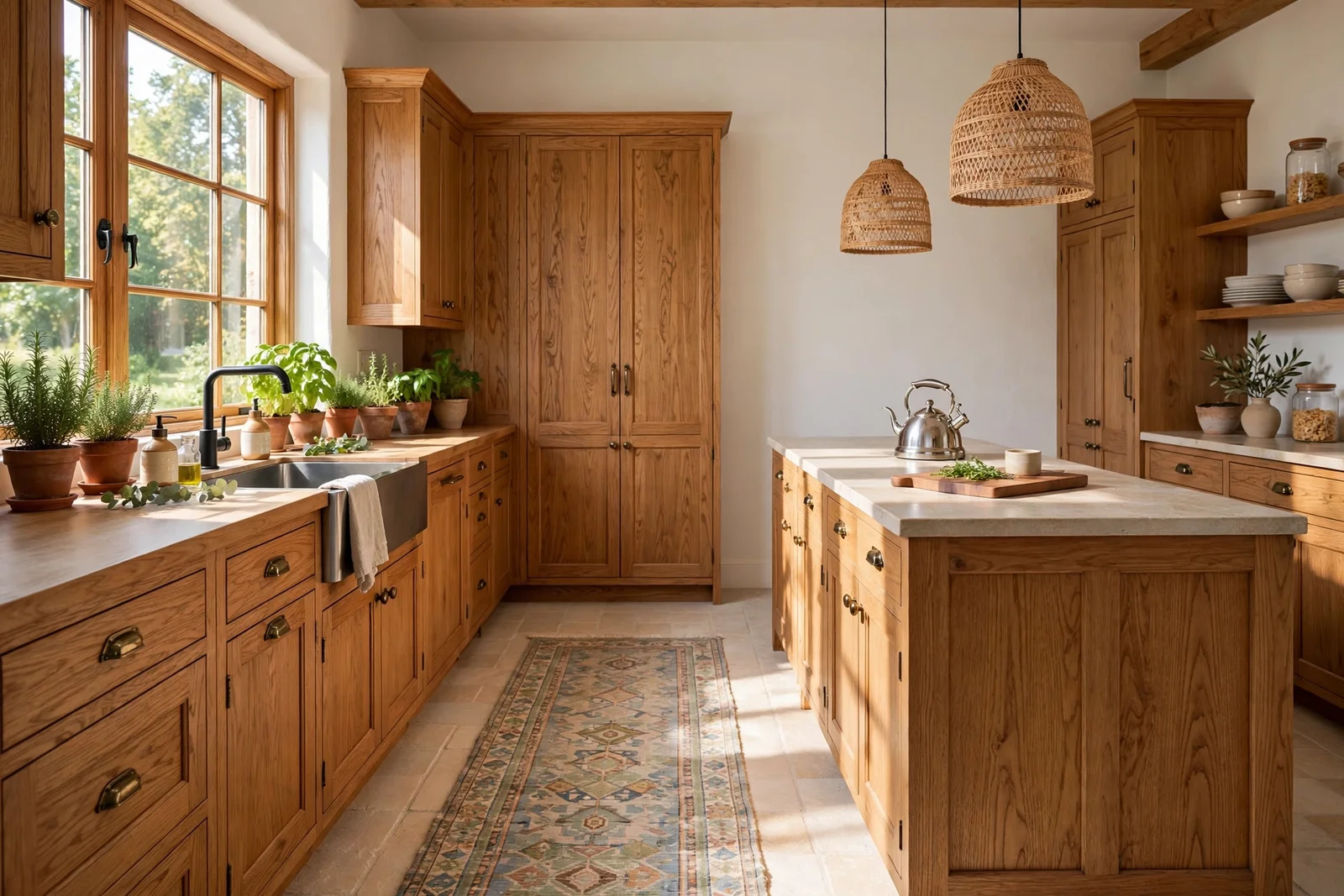
Soft runners, forgiving colours and washable weaves: 21 practical kitchen rug ideas for galley and island kitchens, with sizing, rug pads and honest care notes that survive real cooking.
Morning light slides across the kitchen floor and finds every crumb from last night’s dinner, and for a moment the room feels colder than it should. Then your feet land on a soft runner beside the sink, warmed by the sun through the window, and the whole kitchen shifts from a workspace into a room where you want to linger. A well-chosen rug does that quiet work every single day.
The trouble is that kitchens are hard on rugs. Flour dust, splashed oil, water at the sink and chairs dragged daily can ruin a pretty rug in months. The ideas below are built for real cooking: washable weaves, forgiving colours, pads that stop slipping, and placements that respect doors, drawers and the heat of the hob.
Across 21 practical ideas you will find runner lengths for galley and island kitchens, flatweave and vintage-look designs, colours that hide crumbs between cleans, rug pads for hard floors, sink and hob placement, layering over tiles and wood, width guidance so cabinet doors still open, and honest care notes on shaking, washing and drying.
Read through, pick the two or three ideas that suit your kitchen, and start with the simplest step: measuring your space. The right rug in the right size and the right spot makes cooking calmer and cleaning quicker, and your feet will thank you from the first morning.
1. Measure a Galley Runner Two-Thirds the Length of the Walkway
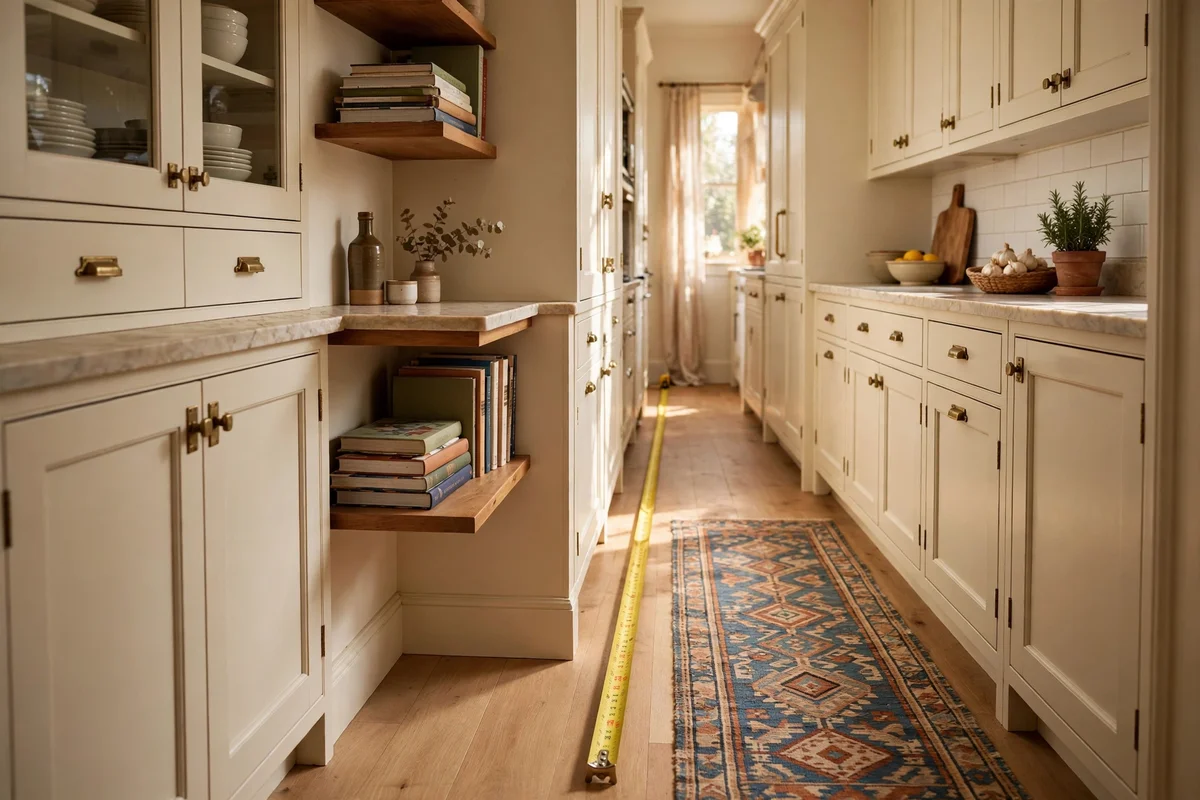
In a galley kitchen, the runner should span the working aisle without sliding under the toe-kicks. Measure the clear floor from cabinet face to cabinet face, then choose a runner about two-thirds of that walkway length. A length of 180 to 240 cm suits most galleys, leaving open floor at each end for turning and bin placement. Keep the width between 60 and 80 cm so you can still pass comfortably with a hot pan.
Budget cotton runners in this size usually cost 30 to 60, while washable flatweaves run 50 to 90. The mistake to avoid is buying wall-to-wall length; a runner that tucks under cabinetry bunches at the edges and trips the cook. If your galley has a door at one end, stop the runner 40 cm short so the door swings clear. A thin pad underneath adds standing comfort without adding height that catches shoes.
2. Centre an Island Runner on the Prep Side, Not the Seating Side
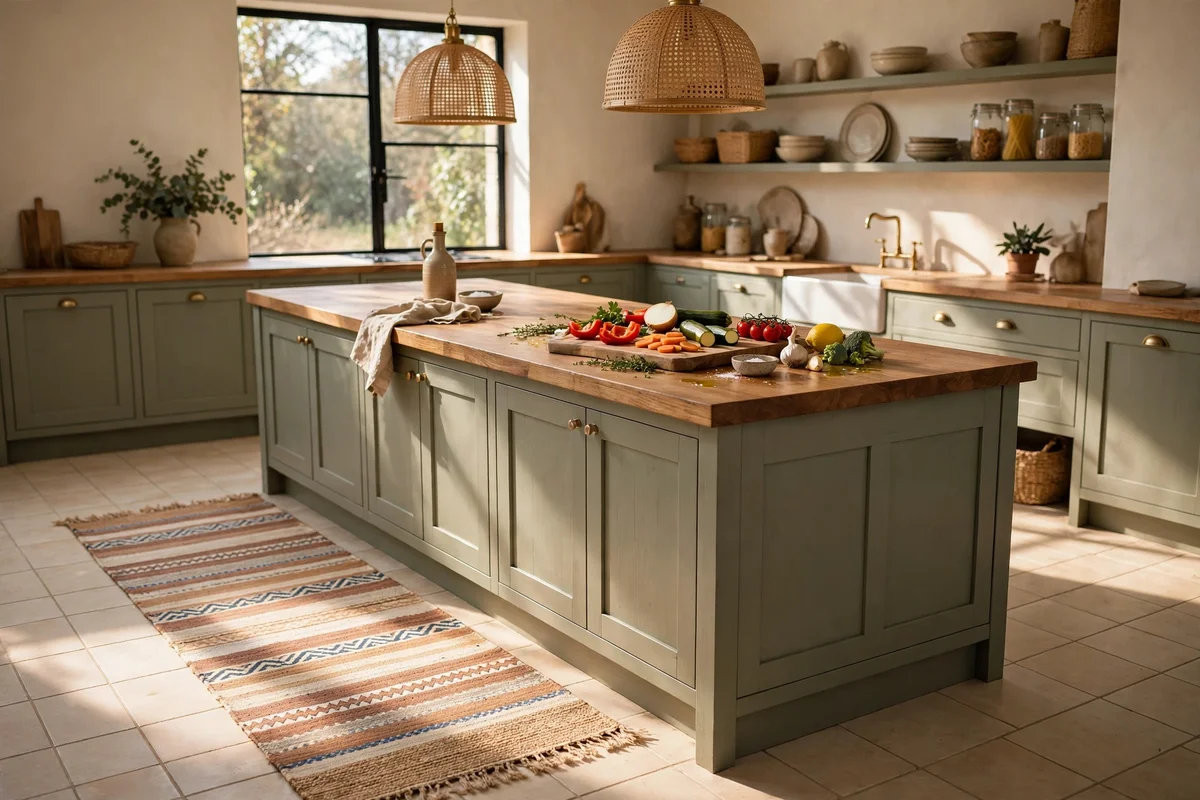
In an island kitchen the hardest-working strip of floor is where you chop, stir and rinse, so the runner belongs on the prep side of the island. Set its long centre line parallel to the island, about 45 to 60 cm from the cabinet faces, so your feet land on softness while you face the worktop. A 150 to 200 cm runner fits most single islands; for double-length islands, two matched runners read cleaner than one oversized piece.
Budget 40 to 80 per runner in washable cotton, and add a thin non-slip pad so the rug stays put on polished tiles. The mistake to avoid is running the rug along the seating side, where stools catch and drag the edges every single day. Keep the rug ends aligned with the island ends rather than sticking out, so the kitchen keeps its tidy lines. Matching both runners exactly gives a calm, deliberate look.
3. Choose Machine-Washable Cotton Rugs for Weekly Laundry Rotations
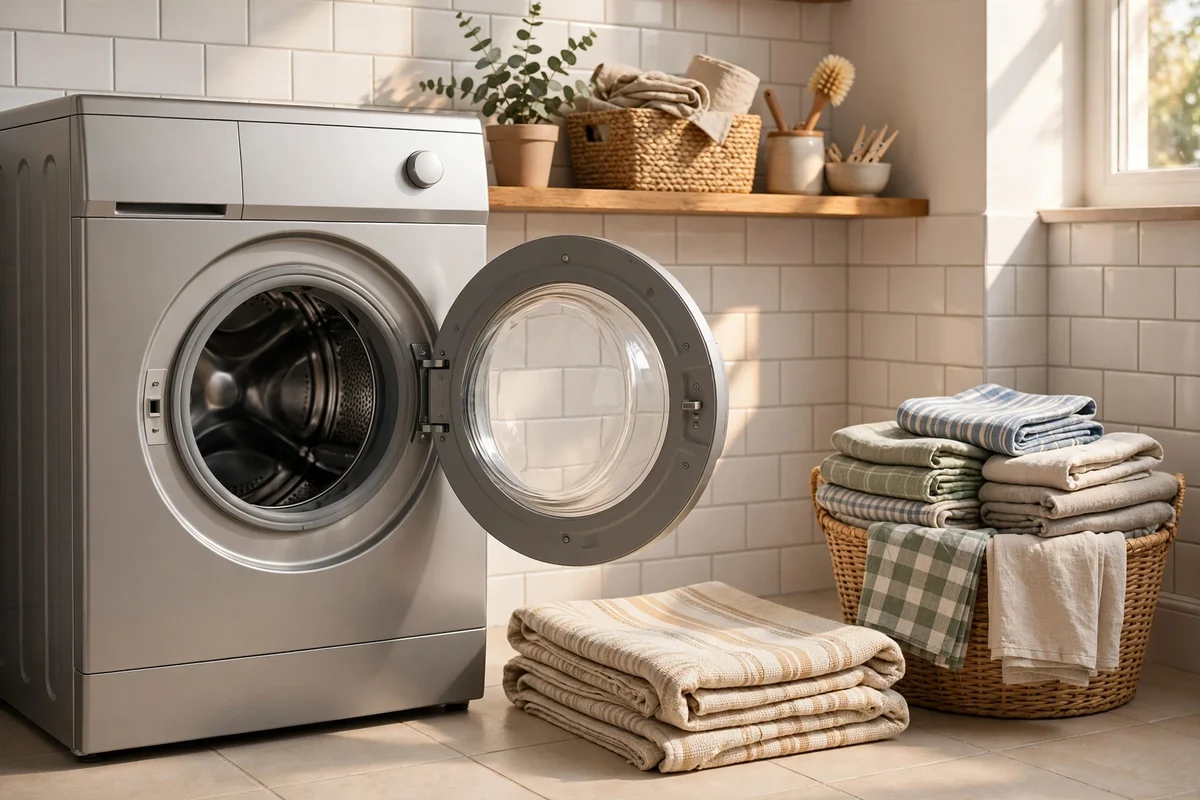
A machine-washable cotton rug is the workhorse of a real kitchen, because flour, grease and splash water all end up on the floor. Choose a rug under 3 kg so it fits a standard 7 to 9 kg washing machine without straining the drum. Wash on a 30-degree cotton cycle with mild detergent and no fabric softener, which leaves a film that attracts dirt. A mid-size runner dries within a day when hung over a rail.
Keep two rugs in rotation so one works while the other airs or dries, which doubles the life of each. Budget sets of two washable cotton runners usually cost 60 to 110. The mistake to avoid is washing on hot or drying at high heat; cotton shrinks and the backing curls, making the rug ripple underfoot. Shake the rug outdoors before washing so the machine filter does not clog with crumbs and seeds.
4. Pick Low-Pile Flatweave Rugs So Crumbs Sweep Up in One Pass
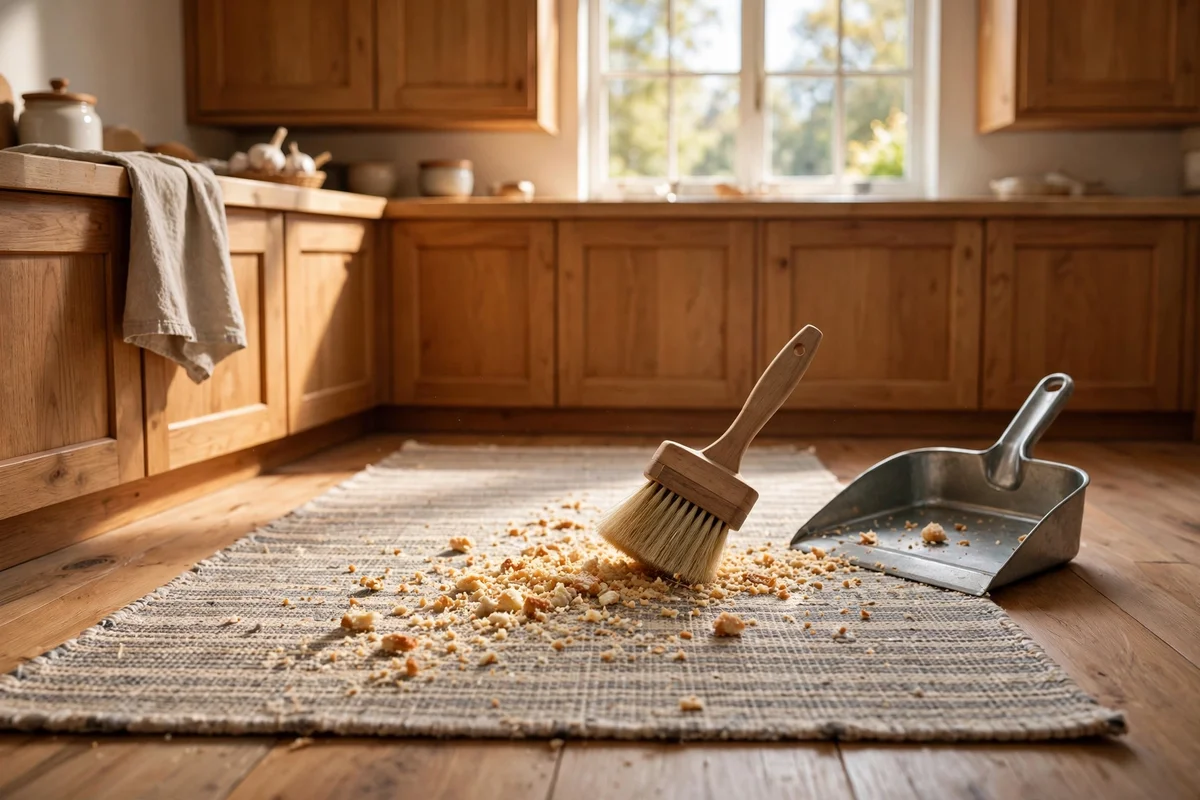
Flatweave rugs have no upright pile for crumbs to sink into, so a daily sweep or hand brush clears them in seconds. Look for a pile height under 5 mm, woven from cotton or polypropylene, both of which resist kitchen grease better than wool. Spilled milk sits on the tight surface long enough to be wiped instead of soaking straight through. Flatweaves also dry faster than pile rugs after washing, often within hours.
Expect to pay 45 to 100 for a washable flatweave runner in a 70 by 200 cm size. The mistake to avoid is choosing a shaggy or high-pile rug for the cooking zone; crumbs lodge deep, the pile mats underfoot and chair legs sink in. Pair a flatweave with a low-profile pad so doors still clear it. Use darker weaves for the busiest stretches and lighter tones where traffic is gentler.
5. Lay a Vintage-Look Rug With Busy Motifs to Hide Spots Between Cleans
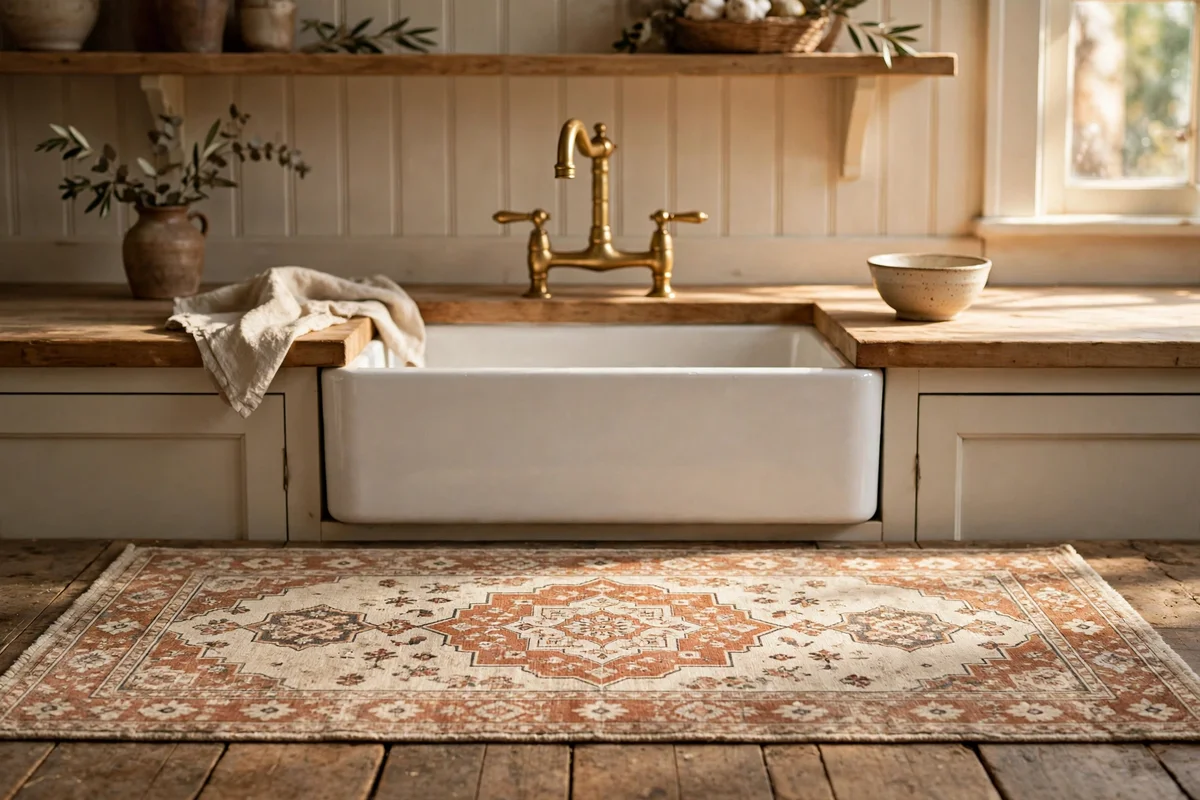
A vintage-look rug with a busy pattern, like a faded medallion or an all-over diamond lattice, disguises tomato splashes and dust far better than a plain weave. The eye reads the pattern rather than the small stain. Choose printed or low-contrast designs in clay, slate and cream tones that already look gently worn. A 70 by 160 cm piece suits the sink zone, and washable versions now mimic antique wool closely.
Prices run 40 to 90 for a printed vintage-look runner in cotton or polyester. The mistake to avoid is buying a genuine antique wool rug for the kitchen; real antiques fade in sun, stain permanently and cannot be machine washed. A modern vintage-look rug gives the charm without the worry. Keep the palette warm so the rug settles naturally beside oak cabinets and brass handles.
6. Favour Charcoal, Rust and Deep Blue Tones That Camouflage Crumbs
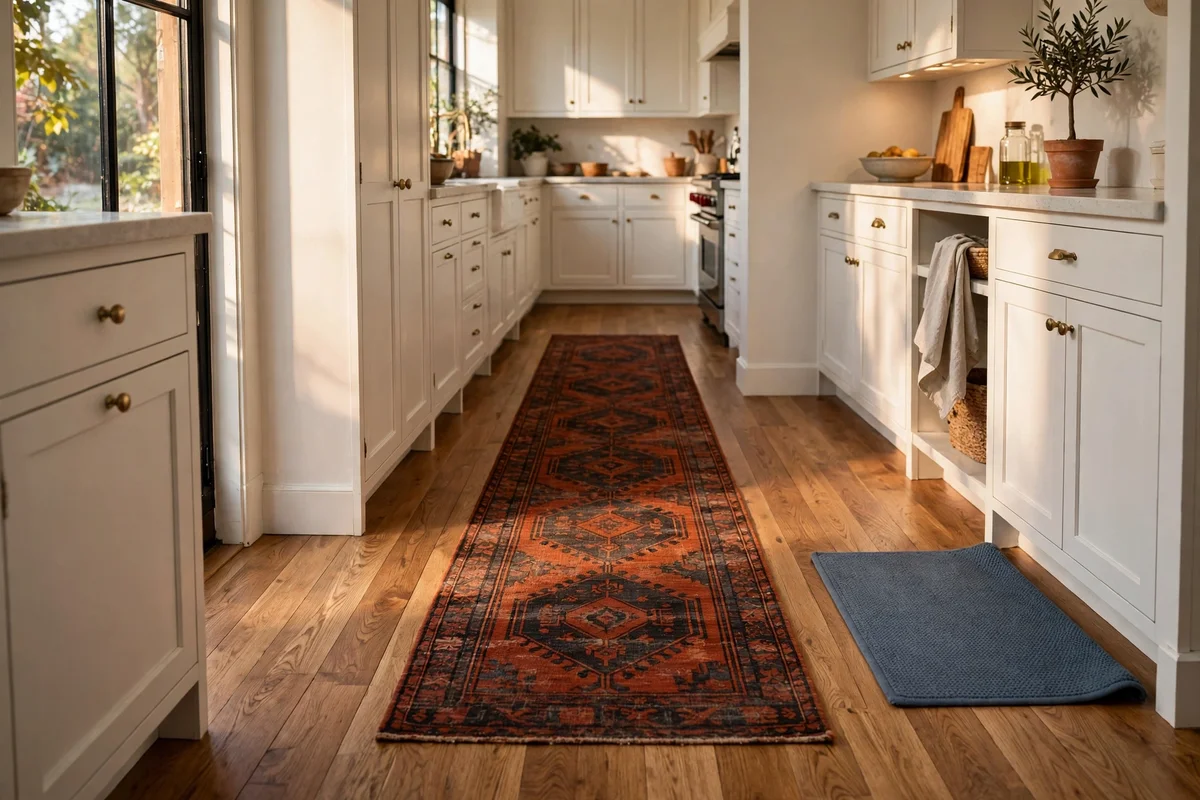
Mid-tone and dark colours hide crumbs, coffee grounds and pet hair between proper cleans, while white or pale grey rugs show every speck within hours. Charcoal, rust, deep navy and olive all sit comfortably in kitchens and pair with both white and wood cabinetry. Choose heathered or mottled yarns rather than flat solid colour; the subtle variation breaks up the outline of anything the rug catches.
There is no price premium for darker rugs; a charcoal runner costs the same as a cream one, usually 35 to 85. The mistake to avoid is buying a very dark solid rug for a north-facing kitchen, where it can make the floor feel heavy; pick one with a cream border or pattern to keep it light. Match the rug tone to your cabinet hardware, bronze with rust and steel with slate, for a settled look.
7. Anchor Every Rug With a Felt and Rubber Pad to Stop Creep on Tiles
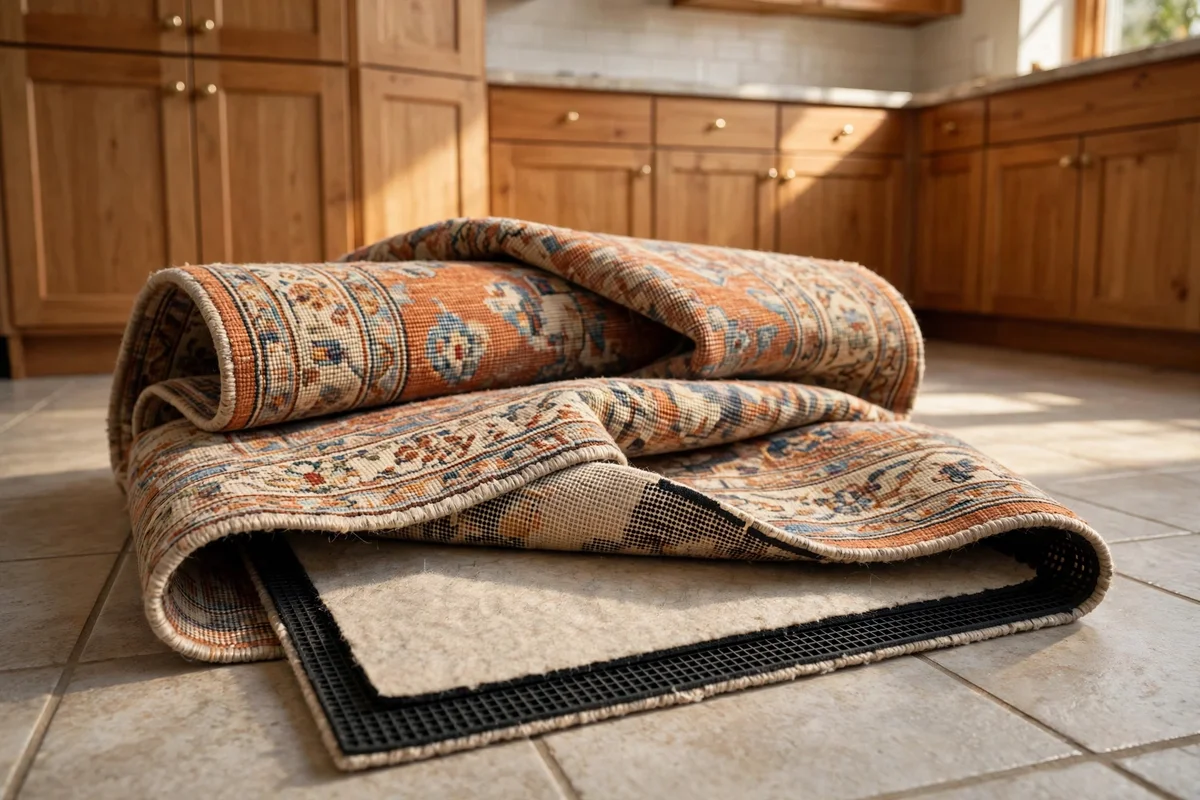
A combined felt and rubber rug pad is the single best fix for rugs that creep across hard floors. The rubber side grips the tile while the felt side cushions the rug and your feet. Cut the pad 2 to 3 cm smaller than the rug on every side so no edge peeks out. For runners, a 1 cm thick pad adds real standing comfort at the sink without raising the rug into door swings.
A runner-size pad costs 20 to 40 and lasts for years, far cheaper than replacing rugs worn thin from sliding. The mistake to avoid is using a pad made only of rubber on a warm floor, where some types can discolour tiles or stick to varnish; felt with a natural rubber backing is the safer mix. Reposition the pad every few months so the felt does not compress unevenly.
8. Position a Small Rug at the Sink for Splashed Water and Standing Comfort
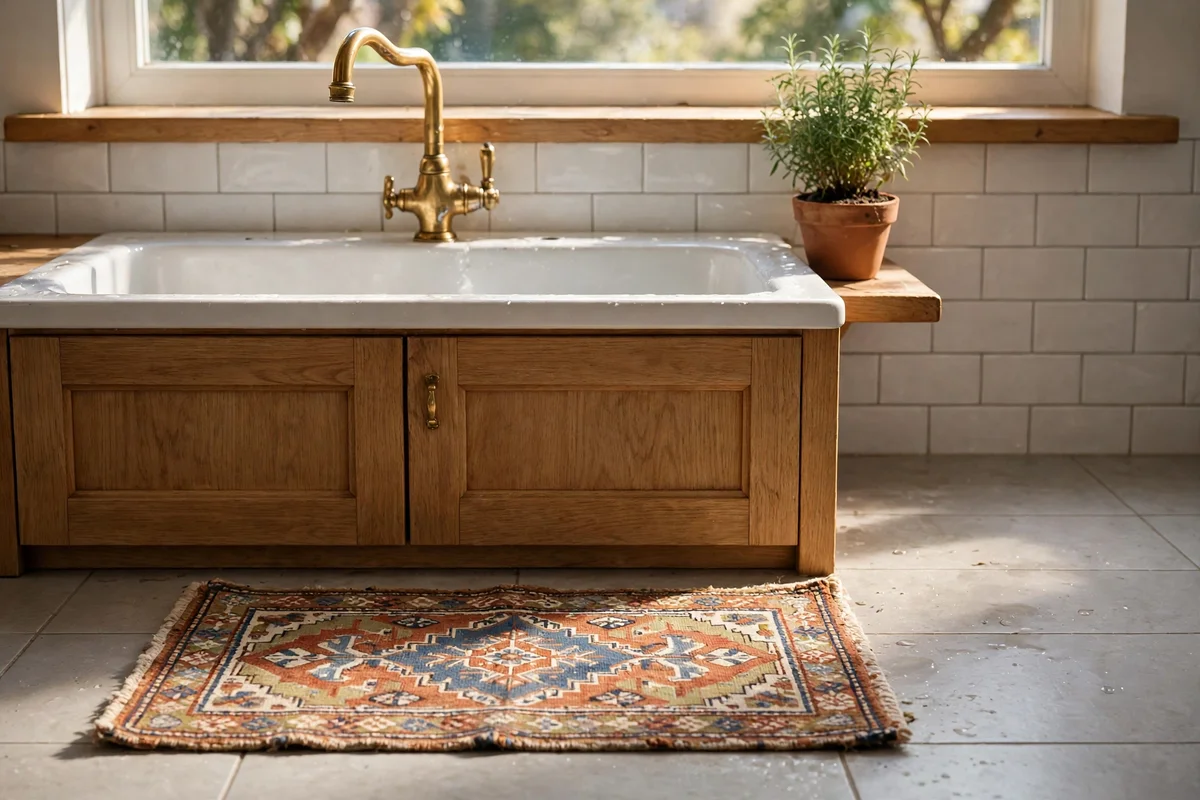
The sink zone sees constant standing, drips and dropped cutlery, so it deserves its own rug. Place a 50 by 80 cm or 60 by 90 cm rug directly in front of the sink cabinet, with its front edge about 10 cm from the cabinet face. A memory-foam washable mat or a thick flatweave both ease tired feet during long washing-up sessions. Choose a water-resistant backing so drips do not reach the floor beneath.
Small kitchen mats cost 15 to 35, and a washable one can go straight in the machine after a messy day. The mistake to avoid is letting the mat overlap the dishwasher door swing; measure the open-door footprint first and keep the rug clear of it. Shake the mat out every couple of days and machine wash it weekly, since it catches more grime than any other rug in the room.
9. Set a Heat-Safe Runner Beside the Hob, Clear of Open Flame Zones
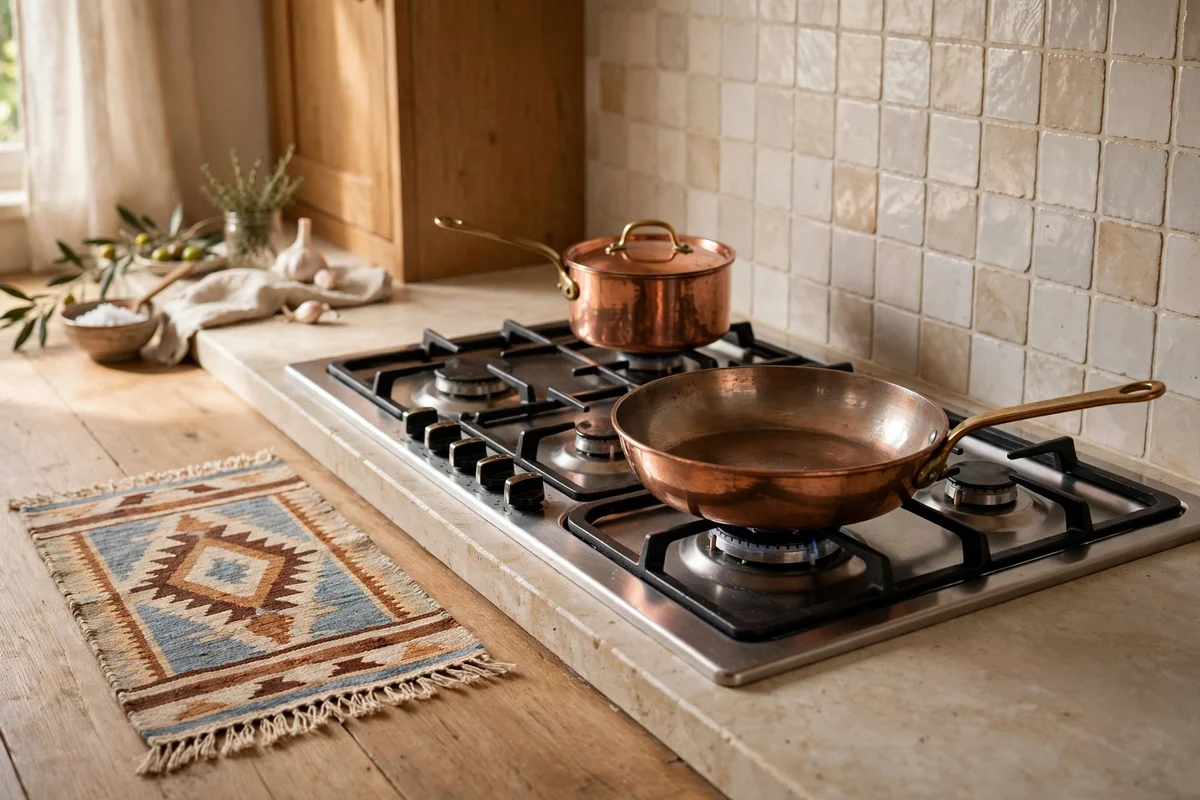
A runner beside the hob softens long stirring sessions, but placement matters for safety. Keep the rug at least 60 cm from open gas flames or hot plates, on the cool side of the aisle where you stand, never behind the cook. Choose a flatweave in cotton or a heat-tolerant polypropylene weave, and avoid rugs with loose fringes that could catch on pan handles. A 60 by 120 cm size covers the standing spot without spreading risk.
Expect 25 to 50 for a heat-sensible small runner in a kitchen-safe weave. The mistake to avoid is leaving a rug that curls at the edges near the hob; a lifted corner near a hot zone is a trip risk, so tape edges flat with rug tape or replace the rug. Shake and air this runner often, since cooking steam and fine grease settle on it daily.
10. Layer a Flatweave Over a Larger Natural Jute Base for Softness
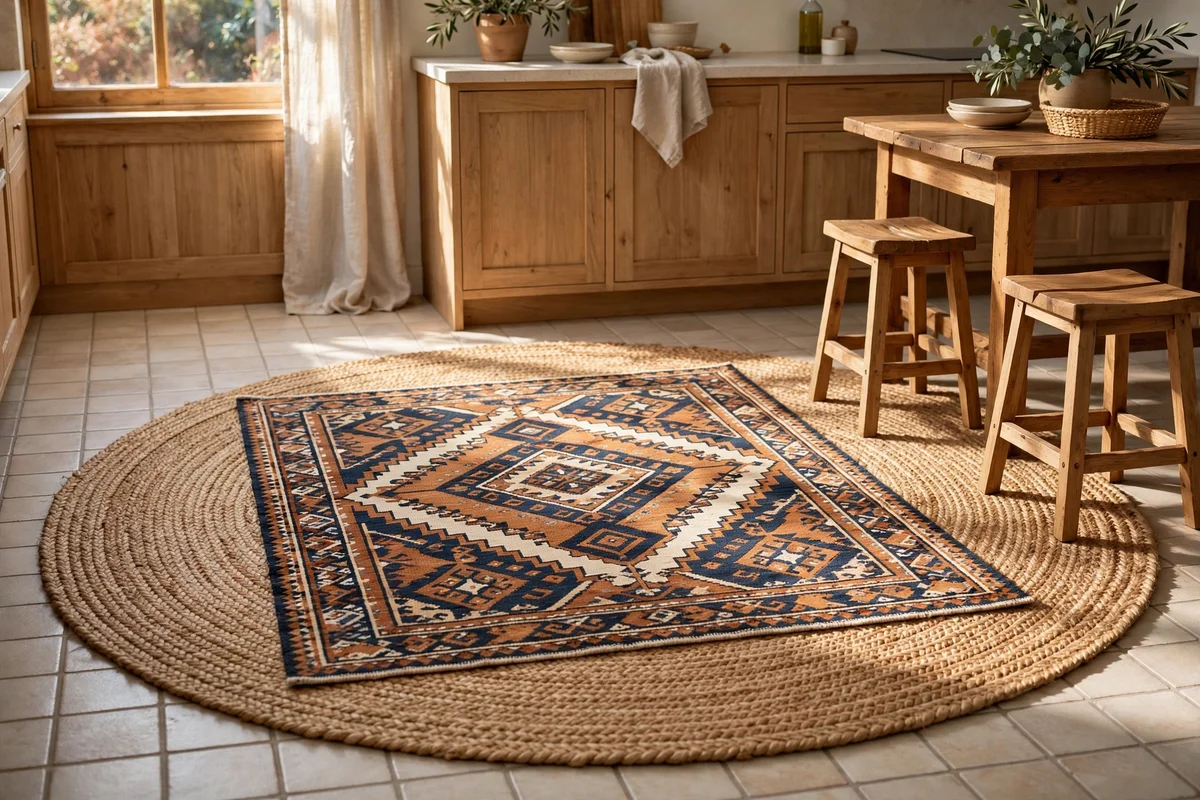
Layering a patterned flatweave over a larger jute rug gives the softness of two rugs with the washability of one. Choose or trim the jute base 20 to 30 cm larger on each side so a natural border frames the top rug. Jute sheds, so keep this combination away from the hob and treat the top flatweave as the washable layer. The pairing adds texture and warmth over cold tiles or bare concrete.
A jute base in 120 by 180 cm costs 40 to 70, plus 35 to 60 for the flatweave on top. The mistake to avoid is layering without a pad between the rugs; the top rug slides on smooth jute, so sandwich a thin non-slip layer between them. Vacuum the jute monthly with a brush head to manage shedding, and shake the flatweave weekly. Blot spills from jute fast, since it marks with water.
11. Place Rugs Over Oak or Ash Wood Floors to Protect the Finish
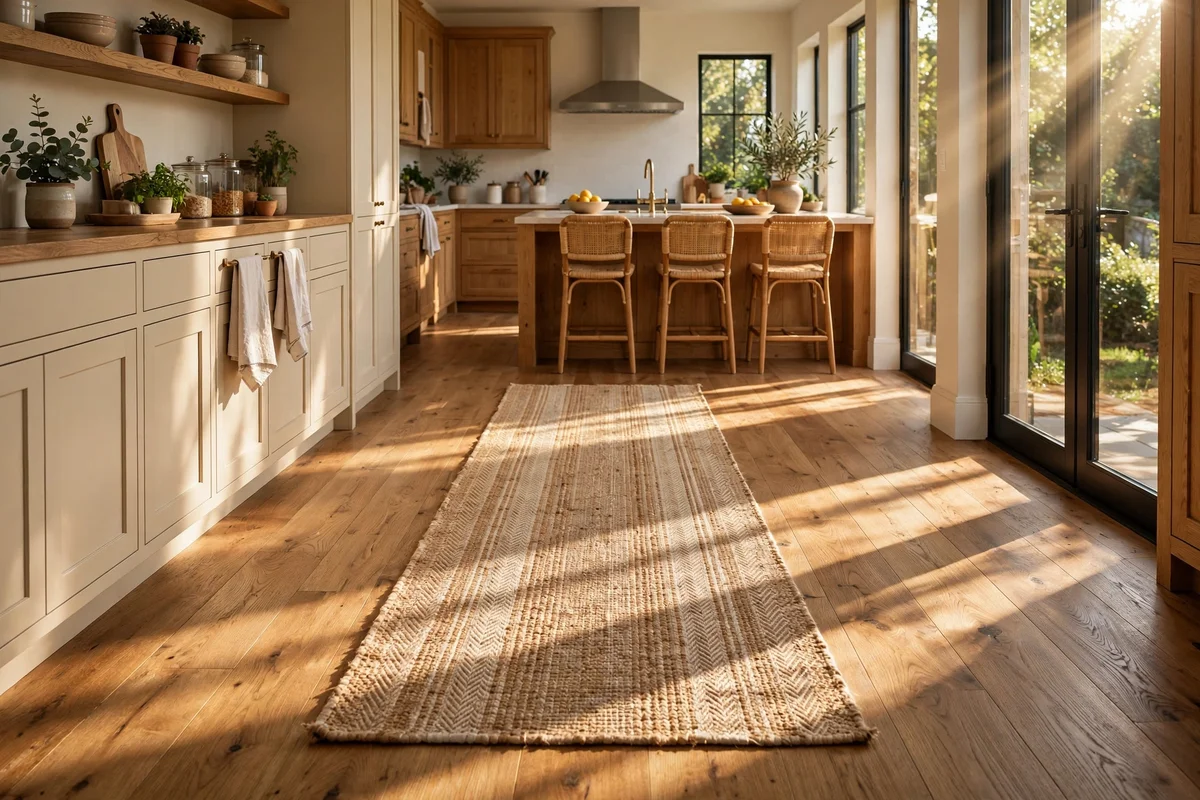
Kitchen wood floors take a beating from dropped lids, gritty shoes and chair legs, and a rug absorbs most of it. Lay runners over the main walkways where feet and heels strike hardest, especially between the sink, hob and fridge. Choose pads with natural rubber rather than latex, since some latex backings react with wood finishes and leave marks. A breathable pad matters, because sealed pads can trap moisture against the boards.
Rugs cost far less than refinishing a floor, and a 200 by 70 cm washable runner at 45 to 90 pays for itself in avoided scratches. The mistake to avoid is leaving a rug in one spot for years; sunlight darkens the exposed boards around it, leaving a pale outline when you move the rug. Rotate rug positions twice a year, and wipe the floor beneath monthly to check for trapped damp.
12. Keep Rug Width 15 cm Narrower Than the Cabinet Swing Zone
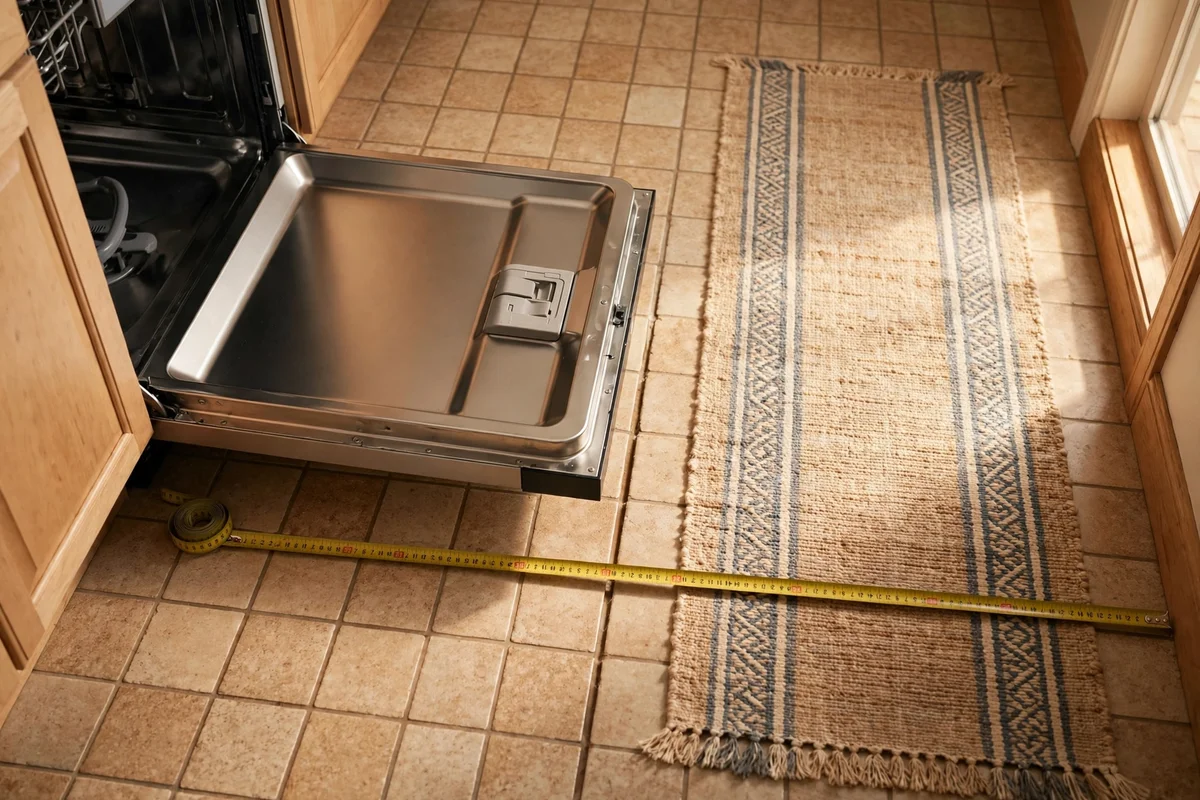
Cabinet and appliance doors need clearance, so size the rug to the doors rather than the floor. Measure the widest door swing, including the dishwasher and pull-out bins, then choose a rug at least 15 cm narrower than that clear zone. A 70 cm wide runner suits a 100 cm aisle, leaving 15 cm of bare floor on each side for doors and feet. Low-profile rugs under 8 mm total height, including the pad, clear most door bottoms.
Measuring first costs nothing, yet the wrong width is the most returned rug mistake in kitchens. The mistake to avoid is pushing a rug right under the cabinet face where the dishwasher door lands when opened; it wedges the rug and strains the door seal. Test with the cardboard from the packaging laid on the floor, and swing every door before the rug goes down.
13. Shake Rugs Outdoors Every Few Days Instead of Waiting for Wash Day
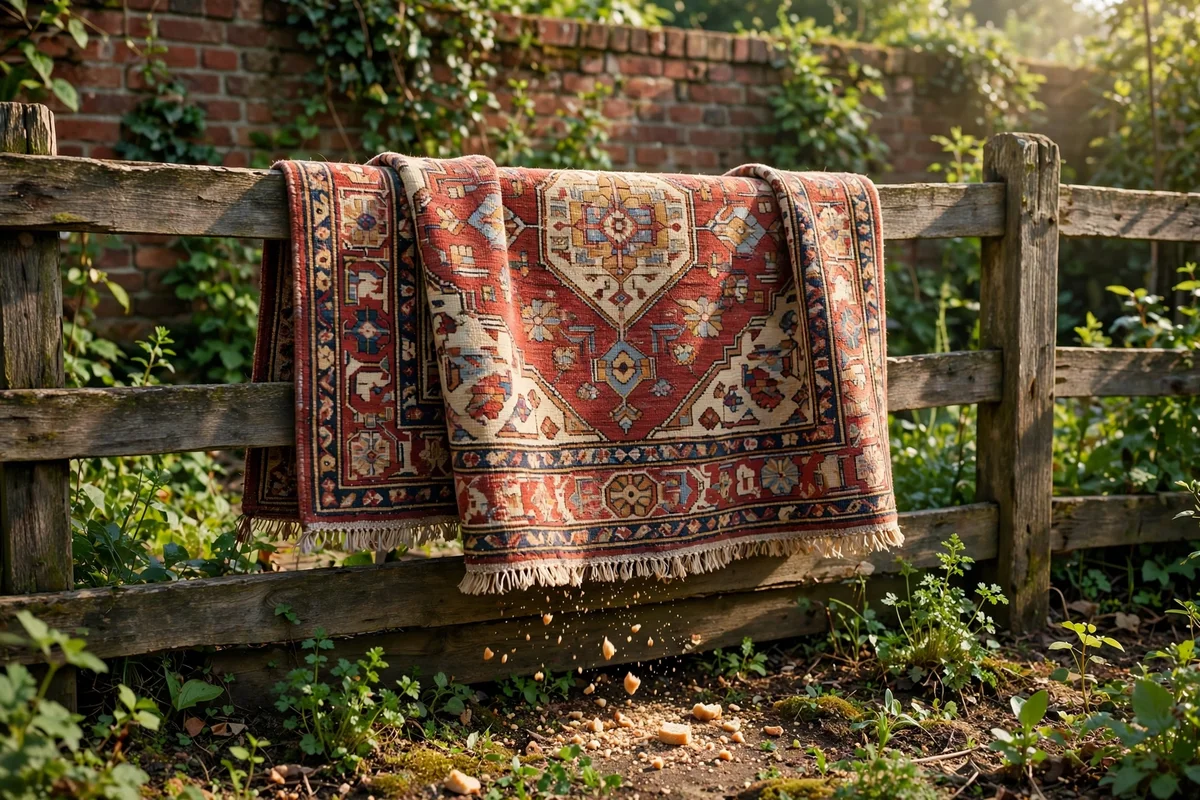
A quick shake every two or three days removes most dry dirt before it grinds into the weave. Take the rug outside, hold it by the short edge and snap it firmly two or three times; most crumbs, flour dust and pet hair fall straight out. This takes under a minute for a runner and keeps the fibres from trapping grit that dulls colour. Shake away from open windows and neighbours’ washing lines.
This habit stretches machine washes to every three or four weeks instead of weekly, which doubles a rug’s working life. The mistake to avoid is beating the rug with a stick or broom handle; sharp strikes break fibres and crack printed patterns over time. For delicate vintage-look rugs, drape the rug over a rail and brush it with a soft hand brush instead. Always shake on a dry day so the rug does not pick up damp.
14. Wash Kitchen Runners Every Two to Three Weeks on a Cool Cycle
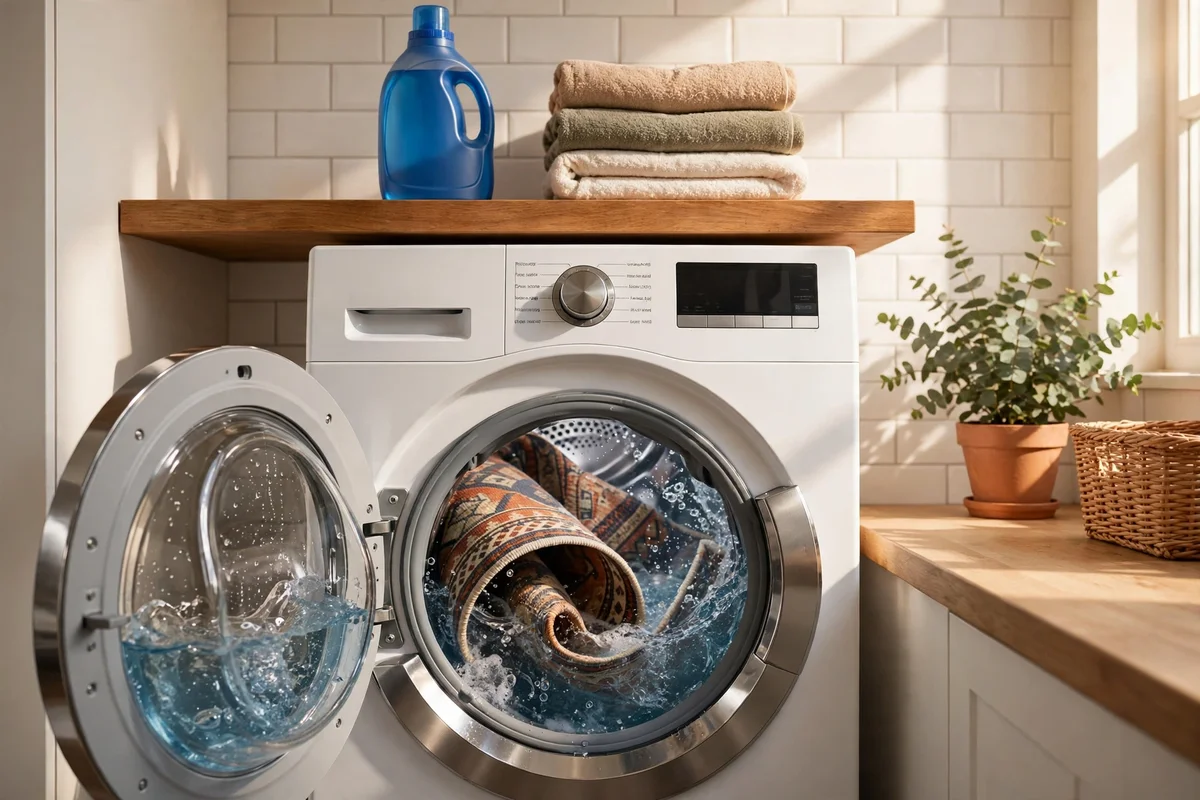
Kitchen runners absorb invisible grease even when they look clean, so a regular wash cycle matters more than spot cleaning. Machine-washable rugs should go through a 30-degree wash every two to three weeks, more often if you fry daily. Use half the normal detergent dose; excess soap leaves residue that attracts dirt faster. A mesh laundry bag protects fringes and bound edges from catching in the drum.
Washing a rug every three weeks costs pennies in water and detergent, far less than replacing a prematurely grey rug. The mistake to avoid is waiting until the rug smells or feels stiff; by then grease has set into the backing and may never fully lift. Tie the wash to another routine, like changing bed linen, so the habit sticks without needing a reminder.
15. Dry Rugs Flat or Line-Hung to Keep Edges From Curling
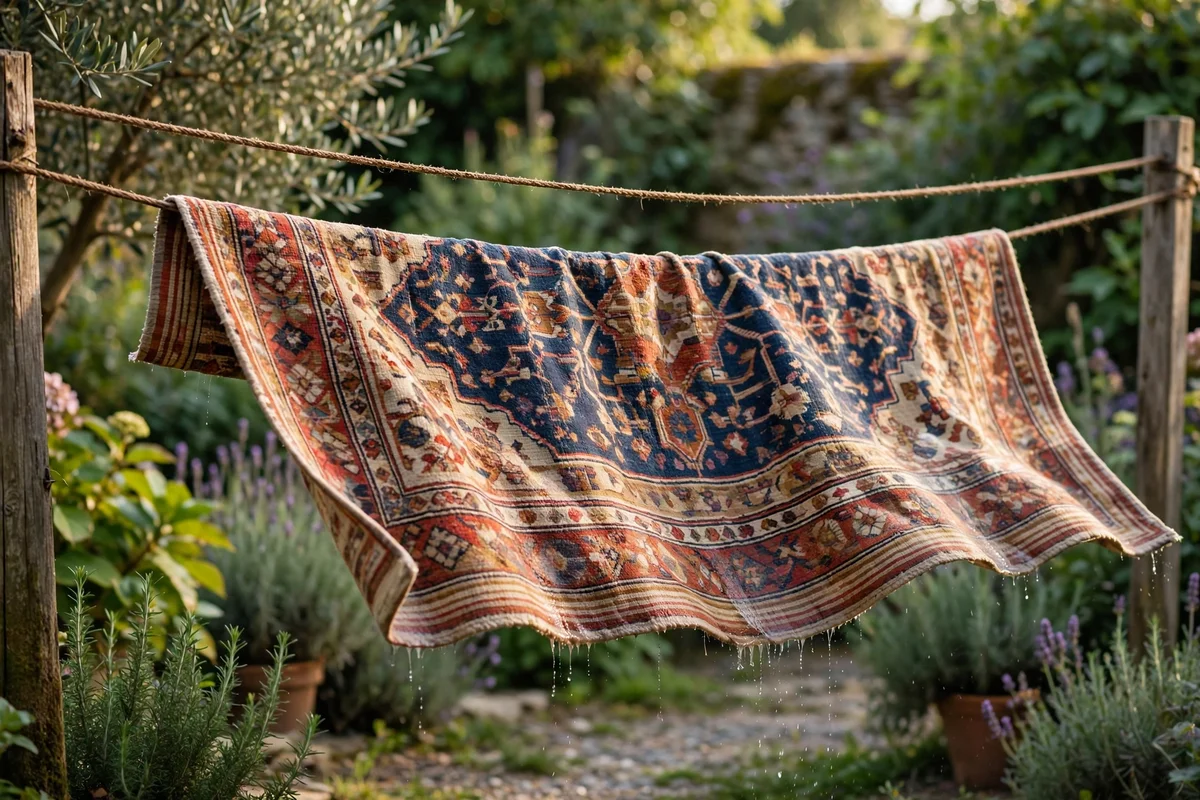
How a rug dries decides whether it lies flat afterwards. Lay the washed rug flat on a clean dry surface, or hang it evenly over two parallel lines so the weight spreads and the weave dries straight. Avoid draping it over a single thin line, which creases the middle. Turn the rug once during drying, and keep dark colours out of direct midday sun, since harsh sun fades dyes unevenly.
Flat drying takes six to twelve hours depending on thickness, so wash in the morning on a breezy day. The mistake to avoid is tumble drying on high heat; heat shrinks cotton, warps printed designs and melts some synthetic backings. If edges still curl after drying, lay the rug upside down with books on the corners overnight. A flat rug stays put and never trips the cook.
16. Fold a Small Washable Mat by the Bin for the Messiest Spot
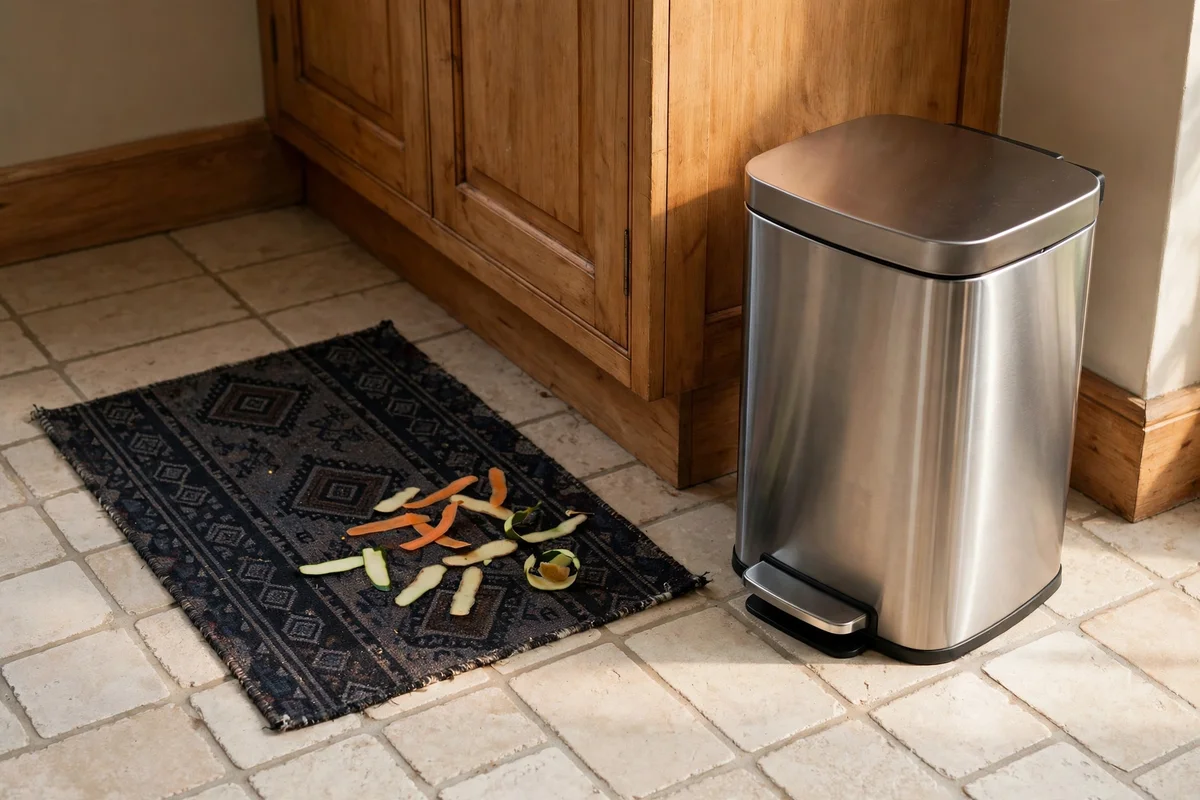
The patch of floor around the bin catches peelings, coffee drips and missed shots at the bin mouth, so give it its own small washable mat. A 40 by 60 cm mat sits neatly beside or under a freestanding bin and catches what the main runner misses. Choose a dark, patterned mat with a rubberised back that stays put on tiles. This little mat can be shaken daily and washed with the tea towels.
At 10 to 25, it is the cheapest upgrade in this list and the one that shows results fastest. The mistake to avoid is using a bath mat with a thick foam core here; foam cores trap kitchen smells and take days to dry. A thin washable cotton or microfibre mat dries in hours. Replace it yearly, since this spot wears faster than anywhere else in the kitchen.
17. Rotate Two Runners Seasonally So One Rests While the Other Works
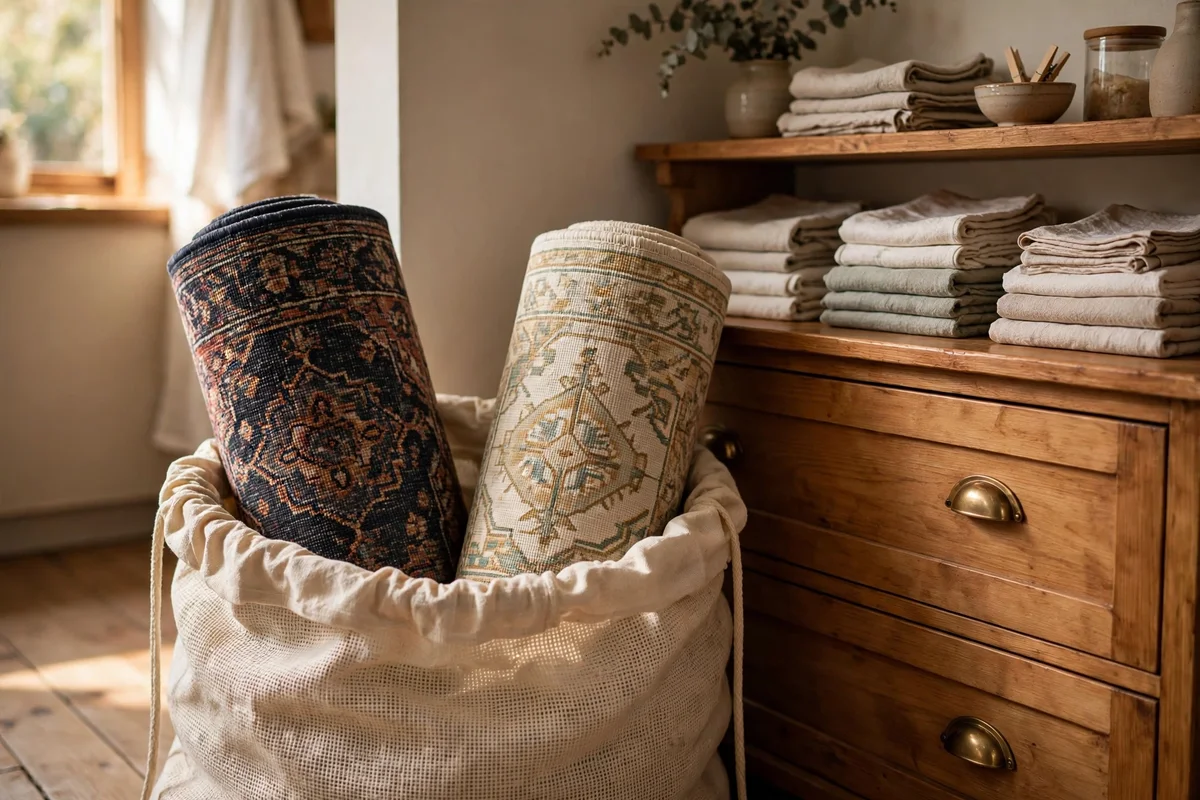
Running two runners in rotation halves the wear on each and keeps the kitchen feeling fresh. Use a darker, heavier rug in winter when muddy boots and wet paws come through, and a lighter washable weave in summer when doors stay open and dust blows in. Store the resting rug rolled, not folded, in a breathable cotton bag to avoid creases and musty smells. Label the bag so you grab the right one.
Two mid-range runners cost 70 to 140 together but outlast a single rug worked year-round. The mistake to avoid is storing the spare in a plastic bag or damp cupboard; trapped moisture breeds mildew that no wash fully removes. Air the resting rug outdoors for an hour before each swap. Swapping with the seasons takes ten minutes and doubles the visible life of your rugs.
18. Choose Stain-Resistant Indoor-Outdoor Rugs for Splash-Prone Corners
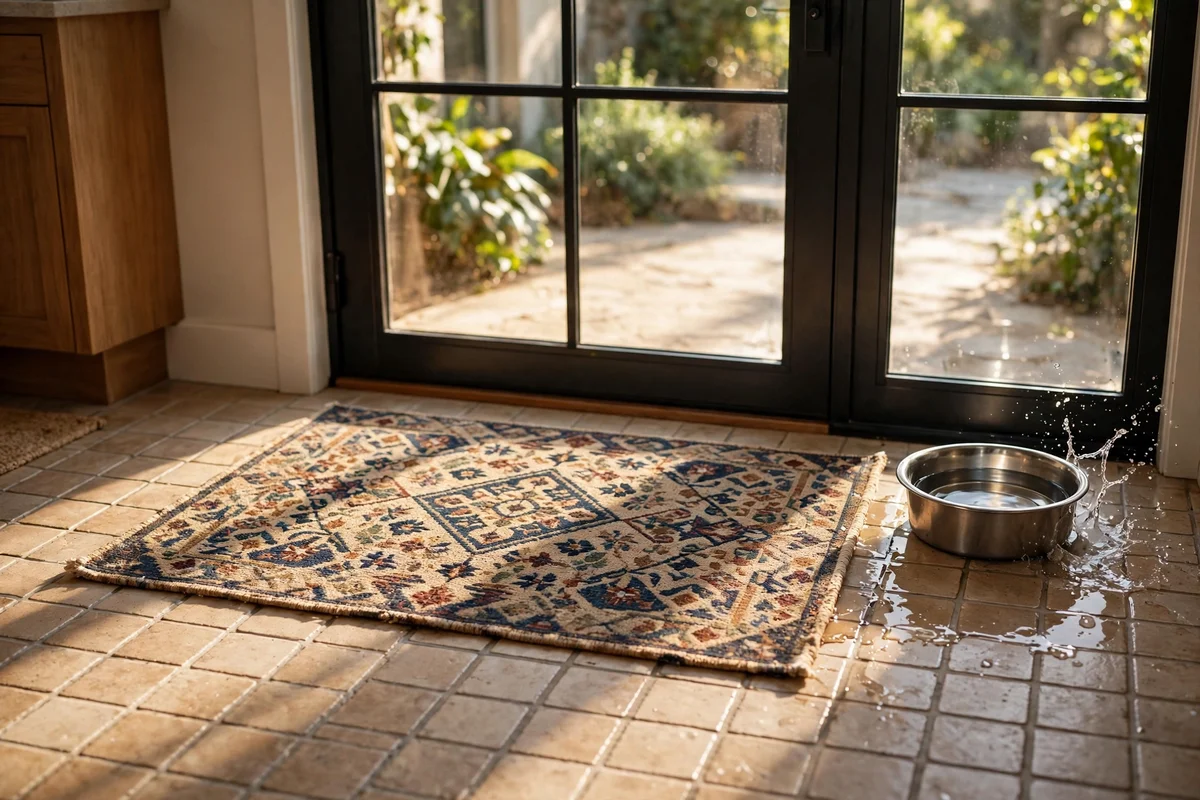
Indoor-outdoor rugs, woven from polypropylene, shrug off the splashes that land near the back door, the dog bowl or the under-sink cupboard. Spilled water beads on the surface and tomato sauce wipes away with a damp cloth instead of staining. Look for flat, tight weaves in designs that suit interiors; modern versions no longer look like patio mats. They hose clean outside and dry within an hour or two in warm air.
A 60 by 90 cm indoor-outdoor kitchen rug costs 20 to 45, excellent value for high-splash zones. The mistake to avoid is placing one over a polished wood floor without checking the backing; some hard weaves can scratch softer finishes, so use a felt pad beneath. Choose patterns with busy motifs in warm tones so the rug feels like kitchen decor rather than borrowed garden kit.
19. Trim Fringes Short or Fold Them Under to Stop Chair Snags
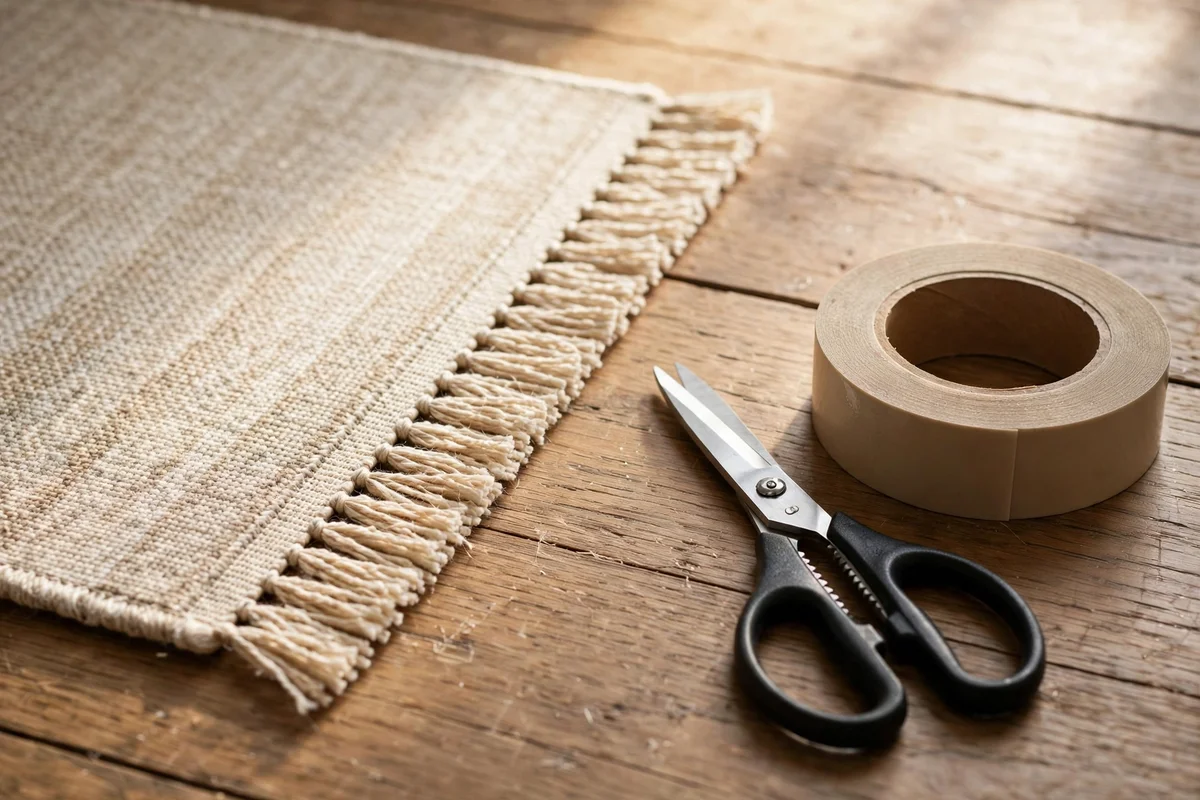
Long fringes on a kitchen rug catch chair legs, vacuum nozzles and the dishwasher door edge, and they fray fast in a busy room. Trim handmade-looking fringes to 2 cm and comb them straight, or fold them under the rug and secure with a line of rug tape. Buying fringe-free rugs with bound or hemmed edges avoids the problem entirely. Flatweaves and indoor-outdoor rugs usually come fringe-free by design.
Trimming costs nothing and takes five minutes with sharp scissors, but cut evenly and never pull threads from the weave. The mistake to avoid is leaving 8 to 10 cm fringes in a walkway; they curl, darken with dirt and make the rug look tired within months. If you love the fringed look, keep it on rugs in quiet zones, like under a sideboard, where nothing snags them.
20. Buy Rugs With Bound Edges That Survive Frequent Machine Washes
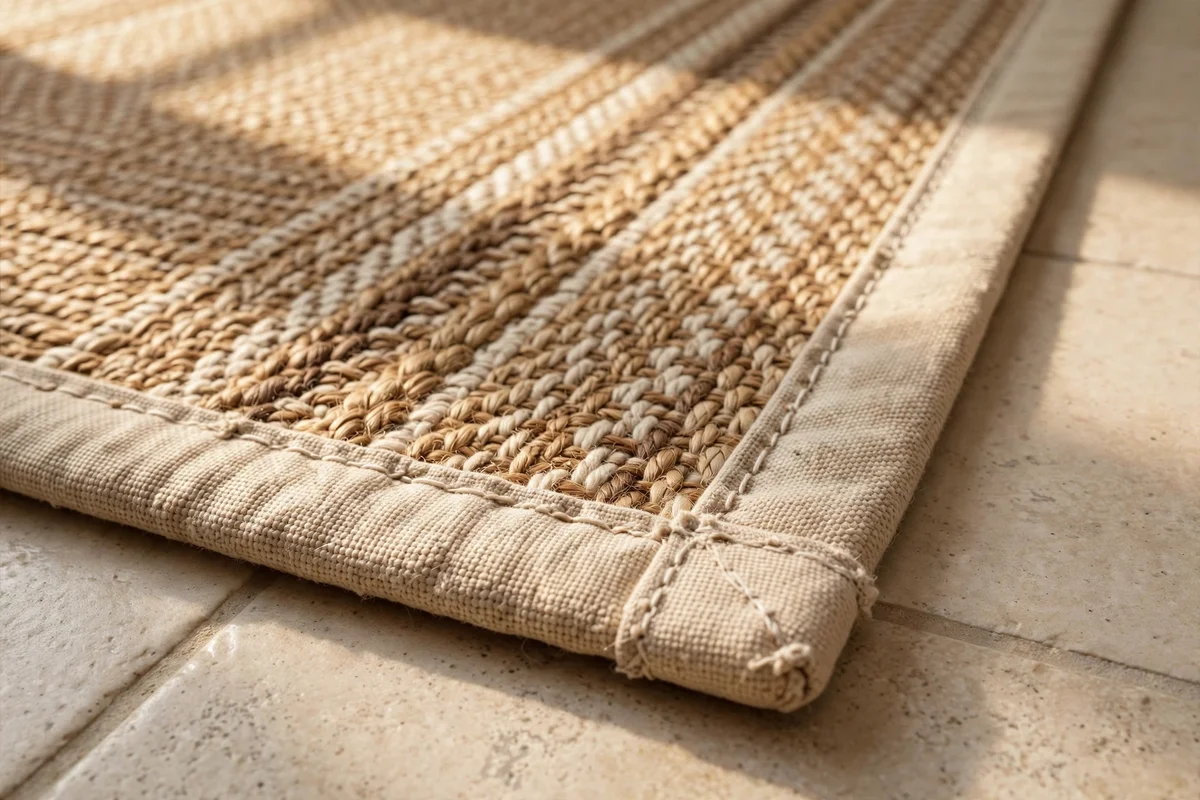
Bound or serged edges hold the rug together through dozens of wash cycles, while cheap overlocked or glued edges unravel after a handful of washes. Before buying, run a finger along the edge; it should feel firm and even, with no loose threads. Machine-washable rugs from reputable makers state the edge construction in the listing, so check before you order. Bound edges also lie flatter, which keeps doors clearing them.
Expect to pay 10 to 20 more for a properly bound rug of the same size, money well spent when the rug washes monthly. The mistake to avoid is choosing a rug with glued-on binding for a kitchen; heat and water soften the glue and the edge peels within a year. Look for stitching you can see and feel. A well-bound rug keeps its shape for three to five years of kitchen duty.
21. Test Rug Placement for One Week Before Committing to a Size
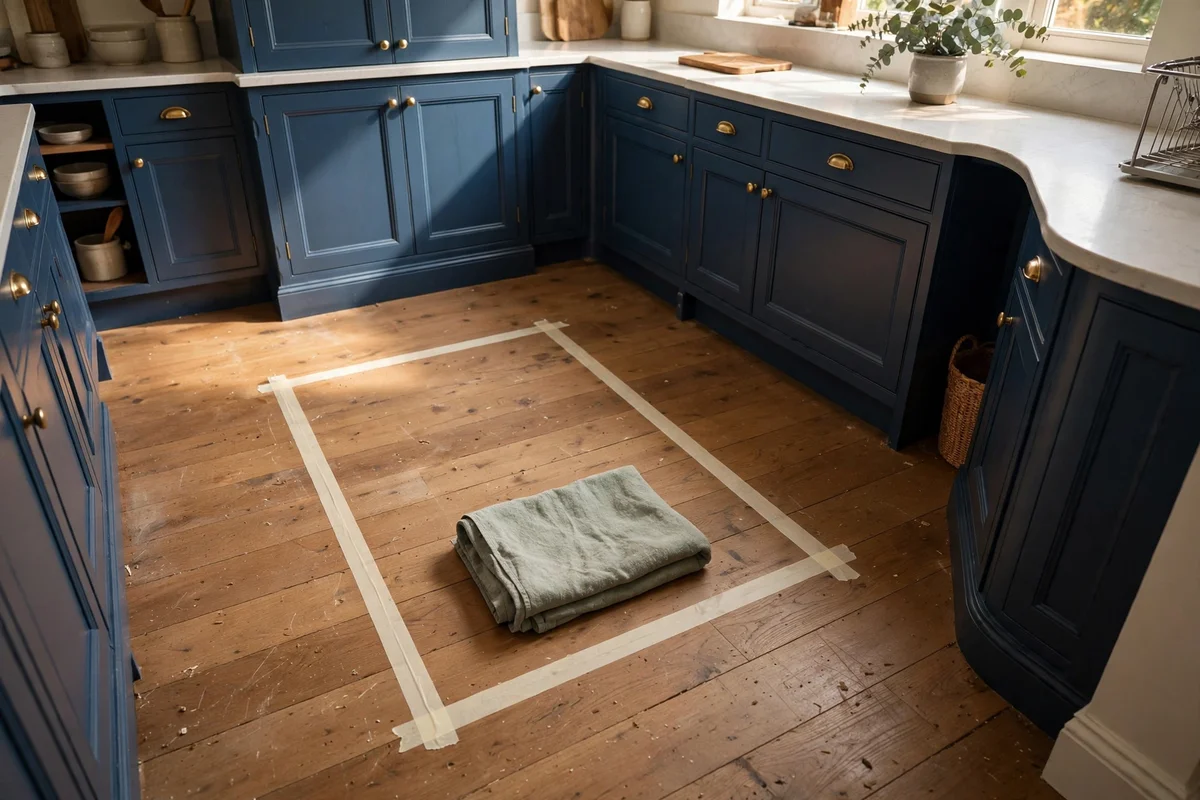
Live with the placement before you commit, since a kitchen reveals its true traffic patterns only in daily use. Lay down a cheap temporary mat or an old towel in the planned spot for a week and watch where feet actually go, where doors swing and where crumbs gather. This trial often moves the rug 30 cm one way or changes the size you thought you needed. Mark the final outline with masking tape before ordering.
The trial costs nothing and prevents the most common kitchen rug regret, the wrong size bought in haste. The mistake to avoid is ordering two matching runners before testing one; test a single placement, then mirror it. Note the week’s messiest spots and choose the final rug’s colour and weave to match them. A patient week now buys years of a rug that simply works.
A kitchen rug earns its place when it makes cooking easier and cleaning simpler, not when it only looks good in a photograph. The ideas above share one spirit: choose rugs that work hard, wash well and forgive daily mess. Warmth underfoot, colours that hide crumbs and pads that hold steady are small comforts that reward you every time you step into the room.
If you do one thing this week, measure your main walkway and the widest door swing, then choose one washable runner in a forgiving colour to test the spot. Live with it for seven days, shake it out twice, and notice how the kitchen feels underfoot. That single, well-chosen rug is often the beginning of a kitchen that finally feels finished.
Frequently Asked Questions
What size runner suits a galley kitchen?
Aim for a runner about two-thirds of the walkway length and 60 to 80 cm wide. In most galleys that means 180 to 240 cm long, stopping 40 cm short of any door swing. Keep the rug clear of cabinet toe-kicks and pair it with a thin pad so it stays put without raising the trip height.
Are washable kitchen rugs really worth it?
Yes, if you cook most days. A washable cotton or polypropylene runner goes through the machine every two to three weeks on a 30-degree cycle, which stops grease setting in. Buy two in rotation so one rests while the other works; the pair usually lasts twice as long as a single rug and costs 60 to 110.
How do I stop a kitchen rug sliding on tiles?
Use a combined felt and rubber pad cut 2 to 3 cm smaller than the rug on all sides. The rubber grips the tile while the felt cushions the rug. Avoid pads made only of rubber on warm floors, since some can mark tiles or stick to varnish. Check the pad every few months and replace it when the rubber backing wears thin.
What colour rug hides kitchen dirt best?
Mid-tone and dark colours with heathered or mottled yarns hide crumbs, coffee grounds and dust best. Charcoal, rust, deep navy and olive all suit most cabinetry. Avoid pale solids, which show every speck, and very dark solids in north-facing kitchens, where they can make the floor feel heavy; a patterned border keeps the look balanced.
Can I put a rug on a wooden kitchen floor?
Yes, and it protects the finish from scratches and heel strikes. Use a breathable pad with a natural rubber backing, since some latex backings can mark varnish. Rotate the rug twice a year so sunlight does not leave a pale outline on the boards, and wipe beneath the rug monthly to check for trapped moisture.