Kitchen
21 Kitchen Window Decor Ideas That Keep the Light and Lose the Clutter
By Anna Wells · · 19 min read
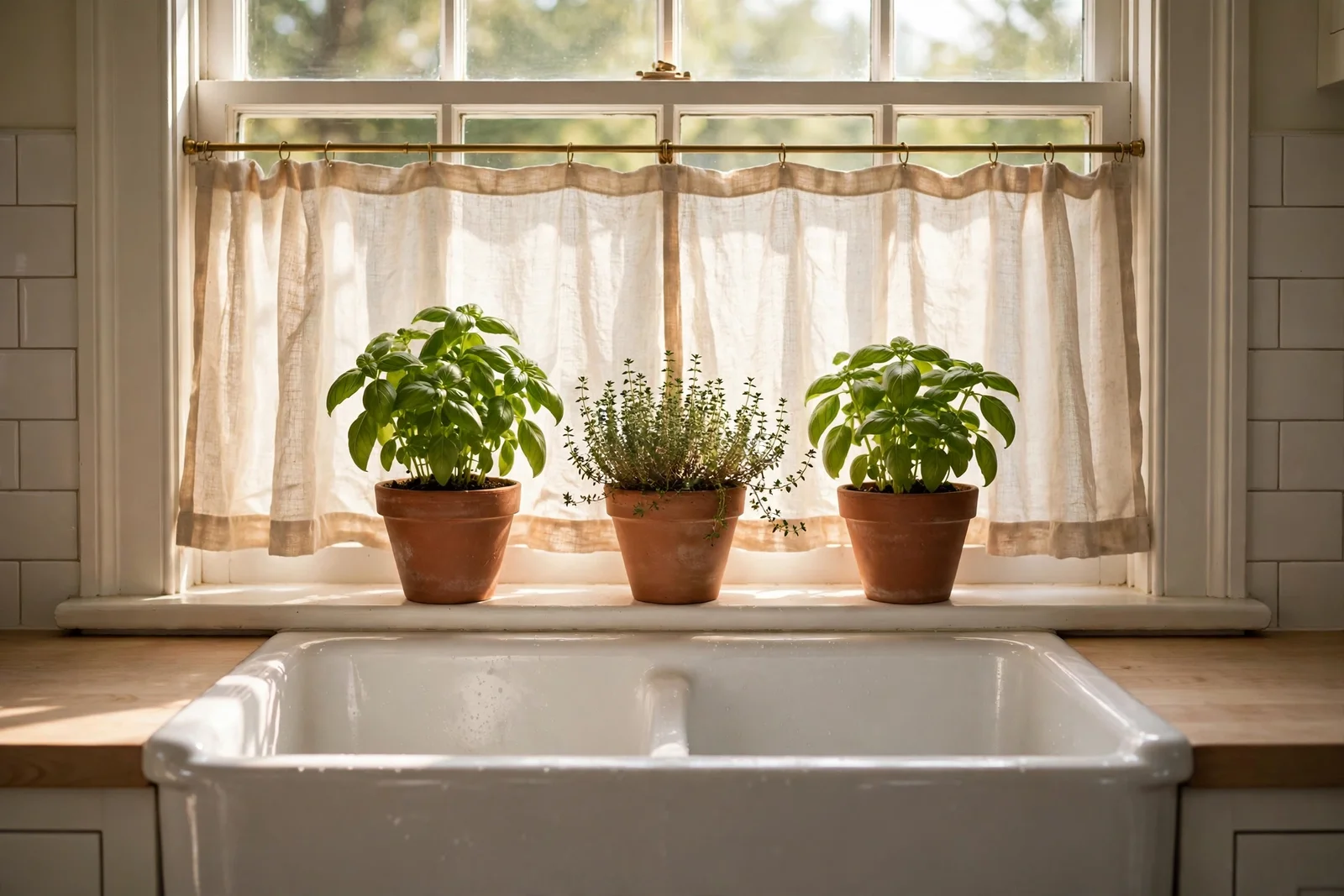
Dress the window over the sink with herbs, cafe curtains and linen shades: 21 practical kitchen window decor ideas that keep the light and lose the clutter.
Morning light pours through the little window above the sink, and for a few quiet minutes the washing up does not feel like a chore at all. That window is the brightest corner of many kitchens, yet it usually gets ignored, left bare or buried under a crowded sill that blocks half the daylight.
The good news is that dressing a kitchen window well takes small, simple moves rather than a big budget or a full refit. A row of herbs in clay pots, a cafe curtain that stops at half height, or a plain linen shade can change the whole mood of the room while the light keeps flowing freely.
This guide gathers 21 practical ideas that keep the light and lose the clutter, from privacy treatments that survive steam to safety rules for windows near the hob. Every idea is affordable, washable and easy to undo, so you can start this weekend and enjoy the change by your next morning cup of tea.
You will not need heavy drapes, fussy patterns or expensive hardware. Just honest materials, a few clever placements and the confidence to let daylight do most of the decorating for you.
1. Set Three Terracotta Pots of Herbs Along the Sink Sill
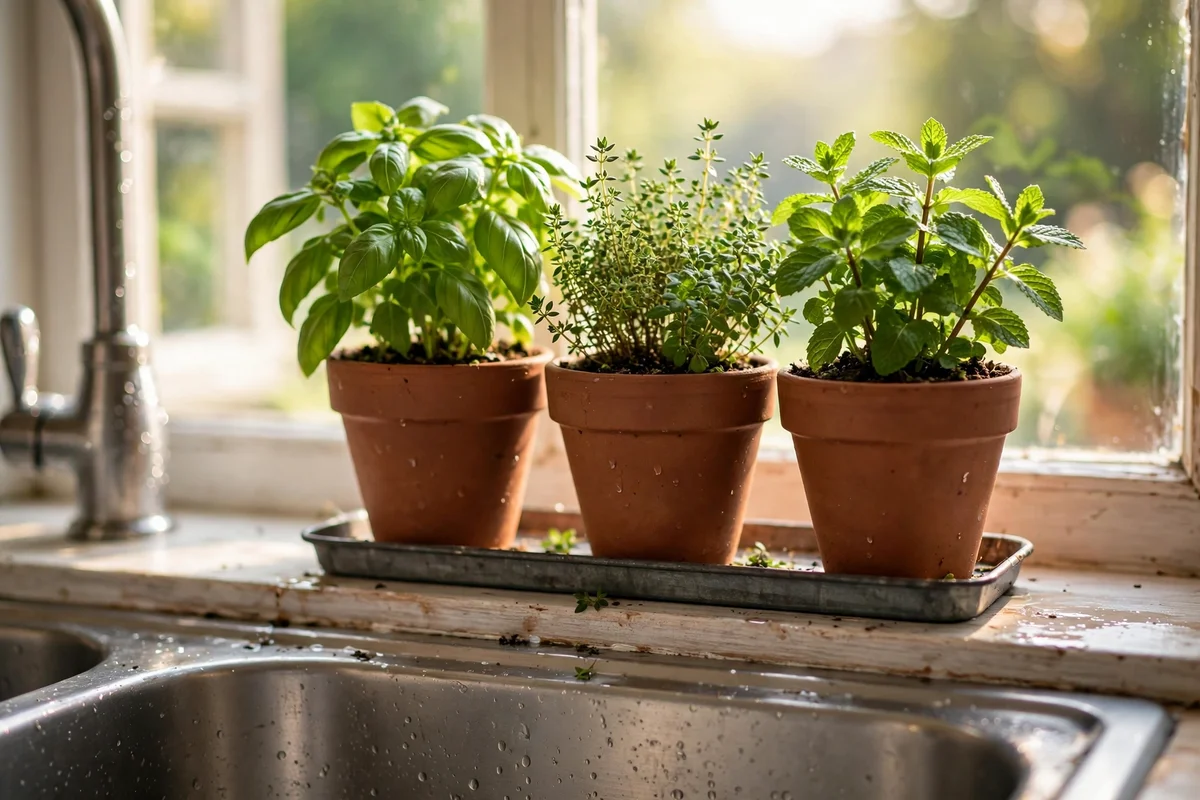
A row of three matching terracotta pots, each 10 to 12 cm wide, fits almost every sink sill and gives the window a living border that costs very little. Fill them with hardy herbs such as basil, thyme and mint, planted in free draining potting mix with a 2 cm layer of gravel at the base. Water lightly every two to three days in summer and once a week in winter, since overwatering is the fastest way to kill windowsill herbs.
Choose plain unglazed terracotta so the pots breathe and water evaporates naturally, which keeps roots healthy near steamy dishwashers. Turn each pot a quarter turn every week so all sides get even daylight and the herbs grow straight rather than leaning toward the glass. The mistake to avoid is using decorative glazed pots with no drainage holes, which trap water and rot the roots within weeks. Three pots plus a tray to catch drips usually costs under 25 dollars or pounds.
2. Hang a Linen Cafe Curtain at Half Height for Daylight and Privacy
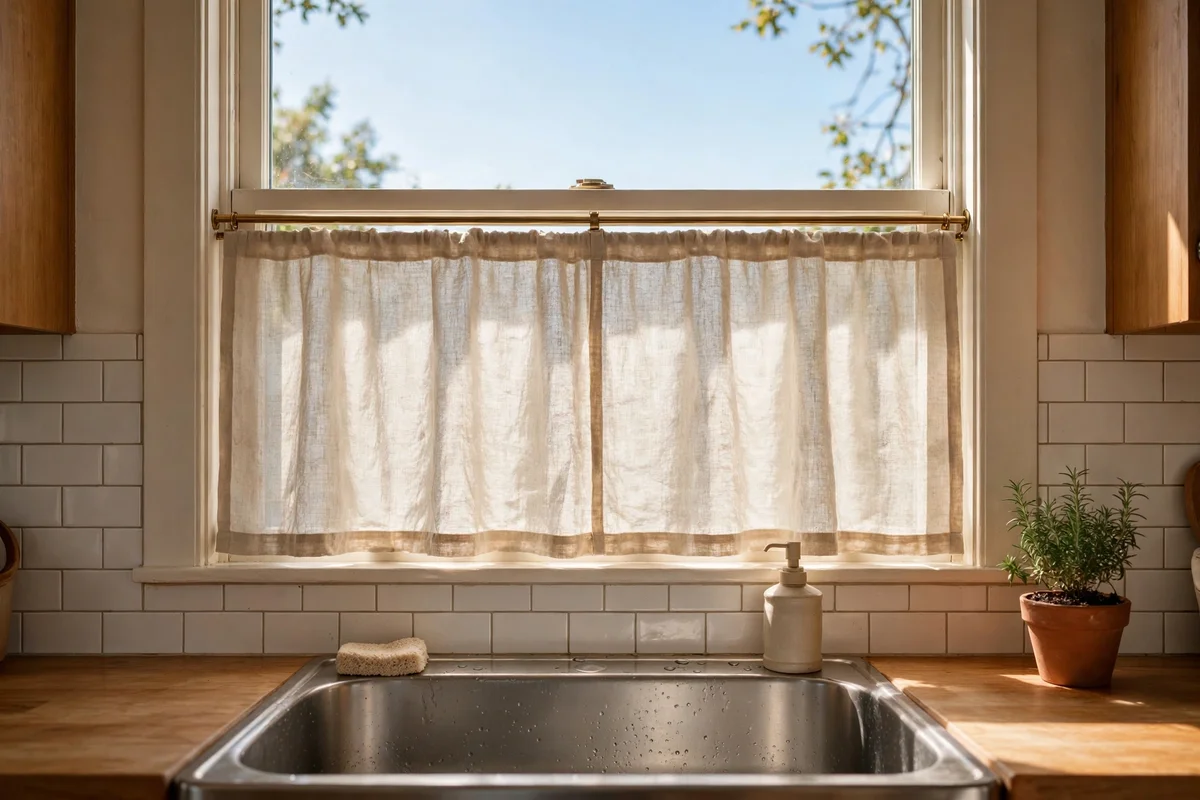
A cafe curtain hangs from a rod fixed at the middle of the window, covering the lower half while the upper half stays open to the sky. This screens the worktop from passing neighbours yet lets daylight pour over the fabric all day long. Choose washed linen or a linen cotton mix in natural, oatmeal or soft white, and make the panel one and a half times the rod width so the gathers look relaxed instead of stretched flat.
Mount the rod inside the frame with a spring tension rod for a renter friendly fix, or choose small brass brackets for a permanent look that lasts for years. Wash the panel every month in warm soapy water, since kitchen grease settles into linen faster than in any other room. The mistake to avoid is a curtain that reaches the worktop, because it soaks up splashes; end the fabric at least 10 cm above the sill line.
3. Fit a Relaxed Roman Shade in Washed Linen Above the Sink

A relaxed Roman shade gathers into soft folds when raised and drops to a smooth panel when lowered, giving the sink window a tailored finish without stiff pleats. Choose washed linen in cream or pale stone, mounted inside the frame if the reveal is at least 6 cm deep, or outside on the architrave for shallow windows. Add a cordless or wand control so nothing dangles near little hands or steaming pans.
Steam is the enemy of a kitchen shade, so take the panel down and machine wash it every two to three months to stop grease stiffening the folds. Air dry it flat or on a short line, since tumble heat can shrink linen by up to 5 percent. The mistake to avoid is a heavy lined shade that traps moisture against the glass; an unlined or lightly lined shade dries faster and stays fresh longer above a busy sink.
4. Mount a Shallow Wooden Shelf Across the Window for Jars and Sprouts

A shallow shelf fixed across the window frame at mid height turns unused glass space into a display for jars, seed trays and small plants. Use a solid wood board 12 to 15 cm deep and 2 cm thick, cut to the exact width of the reveal, and fix it with two sturdy L brackets screwed into the frame sides. Arrange three to five small glass jars of lentils, dried beans or a tiny sprouting tray along it for living texture.
Keep the total load under 3 kg so the brackets never strain the frame, and keep every item below 20 cm tall so the upper glass stays clear for daylight. Wipe the jars and the glass behind them every fortnight, since steam leaves a fine film on anything near the sink. The mistake to avoid is lining the shelf with tall bottles that turn the window into a dark cupboard; small and low keeps the light flowing through.
5. Hang Plain Glass Suncatchers That Scatter Morning Light

Plain glass suncatchers hung in the top corners of the window scatter morning light into tiny rainbows without blocking the view. Choose clear crystal prisms, simple glass discs or small ceramic shapes in white or cream, hung on fine cotton thread or thin ribbon 20 to 30 cm long. Two or three pieces are plenty for a standard window; more than that starts to look busy and catches dust.
Fix them with small suction hooks on the glass itself or tie them to the curtain rod so they move slightly in the draught. Wipe each piece with a damp cloth once a month, because kitchen grease dulls the sparkle faster than in other rooms. The mistake to avoid is coloured plastic suncatchers, which fade to a cheap yellow within a year; plain glass and ceramic keep their clarity and suit the calm kitchen look.
6. Apply a Frosted Privacy Film With a Simple Opaque Finish
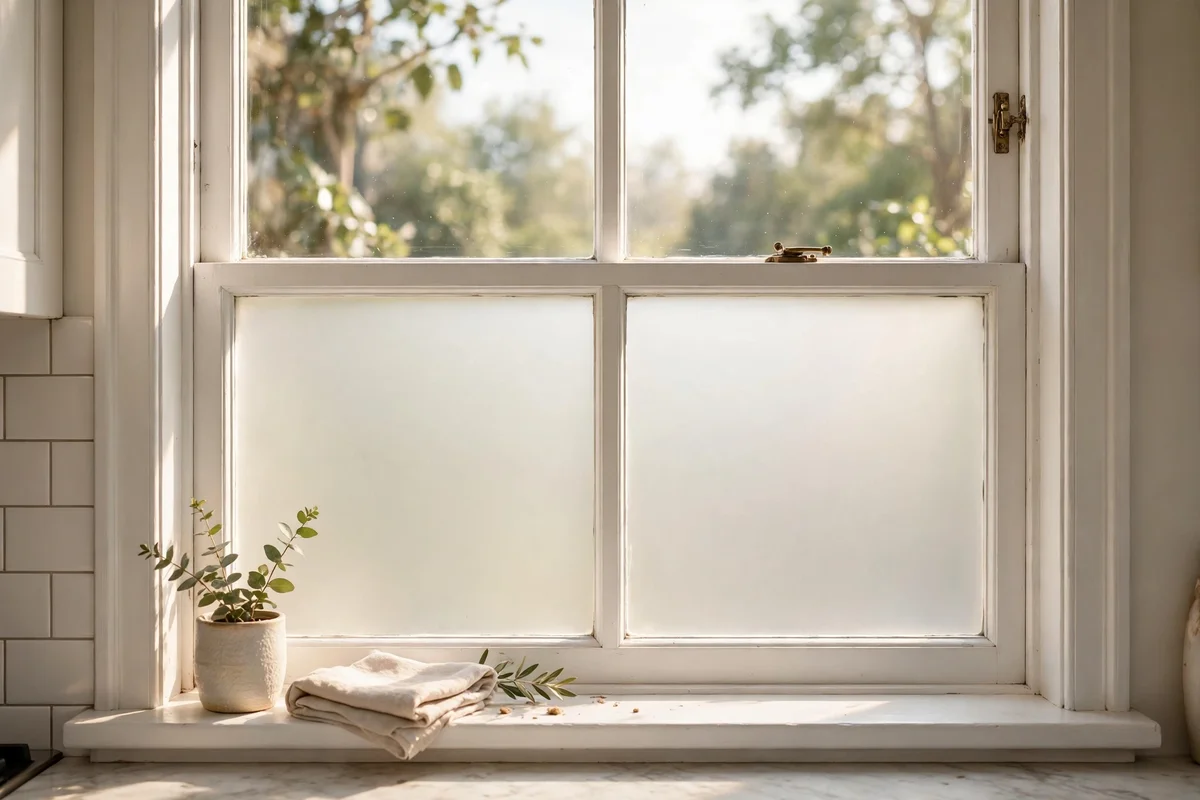
A frosted privacy film gives the lower half of the window a soft opaque finish that lets light through while blurring the view completely. Choose a plain frosted or satin finish with no printed pattern, since patterned films date quickly and fight a calm kitchen. Static cling film needs no adhesive, so it suits rented kitchens and peels off cleanly when you move out.
Measure the pane and cut the film 2 mm larger all round, then spray the glass with soapy water and smooth the film on with a plastic squeegee from the centre outward. Trim the edges with a sharp craft knife for a crisp line. Clean the finished film with a damp cloth and never use ammonia based sprays, which can cloud the surface. One roll covers two or three windows for under 20 dollars or pounds.
7. Choose Washable Cotton Panels Rated for Kitchen Steam

Cotton panels cope with kitchen steam better than any other fabric because they wash well and dry fast. Choose a medium weight cotton or cotton polyester blend in white, cream or pale blue, hung from simple clip rings on a slim rod. The polyester content helps the panels resist creasing after washing, while the cotton keeps them breathable beside a steaming kettle or pan.
Wash the panels every month at 40 degrees and press them lightly while still slightly damp for a crisp finish. Two panels of one metre each suit a standard sink window and cost very little from a discount store. The mistake to avoid is heavy interlined curtains near the cooker, which trap moisture, hold cooking smells and take days to dry after washing.
8. Keep All Fabric Tails Well Clear of Hob Burners
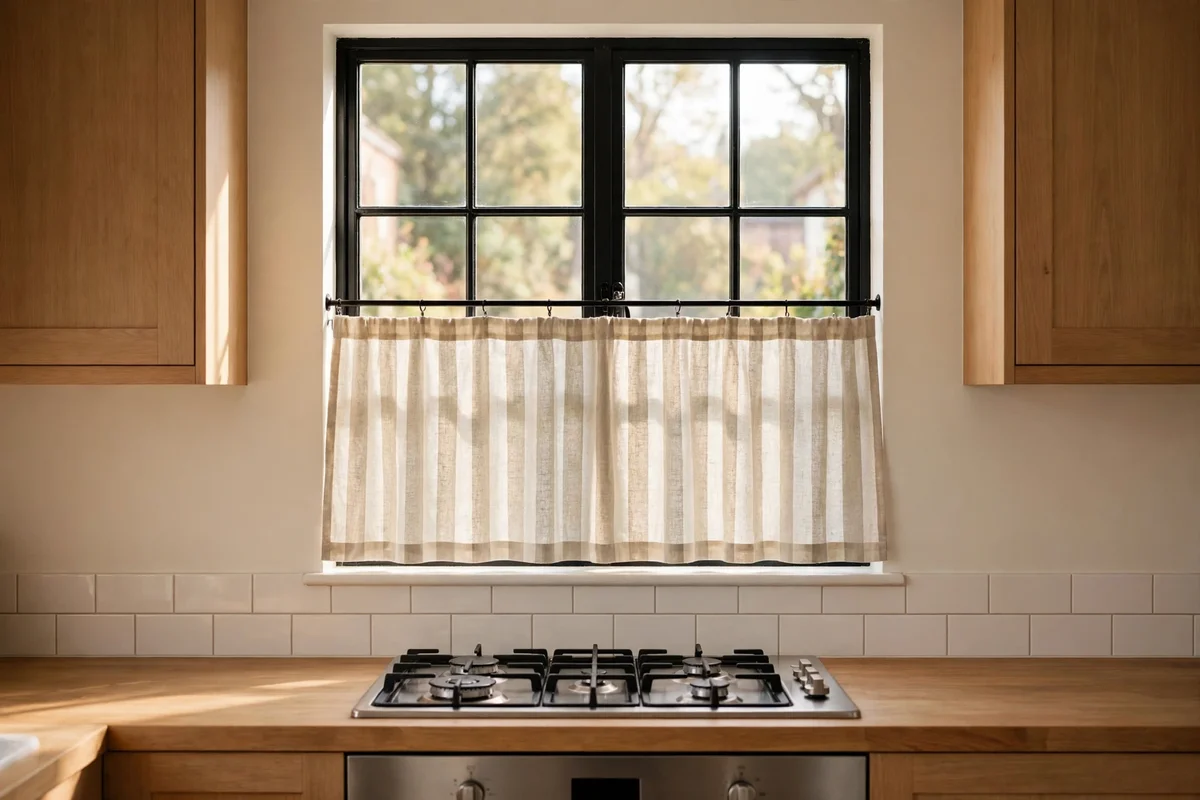
Nothing fabric should trail anywhere near a hob. Keep every curtain, blind cord and hanging cloth at least 50 cm sideways from the nearest burner, and choose treatments that end at or above the sill rather than dropping toward the worktop. Short cafe curtains, roller blinds and frosted film are naturally safe because they never hang low enough to catch heat or flare from a pan.
Hold your hand at the treatment height while the hob runs on high for a minute; if the air feels hot there, the fabric is too close. For a window directly over burners, skip fabric entirely and use frosted film or clean bare glass. The mistake to avoid is long side panels beside a cooker, which swing in draughts and can brush a flame in seconds.
9. Dress a Narrow Side Window With a Slim Valance Only
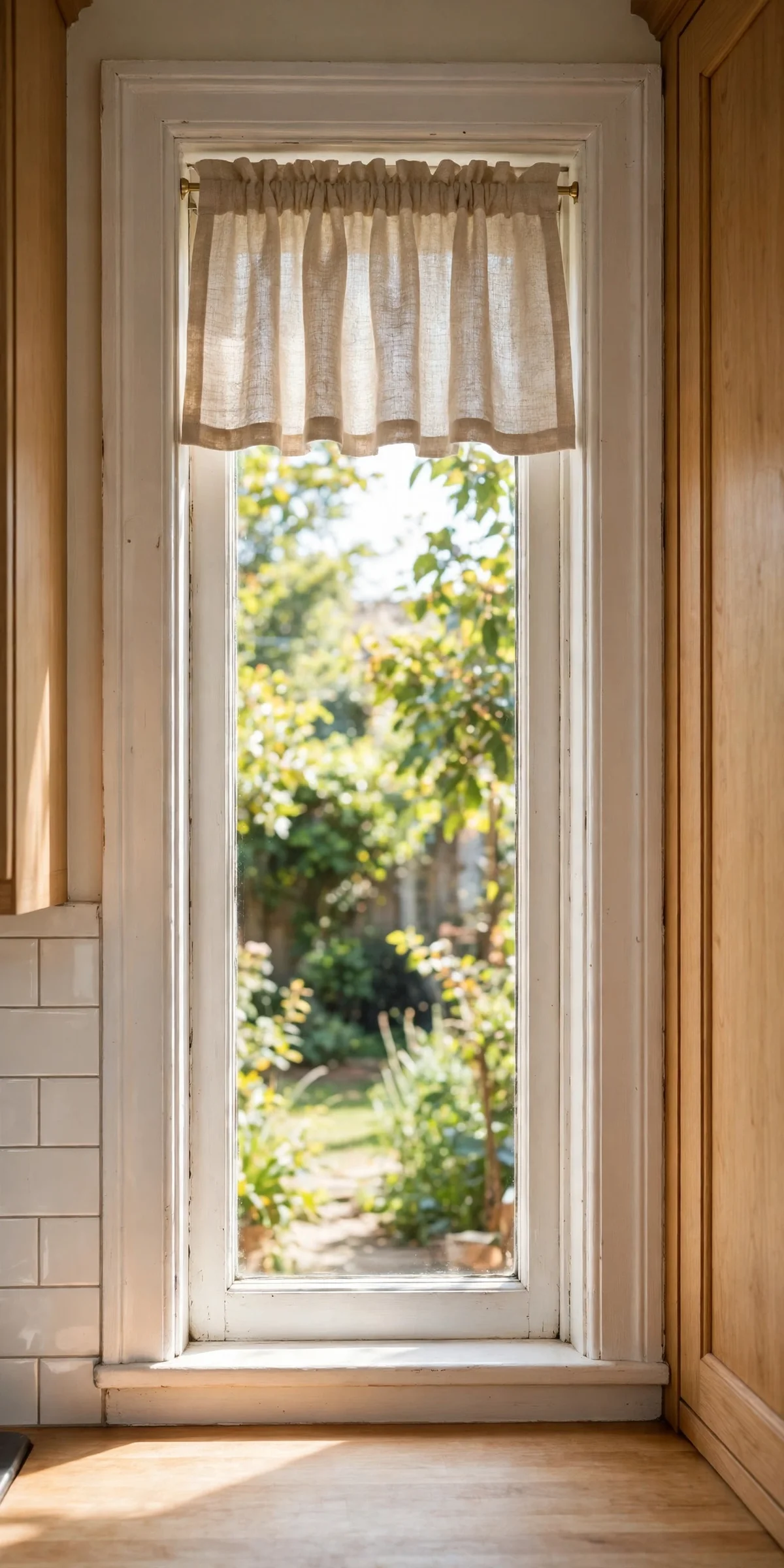
A narrow side window needs only a slim valance across the top to hide the rod and give the glass a finished edge. Cut or buy a panel 20 to 25 cm deep and one and a half times the window width, in the same linen or cotton as your other treatments so the kitchen reads as one calm scheme. Hang it on a slim rod fixed inside the frame for a neat tailored line.
Use a spring tension rod for a renter friendly fix that needs no drilling and comes down in seconds. Wash the valance with your other kitchen panels every month, since grease reaches the top of the window too. The mistake to avoid is a full length curtain on a narrow window, which swallows the little daylight the glass gives and makes the wall feel heavy.
10. Pair a Corner Window With a Small Ceramic Planter Rail
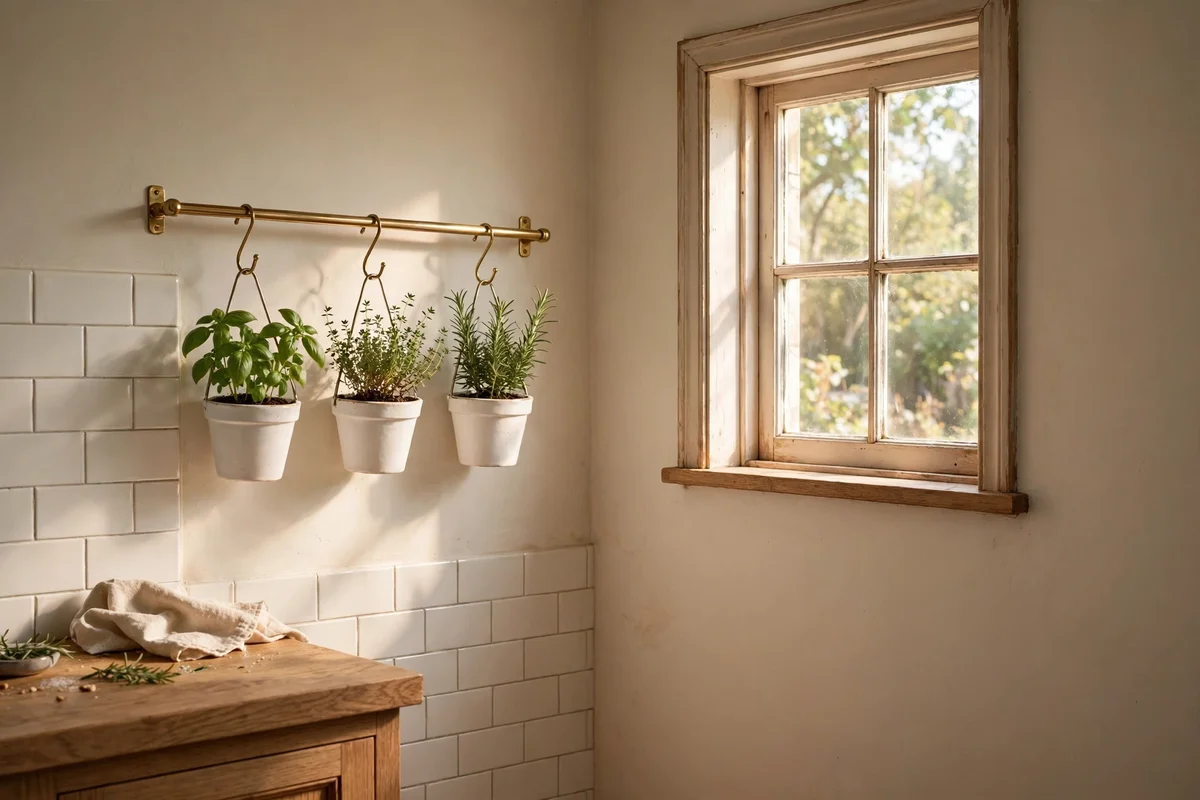
A slim rail screwed to the wall beside a corner window holds two or three small ceramic pots without touching the glass at all. Use a 30 to 45 cm wooden or brass rail with S hooks, and hang pots 8 to 10 cm wide so they stay clear of the opening casement. Fill them with herbs, small ferns or trailing plants to bring green to a corner where a shelf would block the light.
Fix the rail into a stud or use proper plaster anchors, since three watered pots can weigh over 2 kg. Stand a drip tray on the worktop below for watering days and water over the sink to avoid splashes on the wall. The mistake to avoid is overloading the rail with heavy pots, which pull the fixings loose and risk a fall onto the worktop.
11. Use Ceramic Knobs and Hooks Instead of Fussy Hardware
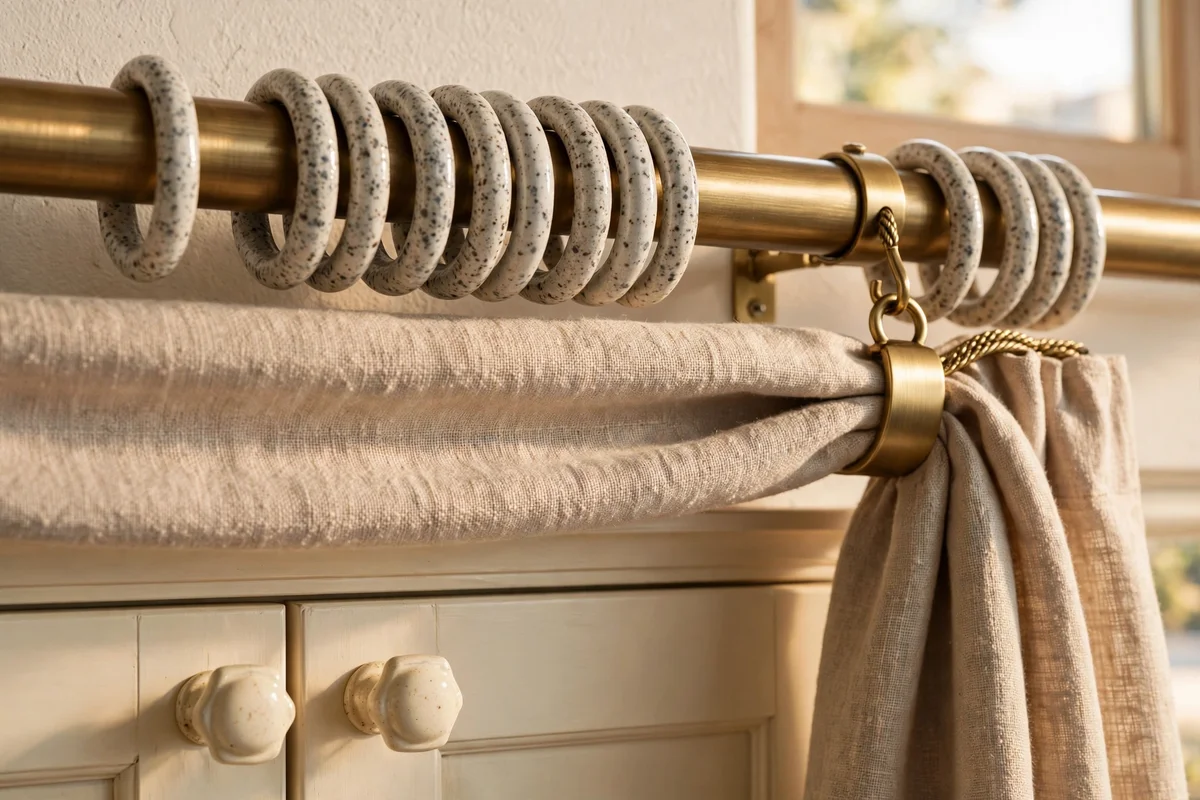
Small hardware details lift a plain window: swap tired plastic curtain rings and hooks for simple ceramic knobs, wooden rings and brushed brass tiebacks. Choose one finish and repeat it on the cupboard knobs under the window so the whole corner feels planned rather than patched together. Cream, sage or speckled ceramic suits most kitchen colours from white to deep green.
Each knob or hook costs only a few dollars or pounds, and charity shops often carry boxes of them for next to nothing. Fit tieback hooks 15 cm from each side of the frame so cafe curtains pull back in soft even gathers. The mistake to avoid is mixing chrome, brass and black finishes in one small window, which reads as clutter even when everything else is calm.
12. Place a Single Trailing Plant in a Ceramic Pot on a High Sill
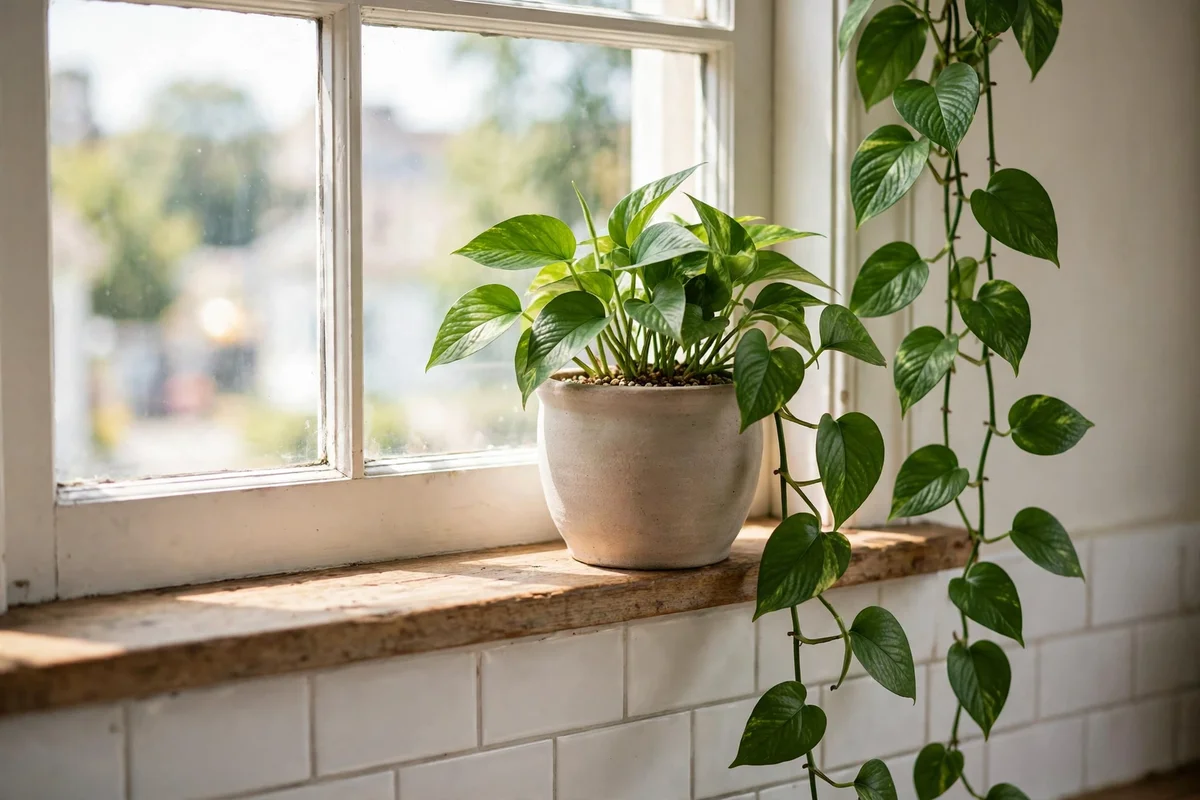
One trailing plant in a good ceramic pot makes a stronger statement on a high sill than a crowd of small pots. A pothos, philodendron or string of pearls cascades 40 to 60 cm down the glass, softening the window frame without blocking the light above the sink. Choose a pot 12 to 14 cm wide with a saucer, in plain white or warm stoneware that suits the kitchen palette.
Water once a week and mist the leaves every few days in a steamy kitchen, then trim the trails when they pass 70 cm so the plant stays lush at the top. Keep the pot at least 5 cm from the sill edge and never use a pot heavier than 1.5 kg on a narrow sill. The mistake to avoid is a plant so large it drips water down the wall; a saucer and regular trimming prevent that.
13. Layer Two Thin Gauze Panels for Soft Filtered Light

Two layers of thin gauze turn harsh midday sun into soft filtered light, which suits south facing kitchen windows perfectly. Hang both panels from one double rod or two slim rods: a plain white voile against the glass and a slightly warmer ivory gauze in front. Each layer alone is almost sheer, but together they soften glare while keeping the garden view readable.
Wash both panels every month in a cool gentle cycle and hang them back while slightly damp so they drop out creases on their own. The whole treatment weighs almost nothing, so a simple tension rod is enough for rented kitchens. The mistake to avoid is one heavy net curtain left up for years, which greys with grease and blocks more light than two fresh gauze layers.
14. Add a Frosted Roller Blind for Steam Proof Privacy
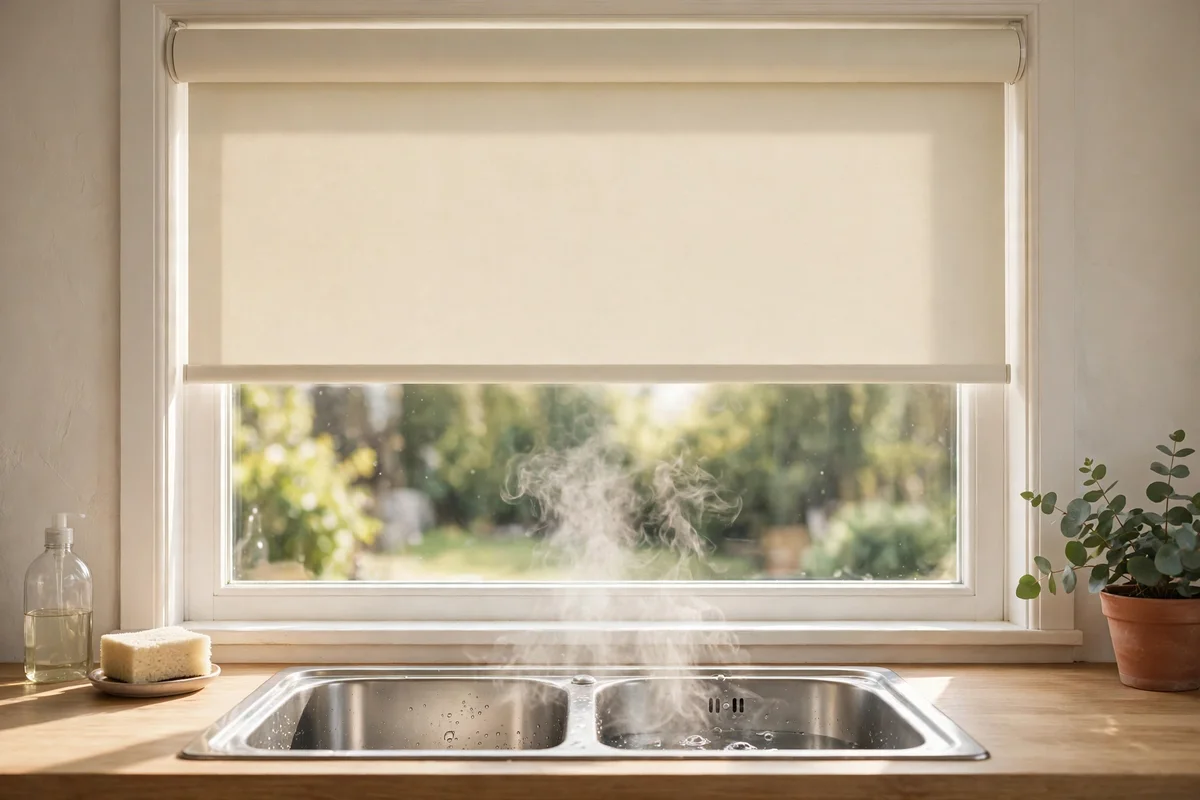
A moisture resistant roller blind is the toughest privacy treatment for a steamy kitchen. Choose a plain wipeable fabric in white, cream or pale grey, mounted inside the frame with a sidewinder or spring control. Pull it down to sill level for evening privacy, then roll it fully up by day so the window stands completely clear and daylight floods in.
Measure the inside reveal and order the blind 5 mm narrower each side so it rolls smoothly without rubbing. Wipe the fabric weekly with a damp cloth to stop grease building up at the bottom rail. The mistake to avoid is a standard fabric blind that absorbs steam and smells; a wipeable moisture rated fabric costs only a little more and lasts for years.
15. Style the Sill With a Soapstone Dish and a Small Linen Cloth
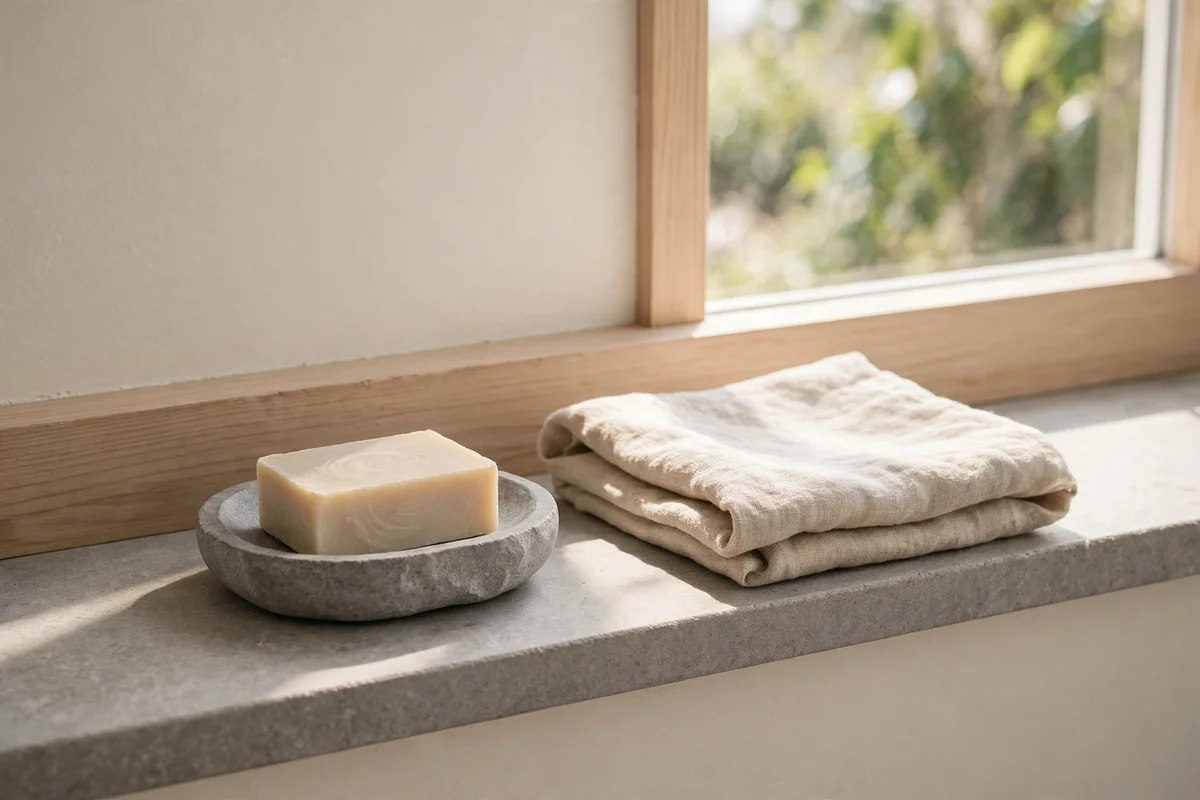
A small soapstone or ceramic dish on the sill holds the soap bar or a spare sponge in one tidy spot, and a folded linen cloth beside it adds soft texture. Choose a dish 12 to 15 cm long with raised edges so water does not run onto the paintwork. Keep the palette to stone, cream and natural wood for a calm finish that suits any kitchen colour.
Wipe the dish and the sill under it every week, since standing water marks both stone and paint. Follow a simple rule of three objects on the sill at most, counting each plant pot as one. The mistake to avoid is lining the sill with bottles, ornaments and half used candles, which block the light and turn the brightest corner of the kitchen into a storage shelf.
16. Hang a Woven Bamboo Blind That Filters Harsh Afternoon Sun
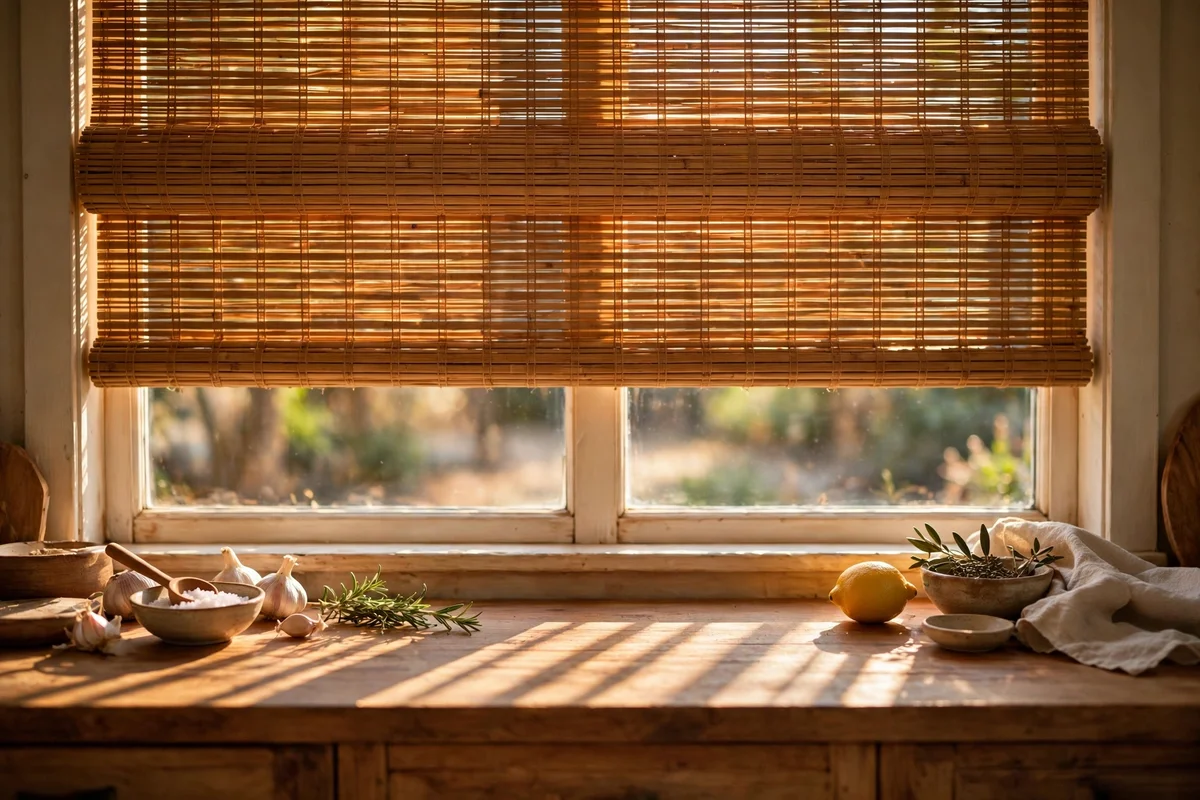
A woven bamboo or matchstick blind filters fierce afternoon sun while keeping the window bright and airy. The natural weave throws soft striped shadows across the worktop, which suits warm wood and stone kitchens beautifully. Mount it outside the frame on two small brackets and roll it up with its cord cleat fixed to the wall when the sun moves off the glass.
Wipe the slats monthly with a damp cloth to keep kitchen dust from settling into the weave. Keep the blind rolled up during heavy steamy cooking, since long exposure to steam can warp natural bamboo over time. The mistake to avoid is a dark stained blind on a small window, which reads as heavy; a natural honey tone keeps the light feeling warm and open.
17. Frame the Window With Simple Wooden Trim Painted Eggshell White

Fresh wooden trim around the window frame gives even a bare window a finished, cared for look. Replace scuffed architrave with simple flat pine strips 5 to 7 cm wide, fill the nail holes with wood filler, and paint with two coats of eggshell white or soft cream. The crisp edge makes the daylight feel brighter and the whole kitchen tidier in an afternoon.
Timber plus paint usually costs under 40 dollars or pounds for one window, and the job needs only a saw, a hammer and a brush. Sand lightly between coats for a smooth finish that wipes clean of splashes. The mistake to avoid is dark gloss paint on the trim, which shows every water mark and fights the soft calm look the rest of the window is working to create.
18. Keep a Folding Step Shelf Beside the Window for Seasonal Swaps
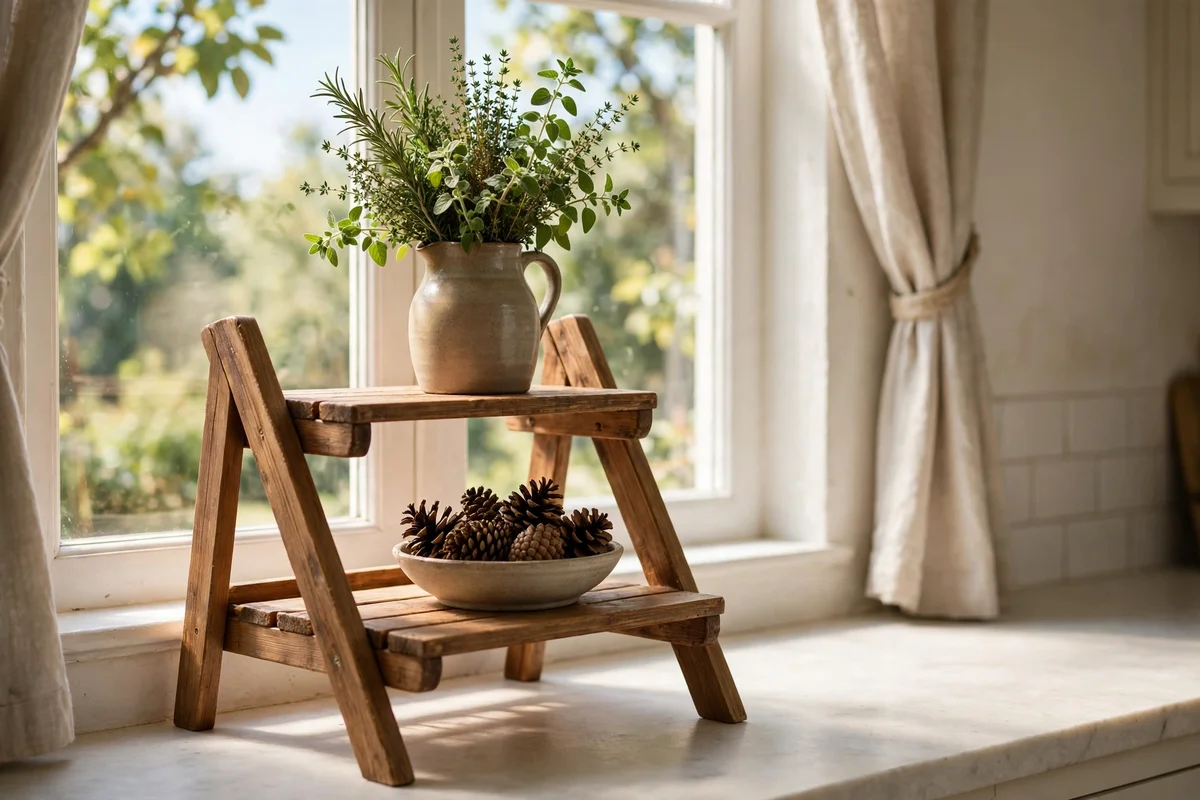
A small folding plant stand or two tier step shelf beside the window gives seasonal decor a home without touching the glass. In spring it holds seed trays, in summer a jug of cut herbs, in autumn small pumpkins, in winter a bowl of pinecones. Choose a stand 30 to 40 cm wide that folds flat when you need the floor space back for cooking.
Follow a one in, one out rule so the stand never drifts into permanent clutter storage: each new seasonal piece replaces the last. Dust the shelves weekly, since they sit in the path of cooking steam. The mistake to avoid is parking cleaning products or paperwork on the stand between seasons, which undoes the whole calm window effect in a week.
19. Use a Plain Magnetic Curtain Rod for Easy Renter Friendly Washing

A magnetic curtain rod sticks straight onto a metal window frame with no screws, which makes it ideal for rented kitchens and for curtains that need frequent washing. It holds light cotton or gauze panels up to about 1 kg, which is plenty for a cafe curtain or a short valance. Choose a rod in white or brushed nickel so it blends quietly with the frame.
Test the magnet strength before hanging by giving the empty rod a firm tug, and lift the curtain off weekly to wipe the rod and the frame edge where grease collects. Pop the whole curtain down in seconds on washing day and rehang it damp. The mistake to avoid is a heavy linen panel, which slowly slides down a magnetic rod and ends up crooked within days.
20. Let a Bare Clean Windowpane Be the Statement With Polished Brass Fittings

Sometimes the best treatment is no treatment at all. A sparkling clean pane with polished brass hinges, latch and stays becomes the decoration, and the garden or sky does the rest. This suits windows that face a private garden or a high wall where privacy is not an issue. Clean the glass inside and out every fortnight with warm water and a drop of washing up liquid, then buff dry with a linen cloth.
Polish the brass fittings twice a year with a soft cloth to keep them glowing, and touch up the frame paint so the whole window reads as cared for. If privacy needs change, add frosted film to the lower half without losing the open feel. The mistake to avoid is grimy glass and dull fittings presented as minimalism; a bare window only works when it gleams.
21. Finish the Look With a Linen Skirt Under the Sink for Tidy Storage
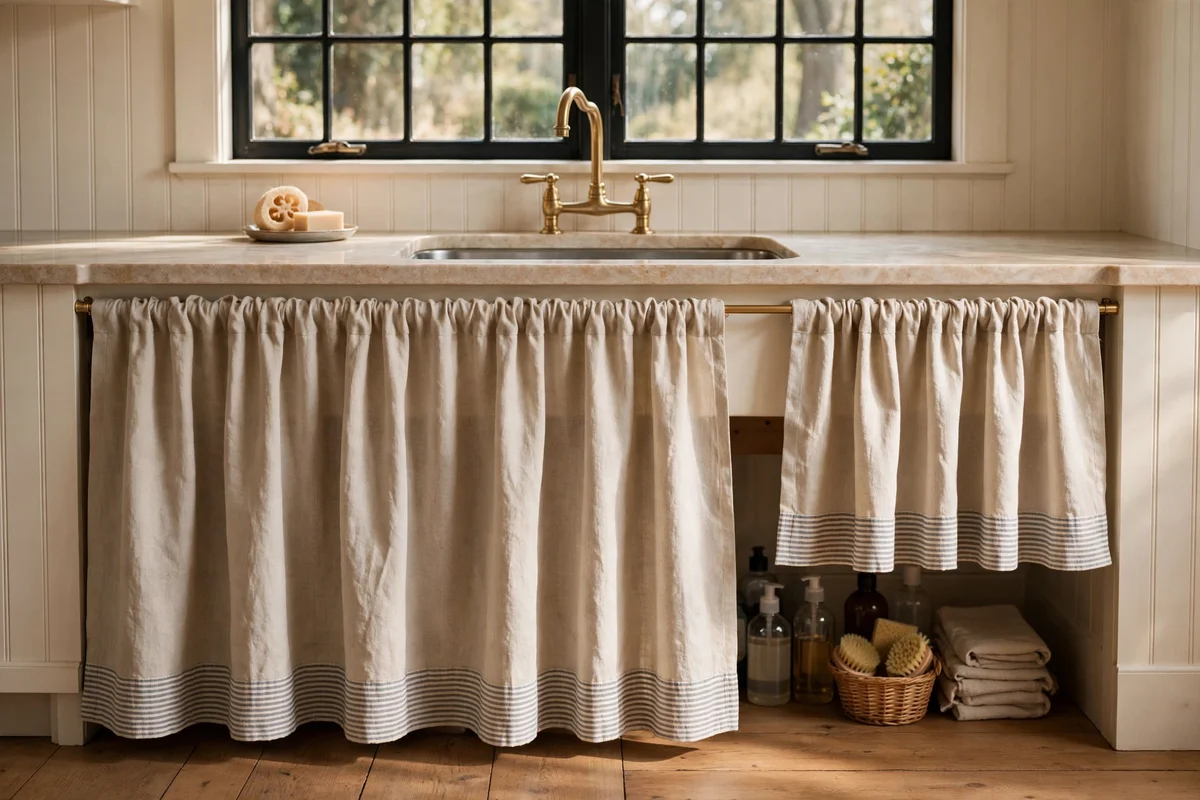
A linen skirt on a simple rod under the sink hides cleaning bottles and bins, finishing the window corner even though it sits below it. Use a washable linen or cotton panel 60 to 70 cm deep, gathered one and a half times the opening width, in natural or striped ticking. The skirt turns an awkward open cupboard into a soft tailored detail that matches the window above.
Keep the skirt clear of hot pipes and the bin area so it never snags, and wash it monthly with your window panels since it sits in the splash zone too. Fix the rod with small screw cups inside the cabinet frame for a firm hold. The mistake to avoid is a floor length skirt that wicks mop water; end it 5 cm above the floor to stay fresh.
A kitchen window asks for so little: clear glass, one honest material and nothing that fights the daylight. The ideas in this guide all share that spirit, from terracotta herbs to frosted film to a simple wooden shelf. Pick the ones that fit your window and your cooking habits, then live with them for a week before adding anything more at all.
If you try just one thing this week, start with the herbs. Three small pots on the sill cost almost nothing, need only a few minutes of care each week, and reward you with scent and fresh green every time you wash up. From there the rest of the window follows naturally, one calm, light filled corner at a time.
Frequently Asked Questions
How do I get privacy on a kitchen window without losing light?
A cafe curtain at half height is the classic answer: it screens the room at worktop level while the top half of the glass stays open to daylight. Frosted film on the lower panes does the same job for under 20 dollars or pounds and never needs washing. For a narrow window, a relaxed linen Roman shade pulled halfway down gives adjustable privacy and lifts fully when you want the whole view.
What curtains survive kitchen steam and cooking splashes?
Choose machine washable cotton, linen or polyester blends and wash them every four to six weeks to stop grease building up. Avoid heavy velvet or silk near the sink and hob, since steam and splashes stain them fast. A wipeable roller blind or frosted film is even tougher, needing only a damp cloth. Plain cotton cafe panels from a discount store cost very little and wash beautifully for years.
Are herbs on the sink sill practical or just for looks?
Very practical. Basil, mint, thyme and chives all thrive in bright kitchen windows and give you fresh cuttings steps from the chopping board. Use pots 10 to 12 cm wide with drainage holes and turn them weekly so they grow evenly. The catch is that the sill gets hot in summer and cold in winter, so move tender herbs a few centimetres back from the glass during extreme weeks.
How do I decorate a kitchen window on a tight budget?
Under 30 dollars or pounds is plenty. Start with frosted film at about 8 to 12 for a standard window, or sew a cafe curtain from one metre of sale fabric and a tension rod for a similar price. A set of three terracotta pots from a garden centre costs less than a takeaway. Charity shops are gold for linen offcuts, plain glass jars and ceramic pots that suit kitchen windows perfectly.
Is it safe to hang fabric near a hob or cooker?
Keep all fabric at least 50 cm from hob burners and never let curtains trail behind a cooker. Choose short cafe curtains or shades that end well above the worktop rather than floor length panels. Heat resistant films and bare glass are the safest options beside a hob. If a window sits directly over burners, leave it unadorned or use only a narrow valance high on the frame, well out of the heat zone.