Bedroom
21 Painted Bedroom Furniture Ideas That Give Old Pieces a Beautiful New Life
By Anna Wells · · 19 min read
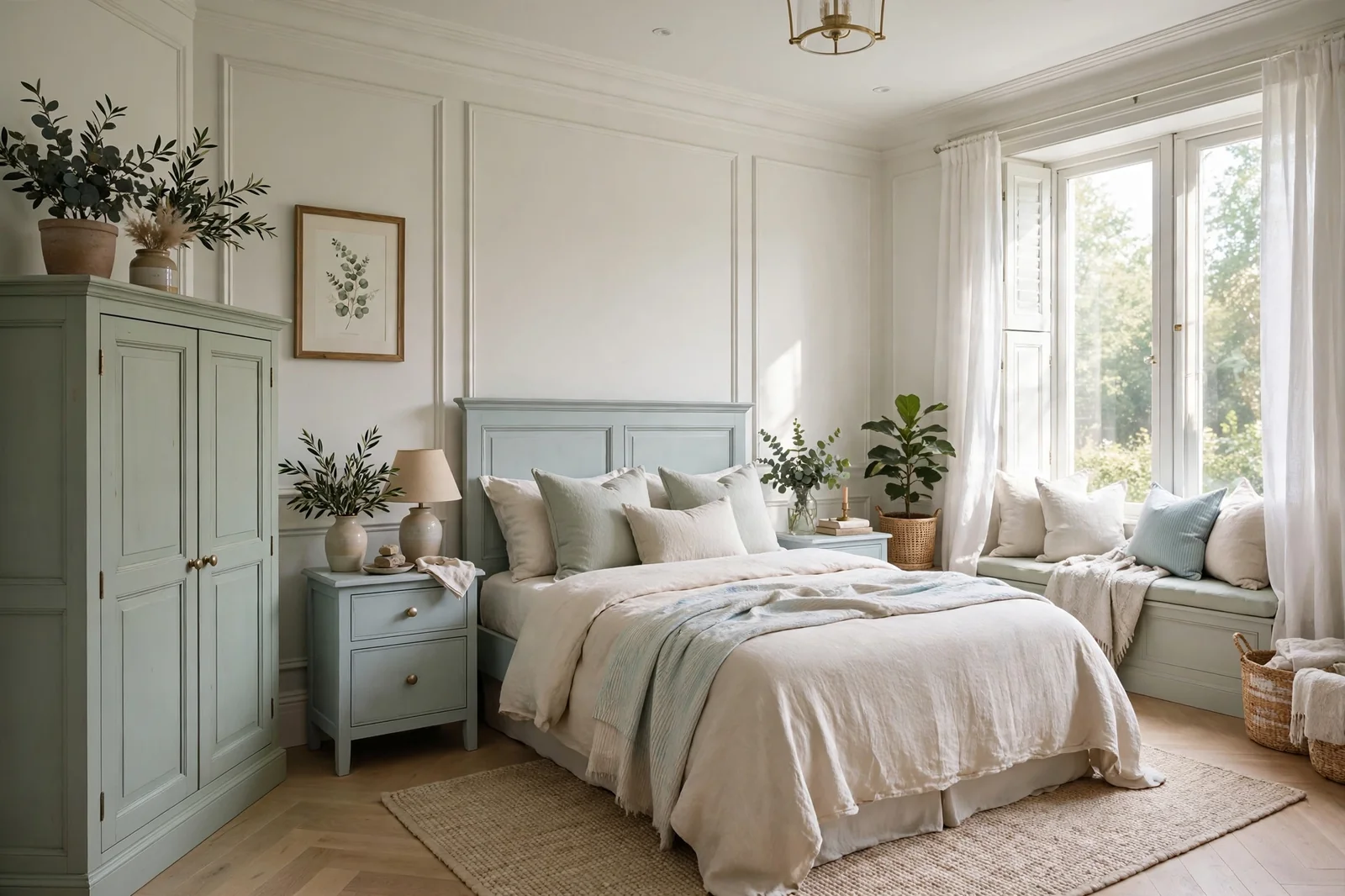
A tin of paint is the most powerful makeover tool a bedroom can have. Tired dressers, dated nightstands and plain bedframes become custom pieces with just a few careful coats. These twenty-one ideas show which colors flatter bedroom furniture, how to prepare and finish each piece, and the small details that make painted furniture look professional rather than improvised.
Paint transforms furniture faster than anything else in the home. That dated dresser, those tired nightstands, the plain bedframe you have stopped noticing: each one is a makeover waiting for a weekend and a well-chosen color. These twenty-one ideas pair beautiful colors with practical technique, so your painted pieces look intentional, durable and completely your own.
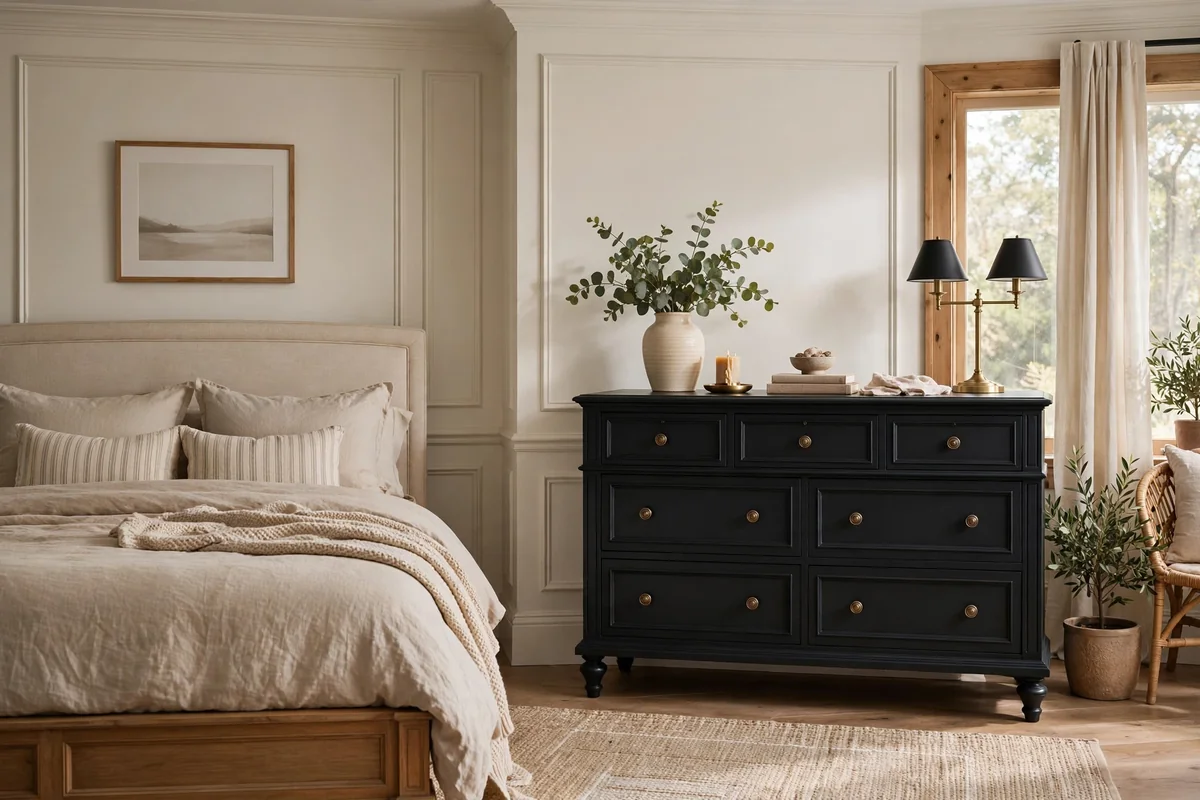
1. Classic Matte Black Dresser
Matte black turns an ordinary dresser into a statement piece. The deep, velvety finish flatters both antique shapes and plain modern boxes, hiding imperfections while adding instant sophistication. Against pale bedroom walls, a black dresser anchors the room like a well-tailored suit. Few colors command a room with such quiet confidence.
Preparation matters most with dark colors: clean thoroughly, sand lightly and prime, since every flaw shows under black. Use a quality matte furniture paint and finish with a clear matte topcoat on the top surface for durability. Swap the old knobs for brass or crystal for a truly custom look. It is timeless, dramatic and surprisingly forgiving.
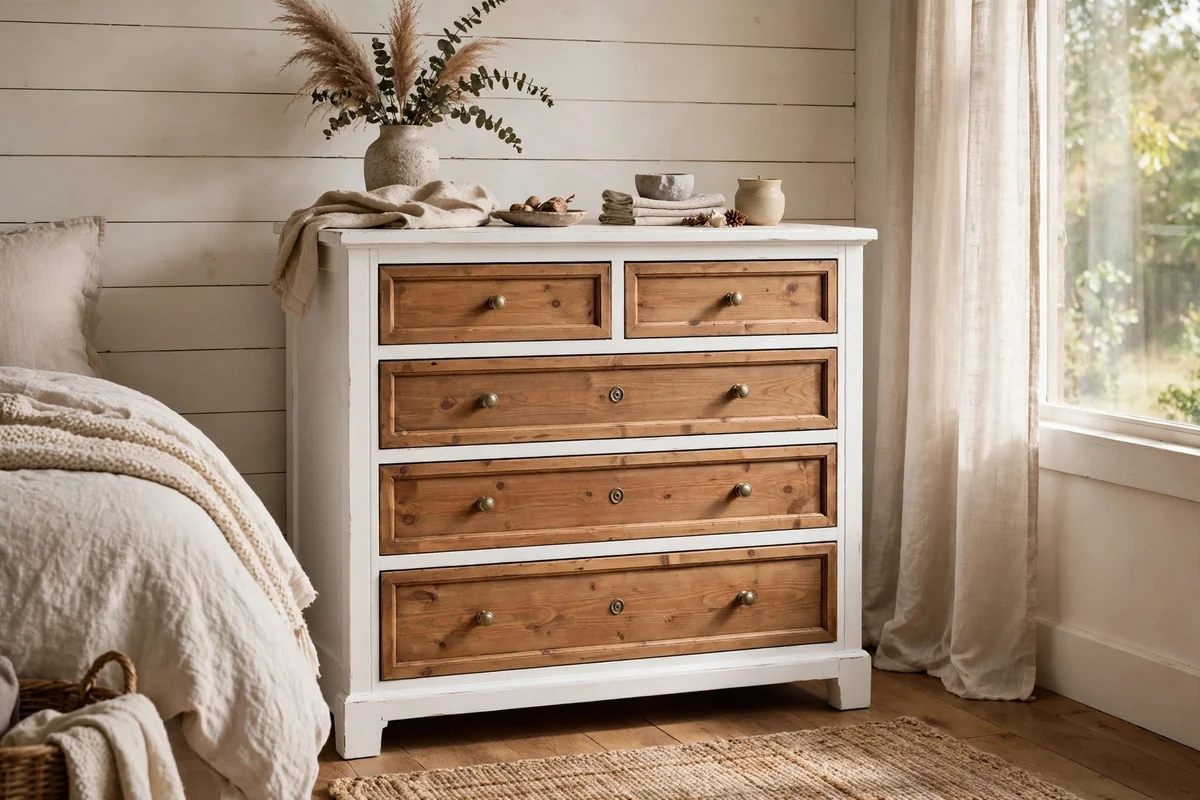
2. Crisp White With Wood Accents
White paint with natural wood left showing is the best of both worlds. Paint the dresser body crisp white but leave the drawer fronts or the top in warm wood, and the piece gains a Scandinavian freshness with a rustic soul. The contrast keeps white from feeling flat and wood from feeling heavy.
Mask the wood areas carefully with painter’s tape and seal the bare wood with a clear matte finish to protect it. Choose a warm white rather than a stark one for a softer look. This treatment suits farmhouse, coastal and modern bedrooms alike. It is clean, calm and endlessly versatile.
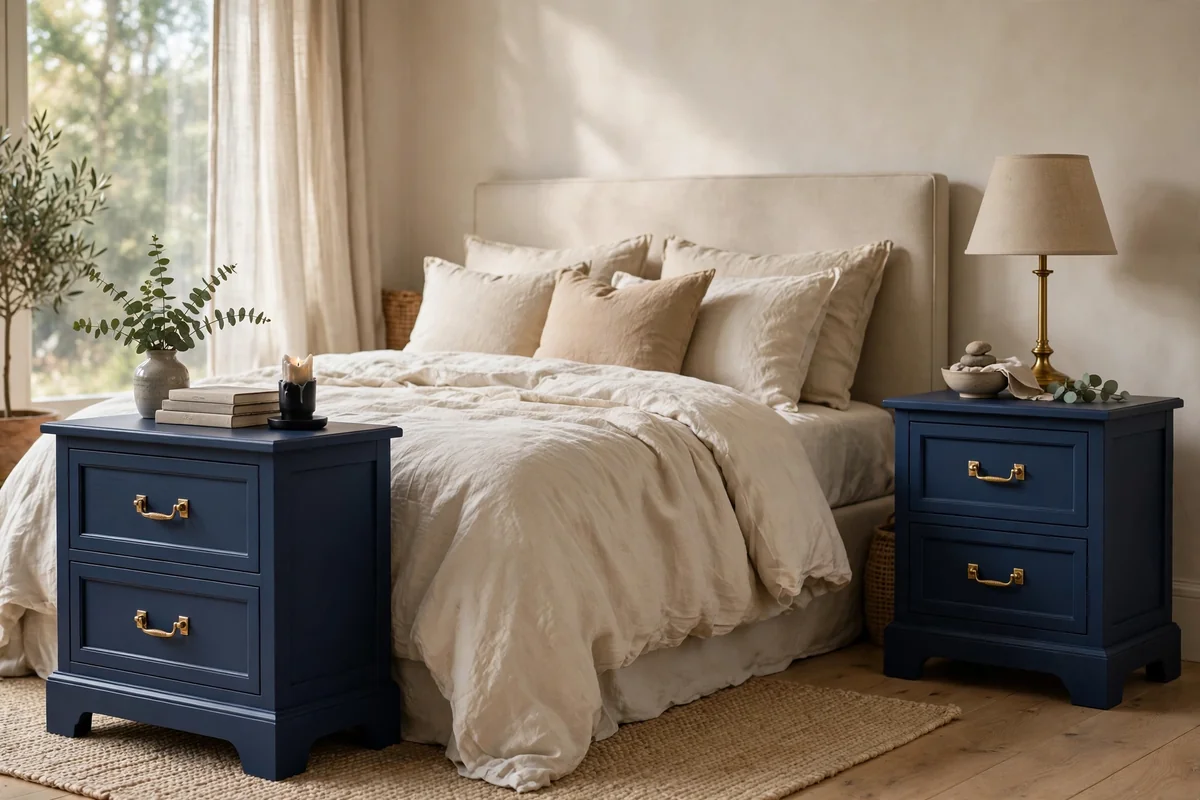
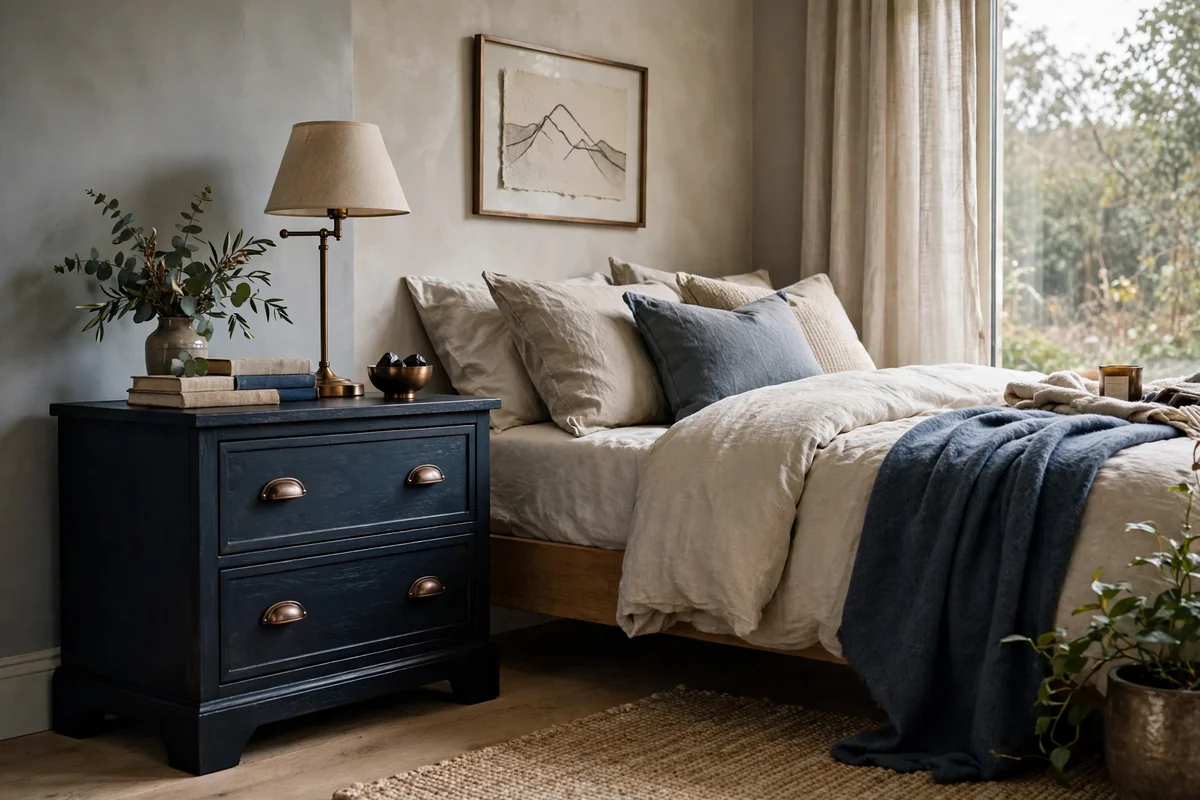
3. Deep Navy Nightstands
A pair of navy nightstands brings quiet drama to either side of the bed. The deep blue reads as almost neutral, pairing with white bedding, grey walls and brass lamps beautifully. Painting both nightstands the same rich navy makes them feel like a deliberate set, even if they started life mismatched.
Use a satin finish for a soft sheen that catches lamplight. New hardware, brass pulls or glass knobs, elevates the whole piece. Navy is wonderfully forgiving of dust and shows fewer marks than black. It is the color equivalent of a deep breath: calm, confident and classic. It is elegance that works hard every single day.
4. Moody Blue Almost Black
A blue so deep it is nearly black gives furniture incredible depth. This moody shade changes with the light, reading as charcoal by day and revealing its blue soul in lamplight. On a nightstand or small chest, it is pure atmosphere: sophisticated, cocooning and quietly luxurious. Moody color rewards good lighting beautifully.
Pair it with bronze or aged brass hardware to warm the darkness. A satin or eggshell finish suits the mood better than flat matte, giving just enough sheen to show the color’s complexity. Keep the surrounding room light so the piece reads as an accent, not a shadow. It is drama you can live with.
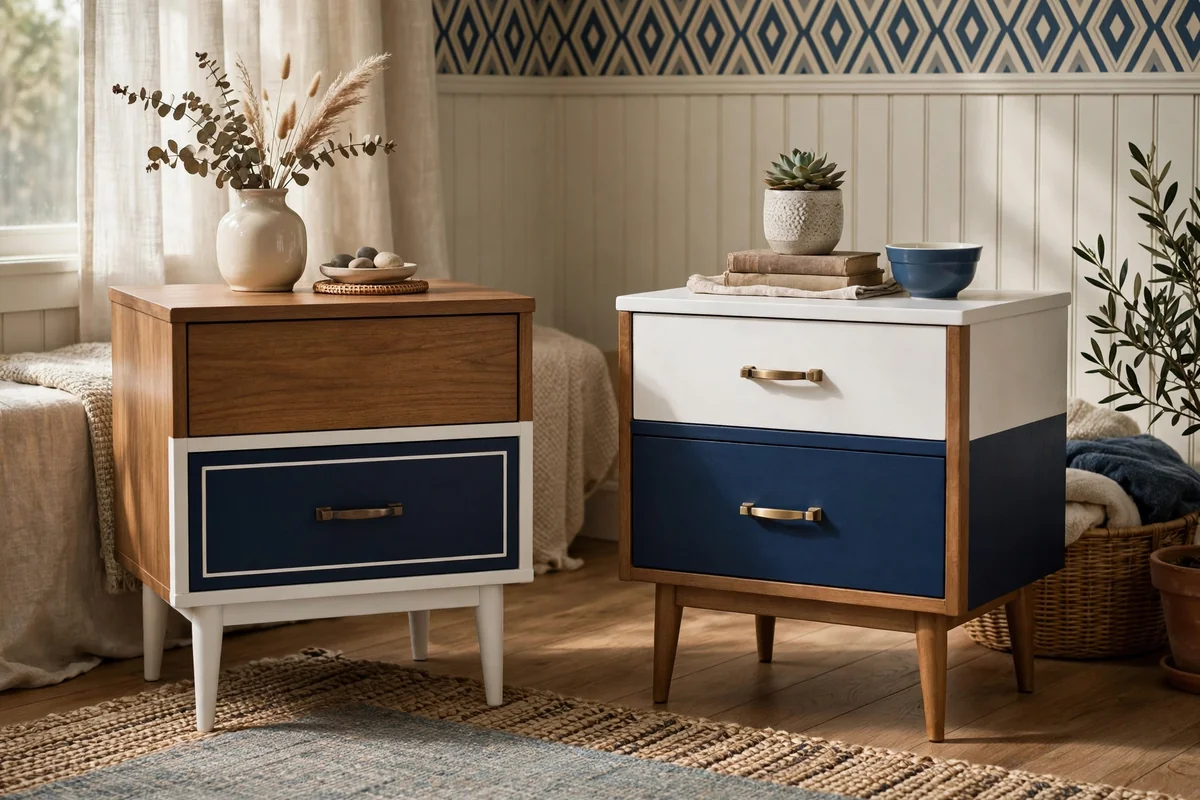
5. Retro Two-Tone Nightstands
Two-tone paint gives old nightstands a playful retro revival. Try warm wood tones with white and a deep accent like navy: paint the body one color, the drawer fronts another, and suddenly a dated piece looks like a mid-century find. The trick is choosing colors with a shared warmth so the combination feels designed.
Use painter’s tape for razor-sharp lines between colors and remove it while the second coat is still slightly tacky. Keep the palette to two, or at most three, colors. This is a wonderful way to unite mismatched nightstands into a convincing pair. It is cheerful, custom and full of personality.
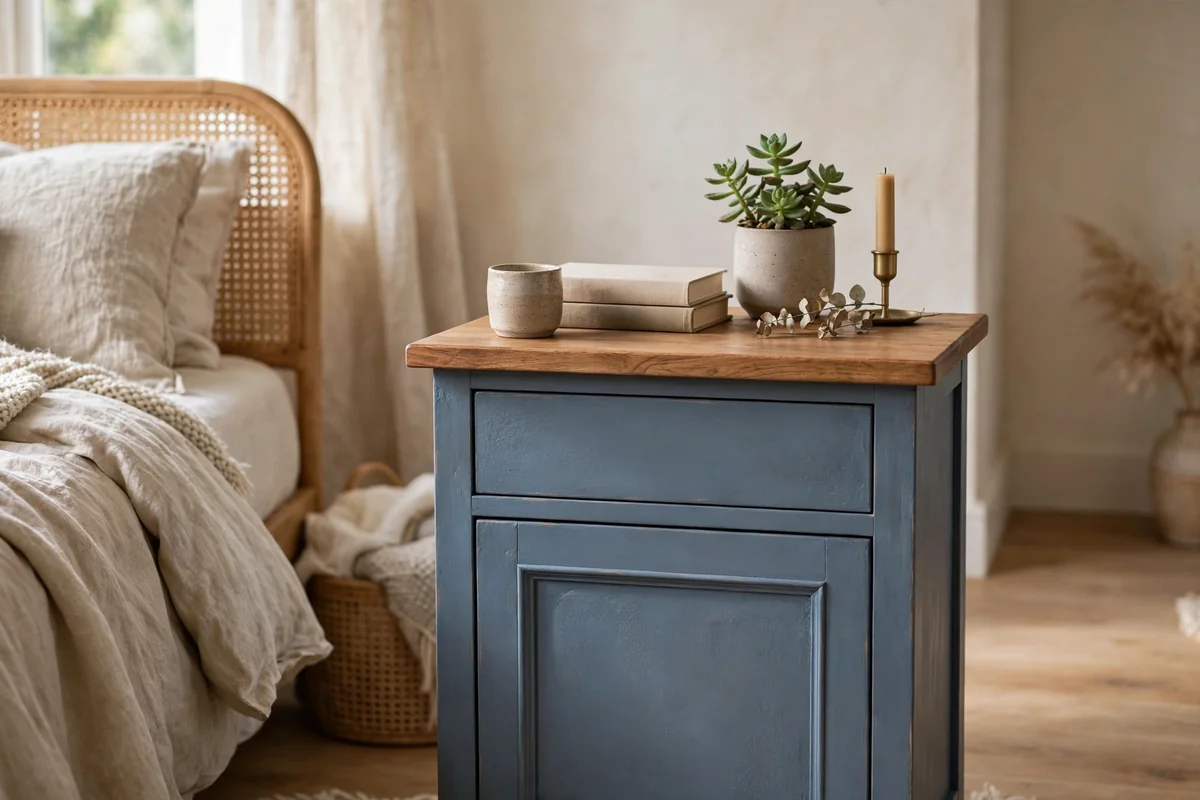
6. Blue Grey Side Table
Blue grey is the quiet achiever of furniture colors: calm, contemporary and compatible with everything. A small side table in this soft, misty shade works beside any bed, in any bedroom style. Keep the wooden top natural for warmth, sealed with a clear finish for durability. Understated color is the mark of good taste.
The color’s subtlety is its strength; it adds interest without demanding attention. Pair with simple black or brass hardware. Blue grey also photographs beautifully, if that matters to you. It is the safe choice that never looks boring, sophistication in its softest form. Quiet colors often make the loudest impression of all.
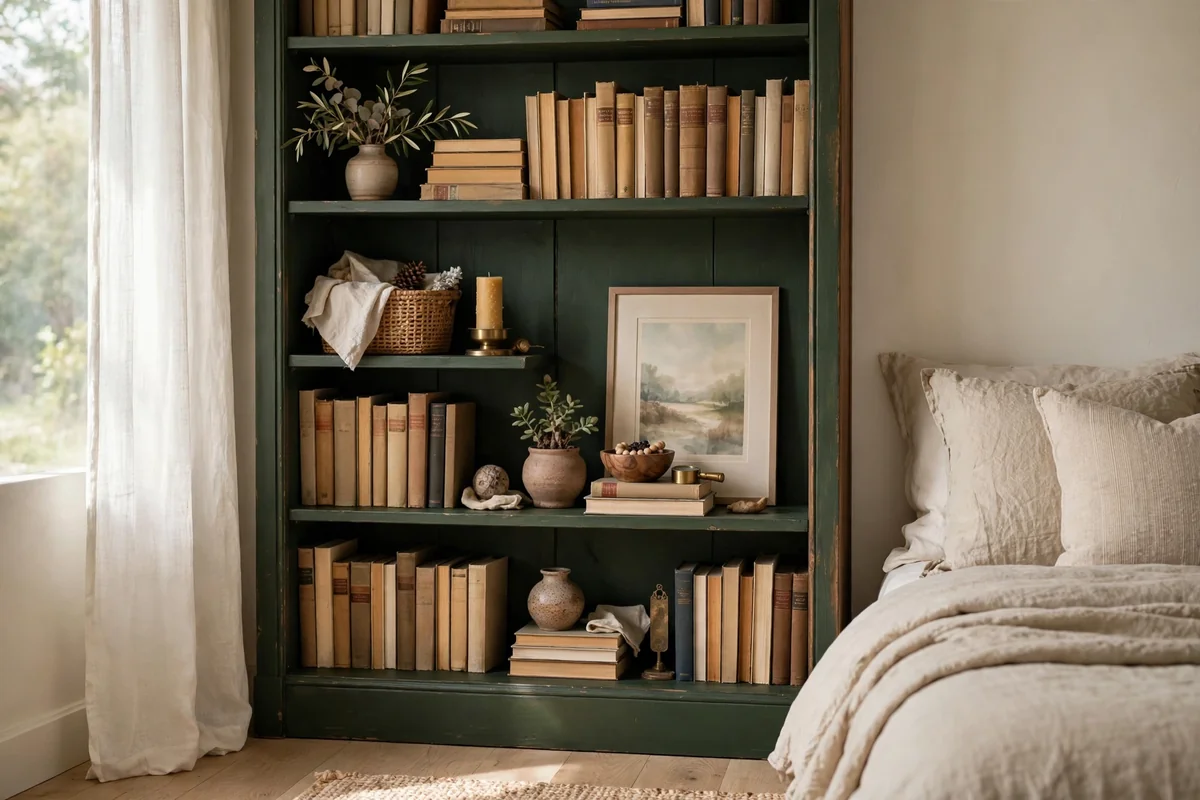
7. Dark Green Bookshelf
A bookshelf in dark green turns book storage into a design feature. The deep, botanical color makes book spines and objects pop while bringing a calm, library-like atmosphere to the bedroom. It is particularly beautiful in rooms with white or cream walls, where the green reads as rich and intentional.
Paint the interior the same green for a cocooning effect, or a lighter shade to make the contents glow. Style the shelves with breathing room: books, a plant, a framed print. Dark green hides dust well and feels established from day one. It is the scholar’s color, dignified and serene.
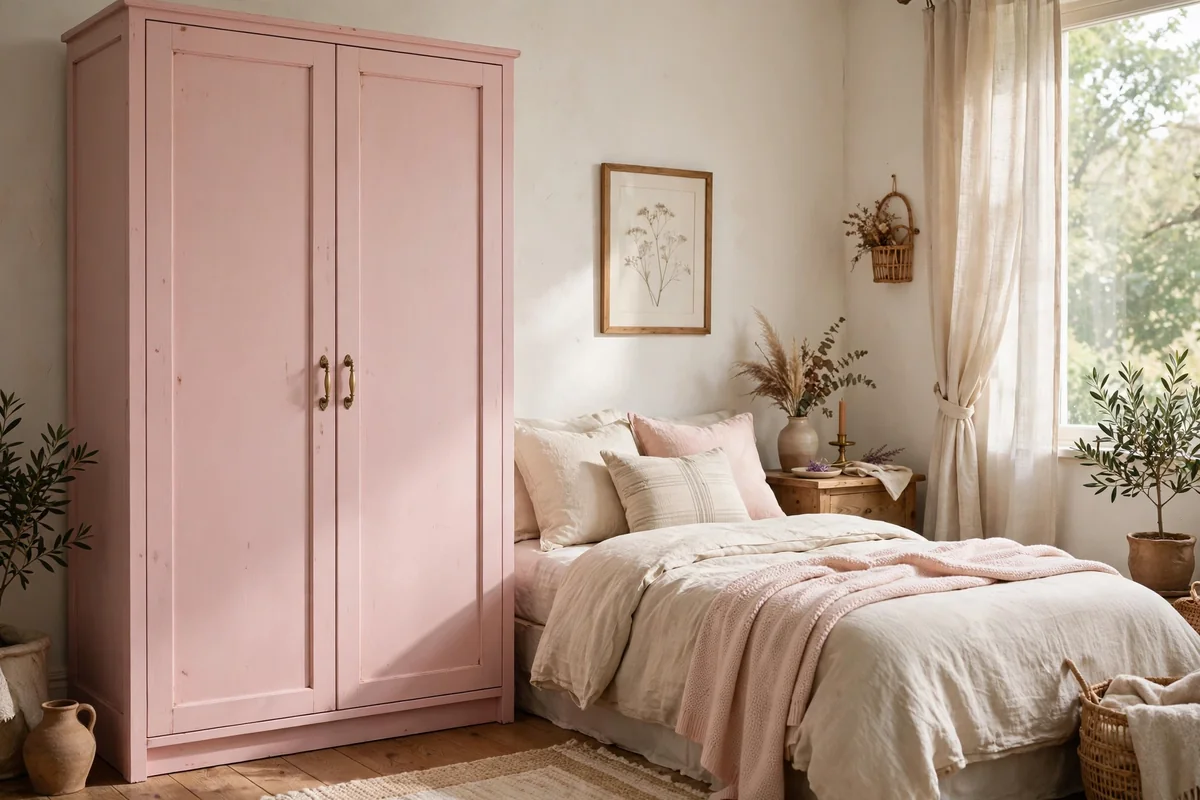
8. Soft Pastel Pink Wardrobe
A wardrobe in soft pastel pink brings gentle joy to the bedroom. The muted, powdery shade feels romantic without being childish, especially in a satin finish that gives it a subtle glow. Against white walls and natural wood floors, it becomes the room’s happiest feature. Gentle color brings genuine calm.
Choose a greyed, dusty pink rather than a sweet bubblegum for sophistication. New hardware in brass or white ceramic completes the transformation. Pastel pink suits wardrobes particularly well since the large surface lets the color breathe. It is a brave choice that feels surprisingly serene in person. Soft pink is braver than it looks.
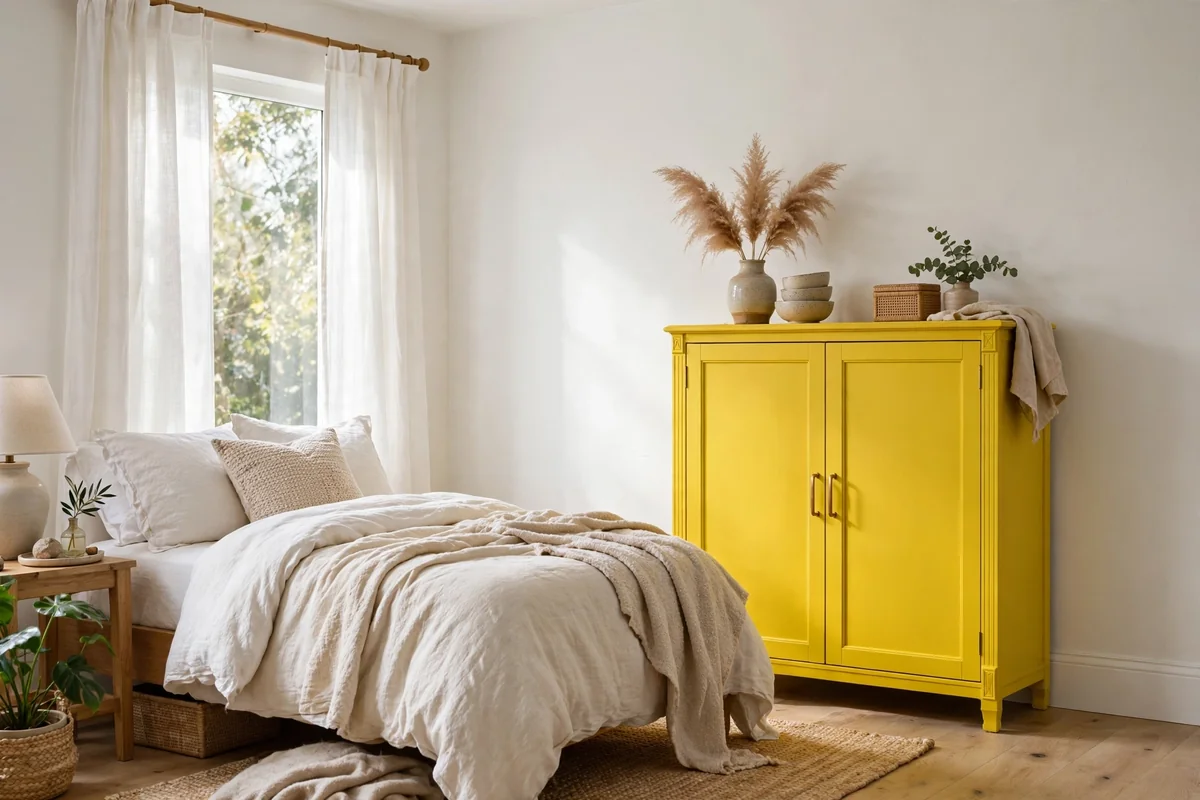
9. Cheerful Yellow Cabinet
A yellow cabinet is pure sunshine in furniture form. Against a white wall, a vibrant but warm yellow, think marigold rather than neon, lifts the whole bedroom’s mood. It is the perfect piece for a room that needs energy, a guest room that should feel welcoming or a grey morning that needs defeating.
Balance the brightness with calm surroundings: white walls, natural wood, simple bedding. Use a satin finish for depth. Yellow is a commitment, so live with a swatch on the piece for a few days first. For the right room, it is the happiest furniture you will ever own. Sunshine belongs in the bedroom too.
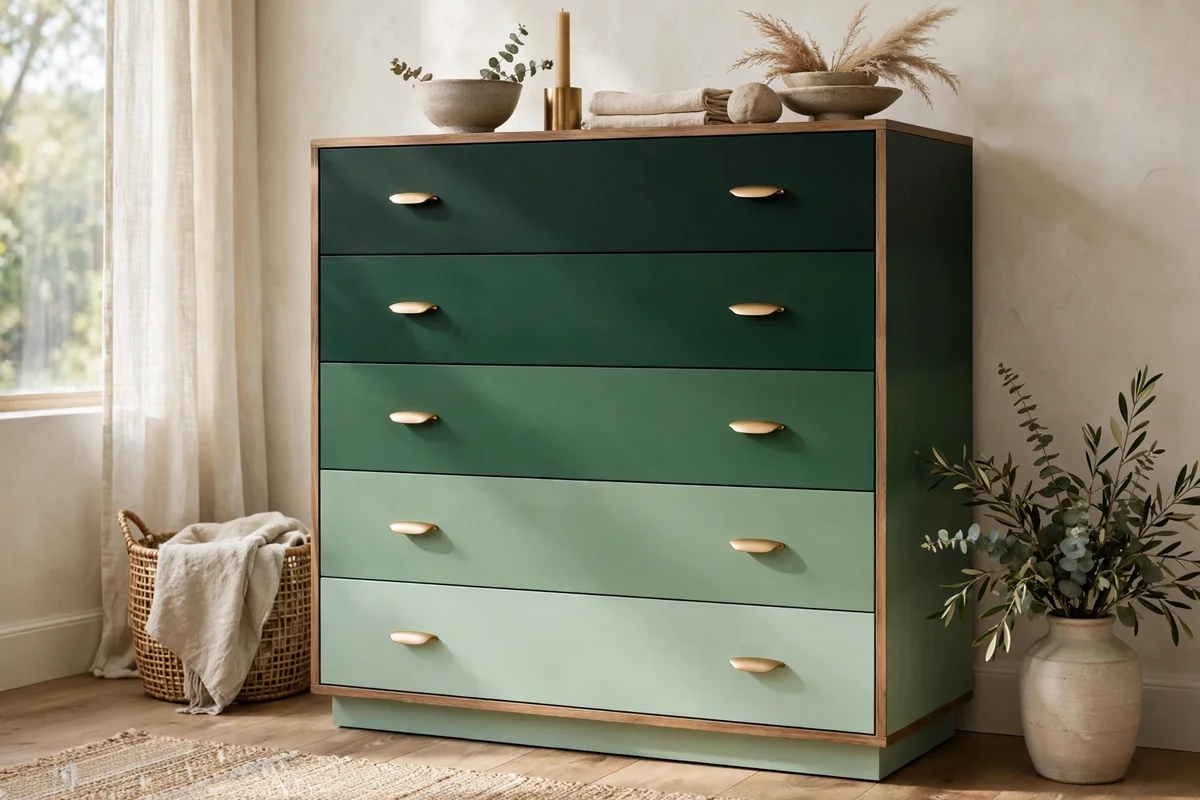
10. Ombre Green Drawer Gradient
An ombre gradient turns a plain dresser into art. Paint the base a deep forest green and lighten the mix drawer by drawer toward a soft sage at the top, or reverse it for a grounding effect. The gradual shift is mesmerizing and makes the piece look custom-designed. Gradients turn simple paint into poetry.
Mix all your shades from the same two tins before you start, labeling each drawer. Blend the edges slightly where drawers meet for a seamless flow. Keep the hardware consistent, simple knobs in one finish, so the gradient stays the star. It is a showpiece that guests will ask about.
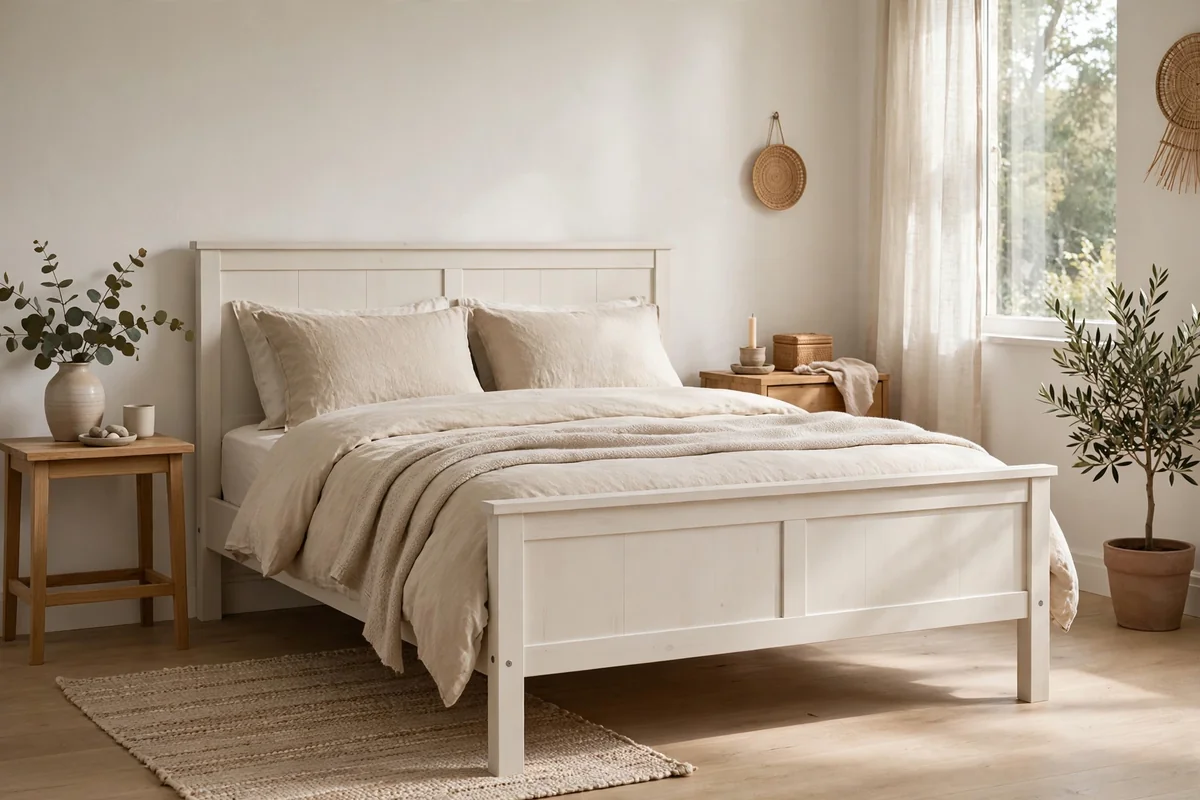
11. Off-White Bedframe Refresh
The bedframe is the bedroom’s largest furniture piece, so painting it changes everything. An off-white refresh makes a heavy wooden frame feel light and timeless, working with every bedding style from crisp hotel white to layered bohemian. It is the single highest-impact paint project in the bedroom. One weekend transforms the whole room.
Use a durable satin paint since bedframes take knocks, and consider a clear topcoat on the rails. Warm off-whites, ivory, buttermilk, feel softer than bright white. New bedding completes the transformation. It is a weekend’s work for a room that feels entirely new. New bedding doubles the transformation for little extra cost.
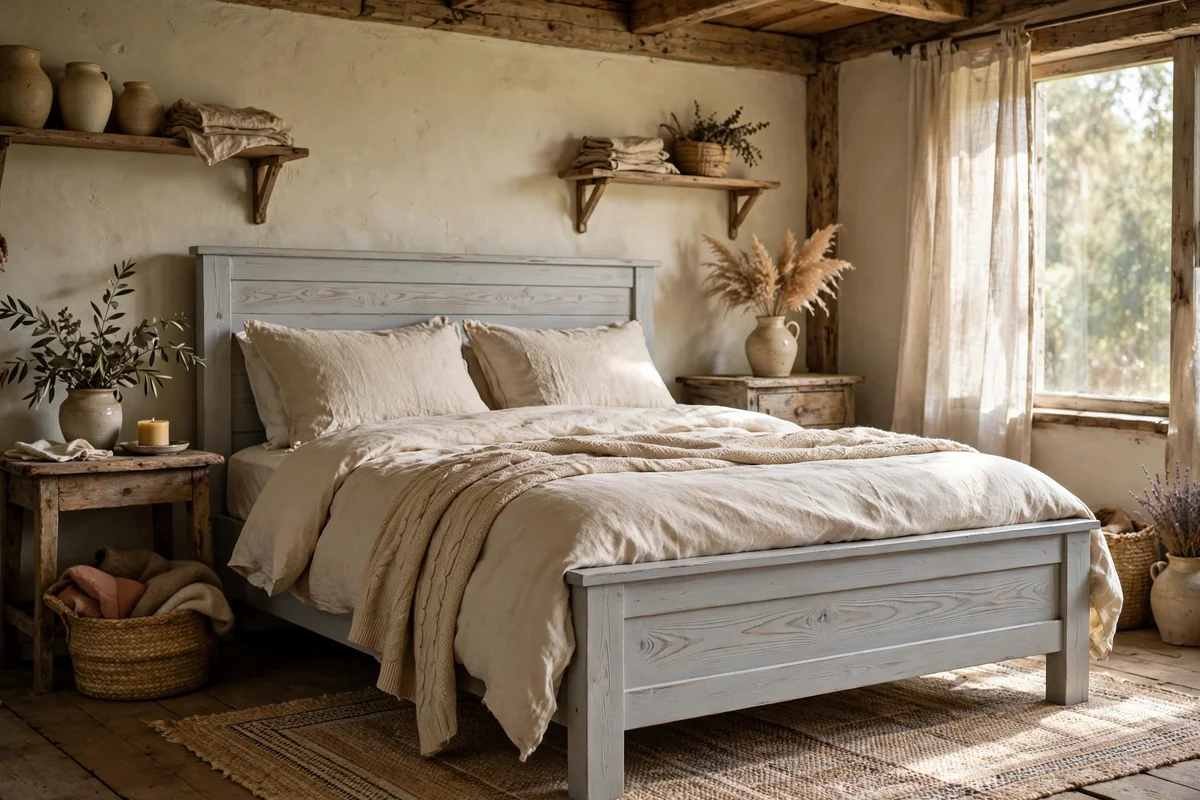
12. Rustic Grey Wood Grain Bed
A grey wash that lets the wood grain show through gives a bedframe beautiful rustic character. Thin the paint slightly or use a dedicated wood wash, brushing with the grain and wiping back so the texture remains visible. The result is weathered and soft, like driftwood or old barn timber.
This finish suits country, coastal and farmhouse bedrooms perfectly. Seal with a clear matte topcoat to protect the wash. Pair with natural linen bedding and simple wooden furniture. It is texture and color in one easy technique, a bed that looks like it has stories to tell. Texture adds what color alone cannot.
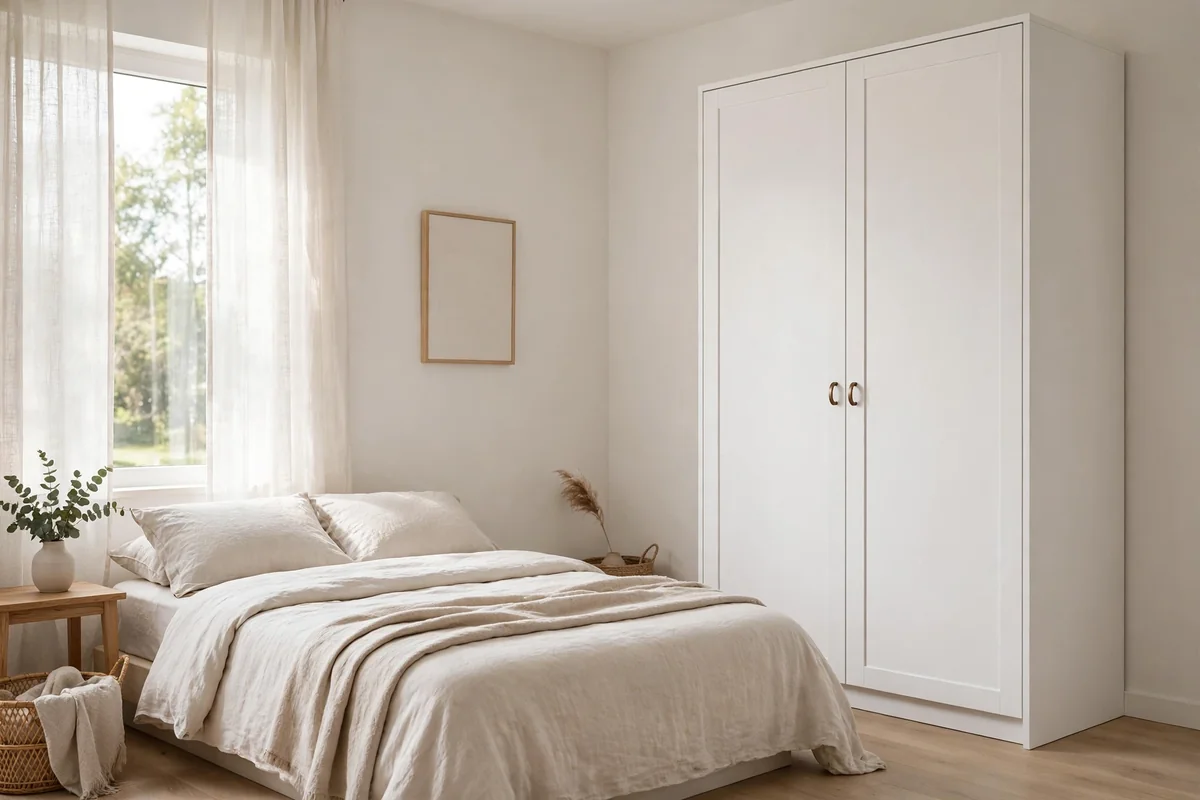
13. Clean White Wardrobe
A white wardrobe is the hardest-working neutral in the bedroom. Painted in a clean, crisp white, even a dated wardrobe looks fresh and architectural. White reflects light, making the room feel larger, and it lets colorful bedding and art take center stage. White is the ultimate team player in any bedroom scheme.
Use a stain-blocking primer first, especially over dark or knotty wood, to prevent bleed-through. Two coats of quality satin paint give a wipeable, durable finish. Update the handles, long brass pulls look particularly smart. It is the safe choice that always looks intentional. Preparation makes white look flawless and last for years.
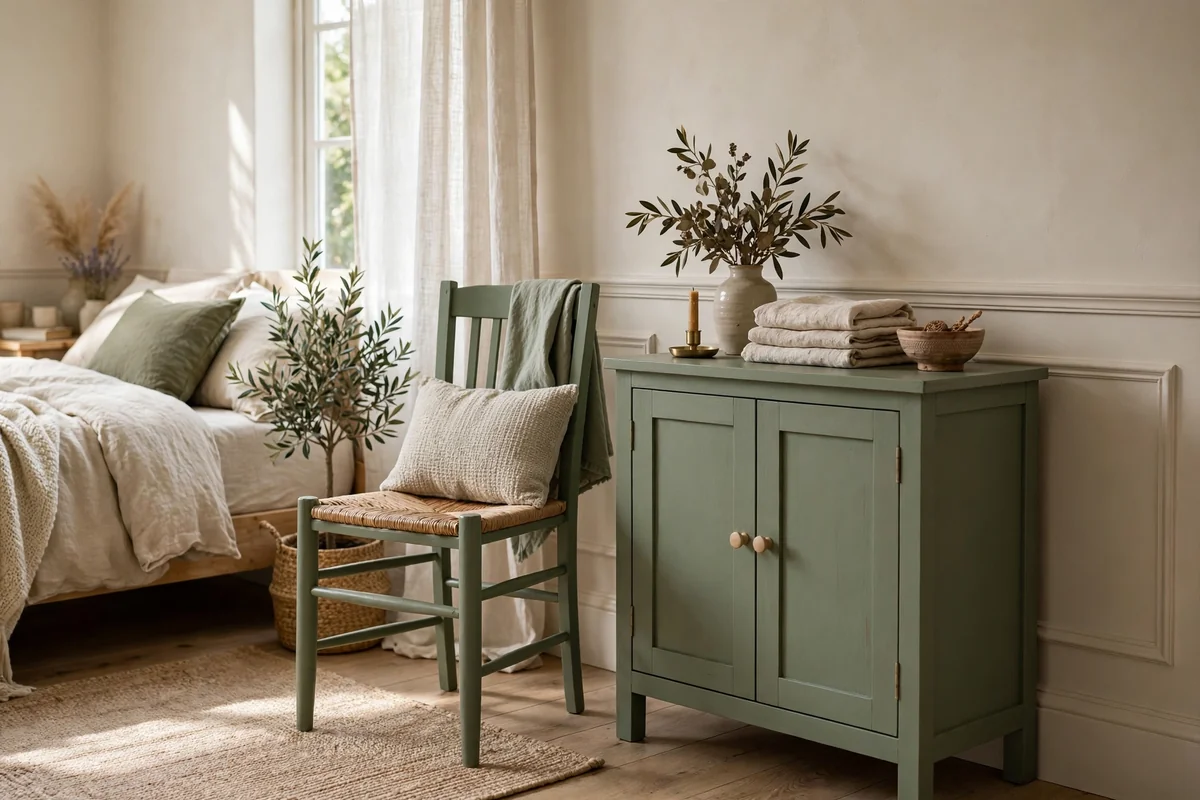
14. Matching Sage Green Set
Painting several pieces in the same sage green creates a cohesive, designer bedroom. A chair, a small cabinet and a mirror frame in matching soft green look like a curated collection, even if the pieces came from different decades. Sage is gentle enough to live with in large doses. Cohesion calms even the busiest room.
Use leftover paint across pieces to keep costs down and the color consistent. The soft green pairs beautifully with cream walls, natural wood floors and botanical prints. It is a rural, calming palette that makes mismatched furniture feel like a set. Unity, achieved with a single tin. One color unites a decade of finds.
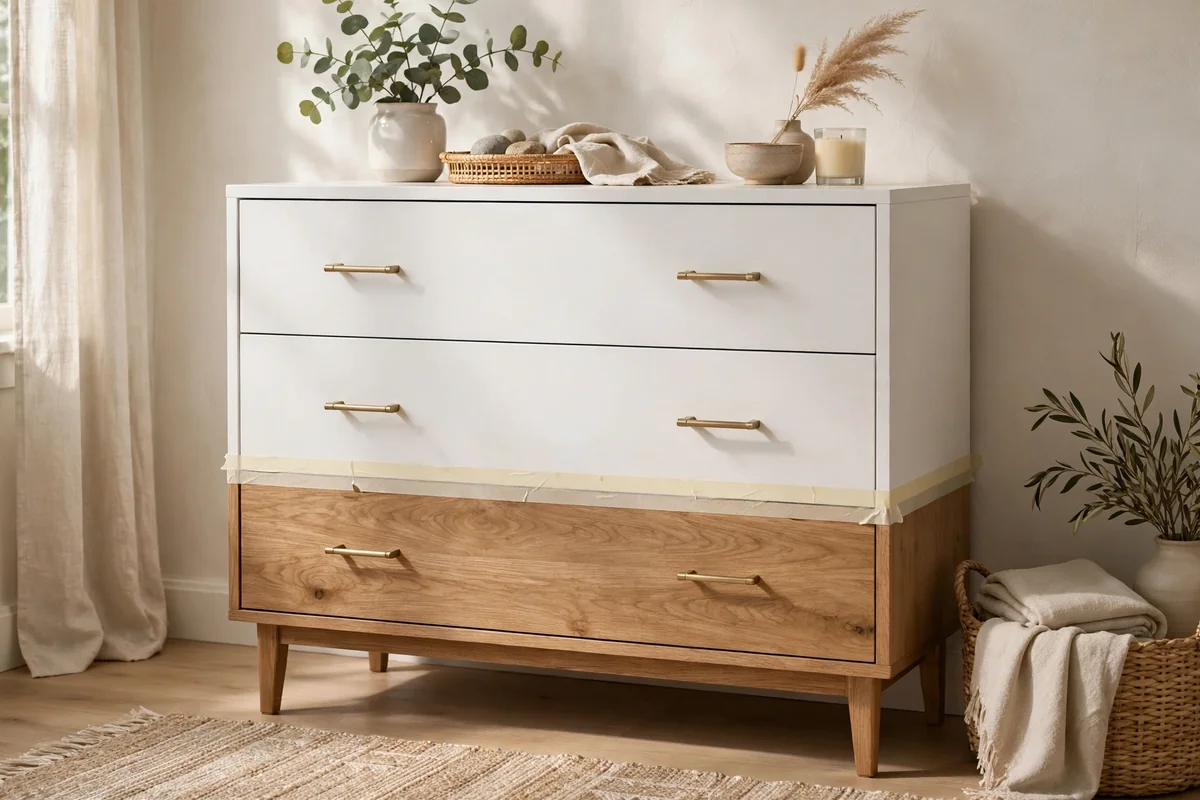
15. Two-Tone Tape Line Design
A crisp taped line dividing two colors is graphic design for furniture. Paint a dresser white on top and natural wood below, or split it vertically, using painter’s tape for a razor-sharp boundary. The clean geometry makes even a humble piece look like a modern design classic. Geometry gives old furniture its edge.
The secret is patience: seal the tape edge with the base color first, let it dry, then paint the second color for a bleed-free line. Pull the tape while the paint is slightly tacky. Limit yourself to two tones for maximum impact. It is precision that looks effortless. Patience is the real tool here.
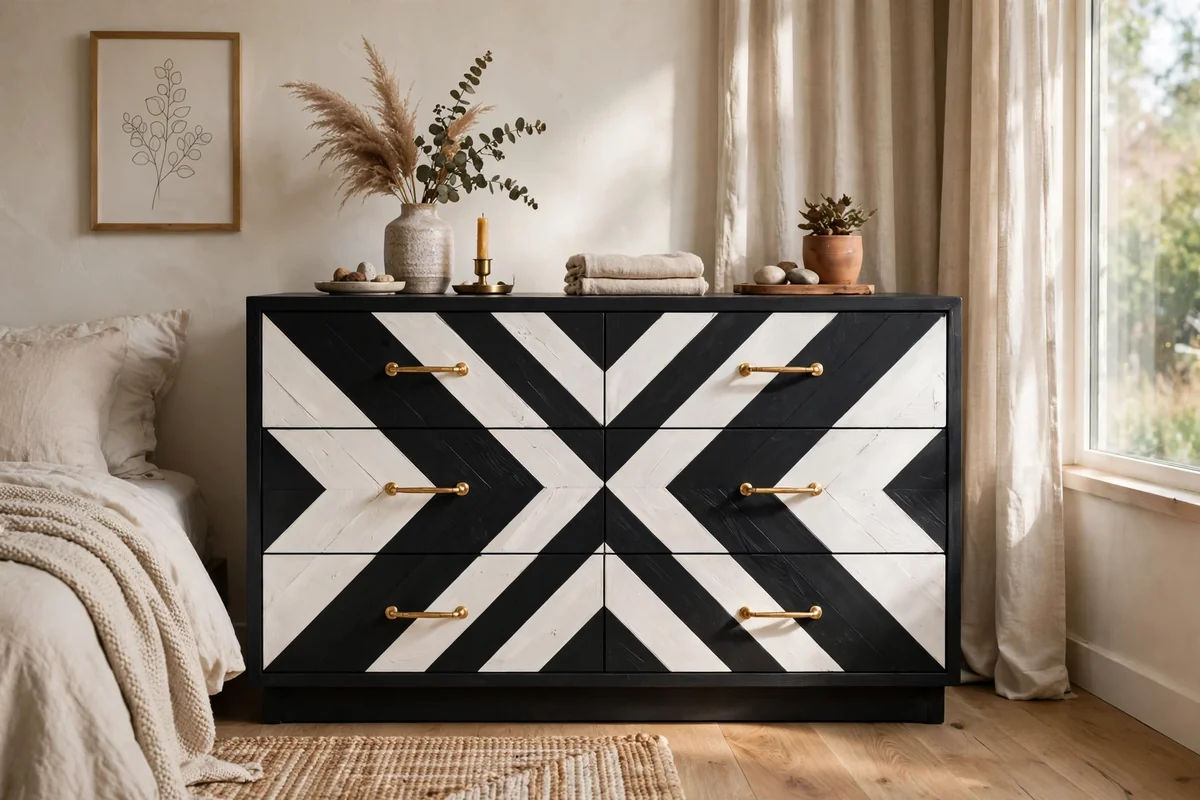
16. Geometric Black and White
Geometric patterns in black and white turn a plain dresser into a contemporary statement. Triangles, chevrons or a bold harlequin across drawer fronts create graphic impact while staying monochrome and sophisticated. It is the most artistic idea in this list, and the most rewarding. Bold pattern rewards careful planning and a steady hand.
Map the pattern on paper first, then transfer it with tape and careful measuring. Keep the rest of the piece solid, black or white, so the pattern has room to breathe. Gold legs or handles add a luxurious finishing touch. It is furniture as art, and it never fails to impress.
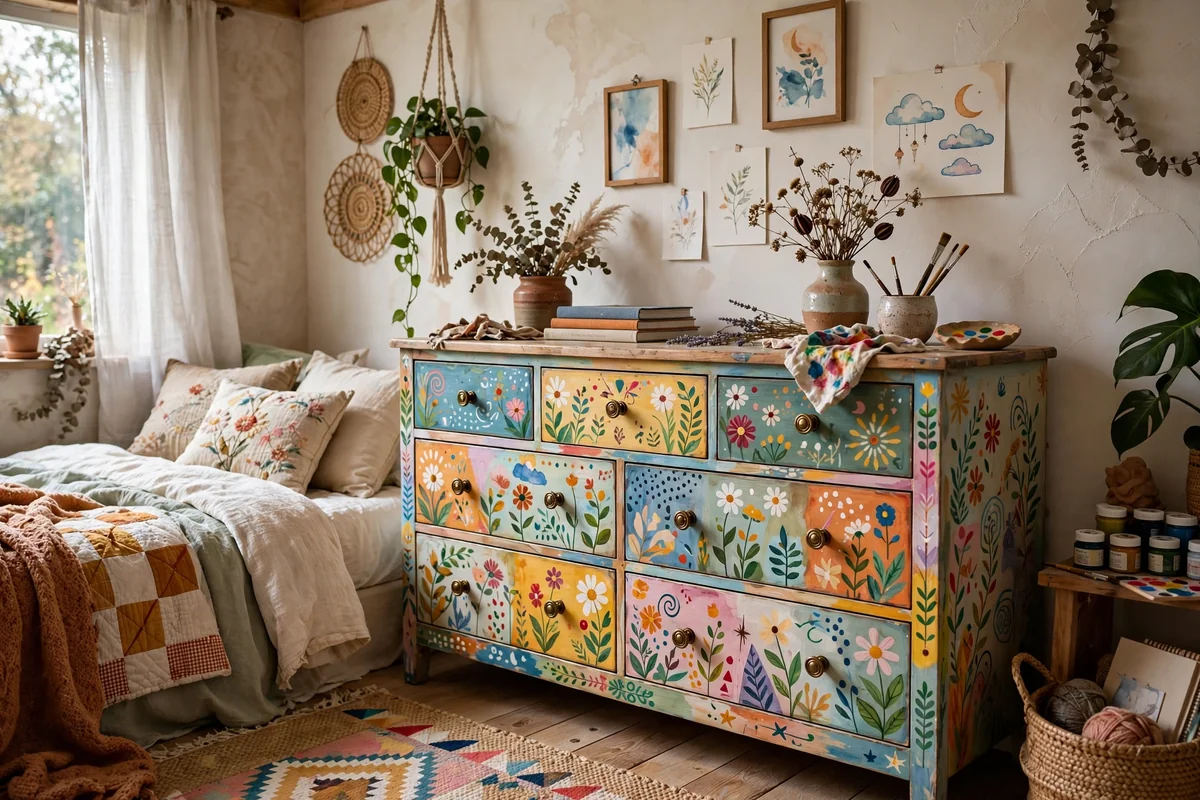
17. Whimsical Hand-Painted Dresser
Let your creativity loose with a hand-painted dresser. Flowers, vines, stars or abstract brushstrokes in joyful colors turn a plain chest into a one-of-a-kind treasure. This is the piece that makes a bedroom truly personal, carrying your hand in every stroke. Your hand makes it truly irreplaceable and completely your own.
Sketch the design lightly in pencil first, then build up colors in thin layers. Seal with a clear matte topcoat to protect the artwork. There are no rules here except joy: the charm is in the handmade imperfection. It is the most personal furniture you will ever own. Imperfection is the signature of the handmade.
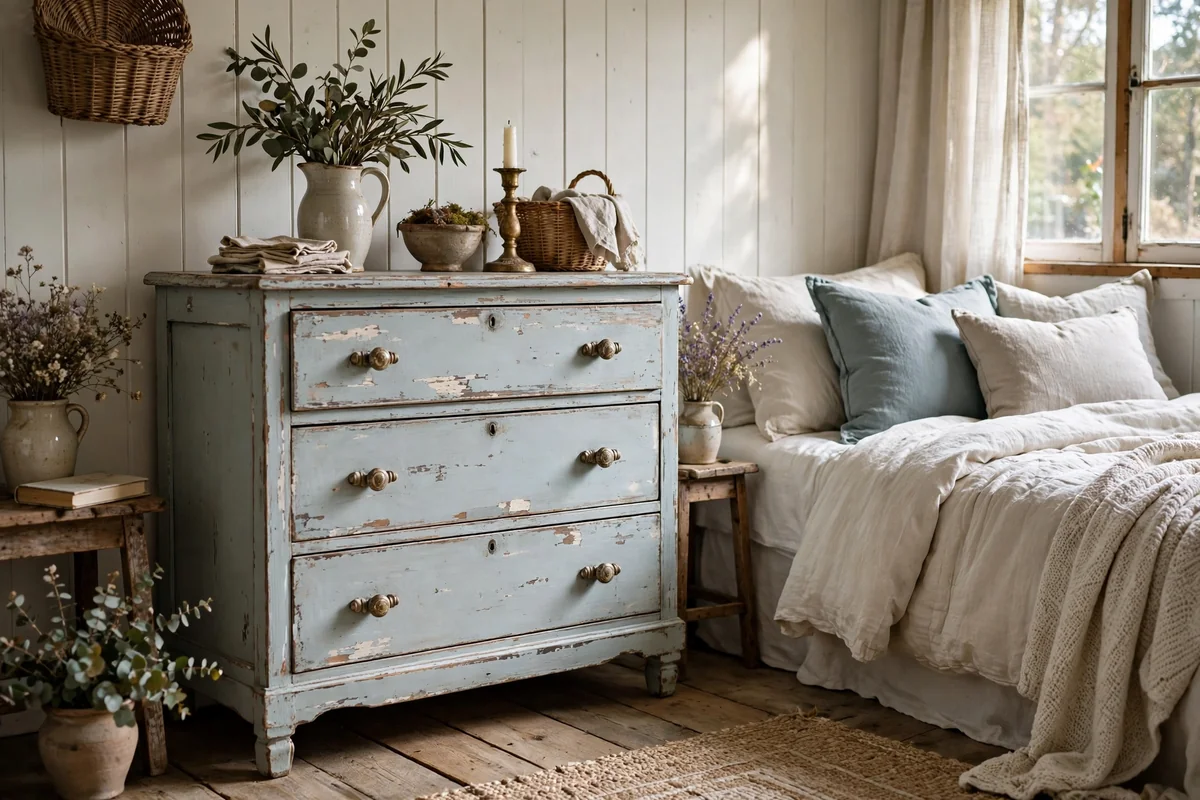
18. Distressed Farmhouse Finish
A gently distressed finish gives painted furniture authentic farmhouse soul. Paint in a soft color, cream, sage or pale blue, then sand back the edges and raised details to reveal the wood beneath. The worn look suggests decades of love rather than a weekend project. Worn edges tell a convincing story.
Distress with restraint: edges, corners and handles see natural wear, so focus there. Less is more; you can always sand more, but you cannot un-sand. Seal with clear wax for a soft, touchable finish. It is nostalgia you can make in an afternoon, and it suits country bedrooms perfectly. Restraint keeps the finish authentic.
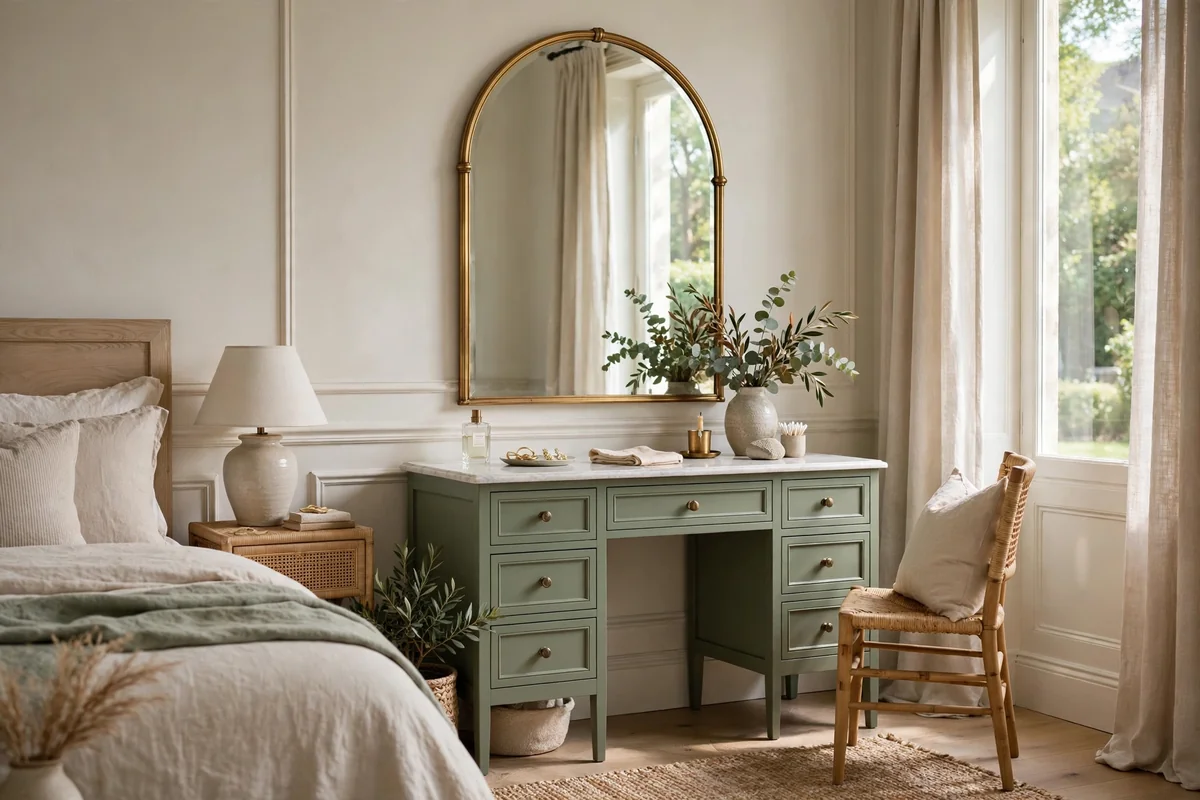
19. Sage Green Vanity Table
A vanity in sage green is elegance with a gentle touch. The soft, greyed green flatters both the furniture and the face in the mirror, creating a dressing area that feels calm and refined. Pair it with a simple upholstered stool and a round mirror for a timeless setup. A vanity deserves its own quiet ritual.
Use a satin finish for a subtle glow that suits the vanity’s intimate scale. Brass or glass hardware keeps it delicate. Style the top sparingly: a small vase, a tray for essentials, nothing more. It is a quiet corner of luxury in the everyday bedroom. Small luxuries matter most daily.
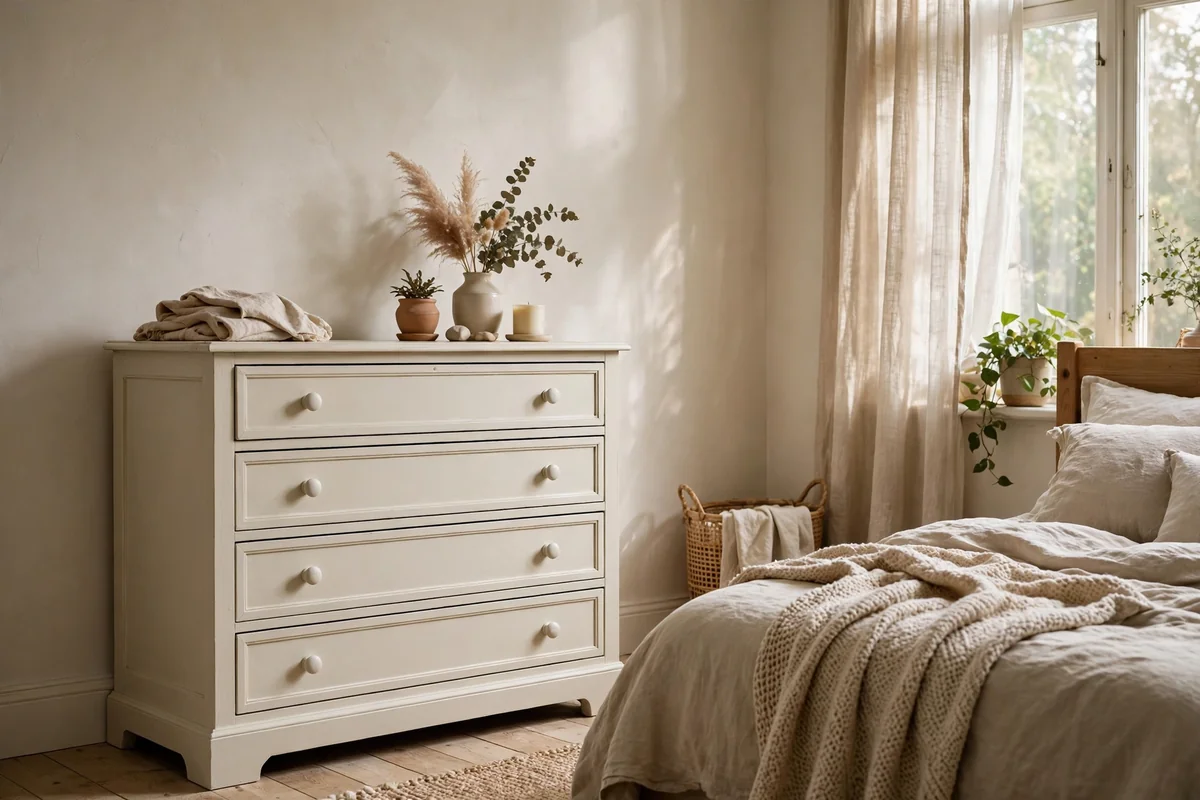
20. Cream Chalk-Painted Chest
Chalk-style paint in warm cream gives a chest of drawers the softest possible finish. The matte, velvety texture looks effortlessly vintage, and the paint’s forgiving nature makes it perfect for beginners. A clear wax topcoat adds depth and protection while keeping the matte look. Beginners achieve beautiful results with this forgiving paint.
Apply two thin coats with a natural-bristle brush, working the paint into the wood. Distress very lightly on edges if you like, or keep it pristine for a cleaner feel. Cream suits every bedroom style and never shouts. It is the gentle giant of furniture paint. Soft finishes invite touch.
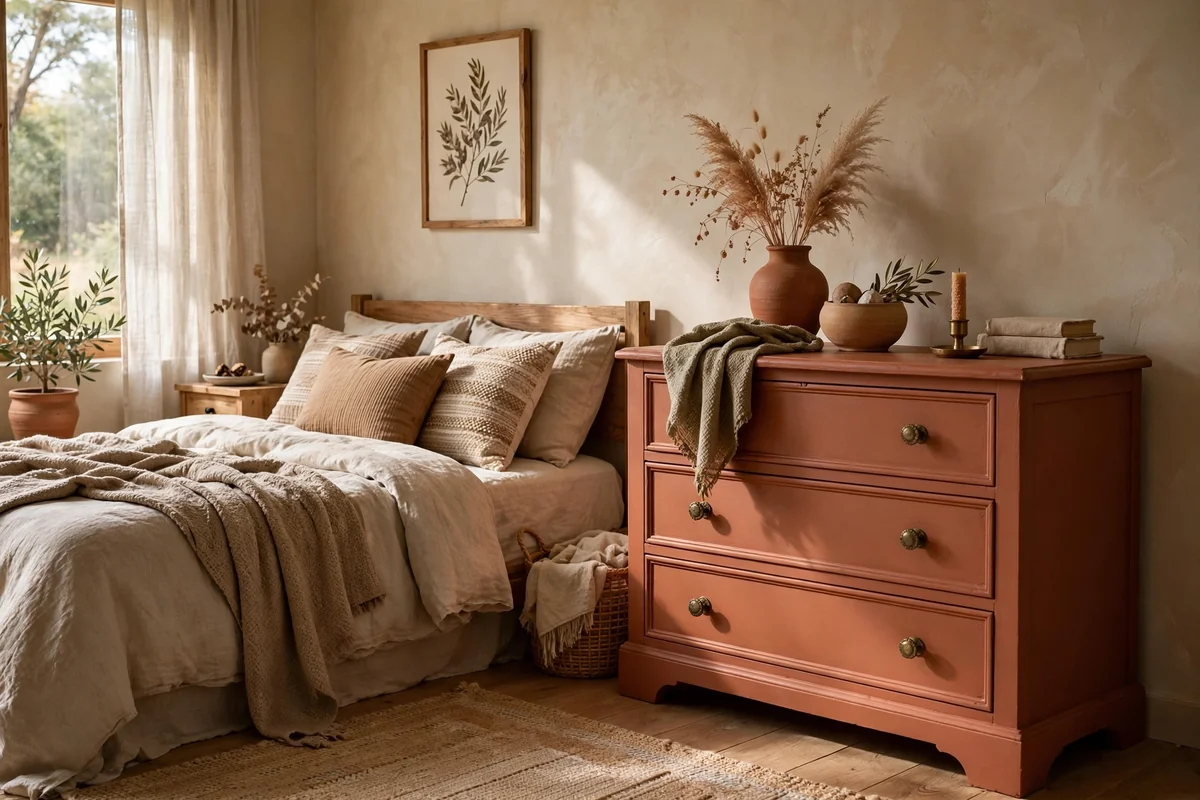
21. Terracotta Accent Dresser
Terracotta brings sun-warmed earthiness to the bedroom. A dresser in this rich, clay tone glows against white or cream walls, adding warmth without the intensity of red or orange. It is a color with soul, grounding the room while keeping it inviting. Earth tones never truly date and always feel welcoming.
Pair with natural materials, rattan, linen, light wood, for a cohesive earthy palette. A satin finish suits terracotta’s richness. Keep bedding calm so the dresser remains the warm focal point. It is Mediterranean warmth translated to furniture, and it makes the bedroom feel like a retreat. Warmth is simply the best welcome home.
Paint Your Way to a New Bedroom
The dresser you stopped seeing, the nightstands you have meant to replace, the bedframe that has always been just fine: paint reveals what they could be. Choose a color that makes you happy, prepare with care, and finish with fresh hardware. A weekend, a tin of paint and a little courage are all it takes to give old furniture a beautiful new life.
Frequently Asked Questions
What is the best paint for bedroom furniture?
For most pieces, a quality acrylic latex paint in satin or eggshell is ideal: durable, low-odour and easy to clean. Chalk-style paint gives a beautiful matte, vintage finish and needs little prep, but always seal it with wax or a clear topcoat. For heavy-use tops like dressers, add a water-based polyurethane for extra protection against scratches and rings.
Do I need to sand furniture before painting?
Light sanding is almost always worth it. A quick pass with 120-grit paper gives the paint something to grip, and it takes only minutes per piece. If the old finish is glossy, sand until it dulls, then wipe clean and prime. Chalk-style paints can skip sanding on matte surfaces, but glossy or laminate pieces still benefit from a bonding primer first.
How do I get a smooth, professional finish?
Preparation does most of the work: clean with sugar soap, sand lightly, and prime. Apply thin coats with a good brush or small foam roller rather than one thick coat, and sand very lightly with 220-grit between coats to remove nibs. Two to three thin coats beat one heavy one every time. Finish with a clear topcoat on surfaces that take wear.
What color should I paint bedroom furniture?
Let the room decide. White and off-white suit almost every bedroom and make small rooms feel larger. Deep colors like navy, forest green and charcoal add drama and pair beautifully with neutral walls. Soft pastels, sage, blush, powder blue, keep things gentle. If the walls are bold, keep furniture quiet; if the walls are plain, let the furniture sing.
How do I make painted furniture look modern, not shabby?
Crisp color choice and clean hardware do it. Choose contemporary shades, deep green, warm black, soft greige, and pair them with simple modern knobs or cup pulls in brass or matte black. Keep lines clean: no heavy distressing, no fussy stencils. A smooth satin finish and fresh hardware make even a charity-shop dresser look like a designer piece.