Kitchen
21 Warm White Kitchen Ideas That Feel Bright but Never Cold
By Anna Wells · · 19 min read
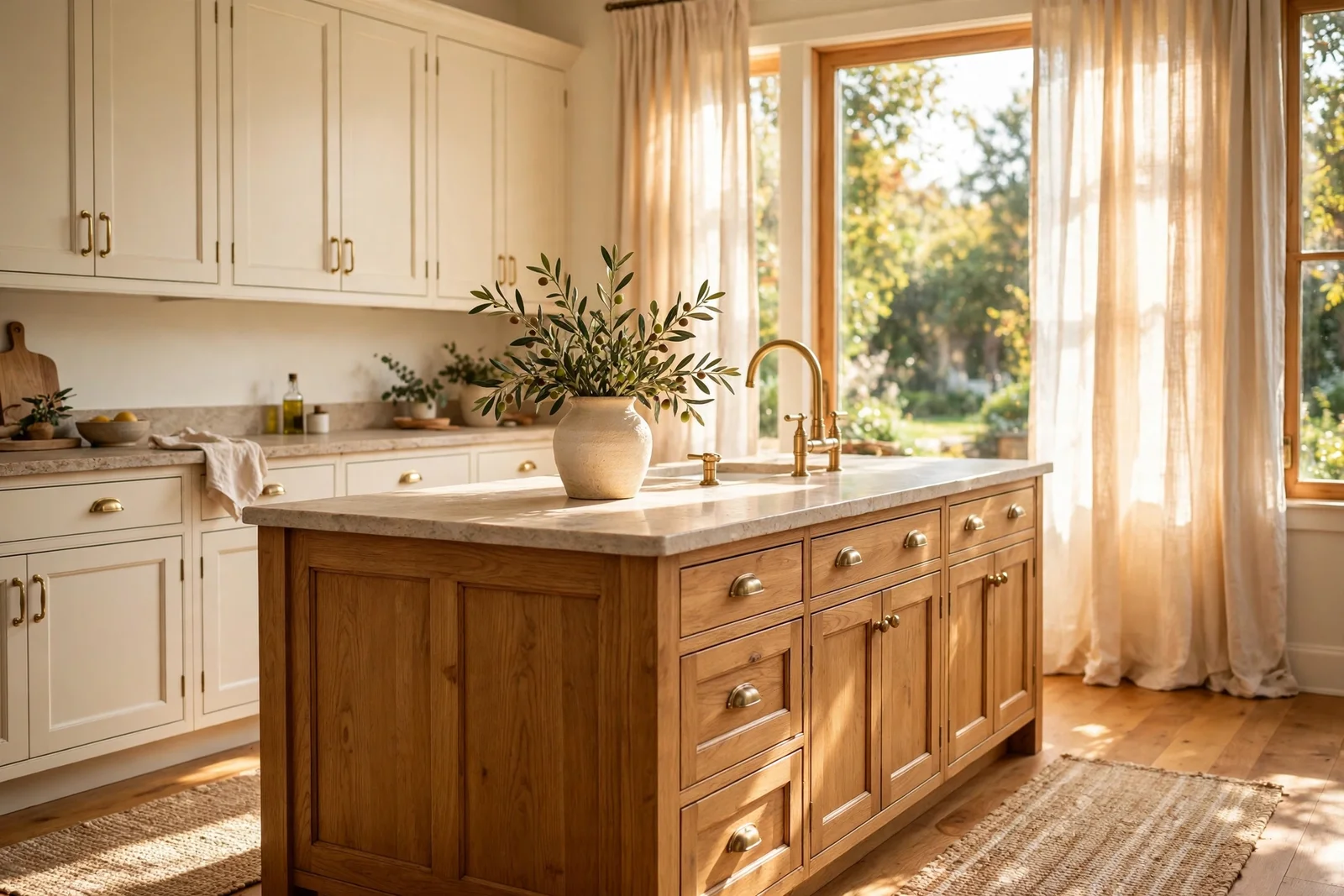
Creamy cabinets, honeyed wood, brushed brass and candle-warm light: 21 practical ideas for a white kitchen that glows instead of glares.
Morning light slides across the countertop, and instead of bouncing back as a cold glare it settles into the cabinets like sunlight on cream. That is the quiet promise of a warm white kitchen: brightness you can feel, softened by wood, brass and linen so the room never tips into the chill of a laboratory. The whites lean yellow and buttery, the metals glow gold, and every surface asks to be touched.
This palette suits kitchens that work hard and host often. Homework spreads across the island without harsh shadows, a pot of tea cools on a runner that muffles the clatter of the day, and the forgiving light flatters both early breakfasts and late suppers. Warm white works in small galleys and generous open plans alike, because the scheme is about tone and texture rather than square metres.
Below are twenty one concrete ideas, from choosing the right creamy paint to lighting the room at a golden 2700K, each one practical enough to start this weekend. Every section names materials, sizes, placements and budgets, plus one mistake to avoid. Begin with the paint samples and the lighting, and the rest of the warmth follows naturally.
1. Paint Cabinets in a Creamy Warm White With Yellow Undertones
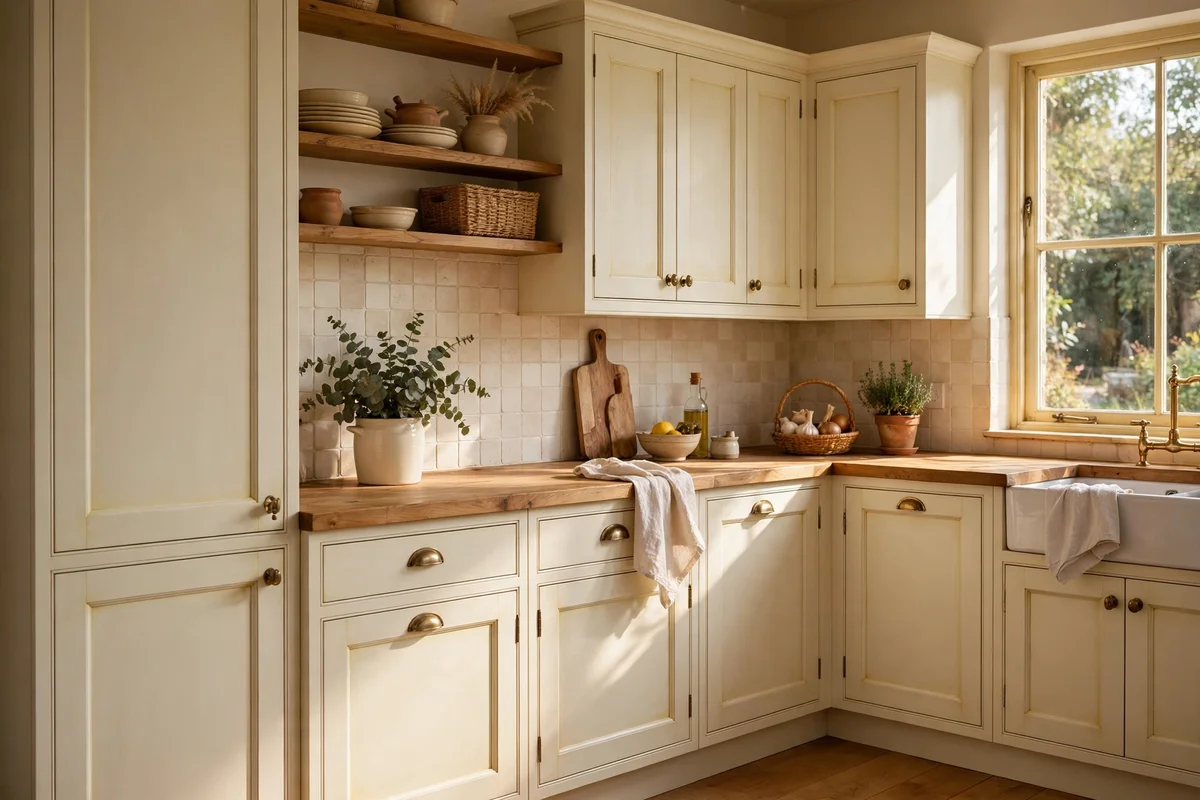
Warm whites such as ivory, buttermilk and clotted cream lean toward yellow, and they keep cabinetry luminous in real daylight instead of flashing blue or grey. Hold a sample chip of stark white next to a creamy one at noon and the difference is obvious: the cool chip reads clinical while the warm chip glows. Eggshell or satin finishes suit this palette best, since they scatter light softly instead of the hard mirror bounce of gloss.
A professional sprayed finish is the investment tier, often 2,000 to 4,000 pounds or dollars for a medium kitchen, while a careful DIY repaint with bonding primer and two coats of cabinet paint lands under 200 in materials. The mistake to avoid is skipping the degrease: kitchen doors hold years of invisible cooking film, and paint applied over it peels within months. Wash every door with sugar soap, sand lightly, prime, and let each coat cure fully before rehanging.
2. Clad the Kitchen Island in Natural Oak Against Warm White Cabinets
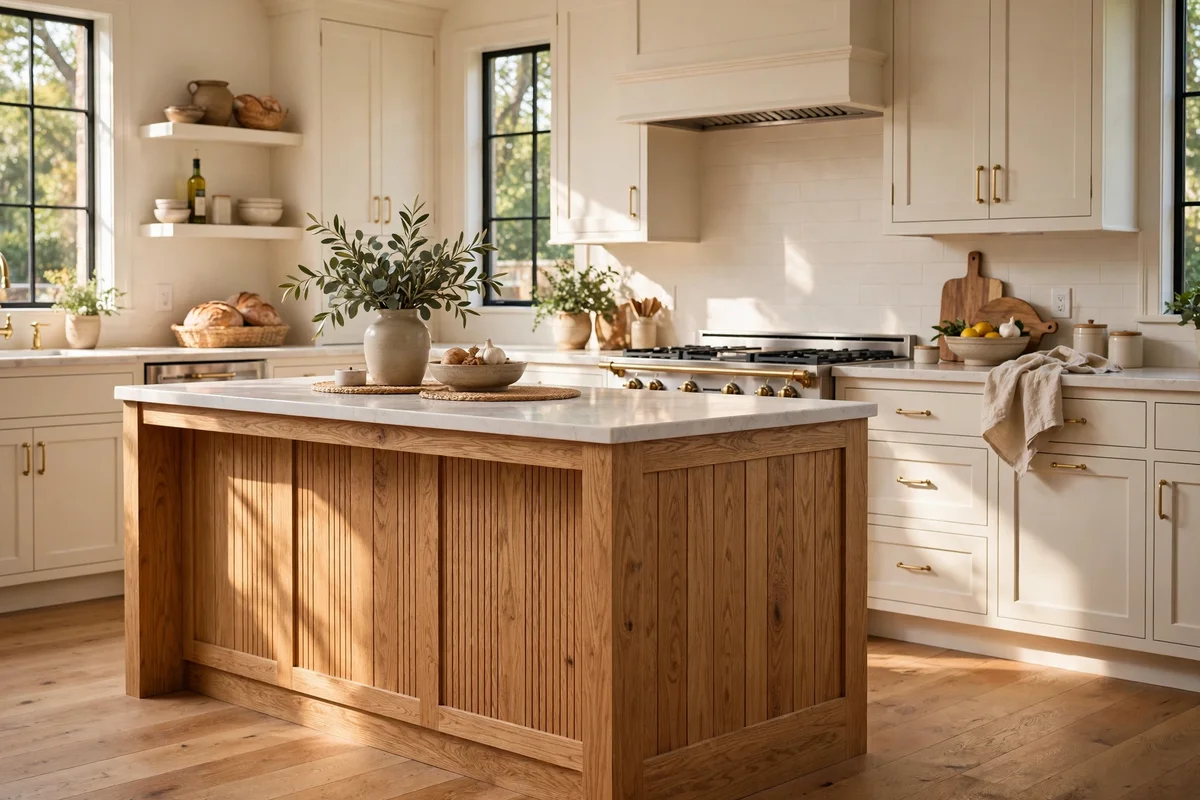
A natural oak island anchors a warm white kitchen the way a wooden table anchors a dining room. The honey tones of the grain echo the yellow undertones of the cabinets, so the two finishes feel related rather than competing. Choose a simple shaker or slab front so the wood does the talking, and match the oak’s tone to the floor within one shade step so the room reads as a single warm base.
If a full oak island is beyond budget, wrap a plain base in oak look panels or reface just the island doors for a fraction of the cost. Budget tier panels run 150 to 400 pounds or dollars, while a bespoke solid oak island is an investment piece at several thousand. The mistake to avoid is pairing orange toned pine with cool grey oak flooring, which fights the warm scheme. Keep every wood in the same honey or golden family.
3. Hang Open Oak Shelves on the Warm White Wall Over the Counter
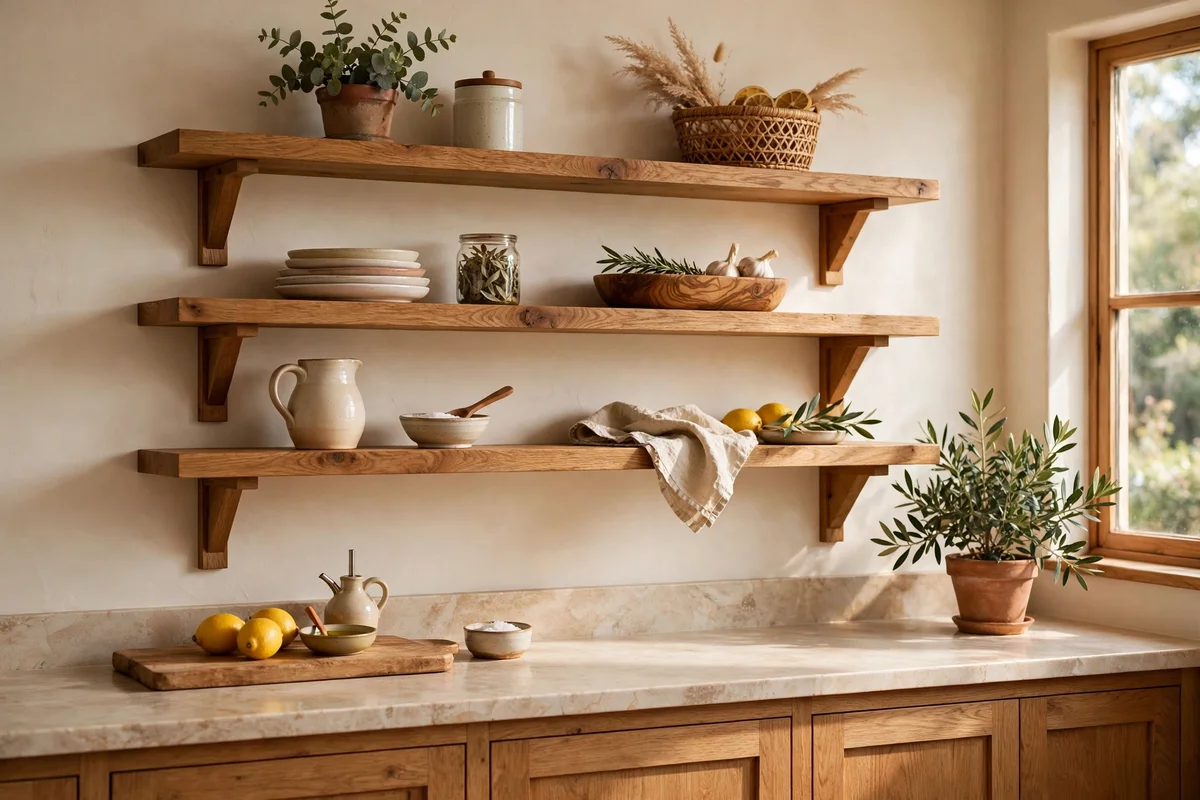
Two oak shelves, each 80 to 120 cm long and 20 to 25 cm deep, break up a run of plain warm white wall with honest material. Fix them with hidden brackets rated for at least 15 kg so stoneware and glass sit safely, and leave 40 to 45 cm between the shelf and the countertop for working room. The open display stops a white kitchen feeling sealed and sterile, and the wood grain adds the texture paint alone cannot give.
Style the shelves with restraint: a row of cream stoneware bowls, a stack of wooden boards, and one trailing plant such as a pothos softens the line. The mistake to avoid is overloading with twenty small items, which turns calm into clutter; five to seven pieces per shelf is plenty. Solid oak shelves cost 40 to 90 pounds or dollars each, and brackets add 15 to 30, making this a mid tier weekend project.
4. Fit Brushed Brass Cup Pulls and Knobs on Every Drawer and Door
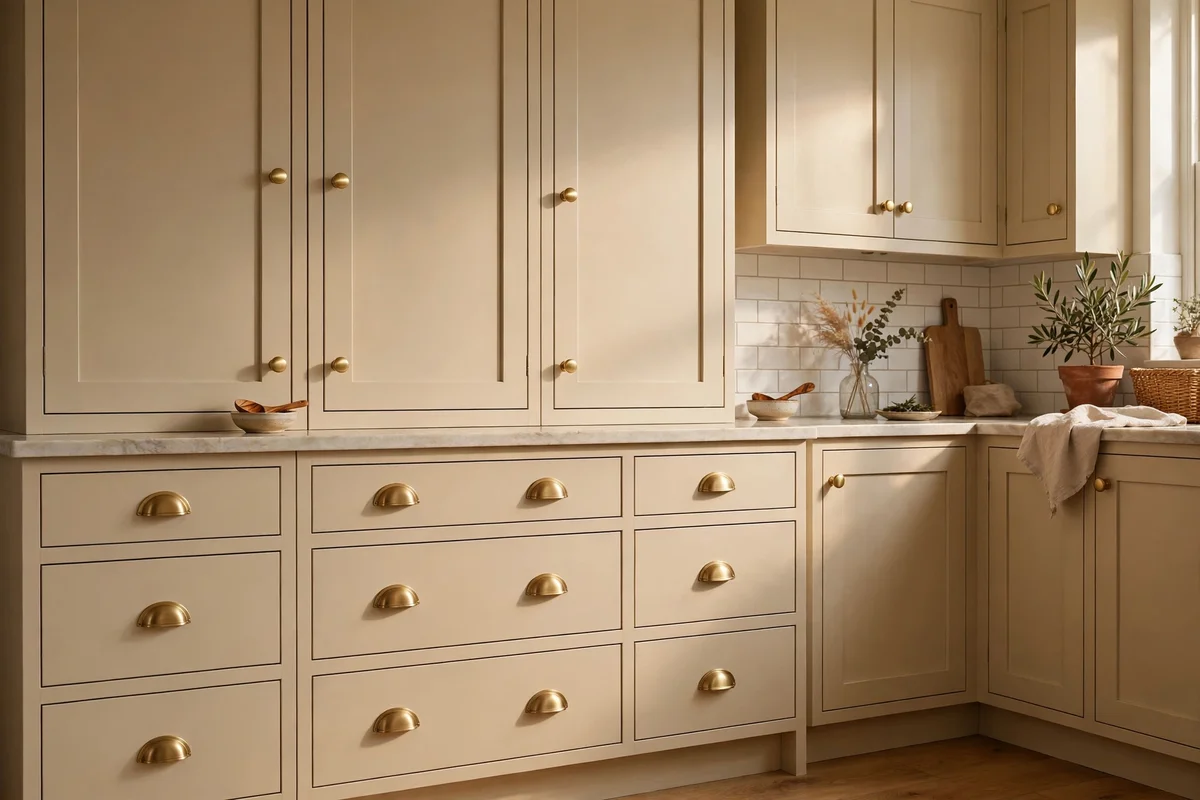
Brushed brass hardware is the jewellery of a warm white kitchen: warm metal against creamy paint reads as intentional refinement rather than decoration. Cup pulls on drawers and round knobs on doors, spaced consistently with centres 76 or 96 mm apart, give every front the same golden punctuation. Choose a brushed or aged finish rather than polished, since high shine can look cold next to soft whites.
Measure once and drill once: make a cardboard template so every pull sits at exactly the same height, usually centred 5 cm from the door edge or drawer top. Budget hardware in a brass look finish starts around 2 to 4 pounds or dollars per piece, while solid brass runs 8 to 15. The mistake to avoid is mixing three different metal finishes across handles, taps and lights, which shatters the calm. Pick brass and repeat it.
5. Choose a Warm Champagne Tap Instead of Cool Chrome

Chrome reads as ice against warm white, while a champagne or brushed gold tap continues the honeyed story the brass handles began. A single lever mixer in a warm finish, with a spout height around 30 to 35 cm over the sink, serves daily washing without splashing the worktop. Look for PVD coated finishes, which resist tarnish and fingerprints far better than lacquered coatings that chip within two years.
Budget tier taps in a gold look finish start near 80 pounds or dollars, mid range solid brass bodies run 200 to 350, and designer pieces climb past 600. The mistake to avoid is pairing a warm tap with a stainless steel sink that reads blue grey; choose a cream composite or fireclay sink so the basin belongs to the same palette. Match the tap’s warmth to the handles within one tone so nothing clashes.
6. Set All Kitchen Lighting to 2700K to 3000K for a Golden Cast
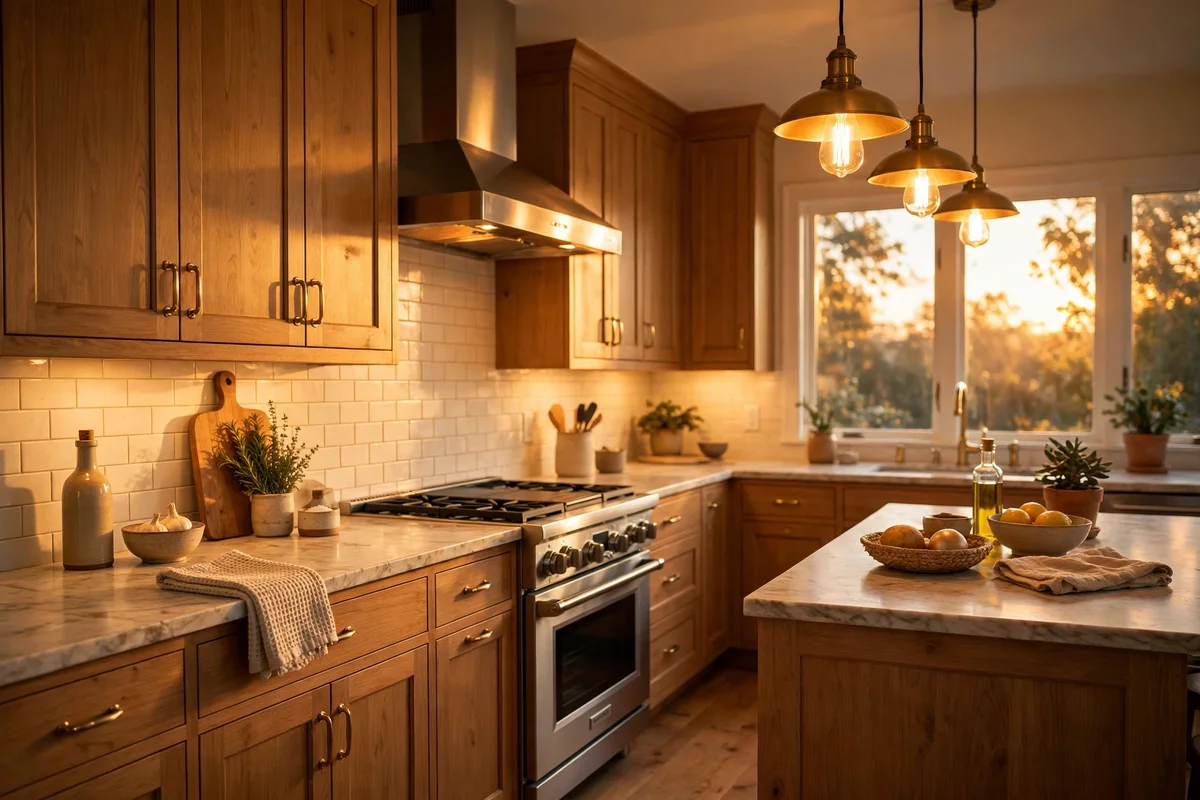
Colour temperature decides whether warm white paint glows or goes grey. Bulbs rated 2700K to 3000K cast the golden light of late afternoon, and they flatter creamy cabinets, oak and brass at once. Replace any 4000K or 5000K daylight bulbs immediately, since cool light drains yellow from the palette and returns the room to clinical white. Check every bulb, including the oven and extractor hood, because one rogue cool bulb tints the whole corner.
LED bulbs at 2700K now cost 3 to 8 pounds or dollars each, so a whole kitchen swap lands under 60. Use dimmable bulbs on pendants over the island and seating, dimming to half brightness after dinner for a lantern like calm. The mistake to avoid is mixing temperatures: two 2700K pendants beside one 4000K downlight create a patchwork the eye reads as dirt. Keep every visible source inside the same warm band.
7. Layer Under Cabinet LED Strips Beneath Warm White Wall Cabinets
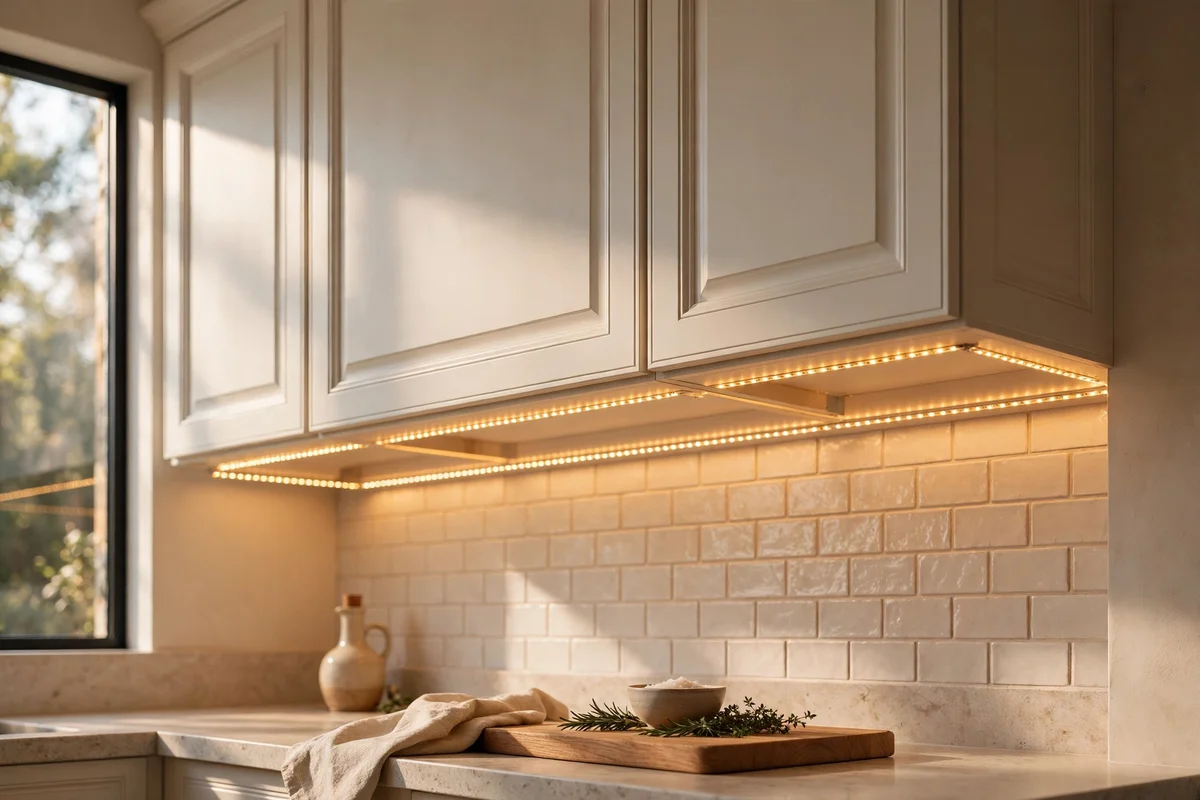
A warm white worktop shadowed by wall cabinets looks grey no matter how creamy the paint, so wash the counter with light from beneath. Stick on LED strips at 2700K, mounted 3 to 5 cm back from the cabinet front edge, throw an even pool of gold across the work surface and erase the gloom that makes whites feel cold. Choose high density strips, 60 LEDs per metre or more, so the light reads as one continuous ribbon rather than dots.
Plug in strips with a remote cost 25 to 60 pounds or dollars for a 5 metre reel, while hardwired versions fitted by an electrician run 150 to 300 installed. The mistake to avoid is mounting the strip flush at the very front edge, which shines straight into the cook’s eyes and reflects in the splashback. Set it back, diffuse it with a milky channel, and connect it to the same dimmer family as the pendants.
8. Choose a Stone Worktop With Warm Beige and Honey Veining
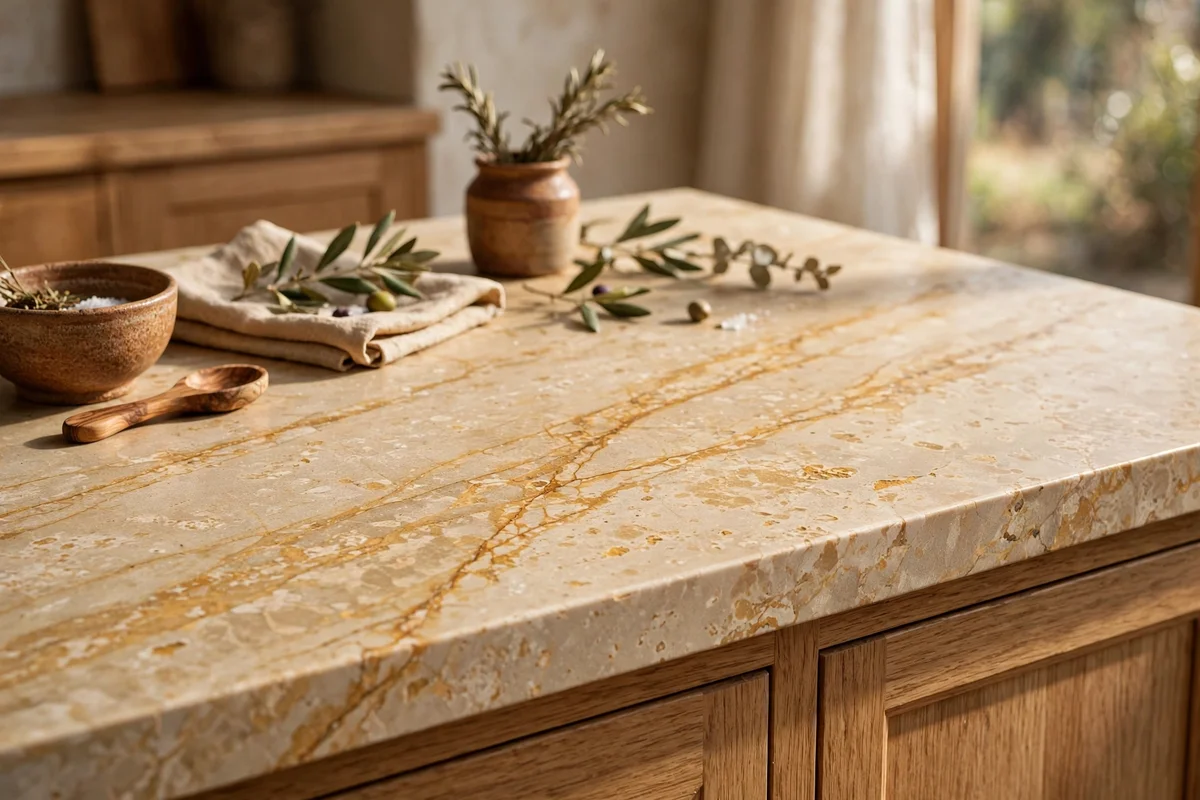
The worktop covers the largest horizontal surface in the kitchen, so its tone sets the temperature of the whole room. Choose granite, quartz or quartzite with a cream base and veining in beige, taupe or honey rather than grey or blue black. Warm veining ties the counter to the cabinets and the oak island, and the stone’s natural variation keeps a large white kitchen from feeling flat or one note.
Quartz with warm veining starts around 300 to 500 pounds or dollars per square metre installed, natural granite and quartzite run higher, and stone look laminate offers the same palette for 60 to 120. The mistake to avoid is ordering a slab from a photograph alone: veining varies wildly between batches, so view and approve your actual slabs before cutting. Seal natural stone yearly and wipe spills promptly to protect the warm finish.
9. Lay Wide Plank Wood Flooring or Warm Terracotta Effect Tiles
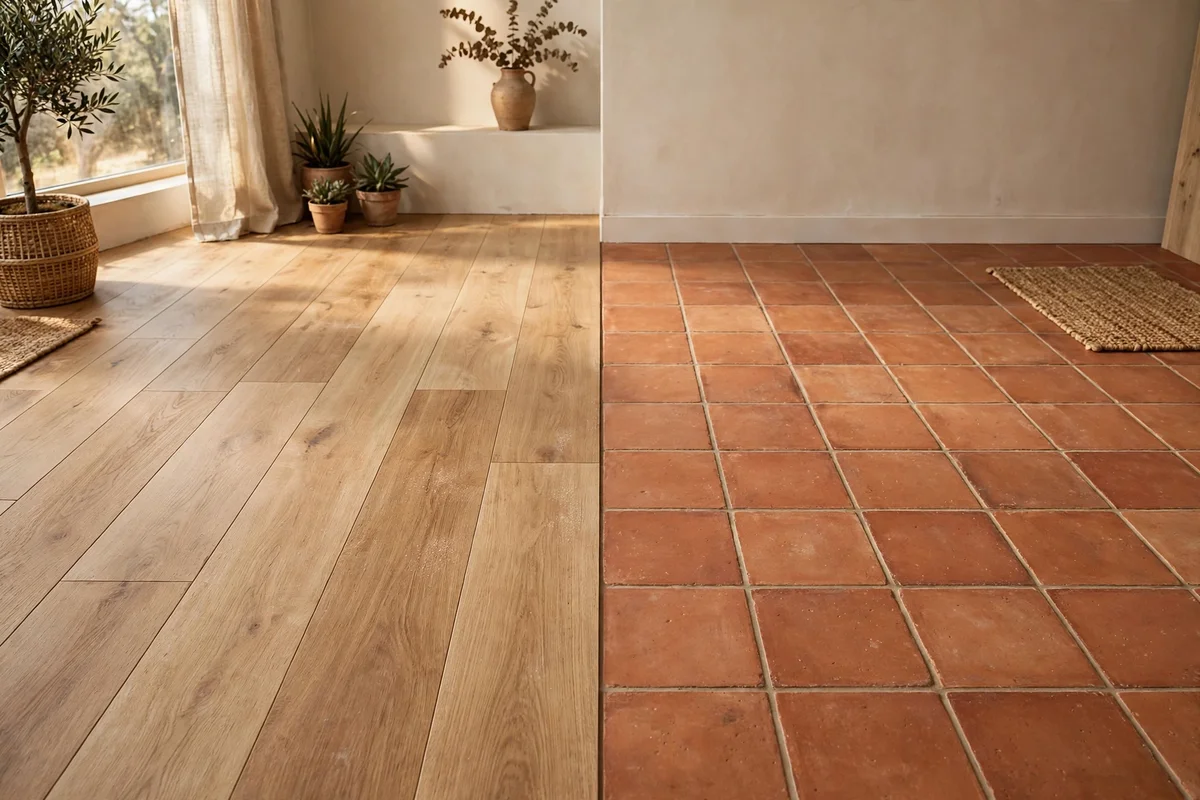
Floors ground the scheme, and cool grey tiles will fight every warm choice above them. Wide plank oak flooring in a honey or natural finish carries the island’s tone underfoot, laid with boards at least 15 cm wide so the grain reads generously. In busier households, terracotta effect porcelain tiles give the same sun baked warmth with tougher wear, and their slight colour variation hides crumbs and footprints between cleans.
Engineered oak starts near 40 pounds or dollars per square metre, solid oak past 70, and terracotta look porcelain 25 to 50. The mistake to avoid is a high gloss floor finish, which reflects cool window light and looks icy against creamy units; choose matte or satin. Run the same flooring through an open plan dining area so the kitchen feels like one continuous warm room rather than a white box.
10. Run a Long Woven Runner Along the Galley Between Counters
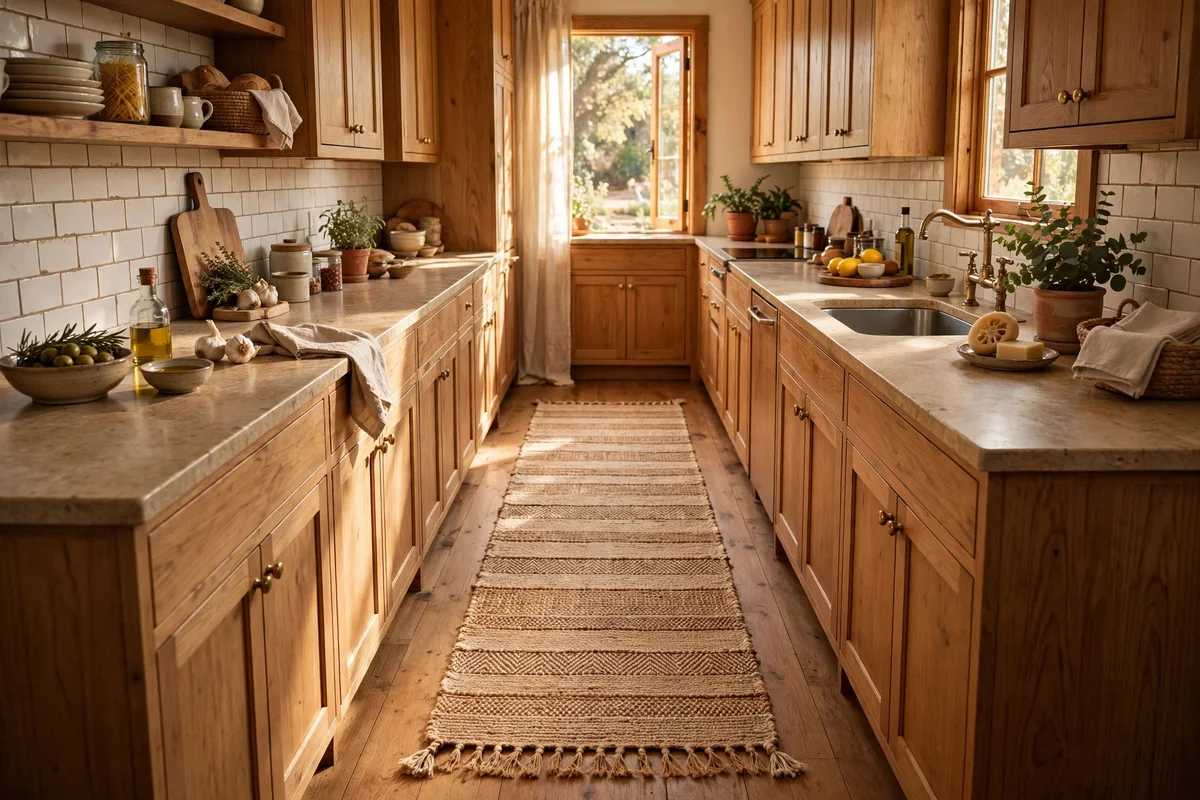
Hard floors and hard cabinets need one soft line, and a woven runner 60 to 80 cm wide and at least 180 cm long delivers it. Jute, sisal or flatweave wool in natural, oat or warm stripe patterns cushions footsteps, catches crumbs, and breaks the white on white expanse with texture. Choose a low pile so doors swing clear and stools slide, and keep the runner 10 to 15 cm short of each end of the run so the floor frames it.
Washable cotton runners start around 25 pounds or dollars, handwoven wool 80 to 150, and vintage kilim runners vary by size and age. The mistake to avoid is a runner that slides: anchor it with a proper rug pad cut 2 cm smaller all round, since a creeping rug is a trip hazard beside a hot oven. Shake it out weekly and rotate it end to end monthly so wear and sun fade evenly.
11. Hang Linen Cafe Curtains on the Kitchen Window for Soft Light
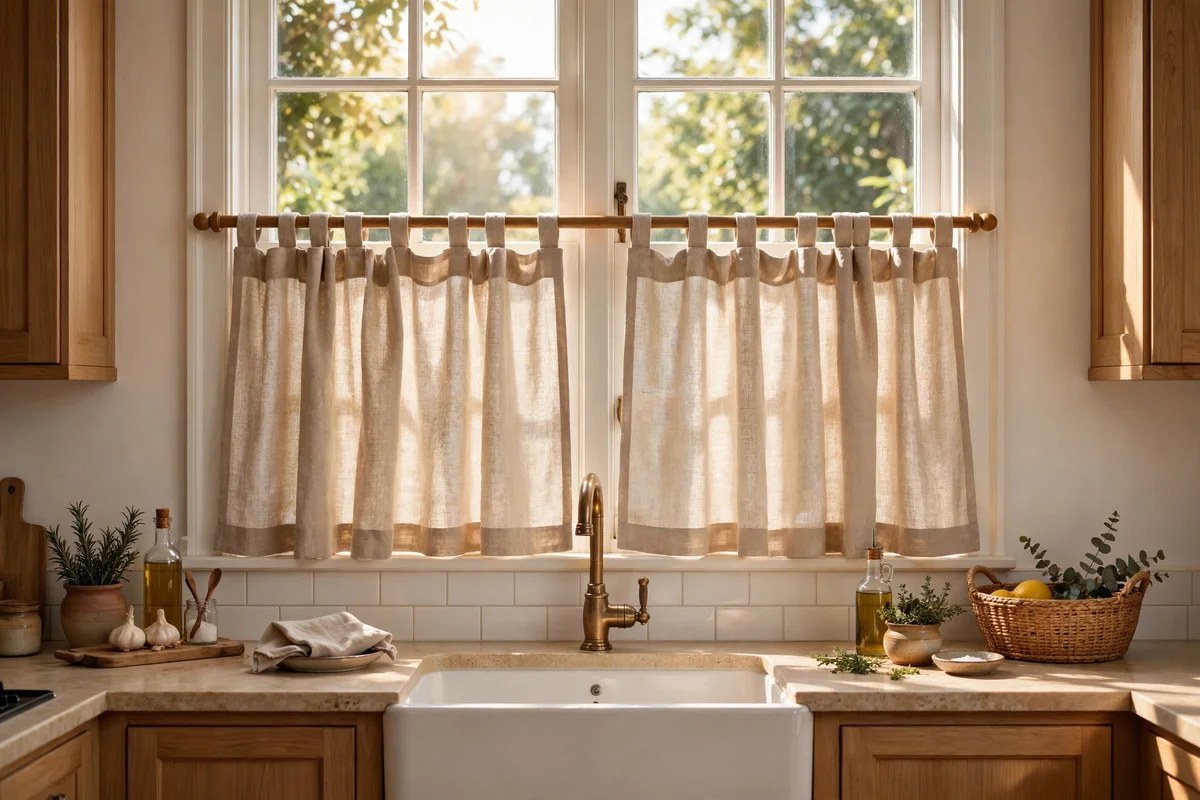
Bare glass throws hard daylight straight onto white cabinets, while a linen cafe curtain covering the lower half of the window filters it into a golden haze. Choose natural or oatmeal linen, 100 to 150 gsm weight, on a slim brass or wooden rod mounted 5 cm above the glass line. The fabric’s open weave glows when backlit, and the curtain still leaves the upper pane clear for sky and daylight.
A made to measure linen cafe curtain costs 40 to 90 pounds or dollars; ready made panels on a tension rod start under 20 and suit renters. The mistake to avoid is floor length heavy drapes in a working kitchen, which absorb cooking smells and block the lower light you want. Keep the cafe curtain 2 to 3 cm above the sill so it clears the worktop, and machine wash the linen quarterly to lift grease film.
12. Test Three Warm White Samples on Boards in the Room’s Real Light
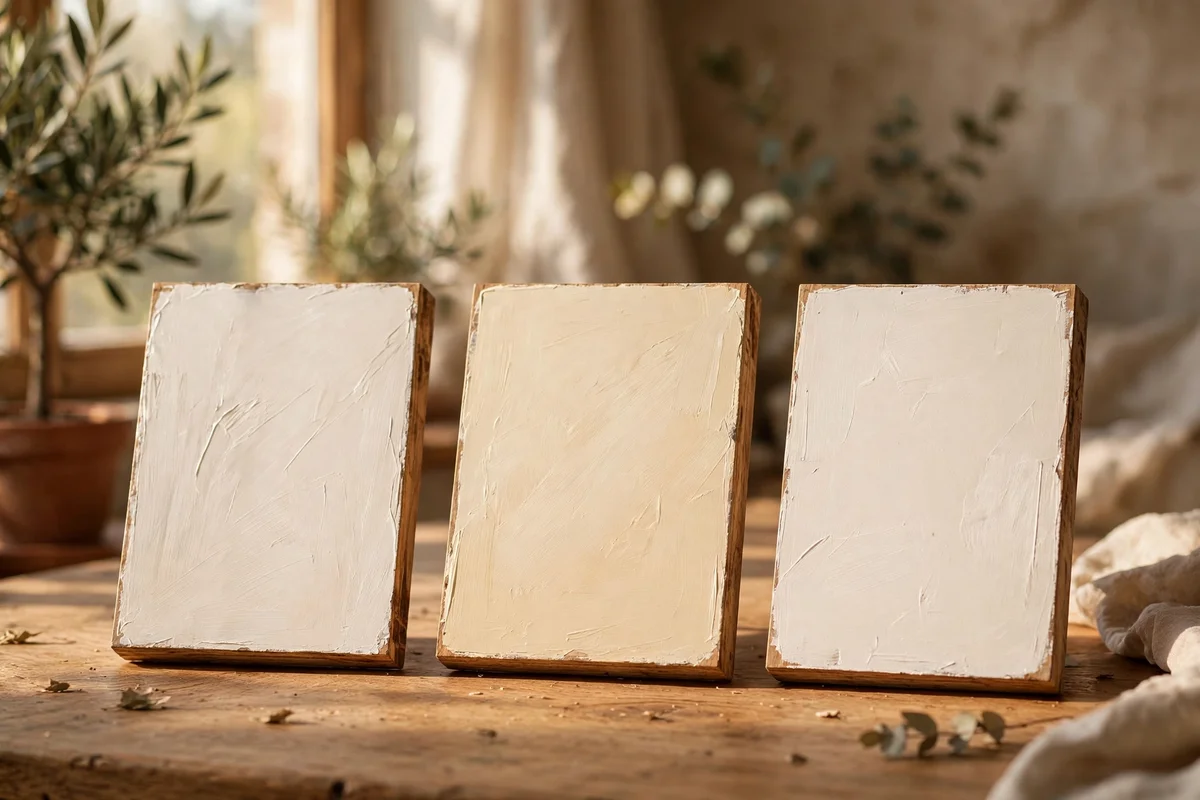
Paint looks different on a wall than on a chart, so buy sample pots of three warm whites and brush each onto an A3 board, two coats, and move the boards around the kitchen for three full days. Tape one beside the window, one in the darkest corner, and one against the floor and worktop. Check them at morning, noon and lamplight, because a white that glows at breakfast can turn peach under 2700K bulbs.
Sample pots cost 4 to 8 pounds or dollars each, and large peel and stick swatches run 10 to 15 for a set. The mistake to avoid is testing on the wall directly: painted test squares show through the final coats and the surrounding wall colour contaminates your judgement. Boards isolate the colour and let you hold the winner against cabinets, tiles and brass before you commit to a single tin.
13. Plan Extra Warm Layers for a North Facing Kitchen
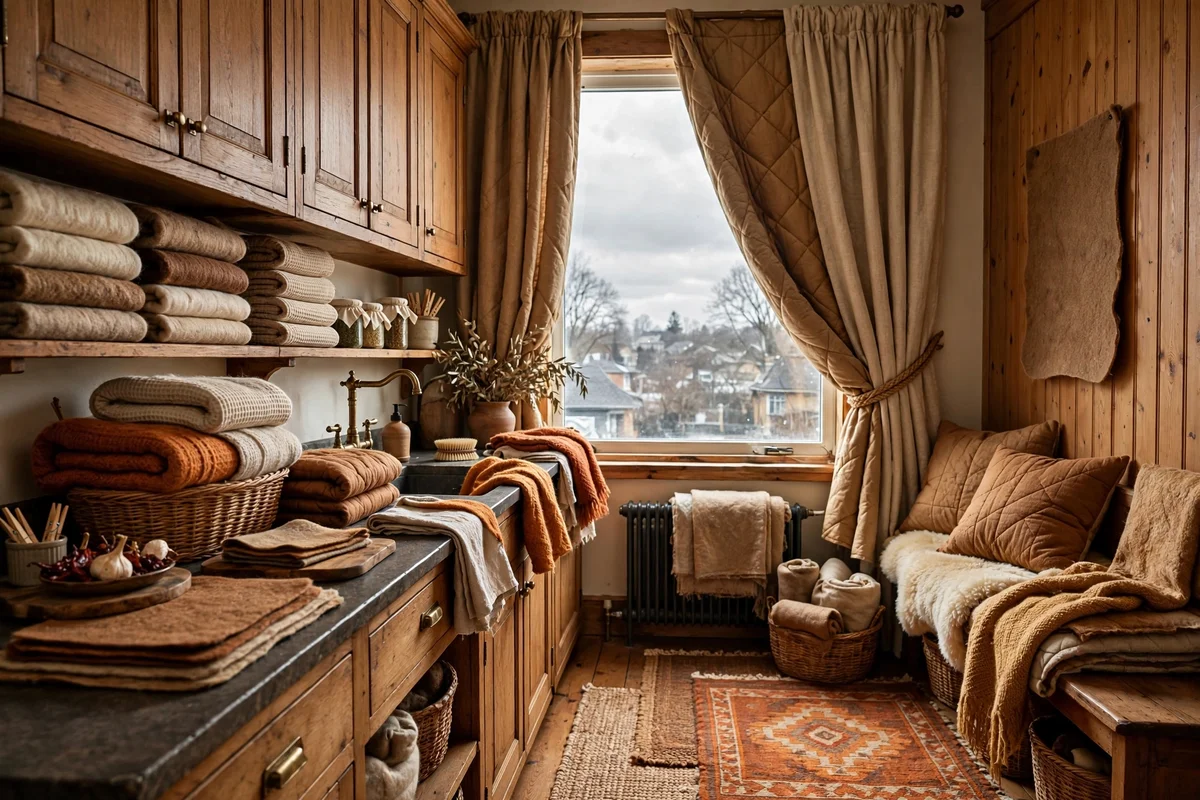
North facing rooms receive cool, indirect light all day, so warm white alone cannot carry the warmth; it needs reinforcement. Double down on honey wood, brass and textiles, and consider painting the ceiling the same warm white rather than brilliant white, since a blue white ceiling throws cold light downward onto everything. Keep window glass spotless and trim any outdoor planting that steals the already gentle daylight.
Add one more layer of 2700K light than a south facing kitchen needs: under cabinet strips plus two pendants plus a small picture light over open shelves, all on dimmers. The mistake to avoid is choosing the warmest paint on the chart to compensate, which can turn muddy in flat northern light; stay in the mid creamy range and let lighting and wood do the compensating. Warm sheer curtains also bounce what little sun arrives back into the room.
14. Soften Bare Corners With a Woven Basket of Wooden Utensils
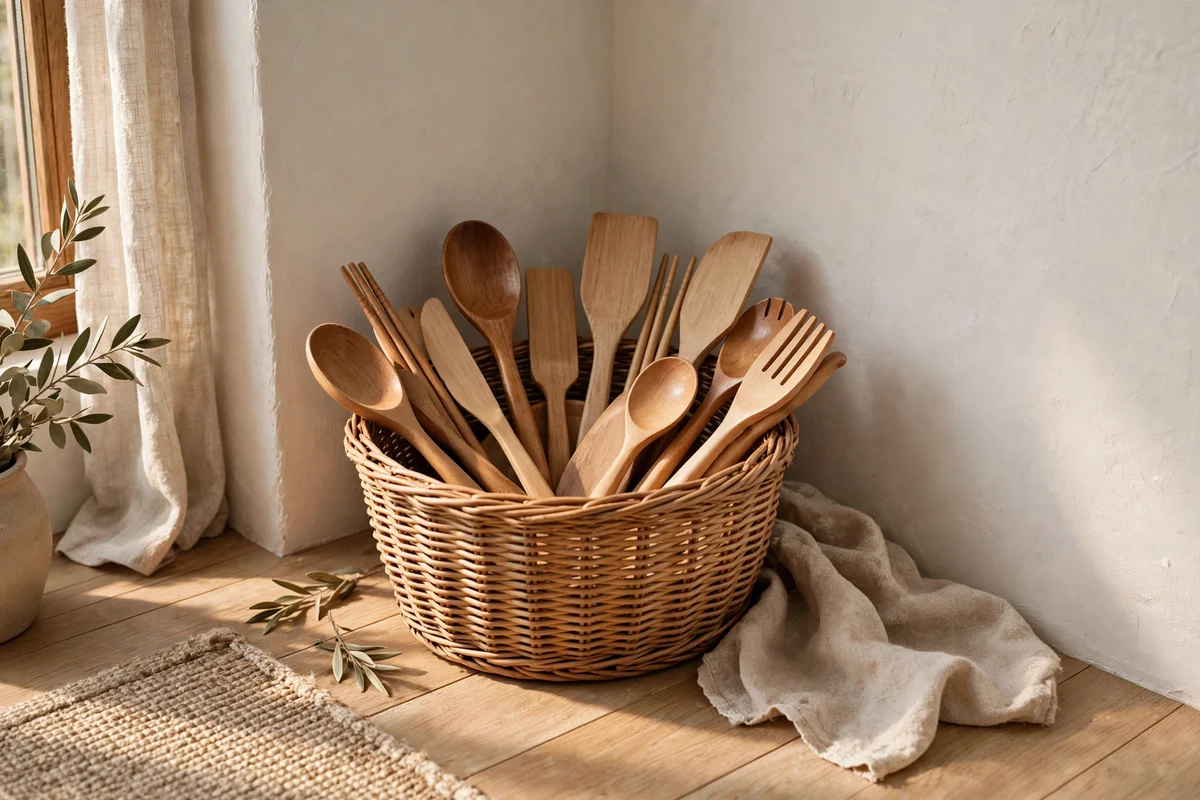
Empty corners in a white kitchen read as cold gaps, and a tall woven basket fills one with purpose and texture. Choose a seagrass or willow basket 35 to 45 cm tall for the counter corner, or a floor basket 50 to 60 cm for a dead corner beside the fridge. Fill it with wooden spoons, rolling pins and a folded linen cloth, the everyday tools of a working kitchen displayed as honest decor.
Handwoven baskets cost 15 to 40 pounds or dollars depending on size, and charity shops often hold sturdy ones for under 10. The mistake to avoid is a basket that becomes a junk drawer for batteries and takeaway menus; keep it to kitchen tools and textiles only, and empty it quarterly. One basket per kitchen is enough: two or three scattered about tips the scheme from curated toward cluttered.
15. Style Open Shelves With Cream Stoneware and Wooden Boards
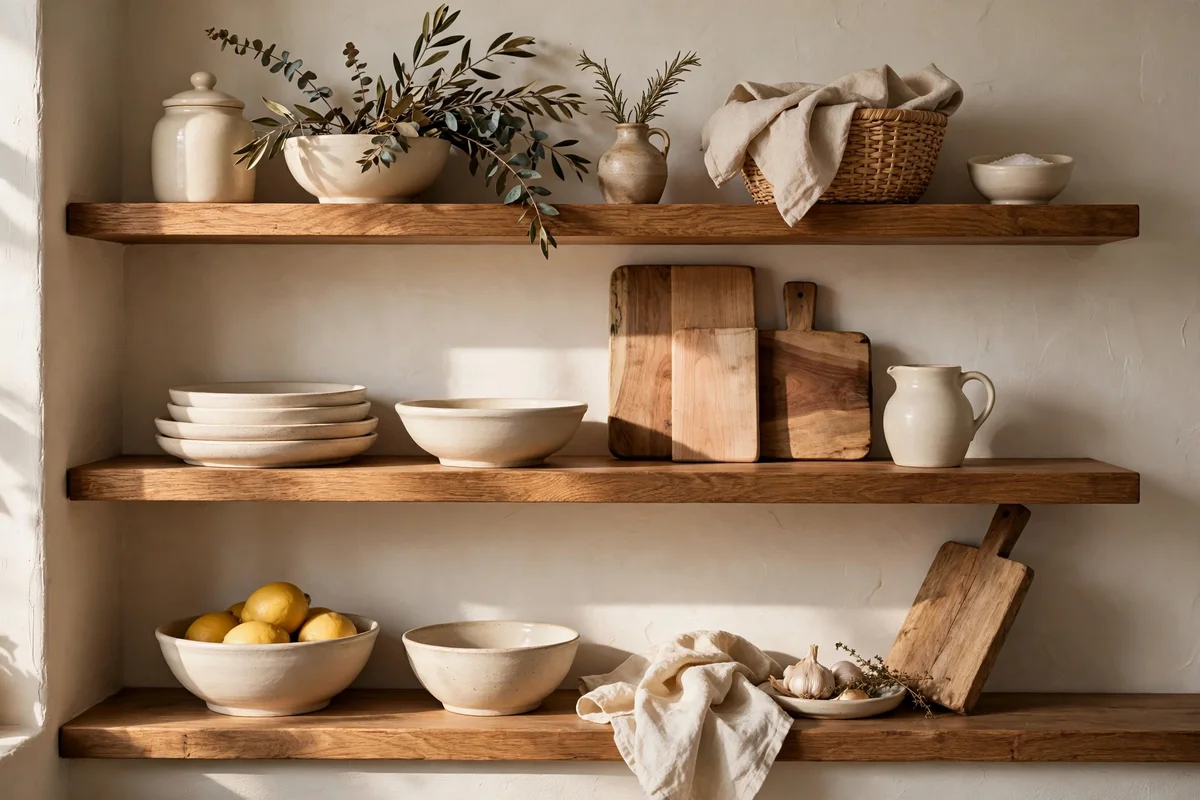
Open shelves earn their place when they hold beautiful daily things rather than display clutter. Stack cream stoneware bowls in twos and threes, lean two wooden chopping boards of different heights against the wall, and add a small row of glass jars filled with rice, lentils and dried herbs. Keep every piece inside the warm palette: cream, oat, honey wood and clear glass, so the shelves extend the cabinetry instead of interrupting it.
Stoneware bowls cost 6 to 15 pounds or dollars each, solid wood boards 12 to 30, and glass jars with wooden lids 4 to 8. The mistake to avoid is open shelving beside the hob, where grease films every surface within weeks; keep display shelves at least 90 cm from cooking steam. Dust the shelves fortnightly and rotate the boards so the same edge never faces the light and fades unevenly.
16. Set a Cream Ceramic Apron Sink as the Gentle Focal Point
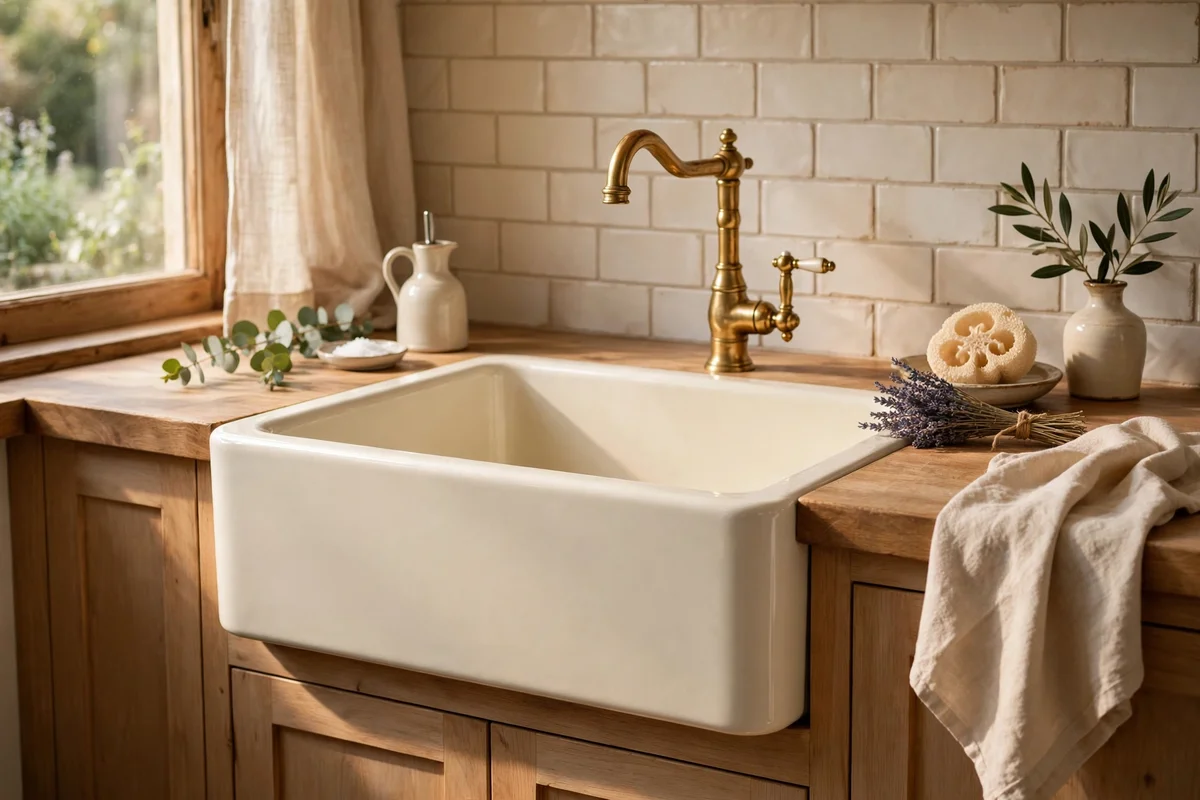
A fireclay apron front sink in soft cream gives a warm white kitchen a centre of gravity without the chill of stainless steel. The visible front panel, usually 60 to 90 cm wide, reads like furniture and pairs beautifully with brass taps and wooden worktops. Choose a single deep bowl at least 25 cm deep so large pots and baking trays sit fully below the rim, and check cabinet width before ordering.
Fireclay apron sinks start around 250 pounds or dollars, with premium brands past 600, plus 100 to 200 for professional fitting. The mistake to avoid is assuming any base cabinet accepts one: apron sinks need a purpose built or adapted cabinet and often a bespoke cut in the worktop. Measure the cabinet interior, confirm the waste and trap clearances, and protect the cream glaze with a sink grid so heavy pans never chip it.
17. Paint Walls and Cabinets the Same Warm White for Seamless Calm
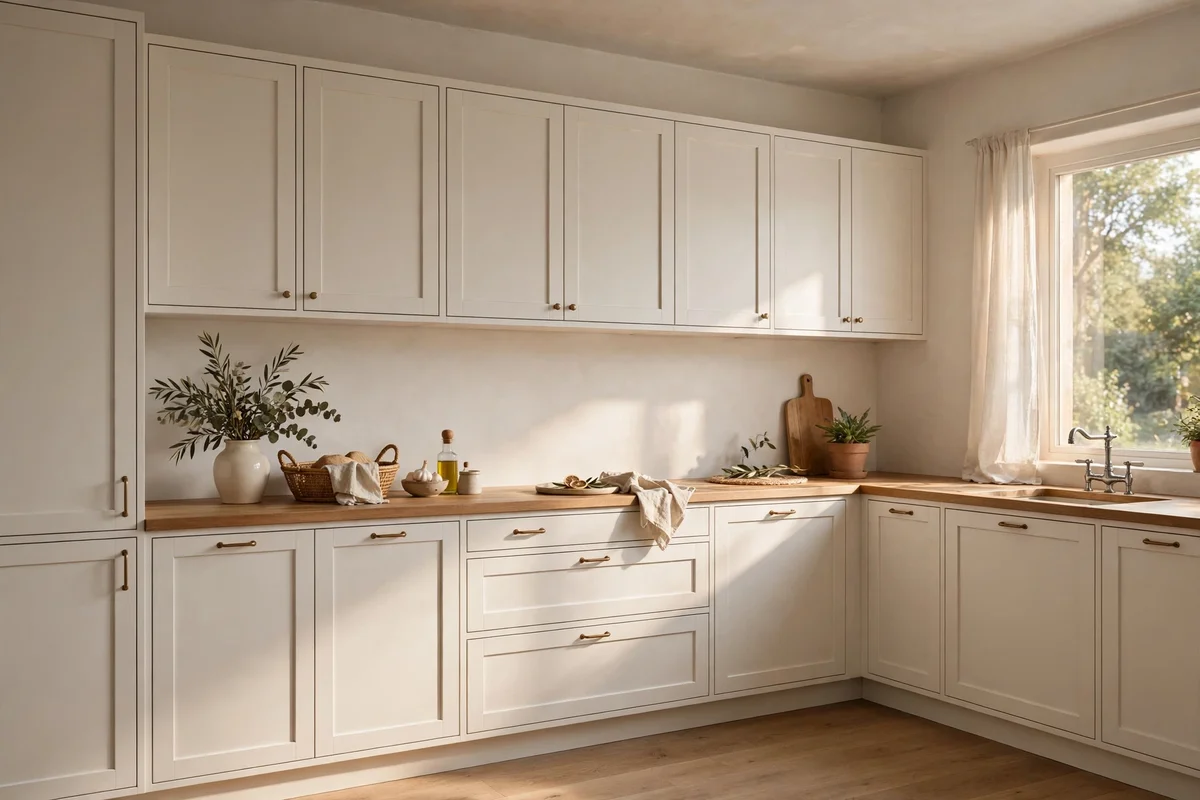
When walls, ceiling trim and cabinets share one warm white, the boundaries between them dissolve and a small kitchen feels larger and calmer. The trick is varying the sheen rather than the colour: eggshell on cabinets, matte emulsion on walls, satin on skirting. The eye reads the subtle finish changes as depth while the single tone keeps the room serene, and brass and wood stand out more richly against the quiet backdrop.
This is the budget tier’s best friend, since one well chosen colour covers everything and leftover wall paint touches up scuffs for years. The mistake to avoid is using the same finish everywhere, which flattens the room into a featureless box; the sheen contrast is what makes monochrome work. Keep a labelled tin of the exact shade, because matching warm white from memory two years later is nearly impossible.
18. Build a Honey Oak Breakfast Nook Bench Against the Window Wall
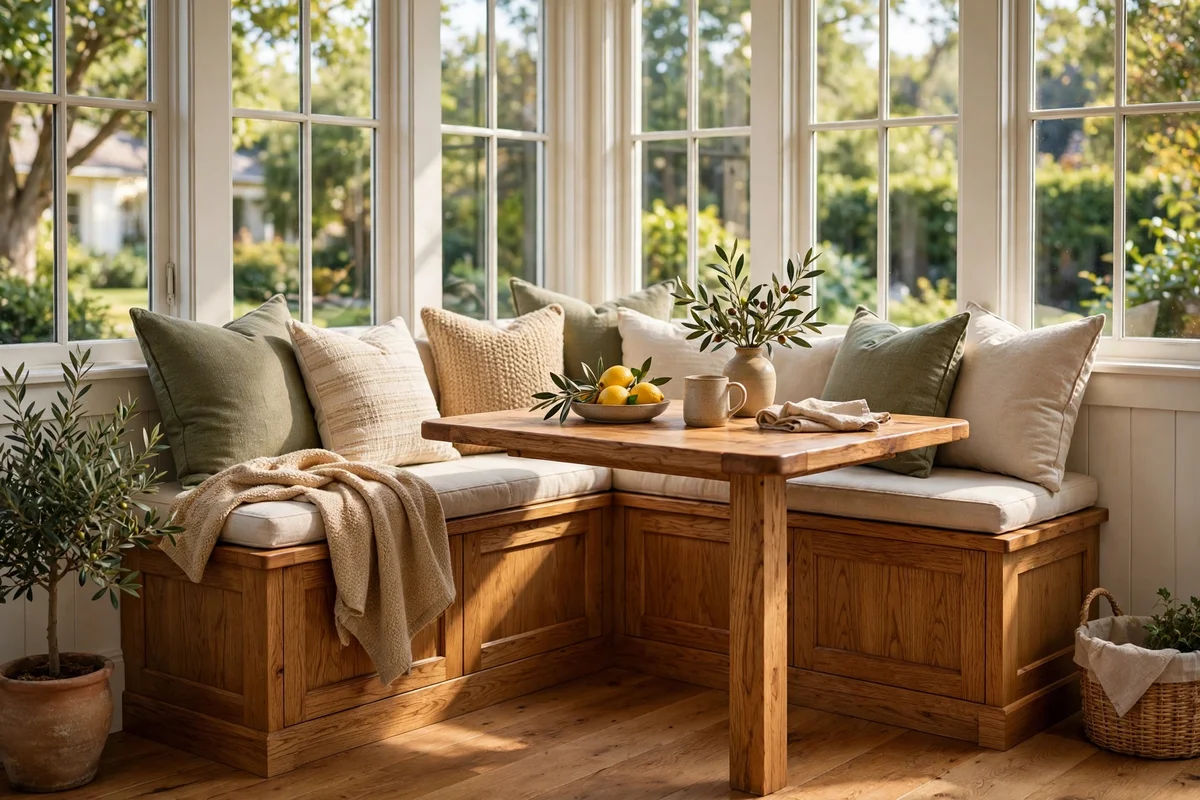
A built in bench in honey oak turns the brightest corner of the kitchen into the warmest seat in the house. Build the bench 40 to 45 cm high and 45 to 50 cm deep, long enough for two or three seat cushions, and hinge the seat for hidden storage of table linens and seasonal textiles. The oak’s golden grain picks up morning sun and throws it back across the warm white cabinets.
A simple carpenter built bench costs 300 to 600 pounds or dollars in materials and labour; a freestanding oak settle from a second hand shop can serve for under 150. The mistake to avoid is a bench with no back support, which sitters abandon after ten minutes; add a row of 40 cm square cushions in oatmeal linen against the wall. Top with a washable pad in a warm stripe so crumbs shake off easily.
19. Use Oil Rubbed Bronze Sparingly for Quiet Dark Contrast
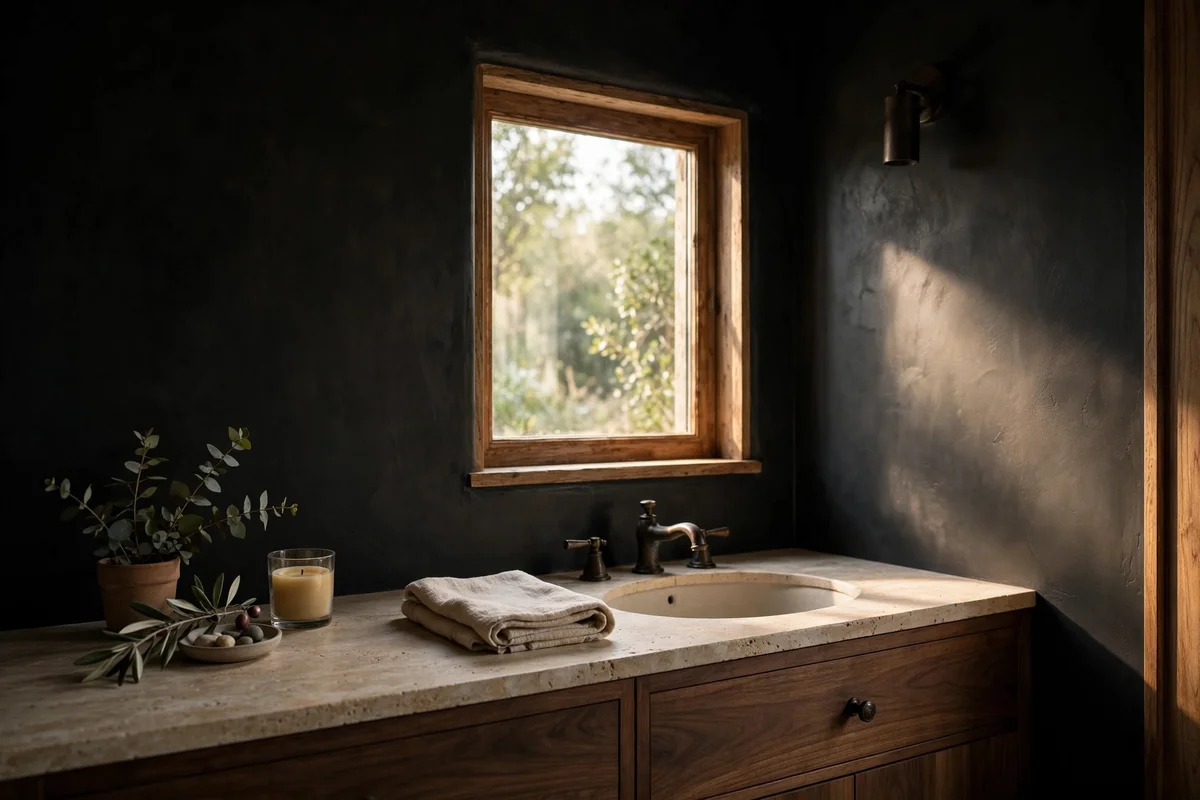
An all warm scheme can drift toward bland, and one dark note gives the eye somewhere to rest. Oil rubbed bronze, nearly black with coppery highlights, suits a single pendant shade, two picture frames, or the legs of a stool against warm white. Keep it to under five percent of the visible surfaces: one or two pieces only, so the bronze reads as punctuation rather than a second theme competing with the brass.
Bronze look pendant shades cost 60 to 120 pounds or dollars, small frames 10 to 20 each. The mistake to avoid is mixing oil rubbed bronze with the brushed brass hardware throughout, which creates two rival dark accents; choose bronze only where brass does not already speak, such as a pendant far from the cabinet handles. If the room already carries brass taps and pulls, skip bronze entirely and let the wood provide the contrast.
20. Finish the Island With a Stone Tray of Olive Sprigs and Beeswax Candles
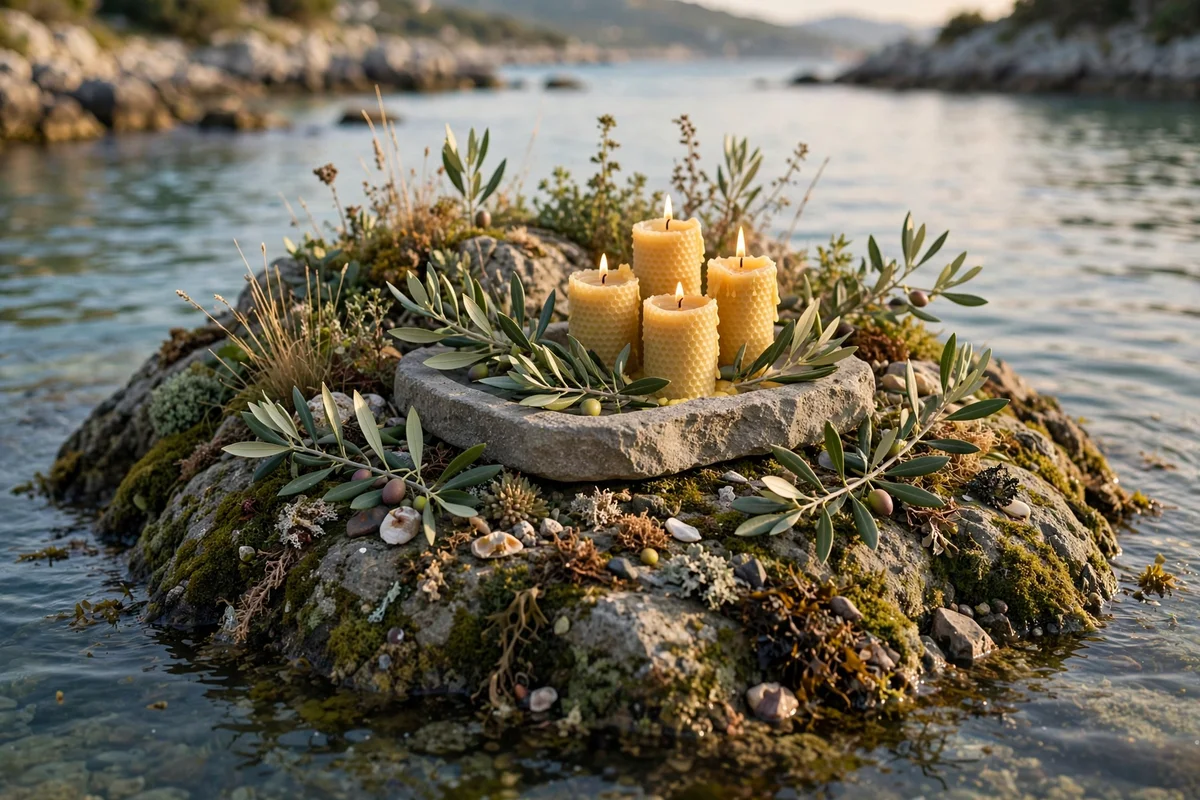
Every island needs one composed vignette, and a rectangular stone or travertine tray 40 to 50 cm long corrals it beautifully. Set a small vase of olive sprigs or dried wheat at one end, two beeswax pillar candles of different heights at the other, and leave the centre clear. The tray protects the worktop from wax and water rings while the greenery and candlelight add the living warmth paint cannot supply.
Stone trays cost 25 to 60 pounds or dollars, beeswax pillars 8 to 18 each, and a small olive sprig bundle under 10. The mistake to avoid is styling the island like a shop display with five competing objects; the tray rule keeps it to one contained composition. Never leave lit candles unattended, keep them 30 cm from anything flammable, and trim wicks to 5 mm so the beeswax burns cleanly without soot on the white cabinets.
21. Swap Textiles Seasonally to Keep the Warm Scheme Feeling Fresh

A warm white kitchen stays interesting when its textiles change with the seasons while the permanent finishes hold steady. Keep three sets of the easy swaps: the runner, the cafe curtain and two or three tea towels. Spring brings pale sage linen, summer natural jute, autumn a rust and oat stripe, winter a heavier wool flatweave in oatmeal. Each swap takes twenty minutes and costs less than one tin of paint.
Store the off season set in a labelled cotton bag inside the bench seat or a high cupboard, washed and fully dry so nothing musts. Budget tier swaps run 40 to 80 pounds or dollars per full set if you buy ready made. The mistake to avoid is changing the palette entirely each season, which fights the calm you built; keep every textile inside the warm family of cream, oat, honey and soft rust so the kitchen always feels like itself.
A warm white kitchen is not a colour choice so much as a promise: brightness without the chill, cleanliness without the clinic. Creamy cabinets, honeyed oak, brushed brass, golden light and honest textiles each carry part of that promise, and together they make a room that welcomes slow mornings and busy evenings alike. None of it demands a renovation; most of these ideas fit a single weekend and a modest budget.
This week, start with the easiest win: order three warm white sample boards and one 2700K bulb, and live with them for a few days before changing anything else. The light and the paint decide everything that follows, from the brass you choose to the runner you lay. Get those two right, and the kitchen begins to glow on its own.
Frequently Asked Questions
What is the best warm white paint colour for kitchen cabinets?
Look for whites with yellow or creamy undertones, often named ivory, buttermilk, clotted cream or natural white, rather than blue white shades. Always test three samples on boards in your own light for three days before committing, since the same tin reads differently in north and south facing rooms. Satin or eggshell finishes suit cabinets best.
How do I stop my white kitchen feeling cold?
Layer warm materials against the white: honey oak on the island or shelves, brushed brass handles, lighting at 2700K to 3000K, and textiles like a woven runner and linen curtains. Keep every bulb the same warm temperature, since one cool bulb tints the whole corner grey. Wood floors or warm tiles underfoot complete the effect.
Are warm white kitchens more expensive than grey or blue ones?
The paint costs the same; warmth comes from material choices. Brass hardware adds 2 to 15 pounds or dollars per piece over basic chrome, warm LED bulbs cost under 10 each, and a woven runner starts near 25. The investment tier is a stone worktop with warm veining or an oak island, but most of these ideas are budget friendly.
Can I warm up a rented kitchen without painting?
Yes. Swap the bulbs to 2700K, lay a woven runner, hang a linen cafe curtain on a tension rod, and style open areas with cream stoneware and wooden boards. Use adhesive brass look hooks for utensils and keep every textile in the warm family. Take the lot with you when you leave, and the landlord never needs to know.
Do warm white kitchens suit north facing rooms?
They do, with extra help. North facing light is cool and flat, so reinforce the scheme with honey wood, brass, and one more layer of 2700K lighting than a south facing room needs. Choose a mid creamy white rather than the warmest chart shade, which can turn muddy, and keep windows clear of heavy planting.