Bedroom
22 Black, White and Grey Bedroom Ideas That Feel Calm and Timeless
By Anna Wells · · 12 min read
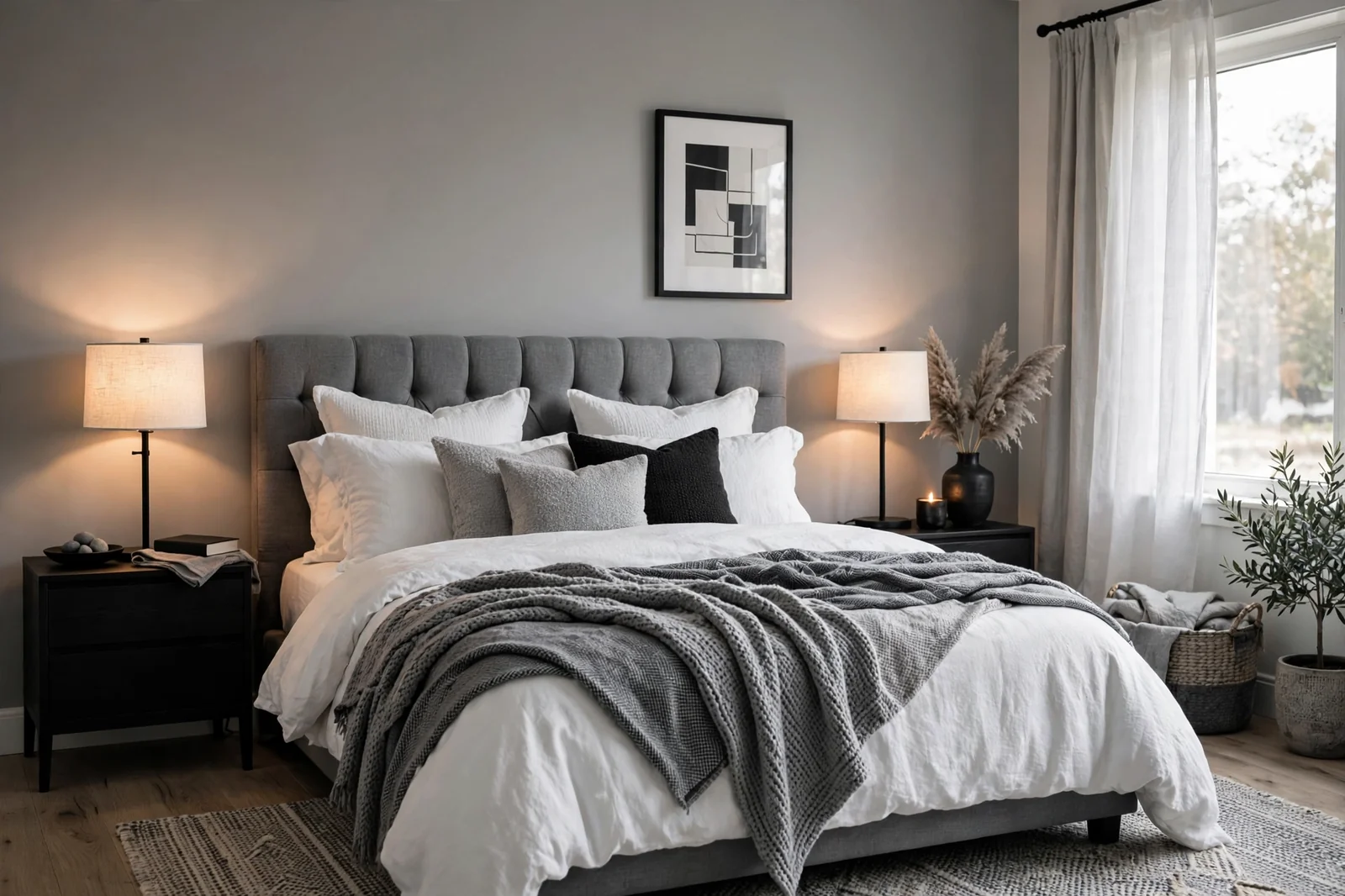
There is something about a black, white and grey bedroom that feels settled: calm in a way that makes everything else slow down. Black adds depth, white keeps things fresh, and grey softens everything so it feels livable. These 22 black, white and grey bedroom ideas show how to build this classic palette with texture, proportion and warmth, so the room always looks put together and feels like a place you want to return to every night.
A black, white and grey bedroom succeeds on balance, not color. Each tone has a job: white opens, grey calms, black grounds. When the proportions are right and textures do the talking, the result feels effortless and endures for years. These 22 ideas walk through every layer, from walls and bedding to lighting and the final discipline that keeps the palette serene. Build it once, and it will look pulled together even on your busiest mornings.
1. A Soft Grey Base With Black Accents

Starting with a soft grey base is the easiest way to build this look. Grey walls or a grey comforter create a calm foundation, and then black enters through lamps, frames, hardware and one furniture piece. The grey does the quiet work while black provides the punctuation. Choose a warm grey with beige undertones; cool greys can feel chilly in bedrooms.
Keep the black to about ten percent of what you see: enough to ground the room, not enough to dominate. A grey base is forgiving; it hides wrinkles and wear better than white and feels softer than black. This foundation-first approach means you can evolve the room slowly, adding black pieces as you find ones you love.
2. Crisp White Bedding

Crisp white bedding keeps a grey bedroom feeling fresh. Against grey walls or a grey headboard, white sheets and duvets glow like morning light. Choose cotton percale or linen for that relaxed, breathable crispness. White bedding also makes the bed the bright focal point, which lifts the whole room, and the brightness makes mornings feel easier even on grey days.
Layer white with grey and black: a grey throw across the foot, black lumbar pillows, white sleeping pillows behind. Wash whites separately with a brightener to keep them luminous. The contrast of white against grey is the palette’s signature move; it reads as clean and calm rather than stark. In a monochrome bedroom, white bedding is non-negotiable.
3. Black Furniture Pieces
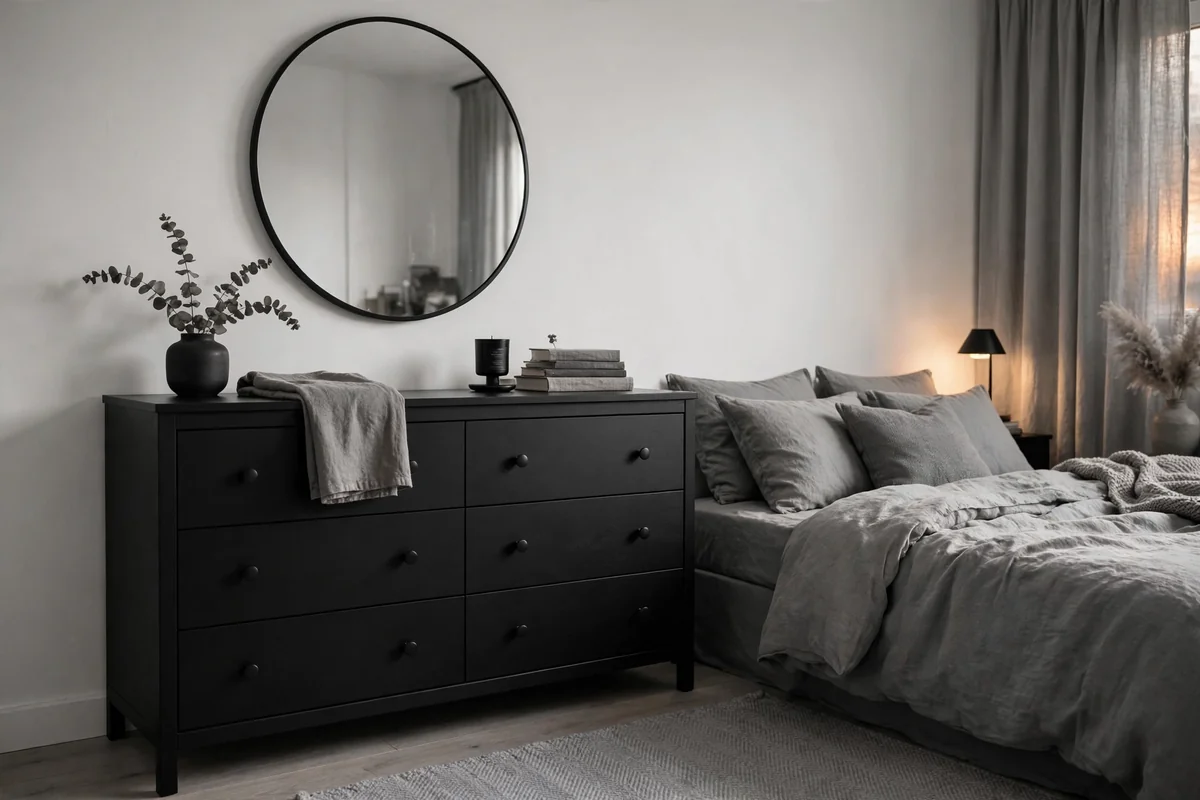
One or two black furniture pieces ground the palette. A black dresser, a black bed frame or black nightstands provide the depth that keeps white and grey from floating away. Matte black finishes feel modern; satin black reads classic. Place black pieces against light walls or bedding so their silhouette shows.
Limit black furniture to one or two pieces; more can feel heavy in a bedroom. A black dresser against a white wall with a mirror above is a timeless vignette. Keep black furniture dusted; dust shows on dark surfaces. The right black piece is like punctuation in a sentence: small, but the meaning changes without it.
4. Layered Grey Textiles

Layered grey textiles create the depth a monochrome room needs. Combine light, mid and charcoal greys in knits, weaves and velvets across the bed and chairs. The tonal variation keeps the palette interesting without introducing color. Aim for at least three grey tones in the bedding alone: sheets, duvet, throw.
Mix textures deliberately: smooth cotton against nubby knit against soft velvet. The interplay of light on different surfaces is what makes monochrome rich. Keep all the greys on the warm side of the spectrum so they harmonize. Against white bedding and black accents, layered greys are the quiet luxury of the room.
5. Black and White Art

Black and white art suits this palette perfectly. Photography, abstract prints and line drawings in black frames on grey or white walls add personality without disturbing the calm. Choose pieces with strong composition; monochrome art lives or dies on form. A large anchor piece above the bed sets the tone.
Keep frames consistent: all black, all white, or all natural wood. White mats give art breathing room against grey walls. Hang the center at 57 to 60 inches. One caution: art that is all mid-grey can disappear; choose pieces with true blacks and whites for contrast. The right art makes the palette feel chosen, not default.
6. A Grey Upholstered Headboard
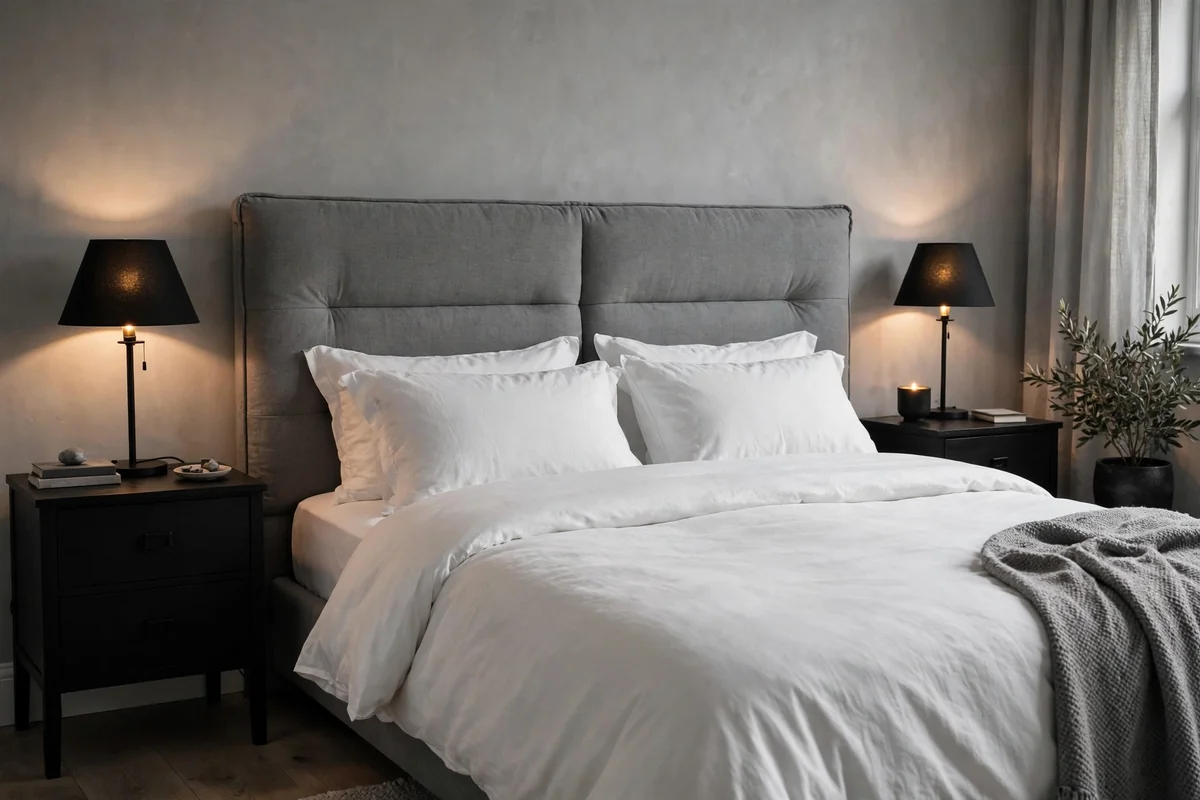
A grey upholstered headboard is the comfortable heart of a monochrome bedroom. Choose a mid-grey linen or velvet in a simple shape: rectangle, arch or channel tufting. The headboard’s softness contrasts beautifully with crisp white bedding and black nightstands. Height matters; 48 to 54 inches suits most rooms, and the padded surface makes reading in bed genuinely comfortable.
Upholstered headboards invite leaning back with a book, which is what bedrooms are for. Keep the fabric stain-treated if you drink coffee in bed. A grey headboard is more forgiving than white and softer than black; it is the Goldilocks choice. Against white walls, it defines the bed zone without a single drop of color.
7. A Patterned Black and White Rug

A patterned black and white rug adds energy to the calm palette. Geometric, Moroccan or subtle striped patterns in monochrome keep the scheme while giving the floor presence. Size it generously: 8 by 10 feet for a queen bed, extending 18 inches beyond each side. The pattern should be bold enough to read but not so busy it fights the bedding.
Keep the rug’s black areas in balance with the room’s other black accents. Low-pile rugs are easiest to clean in bedrooms. A patterned rug is often the only pattern in a monochrome bedroom, so let it carry that role with confidence. It grounds the bed and gives the whole composition a foundation.
8. White Walls With Dark Furniture
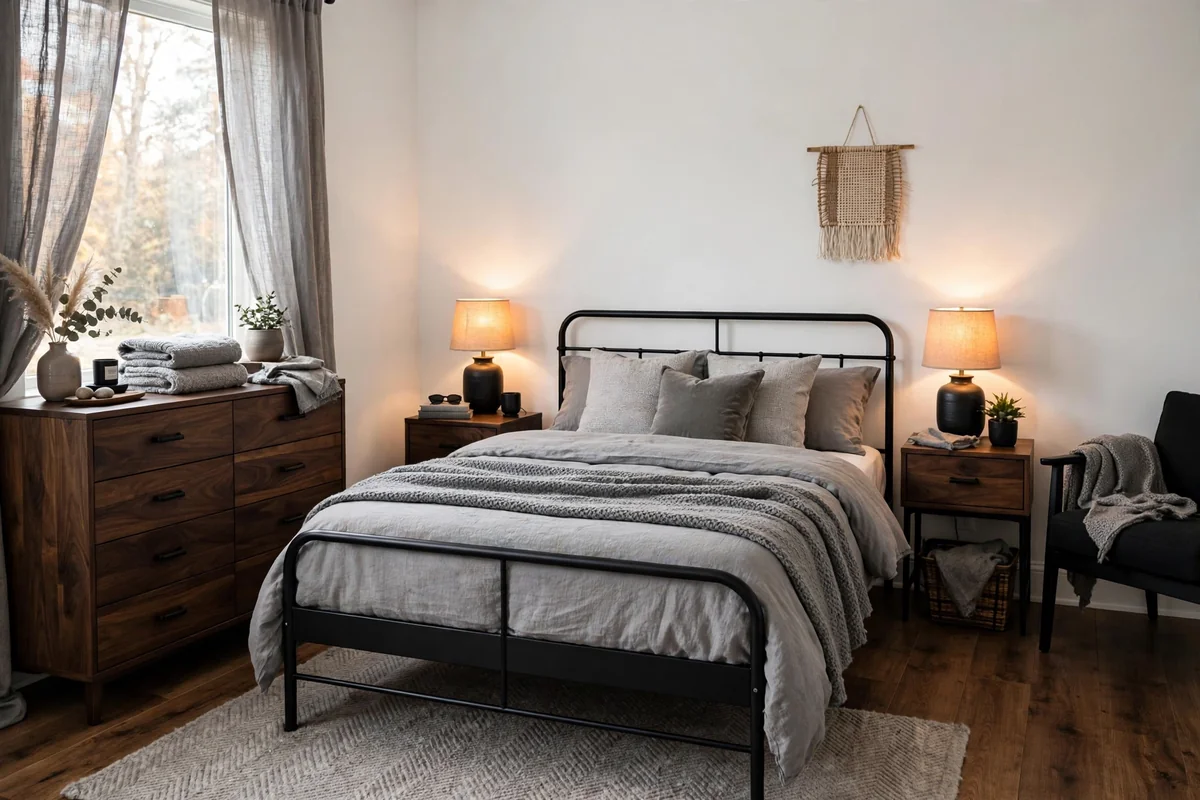
White walls with dark furniture is the classic high-contrast version of this palette. The white envelope keeps the room bright and spacious while black and charcoal pieces provide drama. This suits rooms with good natural light; the white bounces it everywhere. Keep trim and ceiling the same white for a seamless envelope.
Dark furniture against white walls needs softening: grey textiles, a patterned rug, wood tones. Without softening, the contrast can feel stark. This is the boldest wall choice in the palette and the most timeless. White walls also make future changes easy; the dark furniture anchors whatever textiles come next. Repainting is cheap; good dark furniture lasts for decades.
9. Soft Grey Curtains
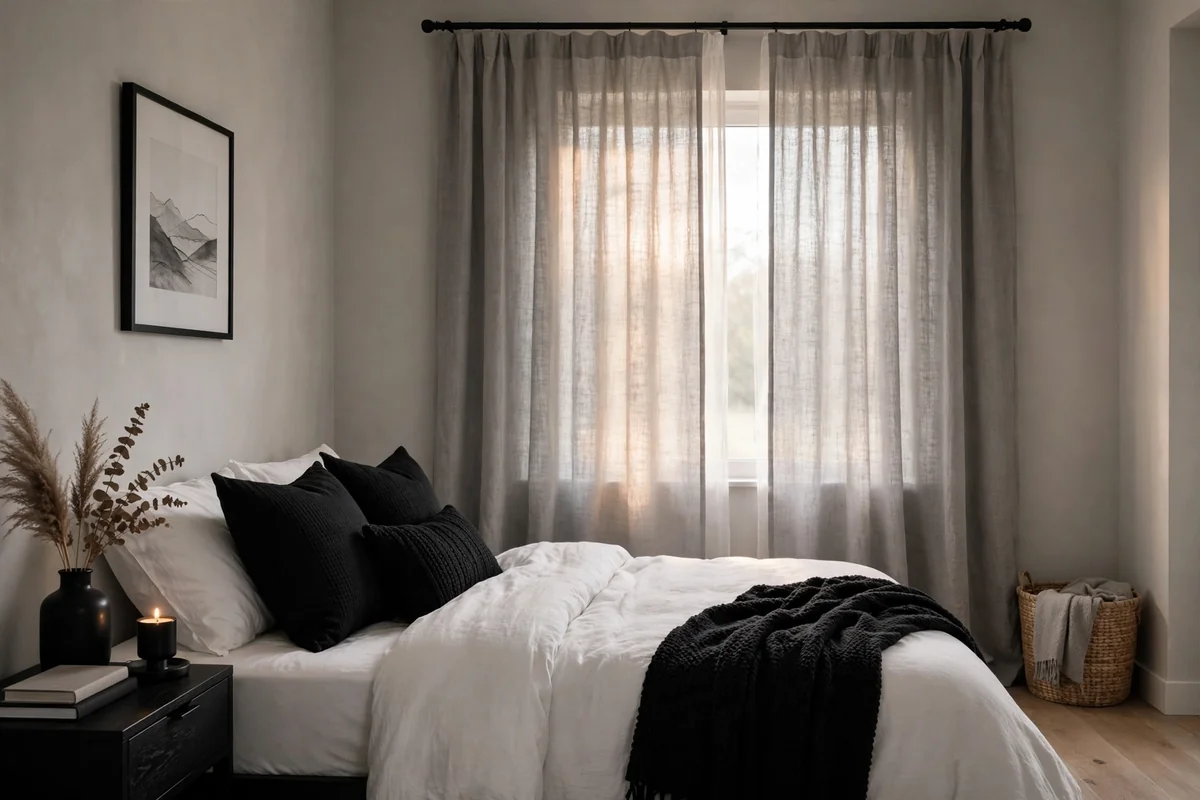
Soft grey curtains add vertical softness in the palette’s middle tone. Choose a warm grey linen or velvet, hung high and wide with panels that kiss the floor. Grey curtains filter light gently and connect the walls to the bedding. They are quieter than white curtains and softer than black.
Layer sheers behind for daytime privacy. Keep the grey consistent with the room’s other greys; clashing undertones show in fabric. Wash or steam curtains seasonally to keep them fresh. In a monochrome bedroom, curtains are a large surface; getting their tone right matters more than most people expect. Bring fabric swatches home before ordering; store lighting lies.
10. Black Light Fixtures
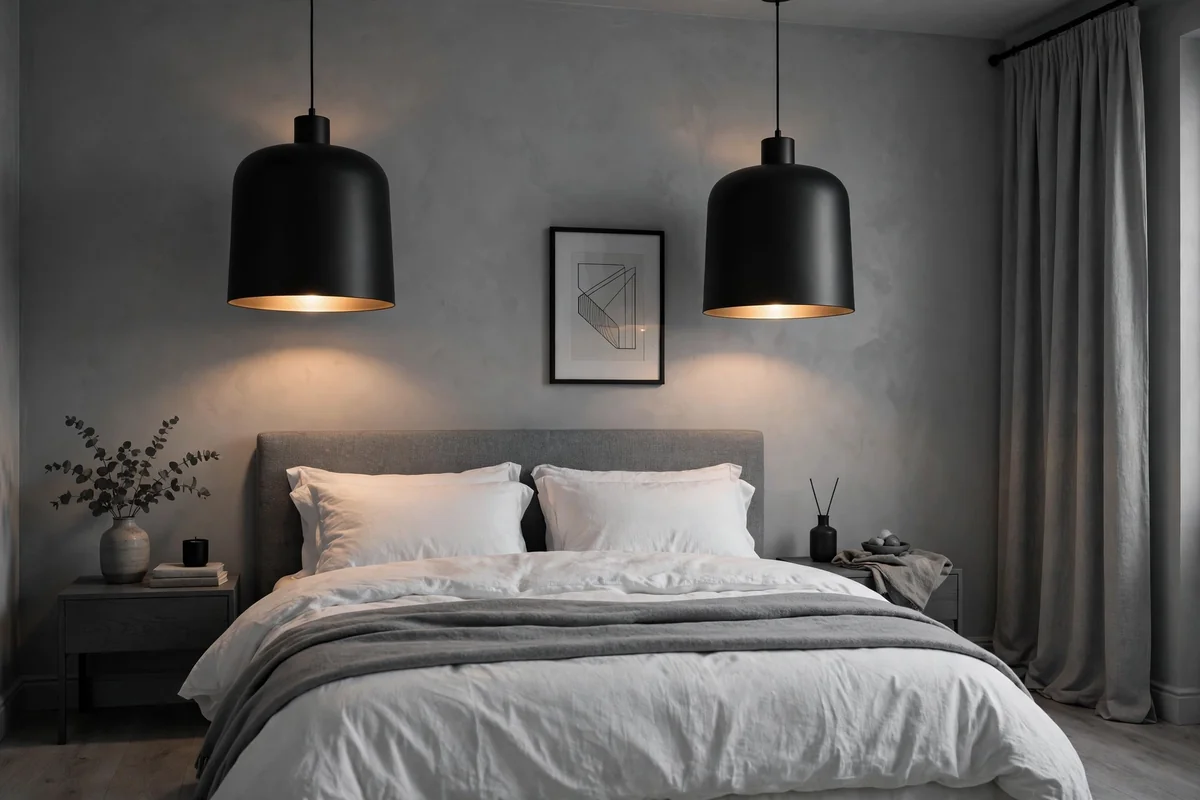
Black light fixtures add graphic punctuation overhead and beside the bed. Matte black pendants, sconces or a chandelier draw the eye up and give the ceiling presence. Against white or grey ceilings, black fixtures read as jewelry. Choose simple silhouettes; the color provides the drama, and the dark finish hides dust far better than white fixtures do.
Use warm 2700K bulbs; black fixtures with cool light feel harsh. Sconces flanking the bed free up nightstand space. Keep the fixture scale proportional; oversized black pendants can overwhelm a small bedroom. Two matching black sconces plus one statement pendant is a classic combination. Lighting in black is functional sculpture.
11. A Monochrome Gallery Wall

A monochrome gallery wall curates the palette into art. Mix black and white photography, abstract prints and sketches in consistent black frames with white mats. Hang it on a grey or white wall where the frames create rhythm. Include varied sizes with one anchor piece; keep 2 to 3 inches between frames.
Plan the layout on the floor first and photograph it. The gallery wall is where personality enters a monochrome room, so choose images you love. Black frames against a grey wall nearly disappear, letting the art float. This is the most personal layer of the palette; make it yours. Swap pieces seasonally to keep the wall feeling alive.
12. Textured Grey Throws

Textured grey throws keep monochrome bedding from looking flat. Chunky knits, waffle weaves and faux fur in varied grey tones drape over white duvets in inviting folds. Layer two throws with different textures for depth. The tactile variety is what makes a limited palette feel rich. Run your hand across the bed; if every layer feels different, you have done it right.
Choose washable fabrics for everyday throws. Drape casually rather than folding precisely; the relaxed look suits the palette’s calm. Keep throws in the room’s grey family to maintain harmony. A beautiful throw is the fastest way to make a bed look styled. In monochrome, texture is color. Rotate throws seasonally for a fresh look without buying anything new.
13. White and Wood Balance
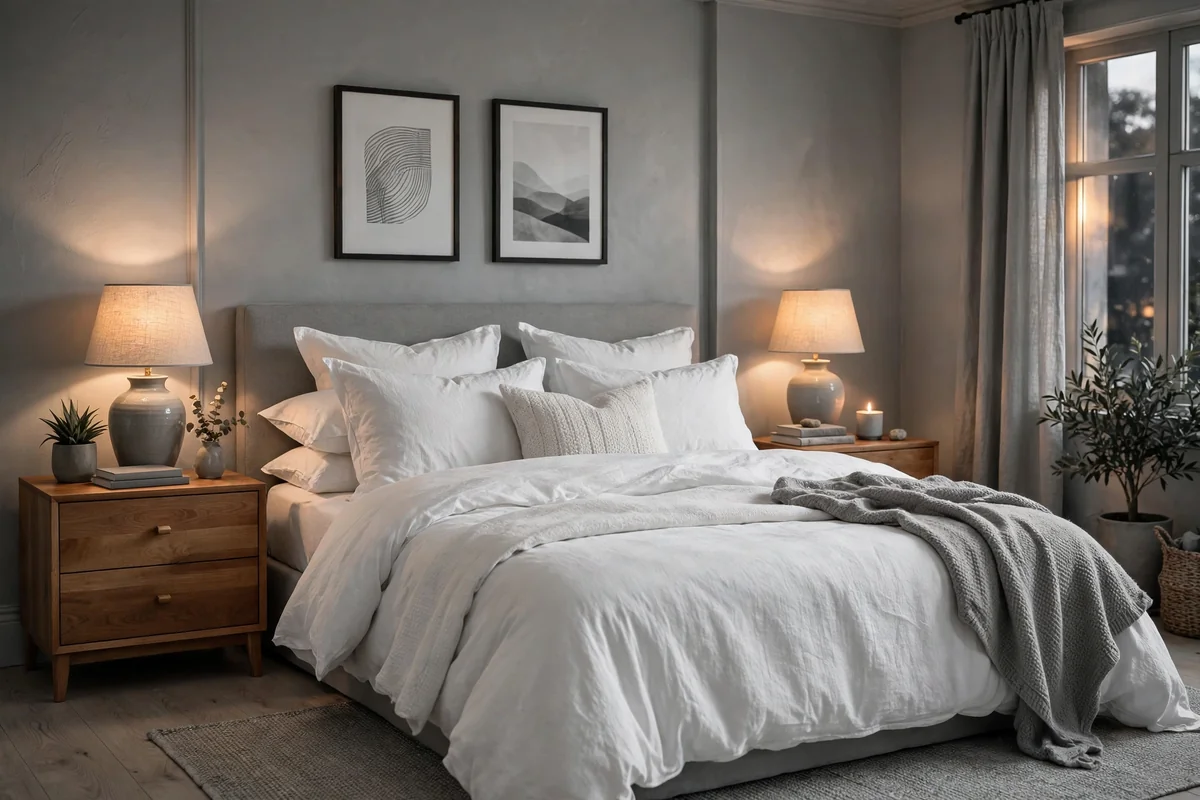
Warm wood accents keep the monochrome palette from feeling cold. Oak nightstands, a walnut bench, rattan details: wood’s organic warmth is the perfect counterpoint to grey’s coolness. Even small touches, a wooden tray, a oak frame, shift the room’s temperature. Keep woods warm-toned and matte, and let the grain show; it is the pattern the palette needs.
Distribute wood through the room rather than concentrating it; a nightstand here, a bench there, a frame on the wall. The wood should feel like a quiet supporting actor, not a competing palette. Against black, white and grey, natural wood glows. This is the warmth hack every monochrome bedroom needs.
14. Black Nightstands

Black nightstands frame the bed with symmetry and depth. A matching pair in matte or satin black anchors the headboard wall and gives lamps and books a defined home. Choose nightstands 24 to 28 inches tall, roughly level with the mattress top. Keep the styling simple: a lamp, a small plant or book, nothing more.
Black nightstands show dust, so wipe them weekly. Against white bedding, they create the crisp contrast that defines the palette. If the room already has a black dresser, match the finish for cohesion. Symmetrical black nightstands are the tailored suit of bedroom styling: sharp, classic, effortless. They will look right with every bedding change you ever make.
15. A Grey Accent Chair
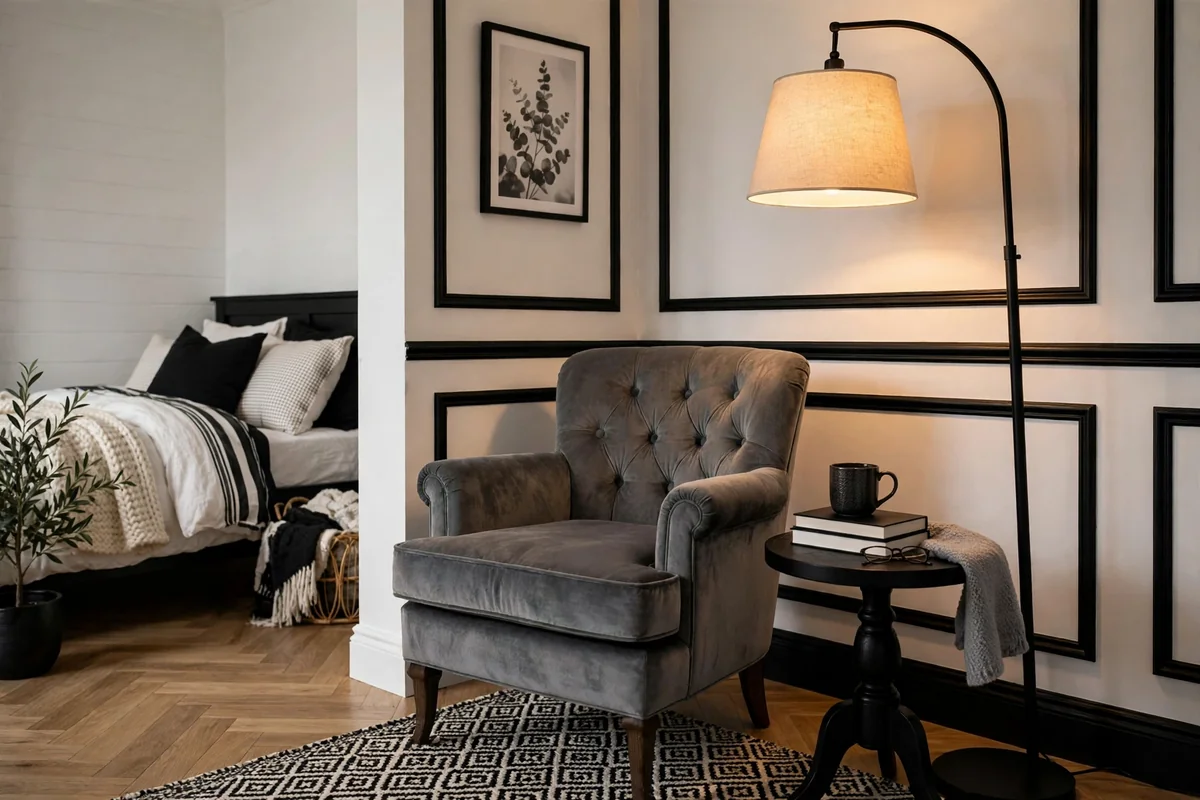
A grey accent chair gives the bedroom a place to sit that is not the bed. Choose a comfortable armchair in a mid-grey velvet or linen, positioned in a corner with a floor lamp and small table. The chair adds a new shape to the room’s geometry and a destination for morning coffee or evening reading.
Scale the chair to the room; a bulky chair overwhelms a small bedroom. A throw in a contrasting texture makes it inviting. Keep the chair’s grey in the room’s family. An accent chair turns a bedroom from a sleeping space into a living space, which is the difference between a room and a retreat.
16. Striped Bedding

Striped bedding adds classic pattern to the monochrome palette. Black and white ticking stripes, grey pinstripes or awning stripes bring tailored energy without introducing color. Choose one striped element: duvet or sheets, not both. The stripes’ scale should suit the bed; narrow stripes read refined, wide stripes feel casual, and the classic pattern never fights with the rest of the room.
Pair stripes with solid pillows to avoid pattern overload. Striped bedding is timeless; it has looked right for a century and will for another. Against a grey headboard or white walls, stripes provide the graphic interest the palette needs. Crisp, classic, and quietly confident. If you tire of stripes, they layer easily under a solid duvet.
17. Mirrors for Light
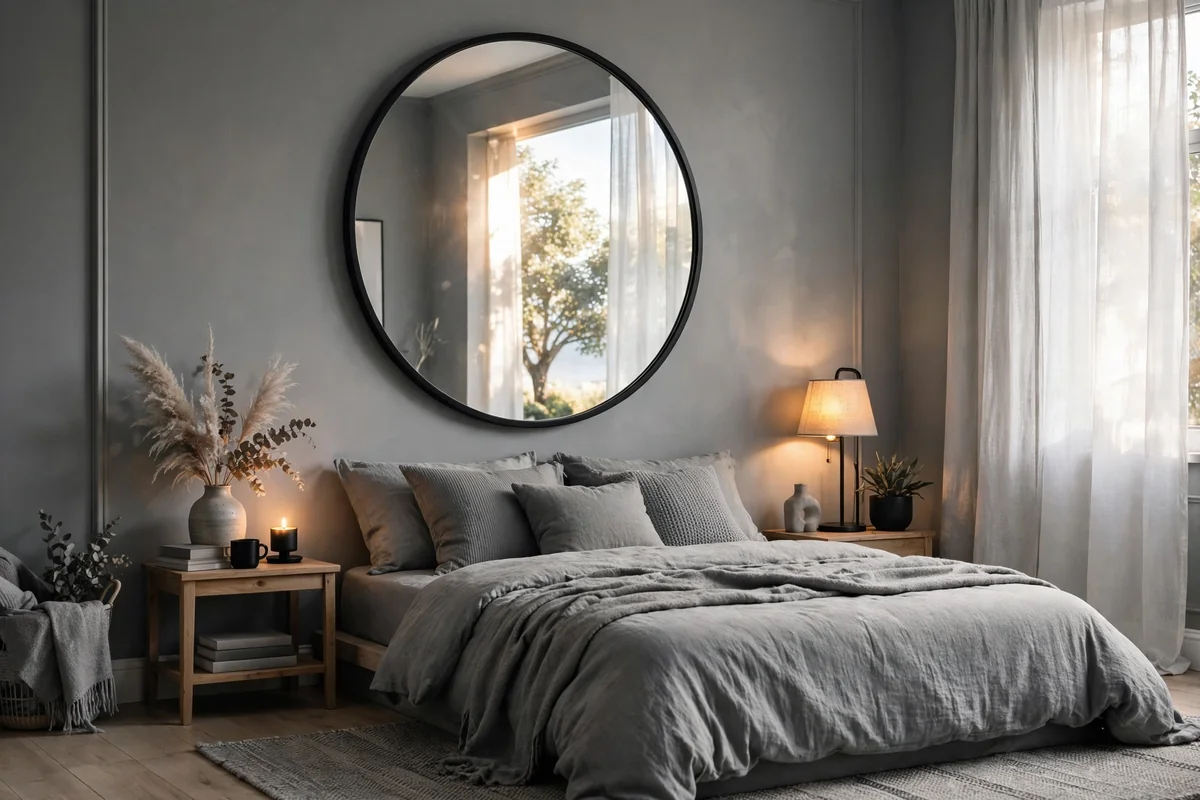
Mirrors multiply light in a monochrome bedroom. A large mirror with a black or white frame above the dresser or leaning against the wall bounces daylight and lamplight around the room. Position it to reflect a window for maximum effect. The mirror’s reflection also doubles the palette’s tones, deepening the scheme.
Keep mirrors clean; streaks show immediately. A round mirror softens the room’s straight lines. Avoid placing mirrors where they reflect clutter. In a palette built on light and shadow, a mirror is not just decor; it is a lighting tool. Angle it to catch the morning sun and the room wakes up glowing.
18. Black Window Trim
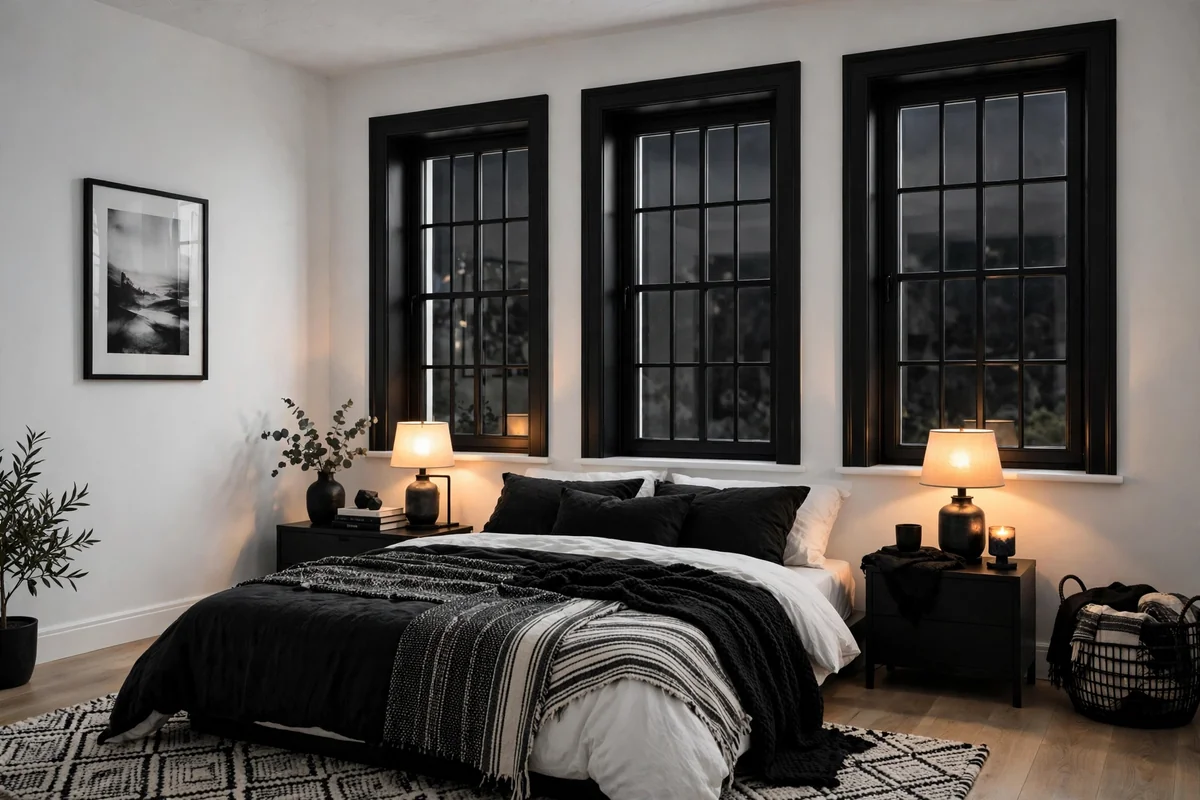
Black window trim frames views like artwork. Painting window frames and mullions black against white walls creates graphic definition that elevates the whole room. The dark frames draw the eye to the outdoors and make greenery pop. This works best with simple trim profiles; ornate molding in black can feel heavy.
Use a durable satin paint that wipes clean. Keep the wall white or very light so the trim’s silhouette shows. Black trim is a commitment, but it is one of the most impactful single changes in a monochrome bedroom. Every window becomes a picture, and the graphic frames make even an ordinary view feel composed.
19. Cozy Layered Lighting
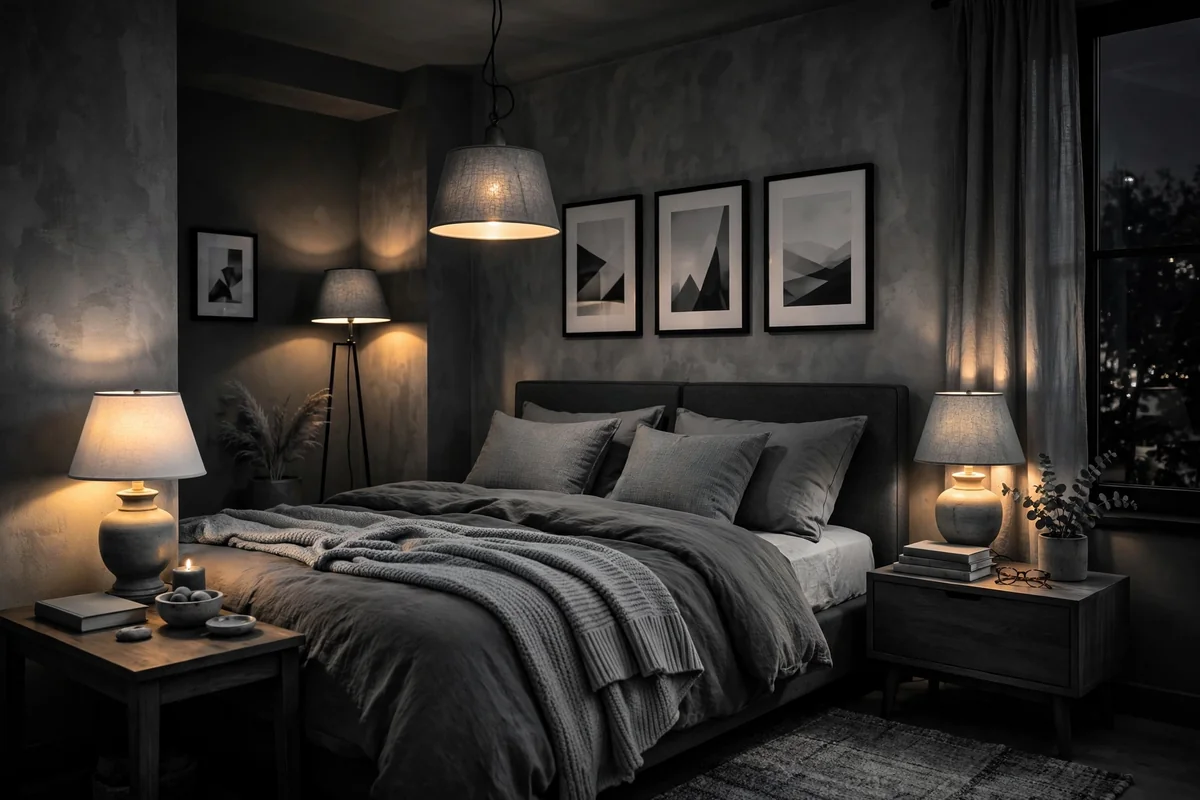
Layered lighting makes monochrome bedrooms glow. Combine bedside lamps, a pendant or chandelier, and small accents like candles or string lights, all at 2700K. The warm light softens the palette’s edges and creates the cozy atmosphere bedrooms need. Aim for at least three light sources, and put the bedside lamps on dimmers for late-night reading.
Use dimmers to tune the mood from bright morning to soft evening. Black fixtures with warm bulbs are the palette’s signature lighting look. Keep cords tidy; visible clutter breaks the calm. In a room built on neutrals, light is the most important design element. Layer it generously. Your future self, falling asleep in a warm glow, will thank you.
20. Keep Clutter Minimal
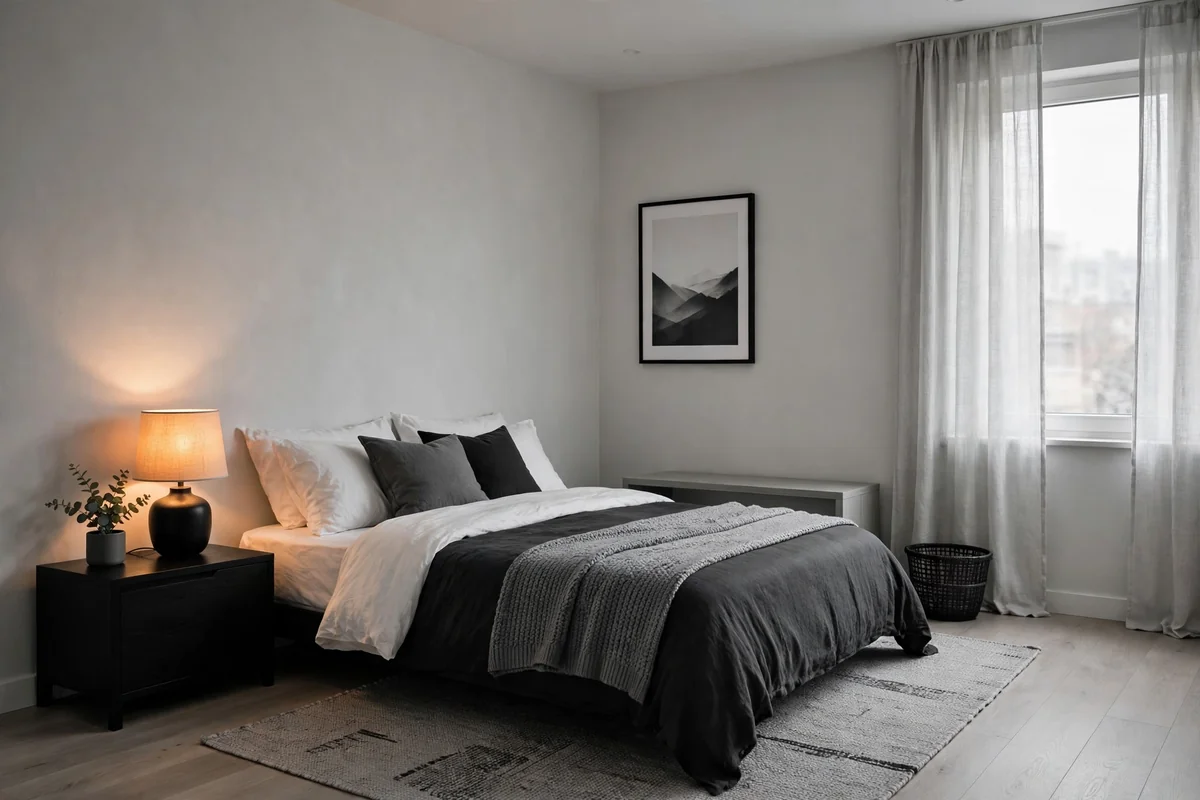
A monochrome palette shows clutter mercilessly. Keep surfaces clear: nightstands hold a lamp and one object, the dresser stays mostly bare, the floor stays clear. Closed storage hides the necessary mess. The palette’s calm depends on visual quiet; every stray object is louder against neutrals. Give everything a home and the room practically tidies itself.
Do a weekly reset: return items to their homes, clear surfaces, remake the bed. Choose furniture with storage to make tidiness easy. Minimal does not mean empty; it means intentional. In black, white and grey, restraint is the luxury. Ten quiet minutes each Sunday keeps the calm intact for the whole week ahead.
21. A Touch of Green
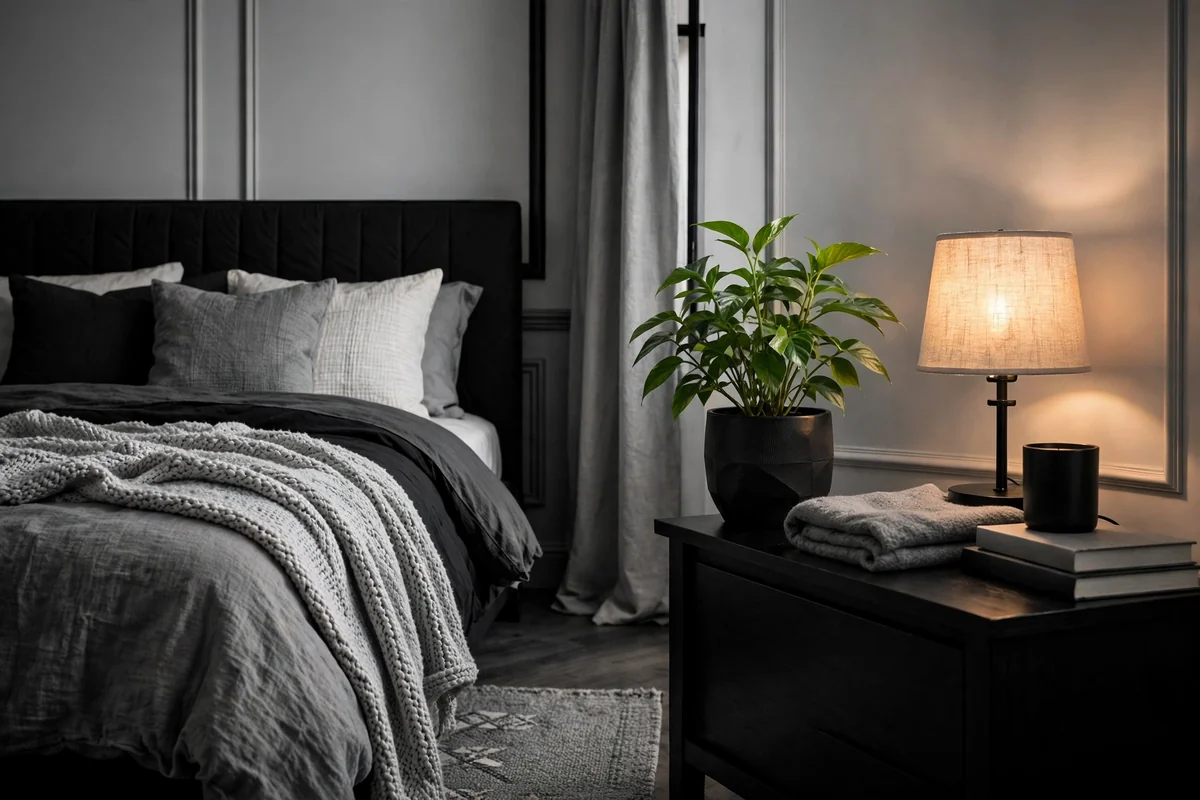
A touch of green brings a monochrome bedroom to life. One or two plants, a trailing pothos, a snake plant, an olive tree, add the organic note the palette needs. Green against grey is subtle; against black and white it sings. Keep plants in white, black or natural pots that join the scheme.
Choose low-maintenance plants suited to your light. Even a single stem in a vase counts. The green should feel like an accent, not a new palette; restraint keeps the calm. Nature’s color against neutrals is the oldest decorating trick, and it never fails. One thriving plant beats five struggling ones every time.
22. Keep the Palette Disciplined
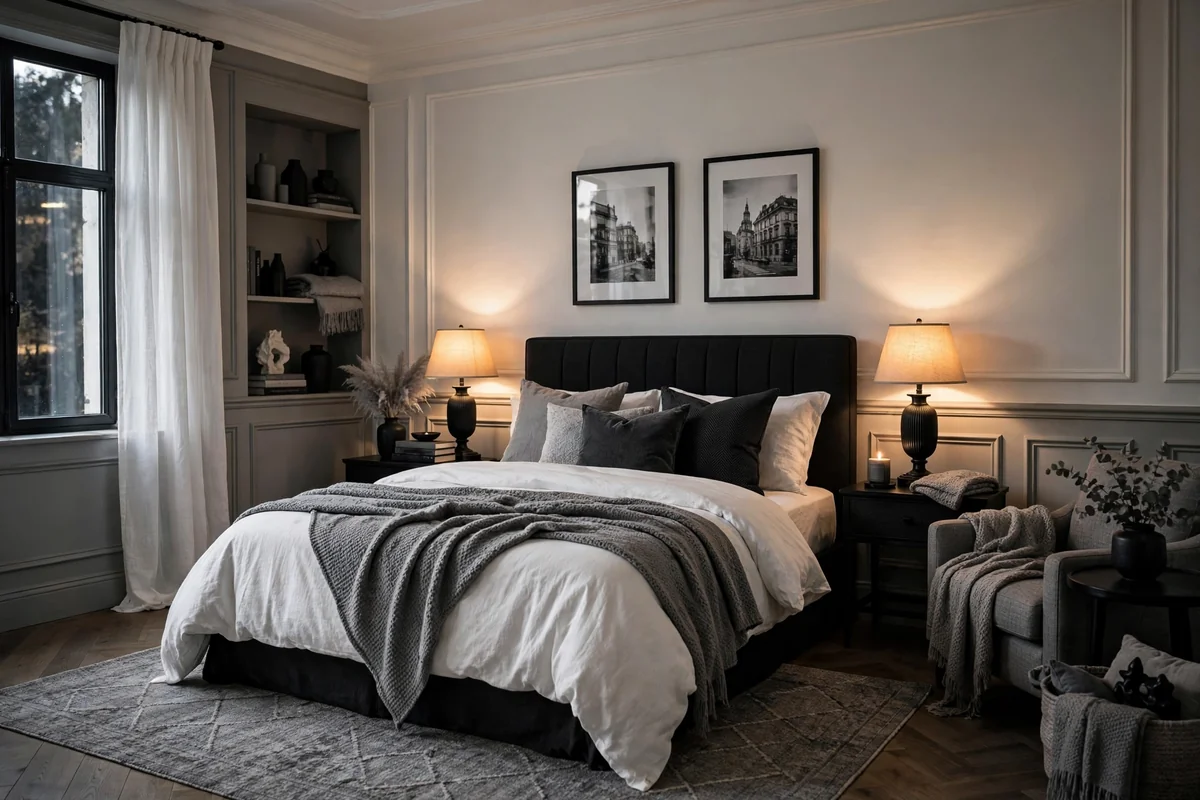
The final rule: keep the palette disciplined. Every new item should be black, white, grey, wood or green; anything else dilutes the calm. Check purchases against the palette before buying. When the scheme drifts, edit back: remove the offending color rather than adding more to match it. One disciplined edit beats ten new purchases.
Discipline is what separates a monochrome bedroom from a grey room with random stuff. The restraint is the style. Review the room seasonally and remove anything that does not serve the palette. A disciplined palette is self-maintaining; it always looks intentional because every piece belongs, and that quiet confidence is the whole point of the palette.
Conclusion
Black, white and grey endure because they are not a trend but a truth: contrast and texture will always feel right. Build the base, layer the tones, add black with restraint, and let warm light and texture do the rest. Your bedroom will look put together on the hardest mornings and feel calm on the longest nights. That is what timeless means.
Frequently Asked Questions
How do you make a black, white and grey bedroom feel warm?
Use warm-toned greys, layer textures like knits and linen, add wood tones, and light everything with warm 2700K bulbs. A touch of greenery and soft textiles keeps the monochrome palette cozy rather than cold.
What is the best ratio of black, white and grey?
A reliable balance is roughly 60 percent white and light grey, 30 percent mid grey, and 10 percent black as accents. Black works best in small doses: frames, lamps, hardware, one furniture piece.
Can a grey bedroom feel depressing?
It can if the grey is cool and flat and the light is poor. Choose warm greys, layer multiple tones and textures, add white for freshness and black for depth, and use warm lighting. Contrast and texture prevent the flat feeling.
What accent colors work with black, white and grey?
The palette stands beautifully alone, but small touches of green from plants, warm wood, brass, or a single muted accent like sage or terracotta add life. Keep accents minimal so the monochrome calm remains.
Is black, white and grey bedroom decor timeless?
Yes. Monochrome palettes have stayed in style for decades because they rely on contrast and texture rather than trends. Updating is easy: swap textiles and art while the core palette endures.