Bedroom
22 Blue and Wood Bedroom Ideas That Feel Calm and Natural
By Anna Wells · · 12 min read
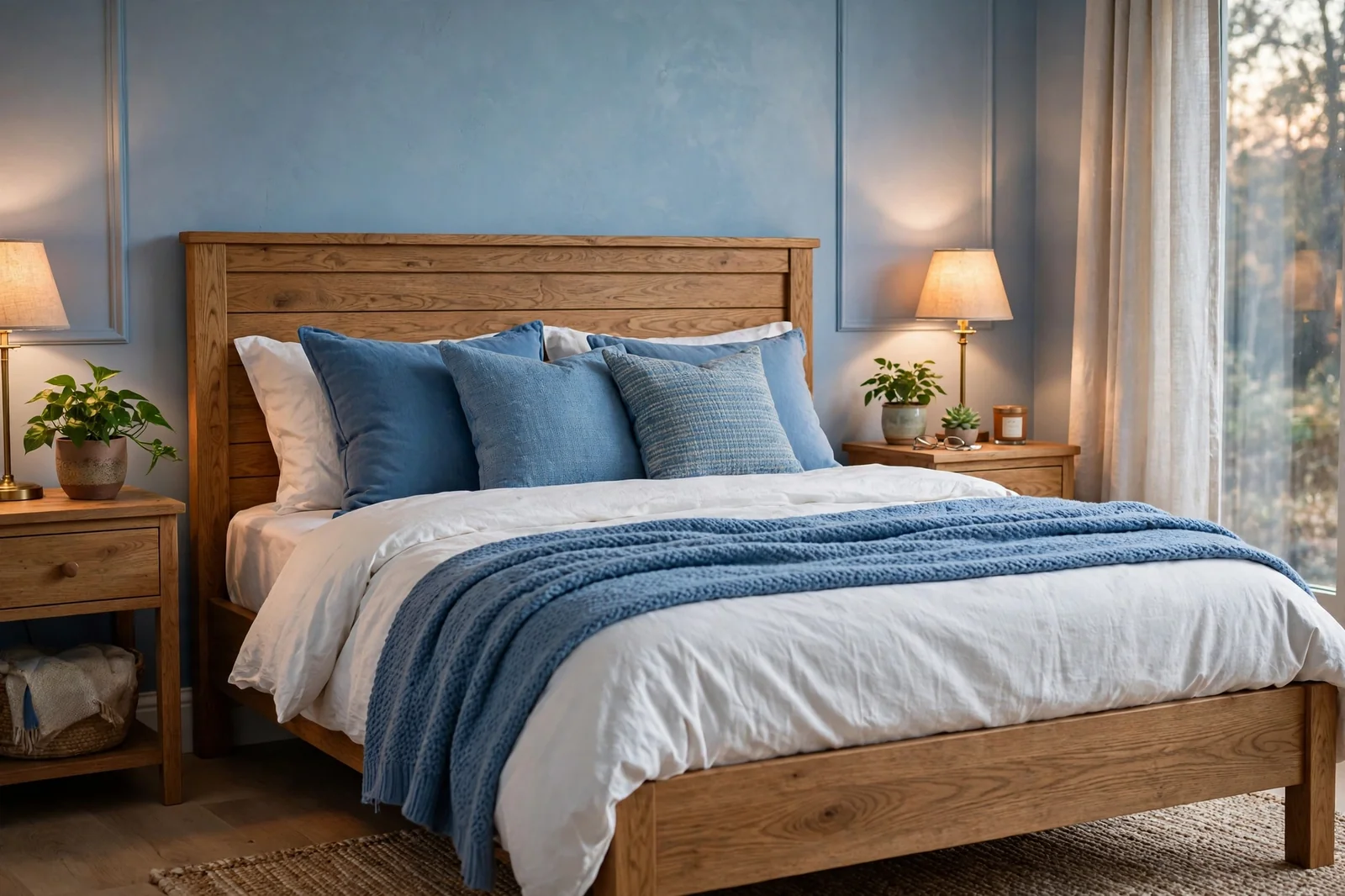
There is something about blue and wood together that instantly makes a bedroom feel calmer. Blue brings natural peace while wood adds the warmth that keeps the room from feeling cold or overly styled. These 22 blue and wood bedroom ideas show how to pair the two, from soft blue walls with oak furniture to navy accents against reclaimed wood, for a bedroom that feels relaxed, balanced and easy to live in.
Blue and wood is one of those pairings that needs no convincing once you see it done well. The cool serenity of blue finds its perfect partner in the organic warmth of wood, and together they create bedrooms that feel both peaceful and alive. The combination is forgiving too; it works in modern spaces, cozy cottages and everything between. These 22 ideas cover every way to bring the two together, from wall color to the smallest styling details.
1. Soft Blue Walls With Natural Wood Furniture
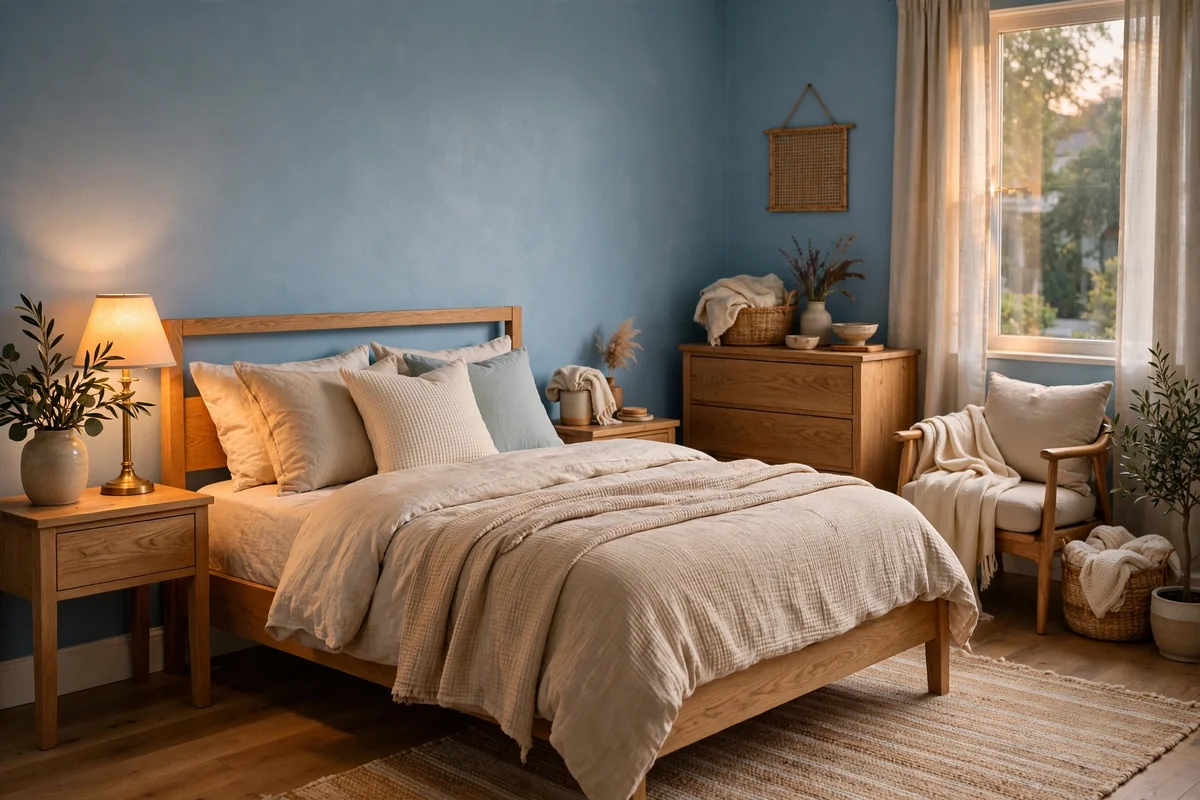
Light blue walls create a peaceful backdrop while natural wood furniture keeps the room grounded and warm. This combination works especially well when you want the room to feel airy without becoming plain. A simple oak nightstand beside soft blue walls adds warmth instantly and makes the space feel complete. Choose a muted blue with grey undertones for the most restful effect.
Keep the wood tones natural and matte; heavy orange stains fight the blue’s calm. White bedding bridges the two beautifully. This is the foundational blue-and-wood look, and it rarely goes wrong. Test the blue on a large swatch first, since blues shift dramatically with light, and live with the swatch for a few days before you commit to gallons.
2. Navy Bedding With Oak Nightstands
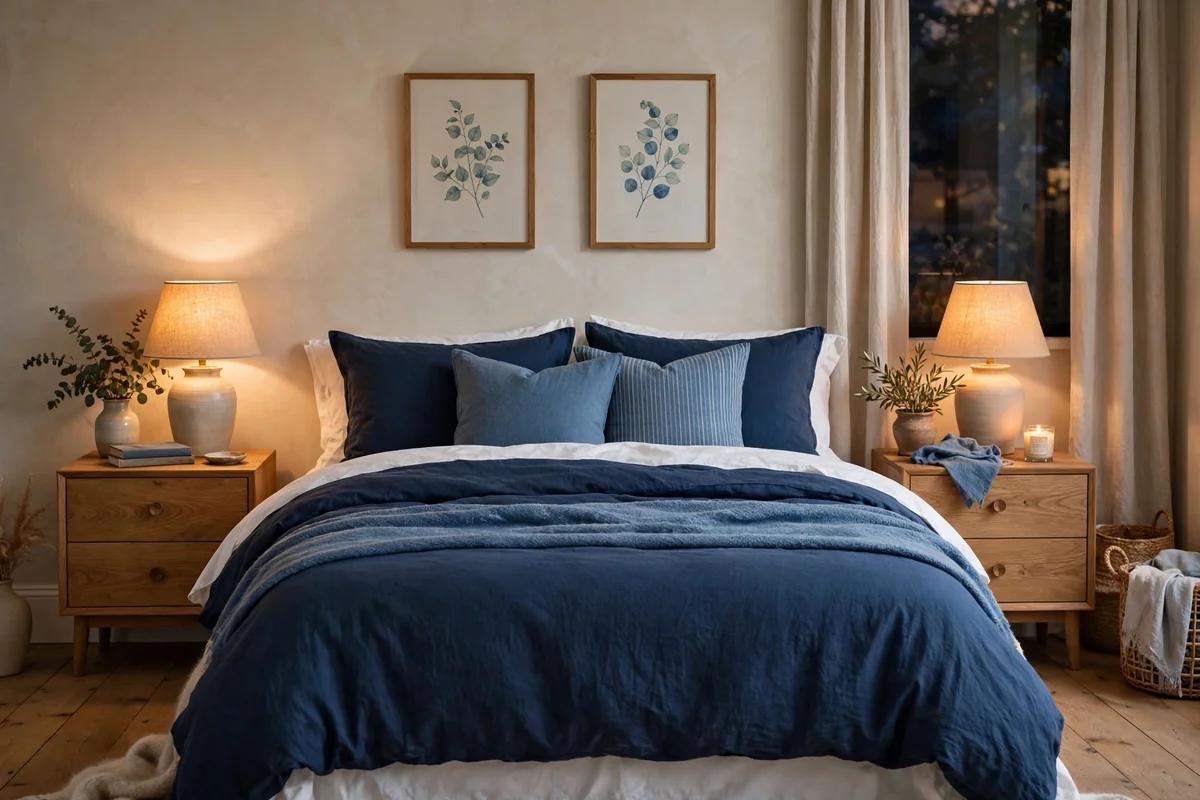
Navy bedding makes a confident statement that oak nightstands soften beautifully. The deep blue anchors the bed while the warm wood keeps the look inviting rather than severe. Layer navy with lighter blues and white: navy duvet, chambray shams, white sheets peeking out. The tonal layering prevents the navy from feeling flat.
Choose solid oak or oak-veneer nightstands with simple lines; the wood’s grain is the decoration. Brass or black hardware on the nightstands adds a finishing touch. Wash navy bedding separately to prevent dye transfer. This high-contrast pairing feels both classic and current, like a well-tailored suit. Add a white throw at the foot to keep the navy from feeling heavy.
3. A Wooden Headboard Against Blue Walls
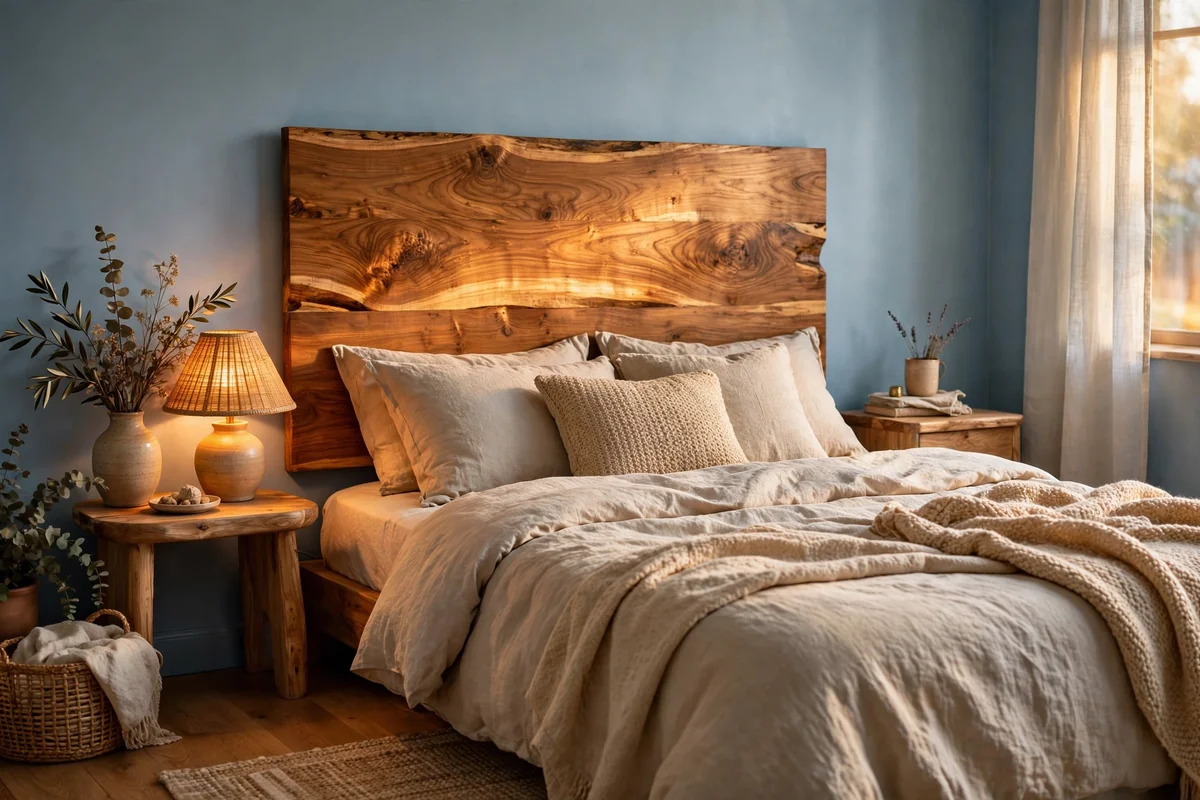
A wooden headboard against blue walls is the pairing in its purest form. The wood’s warm grain glows against the cool paint, creating a focal point that needs little else. Choose a headboard with visible grain and a matte finish: oak, walnut or reclaimed planks all work. Height matters; 48 to 54 inches suits most rooms and gives pillows proper support.
Keep the wall art minimal above a statement headboard; the wood is the art. Flank with simple nightstands in a complementary wood tone. This single piece can carry the whole blue-and-wood concept. It is the kind of timeless choice you will still love in a decade. Good wood only gets better with age, developing a patina that paint cannot match.
4. Layered Blue Textiles
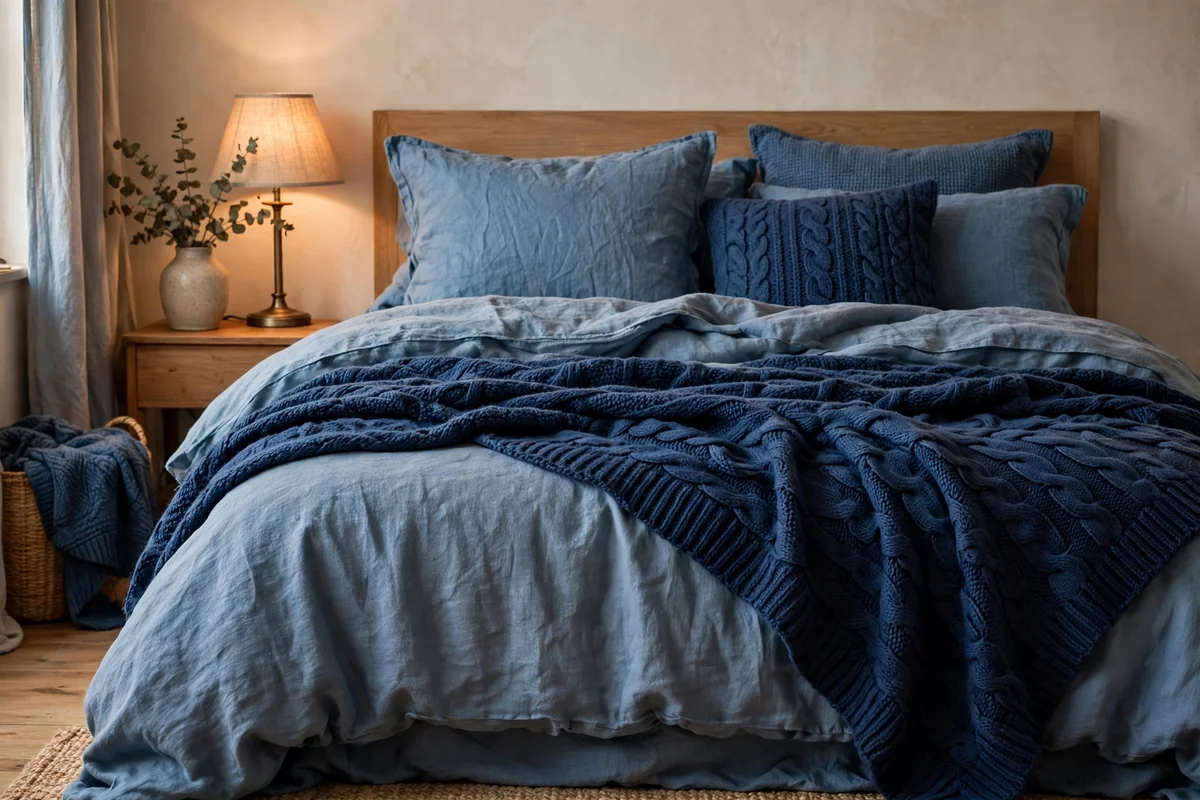
Layered blue textiles give the bed depth and invite touch. Combine dusty blue, chambray, navy and pale sky in linen, cotton and knit across sheets, duvet and throws. The tonal variation keeps the palette interesting without introducing new colors. Aim for at least three blue tones in the bedding. Against warm wood furniture, the layered blues look rich rather than cold.
Mix textures deliberately: smooth percale against nubby knit against soft washed linen. Fold the duvet back to show the layers. This is where the bedroom’s comfort is built, layer by layer. A well-layered blue bed looks so inviting you will want to climb in immediately, and the layers mean you can adjust warmth without remaking the whole bed.
5. Light Wood Floors
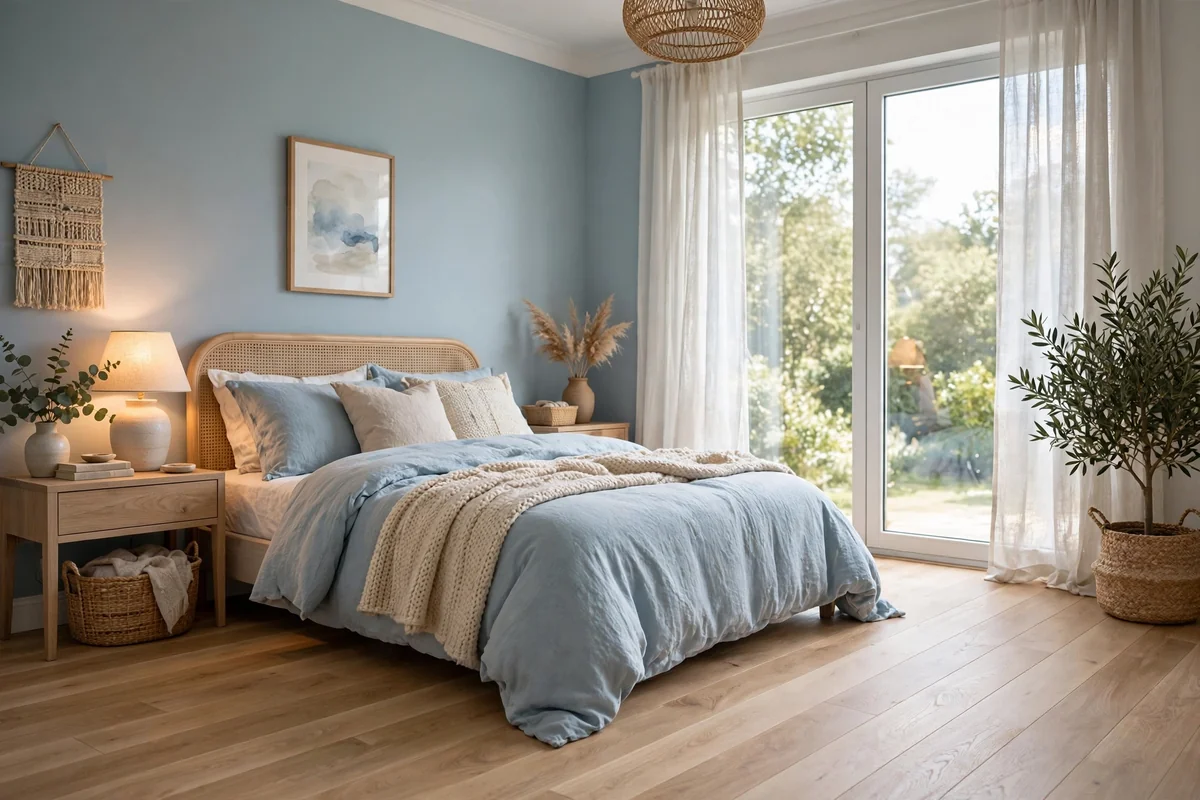
Light wood floors keep a blue bedroom feeling airy and bright. Pale oak, ash or maple floors reflect light beautifully and provide a warm neutral base that lets blue walls or bedding shine. The light wood reads as Scandinavian calm, especially with white trim and simple furnishings. Keep floors matte or satin; glossy finishes feel less serene.
Layer a soft rug for warmth underfoot; blue and white patterns work beautifully on pale wood. If replacing floors is not an option, large light rugs over darker floors achieve a similar effect. The floor is the room’s largest wood surface, so its tone sets the whole mood. Light wood plus soft blue is pure tranquility.
6. Blue and White Stripes
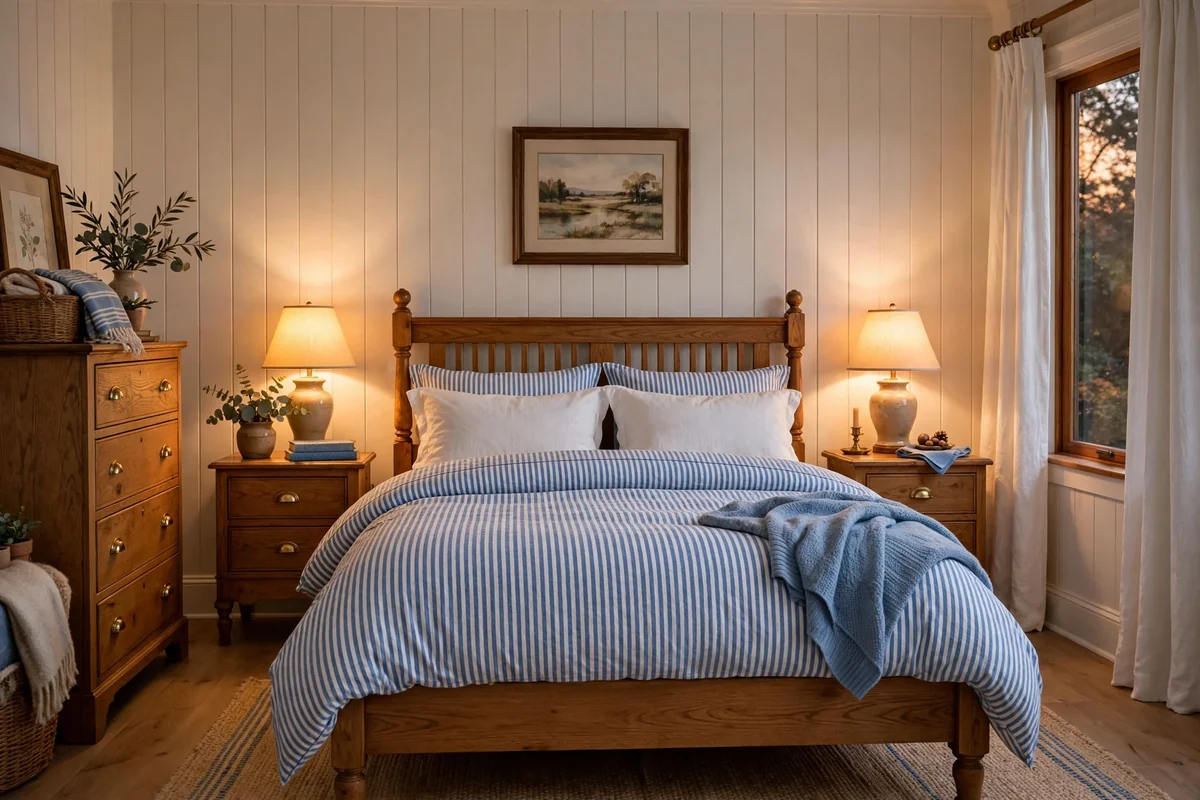
Blue and white stripes bring crisp, classic energy to a wood-accented bedroom. Ticking stripe duvets, awning stripe curtains or a striped rug add pattern without disturbing the calm. The stripes’ tailored feel pairs beautifully with the organic warmth of wood. Choose one striped element to avoid pattern overload, and let the wood furniture provide the quiet background the stripes need.
Narrow stripes read refined; wider stripes feel casual and coastal. Pair stripes with solid wood furniture and simple linens. This is a timeless combination that has looked right for generations. Against oak or walnut, blue and white stripes feel fresh rather than preppy. Classic, clean and quietly confident. If you tire of stripes, a solid duvet cover transforms the look in minutes.
7. Rustic Wood Beams
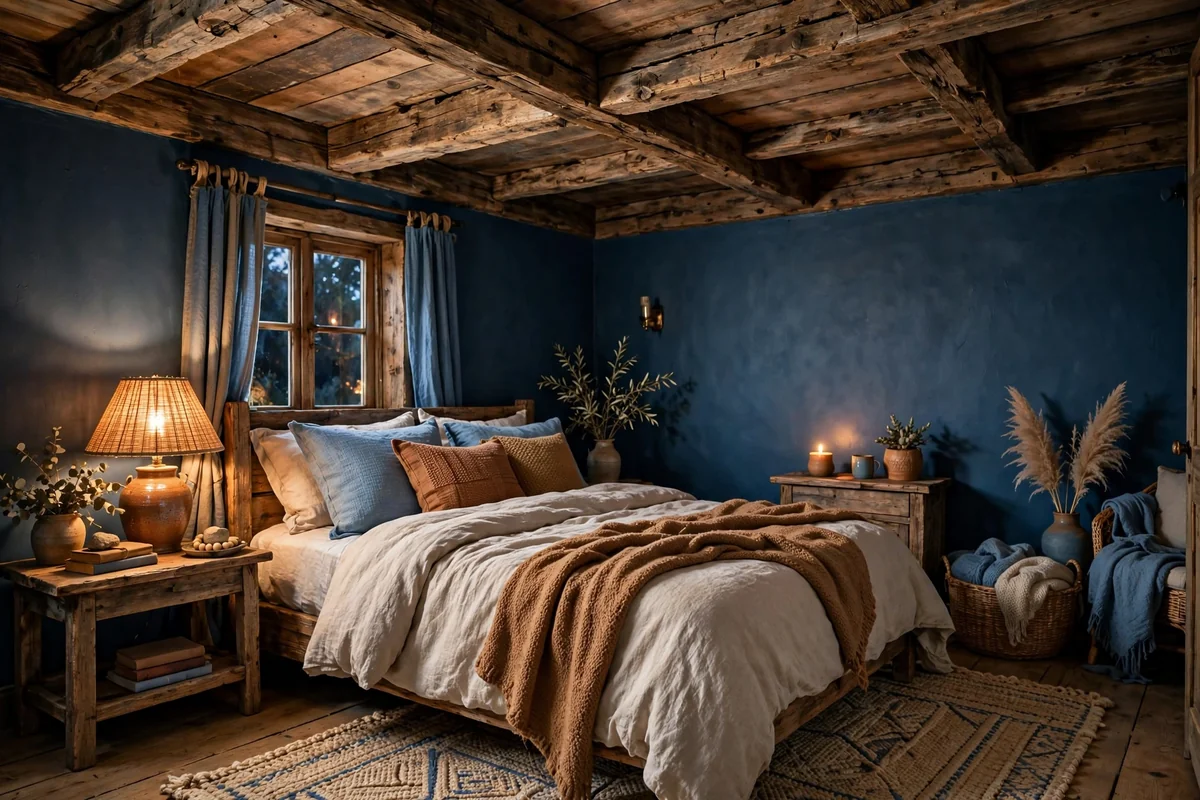
Exposed wood beams add architectural character that blue walls soften beautifully. The rustic texture overhead contrasts with smooth painted walls, giving the room depth and history. Dark stained beams against pale blue walls create striking definition; natural beams against deeper blue feel cozy and cabin-like. Even faux beams achieve the effect.
Keep the rest of the room simple when beams are the star; they provide enough visual interest. Warm lighting enhances the wood’s glow against blue. If your ceiling is low, beams can feel heavy; in that case, keep them slim and the blue pale. Beams turn a plain bedroom into a place with a story.
8. A Dusty Blue Accent Wall
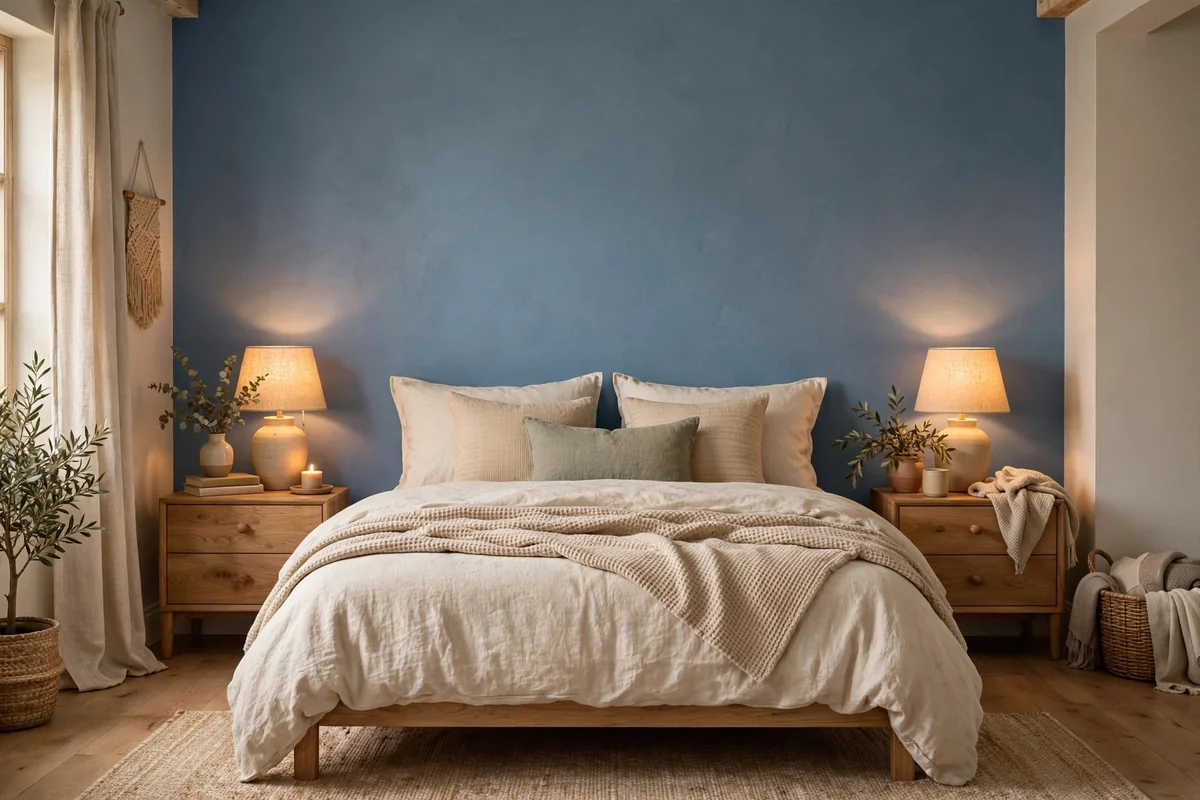
A dusty blue accent wall behind the bed creates a serene focal point. The muted tone is restful without being boring, and it makes wood furniture and white bedding pop. Dusty blue has grey undertones that keep it sophisticated; it reads as calm, not colorful. Pair it with oak nightstands and cream textiles for the complete look.
Paint the wall behind the bed only; four blue walls can feel enclosing. Test the color at different times of day, since dusty blues shift with light. This is the gentlest way to commit to blue, and it transforms the room’s mood completely. Soft, serene and endlessly livable. Guests will ask about the color; keep the paint name handy for when they do.
9. Woven and Rattan Details
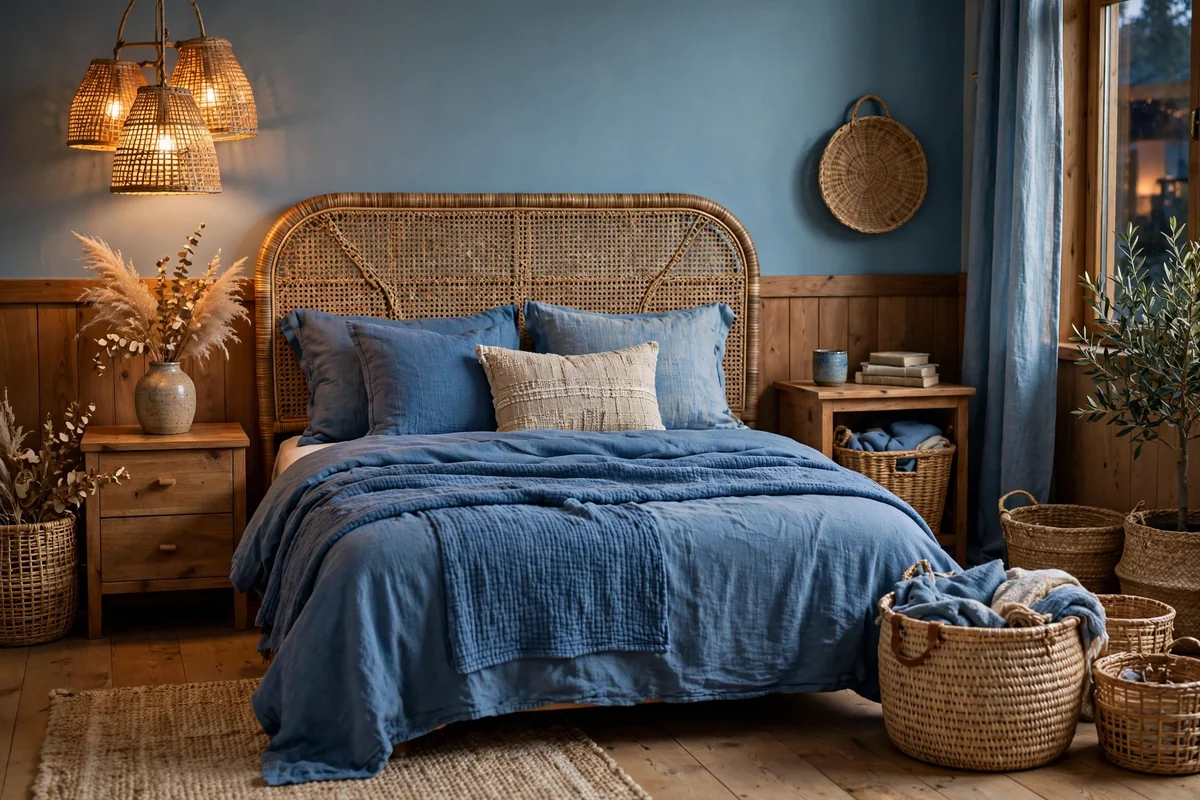
Woven and rattan details add organic texture that bridges blue and wood. A rattan headboard, woven pendant light, seagrass baskets or a cane chair introduces the handcrafted warmth both elements need. The honey tones of rattan glow against blue walls. Choose pieces with simple shapes so the material speaks, and let the natural color variation be the decoration.
Mix two or three woven textures for depth without clutter. Keep rattan in its natural tone; the contrast with blue is the point. These details keep the room from feeling too polished. Against the cool calm of blue, woven texture is like sunlight: warm, natural and welcome. Dust woven pieces regularly, since texture shows dust more than smooth surfaces do.
10. A Deep Navy Statement Wall
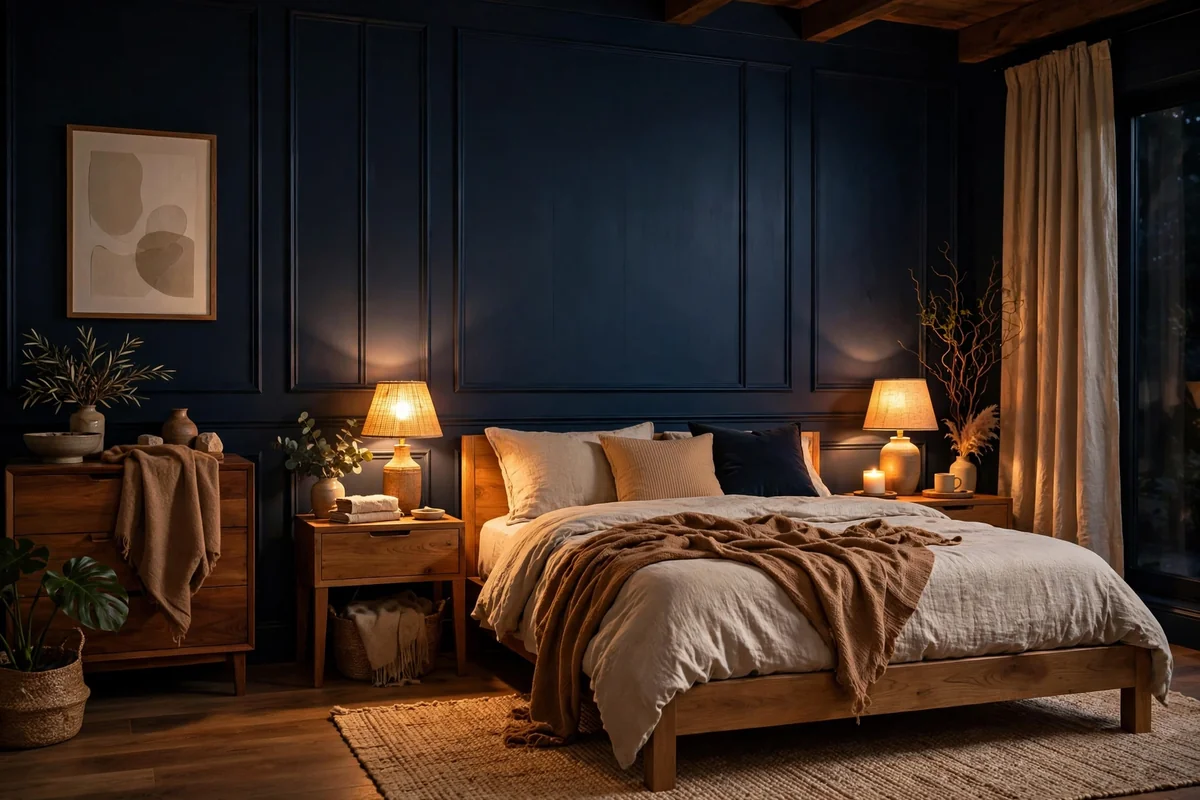
A deep navy wall makes a dramatic, cocooning statement. Behind the bed, navy creates depth that makes the room feel intimate and restful. The dark wall makes wood furniture glow and white bedding shine. Choose a navy with depth rather than brightness; it should feel like midnight, not royalty. Sample it on foam board first; navy is notoriously hard to judge from a small chip.
Balance the drama with plenty of warm wood and light textiles; navy needs friends. Good lighting is essential; navy absorbs light, so layer lamps generously. This is the boldest blue move, and in the right room it is spectacular. Moody, enveloping and deeply restful. Add a mirror opposite the window to bounce light into the darker corners.
11. Blue Velvet Accents
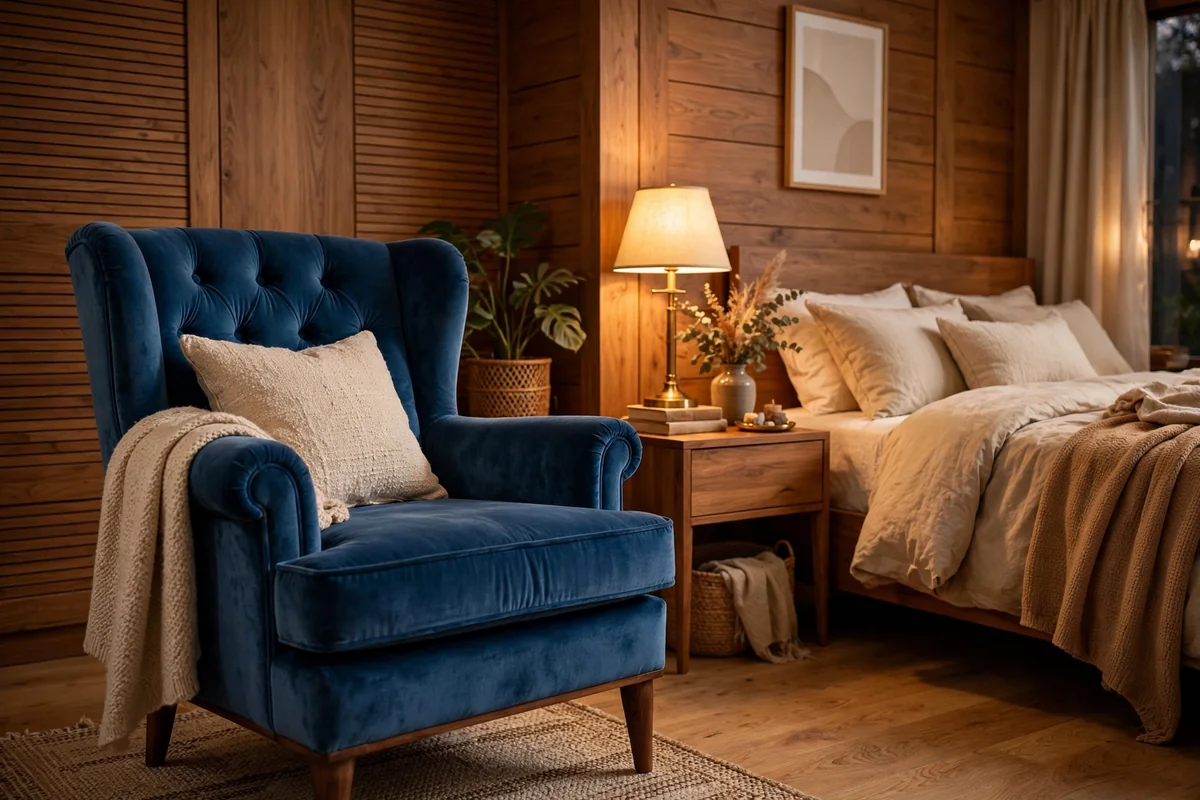
Blue velvet accents add luxury to a wood-toned bedroom. A velvet armchair, bench or throw pillows in sapphire or slate bring rich texture that catches light beautifully. Velvet’s sheen contrasts with matte wood grain in the most pleasing way. Keep velvet to one or two pieces; its richness is best in doses.
Choose performance velvet for durability in everyday pieces. Dust velvet regularly with a soft brush. Against warm oak, blue velvet feels like jewelry: precious, but not precious. This is how you add a touch of glamour without disturbing the room’s natural calm. A velvet bench at the bed’s foot is the most useful place to try it.
12. Reclaimed Wood Furniture
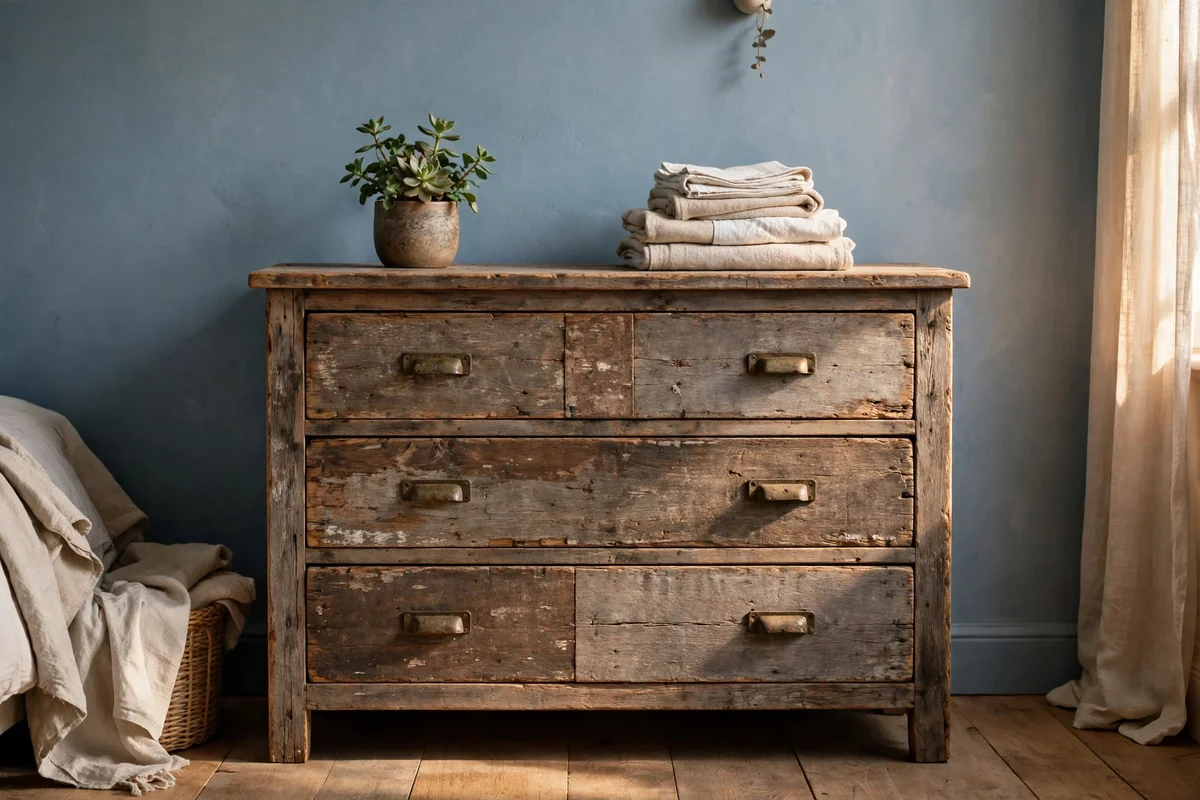
Reclaimed wood furniture brings history and character that blue walls showcase. A weathered dresser, barn-door headboard or salvaged bench adds texture no new piece can match. The wood’s varied tones and marks tell a story. Against calm blue, reclaimed wood looks intentional rather than rough, and the contrast makes both materials look better than they would alone.
Check reclaimed pieces for stability and seal them to prevent splinters. Mix one reclaimed statement with simpler wood pieces to avoid a themed look. The imperfections are the point; embrace them. Blue’s serenity plus wood’s history equals a bedroom with soul. Hunt salvage yards and estate sales; the best pieces find you when you are patient.
13. Coastal Blue and Driftwood
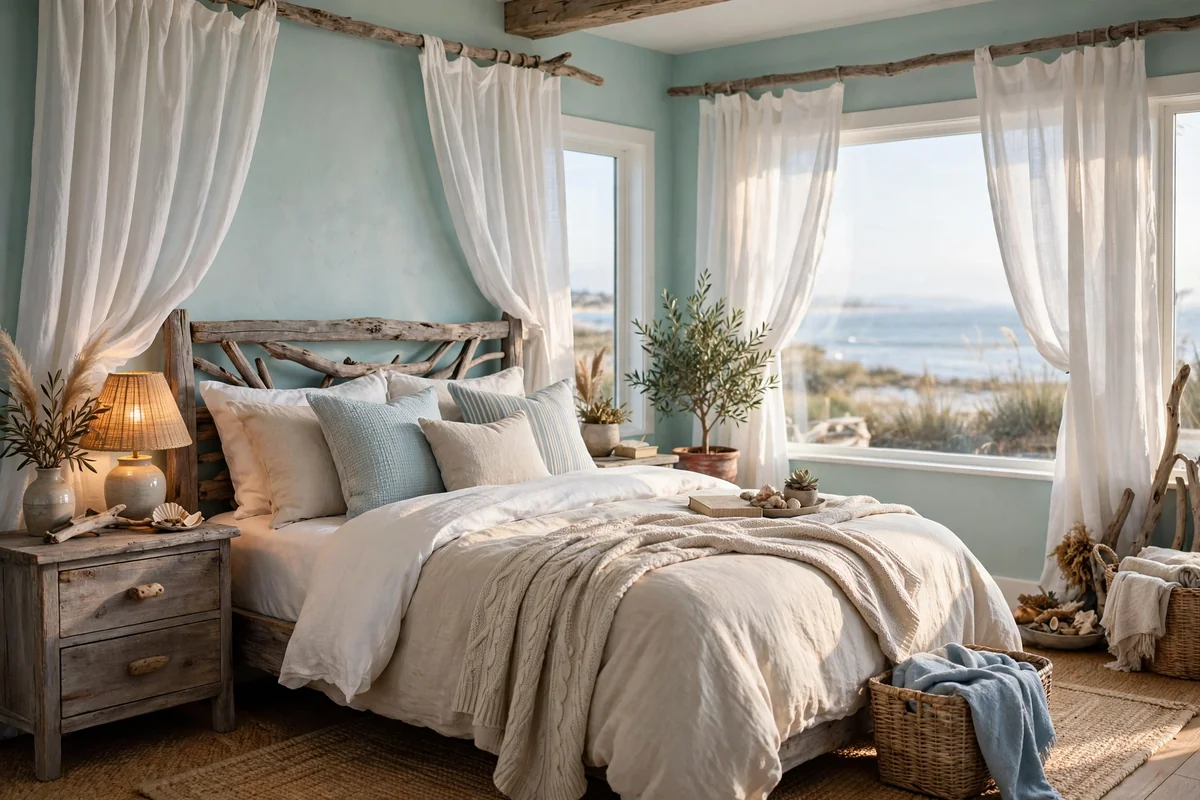
Coastal blue and driftwood tones create a breezy, seaside calm. Soft aqua and sea-glass blues pair with weathered grey-brown woods for a look that feels like a deep breath. Keep the palette light and airy; this is the most relaxed version of blue and wood. White bedding and linen curtains complete the coastal feeling.
Avoid nautical kitsch; the coast is a feeling, not a theme. Natural textures, jute, linen, driftwood, do the work. This palette suits bright rooms best. It is the bedroom equivalent of an open window: fresh, calm and quietly joyful, and the light palette makes even north-facing rooms feel sunlit and spacious.
14. Blue Artwork in Wood Frames
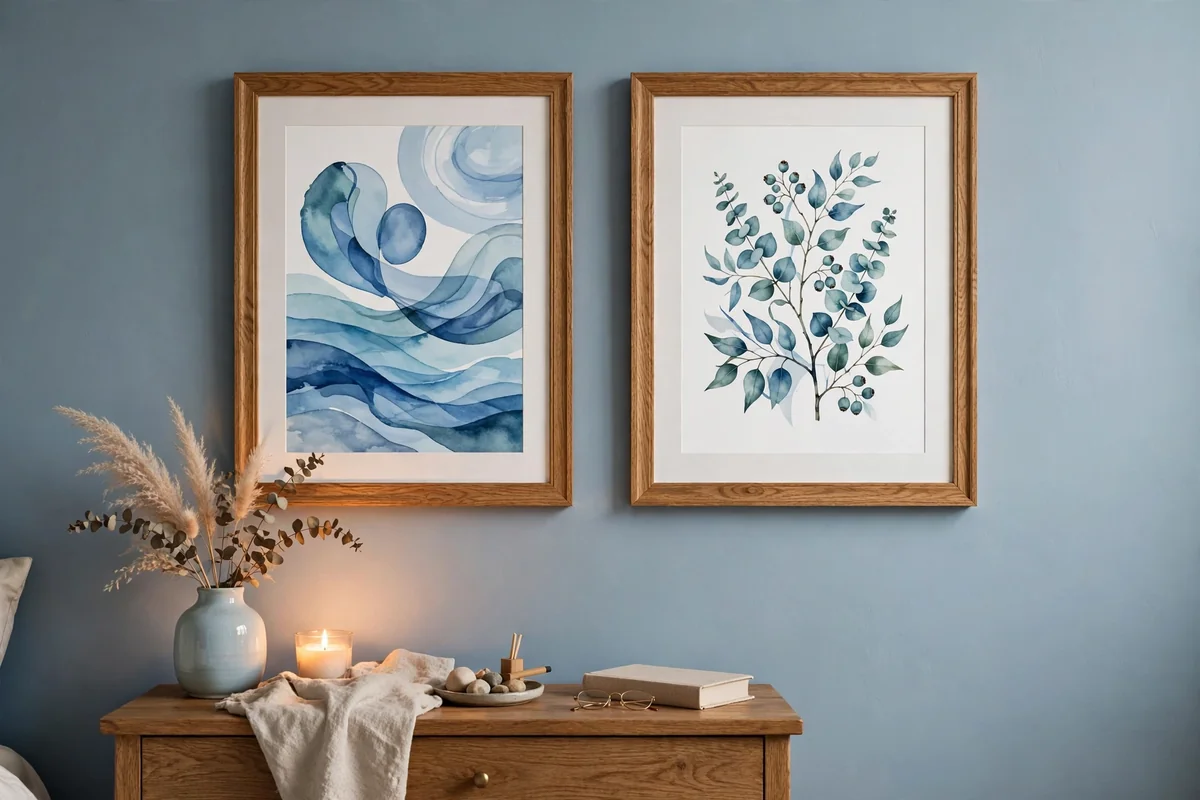
Blue artwork in wood frames ties the palette together on the walls. Abstract seascapes, botanical prints or indigo textiles in oak or walnut frames echo the room’s colors at eye level. The wood frames warm up the blue art. Hang a large anchor piece above the bed or dresser, and keep the surrounding wall clear so the art has room to breathe.
Keep frame wood consistent with the room’s other woods. White mats give blue art breathing room. This is an easy, renter-friendly way to strengthen the palette. Art is where the room’s personality lives; let it speak in blue. Rotate pieces seasonally; art you love deserves to be seen, not stored.
15. Warm Layered Lighting
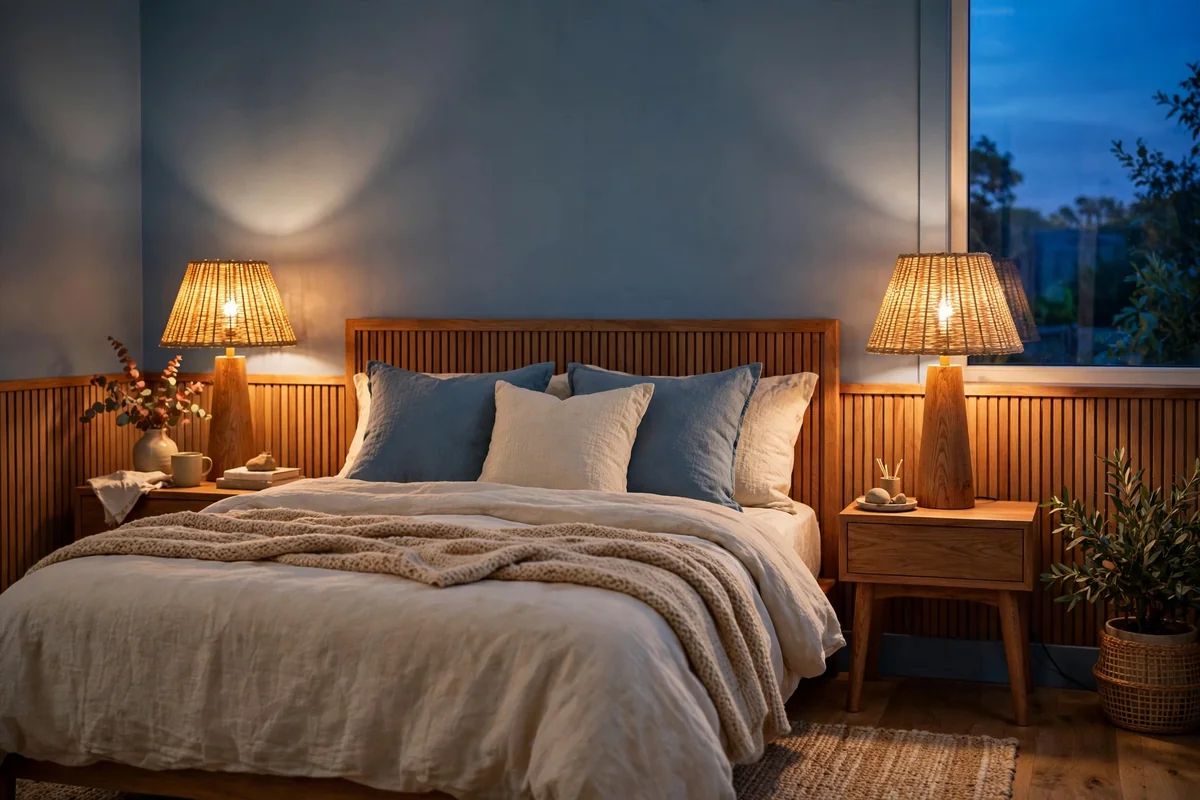
Warm lighting keeps blue bedrooms cozy after dark. Layer bedside lamps, a wood or rattan pendant, and small accents at 2700K. The warm glow softens blue’s coolness and makes wood grain glow. Aim for at least three light sources; blue walls absorb light, so you need more than in a white room.
Wooden lamp bases or rattan shades reinforce the palette. Use dimmers to tune the mood. Against blue walls, warm lamplight creates the cocooning glow that makes these bedrooms so restful. Light is the warmth blue needs; layer it generously, and put bedside lamps on dimmers so late nights stay soft.
16. A Patterned Blue Rug
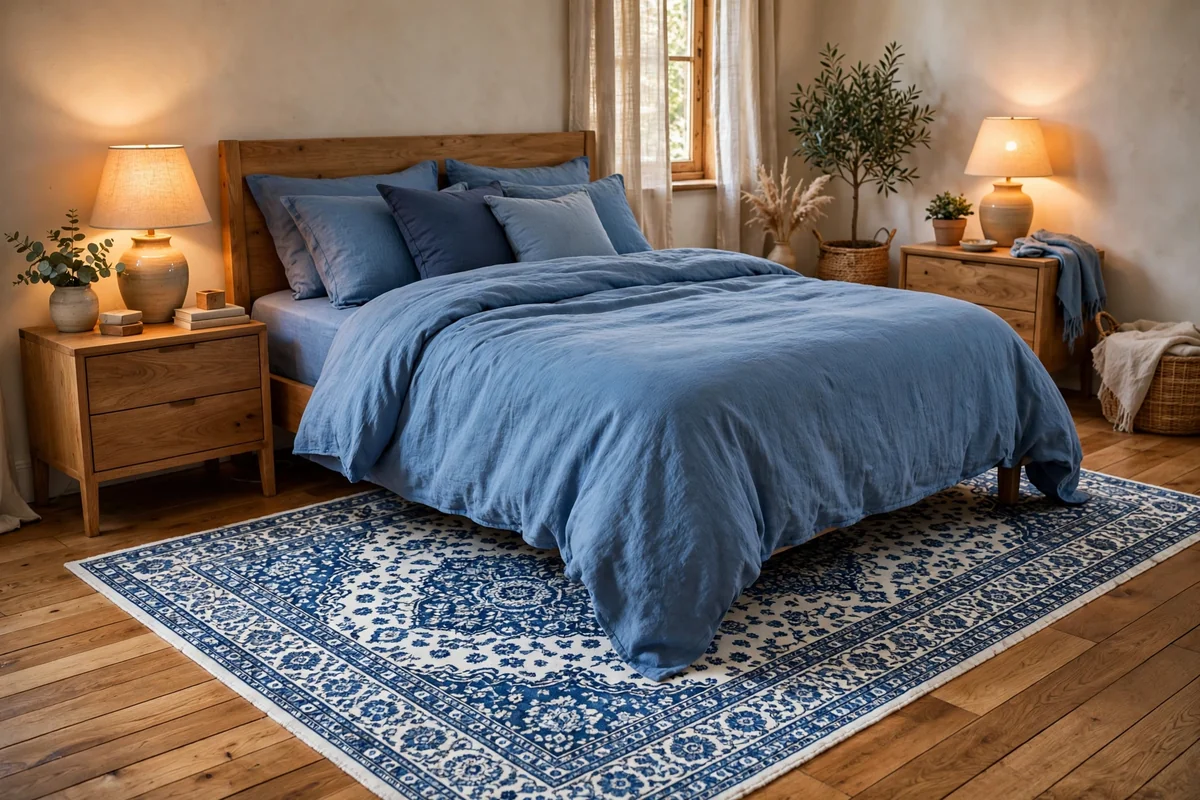
A patterned blue rug anchors the bed and ties the palette to the floor. Persian-style, Moroccan or subtle geometric patterns in blue, white and warm neutrals work beautifully on wood floors. Size it generously: 8 by 10 feet for a queen, extending beyond the bed. The pattern adds the visual interest plain floors lack.
Keep the rug’s blue in the room’s family. Low-pile rugs clean easiest in bedrooms. A beautiful rug is often the piece that makes the whole room click. On warm wood, a blue patterned rug looks collected and timeless. Use a rug pad underneath for cushion and to keep it from sliding.
17. A Wooden Bench at the Foot
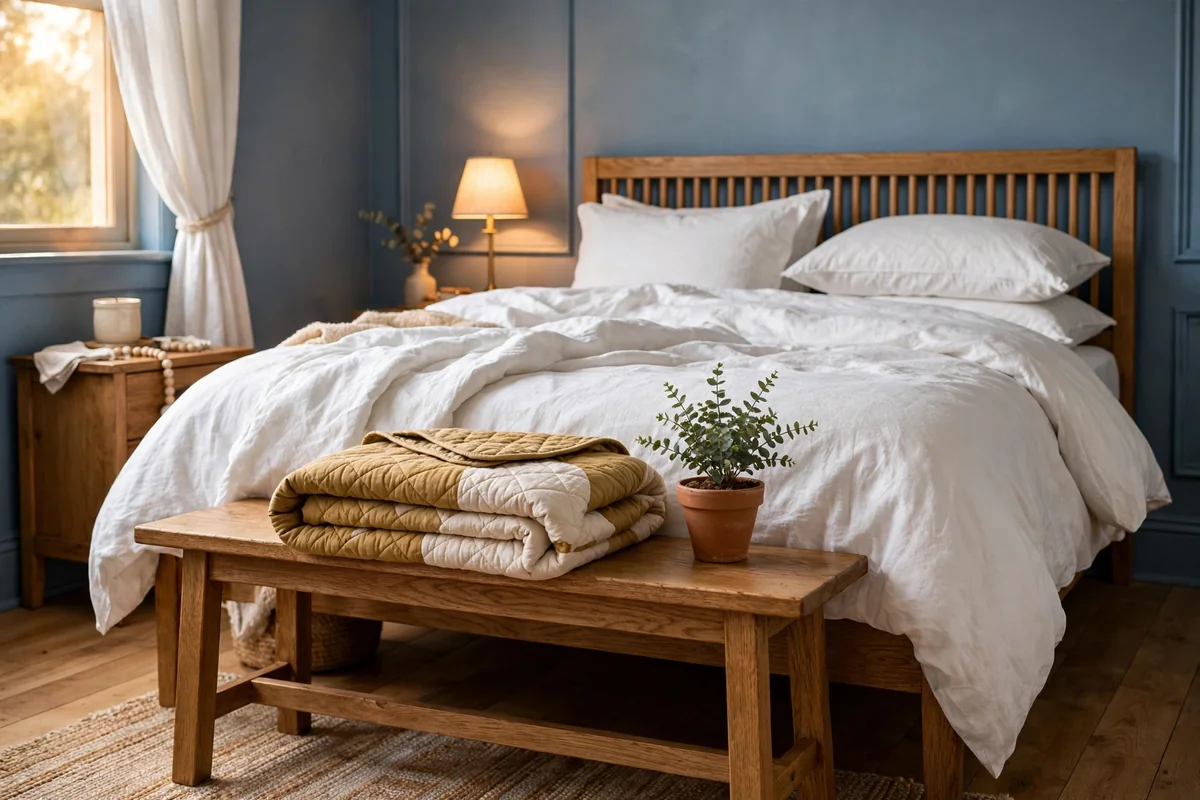
A wooden bench at the foot of the bed adds function and warmth. Use it for the morning’s clothes, extra throws, or simply as a styling surface with a folded quilt and a plant. Choose a bench 48 to 60 inches wide in a wood that complements the other pieces. A cushion on top adds comfort.
Keep the bench’s top mostly clear so it stays useful. In small rooms, a slim 12-inch-deep bench fits without crowding. The bench extends the wood story to the bed’s end. It is the kind of practical piece that also happens to look beautiful. Tuck storage baskets underneath to make it work even harder.
18. Blue Curtains With Wooden Rods
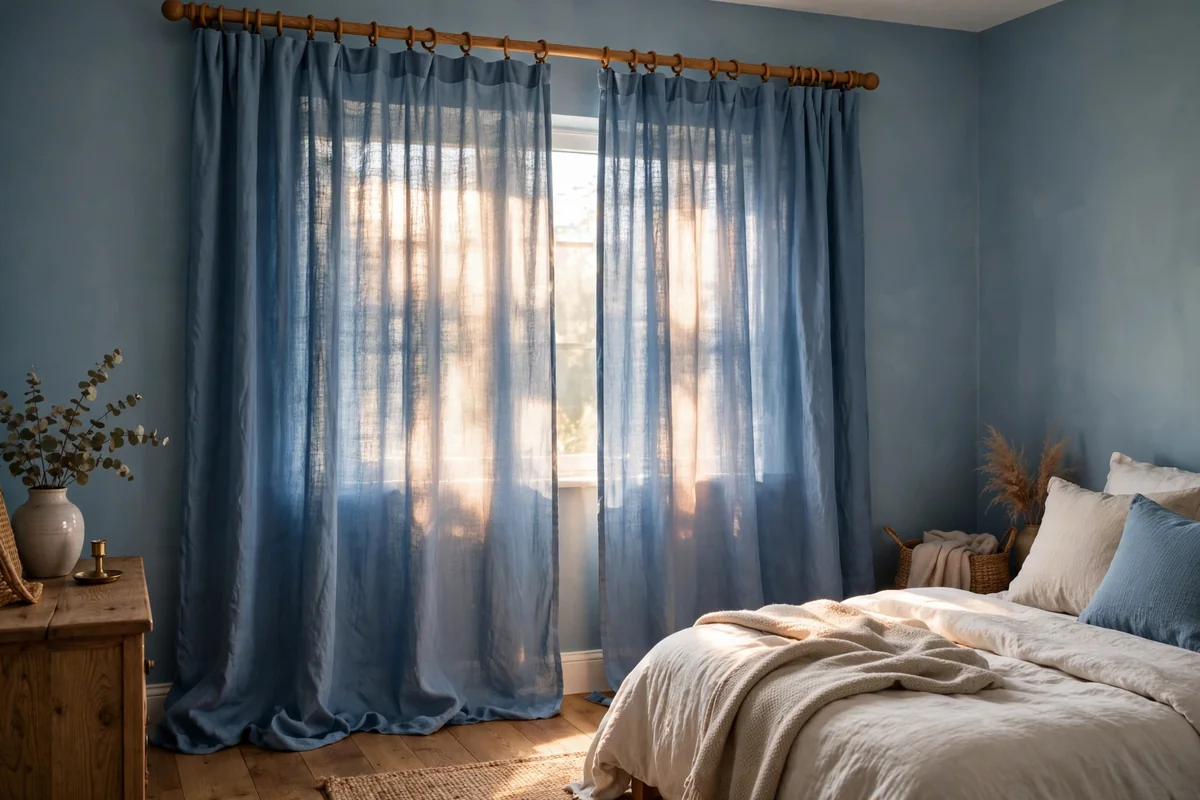
Blue curtains on wooden rods frame windows in the palette’s own materials. Choose a soft blue linen or cotton, hung high and wide with panels that kiss the floor. The wooden rod and rings add the warm detail that metal hardware lacks. This window treatment quietly reinforces the whole scheme.
Keep curtain blue soft; dark heavy drapes plus blue walls overwhelm. Layer sheers behind for daytime privacy. The wood rod should match the room’s other woods. Windows dressed in the palette feel intentional, like the room was designed from the glass inward, and the soft blue filters daylight into the room’s prettiest light.
19. Plants for Life
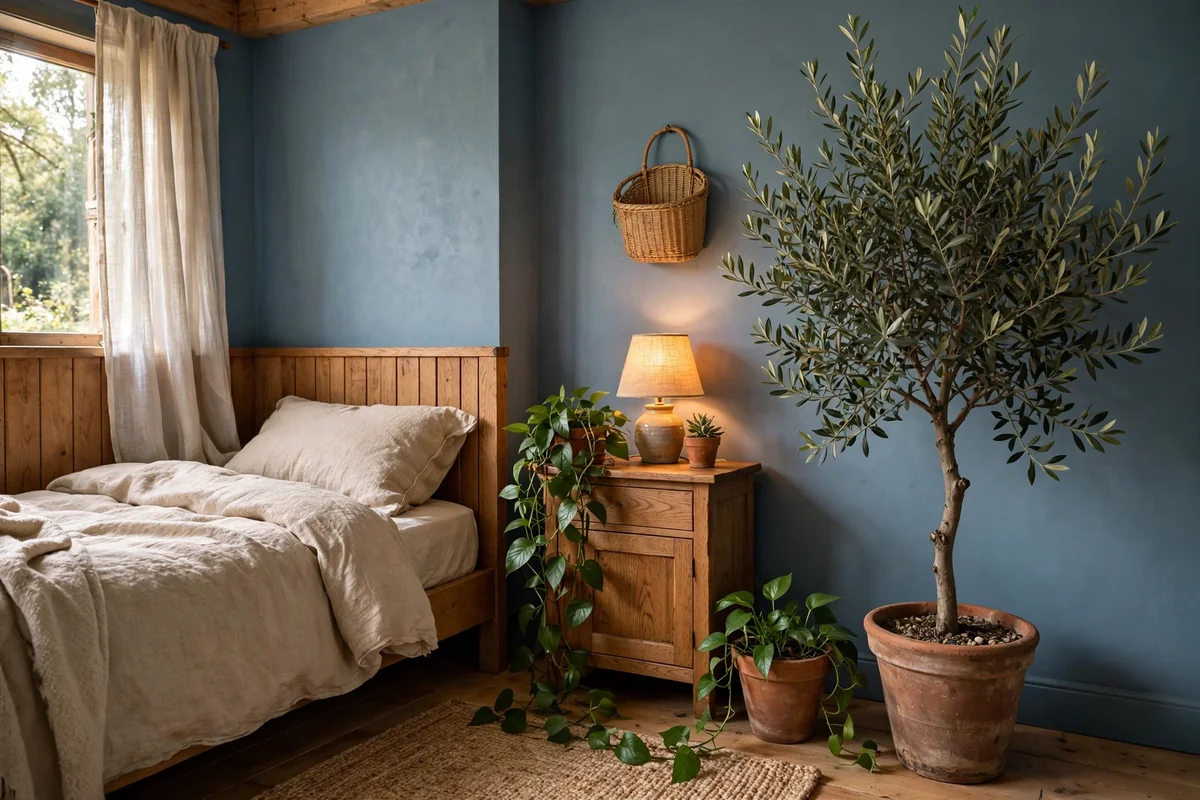
Plants bring living green that makes blue and wood feel complete. A tall olive tree, trailing pothos or a simple snake plant adds the organic note the palette needs. Green against blue is harmonious; against wood it is natural. Keep plants in terracotta, cream or woven pots that join the scheme.
Choose plants suited to your light; bedrooms are often dimmer than they look. Even a single stem in a vase counts. The green should feel like an accent, not a new palette. Nature’s color against blue and wood is the finishing touch the room needs. Wipe leaves regularly; dust shows quickly on dark green against blue.
20. Mixed Wood Tones
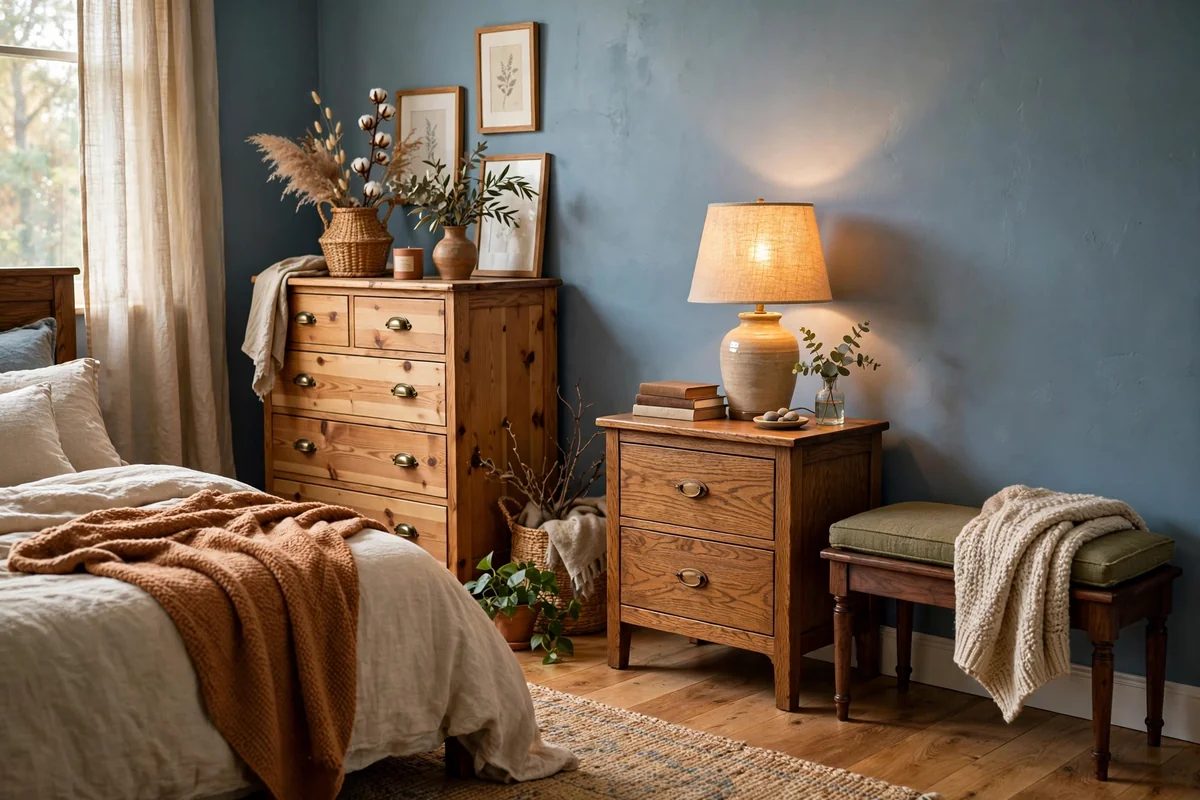
Mixed wood tones keep a blue bedroom feeling collected rather than matched. Combine oak, walnut and pine freely as long as they all lean warm; the variety adds the lived-in character blue’s calm needs. Repeat each wood at least twice so the mix feels intentional. Matte finishes unify disparate pieces.
Avoid mixing warm and cool wood undertones; the clash shows. If a piece’s tone is off, a light sanding and restaining unifies it. The collected mix is more interesting than a matching set. Against blue, varied woods look like a life well gathered, and the mix only improves as the pieces age together over the years.
21. Blue Throw Pillows
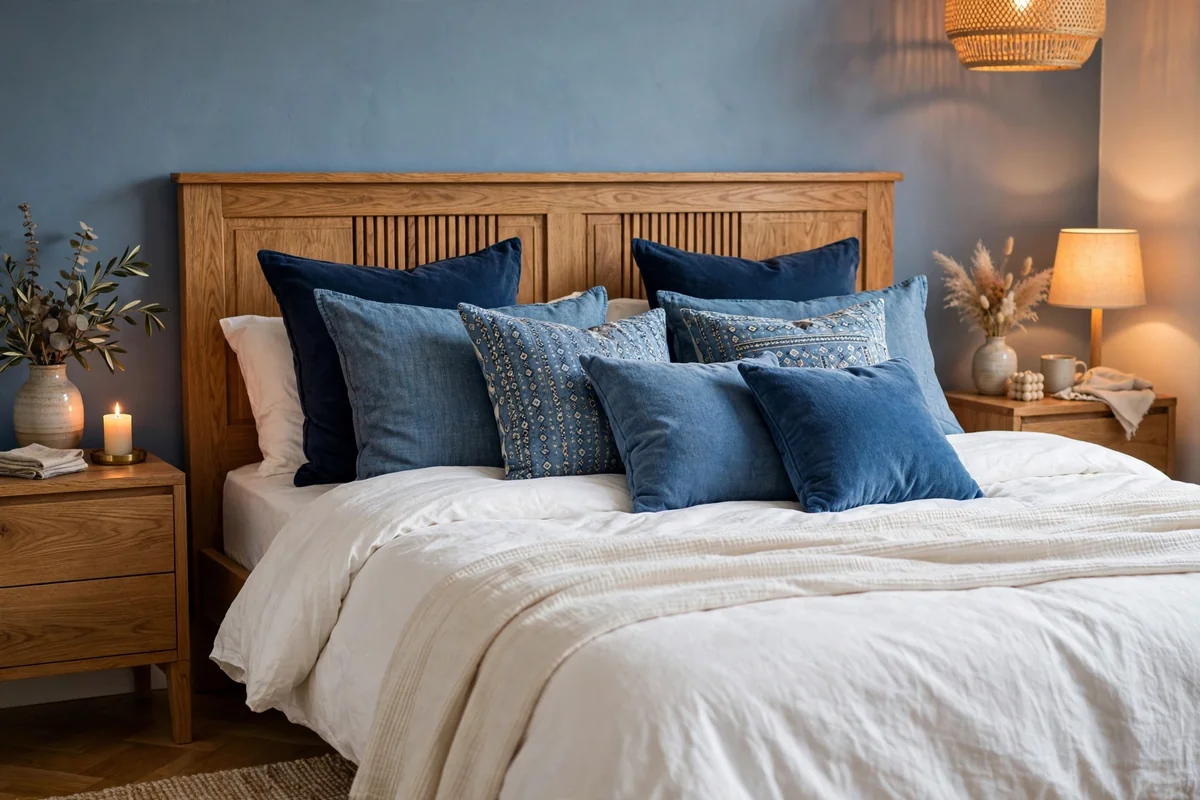
Blue throw pillows are the easiest way to strengthen the palette. Mix solid, patterned and textured pillows in the room’s blues on white or neutral bedding. Odd numbers and varied sizes look best: 20-inch squares behind 18-inch ones with a lumbar in front. The pillows’ blues should span the room’s range from pale to navy.
Choose washable covers for everyday use. Against a wooden headboard, blue pillows pop beautifully. Swap pillow covers seasonally for a fresh look without new pillows. Small, affordable and transformative: the humble throw pillow earns its place. Keep spare covers in the linen closet so a seasonal refresh takes minutes, not money.
22. Keep It Simple and Serene
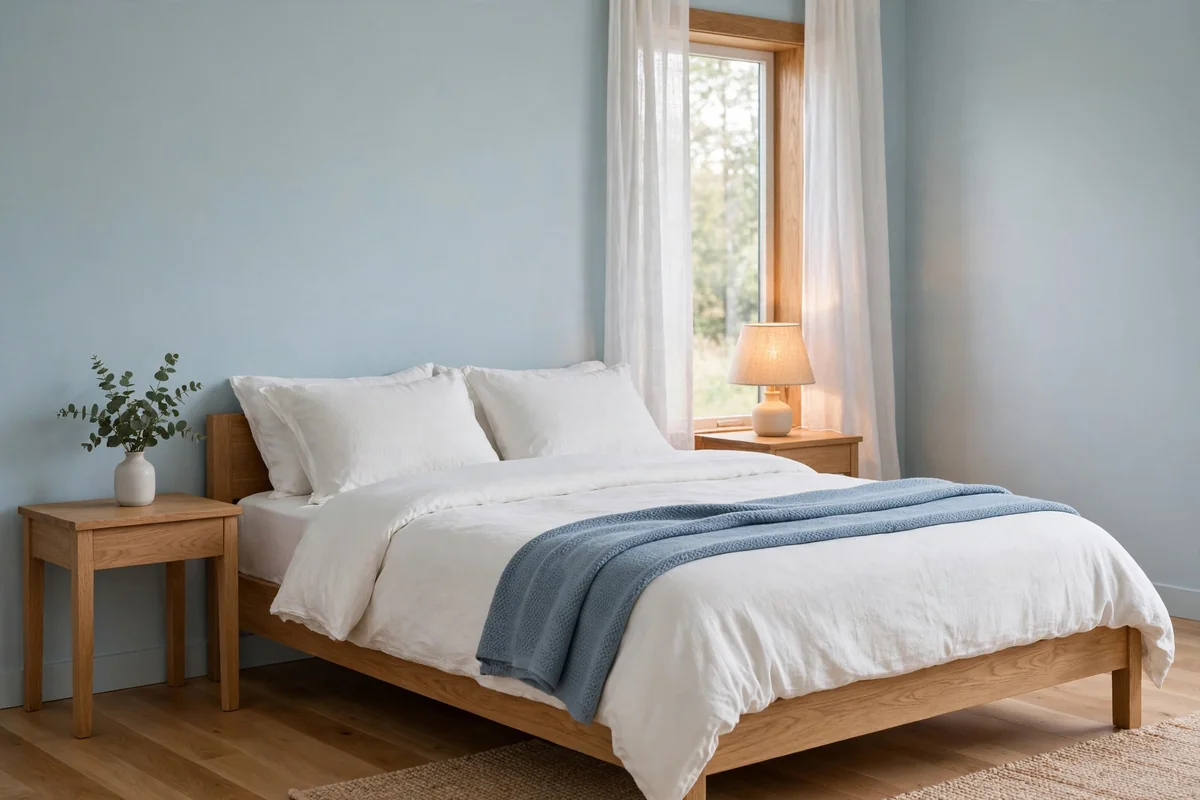
The final principle: keep it simple and serene. Blue and wood do their best work in uncluttered rooms. Clear surfaces, a restrained palette, a few beautiful objects: the calm is the luxury. Edit ruthlessly; every extra item dilutes the peace. Let the blue breathe and the wood speak, and resist the urge to fill every surface; negative space is part of the design.
Do a seasonal review and remove anything that does not serve the calm. Simplicity is not emptiness; it is clarity. A simple blue and wood bedroom is the easiest room in the house to keep beautiful, because there is so little to disturb its peace. Make the bed each morning; it is the single habit that keeps the calm visible.
Conclusion
Blue and wood endure because they are nature’s own palette: sky and sea, forest and shore. Start with the blue that calms you and the wood that warms you, layer them with texture and light, and keep the room simple. Your bedroom will feel like a deep breath at the end of every day. Calm, natural and quietly beautiful.
Frequently Asked Questions
What shade of blue is best for a bedroom?
Soft, muted blues like dusty blue, powder blue and slate promote rest. Deep navy works beautifully as an accent wall or in bedding. Avoid electric or neon blues, which feel energizing rather than calming. Test paint in your room’s light before committing.
What wood tones go best with blue?
Warm medium woods like oak, walnut and acacia complement blue beautifully. Light woods like pine and ash keep the look airy. Avoid very orange stains, which can clash with cool blues; natural matte finishes work best.
How do you keep a blue bedroom from feeling cold?
Add warm wood furniture, layer textured textiles, use warm 2700K lighting, and choose blues with warm or neutral undertones. Wood is the key warmth-bringer; even a single oak nightstand shifts the room’s temperature.
Can blue and wood work in a small bedroom?
Yes. Light blue walls make small rooms feel larger, and wood furniture in lighter tones keeps them airy. Keep the palette simple, use mirrors to bounce light, and choose appropriately scaled furniture.
Is blue a good color for sleep?
Studies suggest blue bedrooms are associated with longer, more restful sleep, likely because blue feels calm and lowers perceived stress. Muted, soft blues are the most restful; pair them with warm wood and dim lighting for the best effect.