Bedroom
22 Sloped Ceiling Bedroom Ideas That Embrace the Angle
By Anna Wells · · 23 min read
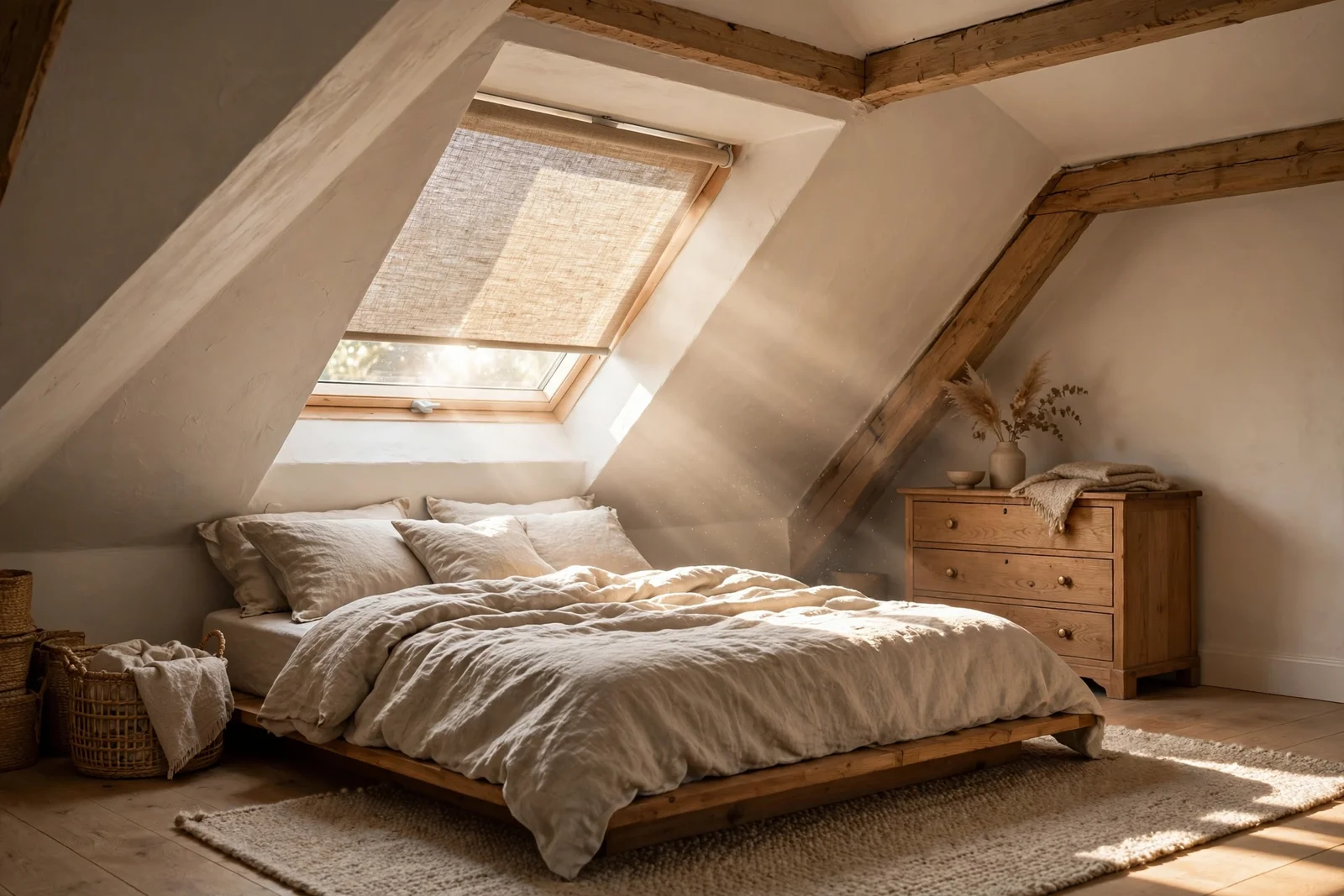
A sloped ceiling can be the cosiest feature of a bedroom when you work with the angle instead of against it. Here are 22 practical ideas for beds, storage, light and colour under the eaves.
Early light slides down the pitch of the roof and lands in a soft triangle across the duvet. A bedroom under the eaves has its own quiet rhythm: low corners that invite curling up, one tall wall that holds the view, and a ceiling that leans in like it is listening. It is the kind of room that feels like a secret, if you let it.
The trick is honest measuring and low, calm choices. Put the bed where your sitting head has real clearance, keep furniture low enough to slip under the slope, and let the eaves void do the hard work of storage. One colour across slope and walls quiets the geometry, while light that washes the pitch turns the angle into the prettiest surface in the house.
Below you will find 22 concrete ideas, each with the measurements, materials and small mistakes to avoid that make the difference between a cramped attic and a calm retreat. Start with the tape measure, then work through beds, storage, the skylight and lighting, and finish with the soft layers that make the room feel finished.
1. Measure Sitting Up Clearance Before Placing Any Furniture Under the Slope
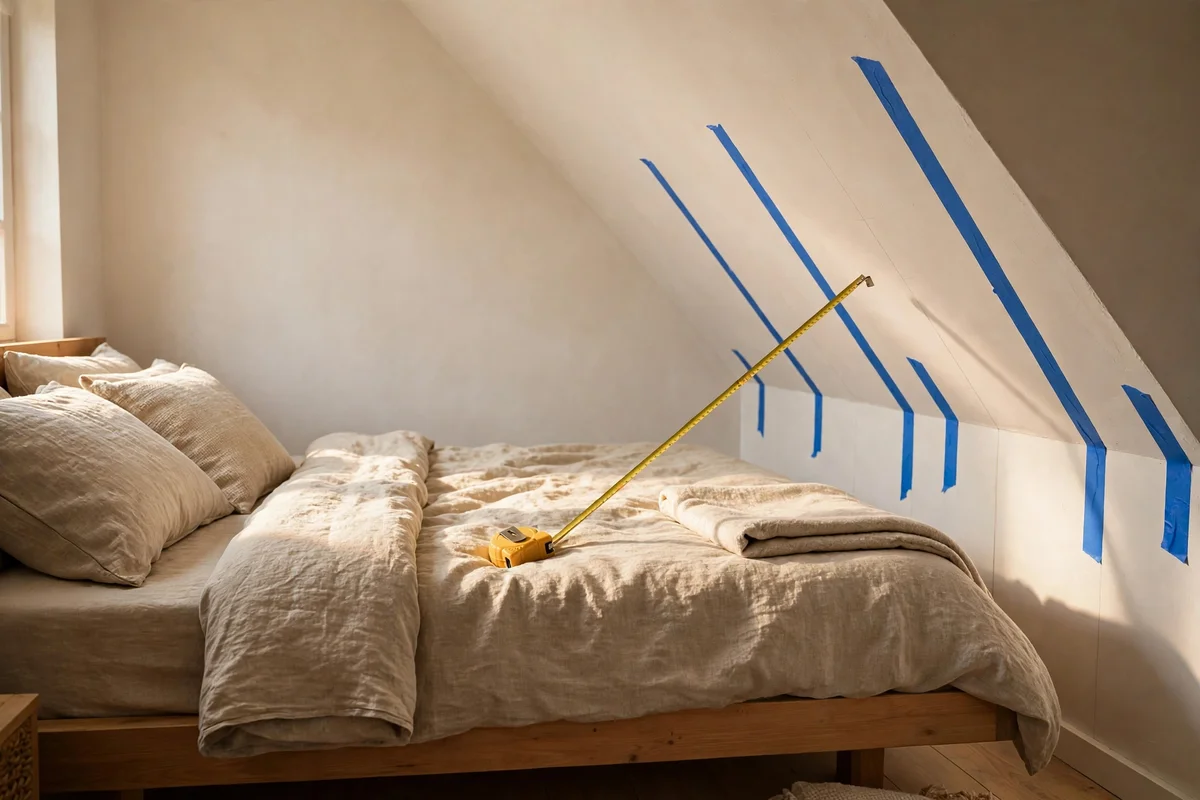
Before moving a single piece of furniture, sit on the mattress you plan to use and measure from the mattress top to the slope above your head. Sit fully upright, not slouched, with a book in your hands to mimic real reading posture. Most adults need at least 90 to 100 cm of clear space above the mattress to sit up comfortably without ducking. Mark the spot on the wall with painter’s tape where that clearance begins, since the bed can only live where the tape line says it can.
Record the ceiling height at three points: the knee wall, the midpoint, and the ridge, using a tape measure from floor to slope. Write the numbers on a sketch of the room so every later decision, bed, drawers, lighting, refers back to real dimensions. The common mistake is guessing, which ends with a headboard that grazes the pitch and a reader who bumps their head every night. A folding step ladder and ten minutes of measuring save an entire weekend of rearranging. Keep the sketch taped inside the wardrobe door during the project.
2. Place the Bed With Its Headboard on the Low Wall Only When Clearance Checks Out
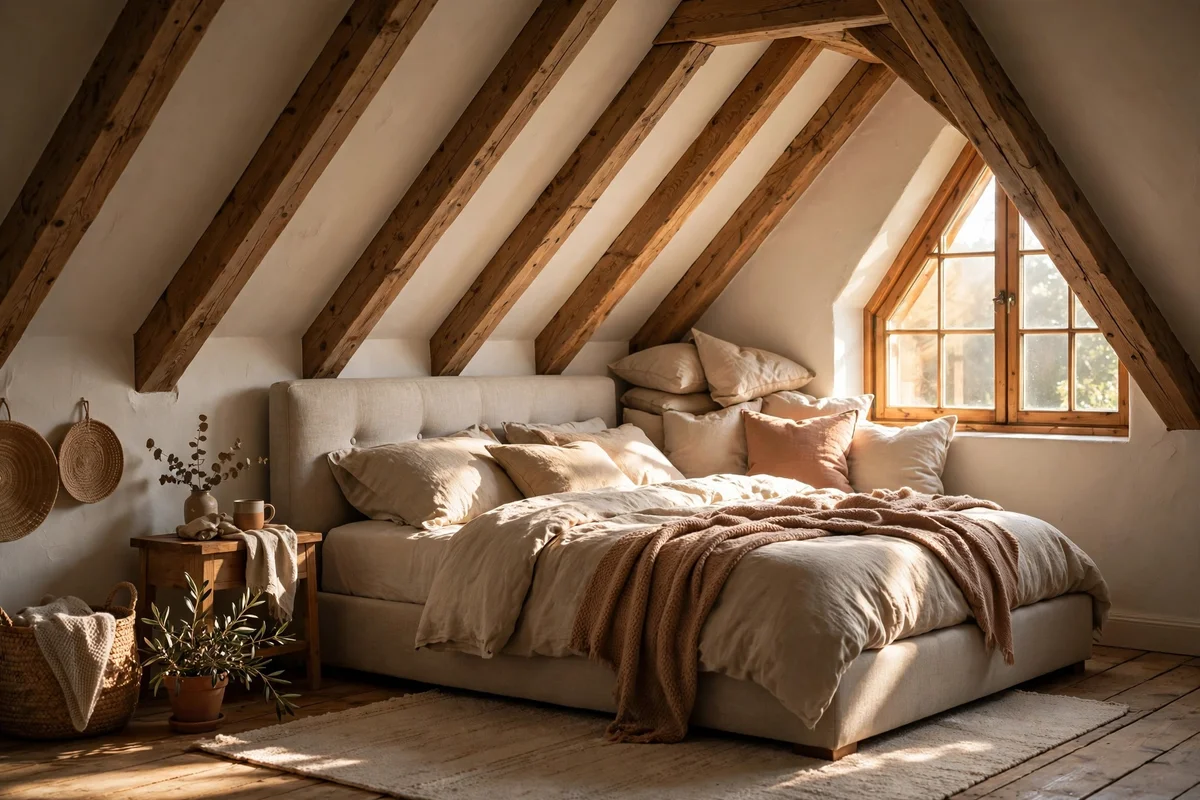
Once your tape line confirms 90 to 100 cm of sitting clearance, the low wall becomes the natural home for the headboard. The bed reads as tucked in and sheltered, and the tallest part of the room stays free for standing, dressing and the wardrobe. Centre the headboard on the wall section where the slope is highest above the pillows, not at the very edge where the pitch drops fastest. Leave 5 to 10 cm between the headboard top and the slope so bedding never snags.
If the tape line falls short of 90 cm, turn the bed ninety degrees so the headboard sits on the gable end wall instead. You keep the cosy under the eaves feeling for your feet while your head and shoulders enjoy full height. A low footboard, or no footboard at all, keeps the view down the room open. The mistake to avoid is forcing the headboard onto the low wall because it looks charming in photos; a bruised forehead ruins the charm fast. Measure first, style second, and the room will feel restful instead of cramped.
3. Choose a Low Platform Bed That Keeps the Whole Silhouette Under the Pitch
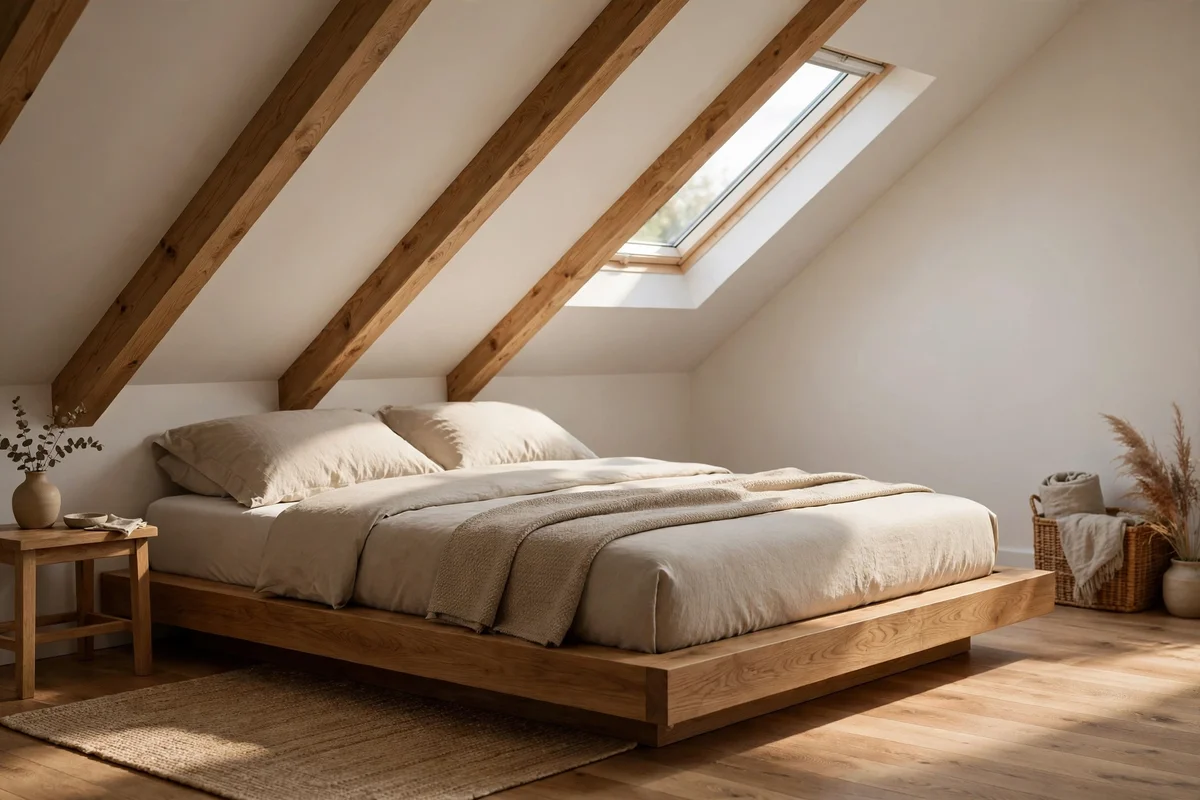
A platform bed with a mattress top sitting 40 to 50 cm off the floor buys precious centimetres under a slope. Every centimetre the bed drops is a centimetre gained for sitting up, which matters more under a pitch than in any other room. Choose a simple solid wood or upholstered base with no tall posts, since posts fight the angled ceiling visually. A basic pine slatted base often costs under 120 pounds or dollars. Check that the slats sit no more than 7 cm apart so the mattress stays supported.
Keep the bedding low and tailored as well, since a mountain of pillows eats the same clearance you just saved. Two sleeping pillows plus one lumbar cushion is plenty under a slope. Tuck the duvet neatly rather than piling throws at the head end; place the folded throw at the foot instead. The mistake is pairing a low bed with a towering headboard, which cancels the gain and crowds the pitch. If you already own a tall headboard, reserve it for a room with a flat ceiling and choose a low one here.
4. Slide a Low Chest of Drawers Into the Deepest Knee Wall Zone
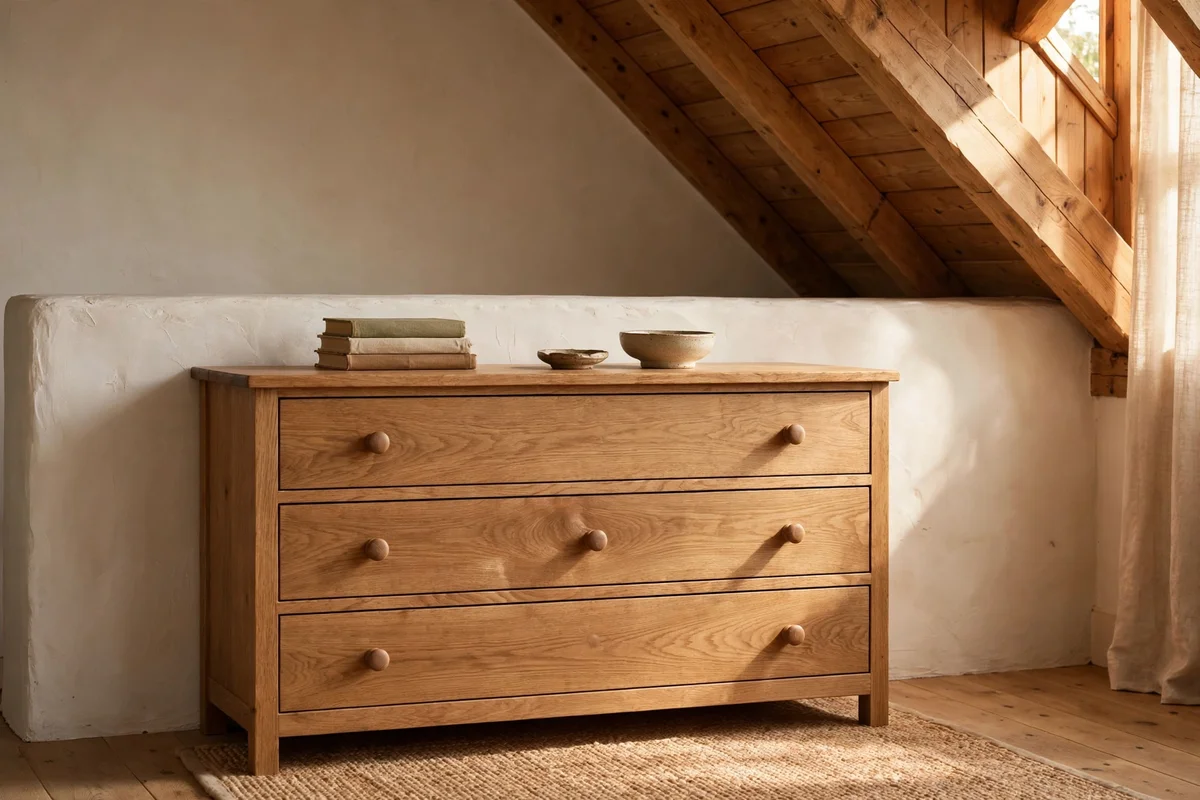
A chest of drawers between 70 and 80 cm high slides neatly under most knee walls, turning dead floor space into everyday storage. Measure the height at the point where the slope meets the wall, then subtract 5 cm so drawers open without scraping. Three wide drawers hold folded clothes better than six narrow ones under a pitch. Mid range pine or oak chests run 120 to 250 pounds or dollars; a painted second hand chest can cost half that. Anchor the chest to the wall with a furniture strap for safety.
Style the top with restraint, since the slope above compresses the view. One low stack of books, a small dish for jewellery, and a single framed photo is enough. Avoid tall vases or table lamps up here; they will look squeezed and may topple when a drawer opens below. Line drawers with cedar paper to keep stored clothes fresh, replacing the sheets once a year. The mistake is buying the chest before measuring, then discovering the top drawer hits the ceiling every time it opens.
5. Build Pull Out Drawers Into the Eaves Void for Hidden Clothing Storage
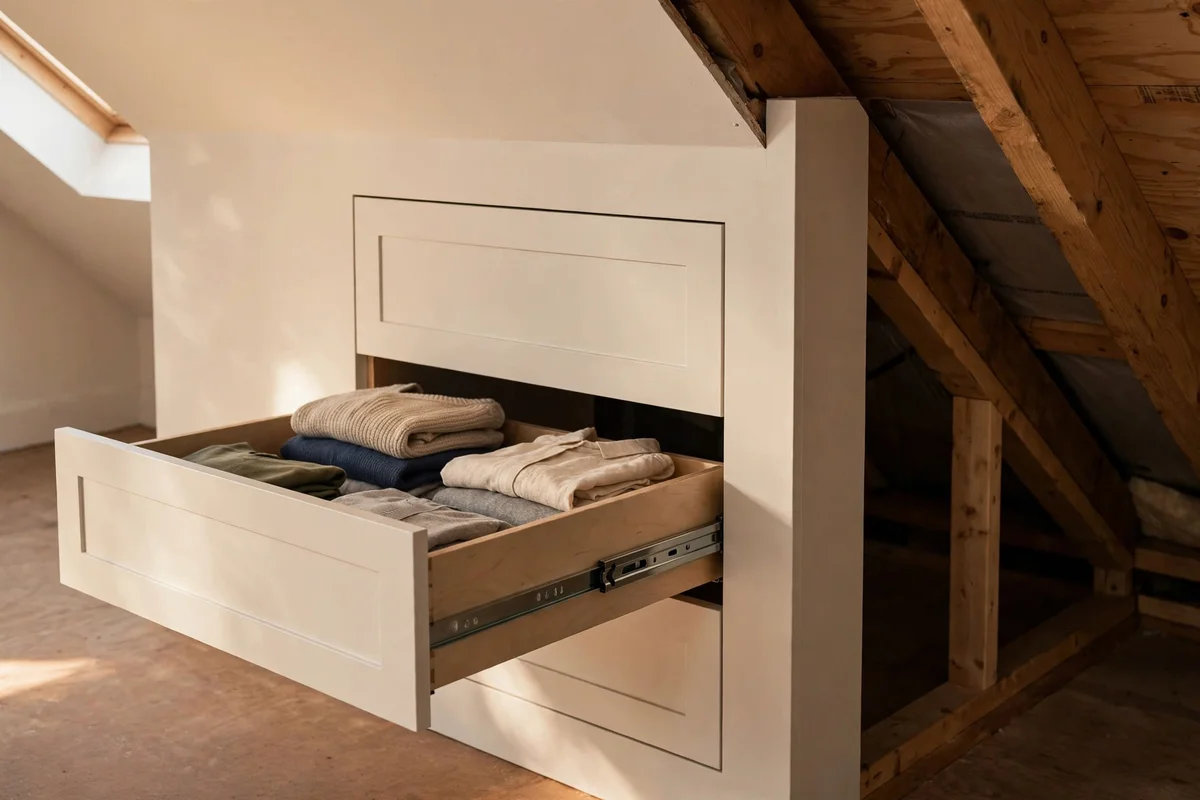
The triangular void behind the knee wall is often a metre or more deep, and pull out drawers on full extension runners reclaim almost all of it. A carpenter can frame drawer boxes 50 to 60 cm wide that glide out on 45 cm runners, reaching into the dark corner you could never use otherwise. Plan one drawer stack per 60 cm of wall length. Budget roughly 80 to 150 pounds or dollars per drawer for a carpenter built unit, less if you are handy with plywood. Label each drawer front with its contents.
Ventilate the void before closing it up, since trapped air behind a knee wall can turn musty. Drill two discreet vents per bay or leave a 2 cm shadow gap along the top of the drawer fronts. Line the drawer bases with breathable cotton liners rather than plastic. The mistake is sealing the eaves completely with no airflow, which invites damp on stored clothes. Check the void once a year in autumn, feeling for moisture before the heating season begins.
6. Fit Cupboard Doors Into the Eaves for Seasonal Bedding and Luggage
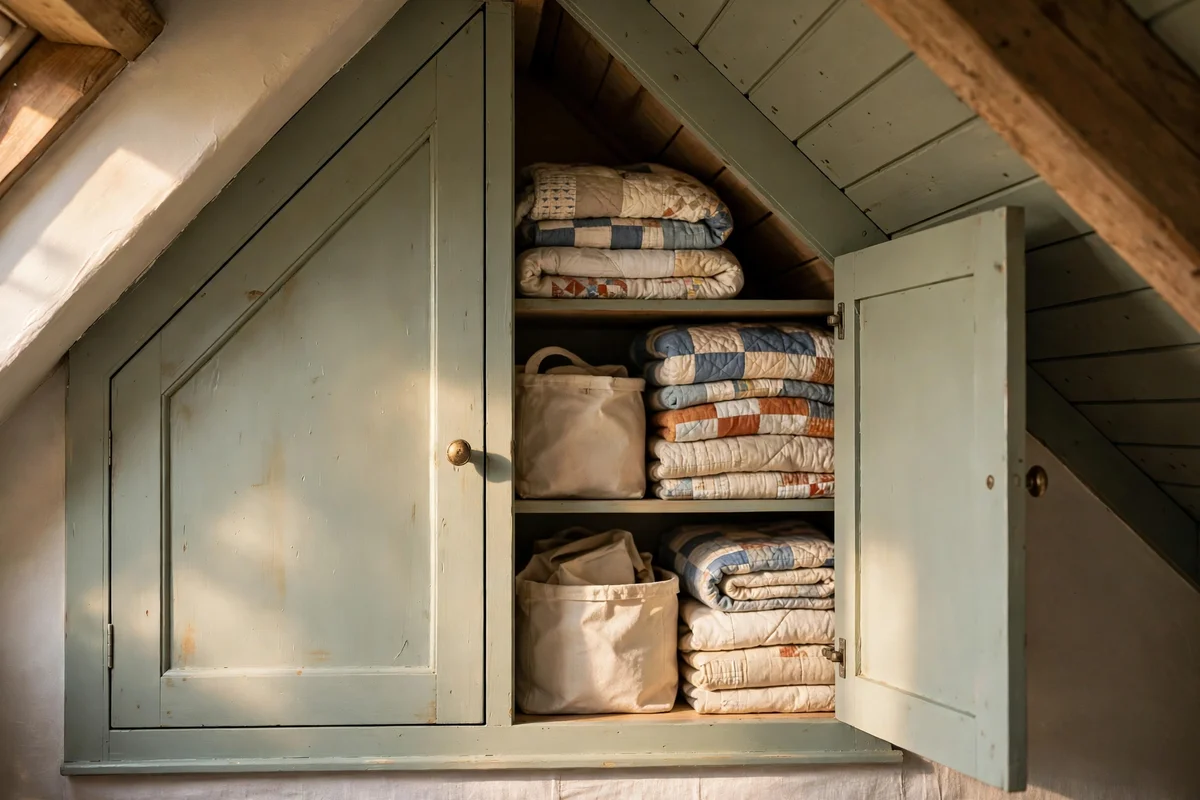
Where drawers suit daily clothes, hinged cupboard doors suit bulky things like winter duvets and suitcases. Fit simple painted MDF doors on concealed hinges, sized to the triangle of the void, with a magnetic catch at the top. Keep the doors light, under 5 kg each, so the hinges never sag. A pair of 60 cm doors costs 40 to 90 pounds or dollars in materials. Paint them the same colour as the wall so they read as architecture, not furniture. Add a small round knob at adult hand height, roughly 90 cm from the floor.
Store items in labelled cotton bags inside the void so everything slides out without snagging on raw timber. Put the heaviest cases at the bottom and lightest quilts on top. Leave 5 cm of air between stored items and the roof felt so condensation never wicks into fabric. The mistake is cramming the void to the ridge; packed tight with no air, bedding picks up a stale smell within a season. Pull everything out each spring, air it outdoors for a day, and only then pack it away again.
7. Paint the Slope and Walls One Colour to Calm the Angled Geometry
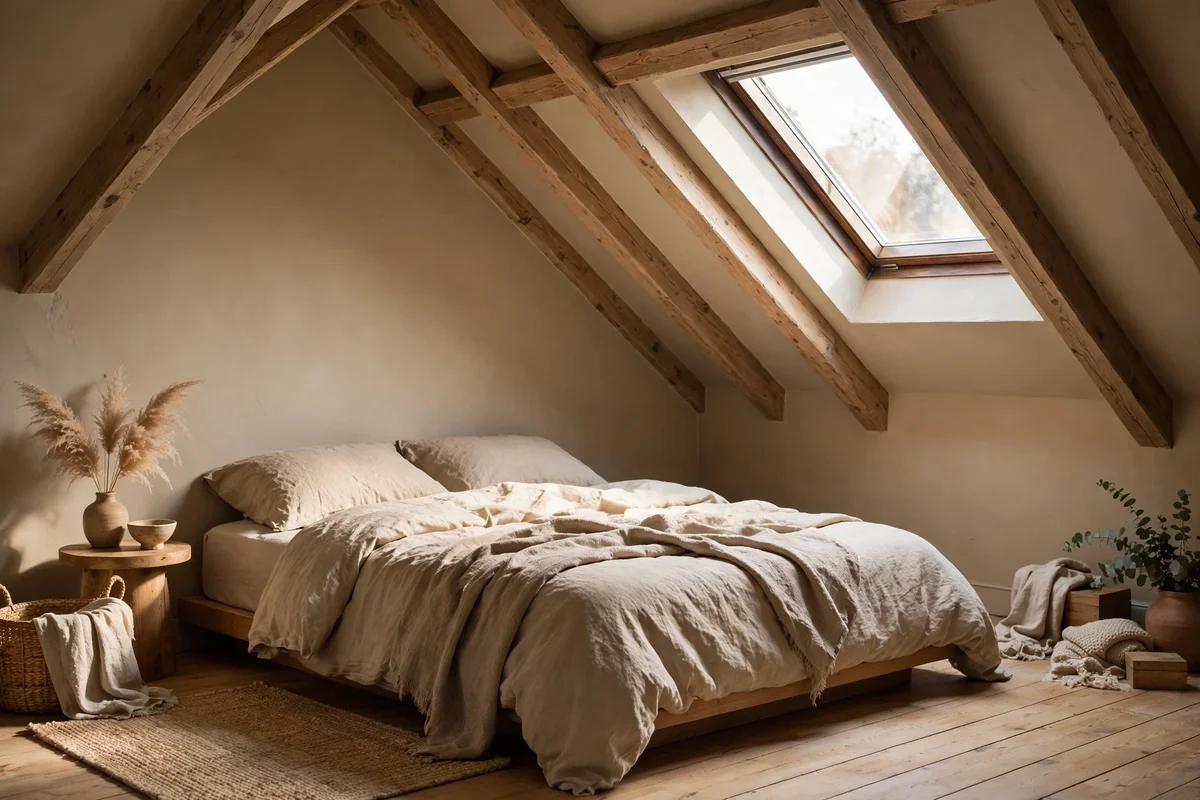
One colour across the slope and the walls dissolves the visual noise of all those angles. The eye stops counting corners and the room feels larger and calmer at once. Choose a warm white, soft oat or pale clay, and take it over the ceiling, the knee walls and the gable ends in the same matt emulsion. Matt finish matters: gloss or silk would catch light on every pitch change and redraw the lines you are trying to soften. Two coats over a stain blocking primer usually cover, even over old wood cladding.
Keep the skirting and the window trim in the same colour but one sheen up, such as eggshell, so edges stay crisp without reintroducing contrast. If one colour everywhere feels flat, add depth with texture instead of colour: linen bedding, a wool rug, oak furniture. The mistake is painting the slope bright white while the walls stay coloured, which turns the ceiling into a glowing lid that presses down on the room. Buy tester pots, paint large A3 sheets, and live with them on the slope for three days before committing.
8. Dress the Skylight With a Fitted Blackout Blind for Proper Sleep
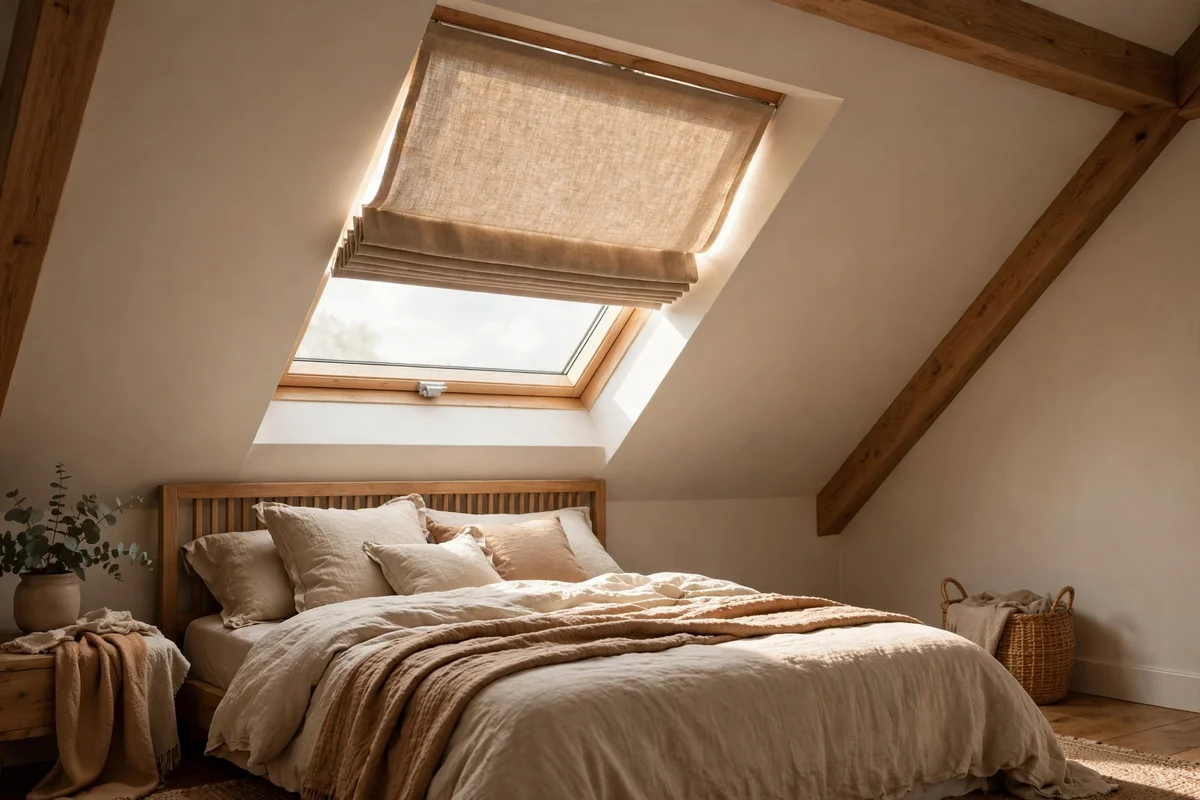
A skylight pours in dawn light an hour earlier than a vertical window, so a fitted blackout blind is the difference between broken sleep and a full rest. Choose a blind made to the exact skylight brand and size, since a generic fit leaves light gaps at the corners. Blackout fabric with a reflective outer face also cuts summer heat, keeping the room up to 5 degrees cooler on bright days. Expect 60 to 140 pounds or dollars per window for a quality made to measure blind. Fit it flush inside the recess for the cleanest look.
Operate the blind on a simple side channel or a tension cord so it stays put at any height, useful for stargazing with the top half open. Clean the fabric with a soft brush attachment twice a year; dust settles fast on upward facing blinds. The mistake is hanging a curtain rod across the skylight, which never sits flat on a slope and lets a blade of light strike the pillow at 5 am. A fitted blind takes an hour to install and pays for itself in sleep within the first week.
9. Keep Every Blind Cordless and Child Safe From the Start
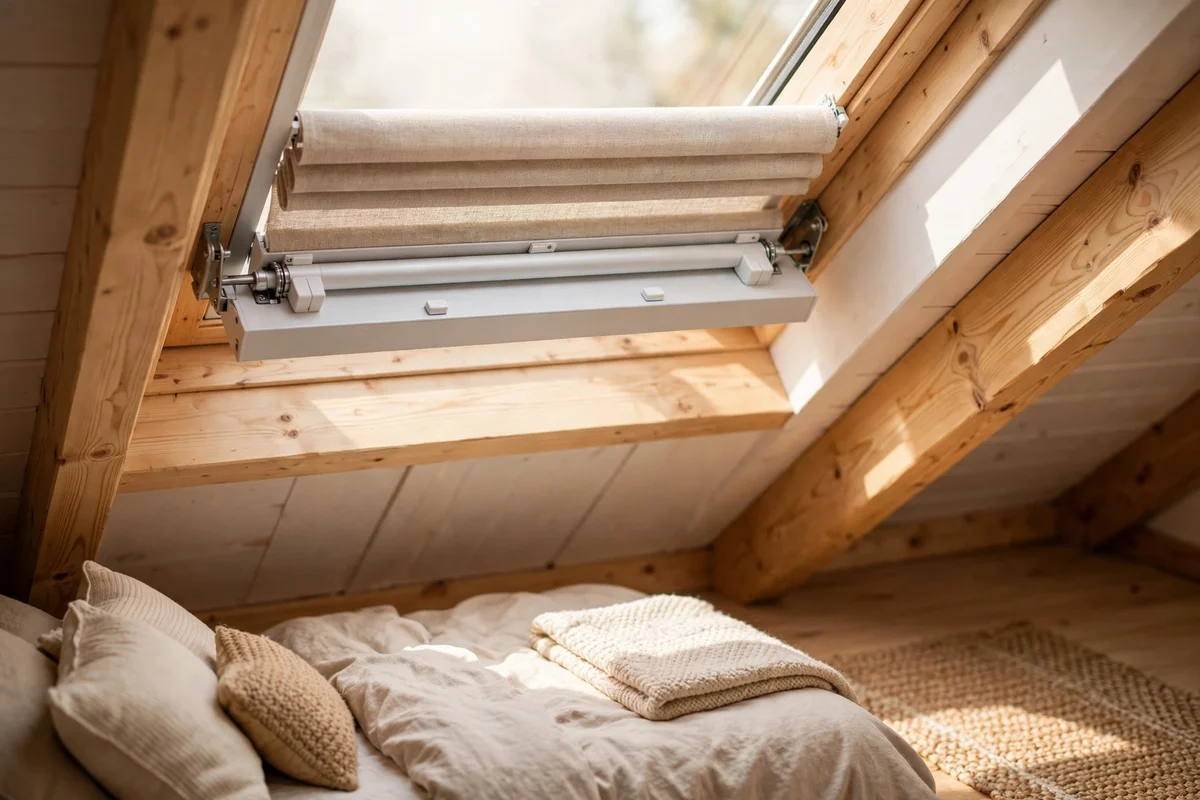
Looped cords are a genuine strangulation risk, so every blind in the bedroom should be cordless from day one. Choose spring loaded or push button mechanisms that a child cannot wrap around anything. This applies to the skylight blind and any window on the gable wall alike. Cordless operation costs only slightly more than corded, usually 10 to 20 pounds or dollars extra per blind. Test the mechanism in the shop: it should glide with one hand and lock exactly where you leave it.
If you inherit corded blinds in a rented room, fit a cord cleat high on the frame and wrap the cord tightly out of reach today, not next weekend. Better still, ask the landlord to swap them for cordless; many will agree when safety is the reason. Keep cots and beds away from any window with cords while you wait. The mistake is assuming a tidy cord is a safe cord, since children find dangling loops faster than adults expect. A cordless bedroom is one hazard permanently removed.
10. Wash the Slope With Adjustable Wall Washer Lights Instead of Downlights
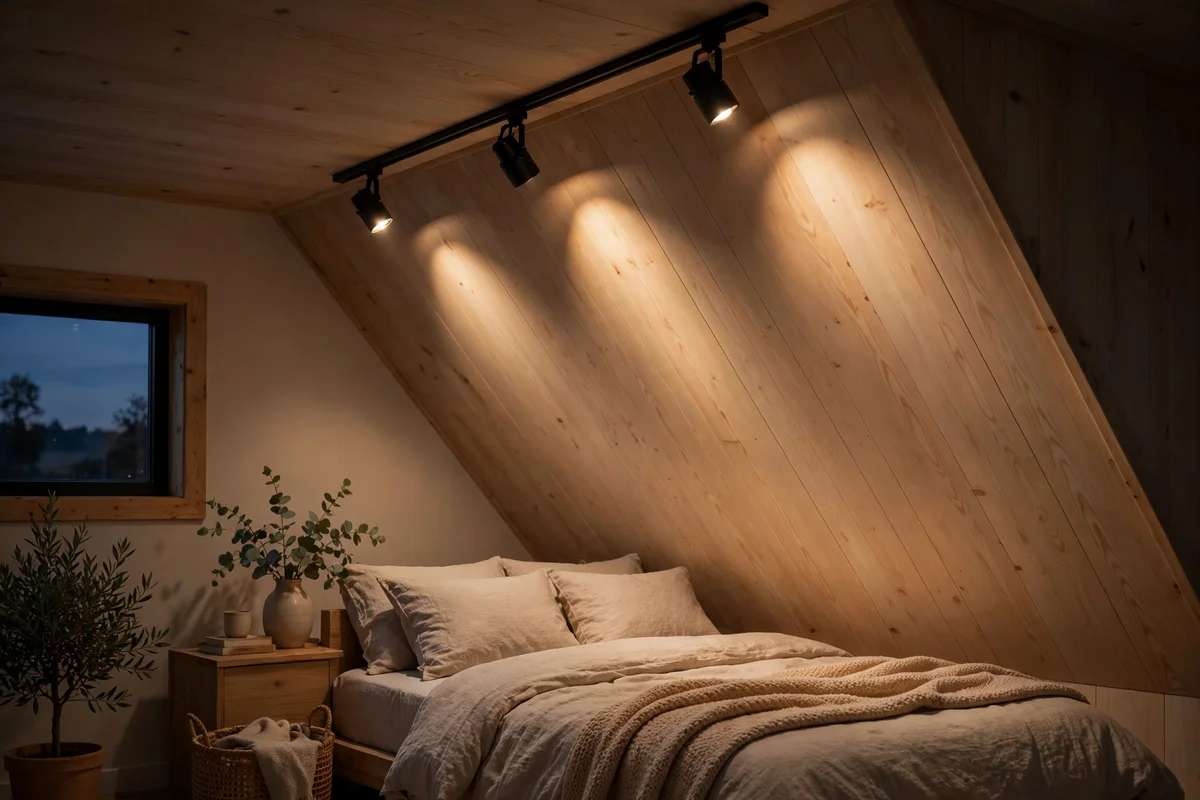
Downlights punch holes of glare into a sloped ceiling, while wall washers spread a soft sheet of light that flatters the pitch. Mount two or three adjustable spotlights on a track near the ridge, angled so the beam grazes the slope from top to bottom. Use warm 2700K bulbs at 5 to 7 watts each; the goal is a gentle glow, not a stage. A basic two head track kit costs 40 to 80 pounds or dollars. Dimmer switches are essential, since the same wash that feels cosy at night should fade to almost nothing at bedtime.
Aim each head at a slightly different point along the slope so the light overlaps like watercolour, with no hard bright patches. Keep the track 30 to 40 cm down from the ridge so the fittings disappear into the shadows they create. The mistake is pointing spotlights straight down at the bed, which turns the slope into a dark cave above a bright island. If wiring a new track feels daunting, plug in picture lights on the gable wall; they give a similar grazing effect with no electrician needed.
11. Run a Slim Warm LED Strip Along the Ridge Line
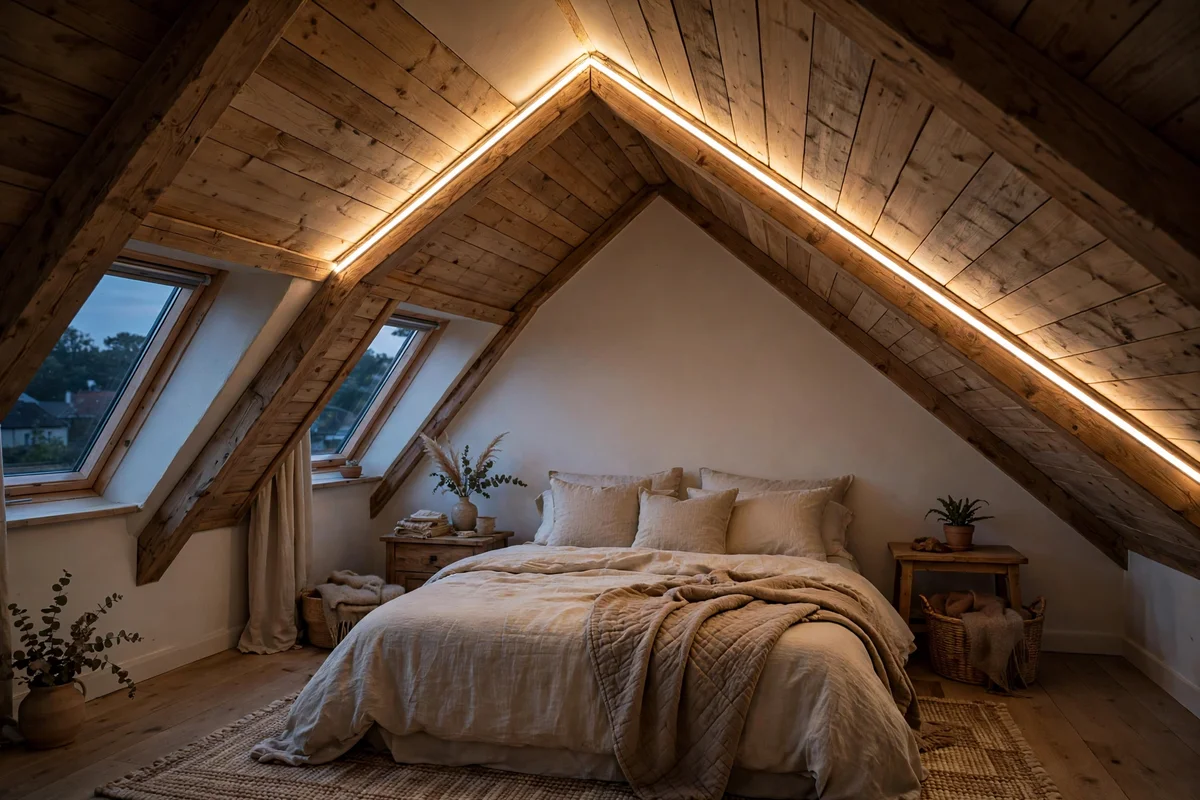
A slim LED strip tucked along the ridge line turns the highest point of the room into a soft glowing spine. Choose a warm 2700K strip at 60 LEDs per metre, which gives an even line with no visible dots when set in an aluminium channel with a diffuser. Mount the channel where the two slopes meet, or along the junction of slope and gable wall. A 5 metre reel with driver costs 25 to 50 pounds or dollars. Wire it to the same dimmer as the wall washers so the whole ceiling fades as one.
Hide the driver and any joins behind the knee wall access panel so nothing electrical sits visible. Test the strip at full brightness before fixing the diffuser, since a faulty metre is easy to swap before it is sealed in. The mistake is buying a cool white strip, which makes the slope look like an office corridor and fights the warm bedding below. Warm light on a warm painted slope is what makes the room feel like a cocoon rather than a loft conversion.
12. Angle Reading Sconces Off the Sloped Surface at Bed Height
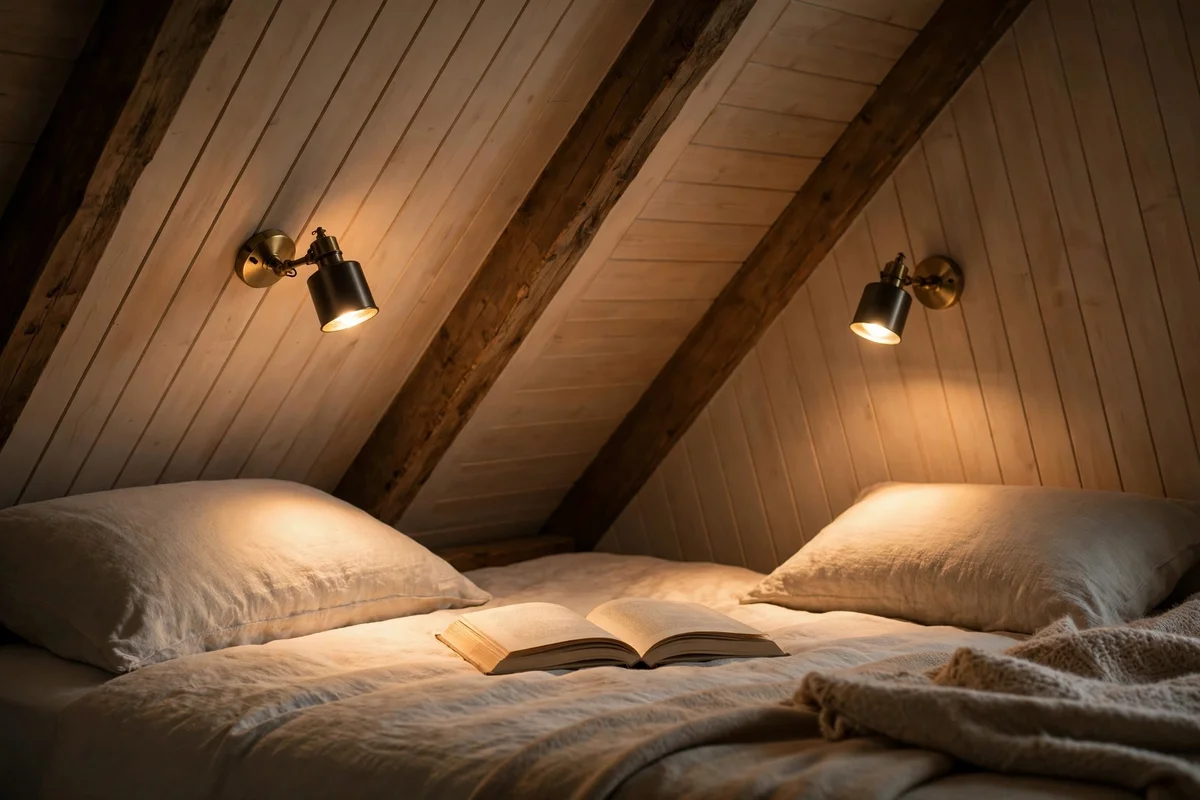
Reading sconces mounted on the slope itself put light exactly where a book sits, without a single table lamp. Fix a small adjustable sconce on the pitch about 120 cm above the mattress and 40 cm to the side of the pillow centre, angled down at the page. Choose a shade that directs light forward, not a bare bulb that glares into the room. Plug in swing arm sconces cost 30 to 60 pounds or dollars each and need only a nearby socket. Keep both sides matching for a calm, deliberate look.
Run the cable neatly along the slope in a slim trunking painted to match the ceiling, or chase it in if you are redecorating anyway. Fit a small rocker switch at the headboard so the light switches off without reaching across the bed. The mistake is mounting the sconce too high, where it lights the ridge beautifully but leaves the book in shadow. Sit on the bed with a book, mark the bright spot on the slope with tape, and only then drill.
13. Use a Low Upholstered Headboard That Hugs the Low Wall
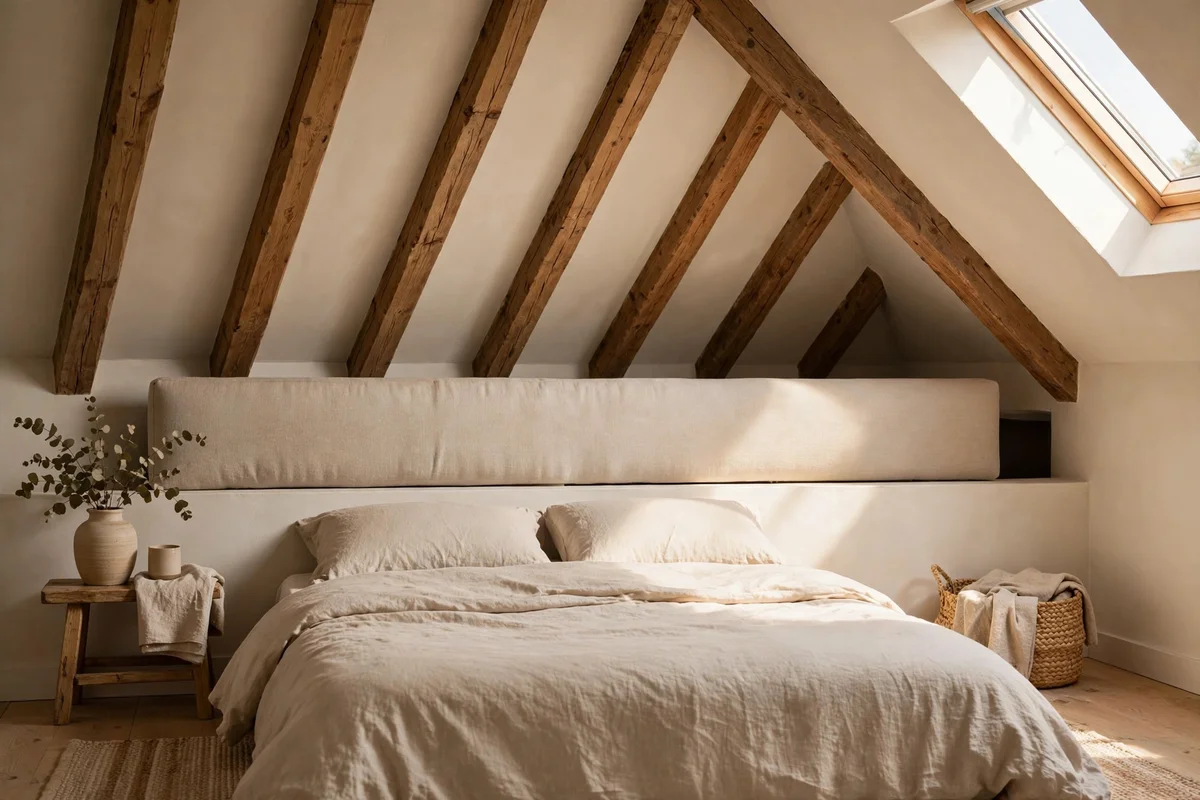
A headboard 60 to 75 cm tall in linen or wool sits comfortably under most pitches and gives a soft backrest for reading. Fix it to the wall rather than the bed frame so it stays put and leaves a 3 to 5 cm shadow gap behind, which stops dust collecting. Choose a padded, button free design in a mid tone like oat, sage or clay; deep tufting traps dust on a slope where cleaning is awkward. A simple upholstered headboard costs 80 to 180 pounds or dollars.
Vacuum the headboard monthly with an upholstery brush, since dust drifts down a slope and settles on every horizontal fabric edge. If the pitch above is very low, skip the headboard entirely and hang a folded quilt on a slim rail as a soft backdrop instead. The mistake is choosing a tall winged headboard that visually shoves the ceiling down; under a slope, less height reads as more luxury. Keep the silhouette low and the room breathes.
14. Anchor the Bed Zone With a Flatweave Rug in a Quiet Pattern
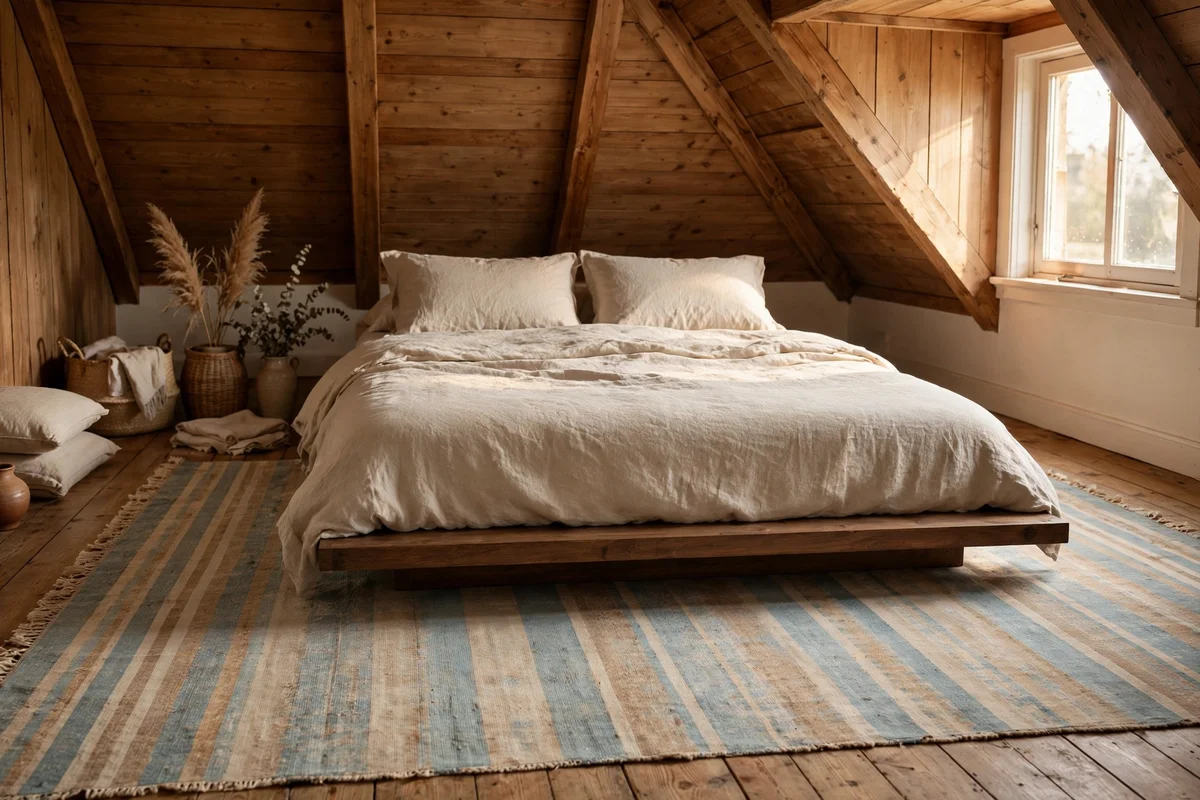
A flatweave rug under and around the bed stops the low room feeling like a tent and starts it feeling like a bedroom. Choose a rug 160 by 230 cm for a double bed, positioned so 60 cm of rug shows on each side and at the foot. Flatweave suits slopes because its low pile never fights for visual height the way a shaggy rug does. Cotton or wool flatweaves cost 80 to 200 pounds or dollars. Pick a quiet pattern, small geometrics or a faded stripe, that does not argue with the angled ceiling.
Lay a non slip underlay beneath, since rugs creep on smooth floors and a migrating rug under a low bed is a trip hazard in the dark. Vacuum weekly and rotate the rug twice a year so sunlight from the skylight fades it evenly. The mistake is choosing a rug that stops exactly at the bed legs, which makes the bed look stranded; the rug should extend like a stage the bed stands on. If budget is tight, two smaller matching runners down each side work nearly as well.
15. Tuck a Slim Bench at the Foot of the Bed for Seating and Storage
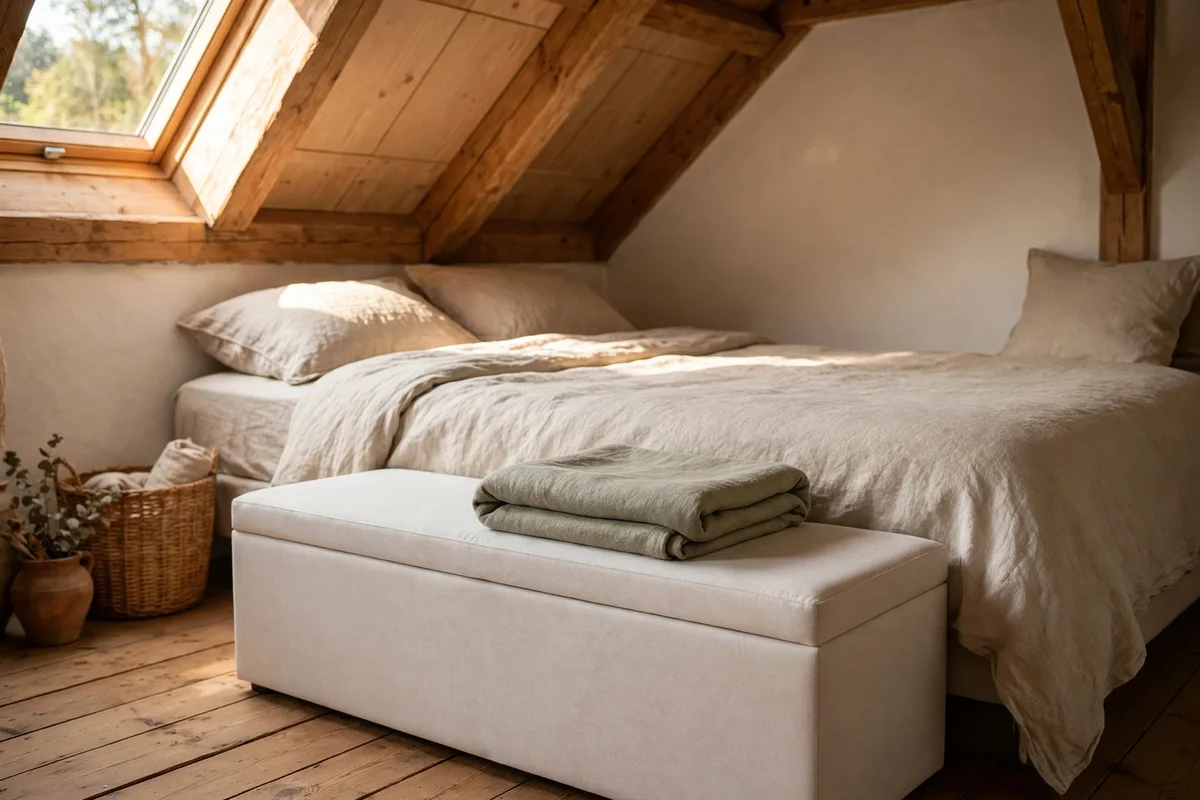
A bench 100 to 120 cm long and no more than 40 cm deep fits the foot of most beds without blocking the walking lane. Choose one with a lift up lid so it doubles as linen storage, keeping spare sheets exactly where they are used. Upholster the top in a washable cotton so it survives daily sitting. Storage benches run 70 to 160 pounds or dollars. Keep the bench 10 cm lower than the mattress top so the bed keeps its visual priority in the room.
Use the bench as the room’s getting dressed seat, which keeps clothes off the bed and the duvet crisp. Store the out of season throw inside, swapping it as the weather turns. The mistake is picking a bench as tall as the bed, which merges the two into one bulky block under the slope. A lower bench reads as a separate, thoughtful layer. In a very tight room, a flat lidded ottoman half the length gives the same storage in less floor space.
16. Mount a Floating Shelf as a Nightstand Under the Pitch
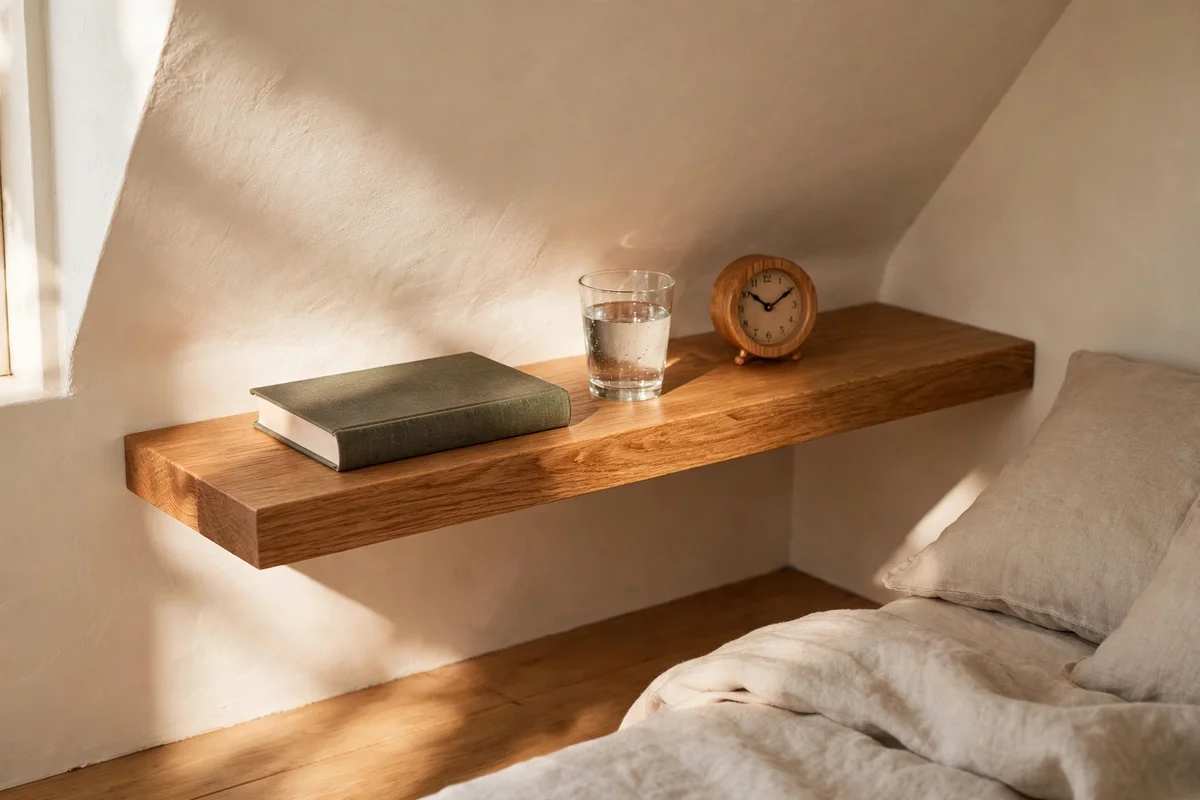
Where the slope drops too low for a table, a floating shelf 30 cm deep and 40 cm wide becomes a nightstand that floats free of the floor. Mount it 55 to 65 cm above the mattress top, beside the pillow, using concealed brackets rated for at least 10 kg. It holds a book, a glass of water and a small clock with room to spare. A solid oak shelf with hidden fixings costs 25 to 50 pounds or dollars. Keeping the floor clear underneath makes the low corner feel larger.
Round the front corners of the shelf or fit corner protectors, since foreheads and shelf edges meet often under a low pitch. Run a tiny LED puck light under the shelf for a soft pool of light that replaces a lamp. The mistake is mounting the shelf level with the mattress, where every reach becomes a stretch and water glasses get knocked. Nightstand height should match a traditional table: roughly level with the top of the mattress plus 10 cm.
17. Paint the Skylight Frame and Trim the Same Colour as the Slope
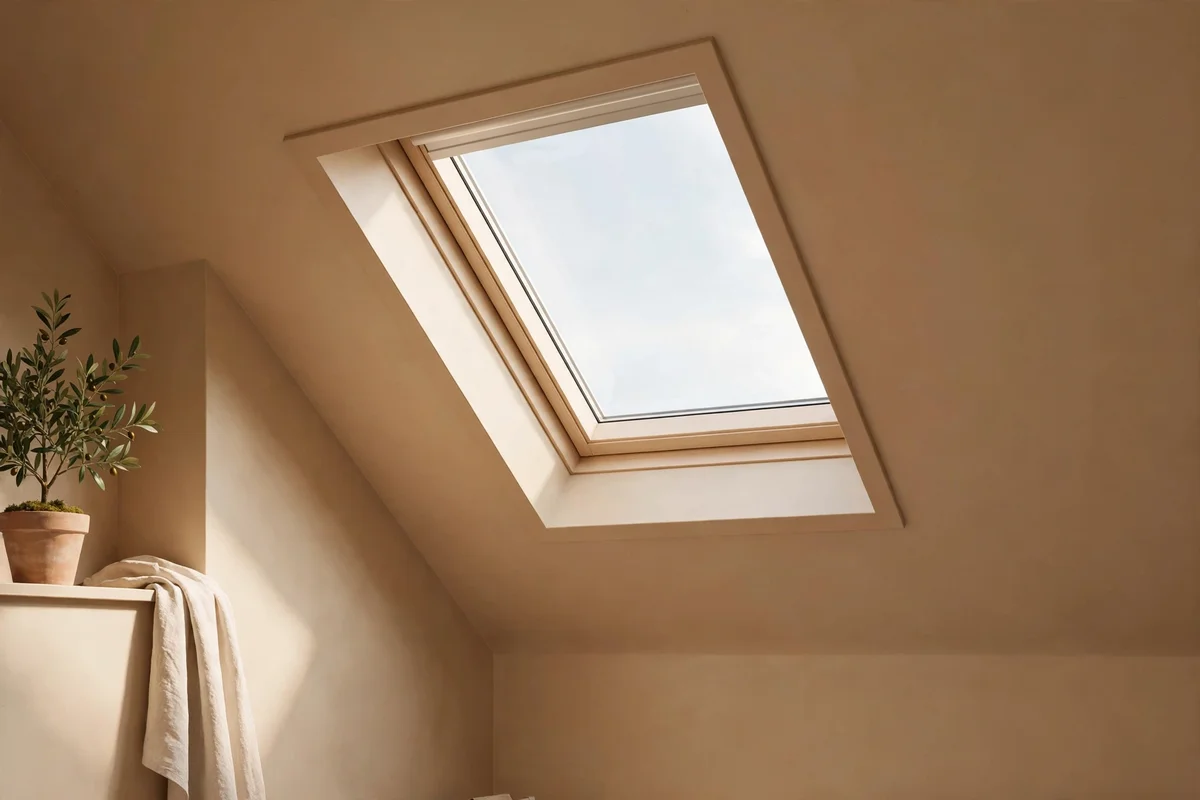
A white plastic skylight frame shouts against a coloured slope, so paint the timber reveal and any trim boards in the exact wall colour. Use the same matt emulsion, applied with a small roller for a smooth finish. Mask the glass and the rubber seals carefully, and remove the handle before painting. This one afternoon job, under 20 pounds or dollars in paint, makes the window read as part of the architecture. The blind cassette can be colour matched too if you order it in the same tone.
While the masking tape is up, fill any gaps between the reveal and the slope with flexible decorator’s caulk for a crisp shadow line. Sand lightly between coats so the finish stays flat. The mistake is leaving the reveal bright white, which frames every view like a picture and draws the eye to the window instead of the room. One colour from slope to reveal lets the daylight itself become the feature, not the frame around it.
18. Hang Artwork on the Gable End Wall Instead of the Slope
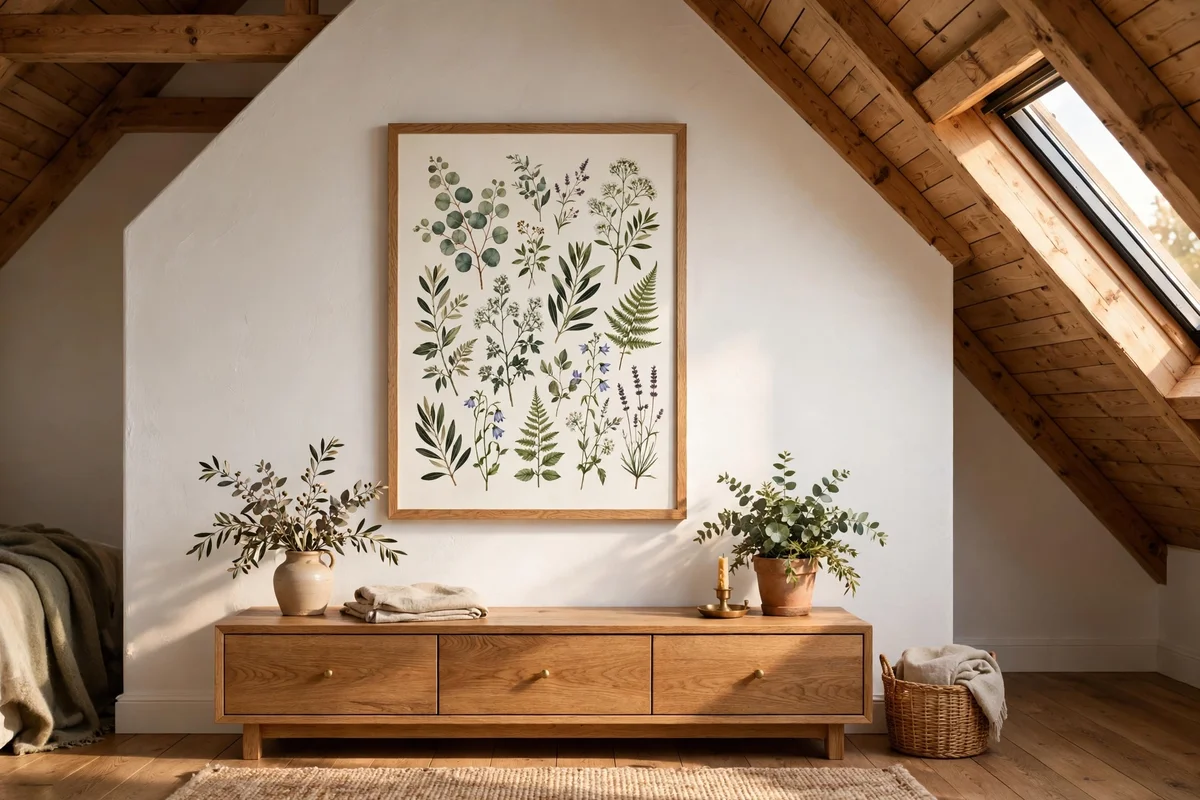
The gable end wall is the one tall, straight surface in the room, so give it the artwork. Hang one generous piece, 60 by 80 cm or larger, centred at 145 cm from the floor to its middle, where it anchors the whole bedroom. A landscape or botanical print in a simple oak frame suits the calm palette of a sloped room. One strong piece beats a scatter of small frames, which look fussy against angled lines. Budget 30 to 80 pounds or dollars for a framed print.
Resist hanging anything on the slope itself, since tilted frames collect dust on their top edges and always look slightly wrong. If the gable wall holds the bed, hang the art on the opposite gable or the knee wall at the tall end. Use two wall plugs per frame for security, as doors slamming in a small room shake single hooks loose. The mistake is a gallery wall climbing the pitch; it emphasises the slope instead of calming it. Let the straight wall do the talking.
19. Line a Low Bookcase Along the Knee Wall for Books and Baskets
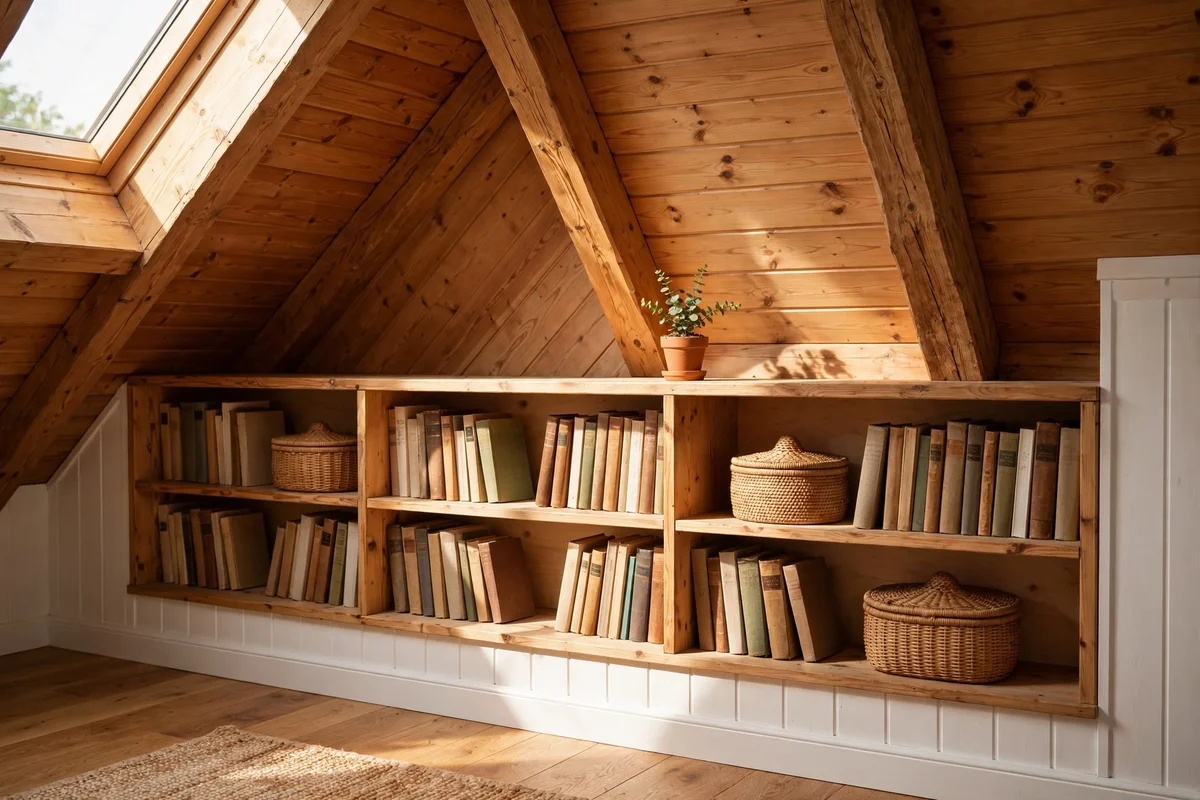
A bookcase 75 cm high and 30 cm deep runs beautifully along the knee wall, turning the lowest strip of the room into a library. Keep the top surface clear for a row of small framed photos or a trailing plant in a sturdy pot. Fill the lower shelves with books shelved upright and the upper with lidded baskets for the bits that look untidy. A pine bookcase this size costs 60 to 130 pounds or dollars. Leave a 3 cm gap behind for air so books never touch a cold external wall.
Sort books by size rather than colour for a calm look that suits the room’s quiet geometry. Dust the top shelf monthly, since the slope above sheds dust straight down. The mistake is overfilling the shelves until books lean and baskets bulge; a bookcase at two thirds full looks generous, while a crammed one looks like storage. Leave one shelf partly empty for the books you are reading now, and the case feels alive rather than archived.
20. Keep Bedding in Warm Neutrals That Lift the Ceiling Feel
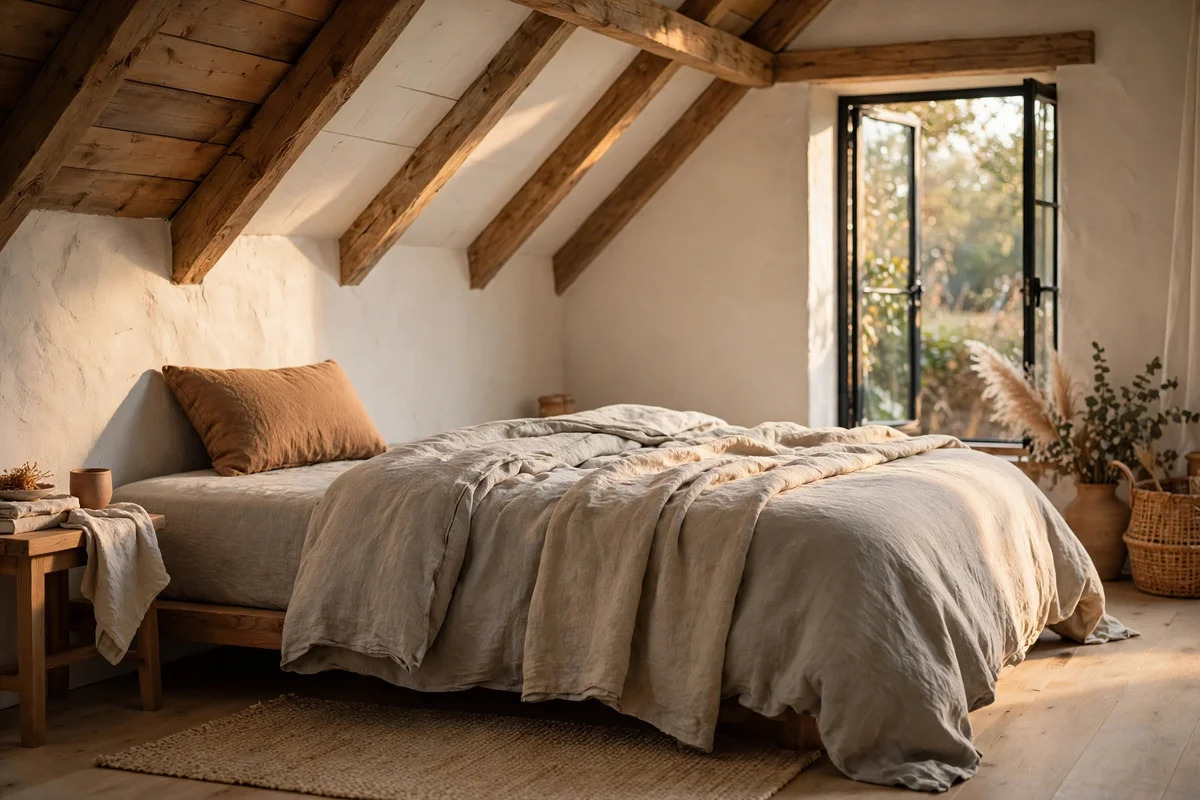
Warm neutrals on the bed, oat, warm white, soft stone, bounce the slope washed light back into the room and make the pitch feel higher. Choose a linen or washed cotton duvet set in one tone, then add a single deeper cushion, perhaps clay or moss, for contrast. Avoid busy patterns, which chop the room into visual pieces under an angled ceiling. A quality washed linen set costs 70 to 150 pounds or dollars. Wash bedding weekly so the light colours stay bright.
Layer a light quilt over the duvet in the same family of tones for depth without weight. Fold the top sheet back 30 cm to show a clean band of fabric at the pillows. The mistake is dressing the bed in dark, heavy colours, which pull the slope down and shrink the room by feel. Light bedding with one warm accent is the fastest, cheapest way to make an attic bedroom feel airy. Swap the accent cushion with the seasons: moss in spring, clay in autumn.
21. Create a Small Dressing Nook in the Tallest Part of the Room
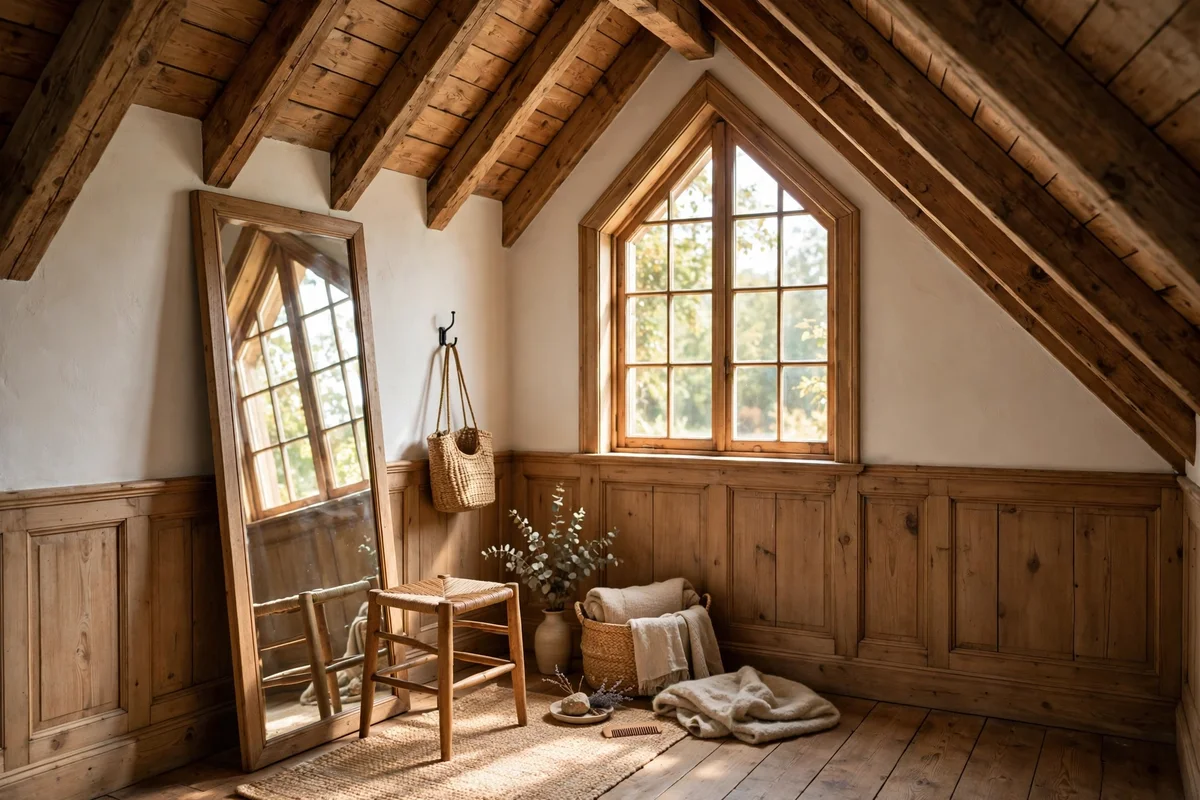
Reserve the tallest zone, usually near the ridge or the gable window, for a dressing nook with a full length mirror. You need about 90 cm of width and full standing height to dress comfortably and check an outfit head to toe. Lean a 150 cm mirror against the wall at a slight angle, secured with a wall strap at the top. Add a small stool and a wall hook for the next day’s clothes. A decent full length mirror costs 40 to 90 pounds or dollars.
Face the mirror toward the skylight or gable window so daylight does the flattering work. Keep the floor here completely clear; this is the one spot where you stand, turn and move, so no baskets or shoes should creep in. The mistake is squeezing the mirror into a low corner where you must duck to see your face, which defeats its purpose. One clear, bright, tall corner for dressing makes the whole bedroom feel more generous.
22. Soften the Lowest Corner With a Stack of Woven Baskets
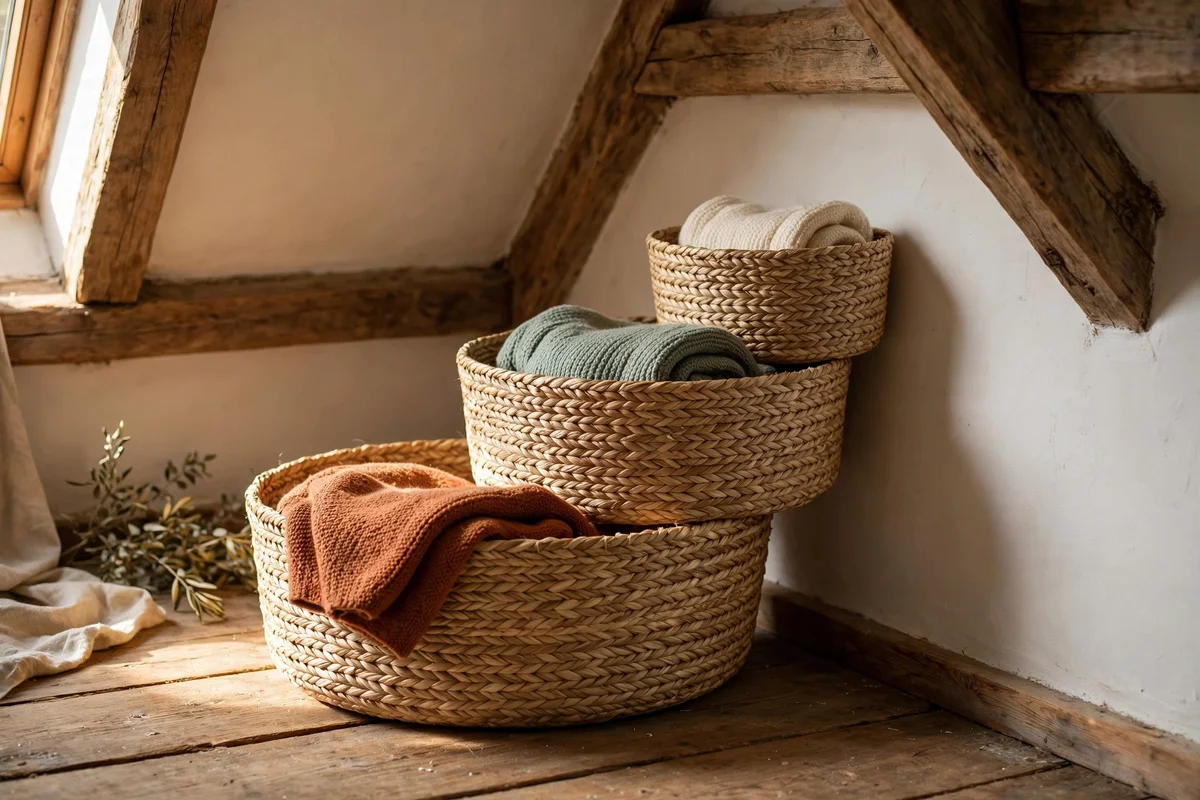
The very lowest corner, where the slope nearly meets the floor, is too low for furniture but perfect for a stack of woven baskets. Choose three baskets in graduated sizes, the largest 45 cm wide, nested slightly into each other like steps following the pitch. Use them for spare throws, slippers and the laundry that never quite makes it downstairs. Seagrass or willow baskets cost 15 to 40 pounds or dollars each. Their texture warms the coldest corner of the room.
Line the baskets with cotton bags if you store clean linen, since raw weave can snag fine fabric. Dust the tops monthly with a dry cloth. The mistake is leaving the lowest corner empty, which makes it read as wasted, awkward space; filled with something soft and useful, it becomes part of the room’s story. In a family bedroom the same baskets keep toys tidy without taking floor space from play.
A sloped ceiling stops being a problem the moment you stop fighting it. Measure honestly, keep the big pieces low, hide the storage in the eaves, and let one calm colour and washed light do the rest. None of these ideas needs a renovation; most need a tape measure, a free weekend and the courage to move the bed twice. The angle that once felt awkward becomes the very thing guests remember about the room.
This week, try the easiest win first: sit on your mattress under the slope and mark where you can truly sit up, then shift the bed to that spot. One honest measurement reorganises every other decision, from the headboard to the reading light. Once the bed sits right, the room starts to feel inevitable, as if the roof was pitched just for it.
Frequently Asked Questions
How much headroom do I need to put a bed under a sloped ceiling?
Aim for 90 to 100 cm of clear space above the mattress when sitting fully upright with a book. Measure from the mattress top, not the bed base, at the exact spot the pillows will sit. If the slope gives less than 90 cm, turn the bed so the headboard sits on the tall gable wall instead. Guessing this number is the most common attic bedroom mistake.
What is the best paint colour for a sloped ceiling bedroom?
One warm neutral across the slope and walls, such as warm white, soft oat or pale clay in a matt finish. A single colour calms the angles and makes the room feel larger. Avoid bright white on the slope with coloured walls, which turns the ceiling into a glowing lid. Add depth with texture instead: linen bedding, a wool rug and oak furniture.
How do I get proper storage out of the eaves?
Fit pull out drawers on full extension runners into the triangular void behind the knee wall for daily clothes, and hinged cupboard doors for bulky items like winter duvets and suitcases. Leave a 2 cm shadow gap or small vents so trapped air never turns musty. A carpenter charges roughly 80 to 150 pounds or dollars per drawer; simple cupboard doors cost 40 to 90 in materials.
Are skylight blinds safe for a child’s attic bedroom?
Yes, provided every blind is cordless. Choose spring loaded or push button blackout blinds that a child cannot loop around anything; cordless models cost only 10 to 20 pounds or dollars more per blind. Keep cots and beds away from windows, and anchor all low chests and bookcases to the wall. Blackout fabric also keeps the room dark for naps and cooler in summer.
What lighting works best on a sloped ceiling?
Light that washes the slope rather than fighting it. Mount two or three adjustable spotlights on a track near the ridge, angled so the beam grazes the pitch, plus a slim warm LED strip along the ridge line, all on a dimmer. Add a reading sconce on the slope at bed height. Avoid downlights, which punch glare into the pitch and leave the slope in darkness.