Kitchen
24 Fall Kitchen Decor Ideas That Make Cooking Feel Warm, Slow and Seasonal
By Anna Wells · · 19 min read
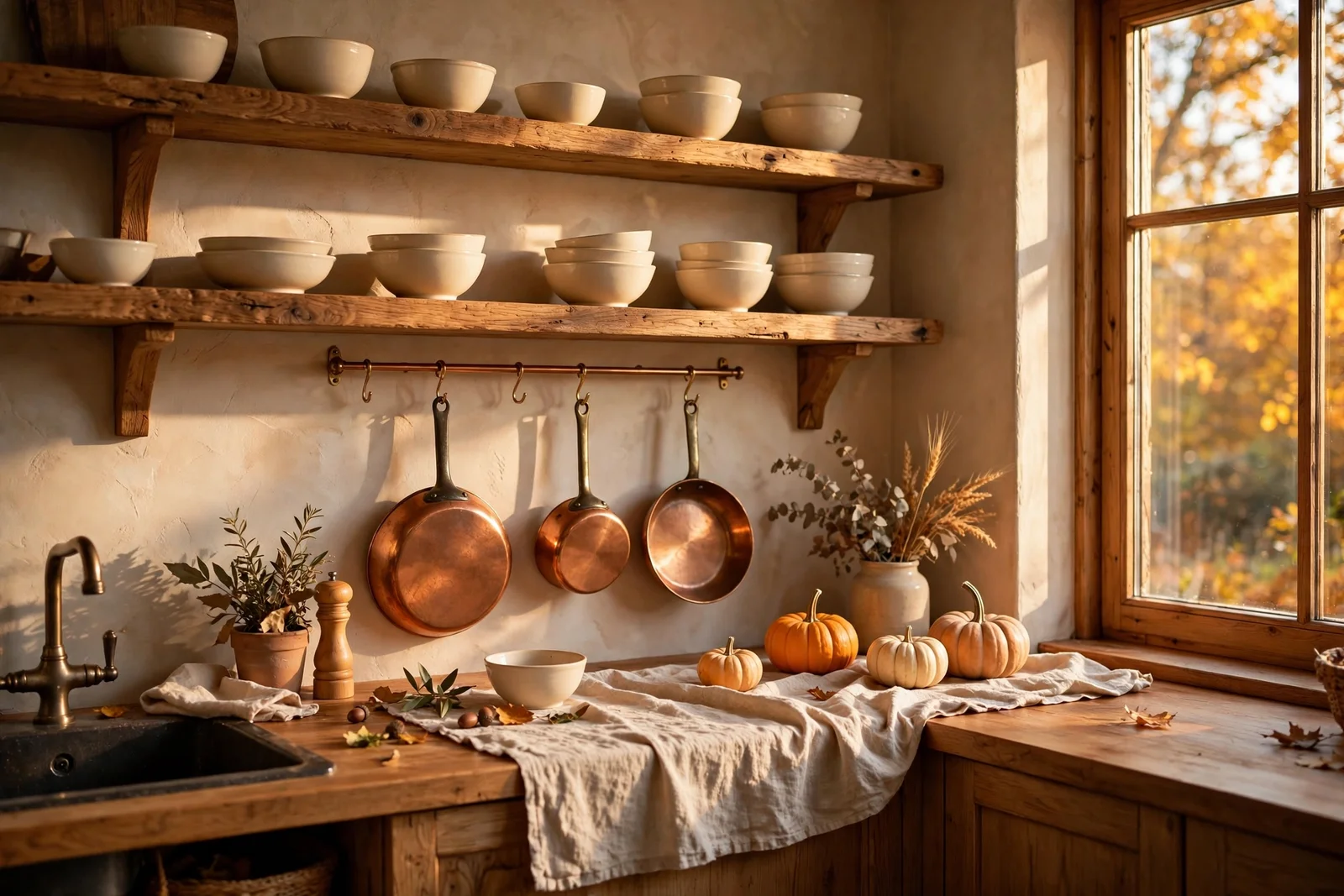
Warm light, copper pans and pumpkins on the worktop: 24 practical fall kitchen ideas that keep every shelf and surface working hard.
There is a particular hour in October when the kitchen glows amber and supper seems to cook itself slowly. The light comes low through the window, a pot simmers on the stove, and the room feels like the warmest corner of the house.
Fall kitchen decor works best when it earns its place. Open shelves still hold everyday bowls, canisters keep flour close at hand, and every pumpkin has a spot that does not block the chopping board. Beauty and function share the worktop here.
The palette stays honest: cream stoneware, copper, warm oak, plaid wool and the deep orange of small gourds. Warm under cabinet light does the heavy lifting after sunset, while dried herbs and linen soften the hard edges of appliances.
Below are 24 concrete ideas, each with sizes, placement notes and budget guidance. Start with one shelf or one corner, live with it for a day, then add the next layer. A working kitchen deserves autumn styling that cooks alongside you.
1. Stack Cream Bowls in Sets of Five on Open Shelves
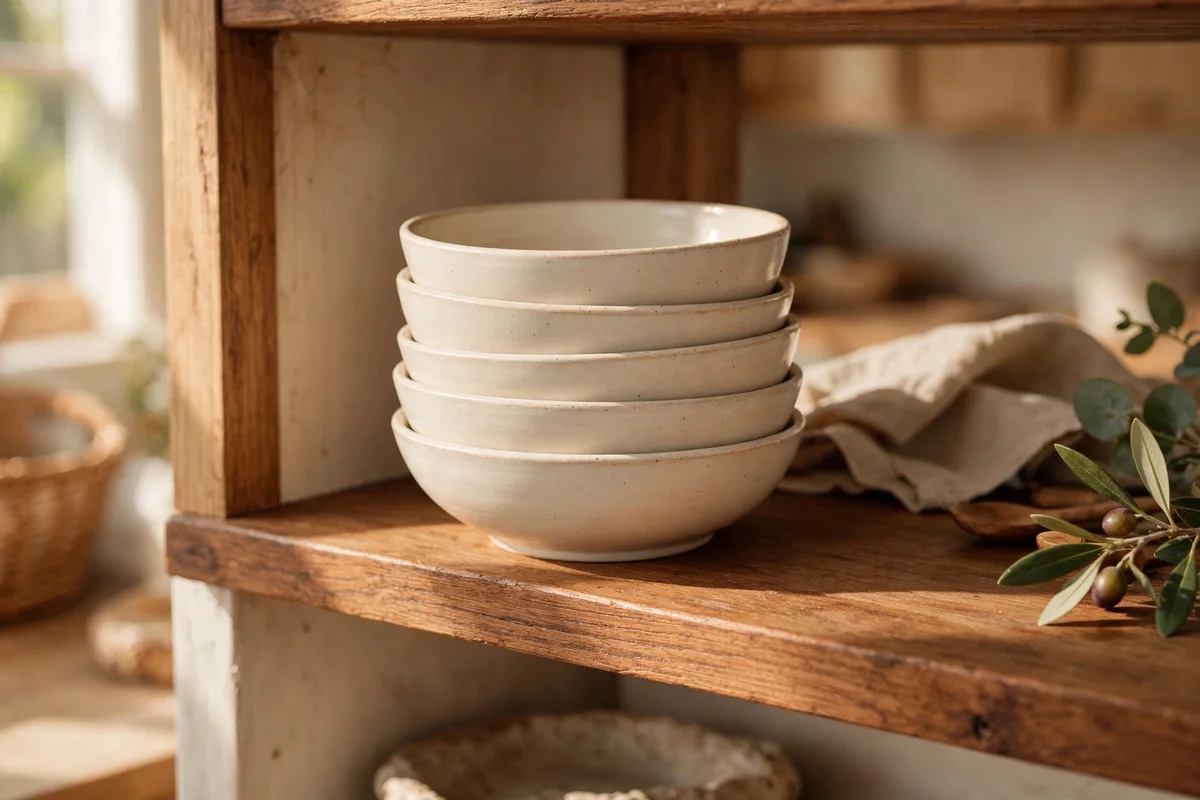
Open shelving suits kitchen walls between 60 and 120 cm wide, and cream bowls read as one calm line against wood or painted plaster. Stack five bowls of the same pattern, 14 to 16 cm across, with the largest at the bottom and the smallest on top. Leave 8 to 10 cm of breathing room on each side so the shelf never looks crowded. Mix stoneware with porcelain only when the glaze tones match closely.
Budget stoneware bowls from large home stores cost 2 to 4 pounds or dollars each, so a stack of five runs 10 to 20. The mistake to avoid is mixing five different patterns, which turns a calm stack into clutter. Dust open shelves weekly with a dry microfibre cloth, since kitchen grease settles fast. Place the bowls within arm’s reach of the serving zone so the display stays practical, not precious.
2. Hang a Copper Pan Rail Above the Cooker Side Wall
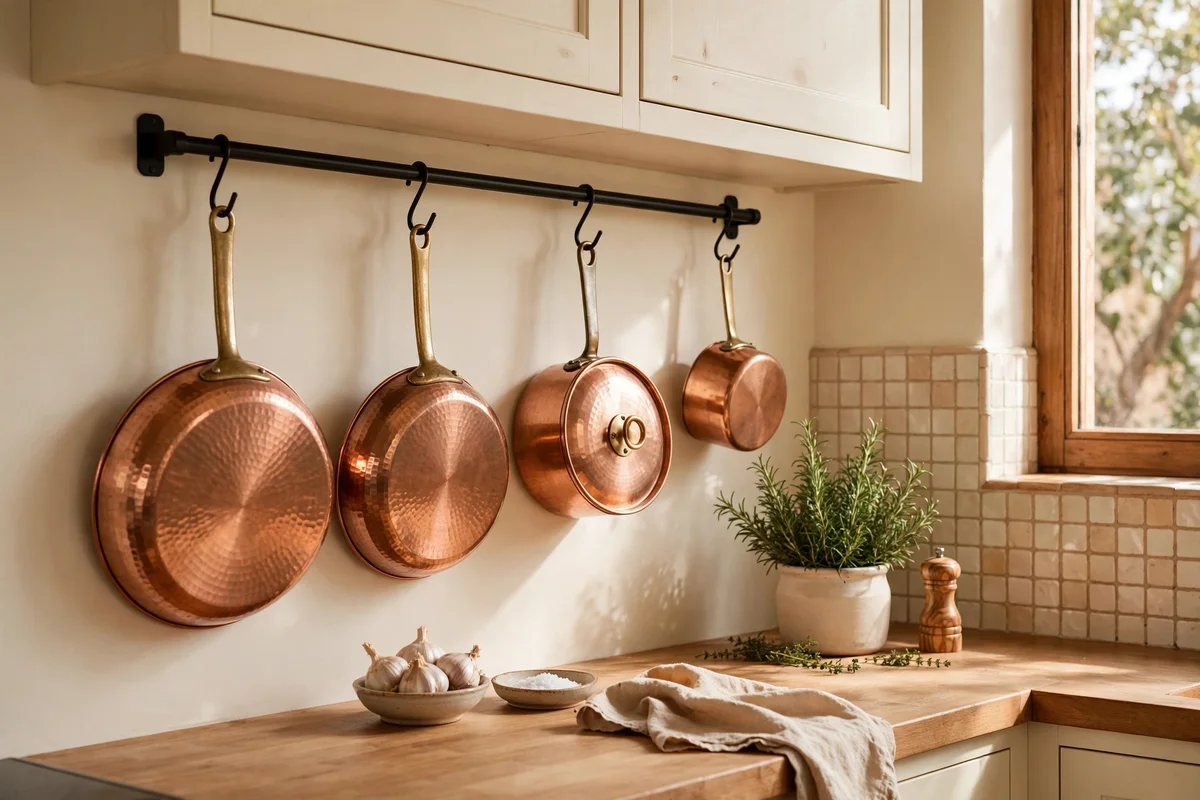
A rail 60 to 90 cm long mounted 15 to 20 cm above the worktop turns daily pans into warm decor. Fix it into studs or use proper plaster anchors, since four copper pans can weigh over 4 kg. Space S-hooks about 10 cm apart so handles hang without clanking, and keep the heaviest pan nearest the wall bracket. Brushed or unlacquered copper suits cream, sage and warm white kitchens especially well.
Pair the rail with a folded linen cloth on one hook and a small trailing plant at the rail end for green contrast. Wipe copper with a dry cloth weekly and avoid harsh polish, since a soft natural patina is part of its charm. The mistake to avoid is hanging the rail directly above a high-heat zone, where steam dulls the finish fast. A 60 cm rail plus eight hooks is a budget project, usually 25 to 45 pounds or dollars.
3. Lean Warm Wood Chopping Boards Against the Splashback
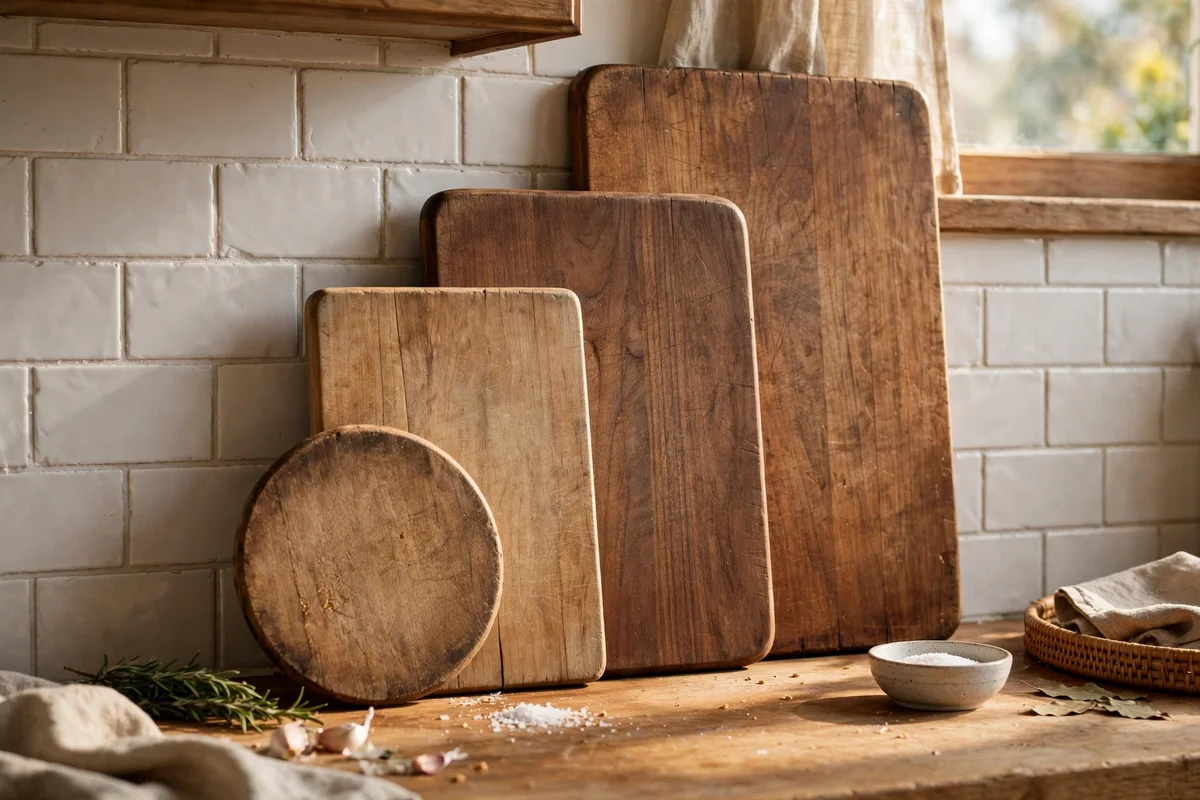
Three or four wooden boards in graduated sizes, from 20 to 45 cm long, leaned at a slight angle make an instant warm backdrop. Choose oak, acacia or olive wood with visible grain, and vary the shapes: one rectangular, one round, one with a handle. Keep them 5 to 8 cm from the wall so they stand steady, and never lean them where the kettle steam hits daily.
Oil boards monthly with food-safe mineral oil to keep the grain rich and prevent cracking. Budget boards from market stalls cost 5 to 12 pounds or dollars each, while a single olive wood board is an investment piece near 30. The mistake to avoid is stacking boards flat in a drawer for display; they only earn their look when seen. Wash by hand and dry upright after every use.
4. Scatter Small Pumpkins Along the Worktop Edge
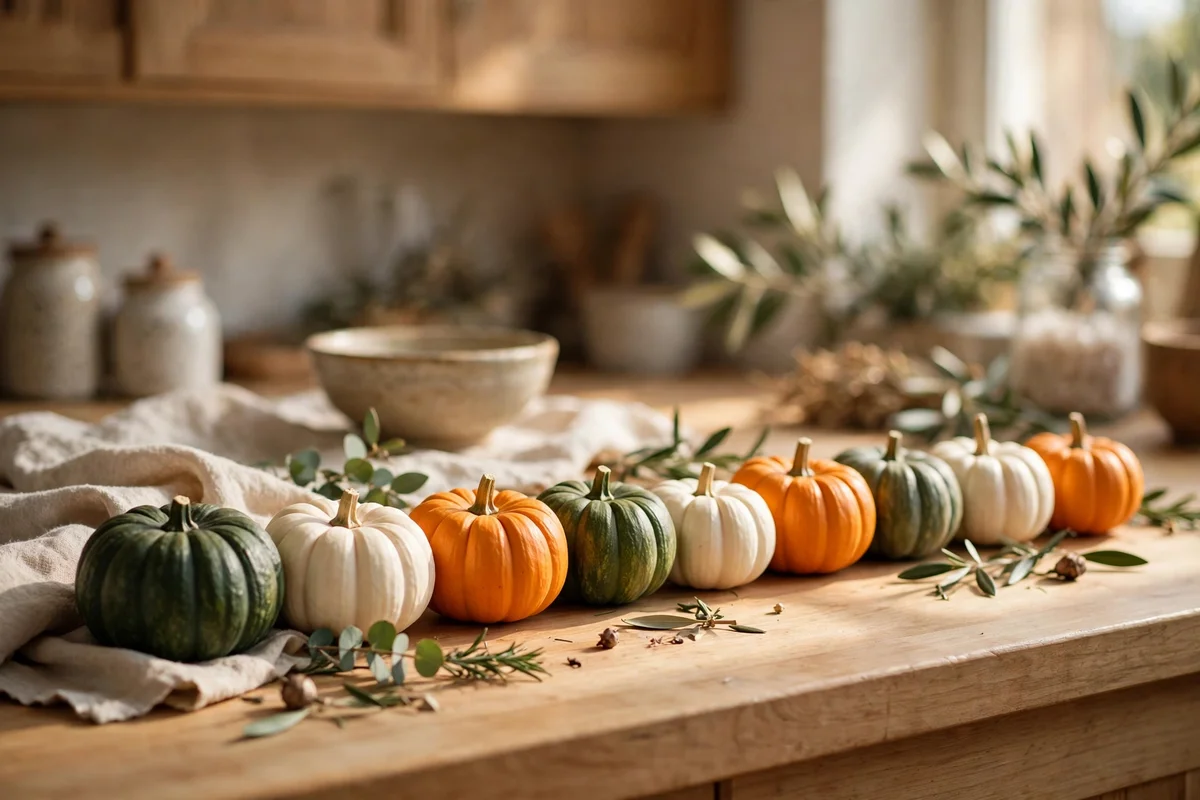
Five to seven small pumpkins, 6 to 10 cm across, spaced 15 to 20 cm apart along the back edge of the worktop, bring instant harvest colour. Mix deep orange with white and green-skinned varieties for a natural, gathered feel. Keep them clear of the chopping zone by at least 30 cm so cooking space stays usable. Real pumpkins last two to three weeks indoors away from the oven’s heat.
Buy them at farm shops or markets for 1 to 3 pounds or dollars each, much cheaper than home stores. The mistake to avoid is crowding ten or more into one corner, which reads as clutter rather than styling. Wipe skins with a damp cloth on arrival to remove field dust. Compost them when they soften, and replace mid-season for a fresh look through November.
5. Fold Plaid Tea Towels Over the Oven Handle
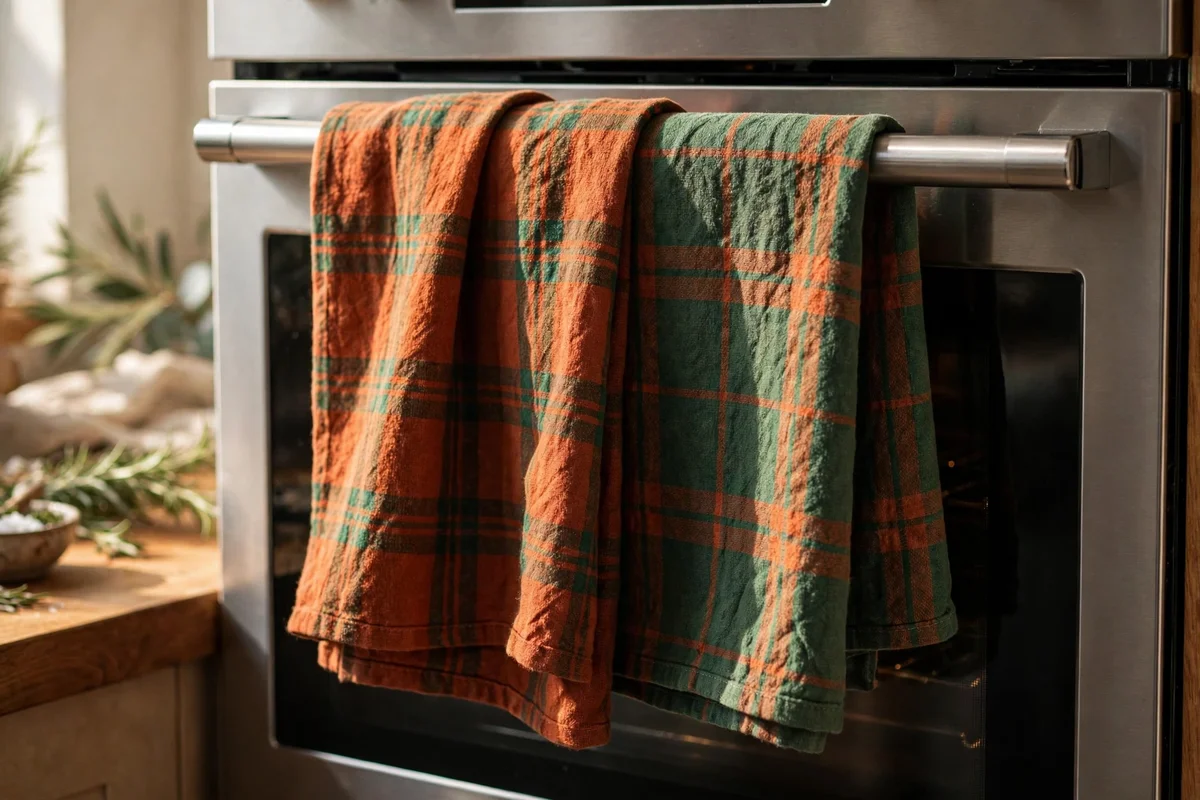
Two plaid tea towels, one draped over the oven handle and one folded on the counter, add pattern for almost nothing. Choose cotton or linen blends in rust, forest green or navy checks on a cream ground. Fold each towel into thirds so the plaid reads as a neat band 12 to 15 cm wide. Replace them weekly, since kitchen towels soil fast and fresh ones keep the look intentional.
A pair of good cotton plaid towels costs 6 to 12 pounds or dollars, and charity shops often have them for 1 each. The mistake to avoid is leaving one stained towel up for a month, which drags the whole kitchen down. Keep a small stack of three in a drawer so swapping takes seconds. Match the plaid loosely to a runner or cushion for a pulled-together feel.
6. Lay a Linen Runner Down the Kitchen Island
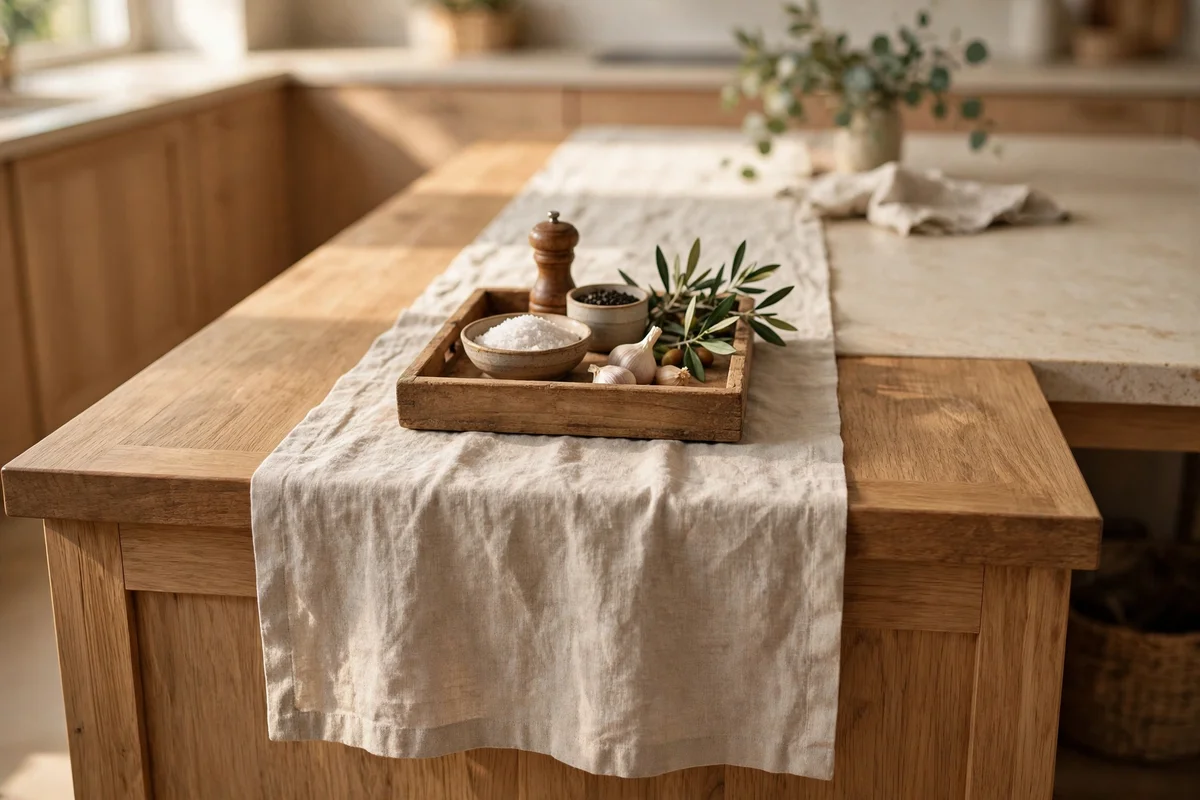
A linen runner 35 to 45 cm wide and 150 to 200 cm long centres the island and protects the surface from hot dishes. Choose natural flax, oatmeal or soft sage tones that echo autumn fields. Centre it lengthwise with 10 to 15 cm of clear surface at each end for prep work. A runner with a simple hem looks more refined than one with heavy fringe in a working kitchen.
Washable linen runners cost 20 to 40 pounds or dollars, while hand-loomed pieces run 60 and up. The mistake to avoid is choosing a runner wider than half the island, which leaves no room for chopping boards. Shake it out weekly and wash monthly; linen softens with every wash. Layer a small wooden tray on top for a styled but movable centrepiece.
7. Hang a Dried Wreath on the Pantry Door
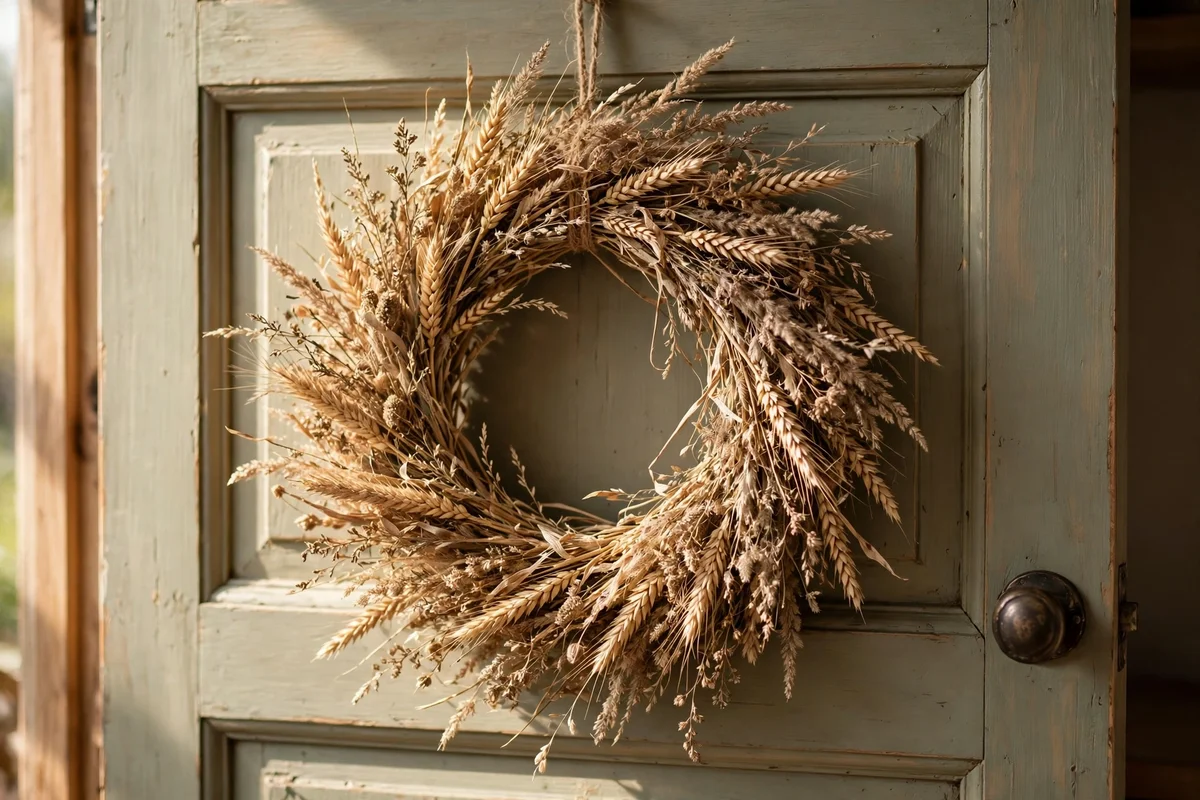
A dried wreath 30 to 40 cm across on the pantry door greets everyone who reaches for ingredients. Look for wheat, dried grasses, seed heads and small pinecones wired onto a grapevine base. Hang it at eye level, about 150 cm from the floor, on a removable adhesive hook rated for 1 kg. Keep it away from the oven vent so heat does not dry it further.
Ready-made dried wreaths cost 15 to 35 pounds or dollars at craft markets, and a homemade one from gathered grasses costs almost nothing. The mistake to avoid is choosing a fresh leaf wreath that wilts within days indoors; dried materials hold their shape for months. Dust it gently with a cool hairdryer monthly. Swap the ribbon for twine to keep the look rustic.
8. Fill Glass Canisters With Grains and Lentils
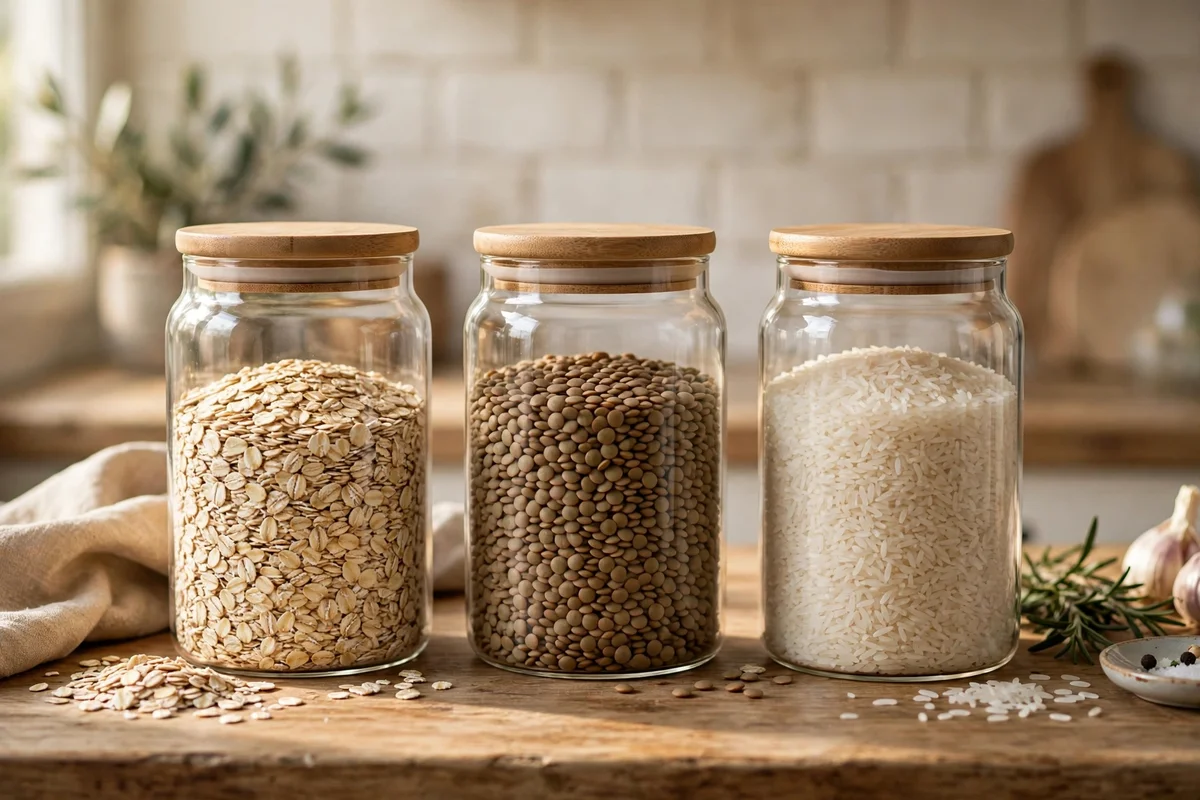
Three glass canisters, 1 to 2 litres each, filled with rolled oats, red lentils and brown rice turn staples into warm decor. Place them in a row near the prep area, lids sealed tight, with the tallest at the back. Label each with a small kraft tag tied in twine so guests and family find things fast. Keep them out of direct sun so the grains stay fresh.
Airtight glass canisters cost 8 to 18 pounds or dollars each, a mid-range buy that lasts years. The mistake to avoid is filling decorative jars with food you never cook; rotate the contents into real meals. Wash and dry jars fully before refilling to prevent moisture. Buy grains in bulk and decant, which saves money and keeps the pantry tidy.
9. Set a Wooden Bowl of Harvest Fruit on the Table
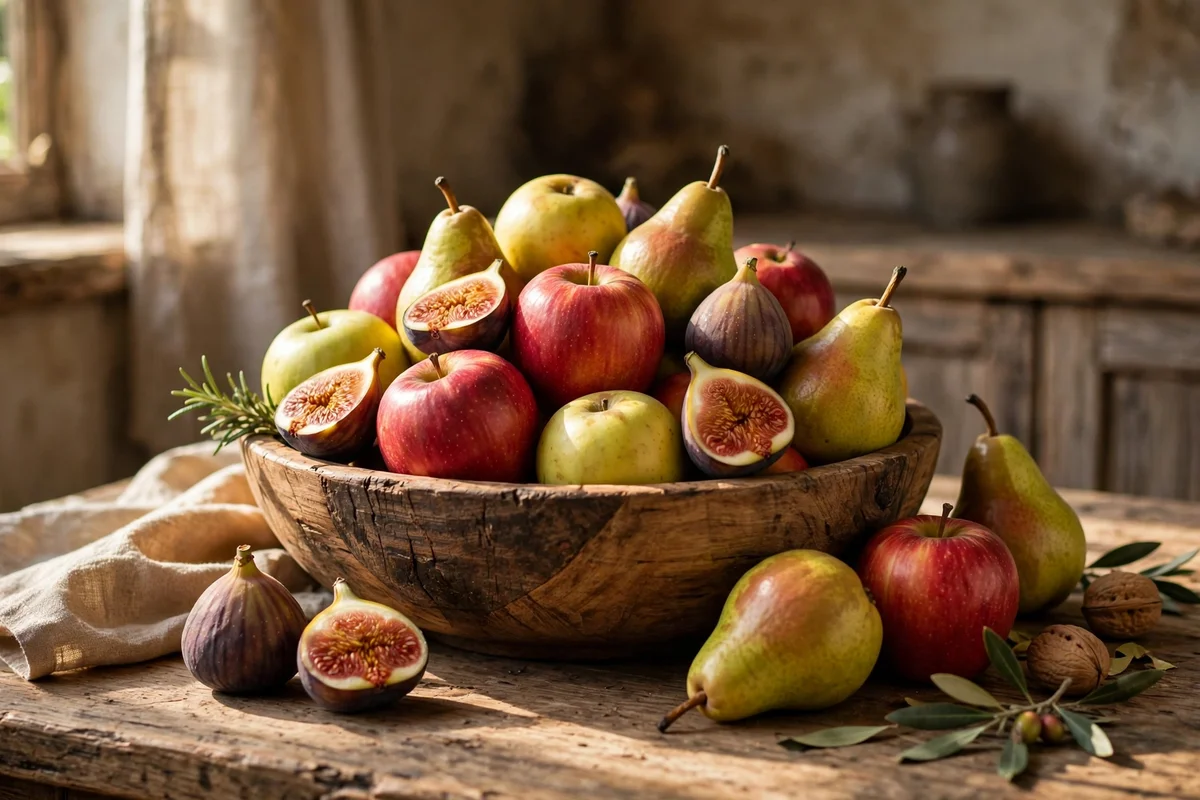
A wide wooden bowl, 28 to 35 cm across, heaped with apples, pears and figs makes the table feel abundant. Choose fruit in deep reds, golds and greens, and pile it loosely rather than arranging it stiffly. Place the bowl at the centre of the table with 25 to 30 cm of clear space around it for plates. Refill from the fruit bowl stock twice a week.
A turned acacia bowl costs 15 to 30 pounds or dollars and lasts decades with oiling. The mistake to avoid is letting the bottom layer rot unnoticed; rotate the fruit when you refill. Buy seasonal fruit at markets for the best price and flavour. A bowl of real fruit beats any faux arrangement, since family members actually eat it.
10. Add Warm Under Cabinet Strip Lighting
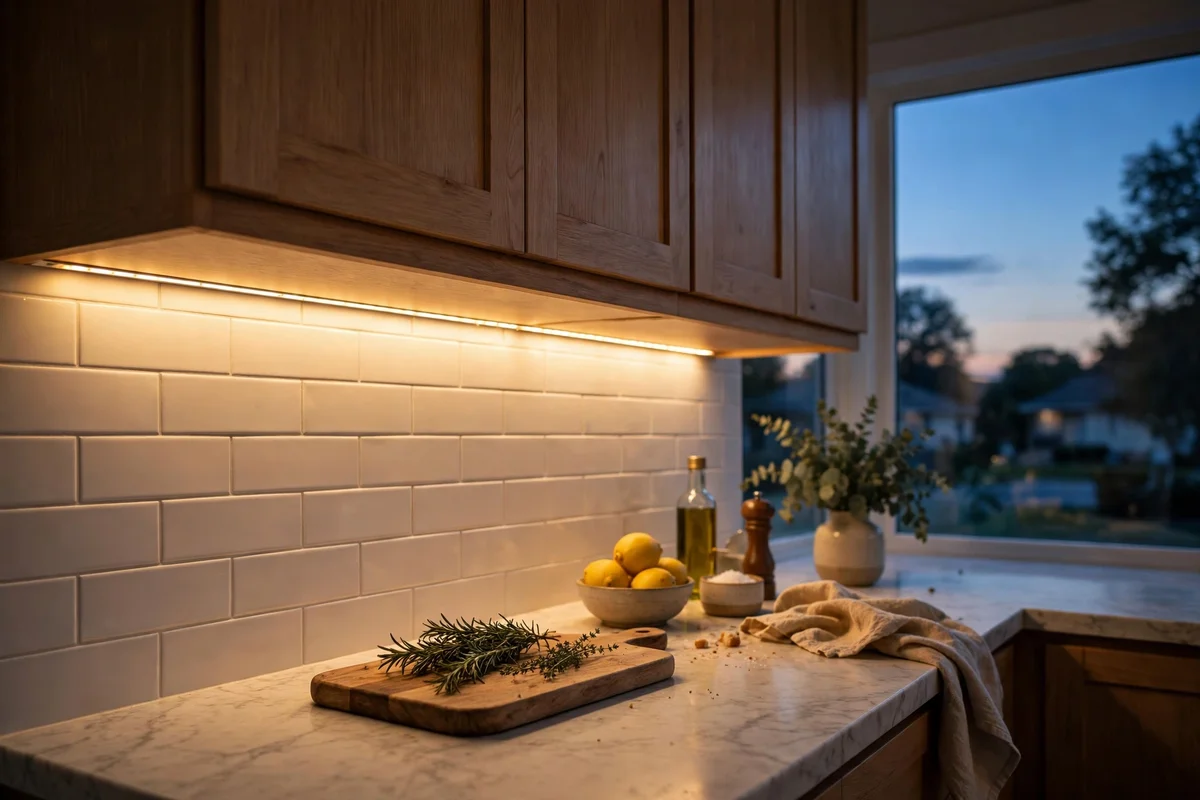
Warm white LED strip lights, 2700K to 3000K, fitted under wall cabinets wash the worktop in a golden glow. Measure the cabinet run and buy a strip 10 to 15 cm shorter, mounting it 3 to 5 cm back from the front edge so the diodes stay hidden. Plug-in kits avoid any wiring work and suit renters. The light makes evening cooking feel calm and shows off styled shelves below.
A 2 metre plug-in kit costs 15 to 30 pounds or dollars, with motion-sensor versions near 40. The mistake to avoid is choosing cool daylight strips, which turn a warm kitchen clinical. Wipe the strips quarterly, since grease film dims them. Link the plug to a timer so the glow switches on at dusk without you remembering.
11. Tie Dried Herb Bundles With Twine Near the Stove
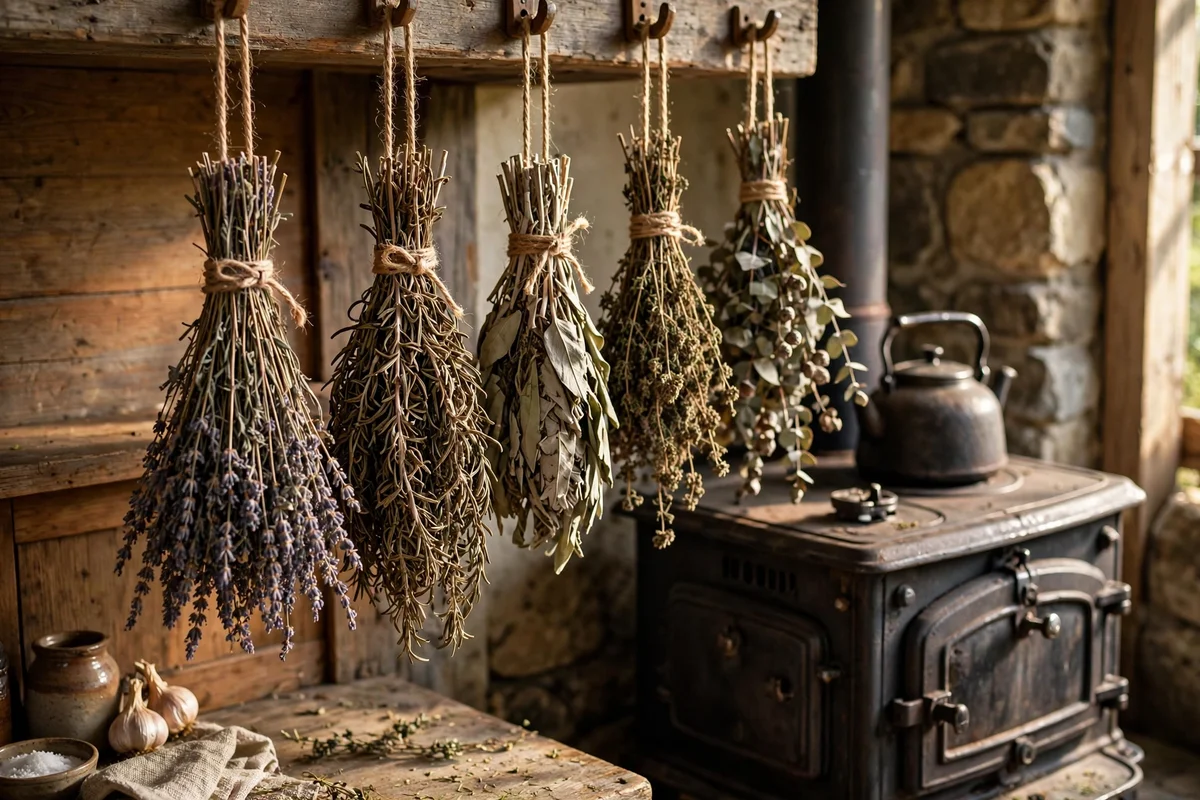
Bundles of dried rosemary, thyme and bay, each 15 to 20 cm long and tied with natural twine, bring scent and texture near the stove. Hang three to five bundles from small hooks or a short rail, keeping them at least 30 cm from burners for safety. Harvest or buy them in early autumn when oils are strongest. They double as cooking ingredients all season.
A mixed bunch from a herb grower costs 3 to 6 pounds or dollars, and home-dried bundles cost nothing but patience. The mistake to avoid is hanging them where kettle steam soaks them daily, which causes mould. Replace bundles every two to three months as the scent fades. Crush a few leaves between your fingers before cooking to wake the aroma.
12. Line the Windowsill With Small Gourds and Pinecones
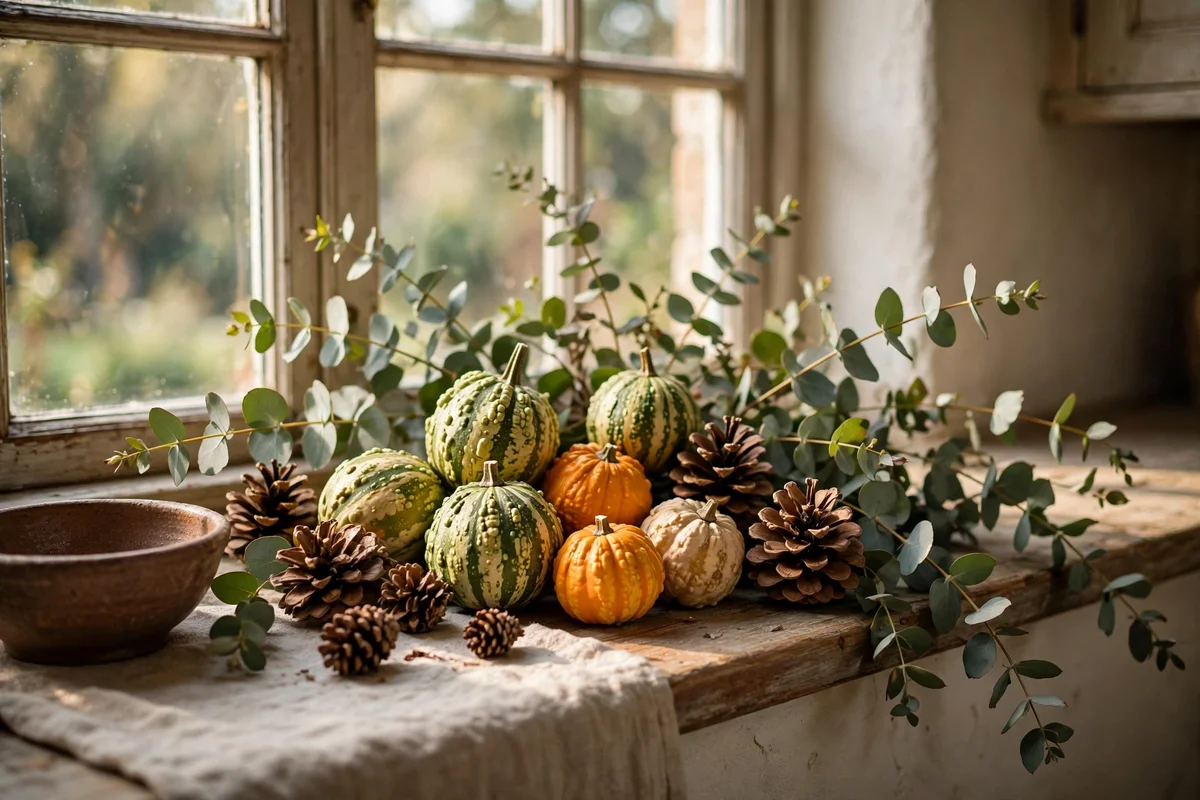
A windowsill 12 to 20 cm deep holds a row of small gourds mixed with pinecones and a sprig of dried eucalyptus. Space seven to nine pieces loosely so daylight still reaches the room. Choose gourds 5 to 8 cm wide in warted, striped and smooth skins for variety. Keep the arrangement low, under 15 cm tall, so the view stays open.
Gourds cost 1 to 2 pounds or dollars each at autumn markets, and pinecones are free from parks. The mistake to avoid is blocking the whole window with a tall display, which darkens the kitchen. Dust the sill weekly since windowsills gather grime fast. Move the arrangement to a shelf if condensation forms on the glass.
13. Drape a Plaid Throw Over a Kitchen Chair
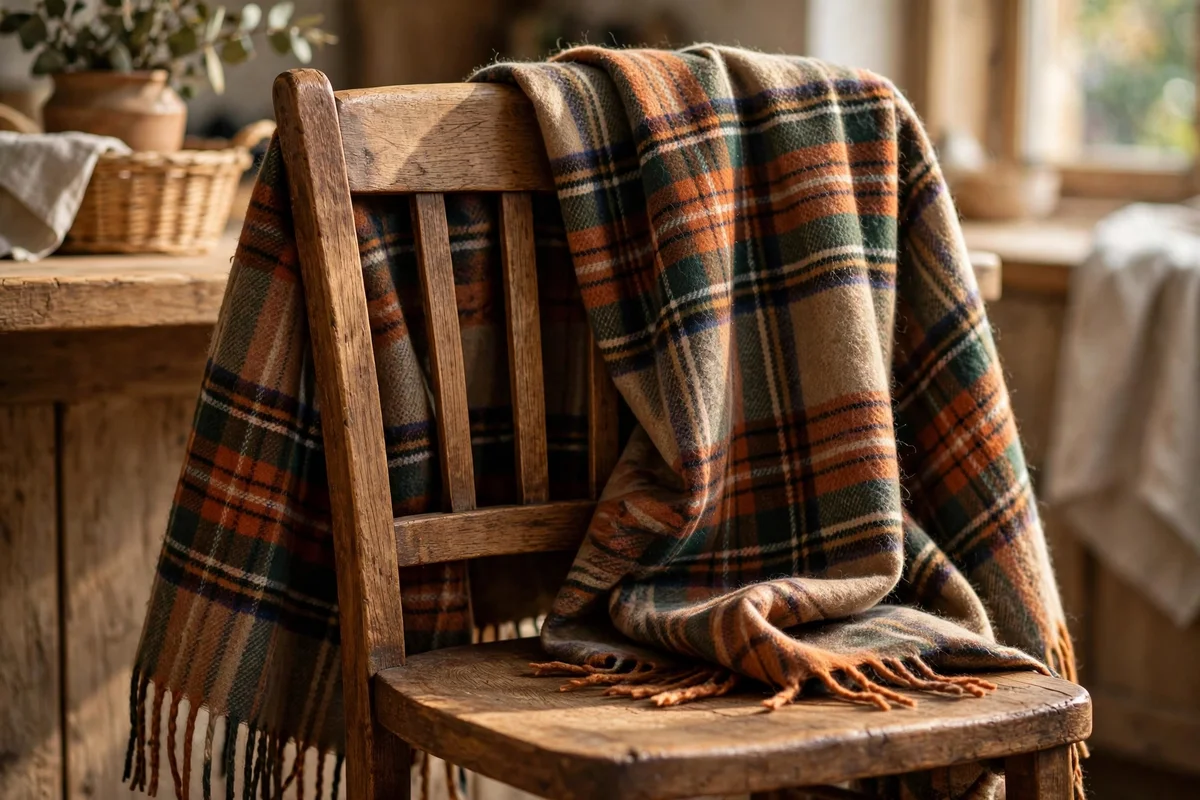
A plaid throw in wool or a wool blend, about 130 by 180 cm, folded over the back of one kitchen chair adds instant softness. Choose rust, mustard or forest checks that echo the season. Fold it in thirds lengthwise so it hangs evenly without dragging on the floor. One chair is enough; dressing every chair looks staged rather than lived in.
Wool-blend throws cost 25 to 50 pounds or dollars, with pure wool nearer 80. The mistake to avoid is leaving the throw where cooking splashes reach it; pick the chair farthest from the hob. Shake it outdoors weekly and wash per the label. A throw also doubles as a lap blanket for slow weekend breakfasts.
14. Arrange Copper Measuring Cups on a Shelf Hook
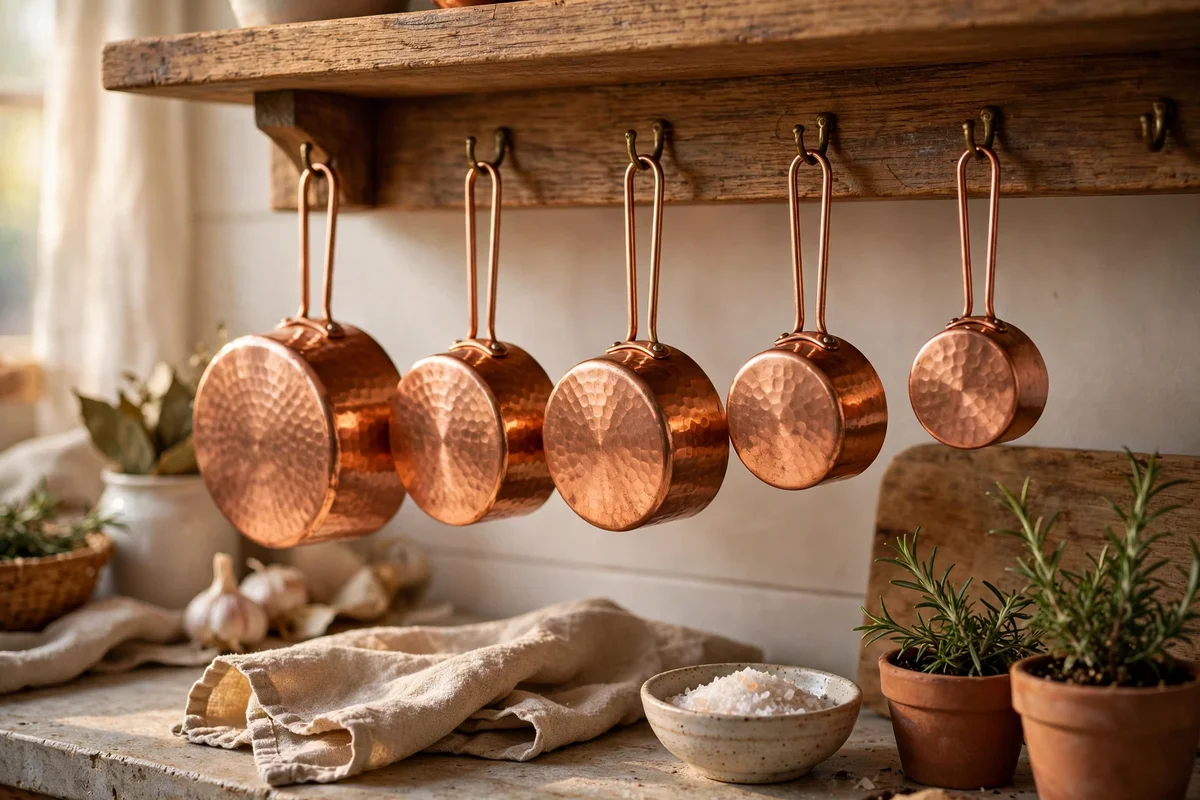
A nested set of four copper measuring cups, hung by their handles from small hooks, turns tools into jewellery. Mount two or three brass hooks under an open shelf, spacing them 8 cm apart so the cups hang without tangling. Choose unlacquered copper that will patina softly with use. Keep them near the baking zone so they are grabbed daily, not just admired.
A copper set costs 18 to 35 pounds or dollars, a mid-range buy with daily use. The mistake to avoid is buying lacquered cups that look plasticky and cannot develop character. Hand wash and dry them to keep the shine even. If they tarnish unevenly, a paste of lemon and salt restores them in minutes.
15. Place a Lantern With a Flameless Candle in the Corner
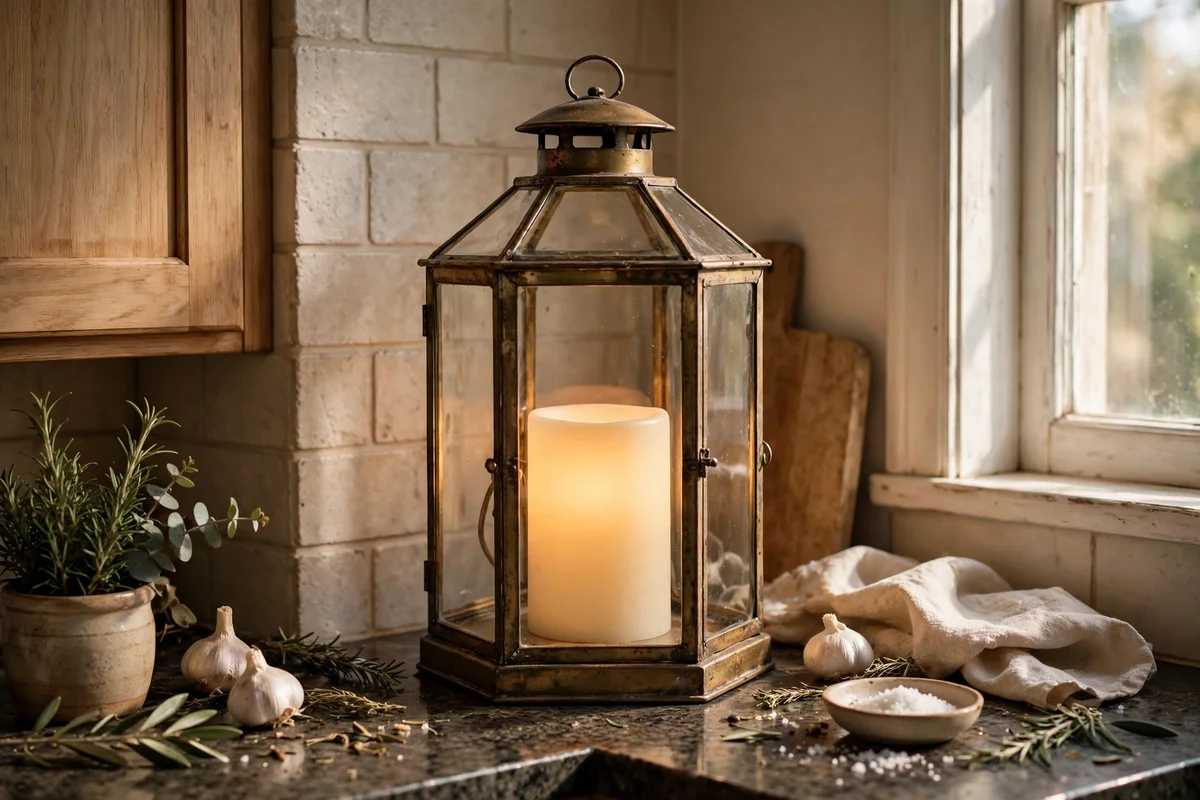
A glass and metal lantern, 25 to 35 cm tall, with a warm flameless candle inside gives the kitchen a hearth-like corner. Set it on the worktop end or a side table, away from the main prep flow. Choose a timer candle that glows for five hours each evening automatically. The flicker effect reads beautifully through hammered or seeded glass.
Lanterns cost 12 to 25 pounds or dollars, with timer candles adding 5 to 10. The mistake to avoid is using a real flame near curtains or dried decor; flameless is safer and still convincing. Dust the glass monthly for a clear glow. Group two lanterns of different heights for a stronger corner statement.
16. Stack Cookbooks Beside a Small Pumpkin
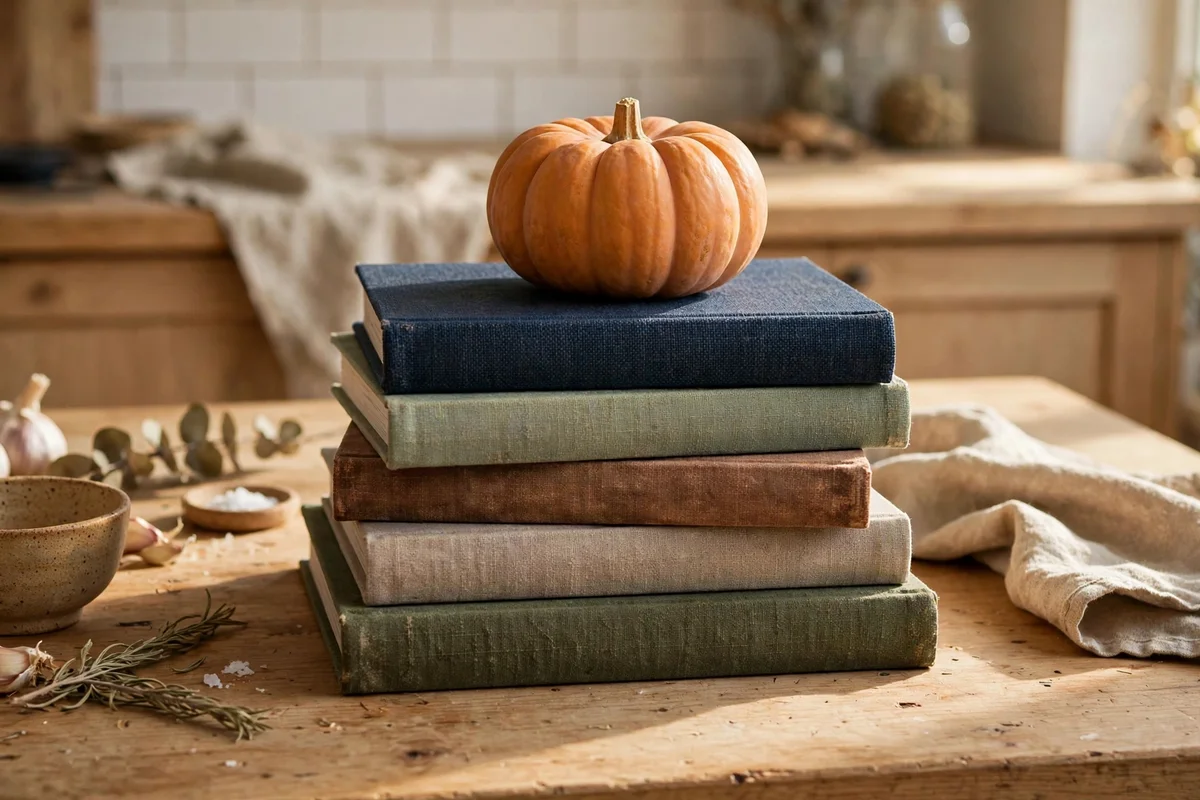
A stack of three to five cookbooks, largest at the bottom, with one small pumpkin on top makes a styled vignette that cooks actually use. Place it at the worktop end nearest the stove, keeping the stack under 25 cm tall so it stays stable. Choose books with cloth or linen covers in autumn tones. The pumpkin marks the season without any extra shopping.
Most cooks already own the books, so the cost is one pumpkin at 1 to 3 pounds or dollars. The mistake to avoid is stacking books you never open; keep your real weeknight favourites on top. Dust the stack fortnightly. Rotate the top book monthly so the display nudges you to try new recipes.
17. Hang a Cotton Apron on a Wooden Peg
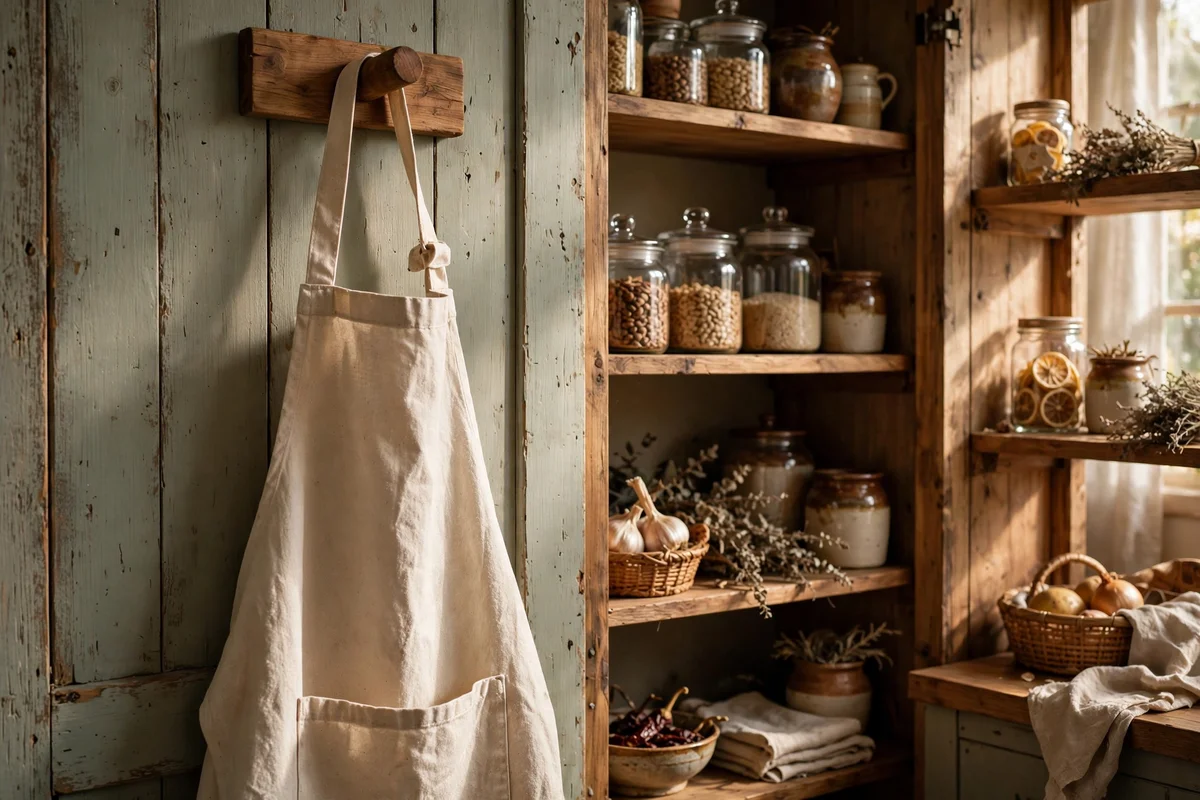
A sturdy cotton or canvas apron on a wooden peg by the pantry keeps the cook’s uniform part of the decor. Choose natural canvas, striped ticking or a small autumn print, and hang it at 140 to 150 cm so it is easy to grab. One peg holds the apron; a second peg can hold a market tote. The fabric softens the hard lines of nearby cabinetry.
Good cotton aprons cost 12 to 25 pounds or dollars, and wooden peg rails run 8 to 15. The mistake to avoid is hanging a stained apron as decor; wash it weekly so it always looks fresh. Fix the peg rail with two screws into a stud for strength. Choose cross-back straps for comfort during long cooking sessions.
18. Fill a Stoneware Crock With Wooden Spoons
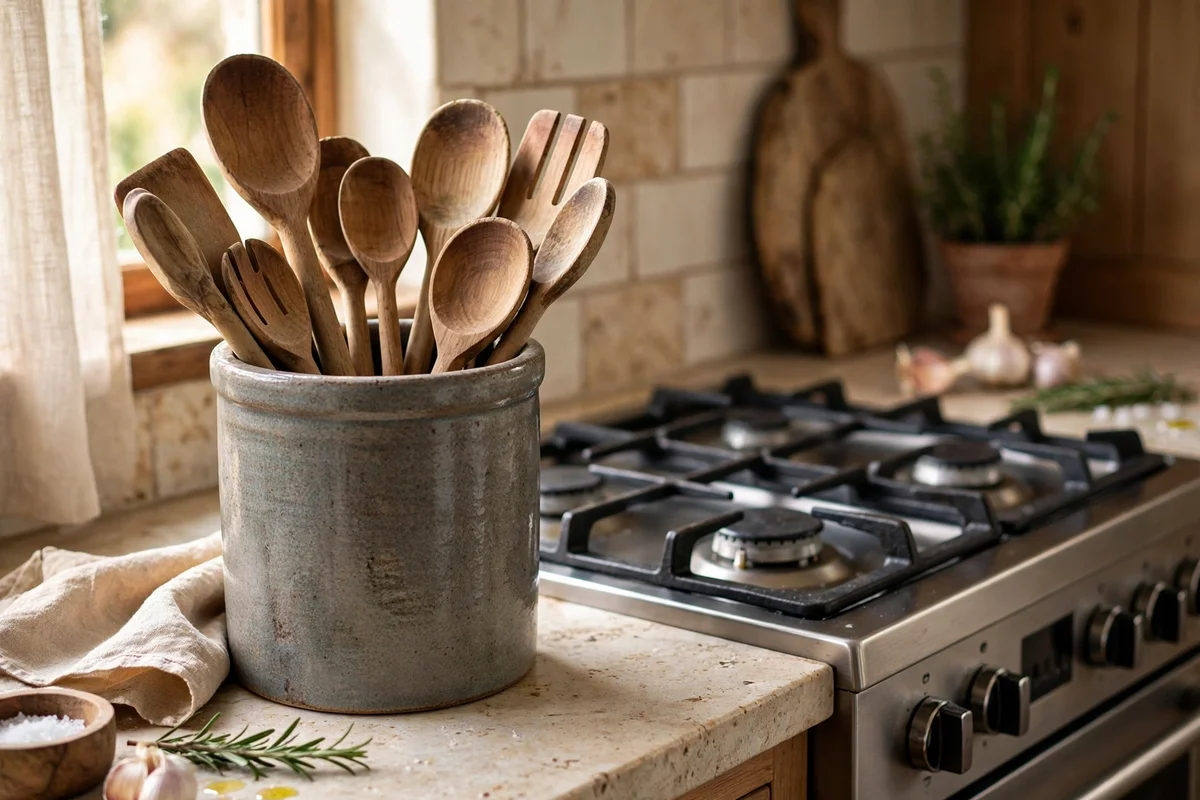
A stoneware crock 15 to 18 cm tall holding wooden spoons, spatulas and a whisk keeps tools upright and handy. Place it within 40 cm of the hob so you reach tools without crossing the kitchen. Choose a crock in cream, oatmeal or warm grey with a matte glaze. Limit the contents to eight or ten tools so each one lifts out easily.
Stoneware crocks cost 12 to 22 pounds or dollars, and wooden spoons 1 to 3 each. The mistake to avoid is cramming in twenty tools, which turns the crock into a tangled mess. Oil wooden spoons monthly with mineral oil to prevent splitting. Wash the crock in the dishwasher monthly to keep the base fresh.
19. Set a Small Chalkboard With a Seasonal Menu
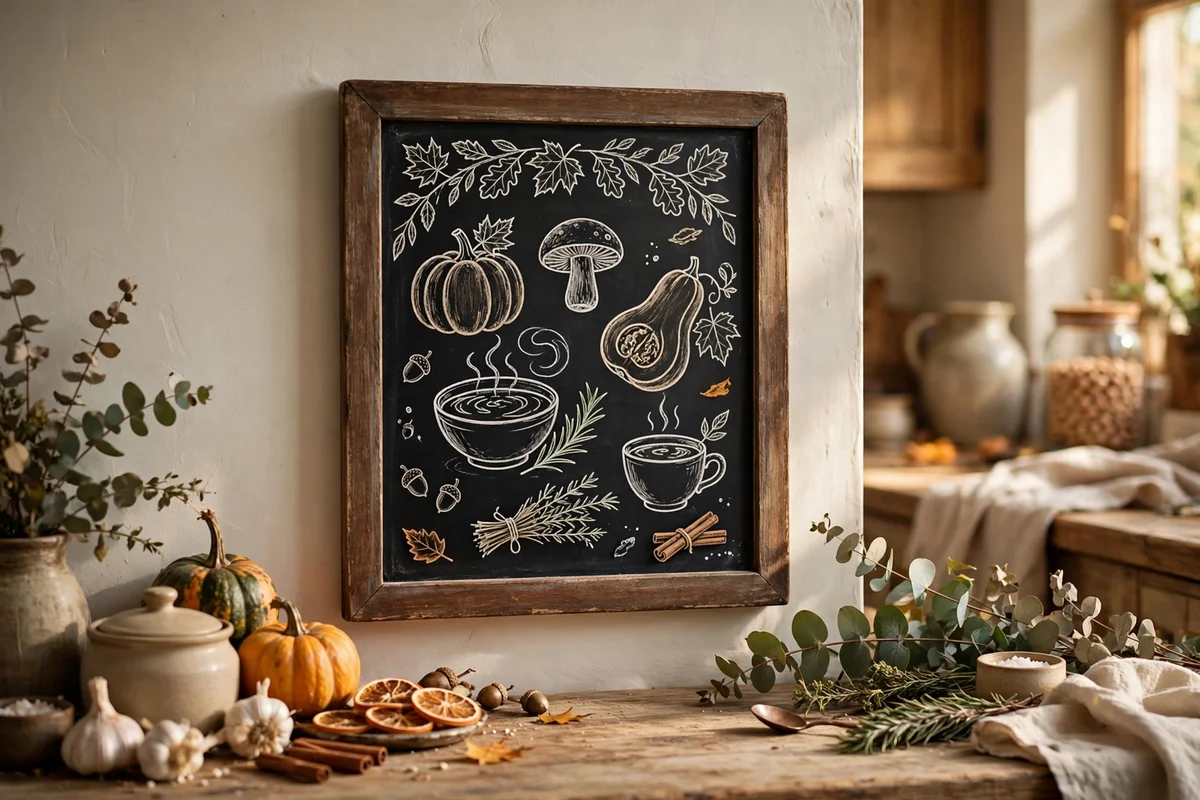
A framed chalkboard 20 by 30 cm on the worktop or wall lists the week’s soups, bakes and slow-cooker meals. Write in neat chalk marker with the dish names and one seasonal note, such as apple week or harvest soup. Prop it on a small easel or hang it at 150 cm near the pantry. Update it every Sunday so it stays a living part of the kitchen.
Chalkboards cost 8 to 15 pounds or dollars, with chalk markers another 5. The mistake to avoid is letting the writing smudge into illegibility; rewrite it fresh each week. Wipe the board with a damp cloth before rewriting. A menu board cuts weeknight indecision and makes the kitchen feel intentionally seasonal.
20. Layer a Flatweave Runner by the Sink
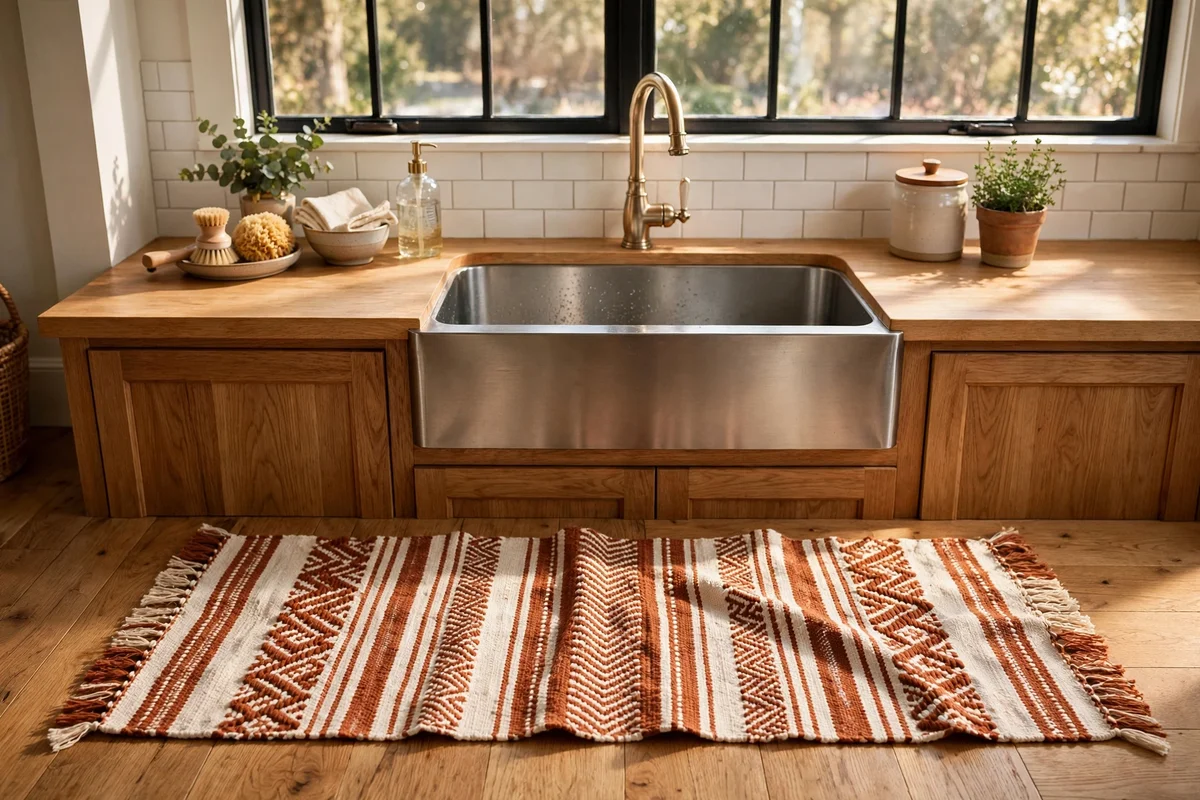
A flatweave cotton runner 60 by 180 cm in front of the sink cushions feet during long washing-up sessions. Choose a washable weave in rust, cream or a simple stripe that hides splashes. Keep 5 cm clear of cabinet doors so they swing freely. Flatweave dries fast and lies flat, unlike thick pile rugs that curl near water.
Washable runners cost 20 to 45 pounds or dollars, a practical mid-range buy. The mistake to avoid is choosing a non-washable rug in the splash zone; it will stain within weeks. Machine wash monthly on a gentle cycle. Add a thin non-slip underlay for safety on hard floors, trimmed 2 cm smaller than the rug.
21. Group Canning Jars With Dried Beans and Pasta
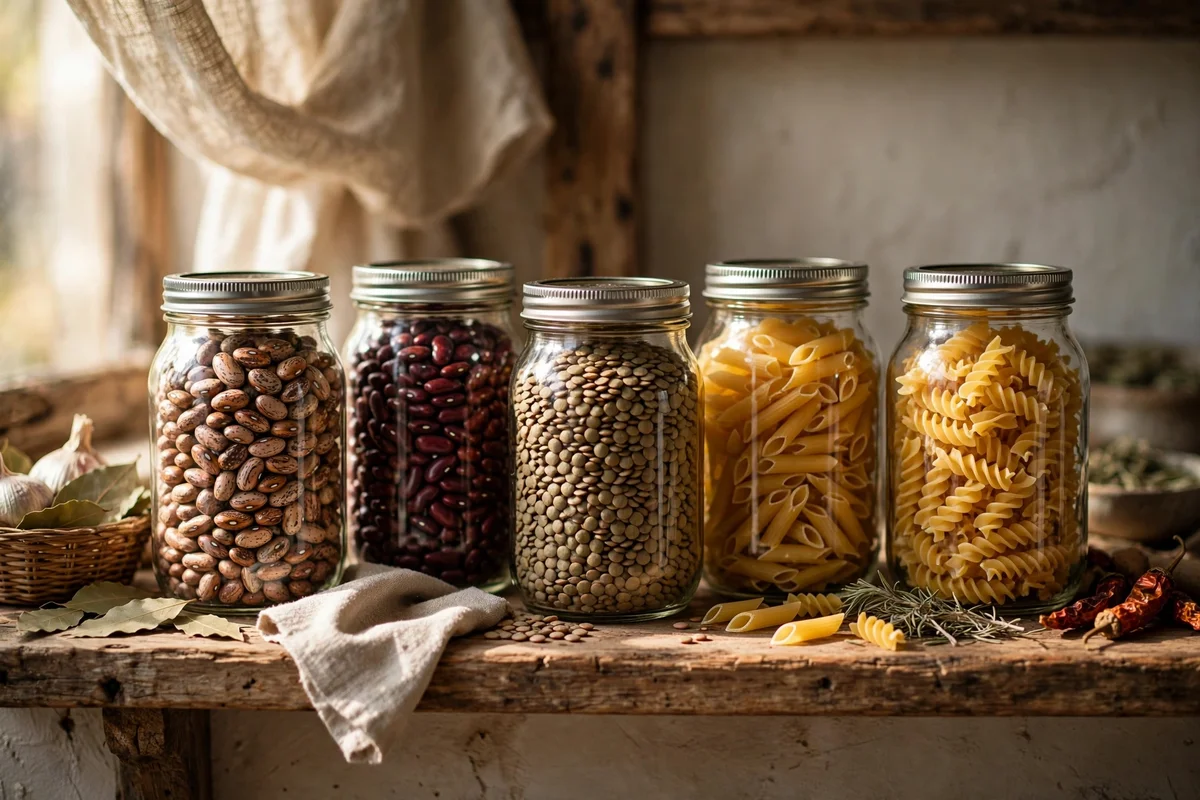
A group of five to seven canning jars, 500 ml to 1 litre, filled with dried beans, lentils and pasta shapes makes a pantry-style display. Line them on a deep shelf or the worktop end, tallest at the back, with 3 cm between jars. Use proper sealed lids so the contents stay fresh for real cooking. The varied shapes and colours read as harvest abundance.
Canning jars cost 1 to 3 pounds or dollars each, so the whole group stays under 20. The mistake to avoid is leaving jars unsealed, which lets pantry moths in within weeks. Label each jar with contents and the month you filled it. Refill from bulk bags and keep the display working, not just pretty.
22. Add a Terracotta Pot of Rosemary to the Worktop
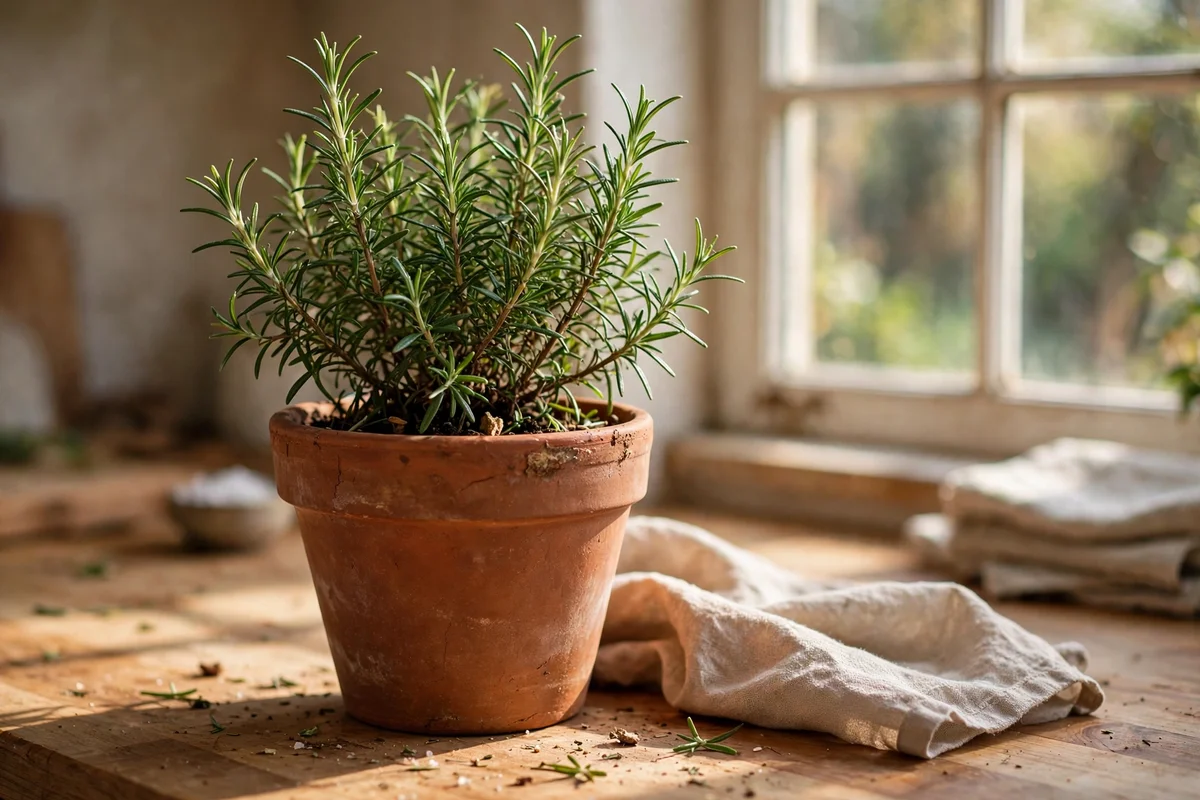
A terracotta pot 12 to 15 cm across holding a bushy rosemary plant brings living green to the worktop. Place it near the window for at least four hours of daylight, and within reach of the chopping board for cooking. Water when the top 2 cm of soil feels dry, usually twice a week. Terracotta breathes, which rosemary roots prefer over plastic.
A potted rosemary costs 4 to 8 pounds or dollars from garden centres, and the pot another 3 to 6. The mistake to avoid is overwatering; rosemary hates wet feet and rots fast. Snip sprigs regularly, which keeps the plant bushy. Bring it away from cold draughts in deep winter or move it to the brightest sill.
23. Dress the Range Hood With a Dried Wheat Garland
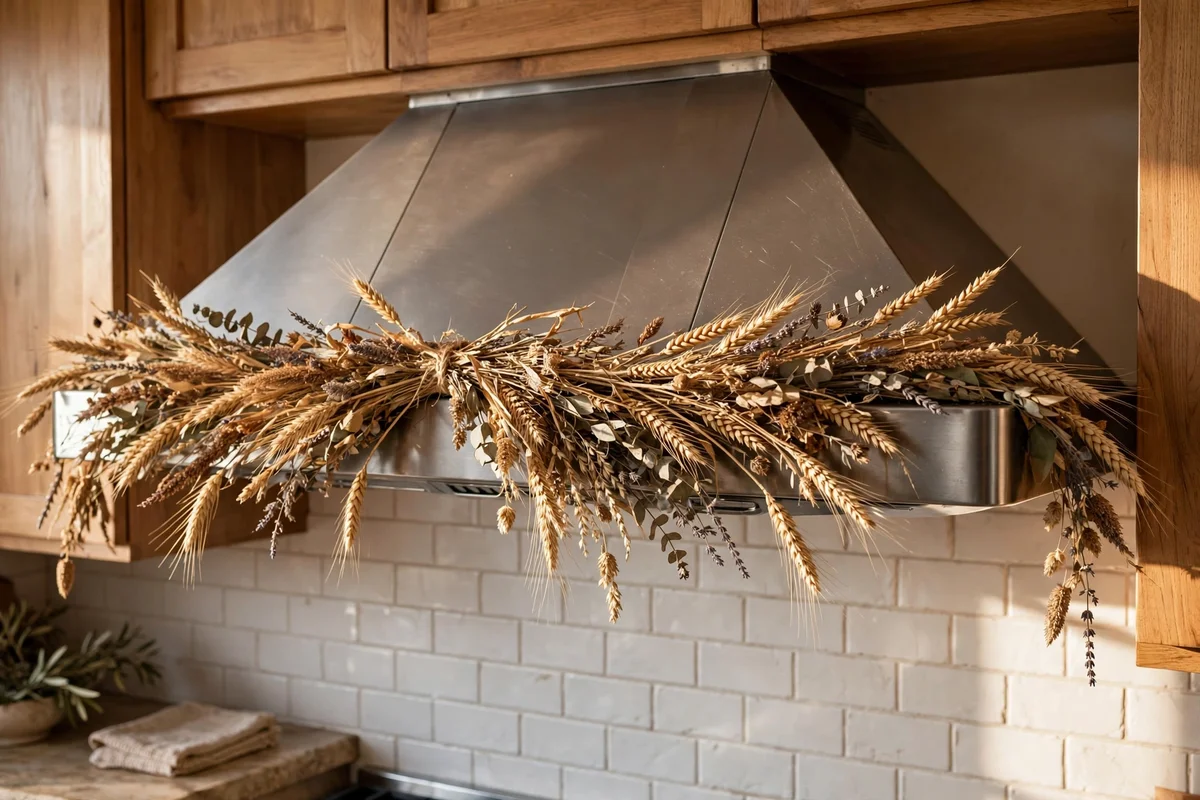
A dried wheat garland 120 to 150 cm long draped along the front edge of the range hood adds harvest texture at eye level. Secure it with small removable hooks at each end, keeping the wheat at least 40 cm above the hob for safety. Choose a garland with full heads in golden tones. It frames the cooker the way a mantel frames a fire.
Ready-made wheat garlands cost 12 to 25 pounds or dollars, or make one from bundled stems for less. The mistake to avoid is draping it where steam soaks it daily, which makes wheat go limp. Dust it with a cool hairdryer monthly. Take it down for a deep clean of the hood every few months.
24. Place a Woven Basket of Squash by the Door
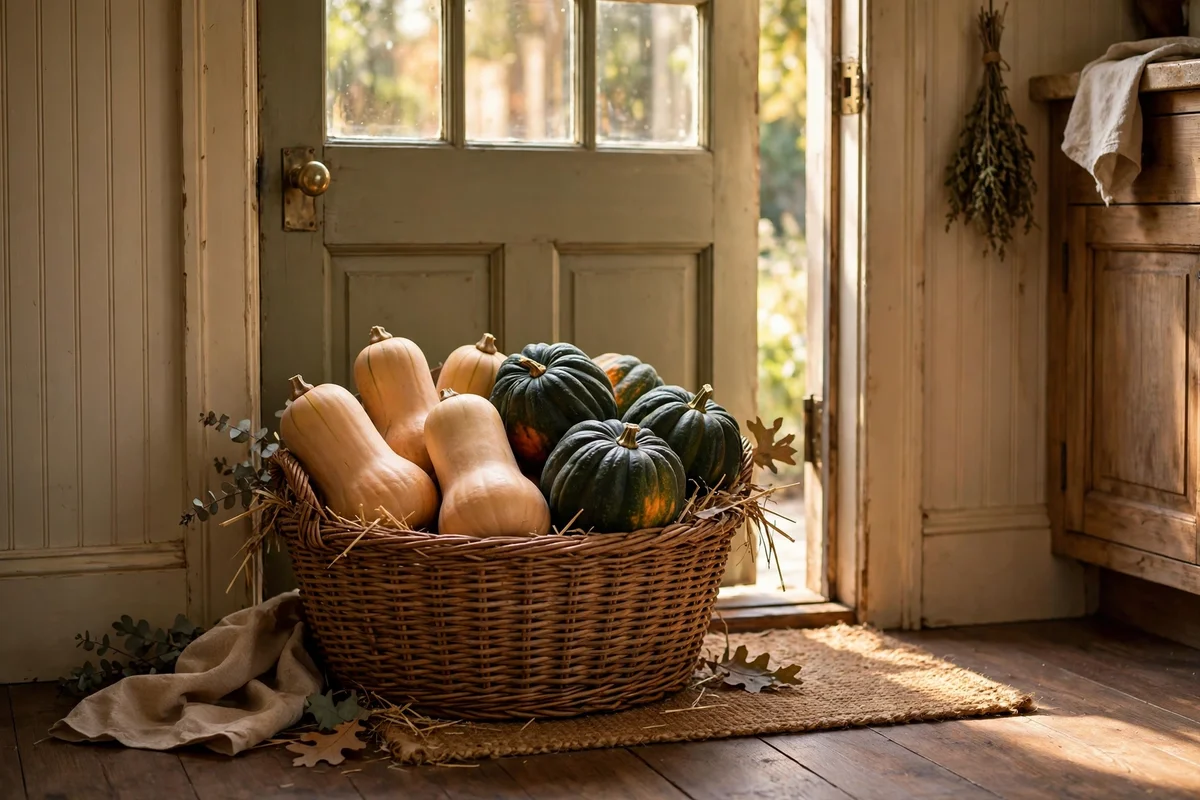
A woven seagrass or willow basket 35 to 45 cm wide filled with butternut and acorn squash greets cooks at the kitchen door. Line the basket with a linen cloth to protect the squash skins, and pile five to eight squash loosely. Keep the basket 20 cm clear of the doorway swing. It doubles as practical storage for the week’s roasting vegetables.
Baskets cost 12 to 25 pounds or dollars, and market squash 1 to 3 each. The mistake to avoid is stacking squash more than two deep, since the bottom ones bruise and rot. Check the pile weekly and cook any softening squash first. A basket by the door also catches the eye before guests even enter.
A fall kitchen does not need a full makeover, only a few warm layers placed with care. Cream bowls on open shelves, copper pans catching the light, pumpkins along the worktop edge and one honest wreath on the pantry door do most of the talking. Each idea here was chosen to keep cooking easy and joyful, never to turn the kitchen into a display you are afraid to touch or use.
This week, try the easiest change first: clear one shelf, stack five matching cream bowls on it, and set a small pumpkin beside them. It takes ten minutes and costs almost nothing if you already own the bowls. Live with that one shelf for a few days, then add the next layer only where your hands naturally reach for it each morning.
Frequently Asked Questions
How much does fall kitchen decor cost for a small kitchen?
Between 30 and 120 pounds or dollars covers most small kitchens. Pumpkins, gourds and a plaid runner handle the visual change for under 40. Spend the rest on one lasting piece, such as copper measuring cups or warm strip lighting. Buy fresh produce decor weekly so nothing rots on the shelf.
Will open shelves collect grease and dust in a cooking kitchen?
Yes, a little, but weekly wiping keeps them presentable. Keep shelves at least 60 cm from the hob so cooking steam and grease do not reach daily dishes. Store only items you use every week on open shelves; seasonal pieces live inside cupboards. A dry microfibre cloth takes two minutes per shelf.
What colours go with cream cabinets for autumn?
Copper, warm oak, terracotta and deep forest green all sit beautifully against cream. Add small hits of burnt orange through pumpkins and gourds rather than large painted pieces. Plaid textiles in rust and navy pull the scheme together. Avoid neon orange plastics, which clash with cream’s softness and cheapen the whole room quickly.
How do I keep decor safe around a hot stove?
Keep every decorative item at least 30 cm from burners and the oven vent. Dried herbs, wheat and paper garlands must never hang above the hob, since heat and steam shorten their life and create a fire risk. Use stoneware, copper and glass near heat, and save textiles and dried arrangements for shelves, windowsills and the pantry door.
Can renters do fall kitchen styling without drilling?
Absolutely. Lean boards against the splashback, stack bowls on existing shelves, and dress the worktop with pumpkins and canisters that need no fixings. Hang wreaths and garlands from removable adhesive hooks rated for the weight. Use plug-in warm strip lights under cabinets instead of wired ones. Everything here lifts out on moving day with no repair bill.